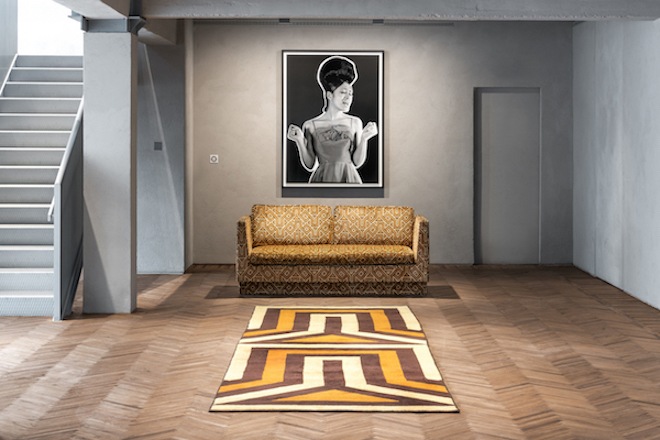
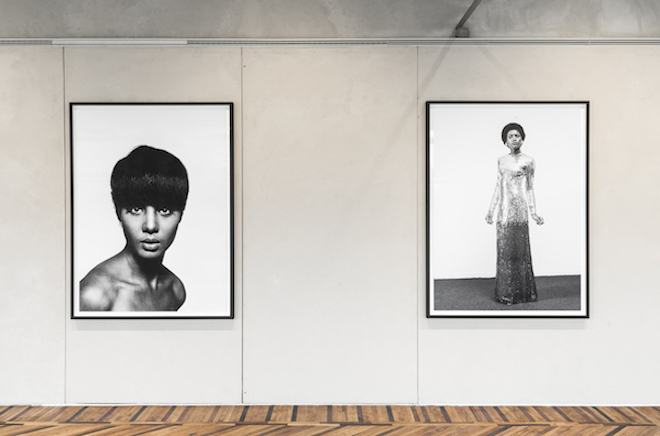
For their latest venture , Fondazione Prada presents a collaborative effort of American publishing house Johnson Publishing Company and installation artist Theaster Gates in their latest exhibition titled “The Black Image Corporation”.
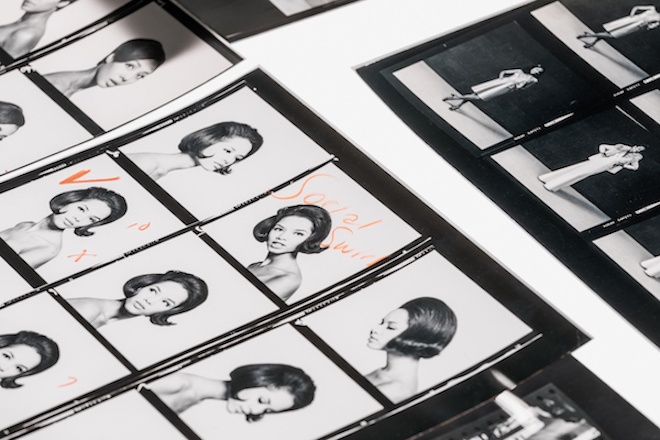
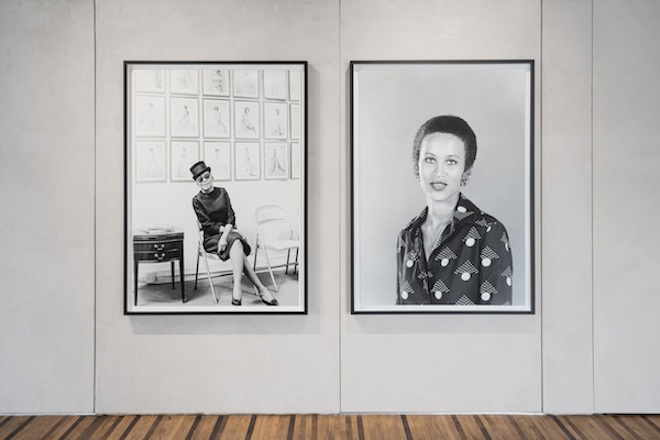
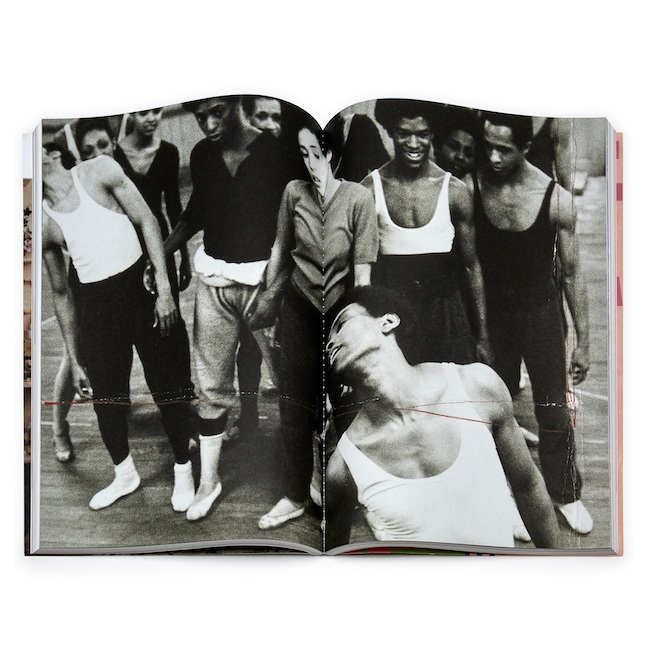
This project which is on display at the foundation’s Osservatorio venue in the Galleria Vittorio Emanuele, Milan explores the historic visual evolution of the contemporary African American identity. The exhibition includes the archives of the Johnson Publishing Company which feature more than 4 million images that have been captured throughout decades by photographers Moneta Sleet Jr. and Isaac Sutton. The publishing house was founded by John Johnson in 1942 and was also the mother of the two landmark publications Ebony and Jet magazines, which both celebrated black culture.
With the work of the publishing house’s two photographers, Theaster Gates has curated an exhibition which honours the culture in an a way which speaks to beauty and black female power, “for this show I hope to tease out the creation of female iconic moments created by Sleet and Sutton and also offer small forays into the lives of everyday people through never-before-seen images of the Johnson Collection. Today it seems to me a good times to dig into the visual lexicon of the American book and show images that are rarely seen outside of my community. I wanted to celebrate women of all kinds and especially black women.”
At the exhibition, while most frames contain developed images, some will show the reverse of photographs which will include the date, time and photographer. The audience is invited to freely interact and explore with these images which will be kept in various cabinets of the exhibition. On the first level of the Osservatorio, the artist has also installed original furnishing and interior design elements mimicking the publishing house’s downtown Chicago offices. Within this area, spectators will be allowed to browse and read copies of Ebony and Jet magazines while viewing Avenue In Full Bloom (2018) , which is a short film shot by gates documenting the actual office space in Chicago. The exhibition is on display from September 20, 2018 to January 14, 2019.
The excitement in the air as Frieze comes to London is palpable and everyone is looking to get involved. Conserve your energy and make the most of the good vibes: for a super condensed shot of fashion and art related events, Dover Street Market is the place to be.
Serving as the wheatgrass in the cultural smoothie that Frieze has become, Dover Street Market’s locus of activities offers everything we thought we needed, and a whole lot more. The series is launching in store tomorrow and you may want to bring your camping gear – there’s a lot to get through.
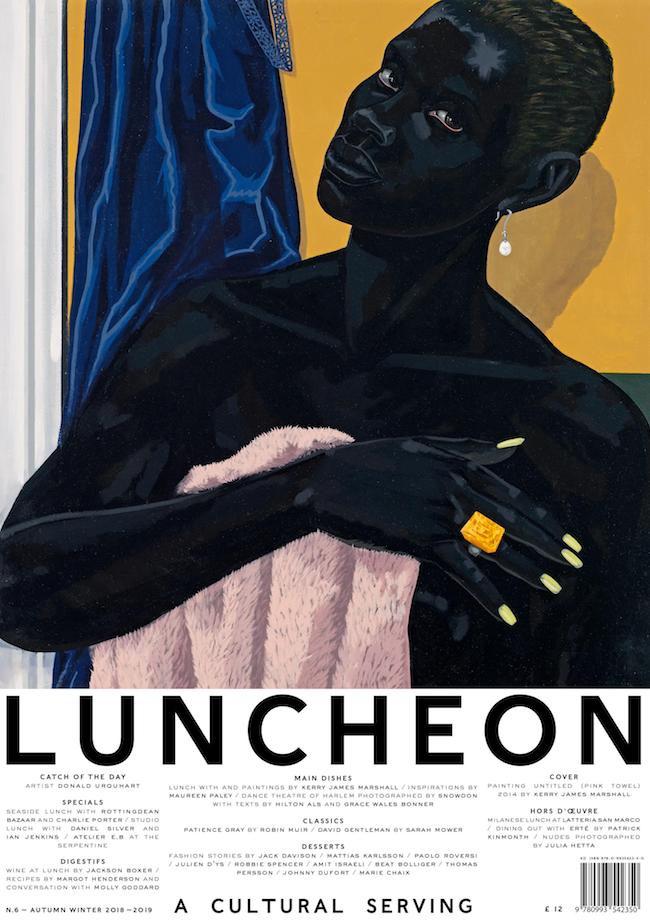
Luncheon magazine at Dover Street Market
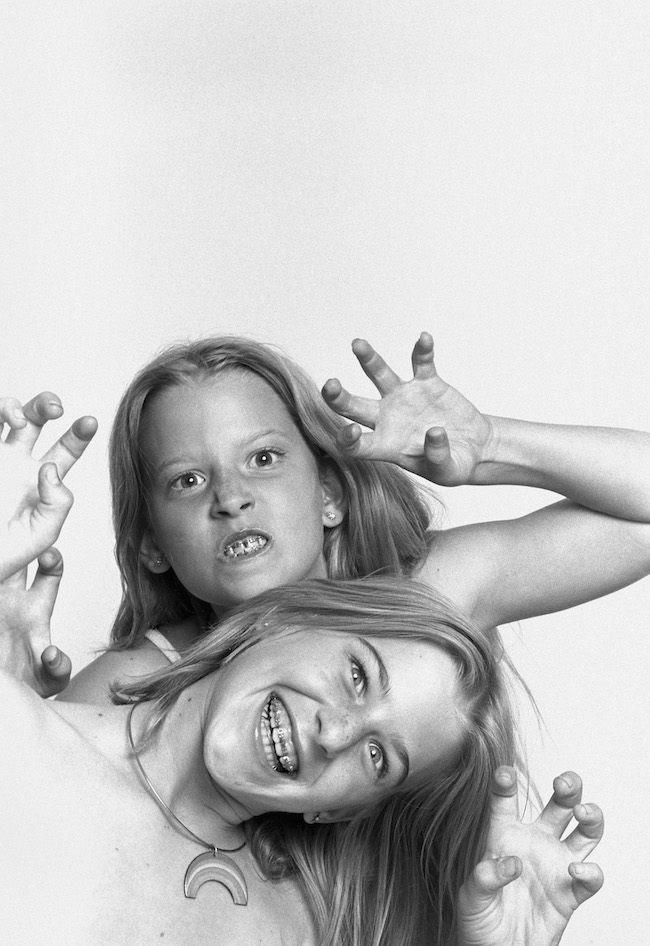
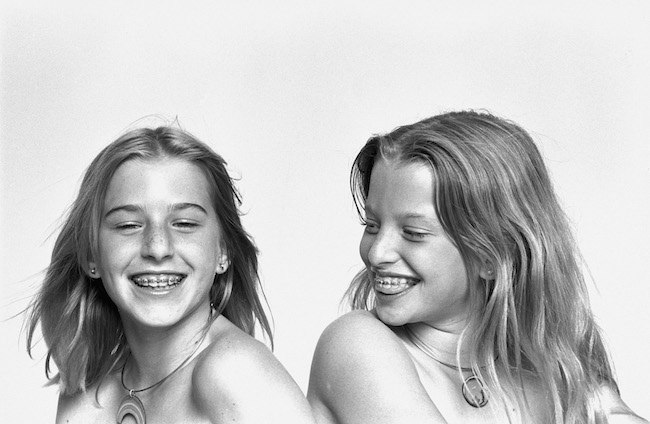
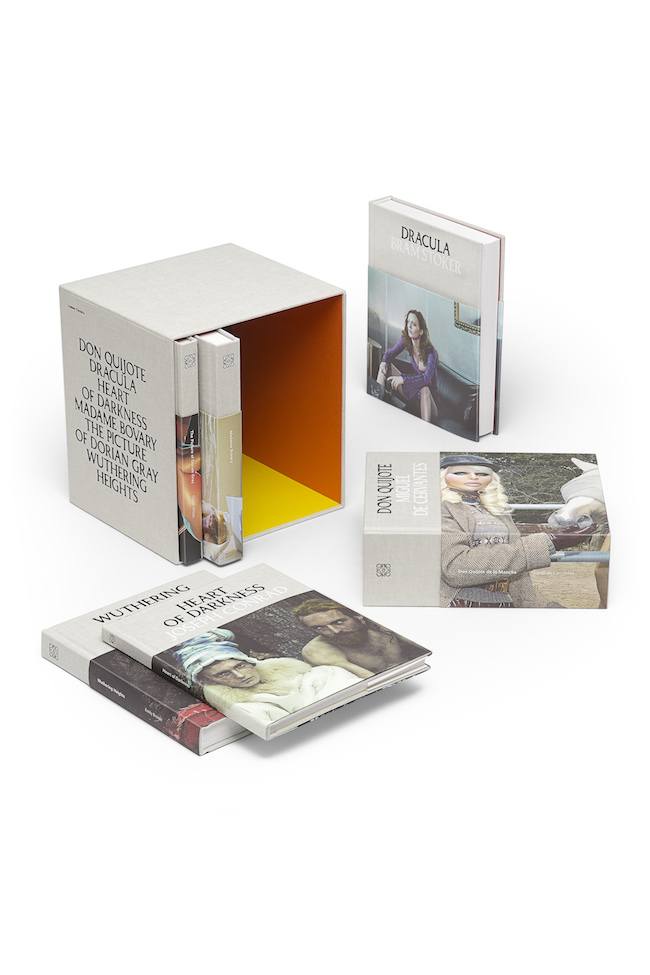
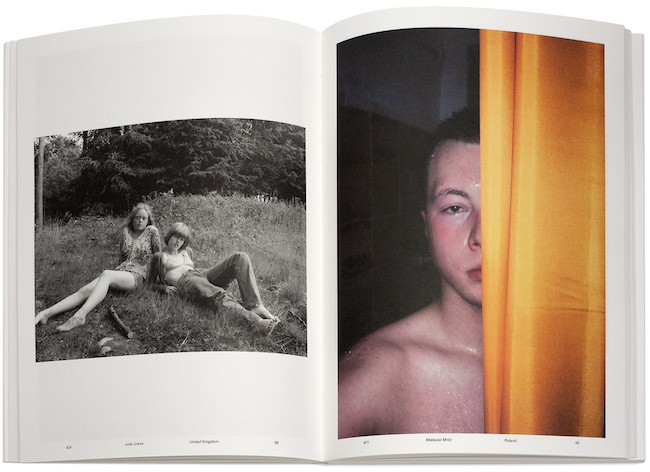
Highlights include Isabella Burley’s joyful new book, ‘Sisters’ by Jim Britt, which features the brace-clad duo who starred in the AW88 CDG campaign; Charles Jeffrey’s zine launch; Simone Rocha x A Magazine launch; Luncheon magazine’s installation with Rottingdean Bazaar; Loewe’s celebration of classical literature; and much more.
Isabella Burley, UK book launch: ‘Sisters’ by Jim Britt
For the Luncheon installation, Rottingdean Bazaar are re-decorating the Luncheon ‘Kiosk’ which sits the DSM and will be offering some custom playful product with every copy of the magazine – ‘spoontacles.’ These are, as they sound, spoons made into glasses… expect to see London’s most fashion forward coveting the maverick brand’s latest invention in the season ahead.
Luncheon magazine at Dover Street Market
Spoontacles or no spoontacles, you’ll find there’s plenty to dive into at Dover Street Market tomorrow. See you in the queue.
Loewe classic books
Charles Jeffrey Zine
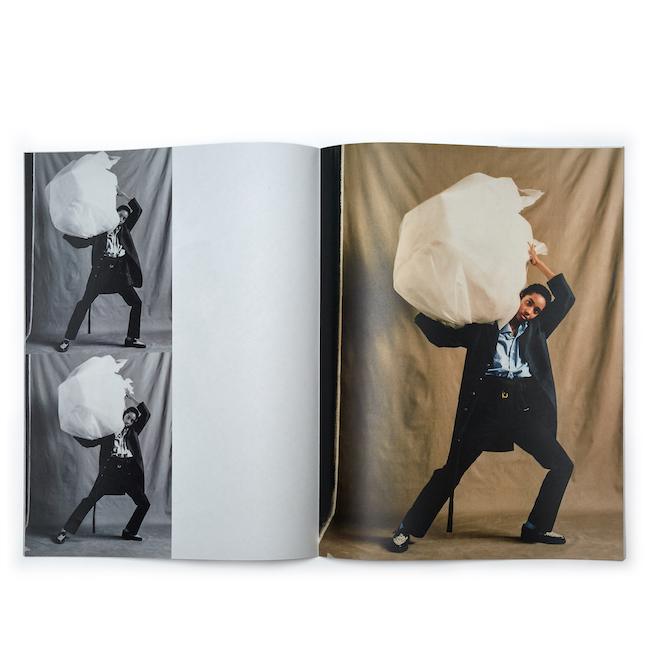
JW Anderson, Your Picture Our Future Publication
Dover Street Market Open House, October 4th 2018, 6-8 pm.
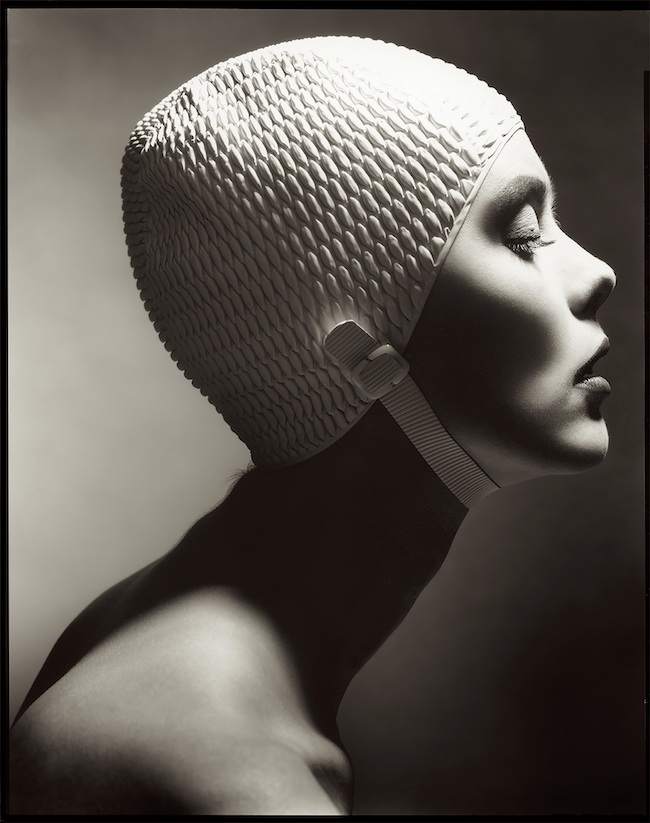
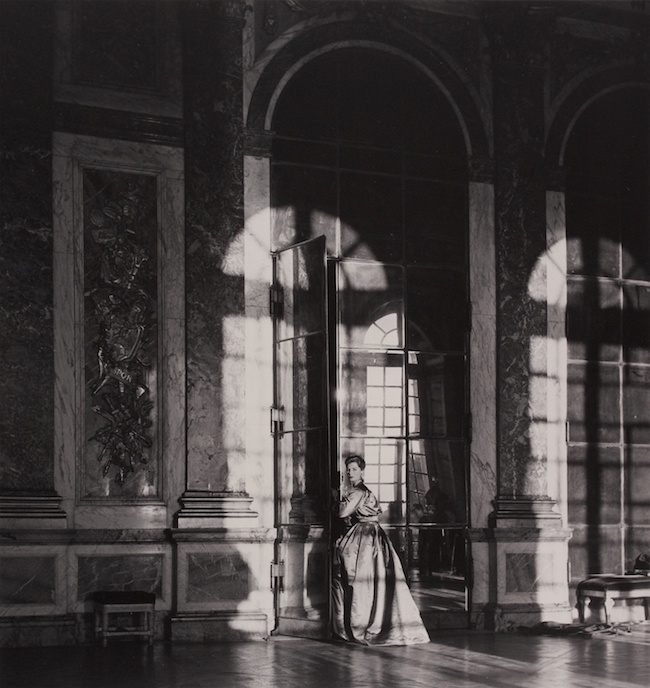
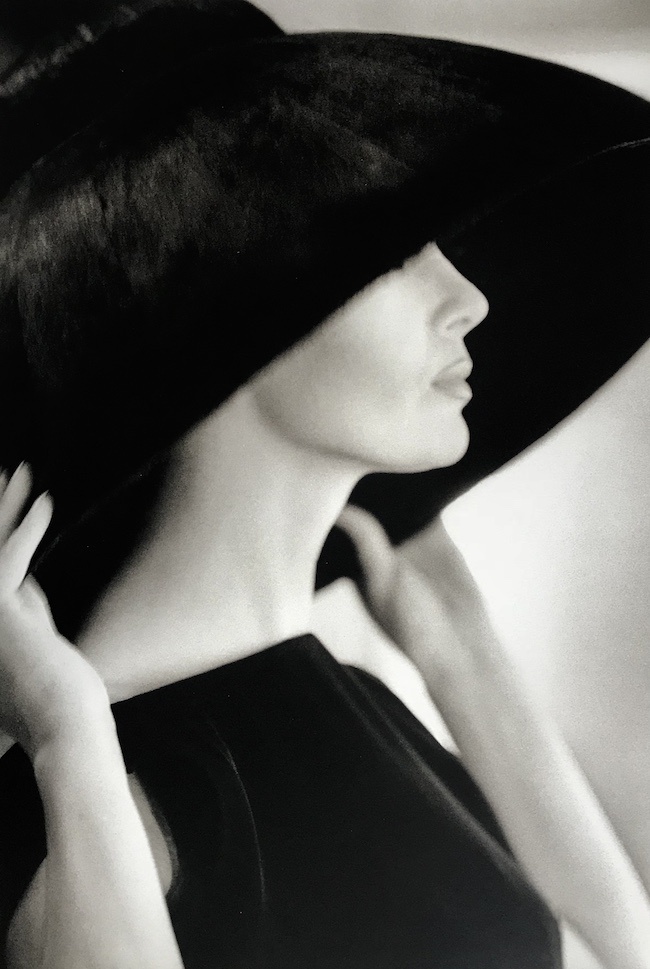
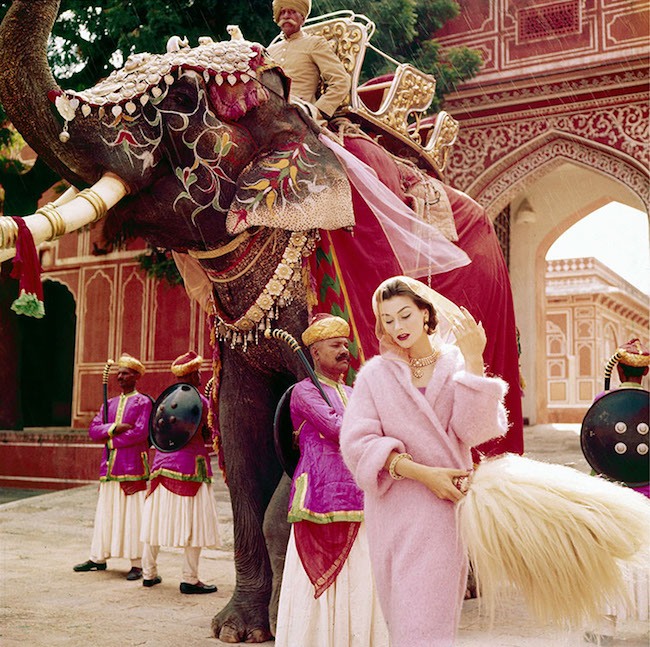
In celebration of the Santa Monica-based photography collector’s new exhibition, The Fashion Show, at his self-titled gallery, Twin parks the spotlight on Peter Fetterman’s dedication to the photographic frame.
What initially sparked your fascination with photography?
I started my career in the film industry dealing with moving images then discovered the power of photography to tell stories through individual images.
How did you become such an ardent collector?
By accident in 1979. I had just arrived in Los Angeles from London. I was invited to a small dinner party and it turned out the host was selling his small collection of photographs that hung in his dining room. I could not stop looking at one image, Max Yavno’s “Premier at Cathay Circle”. I asked how much it was and the owner said it was $400. I had arrived in California with five t-shirts and two pairs of jeans, had a total net worth of $2000 and was driving a beat-up car with virtually no brakes. If I were rational I should have spent the money on new brakes, but I bought my first photo and it changed my life.
My collecting habit had become so extreme. I was working out of the back of my rent-controlled apartment and making house calls like the Tupperware lady. I was asked to open a gallery in a new arts development centre in Santa Monica. The organiser said to me that he had heard I had a great eye and asked if I would like to open a public gallery. I said why not? I had no idea of what I was doing when I started out. I learnt along the way.
Over the years has there been particular photographers whose vision has stayed with you?
My first and greatest inspiration was the celebrated French photographer Henri Cartier Bresson, and still is. We became his main US gallery for the last 14 years of his life. Henri kindly introduced me to another inspiring photographer, the great Brazilian photographer Sebastiao Salgado, with whom we have collaborated for over 30 years now. His passion fires up my own.
You have a new exhibition entitled ‘The Fashion Show’ – what made you decide on this as a fitting theme for your gallery?
I am always seeking the beauty in life and I have always appreciated the style and elegance to be found in this genre.
A fashion show can be an overwhelming collaborative celebration of creativity: do you think the images in your exhibition showcase this aspect?
I hope the selection in this exhibition does indeed show this collaboration. We have some of the greatest designers ever represented form Yves Saint Laurent, Chanel, Elsa Schiaparelli matched by such great artist like Horst, Norman Parkinson, Hoyningen -Huene, Melvin Sokolsky and many others…
There are some iconic female photographers in the line-up: who are your highlights?
There were so many great female photographers working in the 50’s and 60’s who were overshadowed by the attention heaped upon the members of the fashion boy’s club, chief of whom were Irving Penn and Richard Avedon. But I have always felt that female photographers like Lillian Bassman, Francis McClaughlin Gill, Louise Dahl Wolfe were their equals.
Were the female photographers in the exhibition initially celebrated as equals their male counterparts?
These photographers were overlooked critically, but I strongly believe that history will eventually re-write their achievements
What have you learnt makes a great fashion photograph?
I use the same yardstick I do for what makes a great photograph in any genre of photography. Like a great novel or film or piece of music, you are one person before you see a great image and another person after you see a great image.
In the age of hyper self-awareness, have we entered a new age of fashion portraiture?
I’m not so sure we have actually entered a new age of fashion photography. I think we have entered a different era because of the proliferation of digital photography. Everyone today can call themselves a photographer because the barriers to entry are so low. Perhaps I’m just old school but my taste keeps leading me back in photo history. Probably one of the first great fashion photographers was Julia Margaret Cameron. What she produced in the 1860’s is still pretty monumental in my book, and has barely been topped since.
What was the last thing that thrilled you?
The last great exhibitions that thrilled and moved me recently was the Irving Penn exhibition at the Grand Palais. In Paris last November and the great Dorothea Lange exhibition at the Barbican this year.
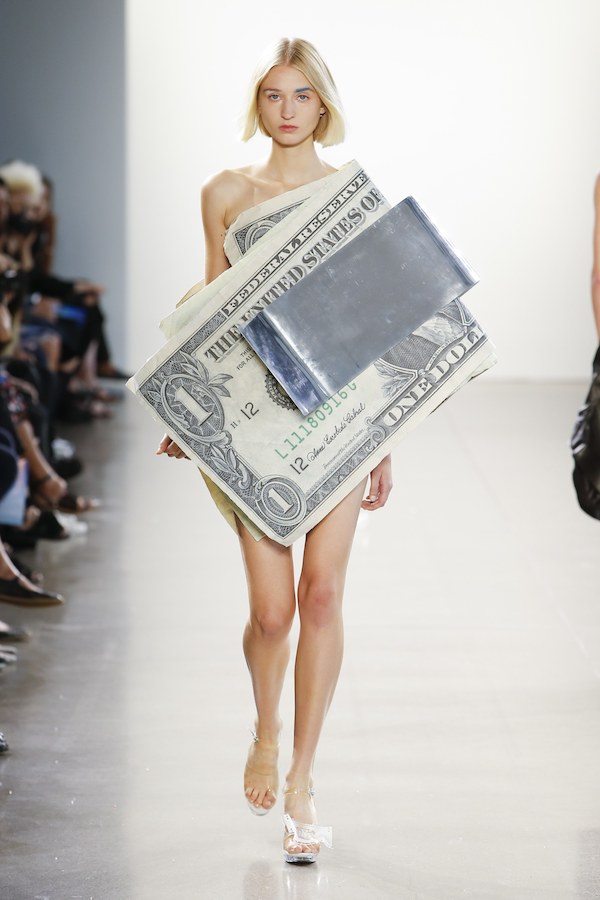
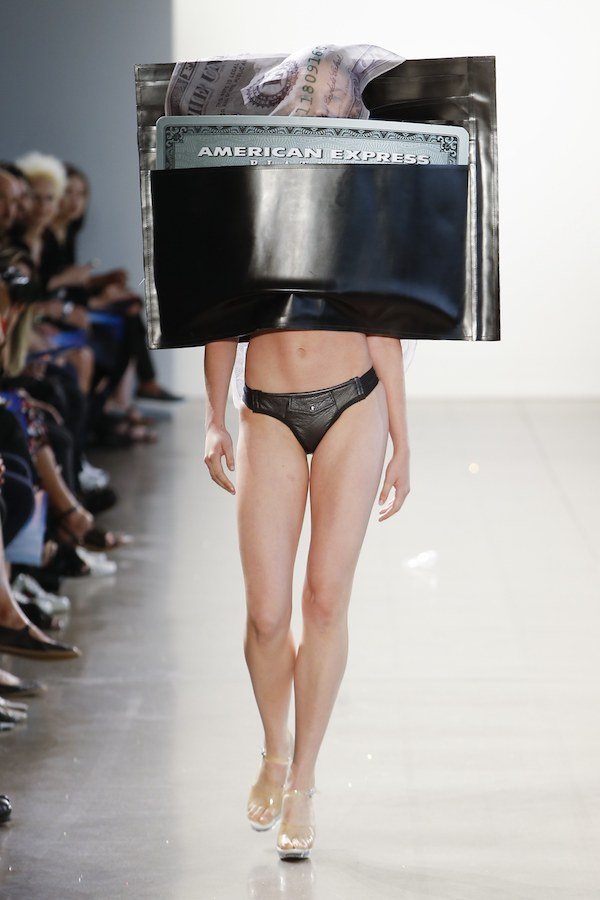
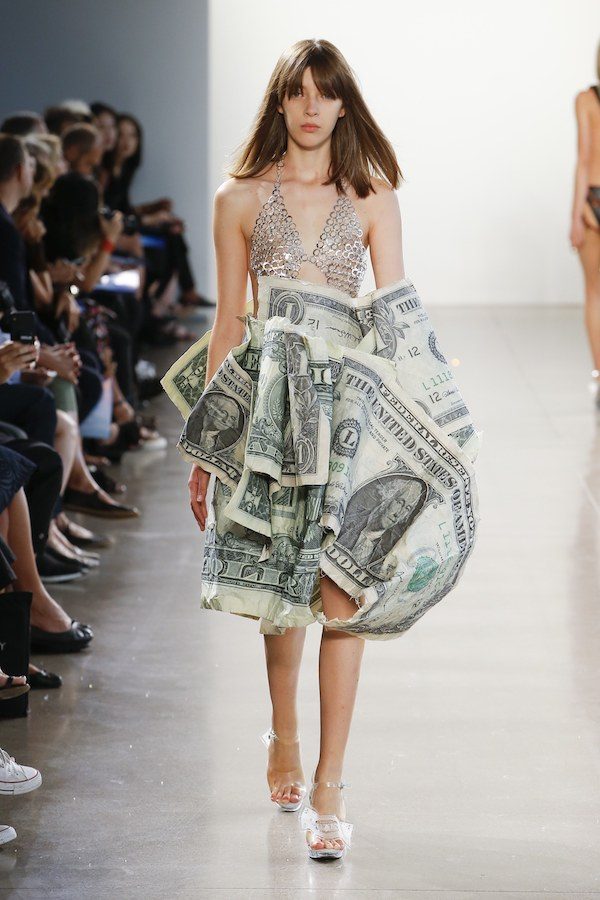
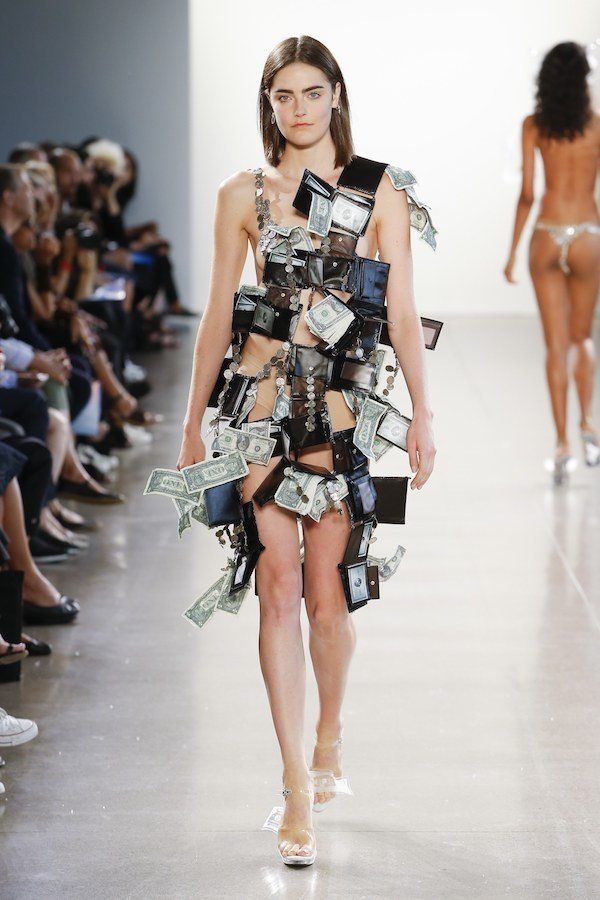
One of the most recent visual floods on social media has been caused by Japanese designer Kota Okuda who made his debut during NYFW at the Parsons MFA show 2018. His collection shared a sultry yet rather interesting message.
“I’m fascinated with the obsession there is surrounding the United States currency, and through this I wanted to deconstruct the meaning of it’s value in relation to humans.” Okuda drew inspiration from German philosopher, economist and revolutionary social Karl Marx’s book ‘A Contribution to the Critique of Political Economy,’ which references the themes of conceptualism and pop aesthetics. The designer also described his collection as a way of redefining the American currency by commodifying its value in an alchemistic system of dress, which he surely did accomplish. He sent models down the runway strutting giant US Dollar bills, giant wallets and accessories reminiscent of cash. Following this collection, the designer hopes to continue to use fashion to tackle important issues and his currently working alongside New York based labels Telfar and Sea NY to design jewellery.
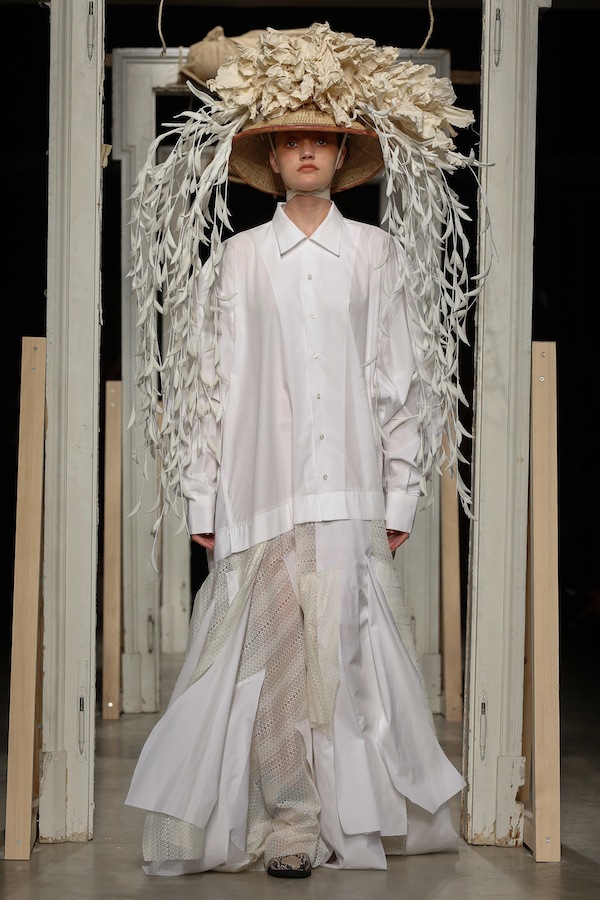
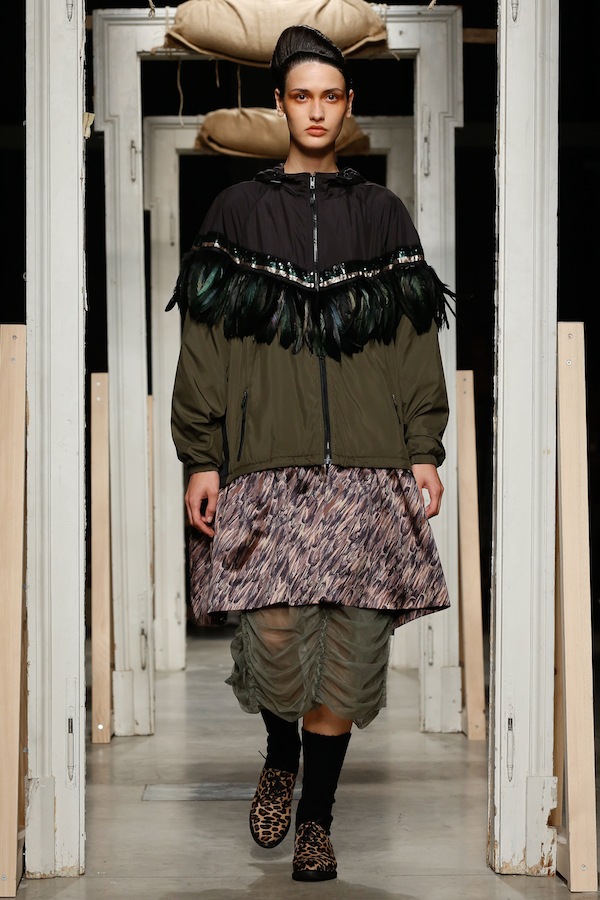
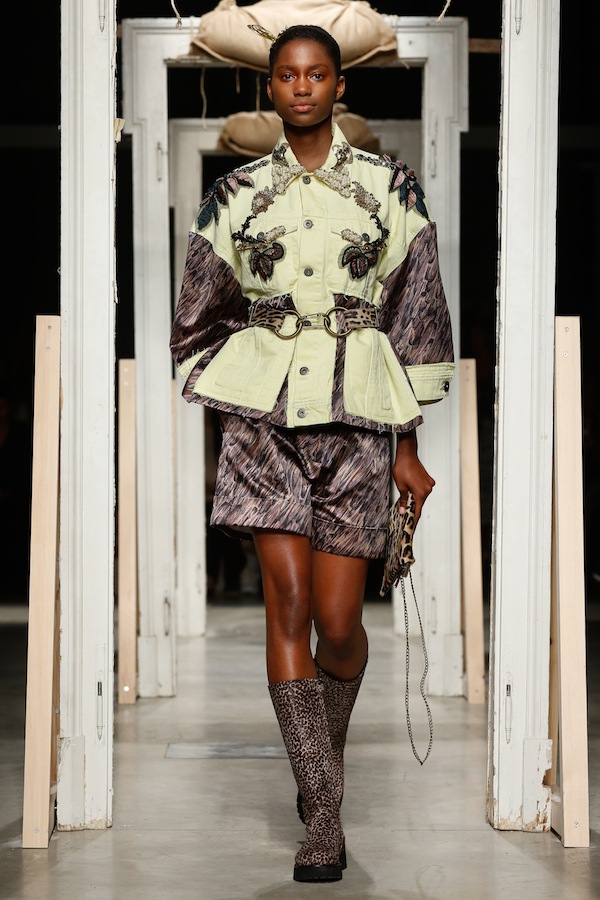
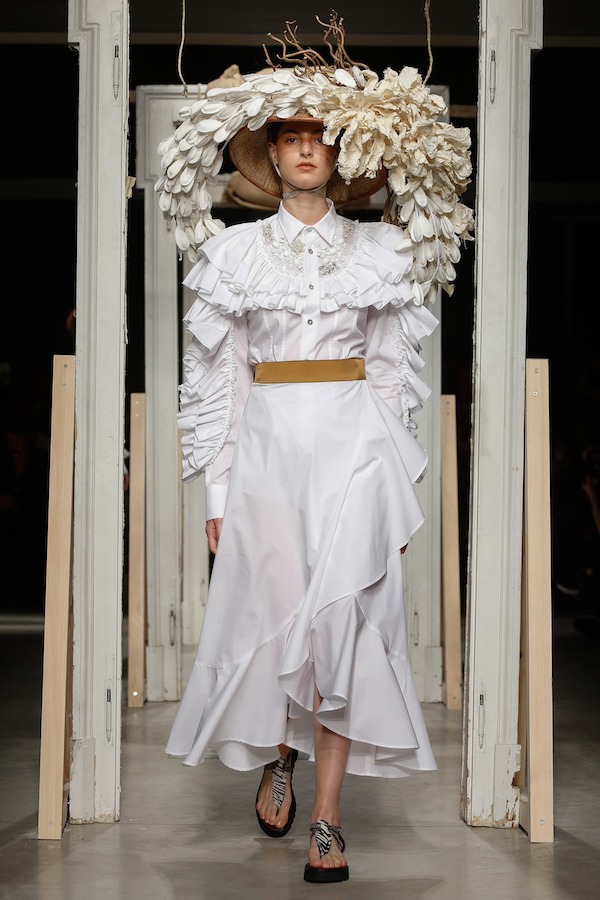
Italian designer Antonio Marras dug deep into the unexpected for the inspiration behind his Spring Summer 2019 collection title The Fault of The Mistral. Arriving to the show a few minutes early, the first familiar attribute was the sound of Nina Simone’s music playing from the outside as the models capped their final rehearsal. As the curtains opened and the audience was let in, what was to be discovered was a series of door jams aligned along the runway with sacks tied atop each one. This show was slightly different from all the others, it carried a message that came across as personal. Marras’ stimuli behind the collection was based on his wife’s recollection of an Ethiopian princess she once met. Princess Romanework, eldest daughter of Emperor Haile Selassie of Ethiopia who was captured during the battle against the Italian army and forced to live on the exile island of Asinara.
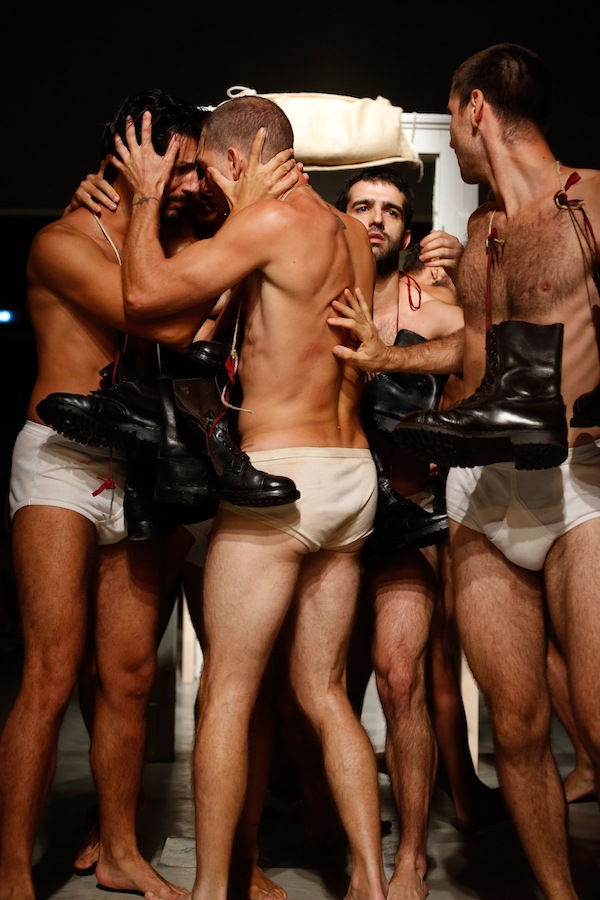
The collection embodied a tropical woman dressed in shades of military green gowns, coats and sweaters. Flashes of floral prints, white, beige and lace appear throughout intervals. This was not just clothing being presented at a show, this was a story being told, some models wore headpieces which mimicked flower wreaths and at the end of the show there was a performance. An emotional bevy of men in underwear with shoes tied around their necks, rushing together to salute one another and then ripping the sacks tied atop the door jams, where a flow of sand emptied upon them. This was not just a show, it was a carefully orchestrated re-enactment of poetry. The only note to be taken is that since this was a story of an Ethiopian princess, it would have been ideal for the casting to better reflect that. If making an ode to Ethiopian princesses, go all out, hairstyling and everything. However the designer is definitely one to keep an eye on as he is one who chooses to go a little bit of an extra mile further.
N.21 Creative Director Alessandro Dell’acqua kept things quite simple for the SS19 collection. As opposed to his often whimsical streetwear inspired looks the designer delivered a clean collection which he describes as very adult-like, and indeed it was. The first few looks were a series of black dresses, all accompanied by a pair of plexiglass heels.
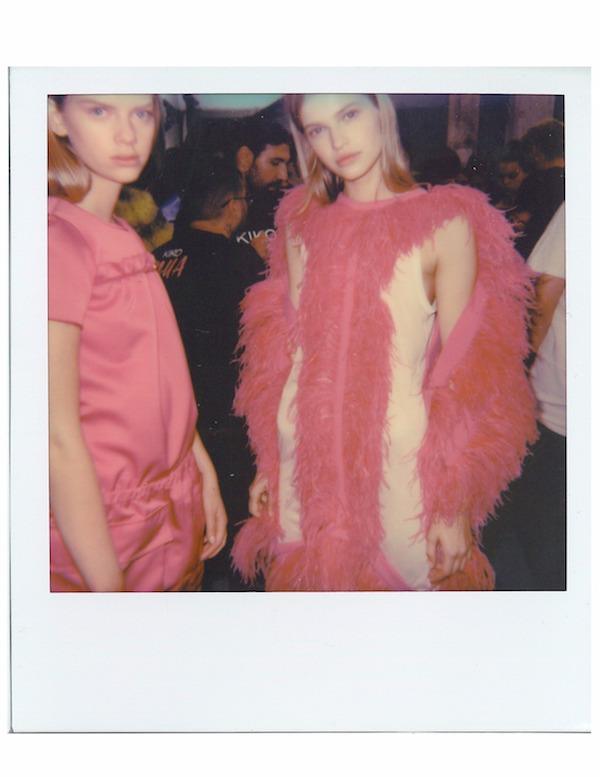
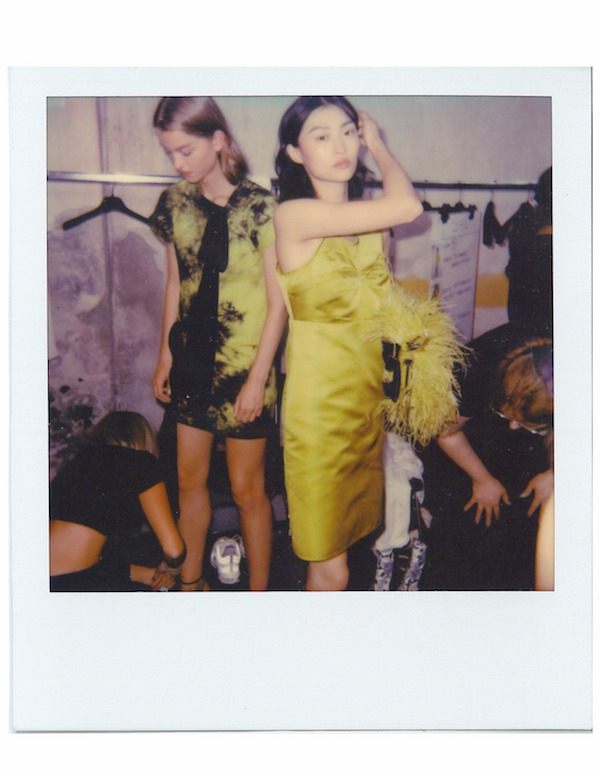
Each silhouette was clean and feminine with very slight touches of fun added to them, further down there was Dellacqua’s signature touch of nude and pops of colour. Some looks appeared to be transformative series, a pink sweater and pencil skirt was followed by a pink mini dress which was followed by the pink skeleton of a dress layered over a white minidress. The designer worked with these couture-like fabrics to create a very simple straightforward collection that although appeared to be very commercial, withheld tiny interesting detailing. Dress skeletons were made out of faux ostrich feathers, a skirt suit boasted an open zipper back and tie-dye mini-dresses wore slightly oversized bows. Although this shift might be a step in the right direction for the brand, one can only hope that the birth of this austere, semi-couture N.21 woman, does not come at the cost of the designer’s ingenuity.
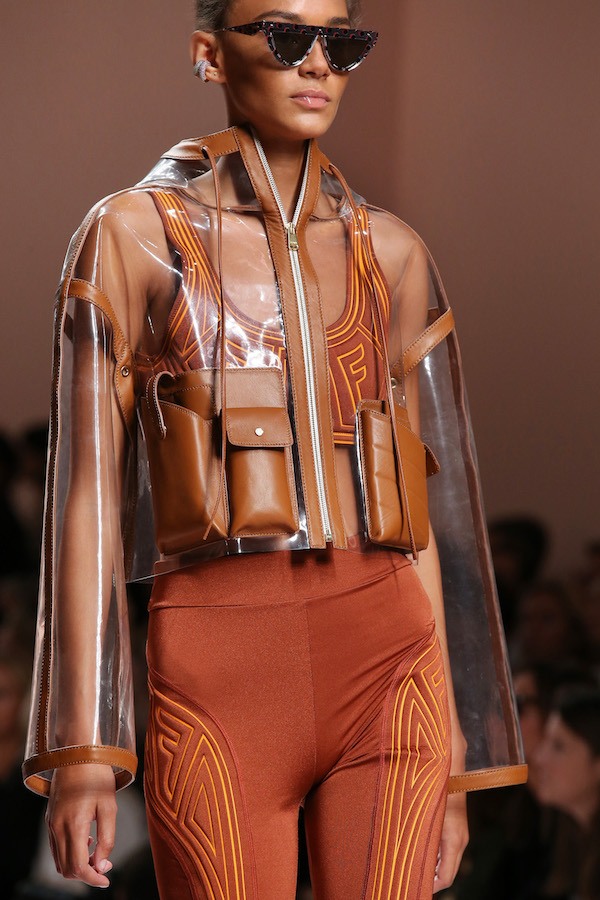
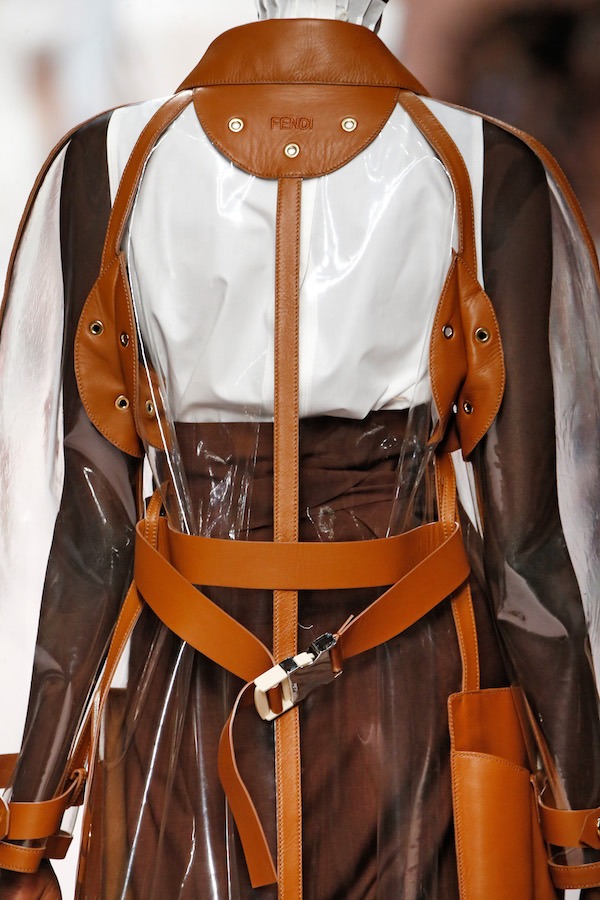
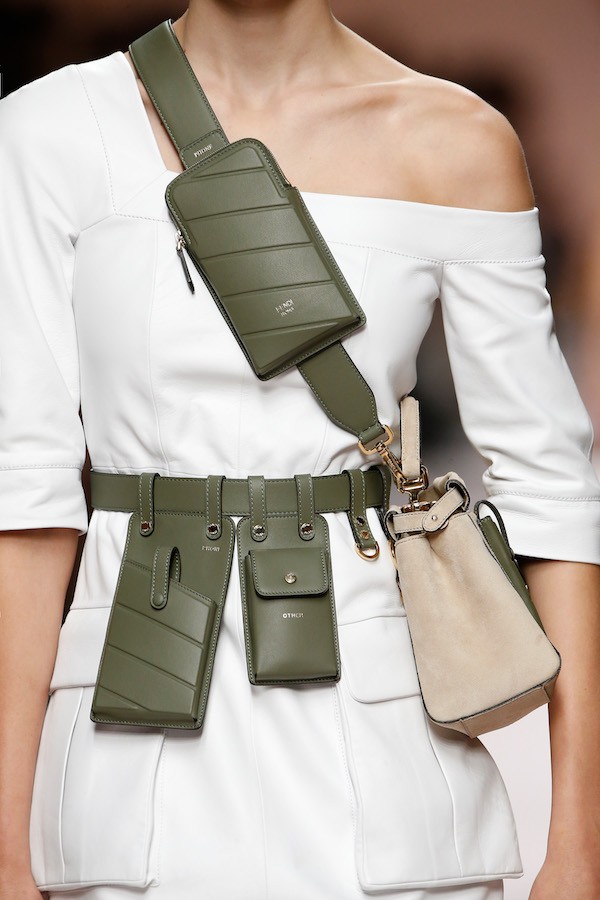
Fendi SS19 was all about the Italian brand’s step towards a younger generation — a slight shift in the brand’s aesthetic, which was also rumoured to be the reasoning behind the slightly titled “F” for Fendi on the invitations and at the top of the runway. Creative director Karl Lagerfeld alongside creative director of accessories and menswear Silvia Venturini Fendi curated an urban collection of utilitarian romance. Pockets upon pockets , pouches in pouches and bags upon bags, the collection was a much needed breath of fresh air that introduced a slightly younger version of the Fendi woman. Each look was just as ‘instagrammable’ as it was elegant, shades of lobster orange,burgundy, tangerine, optic white , denim and sage created flirty feminine silhouettes with hard fabrics. Also making an appearance were versions of a trendy cycle shorts along with the iconic Fendi baguette which made its comeback this season.
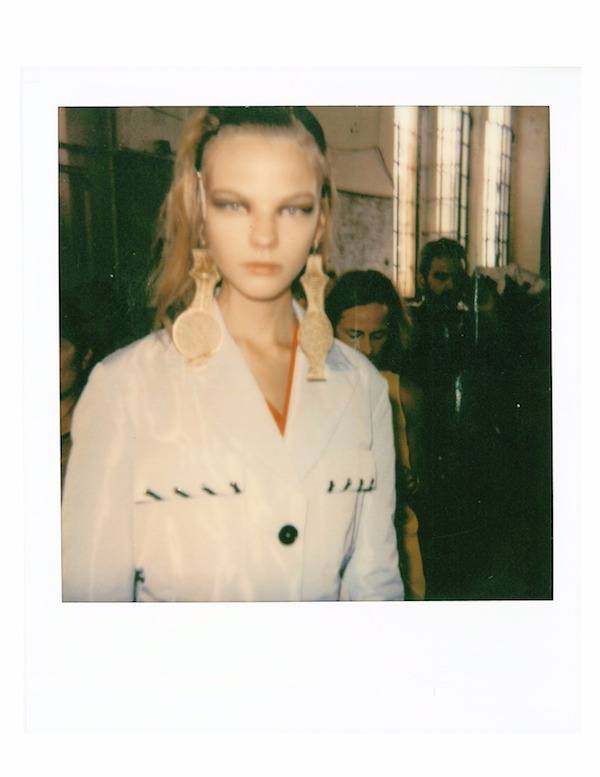
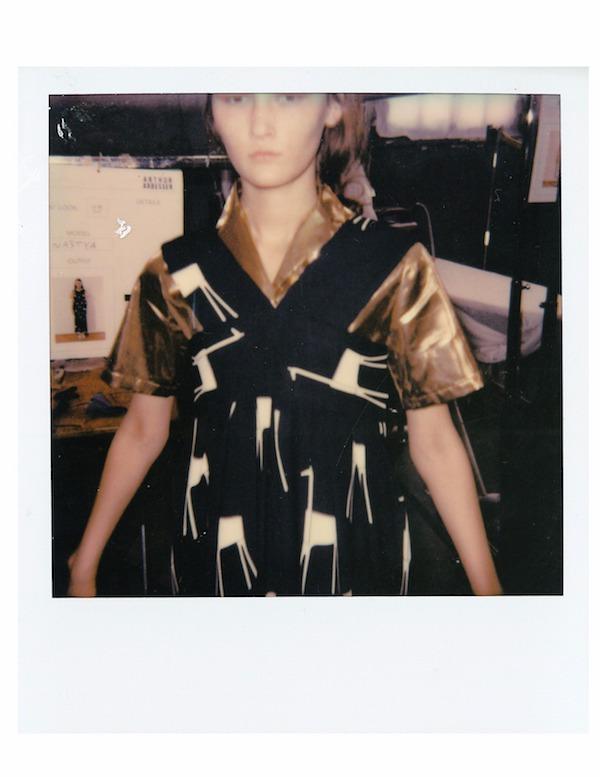
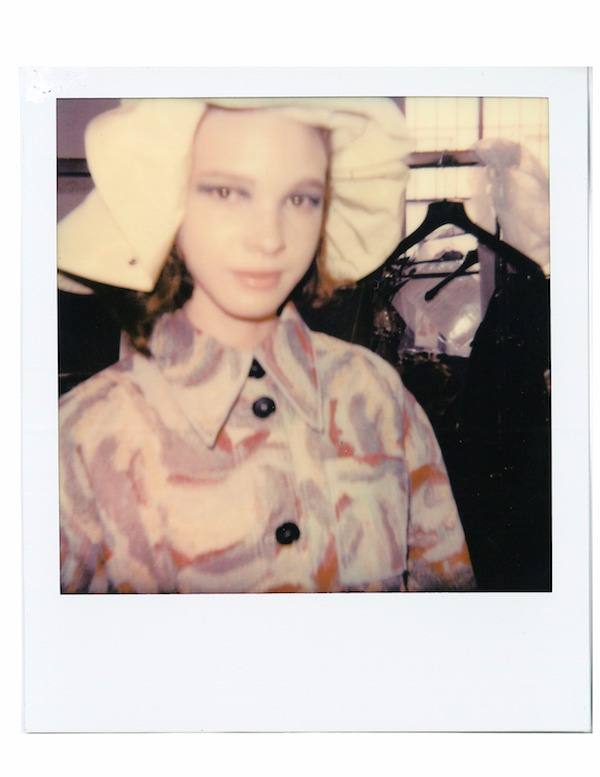
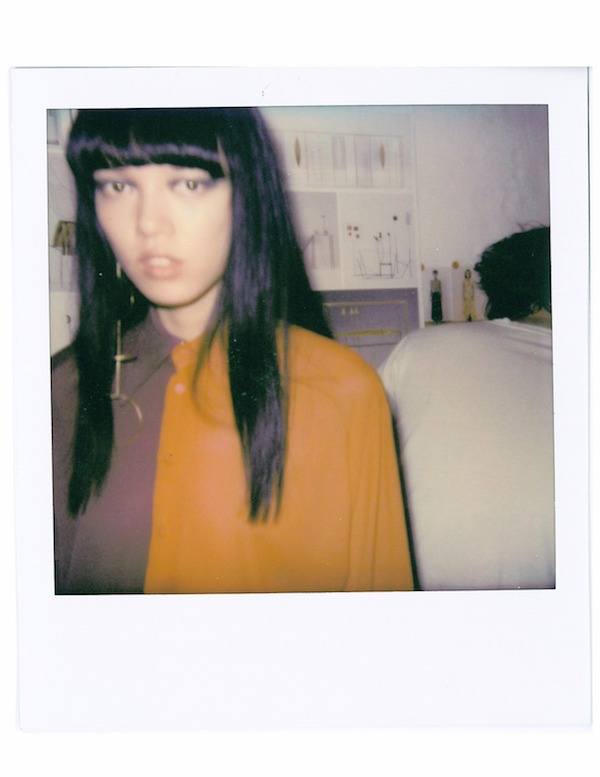
For his Spring Summer 2019 collection Viennese designer Arthur Arbesser chose to embrace the concepts of the finished product along with the process in a collection which explored these two notions in a unified manner.
Arbesser often revisits his hometown for inspiration, however this season the designer looked towards Italian sculptor Fausto Melotti to further influence the collection. Melotti’s work often mirrors qualities of humanity in ways which are mathematical and geometric while still inducing harmony. This is quite similar to the making of a garment. Arthur used the concepts of rhythm and abstract within Melotti’s work to craft a collection of colourful patterns and textures architected in ways which framed the body as an art form. The designer imagined his ideal woman to be, “a woman who works in a studio with clay and gets her hands dirty, but isn’t afraid to go out at night and have fun.” The collection also held an abundance of pattern, jackets, skirts and pyjamas often carried several panels of print, which in some ways were similar to Melotti’s work of swirls and stripes. Also notable were the uniquely formed earrings which hung from the body like mini-sculptures. The designer’s celebration of disharmony shed light on the beauty of imperfection and non-symmetricality in a perfect polished kind of way.
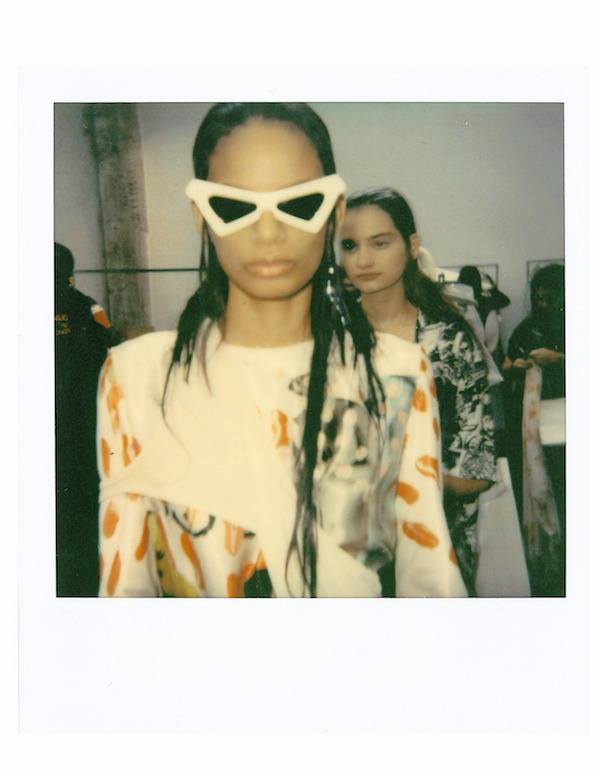
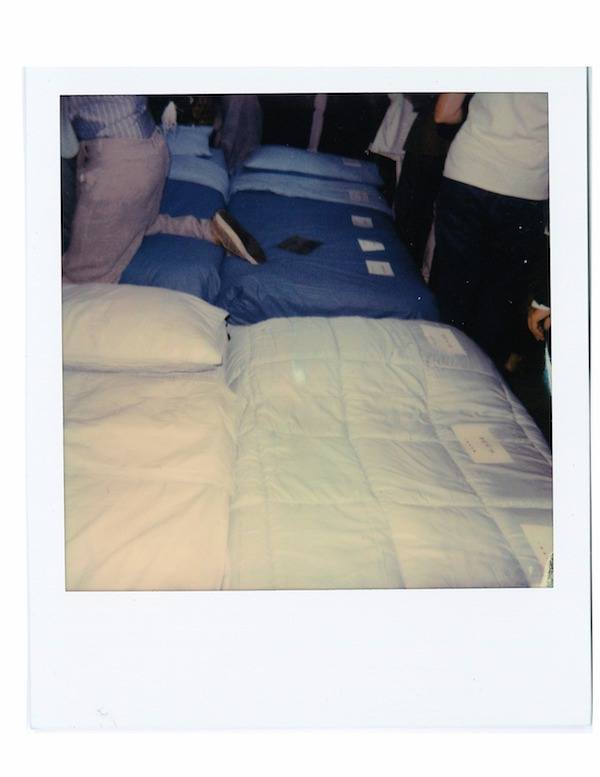
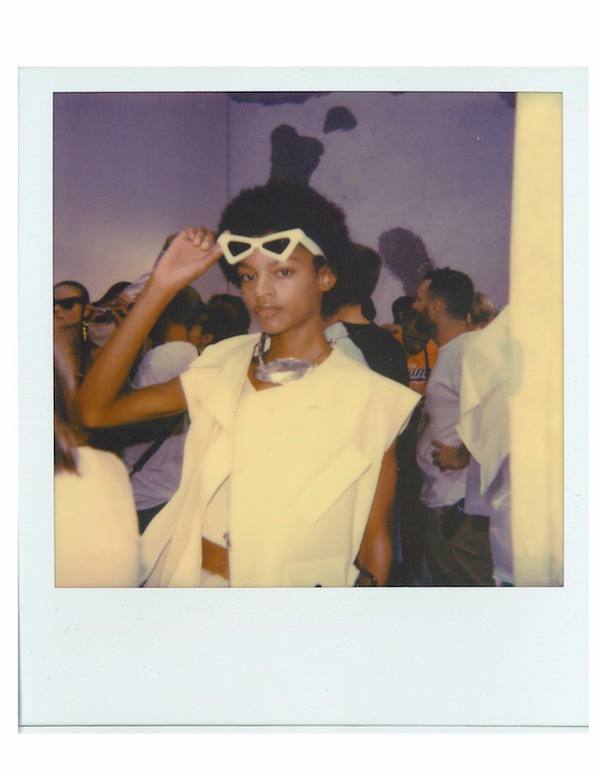
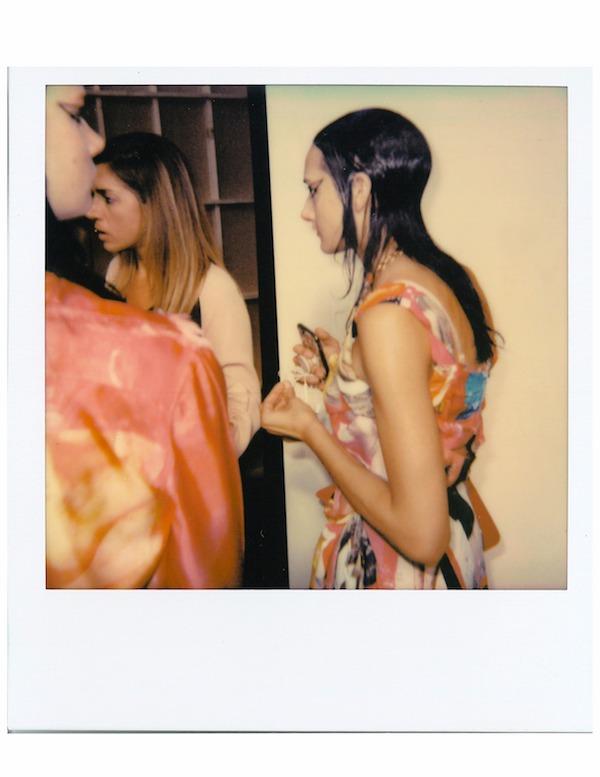
For Marni’s spring summer 2019 collection creative director Francesco Rizzo invited his audience in bed as he presented a collection which celebrated the importance of human touch. Rizzo imagined a designer’s world where the clothing was all handcrafted as opposed to being manufactured, similar to the world of a painter or chef.
The collection glorified the inaccuracy of an artist’s hand in a way which highlighted the creative process. It was about that aha moment in the studio where the fabric is draped on the dress form with pins and tape and the light hits it and the character comes alive. The moment before the finished hems and tightened seams, or as he said, “a journey from the white of the rough canvas to colour, seasoned with prints and embellishments.” Vivid splashes of colour were complemented by prints of the human form along with draped skirts, finger painted patterned coats and skirts. Each piece of jewellery was crafted to mimic leaves and miniature versions of the female form. It was just the right balance between artistry and commerciality while still keeping in mind a very playful Marni signature. It might be safe to say the designer at Marni is just the perfect pairing. He has caught his stride on the path of equilibrium for high sales while still withholding the characteristics poetry and craftsmanship.
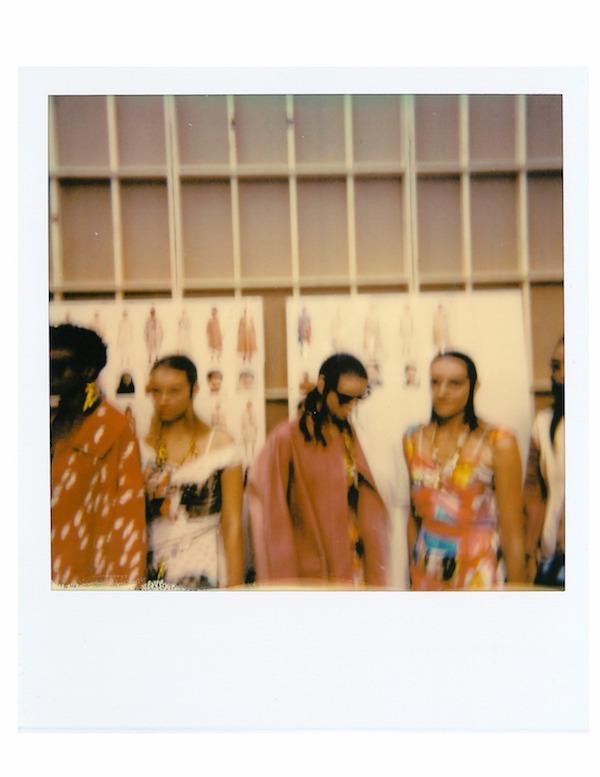
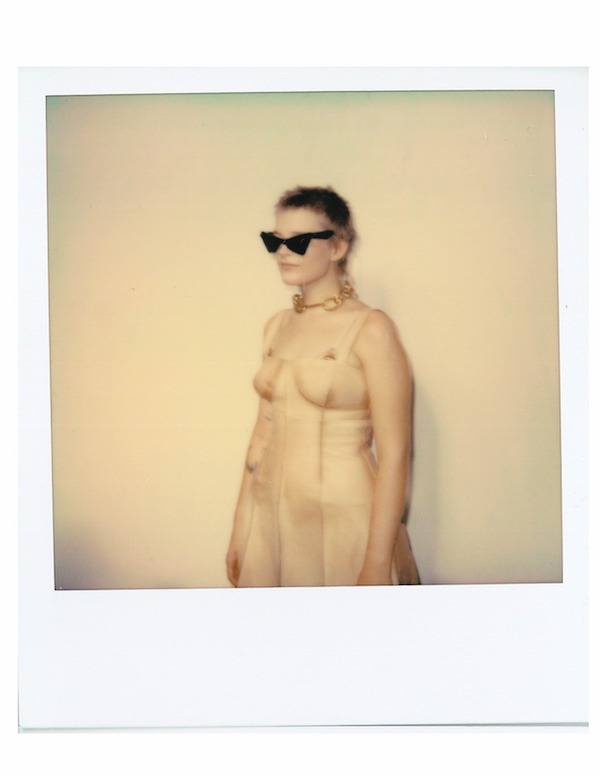
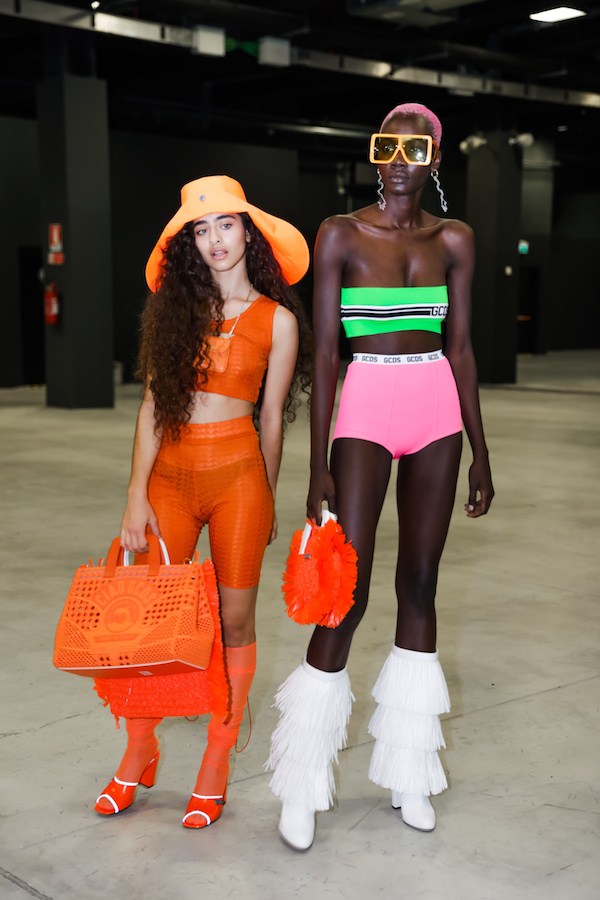
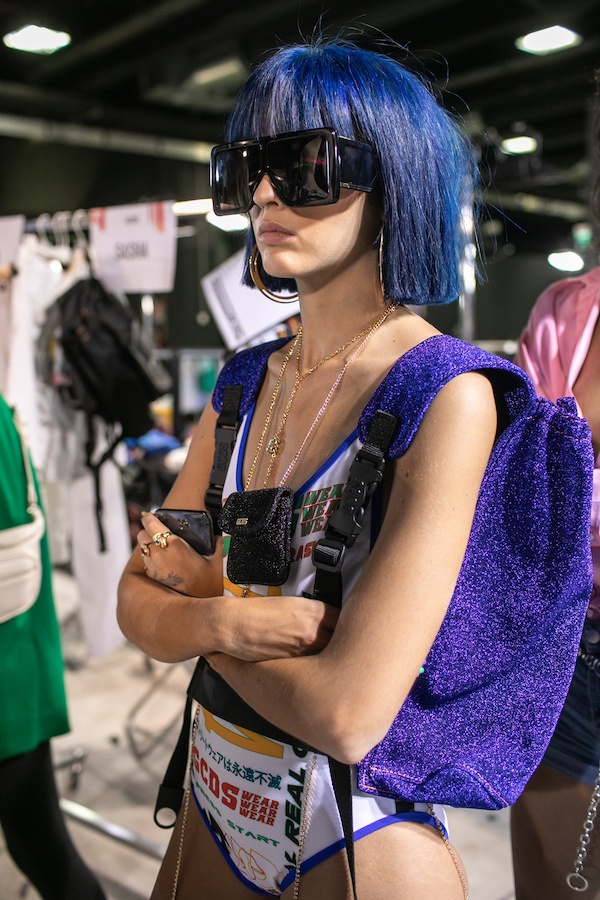
Last Saturday evening, creative director of Milan based label GCDS Giuliano Calza brought forth a show which in fact might have lent truth to the components of the aptly-comprised acronym — God Can’t Destroy Streetwear. Out of all the shows of the season, this was a gathering of the most diverse group of audience members, that which included fashion editors, journalists, all types of hardcore streetwear enthusiasts along with a few Italian celebrities . All surrounded by GCDS branded vending machines , accessories and signs , all apart of the inspiration behind the SS19 collection labeled The Futuro Beach.
Upon initial sighting, the first few pieces which strutted took some getting used to. They left a taste in one’s mouth which made you unsure of wether it was a collection to enjoy or one to scrunch your face at in disgust. However upon further analysis, that taste began to simmer and one began to realize that it is nothing but vodka, and that this, was a party.
The designer aimed to give forecast on a new era, one where he says is not only about aliens and plastic material, but quality and craftsmanship. “I wanted to talk to young people and to get them thinking about the future, plastics water shortage and the environment. Full sustainability is impossible and I wanted this show to be a wakeup call.”
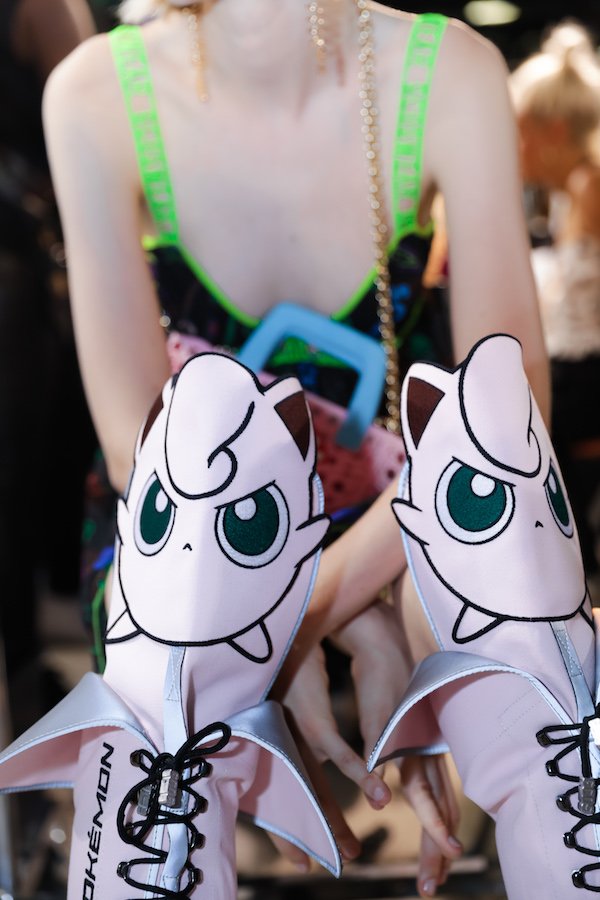
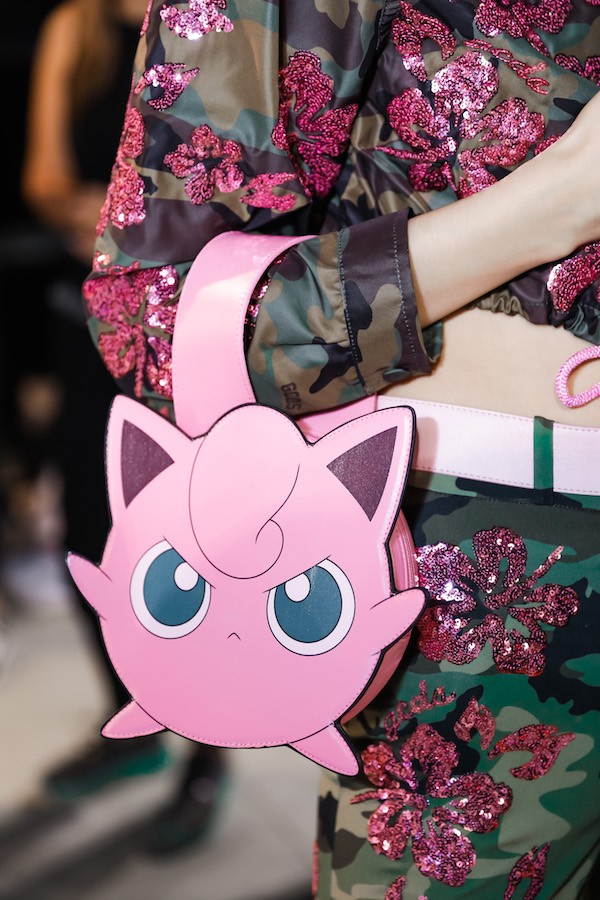
Three breasted women in midriff tops, transparent vinyl dresses, highlighter pink hair, telephone handsets and fruits which hung like jewellery were all ornaments which complemented a collection of streetwear. The brand’s collaboration with Pokémon inspired animated sandals, character appliqué which strung a fun cartoonish feel throughout the collection. Although streetwear might have been rumoured to be dead earlier this year, Giuliano’s ability to put on a show might have just landed him the title of the ringmaster and at his feet sits quite a roaring audience.
Ashish’s SS19 show at London Fashion Week came at a poignant time in India’s history. The country voted to decriminalise homosexuality at the beginning of September, a historic vote which marks a hugely significant new era.
While this event wasn’t directly referenced in the collection by the Indian-born British designer – famous for his commanding statement slogans which have previously included the iconic ‘Immigrant’ t-shirt and upbeat messages such as ‘You Are Much Lovelier Than You Think’. In this collection, the pain of the past and the joy for a new and more inclusive future instead permeated the ether.
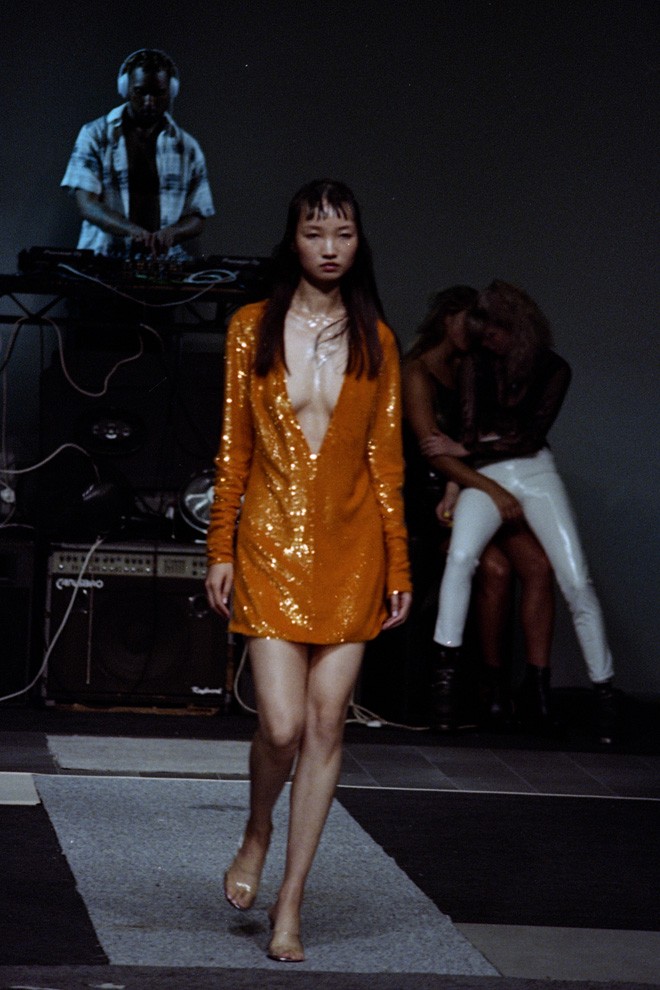
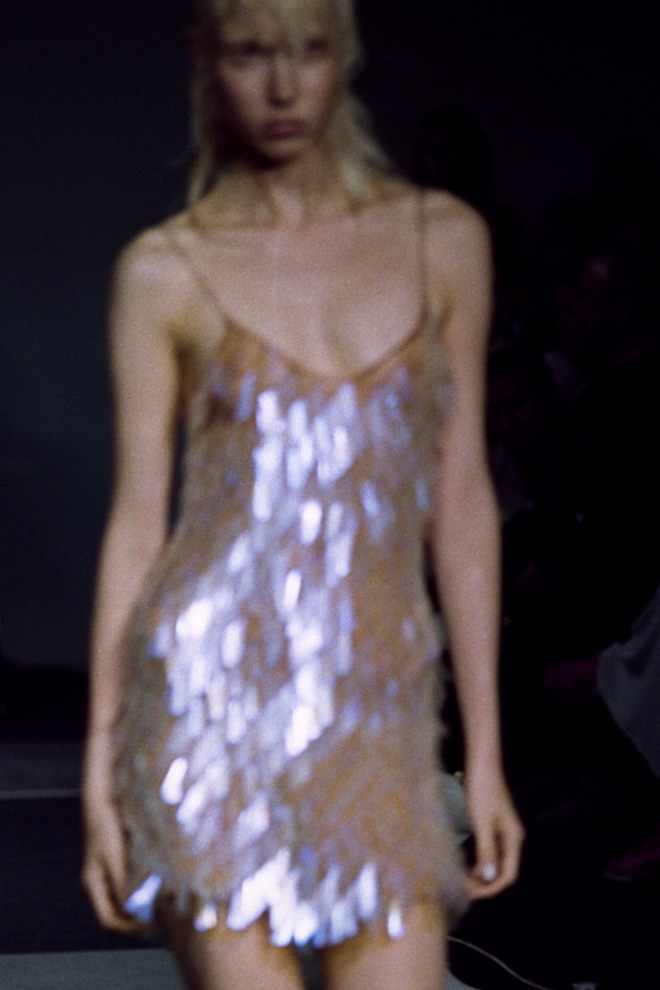
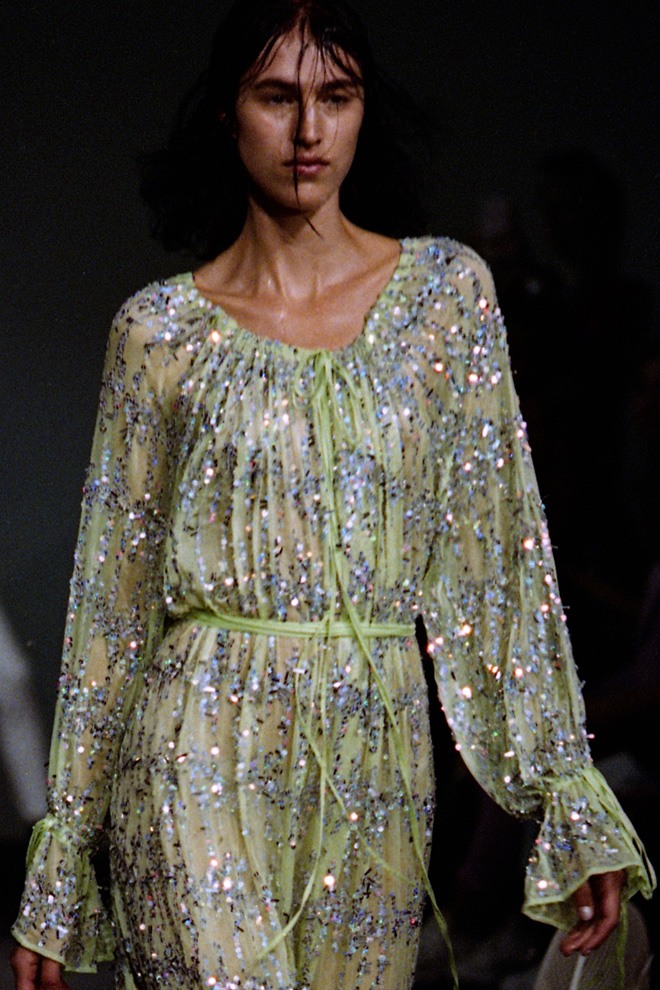
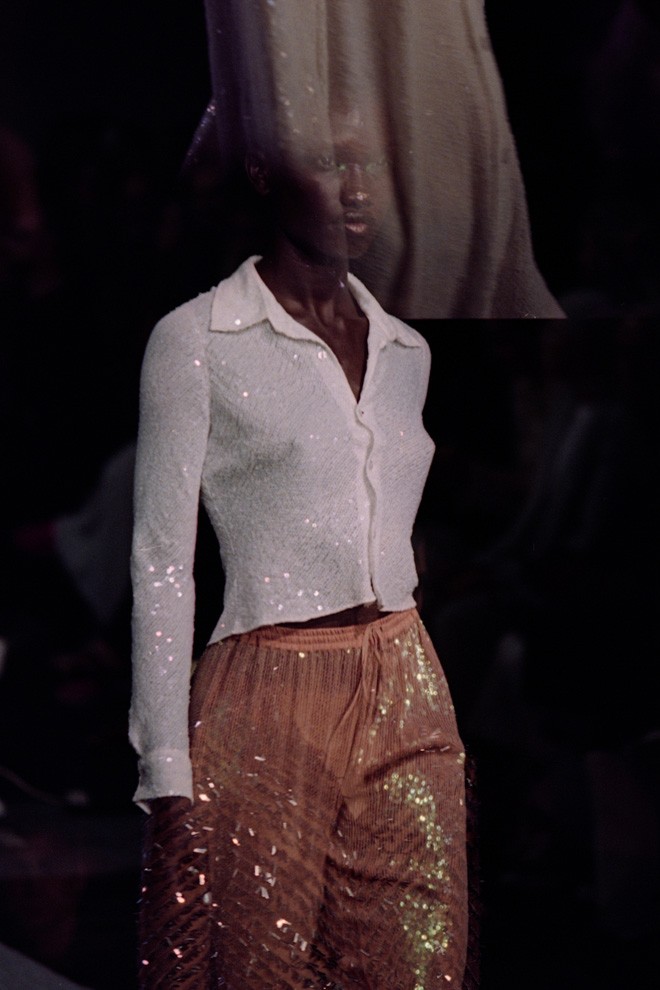
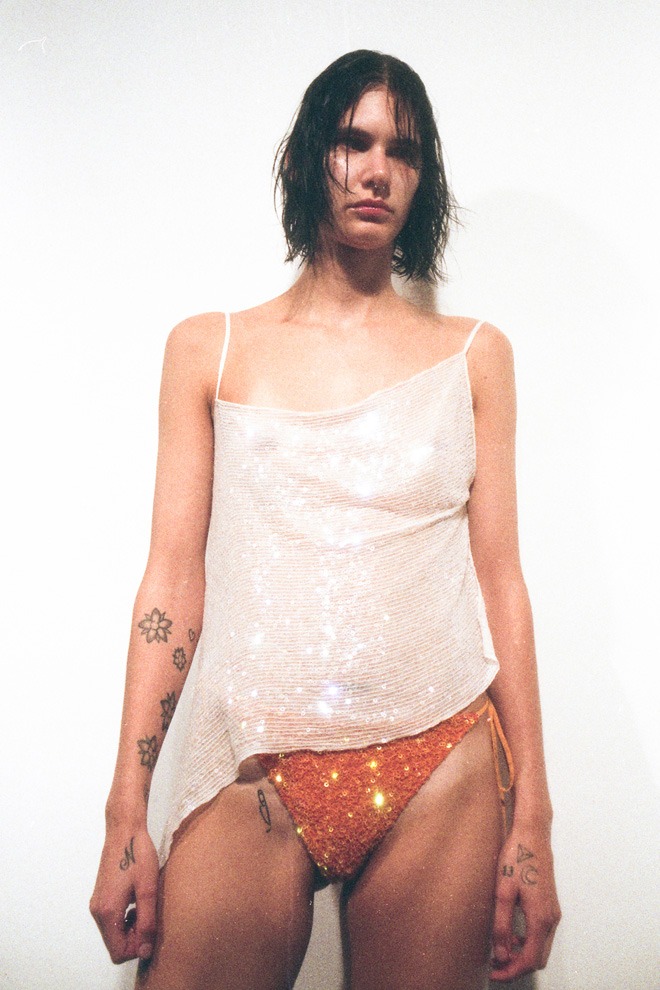
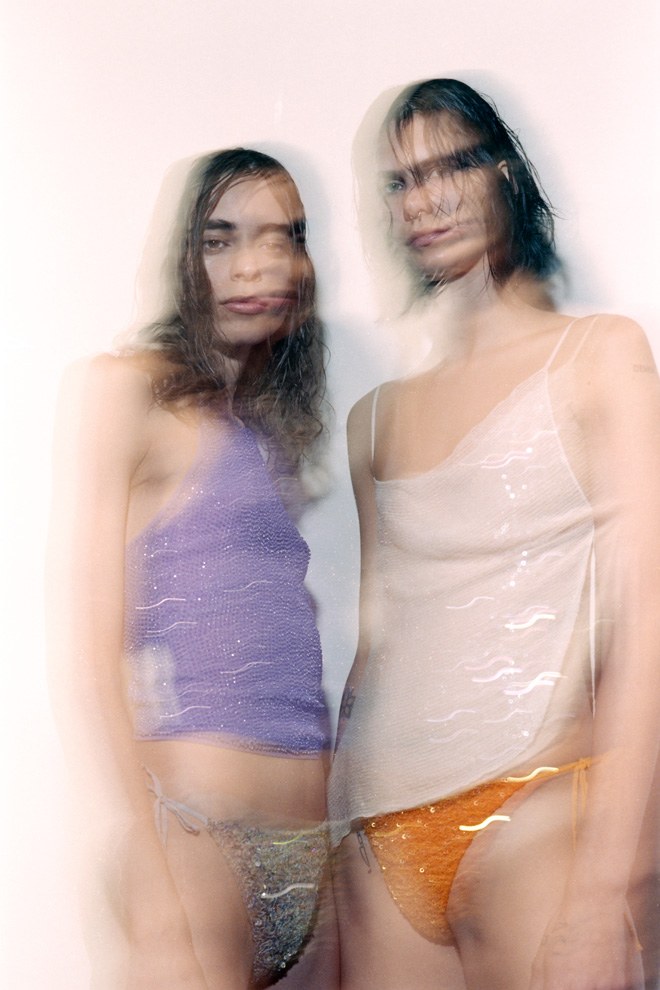
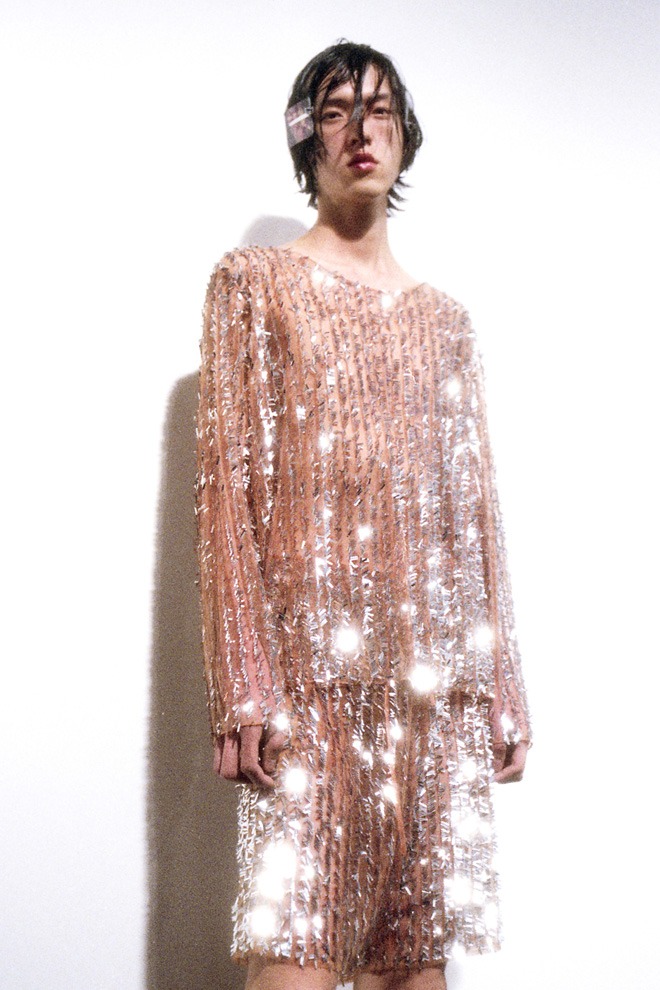
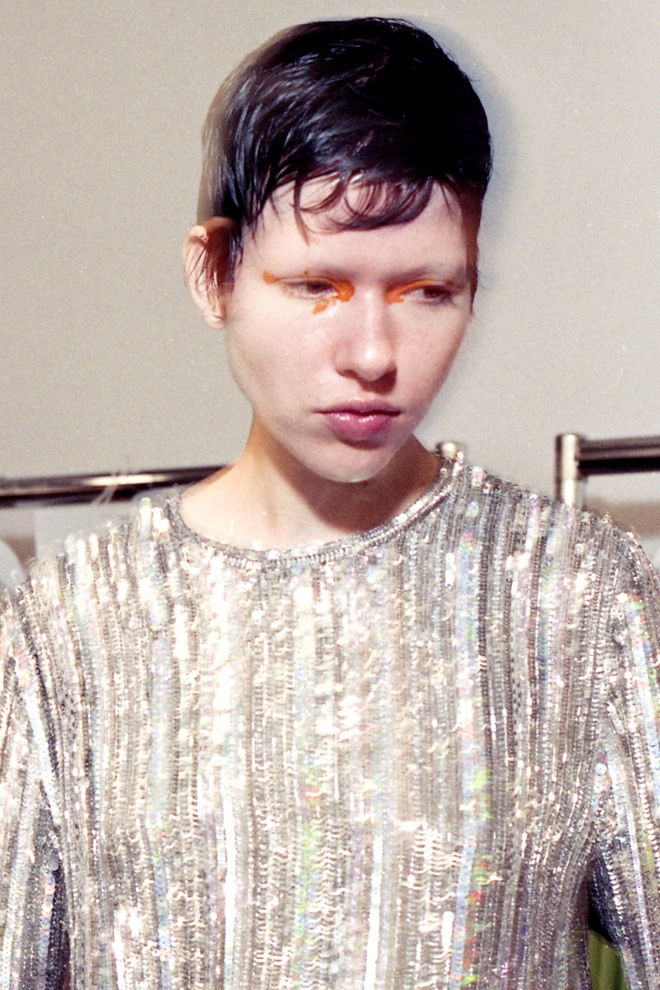
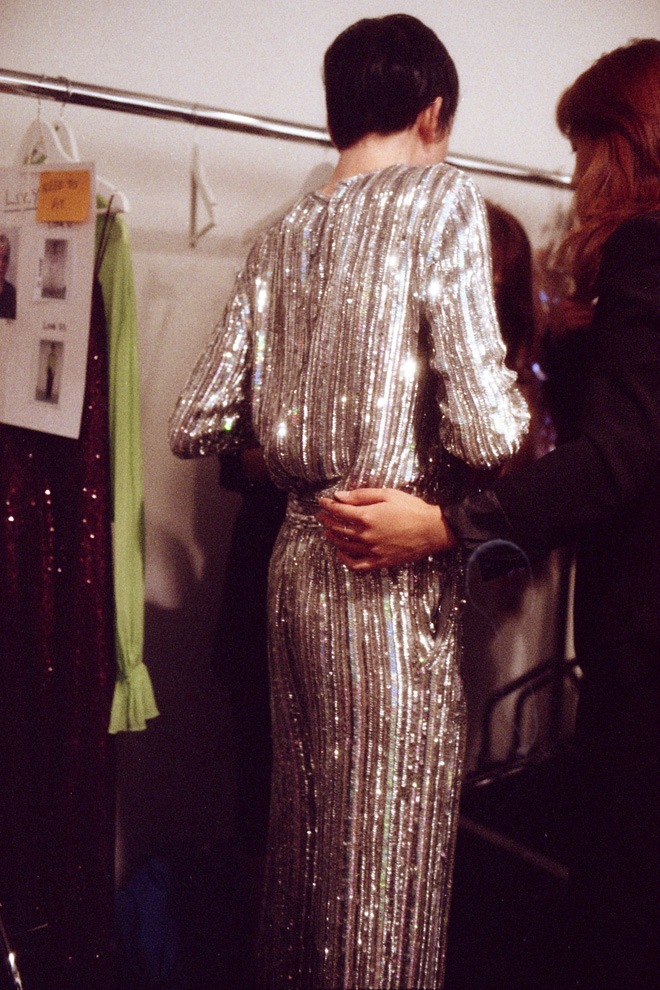
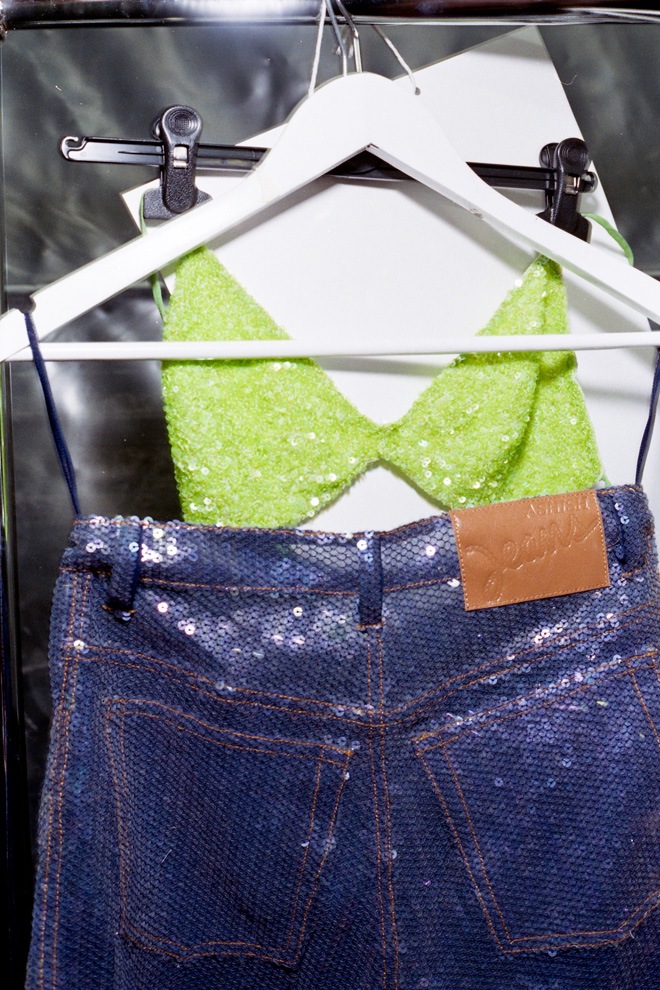
For SS19 Ashish Gupta amped up his signature statement sequins and offered plenty of 90s inspired bias cuts. For a look that has such disco connotations, Ashish managed to communicate a grunge-y, undone-ness in these looks. It felt less like a means of escaping from reality and less of a celebration of living in the now.
Ashish has previously used his designs to draw attention to the crises that pervade our times. This collection offered a dazzling moment of stillness – sequins as mirrors for reflection and pause.
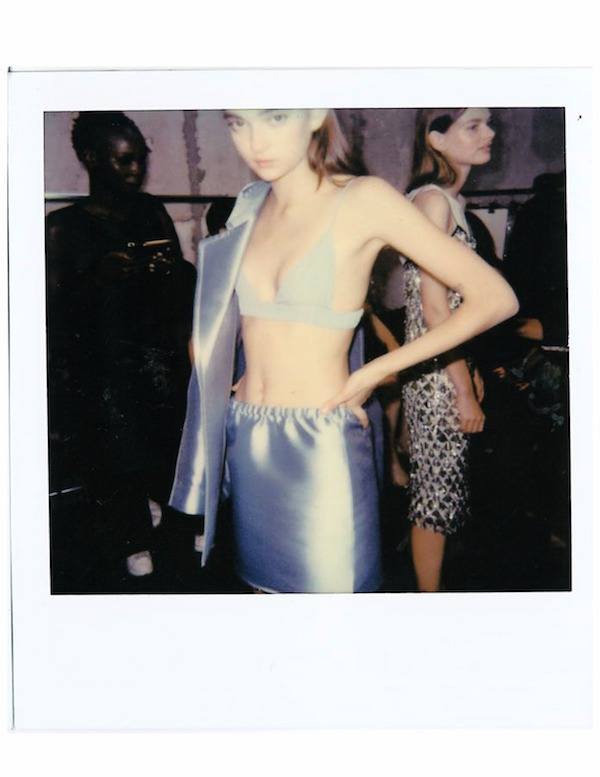
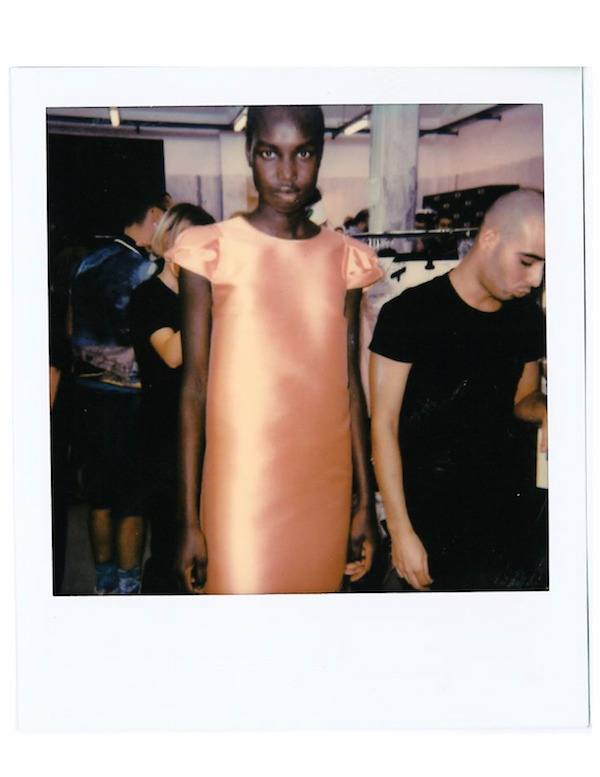
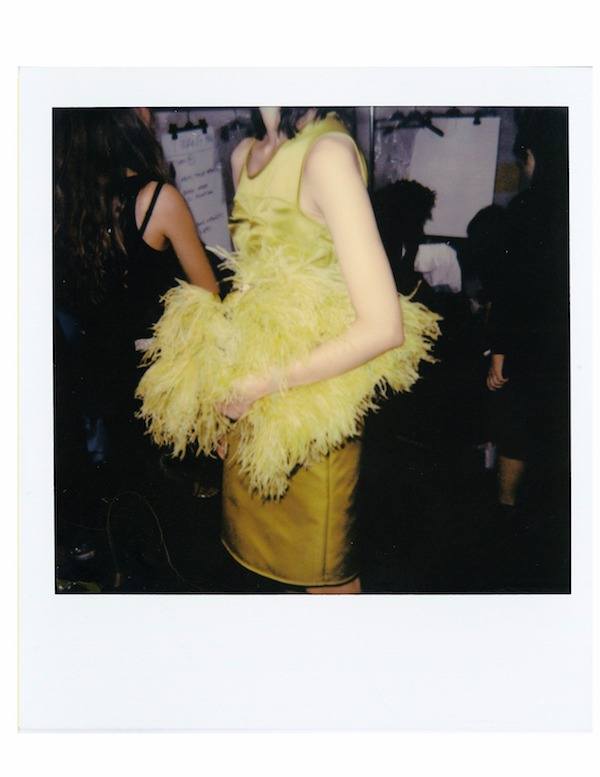
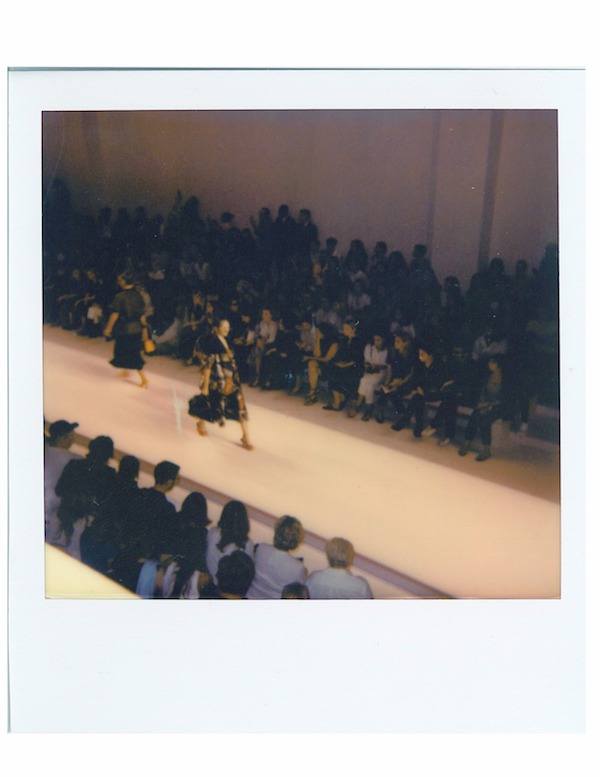
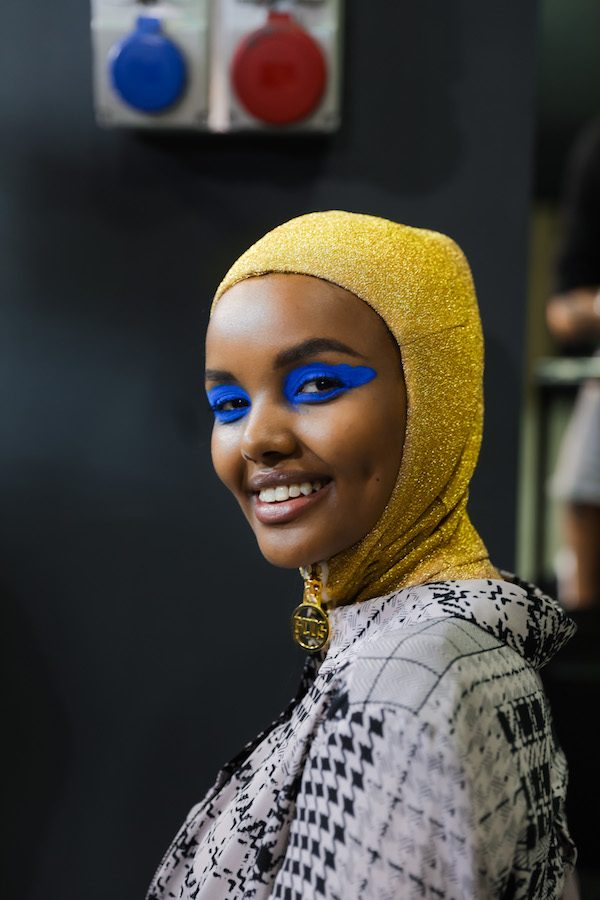
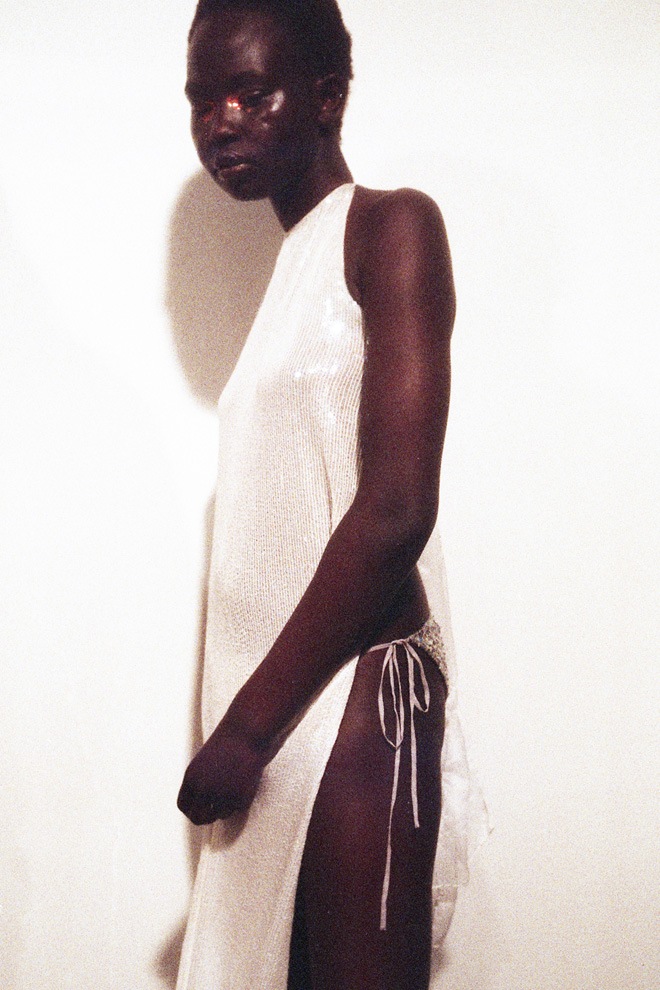
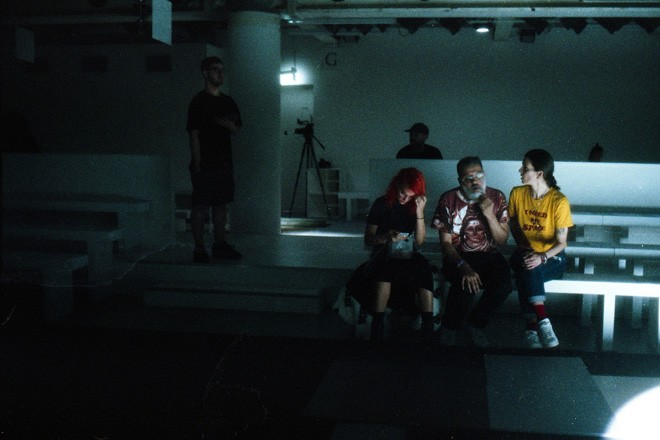
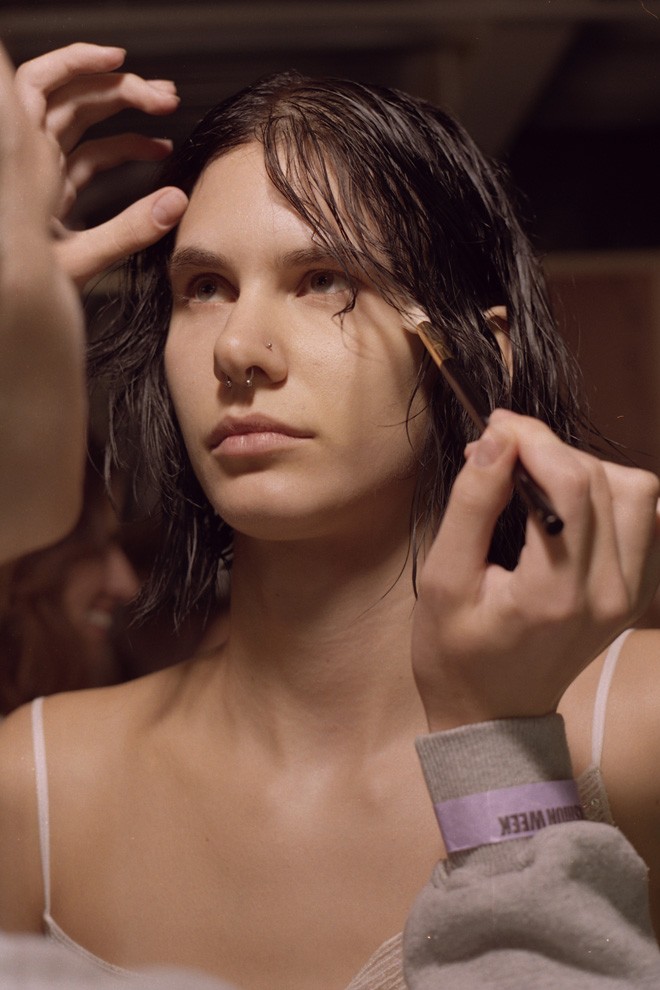
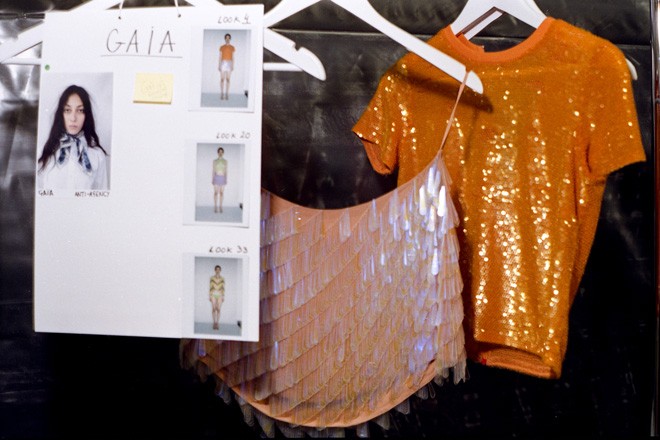
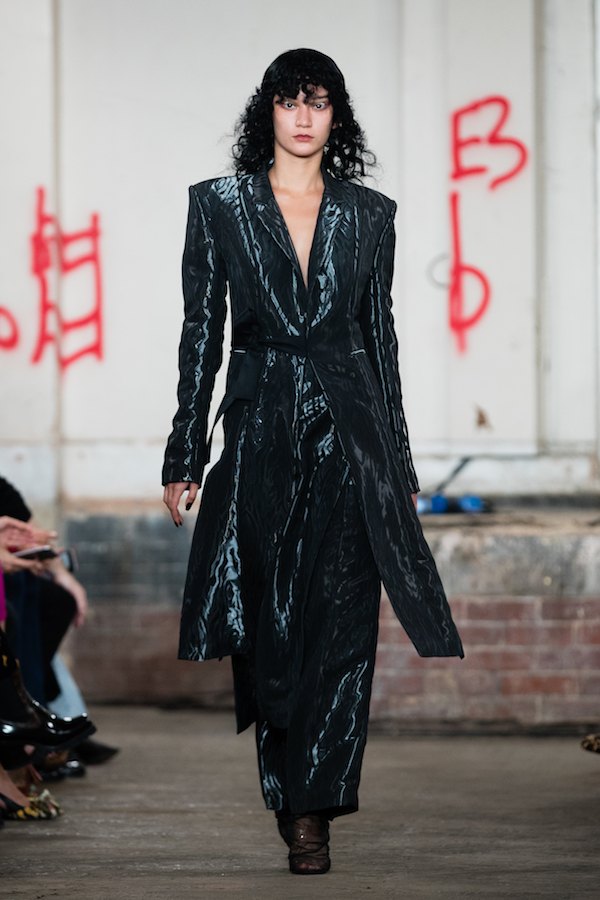
Twin contributor Alexandra Waespi documents behind the scenes and the best looks at the SS19 Ashish show.
Ashish SS19 by Alexandra Waespi for Twin magazineAshish SS19 by Alexandra Waespi for Twin magazineAshish SS19 by Alexandra Waespi for Twin magazineAshish SS19 by Alexandra Waespi for Twin magazineAshish SS19 by Alexandra Waespi for Twin magazineAshish SS19 by Alexandra Waespi for Twin magazineAshish SS19 by Alexandra Waespi for Twin magazineAshish SS19 by Alexandra Waespi for Twin magazineAshish SS19 by Alexandra Waespi for Twin magazineAshish SS19 by Alexandra Waespi for Twin magazineAshish SS19 by Alexandra Waespi for Twin magazineAshish SS19 by Alexandra Waespi for Twin magazineAshish SS19 by Alexandra Waespi for Twin magazineAshish SS19 by Alexandra Waespi for Twin magazineAshish SS19 by Alexandra Waespi for Twin magazineAshish SS19 by Alexandra Waespi for Twin magazineAshish SS19 by Alexandra Waespi for Twin magazine
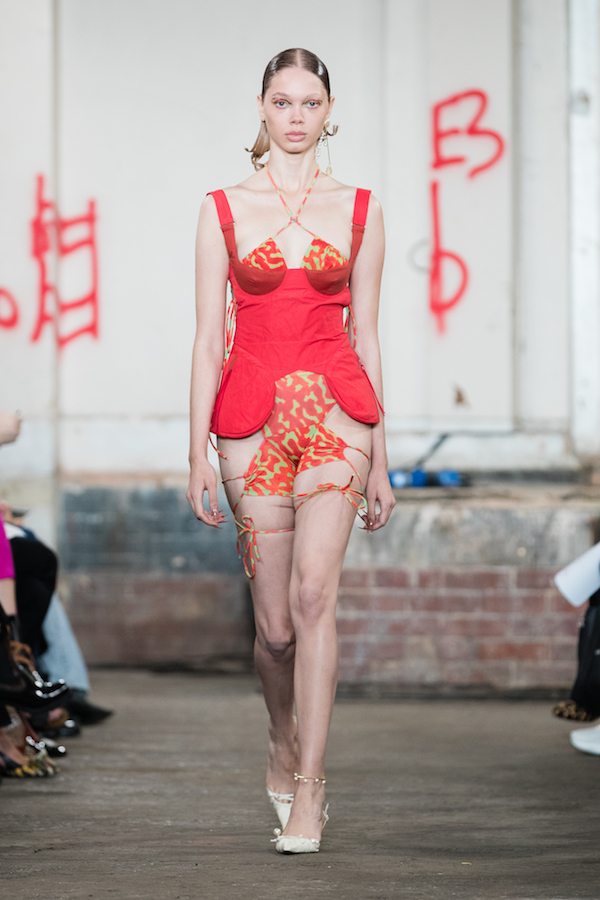
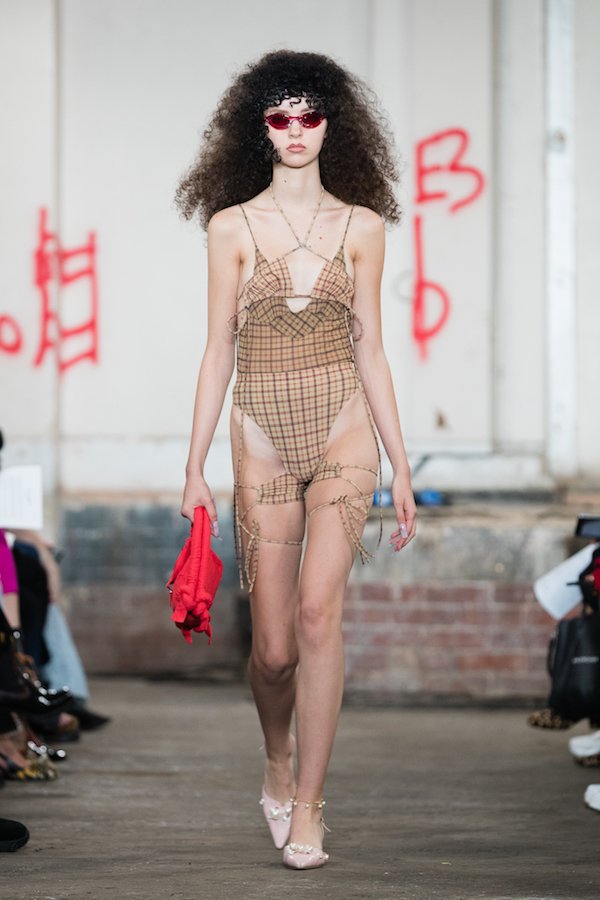
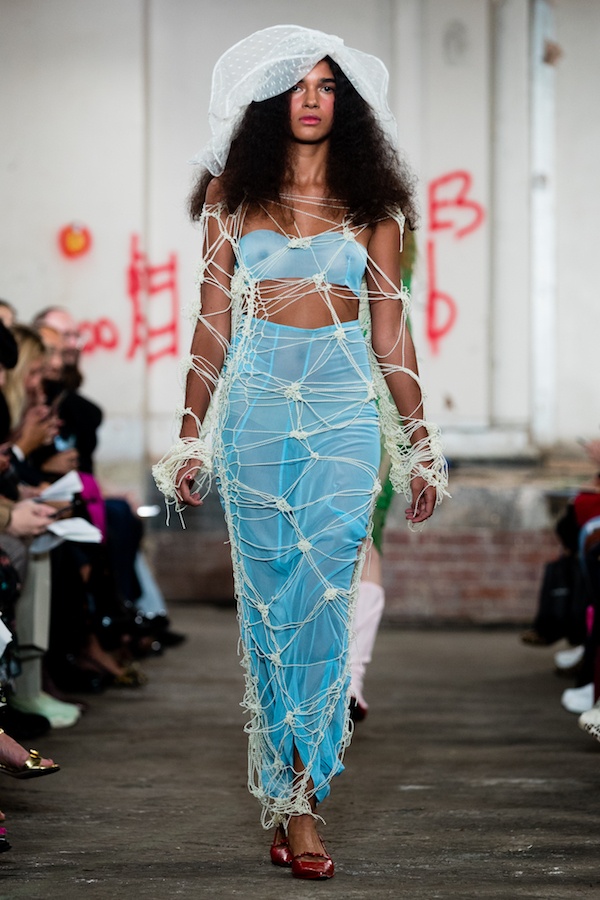
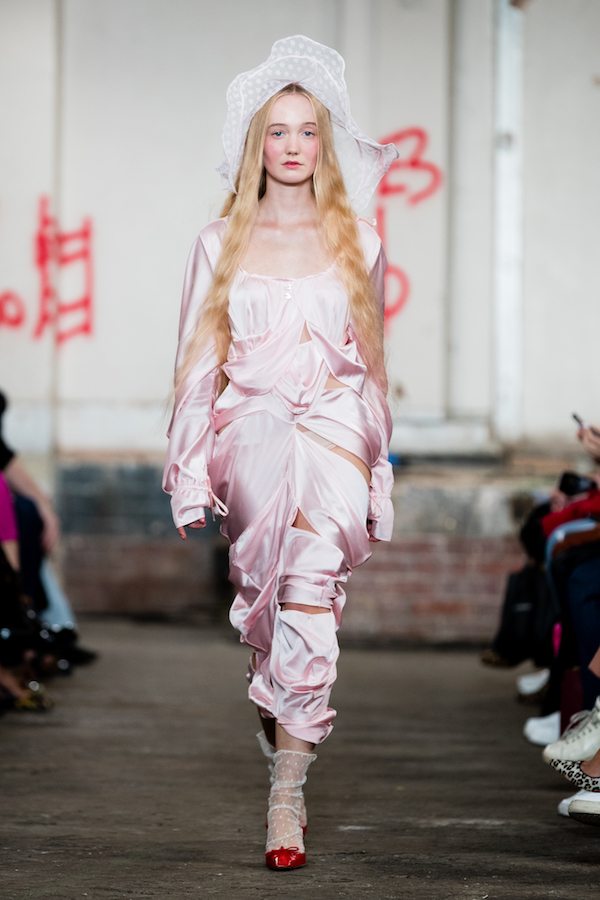
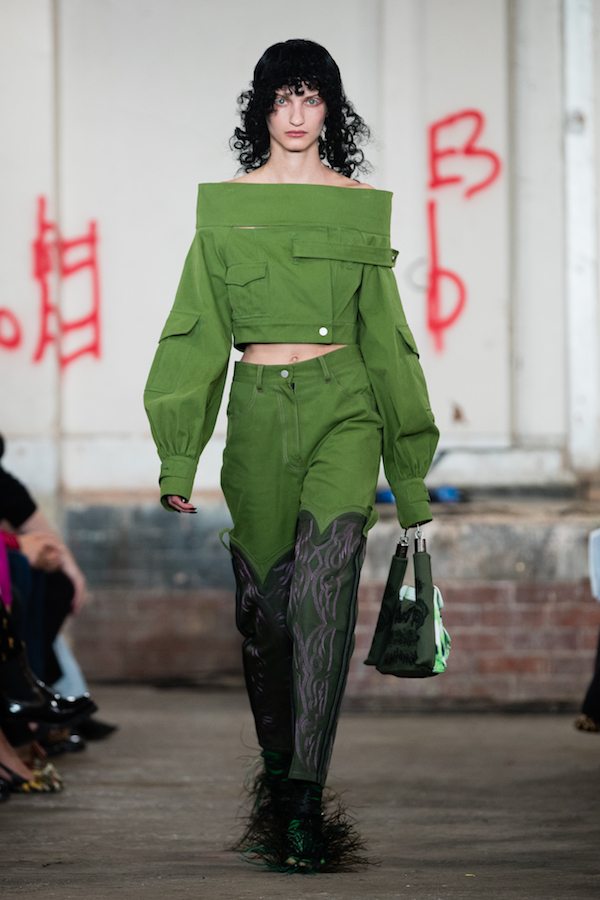
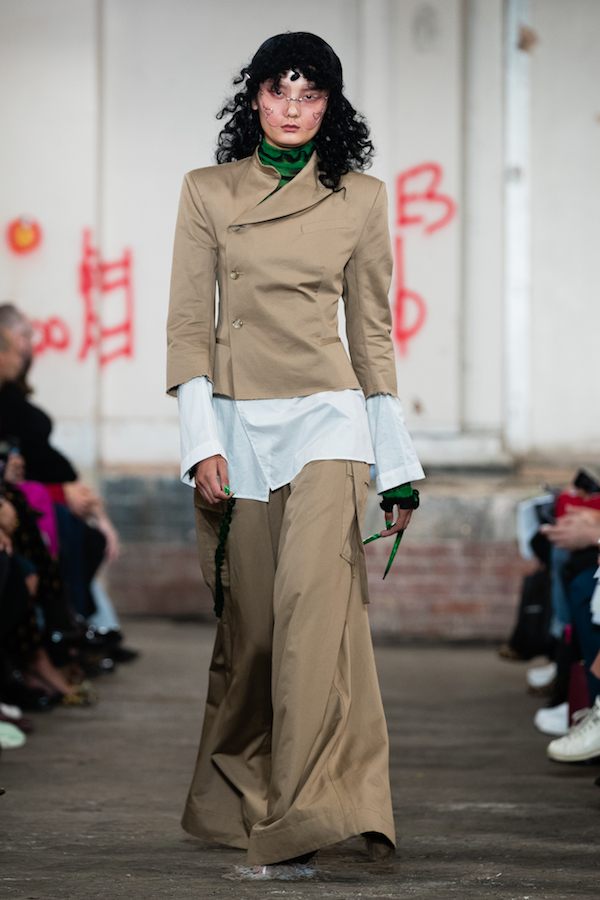
Charlotte Knowles, Yuhan Wang and A Sai Ta were the London based designers chosen to showcase at this year’s Fashion East SS19 showcase. The non-profit initiative, set up by Lulu Kennedy and Old Truman Brewery to support and nurture emerging British talent celebrates its 18th year of triumph after housing designers such as JW Anderson, Kim Jones and Gareth Pugh; just to name a few.
One of the first talents of this year’s show was the fruit of Central Saint Martins graduates Charlotte Knowles and partner Alexandre Arsenault, who launched their brand Charlotte Knowles in 2017. The designer duo presented a collection for a strong, confident and futuristic woman which focused on refined pieces with intricate details. The woman they presented was one who celebrates her femininity as she proudly strut down the runway in, halter neck bikinis, mesh slips and cut-out pieces of bright colours accented with an abundance of straps.
Fashion East, Charlotte Knowles SS19 | Images by Chris YatesFashion East, Charlotte Knowles SS19 | Images by Chris Yates
Chinese born designer Yuhan Wang who is also an alumni of the Central Saint Martins womenswear program brought forth a collection which was inspired by asian femininity and its ties to western culture. The SS19 collection was entitled Women Indors. She explored the line between coverage and exposure; delicacy and sensibility as she played peekaboo with techniques of drapery paired with sheer fabrics to create pieces which celebrated the female form in a fun yet sensual manner.
Fashion East, Yuhan Wang SS19 | Images by Chris YatesFashion East, Yuhan Wang SS19 | Images by Chris Yates
Designer A SaI Ta who previously launched his label Asai with Fashion East in February 2017 for his SS19 collection, dives into the roots of his British-Chinese-Vietnamese heritage and reinterprets this as a second generation Londoner. Ta uses fabric manipulation and pairs this with his sharp pattern making skills to create a collection with disrupts familiar visual codes by creating sharp intriguing forms of the modern day female silhouette with inspiration from military culture. After graduating from Central Saint Martins the designer gained experience at The Row and was sought after for a position at Kanye West’s Yeezy just a year into completing his MA.
Fashion East, ASAI SS19 | Images by Chris YatesFashion East, ASAI SS19 | Images by Chris Yates
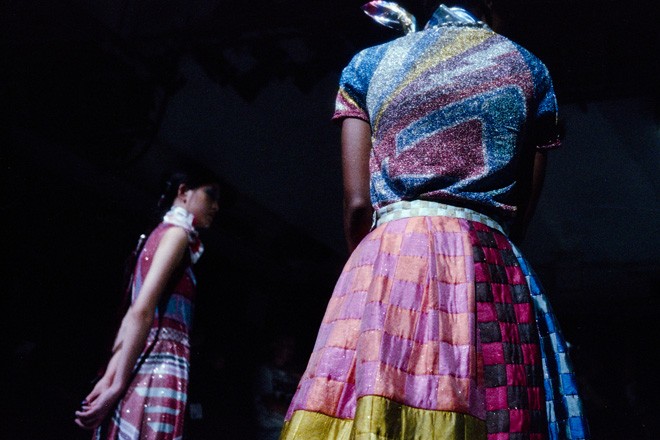
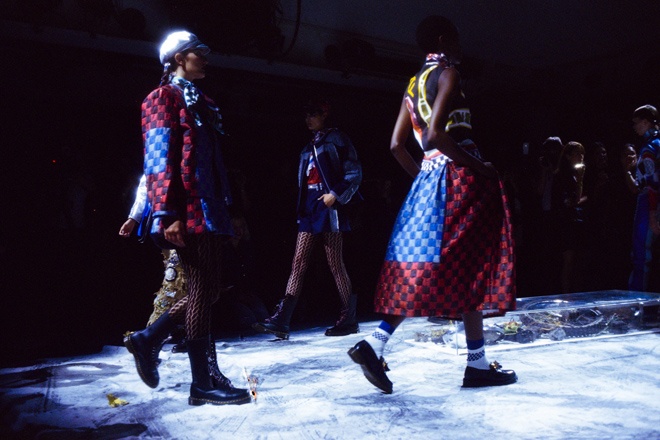
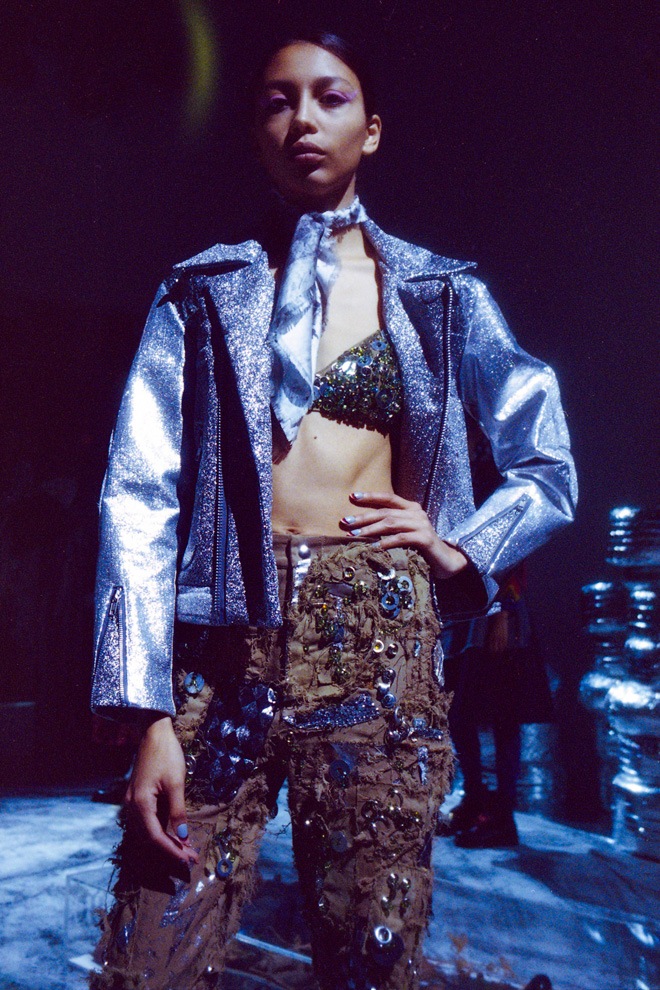
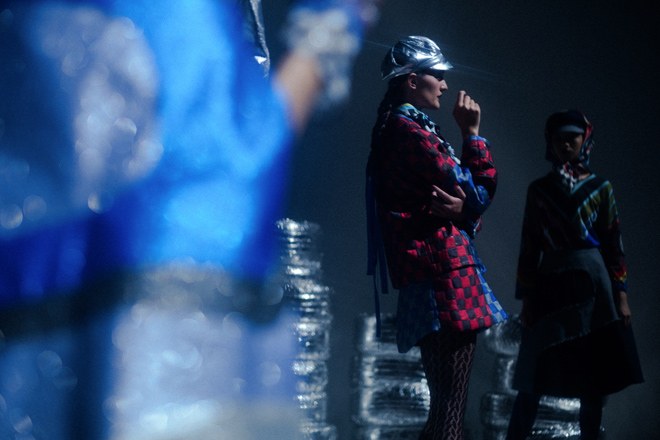
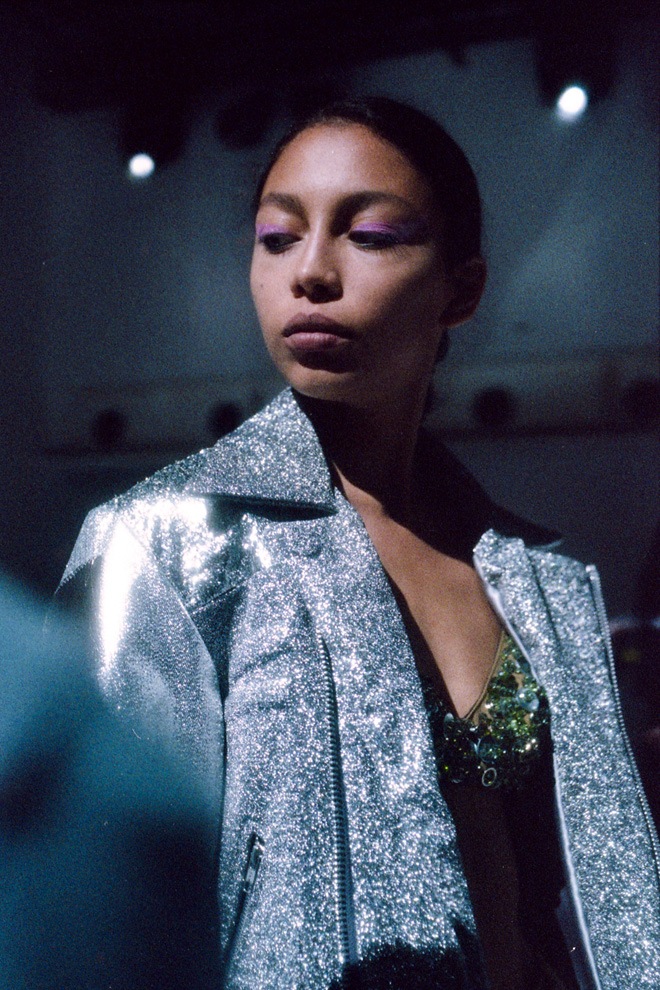
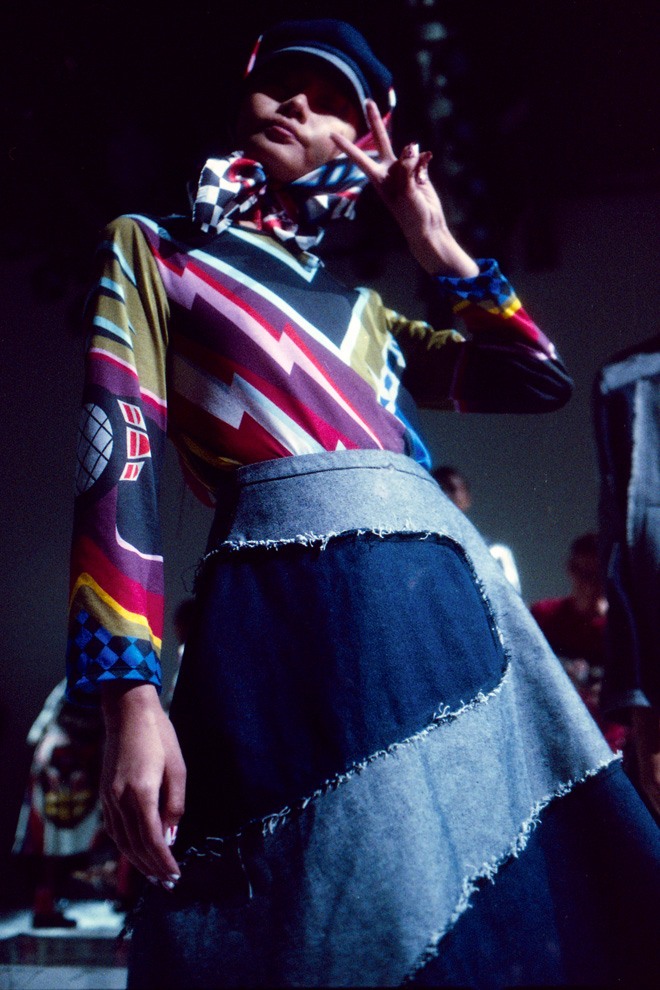
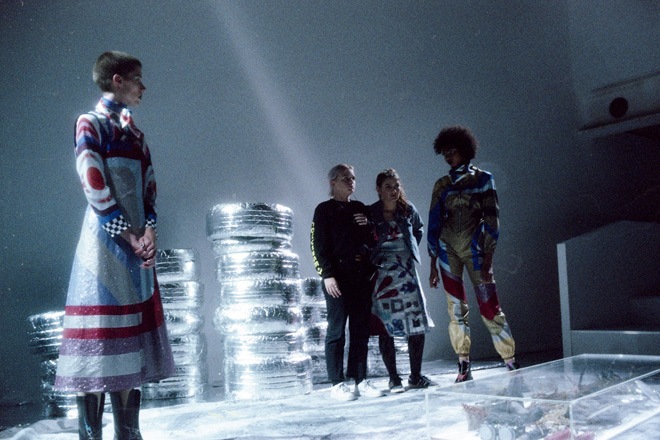
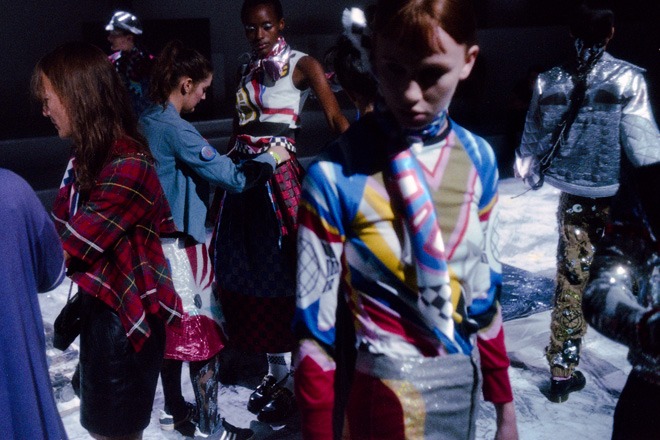
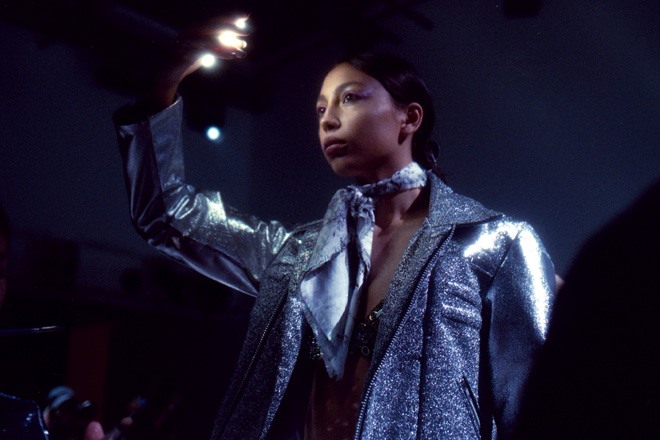
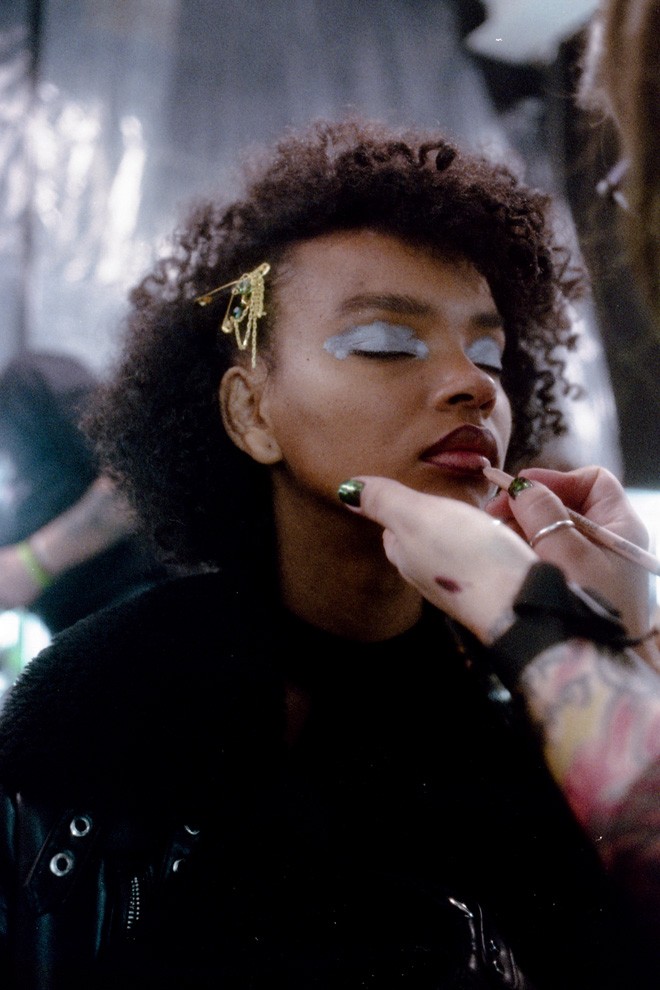
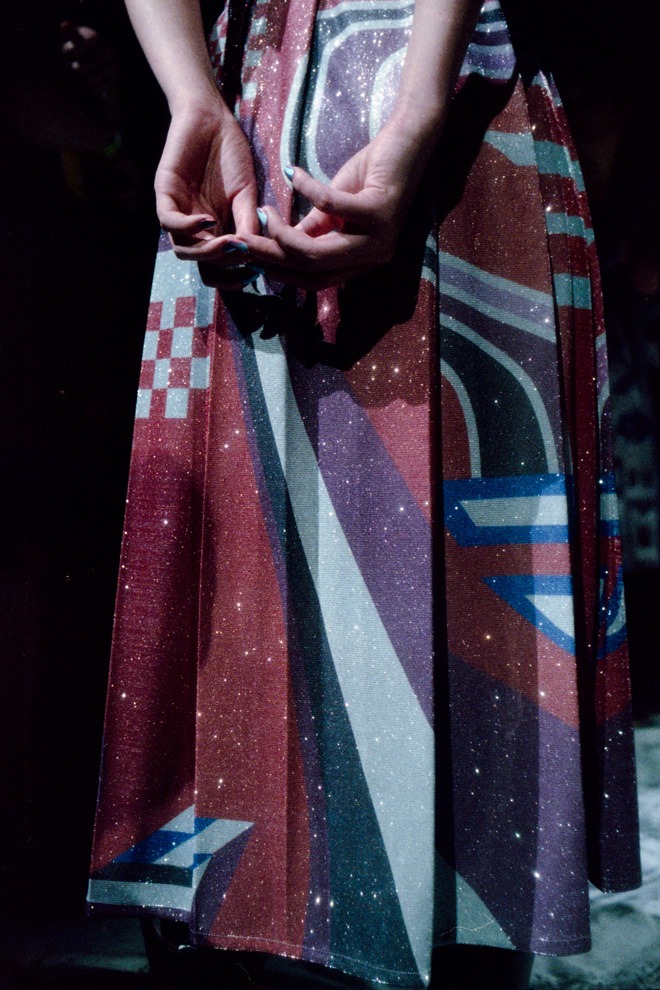
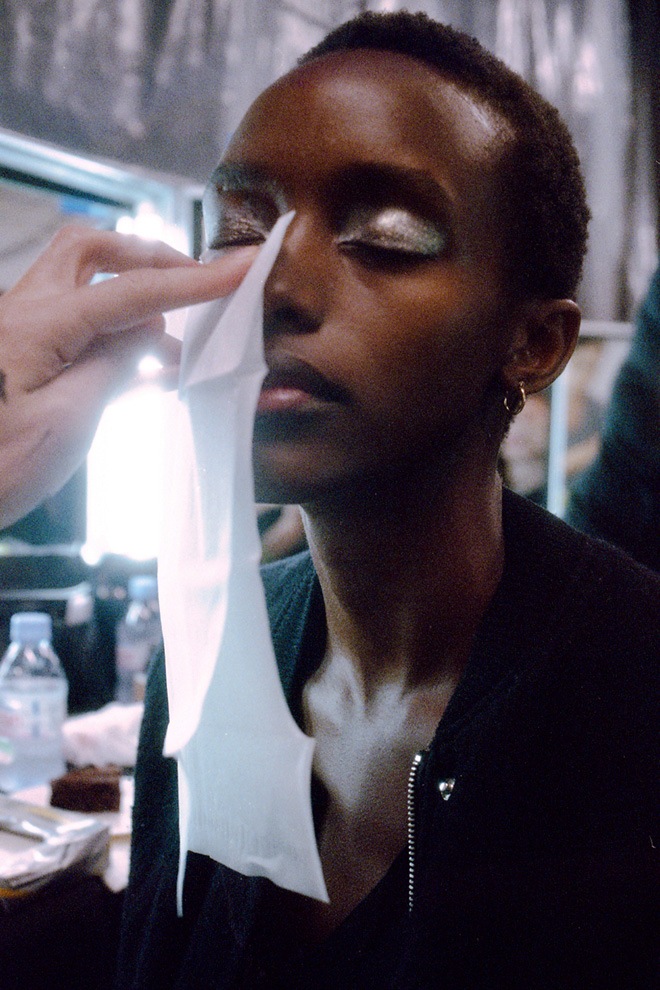
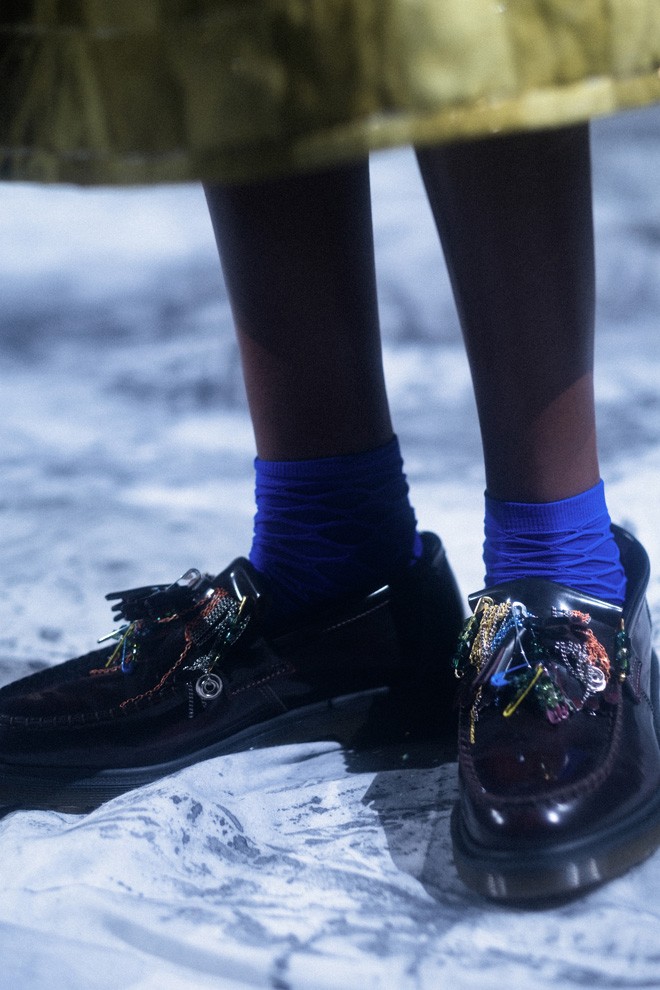
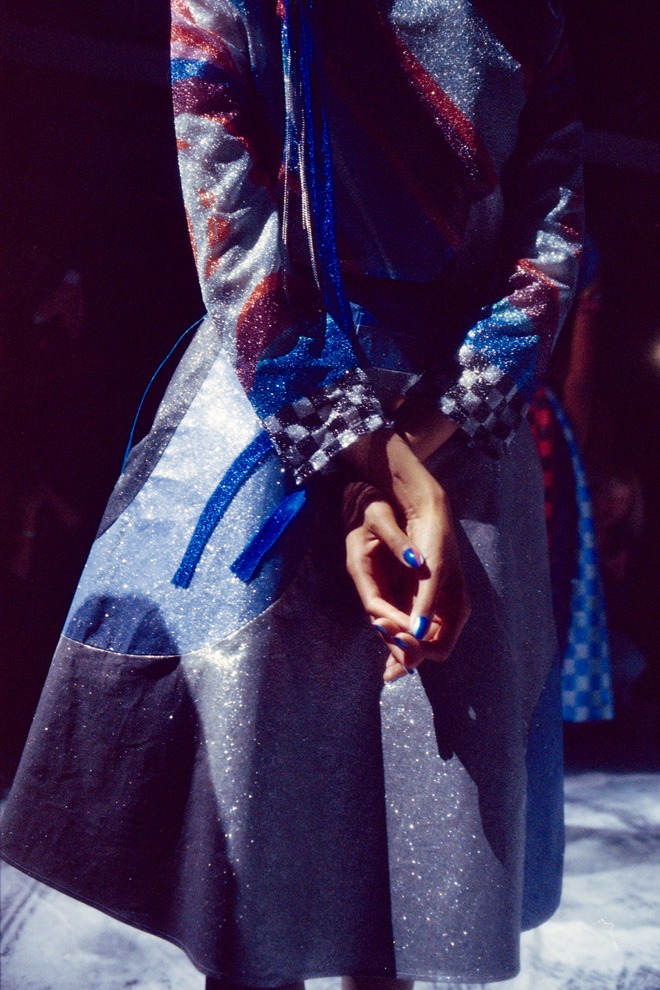
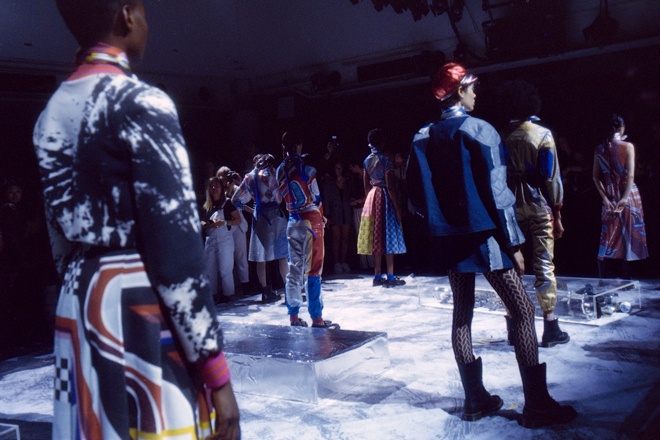
For SS19, Sadie Williams brought her signature combination of feminine sparkle and defined, futuristic prints together for a banging new take on womenswear.
The designer has developed her visual new code to offer confident emblems of empowered femininity. For SS19 Williams riffed on 1970s styles and went big on texture. Both felt controlled and new rather than repetitive or chaotic. This was thanks to razor sharp tailoring which drew outfits together crisply. Cinched silhouettes also fuelled the definition, while wide flat pleats or skirts added to the triumph.
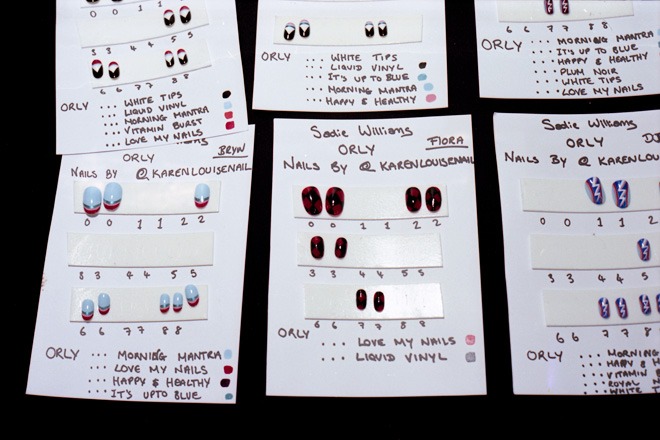
With its metallic baker boy caps, sparkling laces and statement nails, the collection invites the wearer to bring their own sense of humour and play to the looks. Never didactic, Williams nevertheless is clear on where she wants to go. And without a doubt, we’re all going to follow.
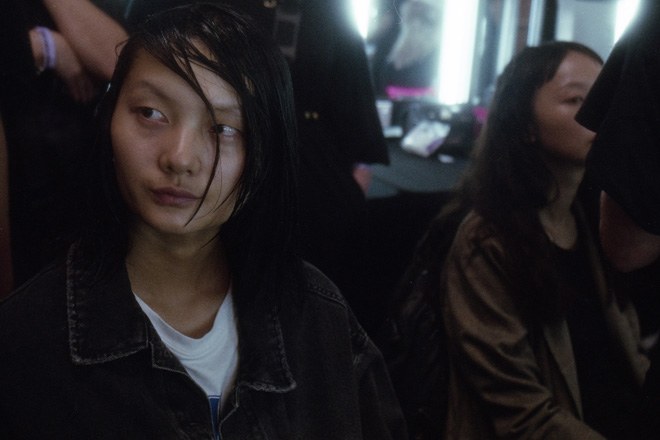
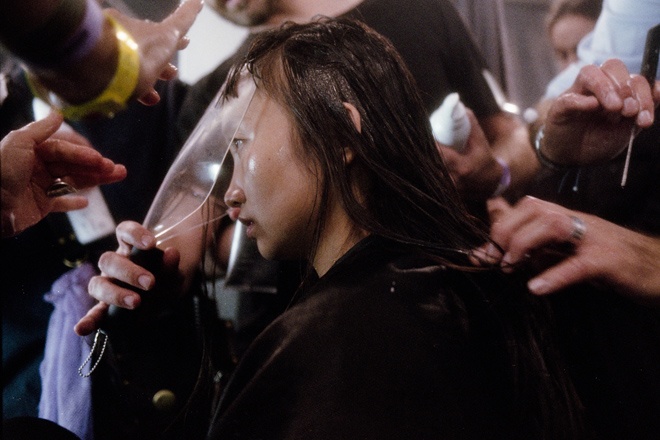
Twin photographer Alexandra Waespi captures behind the scenes at Sadie Williams SS19.
Sadie Williams SS19 | photos Alexandra Waespi for Twin
Sadie Williams SS19 | photos Alexandra Waespi for TwinSadie Williams SS19 | photos Alexandra Waespi for TwinSadie Williams SS19 | photos Alexandra Waespi for TwinSadie Williams SS19 | photos Alexandra Waespi for TwinSadie Williams SS19 | photos Alexandra Waespi for TwinSadie Williams SS19 | photos Alexandra Waespi for TwinSadie Williams SS19 | photos Alexandra Waespi for TwinSadie Williams SS19 | photos Alexandra Waespi for TwinSadie Williams SS19 | photos Alexandra Waespi for TwinSadie Williams SS19 | photos Alexandra Waespi for TwinSadie Williams SS19 | photos Alexandra Waespi for TwinSadie Williams SS19 | photos Alexandra Waespi for TwinSadie Williams SS19 | photos Alexandra Waespi for TwinSadie Williams SS19 | photos Alexandra Waespi for Twin
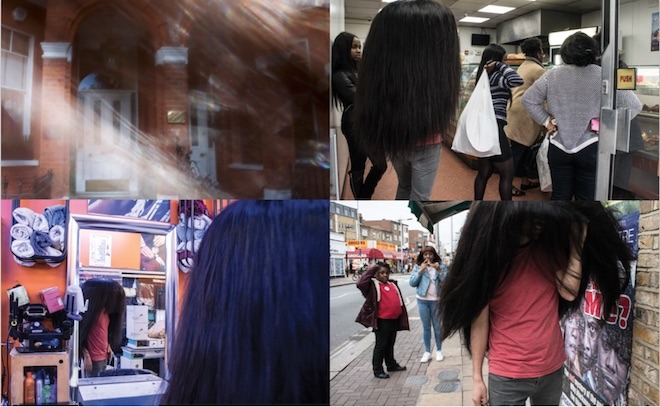
Londoners heading south should leave room for a longer bus journey this week thanks to a new project opening along the 63 bus route.
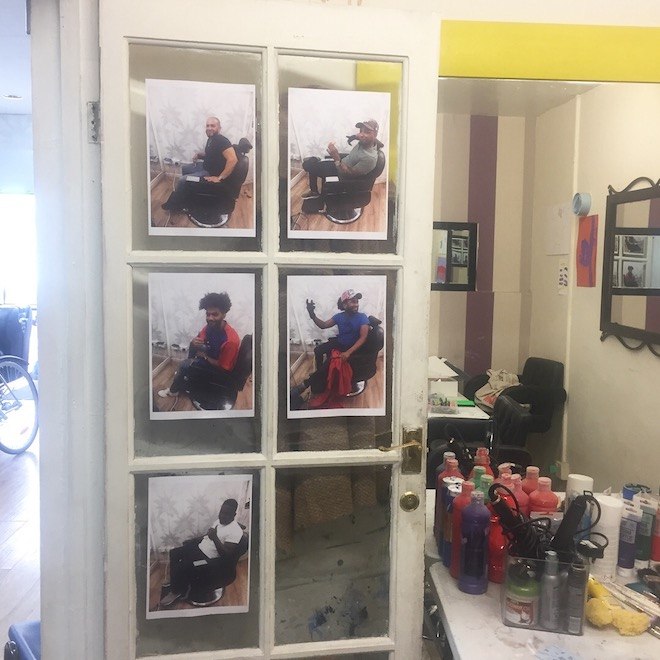
Curator Sasha Galitzine has partnered with 13 artists with 10 hair and beauty salons to make site-specific works throughout the route. Each work explores and celebrates the role of the salon in the local community, and the journey runs from Clerkenwell to Peckham.
The participating artists Larry Achiampong, Gabriele Beveridge, Ellen Gallagher, Gery Georgieva, Paul Kindersley, Eloise Lawson, Andrew Logan, Isaac Olvera, Paloma Proudfoot, Hans Rosenström, Stasis, Freddy Tuppen and Kirsty Turner Jones.
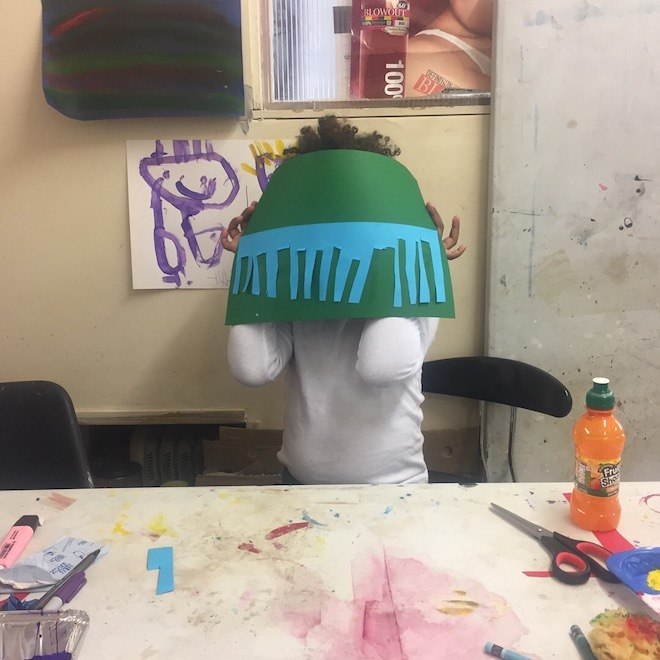
One of Lewis Barbers clients in Eloise Lawson’s workshop there whilst waiting for a haircut.
The participating salons are Barber Streisand, La Bodeguita & Elephant & Castle Shopping Centre, Diamond Nails, Manuel Guerra Skin Care & Sylvio’s Juice Bar, Old Kent Road Barber Shop, Lewis Barbers, Miami Health Club, Sam’s Barbers, DKUK and Divine Destiny.
The project draws attention to the vital role that these salons play in the local community, how they act as spaces for socialising and support as well as for beauty treatments and hair styling.
Eloise Lawson and Lewis barbers.
In doing so Sasha seeks to raise questions about the role of the salon in London, and beyond that to investigate notions around what a social space is, and how it is made.
For more information about Salon 63: Artist & Salon collaborations down the 63 bus route, click here.
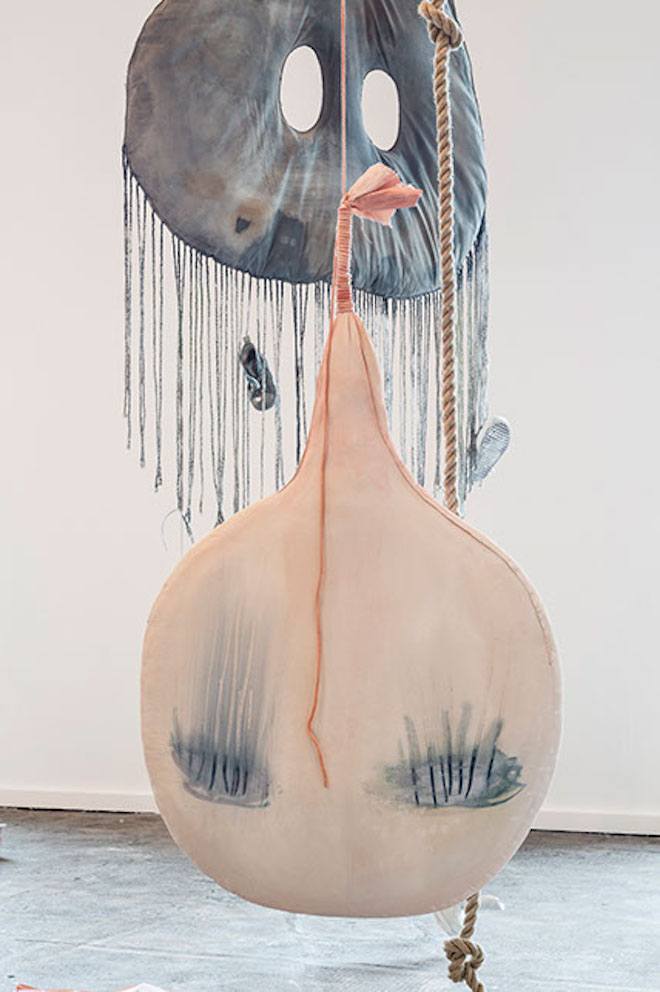
London-based artist Megan Rooney premiered a new performance SUN DOWN MOON UP yesterday at Park Nights at the Serpentine Pavilion.
Rooney is a storyteller whose cross-disciplinary practice encompasses painting, sculpture, installation, performance, written and spoken word. Her imaginative, narrative works are deeply rooted in the present, considering, questioning, and critiquing crucial social and political issues. Political chaos, gender and the body, the ephemeral self, humanity and nature. Her performance Sun Down Moon Up, in which a group of female magpies invade Mount Athos, explores the human subject and the natural world, boundaries and transgressions of space.
In collaboration with Nefeli Skarmea, choreography, and Paolo Thorsen-Nagel, sound. The piece was performed by: Temitope Ajose-Cutting, Daniel Persson, Leah Marojevic and Megan Rooney.
Park Nights takes place at the new Serpentine Pavilion each year and requires artists to respond to this environment. How has Frida Escobedo’s 2018 Serpentine Pavilion influenced your performance and how will you interact with it? And in this space, how will you physically and performatively explore more metaphorical themes of boundaries, forbidden space, transgression, etc.?
SUN DOWN MOON UP has been constructed specifically around the pavilion, that is our site and that provides the intention. It becomes for me the skin of the piece, holding everything inside of it. Frida’s Pavilion has four entry/exit points, so it encourages movement very naturally. I’ve written a new text which deals with the present moment: the festering chaos of politics with its myriad cruelties and the laden violence of our society, so resident in the home, in the female, in the body.
“I saw you dropping eggs out your car window
Passing through the stop signs
Yielding to blue sky
Praying for a pay rise
You were honking and choking
Singing out malarkey
True as god”
This performances uses the body as a site of resistance and as a site for storytelling. I am interested in the transferring of the myths, in the boundaries between real and fake in the construction of new stories. This work is responding to the present moment, to the complication and confusion of it. Things are swinging around violently and moving further and further to the right. The characters are resisting.
Your works have been described as fragments of a larger whole. How does SUN DOWN MOON UP fit into your larger body of work and or propel it further?
Yes, I think of the performances as chapters in an ongoing story. I am interested in the movement of stories, and what happens to stories overtime, which stories are preserved and which are lost? We are at a difficult moment in the story and as a result things have become quite stark and stripped back – only the urgent things remain.
I like that idea of focusing on what’s urgent or imperative. And that’s really apparent in your work, in the subjects that recur and the characters that often return. Gender and the body, the female body and femininity in particular, and the natural world and environment seem to always play an important. How do they manifest in SUN DOWN MOON UP?
I write about the things I know, the things that I experience in my everyday life. The things that I see in the people close to me. The stories I hear.
My performances occupy a slippery territory, I want you to come and see them. Not to look at static single pictures of the work on Instagram, not to watch documentation – although, of course, we do this all the time. But this is something that unfolds in real time and that is important. It’s about the bodies in the room and the bodies in the piece. It’s about sharing something together. There’s something very powerful in that.
For Park Nights, you’re working with Nefeli Skarmea on choreography and Paolo Thorsen-Nagel on sound. What was this process of collaboration like? What have you achieved together?
I met Nefeli Skarmea three years ago at the Serpentine when I was working on another performance called, Last Days. Last Days. Last Days. Over the past few years, we have been developing a universe of movements that relate to the texts that I write. I see the performances as different chapters in an ongoing story that is constantly changing and evolving but that drags that past with it. Nefeli and I have developed a number of pieces over in past few years in very different locations.
Similarly, I’ve also been collaborating with Paolo Thorsen-Nagel across different projects. His understanding and intimacy of sound really changed the way I hear the world. We started sending sound files to each other, creating a landscape of sound for the performance to live inside of. I’m interested in the transfer of sound between bodies and places and across time, how we can trap and store sound and then use them as tools for communication. The wail of an angry child, the sound of a bus engine, the howl of a dog tied to a rope. The relentless hum of crickets chanting in unison. The blocking out and isolating of sounds. When the roll of a wave takes over this invisible landscape. How water sounds in different places and the different types of words for describing this sound. For example, on the west coast of Finland, you can hear the roar of the sea in the distance almost like a constant hum – only discernable when you isolate it but after impossible to ignore. They call this the brus. Like a storehouse of sound attached to memory.
I spend a lot of time in the studio working on my own. Performance is my chance to be social and I love that feeling. The studio is full. Everyone is picking each other’s ideas apart, and we’re building something together. Performance is also about orchestrating something – about bringing the right people into the situation and working it out together. You have to have a vision, of course. It can’t be everything – it can’t be a soup. It has to sing. It’s about having control and losing control for me and sucking the thing out of people that you see in them.
Why Mount Athos? Why magpies? Where did the inspiration come from? How did this setting and these characters connect for you?
Many years ago I saw an opera by Giannetto De Rossini called La Gazza Ladra – The thieving Magpie. It tells the story of a French girl accused of theft who is tried, convicted and executed. Later, the true culprit is revealed to be a magpie. La Gazza Ladra is best known for the overture with its use of snare drums. This section of Rossini’s overture evokes the image of the opera’s main subject – a clever, cunning, thieving magpie. Magpies are extremely intelligent, ancient birds that are surrounded by myth and superstition, especially in Britain. There are always bird references inside my performances.
And Mount Athos?
I read a news article about Mount Athos a couple of years ago. It’s situated in Northeastern Greece, a peninsula that extends its boundaries into the sea. A place women are banned from entering, including all female animals. It’s been inhabited by a group of Eastern-Orthodox Monks for over a 1000 years. Athos becomes a kind of literal, visible boundary. One that is shrouded in secrecy and perhaps can be interpreted as having little consequence. What impact if any does banning woman for this place really have? You could argue very little. But I think we can use this to speak about invisible boundaries and invisible violence. Access. Isolation. Separation. Distance.
Humans have always had the impulse to create barriers. To say you can go here and not there. This belongs to you. This belongs to me. This is mine. That is yours. You cannot enter here. The idea of boundaries are forever caught in a wave of absurdity – and yet every aspect of our lives is wrapped in this basic idea of territory and belonging.
It’s not really about Mount Athos. I did go there this summer or to the closest town Ouranoupoli. I went on this boat cruise around the peninsula, 500 meters from the shore, which is the closest women can get to visiting the monasteries. The Monks ride out from the monastery on a speed boat and board the main ferry that holds about 350 people – with suitcases full of merchandise that folks can purchase. This loud speaker describes the different monasteries, explaining all the incredible relics inside that you don’t have access to. I did a lot of filming on the boat. You can buy beer and sandwiches.
I think you have to go to places to make references real. To observe the people in those places. To sit on a night train clutching your belongings in your lap, surrounded by drunk men. The trip itself was intense and difficult at times; at other times, it was totally banal and very fucking hot. I watched this singed landscape blowing past the window, stopping where wildfires had scorched sidewalks into carpets of ash.
Megan Rooney, Park Nights in partnership with Cos at the Serpentine Pavilion, September 14th.
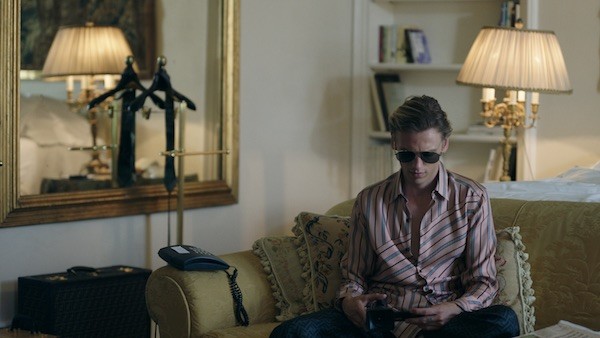
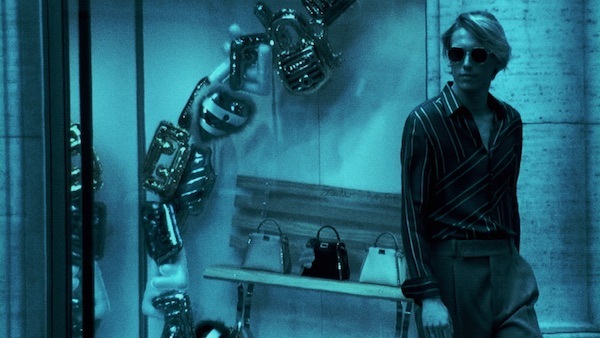
For their previous SS18 men’s eyewear story titled ‘Discovering Me’, Fendi chose to muse upon musician, actor and model Jamie Campbell Bower with a fashion film which explores the actor’s stage prowess along with the discovery of his inner self.
Their fascination with the performer is further explored in their latest film for FW18-19 with a follow-up story called ‘Play Me’. The video features Bowie in his hotel room in Rome wearing Fendi accessories as he is interrupted a phone call with notice of a delivery left for him. As the actor opens the box, he discovers a note which reads ‘Play Me’ along with a DV camera tape. The footage reveals Jamie strolling the local Roman landscapes along with intercuts of his daily life inside the Roman hotel room — a juxtaposition of his off-stage moments unfolding in front of the viewer. Discover the full video here.
This weekend Megan Rooney will conjure an immersive world at the Serpentine Pavilion as part of their Park Nights series.
The performance will centre on the story about a group of female magpies who invade Mount Athos, exploring the idea of transgression within forbidden space and investigating metaphors offered by nature.
Rooney is widely known for her fluid and expansive narratives. The artist brings together a rich catalogue of expression, from painting and sculpture to spoken word performances, in order to convey her imagined worlds. And while her settings may feel apart from the everyday, her themes and topics are deeply rooted in the current political and social sphere.
This performance will include choreography by Nefeli Skarmea, and sound by Paolo Thorsen-Nagel.
Buy tickets for Megan Rooney, Park Nights at Serpentine Pavilion, 14th September, here.
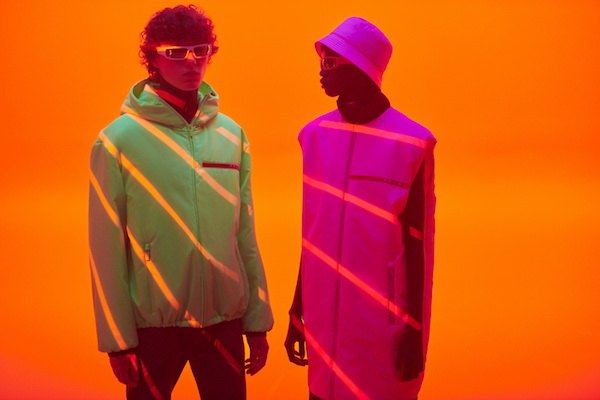
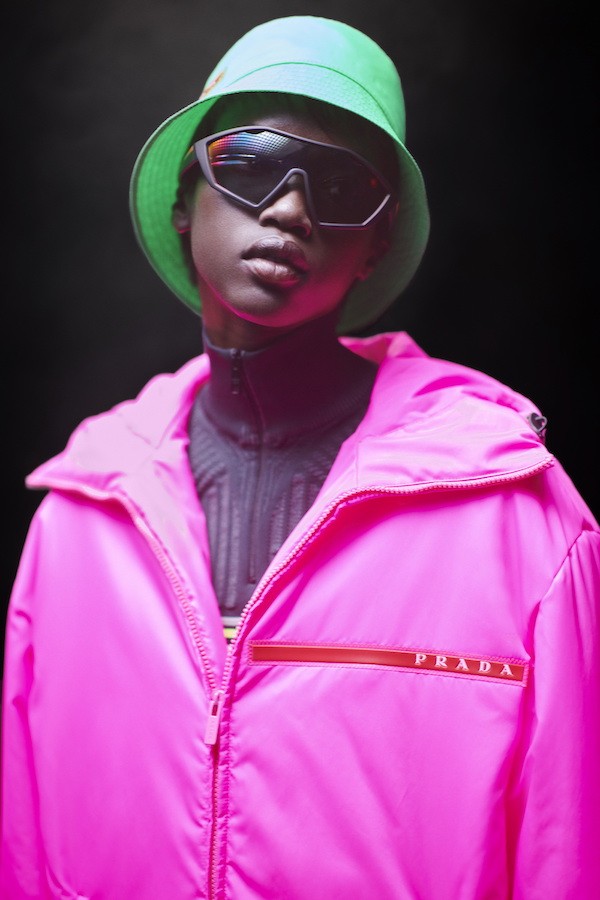
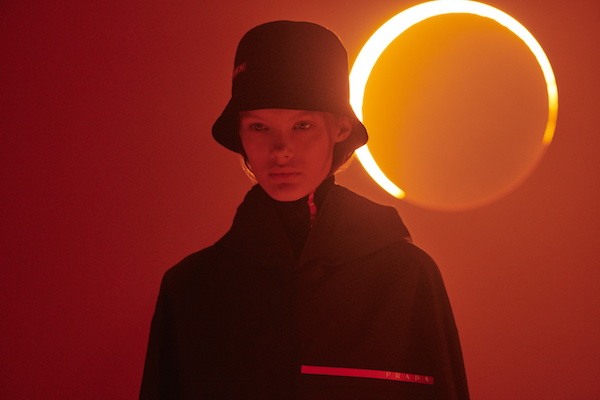
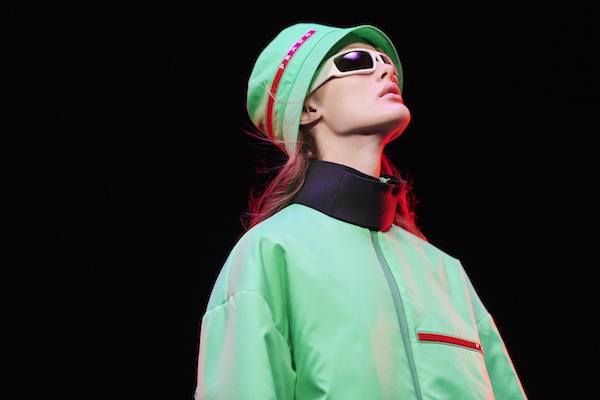
Italian fashion house Prada once again went digging in the pile of their iconic archives for their latest digital campaign called Prada Linea Rossa.
The distinctive red striped logo was first born in 1997 when Patrizio Bertelli, husband of designer Miuccia Prada was convinced by a German yatch designer to create his own sailing team to compete in the America’s Cup competition, and from this came the Linea Rossa.
Inspired by the world of sport, the logo first began to appear on sunglasses and since then, was gradually seen in collections throughout the years. However, it’s new incarnation debuted at the FW18 show earlier this year. The line offers a range of wardrobe from outwear, to footwear and specially conceived pieces geared to the demands of specific actives including skiing and snowboarding. Prada underscores the origins of the logo’s sportswear foundations with a touch of innovation in colour and form. Garments are clean, precise, entirely streamlined in form and also made with strategic material including nanotech fabrics, recycled polyester and water-repellent microfibre. The garments are all assembled by advanced methods of heat and internal heat-sealing completely devoid of stitching. Prada Linea Rossa hits stores in September in select Prada store and department stores as well as on the brands website.
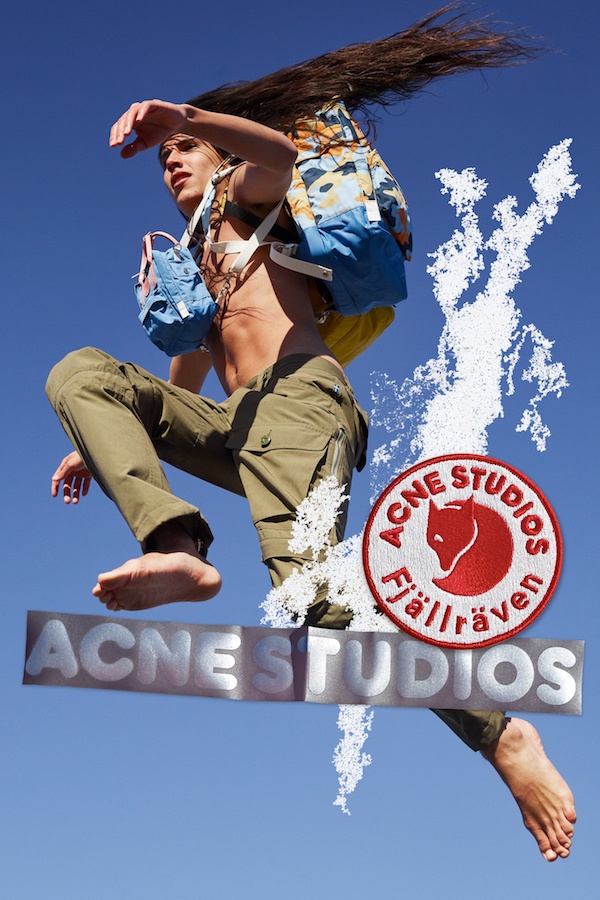
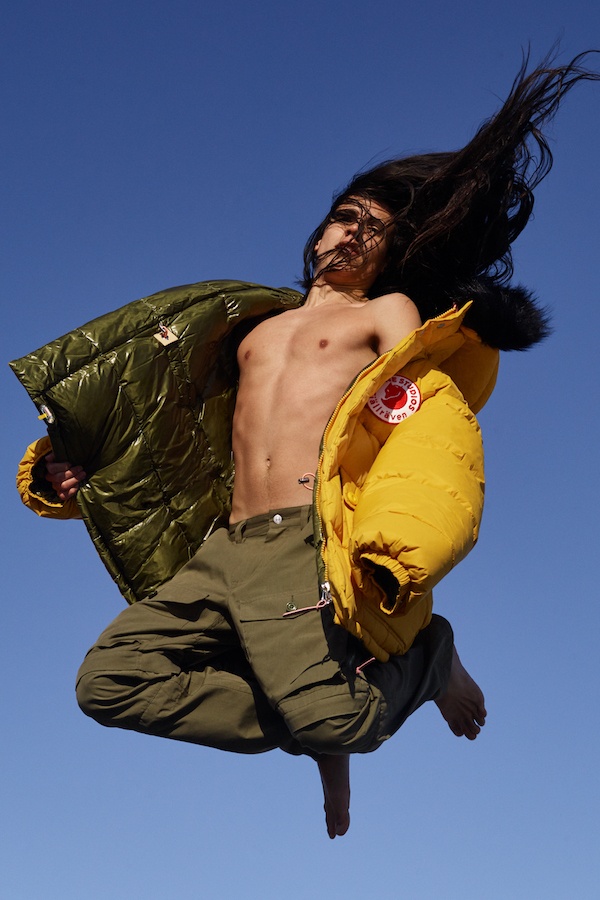
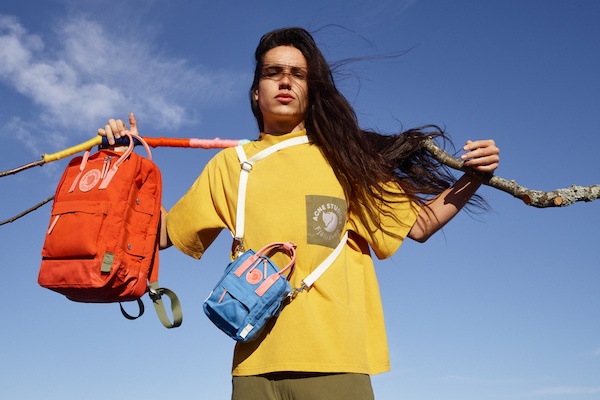
Swedish fashion house Acne Studios recently partnered with Swedish outdoor brand Fjällräven to produce a unisex capsule collection of outerwear and accessories.
This fashion meets nature collaboration celebrates the 40th year since the launch of Fjällräven’s legendary Kånken backpack with three versions of the bag — the classic backpack, a messenger bag and a mini clutch. Also included are added details to Acne’s ready-to-wear designs such as fake fur trims, reflective patches, oversized pockets, along with bright coloured caps, camouflage sleeping bags and t-shirts printed with Swedish flags and hiking scenes. The collection is set to hit stores on September 6th with prices ranging £100- £1300.
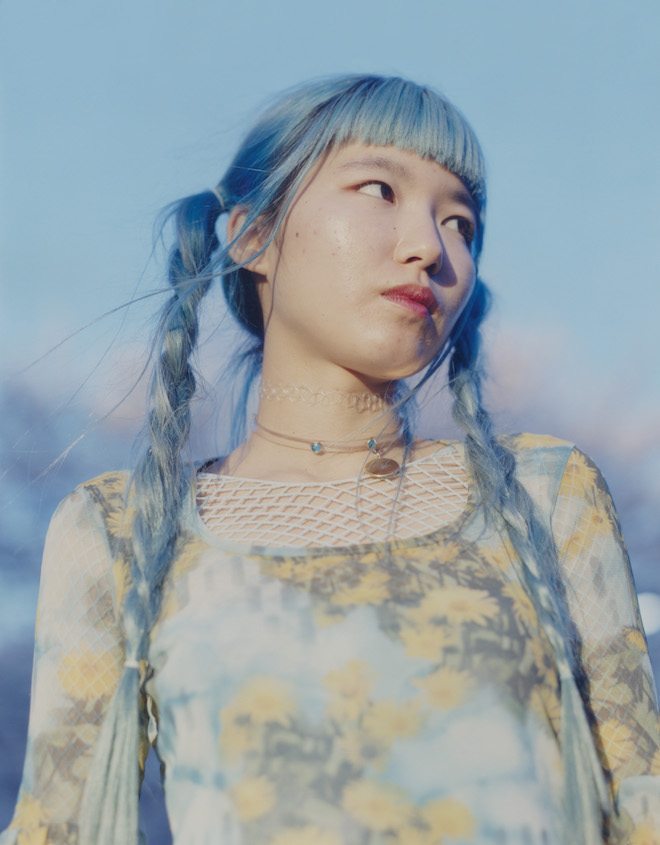
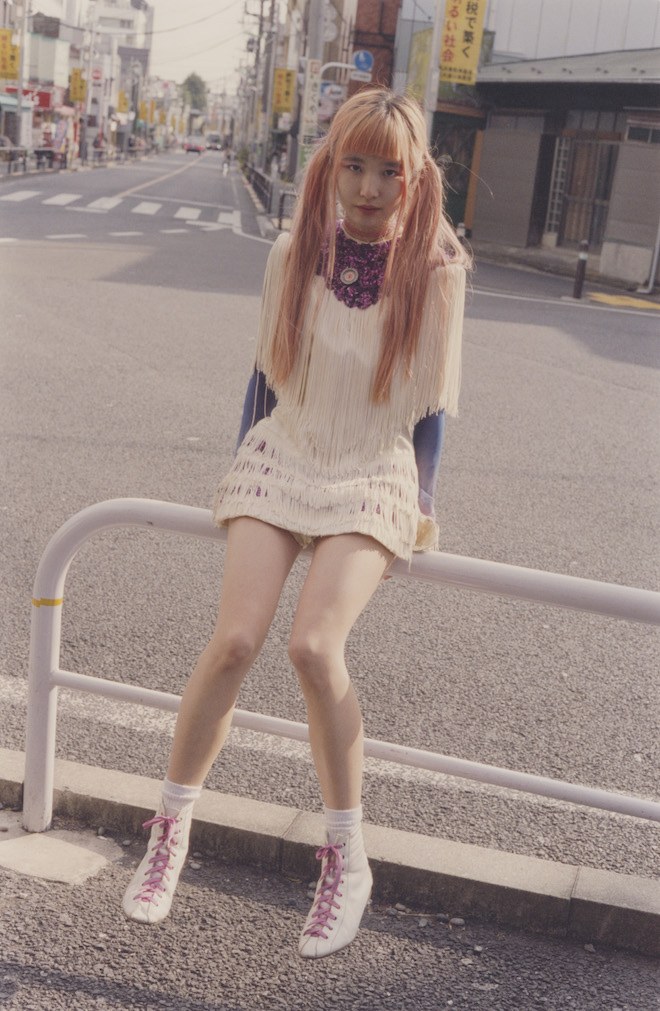
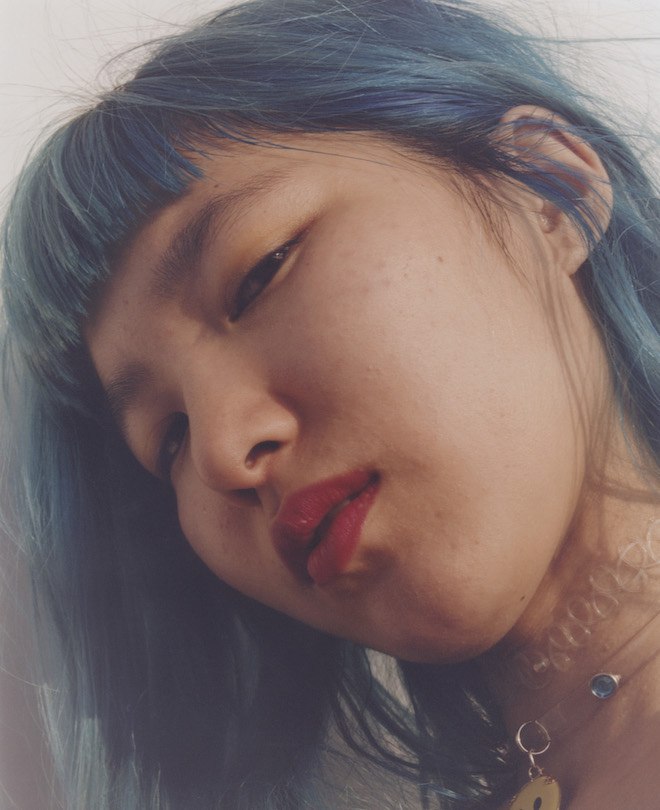
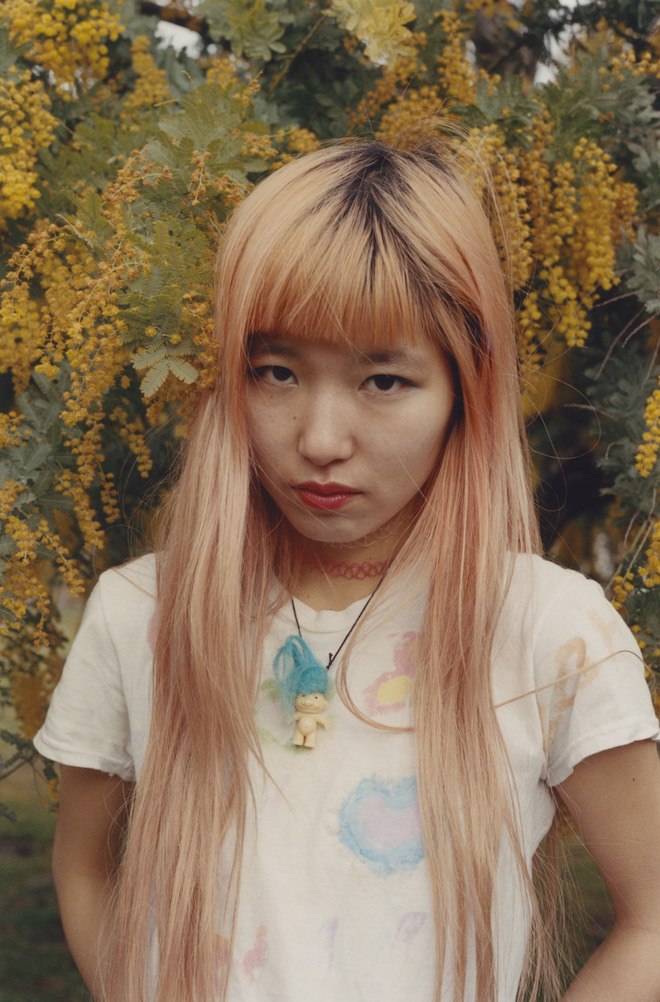
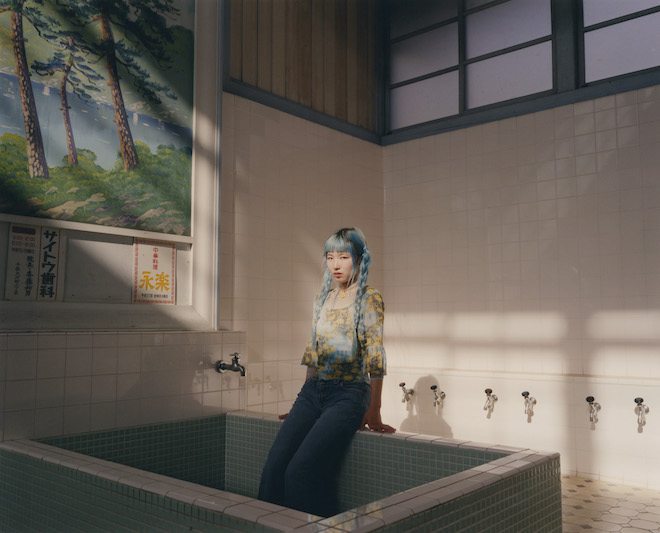
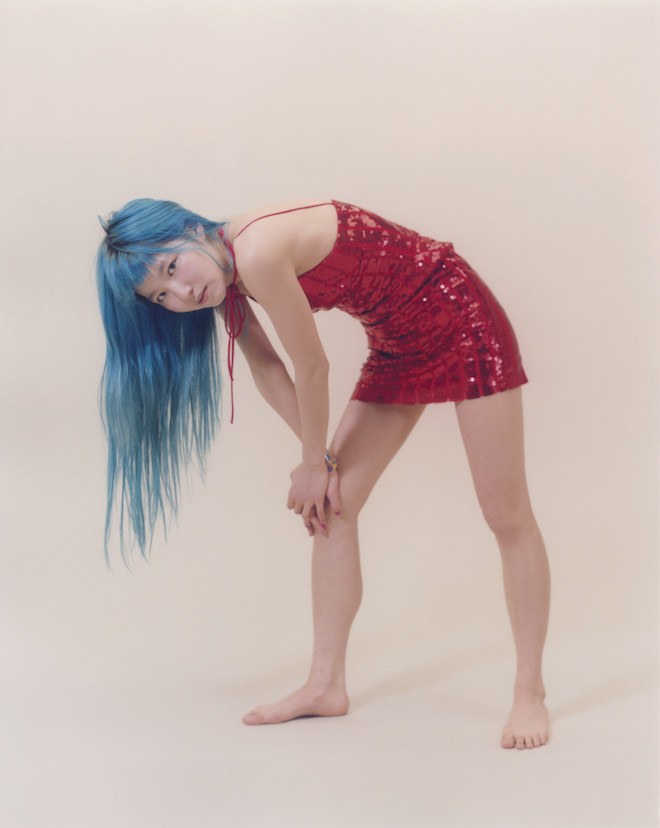
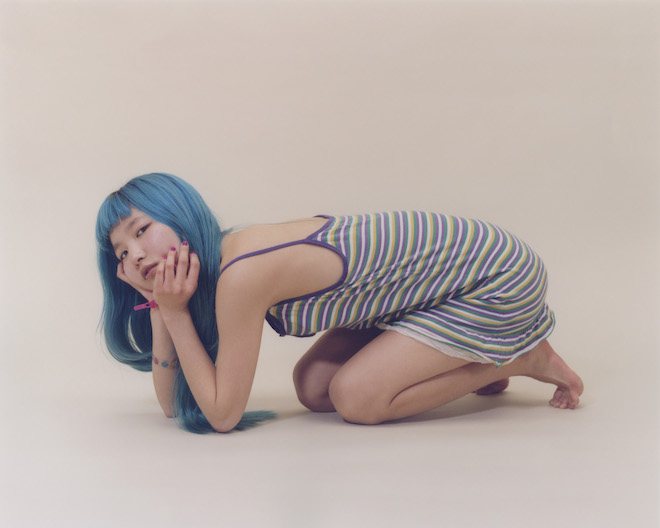
When the British photographer met musician Aya in Tokyo the pair bonded immediately. “Even though our time together was brief, they remain some of my favourite photos I’ve taken” says Francesca Allen of this first encounter in 2016.
Two years later, these first photographs have informed a longer and more intimate project. Francesca Allen’s new book, ‘Aya’ invites viewers into their friendship and documents a month that the pair spent together in Tokyo.
Unable to speak the same language, Allen’s lens offers a poignant testament to connections that are forged beyond verbal exchange. She captures the unspoken chemistry and emotional bond between them, created over an intense month of sharing everything and spending all their time in each other’s company.
Aya is depicted in the studio but also in both domestic and outdoor locations throughout the city. The portraits, whether up close or more distanced, are constantly tender and thoughtful. In these images we can feel Allen behind the camera, creating space for the audience to see into their shared world.
Released this week, ‘Aya’ is an ode to friendship, celebrated in a beautiful new tome. Ahead of the launch we caught up with Francesca Allen to find out more.
‘Aya’, Francesca Allen
What did you find most interesting about Aya when you met her?
It’s hard to pinpoint why you find someone interesting, but for me it’s all about a connection. Aya is enigmatic and quiet and funny and intriguing. I’m so happy I was able to get to know her more.
How did you meet?
We were introduced through a mutual friend in 2016 when I first visited Tokyo. We hung out for a few hours taking photos and went to Aya’s label Big Love Records in Harajuku. Even though our time together was brief, they remain some of my favourite photos I’ve taken.
‘Aya’, Francesca Allen
How did documenting one person compare to doing editorials and campaigns?
To have the luxury of spending that much time with one person is so special and something I was very grateful to be able to do.
What did you learn?
I learnt that this type of project is my dream project. I’m constantly looking for people to photograph and forge connections with, and to be let into someone’s life like this was amazing.
Did the city of Tokyo inform or inspire the photographs?
Being in a new place is always so exciting, but I wasn’t there to make a book about Tokyo so I veered away from including anything too obvious. I wanted Aya to be the sole focus of the photographs.
Was there anything that surprised you during the project?
I never tired of taking photos of Aya. We spent a lot of time together and went through so many rolls of film, yet it never felt stale.
‘Aya’, Francesca Allen
There’s a mixture of studio portraits and natural environments in the book. How did the different settings inform your approach to image making in the context of such an intimate relationship with your subject?
I don’t feel like there is so much difference with shooting in a studio to being on location. The focus of my photos is so rarely about the location or the environment, and when you reach a certain level of intimacy with someone it doesn’t make too much difference where you are.
‘Aya’, Francesca Allen
What about the book are you most excited about?
I received my first copy of the book the other day, and it felt amazing to hold it in my hands. We are all so used to seeing our photos on screens and social media, so to have the opportunity to make something tangible feels incredibly special.
‘Aya’, Francesca Allen
‘Aya’ by Francesca Allen is out on Libraryman with a limited first edition of 500 copies, 4th September 2018.



 PREVIOUS

 Twitter
 Tumblr
 YouTube
 Facebook
 Instagram
