Declarative Language unfolds at Amici Studio as an investigation of care entwined with artistic practice. Co-curated by Kelly Jessiman and Alexis Soul-Gray, the exhibition gathers artists whose practices have been shaped by the sustained, intimate labour of raising neurodivergent children. The show explores how the experience of caregiving, specifically for children with access needs, reshapes an artist’s creative process and “language”. Ongoing conversations between the artists and mothers formed a network grounded in mutual recognition. Insisting on intervention, these practices evolve alongside care rather than in spite of it, where the act of making is also an act of co-regulation.
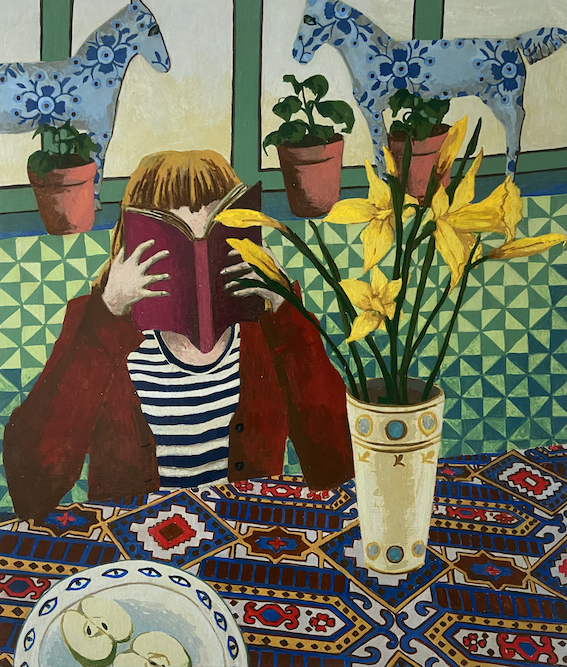
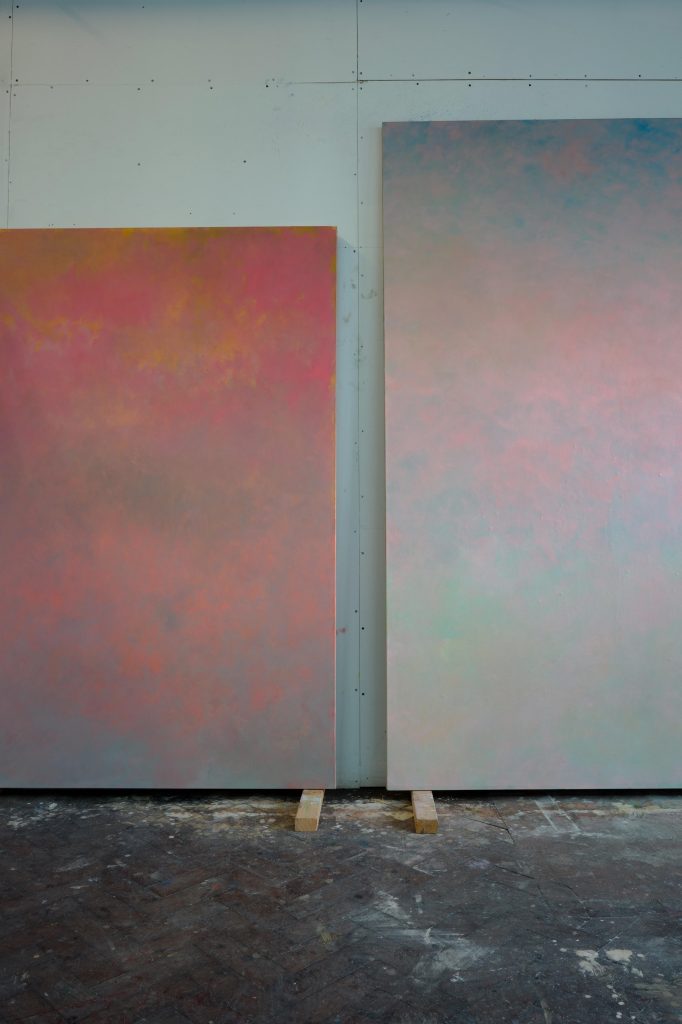
Kate Montgomery Seedlings and Daffodils
Edie Flowers, Nicola Hicks MBE, Kelly Jessiman, Mindy Lee, Natasha Macvoy, Kate Montgomery, Anj Smith, Alexis Soul-Gray, Maliheh Zafarnezha
Declarative Language: 11 April to 9 May 2026. Amici Studio, 3rd Floor, 12 Claremont, Hastings, TN34 1HA (next to Hastings Library).
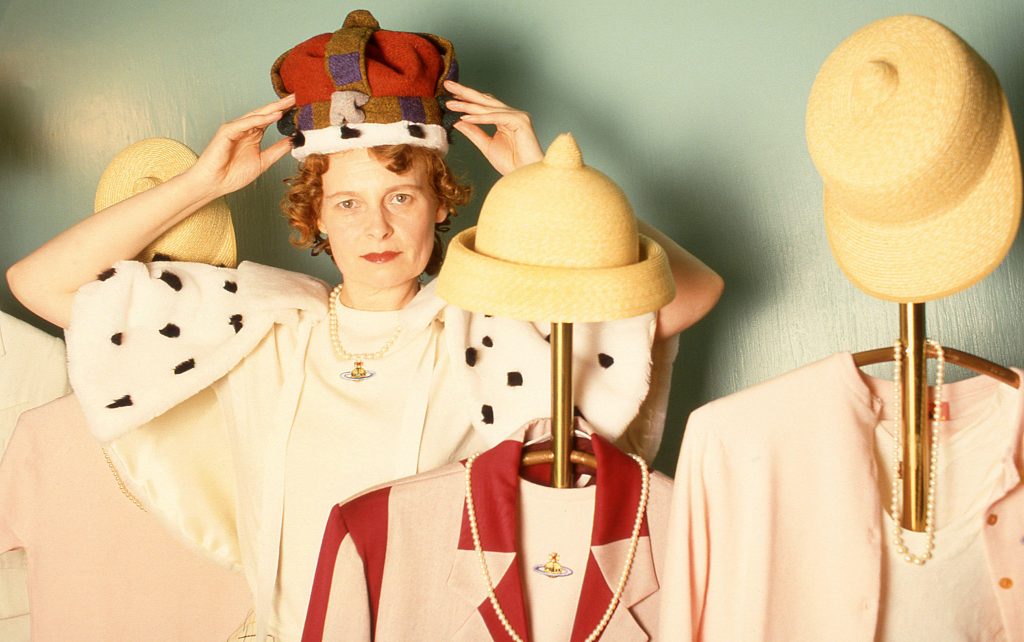
British Fashion designer Vivienne Westwood at her Worlds End Chelsea Store, London, UK, 1987
Vivienne Westwood: Rebel – Storyteller – Visionary 28 March – 6 September 2026
From punk dive to mainstream museum, Westwood’s origin story is now fashion folklore. Born in Derbyshire in 1941, she was a schoolteacher before meeting Malcolm McLaren in the mid-1960s; together they translated the energy of the emerging punk scene into clothes that were ripped, slogan emblazoned and confrontational.
Their London shop — successively renamed Sex, Seditionaries and other provocations became a youth-culture magnet, selling bondage trousers and T-shirts that scandalised the press and sold fast.
That early notoriety sometimes obscures the more surprising turn Westwood’s work took in the 1980s after staging her first commercial collection, Pirates, in 1981, she pivoted toward historical research, drawing on 18th-century painting, British tailoring traditions, period silhouettes and her coveted corsets.
This new exhibition is built around that shift, spanning the early 1980s through the 2000s, it charts how punk rebellion evolved into something stranger and more intellectually layered: couture as cultural commentary.
When the British designer died in 2022 aged 81, tributes described a figure who had reshaped style across six decades — a provocateur whose work fused avant-garde design, political messaging, and the Bowes Museum’s new exhibition, Vivienne Westwood: Rebel – Storyteller – Visionary, leans into her instinctive refusal of norms.
Barnard Castle might seem an unlikely setting for one of fashion’s most unruly figures. But the Bowes, founded on a 19th-century vision of encyclopaedic collecting, specialises in collapsing boundaries between the disciplines of decorative arts, painting, costume and design.
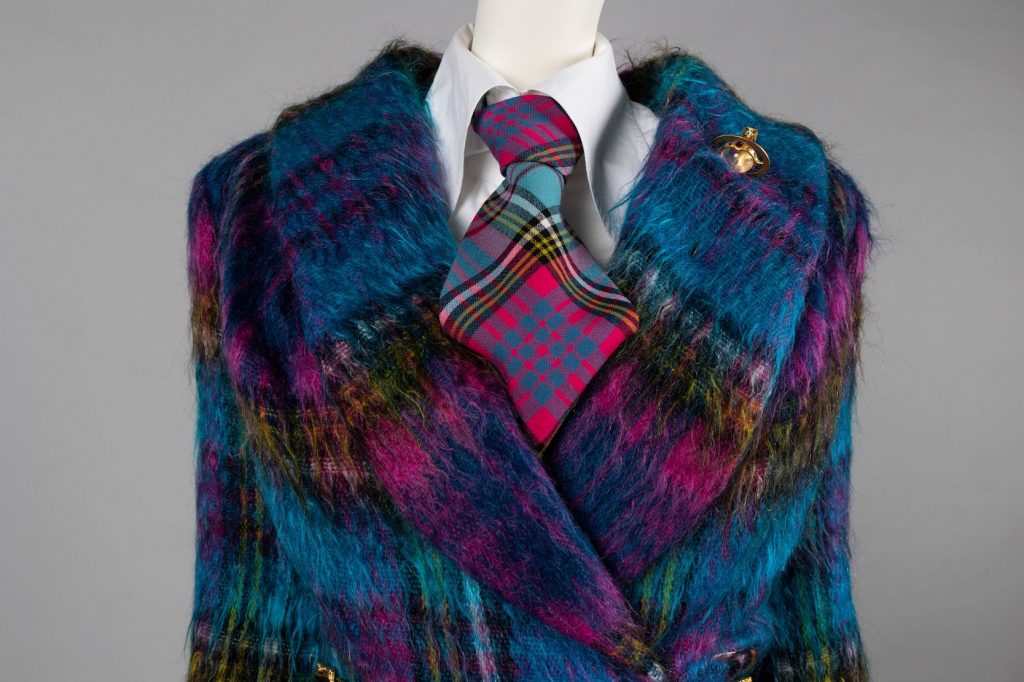
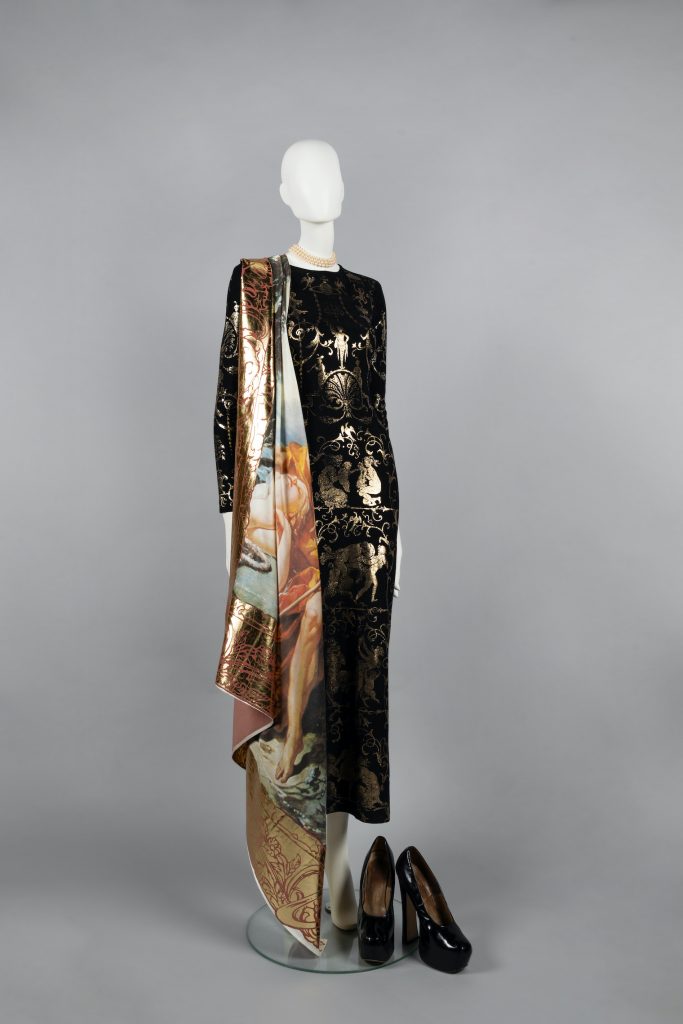
Boulle print dress, Shepherd print gold-framed scarf and patent elevated court shoes AW 1990/91
Rather than present the pieces as relics, the curators foreground process through showing mock-up calico toiles, digitally deconstructed garments and finished ensembles side by side, revealing how Westwood engineered her silhouettes with an emphasis on construction. An intensely technical designer, her experiments with cutting and structure and her attention to how garments are behaved on the body is foregrounded here, as the exhibition pairs her pieces with historical objects from the museum’s own holdings, placing Westwood’s reinterpretations beside the traditions that inspired them.
In that sense, Bowes is an unexpectedly apt host. Westwood’s career was defined by crossing categories: streetwear and couture, fetish and tailoring, protest and luxury. The museum’s decision to build its most ambitious Westwood exhibition yet, following two earlier shows drawn from private collections, suggests a sustained institutional interest rather than a one-off tribute.
The Bowes Museum Newgate, Barnard Castle, County Durham, DL12 8NP
Daily, 10am–5pm
The exhibition is included in general museum admission
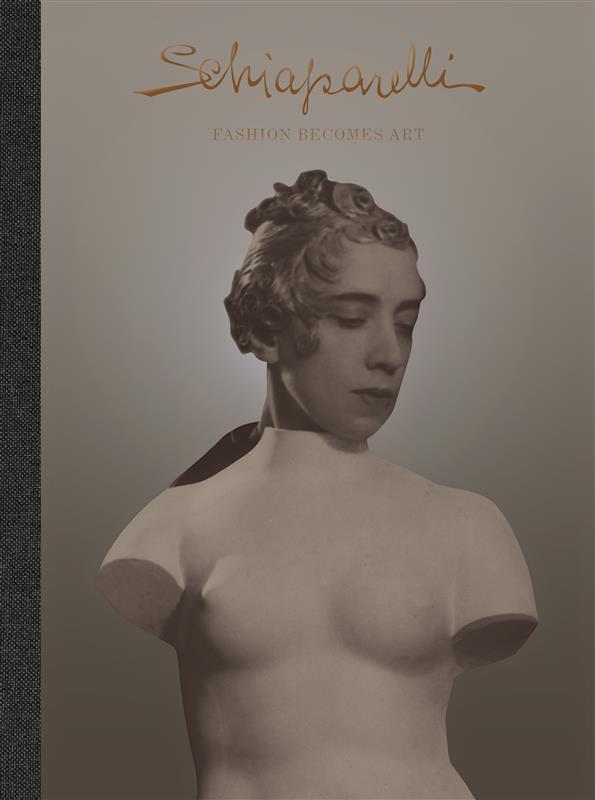
Schiaparelli: Fashion Becomes Art, the forthcoming V&A exhibition and accompanying book opens at V&A South Kensington this March, and treats pioneering designer Elsa Schiaparelli’s work with the intellectual seriousness it has always deserved.
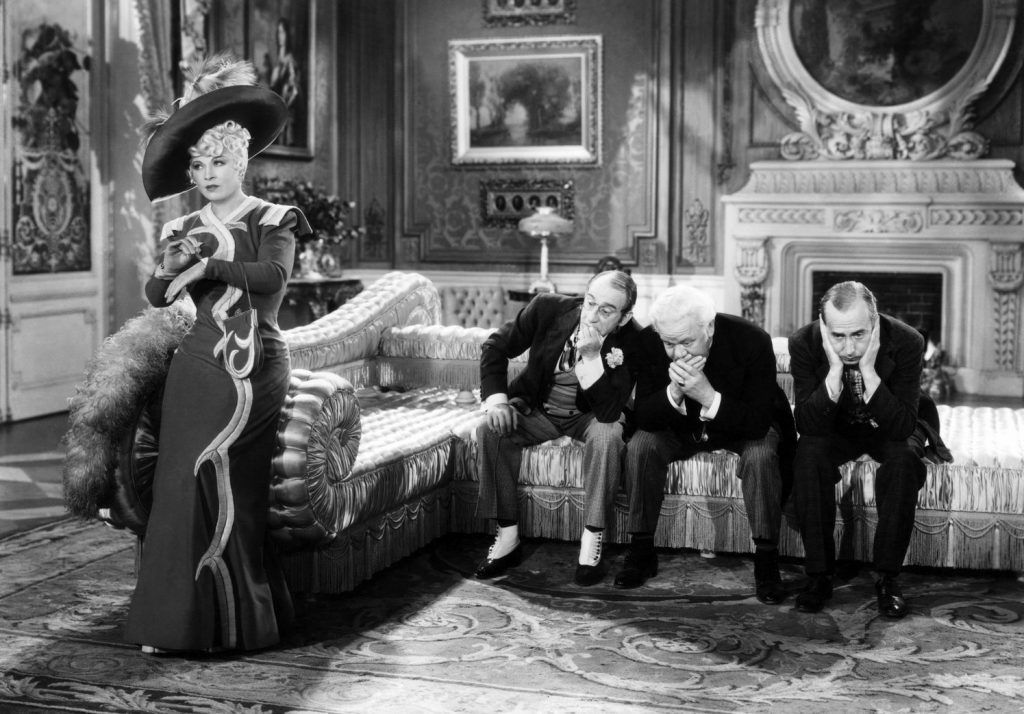
Mae West wearing Elsa Schiaparelli in Every Day’s A Holiday (1937), A Edward Sutherland (Director). Moviestore Collection Ltd – Alamy
Lavishly illustrated and richly researched, the accompanying book traces how Schiaparelli detonated the polite conventions of couture, introducing Surrealism and collaborations with Dalí, Cocteau and Man Ray. Developing a practice that collapsed boundaries between disciplines, Schiaparelli scandalised with culottes at Wimbledon and created the iconic Lobster dress; these statement pieces paved the way for bold fashion.
A vivid through-line connects interwar radicalism to the contemporary house under Daniel Roseberry, where conceptual bravado continues to drive the conversation. A beautiful and pertinent reminder that fashion, at its most daring is an unruly, intelligent and strange joy, another V&A fashion exhibition worth getting out for this Spring.
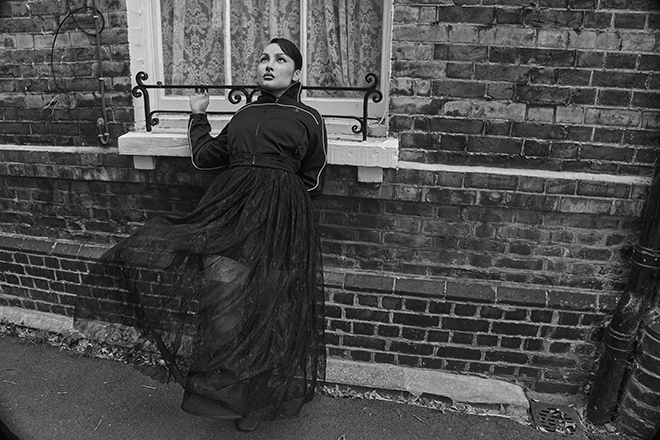
As we move on from the season of designer debuts, it is time to look at fashion away from the runway. TWIN stylists, photographers, and teams show us their narratives, and what is making fashion exciting today. What we show is that there are a new elegance and a new relaxed attitude to style. Turn the pages to be inspired and see fashion with a modernity and understated chic that tells the story.
Who wears these clothes must be about style and character; with Miranda Kerr, Jourdan Dunn, and Tsunaina amongst our models this is made abundantly clear. Diversity, like sustainability, may be an overused word but with London, Sydney and Nepal in their profiles TWIN shows this can only be an asset in the casting for image making.
Read about the arts, so closely allied to fashion, where amongst our stories we look to France, Brazil, and Japan. We observe how artist Sonia Gomes and her work with textiles and found details is so closely allied to the fashion wardrobe created by Ronald van der Kemp. When we dive into the never never land worlds of artist Jodefa Ntjamm and of couturier Franck Sorbier we see how they are both story tellers and makers of magic.
Turn the pages of this issue to see how style is about the balance between experience and knowledge, weighing the hand skills of the past with the technology of the future. It is a fact that fashion reflects the world the pieces are worn in; at a time of global political and social uncertainty, TWIN understands this must be a narrative of beauty tempered by reality.
If your Scorpio season needs somewhere to land, make it Nightshade at Numbers, 63 Vyner Street. Curated by Jennifer Lewandowska and Caroline Price, the intimate, low-lit, exhibition is a guide into the slow winter supported natural wine and edible erotic marzipan.
Jennifer Lewandowska, Nightshade, 2025, Watercolour and Acrylic on linen, 50 x 40 cm
The show is a mood: spells, thresholds, and the small violences of transformation.
Nightshade at Numbers
On Friday evening, the exhibition slipped deeper into ritual with poetry reading and tarot sessions by GolnooshNour. Tucked into a nook beside the bar, Golnoosh welcomed visitors one by one to a small round table for intimate, charged readings. With back to the noise of the opening, visitors watched as she drew cards in a rhythm and exposed inner knowledges. For a few minutes, the clatter of glasses and conversation dissolved and the rest of the room faded into the background as it was just the cards, her voice, and the pull of something unseen.
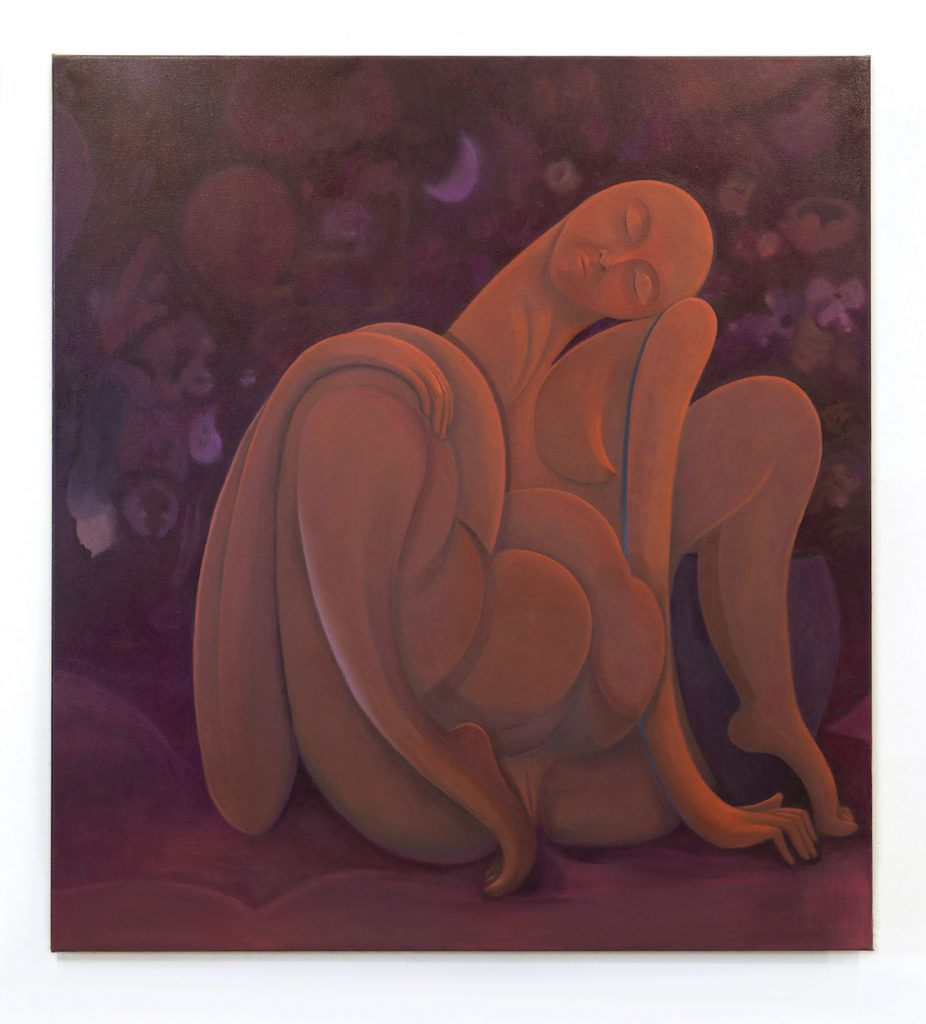
Sophie Milner, Resting Point, 2022, Oil on linen, 120 x 110 cm
For anyone tired of the bright, frictionless gallery loop, Nightshade offers a different frequency: slow, witchy, and alive after dark.
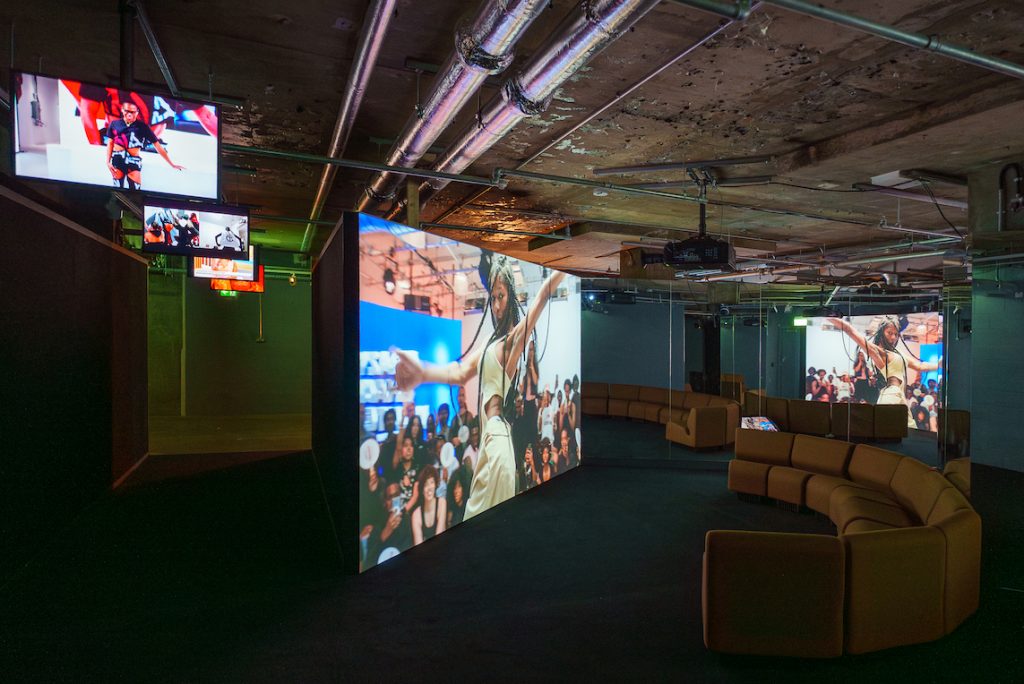
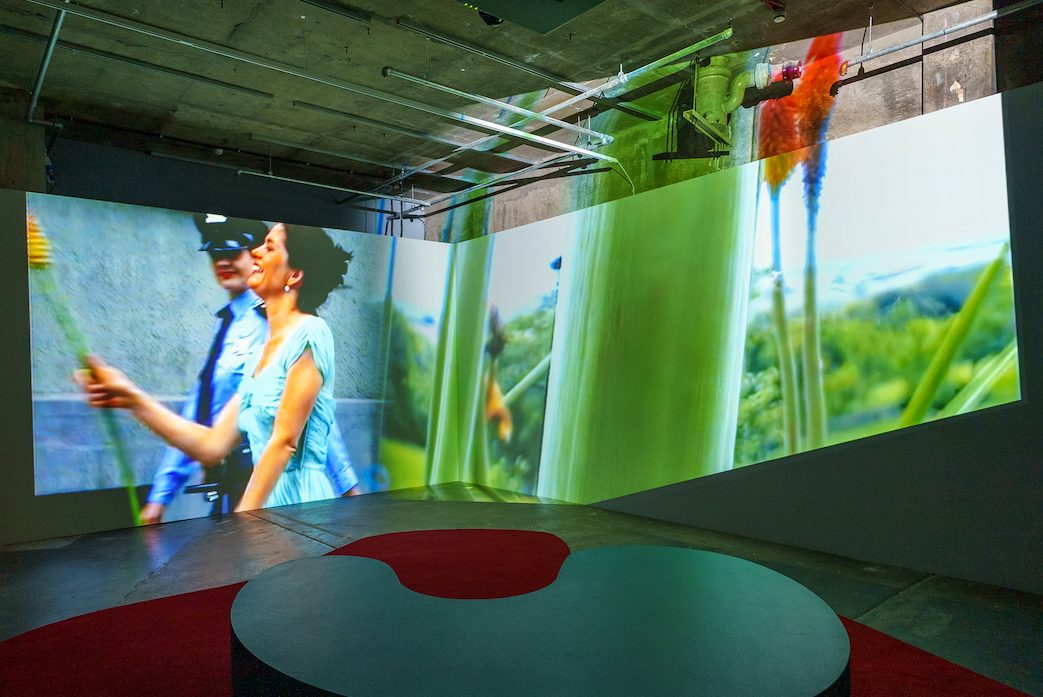
Paradigm Shift is one of best exhibitions realised at 180 The Strand, a space known for its maze-like exhibitions with a heavy focus on video, digital interface and experimentation. Curated by Dazed, AnOther and Nowness founder Jefferson Hack, with Twin’s Susanna Davies-Crook as Associate Curator, the exhibition looks at how style, subculture and identity have been formed and realised by the screen. It is a fascinating video show that brings together incredible artists including Mark Leckey, Nan Goldin, Derek Jarman, Andy Warhol and Arthur Jafa, as well as fashion designers like Tremaine Emory and Telfar. Spend time and watch it all – this is a real education.
Telfar TV
Can you tell me the premised of the exhibition?
Jefferson Hack: It is about how artists use moving image to stage and style identity, often through the lens of fashion. Fashion is a core part of how we manifest our identity. When you’re looking at moving image works, that’s stage and style identity. A core part of that is how clothing of all kinds – whether that’s work, wear, uniform, cosplay, subcultural dress – how that informs the story. It’s also about media hijacking and the mediation of performance, and dress and subculture through the screen. I think in a world of constant mediation, fashion plays a really important role in signalling our identity. Whether we’re dressing down, dressing up, disguising, hiding, amplifying. This show is really about how artists, through moving image, stage and perform identity and use fashion and style as central to their narrative. How technologies have accelerated this idea that everyone can be a broadcaster. Everyone can be a performer; everyone can be a commentator; everyone can be an artist. That’s really the new paradigm shift.
Pipilotti Rist
What do you find interesting about the crossover between fashion and moving image?
JH: Telfar is a kind of fashion brand, but who subvert the idea of fashion as a commodity. Who is dialled right into New York subculture, coming being born out of New York nightlife. What’s interesting about Demna is he looks at the street, but he’s looking through the screen. I think you sort of switched the street gaze is now being replaced by the screen gaze.
Julianknxx
In a wider sense, what do you think appeals to people from a fashion showing in an art context?
JH: Martine Rose, Grace Wales Bonner, Tremaine Emory are natural storytellers. They’re designers that make clothing where the clothing carries a message, and the clothing is almost like a vehicle for storytelling. They’re mining interesting archives, personal history. Looking at sort of wider socio-political issues that are coming through in the way that they design and present their work. I think that in a fashion context, a lot of that gets lost. Fashion at its most basic is about selling clothes. You’re selling it through a combination of image and story. But it’s much more commodified and faster. An art context allows it to slow down, allows the narrative to come to the fore, allows the engagement with the audience to be deeper, because people are there to question, understand, listen, receive.
Paradigm Shift is on at 180 Studios until Saturday 21 December
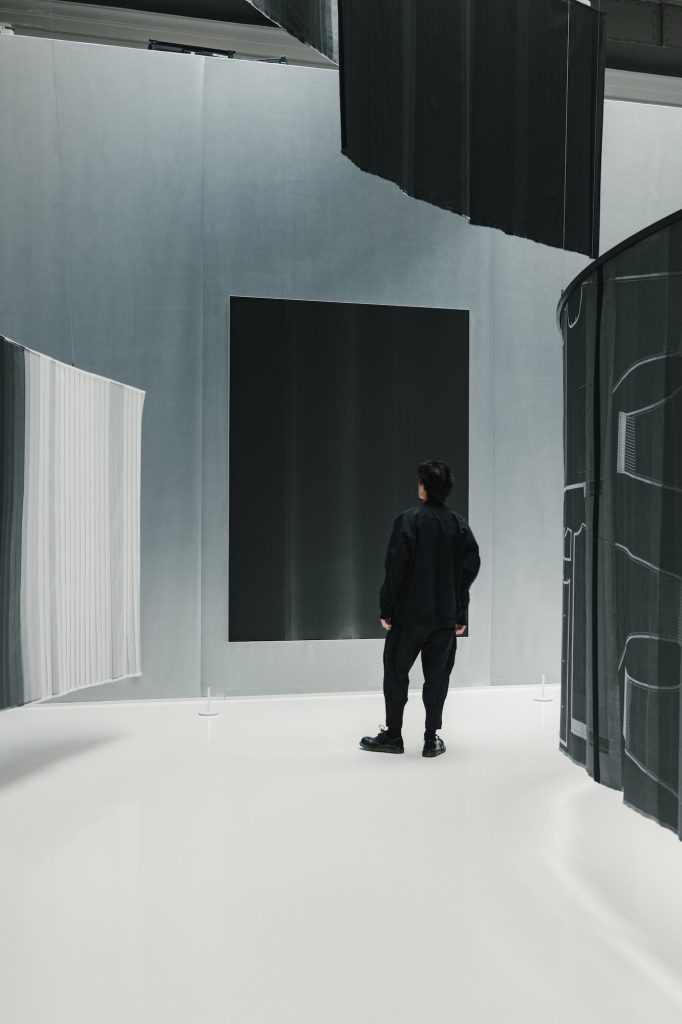
Japanese artist Eugene Kangawa was invited by the designer Yoshiyuki Miyamae at A-POC ABLE ISSEY MIYAKE for a collaboration pushing the possibilities of textiles. Here both discuss the how, what and why of this beautiful project that took three years to realise which launches with an exhibition in Paris this week.
What drew you to Kangawa’s work?
Yoshiyuki Miyamae: The relationship between light and shadow” inherent in Eugene Kangawa’s work deeply resonated with what we have been exploring through fabric and clothing. Mr. Kangawa’s latest work, Light and shadow inside me, engages with a fundamental question: light itself paints the picture, and shadow proves its existence. This concept resonates with how fabric emerges from the intersection of threads, and how clothing only truly comes alive when it embraces the body and light. In Mr. Kangawa’s work lies the strength to generate new forms of expression from the simplest elements. We were drawn to this purity, and to the “living expression” that transforms over time and in response to its environment.
Can you summarise what the collaboration is?
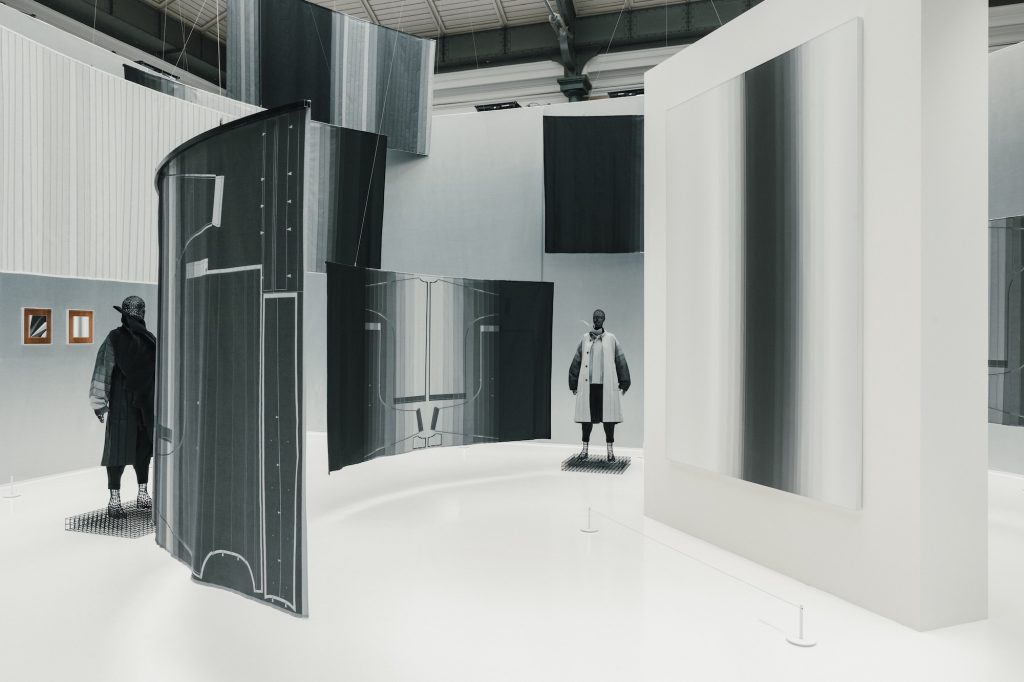
Eugene Kangawa: I feel that this collaboration was perhaps less about clothing itself and more an exploration of new textile possibilities. Inspired by my work, the Issey Miyake team developed a method of expressing gradations solely through the interweaving of two threads—black and white—at a microscopic level, without the use of printing or dyeing. They described this process as unprecedented, suggesting that, in a sense, they had woven a new language.
How does the collaboration as a product also work as an installation?
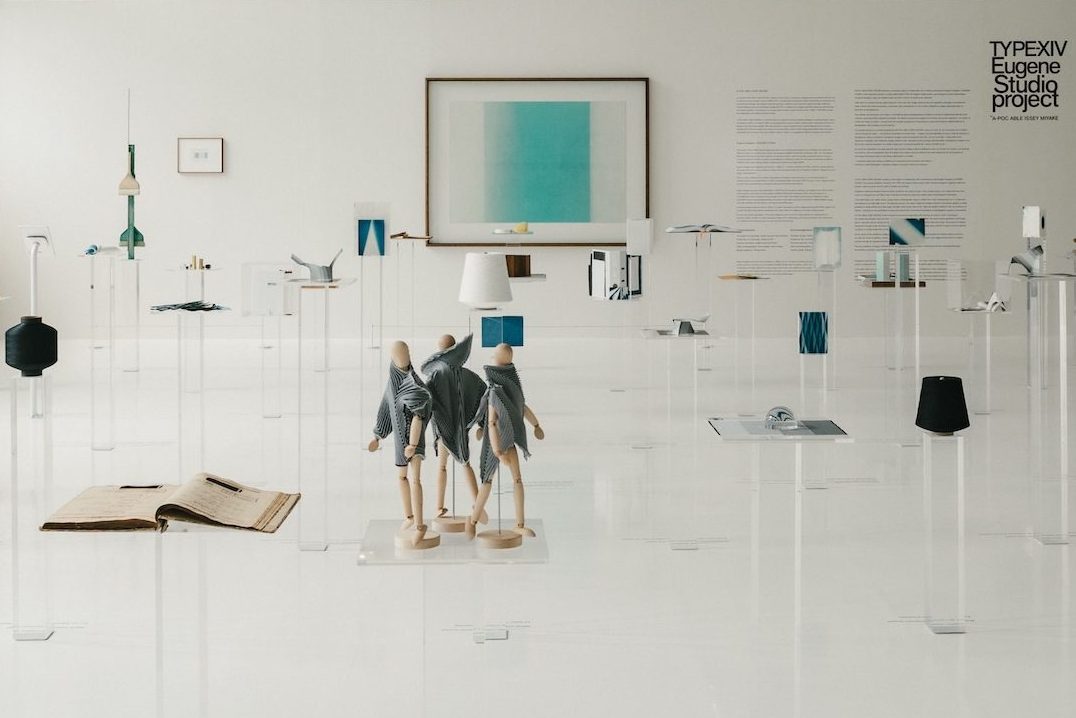
Eugene Kangawa: The installation and curation for this project are being led by Tsuyoshi Tane, a Paris-based architect whose practice is grounded in an archaeological inquiry. He has approached this collaboration with the same depth and perspective. Under his direction, the exhibition will present the works and textiles alongside more than fifty objects—tools and motifs related to the collaboration—including an extremely rare original Edo-period book on origata (Japanese ceremonial paper folding), which remarkably contains folds strikingly similar to those found in my photogram works. In this sense, the exhibition carries the quality of a research endeavour paired with an intuitive sense of intrigue. I look forward to seeing how my work, translated into textile and exhibition, takes shape in space.
Will there be other future art projects with the brand?
Yoshiyuki Miyamae: We plan to continue developing art projects as a brand. At A-POC ABLE ISSEY MIYAKE, we regard clothing not only as “tools for daily life” but also as “a medium that expands human imagination.” Dialogue with art is an essential opportunity to broaden this potential. Art has the power to stir thought and sensation, provoking questions in those who encounter it. Sharing this process enables the brand to open new pathways for fabric and clothing, while offering audiences an opportunity to reconsider the very meaning of “wearing clothes.”
Model, musician and underground style icon Gabbriette is taking over London this Halloween weekend, and she’s bringing Mexico City with her. In collaboration with Don Julio Tequila, she fronts Panadería Don Julio, a three-day fusion of fashion, flavour and nightlife that reimagines Día de Muertos through a London lens.
Hosted at Toklas Bakery from 31 October to 2 November, the event transforms the central London space into a living altar to modern Mexican culture. Panadería Rosetta, the cult Mexico City bakery led by Michelin-starred chef Elena Reygadas, serves pan de muerto, while Don Julio hosts cocktail workshops and Milagros curates a bodega of handmade Mexican crafts.
At night, Toklas becomes an intimate 80 person speakeasy, with a line-up reflecting Mexico City’s vibrant club scene. N.A.A.F.I, CC:DISCO!, and London’s queer-Latinx collective 2CPERREA provide reggaetón, techno, and experimental club sounds, creating a space where music, style, and ritual intersect.
On Sunday, the official Día de Muertos, the space fills with marigolds, papel picado and a glowing ofrenda. Guests can take part in nail art and face painting, while trying limited-edition Don Julio cocktails.
You can sign up for the Don Julio Tequila x Panadería Rosetta Cocktail Workshop and explore the full After Dark speakeasy line-up here.
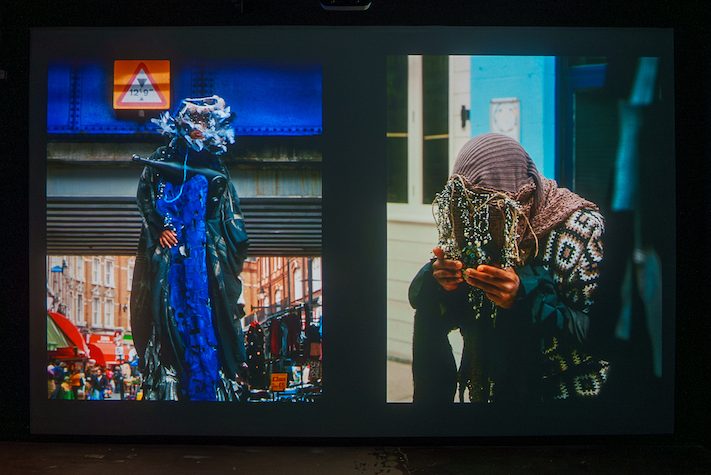
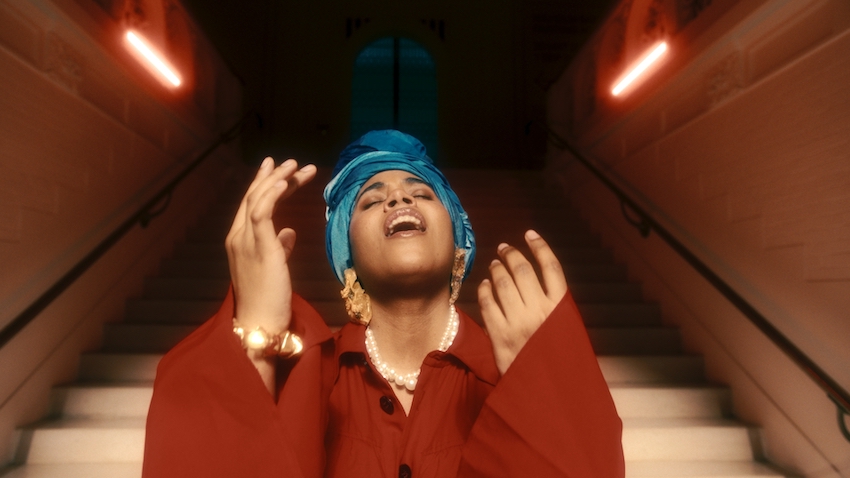
Amid the rhythm of Frieze week, Julianknxx’s new installation Shifting / Spirit / Time offers a moment of stillness, an invitation to listen. Taking over the luminous baroque interior of St Mary le Strand, the artist transforms the church into a meditative space where sound, movement, and image converge.
The multi-screen work builds on his celebrated Chorus in Flight series, first seen at the Barbican in autumn 2023. Voices from across continents entwine in a repeated refrain, a chant that evolves into “Way”, mapping memory, loss, and belonging through rhythm and breath.
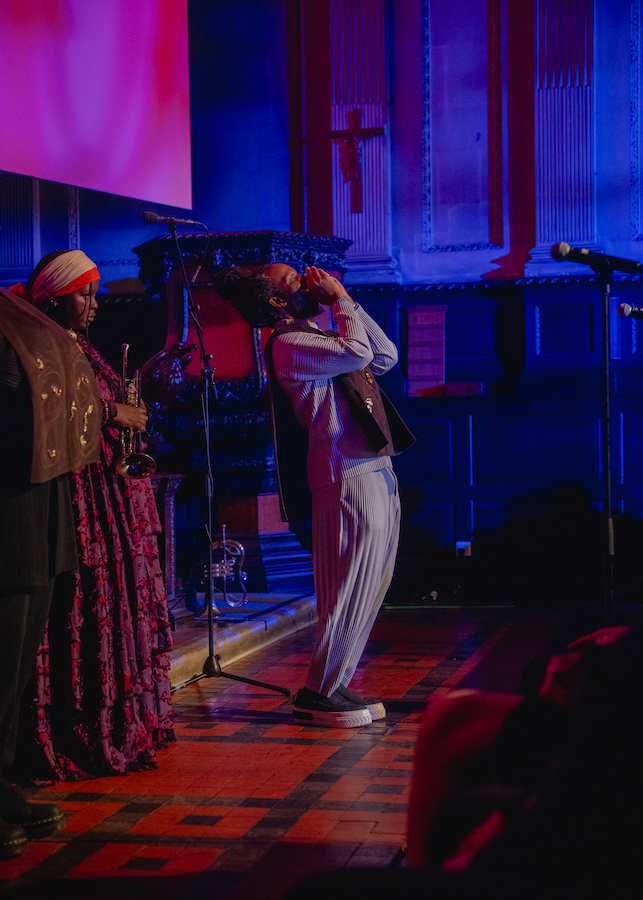
Julianknxx, Listening in Quantum with THABO & Tina Campt at St Mary Le Strand, October 2025 (Photography courtesy of Brennan Bucannan)
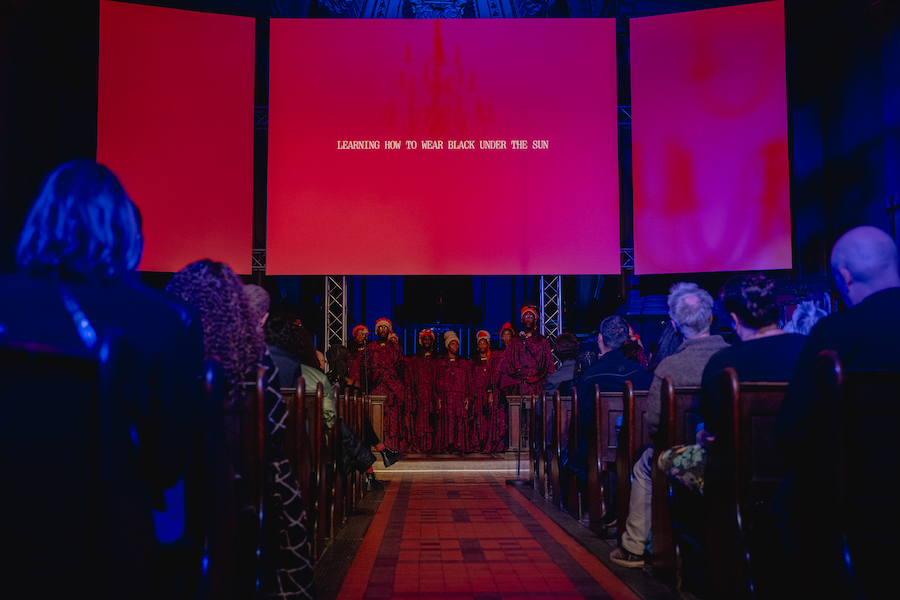
On Tuesday 14 October, Julianknxx staged Listening in Quantum, a live performance featuring Professor Tina Campt, THABO, and a London-based choir, where conversation becomes chorus and sound becomes ceremony.
Moving between poetry and cinema, Shifting / Spirit / Time asks how collective memory survives through voice — how the act of listening can itself become a form of connection and care. A vital pause in the noise of the week and a poignant reminder of what art can do to connect and celebrate.
Julianknxx, Listening in Quantum with THABO & Tina Campt at St Mary Le Strand, October 2025 (Photography courtesy of Brennan Bucannan)
Shifting / Spirit / Time is on show at St Mary le Strand from 13 October to 19 October 2025, running daily between 12:00 and 16:00
Art fair season is upon us and you shouldn’t feel excluded if you haven’t got a VIP card. Although Frieze and its calmer sibling Frieze Masters are always worth it, there are also a bunch of exhibitions, events and openings to keep you happy for the fortnight. In list form because who doesn’t love a list?
Lewis Brander
1. Paradigm Shift at 180
This year’s exhibition at 180 is curated by Jefferson Hack, aided by Twin alumni, Associate Curator Susanna Davies-Crook. It looks at the presentation of identity through screens so be sure to some time to watch these gems. The artist list – including Telfar, Tremaine Emory, Andy Warhol and Dara Birnbaum – is fire.
Book this club night of art crossover performances fast. Curated and including artist Haroon Mirza, its aim is to embody “resilience, healing, defiance, and multiplicity”. Cue live and DJ sets from artist including Aja Ireland, Eddie Peake, Mark Leckey, Magnus Westwell and more.
Kings Cross St Chad’s, down a back street in a disused hospital garage, has quietly become the most interesting and inventive spaces in London. This Frieze they are doing a solo show with British sculptor, moving image maker, musician and all-round top artist Steven Claydon.
Oct 11, 6-9pm, St Chads Projects, 43 Wicklow St, WC1 @stchadsprojects
4. Sadie Coles x 4
Helen Marten opening on Bury Street, Arthur Jafa debuting new work in a major show Negus on Kingly Street, Neven Gallery artist Leo Costelloe taking over the emerging showcase Shop next door, and Lisa Brice opening their new flagship space on Saville Row – it is fair to Sadie Coles is showing up big this October with pan-generational artists directing the aesthetics of the era.
The Swiss-Greek dancer, choreographer and artist Alexandra Bachzetis has a must see two-night residency confronting “behavioural taboos and interrogates the commodification of desire”. Expect good music, brilliant dancing and a whole lot of conceptual thinking about the body in space.
Thank God this fair still happens. Special projects at this African diasporic regular at Somerset House include an audio-visual installation inspired by bell hooks by Rohan Ayinde and Tayo Rapoport, a showcase of historic Indian-Zambian photographer Alick Phiri and a courtyard installation from Mónica de Miranda.
Oct 16-19, Somerset House, 1-54.com
7. Minor Attractions
This fair in the hotel rooms of the Mandrake off Oxford Street is fun, wild and refreshing space to discover emerging international galleries and youngers artists. The quality of this year is serious. Make sure to search out are LAILA over from Sydney, Warsaw/London space Import/Export, Berlin’s Anton Janizewski and Regent Park adjacent Season 4 Episode 6.
First UK solo show in a decade showcasing the conceptual photography and moving image works of Christopher Williams. Here the exhibition itself is unpicked into hand painted signs, photographs, films, a radio play, catalogue and open letter. Pop, fun, weird, worth it.
There are so many shows opening the days before of Frieze in the west end you could just wander and stumble into something brilliant. Of special note are Lewis Brander’s cloud paintings at Vardaxoglou Gallery (11 October, 3–8pm), Nicolas Party pop figuration at Hauser and Wirth, musical references from Shaqúelle Whyte at Pippy Houldsworth and a major solo from Sonia Gomes at PACE.
10. Peter Doig at Serpentine South
This exhibition allows us to wander through the big British artist’s vinyl collection. The space is turned into a giant listen room where Doig chosen music through huge analogue 1950s wooden Klangfilm Euronor speakers. There will be some paintings on show too but see it as a musical moment to chill out from all the eye use this week.
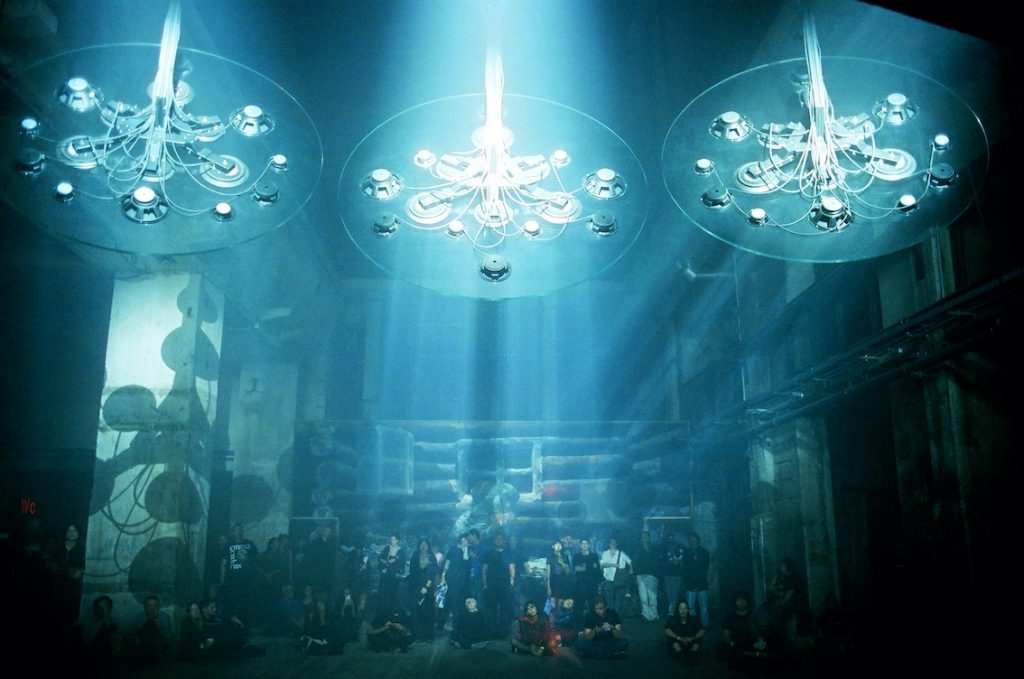
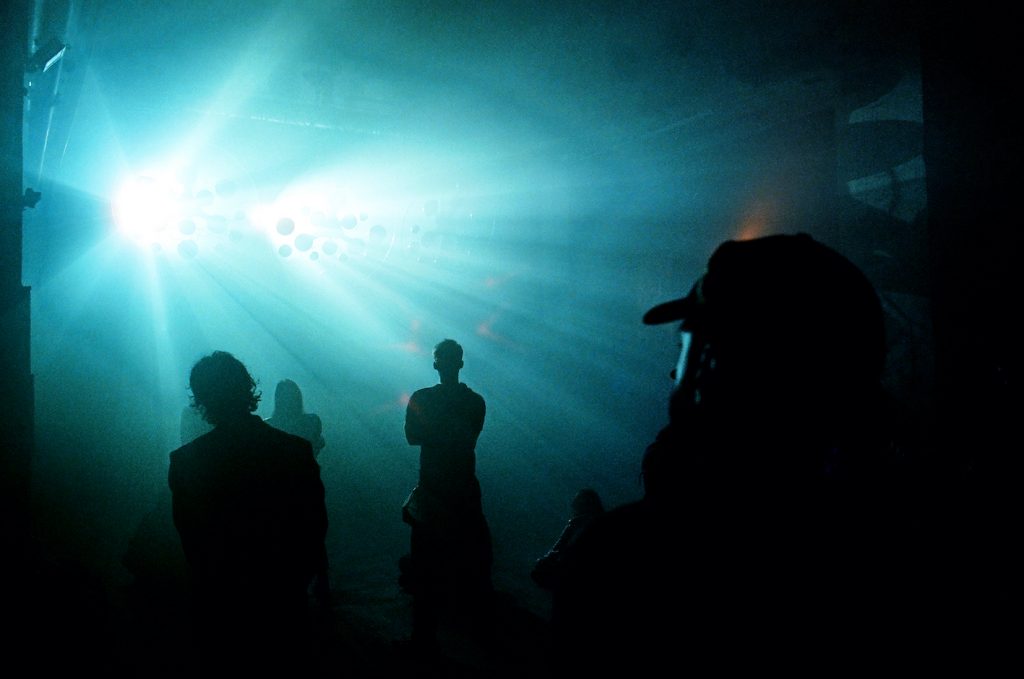
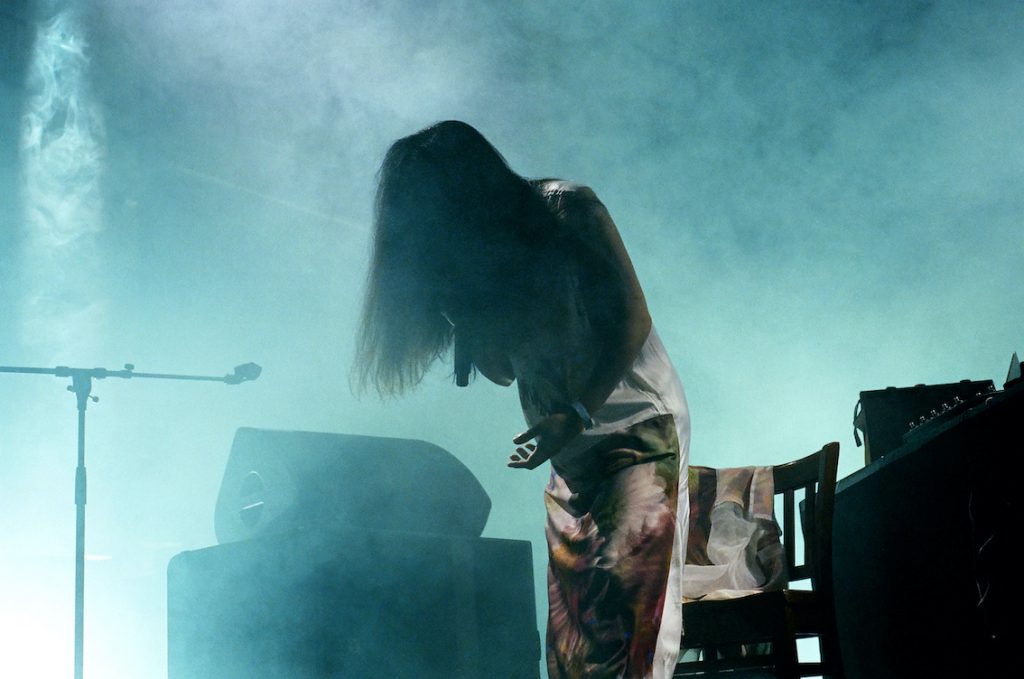
Berlin Atonal returned this August with a five-day takeover of Kraftwerk Berlin, Tresor and OHM, presenting premieres, commissions, installations and club nights that reaffirmed its reputation as one of the world’s most vital platforms for experimental, interdisciplinary art and music. This edition marked the festival’s first as an official member of the International Biennial Association, consolidating its status as a music-first biennial of global significance.
Image credit Lisa Wassmann
Across the cavernous industrial venue, soaring choral vocal from NYX leant a cathedral atmosphere to this temple of sound, while Emptyset vibrated the concrete with their deep tones in dissever. Merzbow, Igor Cavalera and Eraldo Bernocchi debuted an explosive new trio, Amnesia Scanner and Freeka.tet presented S.L.O.T.H. and Lord Spikeheart and NMR unveiled the politically charged REIGN. Bendik Giske with Barker brought their unique live sax and dance beats collab, whilst Billy Bultheel’s The Fugue State provided an incredible live art moment.
Image credit Frankie Casillo
Embedded within the festival, Third Surface reimagined nightlife as a hybrid exhibition, hosting works by Joanna Rajkowska and Roberto Cuoghi among others.
First founded in 1982, Berlin Atonal continues to prove its credentials as a leading light of contemporary music and live performance.
Danielle Brathwaite-Shirley invites us into he delusion, an expansive installation at London’s Serpentine North gallery.
Her most ambitious project to date, the show manifests as a multiplayer video game commission fusing satire, absurdist humour and cooperative play to ask urgent questions about division, censorship and what it means to (re)connect.
Portrait of Danielle Brathwaite-Shirley, 2025. Courtesy Stefano Venturi
Brathwaite-Shirley’s practice has always been about hacking the systems that define how stories are told — game engines, archives, technologies — and queering them into living records. Here, the audience inhabits a space designed as a community play where pauses, debates, and moments of solidarity become central to the artwork itself.
Drawing from her Black Trans and Queer community, the project layers advanced technologies with deliberately “obsolete” aesthetics like 2D sprite animation spliced with UPBGE, the open-source Blender engine. The effect is retro and radical, reminding us that futures can be rewritten from outdated remnants of the past.
If video games are often accused of fostering isolation, THE DELUSION flips the script: making play a site of connection, care and collective imagination.
Choreography and dancing is no longer an art at the margins. Give social media its due, the skill and talent of artist have come to the fore. Few Londoners have the unique taste and texture of Amber Rae. With over 2 and half million views on YouTube for her performance to Wizkid and over 675k followers on TikTok, she has quietly become one of the most exciting performers of her generation choreographed and danced with talents like Stefflon Don and Jorja Smith. Recently she went viral with a short routine to Vbyz Kartel – which led to her performing on stage with the Jamaican dancehall icon himself. Rae is herself an inspiration, an embodying what makes creative London so special.
How would you describe your dance style?
My dance style is fierce, fearless, and unapologetically mine. I work in the commercial world, but what makes my movement unique is the deep influence of my Jamaican heritage , it’s embedded in my flow, my energy, my attitude. It’s raw, powerful, and always evolving. I like to say it’s my signature… a diamond in the rough.
How did the collaboration with Vybz Kartel happen?
That connection actually started through a TikTok dance I choreographed. It caught fire online and ended up being used in the main video. The whole experience was wild but also proof of how powerful digital platforms can be when you move with authenticity. From Tottenham, North London to a global platform, just through a moment of expression.
How do your thoughts about the body, identity, and heritage come across in what you do as a dancer and choreographer?
As a Black, curvy woman from North London – Tottenham – a place where not many make it out, I’ve had to break down doors in this industry. Everything I do is shaped by that experience. I honour my body and my background in my movement, but also in my message. I want other women who look like me to feel seen, celebrated, and unstoppable. Whether I’m choreographing for artists like Jorja Smith or Stefflon Don, my goal is always to help them feel powerful and confident in their bodies. I bring that same energy to every space I’m in… whether it’s a stage, a studio, or a classroom. My choreography is about reclaiming space – physically, emotionally, and culturally – and empowering others to do the same.
Can you tell us about a moment in your practice where vulnerability led to a creative breakthrough?
There was a point in my journey as a dancer and choreographer where I struggled with feeling like I truly belonged. Growing up, I didn’t see dancers who looked like me – Black, curvy, bold – represented on TV or in the industry. It was hard to imagine myself on those stages or behind the scenes creating for them, because no one showed me it was possible. That absence made me question everything, especially in spaces that didn’t reflect my body or background.
But when I started owning that truth and stopped trying to fit into someone else’s idea of what a dancer or choreographer should be, everything changed. I brought that vulnerability into my work, into the studio, into my performances, into my creative process. That shift unlocked something powerful in me. My movement became more intentional, more personal, more honest. That’s when my choreography really started resonating because it was no longer about perfection, it was about presence. And that presence came from finally showing up as my full self.
Community and femininity are very much part of your work. Why is that so important to you?
Community is at the core of everything I do. I’ve seen women from all walks of life! Mums, professionals, students completely transform through dance. Have you ever watched a music video and thought, “I wish I could do that” or “I wish I had that kind of confidence”? That’s what I create for them. I build a space where women can step into their power, feel sexy, strong, and completely unapologetic. My goal is always to make every woman feel like a star. Femininity, to me, is about owning your power unapologetically. It’s not about fitting into a mould, it’s about rewriting the narrative. I want women to feel celebrated, not just accepted.
What do you think dance can do more than any other medium?
Dance speaks in ways words never can. It’s emotion, culture, history, and protest all rolled into one. As dancers and choreographers, we have the ability to show people what they can’t always hear in the music we bring the rhythm, the energy, the emotion to life. We don’t just support the music, we elevate it. We make records go viral, we make people feel, we make them smile. Dance has the power to unify people, to tell stories that resonate across borders and backgrounds. It connects deeply, instantly, and viscerally. It’s not just movement… It’s meaning.
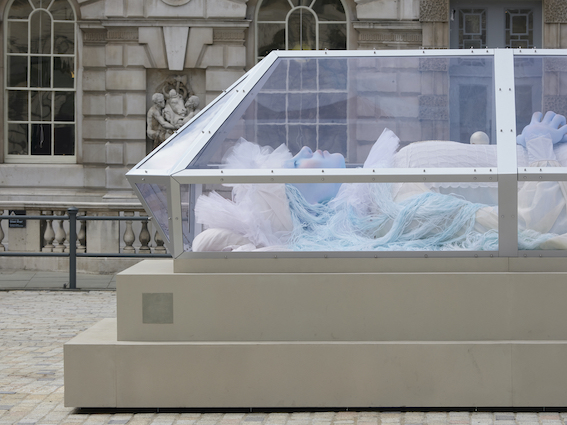
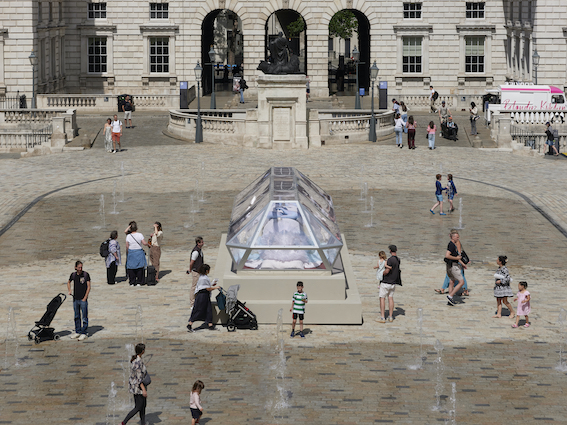
Tai Shani returns to Somerset House with The Spell or The Dream, a new commission for the 25th-birthday Summer programme.
Tai Shani: The Spell or The Dream, Somerset House, London, UK, 2025, Tim Bowditch
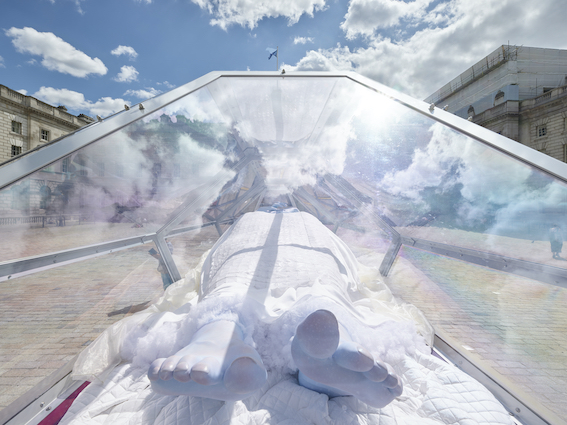
The Spell is a colossal sculptural vitrine accompanied by a newly commissioned soundscape by composer, producer and double bassist Maxwell Sterling. A luminous figure slumbers within a glass coffin that rests on a stepped plinth inviting views to sit, gathering and observe the suspended fairytale figure.
Tai Shani: The Spell or The Dream, Somerset House, London, UK, 2025, Tim Bowditch
Running alongside the sculpture is The Dream, a 24/7 radio broadcast co-curated by Shani and streamed globally via Channel. It gathers artists, thinkers and academics, among them Yanis Varoufakis, Brian Eno, Hannah Black and The Palestinian Sound Archive, to imagine hopeful futures together. New commissions from Cécile B Evans, Moor Mother and Cecilia Vicuña sit beside archival works, while listeners are invited to submit their own dreams for live interpretation. Nothing is stored on demand; the works exist only in the moment you tune in, or disappear back into the ether.
Tai Shani: The Spell or The Dream, Somerset House, London, UK, 2025, Tim Bowditch
Beyond surface, the work pulses with a belief in dreaming as collective power. Live talks, Friday Lates, and family events fold alongside, turning the courtyard into a site for ideas, ritual, and surprise.
The Spell or The Dream invites us not just to witness but to gather, to think, to imagine otherwise. In its stillness, it reminds us that the most radical act might be daring to dream together.
From 8 August to 14 September, the Edmond J. Safra Fountain Court, Somerset House
On Monday 14th July, Somerset House’s iconic courtyard hosted the world premier of rituals: union black, a new film by Sundance award-winning and BAFTA-nominated filmmaker and Somerset House Studios resident Akinola Davies Jr..
Akinola Davies Jr.
The film, commissioned as part of Somerset House’s 25th birthday, captures everyday moments of community, care, worship and celebration. Filmed across the UK, it forms an intimate and evolving archive of Black life. Shot across the UK, the film captures both quiet gestures and collective moments. It honours the textures of daily life and the power of community.
Kwake Bass
The open-air screening featured a one-night-only live score performed by an ensemble of Black British musical innovators: Sampha, Moses Boyd, the drums of Balimaya Project, Kwake Bass, Dennis Bovell, Charlie Dark and Klein. Together, they brought Davies Jr.’s poetic exploration of Black British rituals to life.
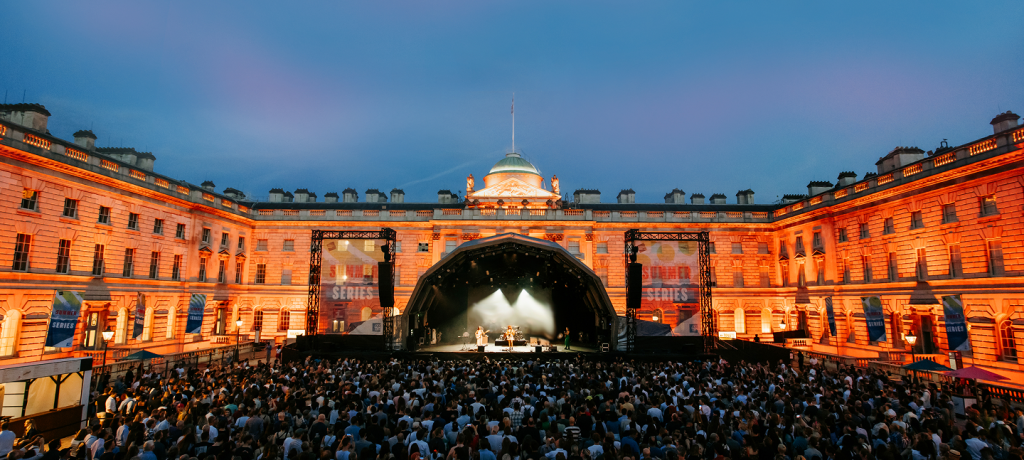
This year’s Somerset House Summer Series with American Express featured a stacked lineup including: Freya Ridings, Joy Oladokun, St. Vincent, Giggs and more.
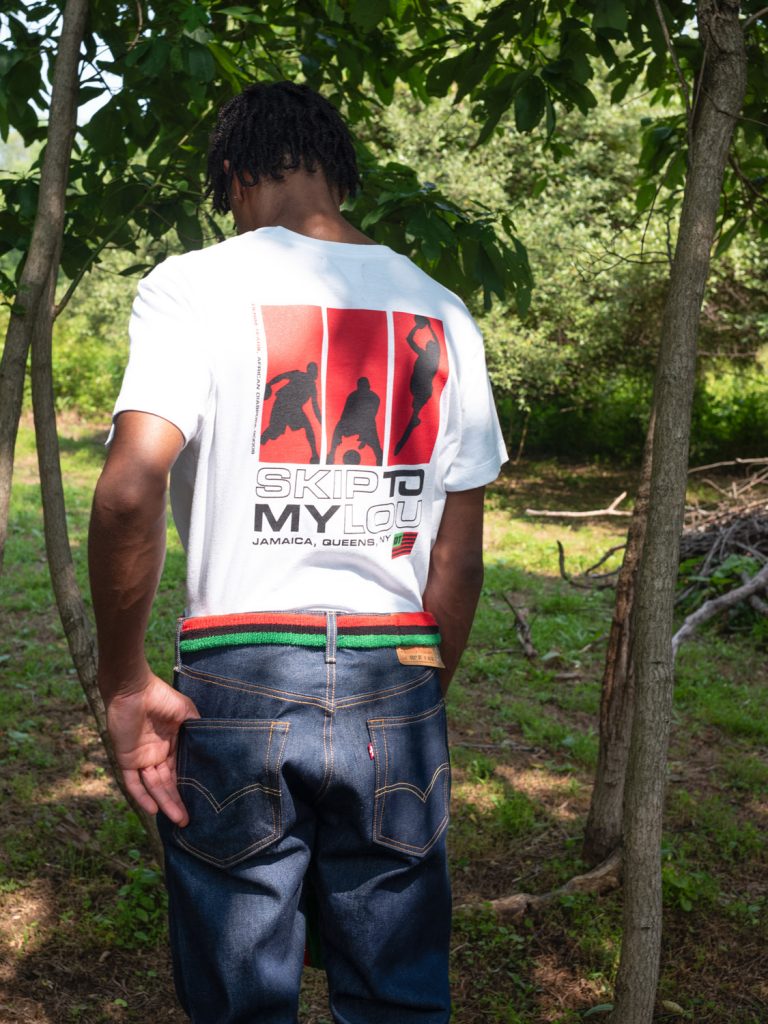
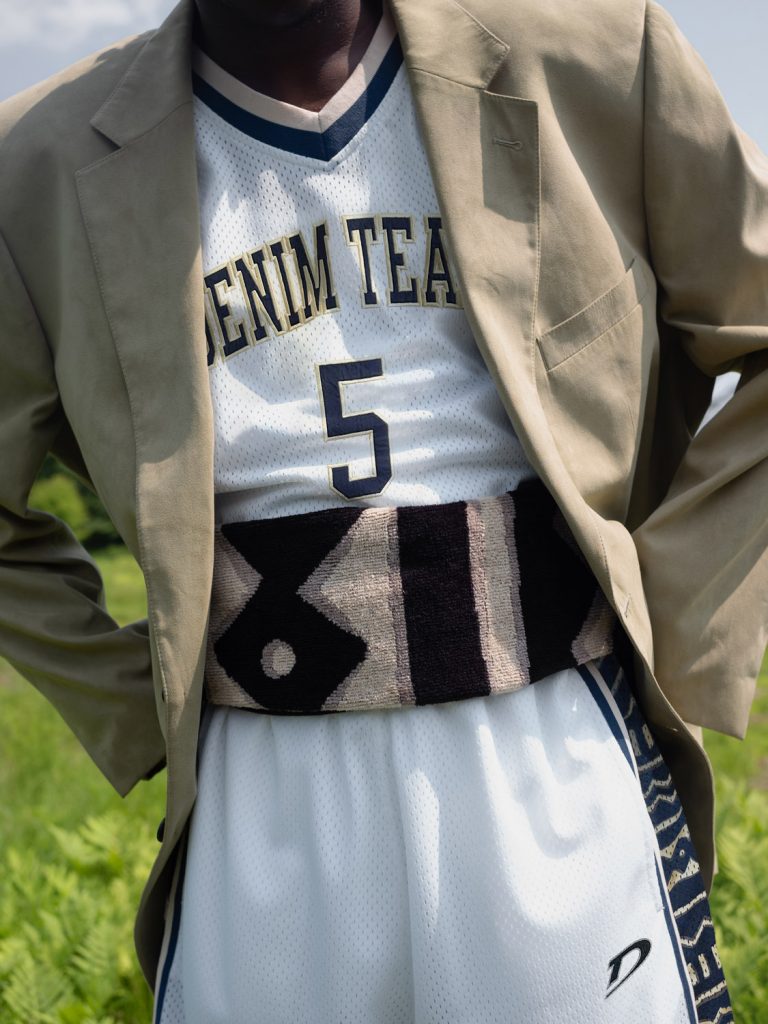
Denim Tears drop 5th Quarter, a love letter to basketball
The collection looks at the game as more than sport and frames basketball as a space where Black identity has been shaped, celebrated and challenged. It asks what happens if you don’t go pro, if you do, and what it all means when the lights go off.
Founder Tremaine Emory pulls inspiration from legends Rafer “Skip 2 My Lou” Alston and John Thompson Jr. and their impact beyond the court in a style, presence and politics that echoes today.
The collection features Denim Tears staples and honour the overlooked legends of the game. Shorts, zip hoodies, sweatpants that give a nod to vintage athletic wear and adorned with African Mudcloth patterns. A basketball net necklace features alongside a custom Rafer Alston ball and a rework of John Thompson Jr.’s iconic game towels.
5th Quarter is a tribute to the game, those who changed it, and to the stories that begin when the buzzer sounds.
The pop-up lands at Dover Street Market Paris on June 28 and 29. The full collection drops July 4 online and in-store at Africa Diaspora Goods, 176 Spring Street.
5th Quarter Collection will be available online at Denimtears.com
Sally Mann’s new book Art Work is a wild, beautiful manual for creative survival.
After a decade of silence, American photographer and writer Sally Mann returns with Art Work: On the Creative Life. A meditation on making, unmaking, and the strange magic in between as she explains, “the is value in the time you just spent dicking around at whatever you just did… not making art can teach you as much as making it.”
Best known for her haunting large-format photographs and her bestselling memoir Hold Still, Mann has long been a cult icon in the American art world. This latest work feels less like a follow-up and more like a reckoning. Part memoir, part creative toolkit, part poetic love letter to the mess of the process, it’s destined to become a touchstone for artists, writers, and anyone trying to carve out space for beauty in a noisy world.
Landing this September via Particular Books, Art Work weaves together stories, images, letters, and flashes of hard-won wisdom. It reads like generous conversation with an old friend who’s lived and come out knowing really matters. From navigating failure to the art of saying no (and yes), Mann tells it how it is.
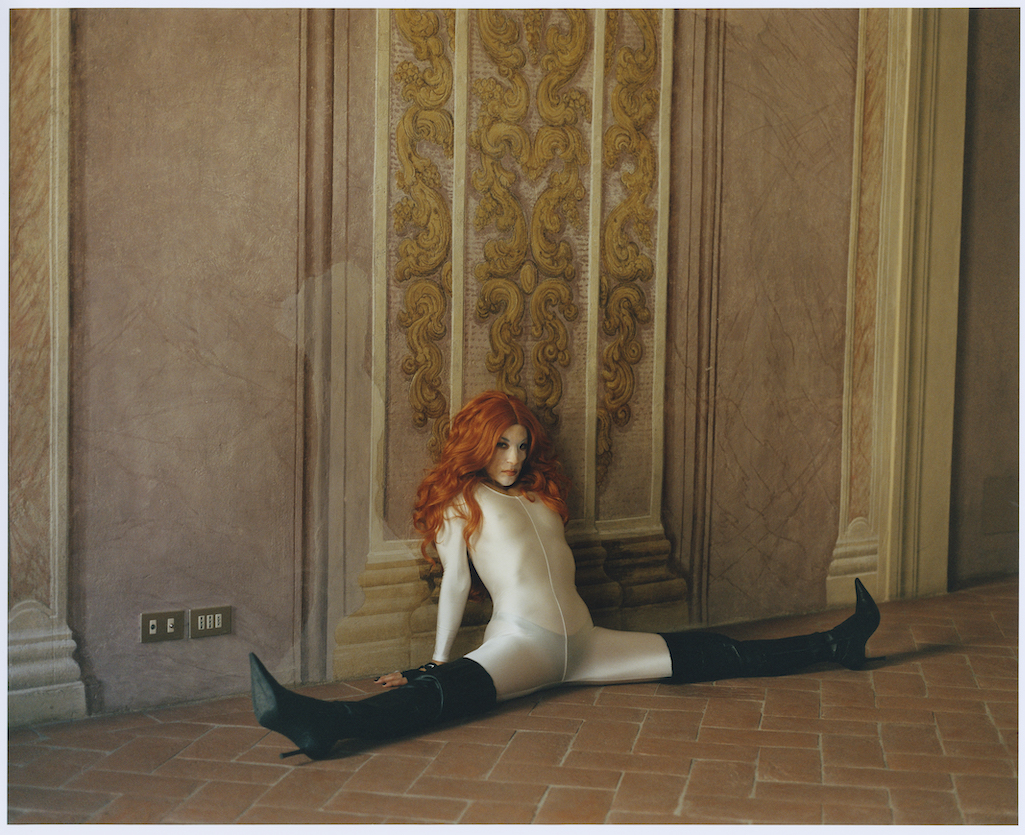
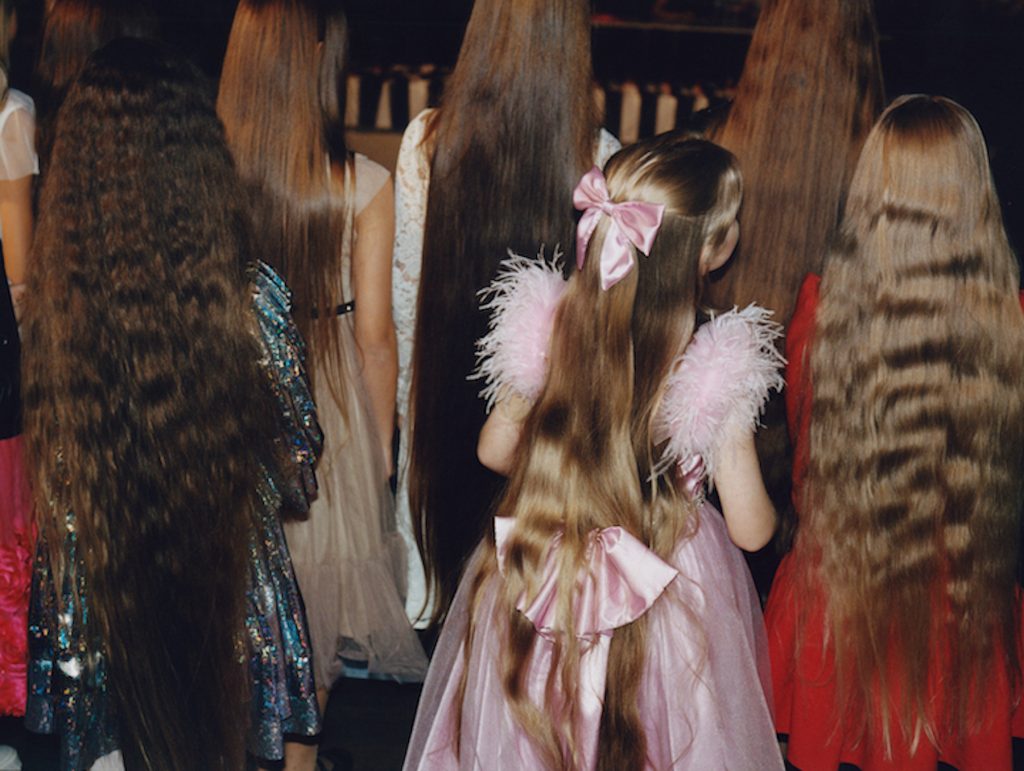
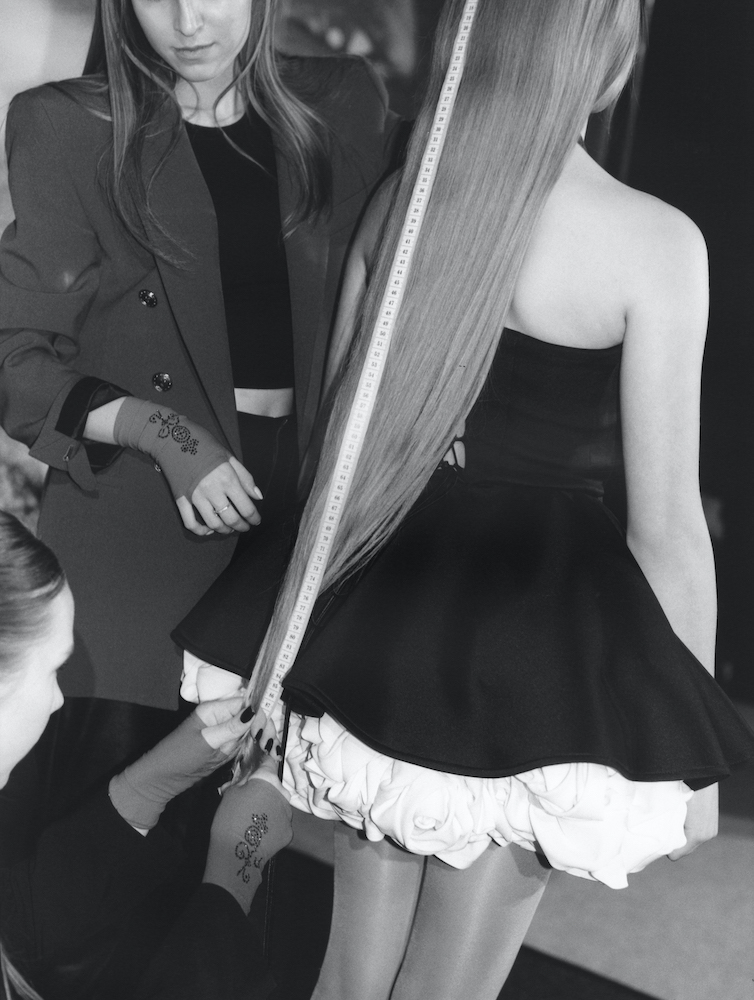
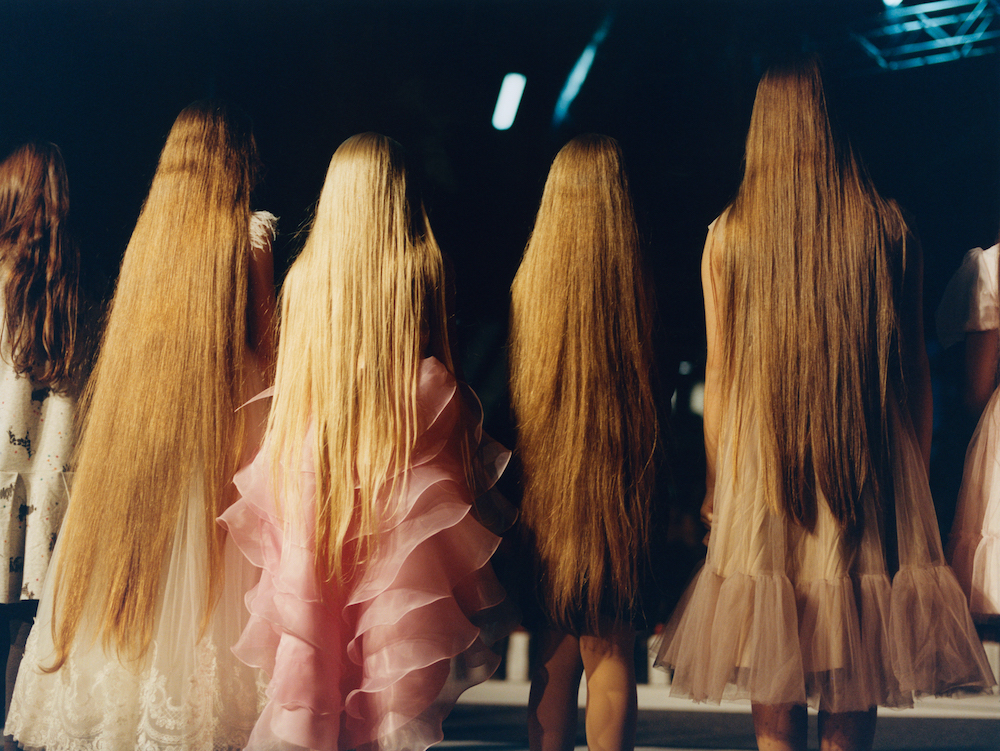
In this new exhibition and publication by photographer Francesca Allen, who has shot for DAZED, i-D and American Vogue among others, the World’s Longest Hair competition becomes her subject. Once a year, hundreds of women with thousands of feet of hair flood into a Lithuanian arena for, “a folkloric beauty pageant where obsession, tradition and identity converge”. With an accompanying text by i.D international editor Frankie Dunn, this intimate and inquiring project explores the contemporary emotional and cultural significance of long hair in 2025.
Francesca Allen, PLAUKAI
Notably surreal, the images trigger memories of strange girls in pop culture or Dorothea Tanning’s uncanny paintings. Drawn to the odd spectacle, the British photographer travelled to Konkursas Pasaulio Ilgaplaukes to document the competition firsthand. Plaukai is Lithuanian for hair, and this series captures almost 200 participants, “from young girls with untouched locks, to older women whose hair pools at their feet as they walk the runway, get measured by gloved judges and take part in a ritualistic finale that must be seen to be believed”.
Francesca Allen, PLAUKAI
As a London based photographer and director, Francesca Allen is known for her intimate depictions of girlhood and the coming-of-age experience. Her work has been exhibited in institutions including London’s Somerset House and The Photographer’s Gallery and she has published the photo books, ‘I’d like to get to know you’ (2022), and ‘Aya’ (2018), and for this project she brings the extraordinary series to Allotment gallery in East London.
Private View & Publication Launch Wednesday 18 June 2025 18:00-21:00 18-25 June 2025 appt only Allotment, Unit 8, Ability Plaza, Arbutus Street, E8 4DT
Christian Dior has announced that Jonathan Anderson will take over as creative director for all collections that the house produces, that is Haute Couture, menswear, and womenswear pret a porter, as well as cruise. This is the first time this role has been a single designer’s responsibility since Monsieur Dior’s reign 1947 to 1957. Although back then there were only two huge couture collections a year of around one hundred and fifty looks each, and in 1970 Marc Bohan, the designer of both couture and pret a porter, was credited with the very first menswear collection.
However, Mr Anderson will not be taking on this role alone, a vast infrastructure of teams and support underpins a house such as Dior, just as it does for a magazine editor, these roles rely on a team. Philippe Guibourgé designed Miss Dior, the pret a porter/boutique collection from 1967, and Frédéric Castet designed the Dior fur collections from 1968. There have also to be specialists in specific creative roles such as tailoring or fabric sourcing, as for a magazine art direction or feature writing. Producing a collection at Dior or a magazine such as TWIN requires the same balance, a single overarching vision plus those who make it happen, in other words a team.
This latest issue or TWIN magazine is, as always, the product of an enormous number or people, some even uncredited; the intermediaries whose dedication of supporting their brands isn’t about seeking attention for themselves but is focussed on doing the job to the maximum of their ability. The extra pair of hands whose contribution is vital but uncredited.
Alongside the subject of the team is also the continuing internationalism of fashion, which must never be taken for granted. Breaking barriers by mixing people from every corner of the globe, whose vision as a team can cross reference many cultures to realise the final creative vision, in TWIN that can be that a dress, a lipstick, or a cover. We know that Mr Anderson spent his childhood and youth between Ireland and Ibiza, he studied drama in New York and fashion at London College of Fashion and he’s about to take over a French, indeed Parisian, couture house.
If you check out the credits for one of our TWIN cover stories, photographer Paola Kudacki studied in Buenos Aires, and has had her worked exhibited in Hamburg, London, and Barcelona, aside from her international covers and stories; she is currently based in New York. Examine the team and alongside Brazilian models Isabali Fontana and Alessandra Ambrosio, just imagine the number of others behind the scenes to realise this story. Oh, and the stunning understatedly sexy clothes are from the collection of New York and Paris based Lebanese designer Eli Mizrahi’s label MÔNOT, just to add to the mix.
Photographer Irina Shostakova is Bulgarian, now based in Paris, her work may be found across the world, whilst her model Aylah Peterson is Australian, and the superb brand featured, Byredo was founded in Stockholm by Ben Gorham. Again, with credits from nails to assistants it’s a team, and it’s teamwork.
The couture house of Dutch born Peet Dullaert or the superb embroideries of Lesage under the aegis of Frenchman Hubert Barrère require new talents, experienced hands, and a mix of old and new skills. Read how these fashion names and others explain their beautiful work in today’s world. How artist Soshiba Matsubara rethinks the entire concept of an exhibition as he turns the traditional cycle of events upside down. The artist may be Tokyo born but the exhibition is in Vienna, as ever flipping the cultural dial in the blink of an eye.
So, TWIN, as in every issue, celebrates both great teams and international creativity, reflecting the business of style and art, offering a feast of delights to savour.
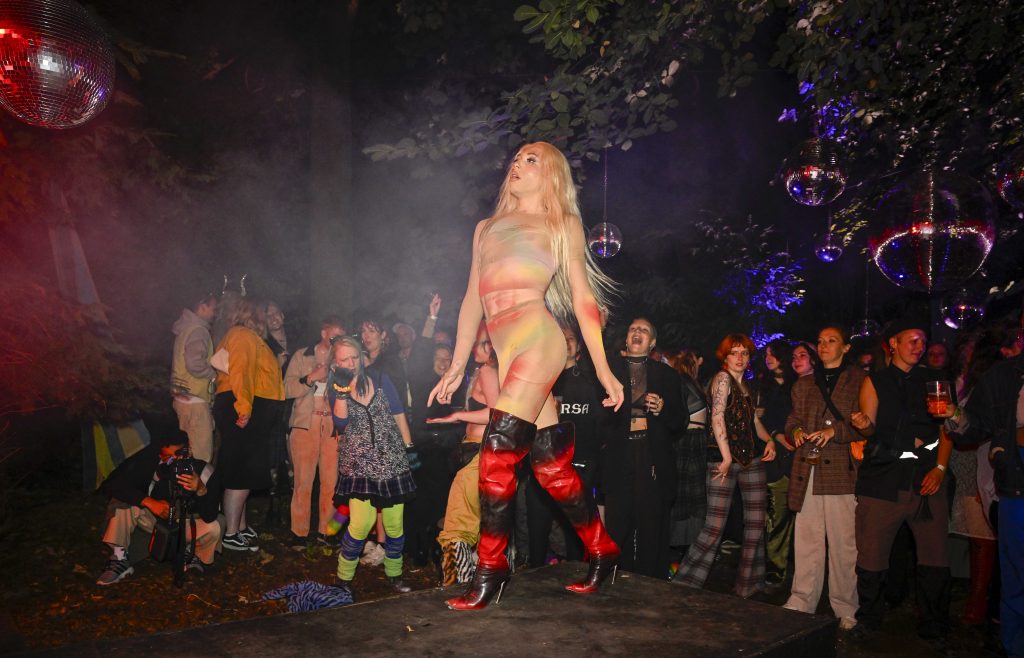
The annual Edinburgh-adjacent arts festival presents a programme of daring new commissions, immersive film, and boundary-pushing performance, peaking with a live festival event in the middle of festival frenzy August. Across the woodland and meadows of its sprawling 100-acre site, complete with crystal grotto and landscape gardens, the series of visceral interventions enchant, provoke and bring the party.
The Late Night Stage curated by Edinburgh-based feminist club night collective Femmergy Pic Neil Hanna
The sculpture park invites visitors to wander among the works of Tracey Emin, Joana Vasconcelos, Anthony Gormley, Rachel Maclean as well as the newer commissions including Jonathan Baldock’s The Ritual Body. His sculptural installation made from clay, linen, hessian, and basketry transmute the familiar into the fantastical, threading queer and working-class histories through myth and folklore. Meanwhile, Jupiter+, takes world-class art beyond the gates and into Scotland’s urban fabric. Following Anya Gallaccio’s spectral Stroke in Paisley (2024) and Rachel Maclean’s dystopian Don’t Buy Mi (2022–23), this autumn will unveil a newly commissioned work.
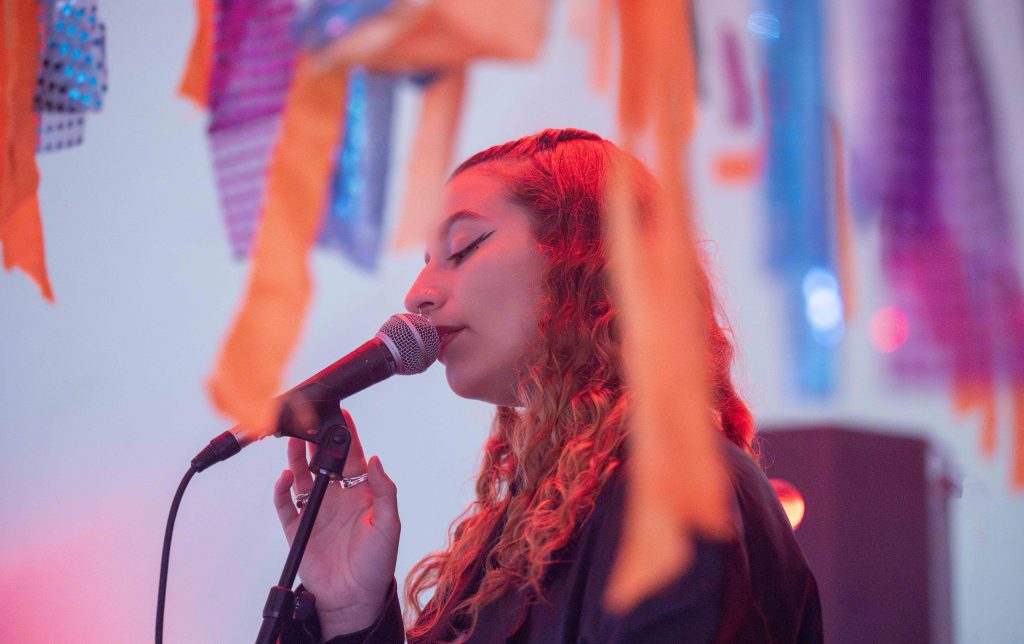
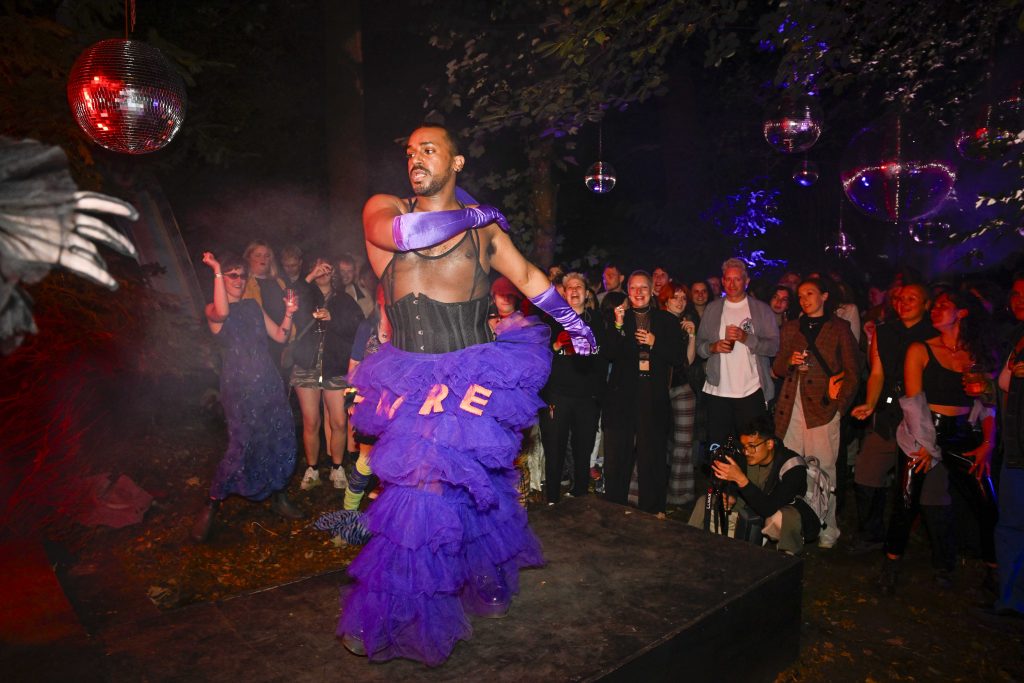
Aaliyah Enyo performed in the Stretch Tent during Jupiter Rising. Pic Neil Hanna
Returning for one electric night in August in the midst of the festival, Jupiter Rising x EAF lights up the Artland landscape with site-responsive installations, live art, and experimental music. This year’s edition promises a spotlight on underrepresented voices, weaving queer narratives through sonic and visual interventions.
The Late Night Stage curated by Edinburgh-based feminist club night collective Femmergy Pic Neil Hanna
Jupiter Rising x EAF: One-Night Festival of Radical Art Jupiter Artland | 16 August 2025
Jupiter Artland Bonnington House Steadings Wilkieston Edinburgh EH27 8BY












 PREVIOUS

 Twitter
 Tumblr
 YouTube
 Facebook
 Instagram
