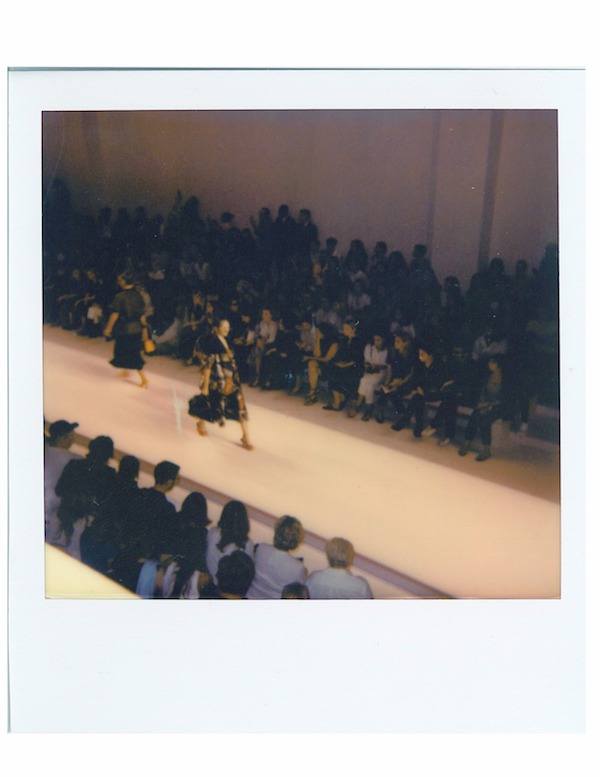
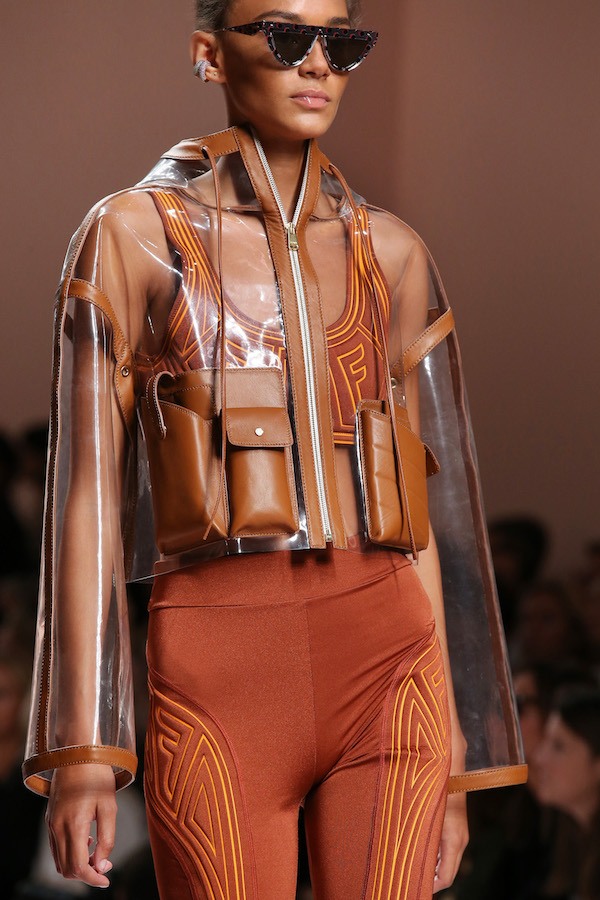
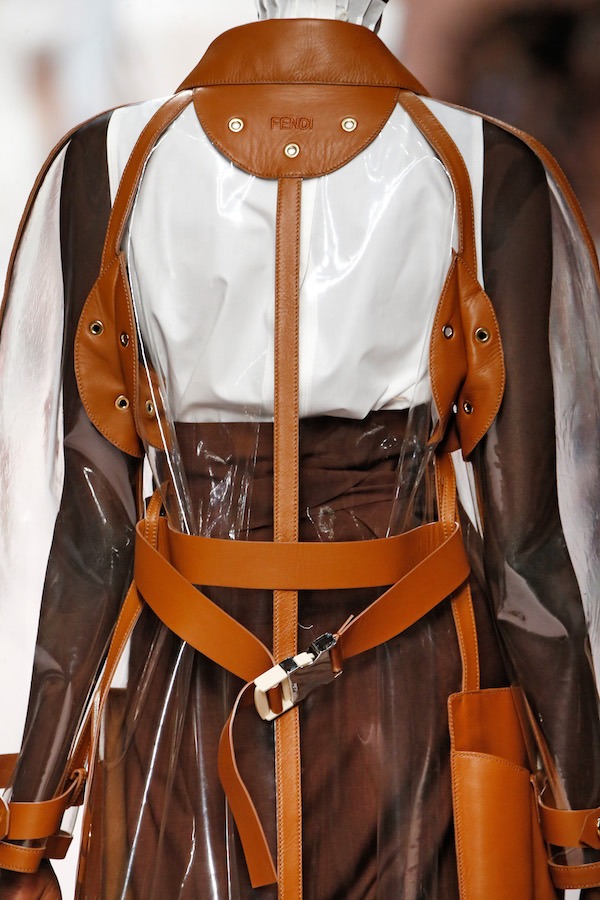
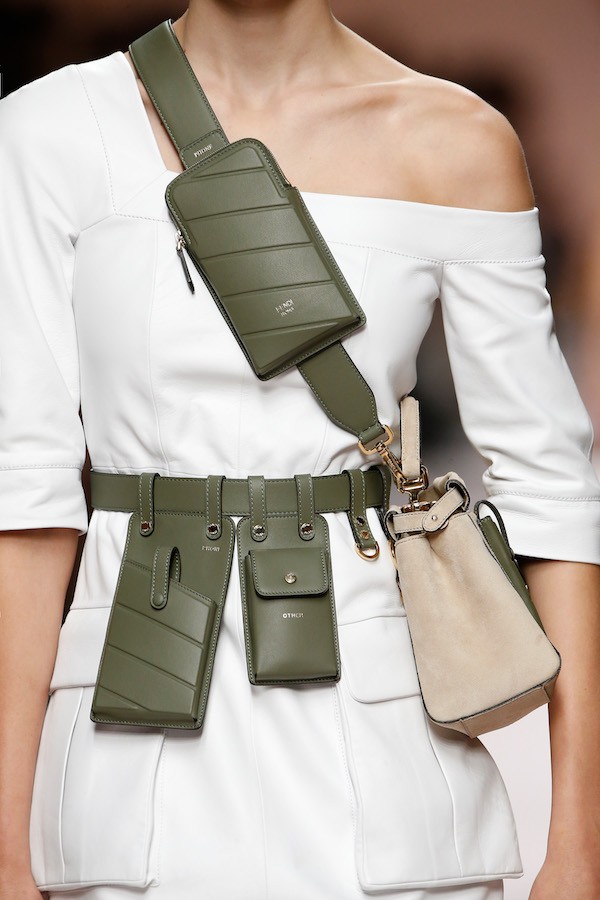
Fendi SS19 was all about the Italian brand’s step towards a younger generation — a slight shift in the brand’s aesthetic, which was also rumoured to be the reasoning behind the slightly titled “F” for Fendi on the invitations and at the top of the runway. Creative director Karl Lagerfeld alongside creative director of accessories and menswear Silvia Venturini Fendi curated an urban collection of utilitarian romance. Pockets upon pockets , pouches in pouches and bags upon bags, the collection was a much needed breath of fresh air that introduced a slightly younger version of the Fendi woman. Each look was just as ‘instagrammable’ as it was elegant, shades of lobster orange,burgundy, tangerine, optic white , denim and sage created flirty feminine silhouettes with hard fabrics. Also making an appearance were versions of a trendy cycle shorts along with the iconic Fendi baguette which made its comeback this season.
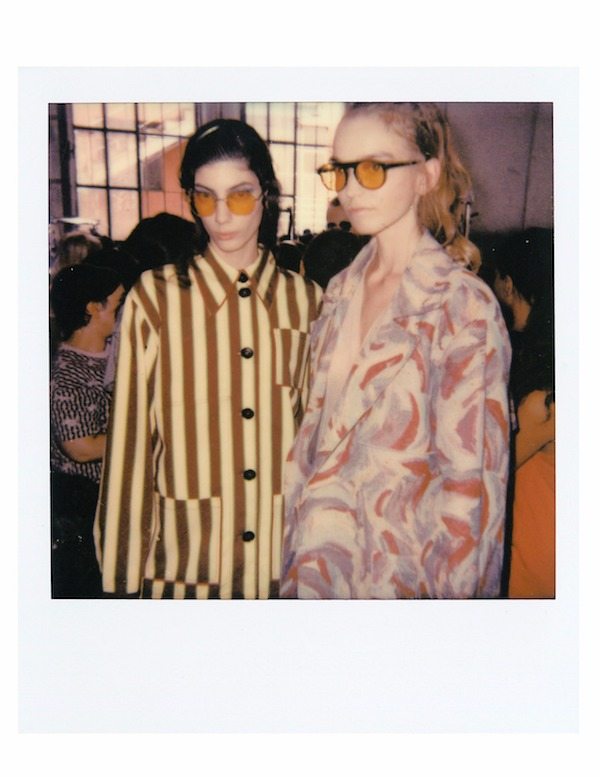
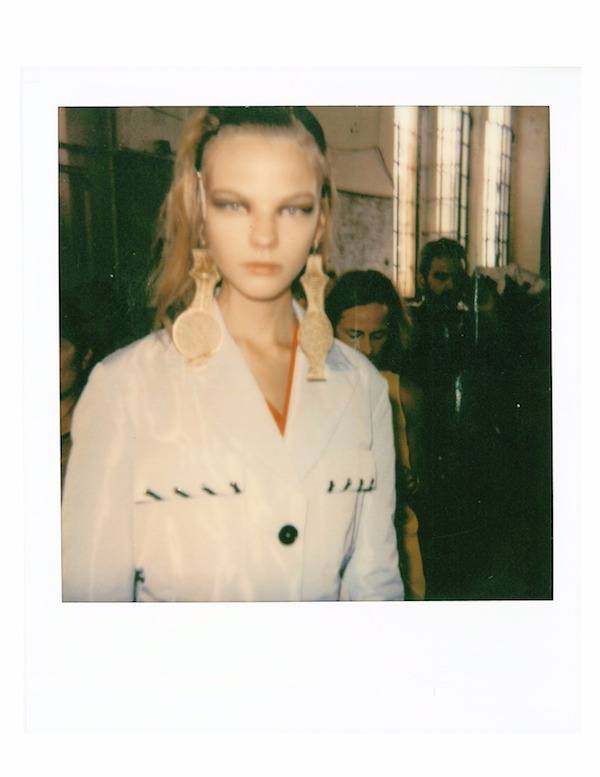
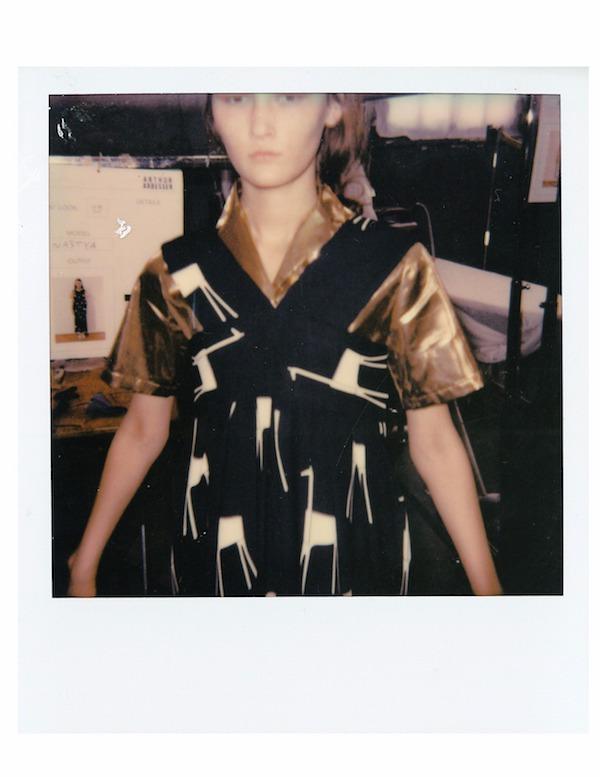
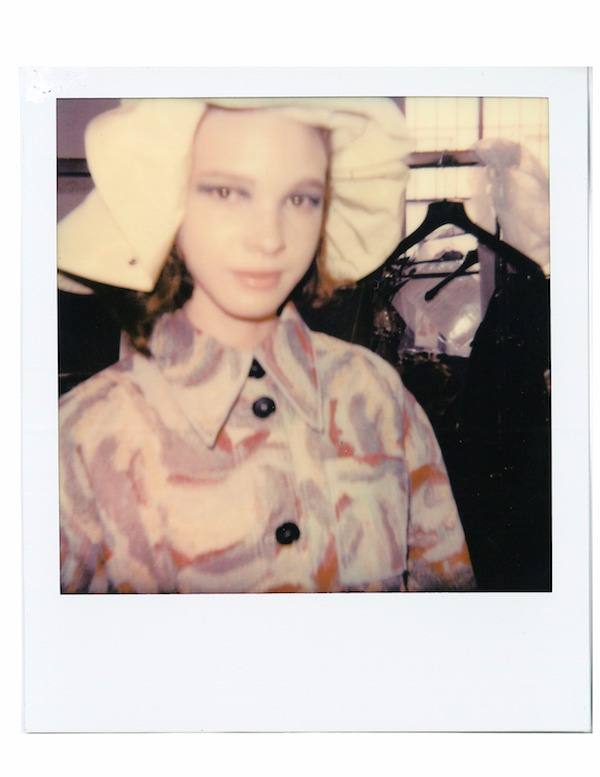
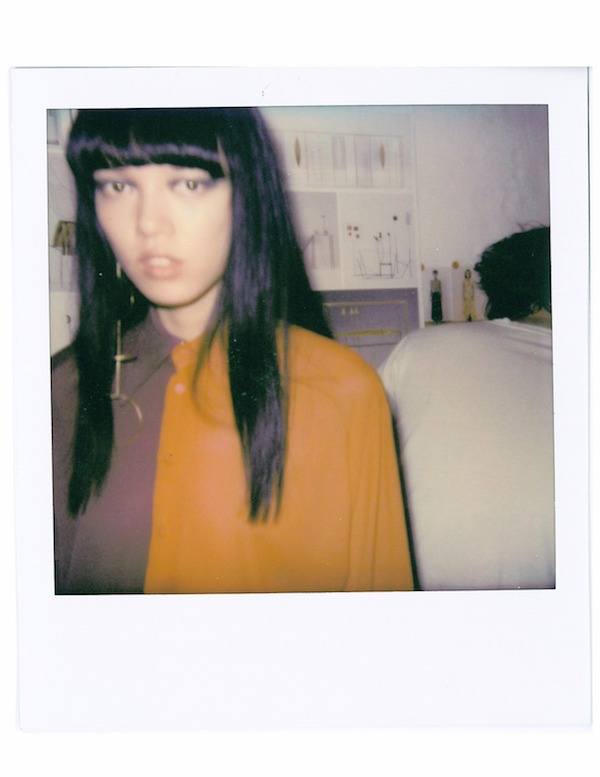
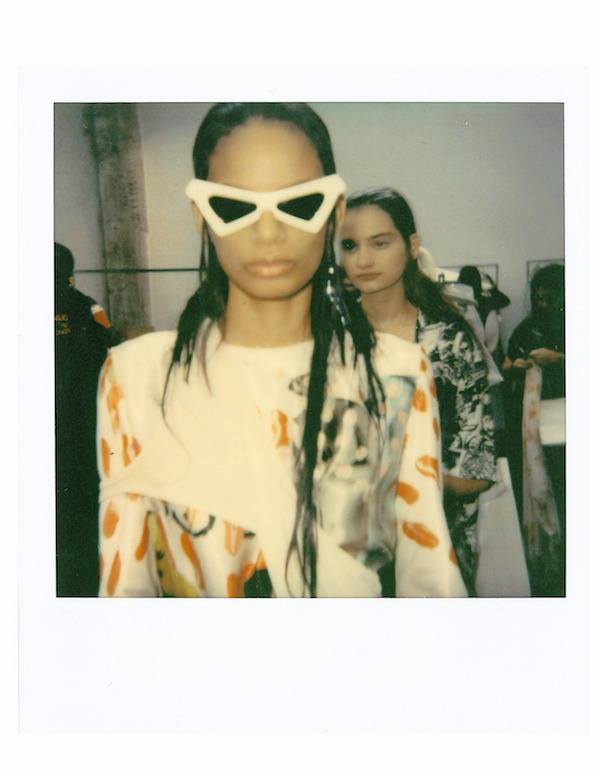
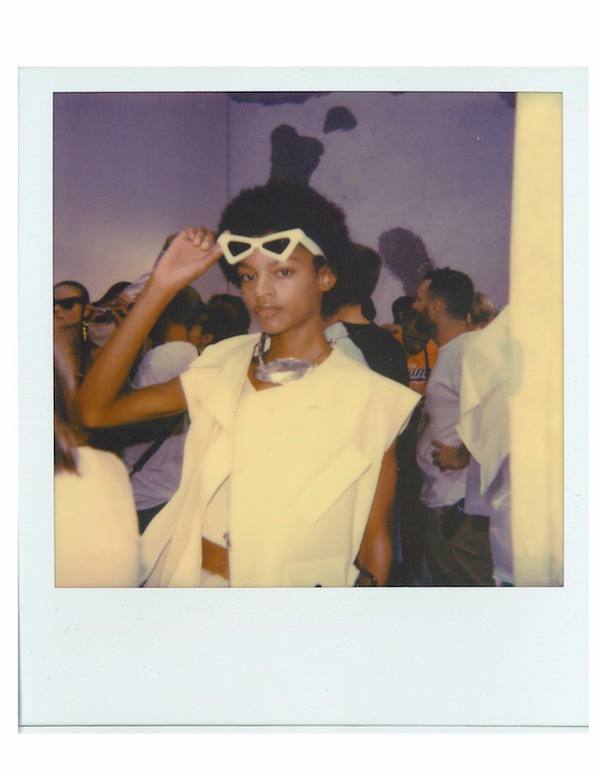
For his Spring Summer 2019 collection Viennese designer Arthur Arbesser chose to embrace the concepts of the finished product along with the process in a collection which explored these two notions in a unified manner.
Arbesser often revisits his hometown for inspiration, however this season the designer looked towards Italian sculptor Fausto Melotti to further influence the collection. Melotti’s work often mirrors qualities of humanity in ways which are mathematical and geometric while still inducing harmony. This is quite similar to the making of a garment. Arthur used the concepts of rhythm and abstract within Melotti’s work to craft a collection of colourful patterns and textures architected in ways which framed the body as an art form. The designer imagined his ideal woman to be, “a woman who works in a studio with clay and gets her hands dirty, but isn’t afraid to go out at night and have fun.” The collection also held an abundance of pattern, jackets, skirts and pyjamas often carried several panels of print, which in some ways were similar to Melotti’s work of swirls and stripes. Also notable were the uniquely formed earrings which hung from the body like mini-sculptures. The designer’s celebration of disharmony shed light on the beauty of imperfection and non-symmetricality in a perfect polished kind of way.
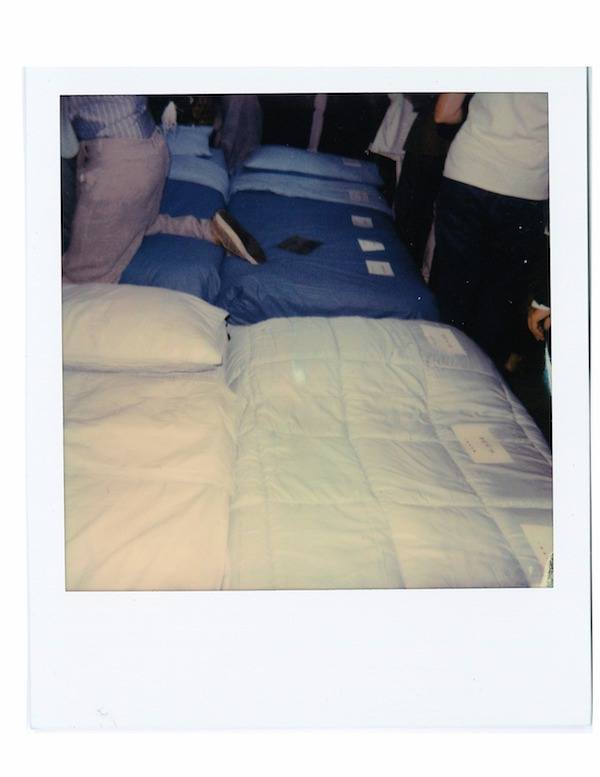
For Marni’s spring summer 2019 collection creative director Francesco Rizzo invited his audience in bed as he presented a collection which celebrated the importance of human touch. Rizzo imagined a designer’s world where the clothing was all handcrafted as opposed to being manufactured, similar to the world of a painter or chef.
The collection glorified the inaccuracy of an artist’s hand in a way which highlighted the creative process. It was about that aha moment in the studio where the fabric is draped on the dress form with pins and tape and the light hits it and the character comes alive. The moment before the finished hems and tightened seams, or as he said, “a journey from the white of the rough canvas to colour, seasoned with prints and embellishments.” Vivid splashes of colour were complemented by prints of the human form along with draped skirts, finger painted patterned coats and skirts. Each piece of jewellery was crafted to mimic leaves and miniature versions of the female form. It was just the right balance between artistry and commerciality while still keeping in mind a very playful Marni signature. It might be safe to say the designer at Marni is just the perfect pairing. He has caught his stride on the path of equilibrium for high sales while still withholding the characteristics poetry and craftsmanship.
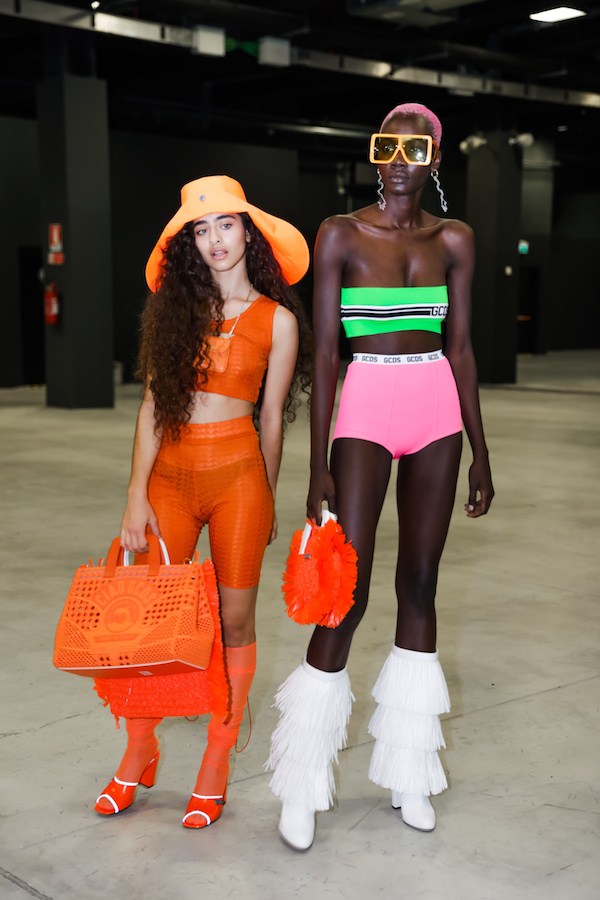
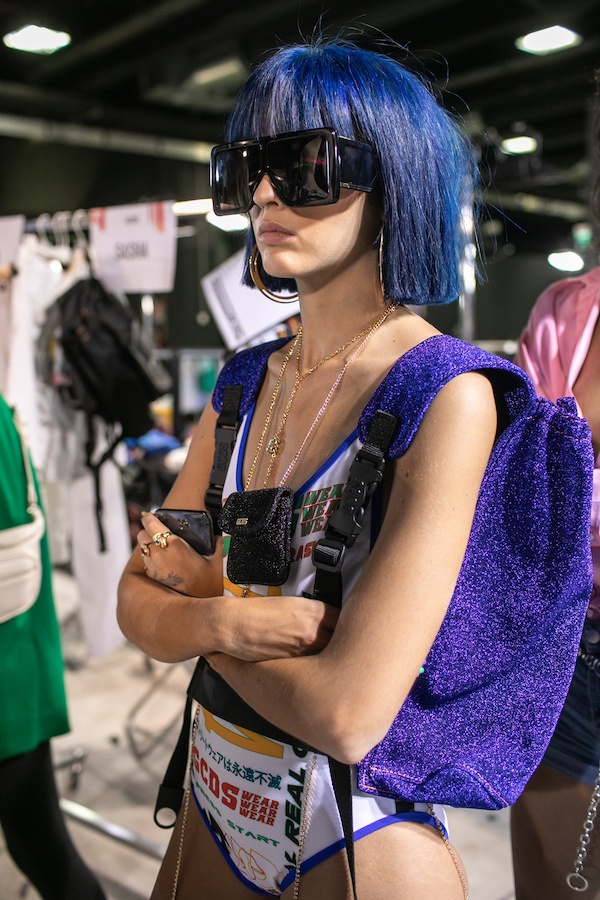
Last Saturday evening, creative director of Milan based label GCDS Giuliano Calza brought forth a show which in fact might have lent truth to the components of the aptly-comprised acronym — God Can’t Destroy Streetwear. Out of all the shows of the season, this was a gathering of the most diverse group of audience members, that which included fashion editors, journalists, all types of hardcore streetwear enthusiasts along with a few Italian celebrities . All surrounded by GCDS branded vending machines , accessories and signs , all apart of the inspiration behind the SS19 collection labeled The Futuro Beach.
Upon initial sighting, the first few pieces which strutted took some getting used to. They left a taste in one’s mouth which made you unsure of wether it was a collection to enjoy or one to scrunch your face at in disgust. However upon further analysis, that taste began to simmer and one began to realize that it is nothing but vodka, and that this, was a party.
The designer aimed to give forecast on a new era, one where he says is not only about aliens and plastic material, but quality and craftsmanship. “I wanted to talk to young people and to get them thinking about the future, plastics water shortage and the environment. Full sustainability is impossible and I wanted this show to be a wakeup call.”
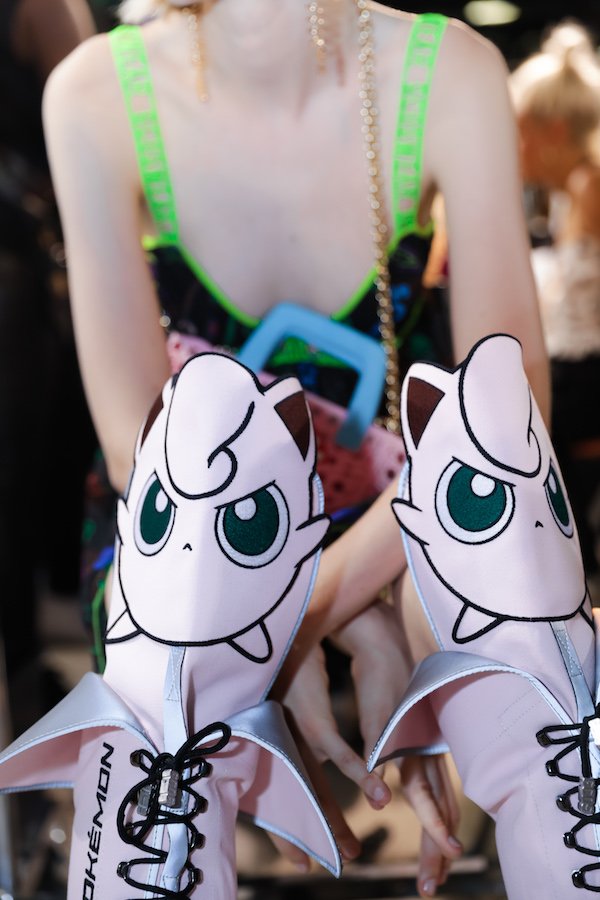
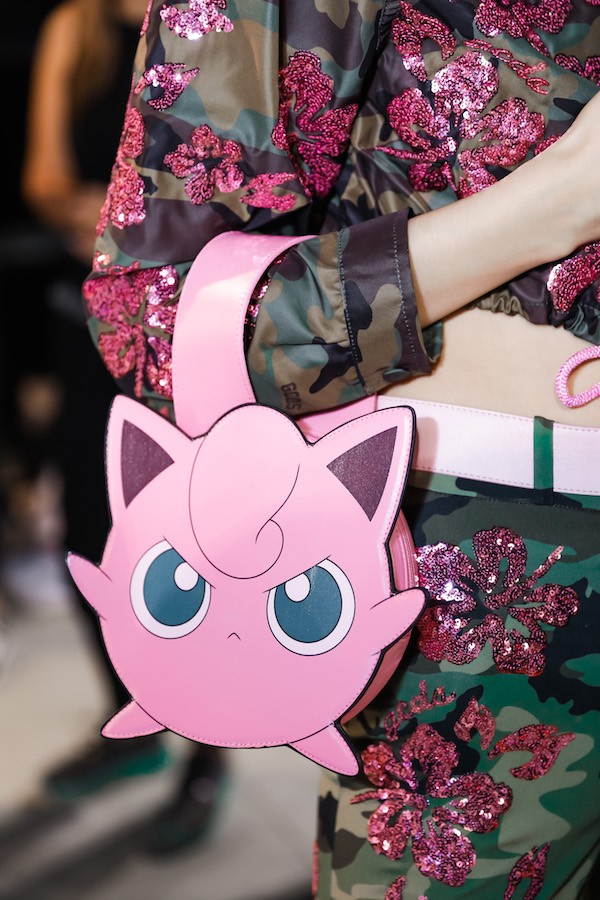
Three breasted women in midriff tops, transparent vinyl dresses, highlighter pink hair, telephone handsets and fruits which hung like jewellery were all ornaments which complemented a collection of streetwear. The brand’s collaboration with Pokémon inspired animated sandals, character appliqué which strung a fun cartoonish feel throughout the collection. Although streetwear might have been rumoured to be dead earlier this year, Giuliano’s ability to put on a show might have just landed him the title of the ringmaster and at his feet sits quite a roaring audience.
Ashish’s SS19 show at London Fashion Week came at a poignant time in India’s history. The country voted to decriminalise homosexuality at the beginning of September, a historic vote which marks a hugely significant new era.
While this event wasn’t directly referenced in the collection by the Indian-born British designer – famous for his commanding statement slogans which have previously included the iconic ‘Immigrant’ t-shirt and upbeat messages such as ‘You Are Much Lovelier Than You Think’. In this collection, the pain of the past and the joy for a new and more inclusive future instead permeated the ether.
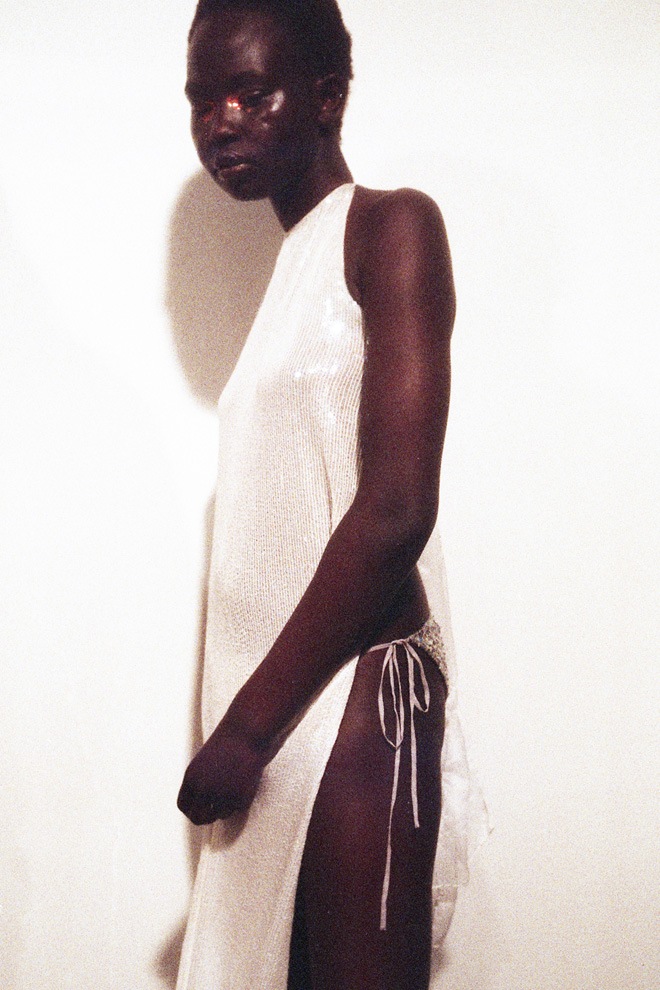
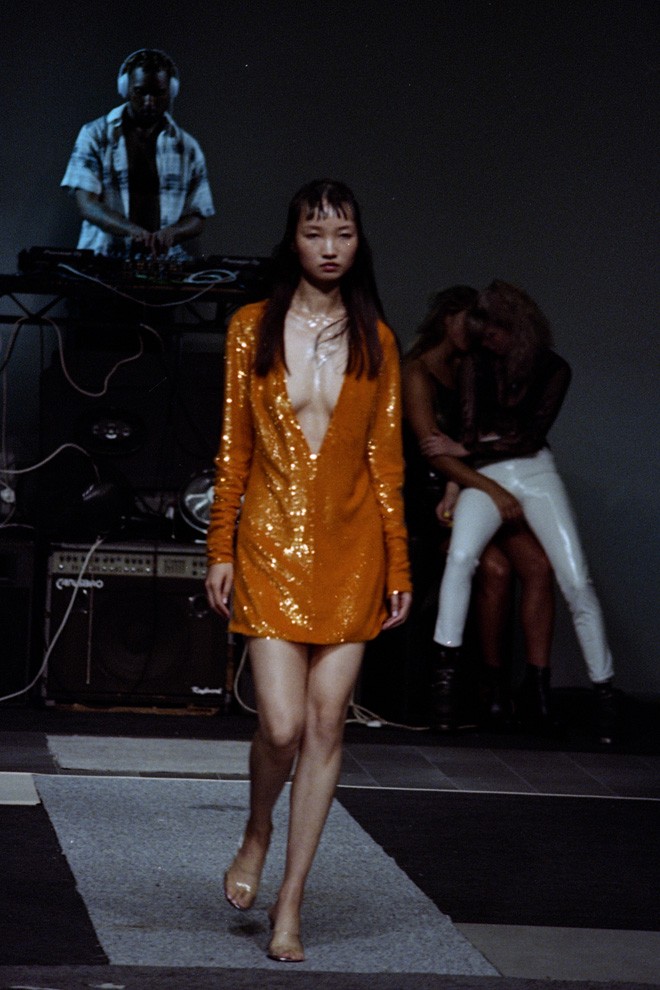
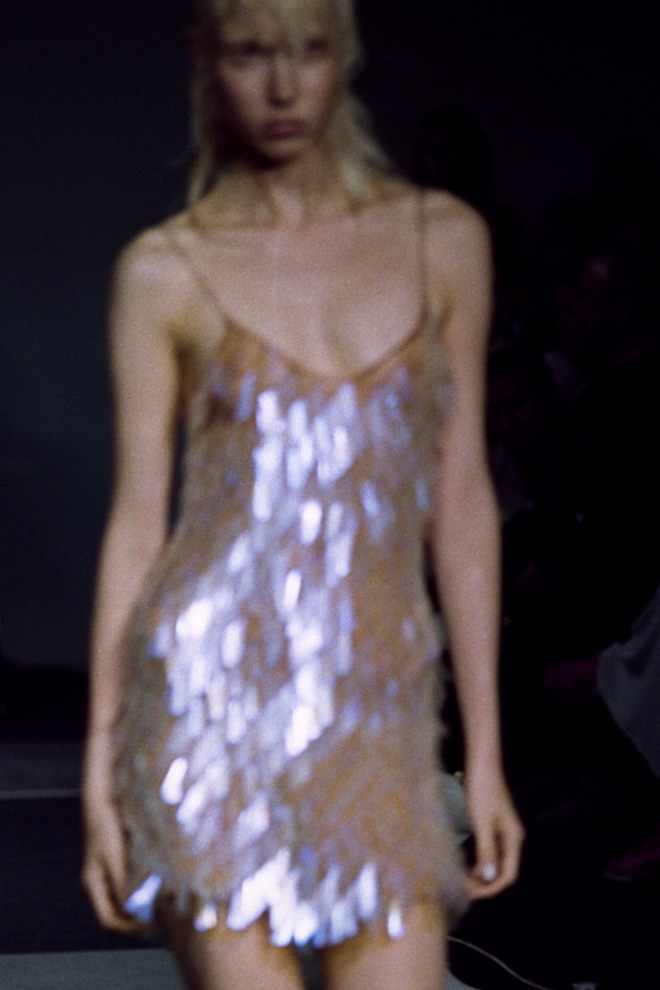
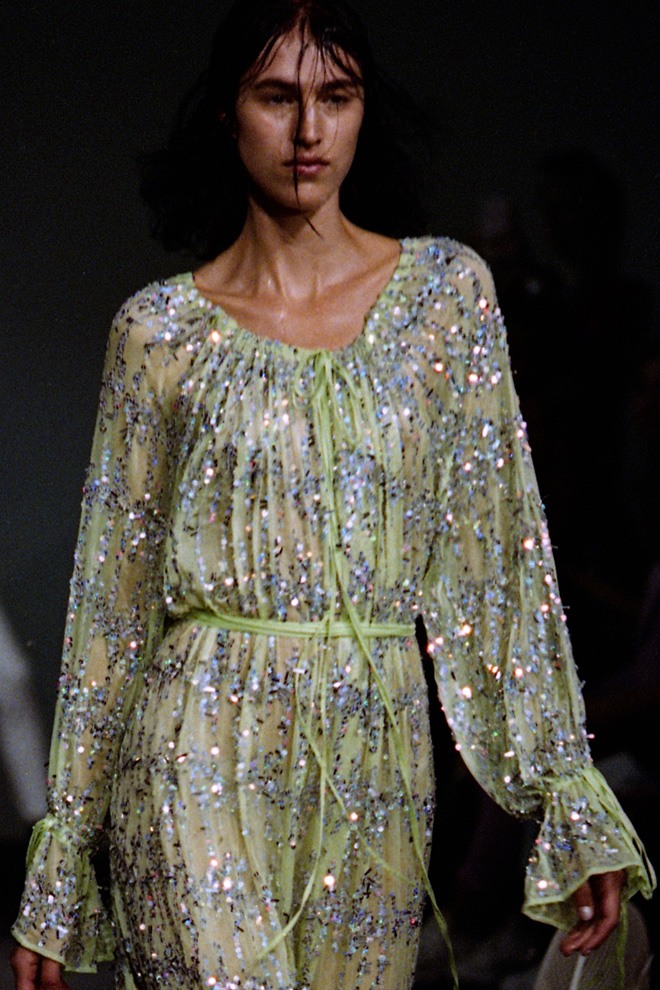
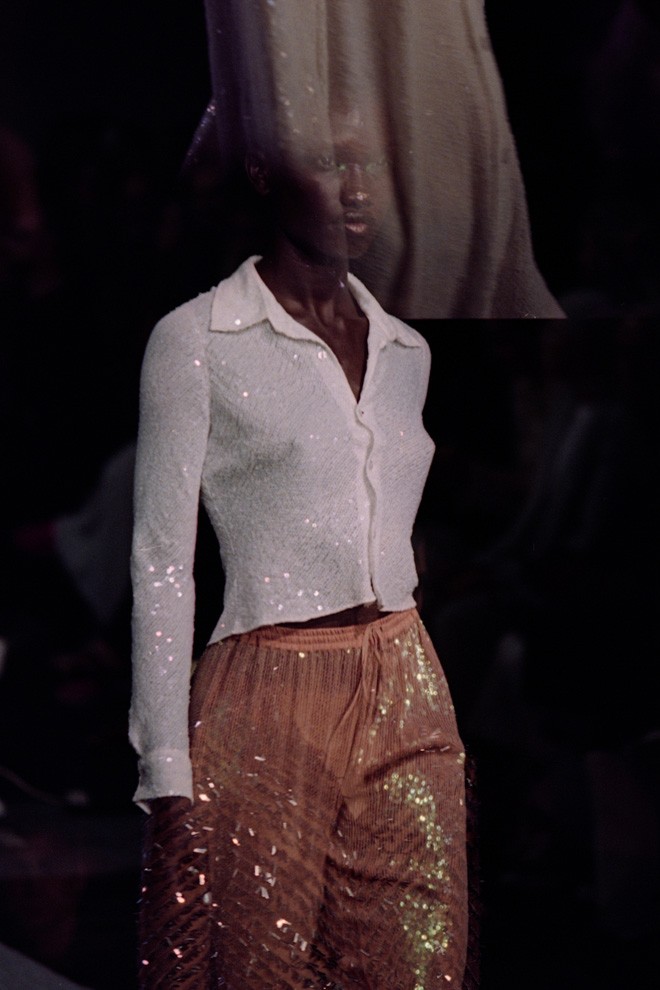
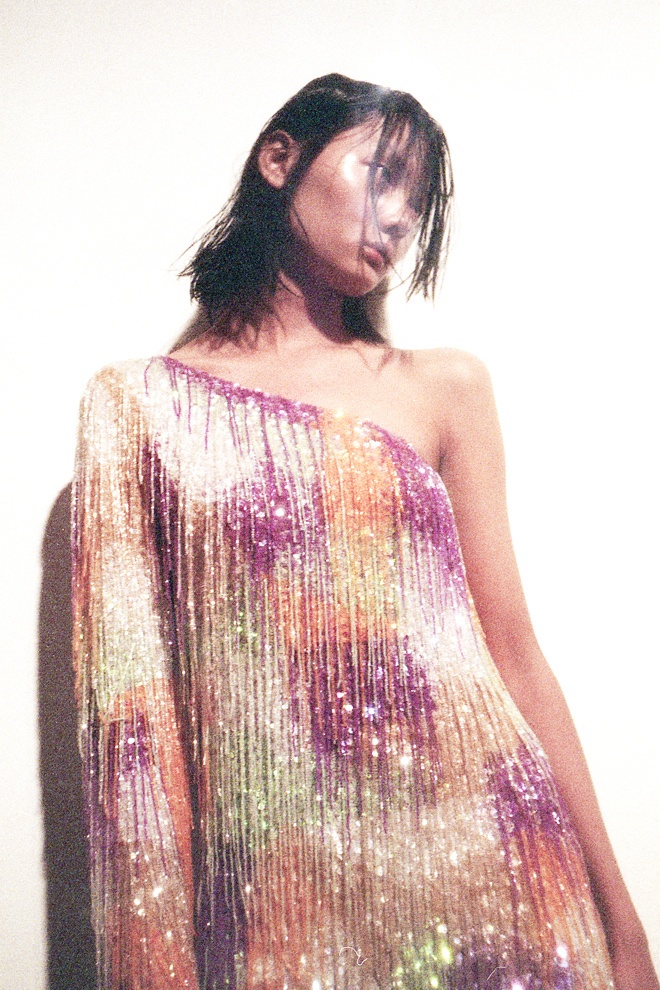
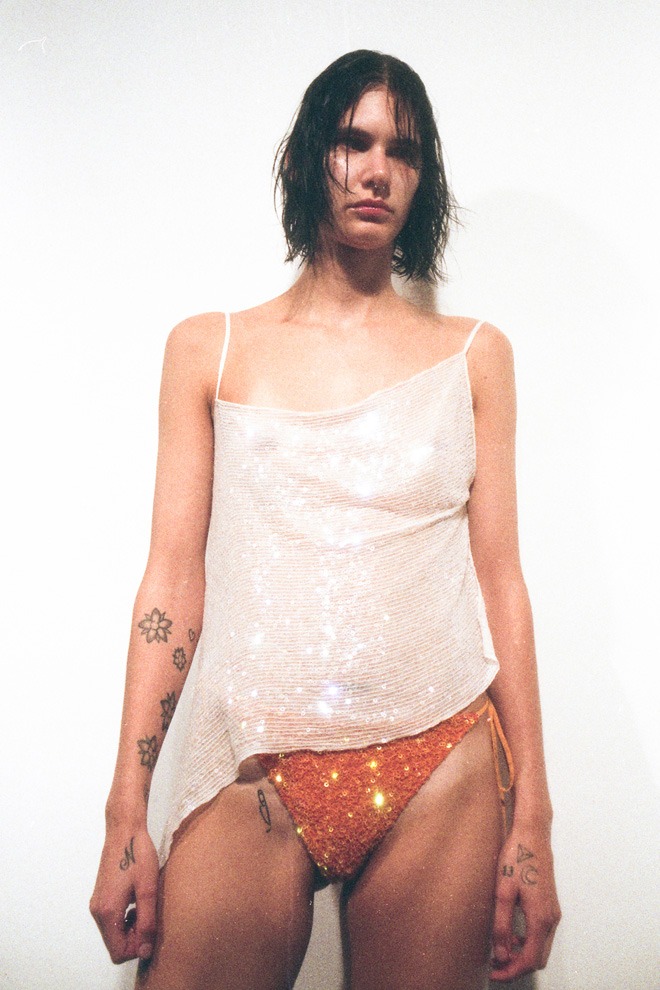
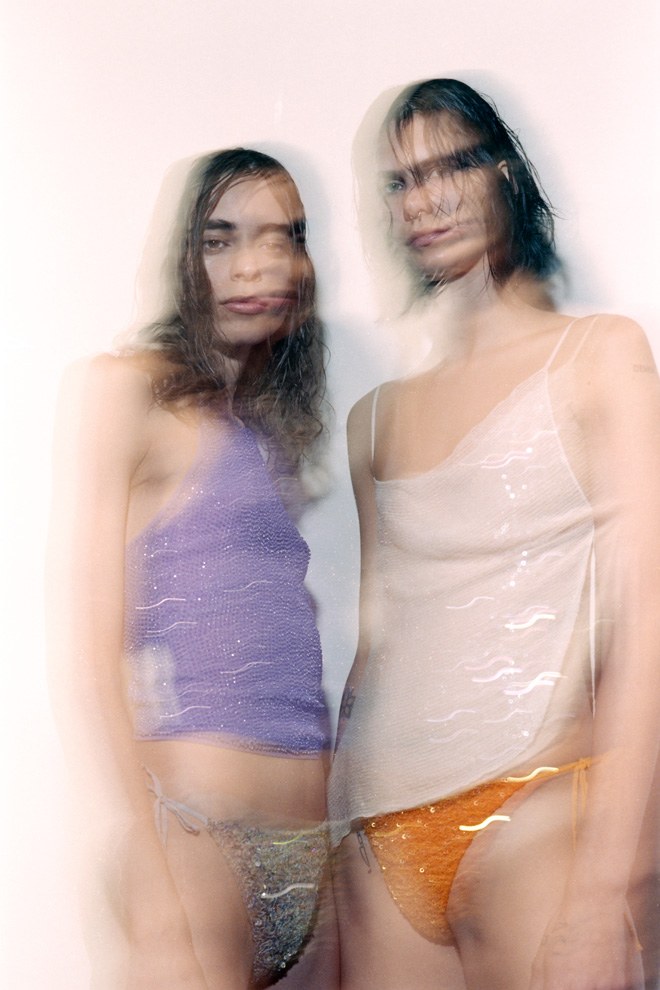
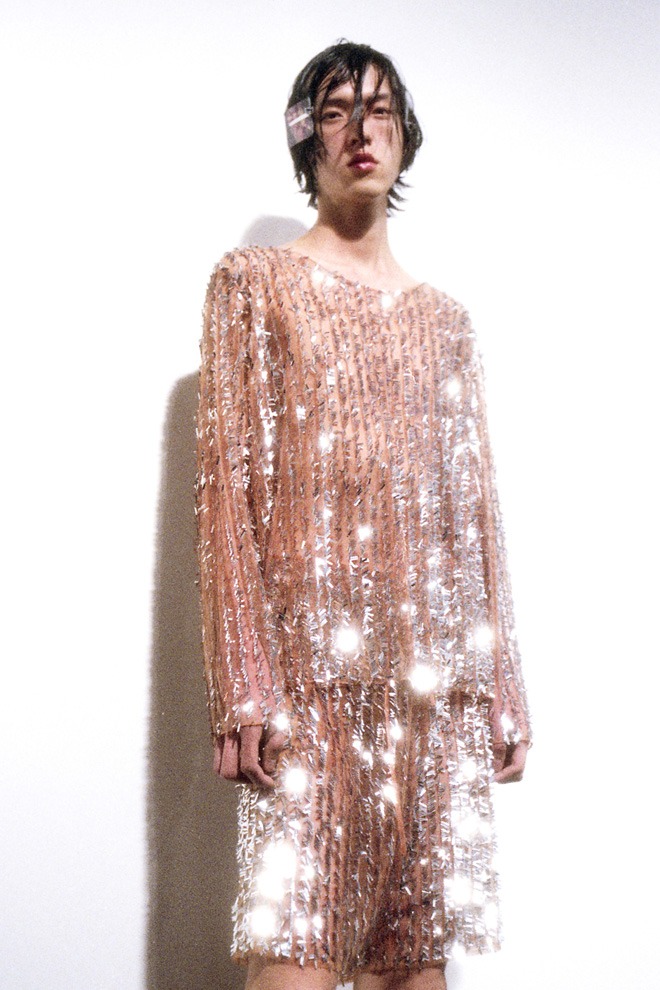
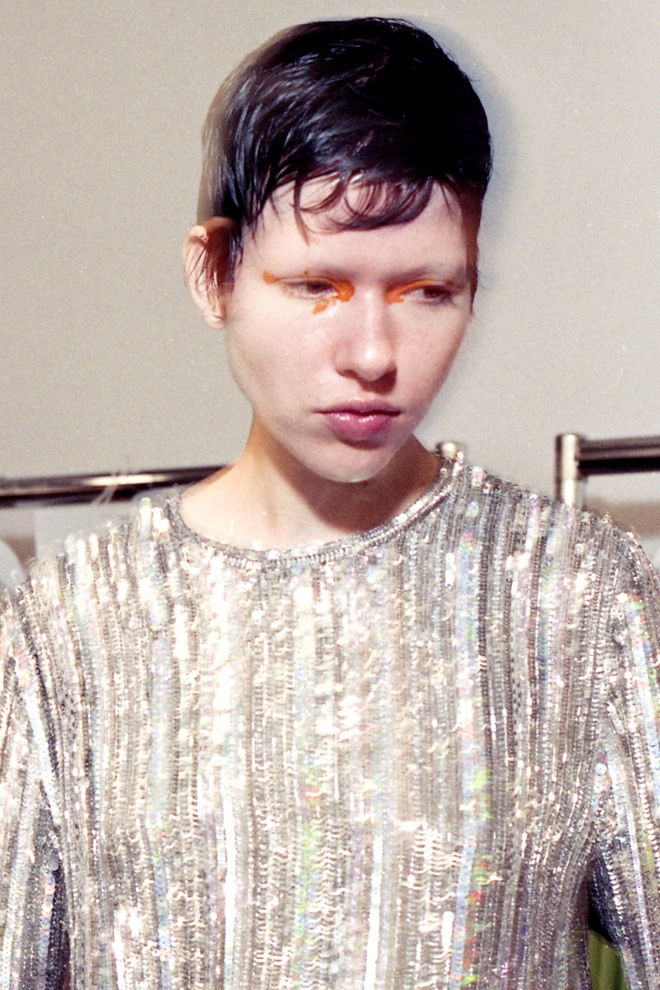
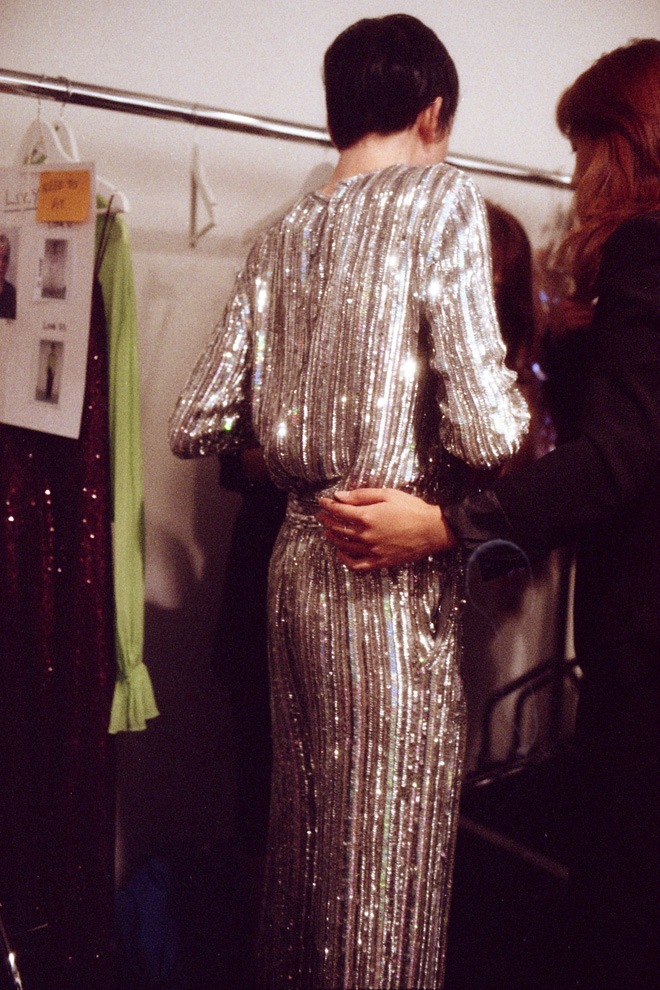
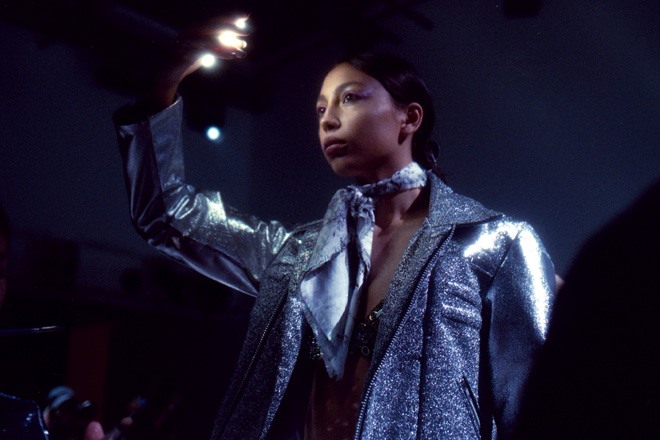
For SS19 Ashish Gupta amped up his signature statement sequins and offered plenty of 90s inspired bias cuts. For a look that has such disco connotations, Ashish managed to communicate a grunge-y, undone-ness in these looks. It felt less like a means of escaping from reality and less of a celebration of living in the now.
Ashish has previously used his designs to draw attention to the crises that pervade our times. This collection offered a dazzling moment of stillness – sequins as mirrors for reflection and pause.
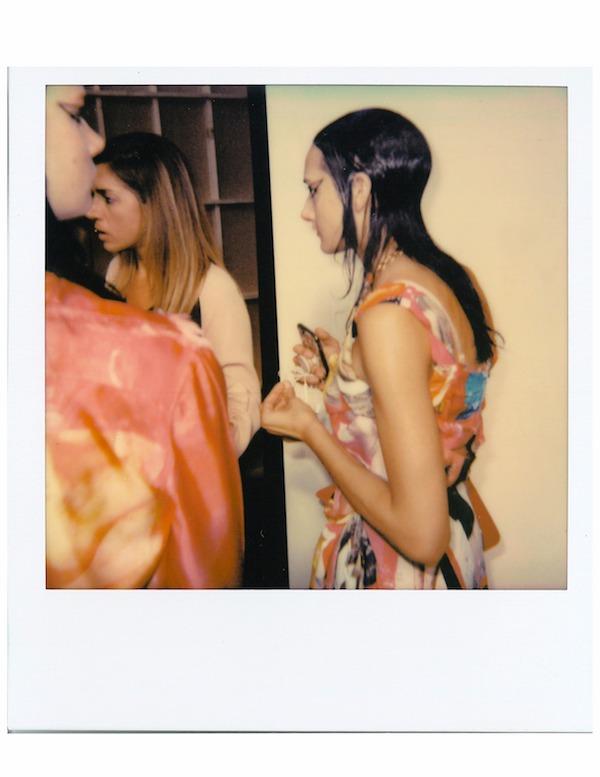
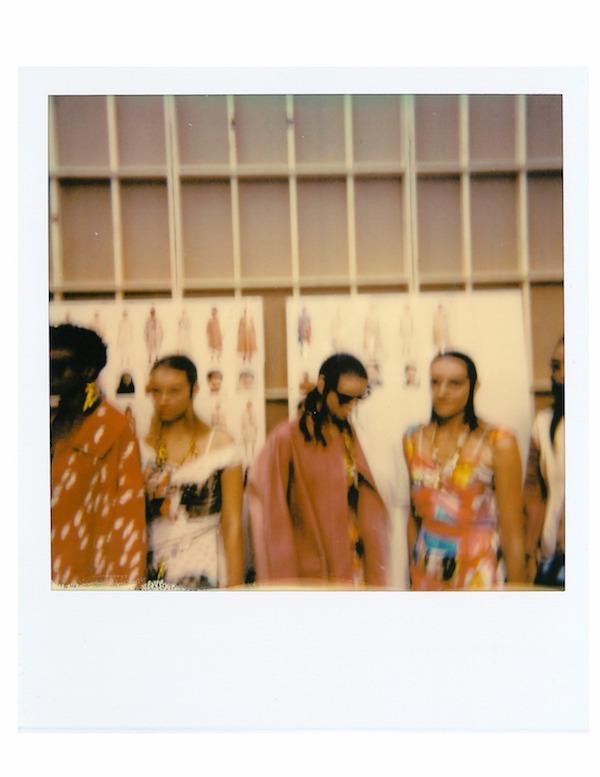
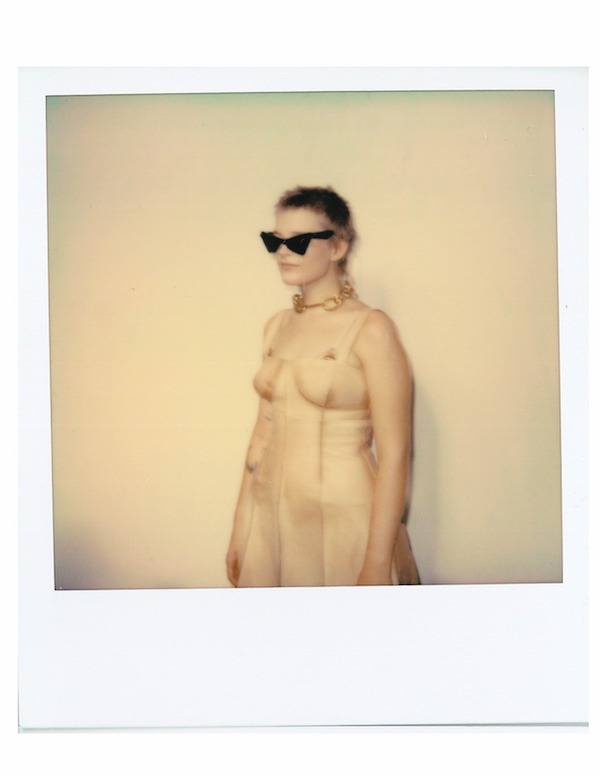
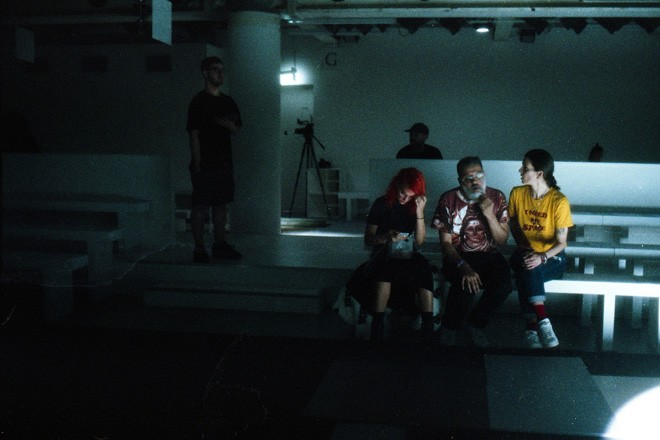
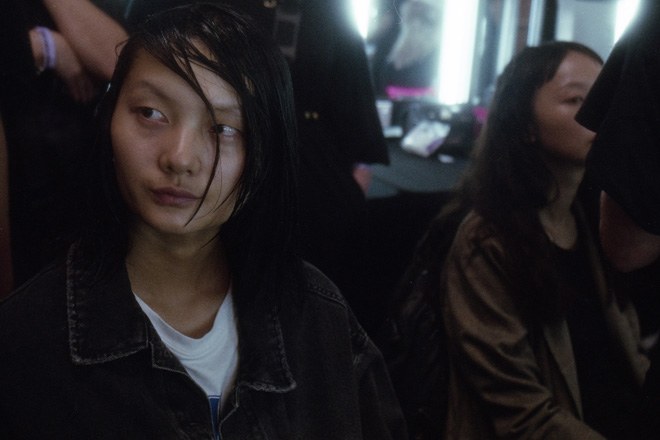
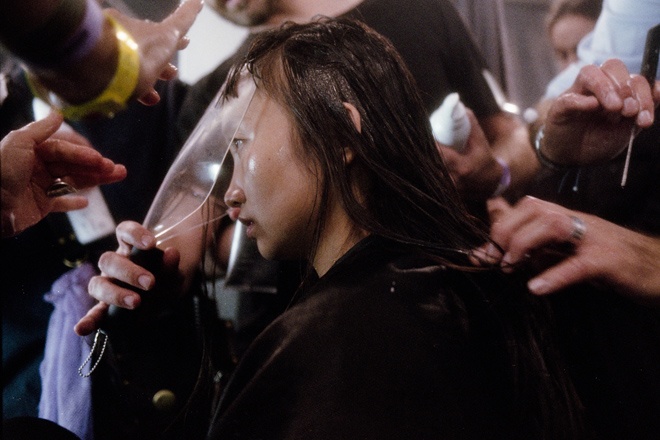
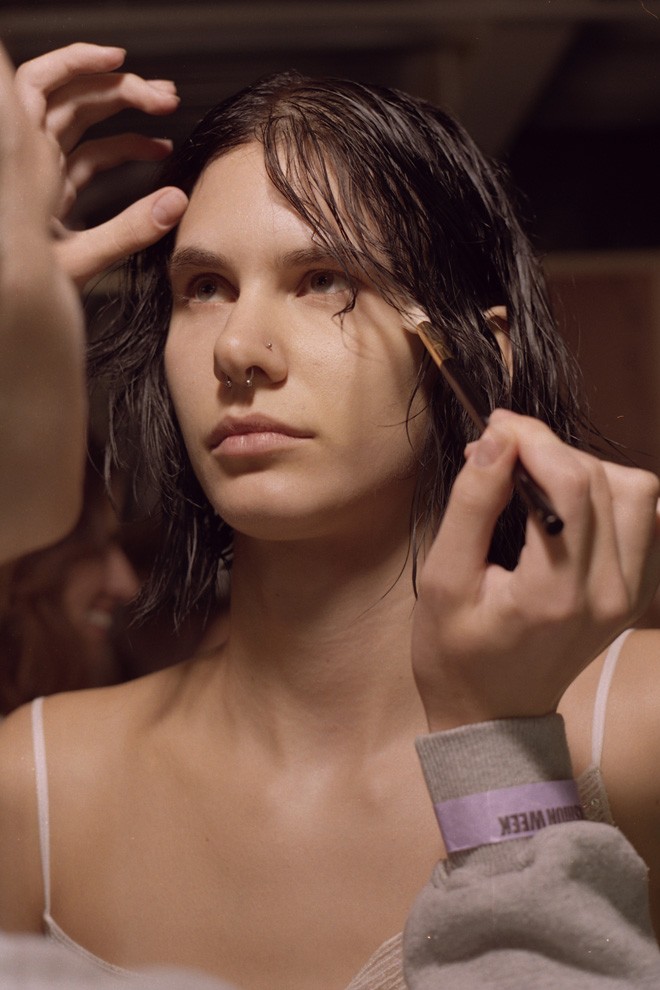
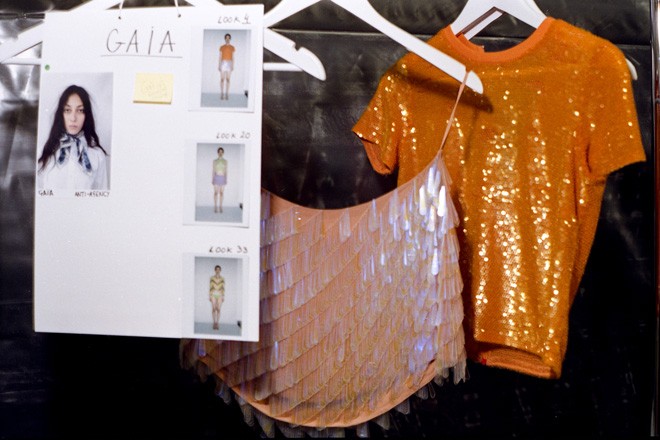
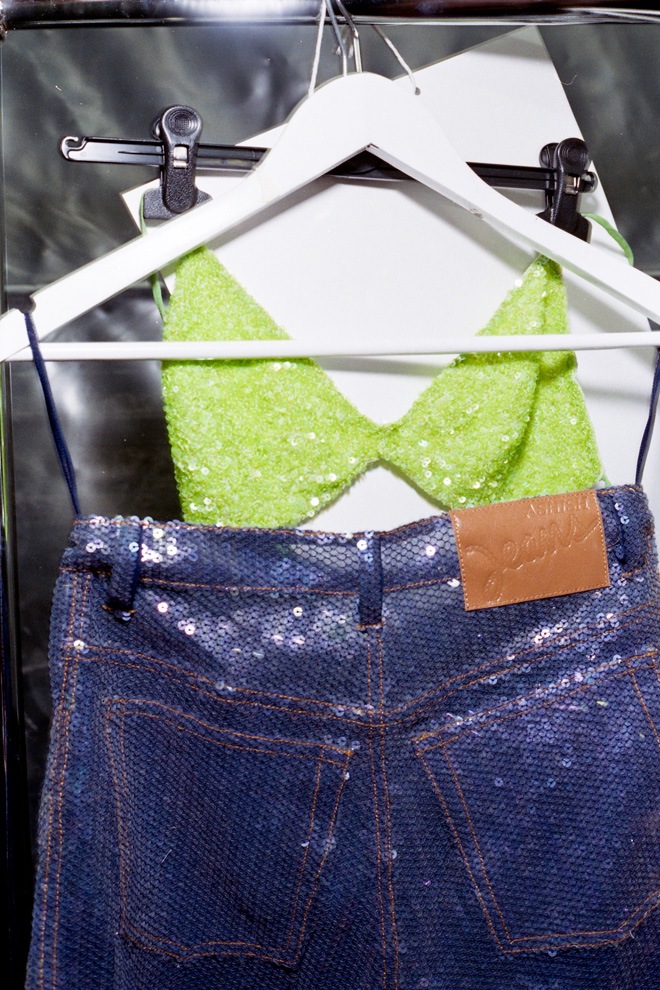
Twin contributor Alexandra Waespi documents behind the scenes and the best looks at the SS19 Ashish show.
Ashish SS19 by Alexandra Waespi for Twin magazineAshish SS19 by Alexandra Waespi for Twin magazineAshish SS19 by Alexandra Waespi for Twin magazineAshish SS19 by Alexandra Waespi for Twin magazineAshish SS19 by Alexandra Waespi for Twin magazineAshish SS19 by Alexandra Waespi for Twin magazineAshish SS19 by Alexandra Waespi for Twin magazineAshish SS19 by Alexandra Waespi for Twin magazineAshish SS19 by Alexandra Waespi for Twin magazineAshish SS19 by Alexandra Waespi for Twin magazineAshish SS19 by Alexandra Waespi for Twin magazineAshish SS19 by Alexandra Waespi for Twin magazineAshish SS19 by Alexandra Waespi for Twin magazineAshish SS19 by Alexandra Waespi for Twin magazineAshish SS19 by Alexandra Waespi for Twin magazineAshish SS19 by Alexandra Waespi for Twin magazineAshish SS19 by Alexandra Waespi for Twin magazine
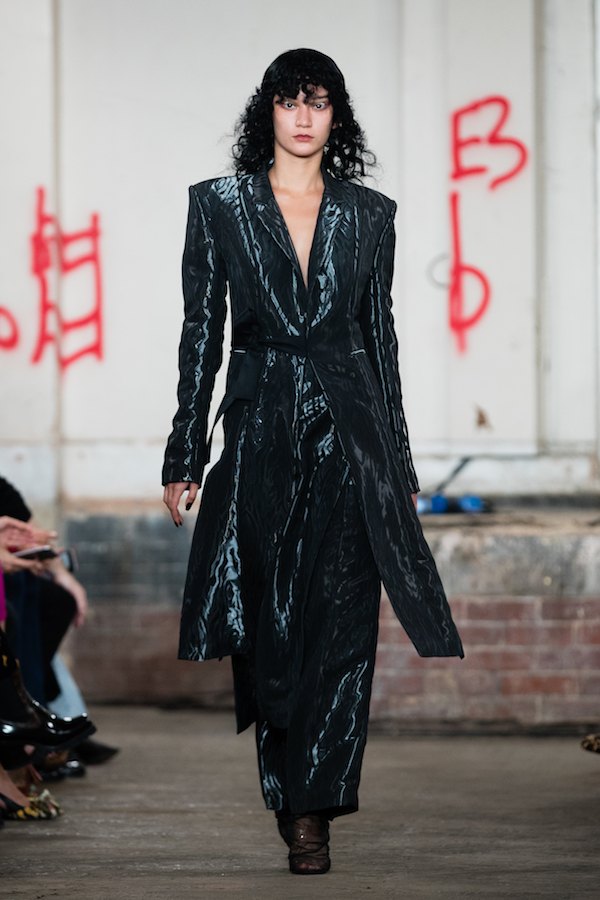
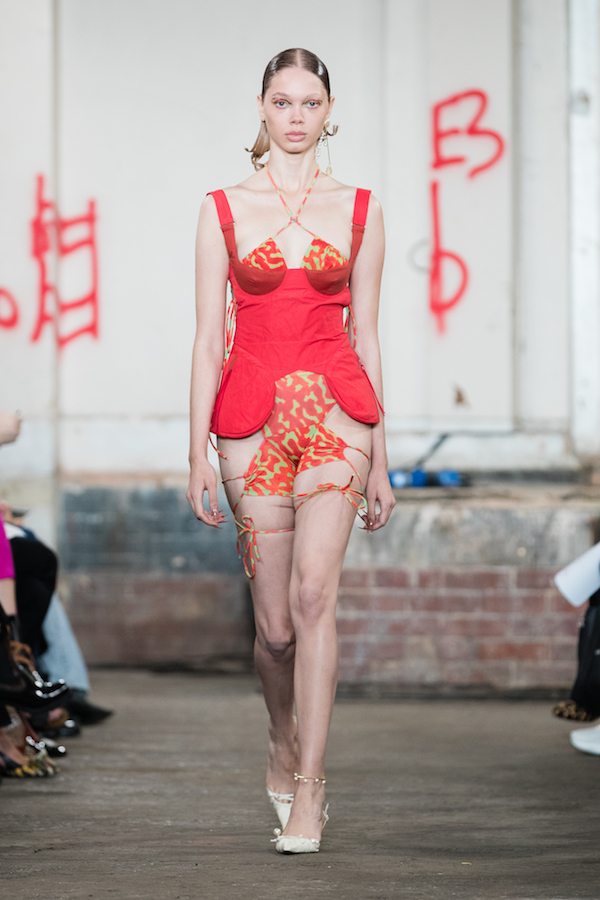
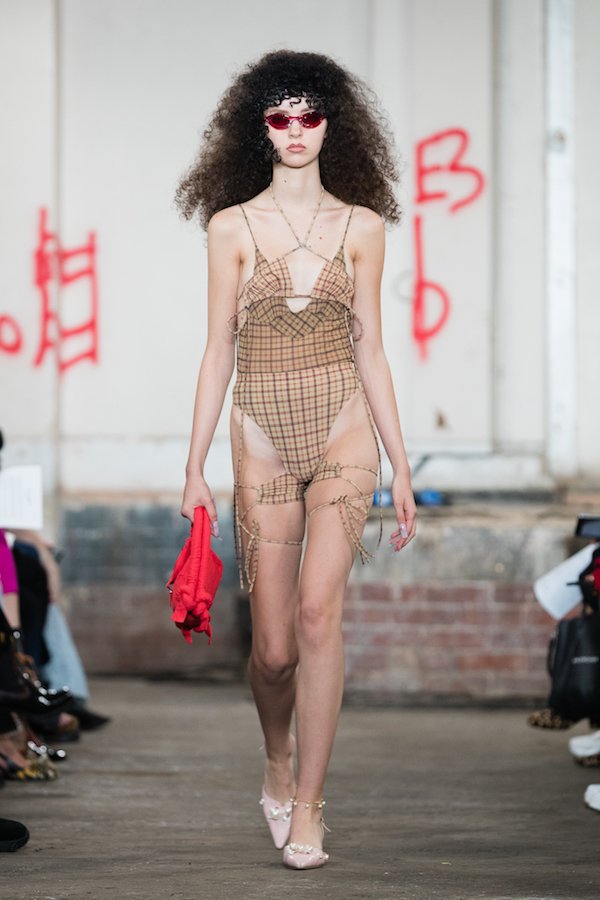
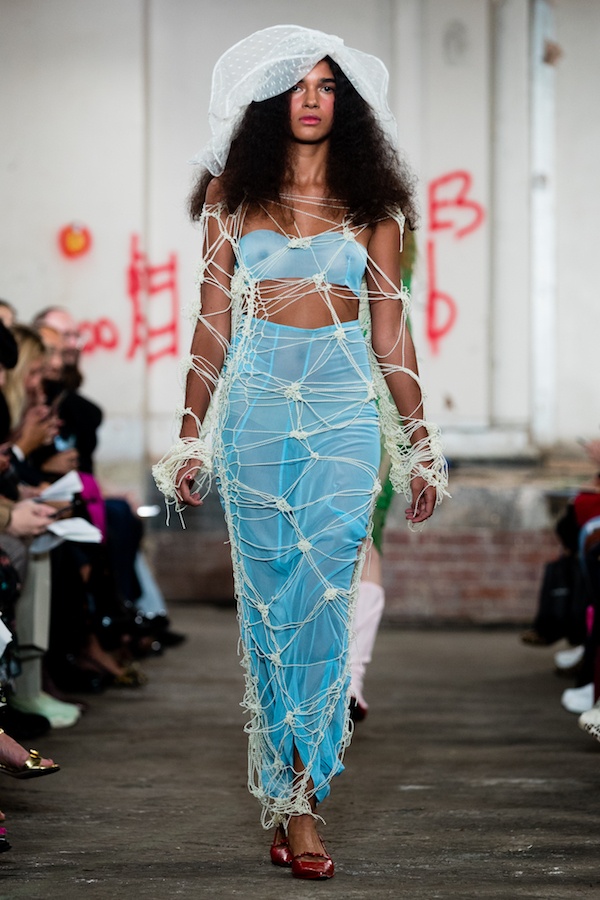
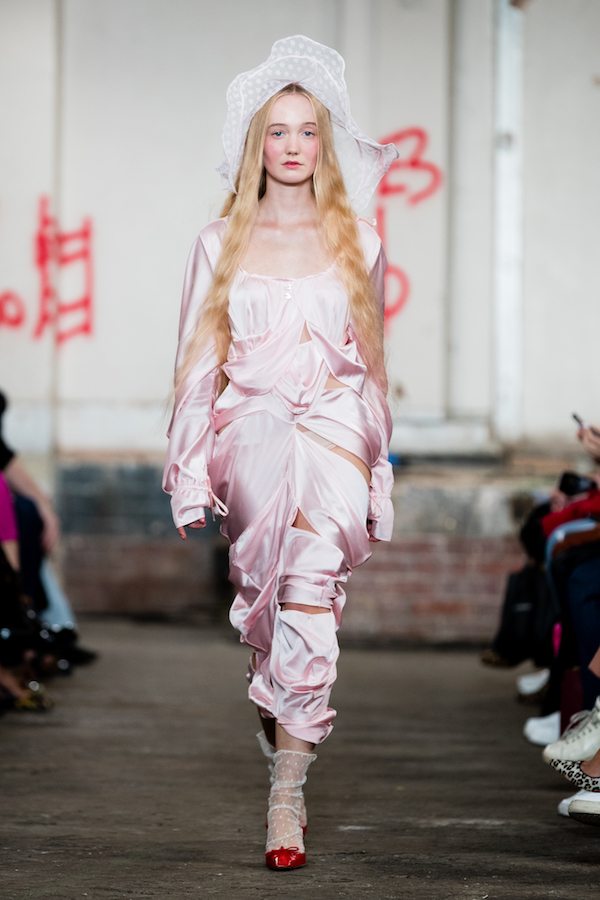
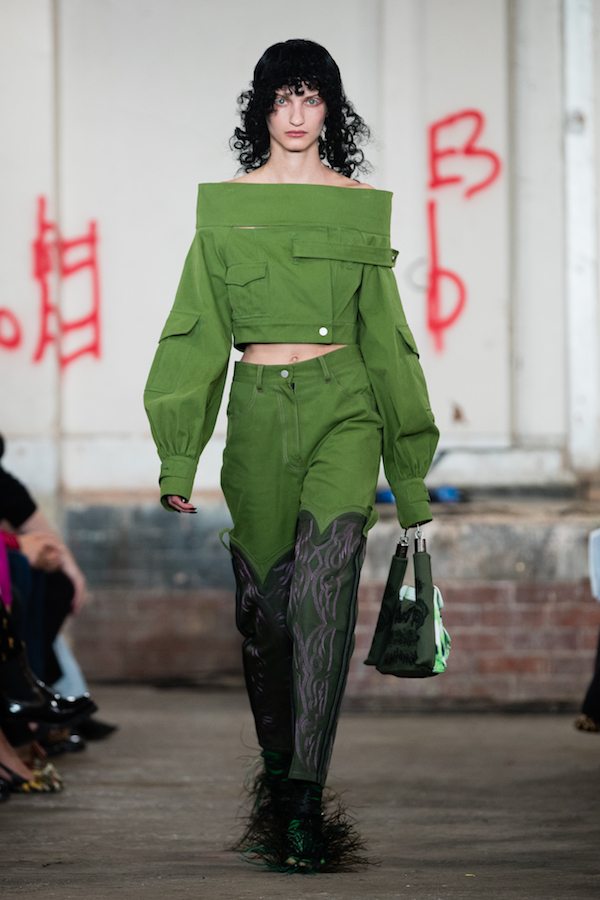
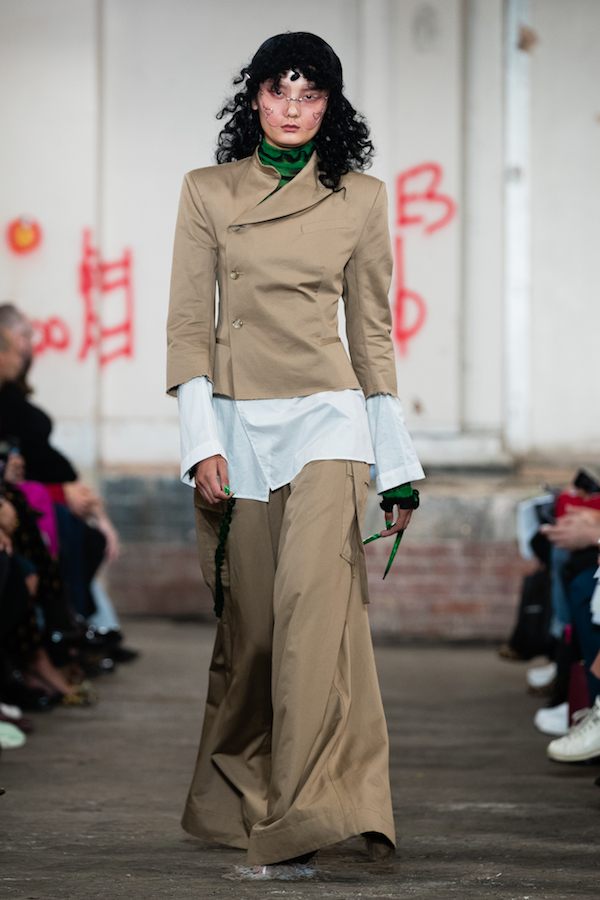
Charlotte Knowles, Yuhan Wang and A Sai Ta were the London based designers chosen to showcase at this year’s Fashion East SS19 showcase. The non-profit initiative, set up by Lulu Kennedy and Old Truman Brewery to support and nurture emerging British talent celebrates its 18th year of triumph after housing designers such as JW Anderson, Kim Jones and Gareth Pugh; just to name a few.
One of the first talents of this year’s show was the fruit of Central Saint Martins graduates Charlotte Knowles and partner Alexandre Arsenault, who launched their brand Charlotte Knowles in 2017. The designer duo presented a collection for a strong, confident and futuristic woman which focused on refined pieces with intricate details. The woman they presented was one who celebrates her femininity as she proudly strut down the runway in, halter neck bikinis, mesh slips and cut-out pieces of bright colours accented with an abundance of straps.
Fashion East, Charlotte Knowles SS19 | Images by Chris YatesFashion East, Charlotte Knowles SS19 | Images by Chris Yates
Chinese born designer Yuhan Wang who is also an alumni of the Central Saint Martins womenswear program brought forth a collection which was inspired by asian femininity and its ties to western culture. The SS19 collection was entitled Women Indors. She explored the line between coverage and exposure; delicacy and sensibility as she played peekaboo with techniques of drapery paired with sheer fabrics to create pieces which celebrated the female form in a fun yet sensual manner.
Fashion East, Yuhan Wang SS19 | Images by Chris YatesFashion East, Yuhan Wang SS19 | Images by Chris Yates
Designer A SaI Ta who previously launched his label Asai with Fashion East in February 2017 for his SS19 collection, dives into the roots of his British-Chinese-Vietnamese heritage and reinterprets this as a second generation Londoner. Ta uses fabric manipulation and pairs this with his sharp pattern making skills to create a collection with disrupts familiar visual codes by creating sharp intriguing forms of the modern day female silhouette with inspiration from military culture. After graduating from Central Saint Martins the designer gained experience at The Row and was sought after for a position at Kanye West’s Yeezy just a year into completing his MA.
Fashion East, ASAI SS19 | Images by Chris YatesFashion East, ASAI SS19 | Images by Chris Yates
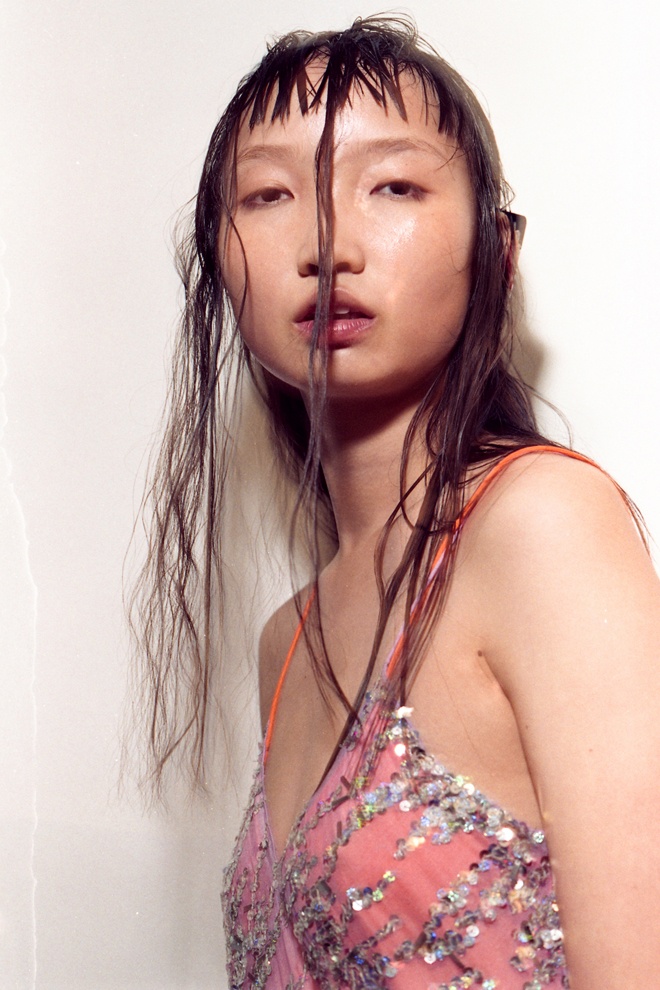
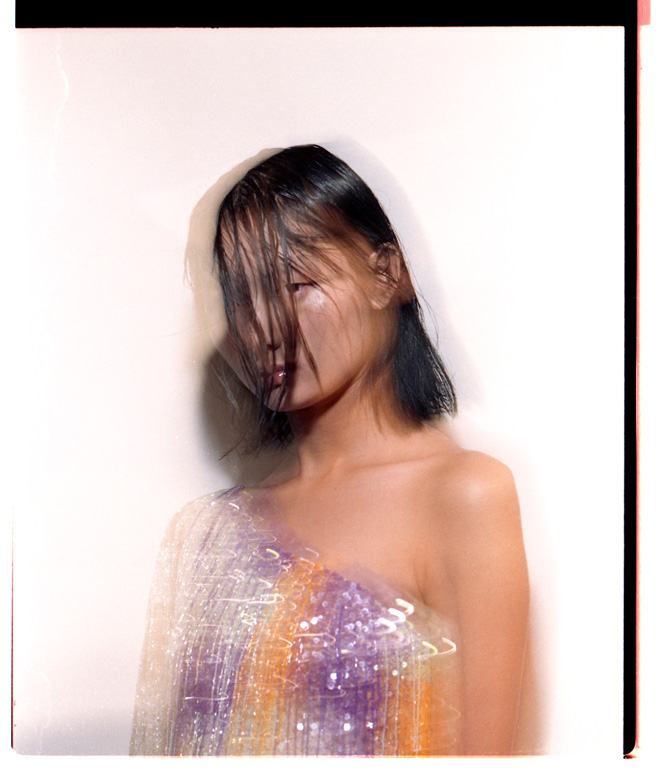
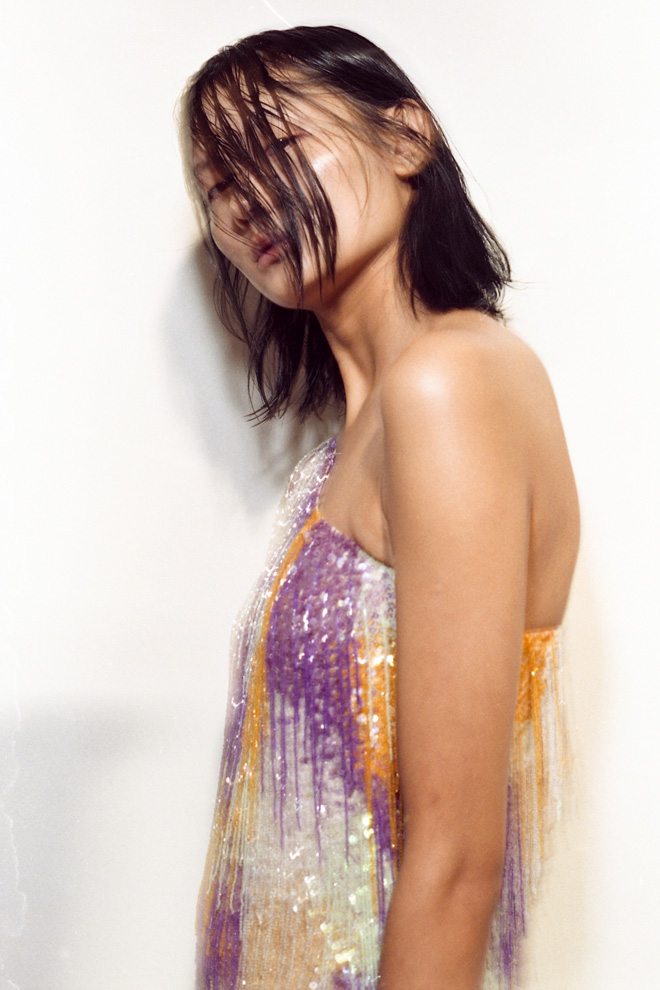
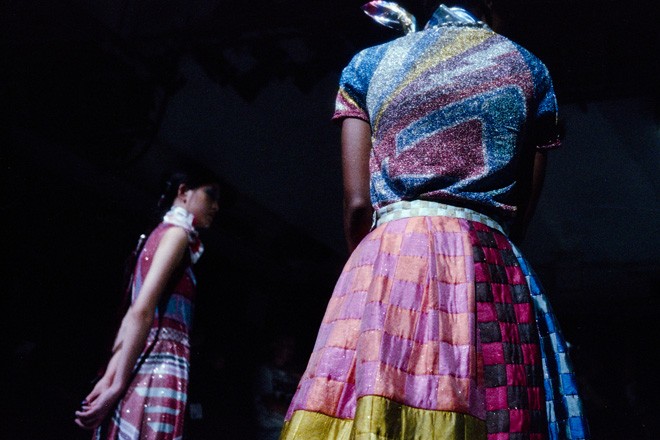
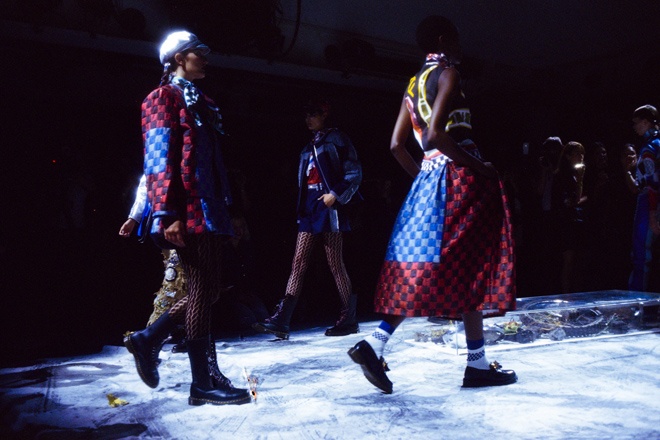
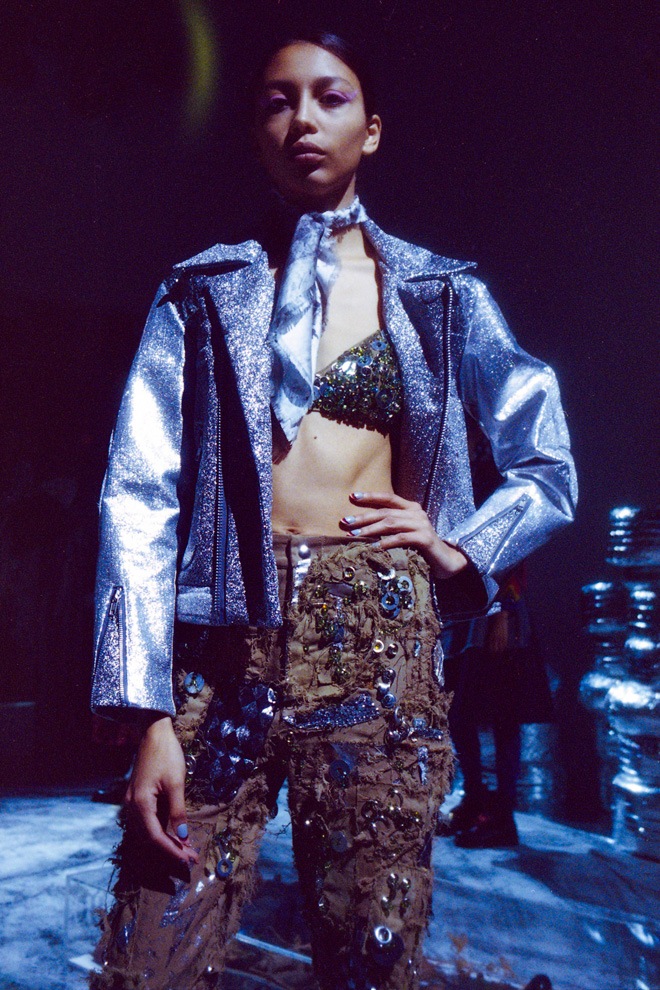
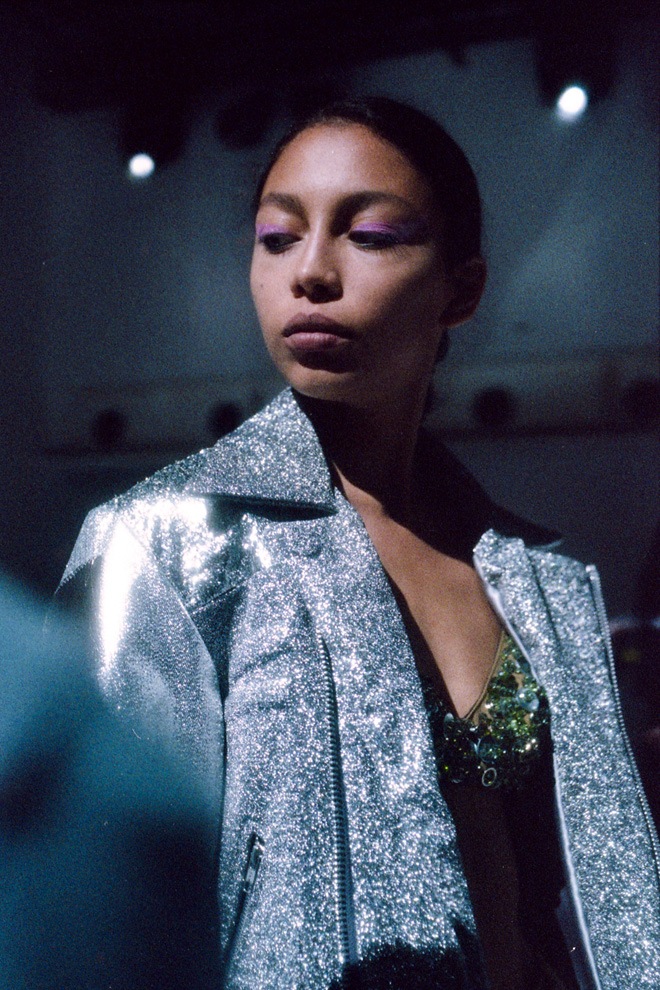
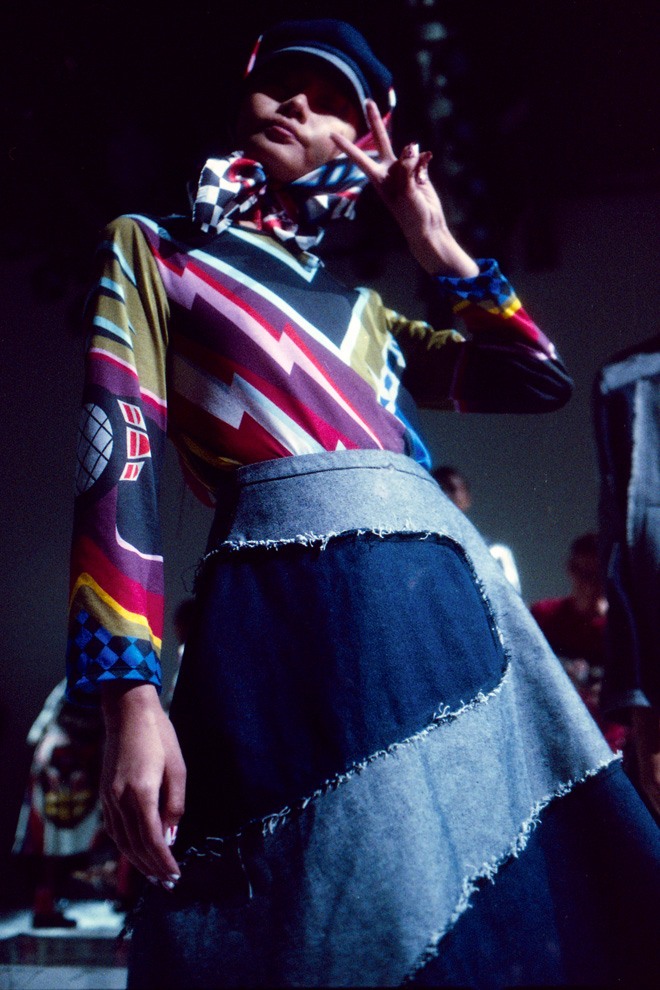
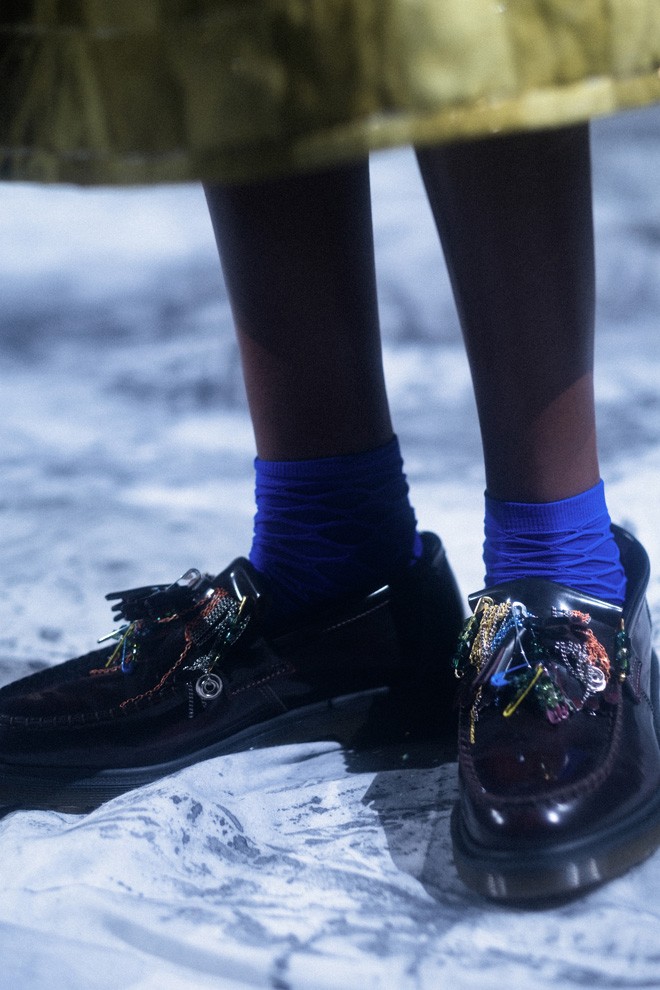
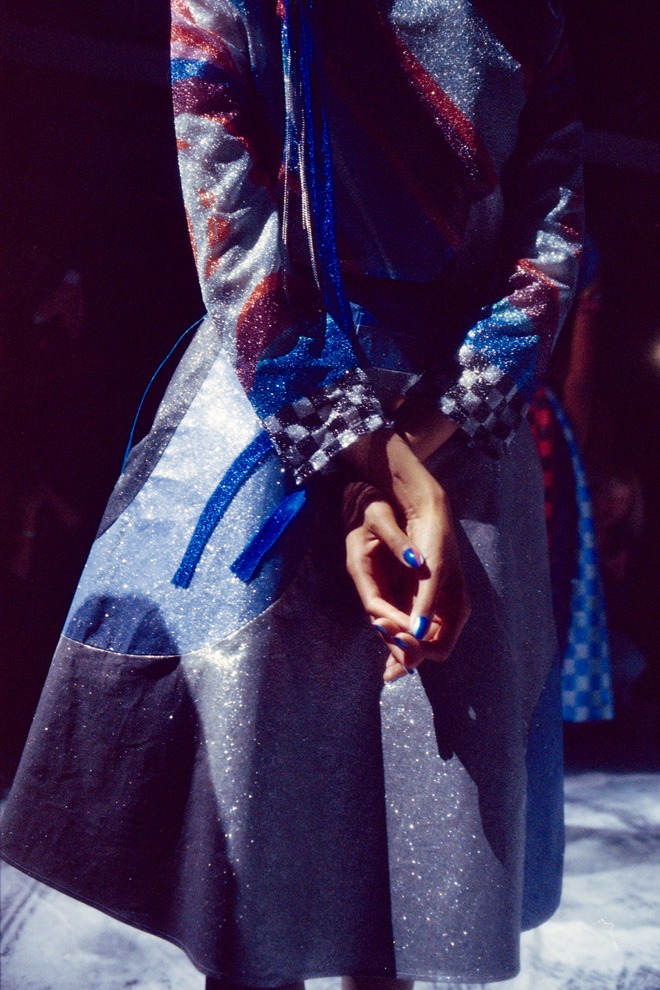
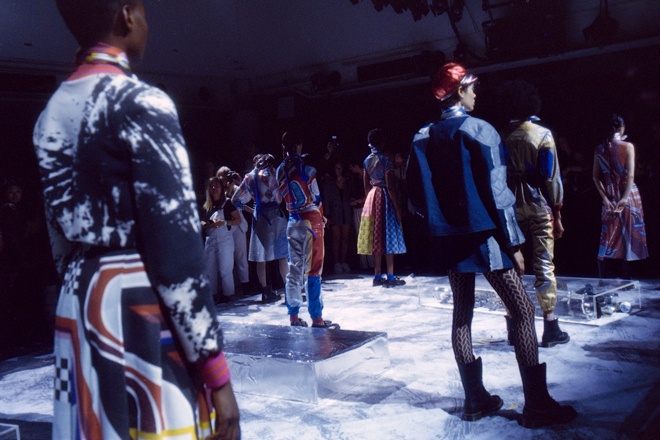
For SS19, Sadie Williams brought her signature combination of feminine sparkle and defined, futuristic prints together for a banging new take on womenswear.
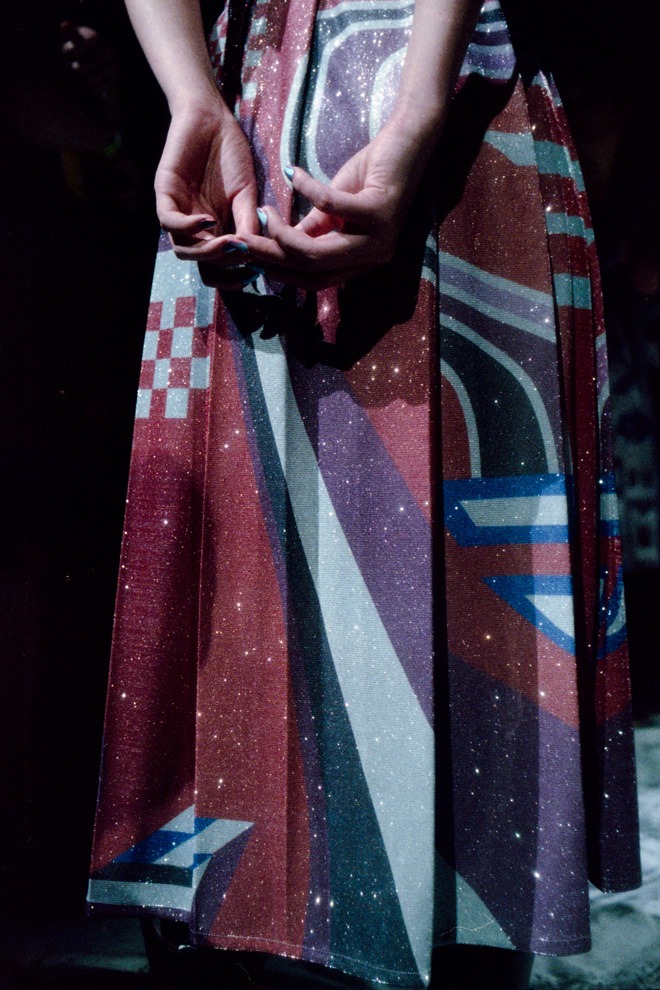
The designer has developed her visual new code to offer confident emblems of empowered femininity. For SS19 Williams riffed on 1970s styles and went big on texture. Both felt controlled and new rather than repetitive or chaotic. This was thanks to razor sharp tailoring which drew outfits together crisply. Cinched silhouettes also fuelled the definition, while wide flat pleats or skirts added to the triumph.
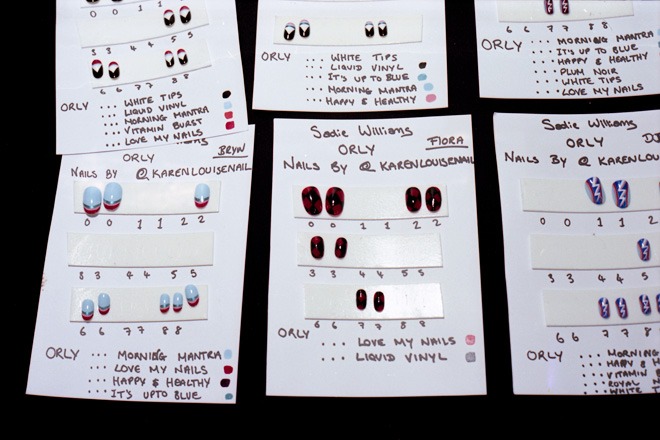
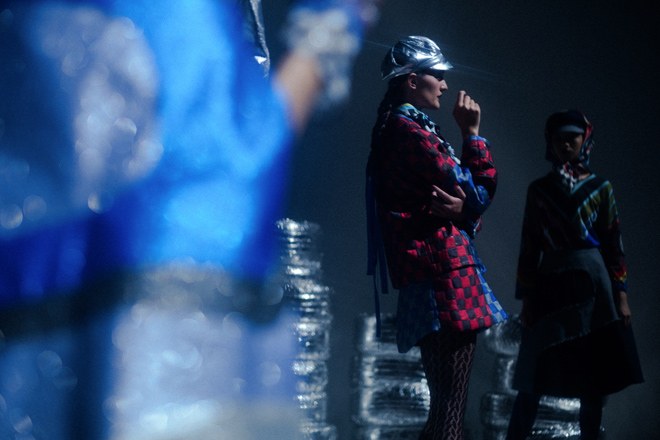
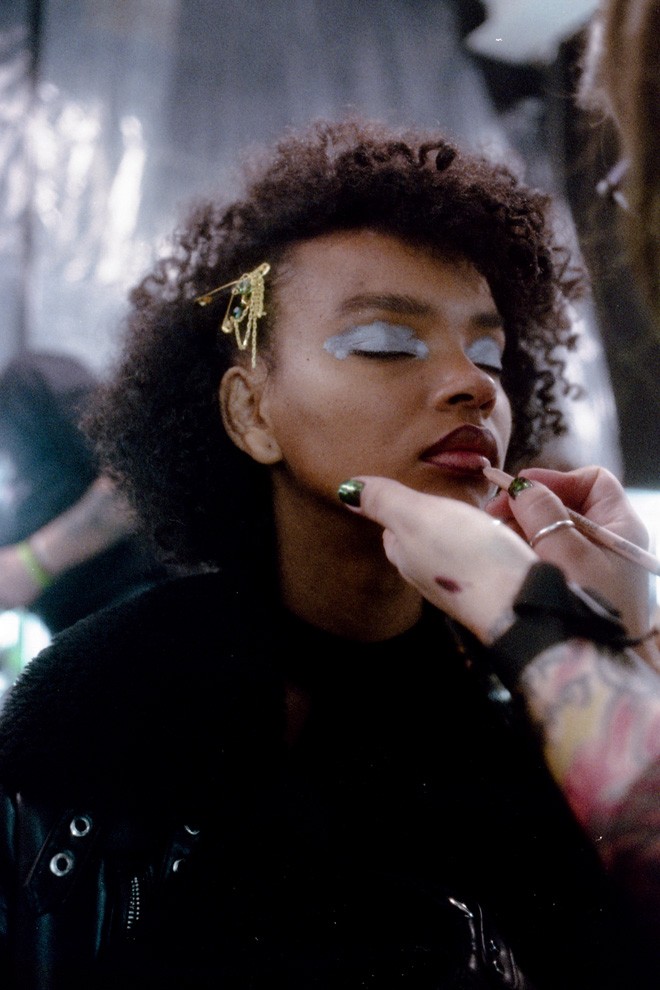
With its metallic baker boy caps, sparkling laces and statement nails, the collection invites the wearer to bring their own sense of humour and play to the looks. Never didactic, Williams nevertheless is clear on where she wants to go. And without a doubt, we’re all going to follow.
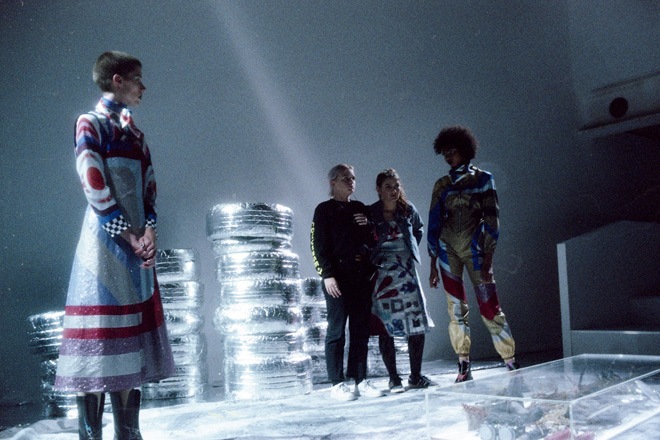
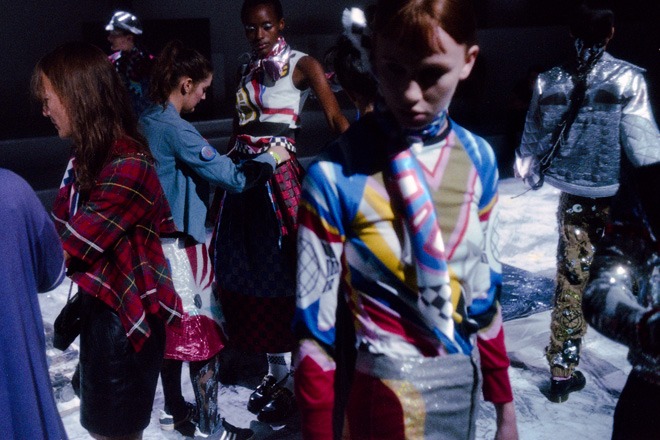
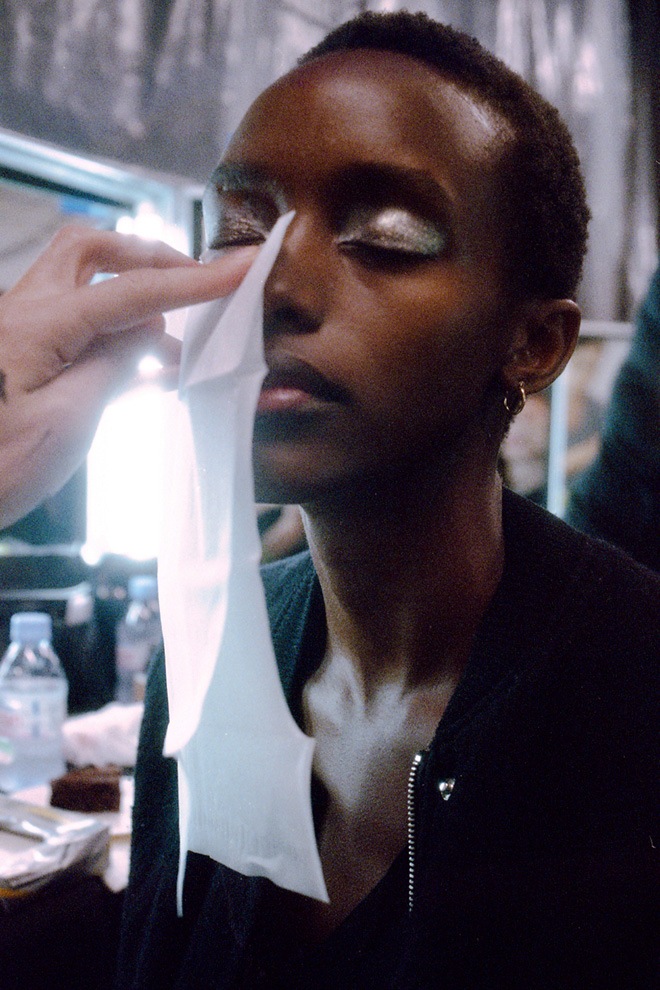
Twin photographer Alexandra Waespi captures behind the scenes at Sadie Williams SS19.
Sadie Williams SS19 | photos Alexandra Waespi for Twin
Sadie Williams SS19 | photos Alexandra Waespi for TwinSadie Williams SS19 | photos Alexandra Waespi for TwinSadie Williams SS19 | photos Alexandra Waespi for TwinSadie Williams SS19 | photos Alexandra Waespi for TwinSadie Williams SS19 | photos Alexandra Waespi for TwinSadie Williams SS19 | photos Alexandra Waespi for TwinSadie Williams SS19 | photos Alexandra Waespi for TwinSadie Williams SS19 | photos Alexandra Waespi for TwinSadie Williams SS19 | photos Alexandra Waespi for TwinSadie Williams SS19 | photos Alexandra Waespi for TwinSadie Williams SS19 | photos Alexandra Waespi for TwinSadie Williams SS19 | photos Alexandra Waespi for TwinSadie Williams SS19 | photos Alexandra Waespi for TwinSadie Williams SS19 | photos Alexandra Waespi for Twin
Londoners heading south should leave room for a longer bus journey this week thanks to a new project opening along the 63 bus route.
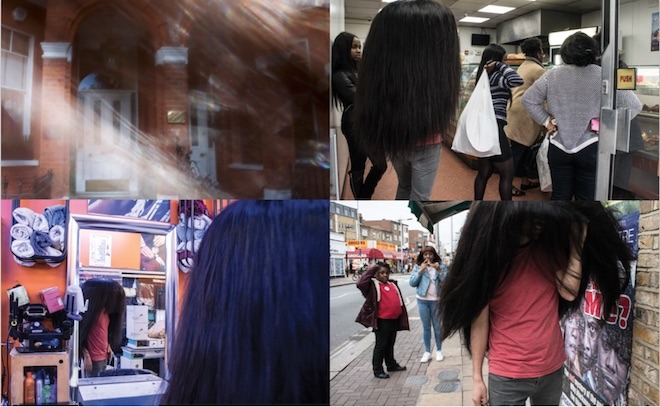
Curator Sasha Galitzine has partnered with 13 artists with 10 hair and beauty salons to make site-specific works throughout the route. Each work explores and celebrates the role of the salon in the local community, and the journey runs from Clerkenwell to Peckham.
The participating artists Larry Achiampong, Gabriele Beveridge, Ellen Gallagher, Gery Georgieva, Paul Kindersley, Eloise Lawson, Andrew Logan, Isaac Olvera, Paloma Proudfoot, Hans Rosenström, Stasis, Freddy Tuppen and Kirsty Turner Jones.
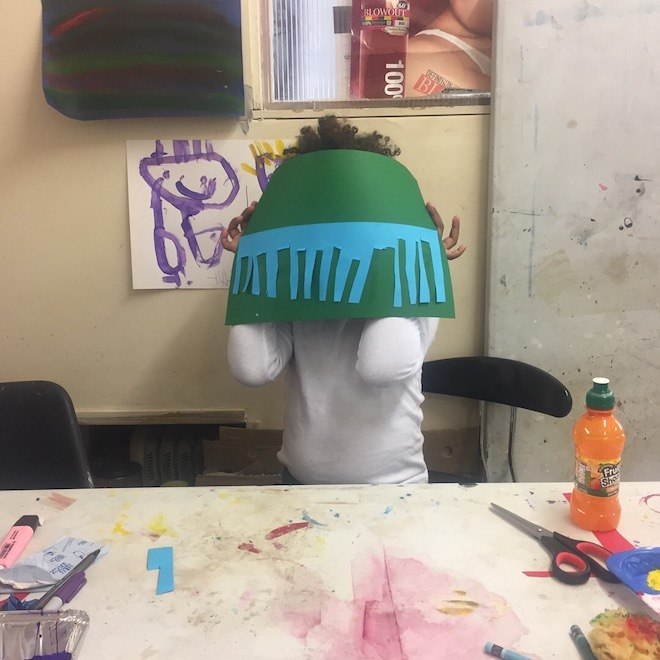
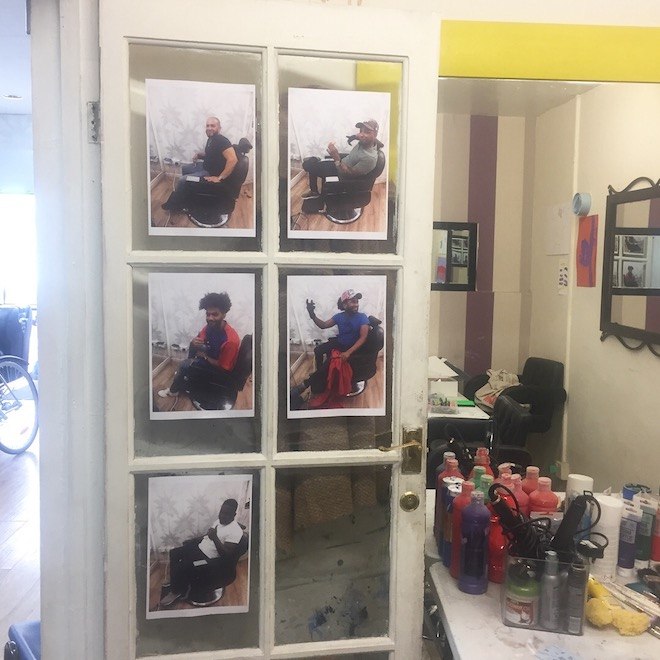
One of Lewis Barbers clients in Eloise Lawson’s workshop there whilst waiting for a haircut.
The participating salons are Barber Streisand, La Bodeguita & Elephant & Castle Shopping Centre, Diamond Nails, Manuel Guerra Skin Care & Sylvio’s Juice Bar, Old Kent Road Barber Shop, Lewis Barbers, Miami Health Club, Sam’s Barbers, DKUK and Divine Destiny.
The project draws attention to the vital role that these salons play in the local community, how they act as spaces for socialising and support as well as for beauty treatments and hair styling.
Eloise Lawson and Lewis barbers.
In doing so Sasha seeks to raise questions about the role of the salon in London, and beyond that to investigate notions around what a social space is, and how it is made.
For more information about Salon 63: Artist & Salon collaborations down the 63 bus route, click here.
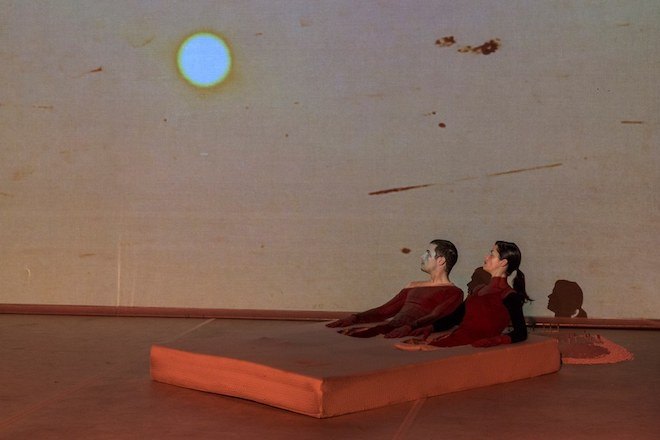
London-based artist Megan Rooney premiered a new performance SUN DOWN MOON UP yesterday at Park Nights at the Serpentine Pavilion.
Rooney is a storyteller whose cross-disciplinary practice encompasses painting, sculpture, installation, performance, written and spoken word. Her imaginative, narrative works are deeply rooted in the present, considering, questioning, and critiquing crucial social and political issues. Political chaos, gender and the body, the ephemeral self, humanity and nature. Her performance Sun Down Moon Up, in which a group of female magpies invade Mount Athos, explores the human subject and the natural world, boundaries and transgressions of space.
In collaboration with Nefeli Skarmea, choreography, and Paolo Thorsen-Nagel, sound. The piece was performed by: Temitope Ajose-Cutting, Daniel Persson, Leah Marojevic and Megan Rooney.
Park Nights takes place at the new Serpentine Pavilion each year and requires artists to respond to this environment. How has Frida Escobedo’s 2018 Serpentine Pavilion influenced your performance and how will you interact with it? And in this space, how will you physically and performatively explore more metaphorical themes of boundaries, forbidden space, transgression, etc.?
SUN DOWN MOON UP has been constructed specifically around the pavilion, that is our site and that provides the intention. It becomes for me the skin of the piece, holding everything inside of it. Frida’s Pavilion has four entry/exit points, so it encourages movement very naturally. I’ve written a new text which deals with the present moment: the festering chaos of politics with its myriad cruelties and the laden violence of our society, so resident in the home, in the female, in the body.
“I saw you dropping eggs out your car window
Passing through the stop signs
Yielding to blue sky
Praying for a pay rise
You were honking and choking
Singing out malarkey
True as god”
This performances uses the body as a site of resistance and as a site for storytelling. I am interested in the transferring of the myths, in the boundaries between real and fake in the construction of new stories. This work is responding to the present moment, to the complication and confusion of it. Things are swinging around violently and moving further and further to the right. The characters are resisting.
Your works have been described as fragments of a larger whole. How does SUN DOWN MOON UP fit into your larger body of work and or propel it further?
Yes, I think of the performances as chapters in an ongoing story. I am interested in the movement of stories, and what happens to stories overtime, which stories are preserved and which are lost? We are at a difficult moment in the story and as a result things have become quite stark and stripped back – only the urgent things remain.
I like that idea of focusing on what’s urgent or imperative. And that’s really apparent in your work, in the subjects that recur and the characters that often return. Gender and the body, the female body and femininity in particular, and the natural world and environment seem to always play an important. How do they manifest in SUN DOWN MOON UP?
I write about the things I know, the things that I experience in my everyday life. The things that I see in the people close to me. The stories I hear.
My performances occupy a slippery territory, I want you to come and see them. Not to look at static single pictures of the work on Instagram, not to watch documentation – although, of course, we do this all the time. But this is something that unfolds in real time and that is important. It’s about the bodies in the room and the bodies in the piece. It’s about sharing something together. There’s something very powerful in that.
For Park Nights, you’re working with Nefeli Skarmea on choreography and Paolo Thorsen-Nagel on sound. What was this process of collaboration like? What have you achieved together?
I met Nefeli Skarmea three years ago at the Serpentine when I was working on another performance called, Last Days. Last Days. Last Days. Over the past few years, we have been developing a universe of movements that relate to the texts that I write. I see the performances as different chapters in an ongoing story that is constantly changing and evolving but that drags that past with it. Nefeli and I have developed a number of pieces over in past few years in very different locations.
Similarly, I’ve also been collaborating with Paolo Thorsen-Nagel across different projects. His understanding and intimacy of sound really changed the way I hear the world. We started sending sound files to each other, creating a landscape of sound for the performance to live inside of. I’m interested in the transfer of sound between bodies and places and across time, how we can trap and store sound and then use them as tools for communication. The wail of an angry child, the sound of a bus engine, the howl of a dog tied to a rope. The relentless hum of crickets chanting in unison. The blocking out and isolating of sounds. When the roll of a wave takes over this invisible landscape. How water sounds in different places and the different types of words for describing this sound. For example, on the west coast of Finland, you can hear the roar of the sea in the distance almost like a constant hum – only discernable when you isolate it but after impossible to ignore. They call this the brus. Like a storehouse of sound attached to memory.
I spend a lot of time in the studio working on my own. Performance is my chance to be social and I love that feeling. The studio is full. Everyone is picking each other’s ideas apart, and we’re building something together. Performance is also about orchestrating something – about bringing the right people into the situation and working it out together. You have to have a vision, of course. It can’t be everything – it can’t be a soup. It has to sing. It’s about having control and losing control for me and sucking the thing out of people that you see in them.
Why Mount Athos? Why magpies? Where did the inspiration come from? How did this setting and these characters connect for you?
Many years ago I saw an opera by Giannetto De Rossini called La Gazza Ladra – The thieving Magpie. It tells the story of a French girl accused of theft who is tried, convicted and executed. Later, the true culprit is revealed to be a magpie. La Gazza Ladra is best known for the overture with its use of snare drums. This section of Rossini’s overture evokes the image of the opera’s main subject – a clever, cunning, thieving magpie. Magpies are extremely intelligent, ancient birds that are surrounded by myth and superstition, especially in Britain. There are always bird references inside my performances.
And Mount Athos?
I read a news article about Mount Athos a couple of years ago. It’s situated in Northeastern Greece, a peninsula that extends its boundaries into the sea. A place women are banned from entering, including all female animals. It’s been inhabited by a group of Eastern-Orthodox Monks for over a 1000 years. Athos becomes a kind of literal, visible boundary. One that is shrouded in secrecy and perhaps can be interpreted as having little consequence. What impact if any does banning woman for this place really have? You could argue very little. But I think we can use this to speak about invisible boundaries and invisible violence. Access. Isolation. Separation. Distance.
Humans have always had the impulse to create barriers. To say you can go here and not there. This belongs to you. This belongs to me. This is mine. That is yours. You cannot enter here. The idea of boundaries are forever caught in a wave of absurdity – and yet every aspect of our lives is wrapped in this basic idea of territory and belonging.
It’s not really about Mount Athos. I did go there this summer or to the closest town Ouranoupoli. I went on this boat cruise around the peninsula, 500 meters from the shore, which is the closest women can get to visiting the monasteries. The Monks ride out from the monastery on a speed boat and board the main ferry that holds about 350 people – with suitcases full of merchandise that folks can purchase. This loud speaker describes the different monasteries, explaining all the incredible relics inside that you don’t have access to. I did a lot of filming on the boat. You can buy beer and sandwiches.
I think you have to go to places to make references real. To observe the people in those places. To sit on a night train clutching your belongings in your lap, surrounded by drunk men. The trip itself was intense and difficult at times; at other times, it was totally banal and very fucking hot. I watched this singed landscape blowing past the window, stopping where wildfires had scorched sidewalks into carpets of ash.
Megan Rooney, Park Nights in partnership with Cos at the Serpentine Pavilion, September 14th.
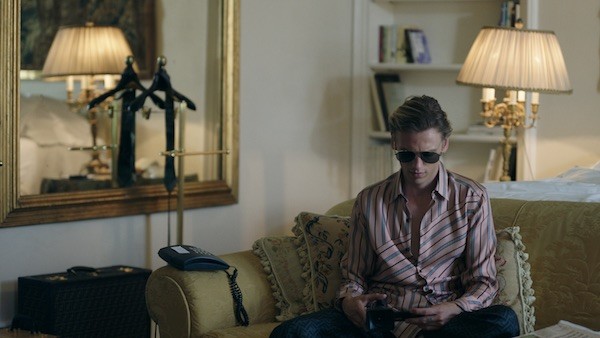
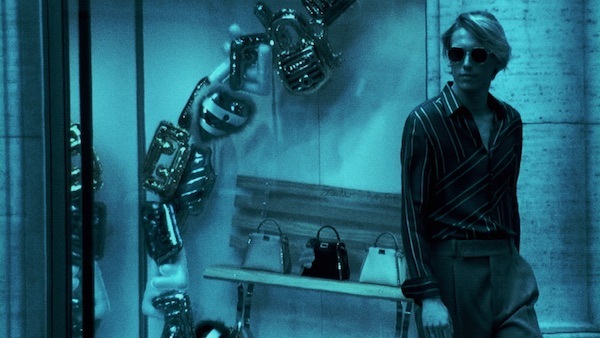
For their previous SS18 men’s eyewear story titled ‘Discovering Me’, Fendi chose to muse upon musician, actor and model Jamie Campbell Bower with a fashion film which explores the actor’s stage prowess along with the discovery of his inner self.
Their fascination with the performer is further explored in their latest film for FW18-19 with a follow-up story called ‘Play Me’. The video features Bowie in his hotel room in Rome wearing Fendi accessories as he is interrupted a phone call with notice of a delivery left for him. As the actor opens the box, he discovers a note which reads ‘Play Me’ along with a DV camera tape. The footage reveals Jamie strolling the local Roman landscapes along with intercuts of his daily life inside the Roman hotel room — a juxtaposition of his off-stage moments unfolding in front of the viewer. Discover the full video here.
This weekend Megan Rooney will conjure an immersive world at the Serpentine Pavilion as part of their Park Nights series.
The performance will centre on the story about a group of female magpies who invade Mount Athos, exploring the idea of transgression within forbidden space and investigating metaphors offered by nature.
Rooney is widely known for her fluid and expansive narratives. The artist brings together a rich catalogue of expression, from painting and sculpture to spoken word performances, in order to convey her imagined worlds. And while her settings may feel apart from the everyday, her themes and topics are deeply rooted in the current political and social sphere.
This performance will include choreography by Nefeli Skarmea, and sound by Paolo Thorsen-Nagel.
Buy tickets for Megan Rooney, Park Nights at Serpentine Pavilion, 14th September, here.
The summer months were once quiet for the fashion industry. Nowadays, the cycle of fashion shows continues throughout the summer with editors making visits to Helsinki, Berlin, Madrid, Copenhagen, and Oslo. Stockholm Fashion Week is the last stop on the summer tour, though by no means the least important.
Sweden boasts an impressive group of designers who are adept at offering singular sartorial ideas. Some have been in the game for 25 years while others’ experience hasn’t quite reached 5.
“The fashion week just ended here in Stockholm, and the interesting thing is that there is so many new and gifted talents that are showing here,” shared designer Ida Klamborn. “I would say there is a new generation of Swedish brands that are doing something interesting and pushing the Swedish fashion industry forward.”
Read Twin’s highlights from Stockholm Fashion Week this season.
Filippa K
Filippa Knutsson founded her brand Filippa K in Stockholm in 1993. In the 25 years she’s been in business she effectively placed the streamlined, minimalist aesthetic, and Scandinavian fashion, on the map.
With stores in Sweden, Belgium, and the United States, amongst others, Knutsson is undoubtedly one of the tentpole fashion names drawing the international attention to the Swedish capital.
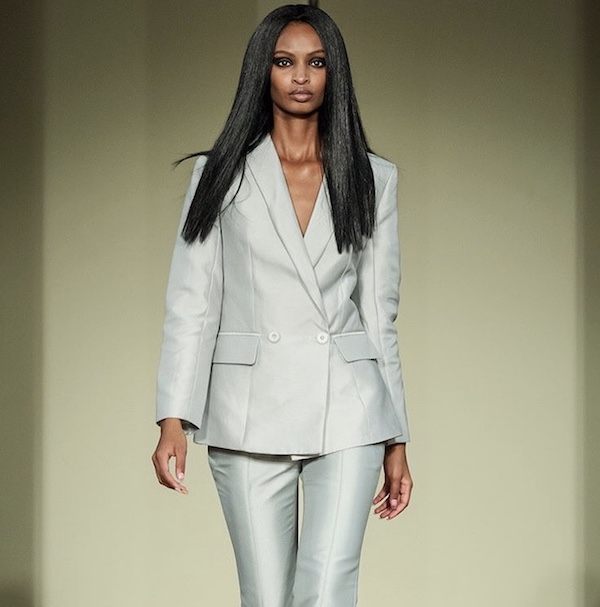
However, Knutsson isn’t one for theatrics. Her Spring 2019 show took place in an informal setting. Models completed a procession against a blank backdrop, posing individually for groups of attendees. The consolidated womenswear and menswear outing demonstrated why countless individuals choose her work. It’s not about groundbreaking ideas or revolutionary propositions—sometimes, once deftly executed, an airy jacket in neutral shades of dove, clay, and taupe, or crisp white trousers, can be considered a radical statement.
Filipa K | SS19 collection
Stina Randestad
“My collection has a starting point in exploring and combining materials. The material comes first letting it decide the form of the garment,” explained Stina Randestad over email. The Stockholm-based designer presented her MA collection from the Swedish School of Textiles show at the school’s on-schedule group show. “The work, therefore, positions itself in the intersection of textile and fashion design, and shows an example of how a different design process can generate an interesting result.”
The designer’s use of colour was sublime. A juxtaposition between acidic brights and sober tonal hues. Meanwhile manipulated silhouettes and structures produced a mesmerising effect. Randestad belongs to a generation of designers willing themselves to express their creativity in an unconventional fashion.
“The dream would be to continue making showpieces for special people on special occasions. I don’t know if that would be called a brand really? I want my future to be flexible,” Randestad said when asked about her future, adding: “One week I make a showpiece for a performance, and the next month I drop a small collection of printed shirts and then a collaboration with an interior brand.”
Stina Randestad
Amaze x NH(O)RM
Mathilda Nilsson and Hanna Rudebeck founded their label NH(O)RM in 2011. Like Randestad, they’re alumnae of the Swedish School of Textiles. For Spring 2019, the pair adopted an unconventional approach by partnering with the creative platform Amaze.
Silk scarves were transformed into dresses, striped shirting was reimagined as decadent gowns while bicycle shorts were positively Elizabethan in aesthetic. The brand reworked the tropes of traditional beach dressing, making it into something subversive and transferable.
The show was a jubilant display of body positivity, racial diversity, stature, and composition. It turned the conventional runway on its head. In a way, it felt like Sweden’s answer to Eckhaus Latta, which is as much an inspired artful movement as it is a fashion house.
Amaze x NH(O)RM
Ida Klamborn
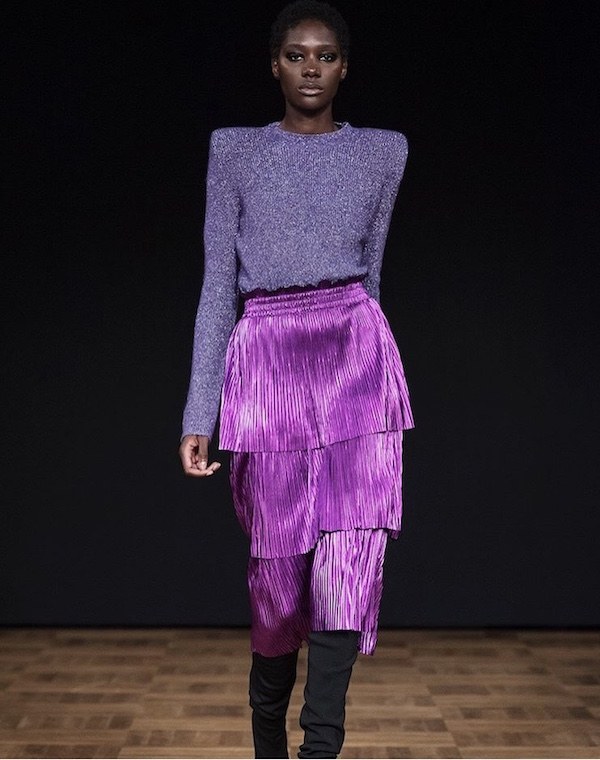
Ida Klamborn’s millennial-centric collection was another belonging to the set of shows who dispelled the default, perfectly-packaged Scandinavian lifestyle trend of polished silhouettes, clean lines, and tonal hues with an amalgamation of colour and texture.
For Spring 2019, she issued a colourful proclamation on summer dressing. Replete with jewel tones and abbreviated hemlines, Klamborn’s rendition of influencer-friendly, festival-ready clothes wouldn’t feel out of place on Kendall Jenner’s Instagram feed for all its silky separates and feathered frocks felt in line with the current iteration of youthful, feminine dressing.
As the designer explained: “I have always been interested in clothes as a kind of language. When I was a kid I was quite shy, so through clothes I could express myself without words. It was like a safe and fun space. This season it was about the ‘conflicted princess.’ I wanted to do new and more dynamic version of my childhood memories of those quite flat dimensional princesses from movies.”
Ida Klamborn | Photo: Mathias Nordgren
Stand
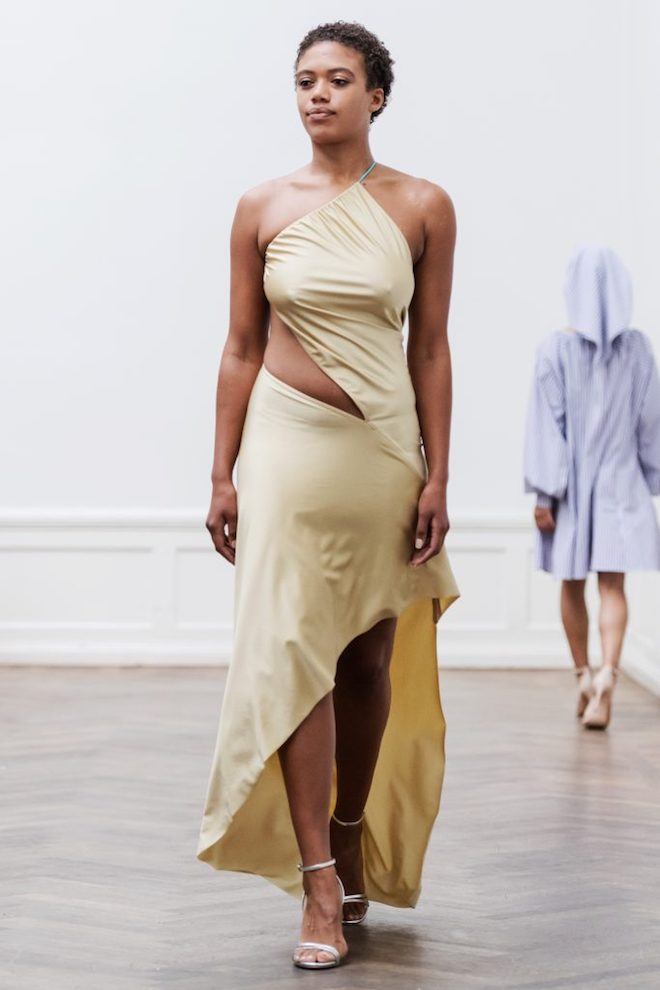
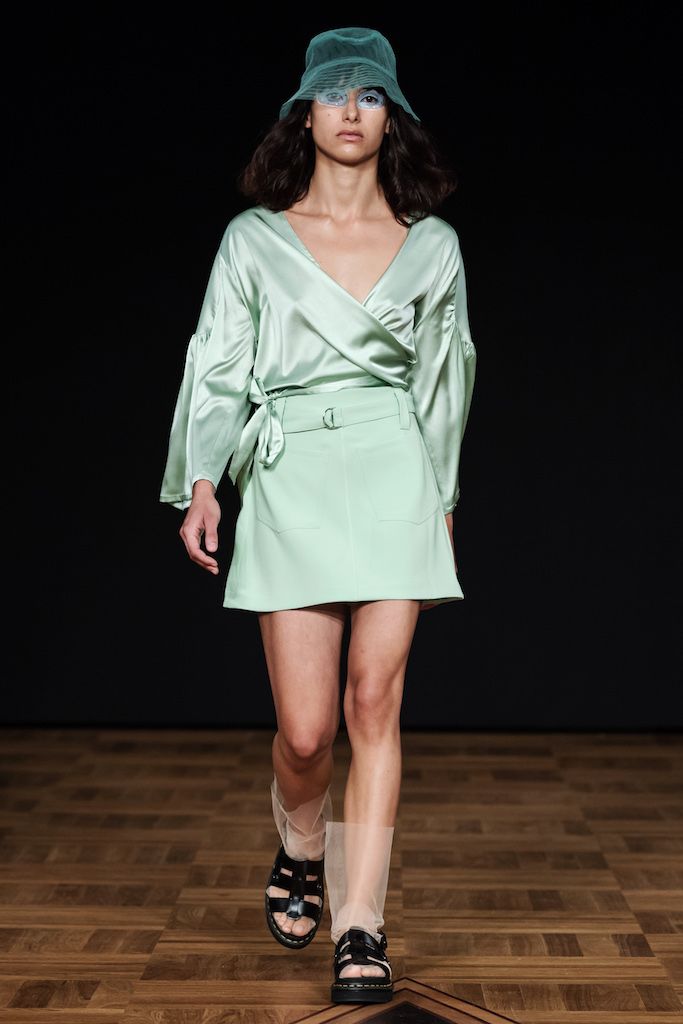
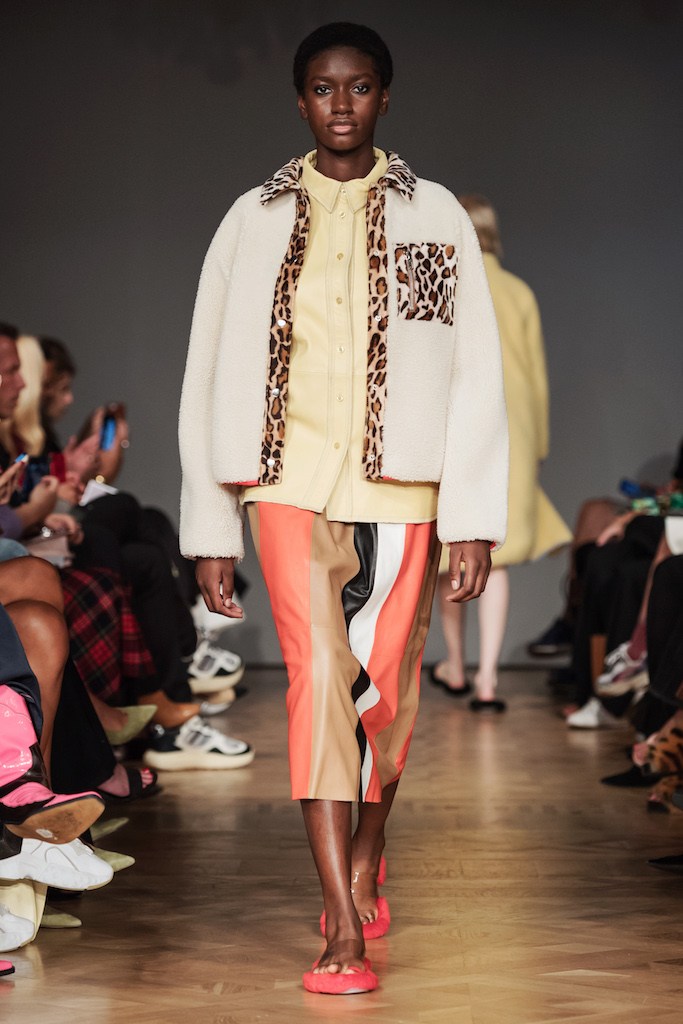
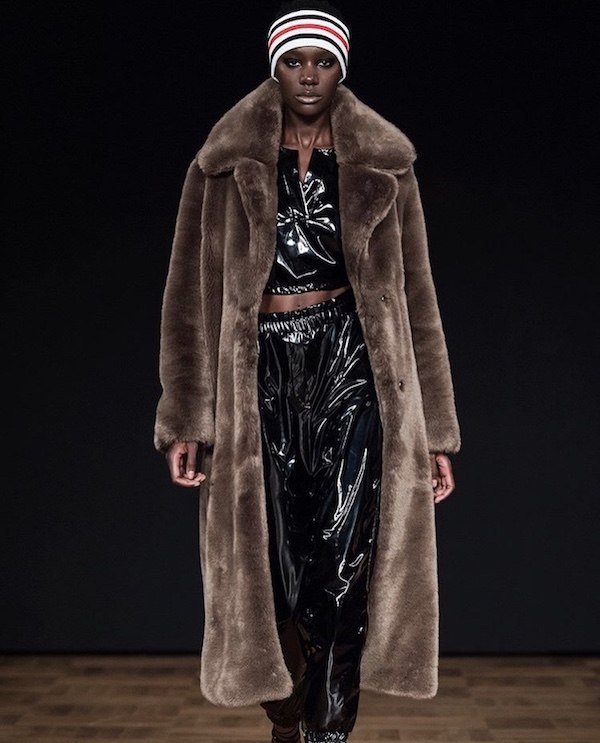
Stand is one of the many contemporary Scandinavian brands vying for the attention of the international fashion pack. The brand closed out the three-day event at the Grand Hotel. Founded by Nellie Kamras in 2014, the brand’s focus is on accessibility, bringing the use of leather to an audience at a lower price. In recent years, the designer has added cashmere, fur, faux fur and wool to the mix to create a tactile experience. One glance at the show and it becomes clear Kamras is seeking satisfaction beyond the whims of Instagram trends, she’s searching for enduring wardrobe staples.
In the case of Kamras, staples doesn’t mean minimalism. At Stand a snakeskin peacoat or a geometric-print yellow faux fur coat is as relevant as, say, a manila-hued shirt or black leather trousers. In parts, the use of leather was a tad excessive for the summer season, especially for the customer who experiences a sweltering June, July or August. And as an increasing number of major designers move away from the use of fur, the ethical issues around fabric choices may yet prove a challenge for the brand.
On her subsequent return to Stockholm fashion week, photographer and writer Sarah Jane Barnes set out to review new designers, encounter previously unseen brands, get honest feedback and most importantly shed some light on the choices of casting at one the leading Fashion Weeks of Northern Europe.
Jewellery Designer, Marian Nilsdotter chose to go her own way, communicating her vision through an intergalactic display of electro music and harpist amidst laser lights beside creeping smoke it was matched by a choreography of models that moved like celestial beings. The show ended in a crashing silence that enabled the audience to photograph the models posed as the army of angels they were. Nilsdottor uses jewellery as a medium to depict her universe of surrealist fantasy, with her careful approach to materials, all pieces are artisan produced. Her work is characterized by symbolic figures using precious metals, stones, and pearls to tell her story. This was the most well-presented show of the season, a true piece of theatre. The casting was inclusive and representative of a diverse Sweden.
Marian Nilsdotter SS19
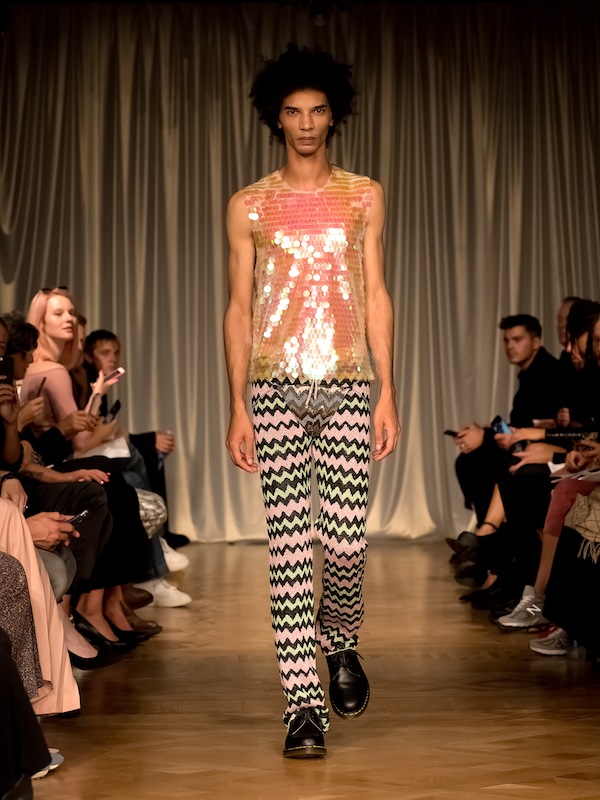
At Lazoschmidl, the Swedish-German menswear brand established models Fillip Roseen & Carl Hjelm Sandqvist led the show. Fillip experiencing well-earned success as the star of Missoni’s current campaign brought a definite international presence to the lineup. Carl a musician who tours as the frontman of rock band Tellaviv proved himself to be a multitasker by not only walking the show but managing the hip soundtrack as D.J in between looks. The collection was a combination of sparkling lurex knitwear and iridescent sequins. This loungewear look brought humour to the table via the added layering of crop tops featuring childlike depictions of teddy bears and monsters. Overall this self-entitled ‘playdate’ collection was clearly Missoni inspired by the patterns alone, the similarity was uncanny. Founded by Josef Lazo and Andreas Schmidl, the brand has a penchant for design that subverts gender norms. Initially creating made to measure garments, they traded via social shopping company Tictail before partnering with American retailer Opening Ceremony. With a target demographic of carefree party boys, they have gained a strong following in the New York club scene.
Fillip Rosen for Lazoschmidl SS19| Photo by Peter Hakansson
Soft Goat a commercial brand with proven international sales and accessible price point showcased cashmere loungewear styled in a refreshingly non-commercial way. Rich tones of colour supported by attractive shapes were displayed with a cultivated sense of streetwear modus operandi. Using the internet as the only distribution channel the brand is able to keep prices low with quick turnover. Building a brand with a sense of social responsibility they support Project Playground, an organization that works to provide aid to vulnerable young people in South Africa.
Celebrity favourite Jennifer Blom launched her brand in 2010, this season she continued her red carpet style with flawless precision, presenting flowing dresses of pale and hot pink tones, as well as more classic mint and blue shades. With a focus on femininity and glamour alongside her way of reading the female body, she created a stunning collection. The graduate of Sweden’s prestigious Beckmans College of Design practises sustainable production by using Italian and U.K farmed silk as her main material.
Jennifer Blom ss19 | Photo by Peter Hakansson
Camilla Thulin’s casting choices were both socially aware and politically aligned. With a roster of actresses, personalities and academics including Sara Danius this became a fine display of age equality. A charitable collaboration with Sara, in particular, led to the creation of a limited edition silk blouse. The pattern of which shows a clenched fist symbolizing women’s liberation. This in aid of GAPF, a non-profit women’s charity working against honour-related violence and oppression was modelled by Sara with discernment. In a time when gender issues are debated more than ever, Camilla Thulin remains strong in her feminine expression stating “My goal is for all women, regardless of age or size, to feel strong and beautiful.” Having founded her company in 1992 Camilla is a long-standing name in the industry. She is famously known for having created Malena Ernman’s gown worn at the Eurovision Song Contest at a whopping cost of 400,000 kroner (over €37,000).
Presenting at Fashion Week for the first time, Stylist and Costume Designer Salem Fessahaye was on fine form. This debut show, a family affair with friends both walking and in attendance was almost entirely non-caucasian cast. Her designs maintain an interesting mix of streetwear and couture showcasing asymmetric hems on sublime gowns alongside oversize suiting. These suits similar in design to zoot suits, a style popularised by African Americans in the 1940’s were striking. Her styling pedigree recognized through work with global clients including Adidas, Nike and David Beckham was apparent. The atmosphere was electric throughout resulting in a standing ovation from the full house. Runway photographers unable to capture the elusive finale designer shot accepted defeat, after pleas to audience members blocking the usual line of sight were left unheard.
Designer Salem Fessahaye
From initial inspection, Ivyrevel appears to be a typical commercial brand, however, attending the show I was delighted to see otherwise. Happening upon a new path under the creative direction of Sebastian Hammarberg, business is on point. Colourful and sexy pieces owned the runway, featuring styling nods to Wes Anderson’s The Royal Tenenbaums and Studio 54, the show was opened and closed with undeniable finesse by Sapitueu Jeng. Meeting with Sebastian later that day it was clear how ingrained his work ethic is. Overseeing every inch of the show production this season he had left nothing to chance, unafraid of last-minute change. With this true determination for the future, he has the capacity alongside founder Dejan Subosic to lead Ivy Revel to a broader audience beyond the domestic market.
Ivyrevel SS19 | Photo courtesy of Fashion Week in Stockholm
During my trip, I met two of Sweden’s auspicious modelling talents Anab Mohamed Abdullahi and Sapiteu Jeng both signed to Stockholm’s Mikas Agency. Anab’s family hail from Somalia, whilst Sapiteu’s parents are Gambian. Each maintaining a strong presence across the show lineup this season I was interested to learn of their casting experiences in Sweden and more specifically Stockholm fashion week. Anab although positive diversity was slowly improving was clear to inform me of her previous encounters, “They made us feel it was a competition because they only took one black model per show. After castings during my third season, most of the designers wanted to book me. Later my booker told me they cast another model but not me also because they didn’t want two black models. So, in the end, I only walked one show and I was the only model of colour in it.” Working for Sale Fes this season light was cast upon her hopes for the future “For the first time, I felt like other designers may open their eyes and see there is nothing wrong with many models of colour in the same show.” Sapiteu defining her observations expressed “Right now it feels like everyone is just focused on looking diverse without actually understanding what that really means. Hiring one or a few coloured models doesn’t make your company diverse. Even though there is still much work to be done by the agencies, casting agents and brands, I can see a change.”
Anab Mohamed Abdullahi for By Malina | Photo courtesy of Fashion Week in Stockholm
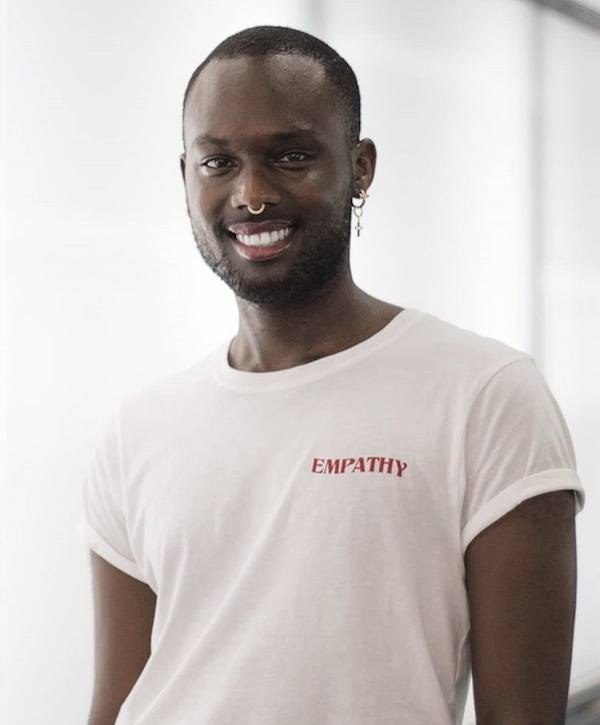
I also spoke with Ken Gacamugani who walked for three of this year’s graduates from the Swedish School of Textiles, Helga Lára Halldórsdóttir, Dick International and August Gille. Ken originally from Burundi in East Africa was signed to the Sunrise Agency after been scouted on Instagram earlier this year. Sunrise founded by Beckman College graduate Matilda Dahlgren in 2018 is a street casting agency with the objective to offer a less normative selection to clients through diversity in size and race. Ken explained his findings of casting in Sweden “They always look for the skinny, tall, white models, the blond and blue-eyed, throwing in 5 black models to call it diversity. But Sweden doesn’t look like this anymore. It is 2018, Sweden is a rich multicultural country with generations of immigrants. I feel that these fashion shows and the industry should represent that. There is a whole world of diversity beyond those boundaries we should normalise and appreciate.”
Model Ken Gacamugani
As touched upon by Sapiteu there is more work to be done. With power comes responsibility and the hope those who attain it will make future choices without bias or tokenism.
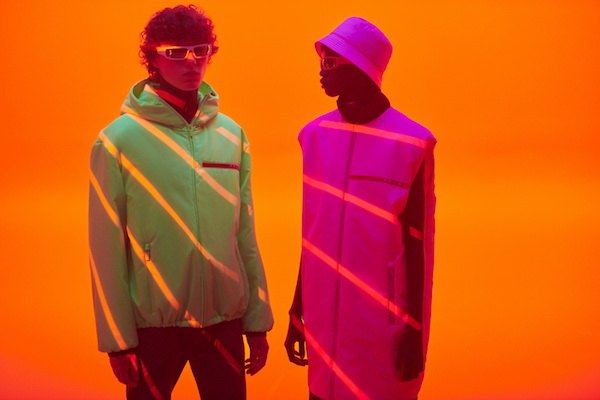
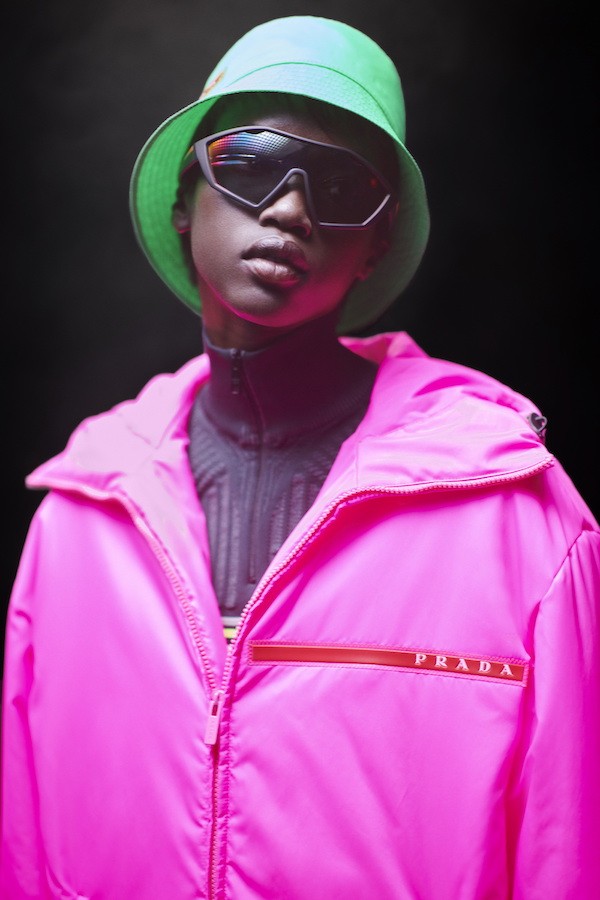
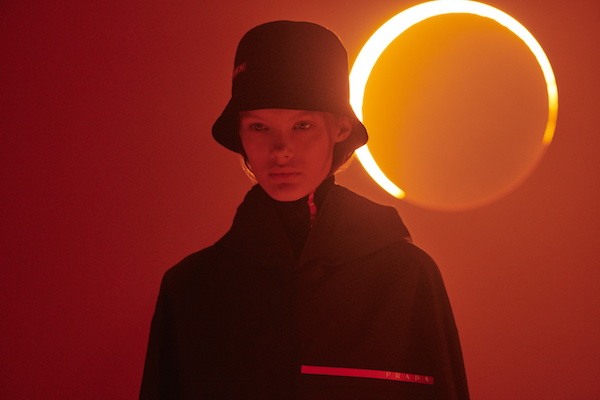
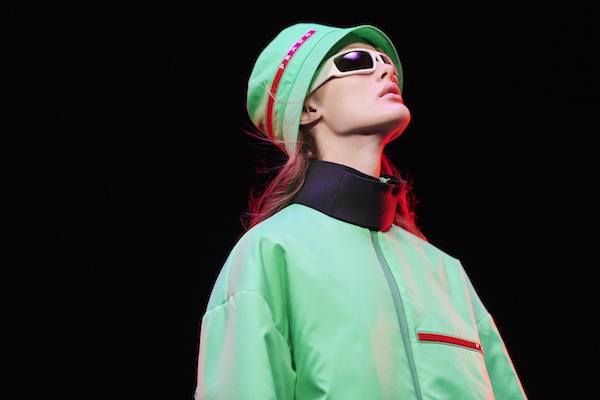
Italian fashion house Prada once again went digging in the pile of their iconic archives for their latest digital campaign called Prada Linea Rossa.
The distinctive red striped logo was first born in 1997 when Patrizio Bertelli, husband of designer Miuccia Prada was convinced by a German yatch designer to create his own sailing team to compete in the America’s Cup competition, and from this came the Linea Rossa.
Inspired by the world of sport, the logo first began to appear on sunglasses and since then, was gradually seen in collections throughout the years. However, it’s new incarnation debuted at the FW18 show earlier this year. The line offers a range of wardrobe from outwear, to footwear and specially conceived pieces geared to the demands of specific actives including skiing and snowboarding. Prada underscores the origins of the logo’s sportswear foundations with a touch of innovation in colour and form. Garments are clean, precise, entirely streamlined in form and also made with strategic material including nanotech fabrics, recycled polyester and water-repellent microfibre. The garments are all assembled by advanced methods of heat and internal heat-sealing completely devoid of stitching. Prada Linea Rossa hits stores in September in select Prada store and department stores as well as on the brands website.
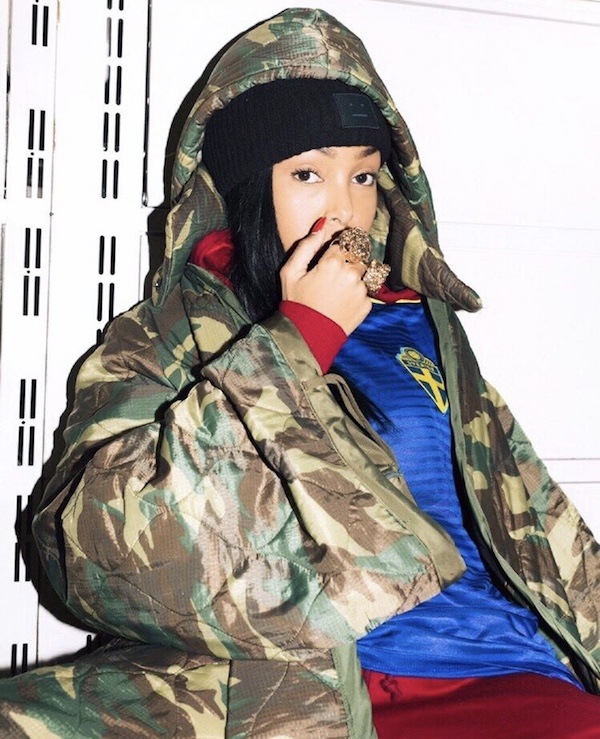
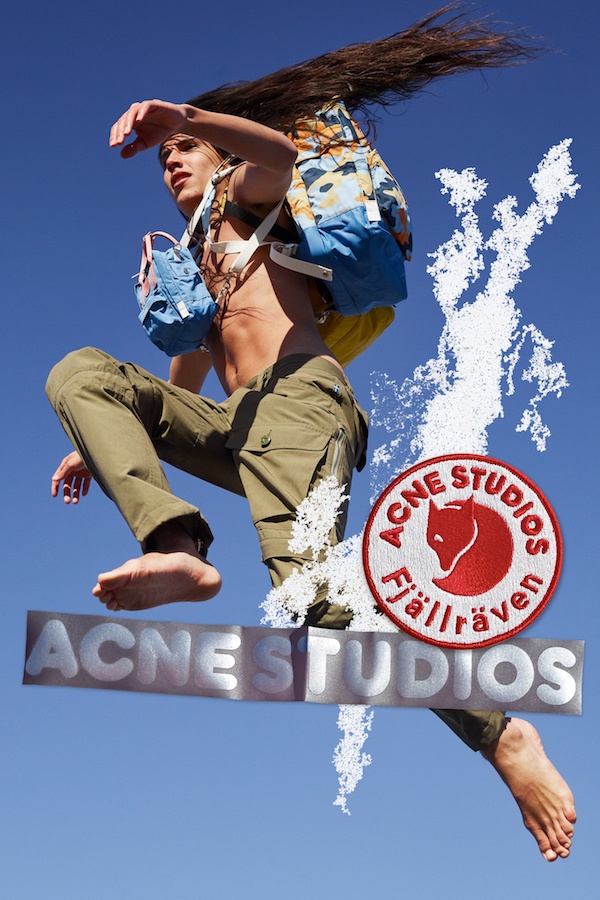
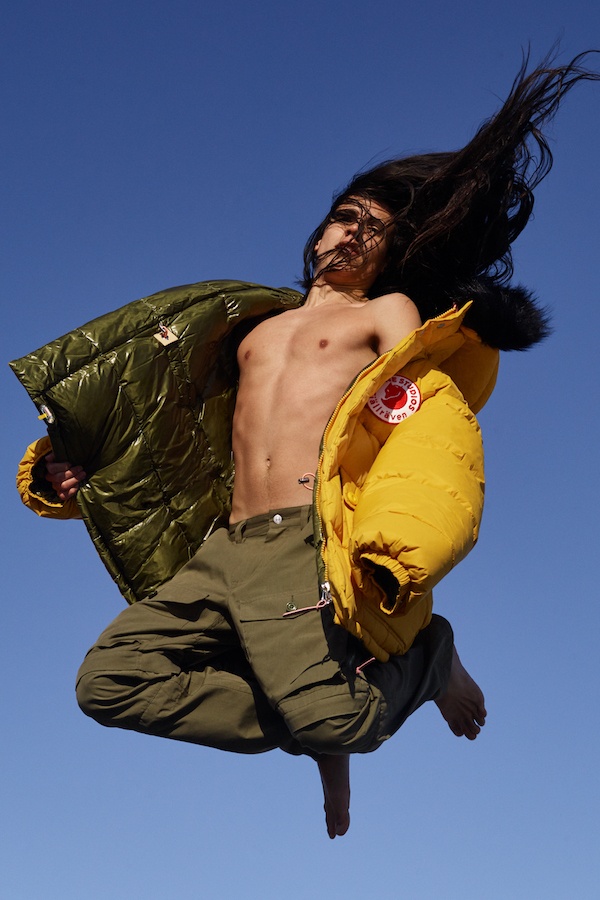
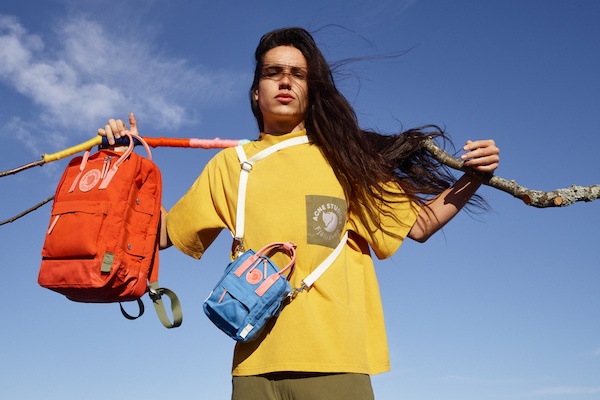
Swedish fashion house Acne Studios recently partnered with Swedish outdoor brand Fjällräven to produce a unisex capsule collection of outerwear and accessories.
This fashion meets nature collaboration celebrates the 40th year since the launch of Fjällräven’s legendary Kånken backpack with three versions of the bag — the classic backpack, a messenger bag and a mini clutch. Also included are added details to Acne’s ready-to-wear designs such as fake fur trims, reflective patches, oversized pockets, along with bright coloured caps, camouflage sleeping bags and t-shirts printed with Swedish flags and hiking scenes. The collection is set to hit stores on September 6th with prices ranging £100- £1300.
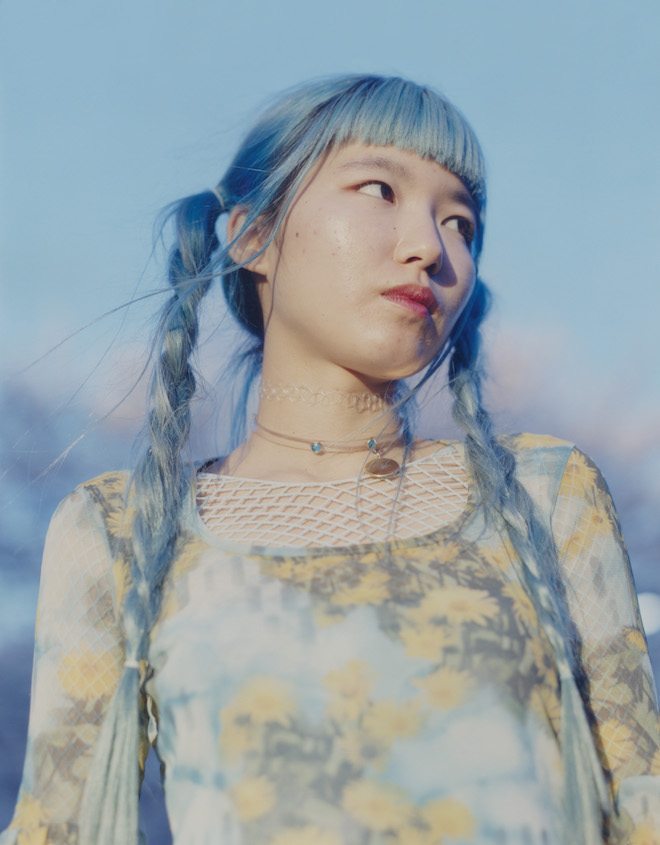
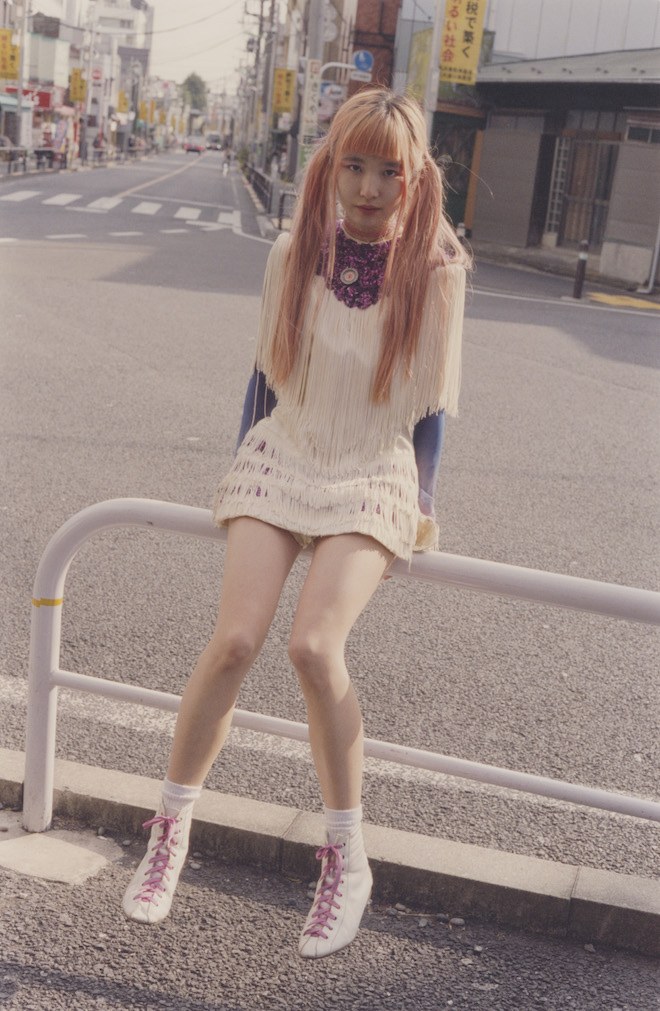
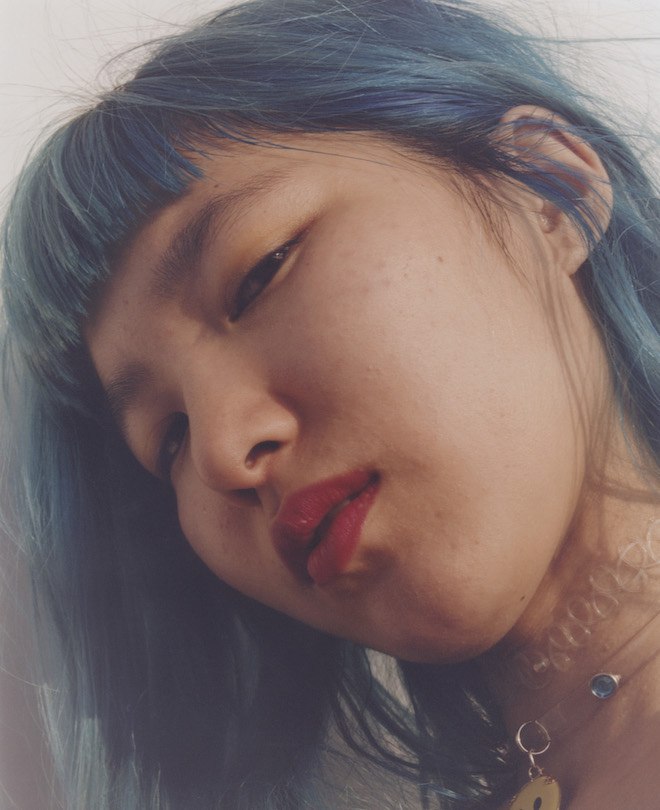
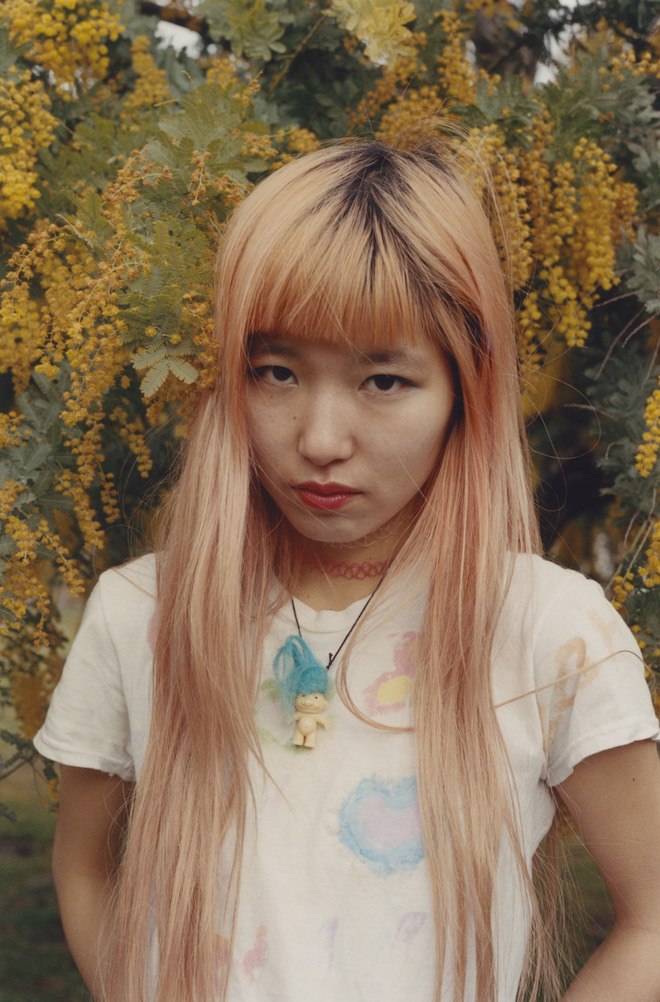
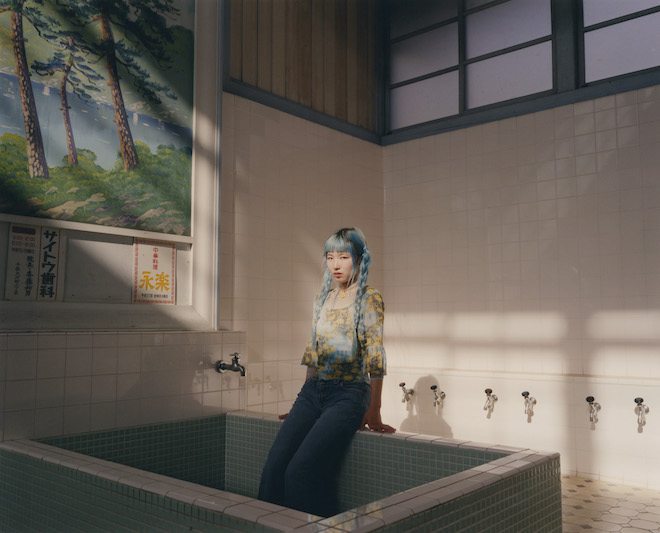
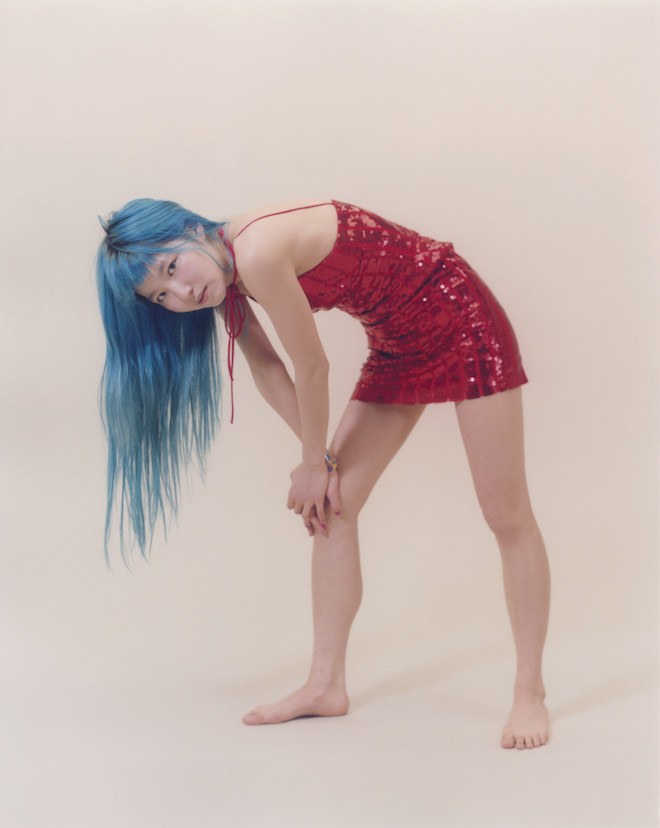
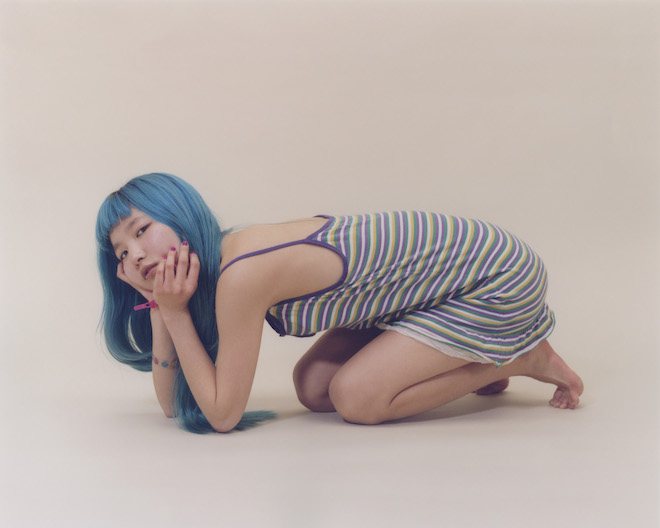
When the British photographer met musician Aya in Tokyo the pair bonded immediately. “Even though our time together was brief, they remain some of my favourite photos I’ve taken” says Francesca Allen of this first encounter in 2016.
Two years later, these first photographs have informed a longer and more intimate project. Francesca Allen’s new book, ‘Aya’ invites viewers into their friendship and documents a month that the pair spent together in Tokyo.
Unable to speak the same language, Allen’s lens offers a poignant testament to connections that are forged beyond verbal exchange. She captures the unspoken chemistry and emotional bond between them, created over an intense month of sharing everything and spending all their time in each other’s company.
Aya is depicted in the studio but also in both domestic and outdoor locations throughout the city. The portraits, whether up close or more distanced, are constantly tender and thoughtful. In these images we can feel Allen behind the camera, creating space for the audience to see into their shared world.
Released this week, ‘Aya’ is an ode to friendship, celebrated in a beautiful new tome. Ahead of the launch we caught up with Francesca Allen to find out more.
‘Aya’, Francesca Allen
What did you find most interesting about Aya when you met her?
It’s hard to pinpoint why you find someone interesting, but for me it’s all about a connection. Aya is enigmatic and quiet and funny and intriguing. I’m so happy I was able to get to know her more.
How did you meet?
We were introduced through a mutual friend in 2016 when I first visited Tokyo. We hung out for a few hours taking photos and went to Aya’s label Big Love Records in Harajuku. Even though our time together was brief, they remain some of my favourite photos I’ve taken.
‘Aya’, Francesca Allen
How did documenting one person compare to doing editorials and campaigns?
To have the luxury of spending that much time with one person is so special and something I was very grateful to be able to do.
What did you learn?
I learnt that this type of project is my dream project. I’m constantly looking for people to photograph and forge connections with, and to be let into someone’s life like this was amazing.
Did the city of Tokyo inform or inspire the photographs?
Being in a new place is always so exciting, but I wasn’t there to make a book about Tokyo so I veered away from including anything too obvious. I wanted Aya to be the sole focus of the photographs.
Was there anything that surprised you during the project?
I never tired of taking photos of Aya. We spent a lot of time together and went through so many rolls of film, yet it never felt stale.
‘Aya’, Francesca Allen
There’s a mixture of studio portraits and natural environments in the book. How did the different settings inform your approach to image making in the context of such an intimate relationship with your subject?
I don’t feel like there is so much difference with shooting in a studio to being on location. The focus of my photos is so rarely about the location or the environment, and when you reach a certain level of intimacy with someone it doesn’t make too much difference where you are.
‘Aya’, Francesca Allen
What about the book are you most excited about?
I received my first copy of the book the other day, and it felt amazing to hold it in my hands. We are all so used to seeing our photos on screens and social media, so to have the opportunity to make something tangible feels incredibly special.
‘Aya’, Francesca Allen
‘Aya’ by Francesca Allen is out on Libraryman with a limited first edition of 500 copies, 4th September 2018.
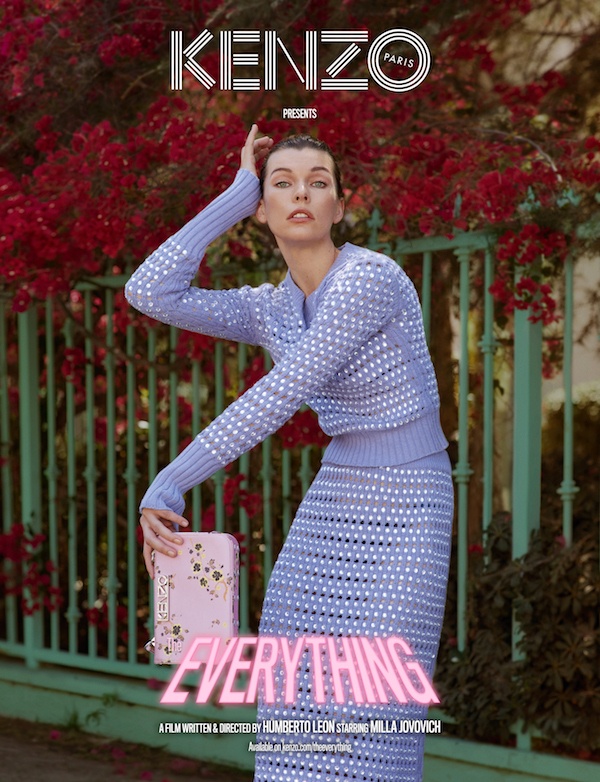
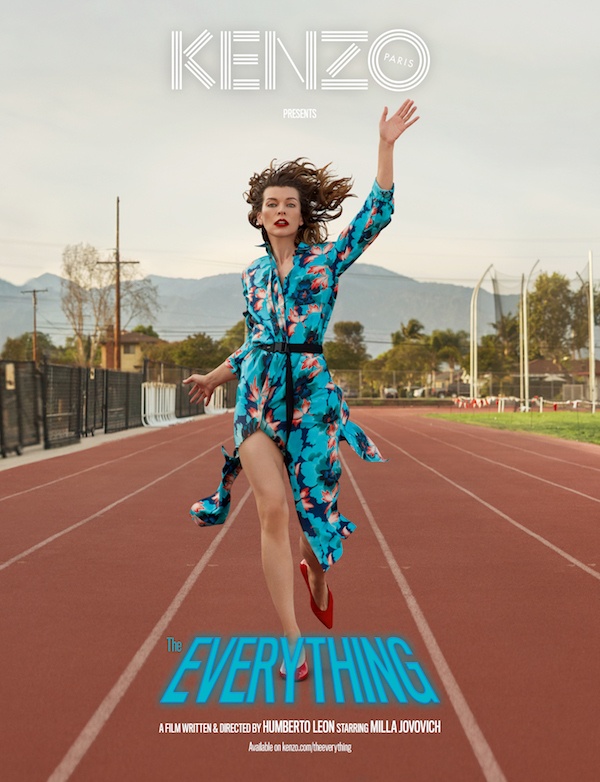
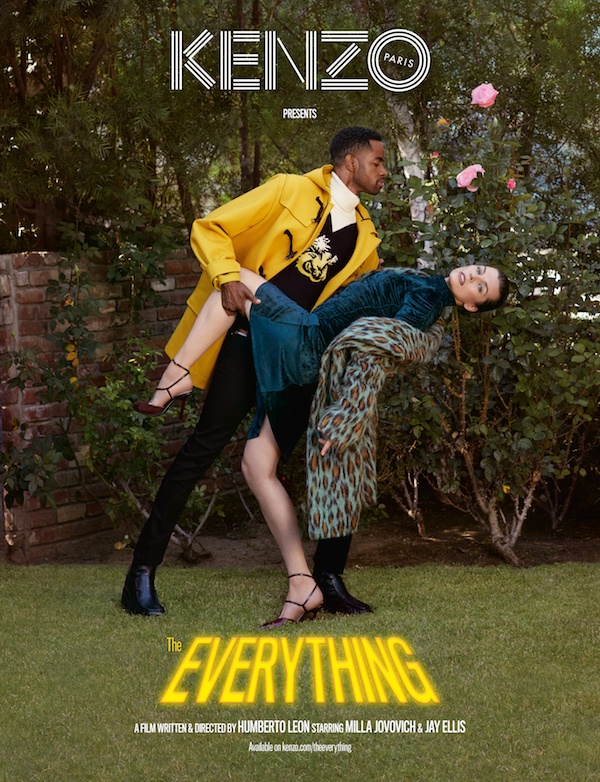
For the Fall 2018 instalment of their film campaign series French fashion house Kenzo tapped their co-creative director Humberto Leon for his directorial debut in the creation of their latest picture “The Everything.”
The film is a light-hearted narrative of a family of teenagers who brought together by their mutual peculiar superpowers.
Actress extraordinaire Milla Jovovich leads as the matriarch of the mutant squad which also includes actors Alexandra Shipp, Kodi Smith-Mcphee and Sasha Frolova. Also featured, are actors Regina Hall and Jay Ellis along with a special appearance by filmmaker Spike Jonze. “The Everything” features Kenzo’s FW18 collection, along with pieces from La Collection Momento N°3 which is a collection of garments inspired by the brand’s archives. The film is to be released on the brand’s site on September 8th.
Kenzo FW18 by Ethan James GreenKenzo FW18 by Ethan James Green
A new exhibition at Red Hook Labs this September looks to immerse audiences in an anarchic and imagined world.
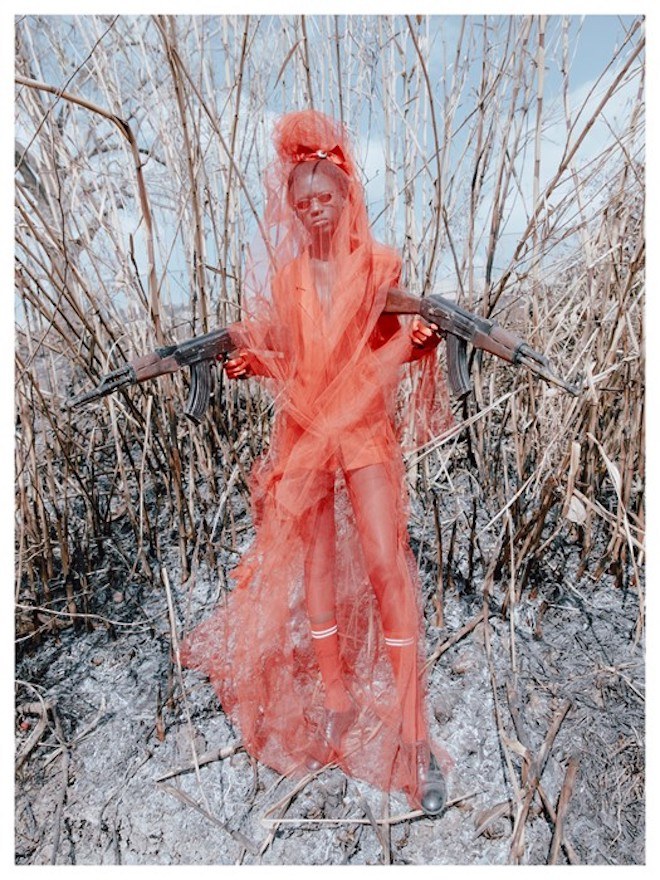
Entitled ‘Soft Criminal’ the new exhibition brings together the work of three creatives: South African photographer Kristin-Lee Moolman, Sierra-Leonean designer Ibrahim Kamara and British designer Gareth Wrighton.
The collaboration between the three artists is set around an imagined story line about characters from the African diaspora. Soft Criminal centres around three families wrestling for power and explores the tension not only between individuals but between tradition and progress. In the story an old King is deposed by a “new money hacktivists” and an anarchic war lord.
The exhibition at Red Hook Labs will open with a live show featuring 22 hand-made designs alongside a display of photographs taken of the collection by Moolman in South Africa.
This exhibition at Red Hook Labs is the latest of an ongoing series of work between Moolman, Kamara and Wrighton. The group have also exhibited together at Somerset House and collaborated on a zine.
Poignant and evocative expected your imagination to be sparked and the impact of the trio’s vision to stay long after you leave the exhibition.
Soft Criminal, Red Hook Labs, September 12th – 23rd, 2018.
A chat with designer-turned-Gucci-model Harris Reed
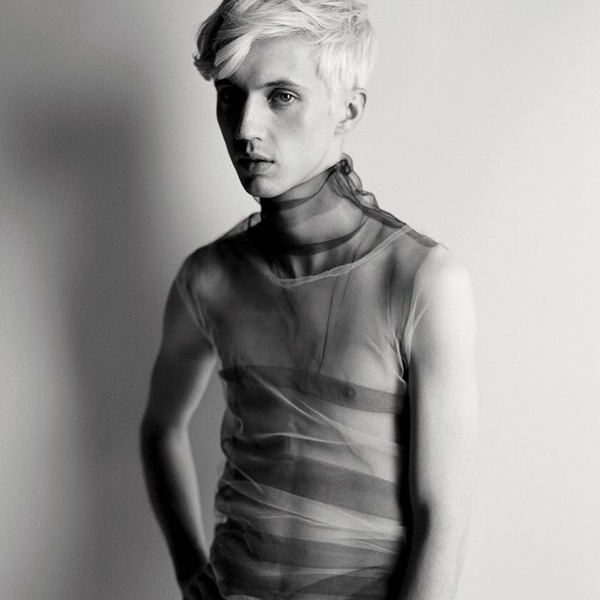
American-born Central Saint Martin third-year fashion design student Harris Reed has quickly became on of the most recent names to know in fashion.
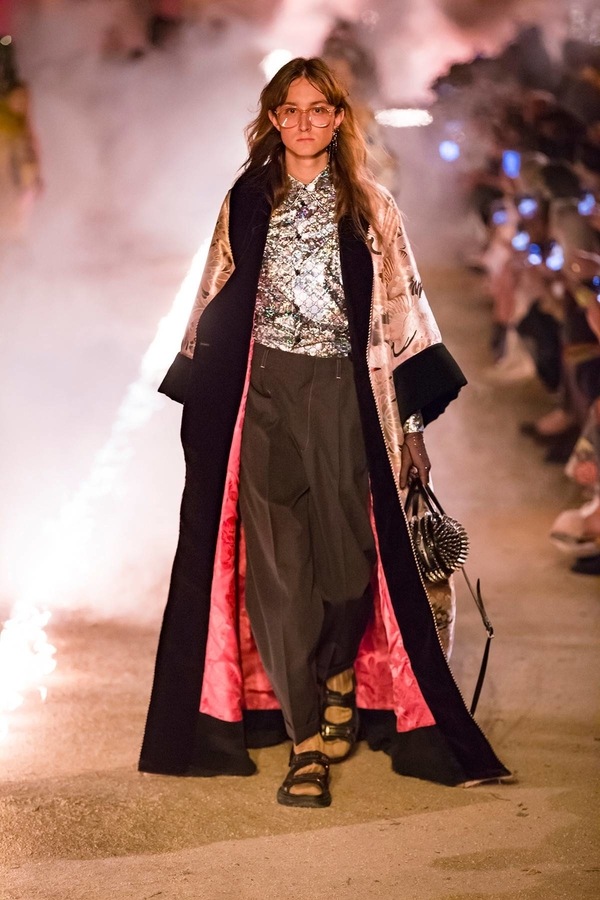
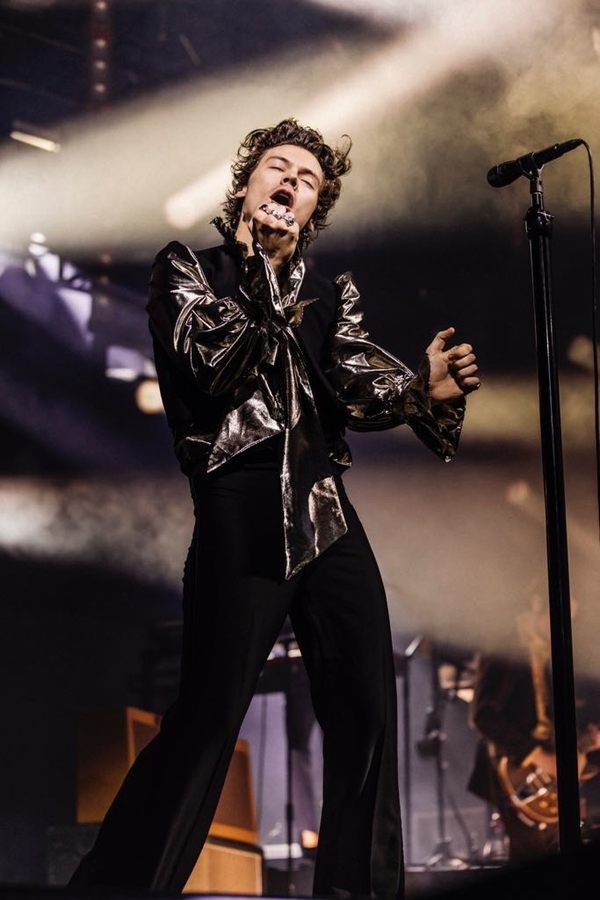
With his natural appetite for androgyny fused with an impeccable taste in design, Reed has found himself gaining attention from celebrities such as Solange Knowles and Troye Sivan. He’s also designed collections exclusively for singer-songwriter Harry Styles. Only a few months ago , the designer was tapped by Gucci to take over their instagram stories during the Cruise 2019 show and to debut on the runway himself in Arles, France.
Twin contributor Jordan Anderson sits down with the creative to decipher the details of his whirlwind of success.
Harry Styles sporting one of Reed’s looks during a performance.
Jordan Anderson (JA) : First of all I have to ask, what were your exact thoughts walking down that aisle for Gucci in Arles?
Harris Reed (HR) : I remember the one thought going through my head was that this is it, this is the beginning of it all. With all the editors from all sorts of magazines that I’ve admired sitting in the audience, it was just kind of this overwhelming feeling knowing that I am one of the only designers that is being supported in this way by such huge brand. After all the hard work I put in, and am still putting in, this was like the best sort of graduation anyone could ever have.
JA: What’s an average day like in the life of Harris reed?
HR: Lately it’s been waking up at 7am and attending to emails, running out to get coffee and starting to do research on different things happening around London. I usually visit the National Portrait Gallery and other art exhibitions around town where I often find inspiration for my work.
Some days I’ll return home and do interviews all evening or some days I’ll stay up sewing until 4 a.m, but pretty much the bulk of my days involve emails, research and sewing.
JA: The title of your last collection was the “The Lost Romantic Boys of the Edwardian Summer Holiday.” What was the story behind it?
HR: The collection I did before this was a 13 look compilation for Harry Styles, which was what kind of led me to this project. That entire collection was inspired by the summers I spent down at the seaside in England with my grandparents. All the men in my family are kind of men of the sea and I’ve always felt kind of like the odd one out. It’s sort of a play on my interpretation of what I would look like if I was to ever be come one these characters.
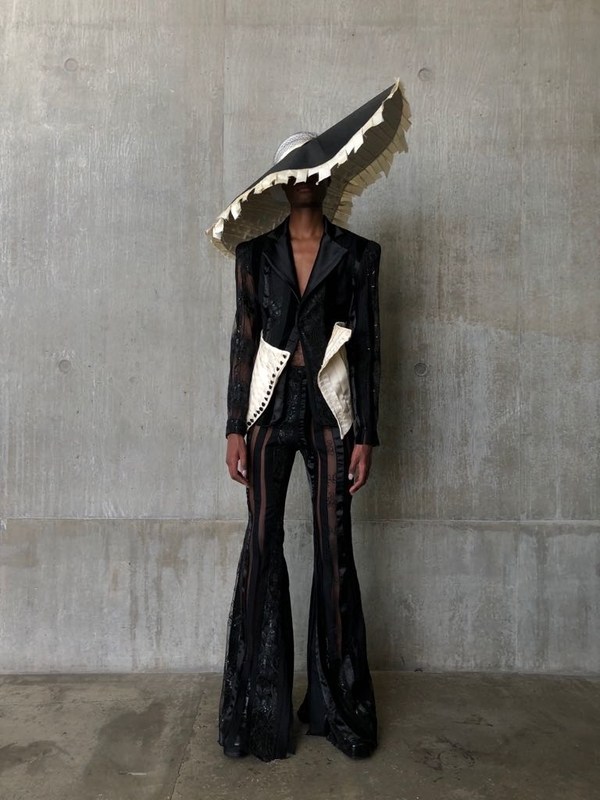
A look from a previous collection of the designer.
JA: What’s your design process like?
HR: I always start with a very strong character. Then I create a narrative around this persona and from there I dive into the design process through collaging, which is where I create a silhouette. It’s always a constant back and forth between collaging and working with the physical pieces as feel is very important to me in the creation of these characters. I end up doing a lot of hands on work while doing my sketching and collaging at the same time.
JA: People often label your work as androgynous, but do you consider yourself a menswear or womenswear designer?
HR: Even though I’m thinking about gender constantly when it comes to the physical design process I try not to imagine my characters as gendered. I imagine them more as fluid beings, it’s more about the body, the shapes, forms and the personality traits rather than all the labels.
So no, I wouldn’t place myself in either of those categories.
Singer Troye Sivan in a Harris Reed look
JA: If you could use one movie, a song, a poem or some type of media to define your work what would it be?
HR: It would surely be cross baby of the movies Only Lovers Left Alive (2013) and Orlando (1992) .
JA: When looking at your work, it’s noticeable that a lot of the pieces are quite similar to your personal style. Is your work a reflection of yourself?
HR: It’s quite funny because when I started designing, I noticed that the second I started making pieces that were for myself the response was much greater. I would definitely say that a lot of times my collections hold aspects of myself and my personality.
JA: Who is your work for?
HR: My work is for a very mixed group of people, from 16 year-old girls to 60 year old women. Everyone has a different perceptive on it: some people think it’s quite rock n roll, while some think it’s very tasteful and victorian like . It is for anyone who’s not afraid to dress up and understand that they’re going to spark conversation by wearing my pieces.
JA: I noticed when composing your look books and doing personal shoots that most of the models you use are black men. Was this intentional and why?
HR: I can never do anything for only the sake of being pretty or beautiful. I always have to be tackling issues that are important. For a short time in my life I did modelling and one of the things I noticed was the lack of diversity, so I always try to be as inclusive as possible. Also for me it’s more about the people I meet and their personalities. I would rather meet someone, get to know them and shoot them for my collection rather than just picking a random model from an agency.
Artiste Solange Knowles in a full look by Harris Reed
JA: Is a college education important for one wanting to be a designer ?
HR: It’s interesting because I’m obviously quite fortunate to have such great success before even completing university. However I’ve found CSM to be such an amazing experience. I look at the work I did a year ago and compare it to what I’m doing now and I see how I’ve experienced such enormous growth, and a lot of that was thanks to the professors and friends I’ve met here. So I think it’s good for growth. However I think there are some people who make it work without schooling . It just depends on the person. I would say it’s not mandatory, but it’s 100% beneficial if it’s within your means.
JA: What are some of the challenges you experience being a student who’s already in the spotlight?
HR: Finding the time to do everything is difficult. I’m a ‘yes’ person, I love to collaborate so the biggest challenge is knowing when to say no and understanding my limits.
JA: Can you tell me about a time that was scary for you?
HR: Moving to London from America for me was like coming out of a cocoon. When I got to London I was welcomed with such an accepting energy that pushed me to being more fluent and embrace who I was. One of the scariest moments for me was physically opening up and wearing these extravagant things that better represent me. Sporting these looks in public and worrying about what people will think. It was kinda just about that moment of physically coming out of a closet dressed in all these extravagant, decadent pieces.
JA: What would be the dream for your career ?
HR: I think it would be having a huge business that is completely gender fluid and which is giving back to the community. That’s successful in breaking down the fundamentals of the way fashion looks at gender and personally being a role model to people like myself.
Two evenings of sonic and experiential performances in London see Haroon Mirza and Daria Khan present emerging artists with a specific focus on performance, queer, female and non-binary practitioners.
The first evening is curated by Khan and Mimosa House and will centre around the work of three artists who use sculpture and performance to explore ideas around gender, sexuality, resistance and desire.
Moscow-based artist Taus Makhacheva, who works under the name Super Taus, who will create sculptures from steel during a live performance on the evening.
London-based artist Gaia Fugazza will invite audiences to hold sculptures in their mouths and Linda Stupart will create performances that investigate melting icebergs and Morgellons disease.
The first night will be curated by Daria Khan while Haroon Mirza curates the second evening of performances.
On this second evening the work will centre around how humans will imagine the archaeological site of the Large Hadron Collider after two millennia have passed. The collaborative work was inspired by a trip to CERN and sees Mirza work with artists, musicians, performers and producers.
The event is free to the public but booking in advance is highly recommended.





 PREVIOUS

 Twitter
 Tumblr
 YouTube
 Facebook
 Instagram
