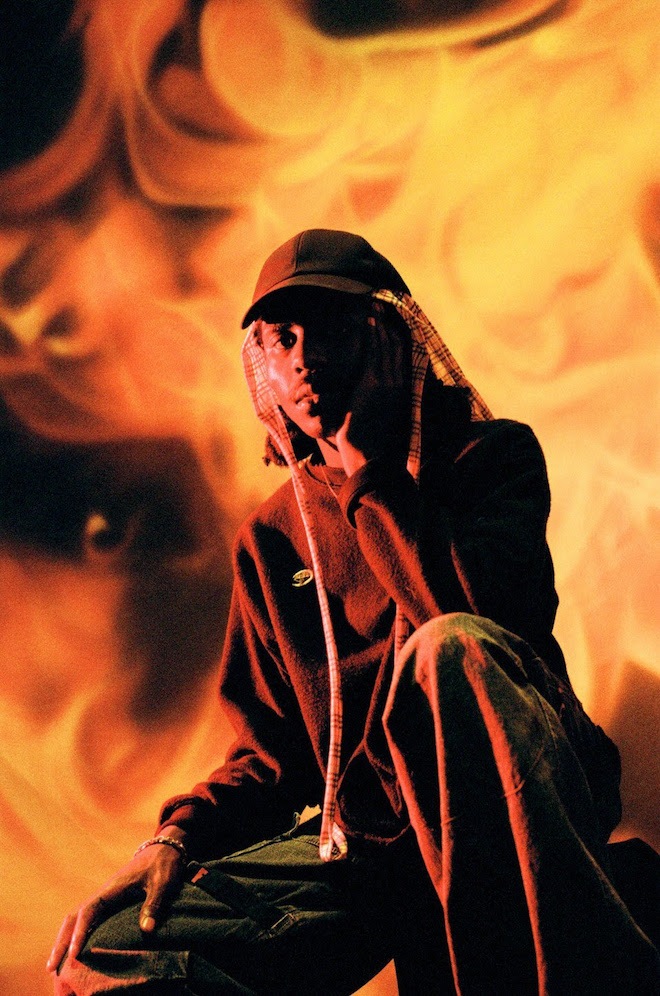
Blood Orange has shared the video for “Saint”, the latest release to be taken from his new album, Negro Swan. The video was directed by Devonté Hynes.
Co-written with Aaron Maine from Porches, Kindness’ Adam Bainbridge and singer Ava Raiin the song lays a stripped back and absorbing beat under Blood Orange’s signature direct, poetic lyrics.
The new video sees Hynes performing the song in a home studio set up, with a retro, cinematic feel. Onlookers slope on sofas and against door frames as Hynes plays the keyboard and sings into a handheld microphone.
“You wish I seen the saint you were before / Your skin’s a flag that shines for us all.”
British cinematographer/screenwriter Molly Manning Walker is a creative best known for using her work to speak up on prominent issues within society from a unique perspective.
In 2015, Walker collaborated with director Billy Boyd Cape to create a powerful short film titled ‘More Hate Than Fear’ which gave insight on the experience of an unjustly imprisoned graffiti artist as he navigated the first months of his 3 year prison sentence.
Previously, Molly also teamed up with producer Joya Berrow to create the mini-documentary ‘Not With Fire, With Paint’ which explores the impact of the murder of Diego Felipe Beccera — a graphic artist shot in the back by police officers while painting in the streets of Bogota, Colombia during 2011.
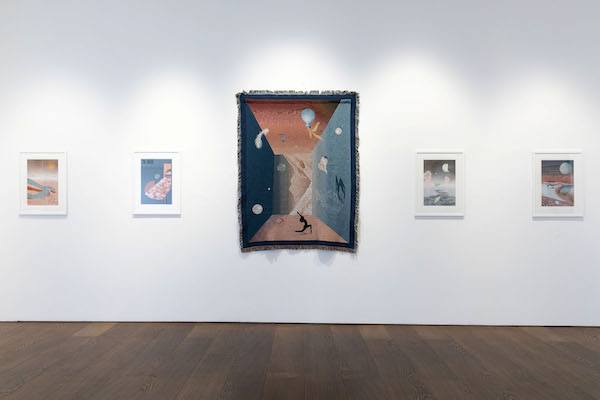
Painting by Camilla Rose
The cinematographer is now turning her lens to the subject of rape and is currently working to produce a short film entitled ‘Dark Is Her Shadow’ which is set to explore the emotional, physical and mental traumas and stigmas surrounding sexual assault. “We follow Amy, who is a 16 year-old girl who is trying to resume life after being raped, the day after the incident, she struggles with being provided with little to no guidance while the ghost of her rapist returns to haunt her,” says Walker.
Once a victim of sexual assault herself, she explains that the intention of the film is: “to prevent people from losing eye contact when the word rape is brought up and counteract people from asking victims what we were wearing when we say we were raped.”
In order to raise funds for the film — set to be shot in London this November — Molly has brought together a team of 30 female artists for 30 days of an instagram auction.
Over the span of these thirty days, the donated work of each of these artists will be auctioned off via Walker’s instagram to raise money for the film.
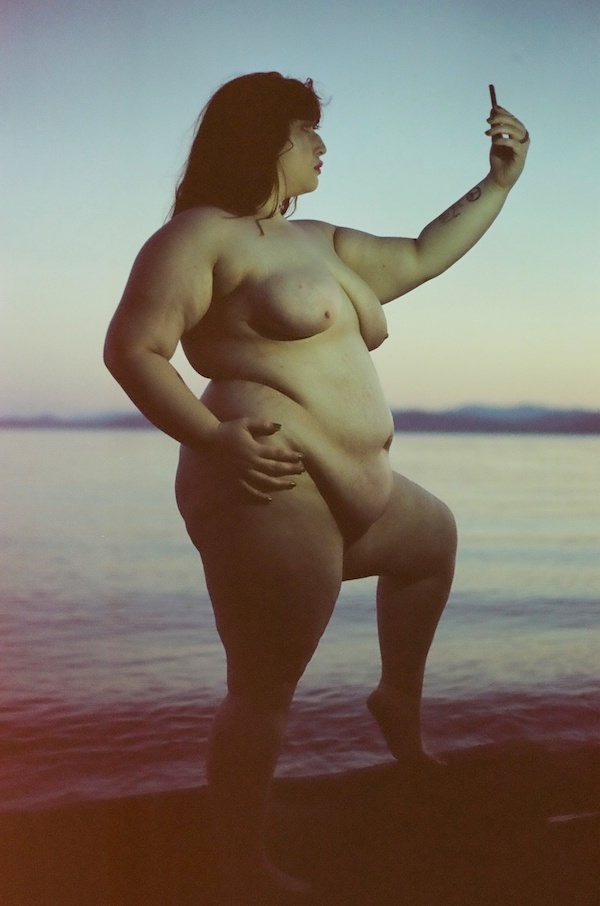
Big Titty Kitty by Netty Hurley
“The film is being funded through Kickstarter and the page will go live on August 29th. Each day we will have a different piece, an image of this piece will go out on instagram, facebook and twitter, the artist will self-evaluate this piece and that will be the starting price. When the image goes up, the followers will have until midnight to bid on each piece. At midnight, the winning bidder will donate to the Kickstarter page and the piece will be marked sold.”
The group of women include illustrator Alice Rosebery-Haynes , music photographer Natalie Wood, portrait photographer Charlotte Ellis, fashion designer Jazz Grant, along with several other poets, painters and talented creatives.
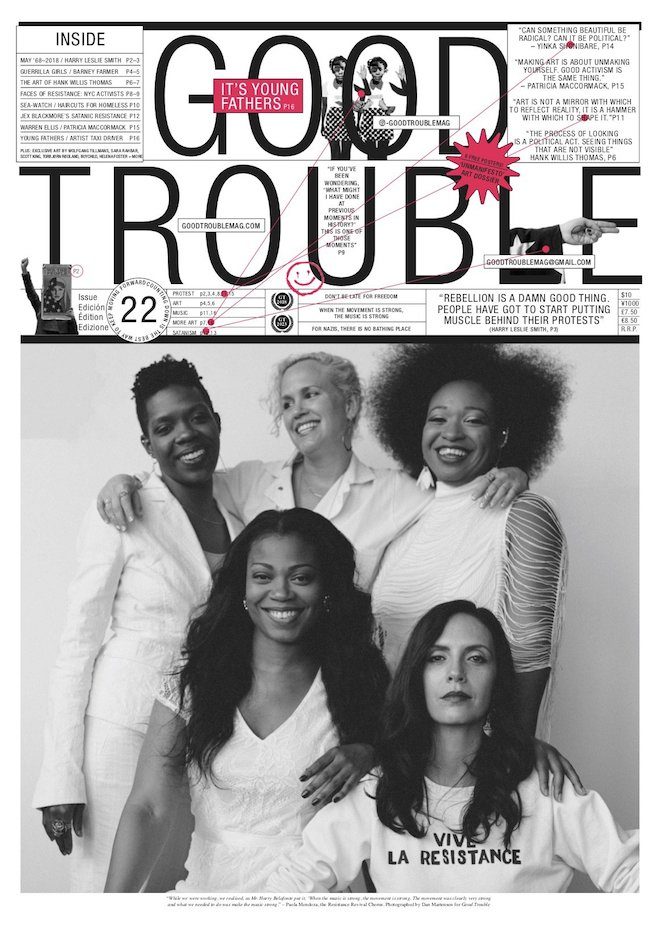
The second issue of Good Trouble issue 22, the zine produced by former Dazed & Confused editor Rod Stanley and designed by Richard Turley and Sophie Abady, is out this month.
Slightly confusing though the name of the magazine may be, the work included this issue is straightforwardly fantastic. The publication features original work by Wolfgang Tillmans, Sara Rahbar, Boychild, Scott King, Torbjørn Rødland, Helena Foster and others, curated by Francesca Gavin.
The broadsheet newspaper champions activism and resistance, bringing together a selection of creative and dynamic voices. This latest issue spans 32 pages and includes a pull out ‘Unmanifesto’ poster.
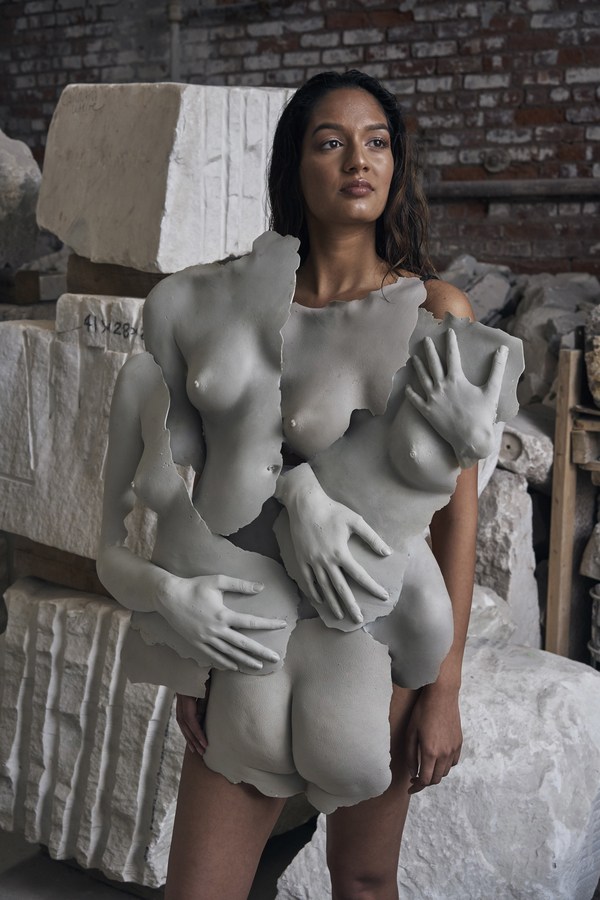
Pakistani designer and visual artist Misha Japanwala recently presented an uplifting collection entitled ‘azaadi’ — an Urdu word which means freedom — as her official debut as a New York based designer.
The Parsons School of Design graduate returned/revisited her hometown for inspiration where she sought to focus on a more positive narrative from the headlines she often read as a child about murders and brutal acts of violence against women.
“My collection was inspired by women like late Pakistani social media star Qandeel Baloch and other victims of honour killings who were murdered by family members that believed they had brought dishonour upon the family because of actions or decisions the victims may have made.
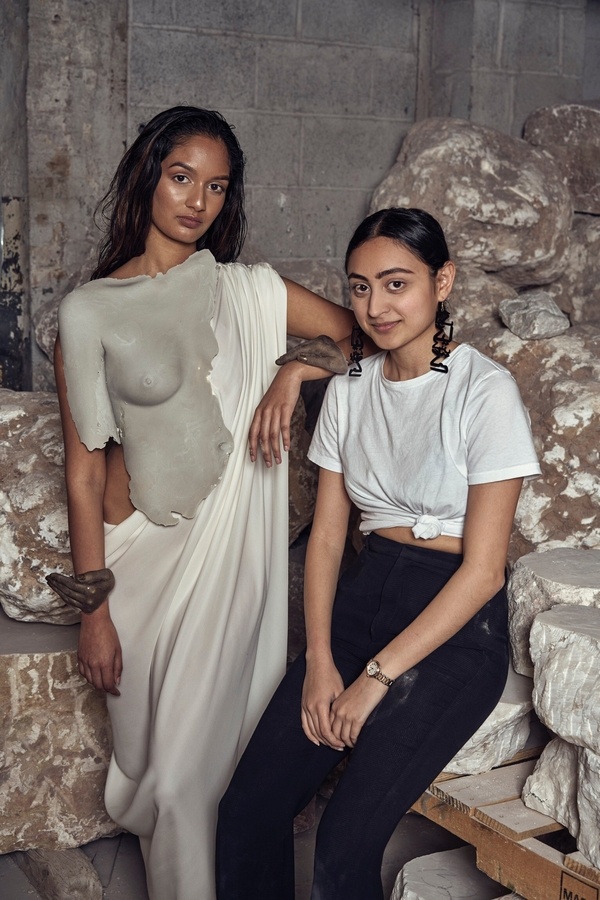
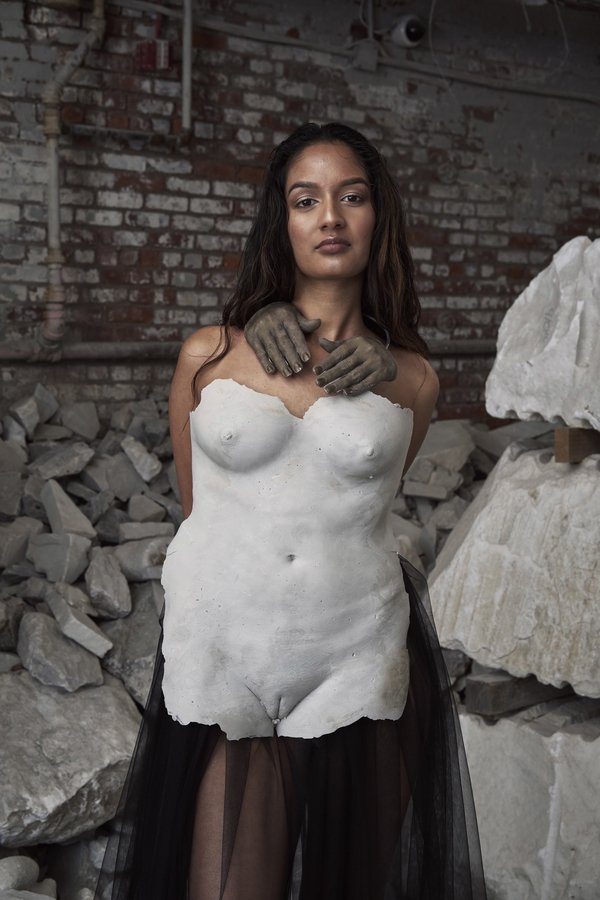
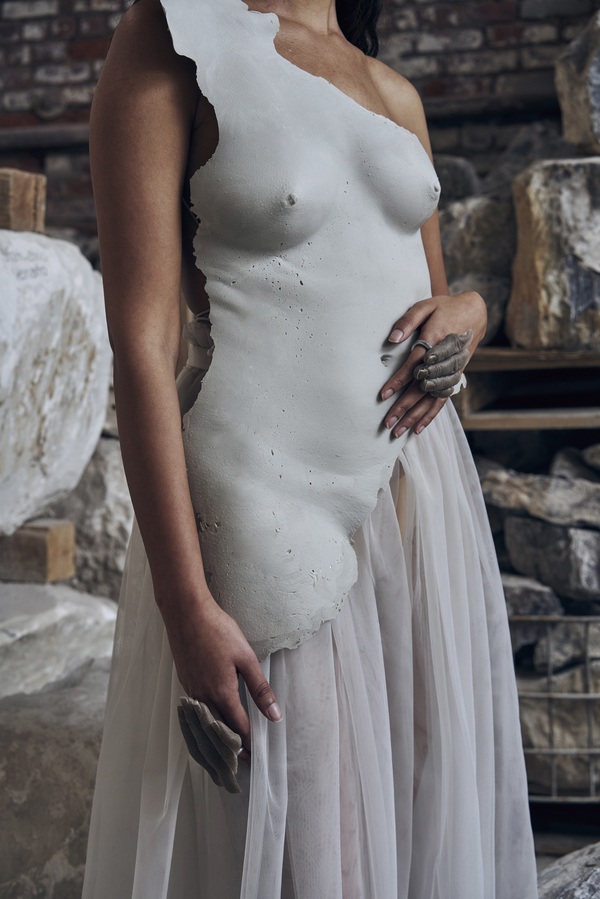
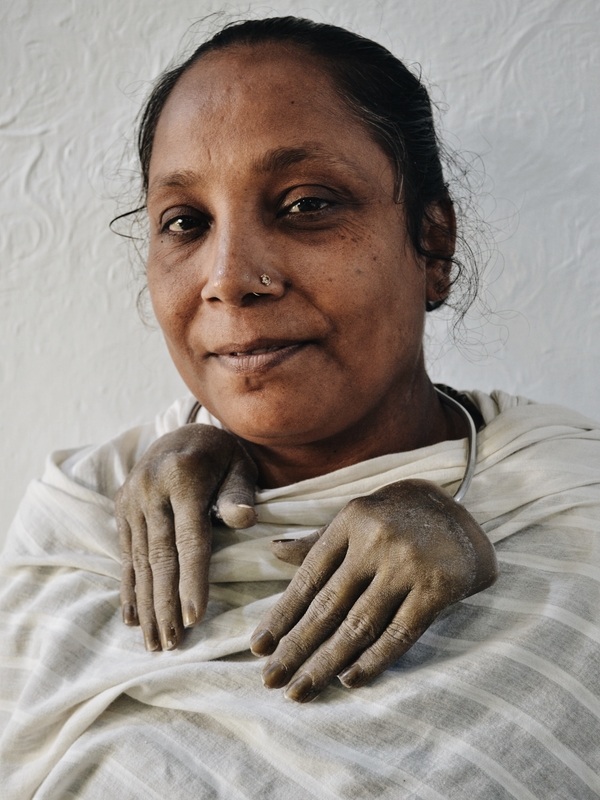
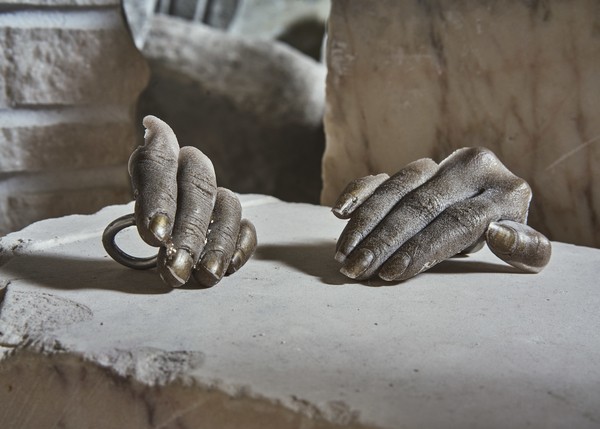
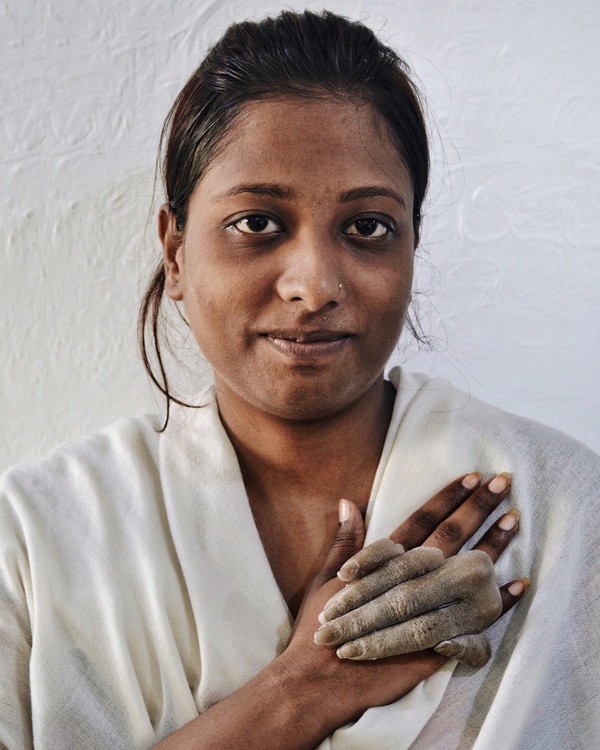
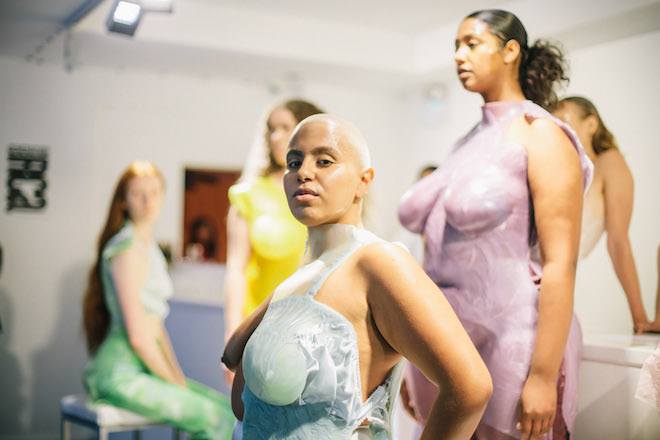
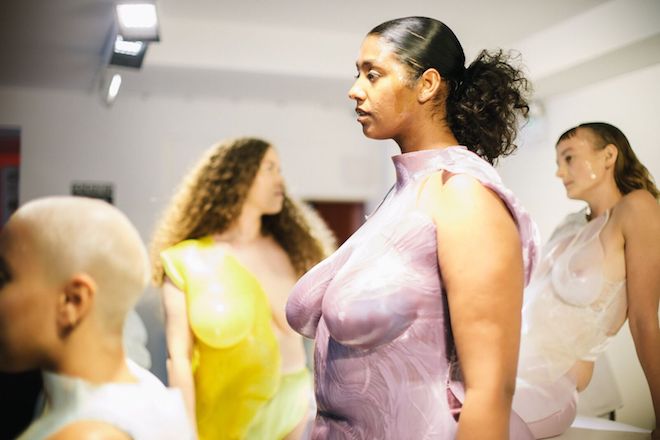
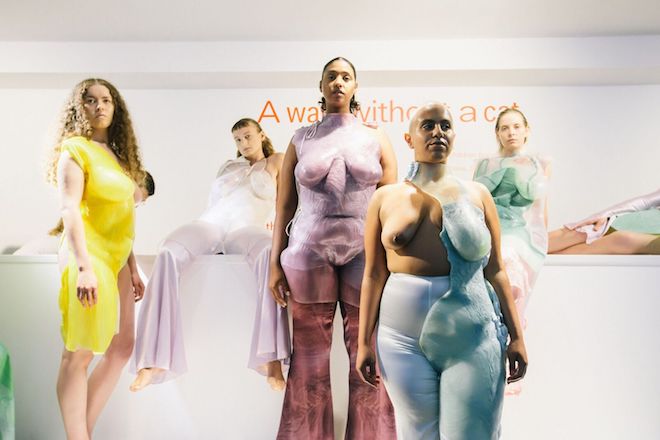
Japanwala used her platform as a designer to create a series of wearable sculptures of the female body moulded from her own body along with accessories from the hands of other Pakistani women.
“The female body was the perfect symbol to highlight the strength of the women who aren’t afraid to fight to live on their own terms, but also representative of the fragility that comes with being a woman in Pakistan.” Twin spoke with the designer about her process and inspirations behind this meaningful collection.
Azaadi by Misha Japanwala
How long did it take you to compose this entire collection and what were some of your challenges?
I worked on this collection for almost a year. I spent the first couple months deep in research about honour killings and reflecting upon experiences of Pakistani women from different backgrounds, including my own. The process of designing the looks in the collection was the most challenging aspect for me, because it took a long time to settle upon visual anchors that represent struggle, strength, and what it means to be a woman living in Pakistan. A few months in, I had a dream where all of the final looks in the collection were created using sculptures of the female body, and that’s when the process of experimenting with casting and different materials began. I had never sculpted or life-casted before, so the process of trying to figure it all out included a lot of trial and error and experimentation, which was a lot of fun for me as an artist.
Photography by Alec Lesser and Teagan West
How has the general feedback been since you’ve launched?
The reaction I’ve received from people, both during the process of creating my thesis as well as after completing it, has been really special. As an artist, the best I can hope for with any work I create is to make people feel something, and it’s been amazing to watch so many of them, especially Pakistani women, connect with the themes explored in this collection. However, I also knew that by highlighting taboo and controversial subjects, and by being an outspoken Pakistani women, I would face some amount of backlash. It has been important for me to expose myself to the negative opinions about my work, because I think it is always necessary to have an open dialogue, especially when it’s conversations surrounding honour killings, domestic violence and the societal pressures faced by women living in Pakistan.
Photography by Alec Lesser and Teagan West
How did it feel to show your muses the finished products?
After completing the collection, I went back to Pakistan for a couple weeks and had the opportunity to show my work to some of the women that had inspired it, and the ones who allowed me to make moulds of their hands to create the accessories in my collection. It was really special to see them excited about the collection and wearing the accessories themselves. It resulted in us having an impromptu photoshoot and it’s one of my favourite moments associated with the collection.
Image courtesy of Misha Japanwala
Where can one find these pieces to view/buy?
My collection can be viewed online – official photos of the lookbook are up on my website www.mishajapanwala.com, and I continue to share photos and images of my process on my instagram @misha_japanwala. Anyone interested in buying my work can contact me directly through those channels.
Photography by Alec Lesser and Teagan West
What’s next for you?
I’m currently working on launching an online store in the next few weeks to sell accessories inspired by the themes I targeted in the collection. I want to use my platform and my art to help Pakistani women, and so a portion of all proceeds from the sales on my website will be donated to a women’s shelter in Karachi, Pakistan. Moving forward, my work will continue to explore the subjects I used with my first collection, because I still feel like there is so much to say. In Pakistan, now more than ever, it is so important to continue pushing boundaries and challenging the status quo, and I hope that my work can, in a small way, help change mindsets and open people to different perspectives.
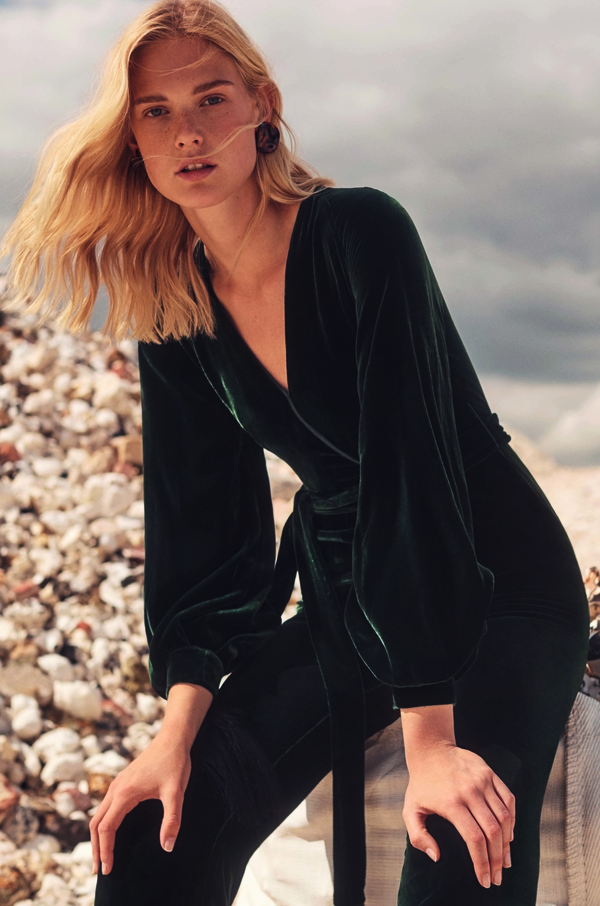
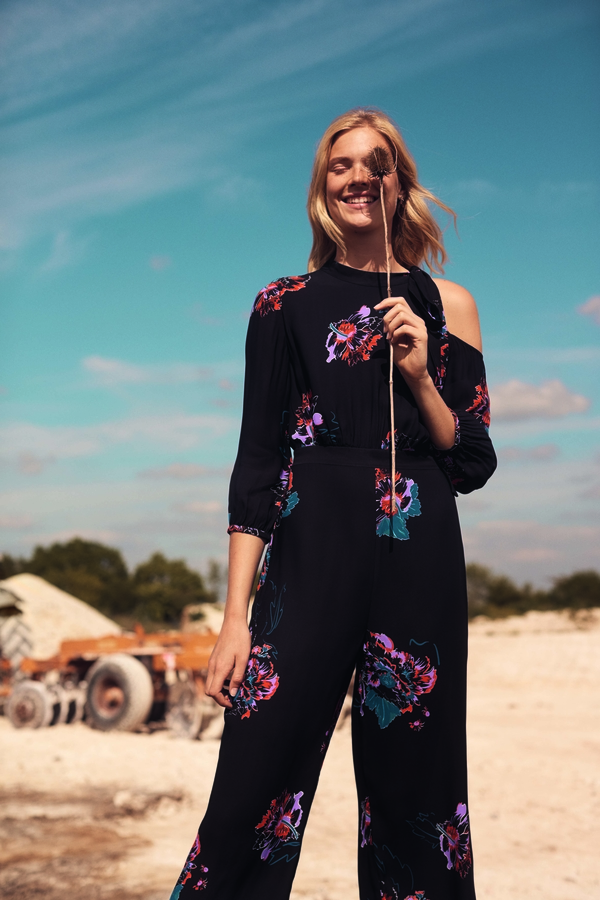
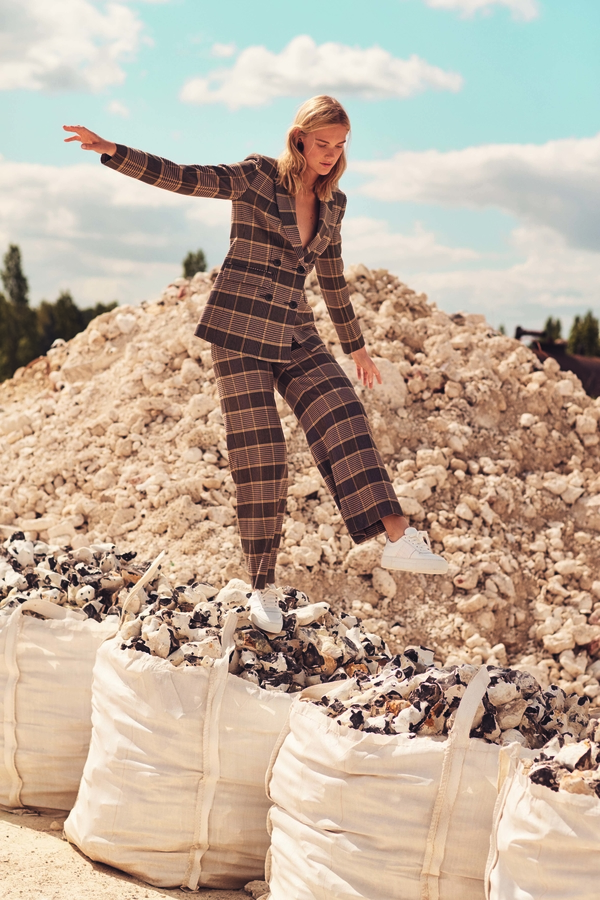
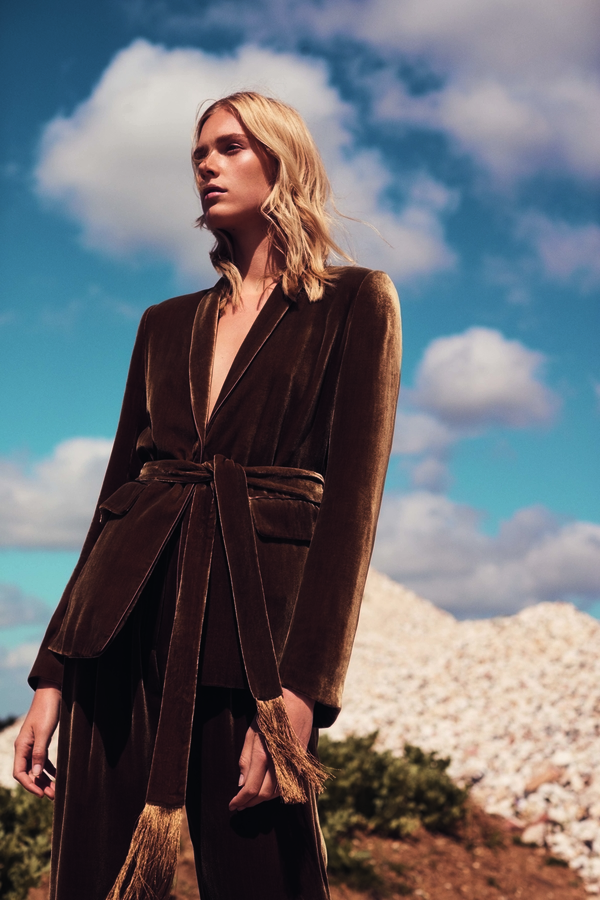
For their Autumn/Winter 2018 collection Whistles presents a collection which they describe as a more forthright approach to dressing. A blend of both maximalist attributes and modern sophisticated details, the AW18 campaign embraces a silhouette which is fluid and feminine and also holds inherent strength. Louche shirt dresses, wrap around silk bodices, over the knee boots and autumnal floral prints are some of the qualities which add character to this modern-day silhouette. See the full collection here.
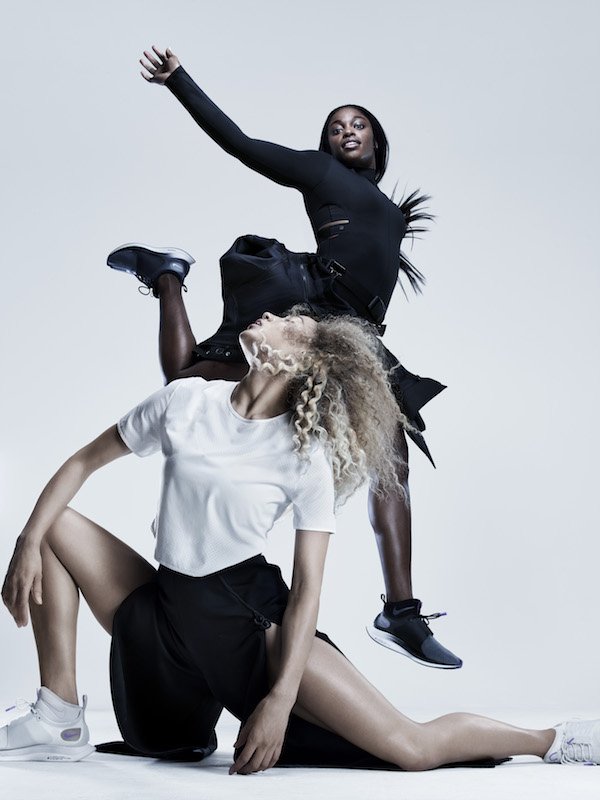
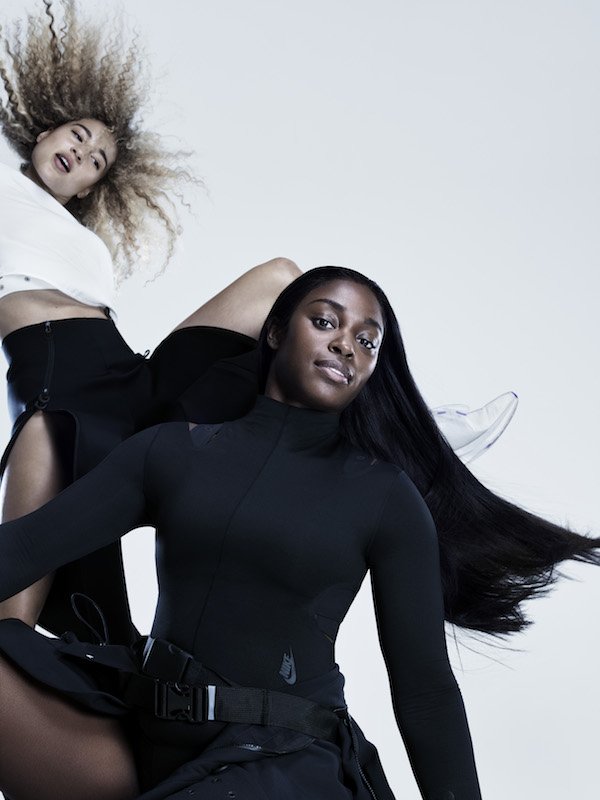
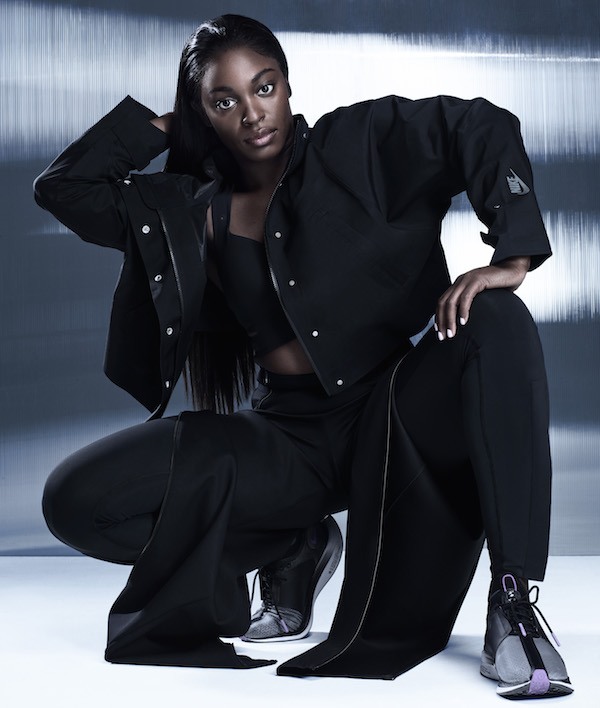
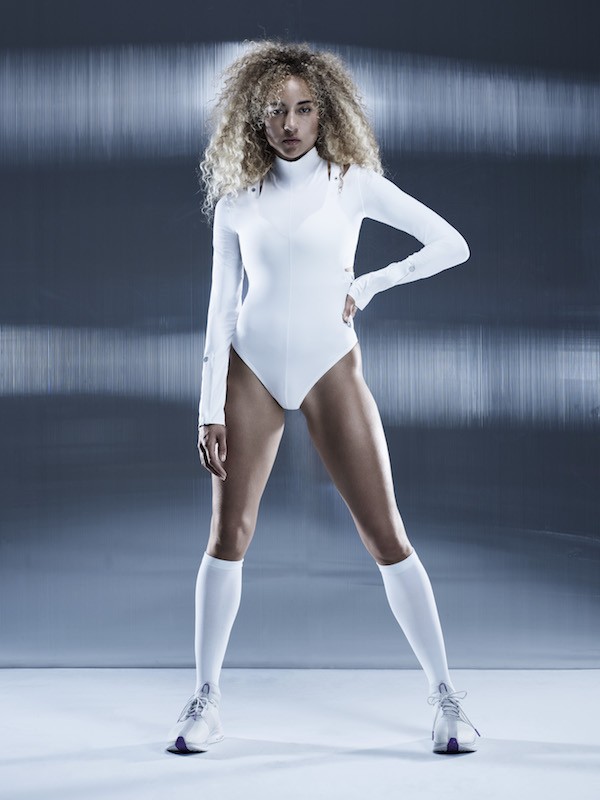
Sportswear brand Nike recently unveiled their latest womenswear collection titled Nike City Ready which is set to hit stores on September 6th. The collection comprises of nine pieces designed by an all-female team which included Nike Women’s Senior Creative Director Maria Vu.
“Our Challenge was how to take our incredible motion adapt technology and make it beautiful and push it through a transformative lens without compromising the performance,” explains Vu. The campaign features American athlete Sloane Stephens and ballerina/photographer Olivia Burgess who model the pieces which include footwear, bras, pants, tights and crews which are shot by female photographer/athlete Paola Kudacki.
Nike City Ready CollectionNike City Ready CollectionNike City Ready Collection
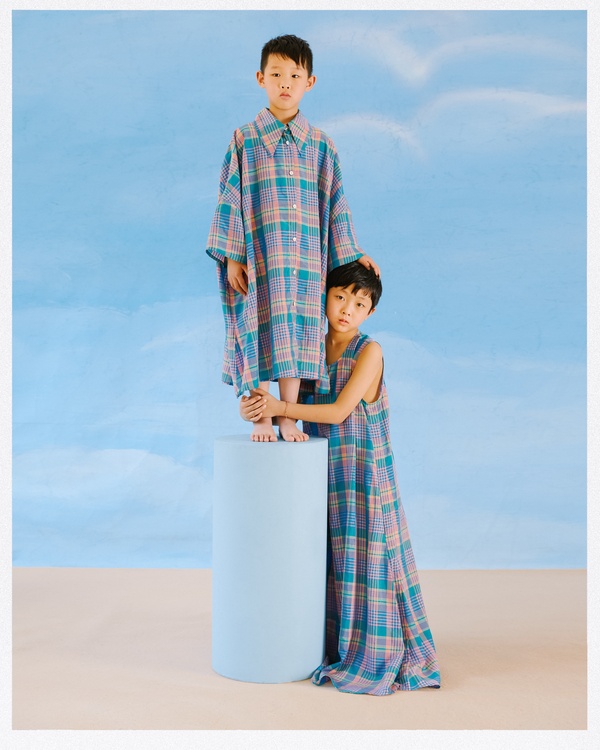
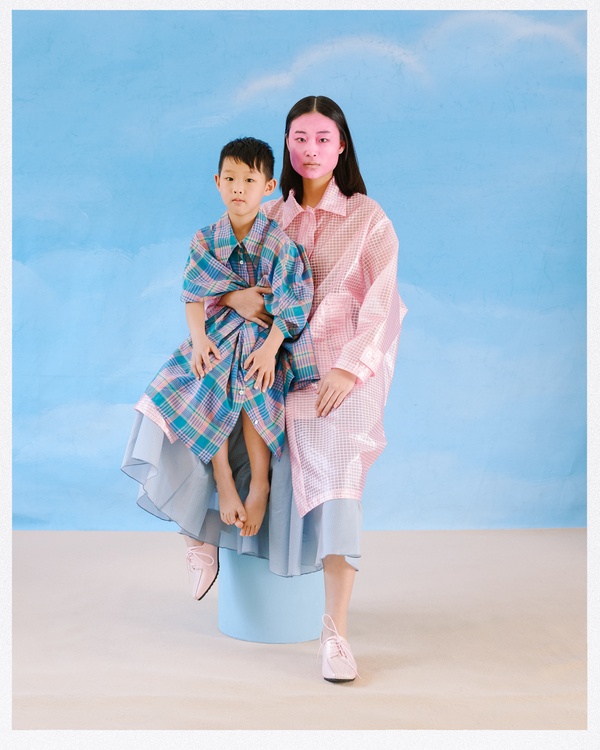
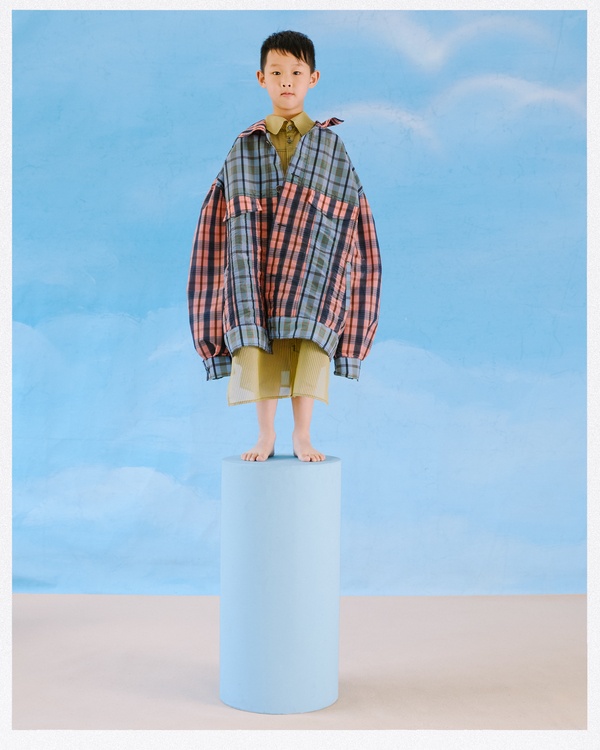
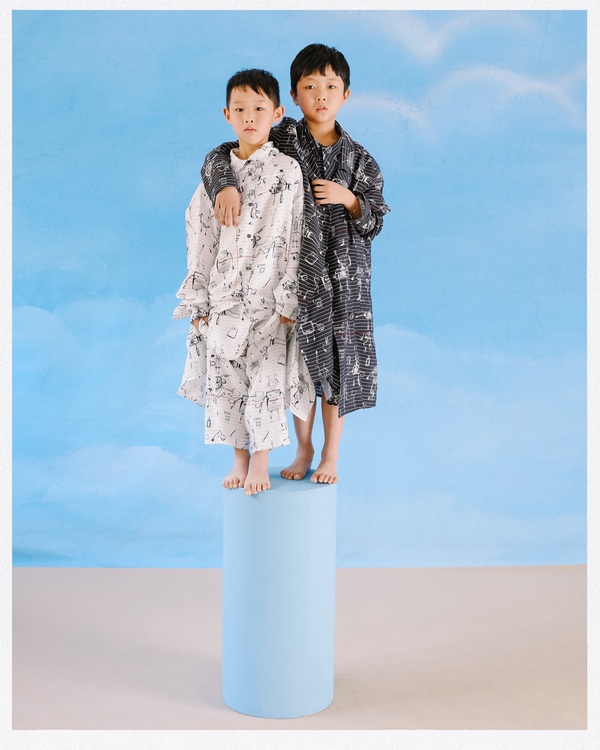
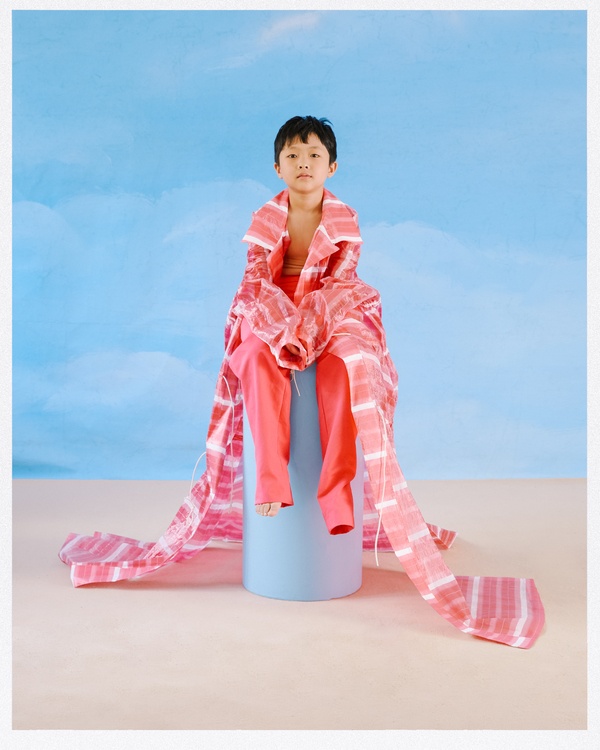
“Robeauty” — an ode to the beauty of robotics — was the inspiration behind Milanese brand Miaoran’s SS19 collection.
The label, run by Chinese designer Miao Ran, launched three years ago after intense collaboration with Missoni. Specialising in both menswear and womenswear, Ran often delivers collections inspired by ethereal subjects and incorporates them through structure, print and delivery.
For his latest collection, the designer uses soft silhouettes, prints, colour, broken lines and macramé embroideries to construct looks in alignment to this automaton aesthetic. He also teams up with photographer Marcello Junior Dino, to create a lookbook influenced by muses of the future. Twin met with the designer to learn more about his process.
What materials are your favourite to work with and why
At the beginning it was so much about natural fibres but for the SS19 collection I choose many synthetic fabrics. I can’t really say I have a favourite. Each season it’s a different intention and a different mood to portray.
I always pay attention to materials. A fabric can deeply change the look of a shape and make it something you would never expect. Sometimes it works, sometimes it doesn’t but it’s important to experiment. It is always worth it.
What has been your biggest challenge so far since the launch of the label?
The biggest challenge for me, as for many designers nowdays, is to stay original. It’s important to combine many different aspects when your passion becomes your job. You have to make something beautiful, something that could be different among the all other products, something that has a twist but will also work in the stores. It’s difficult but it’s also very exciting for me.
How would you describe the ideal Miaoran woman/man?
Someone who is confident and who can wisely choose a piece of clothing and give it life. I love people with great personalities.
What inspires you the most?
I am very open to the world, and what happens on a daily basis. You can take a picture, read a book, watch a movie… but it’s not just that. It’s your background and your own world that makes you see everything in a different way.
Why were robots your inspiration for this collection?
Robots are the future. Aren’t they? And so are children, which was why we decided to pair them both for the look book.
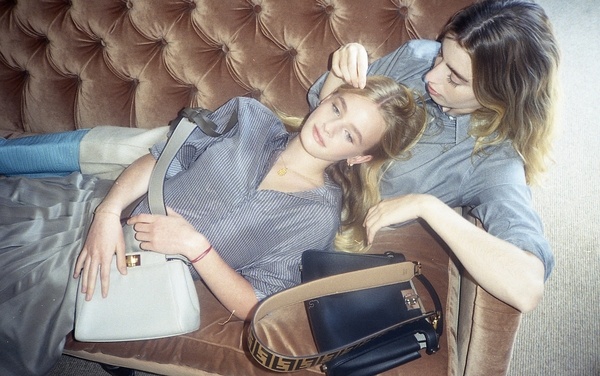
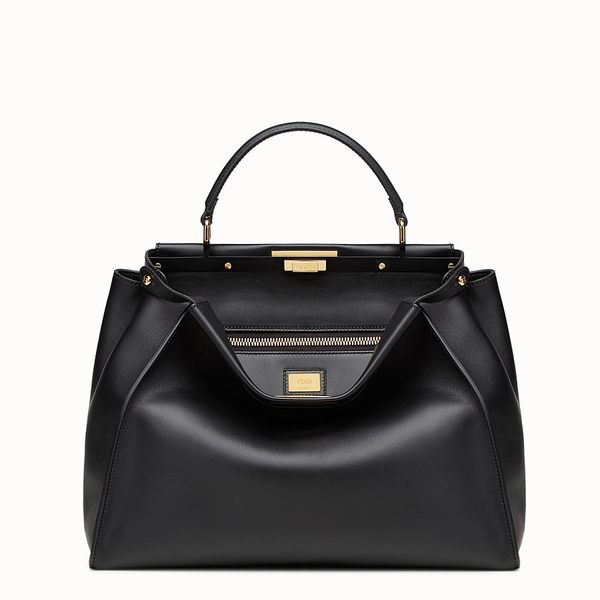
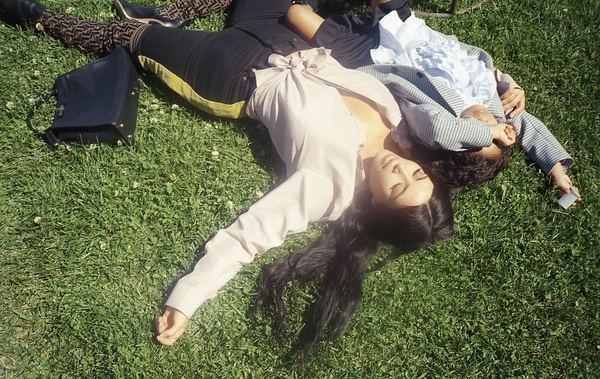
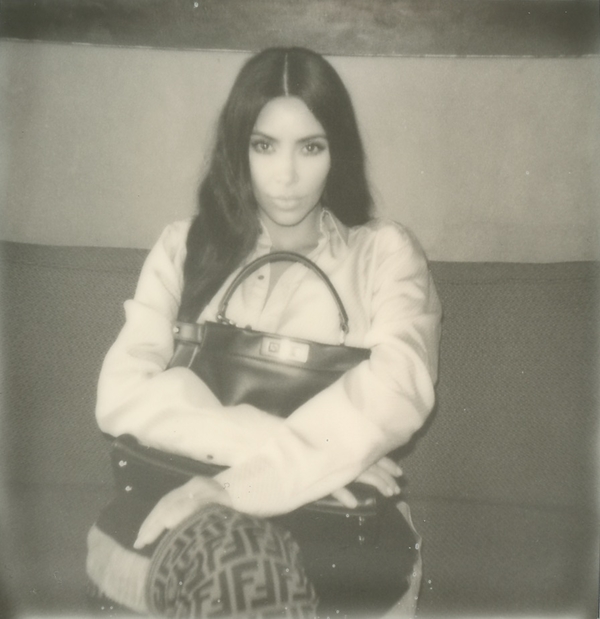
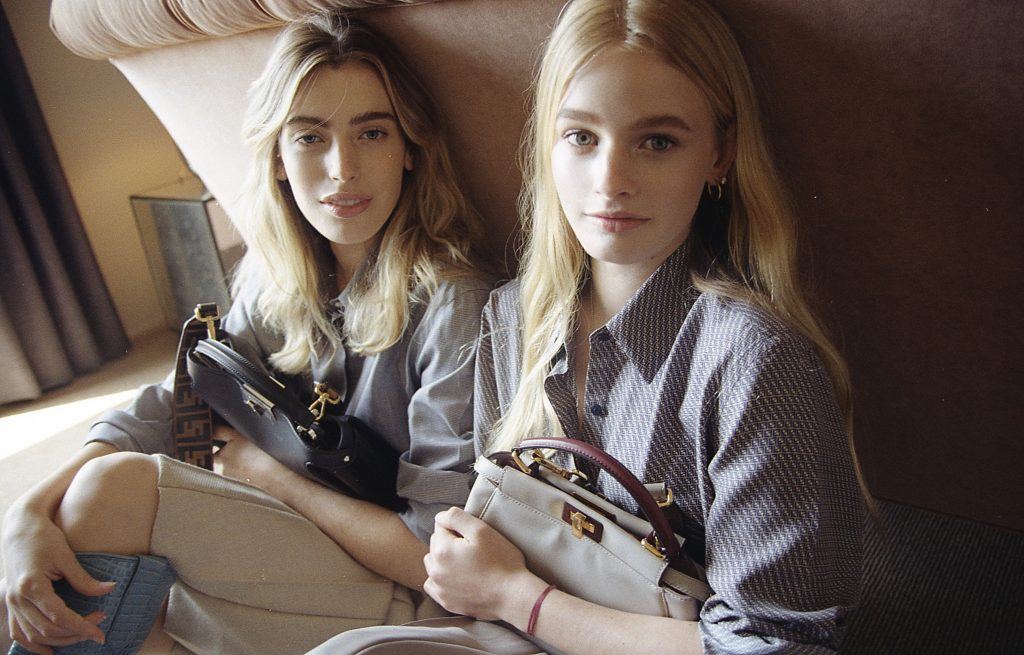
In 2008, Fendi’s creative director Silvia Venturini Fendi launched what was to be known as the iconic Peekaboo bag. Inspired by childhood tales from the game itself, the designer crafted a handbag somewhat resemblant of a face which is covered and then uncovered like in a game of Peekaboo. The two main sections of the crocodile leather-stitched bag opens and shuts in a way resemblant of the eyes.
As the brand celebrates it’s 10th anniversary since it’s launch, they unveil a new project entitled #MeAndMyPeekaboo featuring iconic women around the world. Mothers, daughters and sisters are the protagonists of these intimate short films which were released on the brands social networks in July. The short film series feature the designer along with her two daughter Delfina Delettrez Fendi and Leonetta Luciano Fendi, Kim Kardashian with her mother Kris Jenner and daughter North West, actress sisters Jessica and Krystal Jung along with other influential women. In these films the brand aims to highlight the beauty of the bond made between related women. Discover more at Fendi.
New York based photographer Chad Moore today launches an exhibition entitled ‘A New Name For Everything’ at the Asama International Photo Festival in Miyota, Japan.
The American photographer is one who is known to accurately capture the beauties of human expression and emotion in ways which often uproots empathy in his audience. He mostly focuses on the themes of family , friendship, love and youth.
“In retrospect, the most beautiful periods of my life seem to have all been momentary events. In the snaps where the power of a photograph which confines the moment is demonstrated.”
Moore will reveal 24 unseen photos from his archive in this exhibition which will run until September 30th.
Photograph by Chad Moore
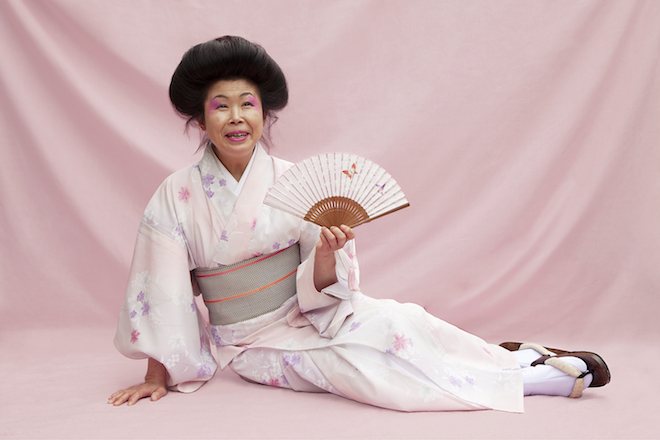
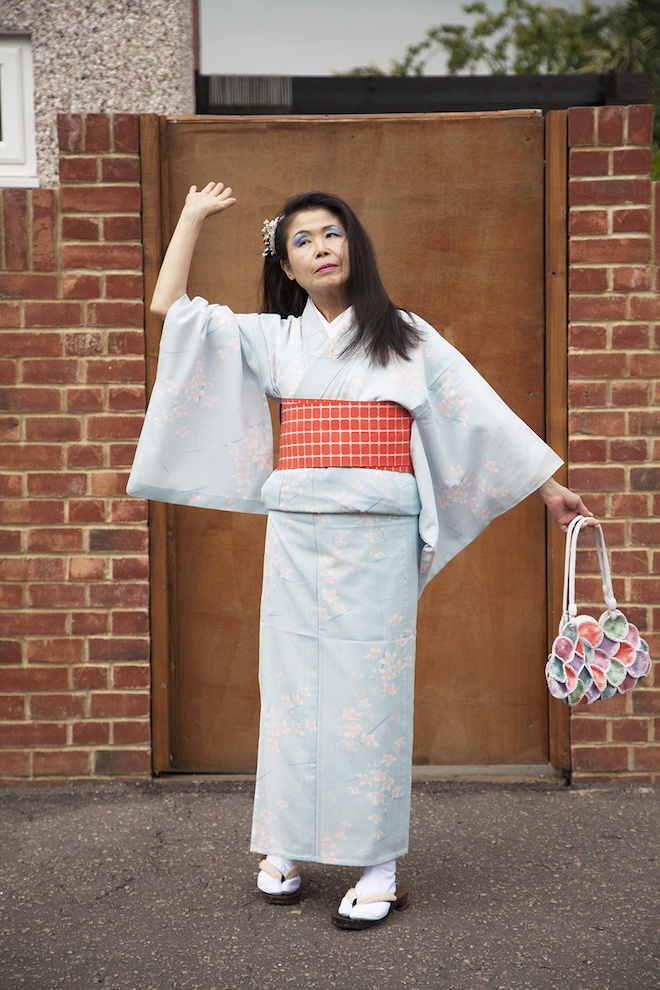
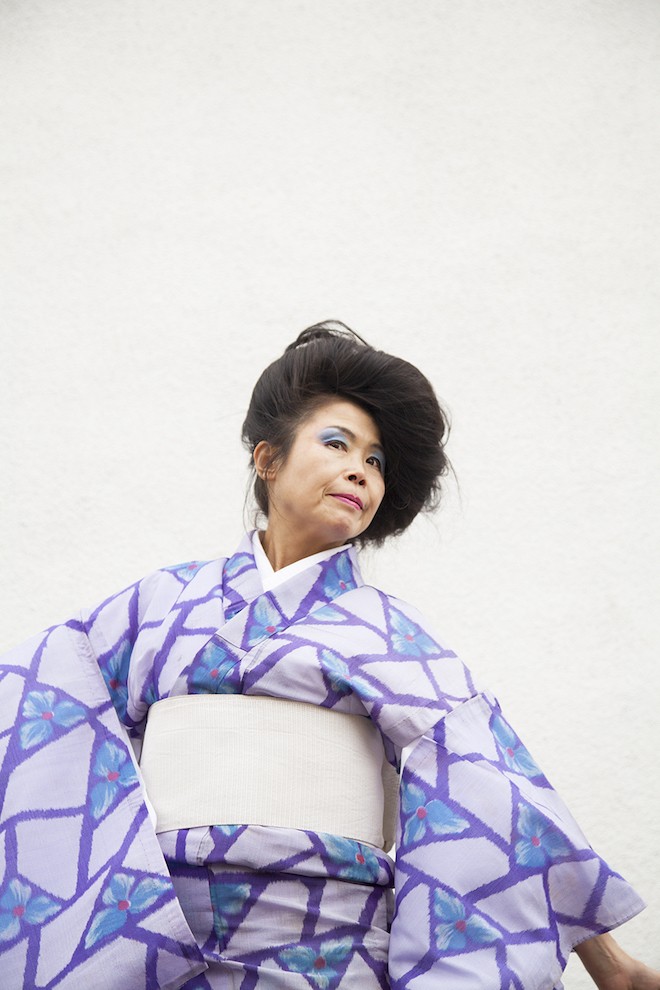
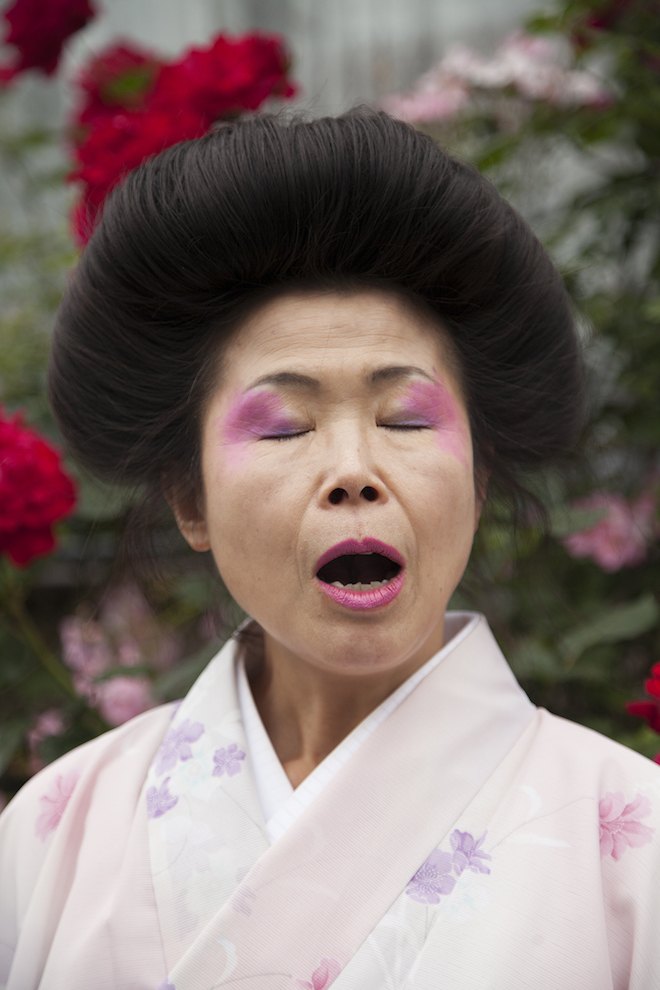
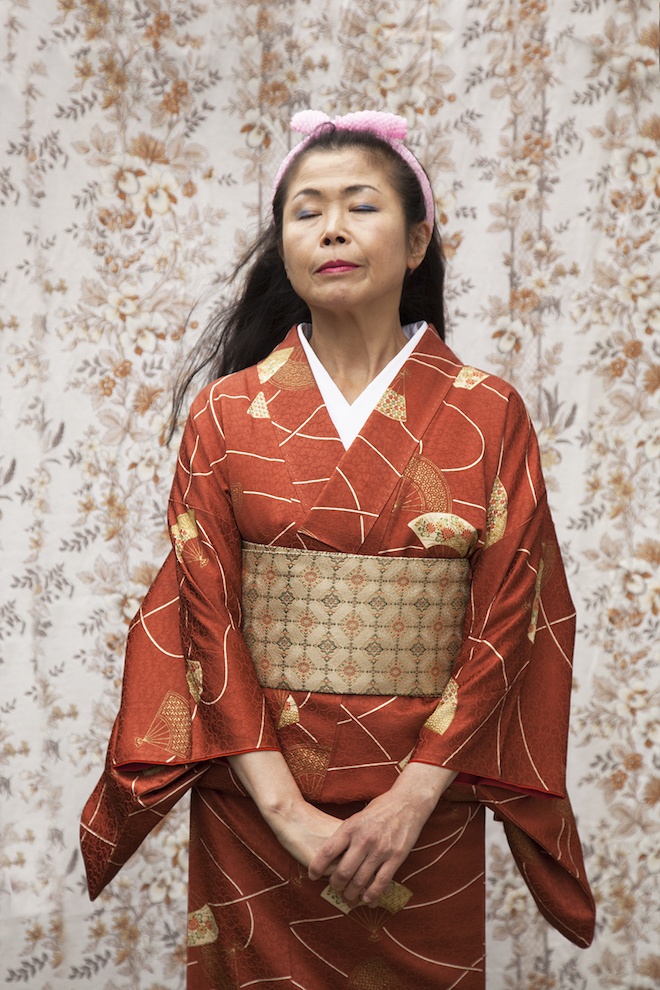
Akemi’s 100 Kimonos, by Emily Stein
In a new series of images, photographer Emily Stein creates portraits of Akemi and her kimonos. A celebration of traditional clothing and heritage set in a modern British environments.
Emily Stein explains the story behind her bright and celebratory new series.
Akemi has lived in the UK for twenty years, however her heart is truly rooted in her home country of Japan and this manifests itself in her extensive Kimono collection. As I got to know her she explained to me how she came to London in search of a safer place for her and her young daughter. She explained how in Japan women are sexually harassed frequently and how she grew up being taught to obey men. She felt she had no voice or way of expressing herself.
Each Kimono has a story to tell about her past which she is emotionally connected to.
Her kimono collection is a way for Akemi to be close to certain parts of what she loves about her heritage. Her collection of 100 beautiful pieces feels like an extension of her.
She always dresses in Kimono’s. I felt like it would be a lovely story to tell.
Show moments of sunlight, Twin meets Cecilie Bahnsen
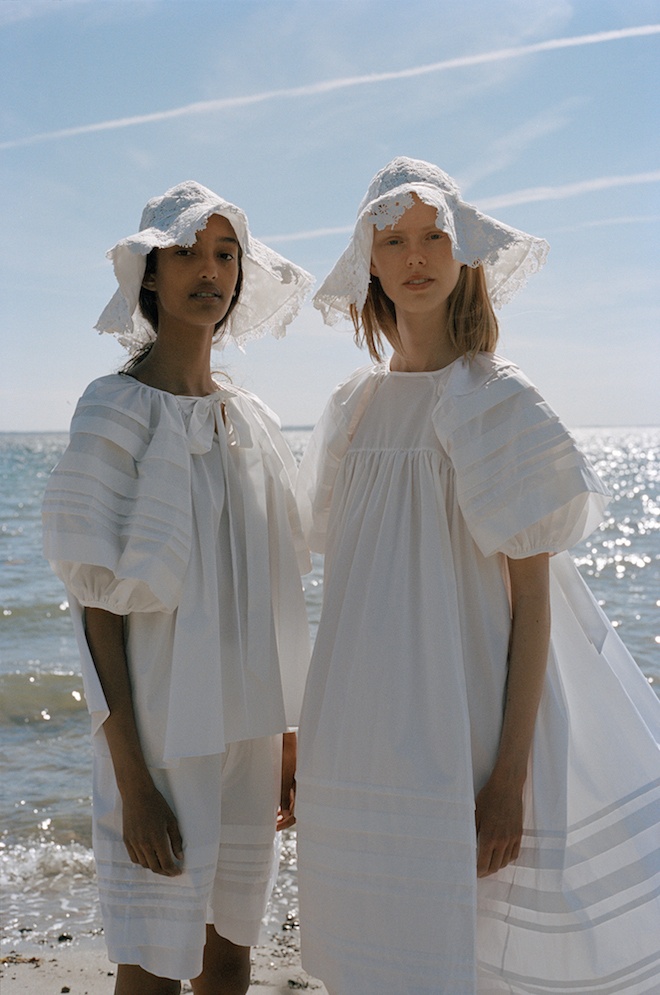
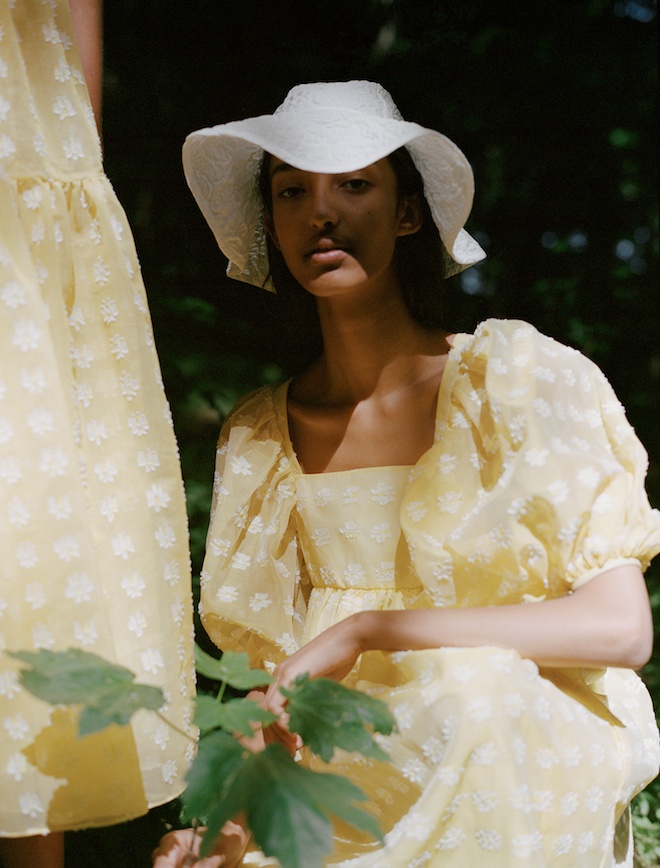
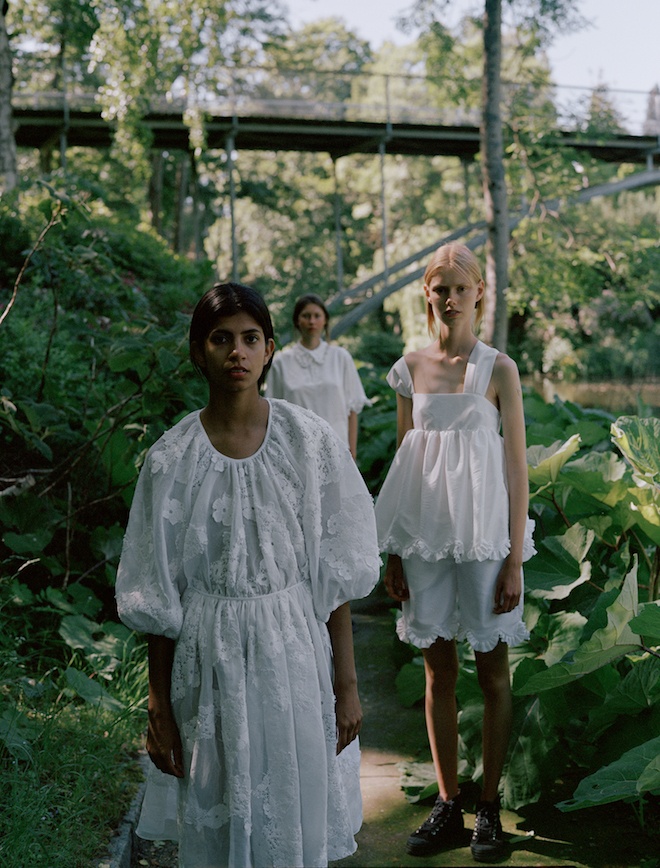
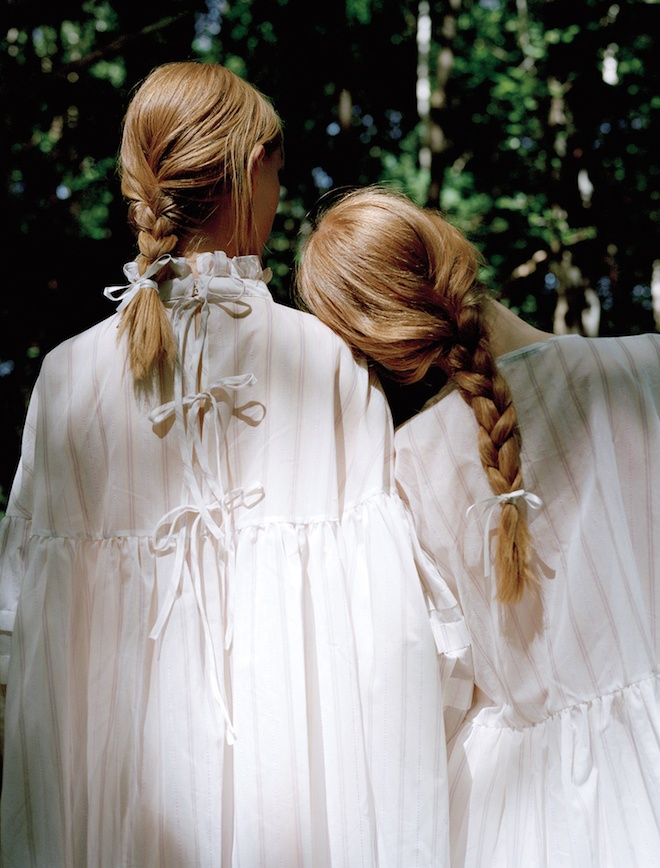
While sports and athleisure wear dominate the market, Cecilie Bahnsen’s work is unabashedly feminine and dream like. Her aesthetic feels rooted in optimism and possibility rather than perfunctory practicality.
Bahnsen’s romantic, sculptural forms have garnered a wide and loyal following and made her a name to know in the international fashion scene.
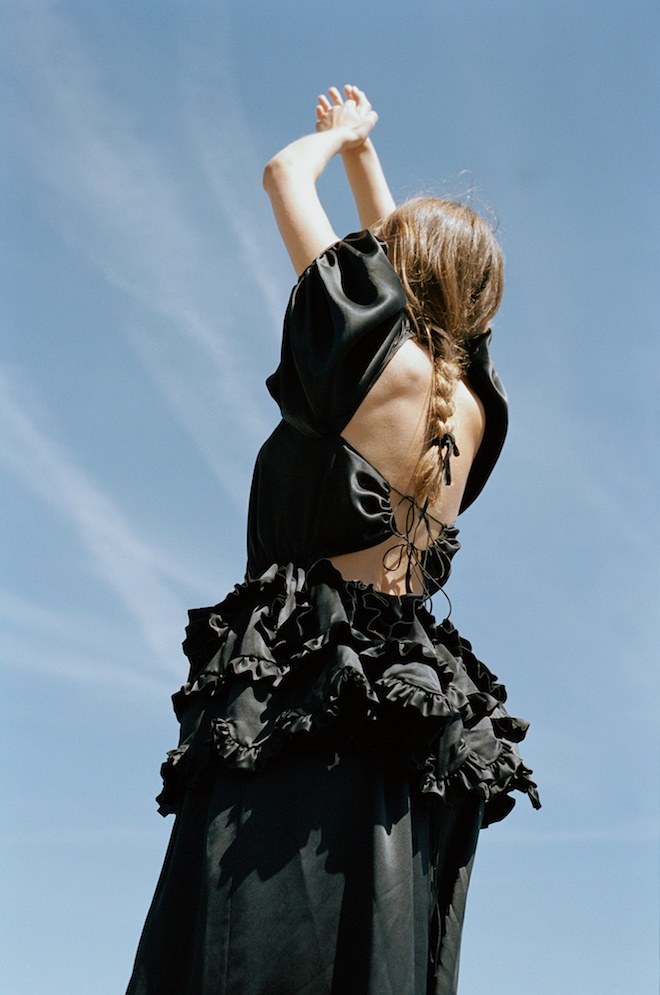
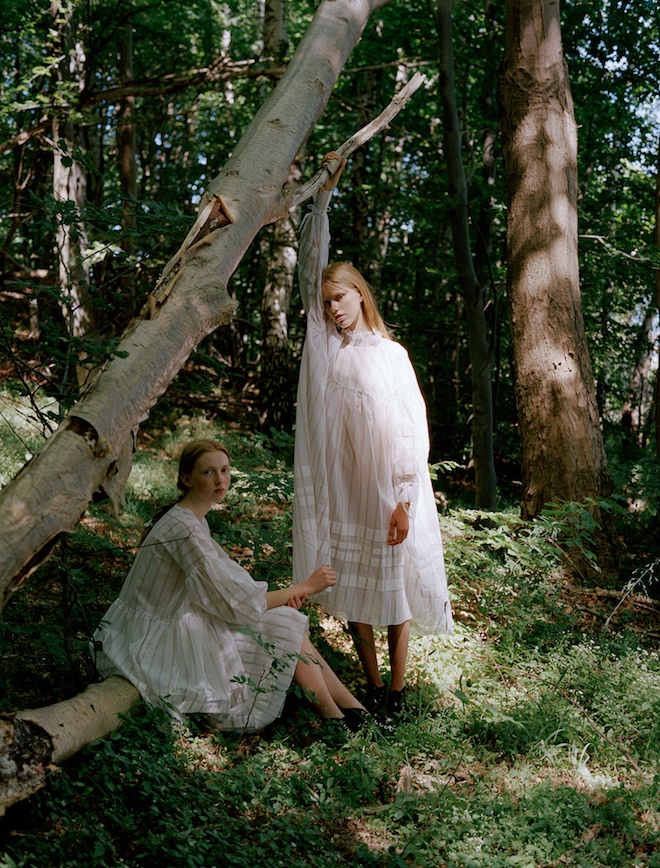
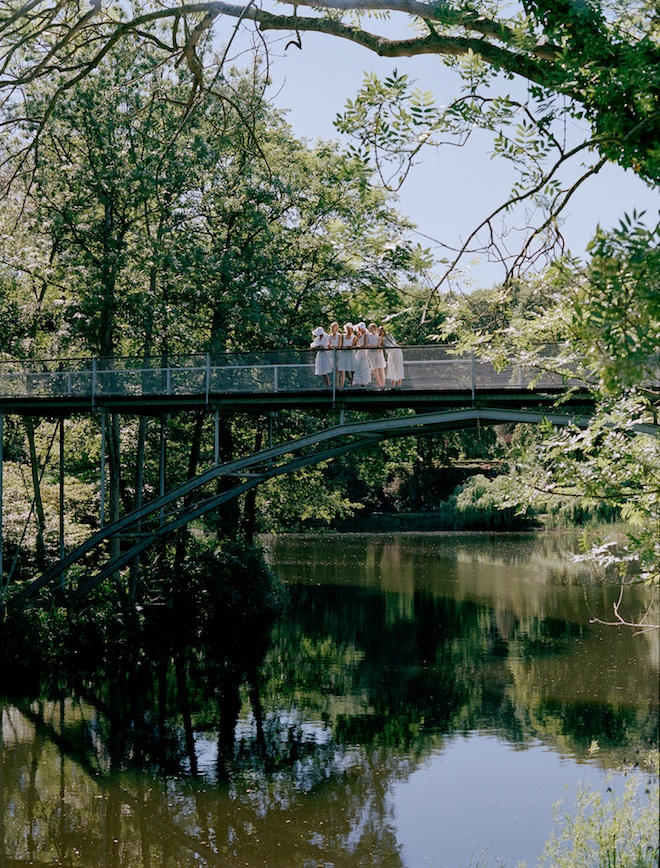
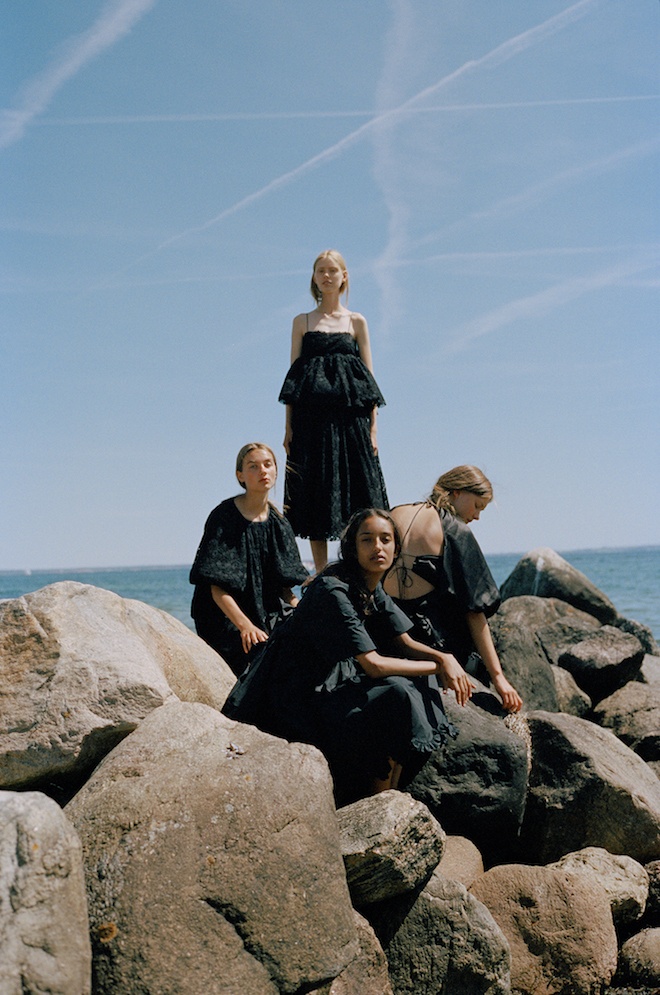
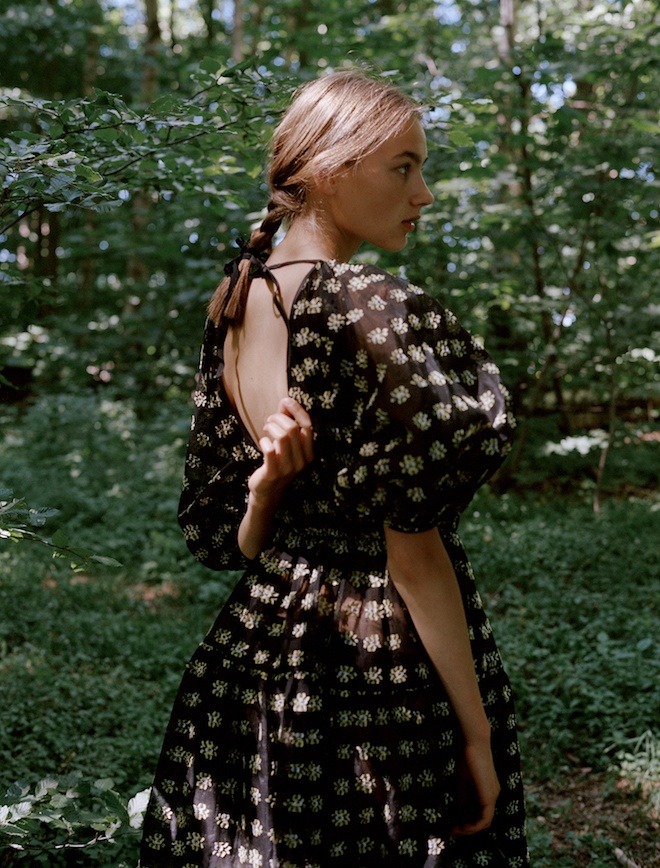
The new PS19 images, shot by Josefine Seifert, feel straight out of Peter Weir’s original 1970s’s Picnic At Hanging Rock. Photographs capture youth and a sense of freedom while also hinting at a the lurking, more sinister reality that’s never too far away.
Ahead of Copenhagen Fashion Week Twin talks to Cecilie about the evolution of her signature designs and finding inspiration in Eton collage for her PS19 collection.
Cecilie Bahnsen PS19 | images by Josefine Seifert
What about volume interests you?
I love how you can play with a great volume and yet make it feel light. We love to use the dresses as a canvas to show off the beautiful textiles and materials we develop, so for the volume, the bigger the better. I am not that good at ‘less is more’.
Were you always drawn to romanticism in clothes? Why?
I have always been drawn to femininity and a romantic way of dressing. I am a big sucker for romance, I fast-forward movies to the romantic scenes. I do though, like the contrasts that can be drawn to romanticism as well, and I always try to bring in some modernity and Scandinavian minimalism to not get carried away.
Are you inspired by sculpture? If so, what are your favorite pieces?
I’ve always taken a sculptural approach when designing clothes and so I was thrilled when we, for the AW18 show and campaign could present the collection in a setting surrounded by sculptures made by the legendary Dan Graham. In some respects, our work is similar — we each create unique pieces that come alive through their interaction with people.
The sculptural influences are woven throughout FW18’s considered series of covetable dresses in a pared-back palette of black, white, pink and green. Billowing sleeves, full skirts and floaty hemlines are all meticulously constructed, a play of precision and lightness like you see it in Dan Grahams glass installations.
Cecilie Bahnsen PS19 | images by Josefine Seifert
How do you feel that your silhouettes and aesthetic has evolved since you started?
The collections are always a study in fabric, texture, line and volume. Each season we refine and evolve the silhouettes, details and fabric to fit perfect with the seasons mood.
I think that with confidence and knowledge the level of each collection grow and the identity and the DNA of the brand get more defined. This process is so inspiring and fascinating.
Often you can’t see the development or the progression when you are in the middle of the design process and you have a lot of self-doubt, but when you see the finished collection, looks and how everything has fallen into place, you sometimes get this Wow feeling of how beautiful it all has become.
Cecilie Bahnsen PS19 | images by Josefine Seifert
Did you find it easy / natural to develop your design signature?
I think, what has now become my design signature, is something that naturally and slowly evolved from my first collections and throughout the last seasons. I like to re-use shapes and develop new ones by using my favorite features from previous design to give birth to new ones and in that way continue the collections, and pass on the DNA from dress to dress.
What have been the biggest challenges that you’ve encountered as you’ve launched and grown the label?
The speed that fashion moves in, makes it very hard to both have the time to be creative and to run a business. You need to be able to handle a lot of different jobs at the same time.
The fashion industry is moving very fast, and I don’t think it would harm anyone to slow down and consider how much we produce and be more aware of our production process.
For me it has been really important to hold on to the design DNA and create beautiful timeless pieces that last longer than a season and hopefully will be cherished by the wear for a life time.
Cecilie Bahnsen PS19 | images by Josefine Seifert
What are your favourite materials to work with, and why?
Merging tradition with innovation, we work with manufacturers in Como, Italy, to design new textiles for each collection that offer a unique combination of style, sustainability and quality.
Quilting reimagining one of the oldest couture techniques for the contemporary woman, our double-faced silk quilting is produced by our partners in Lithuania using textiles sourced in the UK.
Our embroidery is created by hand for each garment, with a bespoke process based on traditional couture techniques that offers a unique, contemporary aesthetic.
Each garment is handmade with traditional techniques, intricate detailing and uniquely designed fabrics to present a timeless expression of modern femininity.
Cecilie Bahnsen PS19 | images by Josefine Seifert
What were you interested in exploring for PS19?
The Pre-Spring 2019 collection is inspired by collective identity and the expressiveness and beauty of a group. The inspiration is a combination of the femininity and innocent aesthetic of Japanese artist Osamu Yokonami’s photo series assembly, showing the beauty and strength of the collective entity, with the masculine contrast of the school uniforms worn by boys at Eton College.
The collection represents spring in its ability to show moments of sunlight through the subtle colours palette of yellow, lavender, black and white, combined with soft and sculptural silhouettes in light materials such as cotton poplin, silk, lace and transparent layering.
Cecilie Bahnsen PS19 | images by Josefine Seifert
How would describe modern femininity vs traditional femininity – is there a difference?
I like to draw inspiration from the romanticisms in traditional femininity, but I feel like modern femininity is much more about individuality, showing your personality and expressing yourself. I feel like it’s way more easy to feel feminine while dressing masculine. It’s way more complex and open for interpretation.
Cecilie Bahnsen PS19 | images by Josefine Seifert
What are you excited about for Copenhagen FW this season?
There is always something special about Copenhagen fashion week in the summer, the entire city is buzzing with expectations and full of life. There is a very relaxed feel to it, people drink wine and arrive at the shows in puffy dresses on city bikes. I love that.
Fondazione Prada: John Bock , The Next Quasi-Complex
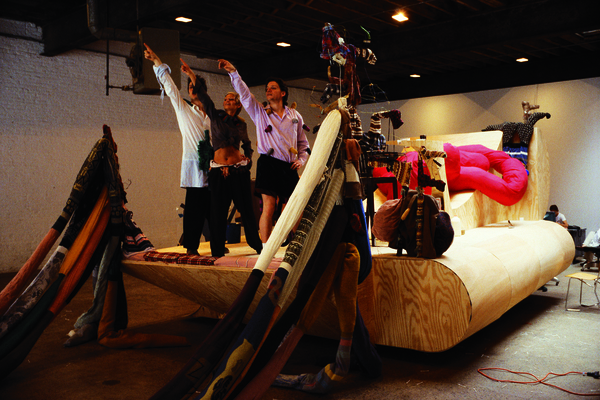
Fondazione Prada’s most recent display features the work of German multi-media artist John Bock whose work explores the themes of dark comedy, violence, music, fashion and fragments of everyday life all fused into one space. The exhibition,which takes place from July 18th to September 24th on the ground floor of the Milanese venue is aptly-labeled “The Next Quasi-Complex.”
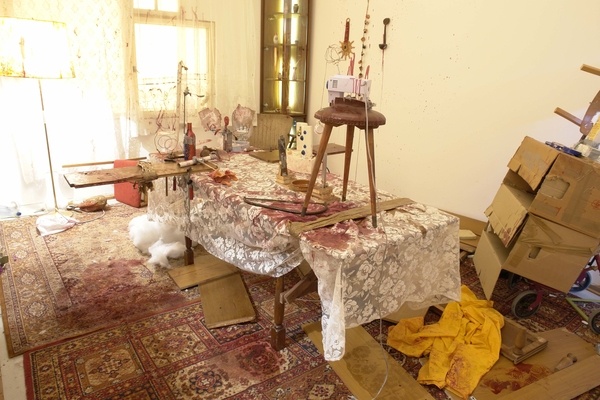
Lütte mit Rucola (2006)
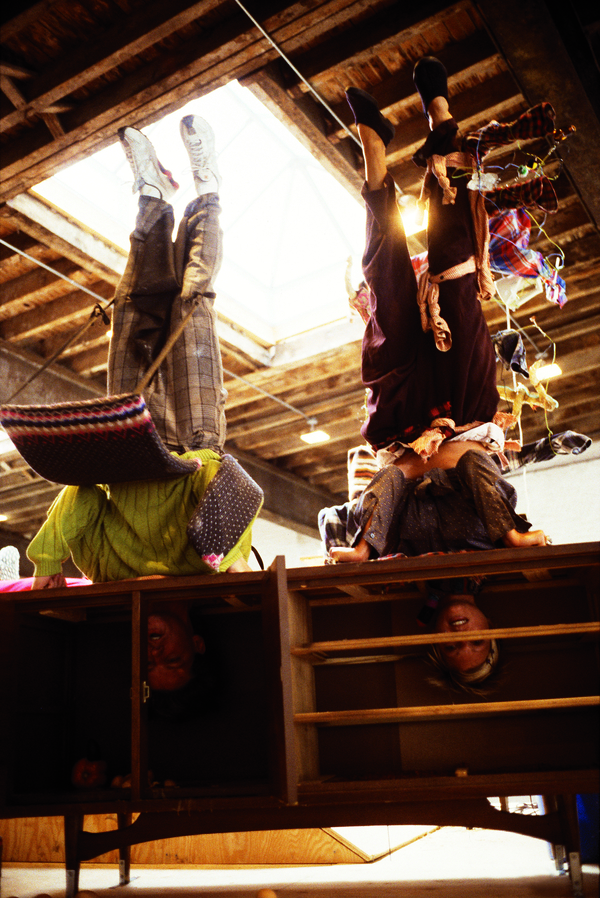
Bock, an artist known for his performances which he calls lectures, curated this project in which he transformed the ground floor of Fondazione Prada’spodium into a surreal space of his imagination using furniture, debris and everyday objects combined to create what he describes as an illogical universe. In this particular exhibition the artist also includes two installations from the Collezione Prada: the mobile stage of When I’m looking into the Goat Cheese Baiser (2001) and the living room of Lütte mit Rucola (2006). During his lectures, John invites his audience into to be involved in this process of fabricating a new reality. His next live lecture is set for September 8th at the foundation in which he will collaborate with actors Lars Eidinger and Sonja Viegner to help animate the mobile stage of When I’m looking into the Goat Cheese Baiser.
When I’m looking into the Goat Cheese Baiser (2001)
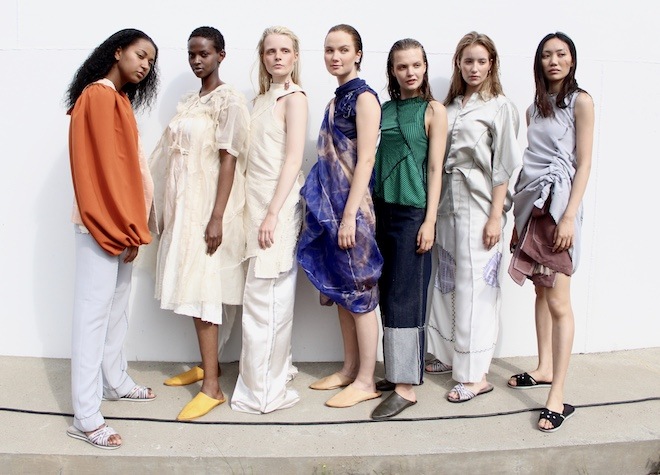
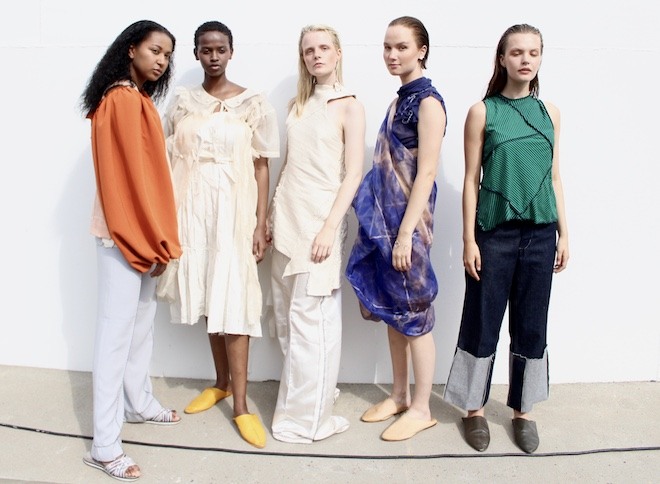
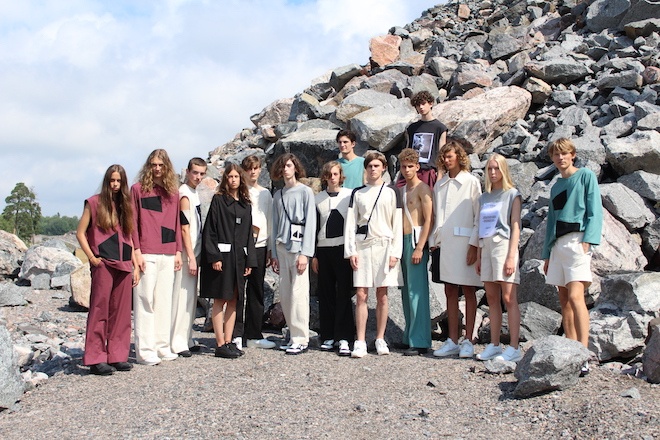
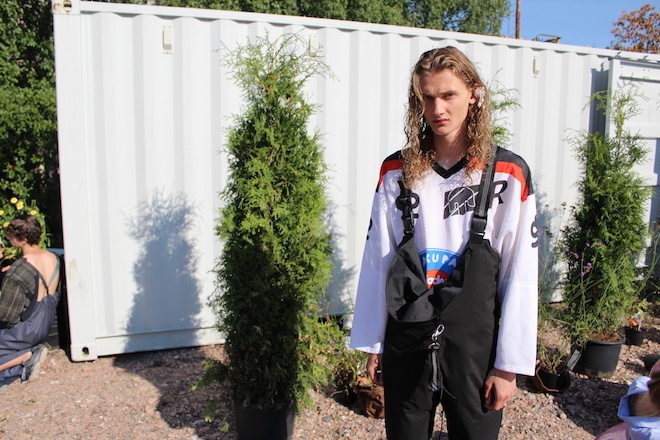
Margaret Howell AW18 by Jack Davidson
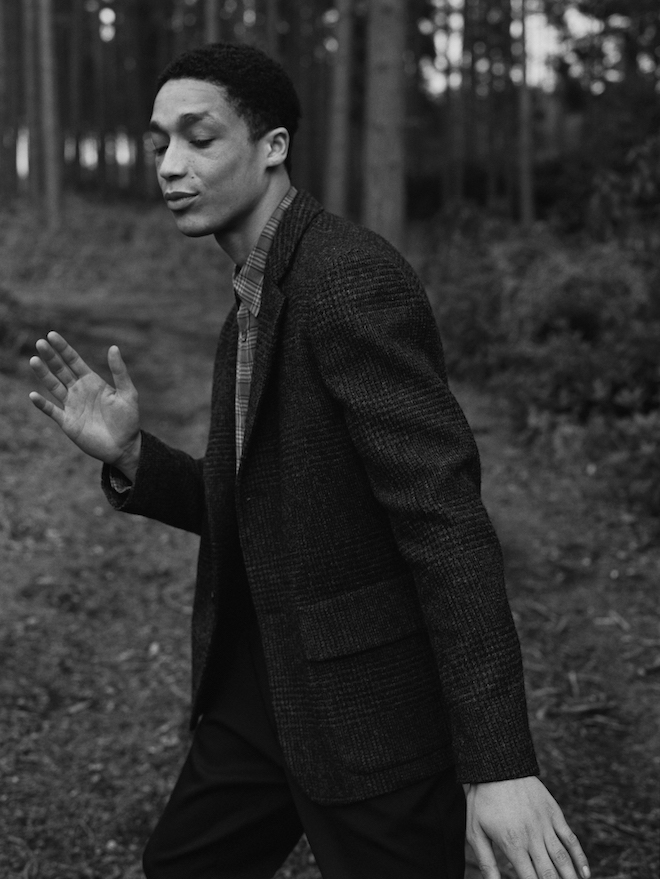
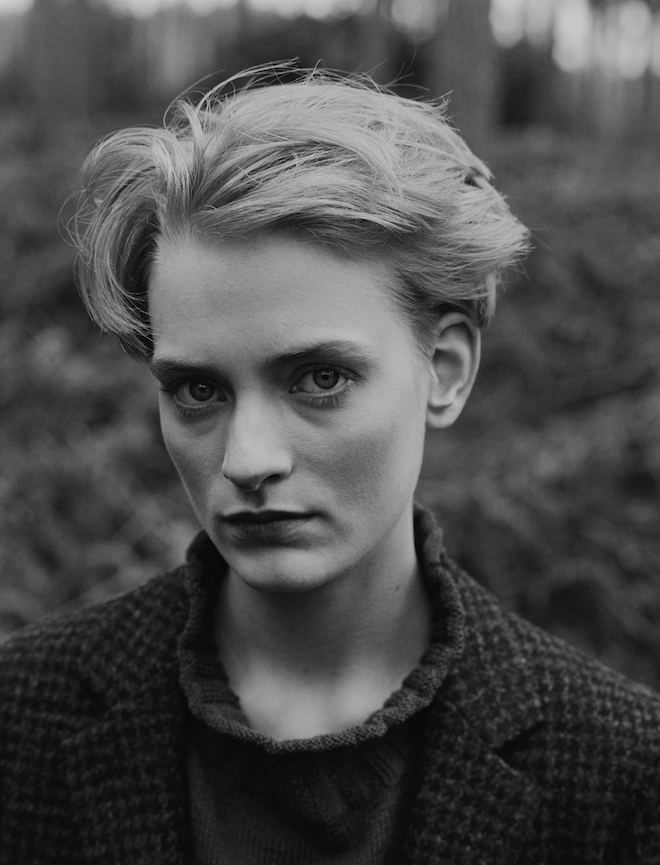
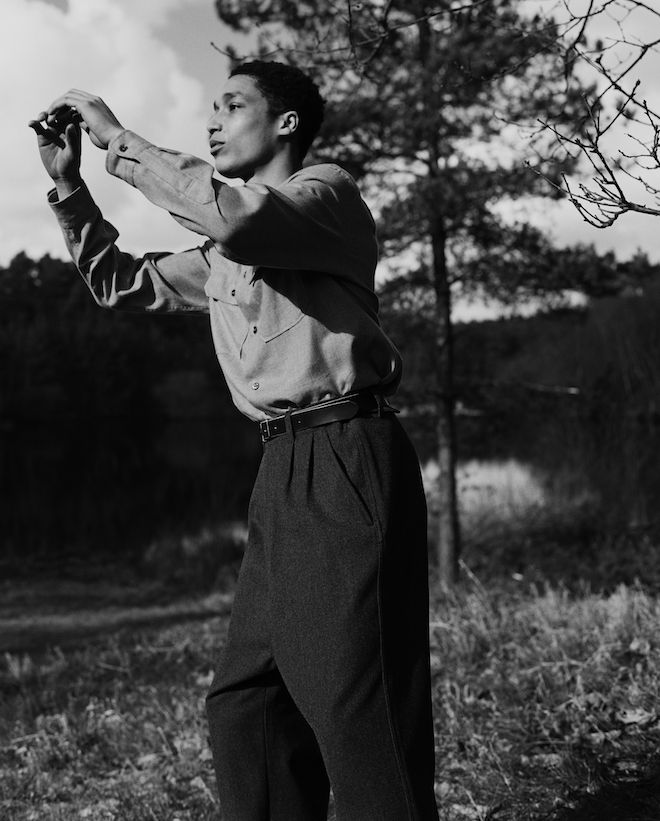
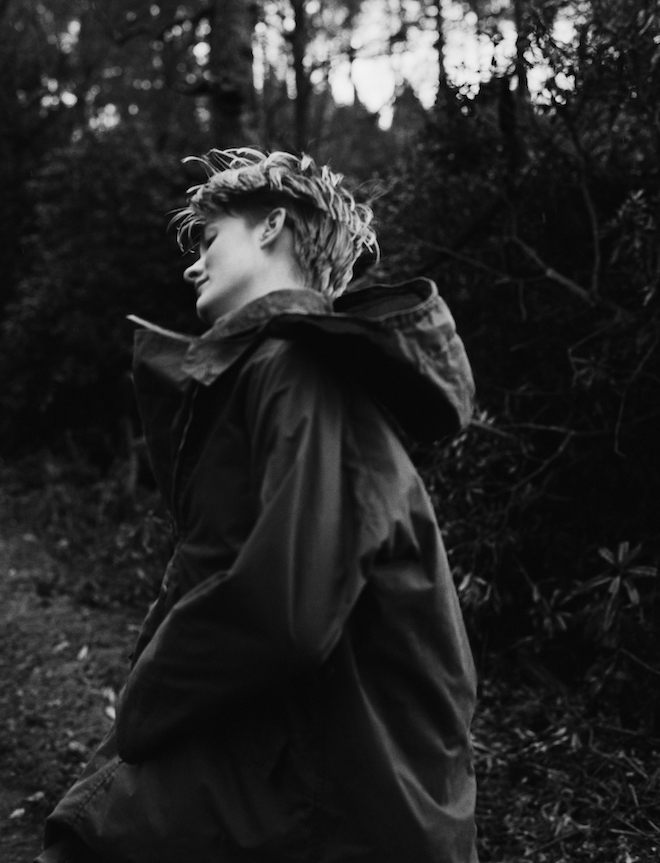
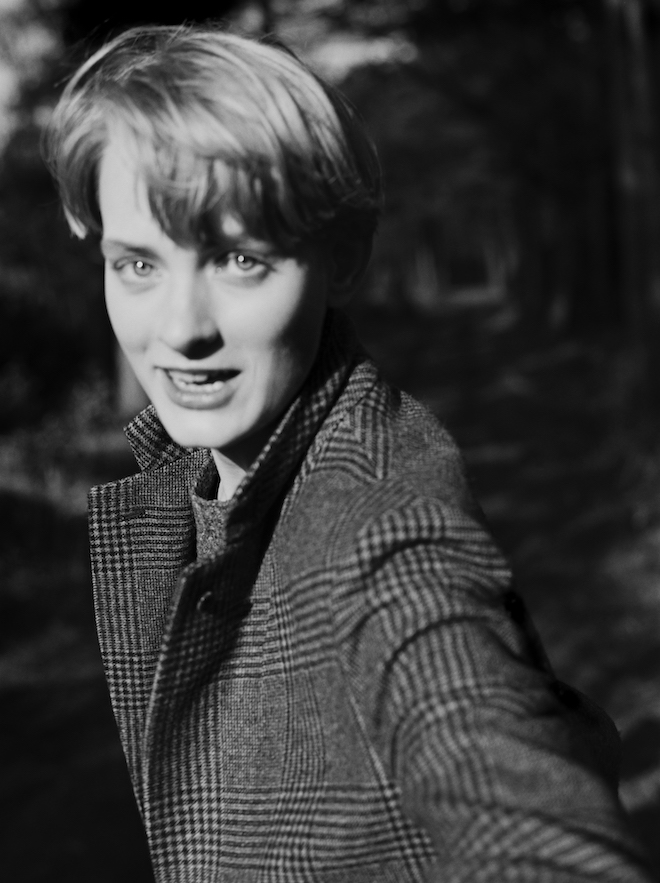
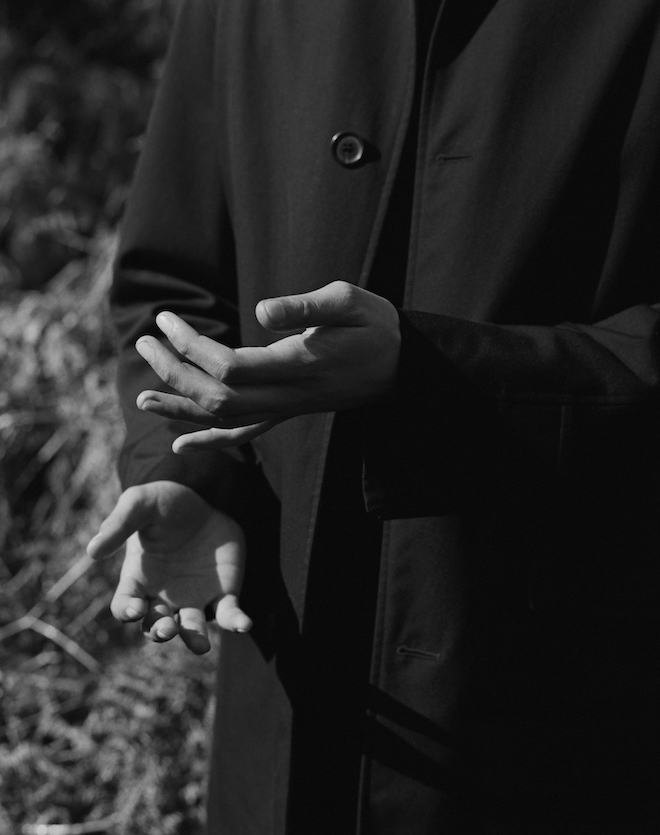
Jack Davidson gets behind the lens for the Margaret Howell AW18 campaign. Shot in Farnham in Surrey images bring the best of Howell’s refined nostalgia and eternal relevance. Black and white portraits fuel the romantic lilt and emphasise the warm, elegant tailoring at the heart of the season’s collection.
In Helsinki, International Talents and Sustainability Shine
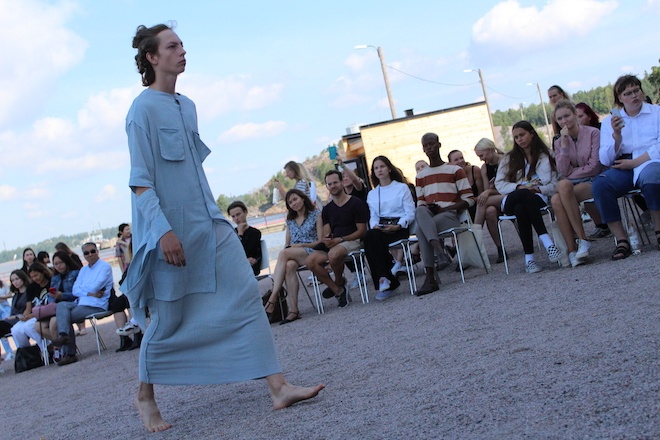
Helsinki Fashion Week, now in its third year, is comprised of local and international brands who present their collections at the annual event. This year’s guest designers hailed from Italy, the Philippines, and Sweden, amongst other nations.
The common thread linking the brands is a sustainable approach. The event took place in a former oil silo, Öljysäiliö 468, on the outskirts of the city. The founder, Evelyn Mora told me, “the goal is to change the mindsets of people who work in the fashion industry about sustainability. We want to introduce sustainability not as a niche or a trend but as a true must, and not only in the fashion industry but in all the industries.”
The vast majority of designers that showed in Helsinki this year have yet to synergise sustainable practice with creativity. However those who placed creativity ahead of sustainability were the ones worth paying attention to.
These designers exhibited a prowess for craftsmanship, a discernible design signature and potential for future development. We hope to see much more of them in the seasons ahead.
_ _ _
Carl Jan Cruz (The Philippines)
When Carl Jan Cruz took his bow, the rapturous applause spoke for itself: it was a tremendous show.
The Filipino designer, whose work is currently sold at Maryam Nassir Zadeh in New York, conjured a distinctive mirage of Manila, the capital of the Philippines. He focused on artisanal craftsmanship, connecting it with a Manilan sensibility. It was an artful display replete with intricate embroideries, beautifully juxtaposed patterns, airy silhouettes, and patchwork. It was characterised by an uncomplicated effervescence but the cut of the fabric was distinctive, playing on asymmetry and obscure shapes.
Furthermore, Cruz’s diverse cast included models, family, and friends. The casting was celebratory of age, ethnicity, and gender. The casting felt organic, and not an attempt at baiting Instagram likes and articles centred on diversity.
Carl Jan Cruz
_ _ _
Airvei (France)
Julien Goulard’s Airvei (pronounced “airway”), a streetwear brand, reminded this writer of A-COLD-WALL* for its sociological exploration and poetic aspirations. Both men also come from other disciplines—Ross’ background is in graphic design, Goulard’s is in architecture and fine art. Fashion came second.
Goulard’s gambit is an ethical approach. He toyed with upcycled airbags and collaborated with ethical footwear brand Rombaut to create a collection which married form and function.
Streetwear is stagnating which is why it takes someone like Goulard to experiment with some new shapes. Amidst the sea of Off-White and Vetements, to distinguish oneself is a difficult challenge but Goulard’s work was a welcome addition amongst the more familiar tropes. Perhaps denizens of the streetwear world should look to Airvei its eco-friendly approach instead of other labels that bastardise the archive of Helmut Lang and call it their own. It was a generally accomplished outing from the Frenchman.
Airvei
_ _ _
N&S Gaia (India)
“I like to push the boundaries of the feminine silhouette,” said Sidarth Sinha, the New Delhi-based designer behind N&S Gaia, whose womenswear is defined by surrealist shapes and feminine touches. Ruffles were a dominant motif throughout the show, undulating as the models strutted past. The way they were cut was rather strange but it was exciting.
He superimposed images of sculpture and architecture into digital prints on the dresses which added a necessary secondary plot point. Sinha, who traveled to Italy for a fashion prize ceremony, before Berlin and Helsinki for fashion week, will be presenting at London Fashion Week in September. One hopes he can expand his dialogue in time.
_ _ _
Ellinor Brännström (Sweden)
Streetwear is rooted in masculinity but Swedish designer Ellinor Brännström is sending tremors throughout the landscape with work that deconstructs gender conformity: there were lace bicycle shorts, architectural puffer jackets, hooded lace jackets and cloak-like raincoats—it teetered between delicacy and toughness.
“It’s inspired by my interest in 70s punk, my love for Federico Fellini movies and the concept of gender fluidity which is very important to me,” Brännström explained.
Brännström paints herself as an artist more than a designer. It’s something readily apparent in her unconventional approach to tailoring and silhouettes which felt at once grounded in reality but also futuristic and inventive. And, of course, she is passionate about sustainability which contrasts with many other streetwear brands which centre themselves on mass-consumption.
“The fabrics are made from recycled plastics and a revolutionising dying technique reducing the use of water,” the show notes read. “Other parts of the collection are upcycled garments from charity shops, deadstock trims, and fabrics with materials of recycled properties.”
Ellinor Brannstrom
_ _ _
Chain (Argentina)
Lucia Chain called her Spring 2019 show, ‘Los Feriantes,’ after a local daily market in Buenos Aires where her father worked. She was “inspired by the tone of the light, the smell in the air, the colours, the sound of the trees and the voice of the local producers.” It resulted in a collection that was tinged with nostalgia, the soft colour palette and the loose silhouettes were reminiscent of something light, delicate, and incredibly personal.
The fabric used was raw cotton made by an Argentinian co-operative which emphasises her interest in the circular economy and supporting local producers. It wasn’t a narcissistic personal reflection rather a positive one which is hoping to have a positive impact on the local economy and the environment.
Her colour palette was limited and perhaps she should consider expanding on it but in terms of cut and shape her show was emotional and beautiful.
Four years ago, Nigerian author/activist Chimamanda Ngozi Adichie published a book length essay titled “We Should All Be Feminists.” In summary, the book is an outstanding revelation which aims to give a definition to modern day feminism and it’s relevance to society.
In 2013,Adichie delivered a TEDx Talk on the subject which was sampled by Beyonce in her 2013 hit single ***Flawless. This boost of popularity as an author/activist introduced to pop culture was just in time for the book’s launch.
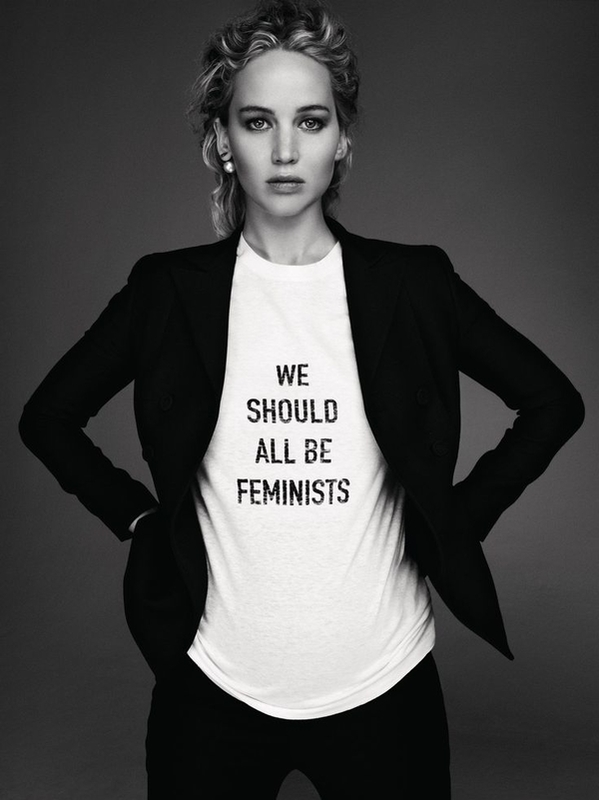
In 2017, three years after the launch, for her debut as the first woman to take charge as creative director of french fashion house Christian Dior, Maria Grazia Chiuri presented her SS17 collection which included a t-shirt aptly-bearing the title of Chimamanda’s essay , “We Should All Be Feminists.”Since then, the t-shirts have gained popularity and have been sported by celebrities and influencers such as Rihanna , Jennifer Lawrence, ASAP Rocky, Chiara Ferragni, etc. To say this trend was a success is a gross understatement.
And as we have witnessed time after time, messages being told through fashion tend to often have quite an effect: dating from as far as back as the 80’s when fashion designer Katharine Hamnett wore a T-shirt in protest against nuclear missiles in her meeting of former British prime minister Margaret Thatcher. More recently Black Lives Matter protesters marched through American streets bearing variations of the slogan across their chests after the Trayvon Martin injustice, and who can forget the jacket which read “I Really Don’t Care Do You?” worn by Melania Trump on her way to visit a migrant facility in Texas.
While these garments might carry notes that can contributive to a mass shift in society, as anything that involves the internet, there are pitfalls of going ‘too’ viral.
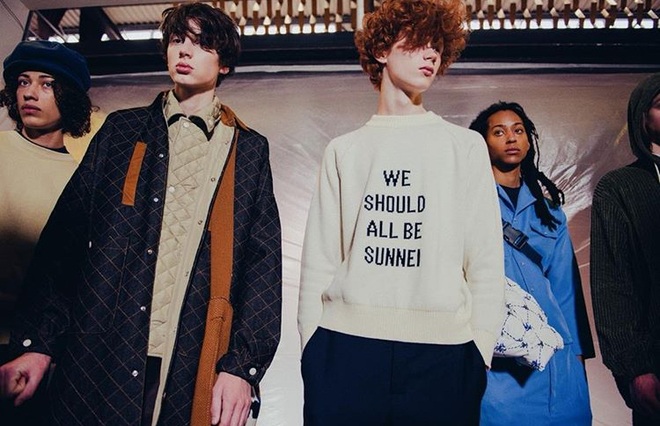
Two seasons ago a version of the We Should All Be Feminists t-shirt was seen on the Milanese runway for the budding menswear Sunnei – an innocent play on words, altered to “We should all be Sunnei”. One might argue that such an artless move could do no harm.
Sunnei FW18 | credit: Giacomo Cabrini
However, this is where the watering down of an important message begins. Now personalised versions of the book title can be spotted on influencers, fans etc. and although the intent might be innocent, the message is undoubtedly weakened.
It’s like playing Chinese whispers. In the end, you risk losing parts through transition, but in this case, its much more important than a game. When Black Lives Matter protesters created T-shirts with the slogan it was to emphasise the fact that black lives matter, not to leave room for “All Lives Matter” spin-offs which disregarded and disrupted the original message, or when Melania Trump wore the jacket that read “I Really Don’t Care, Do You?” some might say the First Lady was genuinely sending a message henceforth the internet’s effort to change the writing to something positive was besides the point.
So I believe it’s safe to assume that when Chimamanda Ngozi Adichie penned this essay, it was for the purpose of speaking out against the heinous acts of sexism, and likewise Maria Grazia Chiuri when she incorporated the unaltered title as apart of her collection. So might we be reminded that protest t-shirts and whatever other forms of fashion used to send messages, are not for the purposes of individualisation or modification, regardless of innocent intentions, but for the sole motive of emphasising an important message using an art form which can be easily outspread.
WEAR: An Opera told through fashion about the end of the world
An immersive sci-fi fashion presentation at the wild, impossible edges of contemporary art music; an exploration of how objects are used to create our own truth; Waiting for Godot meets Lulu via fashion week for the post-truth era.
UU studios have created an opera entitled WEAR with keen hopes to traverse time, space and the audience’s impression of what the theatre can be.
The storyline? A designer prepares for their final show against the backdrop of the apocalypse. When a colleague arrives to interview them about the work on display, it sets in motion a series of recollections of their lives and the work that gave these meaning. In a series of creative re-imaginings the two reconnect and, in doing so, defy the end of the world.
The tale is merely a metaphor for a greater discussion being posed by the UU Studios founders: Gemma A. Williams and Alastair White. With a background of fashion curation and publications, alongside White’s work straddling politics, science and music, both White and Williams are here to utilise the stage as a sounding board for the collision of a lot of thoughts that are pounding through their heads. Opera is a field that is still shackled to its traditions, so it will be refreshing to see what WEAR unfolds in storyline, execution and intent.
The gumption of WEAR is ambitious – and anything that carries a cross-pollinating appetite should be celebrated for its need of a (creatively concerned) different speed. Twin contributor Isabella Davey talks to Williams and White about WEAR’s forthcoming debut and how an opera woven like fabric can stand for as a metaphor for identity, confusion and decay.
How did wear come about?
AW:We met through a mutual friend and were instantly fascinated with one another’s work. At the time I was in the process of sketching ideas for an opera about time travel that could exploit art music’s ability to manipulate the listener’s experience of temporality. In one of many late night discussions with Gemma it struck us both how interesting it might be to set it in the world of fashion. Fashion – it seems to me, at least – is, like music, specifically concerned with time. On one hand, it is fleeting and ephemeral, a constant flow of changing trends with their momentary beauty made even more vivid by its impending obsolescence. On the other, clothes – great clothes, that is – have this magical power to almost freeze their wearers in time and protect them from the rot and decay of disintegrating life as though together they had become an artwork. I think, tentatively, it is in the contradiction and interplay between these opposing aspects that fashion derives a meaningful beauty. The desire to explore some of these ideas, and their philosophical implications in music, poetry and dance, was where WEAR began.
WEAR opera | image credit: Robert Rowland
What attracted you to opera?
GAW: I think opera has similar challenges to fashion in that people are often scared by it and therefore actually miss out on the beauty of it. On a very practical level, I think that increasingly exhibitions are becoming massive blockbusters; the curator has been overtaken by fashion brands using in-house teams to convey their own very controlled commercial message and this means that rather than allowing an external thinker into the process to extract a narrative they are becoming very set promotional events. There is very little room to experiment especially with budgets so when I met Alastair I thought this was a really exciting aspect to explore and develop. It’s also never actually been done before!
How do fashion and performance interact and relate to one another?
GAW: Well they are intrinsic. From our first understanding of performance it’s embedded in the visual – Bowie is a prime example and the very best, ground-breaking artists play with this. Also, for me it’s about emotion – something incredibly difficult to convey in an exhibition but immediately unlocked in music, performance or fashion.
Why I’m particularly excited about WEAR is that we haven’t simply dressed the models: fashion inspired the construction of the music so it’s an opera that’s been woven, like a fabric.
What do you hope the audience will take from wear?
AW: WEAR isn’t so much a story about time machines as it is about a world where they make true stories no longer possible. Multiple timelines are a contradiction in terms – they couldn’t exist side by side as the current Star Trek reboot and continuation have tried to imply. Rather, they would be experienced as a constant erasure and reworking of history. I hope it works as a metaphor for the modern world, where the past seems so distant from our amnesiac, ever-modernising present, and the fact that we can now use the contemporary excess of information to justify almost anything. I suppose I hope that people take that the only way forward from such a moment is not through the dull, methodical reconstruction of the past, but the possibility of something totally new, something utterly unexpected – that no one had thought possible before – that didn’t need to happen – that was, until now, in this shifting, tumbling present, impossible to imagine. It’s only in this that we can re-light radical politics and art towards their revolutionary efficacy.
What was the thought behind the name?
AW: A pun that fortunately combines a few of the opera’s themes – identity, confusion and decay.
GAW: Also, our company name is a pun, pronounced double u. We like puns.
WHAT CAN OPERA LEARN FROM FASHION AND FASHION LEARN FROM OPERA
GAW: Fashion is adept at remaining relevant in how it pushes the boundaries of a vast array of different contexts. The most provocative designers build a mix of philosophy, performance and fine art into their garments and collections but in such a way that they are still commercial pieces that can be worn on the body.
AW; Opera, by contrast, is hamstrung by an industry built on museum-piece regurgitation of the past at the expense of new work. It survives by breaking out of the opera house and fighting its way back to the cut and thrust of the real world, full of all its confusing exhilaration and cheap, strange ugliness. The challenge is not to ignore these factors, but rather to reconcile them somehow with the beauty of art and, in this, the possibility of a better future.
What is next for UU Studios?
GAW: For now we want to concentrate on touring WEAR globally, potentially programming it into fashion weeks and events. Our aim is to collaborate with a different designer in each different city, making it incredibly special each time and visually different. Alongside this we have a lot of really cool ideas so it’s pretty exciting. We are writing a crime-horror opera based in a coastal town which has hilariously ended up with the working-title of ‘The Fish Opera’.
Rosetta Getty and Hayden Dunham’s Tribeca Collaboration
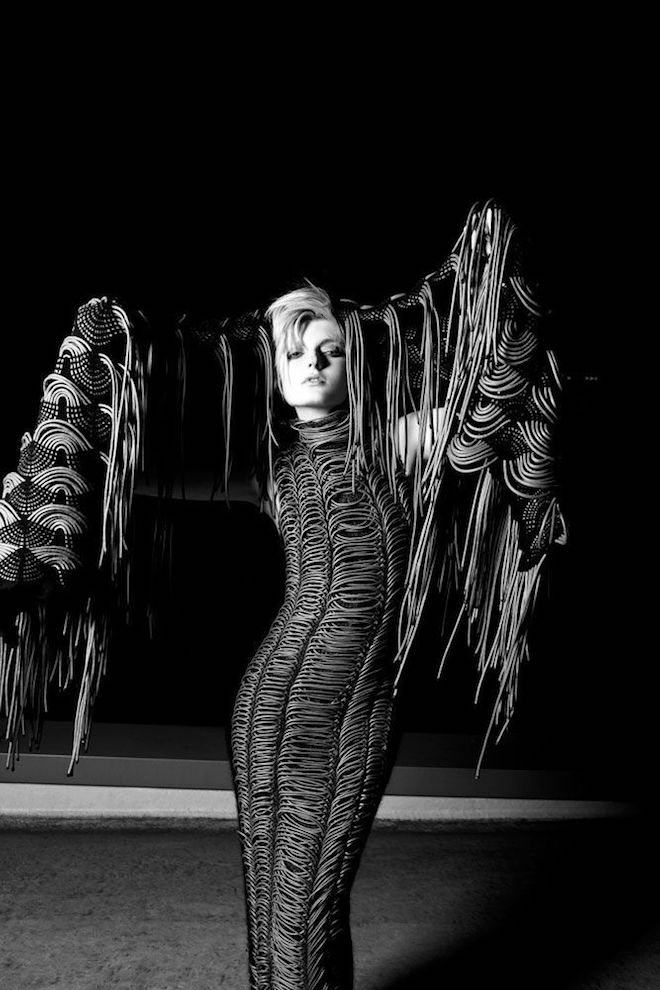
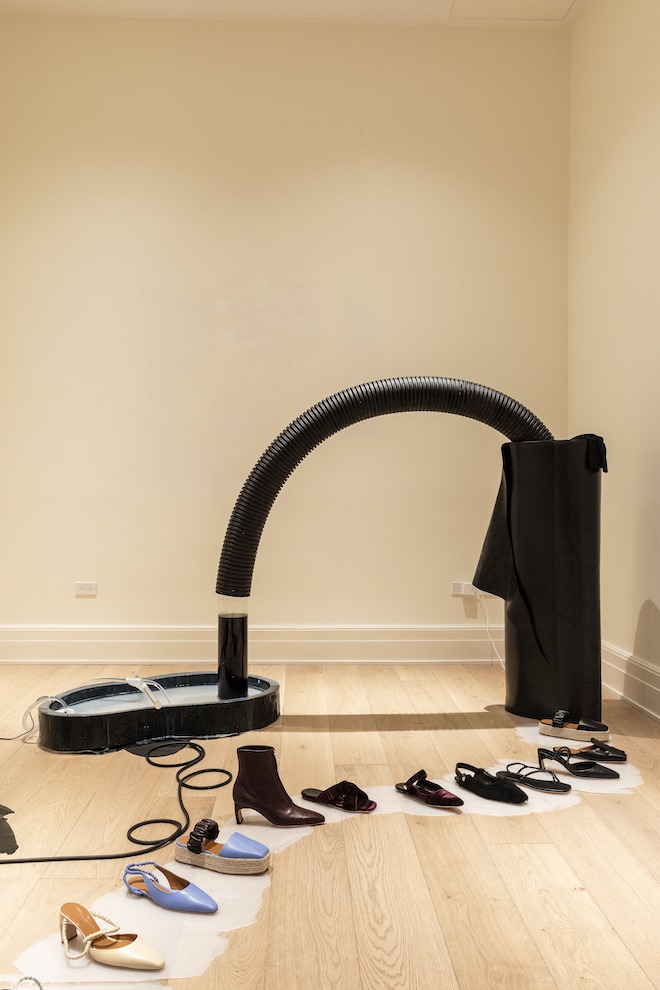
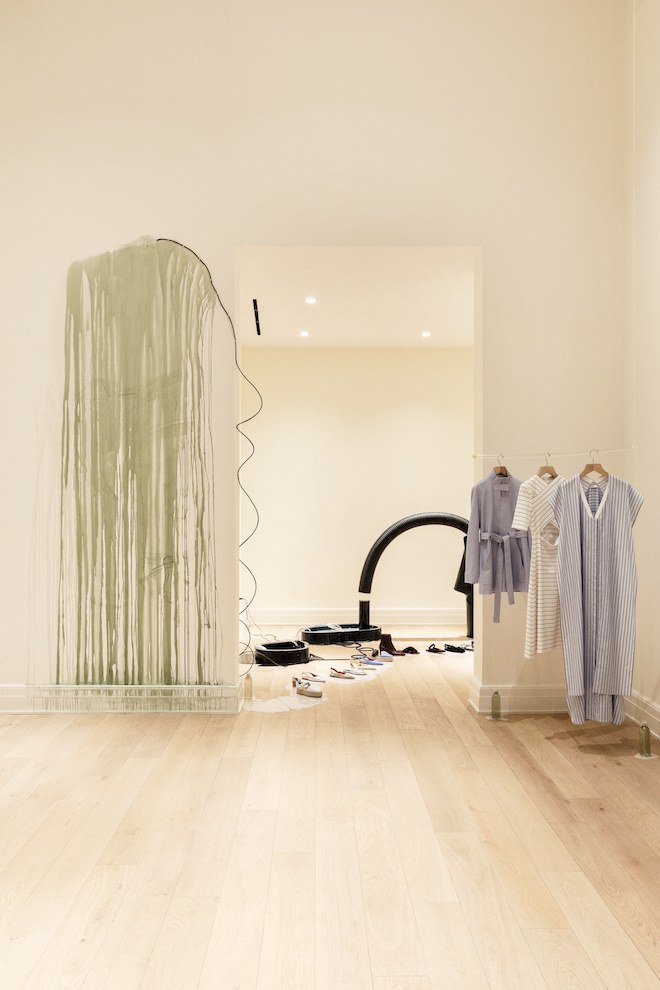
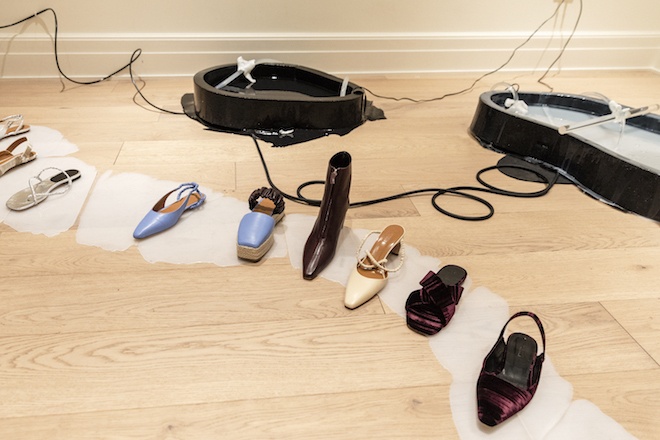
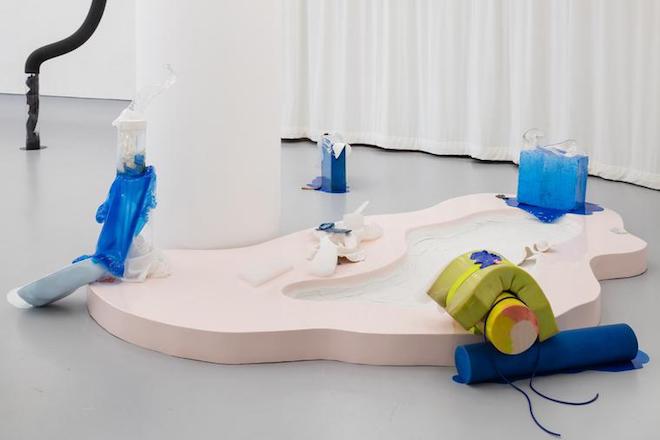
Clothing designer Rosetta Getty has teamed up with artist Hayden Dunham, to create an installation in her Tribeca studio space, also incorporating Dunham-inspired elements into into her own Resort 2019 collection. Each season, Getty selects a young female artist to collaborate with in this way. In the recent past these have included acclaimed artists Alicja Kwade and Analia Saban.
Dunham’s work investigates the relationship between the hard and soft architectures of building and body, embodying ideas of transformation and the process of facilitation. By working closely with Dunham, Getty began to record and understand her approach to sculptural processes, which is scientific and methodical. In response to this, Rosetta has created Resort 2019 in much the same way, working with unusual fabrics like laminated water repellent cotton to create a truly unique collection.
Twin contributor Sarah Roberts spoke to both Getty and Dunham about their artistic exchange.
Rosetta
How did the collaboration between you and Hayden come into fruition?
I have been interested in Hayden’s work since first seeing her exhibition at Red Bull Arts in 2016. I later visited Hayden’s studio in LA and was fascinated by all of the different materials she gathers for her work, such as silicone, resin, glass, porcelain, silk, and charcoal. I related to this strongly with my own process as a designer. For Resort 2019, I started searching for the most unique fabrics I could find.
Each season, I work with an artist to create a unique installation reflecting my collection. I asked Hayden if she could create a site-specific installation that would provide context to the clothes, and the process was very organic.
Rosetta G interior | image Jonathan Hokklo courtesy of Zoe Communications
What first drew you to Hayden’s work?
I was drawn to Hayden’s approach of using natural elements and synthetic materials together in her sculptures. I began to think about my own approach for designing clothes, and it felt very much the same. It has encouraged me to further my own exploration of fabrics and I discovered some incredible synthetic materials for this collection.
How is the Resort 2019 collection different from those you’ve created in the past?
Resort 2019 continues our minimalist aesthetic even further, and I have spent a lot of time thinking about the purpose and functionality of every piece. The collection arrives during a time of year when you need an ever-changing wardrobe, so I’m pleased we can offer lots of different options with this collection.
What aspects of the collection are directly inspired by Hayden’s work?
The fabrics, which we developed ourselves, are directly inspired by Hayden’s process of manipulating materials. We found carpet cushioning at a hardware store, which is very industrial, and transferred it to a print on silk georgette and it turned out very soft and elegant.
In the end, it was made into a very subtle cape panel gown, with flowing separates. Another example is the laminated water repellent cotton which we used in the outerwear. The laminated finish on one side and cardboard colour give it an industrial characteristic, but once worn, it’s light, casual and unassuming. The colour palette is also very much directly inspired by Hayden’s work; soft tones of peach, meadow, shell, and sky.
Rosetta G interior | image Jonathan Hokklo courtesy of Zoe Communications
How do you and Hayden similarly approach sustainability?
We both feel strongly about the responsibility of putting things into the world as creators. My team continues speaking every season with our fabric mills and looking into their practices, discussing the impact on human health and the environment. I’m glad to see that most of the mills we work with use sustainable methods to produce their textiles.
Hayden
How do you use sculpture to investigate the relationship between the architecture of the human body, and the chemical matter with which it interacts?
There is a very clear relationship between material bodies and human bodies. We are in a constant dialog with the environments we live inside. This conversation is reflected physically through the materials present in our bodies.
How does this installation depart from, or tie into, your previous work?
I am obsessed with water and structures that support water. Specifically, large-scale circulation systems that move bodies of liquid around. Human bodies are one of these systems. A fountain is another structure that hosts these exchanges.
When I visited Rosetta in Siena, she pointed out the fountain in the piazza, which is a gathering spot for the community. The water has a very special and specific mineral composition and feeling to it.
There is this deep calmness and clarity in Rosetta’s presence, and she is both grounded and expansive. I see her work and process as an extension of this energy. I am also really impressed with her team and the level of intentionality and thoughtfulness in their practice.
What challenges did you face while creating this installation?
The presence of these pieces is so expansive and wild that they wanted to be incorporated into every system inside the space. They were particularly tempted to go inside the floors and electrical outlets. My role in the install was making boundaries with the work, which is constantly expanding and contracting. For me, the garments operate in a similar way. They are containers, and they provide a boundary to be held by.
Sinead O’Dwyer’s RCA MA collection blended fashion and performance to offer a radical statement about diversity on a meaningful level in fashion. Using silicone (so often used to twist women’s bodies into a standard prescribed by patriarchal norms) and fibreglass, the young designer offered a bold new option for the industry: clothes that put the wearer’s body first rather than pushing the wearer to fit into punishing, shaming silhouettes.
Twin talks to Sinéad about breaking through the barriers in the new era.
Have you always been interested in the body as the starting point for clothes?
Not always, but I started studying fashion because I always seemed to want to relate my experiences and self expression back to my body and felt that fashion was an art in which the body and it’s exploration was central.
Sinead O’Dwyer RCA MA Show | credit: Dan Sims
Do you approach clothes with an idea of the shape that you want to create or is it always an organic process?
Observations of the body are my first port of call, and then it’s an organic process that is informed by these observations.
What about silicone and fibreglass were you drawn to when making work for your MA show?
Learning about mouldmaking and silicone has allowed me to translate the form and fragility of the body fluidly into my garments. I’m also drawn to the endless experiments you can make using such an industrial material as fiberglass for a mould.
How has your experience of growing up in Ireland informed your work?
I grew up in the countryside in a small town and had very little understanding for how the beauty and fashion industry operated, but still longed to be a part of it. However now after living in big cities I can see how these industries glorify themselves and the people they choose to represent and that knowledge combined with my experiences of how this can affect people’s perceptions of themselves is definitely something which fuels my work.
Sinead O’Dwyer RCA MA Show | credit: Dan Sims
What do you feel are the biggest challenges to changing how the body is perceived in fashion?
Old school fashion teaching and thinking: young designers want change but so many fashion schools still indirectly teach that a model has to be one shape and size by way of their choices of fit models and the block patterns they provide. In some cases, these arbitrary size restrictions are even enforced at show time. For example, the ITS competition rules state that garments must be size 8-10; upon enquiring if I could use a variety of sizes I was fed the usual excuse that models must be suitable for all to use.
This attitude, that it is not a priority to consider the bodies we are using to represent, and that everyone but ‘me’ wishes to use a size 8, is embedded in fashion culture. But it’s more often the case that a lot of designers have size 8 garments due to the resources pumped into paying for size 8 fit models, size 8 block patterns and also the stipulation in the ITS rules that garments MUST be size 8.
Where do you want to take your designs now?
I’ll continue pushing the process I’ve developed during these last two years.
Featured image credit: Sinead O’Dwyer RCA MA Show | credit: Dan Sims
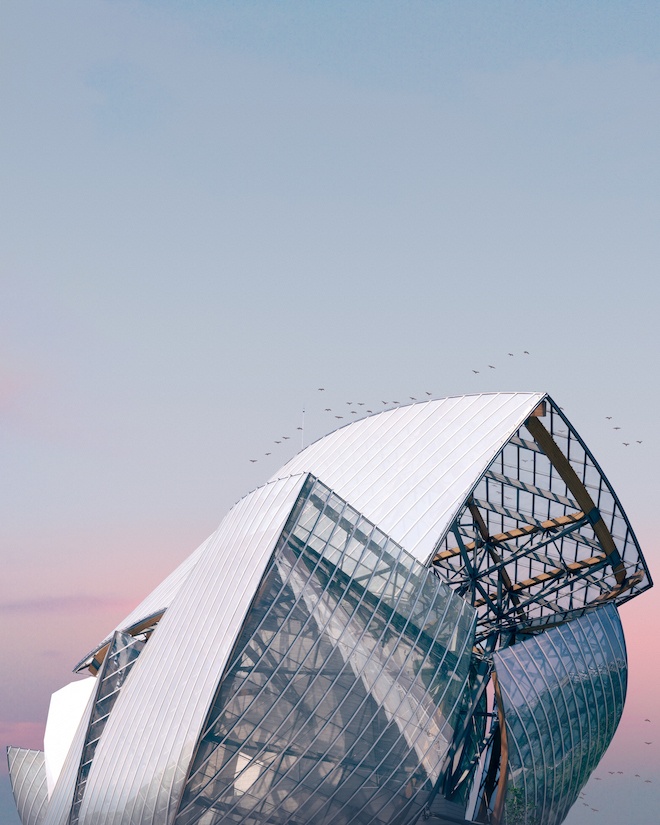
Earlier this year, the Fondation Louis Vuitton (FLV) – an art museum and cultural centre sponsored by LVMH and its subsidies – in celebration of its fourth anniversary launched an architecture photographer contest inspired by the Parisian building’s exceptional construction and design. The museum, which was inspired by abstract structures of glass was designed by renowned Canadian-American architect Frank Gehry.
The competition, titled #MyFLV, launched on May 3rd and welcomed photographers of all calibre, both amateur and professional who were required to post original photographs of the buildings to their Instagram accounts accompanied by the respective hashtag and Fondation account tag.
After concluding on June 5th, the FLV gathers several representatives from its board along with French photographer Yann Arthus-Bertrand who formed a jury to select the top 7 photographs. Their picks were announced earlier this week which included a mix of photographers from several corners of the world. Namely Pierre Châtel-Innocenti, Mathieu Collart, Roseline Diemer, Yi-Hsien Lee, Boshiang Lin, Jean-Guy Perlès & Jérémy Thomas.
The winners will have their photos used in an upcoming digital and print poster campaign, a boost of publicity via the foundation’s social account, a Collector’s Pass for FLV valid for one year, along with a chèque of 2,000 euros.
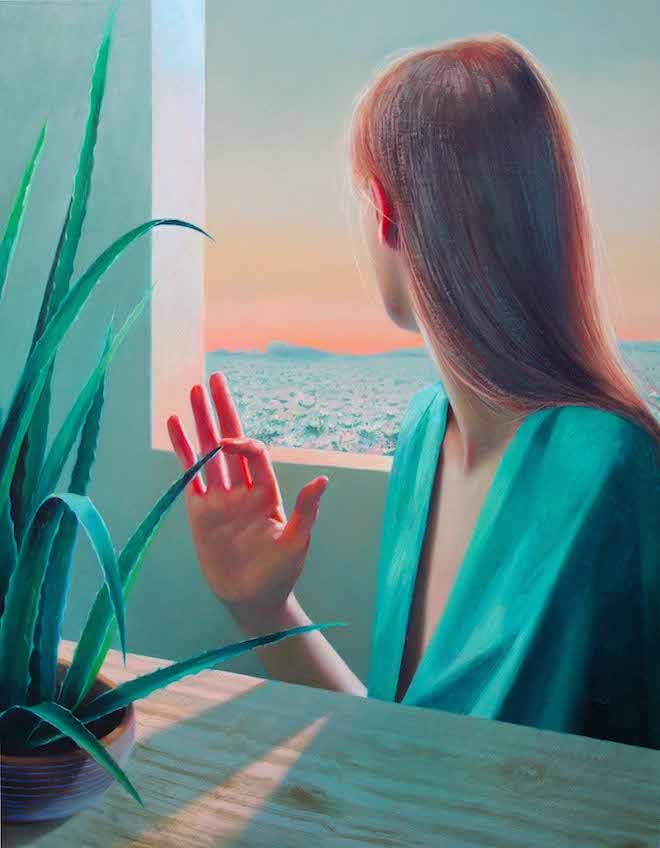
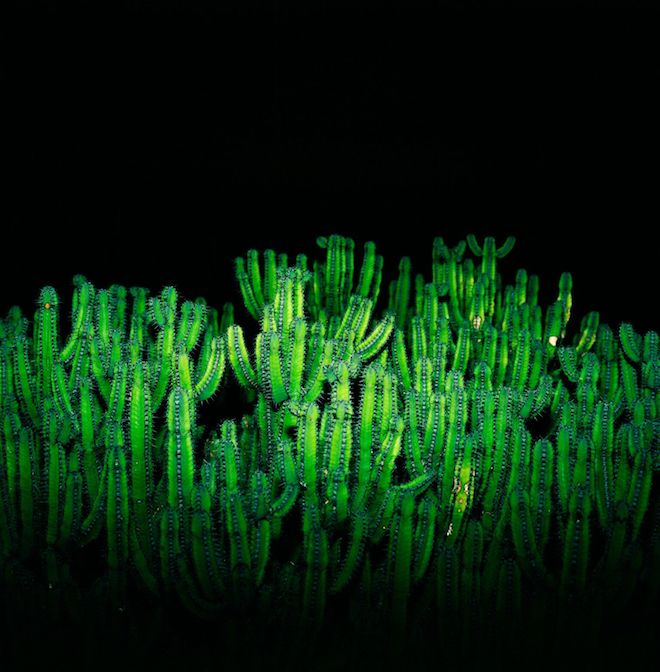
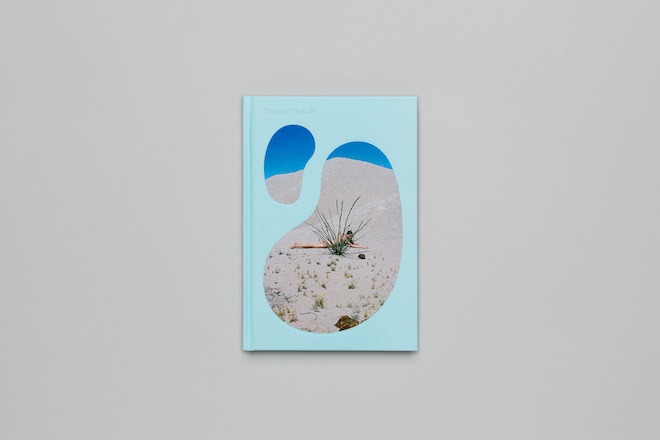
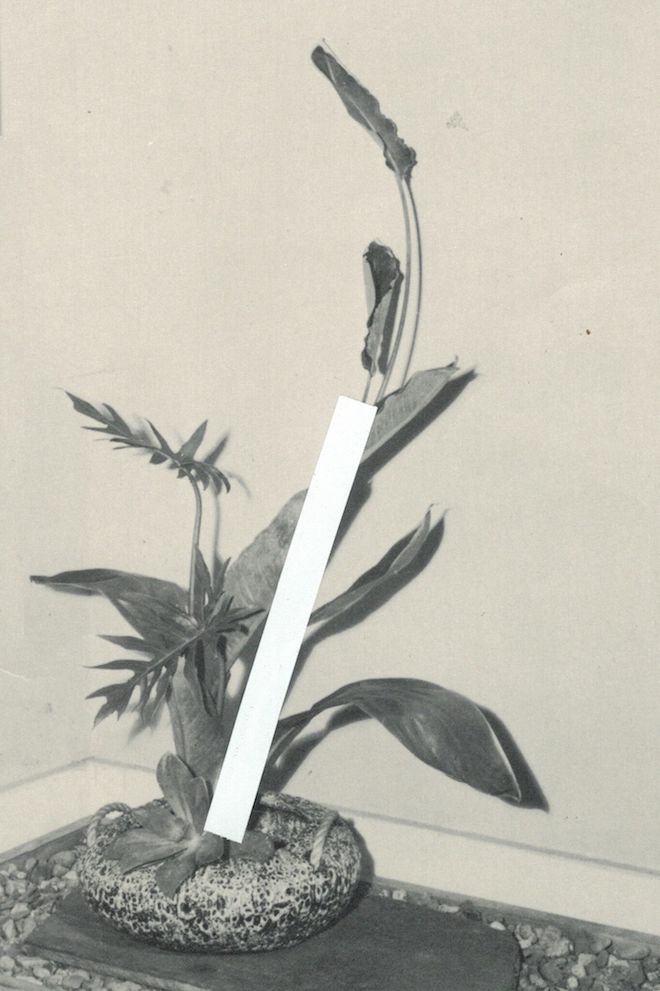
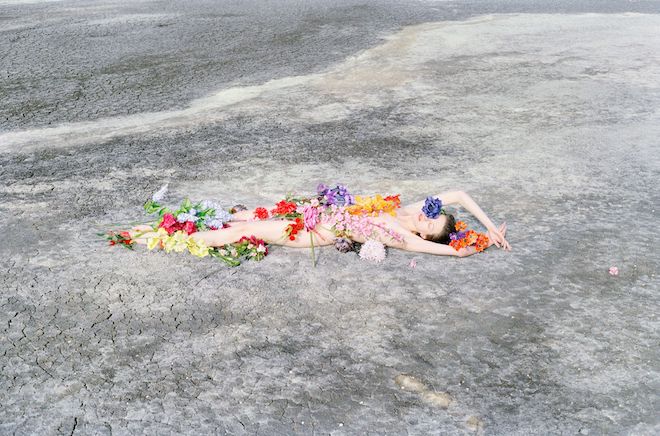
Dedicated to plants in contemporary art, the latest of the Strange Plants series celebrates the diverse range of flowers, succulents and foliage and examines their power within the creative space. From large-scale paintings to granular photographs, the book captures the nuances and weirdness of the natural world.
Divided into themes, the 164 page book encompasses the work of 50 artists, across a range of media. Each section examines a different aspect of how plants inspire or function in contemporary art. Featured artists include Caitlin Keogh, Chloe Wise, Robin F. Williams, Louise Bonnet, Marius Bercea and the photography duo Synchrodogs.
This most recent release in the award-winning series also features a special section dedicated to the late photographer Ren Hang. Hang’s images of his friends floating in lily-pad filled ponds were a highlight of the previous book. “Regrowth”– section of Strange Plants III – is “a modest attempt to pay tribute to his life and art.”
Published by independent publisher zioxla, Strange Plants III is an ongoing tribute to, and meditation on, the harmony, inspiration and provocation that plant life offers artists in the modern world.


 PREVIOUS

 Twitter
 Tumblr
 YouTube
 Facebook
 Instagram
