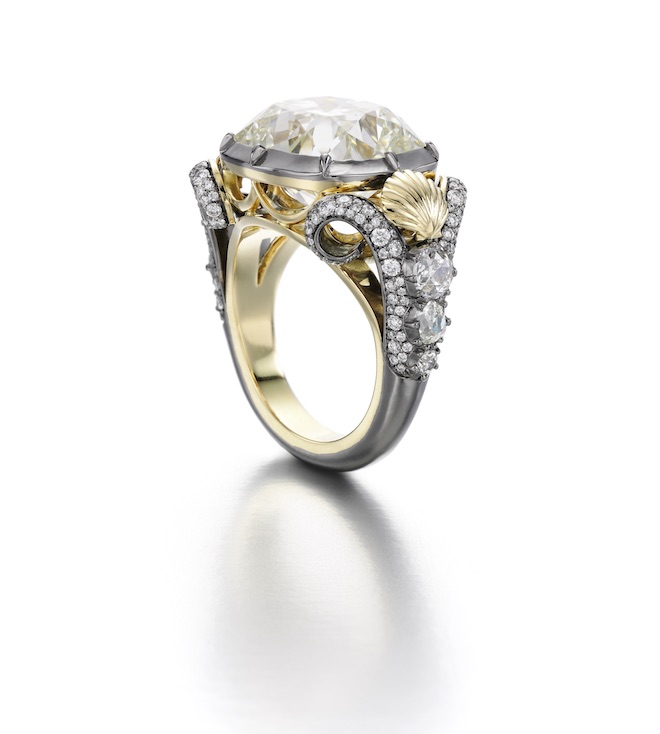
The London-based jeweller Jessica McCormack has launched her Couture Bridal Collection, and with universal appeal, the range mixes the whimsical with the avant-garde, the cerebral and the innocent.
Consisting of six couture pieces, these can be created bespoke around different diamonds, from 0.20 carat to 20.00 carat. Each ring design carries the traditional sentiment that you must start with the diamond and then everything else fits into place. In McCormack style though, expect a touch of the contemporary to go with this traditional tendency.
“I want to create engagement rings that speak to the uniqueness of each woman. A ring that you wear every day is more than just a symbol of love. It is also a reflection of personality and history.” Jessica McCormack
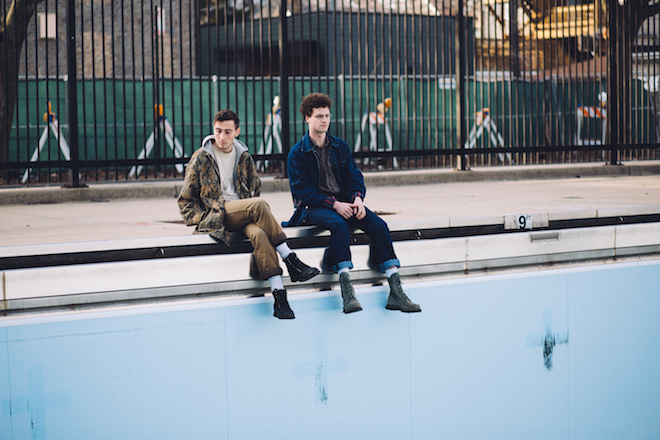
The sun’s out and A.O.S.O.O.N have a new song out to compliment your ice cream. A.O.S.O.O.N, which stands for ‘A Lot Of Something Out Of Nothing,’ already have an impressive array of followers which include Annie Mac and Huw Stephens. Last year their single ‘Under’ amassed 3.5 million streams and their latest single ‘High Grade’ promises to garner similar acclaim. We caught up with the band to chat independent labels and sounds of the city.
Can you talk about how A.O.S.O.O.N happened?
Well, it was just the pairing of two individuals who felt like outcasts, choosing to come together to make music as a means of self expression.
You release under your own label, why did you choose to work independently?
Yes we do. I think up until this point here for us it’s been about learning the most we can about the industry. By working independently you have to be completely hands on with everything around you. We’ve had to understand every step, every choice. And we see this as a good thing.
What are your main musical influences?
It can go from Gucci Mane to Nirvana in the same sitting! Lauryn Hill is a big influence.
How does the city inspire your sound?
The city is everything to the sound, it’s the way the wind breezes and how you can relate that to the grind. London has a lot going on, there’s always so much to pick up on and it inspires us daily in a variety of ways.
At the moment the production is quite stripped back, will this always be part of your sound or would you like to explore bigger arrangements?
That’s a cool question. It’s about capturing the overall vibe every time. Treating each arrangement uniquely. So far it’s been about raw live instruments and allowing the space to talk instead of generic ideas, and if anything we think it challenges our listeners to open their ears which I think they appreciate. We wouldn’t wanna take that away from the music but yes, we’re willing to stretch ourselves with where the production could go in the future. It’s all about growth!
How do you find live performance vs studio?
Live is exciting, I mean there’s so much energy. You’re rocking out, the crowd’s loving it, you’re so caught up in the moment nothing really matters. Being in the studio varies, sometimes it can feel like forever and sometimes it’s like being on stage. It really depends but it’s definitely a more mental process.
Any screw ups or weird happenings on the road so far?
Haha nothing too crazy yet. Probably getting high and everyone losing room keys.
Who would be your dream collaborator?
That’s hard, there’s so many. Getting in the studio with Kanye would be crazy, cutting a record with Rick Rubin would be insane. Working with anyone who’s great at what they do and loves what you do and vice versa would be a great collaboration. It just has to make sense with where we’re at on our journey and feel great, that’s important for us.
‘High Grade’ definitely has a relaxed ’90s vibe. How did it come about?
We were jamming the chords one morning on the guitar Gmaj Amin Cmaj and it just came, it was pretty much instant. It felt like Bob Marley was jamming with us, it was a magical moment.
What are you looking forward to this summer?
The sun. It doesn’t come out too often in London. People looking saucy, putting out new music, shows. Watermelons.
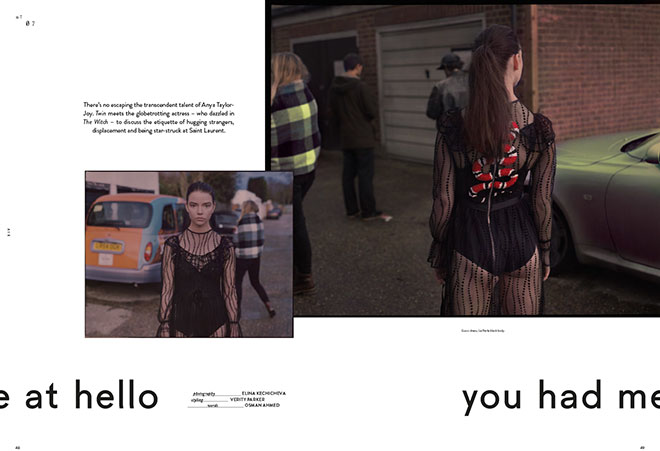
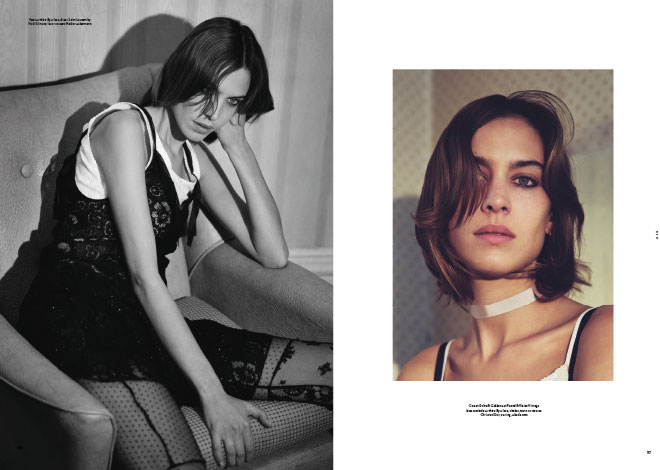
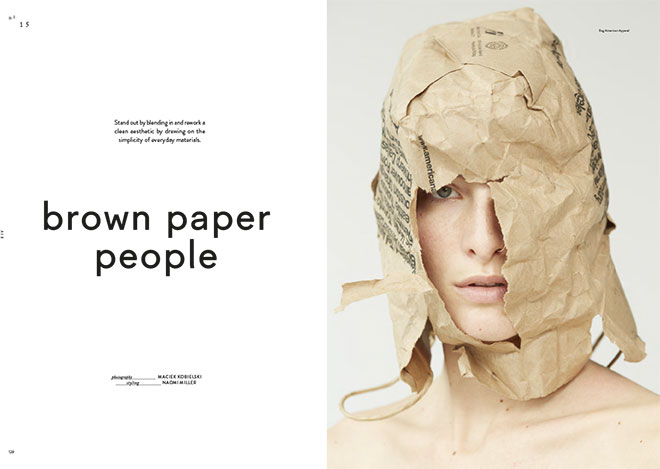
Spanning the realms of music, art, film, literature and fashion – Issue 14 is an exploration of the female perspective: From Alexa Chung’s personal musings on the pull and perversity of astrology, to director Elizabeth Wood’s controversial position of power within new Hollywood. We also see girl-of-the-moment Heather Kemesky shot by Maciek Kobielski while swathed in every day detritus, meet actress on the rise Anya Taylor-Joy, discover Louis Vuitton’s cosmic universe through the lens of Juergen Teller and dismantle ‘black sheep feminism’ with the work of artists Betty Tompkins, Joan Semmel, Anita Steckel, and Cosey Fanni Tutti. Ben Rayner also photographs some of the most exciting musicians to be following right now.
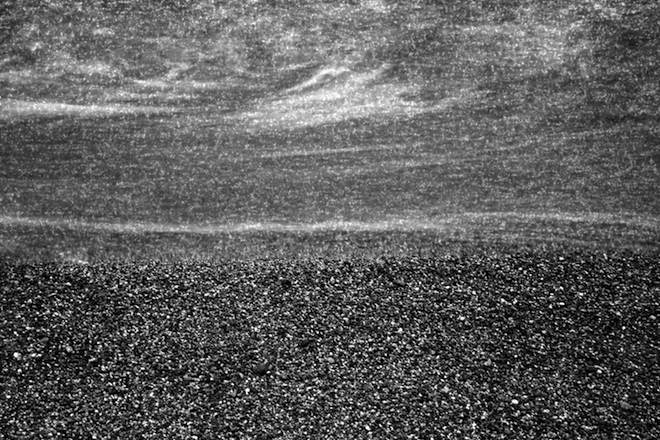
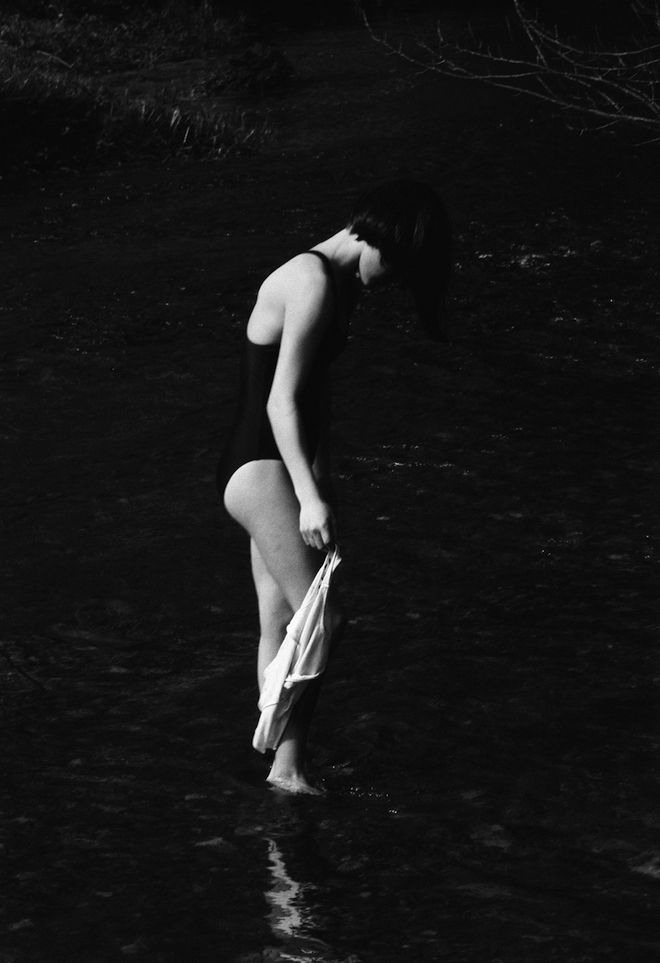
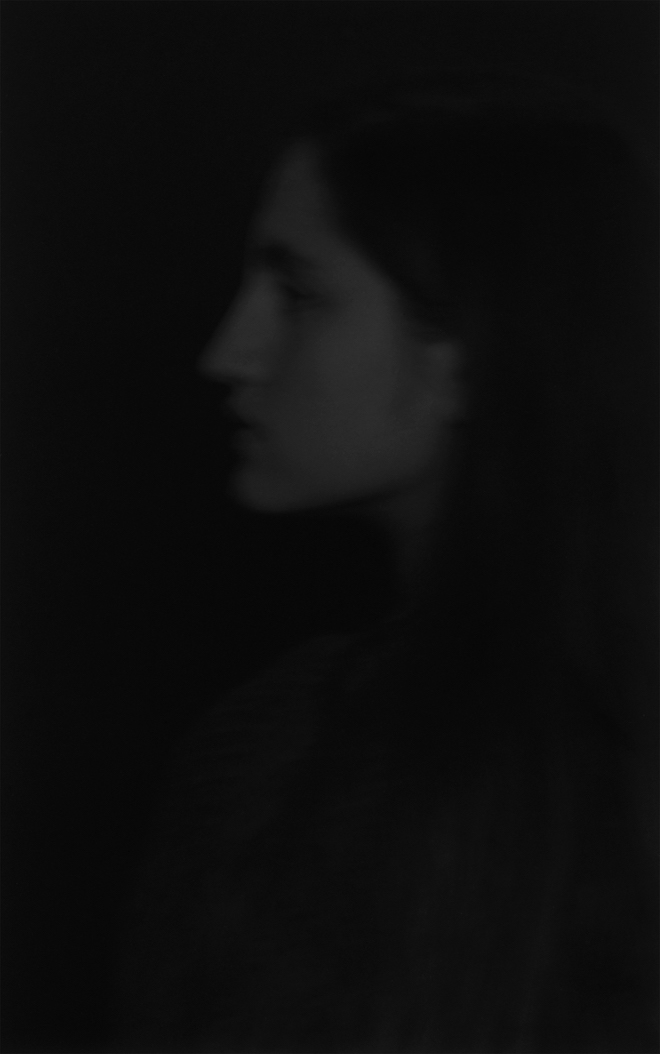
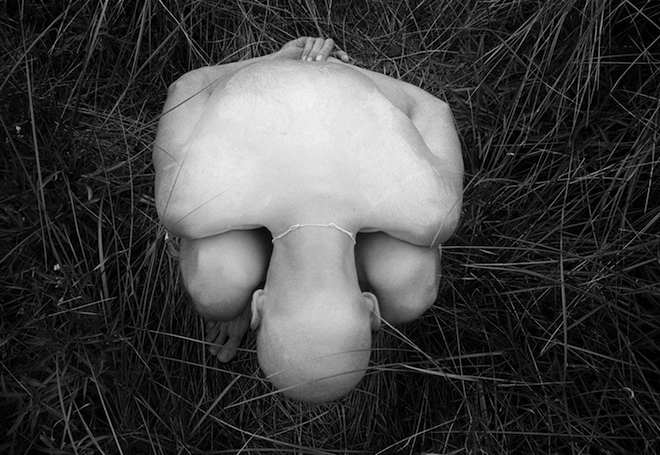
Growing up in Minsk, now Belarus, before moving to the United States and later France, Alexandra Catiere learned early on to immerse herself in a universe of her own. This is a skill Catiere has taken with her into her photography, where she documents intimate moments that all make a passing comment on the transient nature of time and the ephemerality of life.
Through her distinct visual language and exploration of both sensation and atmosphere, she manages to avoid the cliches of naked young people shot with flash on a 35mm point and shoot camera. Instead, her inspiration and style aligns itself more closely to that of the legendary Irving Penn, who she worked alongside in 2005 shortly after graduating from the International Centre of Photography (ICP). Her works are in the same nature of Penn’s—classical black and white images, begging the audience to study the world in which they are taken without a preconceived notion of context.
A new exhibition – Photo London – which has just opened in London at Somerset House, explores Catiere’s work in the form of a three-part series: ‘Here, Beyond the Mists’, ‘Land without Shadows’, and ‘Nobody Believes That I Am Alive’. The exhibition deals with themes such as time, realisation, life and death in a way that underscores Catiere’s own belief system “that death does not and can not truly exist, while memory still remains”.
When asked to describe the photographers work Nathalie Herschdorfer, the curator of this exhibition says: “Catiere’s photography is of an intimate and independent nature. It deals with the passing of time, outside of the narrative realisation. Time stands still. The beings and places that she depicts seem to come from a distant past but nonetheless seem to be anchored in the present. Catiere’s photographs enthral us, they seduce us and call us into question.”
The exhibition is on now, and runs until 22nd May 2016 at Somerset House, London, Booth F7.
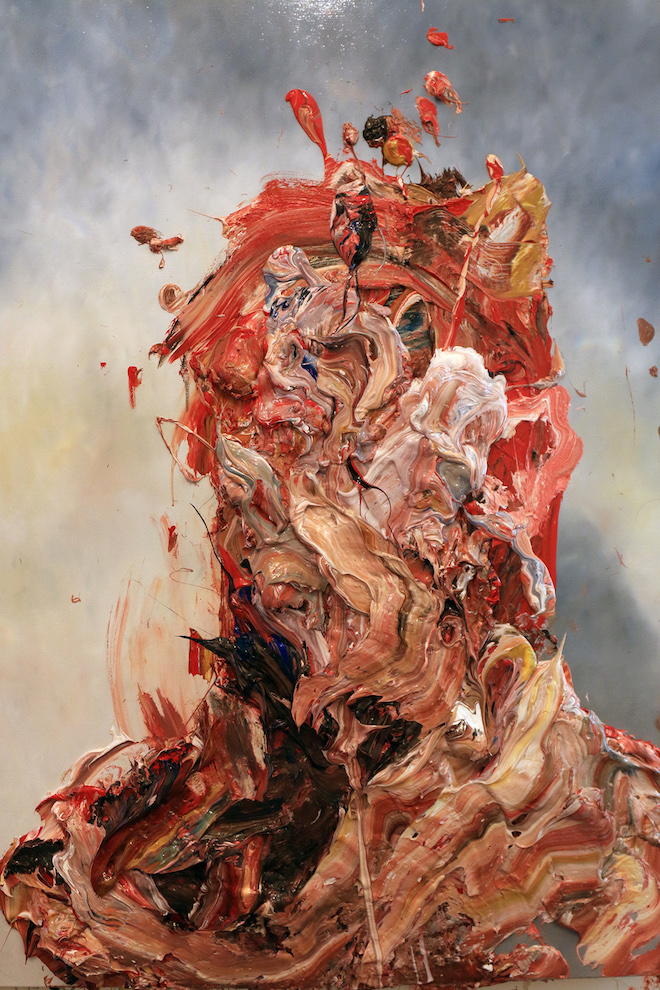
Open now and running until the end of June, acclaimed British artist, Antony Micallef is exhibiting his debut solo Hong Kong show, ‘Raw Intent’ at the prestigious Pearl Lam Gallery in Hong Kong.
Recognised by the art world, Micallef, who draws inspiration from the old masters has been called “this generations Francis Bacon” by Sotheby’s. This is evident through his latest evocative series of work, ‘Raw Intent’ which focuses on the movement of paint, and explores its relationship between the artist, the brush and the canvas.
“Raw Intent is a body of work that uses the mechanics of paint to unearth and excavate emotion using myself as a vehicle. I want the medium to evoke something visceral and emotive without illustrating it. The figures are distorted, pushed and pulled until they start to ‘breathe’ on their own. The object of the work is to instill and convey a sense of energy and life. Emotions are projected onto and tested on these found figures, and the form is stretched to its limit, like subjects in a science lab. I’m interested in that space where the figure almost disintegrates but somehow stays intact, leaving a sense of friction and raw distortion. The medium is celebrated and used in full force in many different ways with many different tools to render life that echoes traces of our emotional field.” – Antony Micallef
The exhibition is on now, and runs until 30th June 2016 at Pearl Lam Galleries, 601 – 605 Pedder Building, 12 Pedder Street, Hong Kong.
This summer, New York-based artist Grear Patterson is presenting an exhibition at London’s Marlborough Contemporary which is centred around something that is often thought of as an ever-deteriorating concept: true romance. With Tony Scott’s seminal film of the same name serving as the catalyst as well as the title, he has produced a series of mixed-media works that both encapsulate and explore the theme.
Utilising the “visceral vernacular of the sunset as an auspicious moment – simultaneously a romanticised ending and yet a promise of new beginnings” – each piece is a study in pop-culture, imagery and processes of perception, all of which have become recurrent motifs in Patterson’s work over the years.
Grear Patterson, Blue Bronx (2010), c-print, 13 x 20, Courtesy the artist and Marlborough Contemporary, London
The symbolism of the sunset is explored both literally and figuratively elsewhere in the show – with banana trees and hammocks physically present within the gallery – further adding to the stereotypical idea of a tropical sunset, especially as is so commonly seen through the millennial lens of social media.
A plethora of found materials – from parachutes, wedding tablecloths, boat sails and vinyl – make up the large scale sunsets, while smaller works are comprised of block colour paper works in purples, pinks, blues, oranges and greens become a “memorialisation of youthful possibility, oddesey and adventure”.
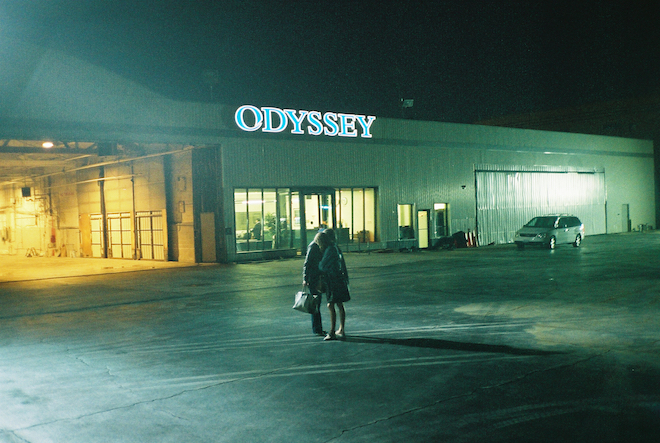
Grear Patterson, Odyssey (2008), Photograph, Courtesy the artist and Marlborough Contemporary, London
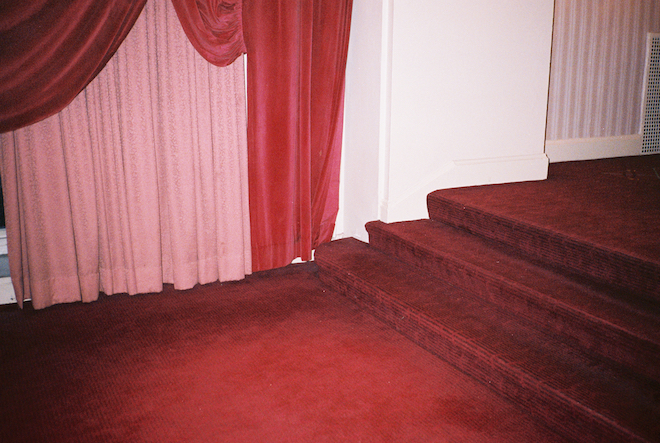
Grear Patterson, Quiet Corner (2010), Courtesy the artist and Marlborough Contemporary, London
Grear Patterson, Moonrise (2016), Photograph, Courtesy the artist and Marlborough Contemporary, London
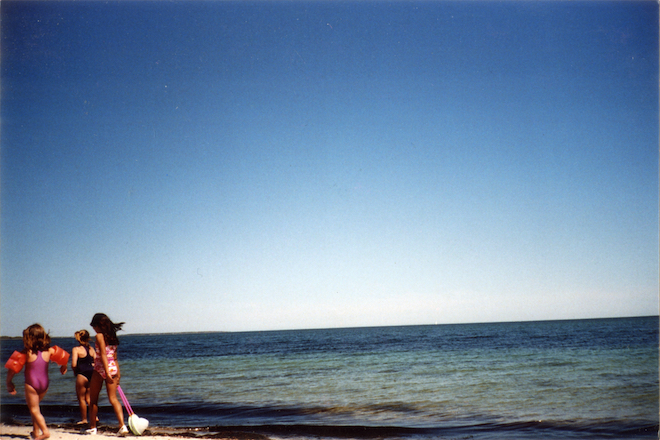
Main image: Grear Patterson, Beachstrollers, (2008), Photograph, Courtesy the artist and Marlborough Contemporary, London
Grear Patterson, True Romance, Marlborough Contemporary, 24 June – 23 July 2016.
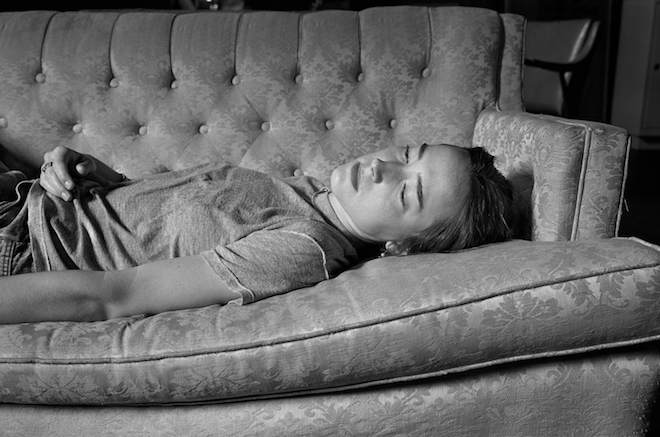
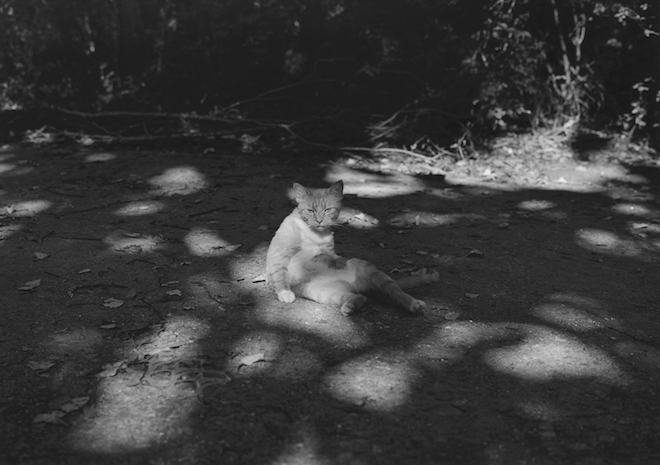
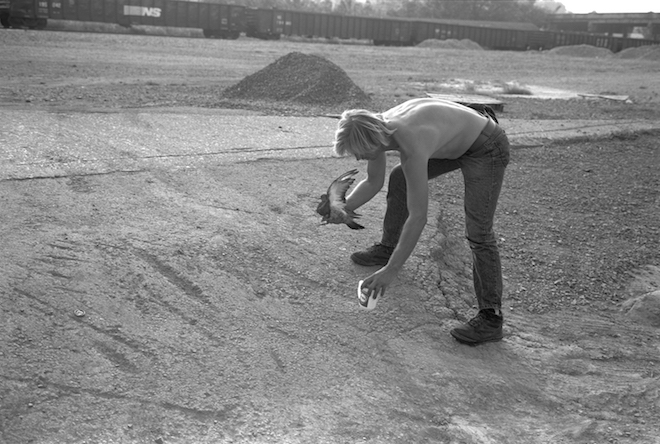
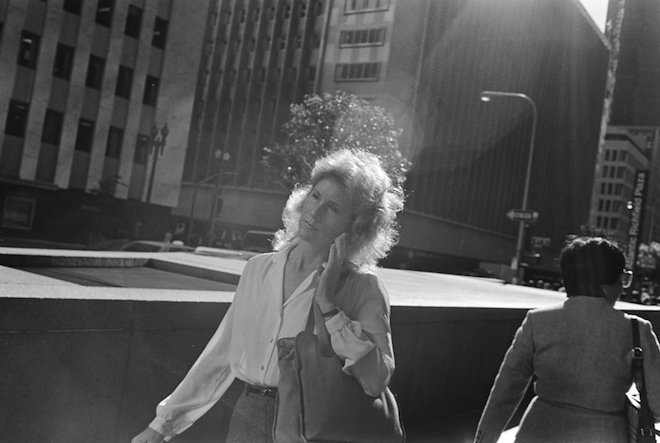
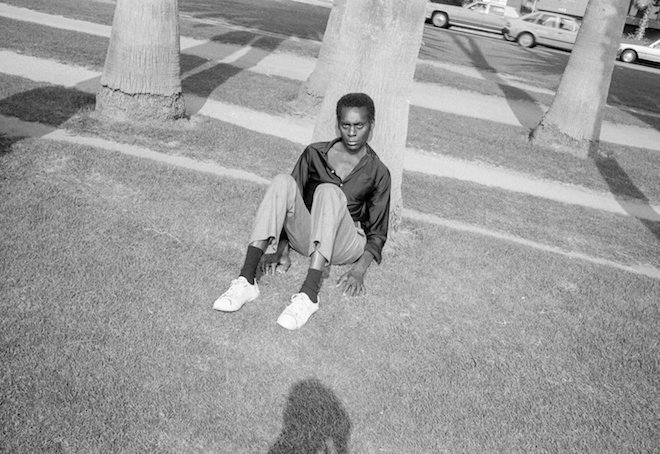
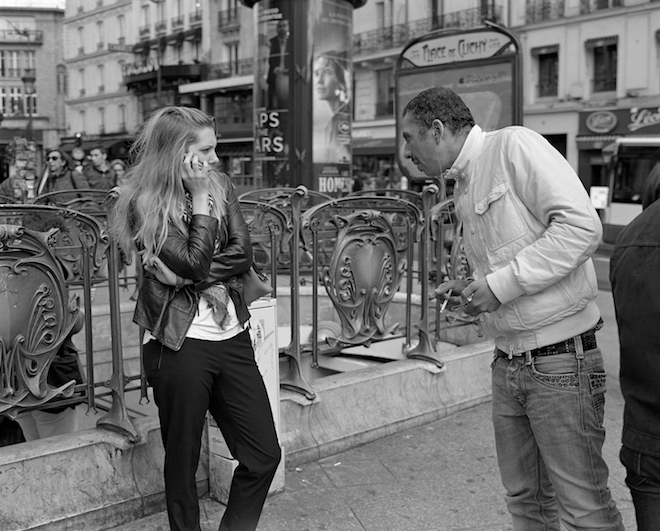
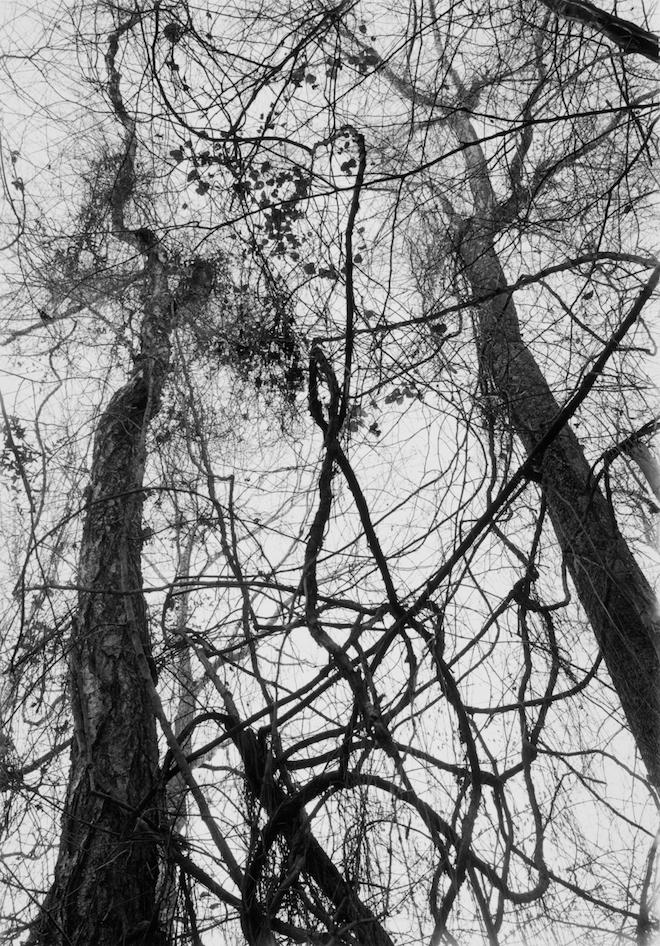
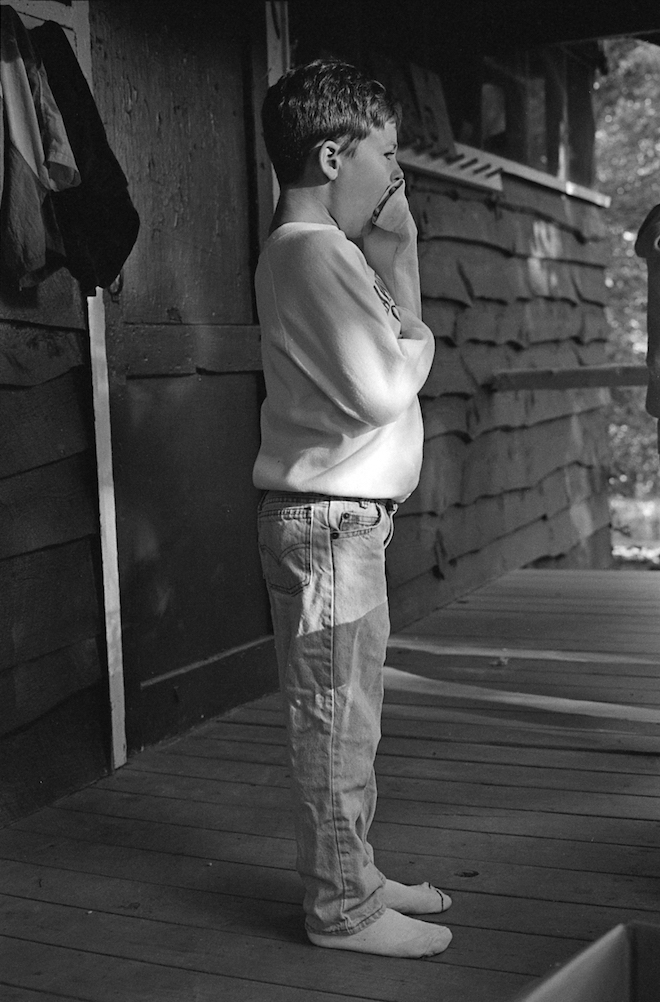
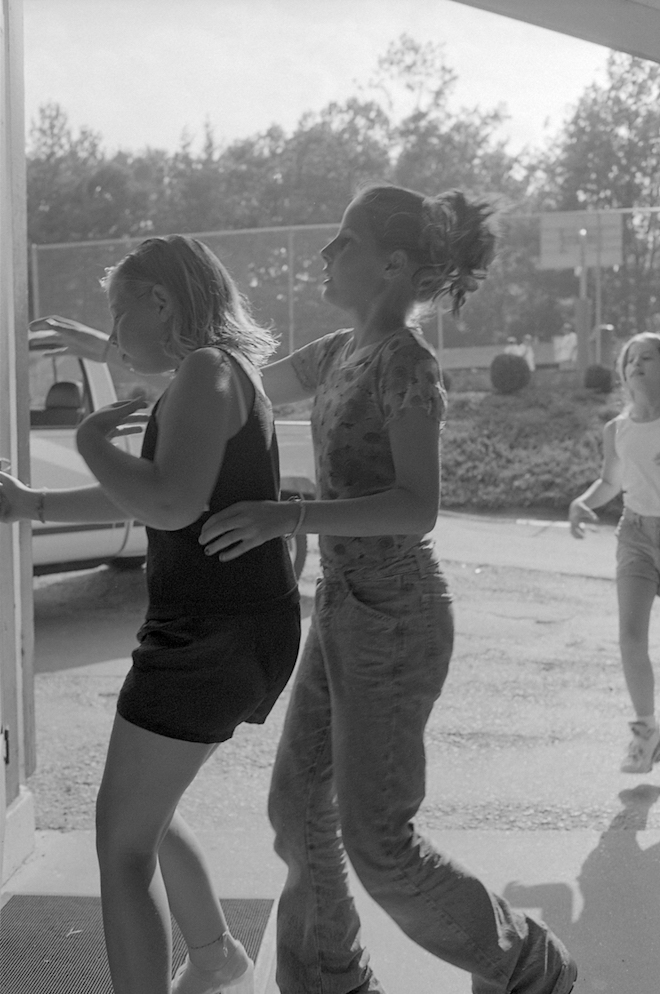
His subject is one that has been much documented across the arts, but photographer Mark Steinmetz lends a unique eye to the chronicles of contemporary American life. Whether capturing everyday happenings within a Cleveland school or the natural environment of Sandy Creek, the photographer’s ability to imbue images with unforced narrative consistently delights.
This capacity to scrutinise the idiosyncrasies of daily life whilst remaining aloof from the frame allows Mark Steinmetz’s photographs to both transcend and embody their moments in time, rendering his images powerful historical documents as well as works of art. With a ninth monograph, Angel City West out on Nazraeli Press, we asked the photographer to lend insight into his work, inspiration and future projects.
When did you first start photographing?
I started very early on. My parents gave me my first camera around the age of six. I have many clear memories of photographing when I was a child. I remember that framing a scene was always a pleasure for me; I liked making the decision of whether I needed to stay standing up or whether I should scrunch down or move in closer in order to make the best picture. I had set up my first darkroom in my home at the age of 12.
Ancient Tigers, 2007
Can you talk a little about the Angel City West series as a whole – how did they come about, what camera were you working with and what were you looking for when taking these pictures?
I was 22 and restless. I had moved to Los Angeles after having left the Yale School of Art after my first semester. In LA, I met the great photographer Garry Winogrand and was able to photograph with him on several occasions. I used a Leica primarily but also dragged around with me a twin lens reflex. My impulse was just to make interesting pictures that were realistic but still had an independence from (and weren’t exactly responsible to) anything that might really be going on. I was exploring the fictional strangeness that’s intrinsic to photography when you extract an image from the flow of life and I was trying in my youthful way to match or supersede what photographers such as Winogrand or Robert Frank had done.
What is it about black and white that you’re drawn to?
Black and white is what I was looking at when I started to photograph and it’s the medium of the great masters I admire most. There’s a removal from the world with black and white; it strips away one of the levels of illusion from the world. It seems to concern itself more purely and strictly with structure and light. Colour photography needs to be primarily about colour, and to me it seems rare that it can be controlled in any coherent way since the relationships between the colours take over and can too easily overwhelm what’s really of interest and importance. But then again we see in colour and that’s what most everyone in photography has been up to lately.
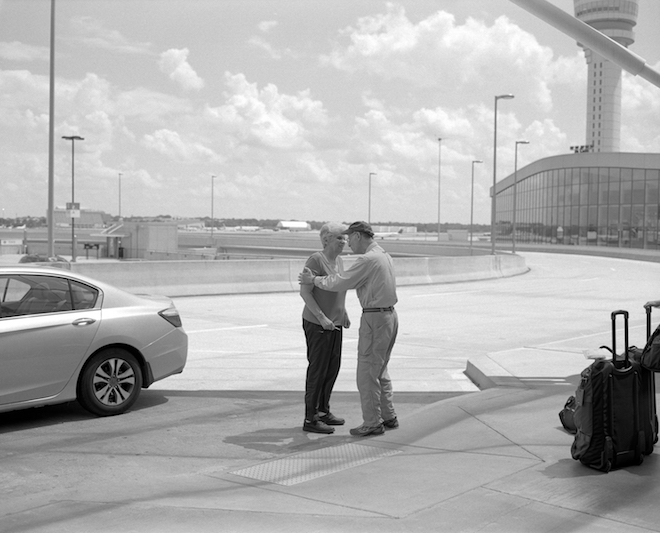
Atlanta Airport, 2015
How important is a sense of place to your portraits of people?
I tend not to have less interest in photographs of people where they are placed against a neutral background. The subjects then seem like butterflies pinned in a collection. Richard Avedon’s group of portraits in the American West are strong but it makes little sense to me that he puts the people he’s photographing against a white backdrop instead of leaving the gas station or the road behind them as background. I much prefer placing subjects within a context. The scenes are less sterile that way and more convincing. That’s how life is.
You often photograph people in motion, or seemingly unaware. How did you develop this style?
I prefer photographs where it feels like something is happening or about to happen, where a moment is suggested. Walker Evans photographed people surreptitiously in his series of subway photographs for the reason that “the mask is down” when people don’t think anyone is watching them. I’ve always been a quiet person. I don’t make waves and I don’t startle people. Many of my portraits seem natural as if they are not aware of being photographed, but I’ve had to talk to them and gain their permission in order to position my fairly large camera exactly where I want it to be in order to make the picture I want.
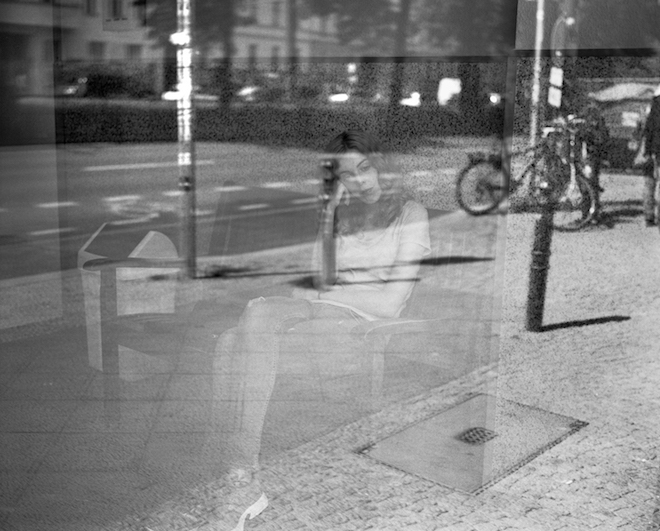
Berlin, 2014
In general do you see the role of a photographer as a watcher as opposed to someone that is present in the picture?
Koudelka is a great photographer but in his book, The Gypsies, the subjects are looking at him and responding to his presence. It’s up to each photographer to define photography on his/her own terms. In my case, my mother was French and I’ve spent a lot of time in France where people sit in cafés a lot and people watch. That’s how I photograph for the most part. I don’t intervene.
The Angel City West series was taken in the ’80s, are you still interested in the city and the people when you look around at Los Angeles today?
Yes, very much so. I’d like to spend more time there to photograph. Los Angeles remains a very interesting and unique place. Like Paris, it is a terrain that has been explored a good deal in cinema, photography, and literature, so there’s an audience that already has an understanding of the place. That means you can plunge right in. You don’t have to start at zero to establish a context for your body of work as a context already exists.
Knoxville, 1991
I love your Sandy Creek series, did you find it challenging to capture the natural world in the same spontaneous way?
Thank you for loving the series. Like most people I need a break from time to time and photographing in nature allows me to unwind and to photograph without any of the stress of photographing in the cities. The trees don’t talk back to you. It’s a very different problem. I think nature has a lot to teach us and particularly anyone interested in the design fields needs to take a serious look at what nature has come up with. Robert Adams and Atget have been helpful to look at.
Generally speaking, what are your influences?
Anything in life can be an influence. Some things stick to you, some things don’t. In photography, Atget, Evans, and Winogrand are the great influences but there are so many.
What are your projects for 2016 / 2017?
Right now I’m working on a commission from the High Museum in Atlanta to photograph at the Atlanta airport – that will be a show in 2017. I’ve also been photographing in Europe a good deal and in particular in busy public areas in Paris, Berlin, and Milan. I should have a book on summer camps come out next year and possibly one later this year of unpublished photographs from the American South (no titles for the books yet).
Mehry Mu, the emerging accessories brand founded by Gunes Mutlu, produces the chicest pochettes according to your star sign. Handmade in Istanbul, the city and the vibrant ikat fabrics found in the hidden alleys of the Grand Bazaar prove to be Gunes’ inspiration for her collections.
The Universe collection, which consists of 12 velvet pochettes featuring gold and silver hand embroidery, represent each sign of the Zodiac. Available in a range of cosmic hues: from soft pink to powder blue, green and pale grey – all the colours and star sign details are determined by the Zodiac sign.
Tell us about the Universe collection…
The universe collection is a collection of 12 velvet embroidered clutch bags representing the 12 signs of the Zodiac. The pochettes have been designed and produced in neutral velvet tones and each style and colour is determined by that Zodiac sign’s group – earth, wind and fire etc. The universe design is really personal as the details are so specific to each Zodiac sign that they represent. All the pochettes are hand made in Istanbul and designed according to one simple rule – that they should make life easier whilst making you feel chic in an effortless way.
What’s your zodiac sign?
Sagittarius (featured main).
Where can we buy the collection?
The collection is available to buy from mehrymu.com, The Mehry Mu showroom in Istanbul, Debonnaire London and through several international boutiques including Bloomingdale’s-Dubai and Edit Lifestyle in Singapore.
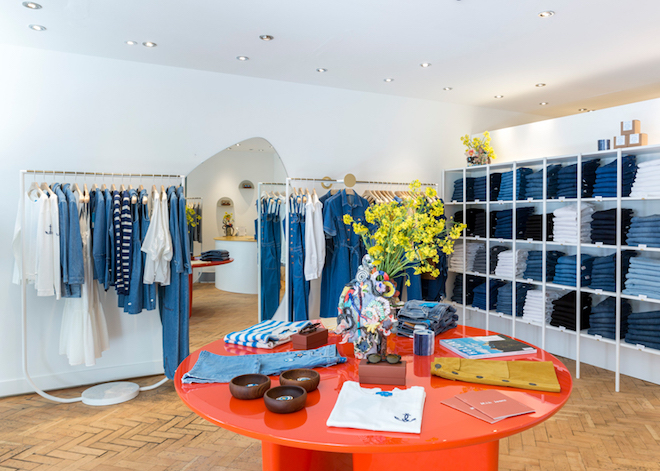
Premium denim brand M.i.h are celebrating 10 years at the forefront of jean genius with a pop-up shop in London’s Soho. Situated on Upper James street, the store features everything from its beloved denim to homeware and fragrance – all imbued with M.i.h’s signature ‘blue-jean’ spirit.
For its 10th anniversary, the brand has launched a unique ‘cult denim’ project, which sees 10 cult items from its archives be re-released as a special capsule collection.
Featuring everything from the perfect ‘7os shirt dress, to the ‘Topanga’ cropped flares, and ‘Painters’ denim parka – it promises to provide the ultimate denim edit for any woman’s wardrobe.
While the full anniversary collection is available from the Soho pop-up shop, there are also accessories from the likes of Illesteva being sold alongside to help punctuate the looks on offer.
Open until the 23rd May; 7 Upper James Street, London, W1F 9DH.
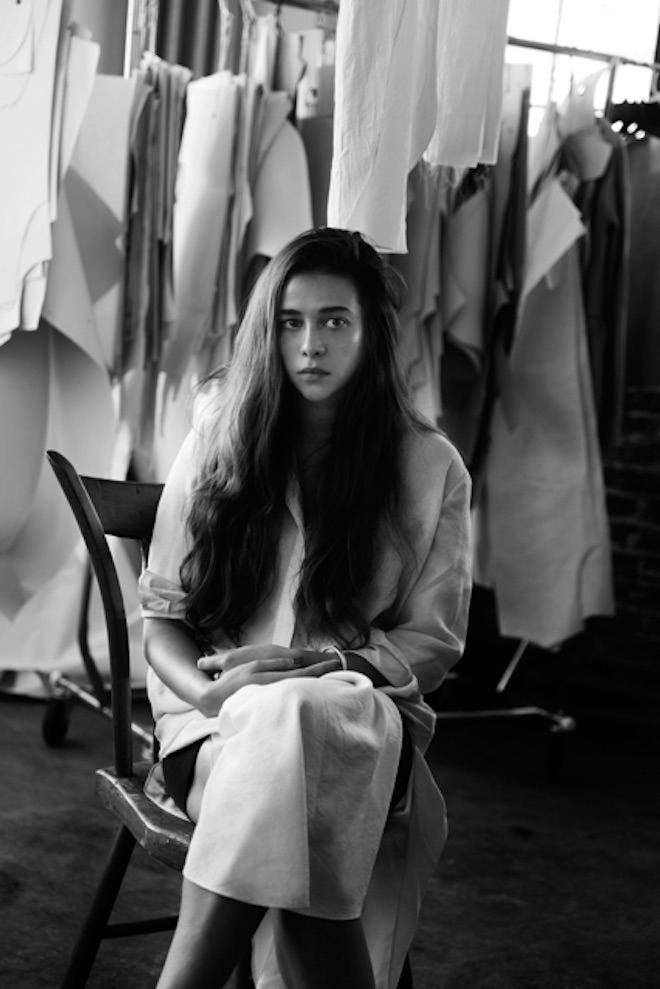
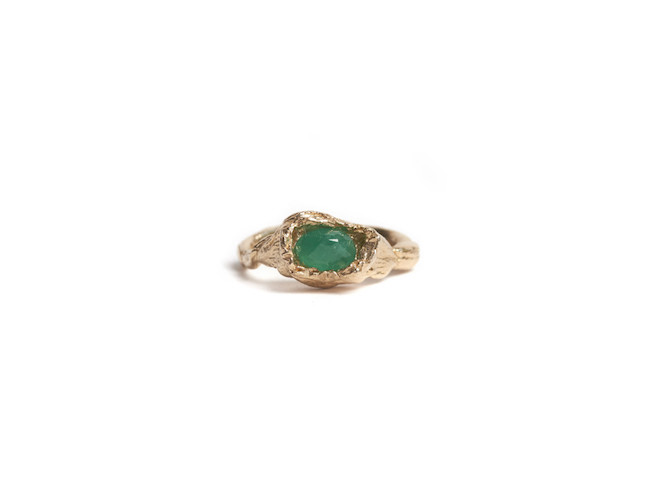
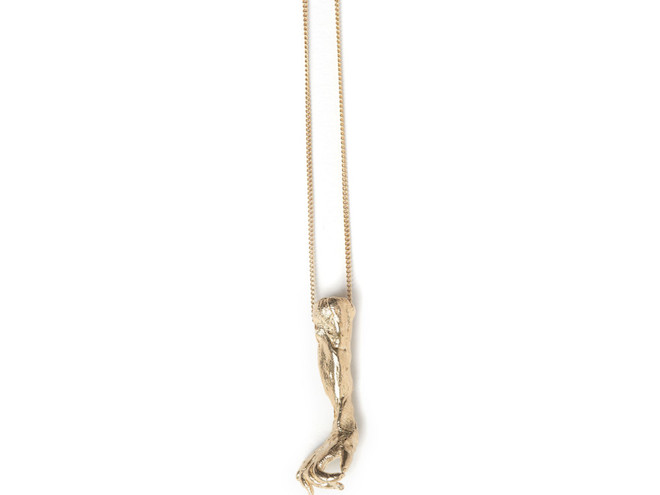
Alice Waese is not your typical fine jewellery designer. Despite founding an eponymous cult jewellery line that ranges in price from £1,900 to £6,500 – she has received critical acclaim from numerous fashion magazines including Vogue and Interview and exhibited her work at Frieze London 2015 – Alice’s propulsion of fine jewellery leaves it’s mark by revelling in the subversion and whim of all-that-glitters-isn’t gold cocktail sparkle. Her unisex gold and silver pieces, which are hand crafted in limited editions of 90, are subjects of her diverse research stimuli: birds, trees, roots, skulls, rock formations and limbs.
“The glowing and vivid palette os my Spring Summer 2016 collection is based on a series of paintings I created, they explore the visual intensity and subsequent symbolism of various stones. Alchemists consider the emerald as a symbol of hope, wisdom and as a preservation of love. The ruby is believed to be the most powerful jewel, and is associated with passion, vitality and courage—I incorporate them all in this collection,” she said.
At 20, Alice Waese moved to New York, her current base, to intern for the jeweller Maria Cornejo and was later hired as a design assistant there. She then moved to London where she studied Fine Art at Goldsmith’s College before turning to jewellery full time. Alice describes her interest in fine jewellery as in fact a fascination with “artifacts and heirlooms, the weight of an object with intrinsic value. I consider what happens to an item that is loved, given away, passed on and worn daily. I am inspired also by the materials themselves, the transformation from wax to gold is something really satisfying both on an aesthetic level and a tactile, physical level. I also work from my drawings, an internal world of fantasy and narrative”.
Drawing from life is the basis of Alice’s work, as she truly believes that knowing the dimensions and details of objects and space are key to later constructing something fine and precious out of that which was once mundane. In conjunction with research of the fine jewellery field, Alice eagerly sketches and has published her surrealist watercolour drawings in a series of hand printed hardbound books, each containing a single piece of jewellery hidden in the cutout.
For Spring Summer 2016, Alice Waese’s launches a fine jewellery and ready-to-wear collection that is available exclusively at Hostem.
While in the first instance the idea of a non-conformist British punk institution aligning forces with a Scandi-infused, purist brand may seem a jarring fit, the new collaboration between Dr. Martens and Norse Projects actually makes total sense. Together, their designs participate as part of a wider conversation, one that draws without end, on the study of contemporary culture and shows an avid interest that often oscillates between both modern and sub-cultural references.
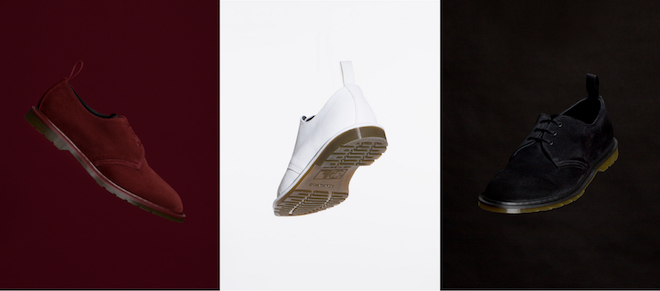
The re-worked version of the Dr. Martens 3-Eye Steed is no exception. The mens shoes has been crafted for the first time in a rich suede texture, that comes in three colour ways (black, white and oxblood). It is also detailed with quiet sportswear technicalities—the added insole, the padded tongue and elasticated nylon straps, are all quite clearly traits of practicality brought forward by Dr. Martens Copenhagen-based counterpart, Norse Projects.
Staying true to heritage is a mantra that remains close to everything Dr. Martens does and this collaboration does not waver from that. Like the rest of the Steed collection, the 3-Eyed Steed has been manufactured using the original process of industrial manufacture, a technique that has been in practice from 1st April, 1960—when the first pair of Dr. Martens rolled off the production line in Wollaston, England.
The Dr. Martens x Norse Projects Steed collaboration (from £200) is available online now and in-store at END, Newcastle from May 7th.
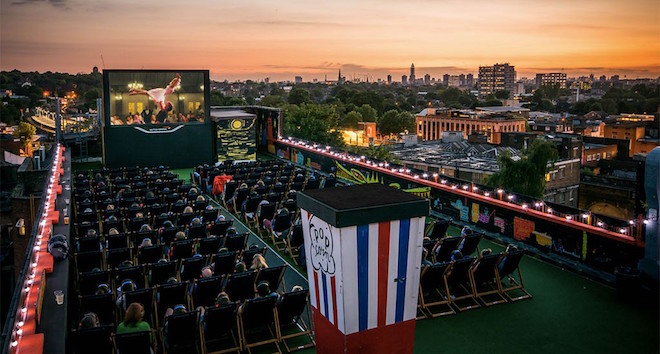
If you head to Peckham’s Bussey Building and Stratford’s Roof East you’ll sure be in for a treat. Open now and running throughout the summer, the Rooftop Film Club and the Spirited Mixers will be keeping us entertained during the warmer months, all whilst taking in the panoramic views of London.
The Rooftop Film Club will be showing a mix of new and cult classic movies from Purple Rain to The Danish Girl and cocktails are courtesy of mixology masters, the Spirited Mixers. If that isn’t enough expect DJ sessions and a spot of crazy golf at the Stratford venue, with all this happening we’re looking forward to summer.
Bussey Building, 133 Rye Lane, London, SE15 4ST
Roof East, Stratford Multi Storey Car Park, Great Eastern Way, London, E15 1XE
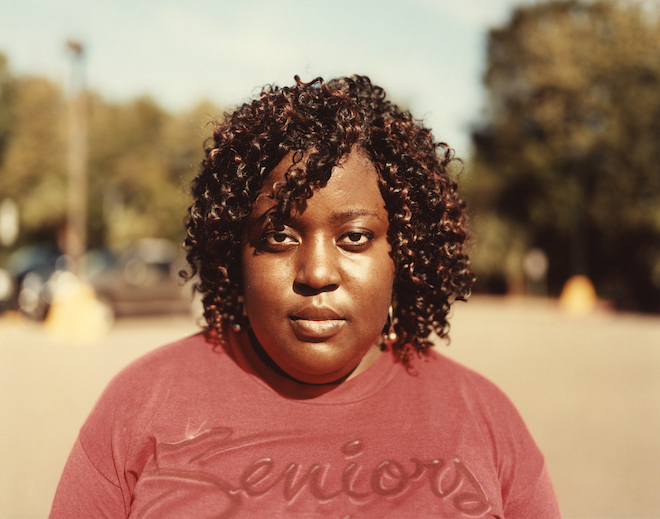
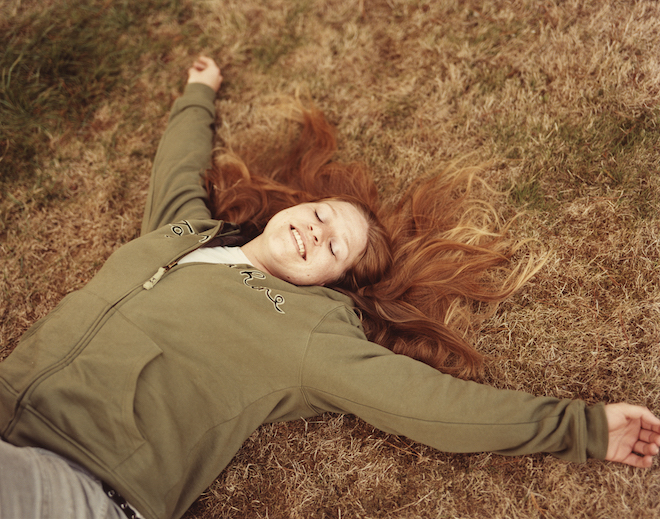
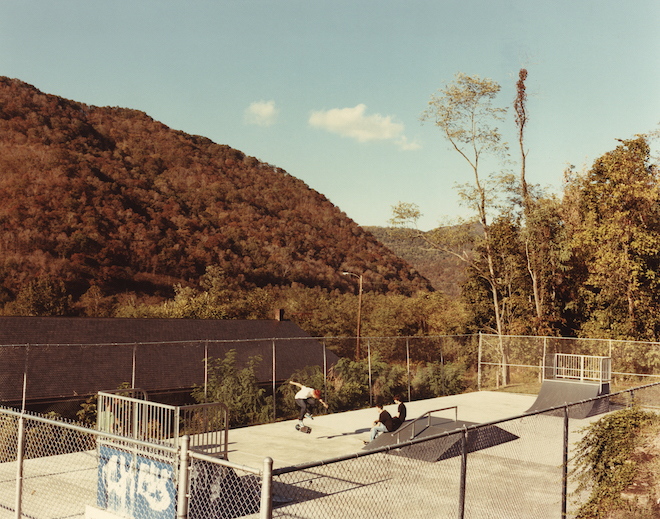
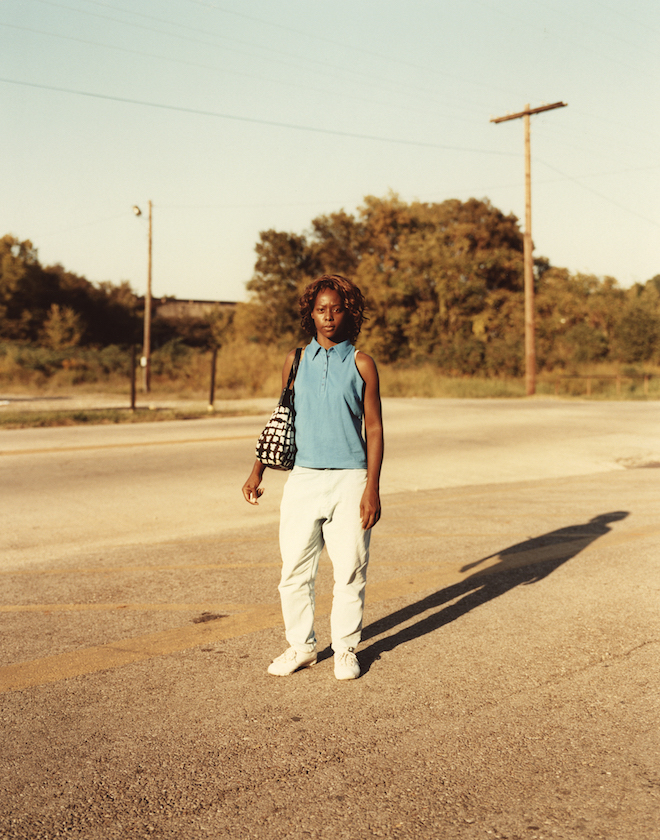
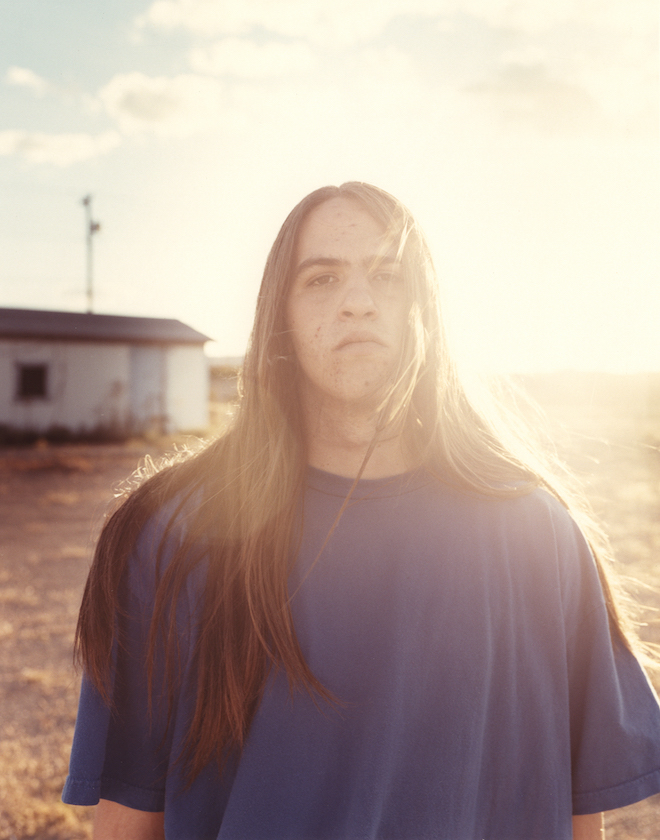
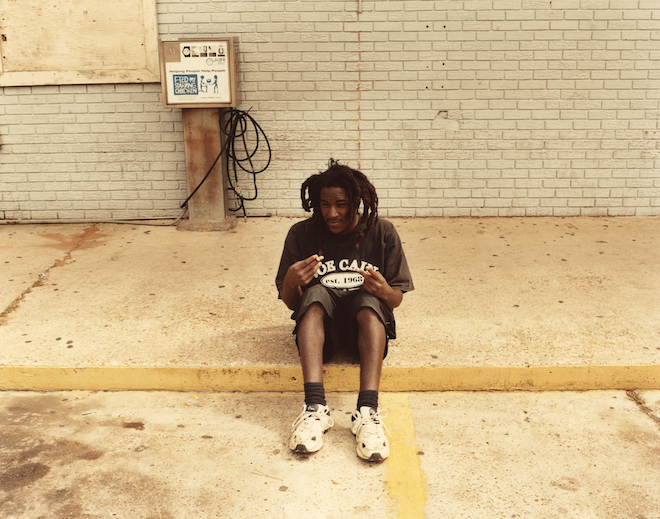
Photographer Yoshiyuki Matsumura may have grown up in Osaka, Japan, but his lens if firmly trained on the people and landscapes of deepest America.
With his American Samples project “strongly influenced” by the work of Robert Frank (The Americans), Stephen Shore (American Surfaces and Uncommon Places) and Joel Sternfeld (American Prospects), his nostalgic portrayals of different towns and their inhabitants are both striking yet familiar.
“It was shot in many different places in the States because I wanted to capture the whole of America,” Yoshiyuki told us, “I crossed America six times by train from New York to LA, stopping along the way.”
Using kit like a Pentax 67, Ricoh GR1v and Konica Big Mini, and having “endurance in the dark room” all contribute towards the resulting hazy finish of Yoshiyuki’s style. A self-declared fondness for the film Stand By Me as a child also may have played a part.
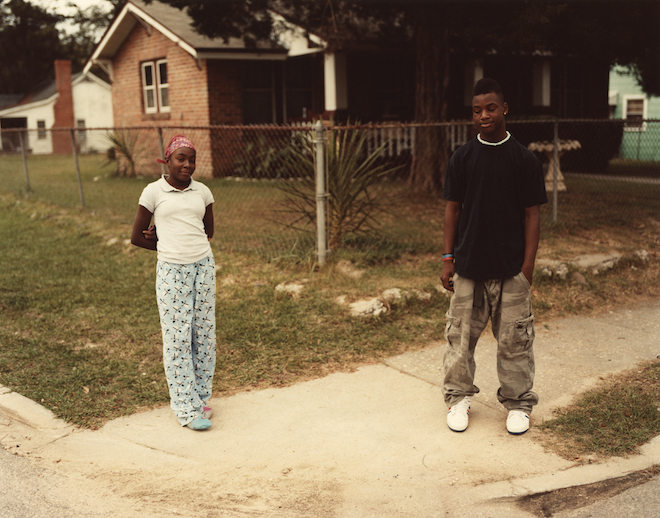
South Carolina
Despite having met and photographed a multitude of characters throughout his travels, there are some that stick with Yoshiyuki: such as the kids seen here in South Carolina. “The young boy and girl are meeting at the corner on the street,” he told us. “She lives in the house near the corner. She is not wearing any shoes. I think they will go out soon. I love their distance.”
Someone once told Yoshiyuki: “You know more about America than Americans.” And by the looks of these images, we think they may just be right. Take a trip with us now.
Oregon
West Virginia
Iowa
Alabama
New Mexico
Missisippi
Yokiyushi Matsumura is represented by Quadriga; quadriga.fr
JAEHA, founded by Korean-born New Zealander Jae Kim, is the new ready-to-wear label to know. After moving to London in 2010, Kim gained experience working in the Mary Katrantzou studio before studying at Central St Martins under the late Louise Wilson OBE. Carving out his own aesthetic, he is known for combining abstract forms with layering and texture.
Tell us about how you started designing… When I was 17, I saw all these girls sewing up their ball dresses for their end of year high school ball – pure polyester moment. They needed help – so I decided to take fashion as one of my subjects in high school back in New Zealand.
Why did you decide to move to London?
I met Peter Pilotto and Jean-Pierre Braganza at Mango El Boton competition in Barcelona. Braganza told me I should come to London – so I sent my application to Louise Wilson at Central St Martins MA, and was accepted.
How would you describe your brand?
Premium contemporary womenswear – visually striking garments that combine bold, androgynous cuts with a care free, wearable style.
What’s the story behind the AW16 collection?
Modern pre-Raphaelite women’s wardrobe meets Wes Anderson.
What’s the most valuable advice you have been given?
Collaboration is good when it’s needed.
Where do you see your brand in five years?
Kate Middleton’s wardrobe. Hopefully people can pronounce ‘JAEHA’ correctly by then.
Cancel your plans: for tomorrow, on Saturday 23rd April, Soho’s Brewer Street Carpark will play host to quite possibly the ultimate car boot sale.
Brought to us by The Store, and featuring participants such as Bay Garnet, Laura Bailey, Alex Eagle, Charlotte Olympia, Saffron Aldridge and many, many more – proceeds will be going towards the ever-deserving Women For Women International.
Rifling through the discarded treasures of some of fashion’s most elite has up until now been the stuff of fantasy – but now – it’s a reality. And all for an excellent cause.
Since its inception in 1993, Women For Women International – lead by the fearless Zainab Salbi – has tirelessly been striving to practically and morally support women who have survived the horrors and consequences of war, throughout the world.
And an event such as this, is arguably the easiest way to make a difference to those who need it most.
The event takes place between 1-5pm in Brewer Street Car Park, Brewer Street, London, W1F 0LA. Entry is £10 on the door, and £5 for concessions – cash only.
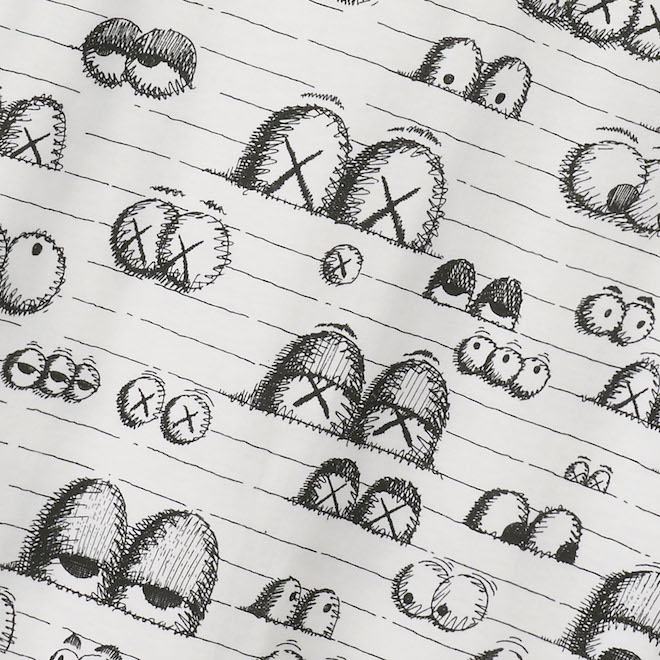
High street staple providers Uniqlo are about to unveil a brand new collaboration for SS16 with Brooklyn-based artist, KAWS.
The 25-piece collections will see the characteristically playful work of KAWS adorning everything from their line of UT (T-shirts) to totes bags and room shoes.
Due to launch in the brand’s Fifth Avenue Global Flagship store on 22nd April, and then throughout the world and online, customers will have the chance to invest in items adorned with KAWS’ iconic ‘companion’ character, as well as his beloved heart, cloud and double-cross motifs.
Described as one of the most relevant artists of his generation, KAWS studied illustration in Manhattan in the early ’90s and has now become well-versed in, and known for, his street art, graphic and product design, paintings, murals and large-scale sculptures.
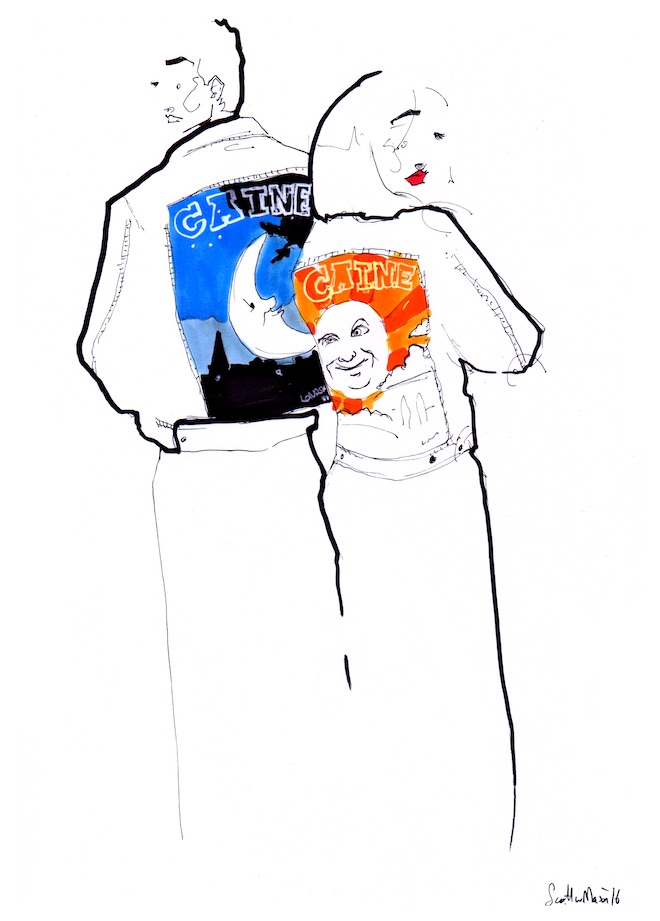
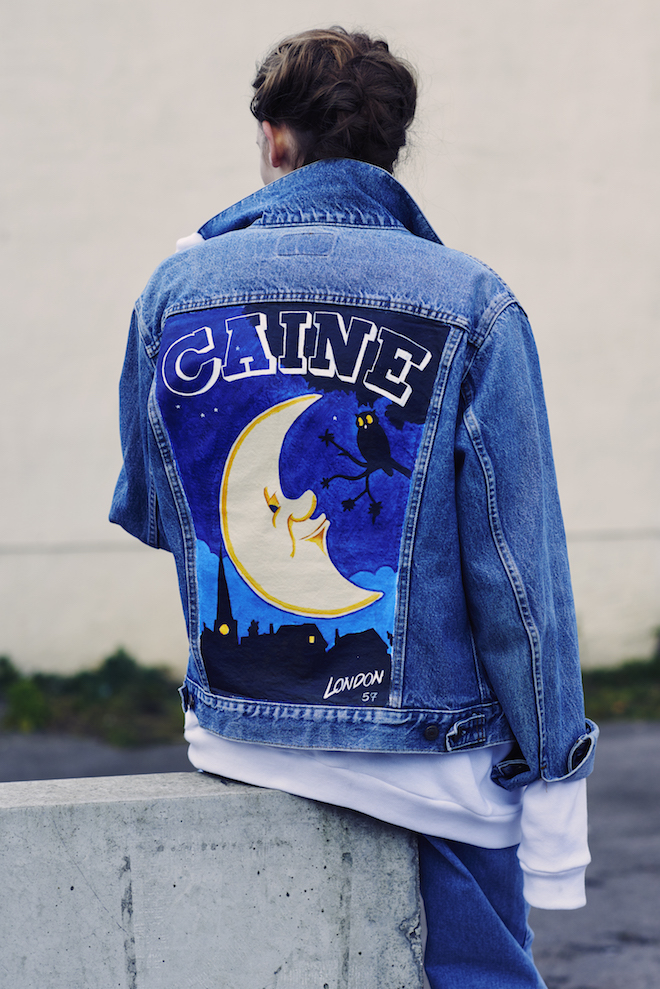
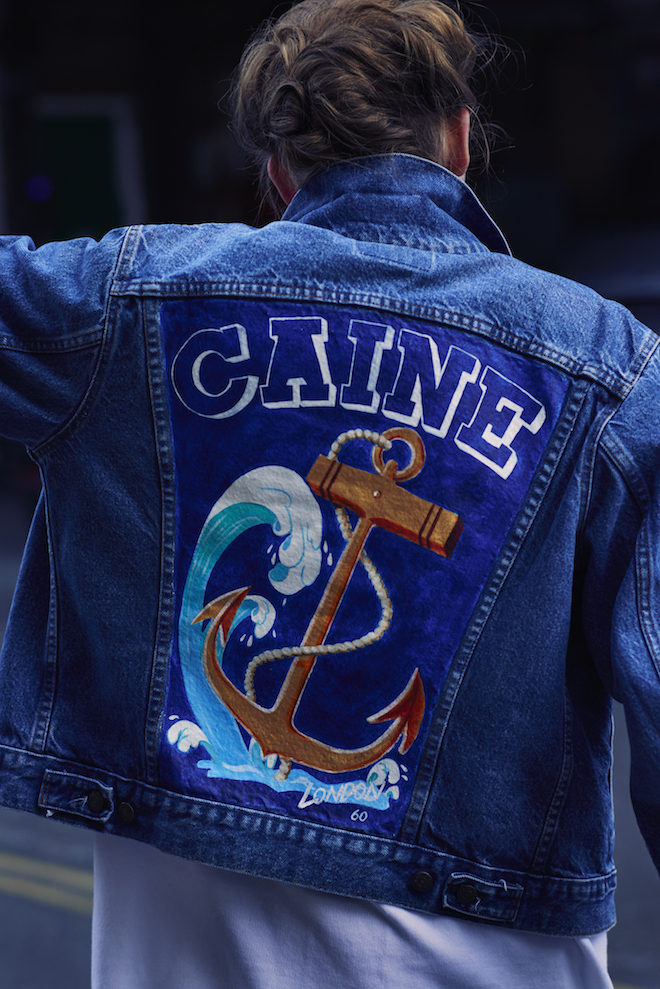
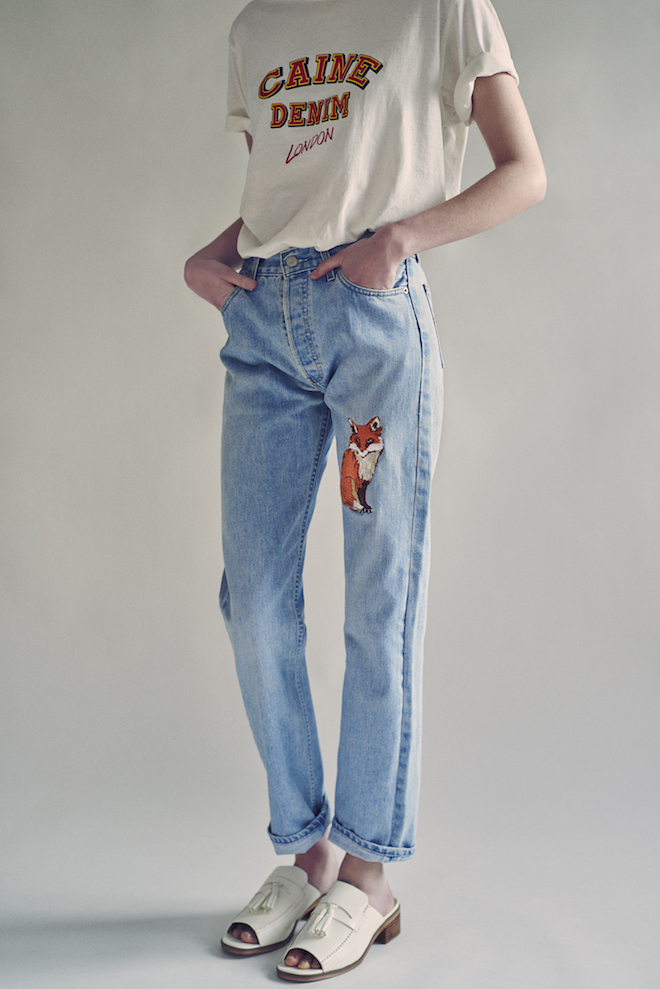
Caine London is the new cult denim brand on the scene, brought to you by musician/stylist duo, Matt Allchin and Hayley Caine.
The AW16 collection, ‘Rub-A-Dub’, consists of handcrafted denim jackets and jeans as well as embroidered sweaters and shirts, and is inspired by everyone’s favourite place: the pub. As a concept, it takes you on a cheerful crawl from ‘The Rising Sun’ to ‘The Half Moon,’ where you’ll shoot some pool and try your luck on the fruit machine; which, coincidentally, is a print which features on one of their shirts.
Combining ‘ye olde pub’ references with their ’90s grunge silhouette, we want to join their party…
How did you meet?
We met in 2013 in a pub in Peckham, Matt had been up all night at a friends party and had a picture of Martin Sheen in his pocket. Hayley was so impressed she hasn’t left him alone since.
Tell us about your collection: ‘Rub-A-Dub’…
The collection, like our meeting is based around the good old-fashioned English boozer. We used some of our favourite pub signs and names as inspiration. We’re constantly being inspired by things around us that don’t seem to be there or appreciated anymore. Our last collection was based on Canal Art and this time we were drawn to the signs above old English pubs, this again seems to be a way of life that is disappearing. It’s hard to find a pub that you would recognise as a traditional pub these days, we wanted to celebrate this.
What’s in the name?
It’s cheeky really it is cockney rhyming slang for ‘pub’. Other options were ‘nuclear sub’ or ‘battle cruiser’ – boozer – but they didn’t seem appropriate or fun enough!
Which are your favourite pubs in London? Unfortunately many of them are unrecognisable or closed down but we’re always on the look out for those rare bolt holes where you can only pay cash and the duke box is free like the Man of Kent in Nunhead.
You also cite ’90s grunge as an inspiration behind this collection – who were your favourite bands/musicians?
Obviously Nirvana, Sonic youth etc, but we love all music really. During our long painting sessions at the studio we can listen to anything from Bob Marley to 1930s comedy songs about loving bananas ‘coz they have no bones’.
Which is your favourite piece in the collection and why? You can’t help but smile when you look at The Rising Sun Jacket and he came to represent a turning point in the design process. Once we had that made everything else seemed to flow more easily, we hung him like a talisman in our studio!
You’ve branched out into jeans for AW16 tell us about those… Are there any skirts/dresses etc to follow for next season? The straight and wide leg jeans are super soft and luxe with a vintage look. Next season were ramping it up a notch so expect anything and everything.
If you had to sum up your brand in three words it would be… Stylish, fun and irreverent.
A graduate of Central Saint Martins, graphic and moving image designer Rose Pilkington‘s work is a welcome slice of psychedelia in our otherwise grey-permeated days.
Entitled ‘Auroratone’, Rose’s work is not only beautiful, it has been made with healing in mind. Citing Cecil Stokes, an experimental filmmaker from the 1940s as a loose inspiration – whose psychadellic 16mm abstract films were said to improve the mental state of emotionally fractured war veterans – Rose has keenly observed and subsequently utilised the historical link between colour and our state of mind.
By deftly using a combination of varying practices, from optical illusion to 2D and 3D techniques, her work is as transportive as it is visually pleasing. In a world – creatively speaking – that is for the most part hell bent on paring back and minimalism, it’s refreshing to be confronted by such unapologetic and uplifting “eye-candy” pieces.
“Creating these abstracted cavernous landscapes with colourful curves and soft shapes I wanted to assault the senses of the viewer,” says Rose, “impacting their eyes with colour and form, provoking them to feel stimulated by the colour surrounding them. By forcing colour to the forefront of our consciousness, some connection to it becomes apparent and a response is evoked that infiltrates the emotions.”
‘Auroratone’ at Dreams Bags Jaguar Shoes runs from 8th April – 30th June. Click HERE for more information.
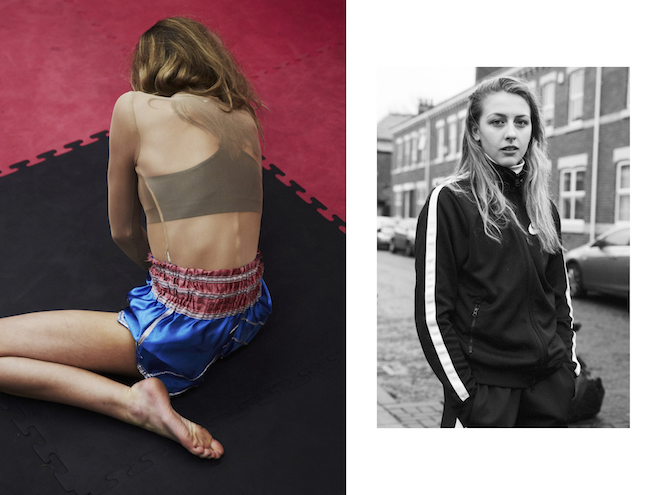
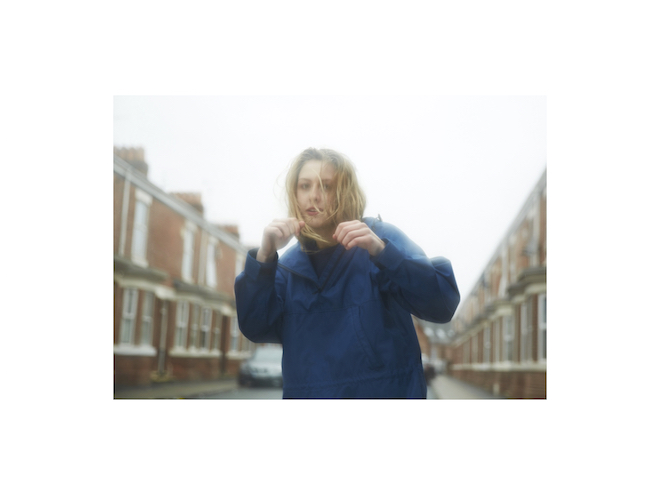
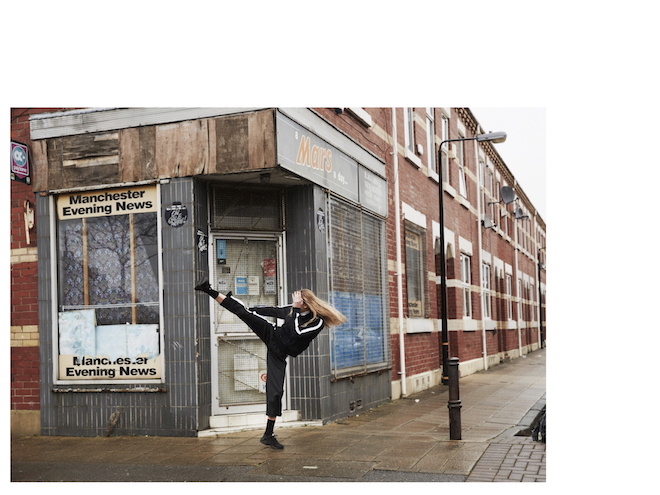
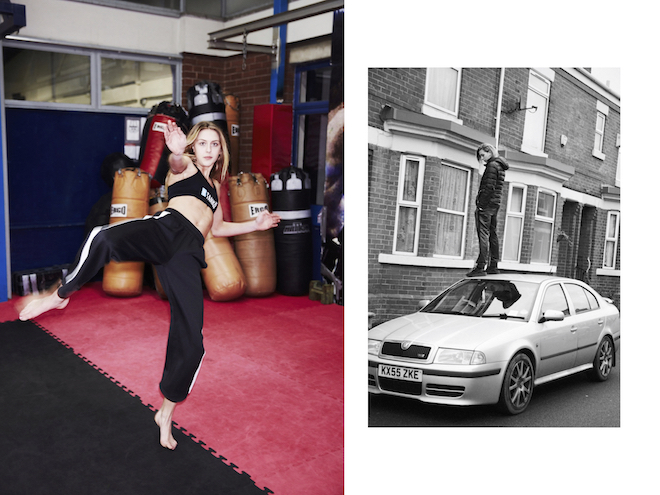
Northern Soul, The Smiths, Joy Division, acid house…Manchester’s cultural (and subcultural) legacy is legendary. Today tells a somewhat different story. The Hacienda’s been bulldozed and turned into flats, and the proudly-Labour city has felt the fog of Tory austerity descend. As the hangover of Manchester’s past lingers, London-based photographer Tom Sloan believes that it’s youth culture is deep rooted and immovable.
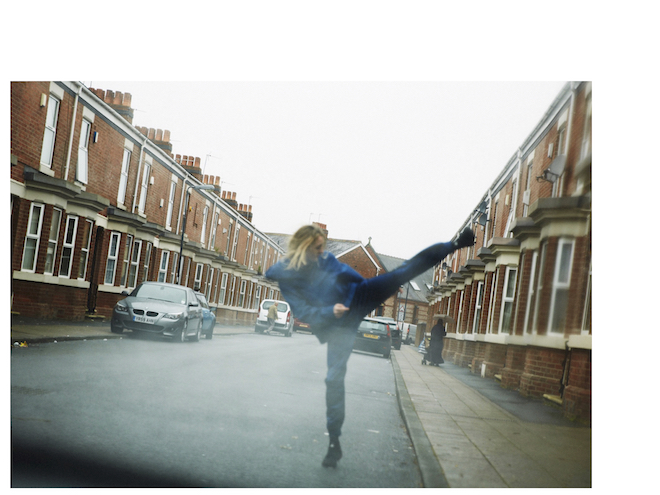
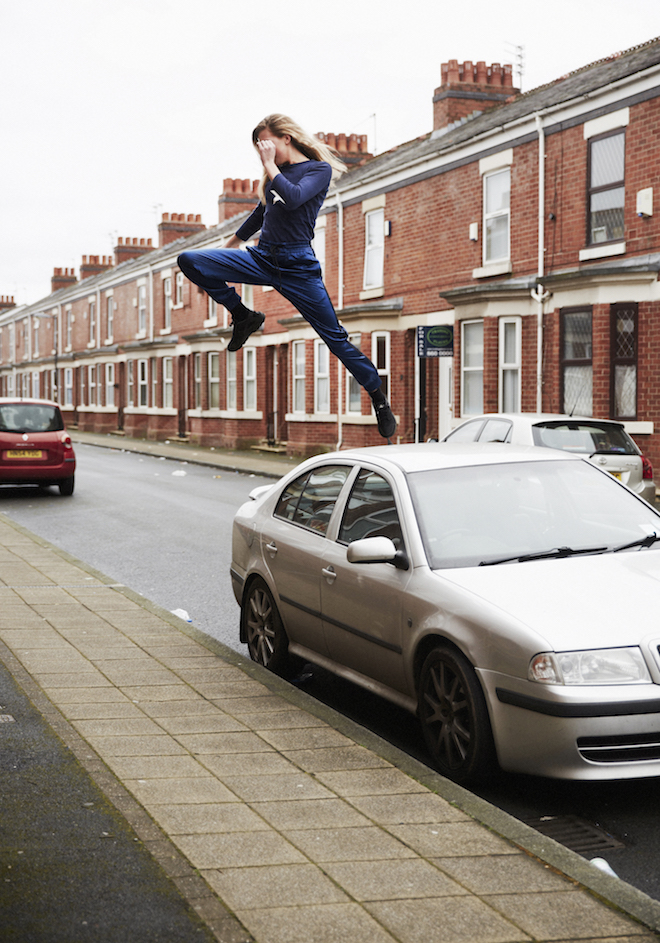
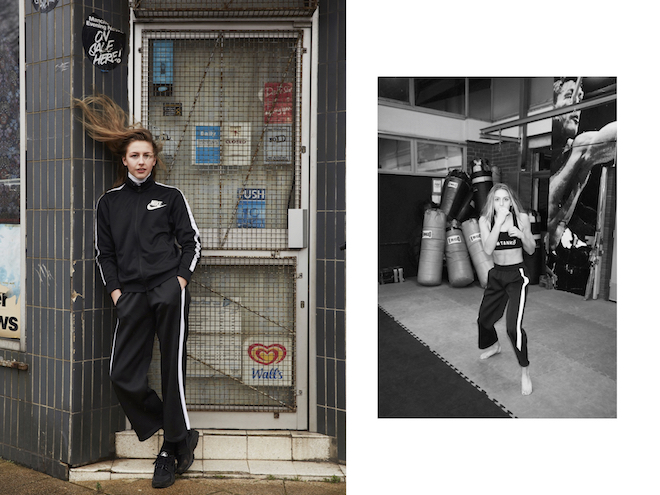
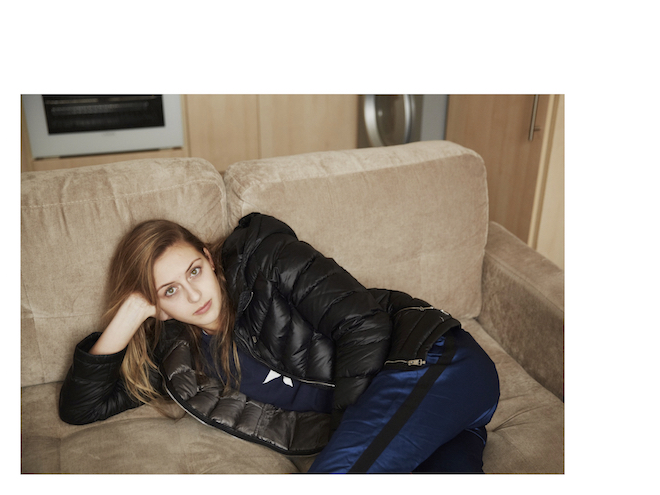
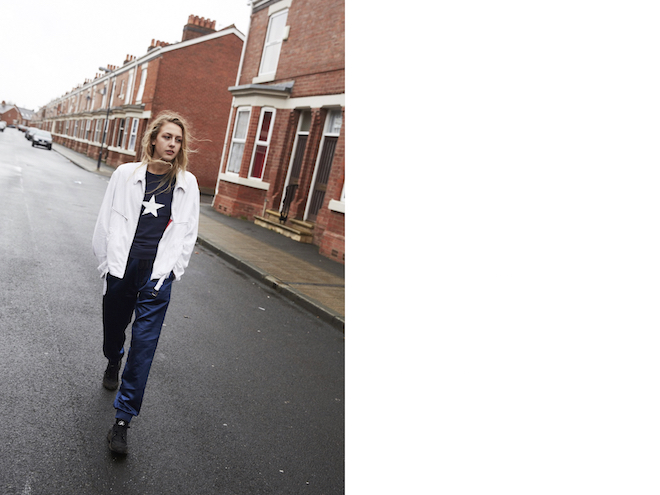
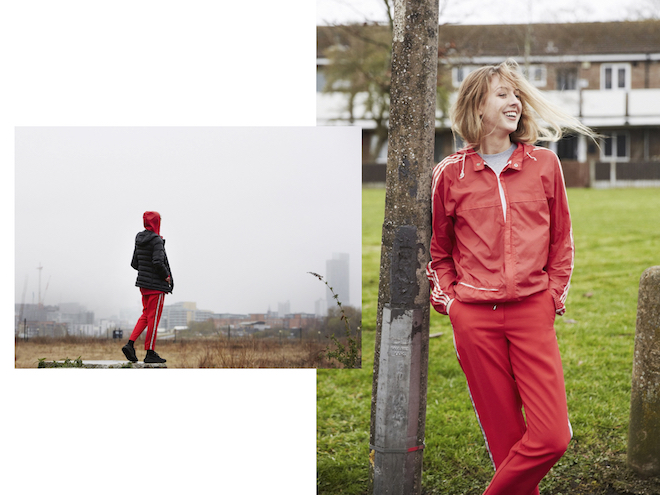
In his second online story for Twin, Sloan meets and photographs Dakota Ditcheva—a 17-year old World Champion Thai Boxer from Sale, Manchester. In line with the rest of his work Sloan hopes to shed light on the importance of youth:
“One of the great things about boxing is how it works – perhaps more so than other sports does – as a platform (quite literally) for these kids to perform, and that’s what I try to do, to give British youth an opportunity to showcase what they do best at a stage in life when they are often wrestling with burgeoning notions of selfhood.”
What are the ideas or questions that ignited this project? So much of my work examines those few years that sit between late adolescence and adulthood. For most, this is a time when the novelty of independence first comes in to play. It’s a universal feeling, but the way young people choose to use it is not. I had a pretty eventful teenage period in Southhampton, hung out with the type of kids I photograph, took drugs, went to parties – the usual stuff. But for Dakota these years were spent in the gyms and boxing rings of Manchester. At 17 she’s at the cusp of ‘adulthood’ and the forefront of women’s boxing – which was included in the Olympic Games for the first time in 2012. In line with the rest of my photography I wanted to show Dakota at home in Manchester, doing what she does best – boxing.
Much of your work depicts youth, and young people—is there a reason for that? When you are younger you haven’t picked up as much baggage—as tired and overused as that phrase is. You are easily excited, open to opportunity and less conscious. In a round-about way, this brings about two things, first a more honest connection and second a sense of confidence which I look for in youth. That confidence might manifest itself in one kid as he skins up a fat joint on the local rec, or like Dakota through an activity or sport. I ask questions in an attempt to connect with the young people I photograph: what do they like? What don’t like like? Who are they listening to? It’s easy with Dakota she has an clear interest – and I was interested in that.
You shot this story in Manchester. Was it important to give the city a sense of place? Absolutely. I shot Dakota in her house and around her estate in Sale, often against the backdrop of those brown-brick terrace houses that are so synonymous with the North West. I wanted to evoke a strong sense of identity and give insight into where Dakota and her family are from.
Boxing is a recurring theme in your work. What is it about boxing that inspires you? The energy, that sense and feel of the unexpected – that’s why I’m drawn to it. I don’t box – I like it – but I don’t box, it’s an observational relationship but immersive in so far as pulling out Dakota’s clear interest in it. But, it’s not just boxing. I have shot motocross riders, gravel pit shooters, activities or interests that toy with a sense of danger. As much as I am on the look out for new faces, I’m as much on the look-out for new activities – different ways to showcase the diversity that is so relatable to British youth culture.
What is it that you’re trying to do with your work? My future work – I guess – will be an extension of what I am doing now. I try to make sure there is a level of linearity running throughout my work, each project tells a different story but the aesthetic joins them. I shoot ‘real’ people, people not models. I like to work with people who haven’t been shot and that is a practice I want to continue.
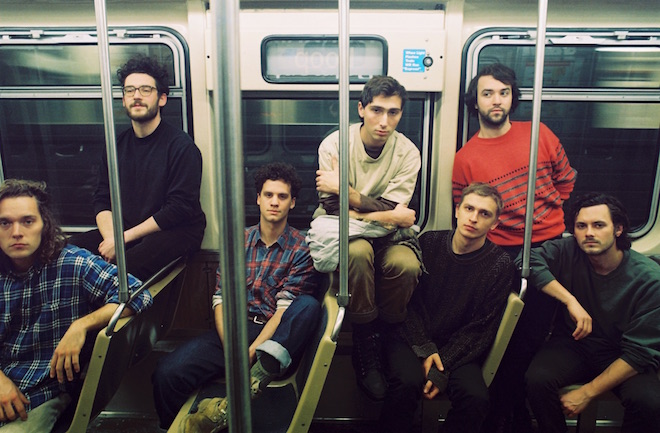
Trundling round Europe in a white van, spending their time listening to The Band and Bob Dylan, drinking too much whiskey and beer: the antics of the six-man band Whitney have a something of a cinematic quality about them. On the icy Sunday that I meet them, they’ve just come over from a festival in Holland where they played to families and partied with the locals until the early hours. One small jaunt across the border and they’ve arrived in London, much to the delight of Hackney’s finest, who are queuing down the street to get into the small garage space which is already 100 degrees too hot from the expectant fans inside.
Maybe it’s just the home-made, half-drunk Tom Collins in hand, but as the band sound checks you can feel their magnetism entrance the crowd. By the time they’ve launched into their first song, the sense of joy from the stage and throughout the audience is palpable.
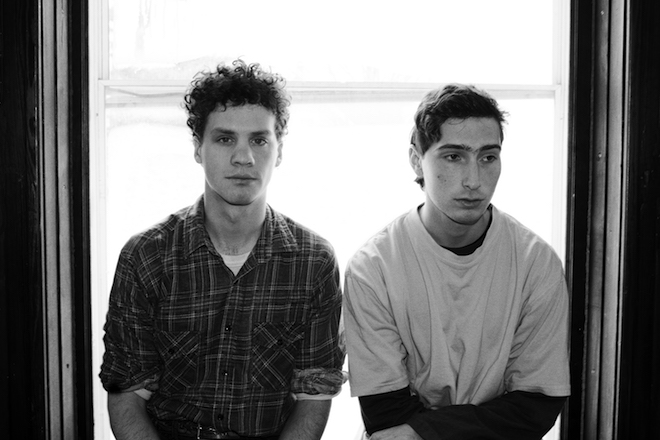
The band – made up of Max Kakacek, Julien Ehrlich, Josiah Marshall, Malcolm Brown, Will Miller and Print – are an exceptional live act. They literally move in rhythm, playing their separate instruments (trumpet, keyboard and a rhythm guitar alongside guitar, bass and drums) as though they’re all in sound together. It’s an unparalleled and unique chemistry. The lyrics are melancholy yet hopeful, expertly worked out by Julien, Max et al. Julien’s silky, pure vocals ride over melodies that swing from soft and searching to the downright groovy, led by ex-Smith Western’s Max on the guitar. Whitney are a band singing about crossroads and transience, about lost loves and moving forward and having a lot of fun together whilst they do it. “I’m searching for those golden days” Julien sings in one particularly enthralling track; judging by the reaction of the crowd, it feels like Whitney might finally have found them.
We caught up with lead duo Max and Julien to talk the bathrooms in Soho House, eyeballing audiences, Donald Trump and the new album.
How did Whitney happen?
M: Me and Julian lived together. After Smith Westerns ended we each worked on different weird projects that never came to fruition. Then one morning I bought this old cassette tape machine that sounded crazy and we were just testing out the machine and wrote two songs for it just kind of snowballed into something we wanted to make a whole album for.
J: We had never recorded my voice before. And this tape machine had a ton to do with it. It just made everything sound really good and appealing but dry, super dry. And that’s where the sound kind of blossomed.
M: The first song we recorded, if we ever release it, you’ll hear that the affect on Julian’s voice is so intense and ridiculous and we were kind of going way way far to figure out a voice and then scaled it back.
J: During the demos I was more experimenting with my voice a bit more and we were experimenting with recording it, and right before we went out to LA to record the full length in LA I kind of hit my stride and figured out how to sing.
M: Once we had the unique voice or whatever we kind of built the band around it.
Was there a particular moment when it clicked? J: I remember a moment that we decided that we were going to drop the other shit that we were working on. It was right after we finished the second song that we wrote. I think we took shots of molly water and were walking around Chicago because it was the first nice day and we were just listening to it out of our iPhones. We were insanely proud of it. We went onto someone’s roof and were still listening to it.
M: Did you almost pee on someone’s couch that night?
J: I think I peed on someone’s couch that night… And then we didn’t really follow up with any of the other stuff that we were doing.
The band; photo by Sandy Kim
And how did you find the other members of the band? M: They’re our best friends. They all basically left their apartments, which were five minutes away from ours, and everyone moved in together. It was like an open door thing, like a family.
Do you think Whitney only happened because of your experience with Smith Westerns and Unknown Mortal Orchestra? J: I don’t know if it was because of other bands, but we were just in the right place in our lives to put all of our energies and songwriting talents into this weird project in the hopes that people would pick up on it, and so far it’s working.
M: I don’t think there’s anything specific I took from Smith Westerns but it’s just learning on a personal level how to arrange things.
Are you still using the tape machine? M: No that thing broke like after we made that song. We did record the whole album on tape though.
You recorded your album in L.A with Foxygen’s Jonathan Rado, what influence did he have on your sound and process? J: We used basically all of his gear to record it, it’s obvious that he has gotten really good at getting the right sounds out of all the stuff he owns. He’s the type of guy that goes crazy if he’s not recording so we didn’t really have any downtime. Overall it was a great experience.
Do you write the songs together? How personal are they? J: We really consult each other on mostly everything. Most of the time I concept where the lyrics should to but if I hit a road block we’ll just bounce them off each other. And it goes the same way with every instrument.
Why did you choose this particular sound? J: Most of the songs are about transition in general. That’s where we were in our lives and it seemed like the sound suited the character at the time, but in no way is it going to define Whitney as a whole. We don’t want people to think that we’re going to come out with a sad record every time. We’ve been listening to a lot of Greenday today so…
How is it playing drums and singing vocals? J: I’ve always done it, but for backing vocals. So it wasn’t hard to do four limbs and singing vocals.. It was more about learning how to assume the pressure of being a frontman, of learning how to talk in between songs and be more entertaining. But I’m past that roadblock now, I feel really comfortable. We toured with the idea of me standing up and playing guitar but then I looked like a fucking lame dude playing the guitar. I do not look good.
What’s the weirdest thing that happened on tour? J: Our bass player drank our old guitarist’s piss, by accident. It was a really late night and we were hanging out in a cemetery and then our guitarist went and passed out in the van, and then peed in the half-full water jug. Then our bassist came in and busted off the top…
M: So many good thing’s going on! His name’s Josiah Marshall.
J: He routinely loses tour.
How are you finding the whole touring experience? What’re learning along the way? J: I’m learning how to pace myself a little bit more.
M: I was pretty prepared for this tour, but I learned that Soho House as an institution is really nice! The showers.. Oh my god.
J: Just the most private bathrooms you could ever imagine, you can do whatever you want it in there.
Max and Julien; photo by Dominique Goncalves
Alright! What’s the plan for the rest of 2016? J: Just non-stop touring. Our goal is to sit down and write more songs, but we’ll probably just learn to do it on the road.
How do you find performing the same songs every night? J: Whitney is a band that changes things every night. We’re always working to put variations on the songs that we wrote a year and a half ago.
M: And at this point, the faces in the audience are always new, so the reaction to songs is always different.
What’s the worst song you ever wrote? J: I wrote a song about that sci-fi movie Event Horizon with our bass player
M: I was in a really bad band called ADHD when I was in eighth grade, and we had a song called Sexy Police Officer. We sang about George Bush a lot, I was really active.
What’re you going to do if Donald Trump gets in? J: We have a thing where during shows I’ve made the crowd flip off Donald Trump and yell “Fuck Donald Trump.” Besides that, I don’t think Whitney wants to comment on political affairs…
Light Upon the Lake is released on Secretly Canadian, June 3rd














 PREVIOUS

 Twitter
 Tumblr
 YouTube
 Facebook
 Instagram
