Alexandra Kokoli and Basia Sliwinska guest curate the new exhibition Home Strike. In the new show the pair bring together the work of four women artists — CANAN, Paula Chambers, Malgorzata Markiewicz, Su Richardson — to explore domesticity through an activist lens. The artists probe and refute the idea that domesticity and femininity are intertwined.
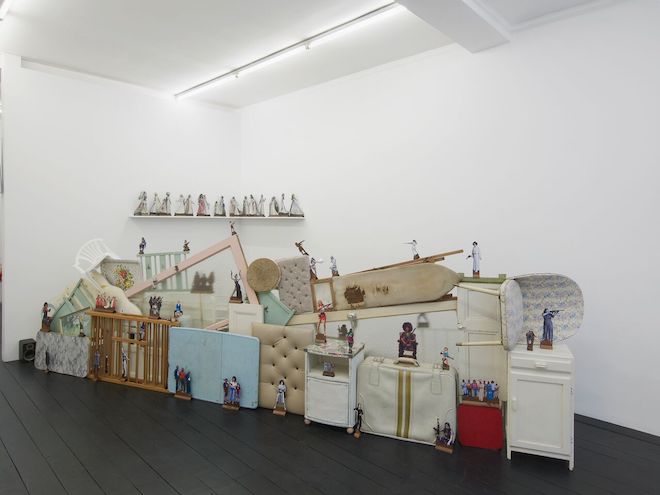
Each artist radically reimagines the domestic space as a battleground. It is territory to be taken and looked at afresh. Paula Chambers repurposes everyday kitchen furniture into a fort or barricade, rejecting the wholesome connotations of stools and ironing boards, laying bare the repression and violence which they can also represent.
Installation view, Paula Chambers. Photo: Andy Keate, courtesy L’etrangere
Małgorzata Markiewicz work addresses the family home. She interrogates the idea of women within the domestic sphere, examining motherhood and the idea of entertaining in the home.
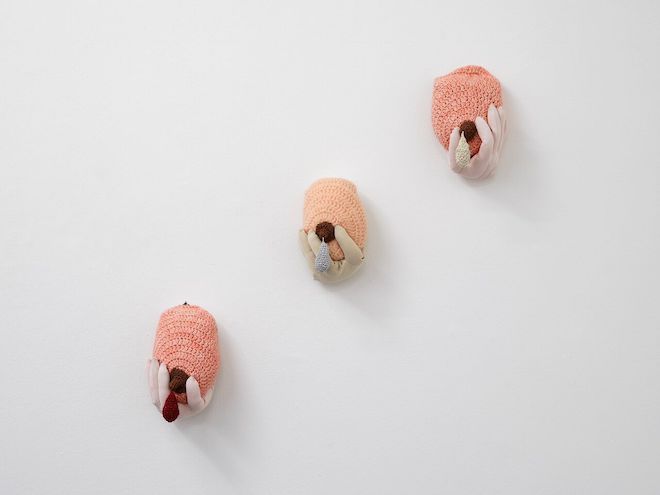
Su Richardson contemplates themes of domesticity and motherhood through knitted and crocheted pieces of family scenes. In pieces such as Burnt Breakfast the idea of tarnished or ruined food is contrasted with intricate, delicate technique. Richardson also presents a new series of work made especially for the Home Strike exhibition. Here, knitted breasts are both sexualised and reduced to emblems of motherhood.
Installation view, Su Richardson. Photo: Andy Keate, courtesy L’etrangere
In her video Fountain (2000), Istanbul-based artist and activist CANAN records the sounds of her lactating breasts. The film challenges audiences to radically reevaluate the way in which a women’s body is perceived. To forgo sexualised connotations that have been promoted in art and the wider cultural and political sphere, and to value their functionality and normality.
In all then, Home Strike offers a powerful and invigorating call to action: to engage with, and to challenge, existing notions of domesticity and femininity.
Home Strike is at L’étrangere in London until April 21st 2018.
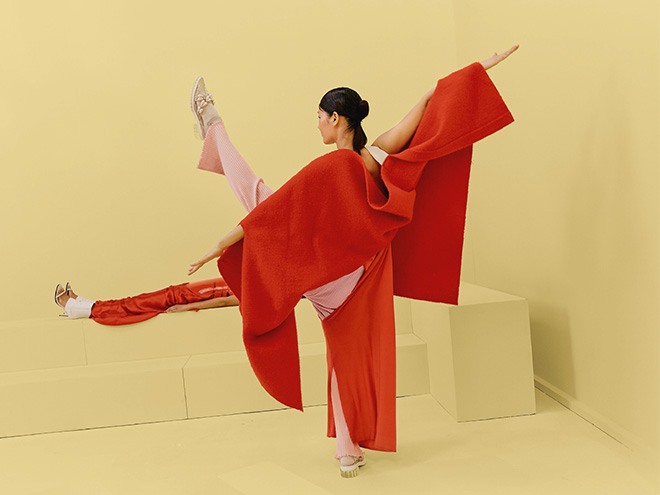
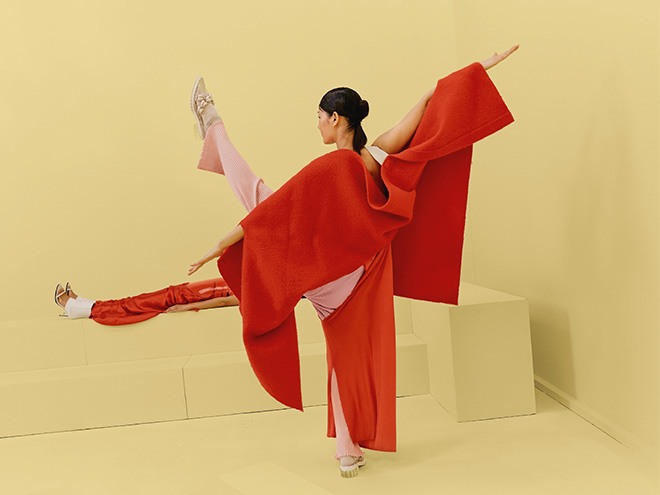
The new season demands poise, precision and passion in order to do it justice. Watch the new fashion film from Agnes Llyod-Platt made especially for Twin magazine. Read the full story in the latest issue, out now.
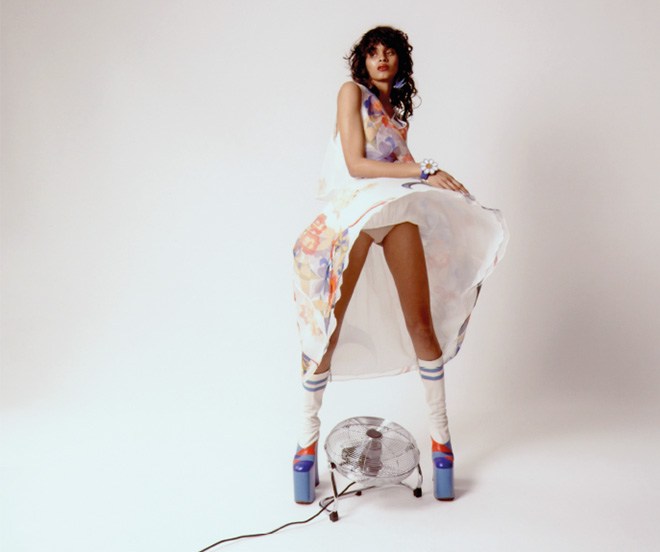
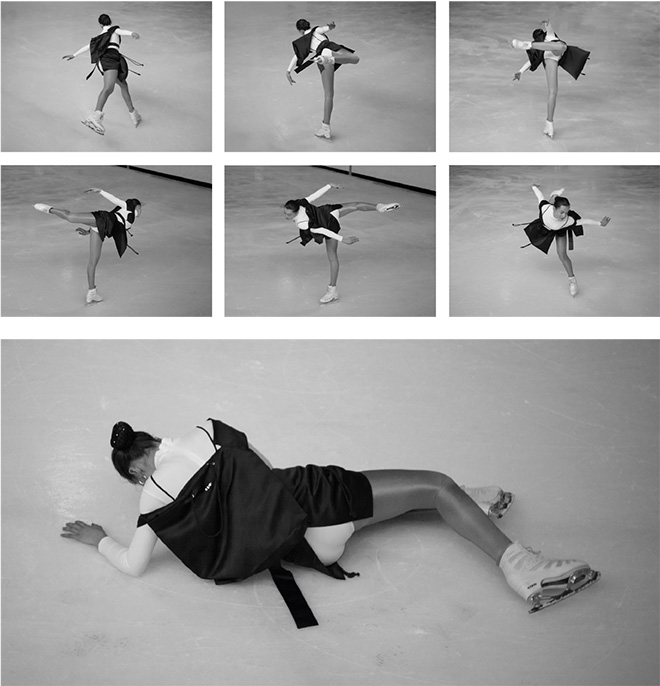
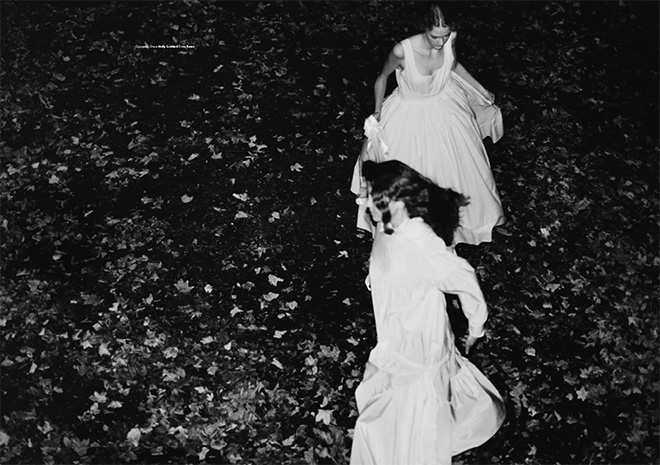
As we make our way through 2018, Twin delves into the complexities of female camaraderie through a low-key lens, as we study the closeness of sisterhood, as compiled by Holly Hay. Samuel Bradley also turns focus on girls with bows, as archery takes centre stage when accessorised with the latest collections. In the States, we meet Arrow De Wilde — daughter of rock photographer Autumn de Wilde — and the band she fronts, Starcrawler. Shot by Molly Matalon, this explosive group are as likely to shred expectations as riffs, as they spit fake blood on crowds and remind us all what music can, and potentially should, be about. Elsewhere, we take the drama to the ice as photographers Stevie and Mada give us incredible portraits of figure skating stars past, present and future, in catwalk attire to suit. The unimaginable power of pregnancy is also given the respect it deserves, thanks to Jesse J Jenkins and Aurelia Donaldson, in ‘The First Thing I Stole Was Your Milk’, and the important, and ethical, work of designer Bethany Williams is explored in ‘Cycle Of Exchange’. Lastly, we raise the barre on couture through the refined images of Agnes Lloyd-Platt, and find out what happened with Okay Kaya (Wilkins) almost met PJ Harvey. Join us for the ride.
Embrace spring with this new scent from Louis Vuitton. Offering top notes of mandarin with hints of blackcurrent, jasmine and peony, this is a fresh, energising scent to kick start the day. Surround yourself with a sense of the new season: buy it now.
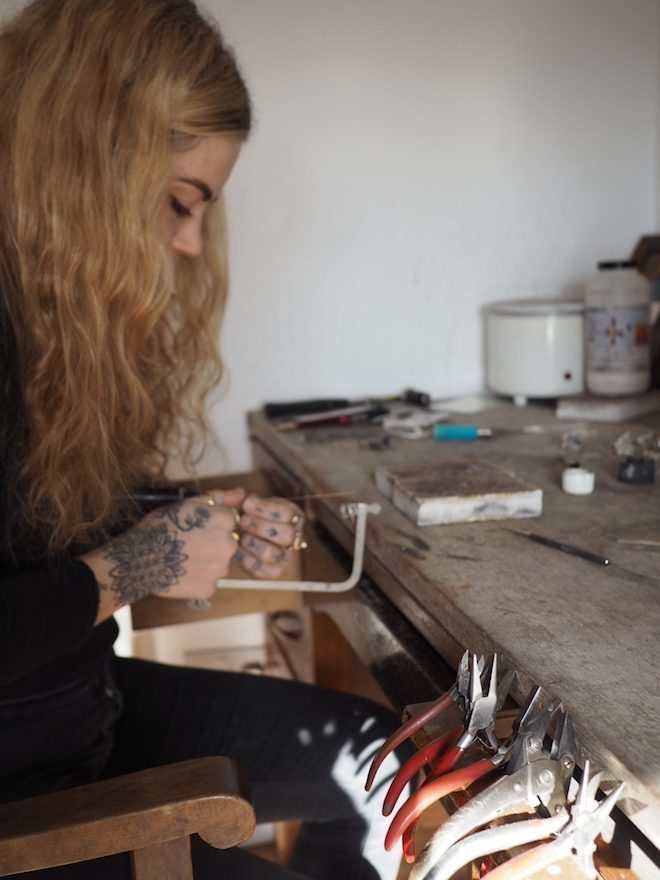
Rebecca Ellis Onyett’s jewellery (REO Jewels) personifies everything that she stands for: it is unapologetically raw, natural, bold, elegant and visually strong. Like most young creatives looking to explore their craft and talent, having completed her degree at UCA in Silver and Goldsmithing Onyett came to London to carve out a career for herself. She spent the first two working in Harrods and Selfridges for jeweller Shaun Leane, until she felt that the experience and knowledge she had gained from this time was strong enough for her to formulate her own brand. Five years on, Onyett has created a mini empire where her brand recognition is growing steadily, as is her international following.
Speaking with Twin, Onyett explained the ethos behind REO jewels; I think it has always been the same, since the beginning. I’ve always just wanted to make jewellery that’s nature driven and animalistic in a sexy couture way. To be worn by strong women and men who feel free to express themselves by wearing something a bit different. For me it goes back to our ancestors who wore animal bones and skins to express their primitive strength. After all, we all were once animals ourselves.
This drive to make jewellery that places a strong focus on nature and animals comes from her experiences as a child, growing up in the Kentish countryside, constantly surrounded by the natural elements. I have always loved to be around nature and growing up spent a lot of time both in the woods near my house but also along the Kentish coastline due to my father’s love for nature and always taking me for long woodland walks or beachcombing. From a very young age I always knew I was an artist. I always loved using my hands and after experimenting at Plymouth university in 3D design I found myself engrossed in a jewellery making evening class, which is when I knew I had found my calling. After finishing my degree at UCA in Silver and Goldsmithing I definitely felt a call to move to London and try and make a name for myself there.
While her time in London was critical to the success of REO Jewels, Onyett’s love of the city was starting to wane as she became more and more aware of its rushed quality of life and the realities all Londoner’s face; property development and gentrification. These became a catalyst for her move to the small Kentish seaside town of Margate; 5 years on, with a huge wealth of experience, new friendships and a mark made in the jewellery industry I started to fall out of love with London. I just felt that my quality of life was less than it had been after having to leave my huge studio due to development work and I felt the need for change. I mentioned this to other artist friends and Margate became a recurring theme. I decided to take a trip there as I had never visited before. As soon as I did, I knew I wanted to move there. I think that’s the thing with Margate you either get it or you don’t. And I got it.
Reo Jewels | Jenna Foxton
Having now lived in the seaside town for two years, Rebecca discusses what she loves most about it; the space, the fact that I have a home I can call my own and a new studio that is cheap and big. The skyline, something about Margate skies really does soothe the soul. The pace, everyone in London is in such a hurry that they miss out on life. You don’t even realise it until you leave but I was so caught up in having to make money that I forgot to enjoy the simple things. For Rebecca, REO jewels is both her work and passion, it is all-consuming, which means she tries to have moments separate from the business. With this in mind, she mentions Feral Sistas, a project she has started working on with her best friend. Throughout the summer the duo will travel around the UK to summer festivals in their 29 year old Bedford Rascal campervan hosting creative workshops, which will include jewellery making and life drawing. Onyett explains how the project naturally came to fruition through their shared love of meeting and engaging with new people on a creative and fun yet also productive level.
As for many small businesses, Instagram has been instrumental in the growth of REO. Onyett’s beautifully curated profile, has been invaluable for the brand. It showcases her most popular products, arguably her signet rings as well as the bespoke commissions she regularly receives. It is a godsend. I have a lot of sales through it and it’s a free platform to advertise. I’d like to think that not long from now I won’t need a website and I can do all my sales through it.
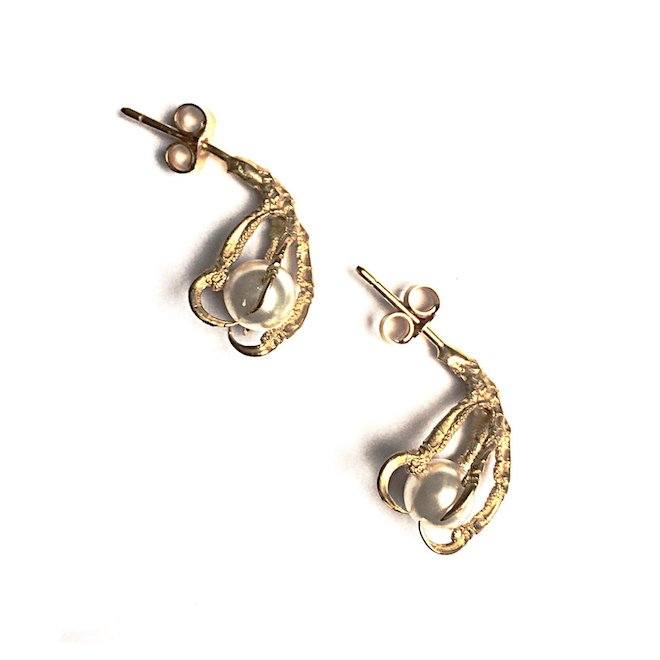
Sparrow Claw Pearl Earrings, £100
While in time it may not be necessary for Onyett to have a website, she will always depend on Hatton Garden for sourcing her materials. When we discuss the topic of gender equality within the jewellery world, she touches on London’s jewellery district and why she feels it is still so old school and relatively sexist; I suppose it is this way because there are not many women employees, especially in trade jobs. It is predominantly male and even the men my age working there have learnt the trade from being an apprentice. But from my time, university degrees seem to have produced mainly female contemporary jewellers (whether they are full on makers or just designers is a whole other point). So it seems to depend on your background , but saying that if you were female and couldn’t afford to do a course or a degree I think you’d find it hard to get an apprenticeship in Hatton garden.
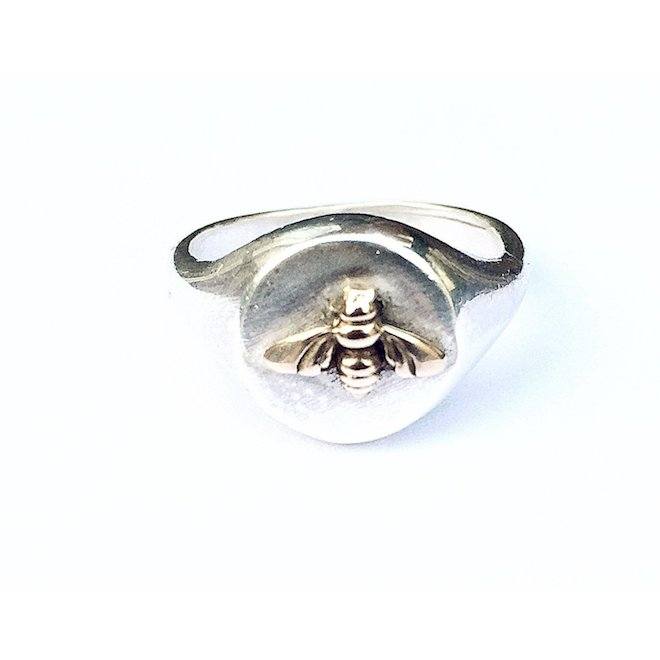
Raised Bee Signet Mix, £75
For Onyett, having full control over her life is the most important part of working for herself. With this in mind, she credits her father for teaching her about the importance of a strong work ethic and describes him as her biggest inspiration. When asked who on the contemporary scene she would like to see wearing REO Jewels Rebecca’s response again embodies what she stands for; an individual who instinctively avoids the status quo; There isn’t really anyone current who I can think of but if I was making my jewels in a different time I’d say Janis Joplin or Courtney Love. Travelling, especially road tripping across America, and observing the reaction of a customer when they first see her work, are what make her most happy. You can find REO jewels on Broadway Market every Saturday from 9AM-4PM. If at first you cant find Onyett’s stand, listen out for and then follow the loud laugh, and that’s where she will be.
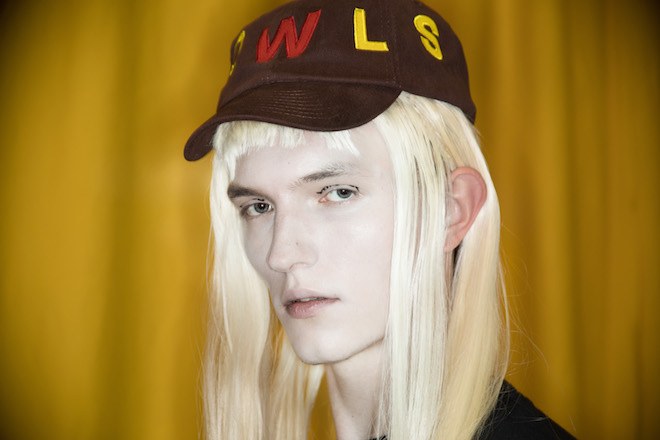
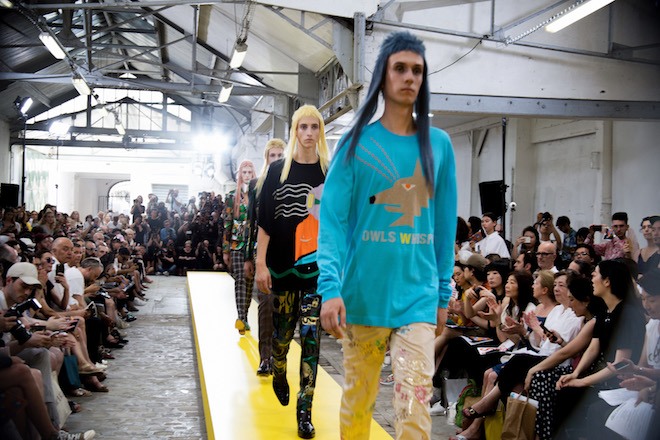
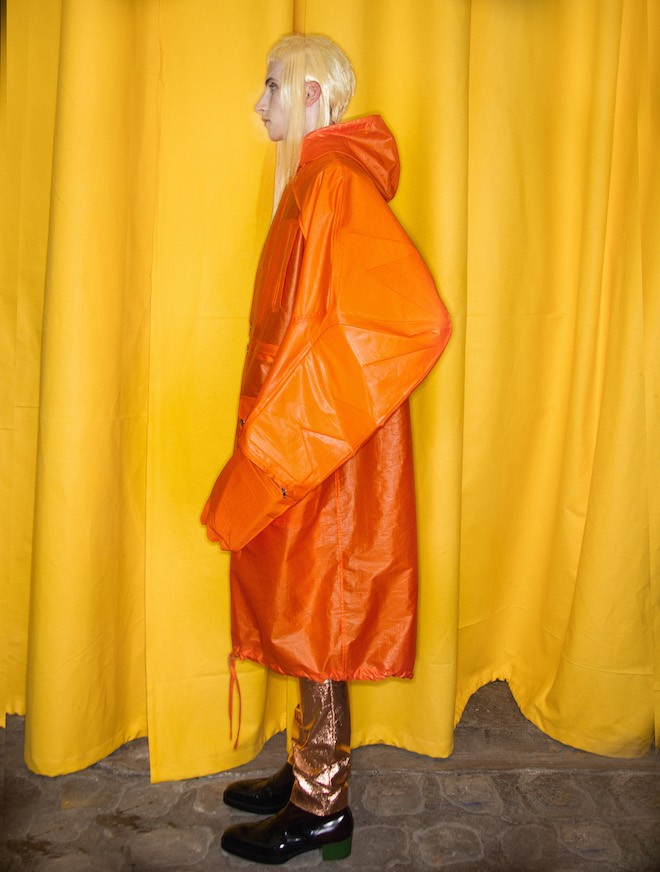
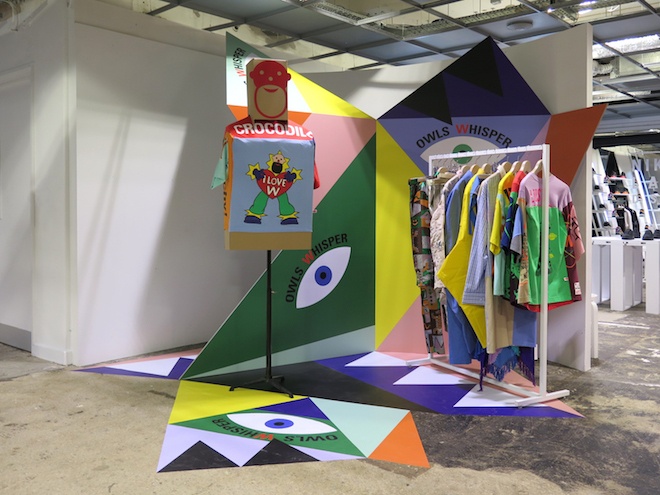
This weekend sees the arrival of a bright, quirky new Walter Van Beirendonck installation at Dover Street Market, mirroring his electric and imaginative SS18 collection.
Designed by Alex Wolfe, the ‘Owl’s Whisper’ display reflects the geometric shapes, loud colours and sense of play at the heart of the collection. The new installation also coincides of the launch of new Walter Van Beirendonck items in store at Dover Street Market, with 40 limited edition, handmade t-shirts that combine parts of clothes from old collections. Get them while you can.
Write your own rules, make your own story: Chanel’s Rouge Coco blush is the Twin women all over. Be bold with lines, experiment with style and go beyond all the norms. This is a blush that will leave you feeling empowered, and ready to wow ’em.
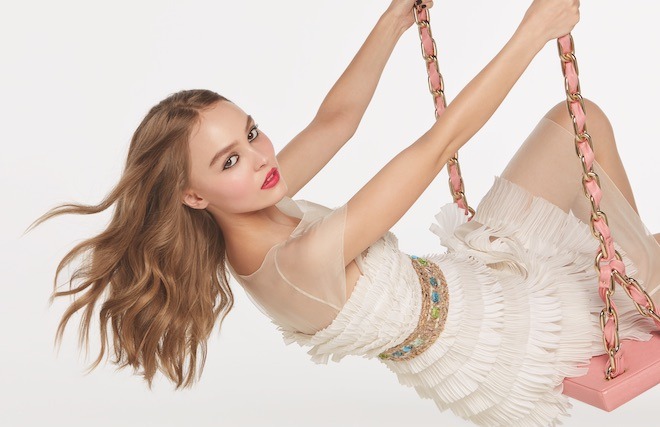
The new rouge Chanel lip blush campaign offers an ode to the COCO fragrance advert created in 1992. Back then it was the emerging starlet Jean-Paul Goude on a swing. Now it’s the young starlet Lily-Rose Depp in the frame, proving that Chanel’s sense of play and style is timeless.
Watch campaign star Lily-Rose Depp showing how it’s done in the video below.
Chanel Rouge Coco is available in stores and online now.
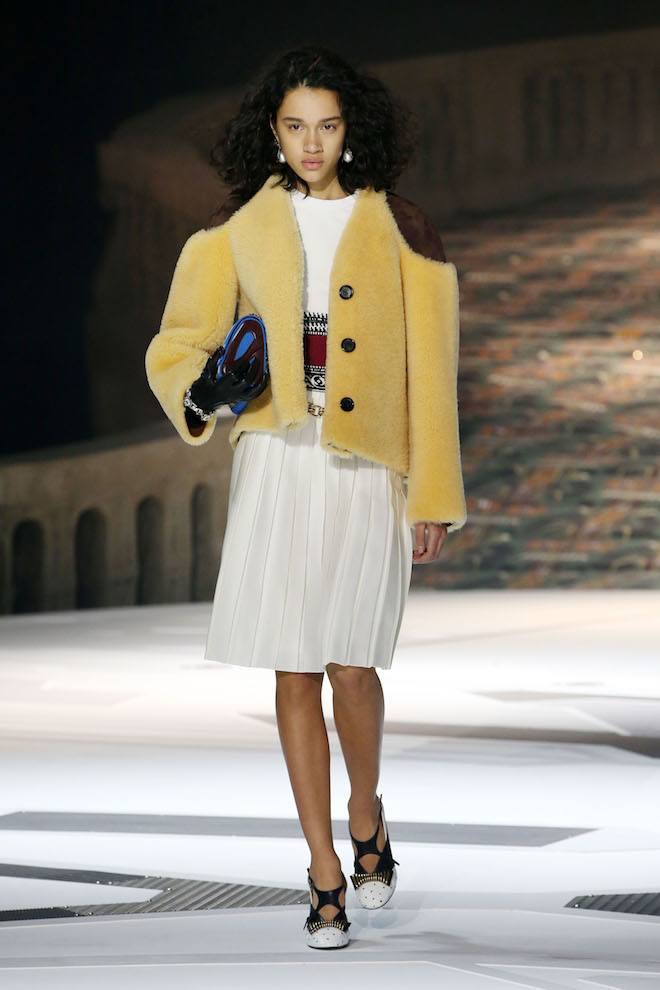
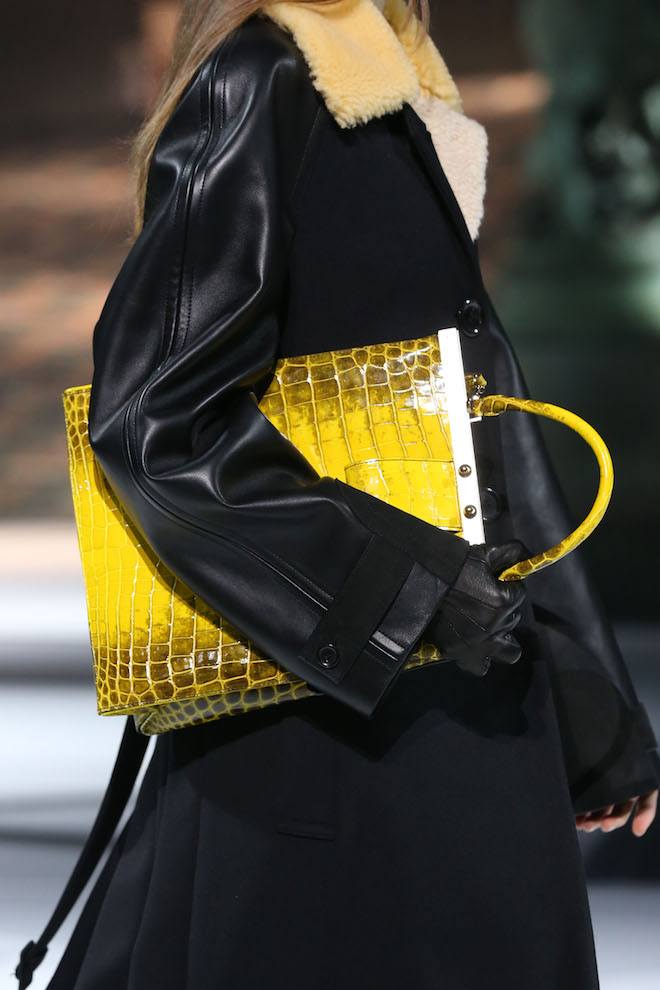
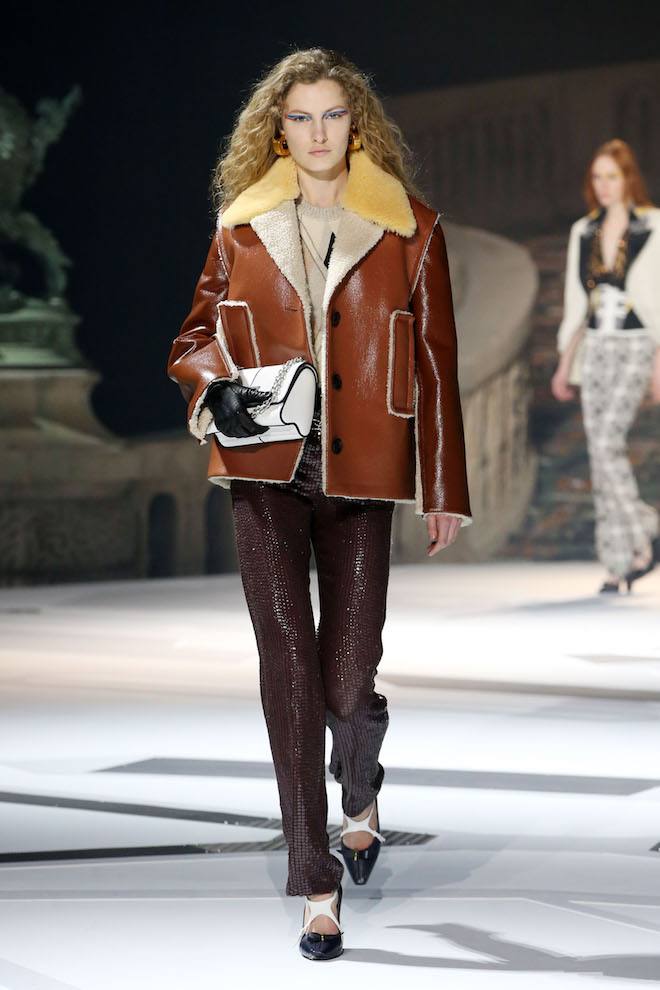
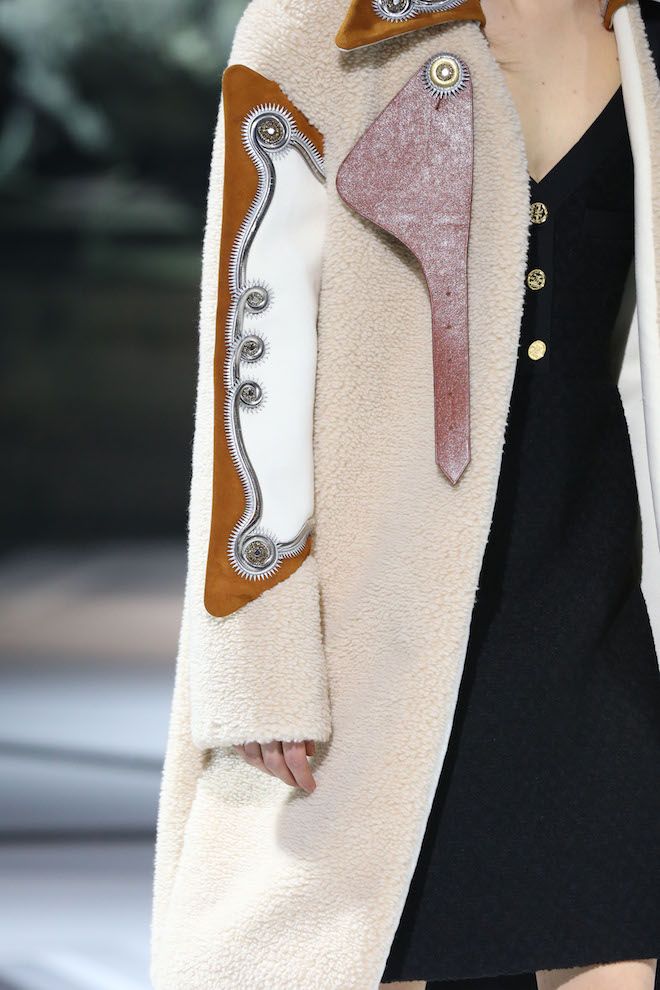
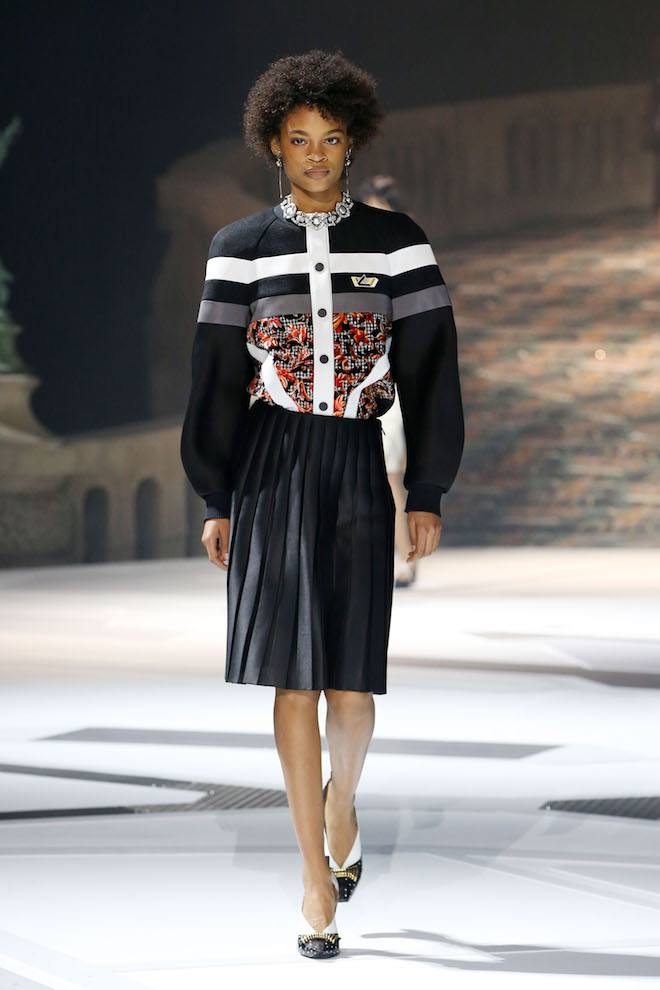
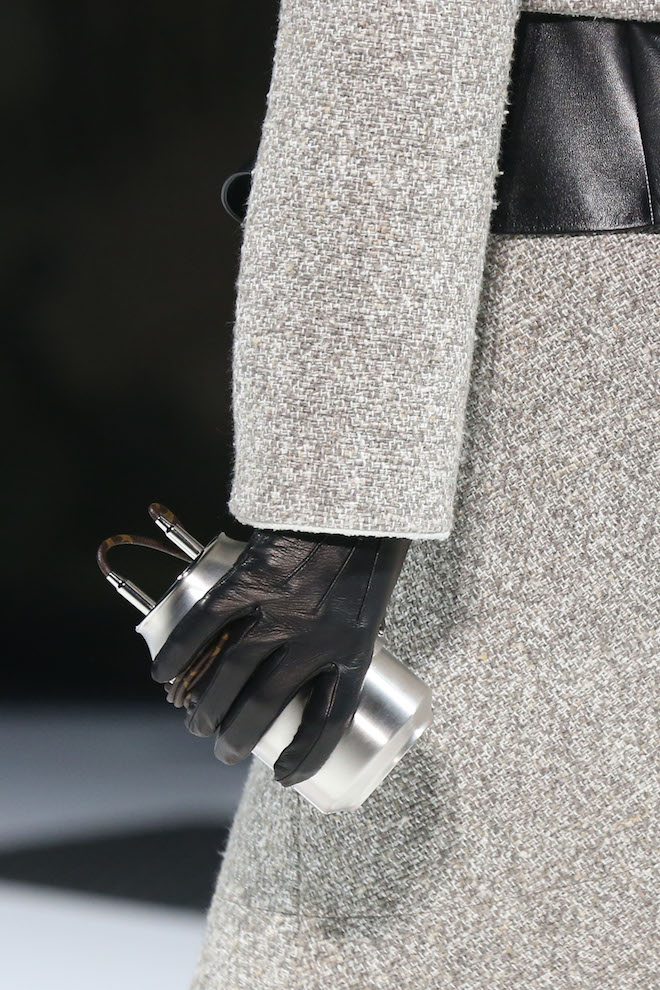
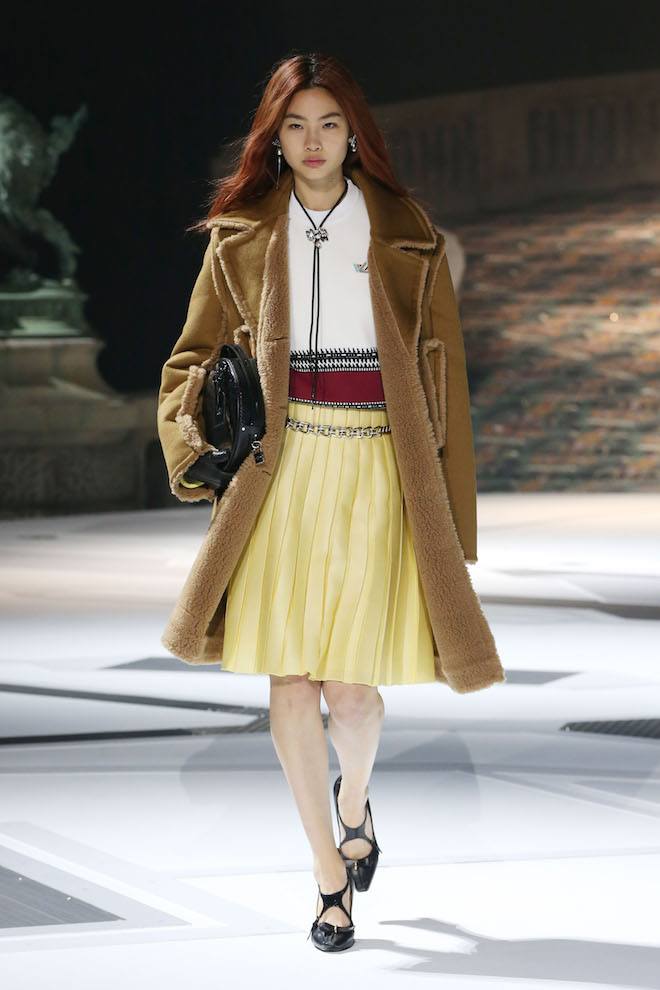
Military yet undone, matching but out of synch, the Louis Vuitton AW18 show brought to life a new vision of powerful women. The show was all about turning the expected on its head, and there was a palpable sense of strangeness and mystery throughout. Bags were carried on their sides, rather than upright; eye make-up streaked across one eye but left the other bare; traditional silhouettes such as pencil skirts and cashmere polo necks were mixed with peplum leather jackets and suede-shouldered pale yellow, shearling jackets. It was Nicolas Ghesquiere at his savviest, blending femininity and power to offer an original vision. Here’s to the new era.
The new Saint Laurent Fall 2018 campaign is fronted by the iconic Betty Catroux. Captured by David Sims, the black and white film celebrates the lasting appeal, confidence and power of the original modern woman. Watch it in full below.
Foam magazine opens their new talent exhibition later this month, a celebration of 20 emerging photographers from across the globe. An annual event which seeks to give a platform to the best of new names coming through, Foam’s support has helped to launch the careers of many young photographers.
This year sees an exciting spectrum of work. Photographs by Hari Srikhao from Thailand comment on the role of the monarchy in society, while Vasantha Yogananthan captures the journey of the Hindu deity Rama in India. There are photo sculptures by American Mark Dorf, and intense examinations of the body by Alix Marie.
See highlights from emerging photography talents below.
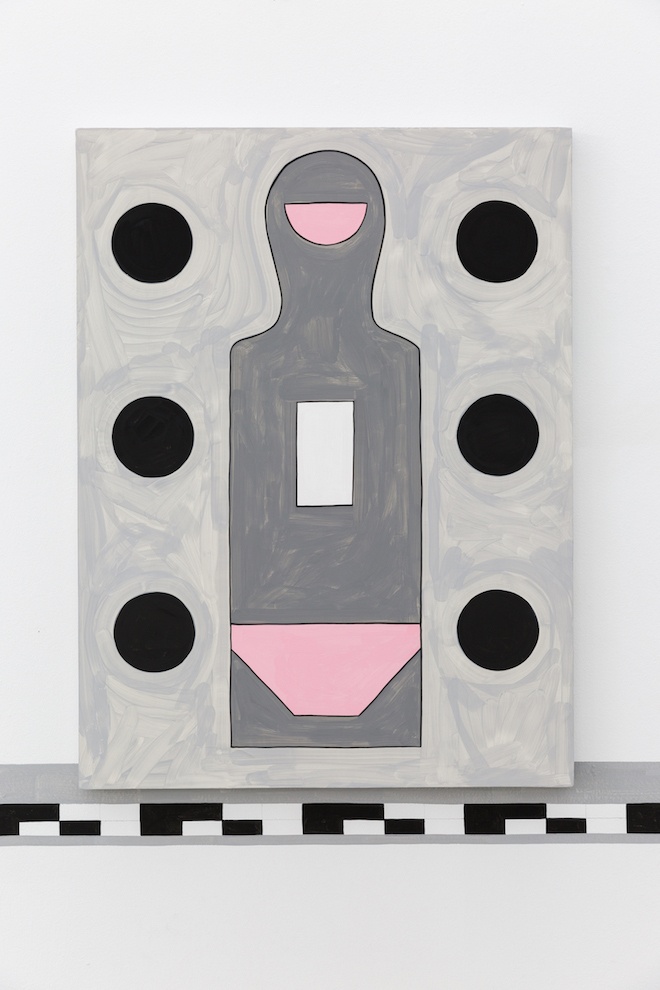
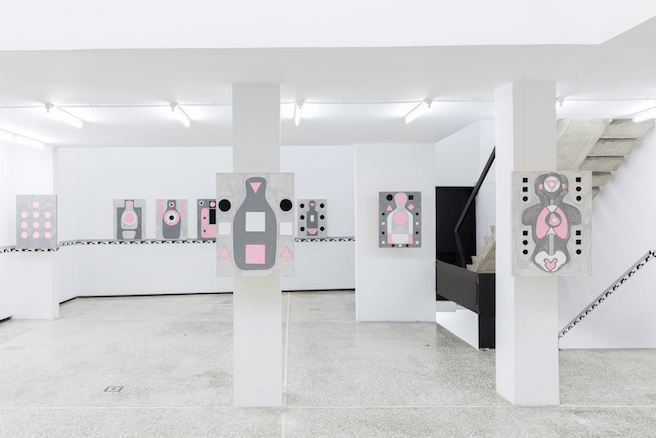
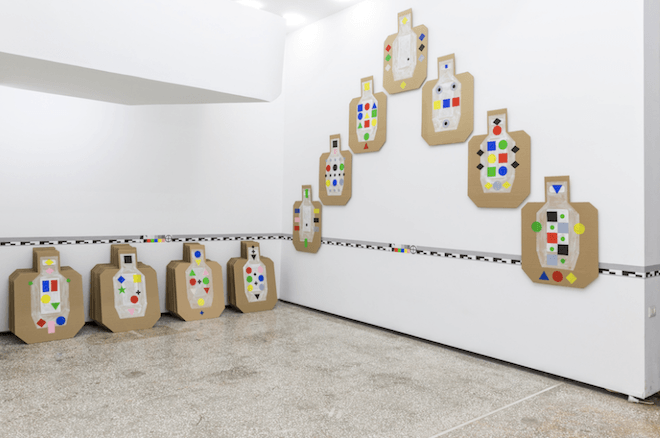
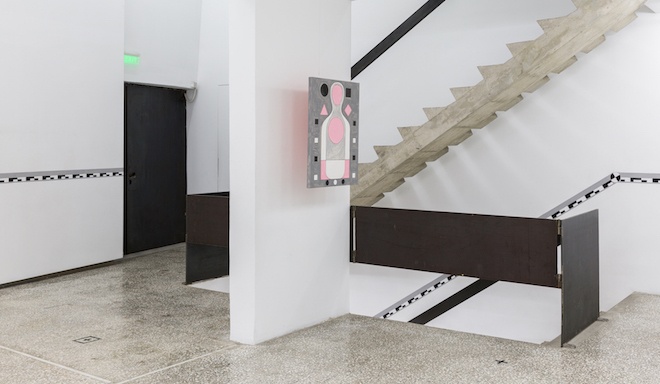
Navine G. Khan-Dossos’ latest exhibition at The Breeder in Athens considers the theme of targets. Entitled Shoot The Women First, it draws on a command reported to be issued in the 1980s to members of West Germany’s elite GSG-9 anti-terrorist squad. The order forms the title of a book by Eileen McDonald, one of the many influences that worked to inform Dossos’ complex and multi-layered exhibition.
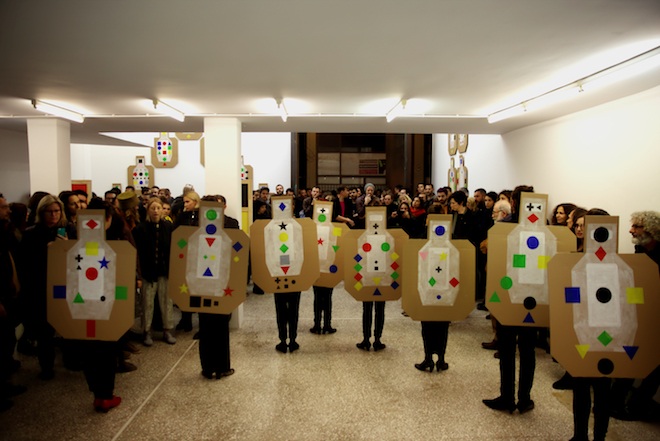
The opening of the exhibition on the first floor recreates a shooting range. The paintings begin with targets that use abstract shapes, and build until their depictions of humans are wholly recognisable. This movement to clarity is uneasy: at the moment you recognise the object, you also process a human will be shot. All the paintings are taken from actual targets. The tension is there again, with the paintings operating both as art and as a direct reflection of institutionalised killing. Curated as a shooting range, the audience is complicit in this complex relationship too – both a gallery visitor and a watchful bystander.
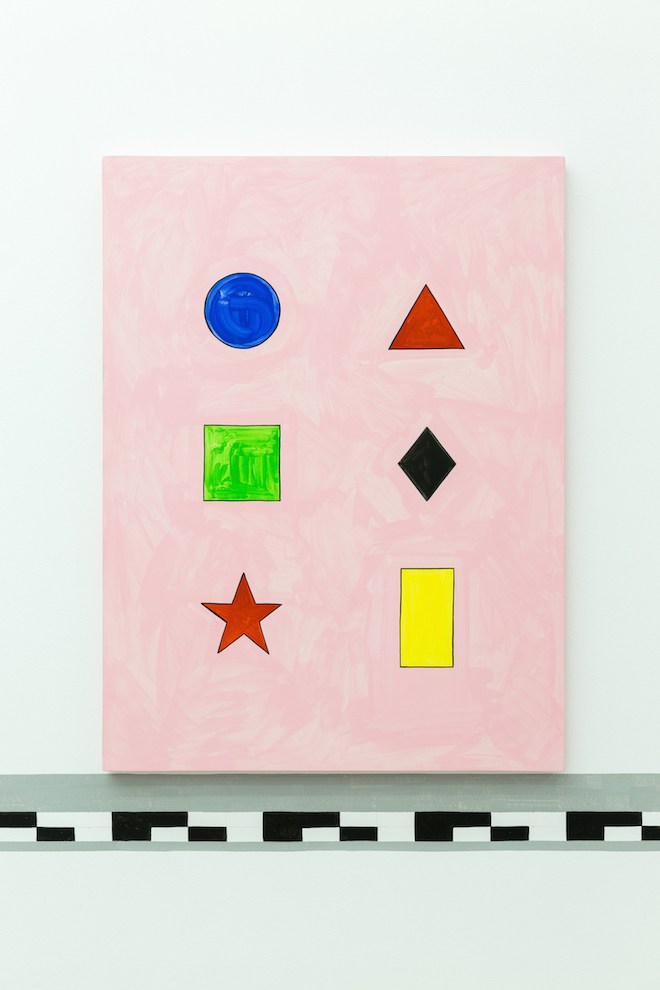
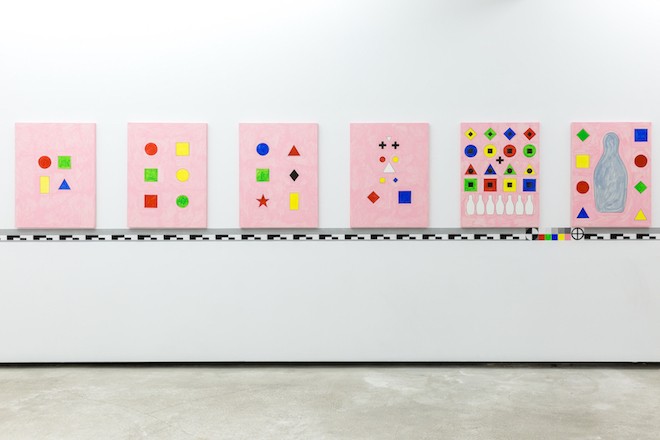
Downstairs in the gallery symbols on paintings refer to Discretionary Command training. Trainee shooters receive a chain of commands which require them to shoot at shapes and colours in a certain order. These objects represent an abstraction of human from human, and also of State from the individual. Especially of those considered to threaten existing structures.
Pink in Athens doesn’t have the millennial fashion connotations that it does in other European cities. Instead it evokes the colours of walls outside the brothels in the Metaxourgeio area, also the location of The Breeder gallery. The downstairs series was also informed by recent historical events around the area, specifically a case against a group of female drug-users in 2012, who were forced to take HIV tests. The women were publicly persecuted by the media and accused of grievous bodily harm for transmitting the virus through sex work. The use of the colour in her paintings then opens up new interpretations; pink is no longer beautiful, but violent. A shadow of war-mongering red. As is typical throughout the exhibition, Khan-Dossos offers a new way of seeing. The viewer is taken by surprise.
A graduate of Art at Cambridge University, Arabic at Kuwait University, Islamic Art at the Prince’s School of Traditional Art in London, and with an MA in Fine Art from Chelsea College of Art & Design, Navine G. Khan-Dossos brings a rigorous and intellectual approach to understanding the world around us. Her abstract paintings allow for an ontological study of shapes and symbols; historical references from both East and West, alongside contemporary digital contexts, examine and reflect on themes such as the depiction of European converts to radical Islam (‘Echo Chamber’, 2017), to the use of symbols and codes in the creation of crossrail at the House of St Barnabas in London (A Year Without Movement, 2017).
Her works are often site specific, and multi-dimensional. The opening of Shoot the Women First was accompanied with a performance by – enacting the shifting relationship between the collective and the other. Twin caught up with Navine to discuss the performance of identities and the idea of the other.
When did you first encounter Eileen McDonald’s text? What was the immediate impact it had on you?
Shoot The Women First by Eileen MacDonald was given to me for Christmas by my partner a couple of years ago. It raised a few eyebrows around the Christmas tree, that’s for sure. But my partner knows me pretty well, and given my long-term interest in female terrorists, it was a perfect gift for me. I read it immediately and have read it again many times since. But I also have shared it with those I’m working with on this project, in order for us all to begin the conversation from the same page.
The book is (as far as I know) the first attempt by a journalist to tackle the subject of female terrorists, and given when it was written in 1991, the interviews she conducts are with women whose memories and experiences of conflict and action are very recent and you can really feel that in the fabric of the book.
There are problems with it, such as an over-arching narrative that supposes that the violent political cause is somehow a child replacement for female terrorists; a cause into which they can put their maternal drive. This reduces women to a biological imperative of motherhood rather than seeing them as having genuine political will of their own, unconnected to their ovaries. This line of conclusion certainly dates the book, but I think as an archive of a specific time in history and the role of women within that turbulence, it’s a very valuable document and an inspiring one to begin something new to continue this dialogue in our own times.
In the accompanying essay to the exhibition Lisa Downing surmises that ‘ A “target,”then, by necessity, moves.’ What about this dynamic interested you?
Beyond this essay for the show, Lisa Downing thinks and writes more broadly about the role of the individual woman, the difficult woman, or the woman who finds herself unable to be part of a collective ‘we’ and I think this is the issue that underpins the target too. How does a woman stand apart but also identify with the group? The question of the target, for me, is tied up in this question of the individual and the multitude, being able to be alone but without being isolated or singled out for attack. And I think this is a pertinent question we must take forward with us into a future where we don’t have to be vulnerable or further this ‘otherness’ by individuating oneself.
Through the curation and the targets you open a discussion around complicity –where do you hope the viewer will place themselves in this dialogue?
I really don’t have any expectation of where the viewer should place themself within the work. It isn’t so didactic as to suggest one position. The intention is to keep things open, to reflect on the many roles that can be played out in the scenario of the shooting gallery: the target, the target designer, the shooter, the bystander, the amateur weekend gun enthusiast, the professional killer.
Why was it important to you to have a performance element of the exhibition? How did the collaboration come about?
This is the first time I have collaborated with a choreographer (Yasmina Reggad) and a group of dancers. Over a coffee in my studio when I was making he cardboard targets, Yamsina noticed how much the drying works resembled costumes, or certainly had the possibility of being worn. With her experience and her eyes, she saw not just the abstracted figure within the target, but how it could be embodied, given movement, and activated as part of the work’s scope beyond painting.
It was a very natural collaboration and Yasmina and I have been thinking and practicing together over the past weeks and months to think how we can work in parallel and share this common ground of interest.
The dancers will perform a mixture of martial arts-based movements choreographed within patterns used by riot police in crowd control situations. They will move those attending the opening of the show, pushing them out of the gallery, and controlling them through these delicate but powerful gestures.
I’m become quite fascinated by what a female army might look like in the future. The Kurdish female fighters of the YPJ (Kurdish Protection Units) continue to be a strong presence in my thoughts everyday, but I wonder also what ways of fighting and controlling crowds might be possible through other forms of intervention, which is why the inclusion of the martial arts is an interesting mode to explore. In a show that is dominated by the act of shooting and guns, this attempt to circumnavigate the use of this kind of instrument of violence is a way of imagining different possibilities for the future.
In the show text you reference specific examples of the 2012 arrests of suspected sex workers in Athens, as well as other major moments of terrorism throughout contemporary history. Can you talk a little about your research process, and why the story of the Greek women spoke to you in particular?
From the moment I found out about this story I was gripped by it, but also by the way it effected the Greek people I asked about it, and how they recalled that moment in time. I wasn’t yet living in Athens myself in 2012, so it was very much about exploring collective memory as well as more in-depth research. This case in some ways is very simple – an action made in the weeks leading up to a general election to make it look like the city was being cleaned up. But the complexity of the intermeshing subjects of HIV, of sex work, of the sanctity of family unit in Greece, also coalesce into something of great tragedy for the women at the heart of the events.
One of the first and most important influences on this research was the film Ruins by Zoe Mavroudi. She presented the story and the politics of what happened to these women in 2012 with a great dignity and power. Zoe and I discussed the making of the film and the issues surrounding it, but also the present situations of these women, and how not to lose sight of this case, but without re-presenting the women at the centre of the arrests, furthering the exploitation of their image.
Zoe introduced me to Apostolis Kalogiannis who was able to deepen my understanding of the current situation of sex work in Athens and how it has changed (or not) since 2012. This was an important way of grounding myself in the present rather than just looking back onto a concluded past event. There are important groups supporting vulnerable sex workers in Athens and there are ways for us to support their work through art, and by keeping the subject alive and visible.
We spoke about the desire to focus on this story without re-enacting the violence that the women experienced in 2012. Could you elaborate on your approach to this?
The works are not and should never be considered a re-enactment of the situation in 2012. Those events are part of a much wider series of influences that went into making the works. But one important aspect that did derive directly from the issues raised by that case was how to represent women without returning to the low-grade viral images that swept through the Internet and the Greek media when the story broke.
I do not believe we need to re-present or indeed rely on these damaging images. Instead there must be a way to use a functional, diagrammatical, symbolic language that tells a wider story about the abstraction of the human body as a necessary device to distance oneself from the subject/target.
It is possible to make work about violence that in itself is not violent. It can be a contemplative or meditative space instead of a shocking one – a space where the viewer can consider the subject matter and recall what they already know inside themselves, including their own experiences, rather than forcing my narrative upon them.
I have been working on this approach to portraying difficult subject matter for a few years now, and it always changes depending on the subject matter. But I feel strongly that in this time of mass consumption of digital images of violence, there might be other ways to talk about it that don’t rely on the images themselves and getting caught up in that loop of the poor or degraded image (as Hito Steyerl might say).
Do particular shapes and colours present themselves instinctively or do you always approach shapes and symbols to use in your work based on their pre-existing references and meanings?
All of my material comes from things that exist in the real world as functional objects or images. In this case all the paintings are based on Discretionary Command targets – a form of shooting practice target that relies on listening to commands and shooting the coloured shapes in the order given. So the shapes and colours have an inherent meaning within this context and a relationship to the human body in terms of organs (shoot to kill) and limbs (shoot to maim).
I have also included pink triangles as an additional shape to the pre-existing forms of the command targets, as a way of including the history and politics of the gay rights movement, which also has an important place in this work about the targeting of marginalised groups.
Shoot The Women First is on at The Breeder Gallery, Athens, until March 10th.
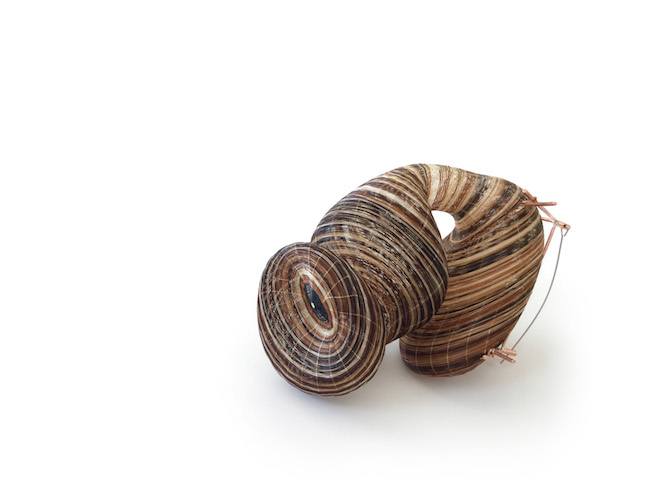
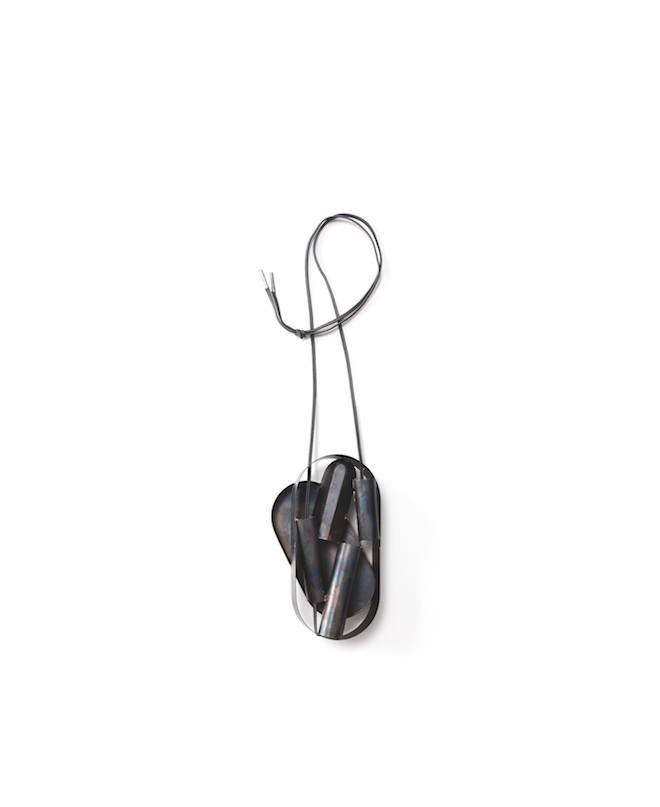
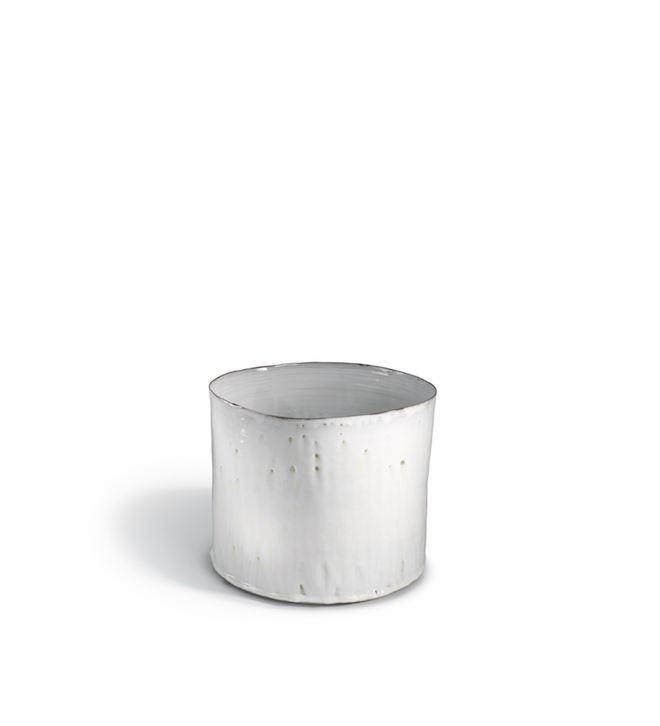
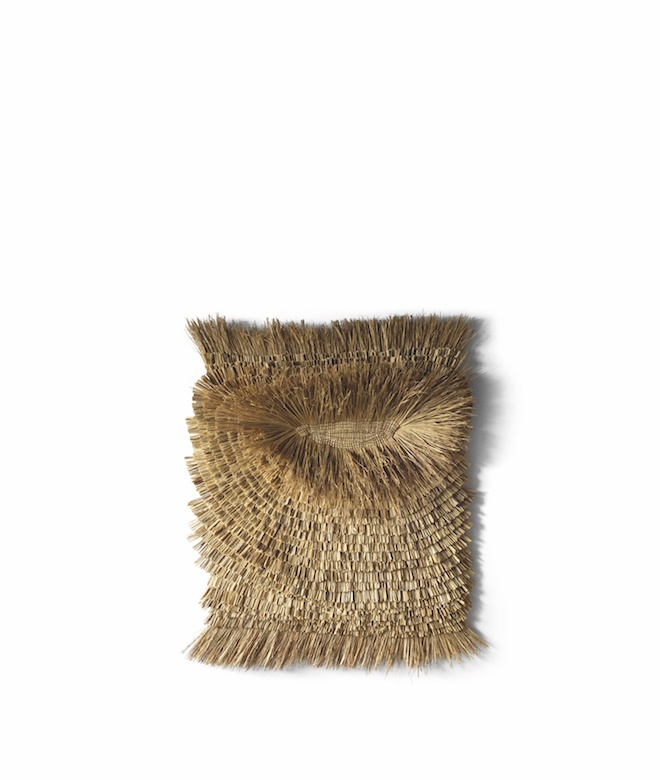
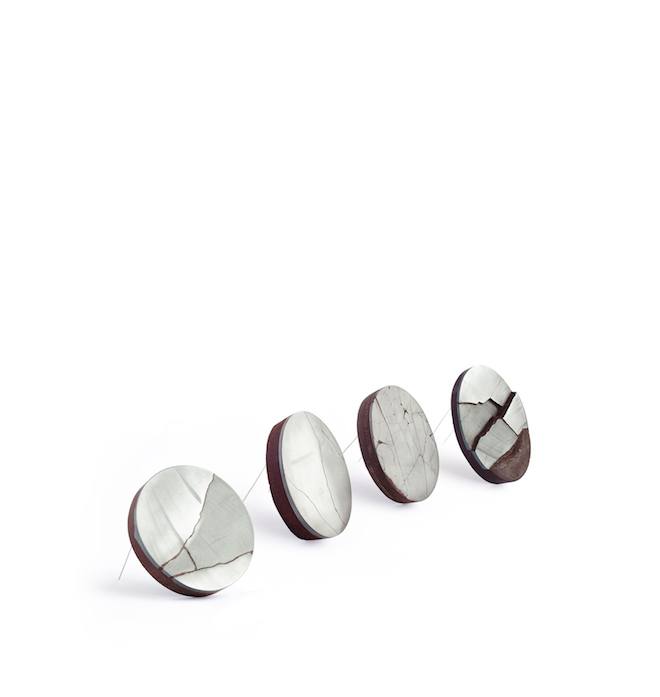
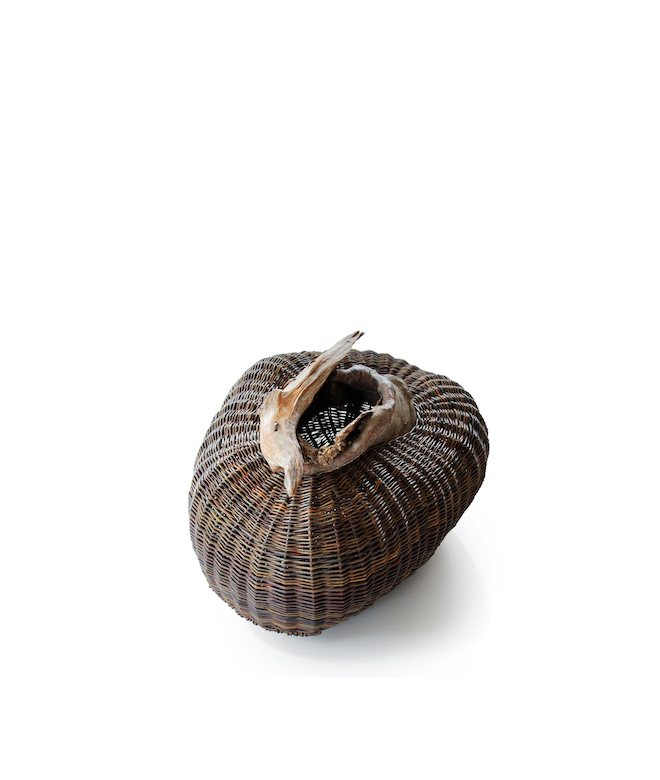
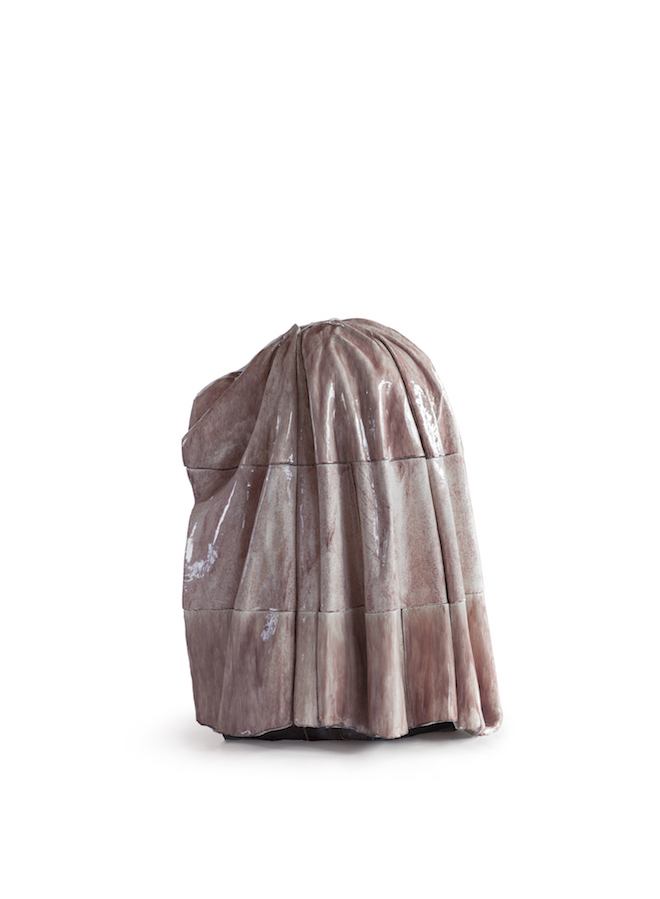
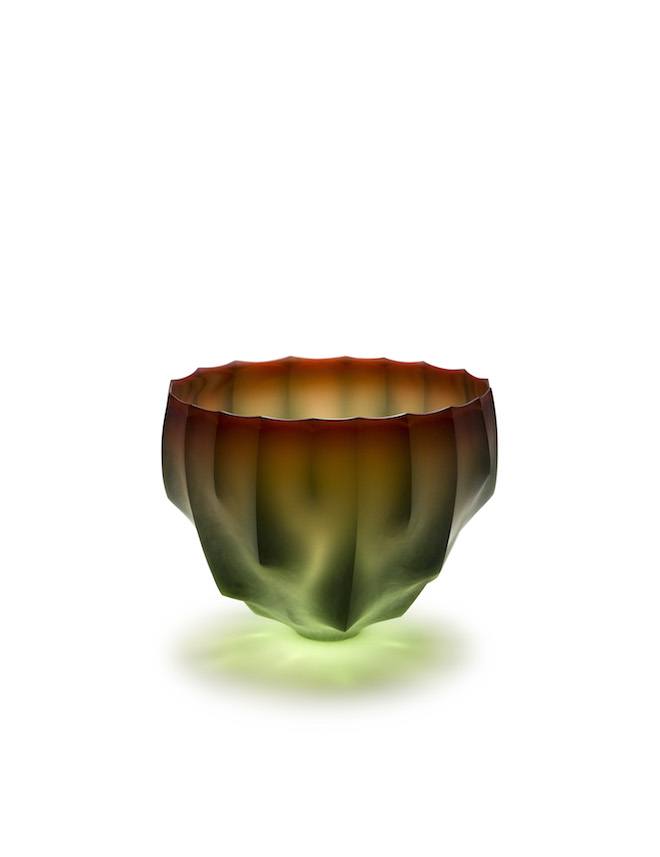
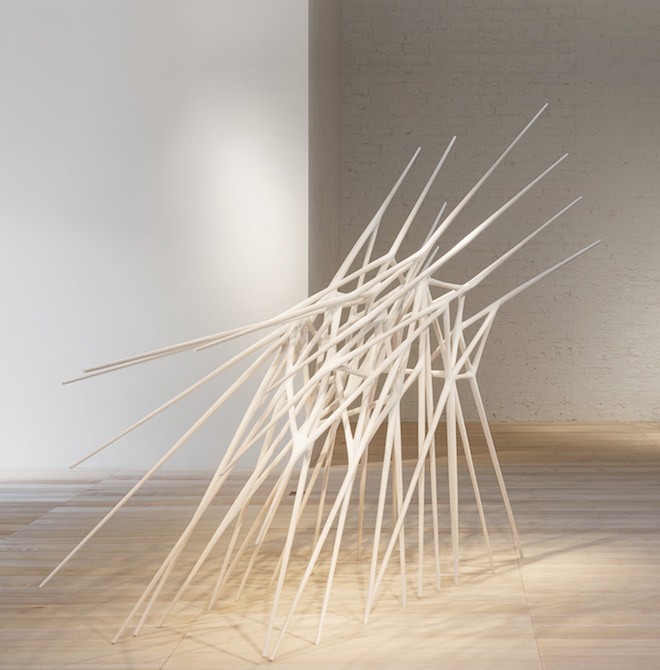
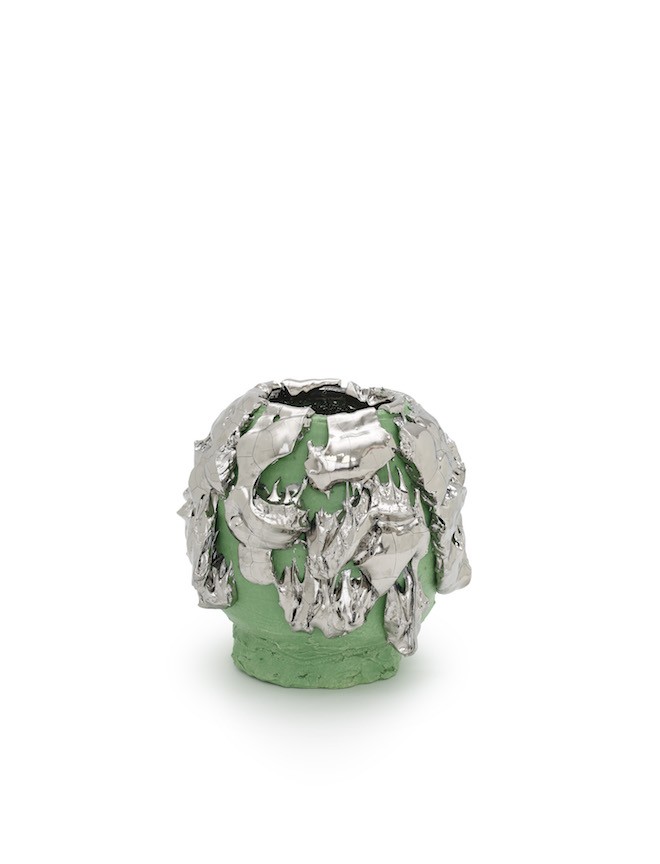
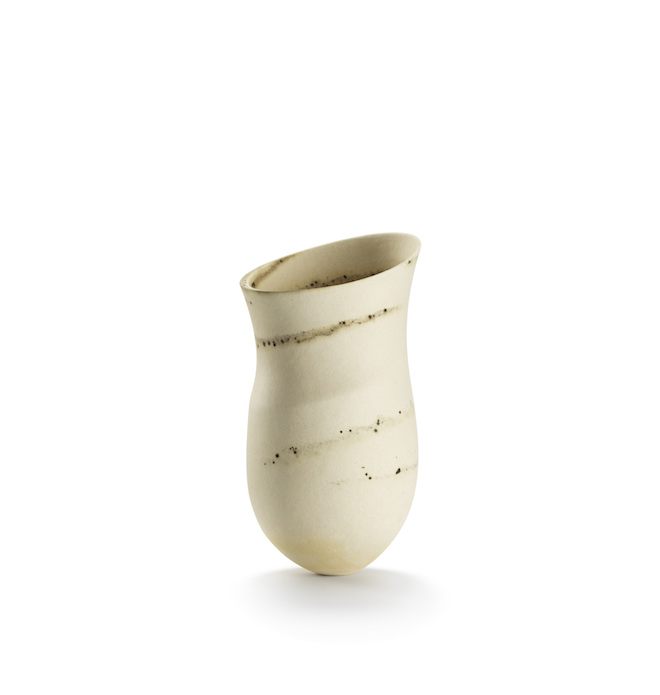
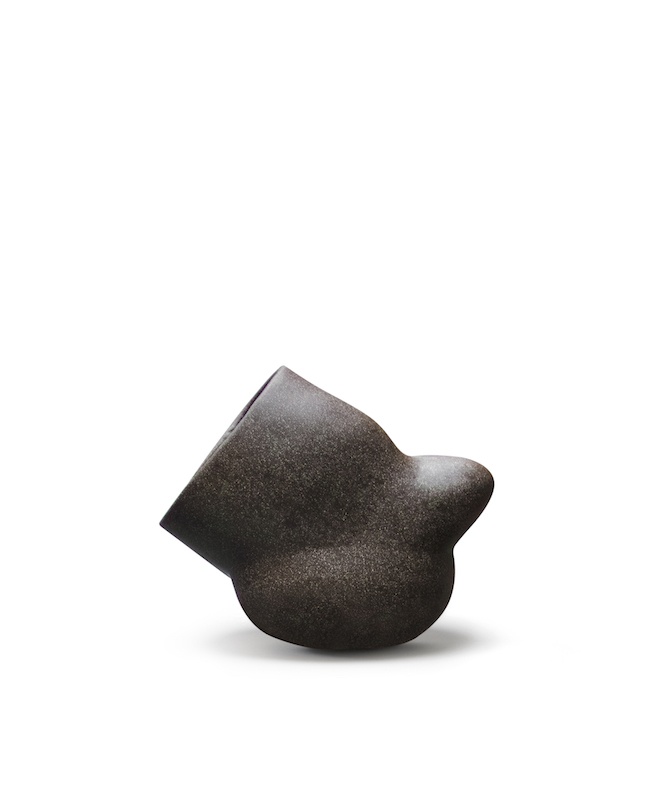
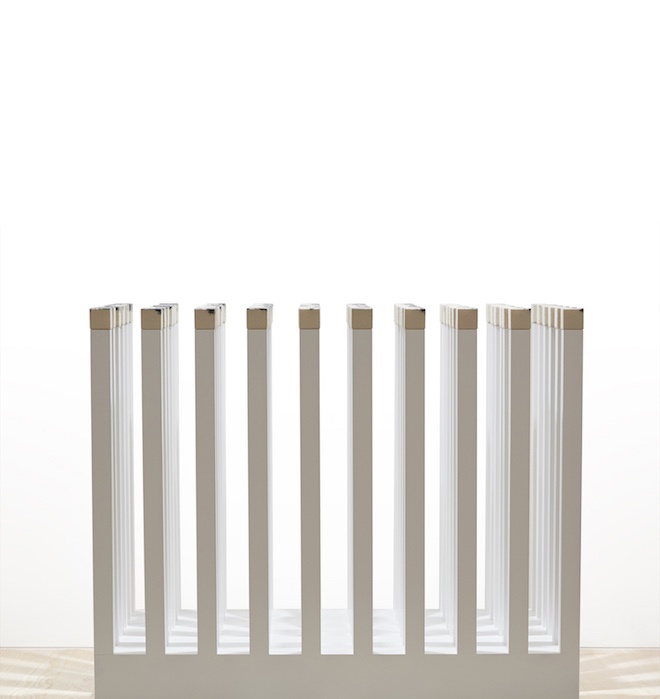
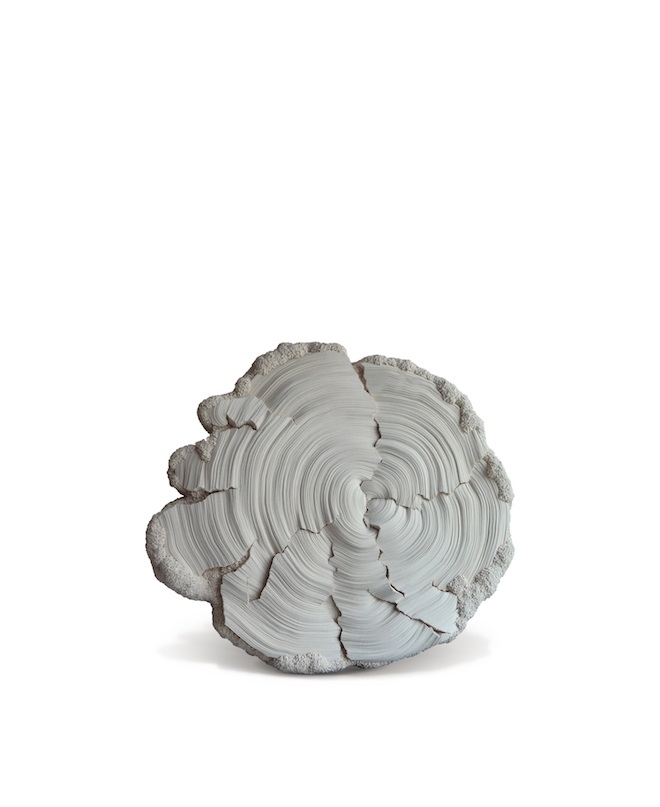
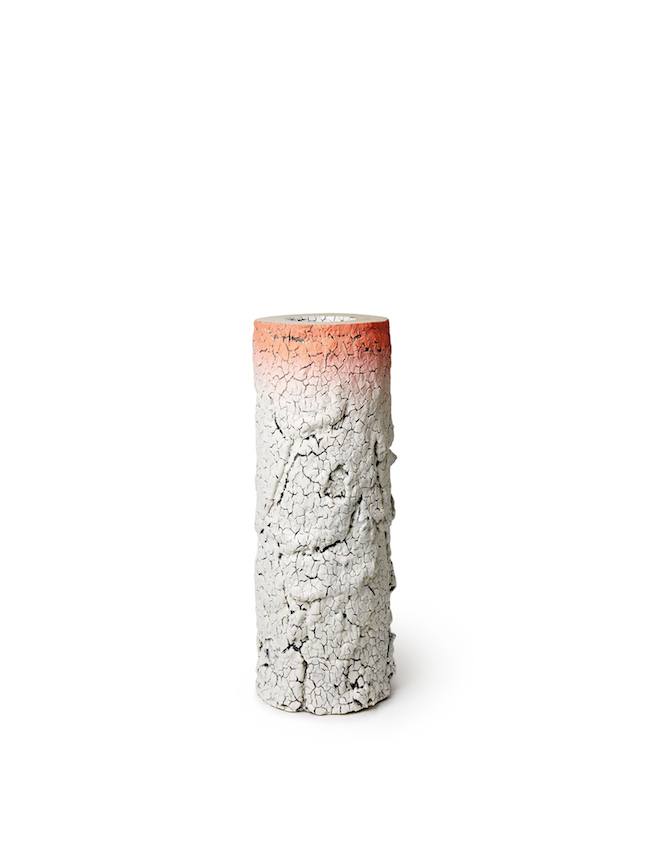
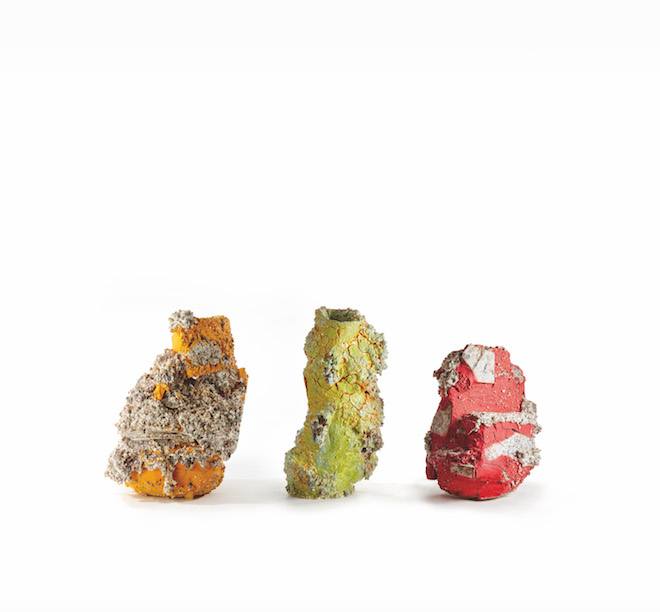
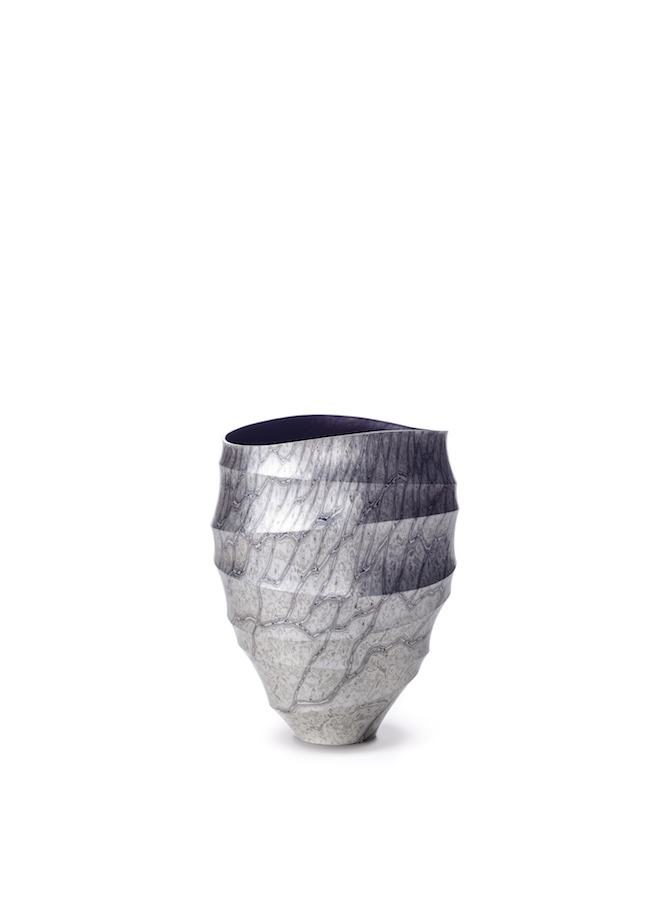
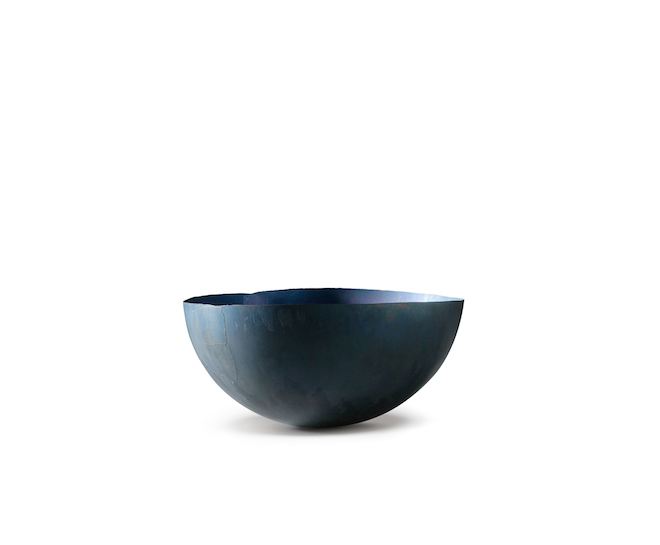
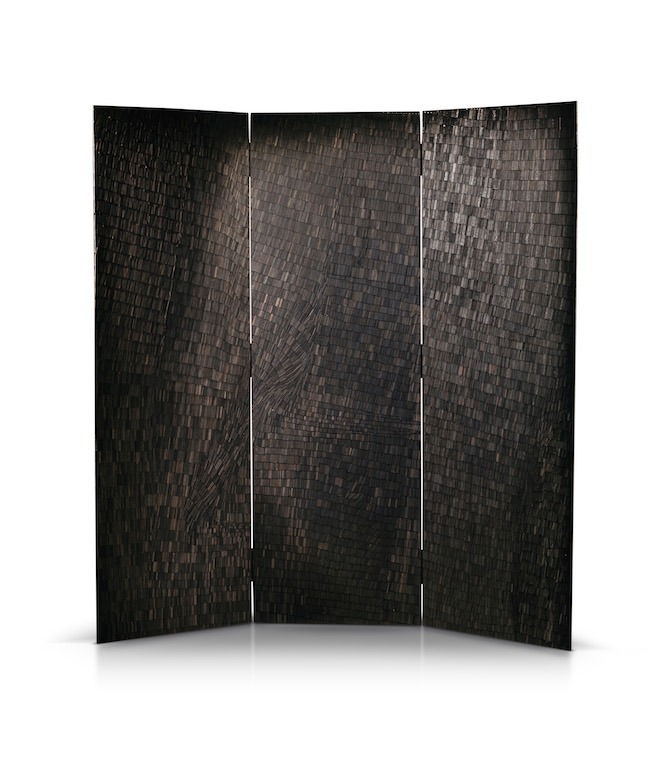
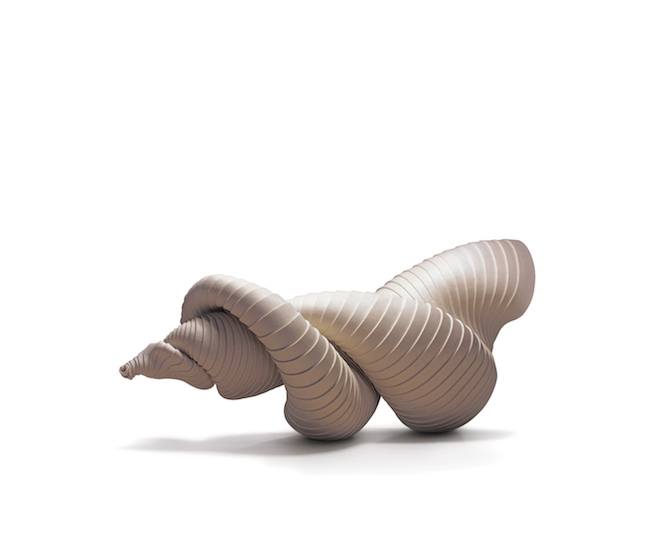
The Loewe Craft Prize will take place in May of this year, and already there’s a buzz around the finalists. Comprising of 30 artists from 17 countries around the world, the shortlist celebrates creativity and innovation in craft. A reflection of the diverse talents working at the moment.
Creative director of LOEWE Jonathan Anderson conceived the award to champion creativity. A part of an ongoing commitment to locate LOEWE within a wider cultural context. Speaking ahead of the second year of the awards, the designer commented: ‘Craft is the essence of LOEWE. As a house, we are about craft in the purest sense of the word. That is where our modernity lies, and it will always be relevant.’
The full list of nominees, along with examples of their work, are below.
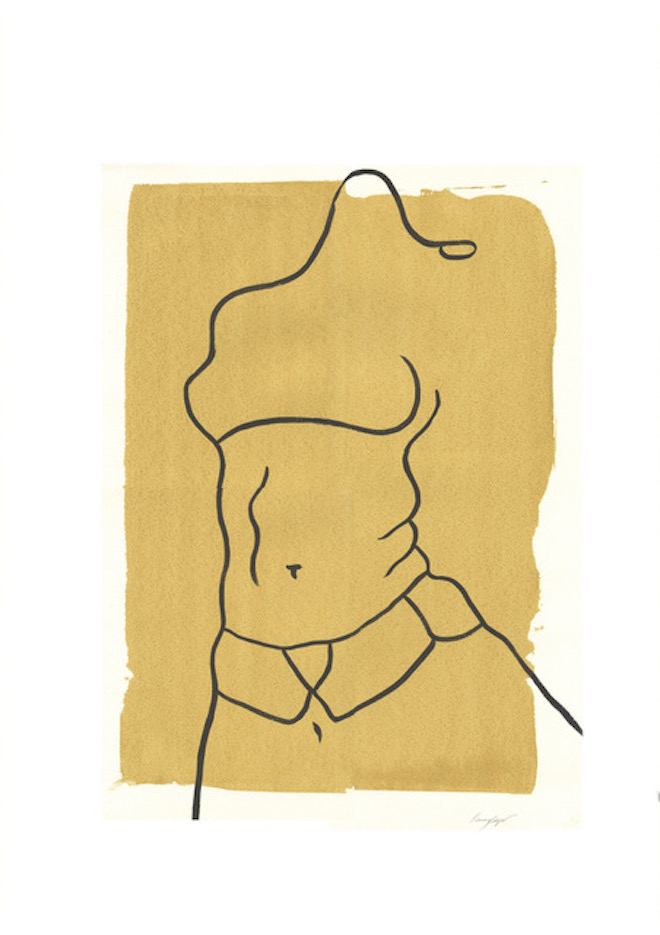
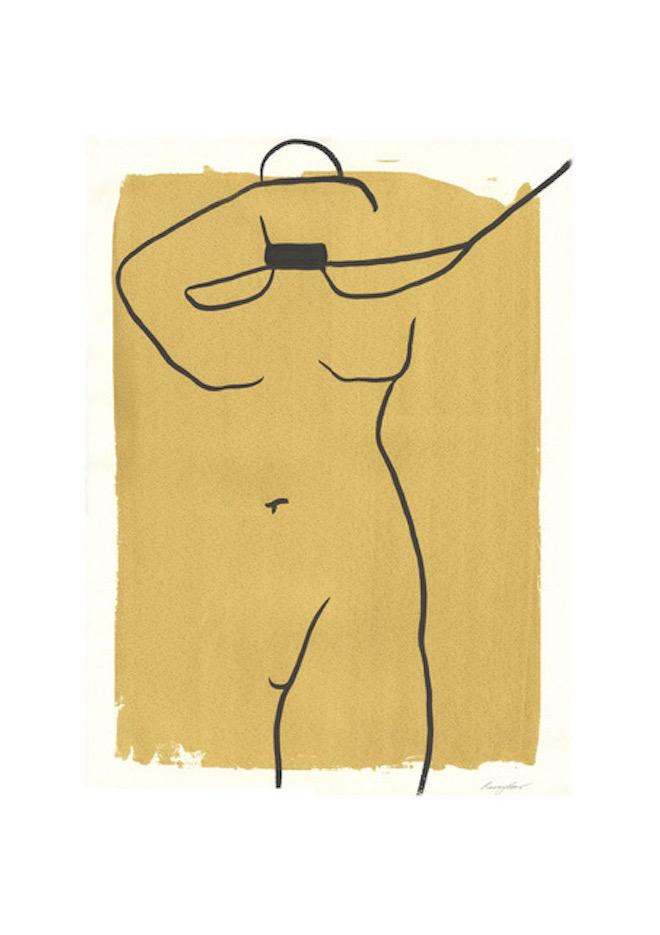
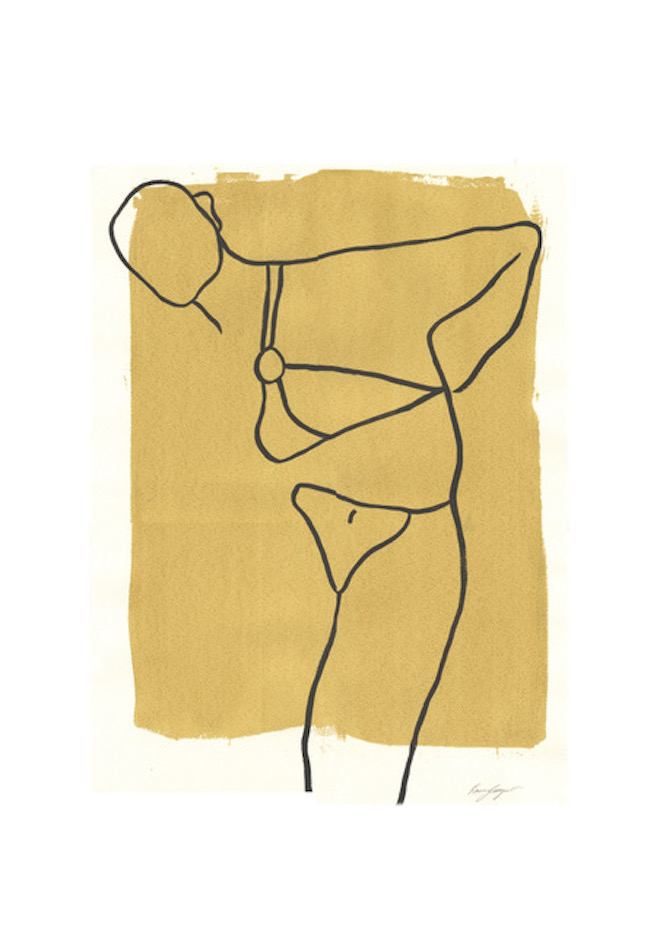
Artist Ranny Cooper examines and explores the female form as a way of addressing issues around self identity and discovery. She shifts our usual associations away from sex and provocation and asks us instead to focus on the ways in which the body is bound in objectification and intrusion, yet also in admiration and desire. Cooper uses her own body as her muse as it has been a positive way for her to address the issues she faces with her own body politics. Inspired by Jenny Saville and her portrayal of the body and all of its fluid forms, Cooper enjoys celebrating this idea of the grotesquely beautiful. In her series ‘Unbound’, the minimal, fluid lines and colours of Cooper’s mix media drawings offer a thoughtful and sensitive representation of the female form. Her use of leatherwear highlights the friction between submission and empowerment as she depicts the action, restrictions and effects of harnesses as a means of representing the duality of lust and scrutiny that women’s bodies are subjected to.
Ranny Cooper, Unbound
Originally from Brighton, Cooper has been based in East London’s Hackney for the last five years, where she spent the first three at London College of Fashion studying Fashion Illustration. The product of a rather bohemian and idyllic childhood, Cooper thinks this may be where her openness towards nudity came from and why she doesn’t feel that her sexuality defines her. I don’t know if I am defined by my sexuality, but know that I address it very boldly. I have always been very sexually open with my body. I grew up in an extremely naked household – it is a good way for me to express how I am feeling as a women. A lot of people see my work and think of it in very black and white terms, as simply sexual, open and in your face. But when you understand the meaning behind it, it is actually very personal. So, it is about sexuality but the point is there is also much more behind the surface.
Cooper acknowledges that the personal element to her work is varied depending on the series she is focusing on. While she always uses the body as her canvas and main subject, the motives behind her use of it are diverse.With my body print series I was expressing different emotions that I felt when I was life modelling. When you are exposed to a crowd of people and you are nude it encourages a range of emotions and I would find so many different thoughts running through my head. It really does boil down to each individual pose having a unique emotion that comes with it. Then when it came to my series ‘Unbound’, I was addressing the misconceptions people often have around sexuality, especially when it comes to the use of leather and harnesses. I involved the harness as a means of highlighting the importance of control for women when it comes to their bodies, which can be both a positive and negative in todays society.
Over the last few weeks, Cooper has started working on a new project, ‘Dismemberment’. In this series she fragments the body. The project merges different parts of the anatomy to explore the cross section between where the human form goes from the sight of desire to the sight of grotesque. Cooper explains how she is taking a new direction with her use of the body as a canvas and her growing obsession with how different angles can make the figure look almost distorted. This project is a little less sexual in a way as it focuses on dismembered and deconstructed figures. I have always been interested in the body looking distorted and out of worldly in a way, which transpired into this idea of how the body can go from a site of desire to a site of grotesque. With this project I still use the naked body but by dismembering it I wish to express the chaos we are often faced with when we let our thoughts run away with us, highlighting the confusion and madness that the mind often provokes.
As Cooper readdresses her practice through the altered perception she now places on the body, she discusses how she defines beauty:
I believe that it is completely in the eye of the beholder. I don’t think there is a typical ideal of beauty. For me, beauty comes from weakness and imperfection. Like art, it is totally subjective and I really don’t think it can be defined any more. Obviously you have ideals that the media represents to people of how we should look, which is a big issue. When I started doing such figurative drawings, initially I focused on slender beautiful women but gradually this made me feel more and more uncomfortable so I started using myself as my own reference – that really made me target issues I had with myself and helped me come to terms with them. I don’t think beauty is a definition I think it is a perception.
Ranny Cooper, Unbound
With this idea of beauty as perception rooted in subjectivity, Ranny explains how Hans Bellmer, Louise Bourgeois and Jean Cocteau have been lifelong inspirations for her. Likewise, the minimalist linear drawings by Austrian artist Egon Schiele and Mapplethorpe’s fetishistic yet sensual images have been important artistic sources. More recently, she credits the work of photographer Maisie Cousins, whose zoomed images of the female body taken from the series ‘grass, peonies, bum’ are some of her favourites. While Ranny is keen to explore the possibility of living somewhere like Berlin, given it’s notably liberal attitudes within youth culture, she has decided to dedicate the next two years to nurturing her practice here in London. Ranny Cooper will be showing her new series ‘Dismemberment’ at Cafe 119 throughout April. In the meantime, you can follow her practice and intense obsession with poached eggs via her Instagram @rannycooper.
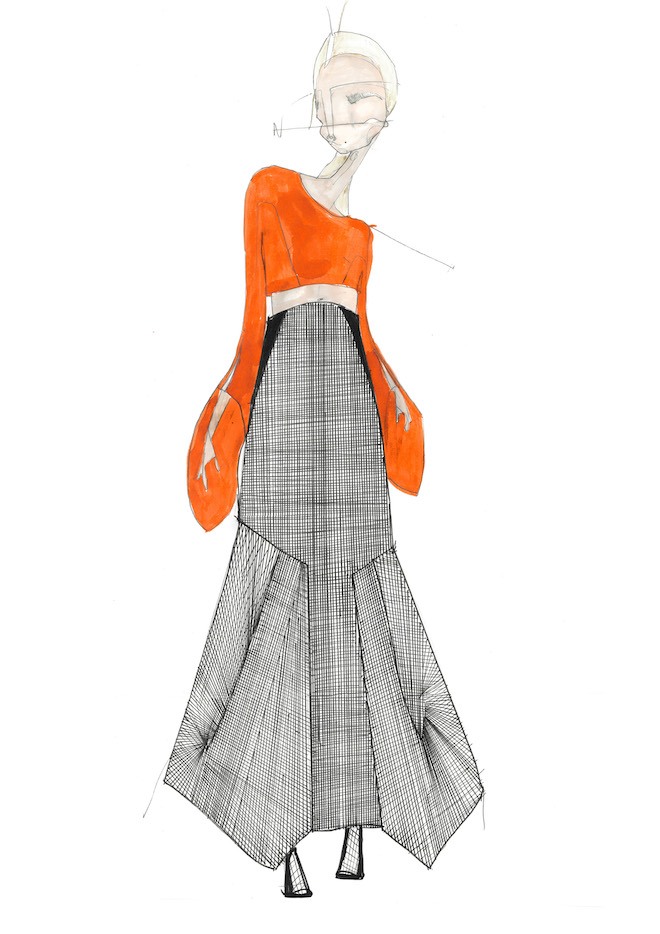
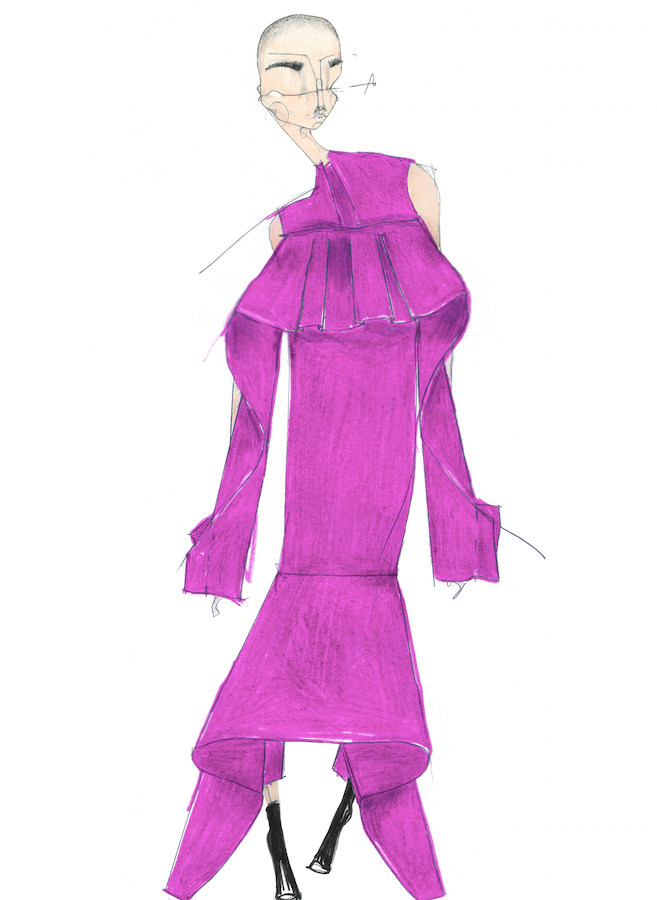
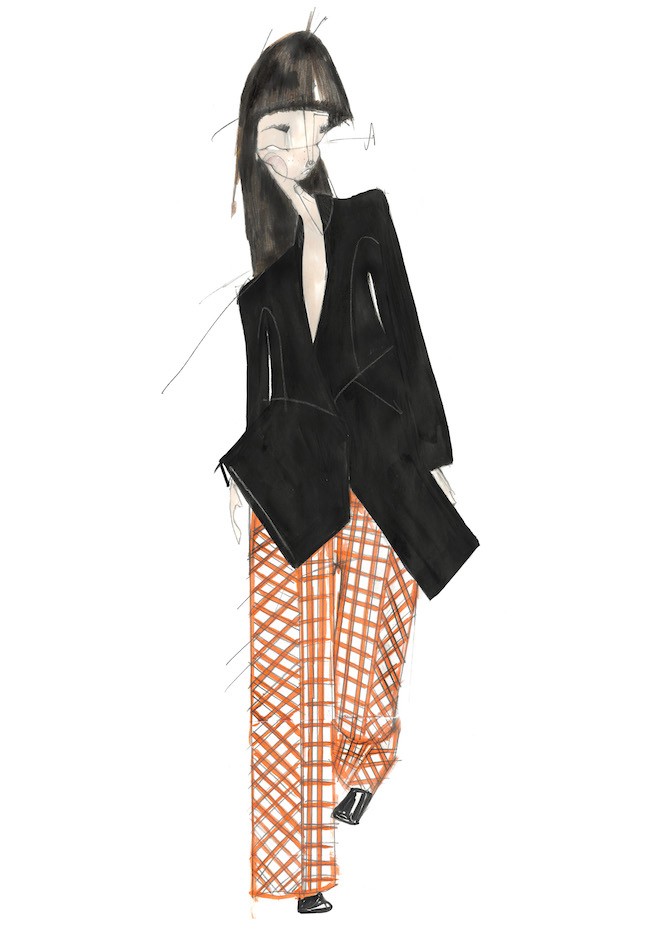
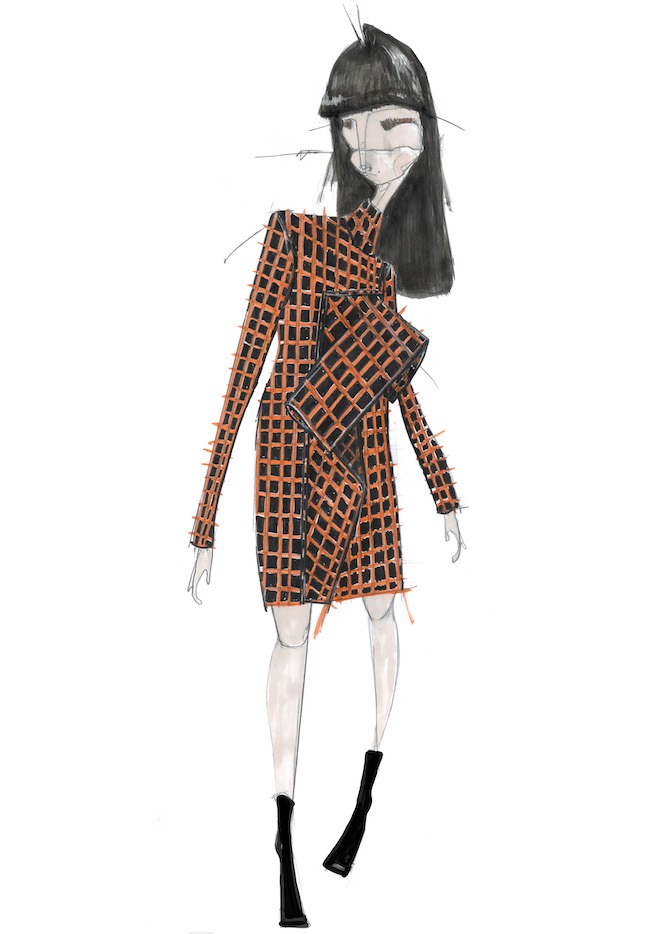
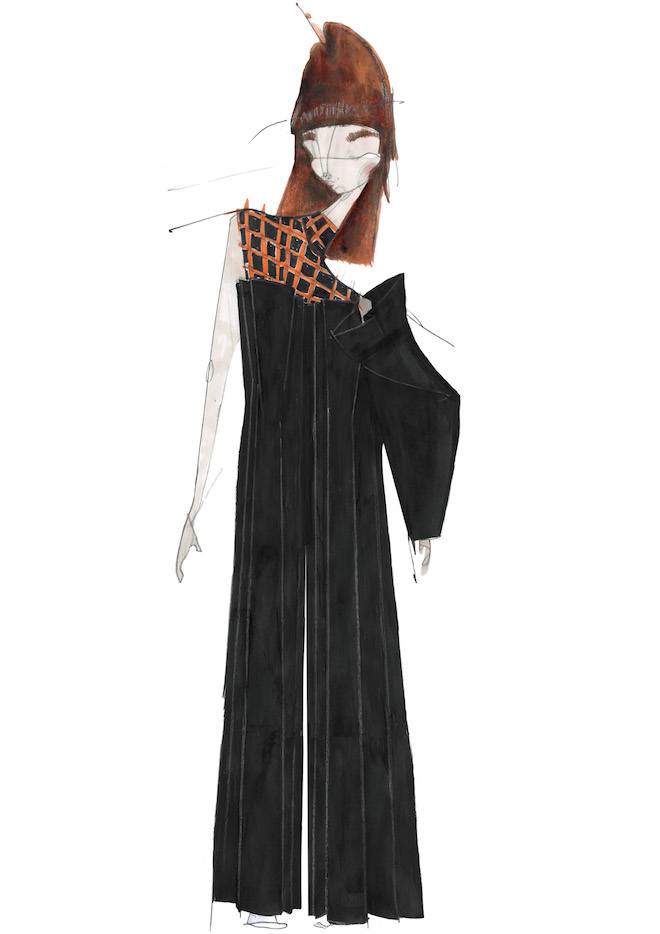
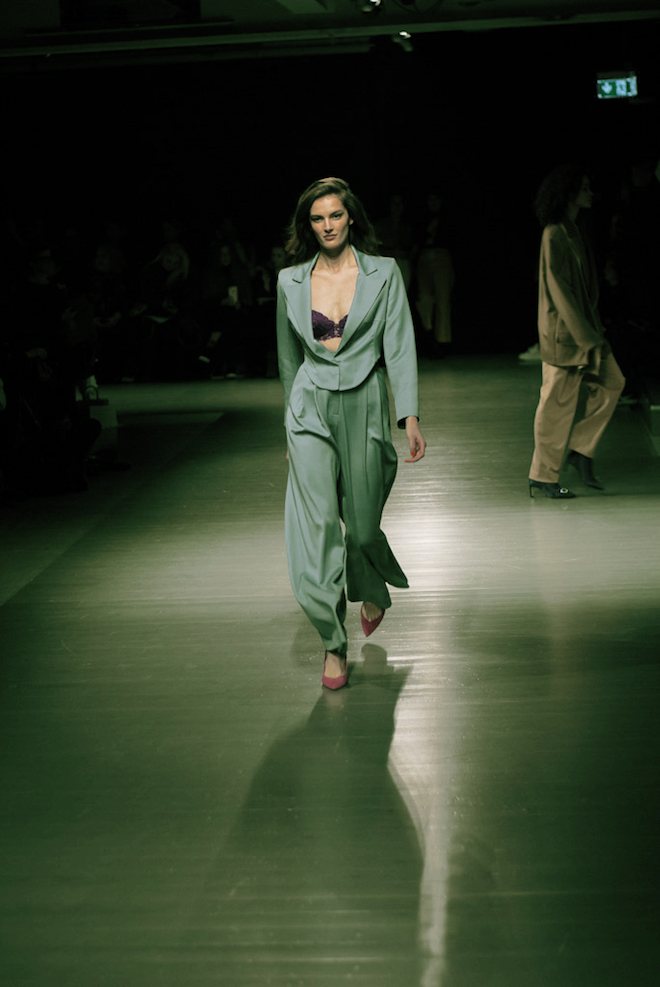
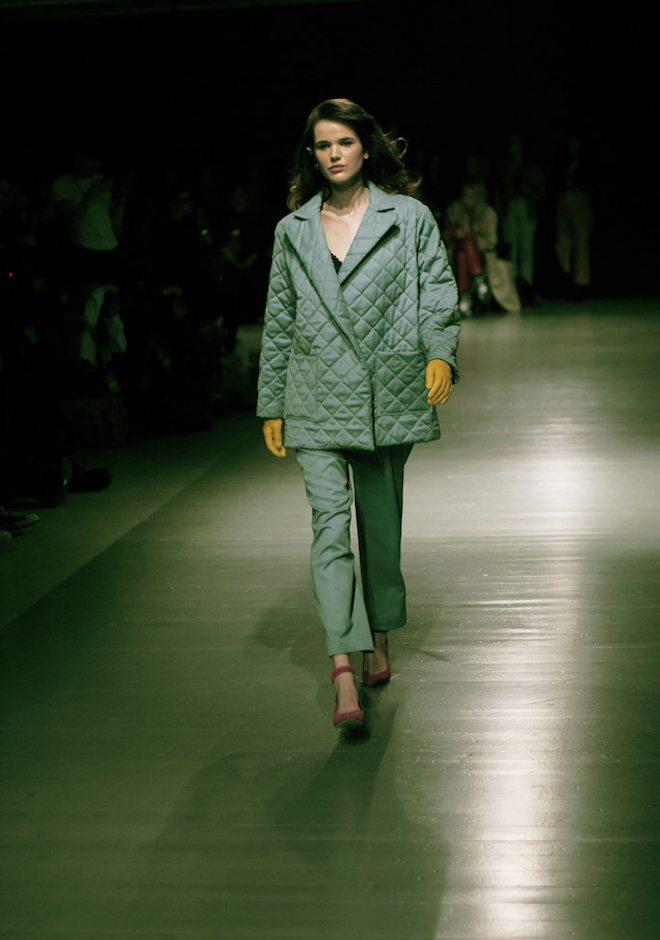
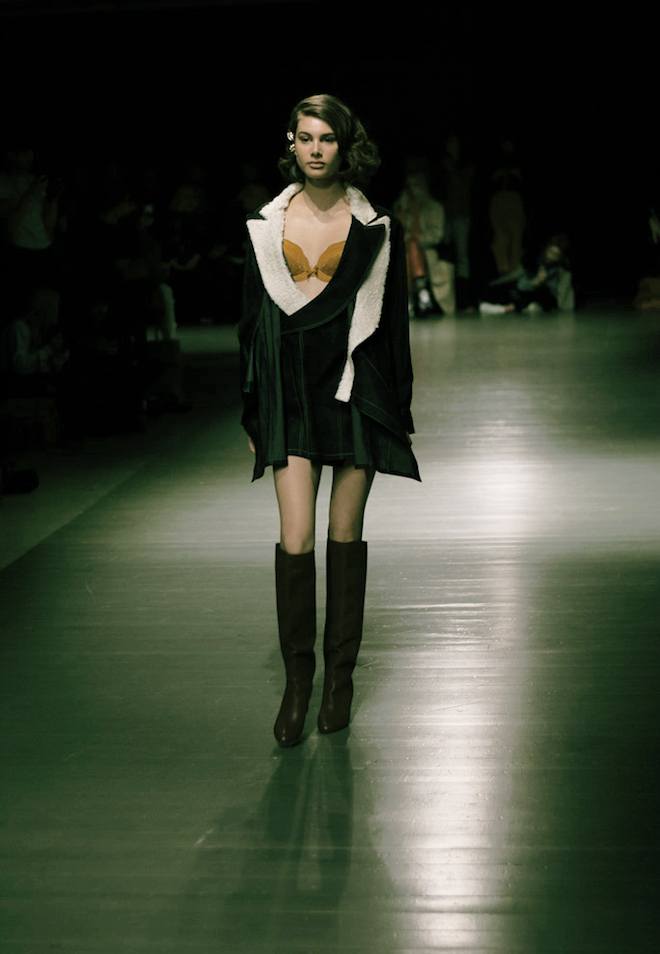
London-based collective Aphid brings sharp, sculptural tailoring and avant-garde design to the contemporary scene. With a moody, darker feel, it’s all about embracing the strange and unfamiliar. Here the brand gives Twin an exclusive insight into their designs and thought process behind the AW18 collection.
Our AW18 collection is based around the idea of ‘RITUALS: Ceremony consisting of a series of actions performed according to a prescribed order.’ We love the notion of dressing for an occasion and the heavily debated topic of what ‘dressing-up’ looks like for a contemporary woman. This led us to a fascination with ceremonial dressing and Japanese men’s Hakama trousers, worn during ancient tea ceremonies. Dressing for ceremony; what it means and how it’s achieved for both men and women was an initial focal point for us. These tailored, oversized and heavily pleated ceremonial trousers really excited us, and we began deconstructing and re-invisioning these and other forms of traditional dress, how layering is used and the nature of formal dressing has evolved. The notion of suiting and ceremony was also at play in our thought process with the choice of grid print and surface texture. The linear formations playing with the hybrid/ intertwined idea of a pinstripe and the ritually raked ridges of a zen garden.
Colour-wise we wanted to combine the reflective and contemplative sensation that a dark, monochrome palette evokes with vivid, energising shades associated with celebratory clothing – a duality that we frequently return to. Colour isn’t something that we naturally lean towards and as such we won’t ever be a brand that takes colour lightly – for us these infusions of saturated brights punctuate the collection bring an interesting tension, allowing our constant canvas of monochrome tones to be refreshed and invigorated with a new perspective each season.
See more of the sketches for Aphid’s AW18 collection below.
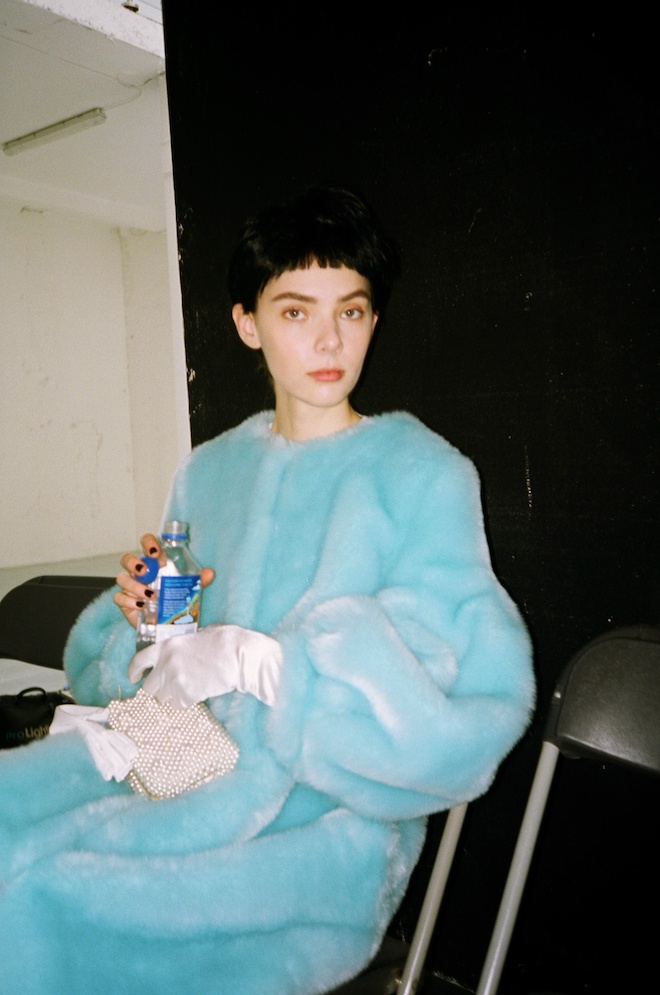
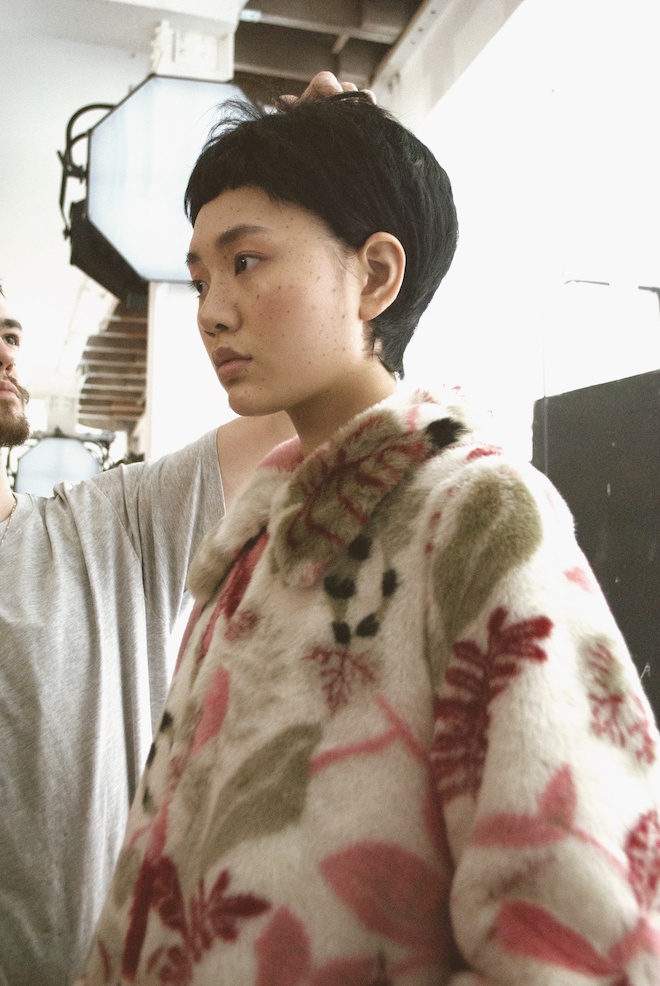
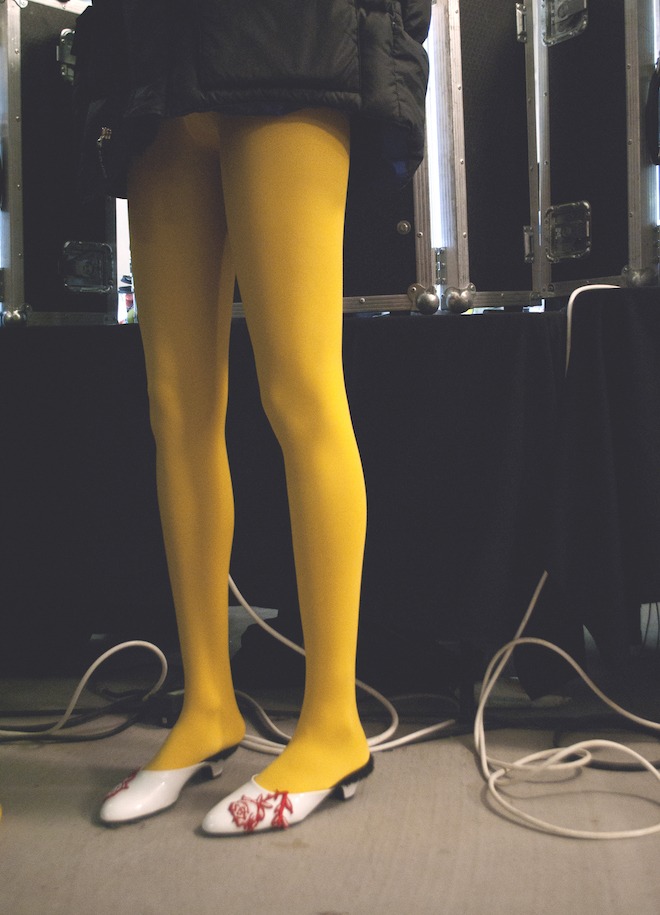
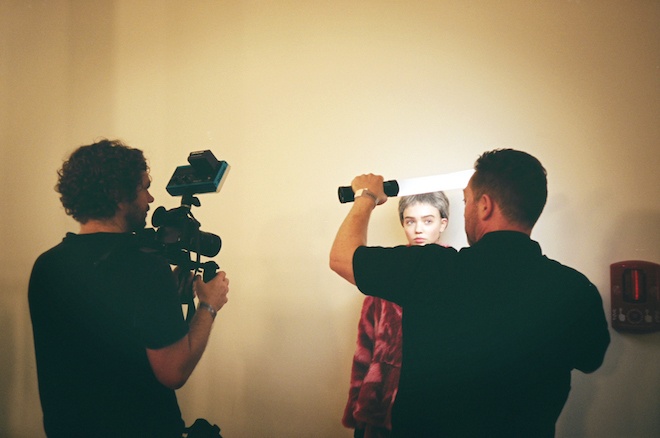
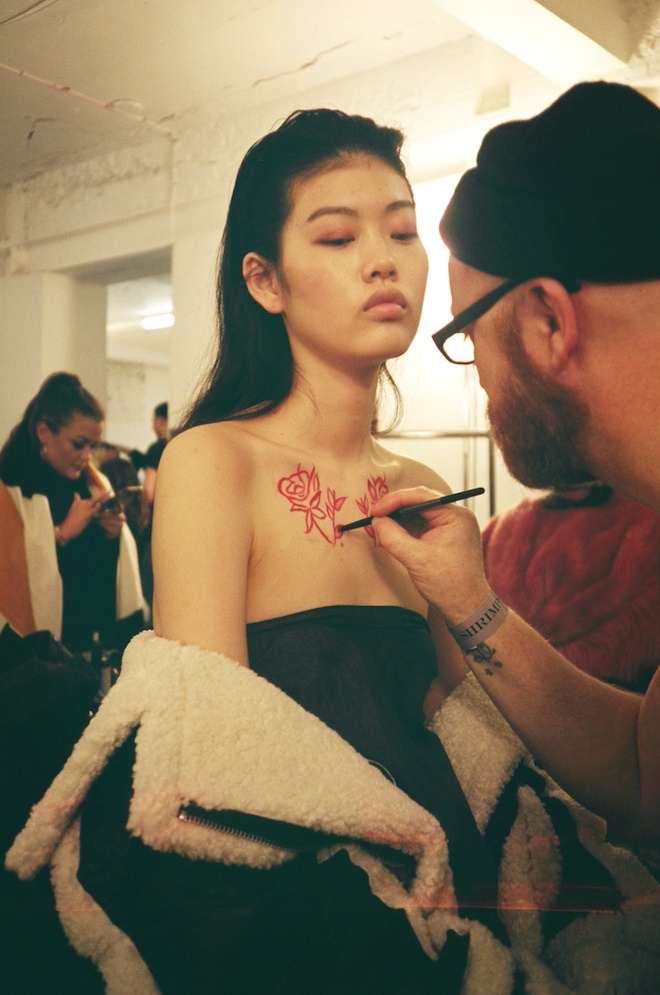
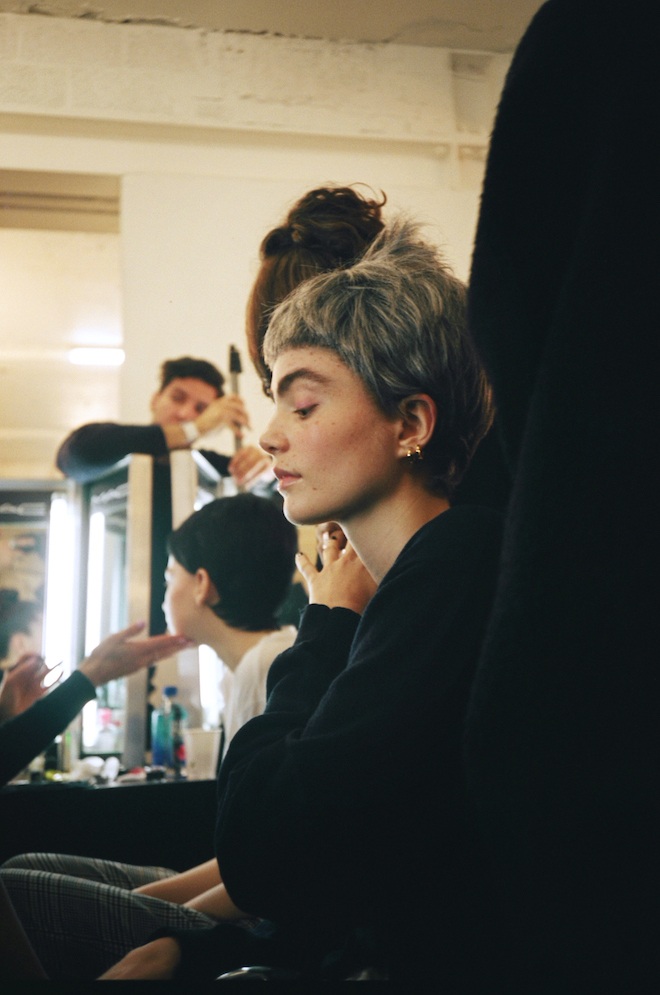
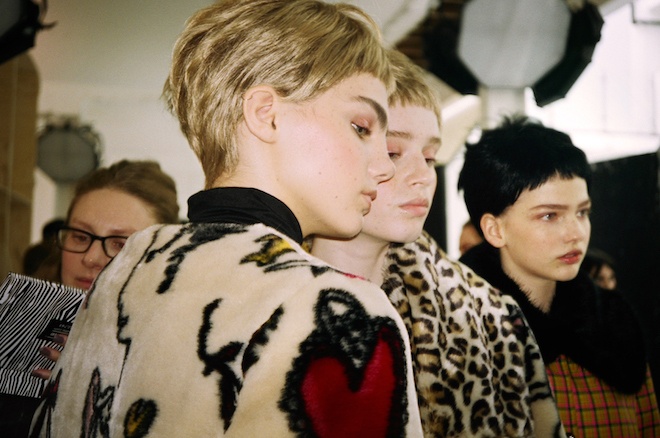
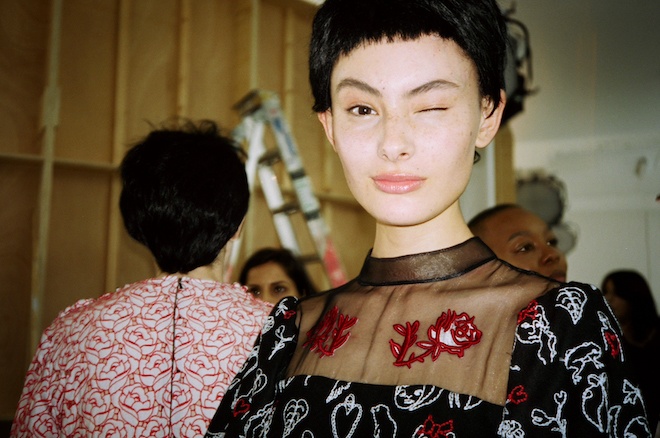
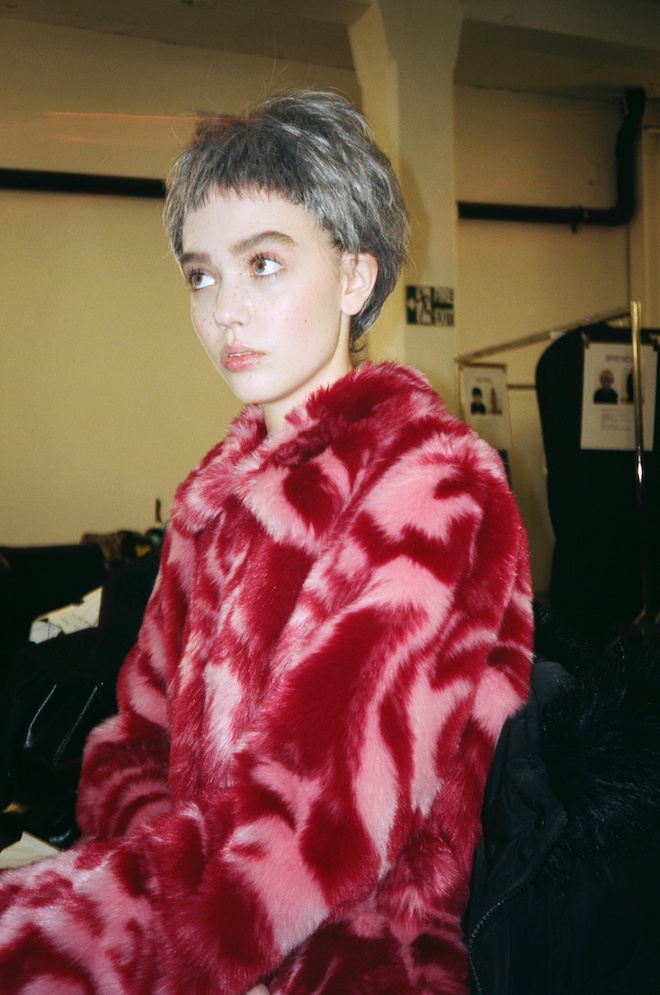
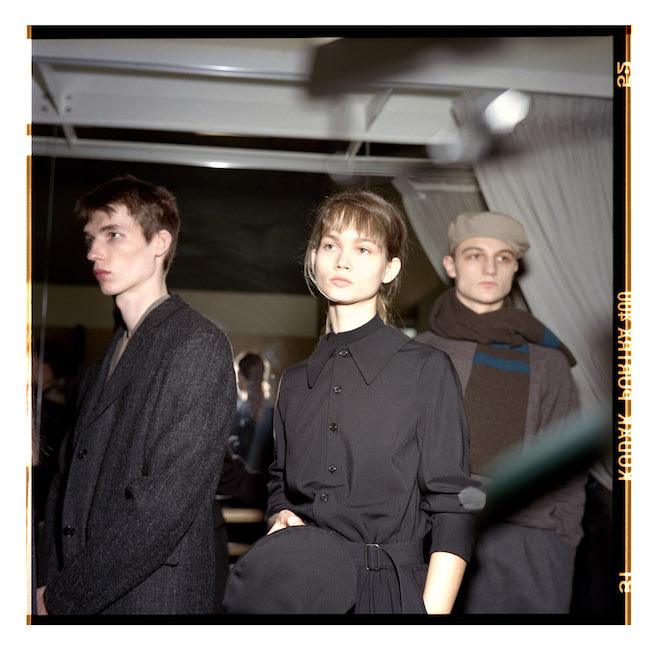
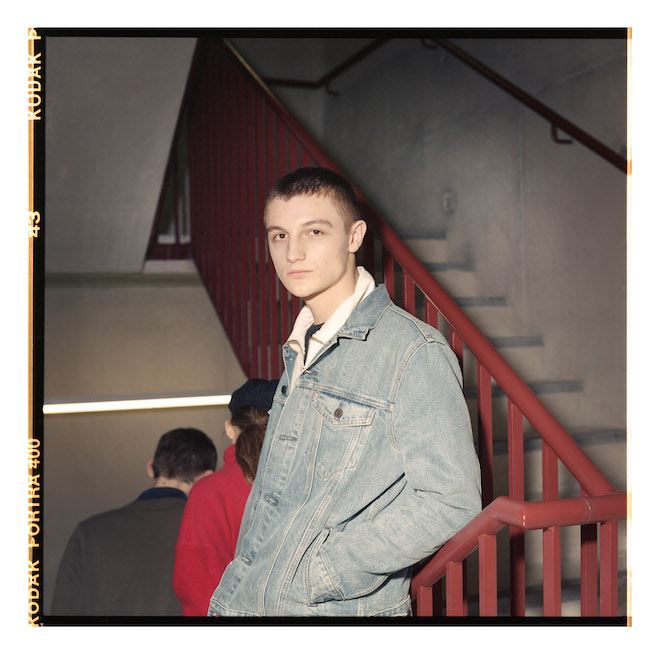
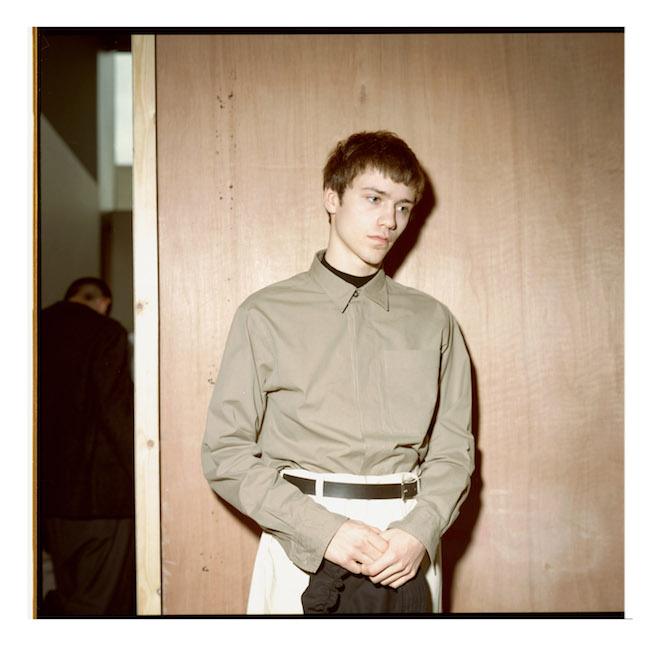
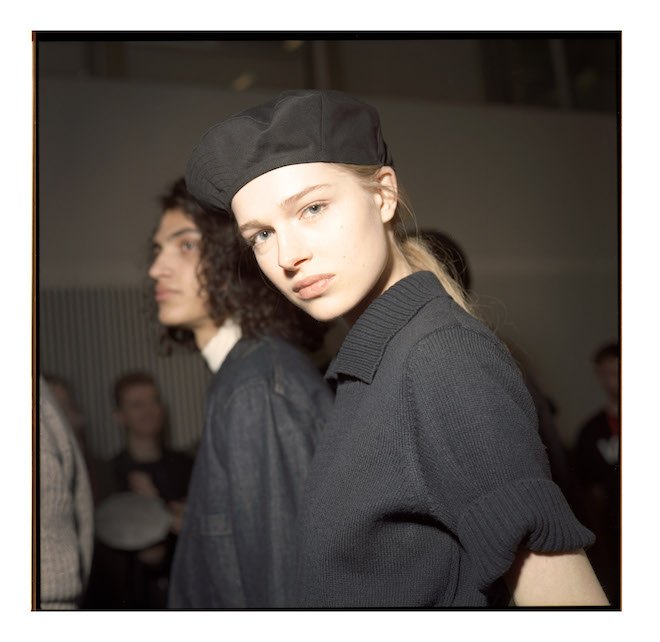
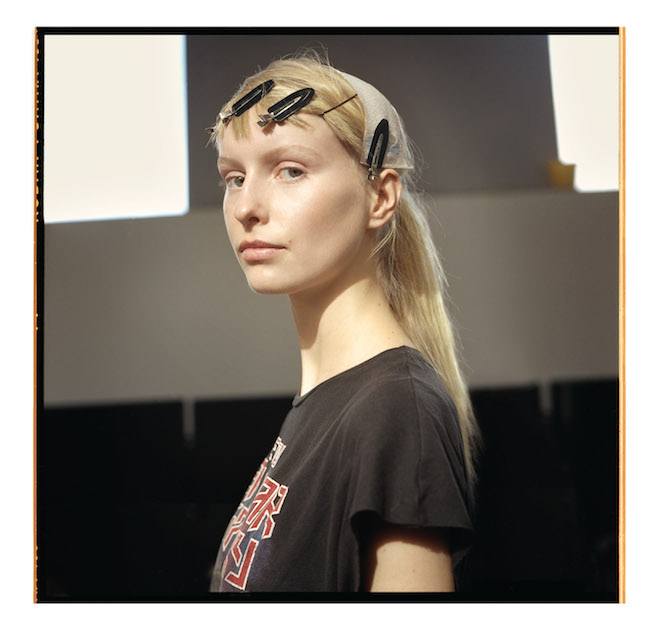
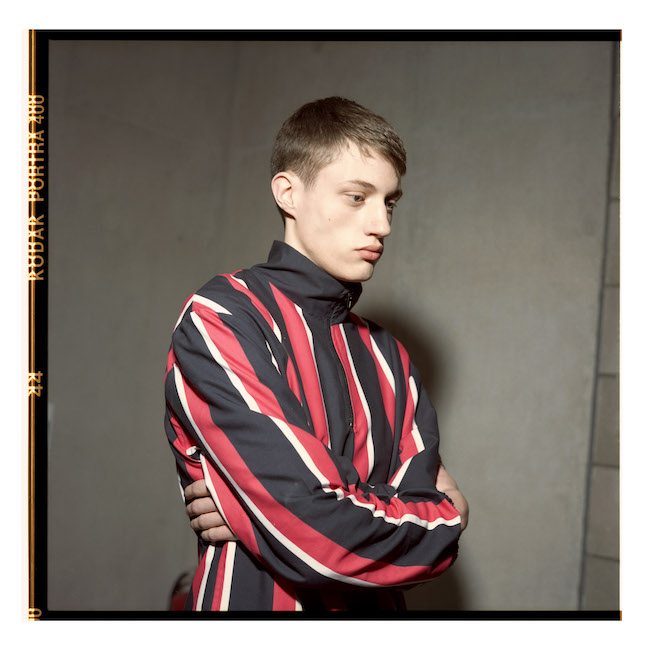
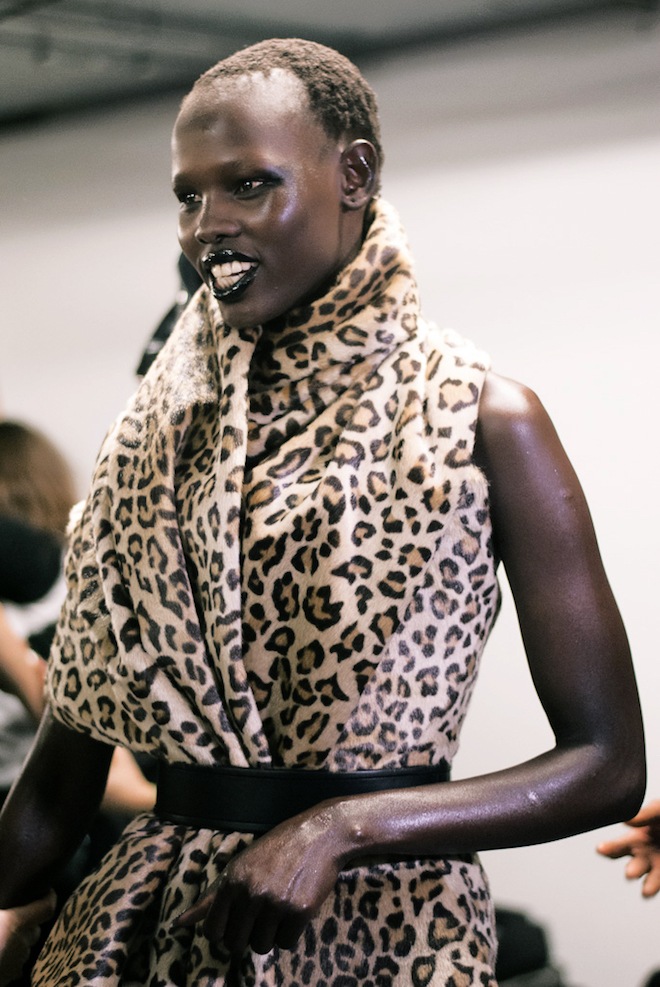
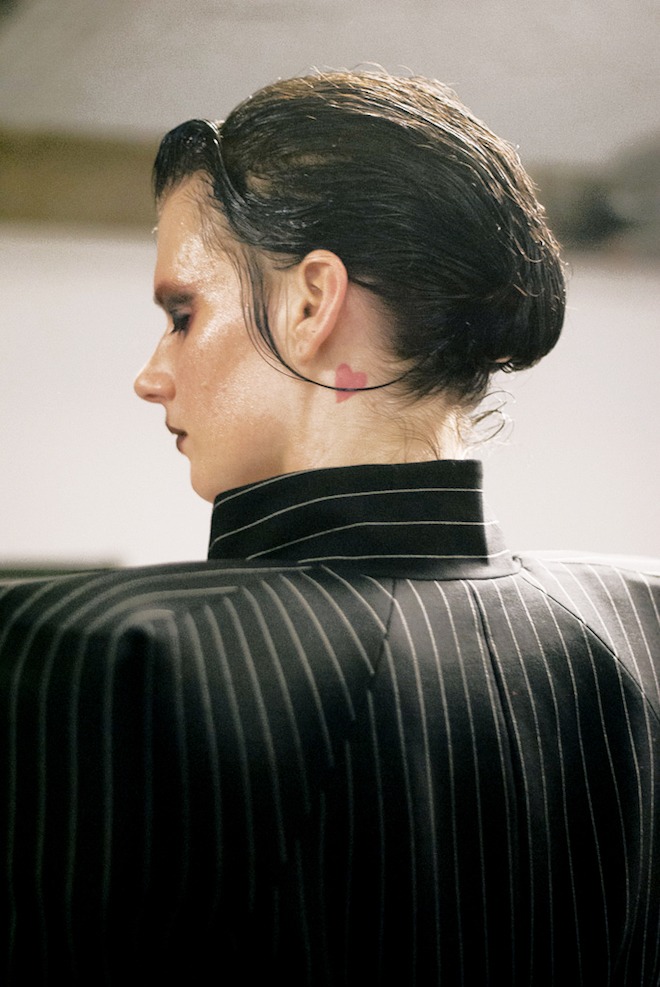
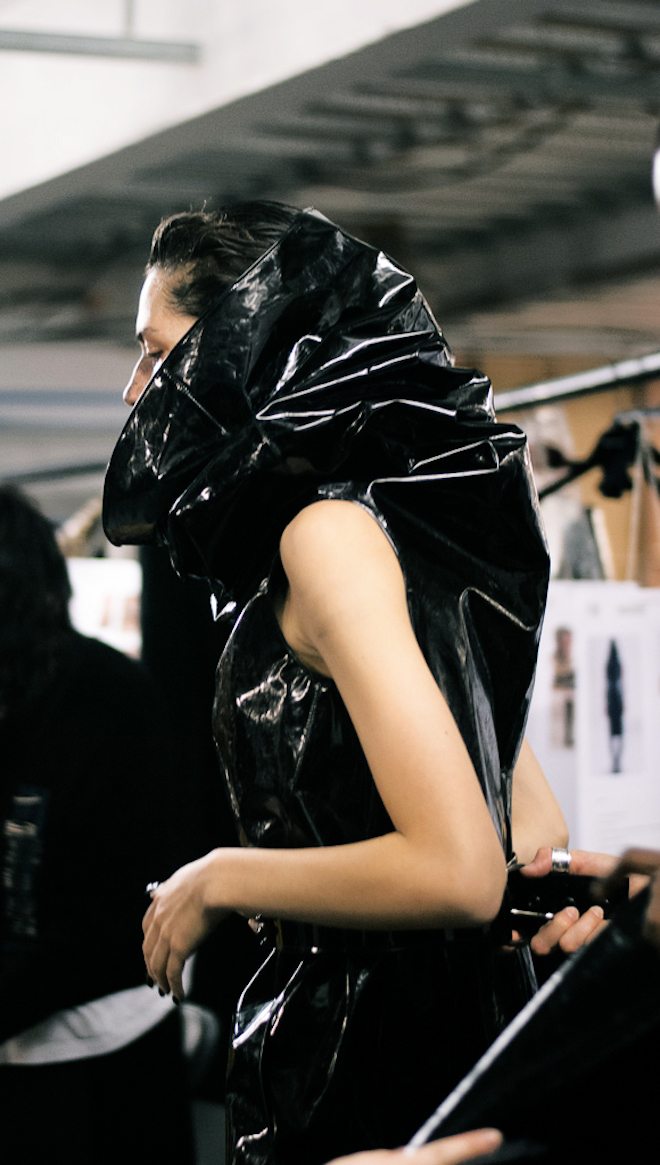
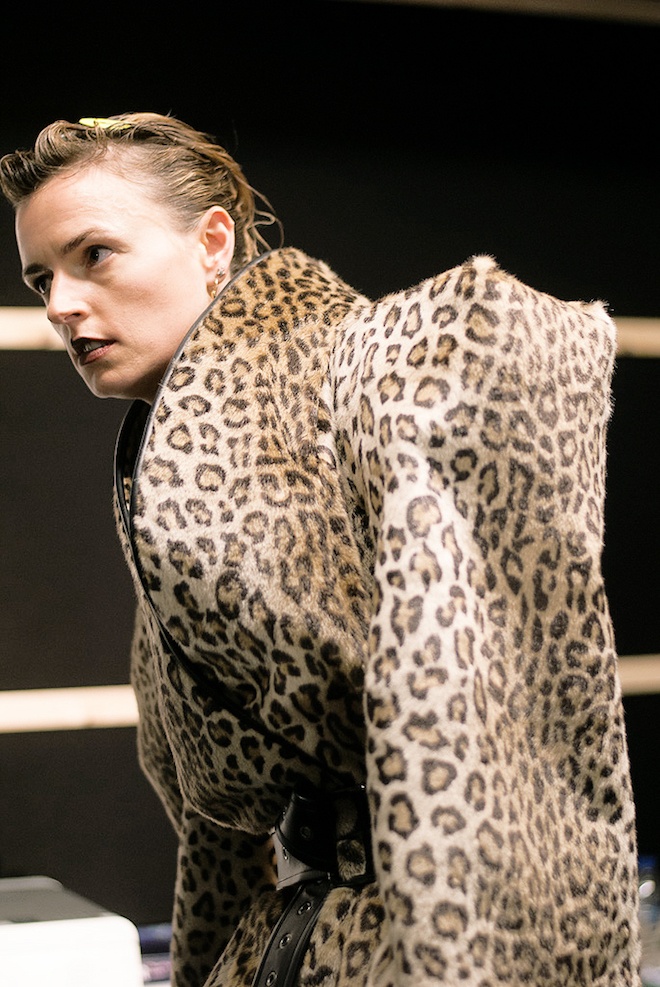
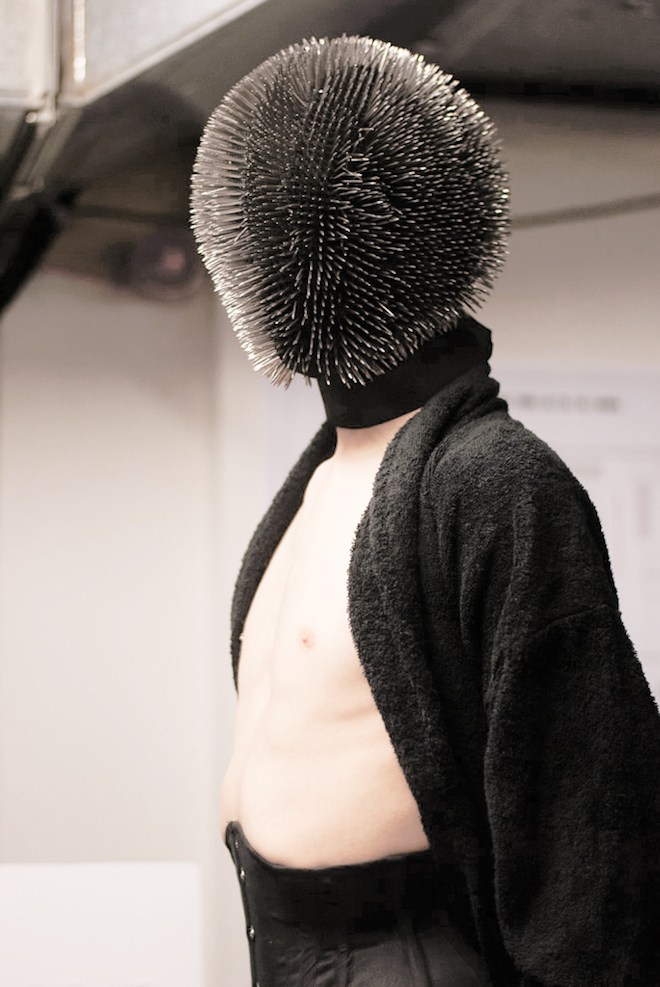
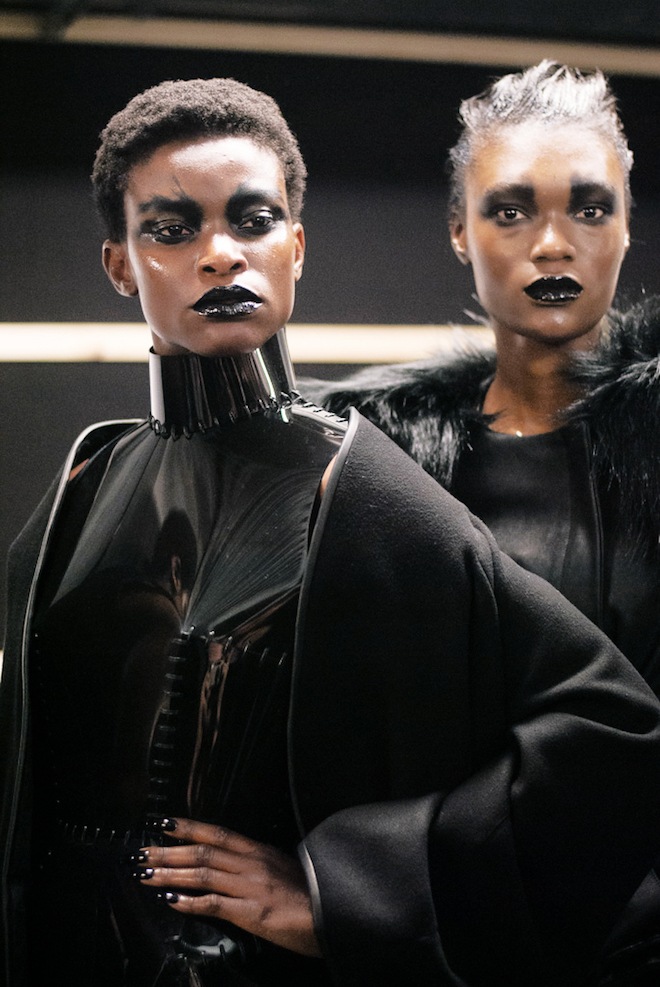
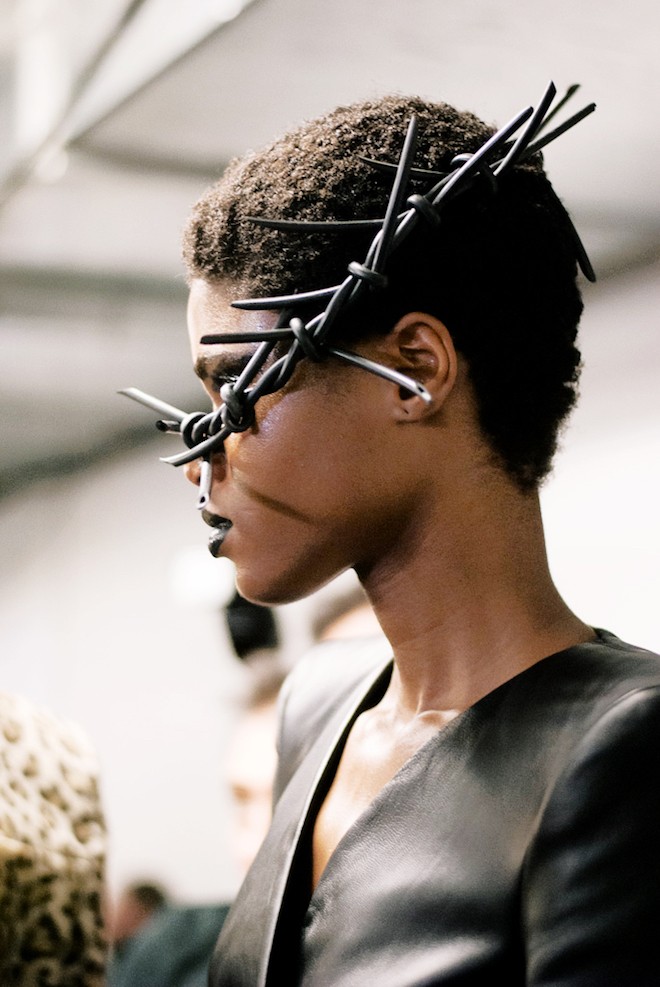
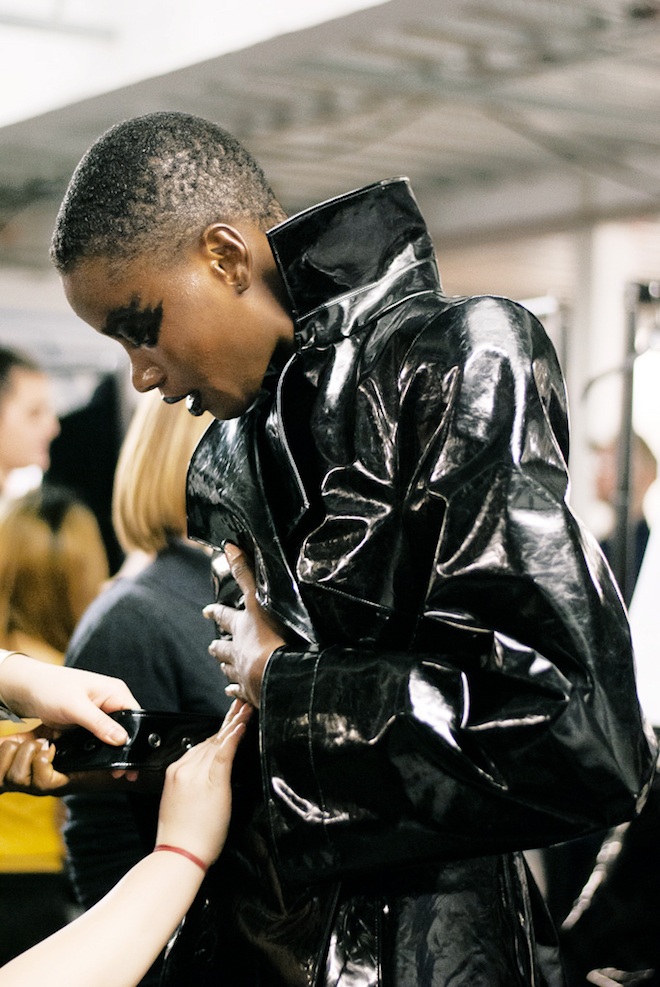
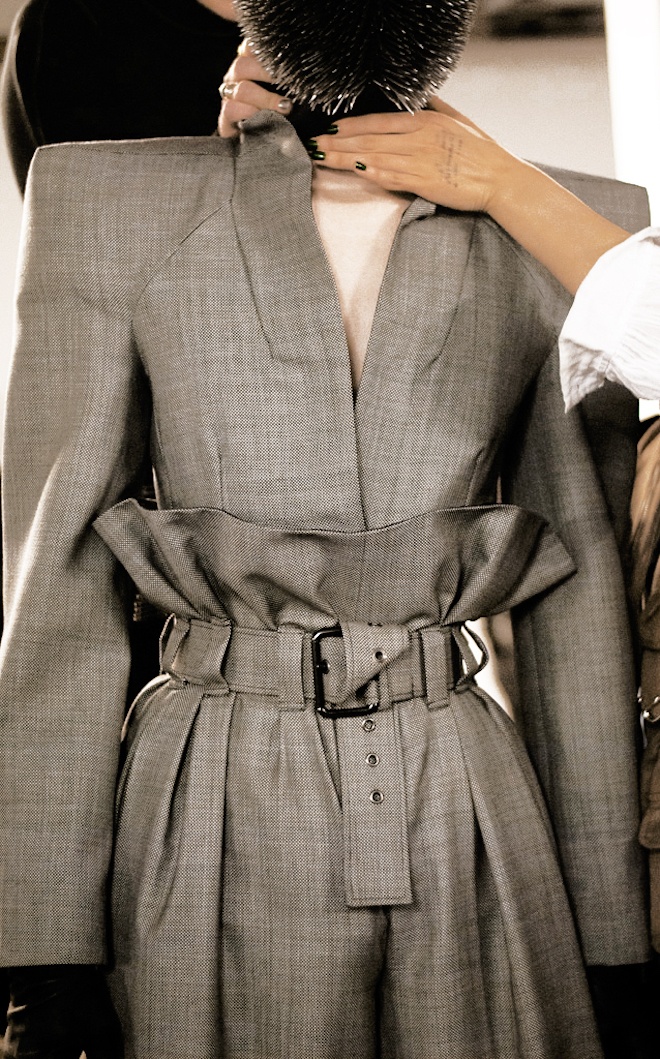
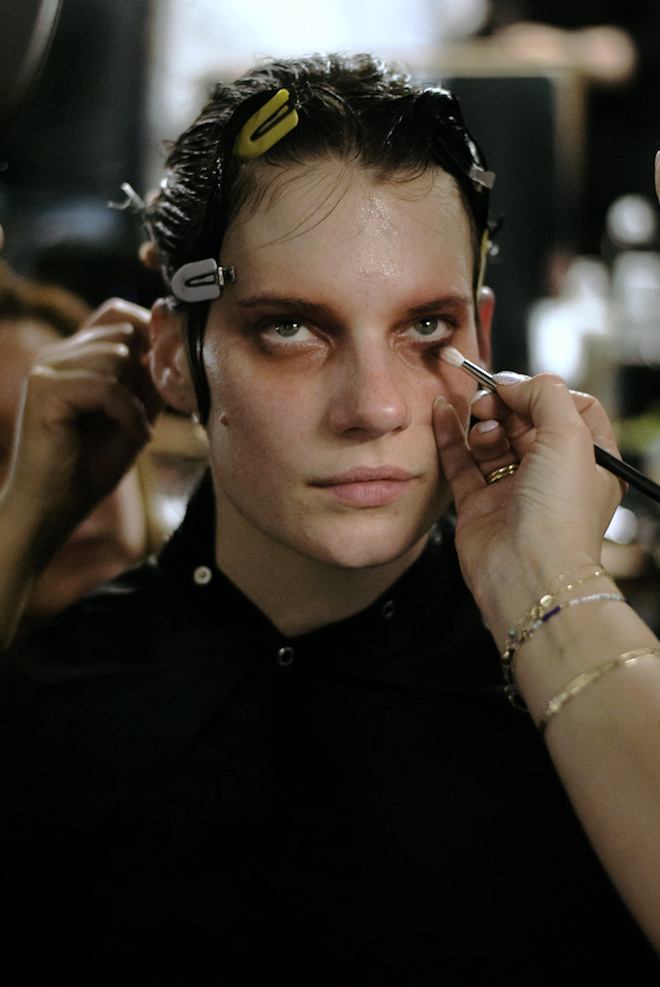
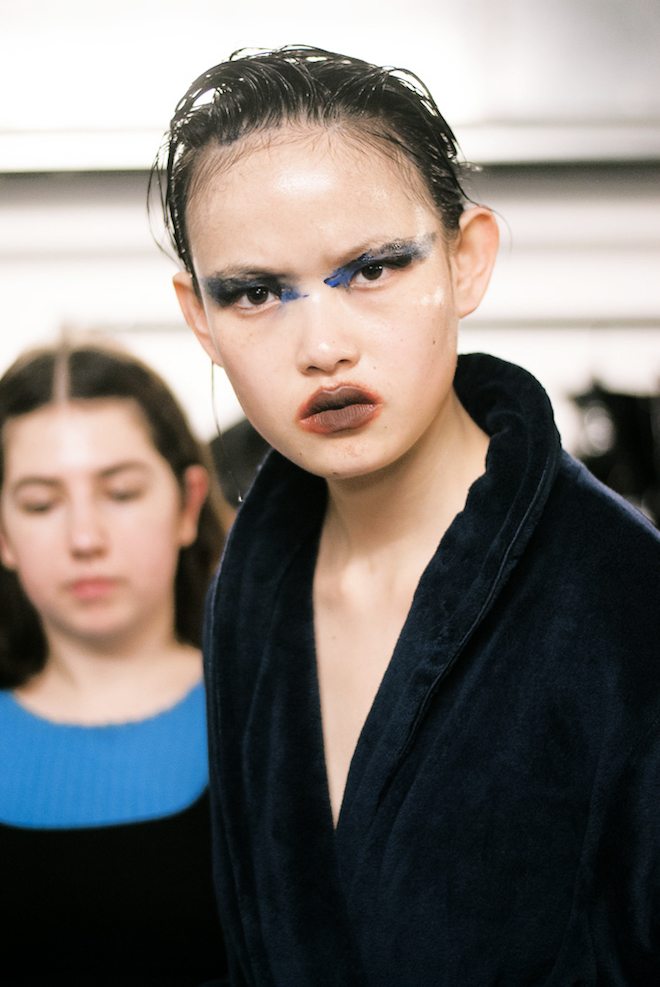
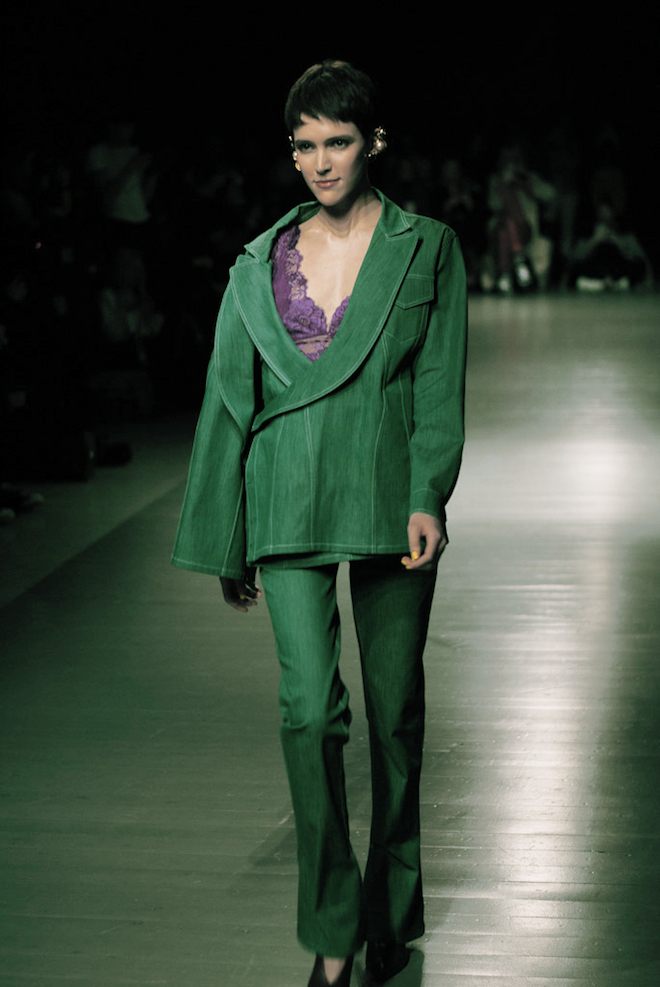
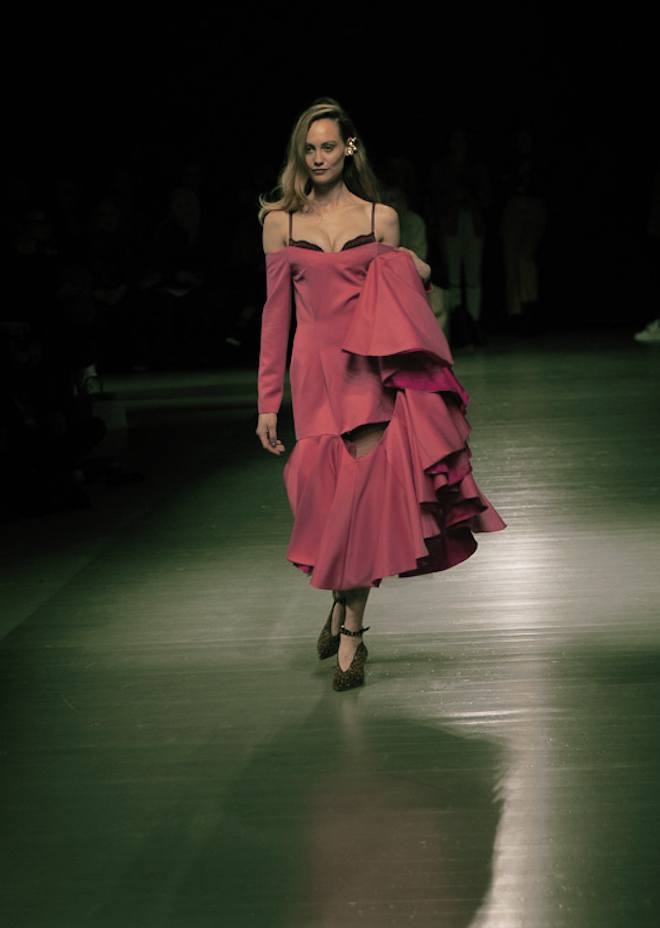
Amber Pinkerton goes backstage to delve into the theatrical, dystopian, violent and beautiful space that is Gareth Pugh’s ever enthralling imagination.










 PREVIOUS

 Twitter
 Tumblr
 YouTube
 Facebook
 Instagram
