Stef Mitchell: the bigger picture
How many times have you looked at a photograph and wanted to know what was happening in the exact moment that it was taken? How the air felt? If the people behind and in front of the lens even knew each other?
This is exactly what we tried to remedy with New York-based photographer, Stef Mitchell. Her absorbing work – which has appeared in places such as i-D and Urban Outfitters – is particularly portrait strong, so we asked her to share a few of her favourite shots, and tell us the story behind them. For Stef – who originally hails from Sydney, Australia – it’s the little things that count: “I just want to make nice pictures that make people react or feel something, even if it’s small.”
Here are a few of her characters.
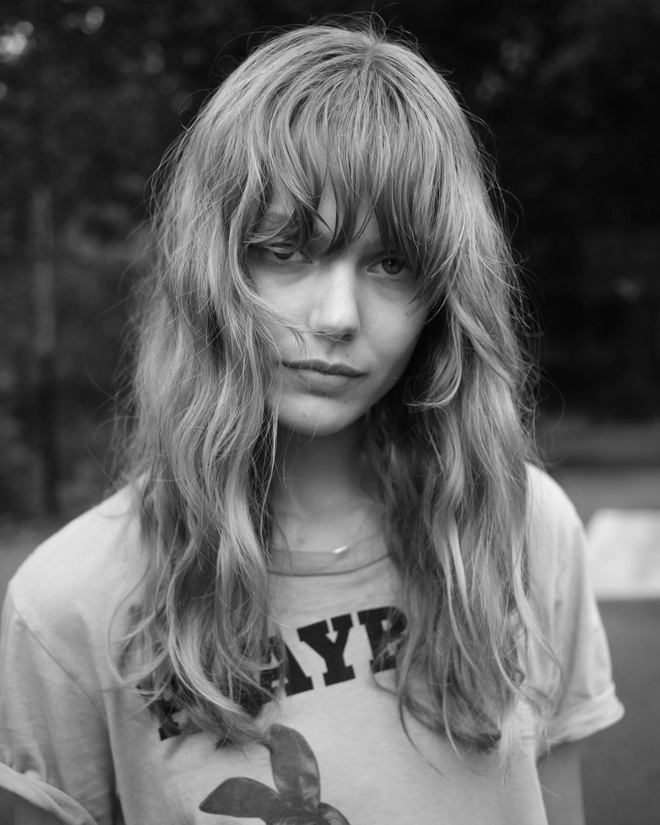
Frida (main)
“The subject’s name is Frida Gustavsson, she’s in her early twenties and she’s from Sweden. This was taken in Tompkins Square Park right in the middle of the basketball court off ave A and 10th street. I remember it was the longest day of summer and it was hot and started raining as soon as Frida and I met up. I probably ate some M&Ms. I love Frida! We’d met on a few jobs while I was assisting. She’d just had a palm tree that I drew tattooed on her arm and sent me a picture, so we met up and took some pictures. I think afterwards we watched the World Cup and had a beer. I think Frida had just gotten engaged – we chatted about her spending time in LA, midsummer and a short film she was working on. Frida was so easy to shoot because she’s awesome and was totally comfortable for me to shoot while we chatted; it’s my favorite thing to do and it’s kind of rare for someone to be totally OK with letting me do it. I wasn’t really sure what ‘the shot’ was at the time but I think it was the first spot we took pictures in in the park. I love this picture because it’s so simple but people always respond to it. Frida is an amazing model and human and I think that comes through even with no hair, make-up or styling.”
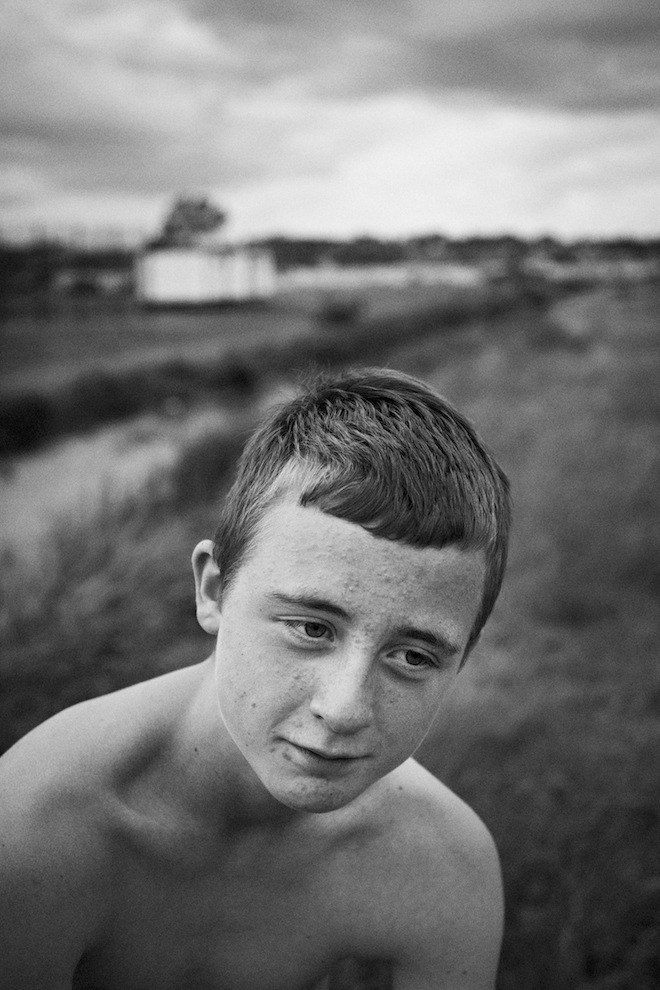
Boy
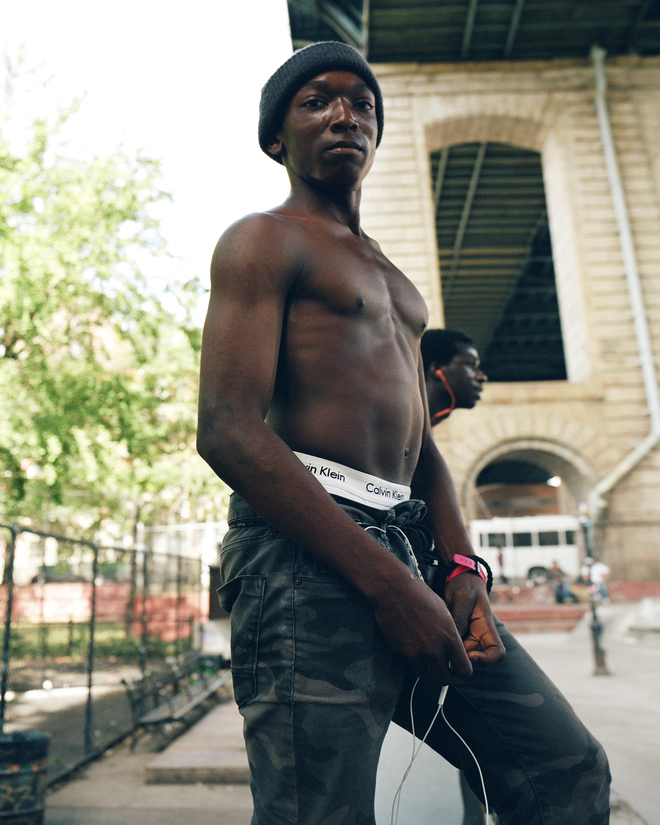
Boy
“This was taken in the skate park under the Manhattan Bridge. The weather was pretty perfect that day, mild and sunny. I was on a job and had eaten everything in sight. I was scouting the area in between shots and just looked up and saw this guy. I’d never met him before but had just been chatting to his friend. I asked if I could take a picture, he said ‘OK’ but he didn’t really like doing it. I got two frames in before he skated off. I don’t know anything else about him. I love this picture because even though he was nervous, he just looked dead at me and didn’t try to do anything crazy.”
Charlotte
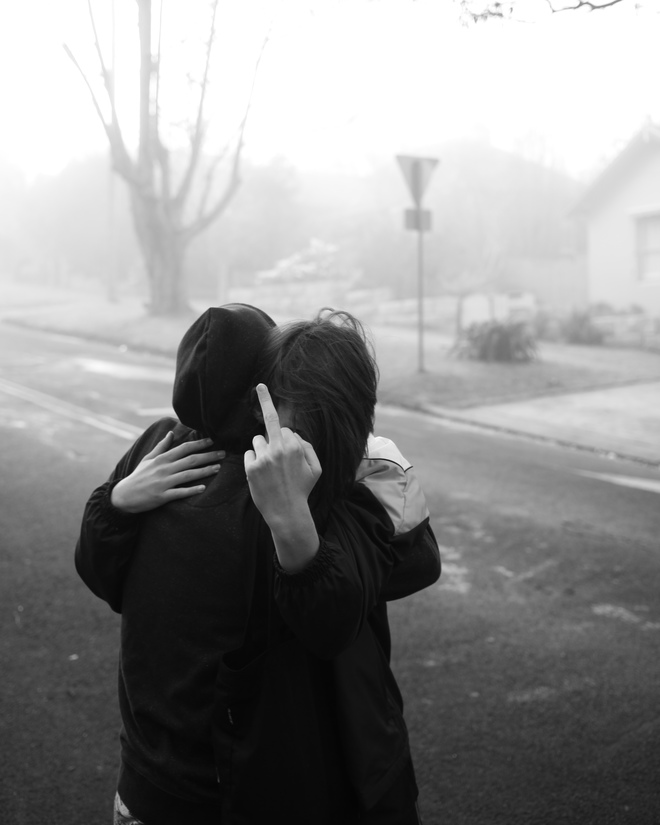
Charlotte
“This was taken outside my mums place in a suburb called Lane Cove in Sydney, Australia. It was about 7am and a big fog covered the street. My 14-year-old sister Charlotte was getting ready for hockey practice, and I dragged her outside for a photo. This is what she gave me. I’d maybe had some vegemite toast. When I made Charlotte come outside I thought she was very grumpy and turned out to be correct. Charlotte was probably 13 in this picture, and at the time her unique trait was to try and pull a face or flip someone off every time they took her photo. I think we were outside for about five minutes. I love this picture because every time I go home I try and shoot Charlotte on this street. She’s always been one of my favorite subjects and even though I miss so much time with her I like to think I’ll have a good series of pictures of her growing up for when she’s older.”
Julia
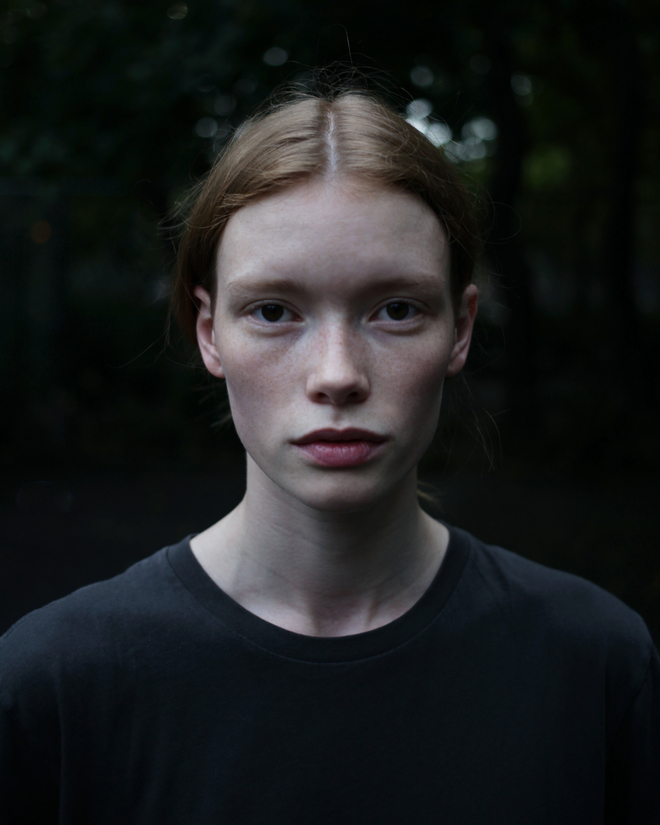
Julia
“This is Julia Hafstrom, she’s in her early twenties, and from Sweden. This was taken under a tree in Tompkins Square Park near the corner of Ave B. The weather was overcast and I definitely ate M&Ms this time. I thought Julia was a bad ass. We’d met before on a few shoots in LA. I think we talked about weird photographers, books and mums. Unique traits: being totally easy, fun and of course incredibly beautiful with the skin of 15th century cherub. I think we shot for half an hour, but again this was the first spot we were in and it ended up being my favourite. I love this picture because without doing anything Julia gave something real to the picture, and that’s my favourite.”
stef-mitchell.com
Tags: models, new york, photography, pictures, Portraits, stef mitchell, stories
Tom Sloan: Young Hearts Run Free
British photographer Tom Sloan is making pictures the old fashioned way – by letting the journey dictate the result.
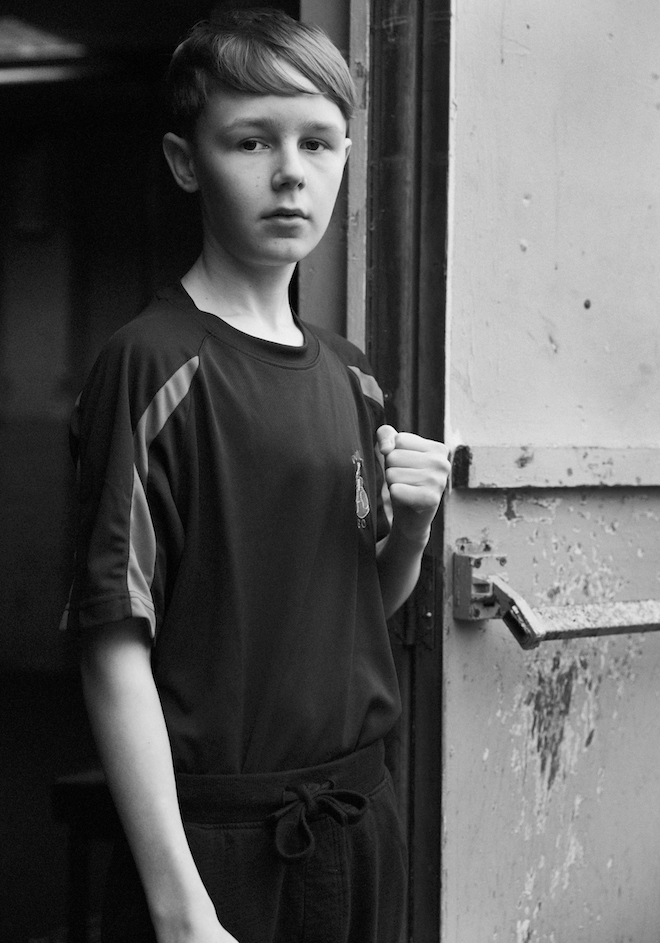
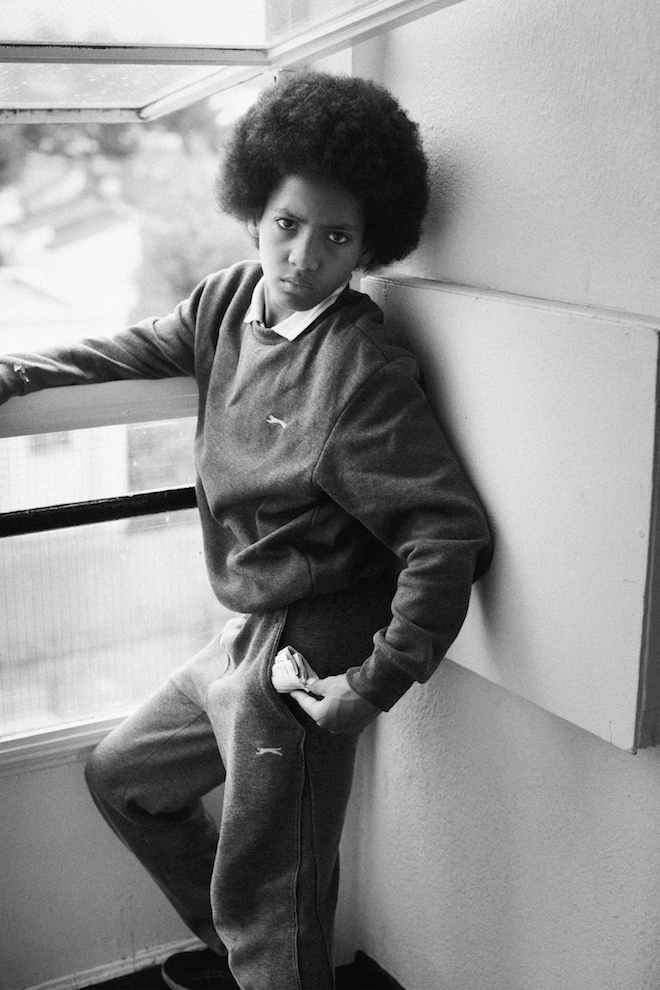
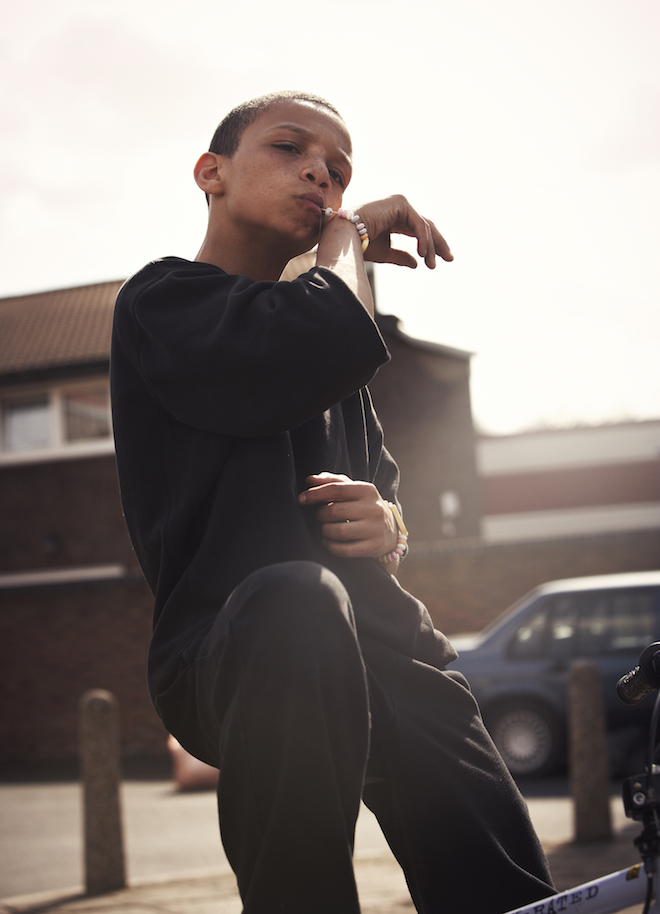
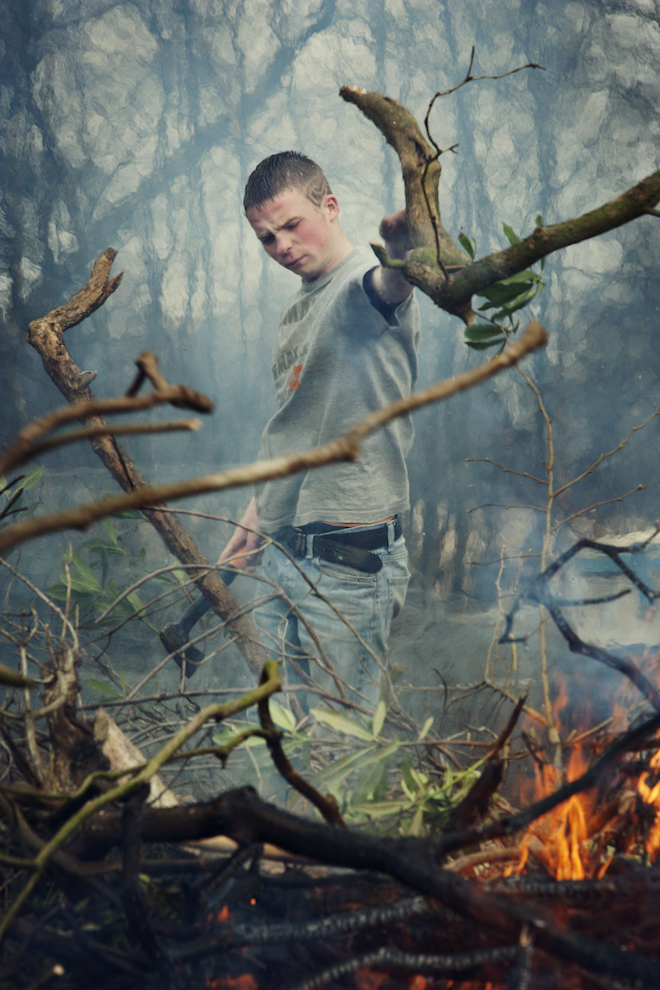
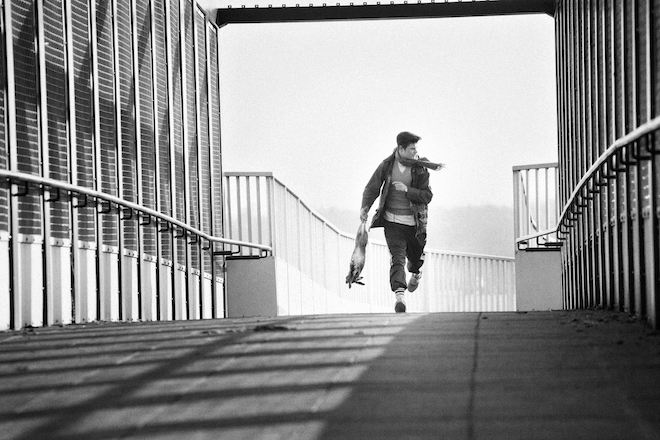
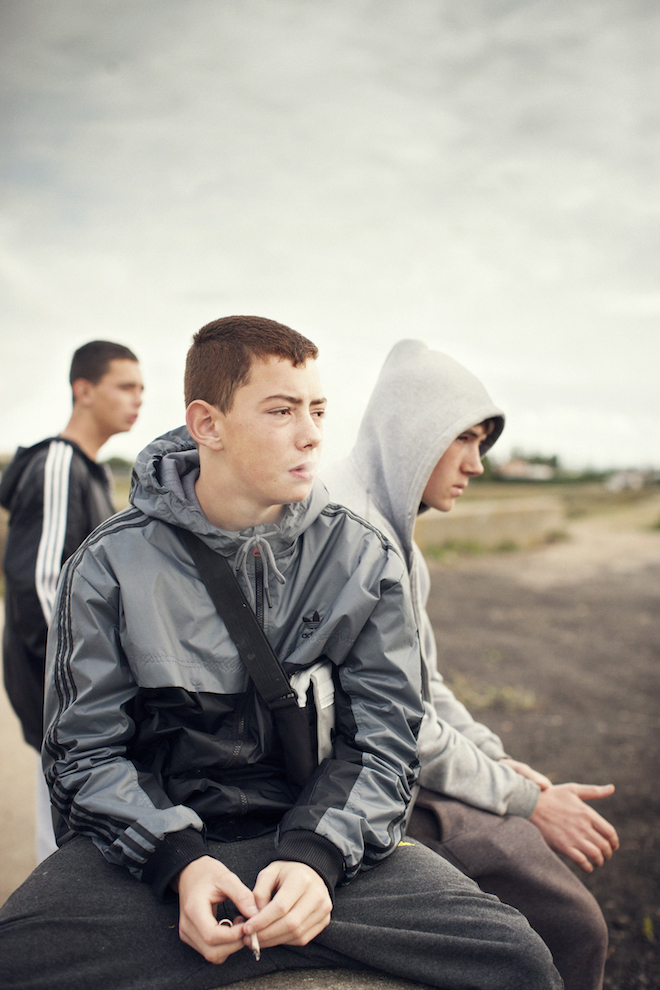
What initially pulled us towards Tom’s work was a recent trip he took to Wales – Merthyr Tydfil to be more specific – which produced a stunning series of photographs documenting the kids in and around the town. When we asked him what prompted the project, his response was so unselfconsciously thoughtful, that we knew we had to know – and see – more.
“I had been in the Forest of Dean area making pictures and came across two lads night fishing who were from Merthyr,” he told us. “They described the place to me and talked about what it was like growing up there. It sounded tough but at the same time quite romantic. They were honest about its problems with unemployment, benefit culture ect but they also described it as having a close knit community and it being a true Welsh industrial town. One of the lads was a keen boxer but had injured himself badly in a motorbike accident, he talked about training daily in and around the town as a youngster. One of the things I remembered them saying was that because of its geographical location in the Merthyr Valleys it was always shrouded with a thick foggy mist from the surrounding mountains, all of this got me interested.”
It got us interested, too. Here, along with a brief interview, we present you with a curated edit of some of Tom’s work. We think you’ll enjoy it.
What first drew you to making pictures?
I made short films as youngster, when I was 10 – 12 years old. They were very action-based as you can imagine. I used my Dad’s video camera. It was obviously all analogue, but I’d take it seriously and spend a lot of time editing, acting in them and making my brothers get involved. I was actually quite clever then, I worked out how to use a dodgy old editing machine my uncle bought from a car boot! But that was the start of me framing the world through a lens.
Can you remember the first photograph you saw that made a strong impact on you?
There have been many photographs that have made an impact on me, it’s a tricky question… Chris Killip’s ‘Seacoal’ pictures fascinated me. I would say it wasn’t just the individual pictures, although each one is incredible with such impact, it was the body of work as a whole and the world it showed me. It woke me up to telling a story with pictures. I was introduced to him when I started studying photography at university, aged 21.
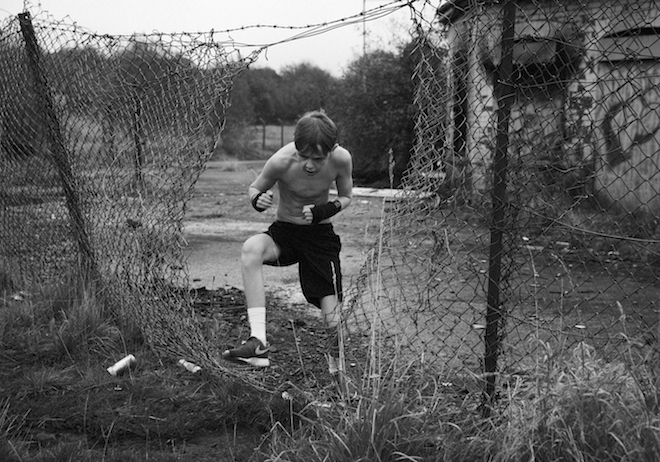
Cameron, Merthyr
When did you first pick up a camera? What did you take pictures of?
I took up photography when I was 16. I was told I had to fill my schedule up at college by an extra four hours per week, I was doing retakes of my GCSEs! I’d spent a lot of time enjoying myself at school… perhaps too much! I came across GCSE photography and thought it sounded interesting, a good mix of the creative and the technical. In my first lesson I was shown a variety of photography books, one was a Don McCullin book. I loved his early pictures of his friends in Finsbury Park and the work he made up north in Bradford. I began trying to shoot gritty black and white in Southampton. I had the docks, some dodgy friends and rough areas to explore.
When did you realise that you wanted to make photography your career?
It was a simple decision weirdly. I remember I’d been to stay at my dad’s for the weekend when I was about 17, we were heading back to Southampton in the car, he was asking about jobs and careers etc and I just came out with it, and it felt right. I’ve been indecisive in other areas in my life, but deciding to be become a photographer felt right.
What are the realities of being a photographer these days? Is it as romantic as it sounds?
This question moves nicely from the last… Yes and no! It’s very tough, confusing, exciting and unpredictable! But interesting in so many ways. You have to stick to your true self and your gut instinct, which is difficult at times. I think the point I want to make is, for me, photography as an art form meant I’d have to go out into the world and find people and places and go on adventures. That’s what would interest me when I looked at photographers work, I loved the mystery of how they got the pictures, the process. It almost doesn’t become just about the individual picture, the work becomes about the photographer and the journey. Going back to the question though, for me the most romantic aspect of being a photographer is the freedom the days can hold.
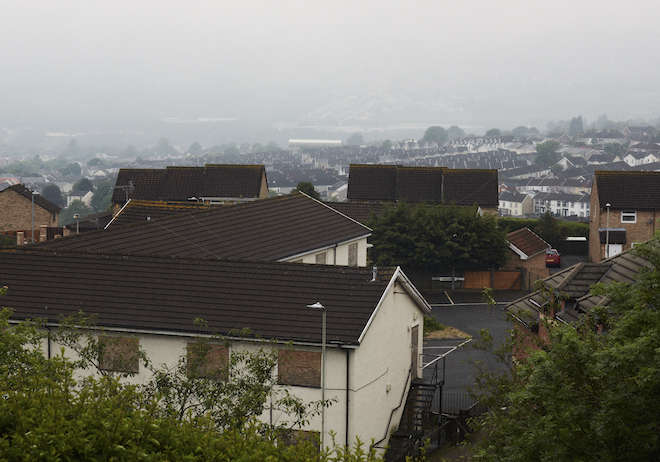
Merthyr
If you had to choose one of your pictures to best act as an example of your style, what would it be and why?
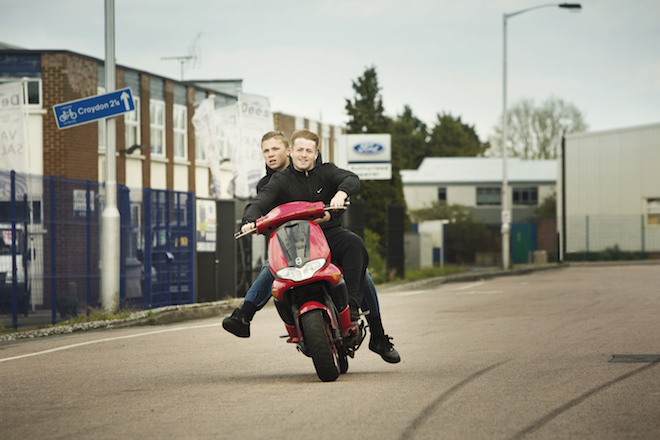
Umm tricky again… I like the picture I took of these two lads in Croydon, riding on the back of a moped. It’s certainly not my best picture but it sums up what I’m interested in when it comes to photographing these types of lads. There’s a sense of living the way they want to live, slightly wild I guess. I want a hint of excitement, I think this picture holds that.
Is there anyone that has influenced your work over the years?
Loads of people have influenced me, from photographers I’ve worked for to people I’ve looked at over the years. Strangely, although I don’t look at his work so much nowadays and it’s quiet different from my own work, I was a huge Wolfgang Tillmans fan. When I first saw how he displayed his work it blew my head off! His exhibition ‘If One Thing Matters, Everything Matters’ was a real influence on me. He curated and edited his work to have such an amazing rhythm. Others include: Paul Graham, Martin Parr, Juergen Teller and Glen Luchford.
Much of your work depicts youth, and young people – is there a particular reason for that?
Without trying to sound cliche, I guess they give you something honest? I like the excitement of being young as well, you can get up to a lot. I used hang out with huge groups of kids when I was growing up and we had so much fun, it was wild. Weirdly, you don’t see that so much now. I think teenagers spend more time online than hanging out at the local rec.
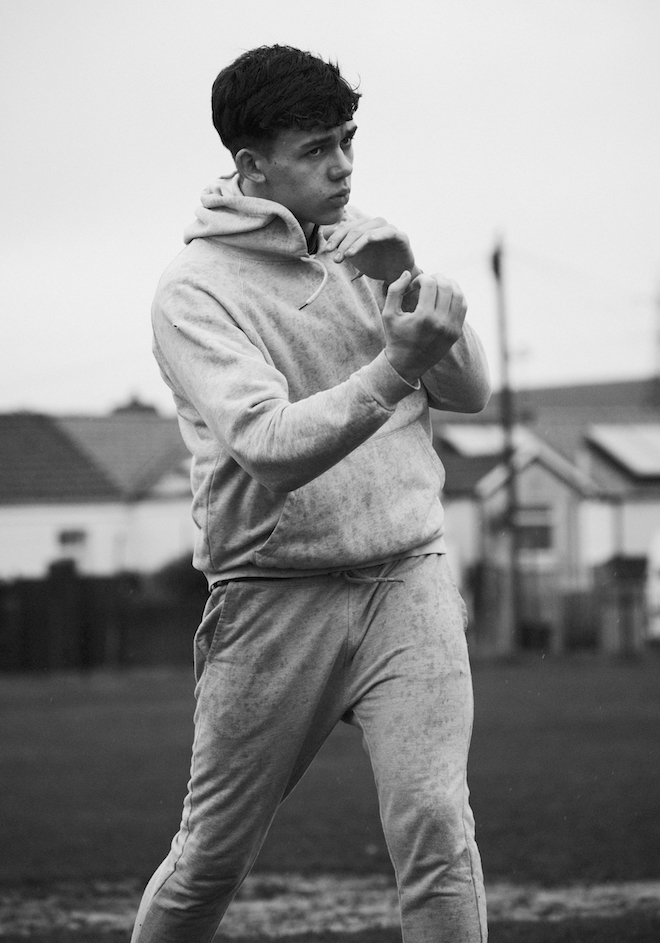
Sam, Merthyr
What was your childhood like? Where did you grow up?
My childhood was pretty normal. I grew up with my two brothers in Southampton until I was 10, when my Parents divorced. My dad moved to a tiny cottage in the countryside, we stayed in Southampton. My mum remarried a few years later and the family grew, I gained two step brothers and a step sister. I had a pretty eventful teenage period, hung out with the type of kids I photograph, took drugs, went to parties, roamed the streets, usual stuff.
Do you have a dream project that you’d like to make reality one day?
Well it would be in the UK to start, I love making work here, I understand it! I think it’s a special, hugely diverse place. It would be shot on the outskirts of the city where the countryside and the city meets – my favourite territory! It would be a space where the teenagers own the land… To be honest I’m sort of shooting this bit by bit as I go along… I think…
What’s inspiring you right now?
Road trips, I’m enjoying making work outside London at the moment, I get really inspired by the countryside.
What would be the highest compliment someone could ever pay your work?
That I’m considered authentic. That means I’m on the right track.
tomsloan.co.uk
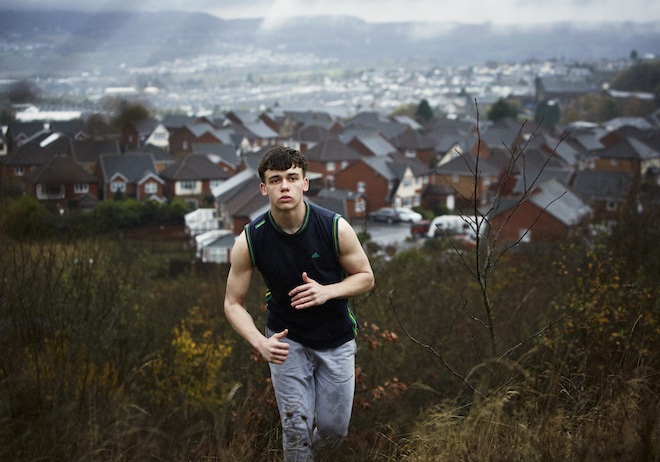
Sam, Merthyr
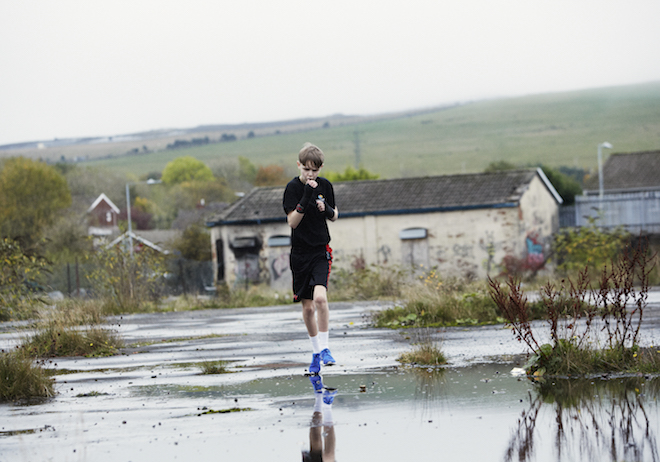
Cameron, Merthyr
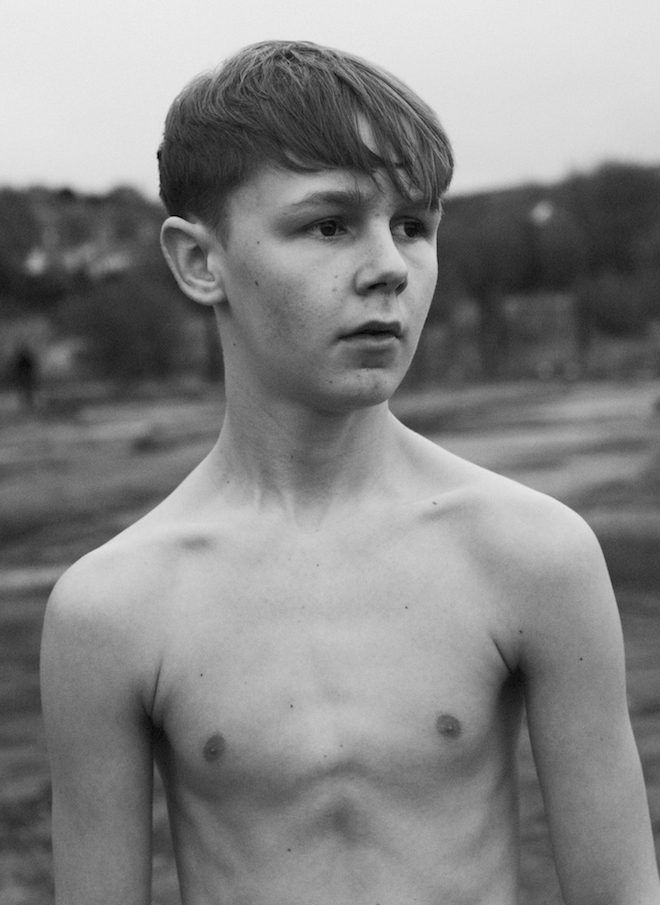
Cameron, Merthyr
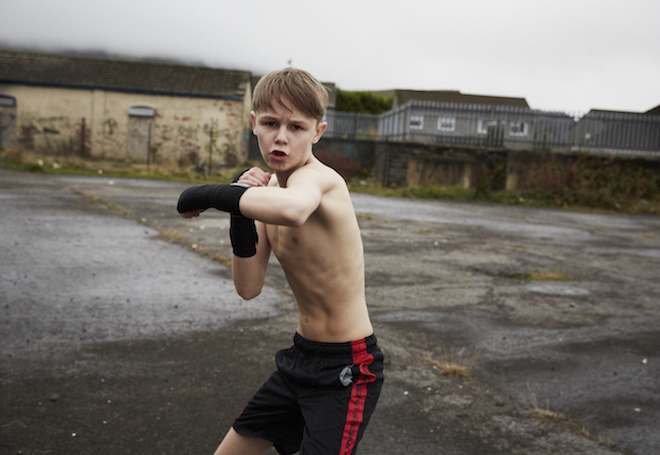
Cameron, Merthyr
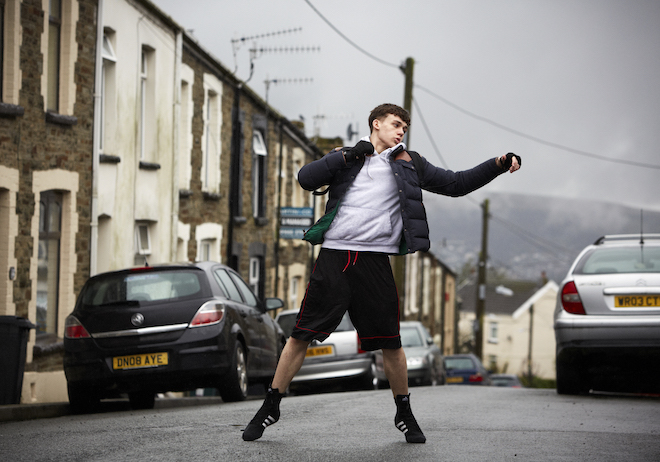
Sam, Merthyr
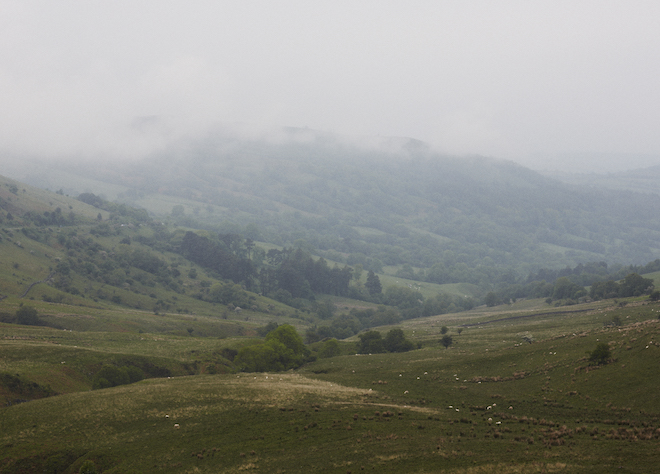
Merthyr
And here’s some more of Tom’s work…

Tags: Art, British, photography, pictures, tom sloan, YOUth
The Banner Repeater Fundraiser Is Happening Now
Everyone likes winning things. Even those who give off the most authentic air of indifference to life, love winning things. It is with that in mind, then, that we sound the drum-roll and let you know about the brilliant Banner Repeater Fundraiser, which is happening as we speak.
For just £5, you will be entered into a lottery to win some amazing prints, publications and multiples from the enviable Banner Repeater portfolio. These include, but are not limited to: Turner Prize winners, British Art Show 2015 artists, and more, such as Hannah Sawtell, Laure Prouvost, Jesse Darling, Benedict Drew, John Russell, Erica Scourti, Emma Hart, Elizabeth Price, Critical Hand Gestures, and there are also some highly collectible BANK tabloids, too.
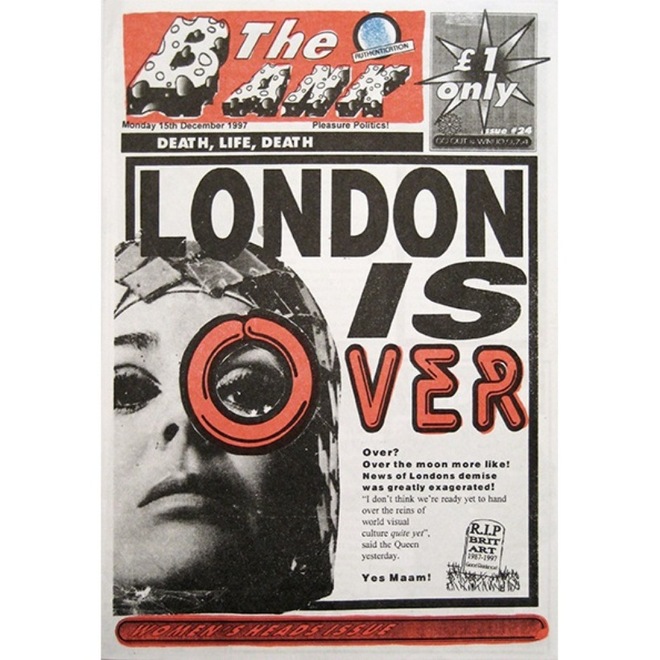
The BANK. Issue 24. Published 15th December 1997
So what’s this all in aid of, then? Well, creativity. And the space to exhibit it. As we’ve previously mentioned – and we all know far too well – continued budget cuts to arts funding mean that the visibility of challenging work in public spaces is under threat, and places like Banner Repeater are having to do things like this, in order to survive. Let’s all help them, shall we?
All you have to do is take a simple cyber jaunt over to their website, here, and click to buy yourself a ticket. The lottery will then be pulled on 4 December at a fabulous party, with a DJ set by Paul Purgas. This will all take place at L’Entrepot, 230 Dalston Lane, London, E8 1LA (next door to Hackney Downs train station).
So what are you waiting for? Enter now, go to a party, have fun, maybe win something really fucking cool and support art. It’s a no brainer.
Find Banner Repeater on Platform 1 at Hackney Downs Rail Station, Dalston Lane, Hackney, E8 1LA. They’re open: Tue-Thu 8-11am, Fri 8am-6pm; Sat-Sun noon-6pm.
Bannerrepeater.org
Tags: Art, BANK, banner repeater, banner repeater fundraiser, collectible, fundraiser, Hackney, Limited edition, london, Turner Prize
Kollektiv launch free A-Z manual for creatives
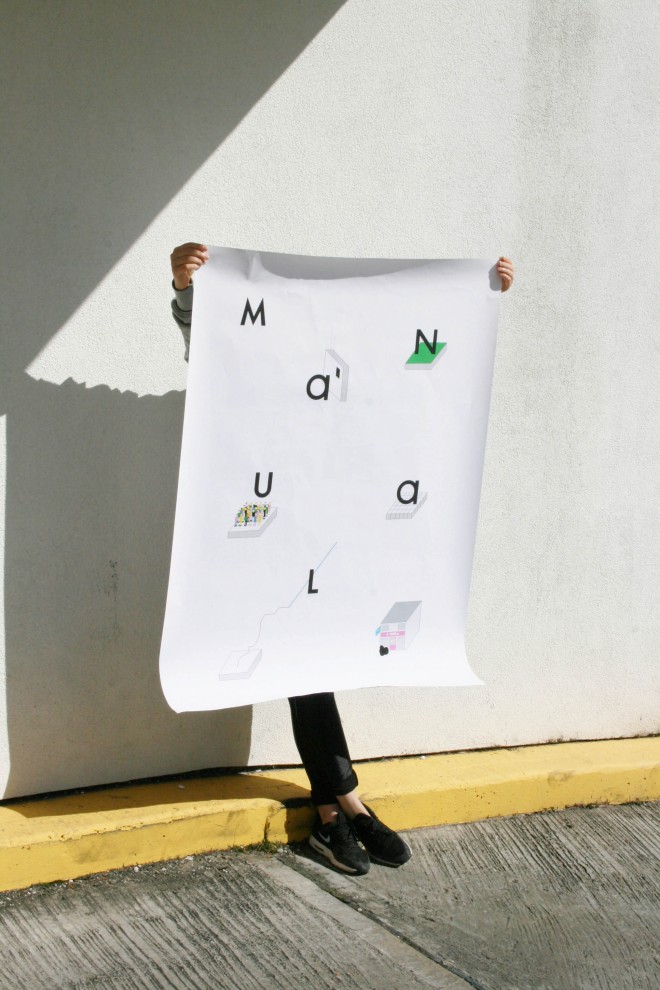
Navigating the minefield of the creative industry at a time when housing costs have reach crisis point, funding for the arts is being monumentally slashed, and any kind of government support is a joke – is nigh on impossible. Luckily, there’s a force for active change in our midst. It comes in the shape of 26-year-old artist, feminist and curator Sophie Giblin, who is a founder of the award-winning Kollektiv art community, and determined to satiate the need for real, practical ‘how to’ knowledge for creatives just starting out. Sophie has put together, along with designer Sarah Todd and developer Luke Phillips, a free online manual that cleverly, and plainly, details how to do various things such as run collaborative projects, use alternative funding methods like crowdfunding and open galleries in derelict spaces.
“Life as a creative can be tough. Funding is being cut, rent is high, inspiring opportunities are scarce. It all seems really miserable, but we can and must stay creative. The new youth led DIY collectives shouldn’t be deterred by the difficulties. They deserve a helping hand and that’s why we’ve made everything we’ve learnt over the past two years completely open source. We like to choose collaboration over competition.” – Sophie Giblin
Everything you could want to know – from how to handle a problematic landlord to prepping a space for an exhibition – is beautifully categorised and easy to navigate, via the website’s no fuss (but still aesthetically pleasing) scrolling design.
Readers and fellow creatives are also encouraged to engage with the project by tweeting any thoughts and additional questions with the hashtag #KollektivSchool – further ensuing there is no dead end to the invaluable information being provided.
Kollectiv has been running as a Kickstarter funded organisation for over two years now, and its overall message is this: “make ideas into realities, don’t settle for unfair treatment and learn by taking the lead. Make your own way and regret nothing. Show the #haters what you’re made of and don’t let the realities of post education stifle your creativity.” We’re down with that.
kollektivgallery.com/manual
Tags: Art, Books, collaborations, creatives, exhibitions, funding, gallery, help, ideas, kollektiv, manual, sophie giblin, start-up
Second Skin
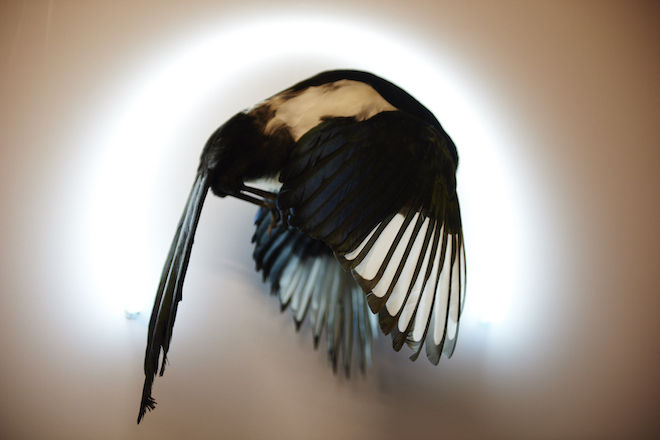
I feel as if I’m in a sylvan dream world, with animals slumbering peacefully around me – except I’m actually in dark cubbyhole in a printers’ office in Aldgate East. This is Harriet Horton’s studio and what I’m looking at are her works: she’s a taxidermist, and an unusual one at that. Her ethically-sourced pieces – brightly coloured and lent a surreal quality with the addition of neon lighting – are far from traditional.
“I can’t remember what made me want to do the neon, but I’ve always loved it, so for me merging it with taxidermy seemed quite obvious,” she explains. “I like it because it’s quite trashy. My godmother lives in Blackpool, and my family used to visit to see the illuminations, and it was kind of trippy.”
Horton’s path to her trade wasn’t straightforward. After studying philosophy at the University of Manchester, she went to train with George Jamieson in Edinburgh. She did taxidermy work in her spare time, on and off, for six years, and in the last year decided that she wanted people to see her pieces.
And that’s what I’m here to discuss, because Horton’s first solo exhibition, Sleep Subjects, opens on 13th November, and she’s just joined a gallery, Contemporary Collective.
“I became really obsessed with animals and their dreaming abilities and I thought it would really fun. I wanted to use lighting and other mediums to explore the visual representation of their potential REM. I wanted to make something that was about the animals rather than about the human version of dreaming.”
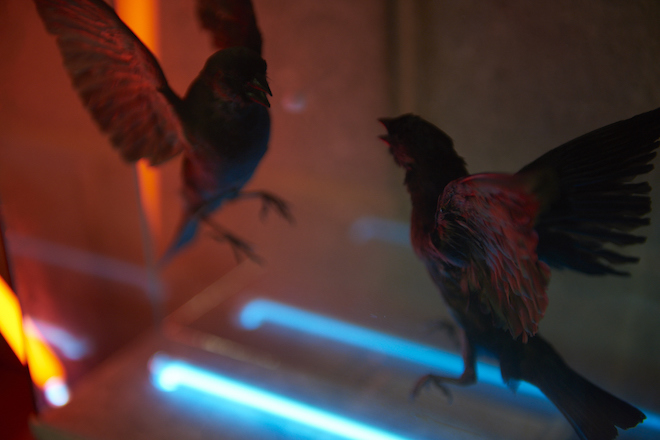
Photography by Joe Quigg
She prides herself on maintaining a playful narrative: “Once you’ve taken an animal out of it’s natural habitat, where it looks beautiful, and you put it in a gallery, it looks at bit out of place. I tamper with what I can but I try to do it with utmost respect because I think you have a level of care as a taxidermist. I hate all that macabre gothic taxidermy.”
Harriet’s work is quite unlike anyone else’s, which she says, is because, “One of the most embarrassing things for me would be to accidentally do something that’s quite similar to someone else’s. I followed a lot of artists and then realised that if I wanted to do it myself, I didn’t want any conscious influences, so I stopped researching people. I’ve been starting to look again recently.”
The exhibition looks set to be equally unusual, a multisensory experience with music and lighting in a crypt. The music producer is Rob Shields, a friend of Horton’s. “It’s really special that he’s doing it. It’s going to be a new thing for me, because I can only visualise what I’ve got here, so…his element will kind of change things. I think I’ll change the layout and that’s what I’m quite excited about,” she says.
Horton’s young, fresh approach is turning taxidermy on its head – and we think it’s dead cool.
Harriet Horton will be exhibiting on 13 November at The Crypt Gallery. For more info, go to harriethorton.com
Photography by Joe Quigg; joequigg.com
Tags: exhibition, Harriet Horton, neon, taxidermy
super/collider’s Women of Rock exhibition
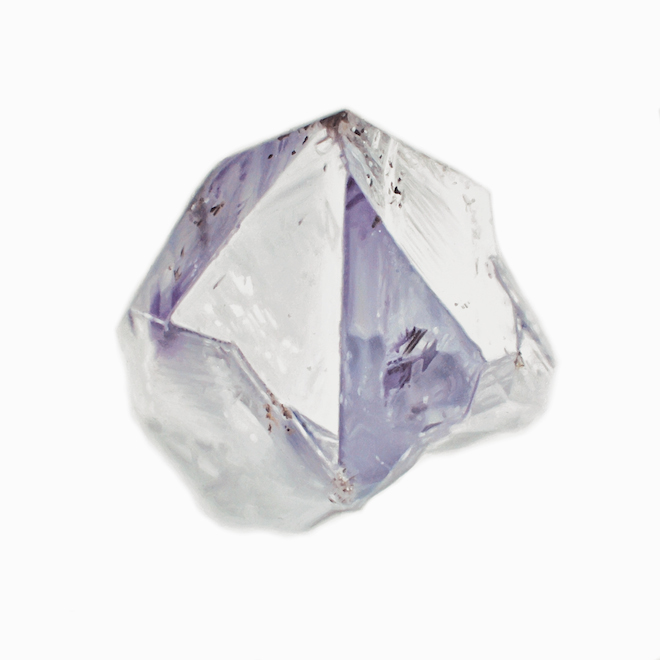
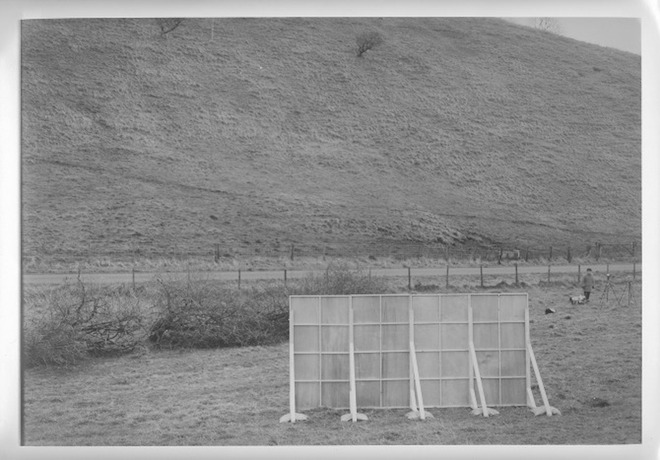
Geology has never been considered the most feminine science but the oeuvres in a new showcase from creative science agency super/collider are anything but masculine. Witness Carly Waito’s stunningly realistic oil paintings of gemstones (main picture) and Jessica Herrington’s crystal and rock inspired sculptural works, while Sophie Rose Asquith’s Sylacauga 1954, Thixenhale 2013 (pictured below) leverages black-and-white photography to eerily represent extraterrestrial geology.
The mixed media show is designed to represent the resurgence in female fascination with geology, minerals and meteorites, with beguiling results. Many of these artists are fascinated by how these jewels develop through immense pressure and time – parallels with everyday life, perhaps?
super-collider.com; 25 September – 30 October, Print House Gallery, 18 Ashwin Street, London E8 3DL
Tags: Art, Geology, Women
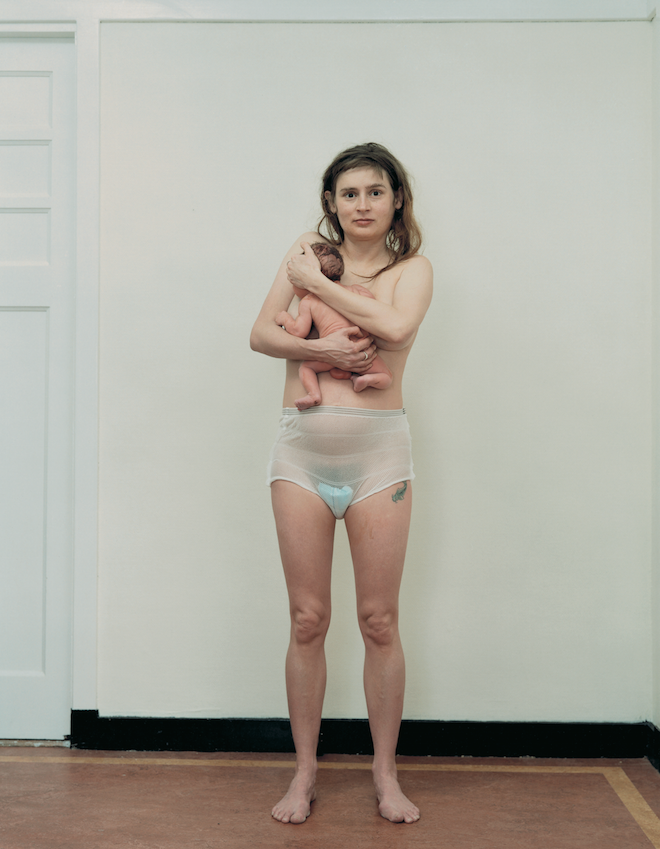
The Great Mother at the Trussardi Foundation
Mum/Mamma/Maman: the word signifying ‘mother’ is almost a universal term – and with good reason. The authority of Mamma is particularly synonymous with Italy, so its seems only fitting that what the Trussardi Foundation’s latest contemporary art exhibition at Palazzo Reale in Milan will explore the mother figure as a subject of admiration, myth, historical significance and artistic inspiration. Curated by director Massimiliano Gioni (the artistic director of the Venice Bienale 2013), the show will run from August 25 to November 15.
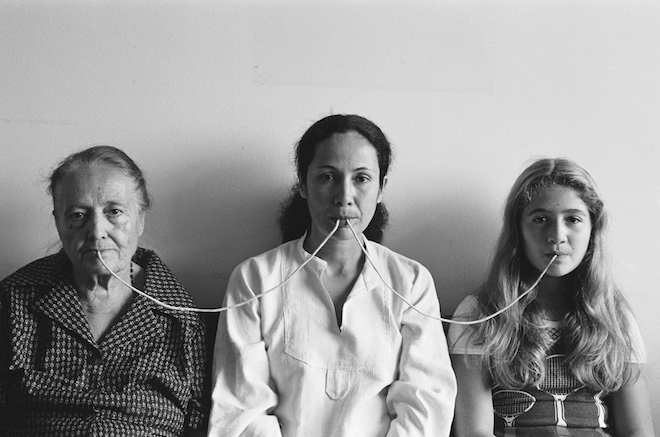
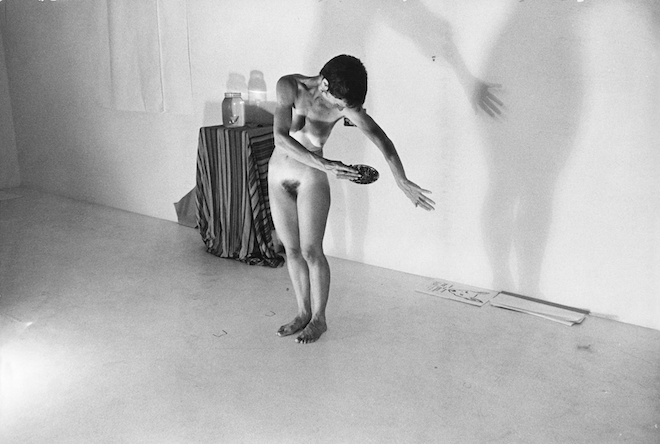
127 international artists will be exhibited over 20,000 square feet, analysing the iconography of motherhood in the 20th and 21st centuries. Highlights include work from Julie Den Hagg (pictured above, courtesy of Rineke Dijkstra and Marion Goodman Gallery), Anna Maria Maiolino (below, first picture, courtesy of Galleria Raffaella Cortese) and and Joan Jonas (below, second picture, photograph by Roberta Neiman). The Great Mother aims to celebrate women’s power, not only as a life-giving, creative force, but also the story of female empowerment over the course of the past 100 years. No subject will be overlooked, from gender struggles to sexual politics, and one of the exhibition’s goals is to encourage women to be active participants in the representation, rather than just its subject.
Until 15 November, fondazionenicolatrussardi.com
Tags: Art, Mother, Trussardi Foundation

Chart Art Fair 2015
European capitals have long been considered to be temples of art, with a roster of household names to bolster their reputations – Madrid has Picasso, Florence has Leonardo da Vinci, Paris has Monet. Copenhagen, however, is current cool kid on the block when it comes to the art scene, and Chart Art Fair might just be the place to discover a corresponding famous face. From 21 -23 August, the fair will be holding a unique exhibition of contemporary Scandinavian artists from 28 countries at The Royal Danish Academy of Fine Arts Kunsthal Charlottenborg. Its unique presentation will propel the viewer through a unique and distinctive experience of the many different facets of contemporary Nordic art.
One of these facets is performance, and as such the fair will feature Spectrum, a programme created by Twin’s own art editor, Francesca Gavin. Intended to demonstrate how performance can be relevant, engaging and complex, Gavin’s programme will focus on Nordic artists who work in different areas such as architecture, sound and textiles.
Friday will see Tori Wrånes create dramatic aural audio works, while on Saturday, Sirra Sigrún Sigurōardóttir will focus on spectrum and movement through interactive spaces and David Mullett will leverage a psychedelic virtual reality. For the final day, Nadine Byrne and collaborators Julie Verhoeven and Peter Jensen will channel a variety of mediums including sound, sculpture and textiles.
Gavin has also created series of special projects: Video Video presents a series of video works from artists such as Joe Winograd, Katarina Löfström, Martin Erik Andersen, Rhys Coren, Samuel Levack and Jennifer Lewandowksi, and Sara Ludy, with the films being shown on designated screens in shop windows around Copenhagen.
Elsewhere, Carsten Höller’s graphic works (pictured) are a highlight, as are pieces by Franz West, John Kørner and Jaume Plensa, to name but a few. With accompanying events covering architecture and gastronomy, the fair looks set to chart a stylish voyage of discovery into Scandinavian culture.
chartartfair.com
Tags: Art, Chart Art Fair, Copenhagen, francesca gavin
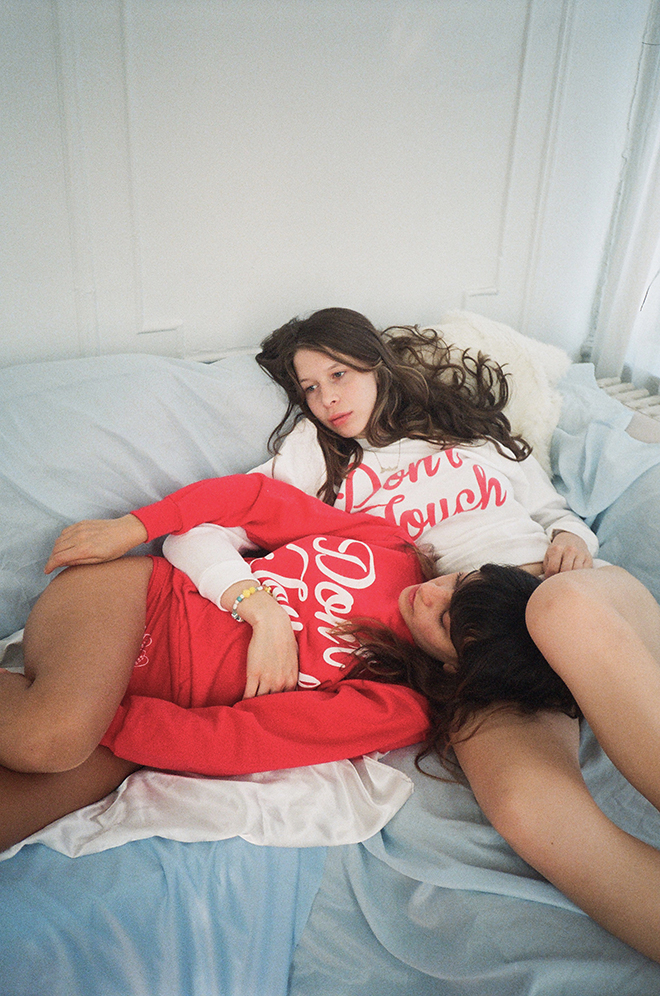
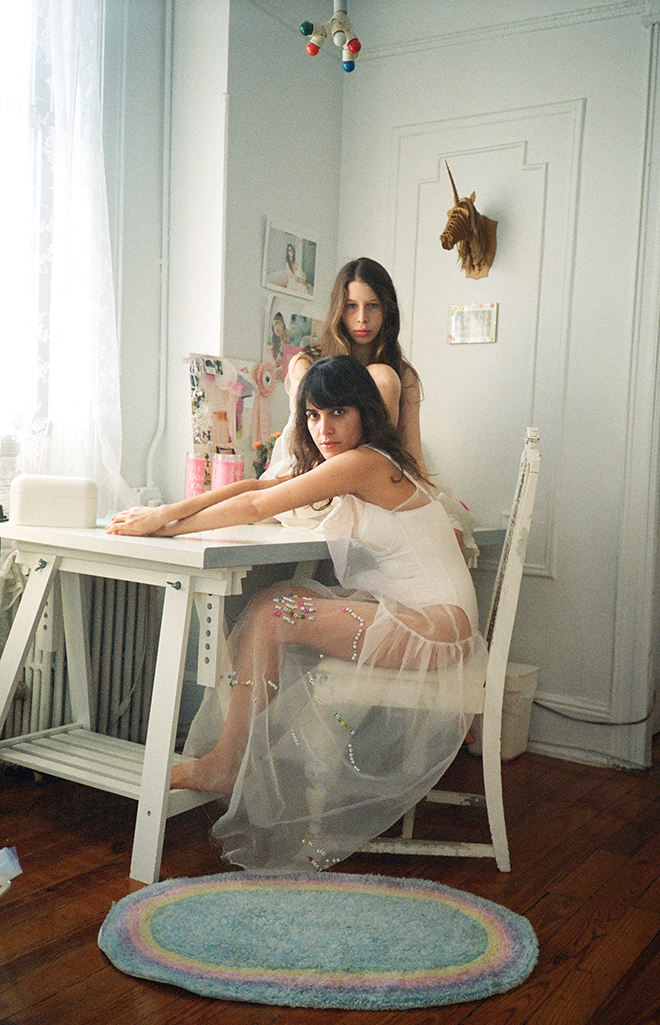
Talking to Mayan Toledano and Julia Baylis, the best friends behind Me and You
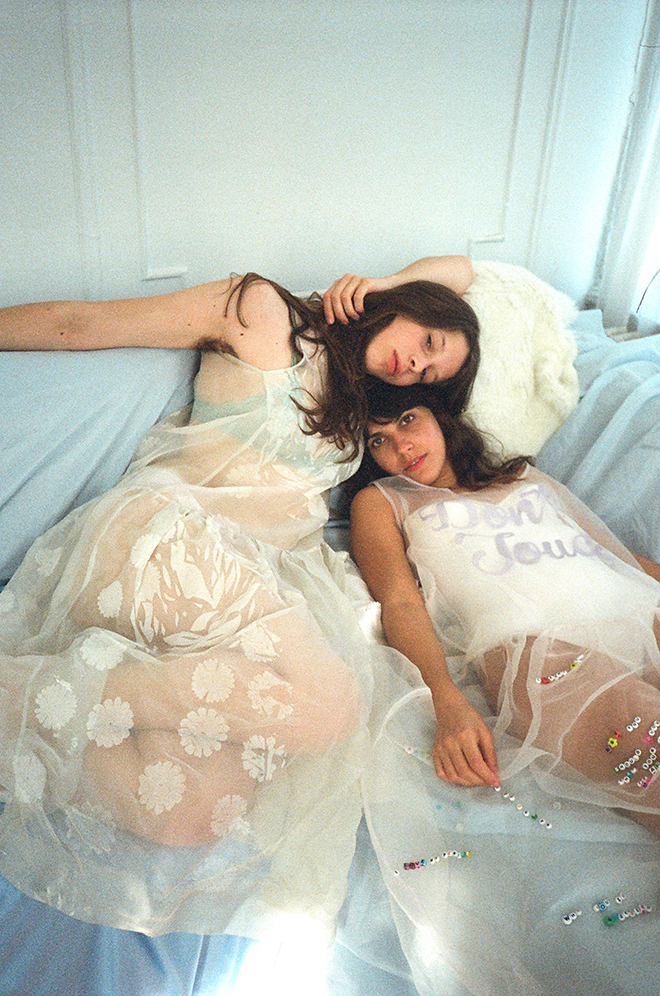
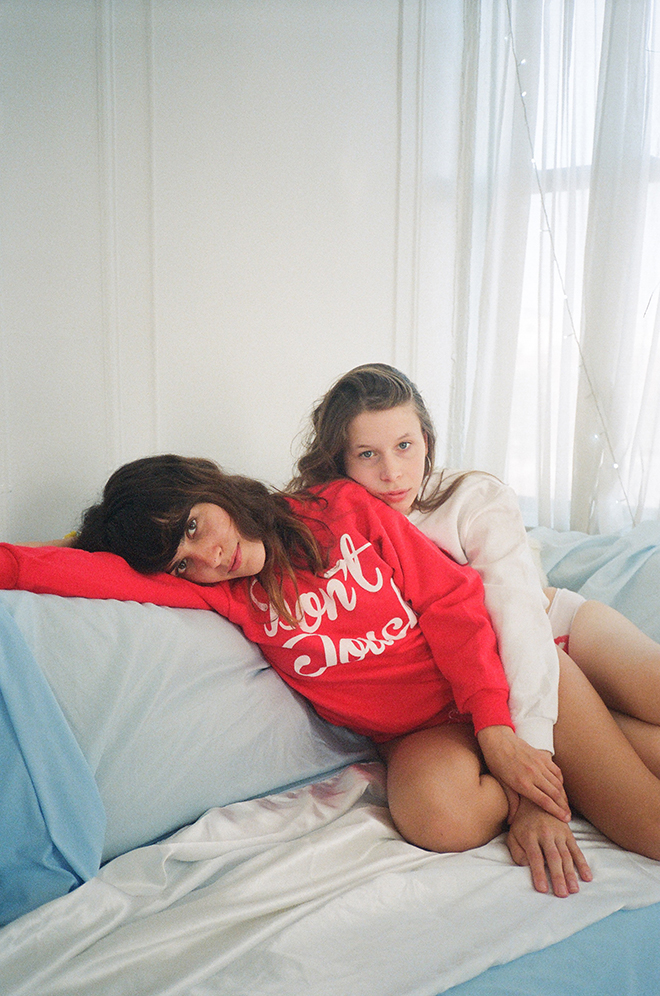
What started as two design students connecting over their love of everything girly, and their dislike of the elitism and limits imposed by fashion school, led to the creation of Me and You—a fashion label with a cult following. Mayan Toledano and Julia Baylis are the best friends behind the label known for its beautifully simple underwear emblazoned with ‘feminist’ in pastel pink lettering, floaty tulle dresses, and fitted T-shirts covered in lipstick kisses.
Me and You began while Baylis and Toledano were studying at Parsons School of Design in New York. “We started collaborating on art pieces because we really liked the print studio at our school and it was a good getaway for us from regular class—because we hated it,” says Toledano. “It was very business oriented,” adds Baylis. “It was either become an assistant designer or become the next big thing, but we really wanted to design stuff that is accessible.”
“We always say that Me and You is about going to that place when you’re a young girl and you’re sitting in your room, where you feel safe and comfortable and creative.”
Snatching time between classes and assignments, their collaboration continued to develop. But it was the response they received on social media that really pushed the best friends to take it from escapist pastime to an actual business. “We didn’t sit down and decide to start a clothing label together, it was very organic,” says Baylis. “We began to print pieces and then our friend Petra [Collins] photographed some of our stuff, we put some of it on Instagram and people were commenting on our work and getting excited about it.”
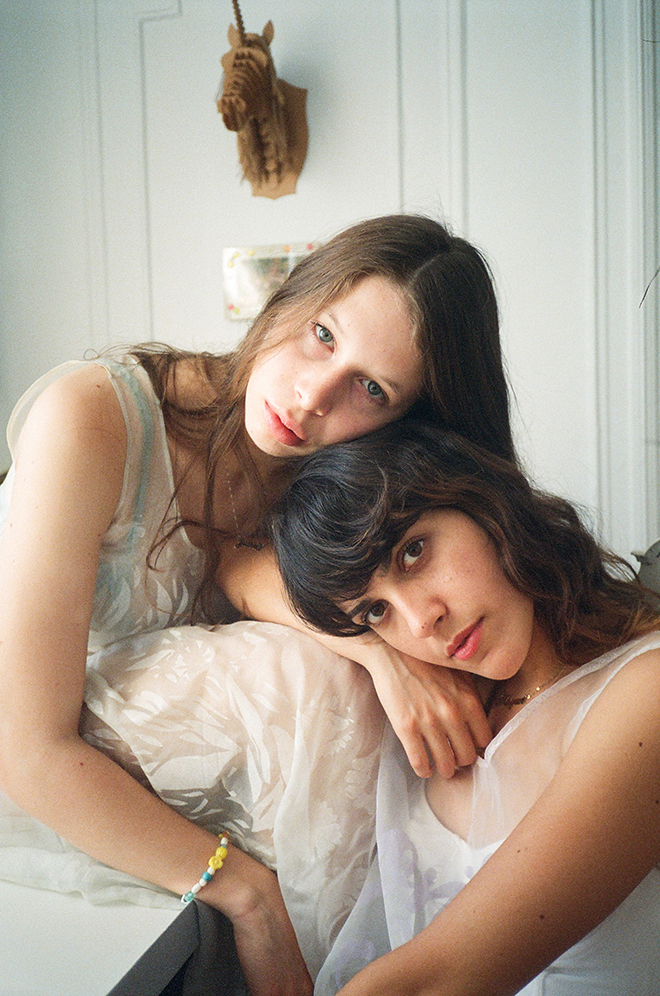
The internet has been a critical space for the fourth wave of feminism, and Me and You has found a dedicated fanbase among young females who aren’t afraid to call themselves part of the movement. While some brands have tried to use feminism in cynical, attention-seeking ways at a time when it’s getting renewed interest, for Toledano and Baylis it is instinctive. “The idea of feminism was always so natural to me, I don’t even remember first becoming aware of the word,” says Baylis. “The perception of the word has changed so much, it has and morphed through each wave of feminism.” This is what lead the duo to incorporate the word ‘feminist’ into their designs in the way that they have. “We decided to take that word, which is so loaded, and use it in a fun, accessible way, in a pretty way, making it something that girls can relate to,” says Toledano.
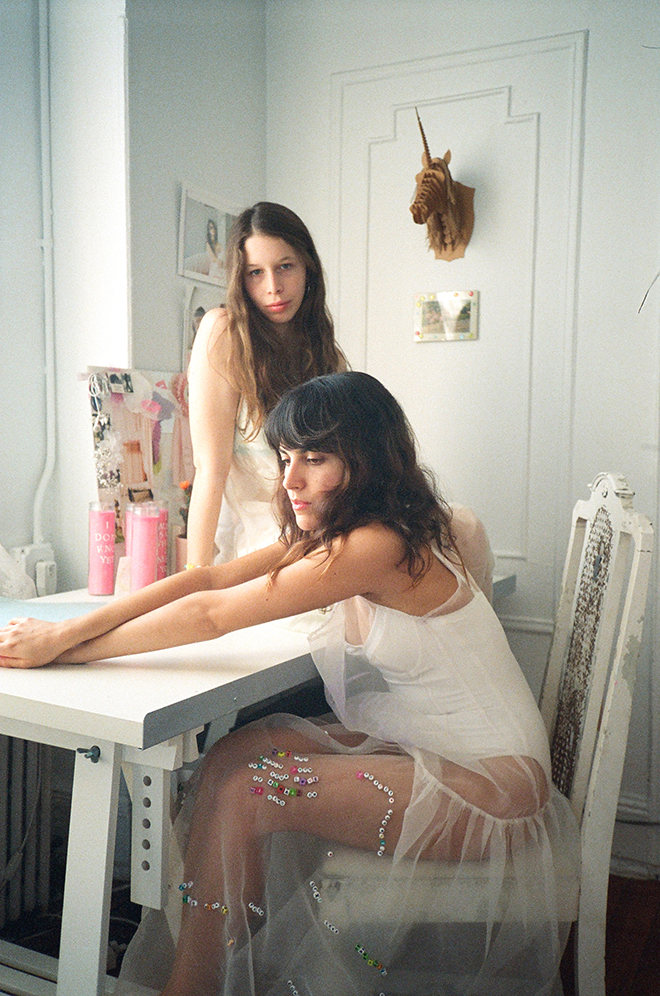
Those tired of homogenous fashion imagery so far from a representation of themselves are turning to a new era of creatives unafraid to offer up a different vision—like Baylis, Toledano and their collaborators, who include Barbara Ferreira, Petra Collins, Arvida Byström. The imagery created for Me and You, which is as much a part of the brand as the clothing, stands out for the diversity of girls—and occasional boy—featured. “Who we photograph is never calculated, it’s just people we see in real life or on Instagram,” says Toledano, “We would never airbrush our images, we show cellulite and whatever.” They have no qualms about body hair either, but point out that they see shaving as just as valid—what’s important is knowing that it’s a choice.
‘The idea of feminism was always so natural to me, I don’t even remember first becoming aware of the word.”
With Me and You, Baylis and Toledano have created a world of comfort, vulnerability and the freedom that comes with having total support from a community of like-minded individuals. That is perfectly encompassed by how they describe their label: “We always say that Me and You is about going to that place when you’re a young girl and you’re sitting in your room, where you feel safe and comfortable and creative. We always reference that place because we think that exists within everyone. It’s that place where you feel uninhibited, you feel yourself.”
www.itsmeandyou.com
Photography by Zara Mirkin

Brigitte Lacombe at Phillips New York
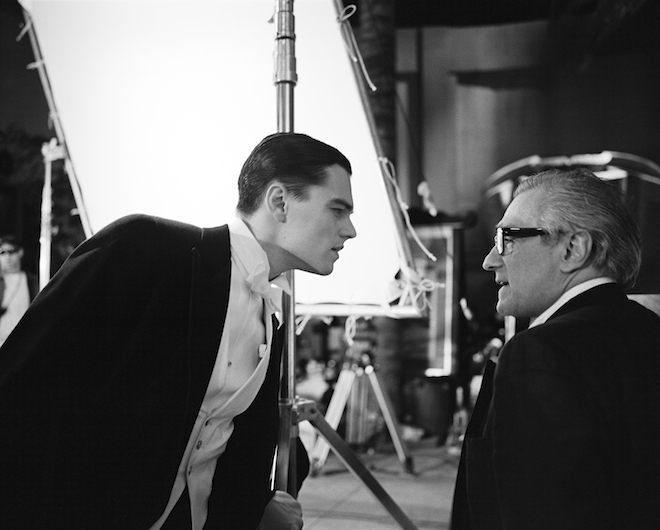
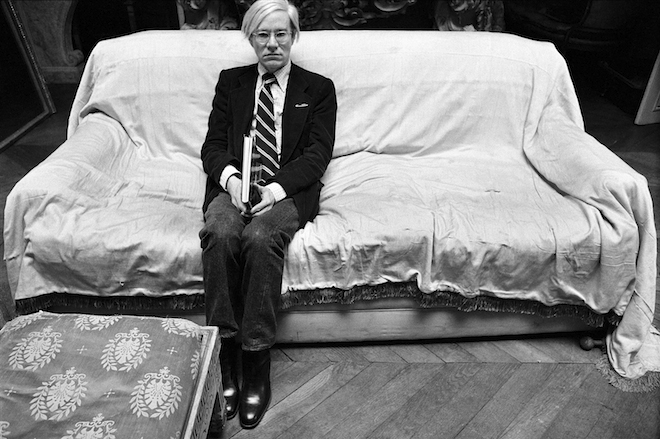
Perhaps one of the most hotly anticipated exhibitions of the year opened at the Phillips gallery in New York a few weeks ago: “Complicities”, by Brigitte Lacombe.
Famed for her photojournalistic approach to cinema, this is the first time in her 40-year career that she has exhibited her work in the Big Apple.
Lacombe is best known for her portraits and reportage in both black and white and colour, capturing private moments on set. These include large format prints of Martin Scorsese, Meryl Streep, Dustin Hoffman, Andy Warhol, Leonardo DiCaprio and Kate Moss, amongst others.
The late, great, Richard Avedon used to regard her work with envy – a true compliment indeed.
Adding to the occasion is the opportunity to buy some of Lacombe’s original prints, so get yourself down there before it finishes on 30 July.
phillips.com
Tags: Art, Brigitte Lacombe, new york, photography
Monokel & Voo Berlin Team Up With Artist Axel Wannberg
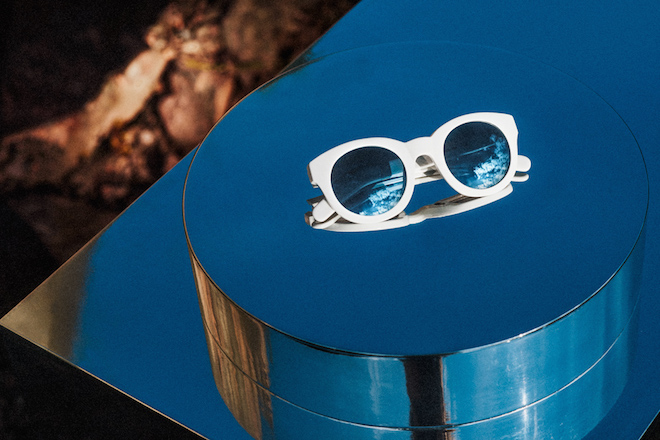
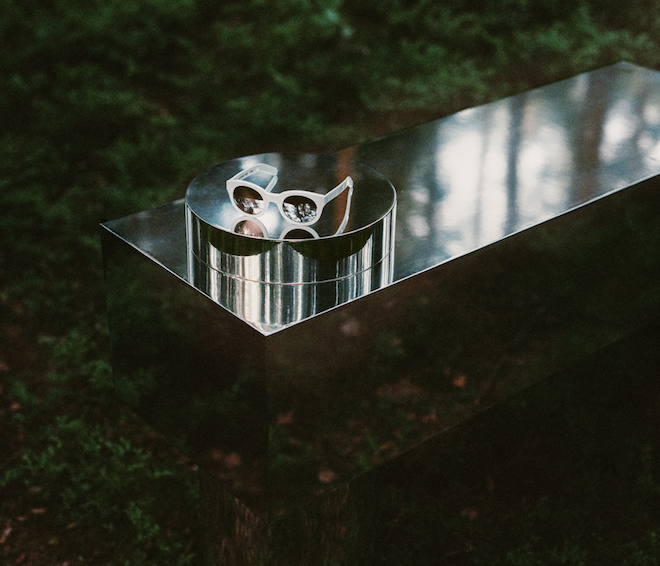
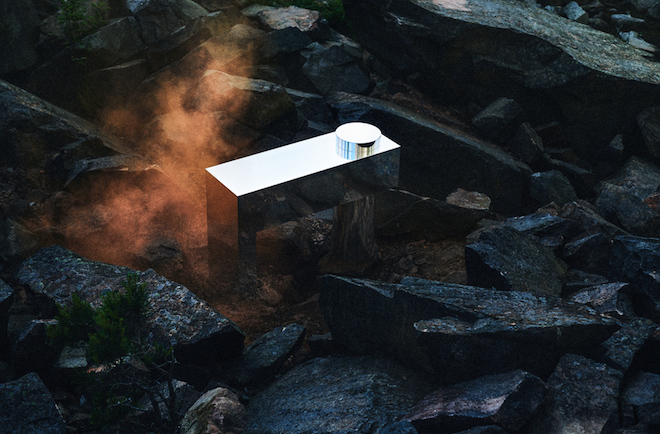
The contemporary Berlin concept store, Voo, has teamed up with Swedish sunglass label Monokel Eyewear to create a limited edition pair of sunglasses, and together they have collaborated with artist Axel Wannberg on a accompanying art installation.
The all-white frames feature silver mirrored lenses, handcrafted in premium acetate with lenses from Carl Zeiss Vision. Wannberg has taken the pair as inspiration to create a mirrored sculpture built on basic geometric shapes to reflect the sunglasses perfectly. The art piece aspect of the project explores the concept of modern narcissism and the idea of self-image in a digital and hyper social society, that utilises the symbolic meaning of mirrors, used in both art and literature.
“The project begun with a discussion between us and Voo about narcissism and how digital tools and social media enables us to fine-tune and present this curated ideal image of ourselves,” states Robert Sandgren, creative director of Monokel Eyewear. “And it seems as if mirrors depict reality, but they rarely do.”
The collaborative pair are limited to just 50 pieces, purchased exclusively from vooberlin.com or monokel-eyewear.com.
Tags: Axel Wannberg, Monokel, Voo Berlin
Frida, Flowers and Feminism
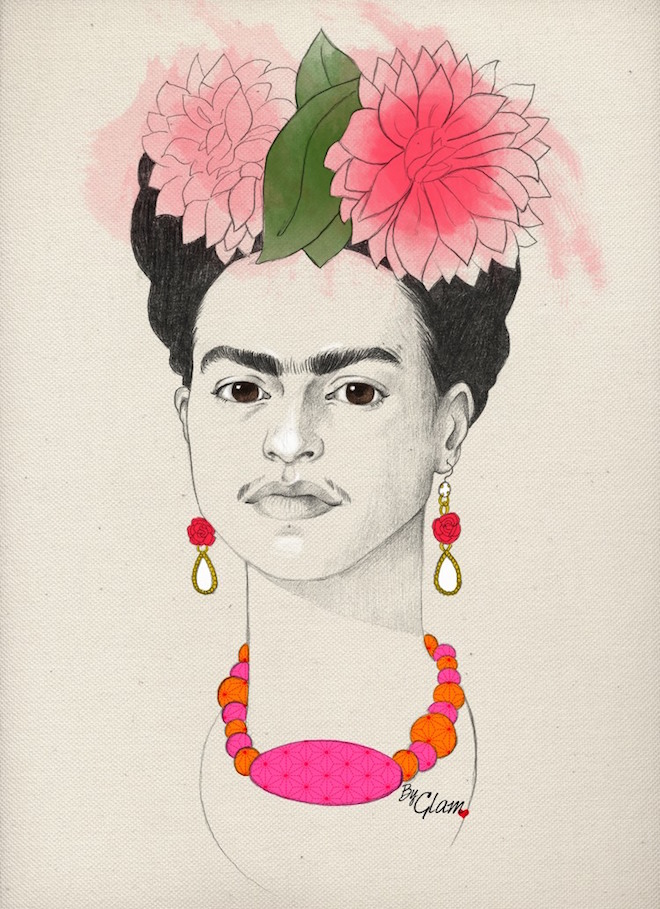
To get in the summer mood, the NYC Young Feminist Giving Circle (NYFem) are hosting a festive evening celebrate their patron feminist, Frida Kahlo, at the New York Botanical Garden.
You’ll be able to stroll through Kahlo’s beloved Casa Azul reimagined in the Conservatory, see rare works in the Art Gallery and enjoy live music and performance art, all while enjoying a complimentary Modelo Especial draft beer or a Jose Cuervo Tradicional margarita.
After a self-guided tour, bask under the stars to learn more about NYC Young Feminist Giving Circle and the work they do to fund feminist-led human rights work.
Buy your ticket here.
Frida, Flowers and Feminism takes place on July 11th at The New York Botanical Garden, 2900 Southern Blvd, Bronx, New York 10458.
Tags: Feminism, Frida Kahlo
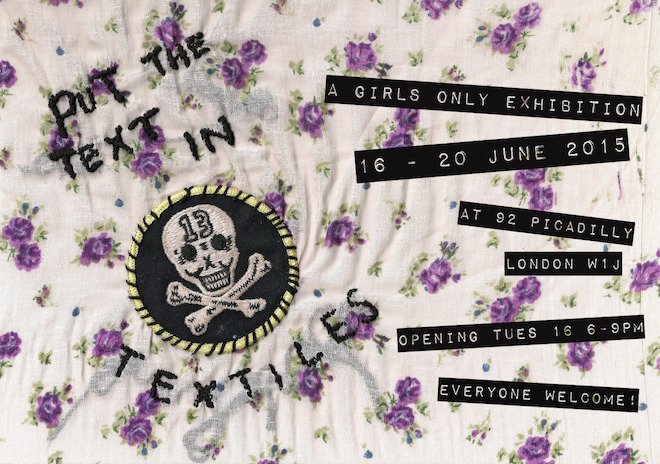
Girls Only Exhibition: Put the Text in Textiles
Girls Only, the transatlantic art collective, are hosting an exhibition in London that opens today. Put The Text In Textiles will feature the work of Zoe Buckman, Rahill Jamalifard, Tatiana Kartomten and Elbe Koe, to name a few and focuses on the use of words and phrases in contemporary artworks, such as printed fabrics, quilting, knitted wool, embroidery, or painted clothing as material.
You’ll find nomadic American wanderer Jackie Sugarlumps’ jacket emblazoned with the motto “Don’t Bring Me Down;” and the Badlands 777 girls’ collaborative painted Elvis biker jacket, as well as others such as Elbe Koe’s deconstructed and re-collaged pink coat that recalls a peak in her development as an artist.
British curator Antonia Marsh founded Girls Only to support female artists and give them a studio space, voice and place to collaborate. We previously met Marsh to find out more about her projects that encourage collaboration and conversation (read the interview here).
Put the Text in Textiles is open June 16th-20th at 92 Picadilly, London W1J.
girlsonlynyc.tumblr.com
Tags: Antonia Marsh, Girls Only
Twin x Shinola
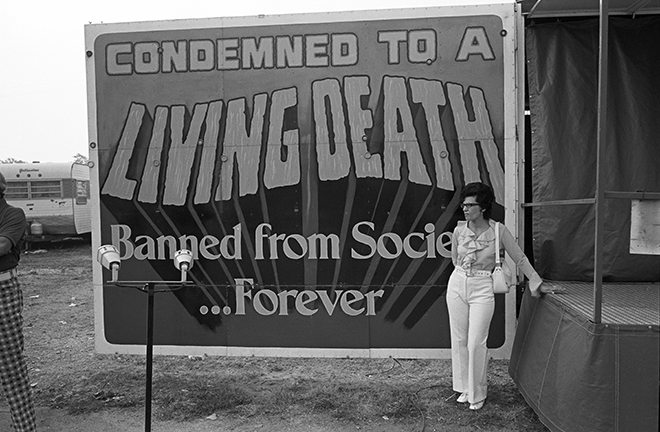
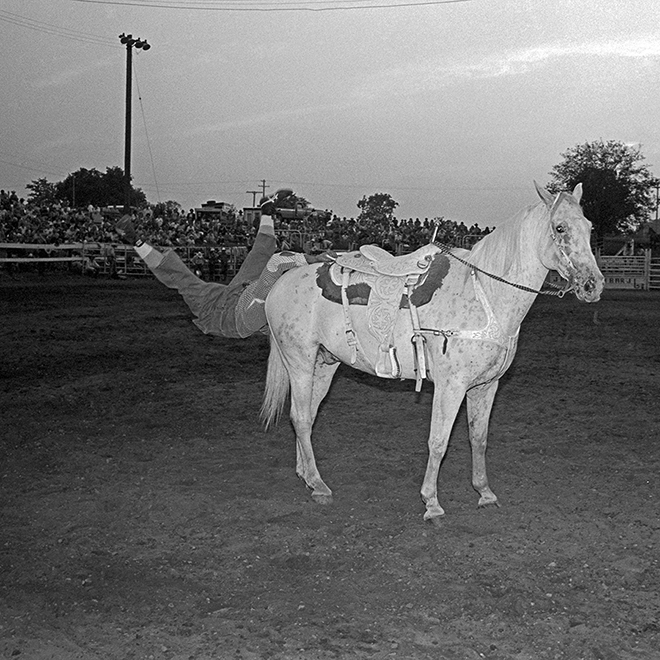
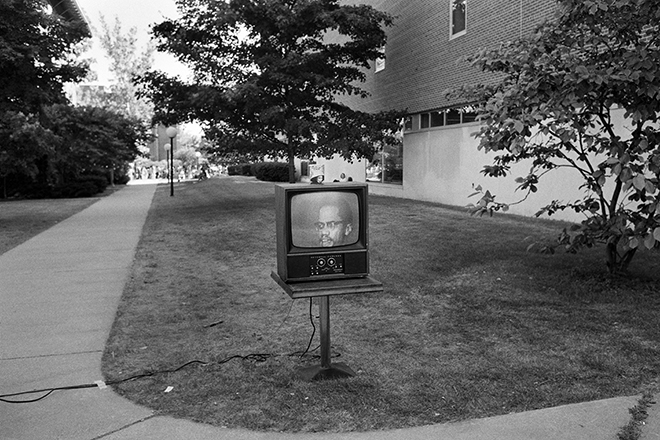
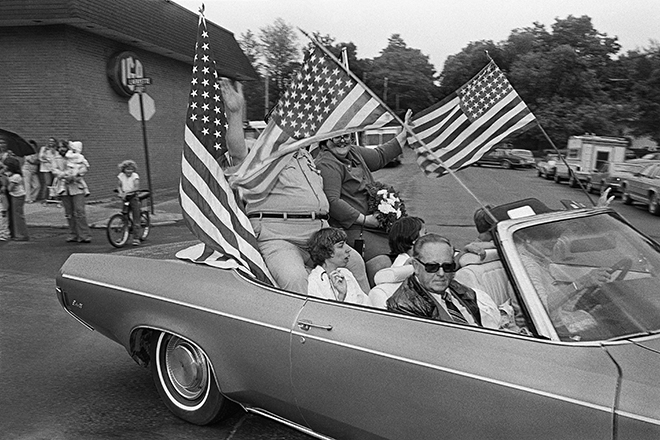
To celebrate the release of Twin issue 12 we have teamed up with American-made goods company Shinola to present the striking work of Detroit-born photographer Don Hudson, including previously unseen images. The 12th edition of Twin is all about attitude, and Hudson’s powerfully candid images are testament to the playful, tough and collective attitude of the long troubled Detroit and its surrounding areas.
Hudson’s photography naturally resonates with Shinola, a company that is deeply embedded in the city of Detroit. They are committed to returning some of Motor City’s former industry glory by choosing it as the location for producing their handmade watches and bicycles. Shinola has created local jobs and cultivated new expertise, building a strong sense of community and renewed pride in American craftsmanship.
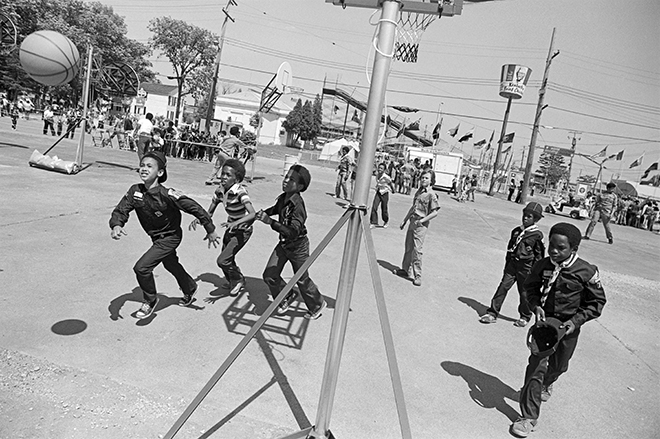
Following in the footsteps of the likes of Gary Winogrand, Lee Friedlander and Robert Frank, Hudson’s photographs, taken during the 1970s, are a time capsule of American life from his point of view. Shooting at local fairs, rodeos, carnivals and parades, Hudson captured moments of communities coming together for a fleeting but all too important moment of carefree fun.
Here Don Hudson tells of how his love for photography developed, why he describes himself as ‘proudly amateur’, and what he wants to capture when he looks through the lens.
I was born in Detroit but grew up nearby, in a little town called Plymouth on the edge of Wayne County. The seed for my interest in photography was planted when I was a kid, when I was the one being photographed. I grew up in the 1950s and when the camera came out we became subjects, we had a certain place to stand, to look. Thinking back, the idea of the camera as a transformative machine must have lodged itself in my subconscious back then. My interest in it really took off when I got to high school age. I had a couple of friends who ran the yearbook and had built darkrooms, so I jumped in with both feet. I built my first darkroom in my mother’s laundry room—it was kind of a set-up, known-down construction on top of her washer and dryer, with the windows all taped up. I was fascinated by the magic of the darkroom.
Then I graduated from high school and went on to university, but I didn’t really know what I wanted to do. I spent three years doing a Liberal Arts degree and drifting more or less, then in 1972 I decided that the only thing I really liked to do was photography, so I applied to an art school in Detroit, CCS (College for Creative Studies)—it’s funny because I recently realised that Shinola actually have their watch factory on the campus. I really delved into the technique there, I learned the zone system, I became a lot better technically. I was also exposed to the history of photography and came into contact with more people who were into doing the same thing I was. During that period what solidified in me—getting back to the power of the camera—was having a huge amount of respect for how the camera sees things. I want to let the lens record as much information as it can. My whole thing—the only thing I was interested in—was what was coming straight out of the camera.
The photographs that are in my book, From the Archives, were taken during the Seventies, which is when I was coming of age photographically. Lee Frielander and Garry Winograd were coming out with their books at that time, and a few of my friends and I looked their work and thought that’s it. They were in the generation preceding us and what we wanted to do was in reaction to what they were doing. That approach which looks like documentary photography, it’s very straight, but it’s basically documenting your own relationship to your culture through photographs.
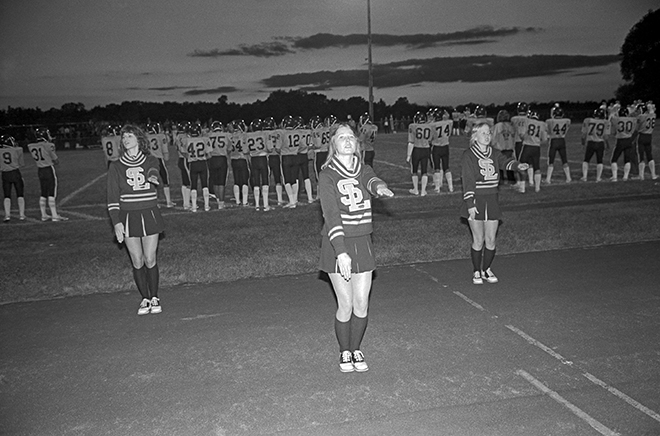
A lot of what I shot was public events. I searched out parades, carnivals, festivals, fairs, rodeos—places where there was a lot of social energy going on. I spent four years photographing high school football games. Every Friday night the community was all about the football game.
I describe myself as proudly amateur because I took photographs purely for the love of it, there was never a commercial aspect to my work and no ambition in that regard. I’m lousy with self-promotion; I’m just not a person who can do it. I’m going to do this regardless of whatever popularity may come of it.
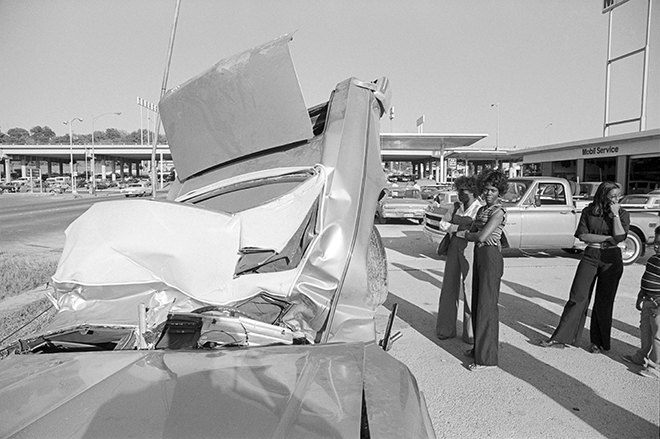
I think of photographs like this: they look like the truth, I approach them with a high degree of respect for the way the camera sees things, but whatever I decide to put four edges around is always going to put the scene into a questionable context. They look like the truth, but what is the real meaning of the image? You don’t know what came before that moment, you don’t know what’s coming after that moment, all you’re seeing is one little facet of time and space. That’s what’s cool about photography too; it’s intimately involved with the sense of time. I think it was Winogrand who said photographs are like new facts. They’re new facts about life. Over time there’s a certain power that the photographic image gathers, and I’m enjoying that now, whatever small ripples these photographs may be making.
shinola.com
Tags: Shinola, Twin XII
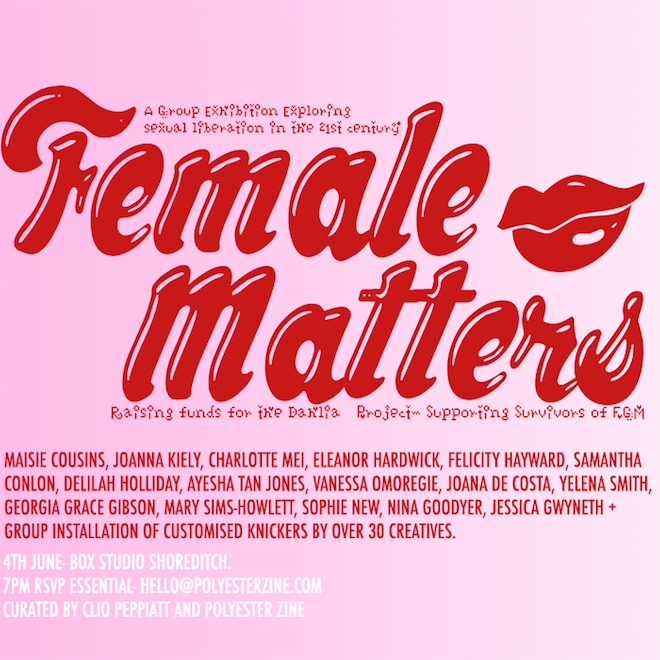
Female Matters
According to UNICEF, more than 130 million women and girls alive today have been cut in the countries where FGM is concentrated – a shocking statistic indeed. That’s what Ione Gamble, editor of Polyester zine thought, and what she sought to highlight and fight by putting the rising abundance of female talent within the spheres of art and fashion to good use.
The result is Female Matters, a one-night-only group exhibition exploring sexual liberation in the 21st century, with all profits raised going to The Dahlia Project, a charity that supports survivors of FGM.
Taking place this Thursday, 4th June, the evening has been co- curated by Polyester zine and designer Clio Peppiatt, showcasing work from some of London and the UK’s most exciting female artists including as Charlotte Mei, Samantha Conlon, Maisie Cousins, Felicity Hayward, The Digital Fairy, Ayesha Tan Jones and Eleanor Hardwick, working across a variety of mediums such as performance art, photography, film and sculpture.
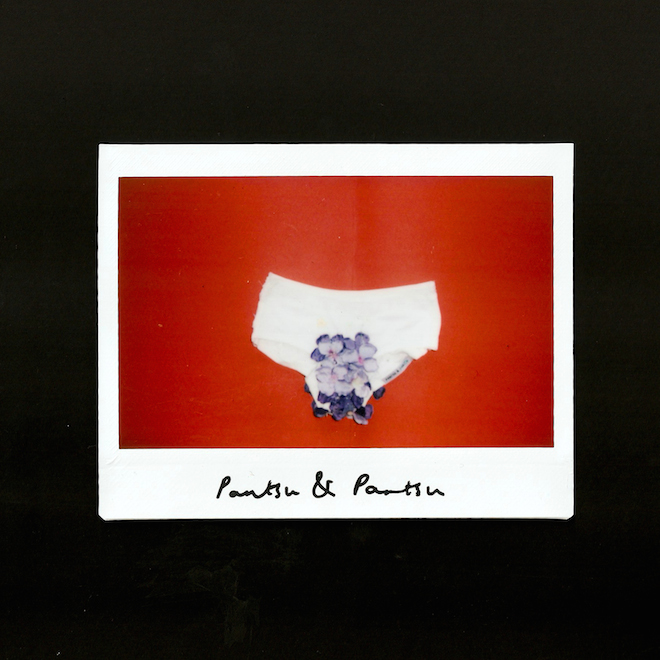
The exhibition will also showcase a group collaborative installation of over twenty pairs of customised lingerie and knickers from creative agencies, zines, and collectives such as Anti Agency, The Mushpit, Sister Magazine, Bunny Collective, the PINKD book, Girls Don’t, Baroness, Skinny Girl Diet, Lorde inc, Polyester, Hanecdote, Girls Only, Me and You, Maria Pizzeria, Clio Peppiatt & others.
4th of June- Box Studio Shoreditch. 7-11pm- one night only
polyesterzine.com
Tags: exhibition, Female Matters, FGM
Fine and Dandy
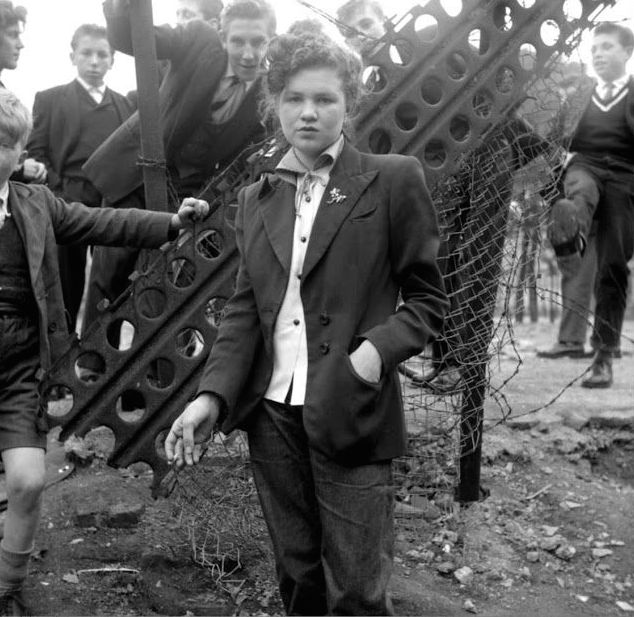
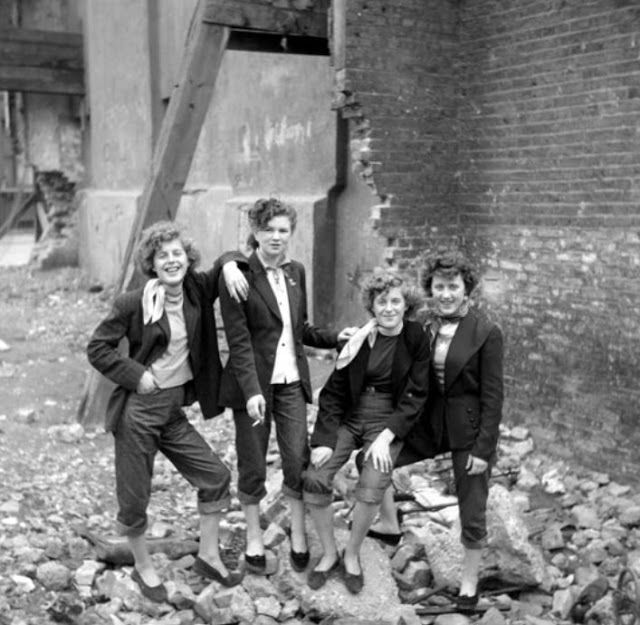
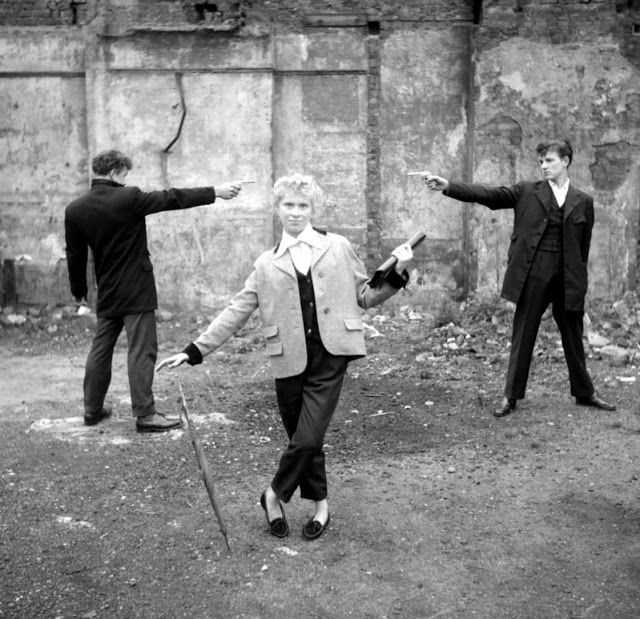
Much has been said about the Teddy Boy subculture that emerged in 1950s Britain, defined by their unlikely sartorial combination of Edwardian dandy and American rock and roll. However, their female counterpart—the Teddy Girl—was all but forgotten until the recent discovery of a box of negatives from late filmmaker Ken Russell. His striking photo series, Last of the Teddy Girls, offers a rare glimpse into the lives, style and attitude of this retro girl gang—one of the first known female subcultures. Preceding feminism’s second wave, the Teddy Girl was a product of post-war Britain when young working class women took up more positions in the workforce, giving them a greater amount of disposable income than ever before. What money they earned went into their iconic looks—tailored jackets, rolled-up jeans, and flat shoes playfully paired with boater hats, brooches and clutch bags. Rejecting the social expectations for women of that era, Teddy Girls roamed in gangs; attending concerts and dances with boys in tow, and collecting rock and roll records and magazines.
Inspired by their rebellious spirit, photographer Boo George, stylist Caroline Newell and model Edie Campbell teamed up to create ‘Fine and Dandy’ for Twin issue 12—an ode to the swagger and style of original Teddy Girls.
Words by Alex LeRose
Twin issue 12 is out on 21 May.
Tags: Editorial, Fashion, Teddy Girls
The Best of the Venice Biennale 2015
I have just returned from the epic, visual indulgence of Venice. Dreamlike, romantic, surreal, sybaritic – the city was as inspiring as the art on display. These are some of the best things I was lucky enough to view.
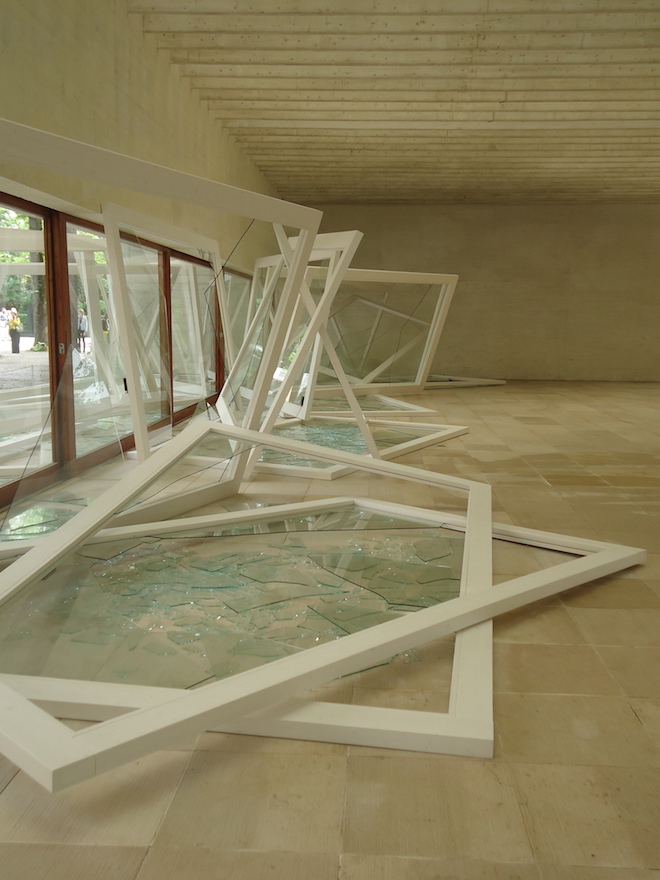
Camille Norment, Rapture, Nordic Pavilion
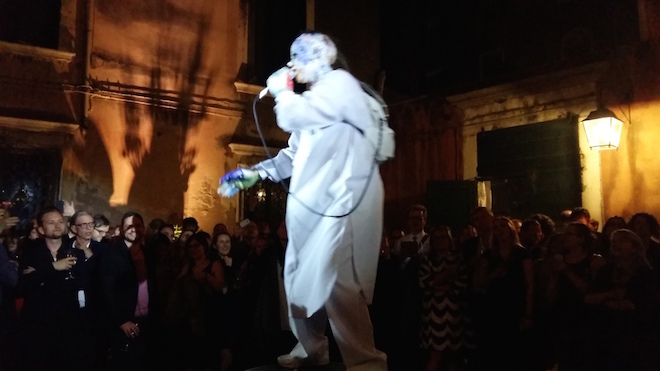
Norway made a noticeable impression this year. The artist made it look as if the windows of the cubistic pavilion had exploded and caved on itself. In Norment’s sculptural and sonic installation the pavilion becomes a body. (The Norway party was also very memorable with vodka tonic garnished with samphire served on a boat shaped bar and an improvised sound performance by Tori Wranes).
John Akomfrah Vertigo Sea Giardini central pavilion
Akomfrah is a British-Ghanaian artist and filmmaker. He created a three screen video piece with well-edited images relating to the environment, whaling and our relationship to the sea. It was like watching a moving National Geographic with breath-taking visuals of nature and its beauty, combined with conflicting images of gory whaling, which filled you with sadness.

Future Histories, Casa Dei Tre Oci, Guidecca
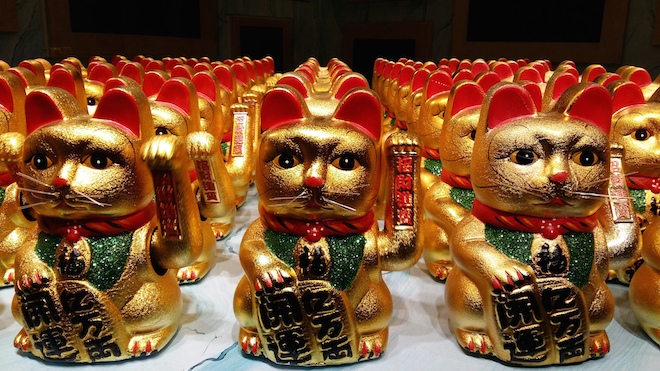
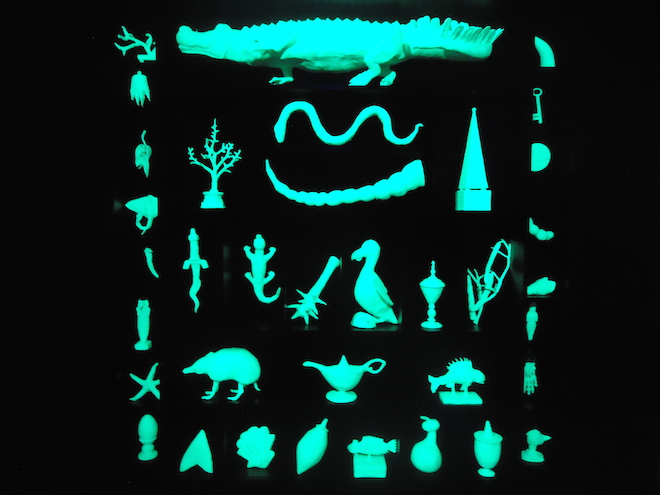
This off site show featured two artists – Mark Dion and Arseny Zhilyaev. Influenced by museum practise of collection and display, these two artists created an imaginary future museum. Dion produced cabinets of curiosity and specimens while Zhilyaev made fake futuristic pieces and a room filled with Japanese maneki-nekos.
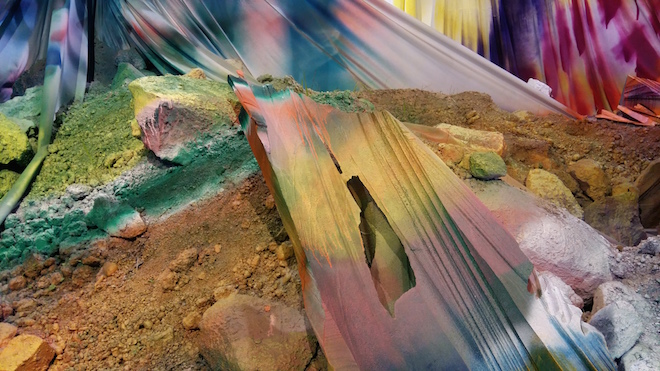
Katharina Grosse Untitled Trumpet, Arsenale
In Grosse’s installation in the Arsenale, she filled a room with plaster, fabric, Styrofoam, rubble and different surfaces painted in a kaleidoscope of colours. It felt as if you are stepping through a physical, three-dimensional abstract painting.
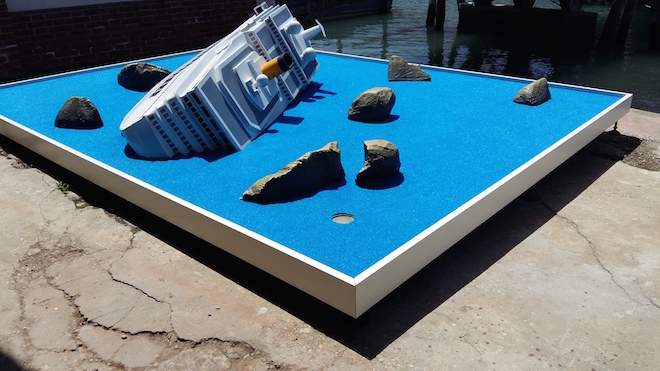
Doug Fishbone’s Leisureland Mini Golf
This was a fully playable mini golf course where nine artists were commissioned to design a hole inspired by ‘leisure’. This was a seriously fun, interactive piece and a pleasant break from looking at conventional art. Holes included Yinka Shonibare MBE’s nuclear cloud made from African patterned footballs.
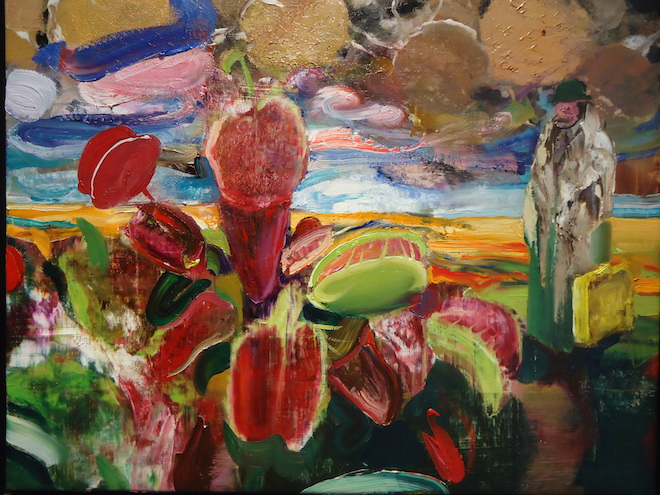
Adrien Ghenie, Romanian Pavilion, Giardini
This was one of the few pavilions that showed a straightforward painting exhibition, which was refreshing. ‘Darwin’s Room’ contained thickly applied layered portraits with smudged faces and landscapes themed around past and future histories – from Hitler to a Self Portrait as Van Gogh.
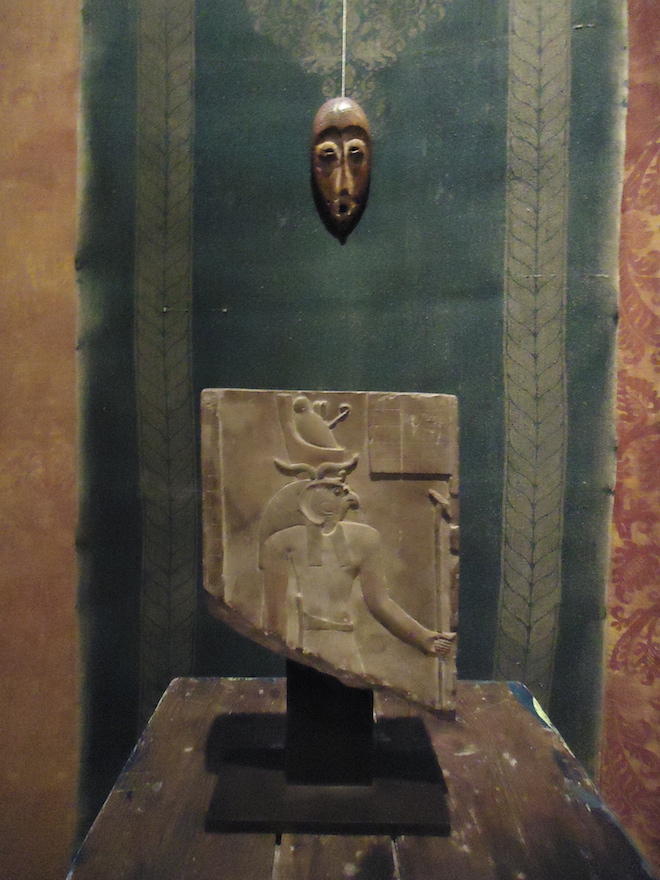
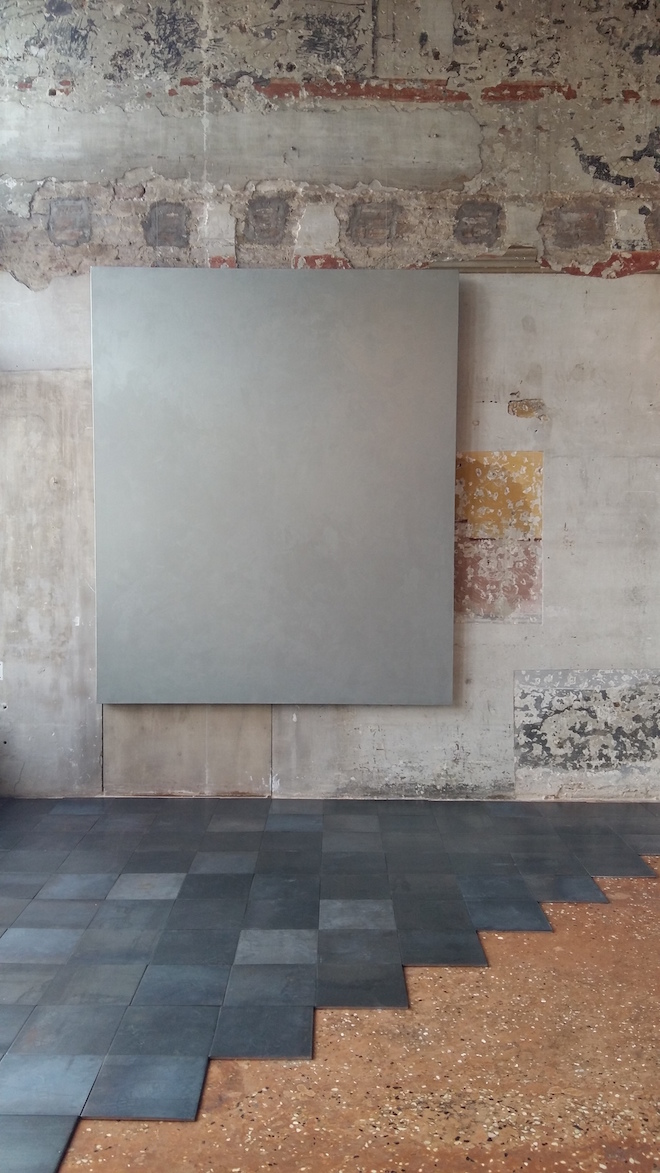
Proportio, Palazzo Fortuny
The Palazzo Fortuny was one of my favourites from the last Biennale and this year did not disappoint. Curated by Axel Vervoordt and Daniella Ferretti, the exhibition explores proportions in art, music, science and architecture. Reflecting on ideas of order and chaos, I loved the juxtaposition of contemporary and old paintings mixed with sculpture and artefacts.
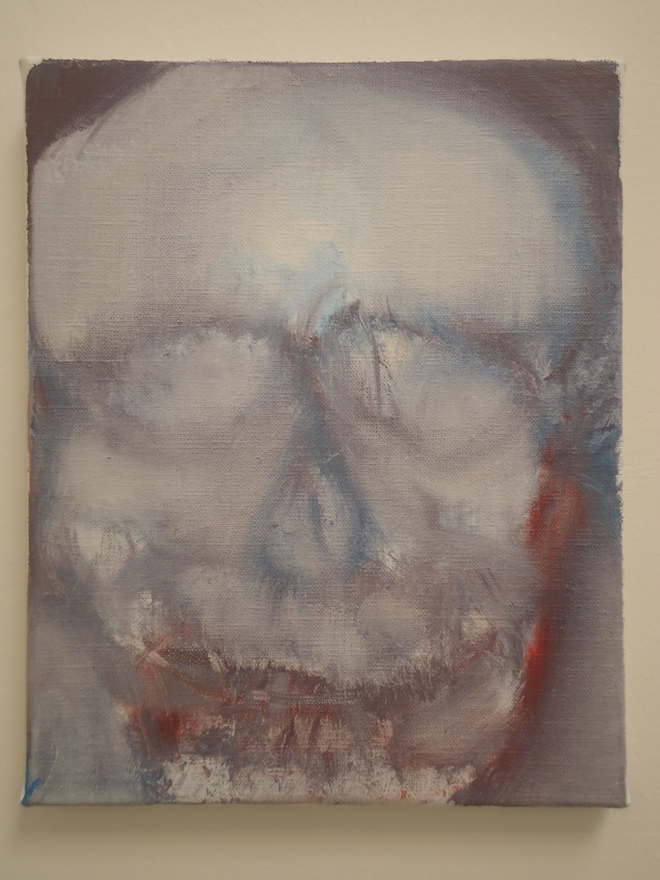
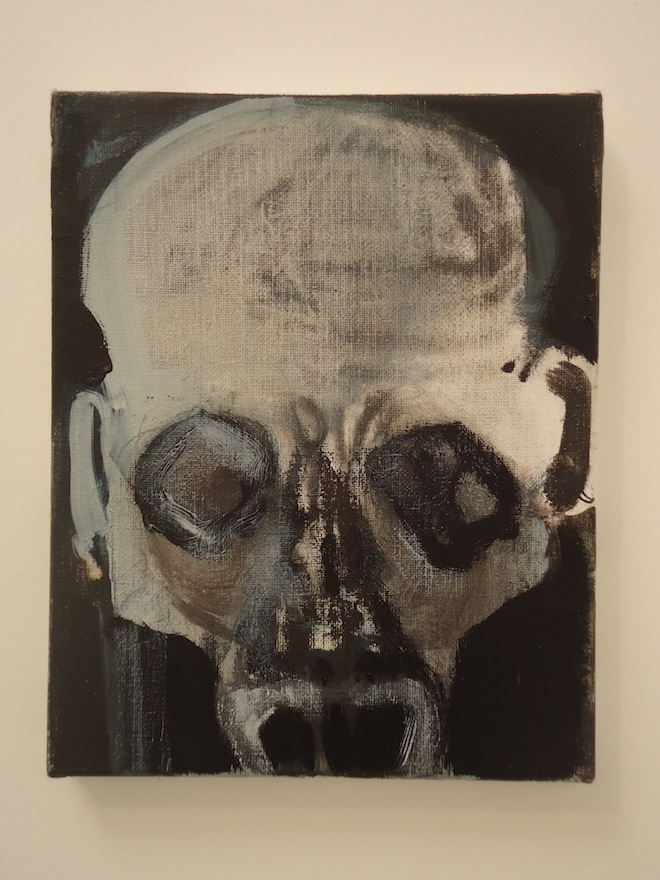
Marlene Dumas, Giardini central pavilion
I was struck by Dumas’ room full of skull portraits, which were hung evenly around a small, square shaped room. Each skull had a very individual personality and presence – blurry, eerie, confrontational and disturbing. She proved herself to be one of the most emotional and inspiring artists of her generation.
seanagavin.blogspot.com
Seana can be found on Instagram @seanagavin
Tags: Venice Biennale 2015
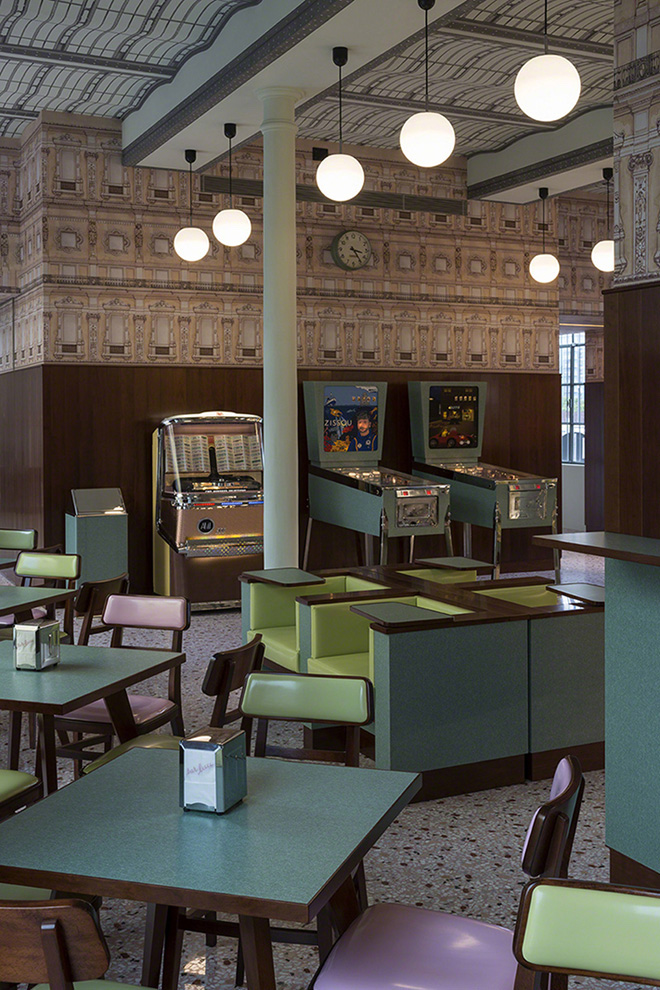
Prada’s Wes Anderson-Designed Bar in Milan
Prada has teamed up with their favourite director Wes Anderson again. This time, instead of directing shorts for their campaigns, Anderson has lent his unique vision to create a bar. Located in Milan, Bar Luce, which features a Life Aquatic-themed pinball machine, a jukebox and retro formica tables, is part of Prada’s new art and culture complex Fondazione Prada and was inspired by two Italian Neorealist films – Miracle in Milan (1951) and Rocco and His Brothers (1960).
“I think it would be an even better place to write a movie,” states Anderson. “I tried to make it a bar I would want to spend my own non-fictional afternoons in.”
Fondazione Prada and the Luce Bar is open now at Largo Isarco 2, 20139 Milano.
fondazioneprada.org
Tags: Luce Bar, Milan, prada, Wes Anderson
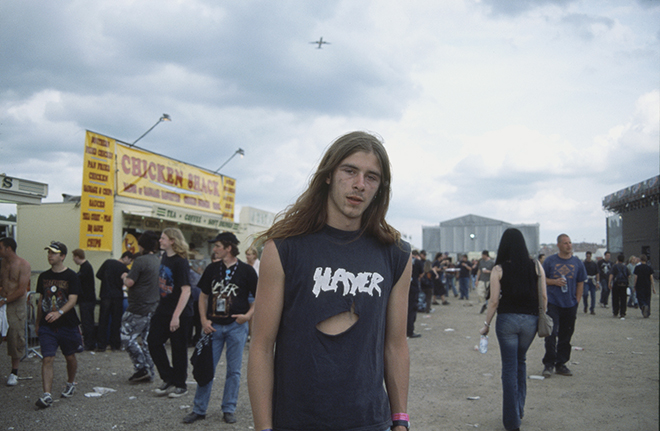
God Listens to Slayer
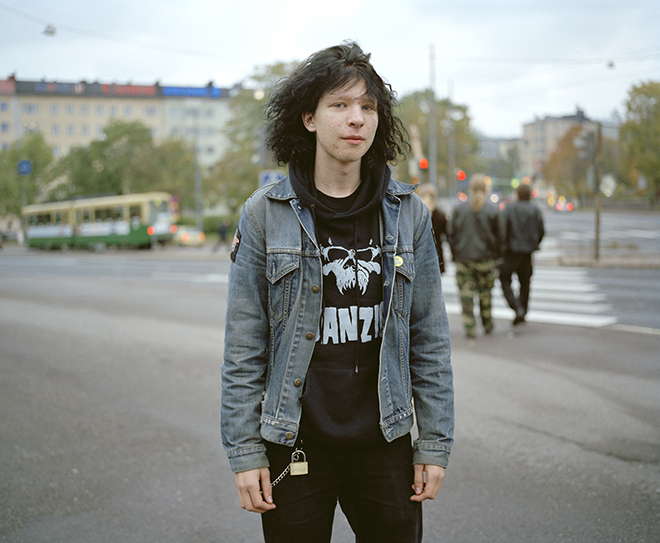
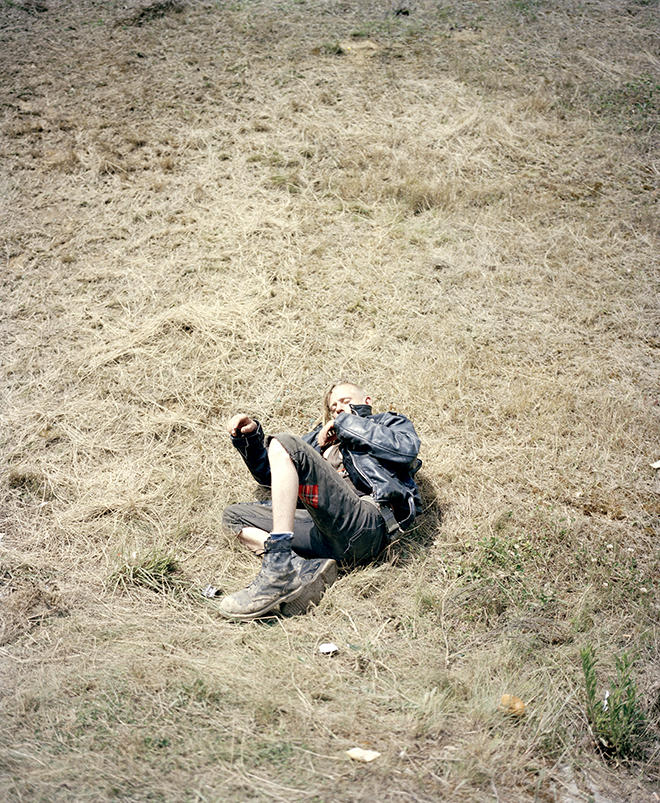
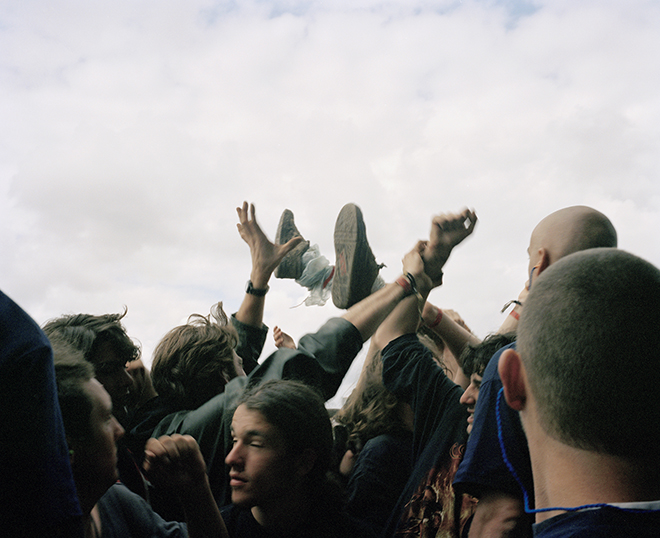
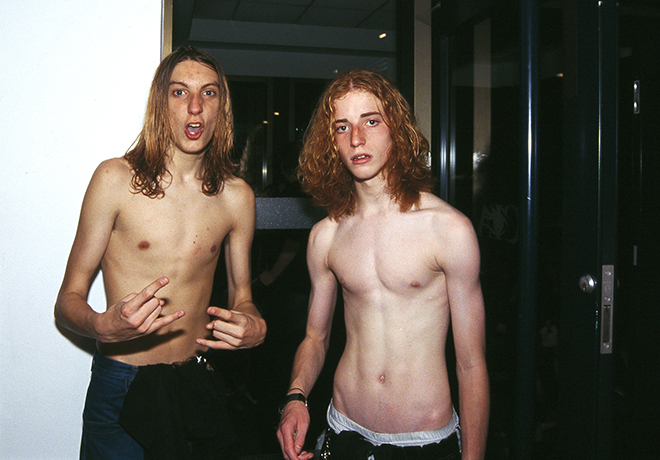
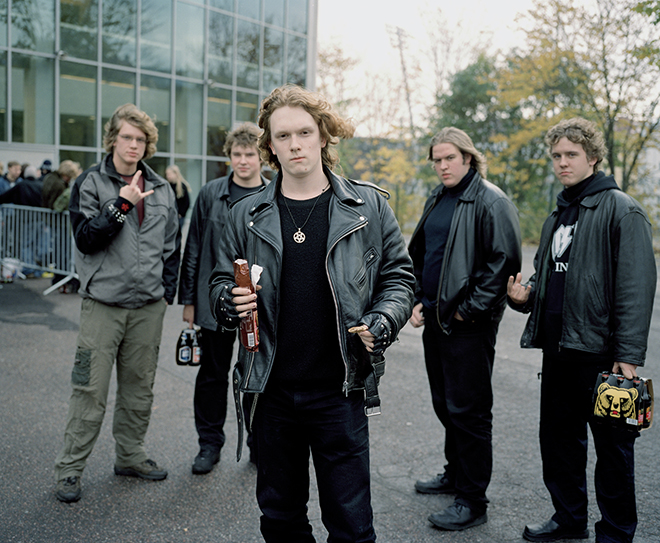
London photographer Sanna Charles has been shooting those who worship at the alter of Slayer for over ten years. Her recently published book, God Listens to Slayer, documents the ritualistic devotion of fans around the world to their musical deities. Flicking through its pages is to be transported to a hot, dusty metal festival, to feel the feverish anticipation before the band shows, the crush of uncoiled bodies in the mosh pit, and the calmer moments afterwards when the communion of fandom lingers. We caught up with Charles to find out how her striking book came about.
When did you first get into photography?
My Dad was a photographer, we always had cameras around and he got me one when I was quite young. I started learning about it while I was at school, then I went to University in Brighton to study it there. Initially I was doing a lot of architectural stuff—I would come back into London and take photos of urban landscapes that were quite stark and bleak. But I was always into music, so after I moved back to London I started photographing the rock and roll and punk scene. Then I got picked up by NME, so I kind of fell into music photography.
And it was while you were working for NME that you started shooting Slayer fans?
Yeah, it happened while I was on assignment at Download festival for them.
How did the project start, did you set out to shoot Slayer fans or did it evolve more naturally over time?
It definitely happened more naturally. It’s funny, when you’re on a job shooting a festival like that, you’ve got your list of bands, there is always a lot of running around to do, but in the quiet moments you’ve still got shooting in your head. I think I took about four of five pictures of Slayer fans at that festival. There was a group of guys running to get to the tent where they were playing, and I asked them to stop. I just really liked the excitement that they had at that moment in time, and I was trying to capture their energy. NME didn’t want to use those pictures; they weren’t really into documentary style at that time. But I kept hold of them and I felt like it could be the start of something. I was living with a filmmaker friend at the time, she had a car and we decided to just take off and follow Slayer on tour. We spent loads of money that took years to pay back.
Why do you think Slayer elicits such intense dedication among fans?
I think there is a mixture of reasons. When Slayer first started there was really an appreciation among their fans of being given a way to release aggression just by listening to the music—and watching them if they could. And the band hasn’t really changed, they have a formula that people love and they stick to it, they don’t alter according to fashions or tastes. Also, they created this genre, the speed metal, thrash style—it wasn’t really around anywhere else at the time, and people really appreciate that. It’s like an artist who starts a movement, or a film director who creates a certain style. Slayer took a real risk making music like that, and they were lucky that they exploded.
What was it like for you as a female photographer in the still very male-dominated world of metal?
You know, you get slimy comments sometimes, but I think generally as a female you get used to that in any environment and you build up a tolerance and know how to respond. In a festival environment most of the time you’re going to laugh it off, because it’s not worth it, and I was trying to get a picture.
A couple of photographs in the book are of girls. How do they fit into the world of Slayer fandom?
Sometimes girls who are into metal can be a bit harder than guys, they have their guard up because there’s not many of them. But once you start having a conversation then there’s a really nice mutual respect, you’re there for the same reason. There’s an unspoken thing that you get it.
God Listens to Slayer by Sanna Charles is published by Ditto Press and is available to buy now.
dittopress.co.uk
Tags: photography, Sanna Charles, Slayer
Voyeur: a Judith Bernstein exhibition
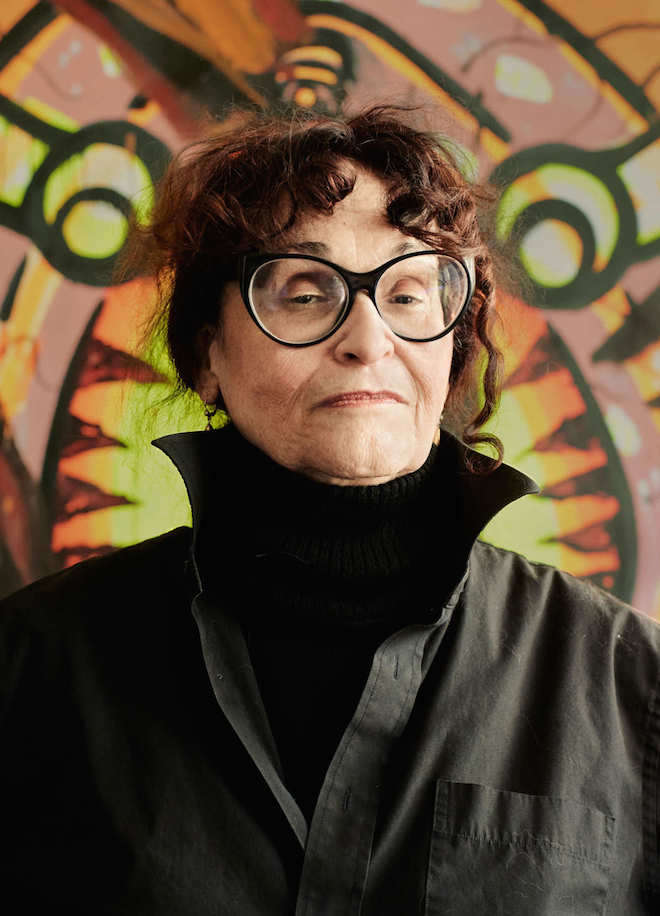
At aged 72, clad all in black and with messy hair, Judith Bernstein may not strike you as particularly political. But searching her name on Google rapidly proves otherwise: she is listed repeatedly as a feminist, psycho-sexual artist, with several references to her work being so erotic that it was censored. She was a founding member of A. I. R. Gallery, the first gallery devoted to showing female artists, and an early member of Guerrilla Girls, Art Workers’ Coalition and Fight Censorship. Bernstein’s oeuvres d’art sit at the intersection of pop, feminism and protest: it seems fitting that now, with the current resurgence of pro-female feeling, Mary Boone Gallery in New York is holding a major exhibition of her work.
Voyeur, curated by Piper Marshall, will feature pieces selected to highlight the way Bernstein confronts conservative gender politics with sexual aggression. The war-time phallus has been a recurring theme for the artist since 1964, but this exhibition in particular will focus on female genitalia, which Bernstein insists on calling the ‘angry cunt’: “I like to use that word. I like to rub it in…it takes the rawness away.” Works include Crying Cuntface, where the vagina is a head with horn-like cock eyes, and Quattro Cunt, a grid of four open faces shooting phallic-eyed glares at each other.
Voyeur at Mary Boone Gallery, from 7 May to 27 June.
maryboonegallery.com
Tags: Art, Feminism, Judith Bernstein

 PREVIOUS

 Twitter
 Tumblr
 YouTube
 Facebook
 Instagram
