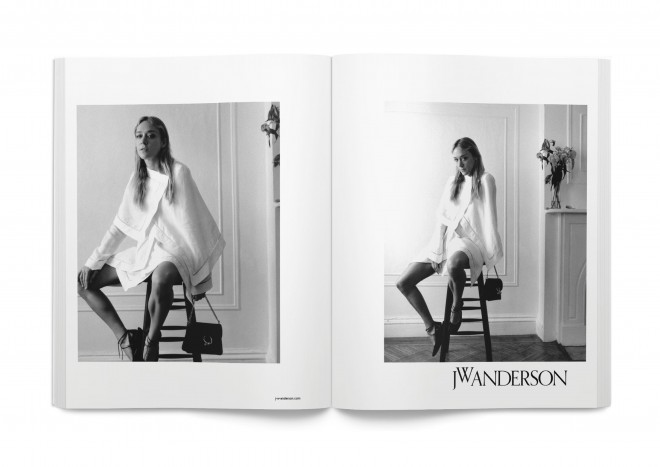
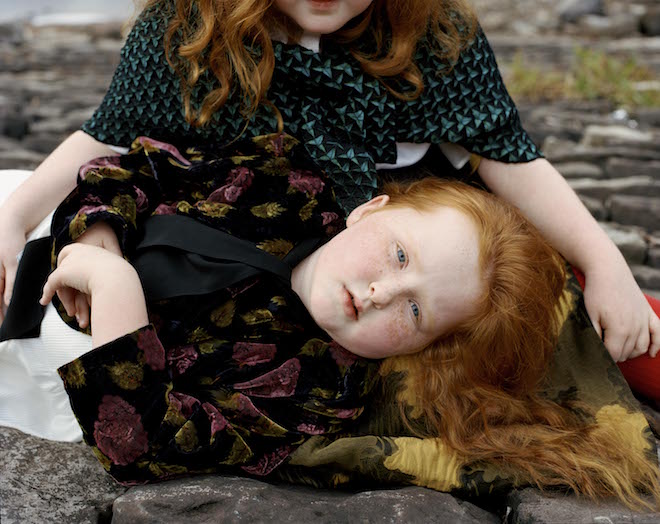
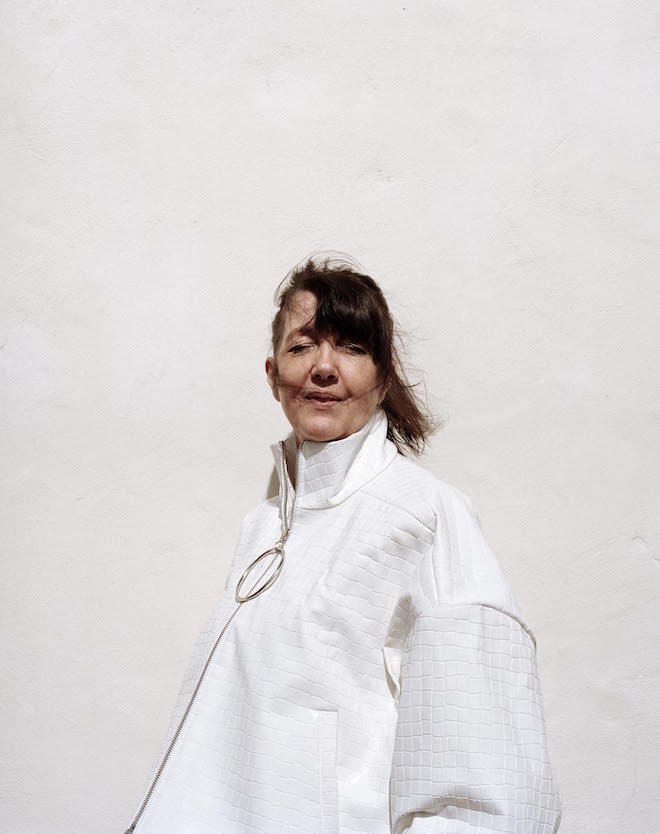
The imitable Chloë Sevigny fronts the new J.W.Anderson‘s SS17 campaign, and it couldn’t be a better fit. Sevigny’s nonchalant cool was captured by photographer Jamie Hawkesworth, appearing alongside images in which Anderson’s clothes are juxtaposed with the natural world.
Known for his hybridism, the look book speaks from core influences of J.W.Anderson’s design– ideas of change and transience in this technological age. Hawkesworth‘s images capture these ideas of movement, contrasting a pensive Sevigny in domestic environments to the free-flowing clothes outdoors and aligning colours to create a sense of energy and depth.
If Chloë Sevigny wasn’t your style crush before, she probably should be now.
Lena C. Emery’s ‘Rie 理絵’ Investigates Feminine Truth
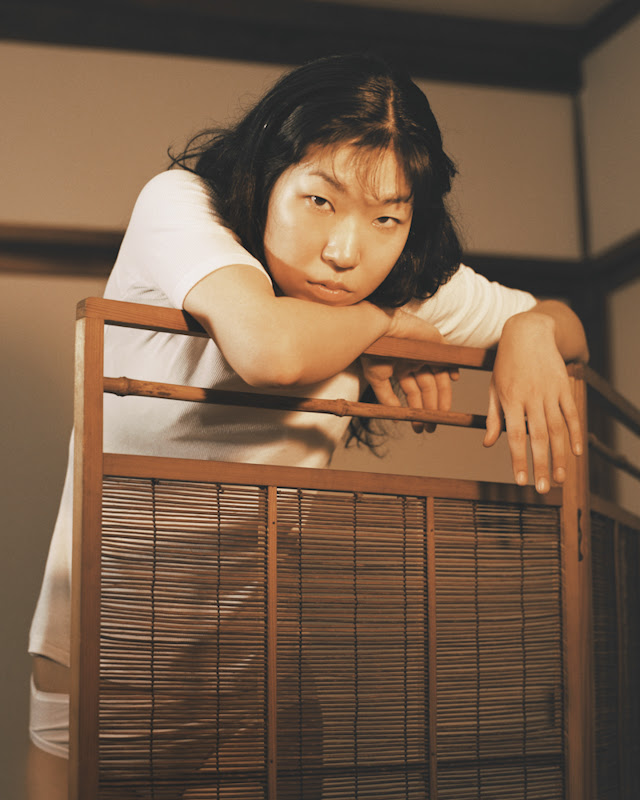
Twin contributor Lena C. Emery’s new monograph Rie 理絵 (pr. Rhea) is a product of an continuing exploration of how women are intimately depicted. Rie, both the title and main subject of the book, literally means ‘truth’, a theme that permeates each image. The book depicts Emery’s poetic renderings of women who repeatedly pose, rest and move while in various states of dress – and undress. Playing with ideas of the female gaze, the women in the photographers are both aware and vulnerable; tangible and mysterious. Of the new launch, Emery explained:
“Within Rie 理絵 I wanted to embark on an inherently female dialogue on the subject of revealing. I was interested in understanding at what point when we reveal our bodies as women to a potential other, does the apparent vulnerability cross over into the appreciation of the powerful notion of being naked and being oneself without an inner or outer surveyor present, without being on display. Watching Rie and the other nine women that I photographed, all of which were strangers to me and each other at the time and who had never been photographed in this way before, come to life as they slowly shed each layer of artifice, felt incredibly reassuring.”
Published by Kominek, Rie 理絵 is available from 16th December and can be bought here.
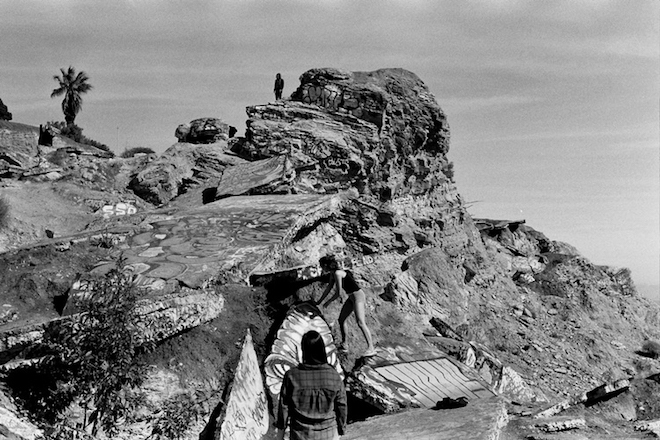
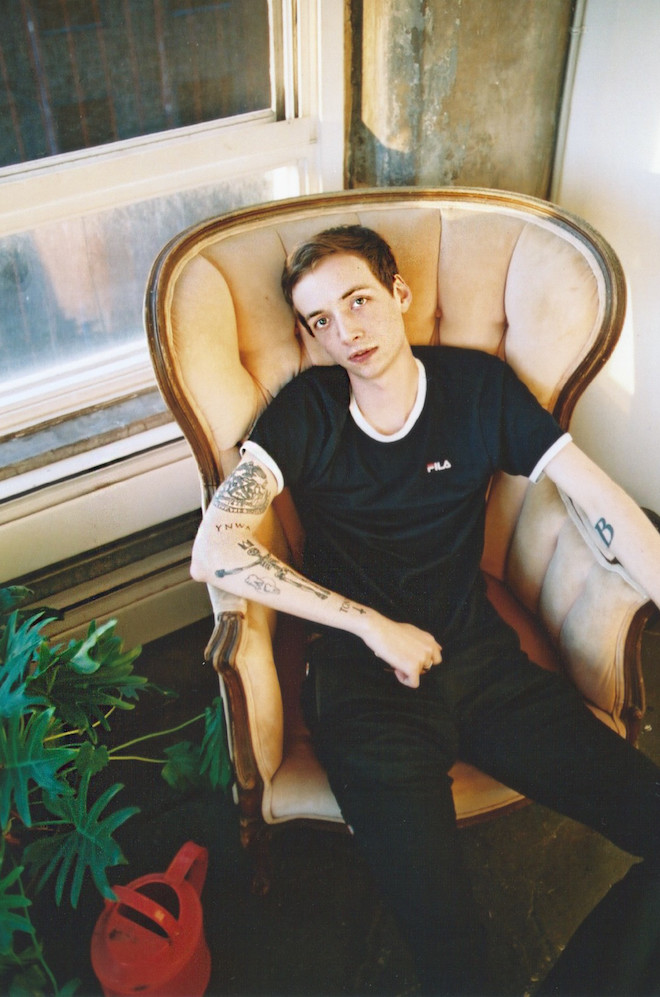
A casual, transient and less committed mindset typically pervades the actions of the millennial generation. And it’s a theme that has formed the basis of the latest issue of STEREOSCOPE, a St Andrews based photography magazine. Under the title No Strings Attached the magazine explores how this flippant and laissez faire attitude within youth culture has translated into the relationship with the camera. Throughout the issue, the tensions of trying to develop a serious dialogue with photography as a medium in an age where everybody has access to a camera are explored, and subjects range from hot new Brooklyn band ‘The Britanys’ to off-kilter self portraits and stylised tableaus.
Jake, Lallie
Greece, Lauren Santucci
Entering its sixth year as a publication, STEREOSCOPE was founded as a means to celebrate the history of photography in St. Andrews by aligning the famous Special Collections of Photography and current St. Andrews photographer’s work. In a post-depression era where creative drive has become stunted by mounting student loans, the magazine has provided a platform for students in St. Andrews to showcase their work and discuss the current nature of photography.
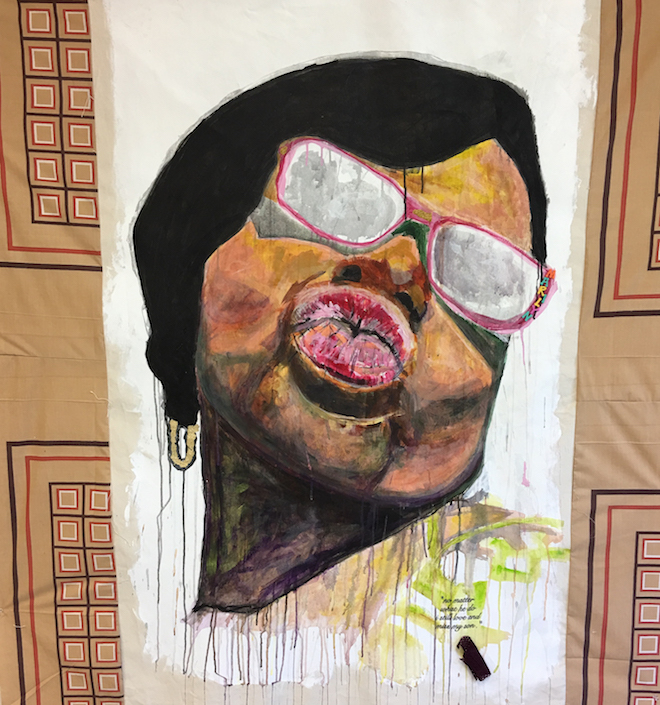
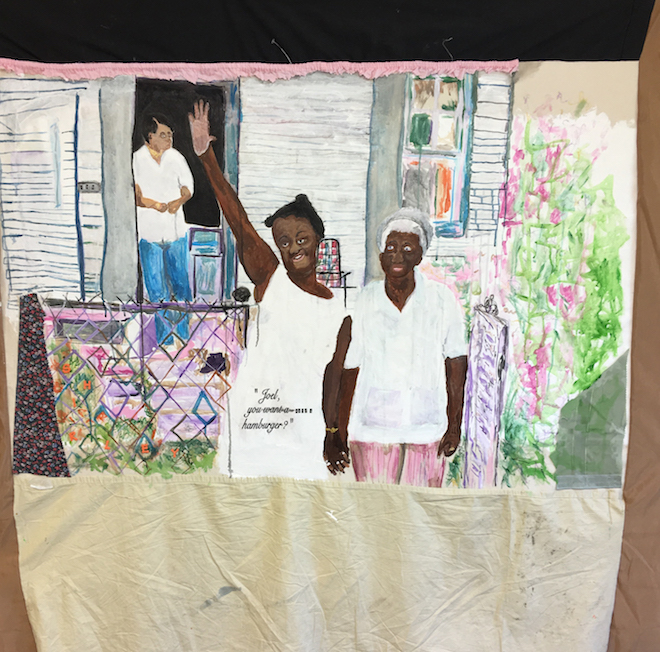
At a time of gross political uncertainty, American artist Tameka Jenean Norris’s new exhibition at the Ronchini Gallery is timely. Opening today, the exhibition sees Norris employ an expansive range of mediums, from video installations to painting and photography, to explore vital themes of black, female identity and self-image in today’s society.
Having grown up on the Mississippi Gulf Coast, Norris later moved to L.A., a transition that influences her new exhibition, in which the artist uses portraits to reconnect with distant relatives. The new collection of work illustrates the pivotal role of history in informing a sense of self, exploring the tension between discovering and owning one’s image and how identity is inherently linked to the past. Throughout, the work forms an engaging critique of contemporary social issues surrounding the appropriation of black culture and female-identity.
Tameka Jenean Norris, Marilyn No Matter What He Do, work in progress, 2016, courtesy the artist and Ronchini Gallery.
Speaking to Twin about the influences behind the exhibition and her work, Tameka told us:
The exhibition is a continuation of my first show at Ronchini Gallery ‘Almost Acquaintances’, and the works were mostly created at the MacDowell Colony in summer ’16, Peterborough, New Hampshire, and during this fall at The Grant Wood Fellowship, University of Iowa, where I am a Visiting Assistant Professor. Both the residency and the fellowship offered an opportunity for me to concentrate on a new body of work and have some space from the larger, more complicated world. During these periods of isolation, I spent some time contemplating about success in general, ‘black striving’ and missing my ‘family’ on the Gulf Coast and the surrounding areas.
Tameka Jenean Norris, Joel Want a Hamburger, work in progress, 2016, courtesy the artist and Ronchini Gallery
Although I have been making progress as an artist and academically, I feel that I have become disconnected from my family/community/tribe/village in the southern US, and this show is an attempt at reconciliation and reaching out to them. The reference photos I have worked from are mainly taken from Facebook, and some of the family members are deceased, incarcerated and others I have only ever been able to reach via social media.
The exhibition also displays abstract fabric works created by Tameka, as well as an installation of a large woven braid – both serve as metaphors for the memory. “My goal with this exhibition is to create a family tree of sorts and attempt to untangle the line of systematic oppression that has burdened my family and black American culture at large.”
Tameka Jenean Norris, Meka Jean Too Good For You, 2014, video still, courtesy the artist and Ronchini Gallery
Tameka Jenean Norris: Cut From the Same Cloth, Ronchini Gallery, London, 25 November 2016 – 21 January 2017, ronchinigallery.com.
Smashing The Glass lens: Photo Vogue Celebrates The Next Generation
The inaugural Photo Vogue Festival is celebrating the next generation of talented female fashion photographers, those who have subverted the traditional power male / female dynamic and liberated women from prescribed identities – the madonna, the whore.
Over three exhibitions in Milan, the female body is celebrated and examined in mysterious, alluring and mystical images from names such as Vanessa Beecroft, Petra Collins and Cindy Sherman. Beecroft’s work is exhibited in a stand-alone show that includes work from 1993 – 2016. In ‘The Female Gaze’ a host of dynamic artists are displayed together, creating a powerful rallying cry to a new era of fashion photography that empowers and enables women on both sides of the lens. The third exhibition, PhotoVogue/inFashion showcases the new talent who were brought together as part of the Photo Vogue competition. Conceived and curated by Vogue Italia, the festival also incorporates talks and lectures.
On the 24th of November, American artist Charlie Roberts will be previewing his highly anticipated solo exhibition Juicy at Marlborough Contemporary in London. Roberts borrows the name Juicy from Notorious B.I.G’s 1994 debut single, merging elements of hip-hop subculture with both classical and contemporary artistic influences – from Byzantine iconography, to comic books and Matisse.
Every facet of the exhibition mirrors Roberts’ playful and innovative artistic approach. He reimagines the gallery as a pop-up shop, hanging approximately 200 paper gouaches salon-style throughout the space. In keeping with his ethos, Roberts invites viewers to purchase the art as they see it. The work is accessible and affordable, and as each piece is removed, it is replaced with another, keeping the exhibition in a continuous state of flux.
Contrasting abstract patterned images with fluid female figures, and bright colours with pastel tones, Charlie Roberts juxtaposes every aspect of his work. His reputation as an innovative and exciting artist is ever expanding, and his work continually incorporates characteristics of both popular culture and highbrow art. Earlier in 2016, Roberts collaborated with Danish menswear brand Soulland, creating a successful limited collection of menswear. In his latest display of work at Marlborough Contemporary, Charlie further asserts himself as an inclusive and progressive contemporary artist.
Charlie Roberts: Juicy will be open to the public from the 25th November 2016 until the 7th January 2017 at Marlborough Contemporary
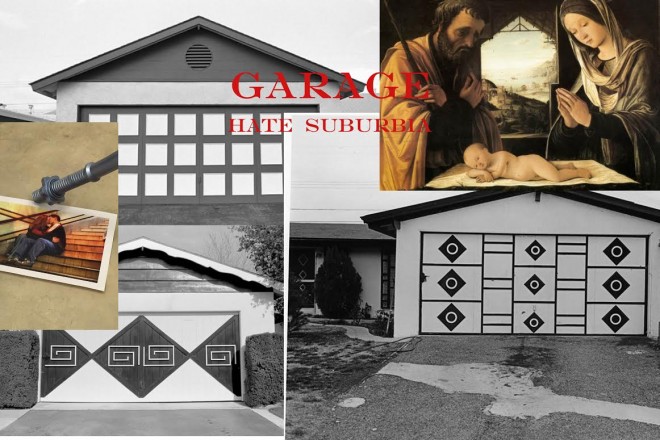
Hate Suburbia is the latest book on the architecture and image of the suburban garage by NY-based sculptor Olivia Erlanger and London-located architect Luis Ortega Govela. Out today, the book showcases the history of the space and exposes the humble garage as a model for spatial occupation that continues to define us today.
Containing a foreword by Octave Perrault, a conversation between Apple’s Steve Wozniak and Gwen Stefani, and a round-table between four prominent entrepreneurs based out of garages, the book takes a wide-lens view of the garage as both a physical space and as an incubator for the cultural process.
Hate Suburbia is available at the Architectural Association’s bookstore: aabookshop.net
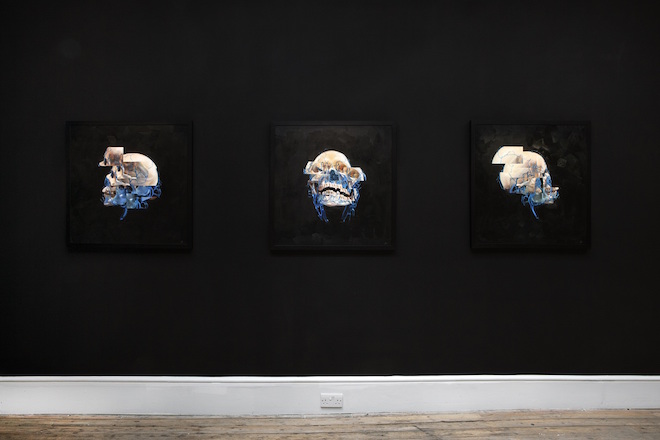
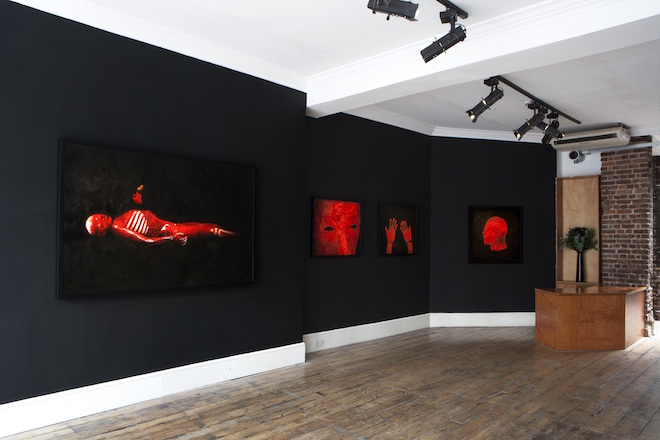
Golgo’s first London exhibition · FLESH · BLOOD · SUBSTANCE ·
· FLESH · BLOOD · SUBSTANCE · is the debut London exhibition from Mexican artist Golgo. Running now and until the 12th November 2016, Andreas Hijar aka Golgo shows his own personal interpretation of life and death through a series of canvases focused on the combination of anatomy and symbolism. This is a common theme seen through his work, as his interest centres around the human body, its functioning and its decay.
“· FLESH · BLOOD · SUBSTANCE · is the autopsy of my spirit, a reinterpretation of science and soul, an exploration of our concrete presence and inevitable disintegration. This group of work is the fragmentation of my personal approach towards the reasons behind the malady of ageing, changing and existing as substance. Oils, red and blues took the place of scalpels; with them I glanced into the viscera of the corporal and the essence behind the fluidity of extinguishing vitality. Here lies what I feel and perceive as the vacuum of ever changing life and intrinsic end.” – Golgo
Golgo also continues to produce as an individual creator at his Black Blood Studio, allegedly founded in Mexico City in 1666 and now located in Los Angeles. Golgo employs a wide range of techniques including oil, ink and aerosols. His pictures exploit the popular imagery associated with medieval Europe, playing with the notions of spirituality, corporeality and pain. They also expose the futility of any attempts to draw a line between art and science, as they demonstrate that these areas of knowledge complement rather than conflict each other.
The exhibition runs till 12th November 2016 at Lazarides:11 Rathbone Place, London, W1T 1HR.
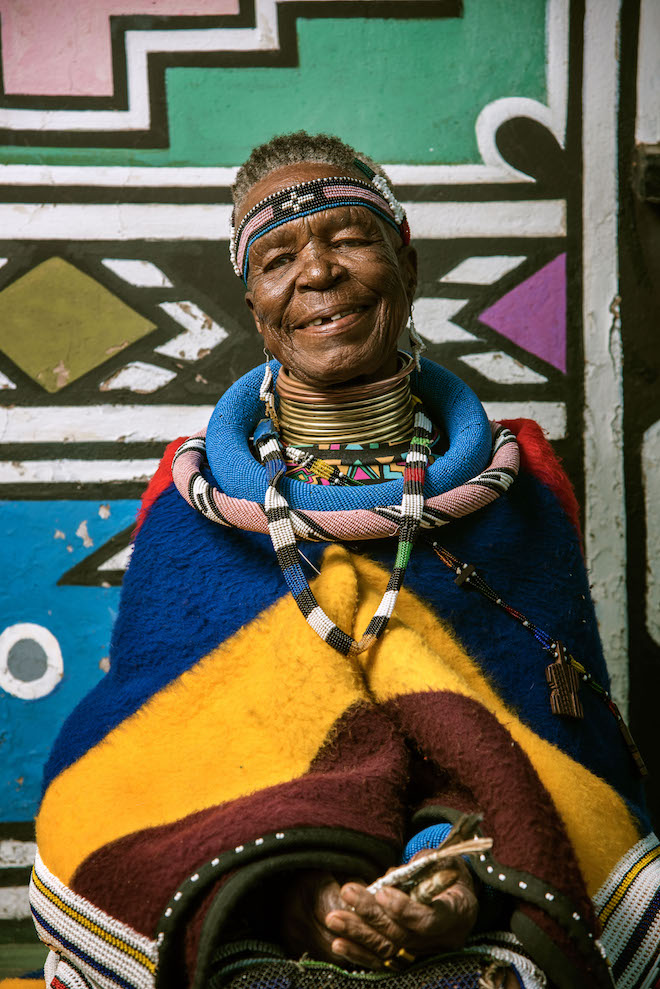
Esther Mahlangu marries tradition and technology at Frieze Art Fair
It is not often that you arrive to an exhibition where the artist has not yet seen the final work, but such was the case for pioneering South African painter Esther Mahlangu, who made the very special trip from her home to Frieze London to see the fruits of her latest collaboration with BMW.
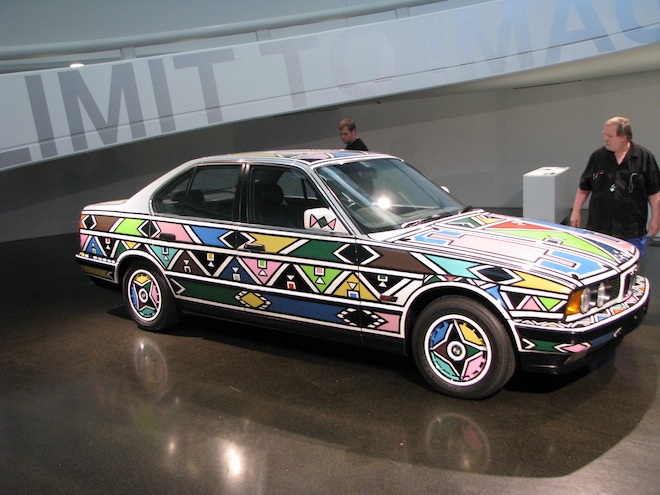
Mahlungu’s first project with the car manufacturer was in 1991 when she followed in the footsteps of male artists like Andy Warhol, Robert Rauschenberg and Roy Lichtenstein to create an Art Car for the brand, the first female and non-Western artist to take part this car came to define an important moment for female artists.
Credit: BMW
Twenty-five years later her signature traditional Ndebele paintings of bold primary hues and stark black lines have been used to transform the interior of a new 7 Series, and Mahlangu seemed more than impressed with the final result as the BMW team revealed the finished piece inside their Frieze lounge area in London.
Credit: Strainu
Speaking to Twin about the differences between her large-scale creation in 1991 and the updated subtle approach she has taken in 2016, it was the size of the work that changed her approach. “In 1991 [the project] was huge, enormous as it was exterior.” Mahlangu said. “With the interior I had to be more subtle, to do the construction and think about the process. Usually when I create something, everything is in my head.”
“The biggest difference though is that 1991 was just an art object, where as this one is a useable functional object,” explained Mahlangu, as we watched the car go up for silent auction following its unveiling. With bidding beginning at £120,000, this collector’s item is the pinnacle in functional art, praising new technology whilst celebrating the traditional techniques in Esther’s work.
Credit: BMW
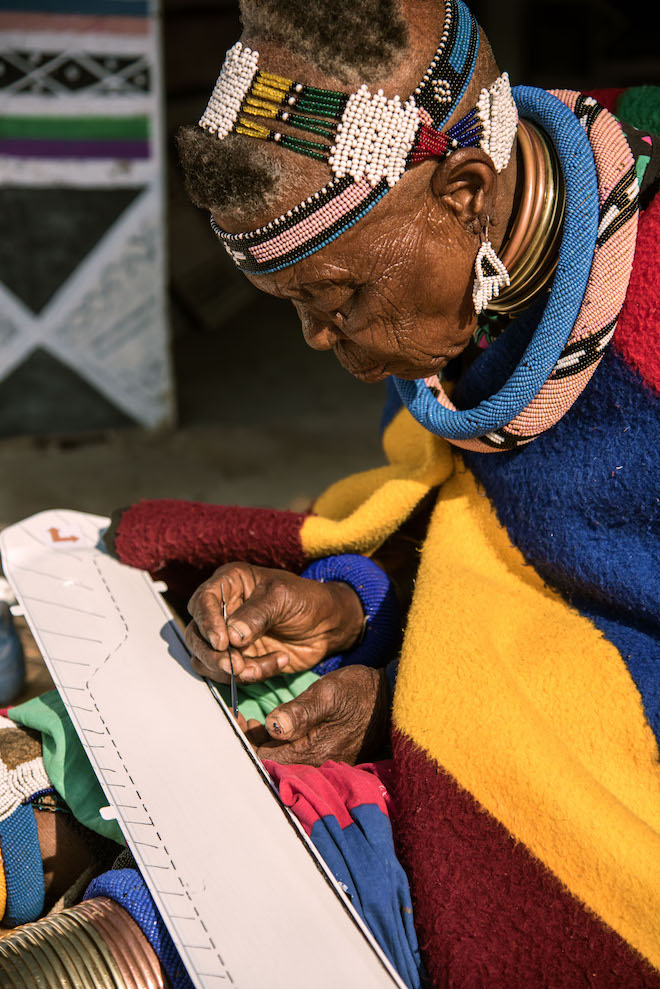
An emblem of serenity, Mahlangu’s presence at the bustling fair was more than humbling. Now aged 81 and adorned in a sea of beaded accessories, bright swathes of fabric and silver necklaces, she is as iconic as her work, upholding the traditions of South Ndebele people of Mpumalanga in South Africa through both her art and her clothing.
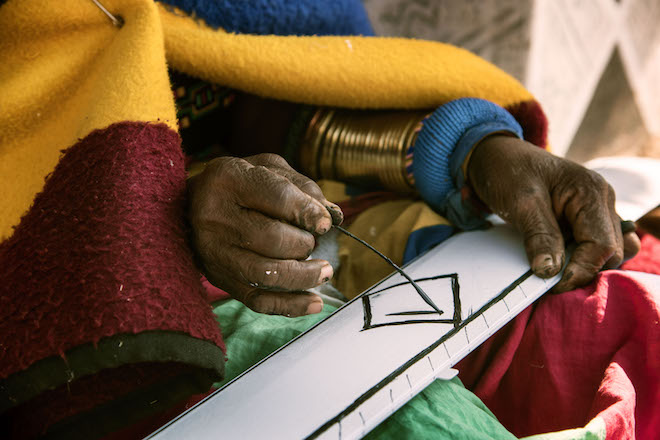
Beginning her artistic career aged ten, Mahlangu was taught the Ndebele painting techniques by her grandmother and mother, who used the same techniques to paint the walls of houses. Her methods have not altered since she was first taught, even for projects such as this.
Credit: BMW
“I only work with chicken feathers,” she explained. “So in the [1991 project] I would bind at least five chicken feathers together to make a brush, whereas with this one I used a singular chicken feather to make the thin line, so you have to have much more control over the thin line than the thicker line.”
The traditions of painting were only carried out by women in South Africa, and have diminished since females have left to travel or take employment elsewhere. This has made Mahlangu’s work all the more important.
“As long as I am able to move I will paint because my fear is that the culture will die out and that is a reality,” she said. “I’ve been working with different brands like Belvedere and did the [Etys] shoes. When people ask why I prefer to work with all of the different brands, I say when they bring me something to do I can’t say no because when I die someday, somebody will own something of mine.”
The BMW Individual 7 Series by Esther Mahlangu is available to bid on now.
You can also see her 1991 design in the upcoming exhibition ‘South Africa: The Art Of A Nation’ at The British Museum which runs from 27 October 2016 – 26 February 2017
Harriet Horton is heading to Paris. But not before she lets UK-based fans of her brand of taxidermy take a look at the new collection – ‘Camouflage’ – at her London studio.
Having beens fans of Harriet’s work for some time now, firstly becoming enamoured with her ‘Sleep Subjects’ exhibition of 2015, Twin is excited to see such an exciting and irreverent artist continue to develop.
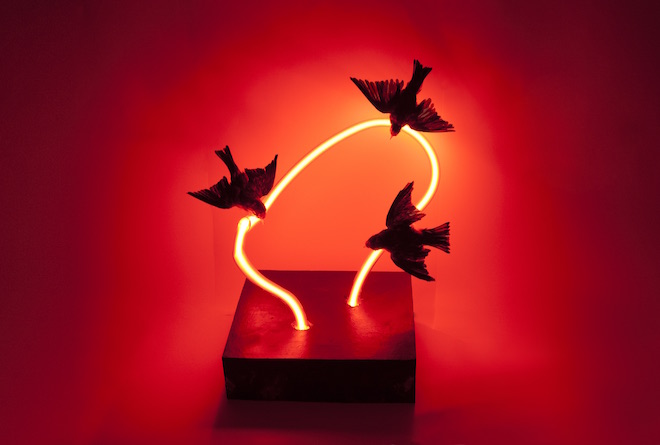
Harriet Horton, Owen, 2016
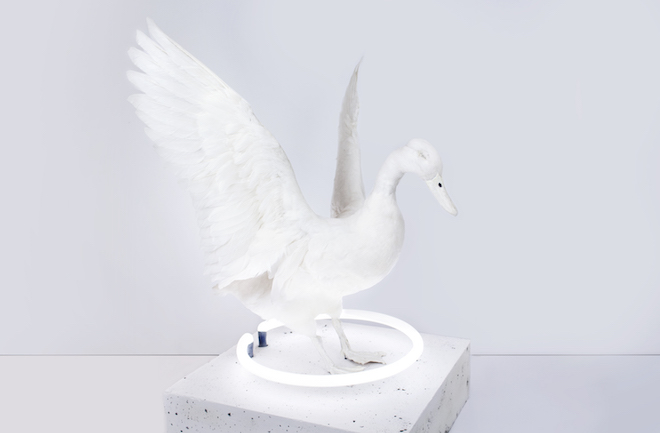
For 2016 the signature neons are still gleefully present, but there is a new, multi-textured element to the works. Materials such as marble dust and cement have been introduced, and create a staggering contrast to the exquisite delicacy of the taxidermy itself, transcending each piece onto an almost angelic plane.
“I’ve always said that when animals are deceased their natural colouring and camouflage becomes redundant,” Horton explains. “I have explored this idea further [for ‘Camouflage’] by either using animals that have no existing markings or stripping them of their original colouring and reconstructing it with light.”
It is fitting then, that a city such as Paris, which is so often known for both its light and its love, should be host to such a stunning example of the two used to breathtaking effect. Unmissable beauty.
‘Camouflage’ opens at the mi* gallery in Paris on 26th October, and runs until 16th January 2017.
Harriet will be holding a private view of the new work at her studio, Darnley Road Studios, on 29th September.
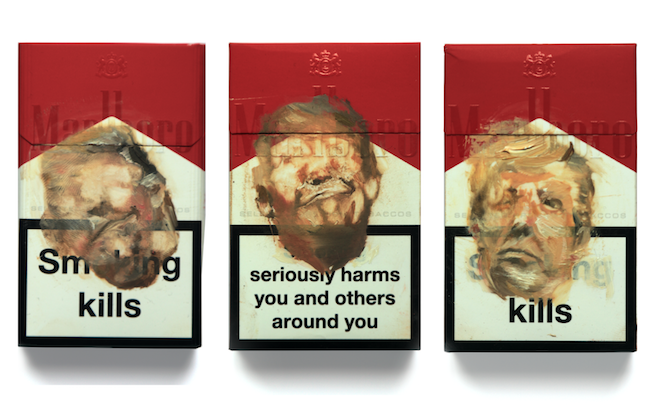
Known for his social commentary artwork, London-based artist Antony Micallef has produced his latest pieces entitled, ‘Trump Fags’ for the non-profit organisation, Peace One Day. Now available via Paddle8, Trump Fags were made as a triptych and feature miniature oil paintings of Donald Trump on the front of Marlboro cigarette packets.
The project was curated by ambassadors of Peace One Day, Jude Law and Jake Chapman and has seen other leading artists such as Marc Quinn, Sir Antony Gormley and Tim Noble & Sue Webster donating artworks. All proceeds will go directly to the organisation that promotes peace in areas of conflict.
Artwork now live on Paddle8.com and running till the 5 October.
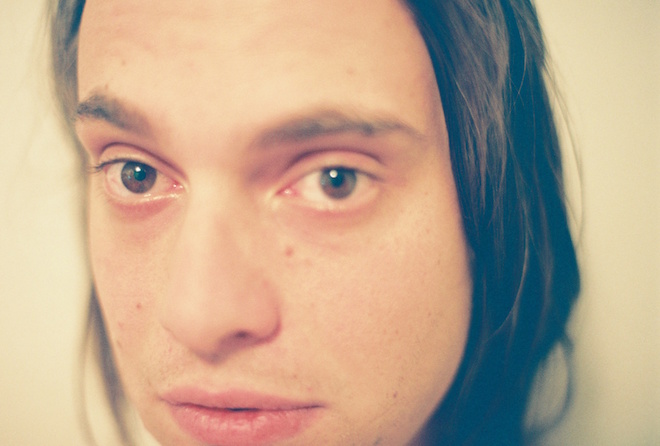
This weekend, during New York Fashion Week, sees the opening of the ‘More Than A Muse’ exhibition, which features the work of Larry Clark, Sandy Kim, Ryan McGinley and Dash Snow, and is curated by Aiden Tuite.
Seeking to explore “those relationships between artist and subject that exceed creative companionship and are based on inextricable, emotional ties”, the exhibition is as raw and visceral as it is complex. Pushing past the usual constraints of mere beauty or staging, the works feature parents, lovers, siblings and friends, and offer an unfiltered insight in the relationship that exists between the capturer, and the captured – on both sides of the lens.
Colby Hewitt by Sandy Kim
In this show, it is both the photographer and the muse who are to be recognised as artists. It is a symbiotic display that proves that in order to convey something with genuine feeling, both parties have to be fully alive and present in the moment. Do not miss it.
‘More Than A Muse’ runs from 11th-18th September, at 65 Ludlow St, New York. Email aiden@cotton.studio for further info.
Juergen Teller to curate Mapplethorpe retrospective
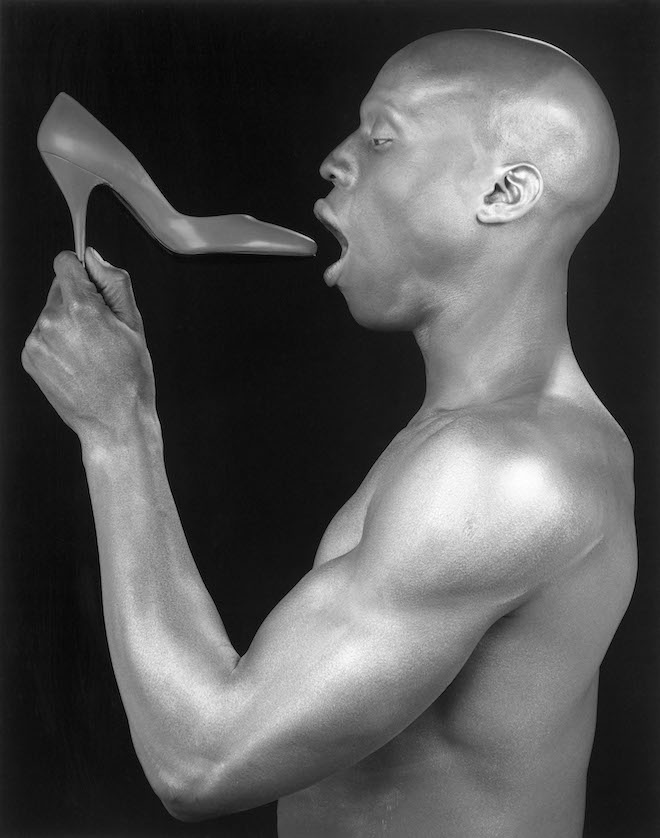
In honour of what would have been Robert Mapplethorpe‘s 70th birthday, Juergen Teller will be curating a retrospective of the iconoclast’s vast and provocative body of work – ‘Teller On Mapplethorpe’ – at London’s Alison Jacques Gallery.
No photographer since Robert Mapplethorpe has so seamlessly blurred the lines between commercial fashion photography and art as Juergen Teller, and both artists are famed for twisting and manipulating conventional understandings of photography as an art form. The gallery is said to have granted Teller free access to Mapplethorpe’s entire archive of both published and unpublished work, circumstances that facilitate a deep and rich reading of the rebel artist’s work. Without a doubt, to view Mapplethorpe’s photographic oeuvre through Juergen Teller’s visionary lens promises to be a unique and rarefied experience.
Milton Moore, 1981
Mapplethorpe sought an unrealistic perfection of form in everything he photographed, from acts of sexual fetishism to the delicate shapes and contours of flowers. His classical and formalist approach to scandalous and highly explicit subject matter elevated photography to the level of painting and broke down the barriers between pornography and art.
Alison Jacques, who has represented the Estate of Robert Mapplethorpe in Britain for seventeen years, said: “Provocative and subversive, making images which are the antithesis of conventional fashion photography and, most importantly, a key artist of his time, Juergen Teller was the only choice to curate this special exhibition of Robert’s work. There are obvious parallels between these artists and I am excited to see how Juergen will bring his edge, energy and unique vision to a new reading of Robert’s work.”
Jennifer Jakobson, 1981
This will be the gallery’s first exhibition of Mapplethorpe’s works since the dual retrospective ‘Robert Mapplethorpe: The Perfect Medium’ at The J. Paul Getty Museum and Los Angeles County Museum of Art (LACMA), Los Angeles (2016), and follows on from the recent release of the HBO documentary film Mapplethorpe: Look at the Pictures (2016).
‘Teller On Mapplethorpe’ will be held at the Alison Jacques Gallery from 18th November – 7th January.
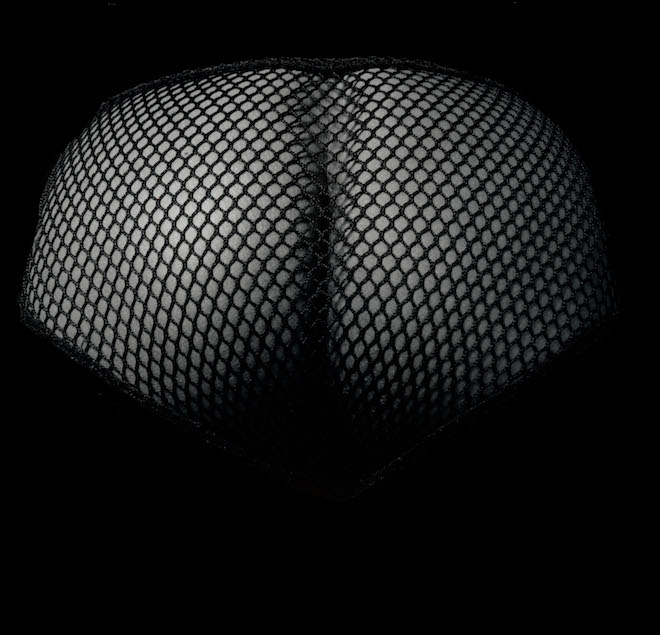
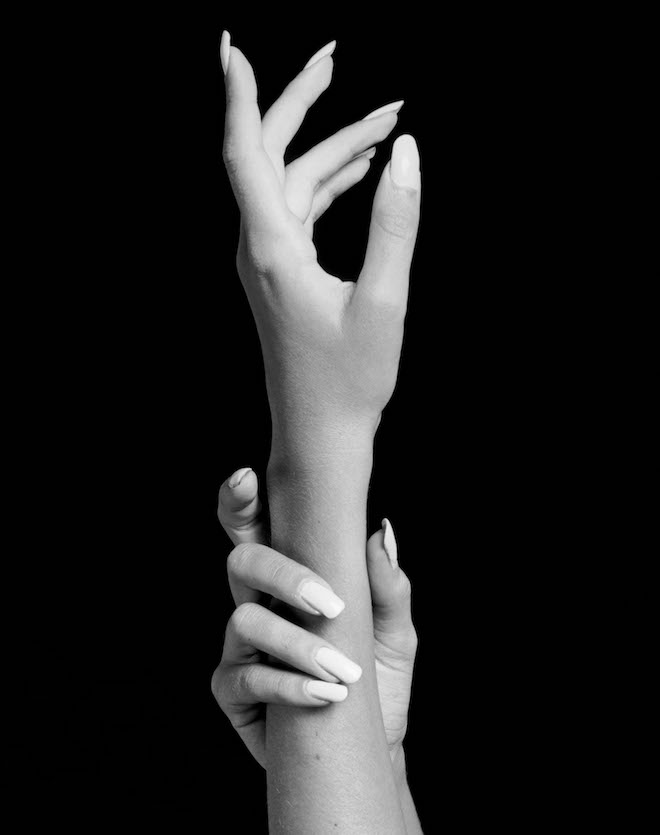
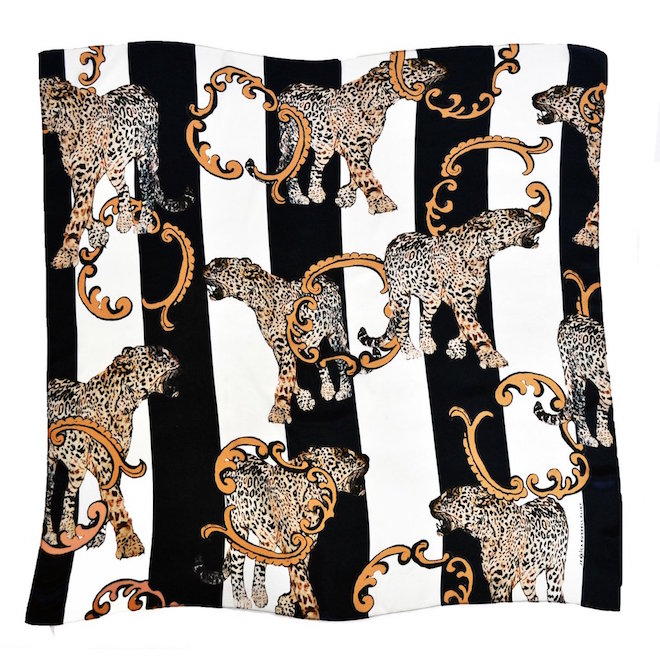
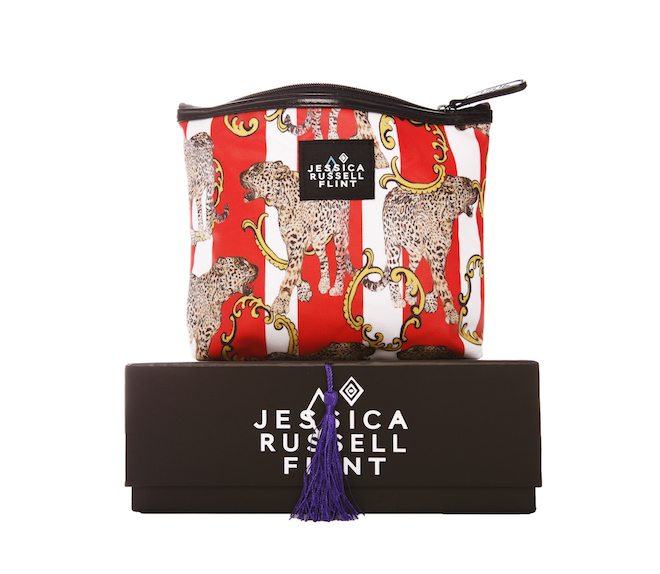
Merging classic British heritage themes with vibrant colours and statement designs, London-based designer, Jessica Russell Flint loves nothing more than vivid and eccentric prints. Initially studying Geography, Flint then went onto attend Central St. Martins to explore her creative side. It seems the change has done her good, as her label – which consists of home wears and accessories from scarfs to eye masks – is now available in over 40 stockists. We meet with Jessica to talk about her background and love for colour.
When and what was the catalyst for your decision to study at Central St. Martins? I worked in advertising originally for about eight years, and whilst I loved the environment and the people, I was always frustrated about being creatively unfulfilled. A lot of it was keeping clients happy and so much of the process was broken down by other people’s decision making. I was always drawing on the side, my family are all very creative and I grew up with pens and paper instead of toys for entertainment.
I decided to do an illustration course at St. Martins on the side to understand more of the technical aspect of the design process. When I finished there I began blogging my prints, and people started to buy them from me. So I set up a website and went from there. Slowly I introduced products featuring the art I had created and the brand started forming. I did my first tradeshow in 2014 and it went well. Initially going from selling cards in Paperchase to stocking ranges in the Conran shop, Harrods and Wolf & Badger. It’s really satisfying to see where I’ve come over the years and how the style is continually developing.
How would you describe your style? Scratchy! Brightly coloured. Illustration mixed with pattern.
Does London play a part in influencing your style? Definitely. We live and work in East London and the people this side of town are definitely not shy in expressing themselves. From the graffiti to the urban dress and little boutiques and bars, it’s definitely a place to pick up ideas!
Where do you find your inspirations? All the time, everywhere, from magazines, antiques (especially those old pieces of China with illustrations and etchings), statues and old books. They are amazing for getting new ideas. I love Pinterest for patterns and how to style shoots. Holidays help! Often relaxing somewhere I will feel inspired for a new design.
Who are your favourite illustrators? Egon Shiele is one of my favourite artists in the whole world, he’s more an artist than an illustrator but his style is very illustrative and his lines are so beautiful.
Do you have any new offerings in store? We’ve just launched quite a few new products from tech cases to umbrellas and cashmere. But we are so excited about the launch of our new bag range, which will be part of our SS17 resort collection. We are shooting this next weekend at the Clerkenwell London (boutique and restaurant) and we have a great team of stylists and models. Very excited to launch this range in the New Year!
Where can we buy? Currently we stock in over 40 boutiques and shops in the UK. Aside from our website our biggest stockists are Harrods, Hoopers and the Conran shop. But we’ve got some great new stockists from January.
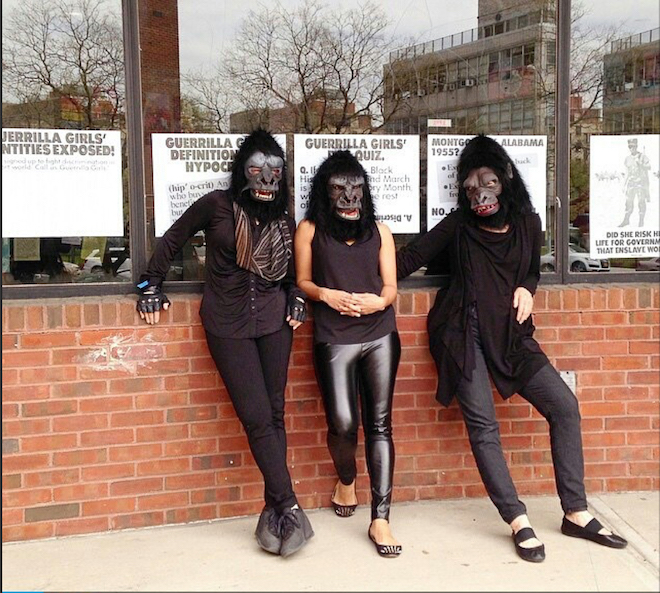
Founded in New York in 1985, the anonymous art collective – the Guerrilla Girls – are finally getting their own, dedicated show. Set to commence this October at London’s Whitechapel Gallery, it is a long-awaited spotlight on over three decades of important work they have done in highlighting the staggering inequalities that take place both historically – and currently – in the art world.
Though the group has seen members come and go over the years, one thing unifies: all participants take the names of dead women – Frida Khalo, Georgia O’Keeffe – and conceal their identities with gorilla masks when appearing in public.
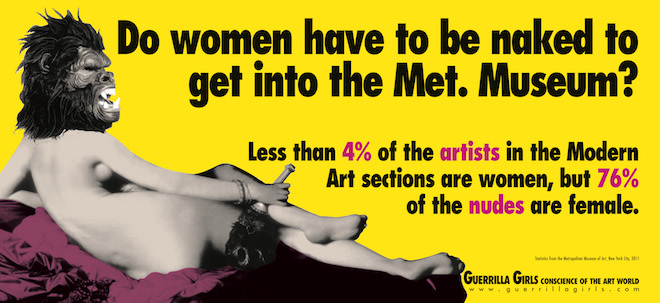
‘Do Women Have To Be Naked To Get Into The Met. Museum?’, 2012, Courtesy of the Whitechapel Gallery
Speaking to The Guardian earlier this week, Iwona Blazwick, director of the Whitechapel Gallery reiterated the real need for such an exhibition to take place, and further demonstrated why the Guerrilla Girls are so vital. “I was just at the Kunstmuseum in Basel where they have just rehung the entire collection from 1900 to the present and I think there are five women.” She said. “Sadly it is still an issue.”
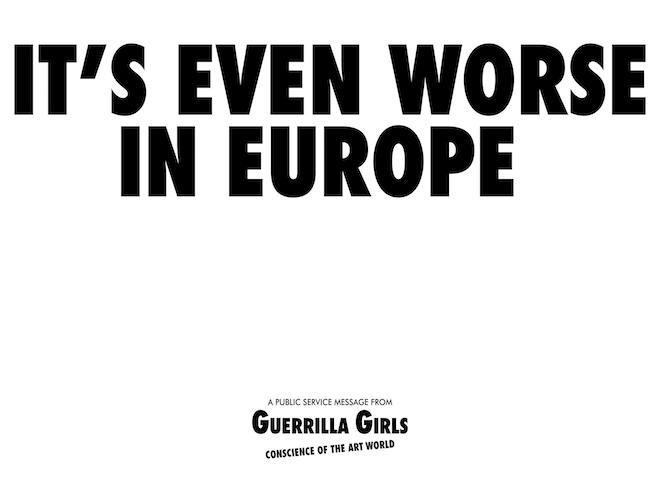
‘It’s Even Worse In Europe’, 1986, Courtesy of the Whitechapel Gallery
Entitled ‘Is It Even Worse In Europe?’, the new show will feature famous works such as the 1986 inspiration behind the aforementioned title, as well as ‘Do women have to be naked to get into the Met museum?’ and ‘Pop Quiz’. However, the large crux of the exhibition will be based on the results of 400 questionnaires that the Whitechapel Gallery have commissioned the group to send out to European museum directors, including their own.
‘Pop Quiz’, 2016, Courtesy of the Whitechapel Gallery
In a public statement, the Guerrilla Girls said: “With this project, we wanted to pose the question, ‘Are museums today presenting a diverse history of contemporary art or the history of money and power?’ Our research into this will be presented at Whitechapel Gallery this fall.”
Let’s see, shall we?
‘Guerrilla Girls: Is it even worse in Europe?’ will be co-curated by Nayia Yiakoumaki, and runs from 1 October 2016 – 5 March 2017; entry is free.
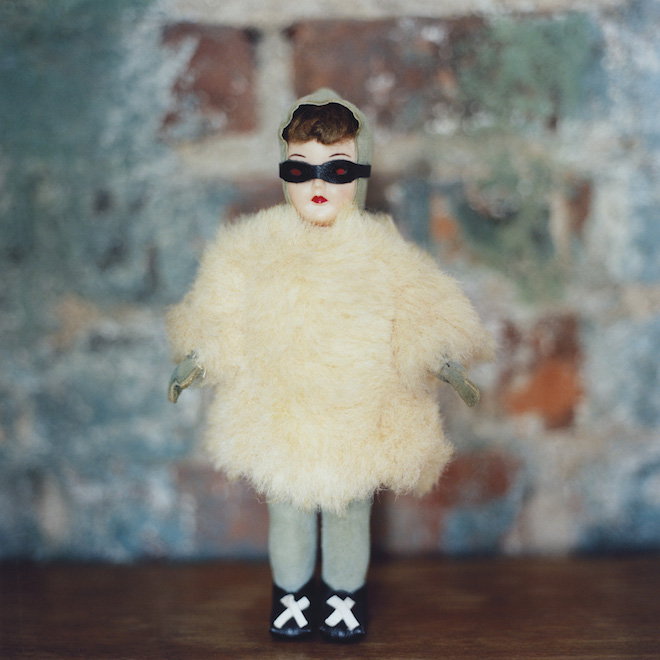
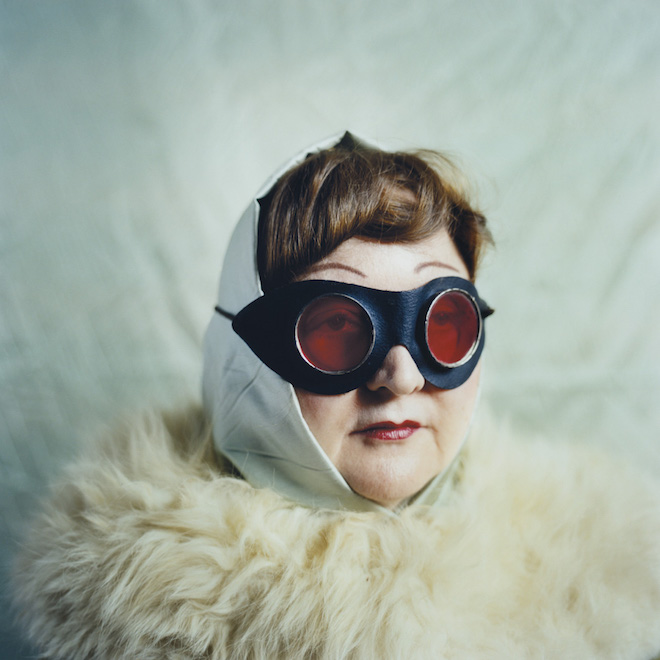
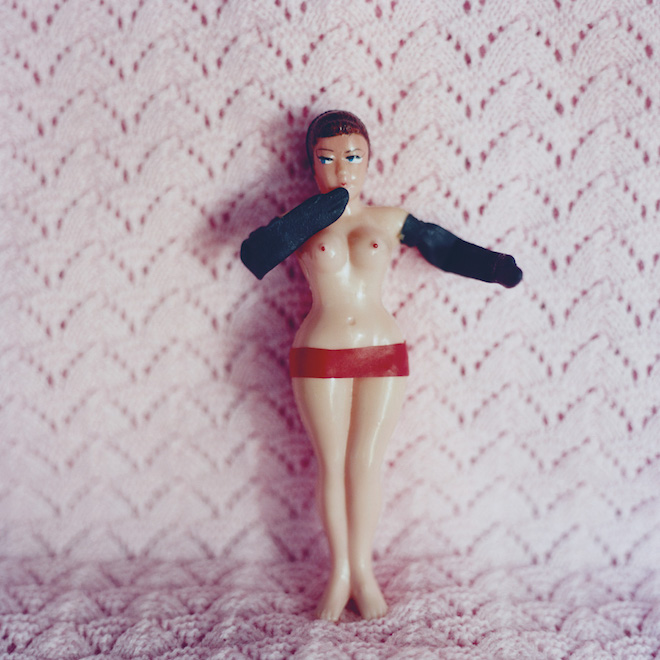
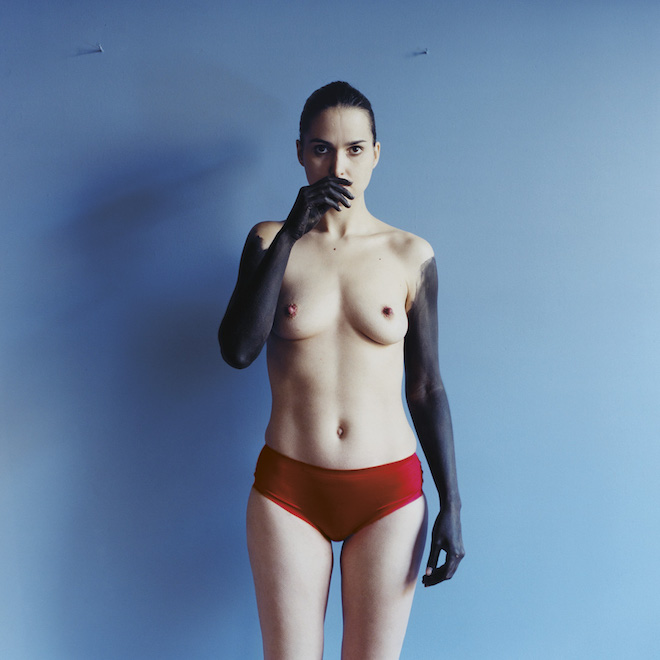
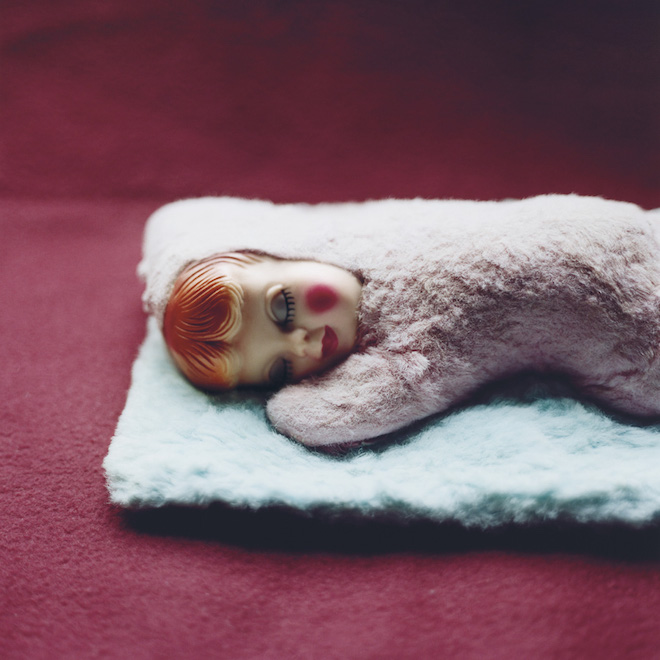
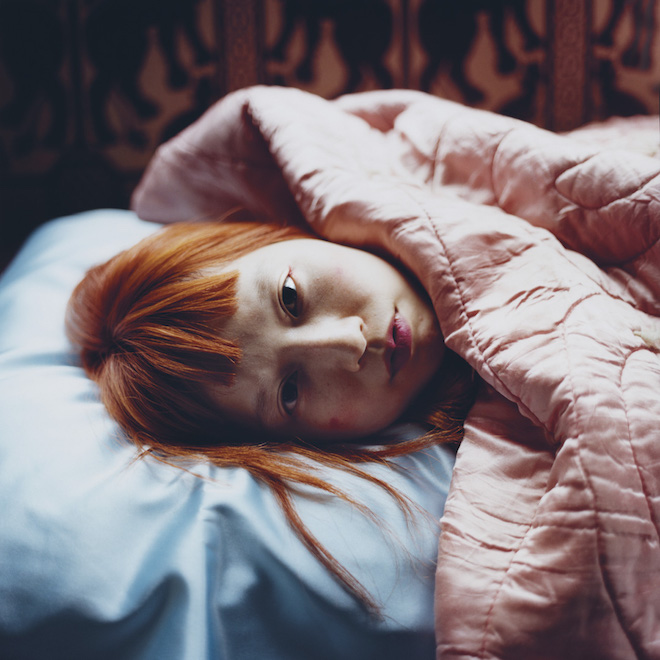
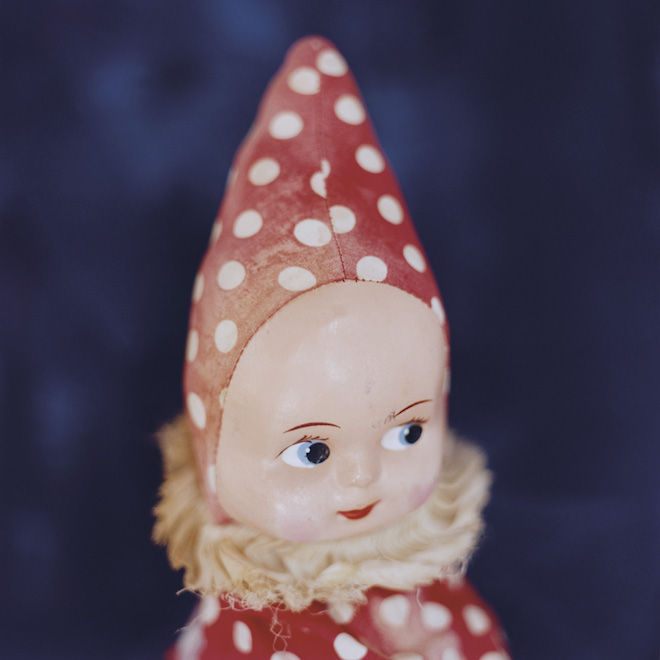
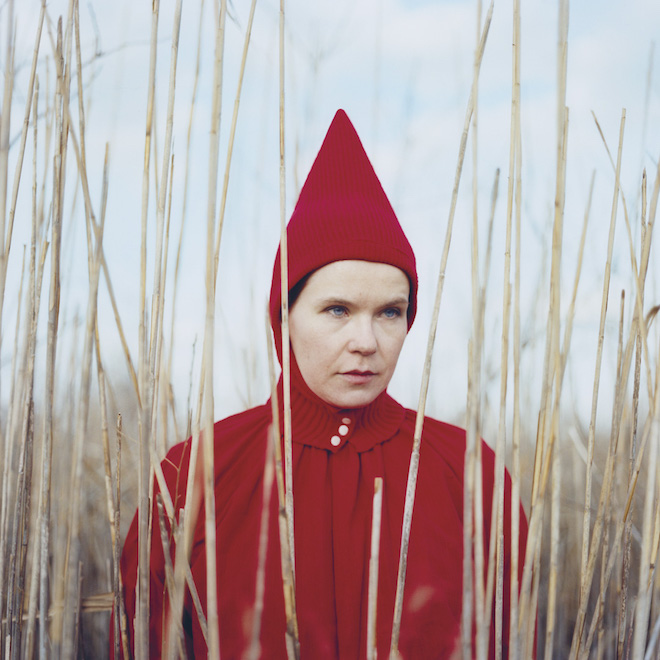
Photographer Annie Collinge takes pictures that often conjure memories of childhood. Her most recent project, ‘Five Inches of Limbo’, borrows its name from a Margaret Atwood poem about dolls. In the photographs, Annie brings objects to life, pairing dolls she has found in flea markets and on the subway with women found in similar places.
Always shooting on film, instead of using digital photography, Annie’s pictures have a rawness about them, remaining unprocessed and off-key. Without using lighting or effects, her photographs provoke a feeling of otherworldliness, stirred by her delicately chosen subjects, often in costume against a suburban backdrop.
Here, Twin speaks to Annie about the art of inviting strangers back to her apartment, how Instagram has changed the way she works, and her plans for future projects.
Most of your projects use curated concepts instead of found imagery. Where do your ideas come from?
I tend to get ideas from all over the place, from dodgy window displays to car boot sales. I find the process of looking for unusual objects quite meditative, and very often an idea comes to me from an item I’ve found. I like to photograph human interactions with objects, so this usually starts with the object and then I work out how I can include someone.
Why do you tend to use women as subjects in your work?
In the past I tended to photograph a lot of women. I’ve always been interested in the idea of adornment, and women generally, not always, are more adored than men. For my ‘Five Inches of Limbo’ project, I had initially wanted to photograph both men and women, but then I realised that most of the doll’s faces, even if they were male, were made with a female doll face mold, maybe with a moustache drawn on later. I also found approaching strange women less daunting than inviting men back to my apartment to photograph them.
Many of your subjects are strangers. How do you go about approaching them?
Most of my subjects were strangers, apart from the woman with the red goggles on. She is my aunt Yolanda. I’d bought that doll in the Chelsea flea market and one day I was looking at it on my shelf and thought it really looked like Yolanda, which is how the project started. Once I shot her it was easier to approach people as I had an example to show them. I’ve definitely got quite used to approaching strangers now, but I still find it nerve wracking. You learn to brush off the rejections. The most helpful bit of advice I ever heard was from photographer Martin Parr. He said that you must never linger, you must always go straight up to someone. When you linger and they notice you staring at them, it starts to make people paranoid and can make them have a negative reaction to you. I remember sitting in a cafe in the East Village and seeing two girls at the next table, and thinking for too long how I would approach them. After about half an hour of them noticing me giving them strange looks, I went over and was so flustered I think I came across as a complete mad women. They never responded to my email, unsurprisingly.
How has social media impacted the way you work?
Instagram has been great for me, it’s brought my work to a much wider audience and has allowed me to reach out to all kinds of creatives that I may not have known how to contact otherwise. I’ve been working with designers Luke Brooks and James Theseus Buck on a few little projects. I basically just followed them on Instagram and messaged them. We have done a couple of shoots together and are working on a third one now. It’s really nice to work with people who have a similar way of making images and Instagram has allowed us to see how others view the world on day-to-day basis. It doesn’t just show us the polished work we create. It’s nice to see how someone can take an interesting picture of their shoelaces or a weird cloud in the sky without over-thinking the concept. I find that incredibly liberating.
The name of your ‘Five Inches of Limbo’ project was taken from a Margaret Atwood poem. In what other ways did the poem influence your work?
When I read the poem I just knew that I had to include it in my project. It is the most amazing description of a doll I have ever heard, the idea that we carry around these little kind of corpses that never age and only decay. That they are watching us, and just existing, trapped with the expressions they were first manufactured with. It’s amazingly dark and I guess the idea for my project was taking something that is a version of real life, a doll, and turning it back into real life to see how it kind of mutates in the process, so I feel it relates to the poem because of this relationship between what’s real and what’s fake.
Where else do you draw inspiration from?
I think that the books I read as child had a huge influence on the way I make images. I remember how different drawings would make me feel and how I found some things a bit frightening but also a bit thrilling, like The Three Robbers by Tomi Ungerer or In The Night Kitchen by Maurice Sendak. The images were always beautiful and saturated, but at the same time a bit surreal and menacing. I realise now, having a child myself, how important those formative ideas are, and how we learn so much about world from those often strange stories.
What do you hope people take away from your work?
I would like them to make their own mind up about it, that’s what I love about photography, the ambiguity of it. An image has to have some mystery to it, as that is what leaves a lasting impression.
Do you have any current plans for future projects?
My next big project is going to be a series of constructed images of my family. Not because my family are particularly exciting, but because I feel like I’ve recently been much more aware of how transiently we live, and how our relationships with our families are changing. I’d like to make constructed portraits of my sister, father and mother to preserve them in my own memory. Also because they are the people who I first took pictures of when I first started using a camera. I guess I’ve been photographing strangers a lot and I want to challenge myself to find out how I can see people close to me objectively and still make images interesting to other people.
Taking inspiration from some of the ‘Mother of American Modernism’s’ most famous works – spanning her almost 100 year life – Collins’ video is a mesmerising exploration of every aspect of modern femininity, much in the way that O’Keeffe did so iconically before her.
“O’Keeffe was one of the first artists that made me appreciate color in a whole new way. Her use of it makes me feel like her landscapes are complex beings. That with each stroke of color, each line, each curve, she’s bringing these locations to life. With this short I wanted each girl to really play with their surroundings (that were inspired by O’Keeffe’s desert and Lake George – her two favourite spots) – to use their every inch of skin, muscle, bone, etc and really put themselves into her landscape too – while making their own.” – Petra Collins
New York-based Collins’ video features a bevy of relevant and revolutionary women, from Barbie Ferreira to Maia Ruth Lee, Seashell Coker and Ajani Russell. With fans including Katy Perry, Lena Dunham, Selena Gomez and Marilyn Minter, she has been heralded as the ‘next defining artist of her generation.’
Georgia O’Keeffe at the Tate Modern runs until 30th October 2016, click HERE for tickets.
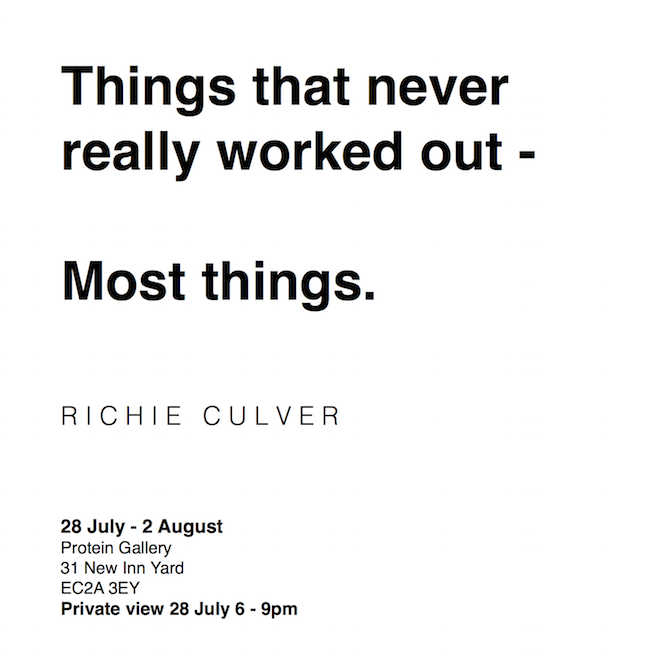
Richie Culver rose to fame in 2010, when he took a magazine cut out of a Jesse Owens photograph and stuck the words ‘Have you ever really loved anyone?’ onto it. Although he had never had any formal training, this first artwork was featured in a group exhibition at the Tate Modern. Richie has since experimented with photography, mixed-media installations and painting, and he has become synonymous with his use of text to accompany his artwork.
This July, a show entitled ‘Things that didn’t really work out – most things’ will combine Jesse’s autobiographical inclination with his text-based medium, providing a dark and humorous look into his life. In Culver’s own words, the exhibition “looks into the realms of sanity, humanity and depravity”. The work began as a book project following a particularly challenging period in Culver’s life and has been developed into a series of wall based works and prints.
The exhibition, which will run from the 28th July until the 2nd of August, will be on display at Protein Studios in Shoreditch. It is Culver’s first London show in three years, and is being exhibited as one of four events put on by Shelter, as part of their Gimme Shelter series. The events are focused around literature, art, music and film and will support Shelter’s work to help people facing homelessness and poor housing. Tickets for each event are allocated via a ballot.
To enter the ballot visit: www.shelter.org.uk/gimmeshelter. Successful entrants will be asked to purchase tickets for their chosen event for £10, with all proceeds going directly to support Shelter’s crucial work.
Filmmaker and artist Charlotte Colbert is one of those women that make you feel very dull, and impossibly unaccomplished, by comparison. From the outside looking in, her world seems one of perfection. She’s beautiful yet effortless, undoubtedly talented, boundlessly intelligent – and to all intents and purposes, managing to live by doing what she loves, which is – and let’s be honest, always has been – something of a rarity.
Emerging as a master of the surreal narrative, Charlotte’s work has documented everything from faces obscured with giant ’emoji heads’, to the stripped-back grace of nude figures in a former lesbian commune in East London. Her aesthetic is ethereal but not whimsical; there is real, transportive substance there, in among the solitary figures and exquisitely desolate surroundings, you can see relatable and raw emotion.
Ahead of her upcoming shows – one solo exhibition at Gazelli Art House, and another group exhibition to celebrate the genius of Kubrick at Somerset House – we caught up with Charlotte to delve a little deeper into her creative process.
You’re described as a filmmaker and artist – which did you embark on first? And how?
I’ve always been interested in stories and ever since I can remember I’ve been collecting them, putting them down in strange formats, inventing them. As a teenager I’d spend all my nights just wandering through cities talking to people, vagrants, partygoers, down-and-outs and up-and-comings. And when asked what I wanted to do and who I wanted to be, all I could ever think of was the desire to be everyone, to experience life from as many different perspectives as possible. I’d always been scribbling down people’s stories, taking their pictures and little by little it got more formal, not in the sense of square but in the sense of shapely, and the stories started articulating themselves over longer formats as I wrote screenplays for people, and the photographs moved away from documenting, becoming more staged as I tried to capture what had settled in my head rather than what I could immediately see.
How does each discipline differ in terms of inspiration through to execution? Do you have a preference?
Photography is much quicker. It creates little windows into other dimensions and although there is a whole world there, the viewer only gets glimpses into it. Whereas in a film all the details of the world have to be thought out and solved because both viewer and performer will actually inhabit it together for a specific length of time.
In a fine art work only the artist needs to fully understand and believe in the world of its fiction whereas film is much more collaborative and everyone needs to fully inhabit it while making it and viewing it. An actor will need to incarnate a character and for that to happen that character needs a fully fledged logic, language, body language, imaginary world, family situation, back story, quirks etc.
If you create a crazy looking Chewbacca type creature, the writer will know how that monster goes to the toilet, because, even if it doesn’t feature in the film, it will be necessary to the believability and the coherence of the fictional world.
For your participation in the upcoming Kubrick exhibition at Somerset House, you’ve referenced A Space Odyssey – was this something that you chose or was it assigned to you? Can you remember when you saw the film first? What kind of feelings did it leave you with? A while back I wrote a screenplay on Lou Andreas Salome, a really interesting writer and intellectual who at the turn of the 19th century wanted to live her life, controversially at the time, in a free spirited, independent, thoughtful way. She became well known for her collection of lovers, from Nietzsche, the young poet Rainer Maria Rilke twenty years her junior, to Freud. During the research, I became quite touched and fascinated by the character of Friedrich Nietzsche – this half-blind, hunchback, outcast of a man who strove the be the Ubermensch, the ‘SuperMan’. He wrote this amazing book called Thus Spoke Zarathustra, which strongly inspired 2001 A Space Odyssey. Kubrick said: “Somebody said man is the missing link between primitive apes and civilized human beings. You might say that is inherent in the story too. We are semi-civilized, capable of cooperation and affection, but needing some sort of transfiguration into a higher form of life. Man is really in a very unstable condition.” It’s that fragility and the desire to overcome it that I was interested in exploring further.
I’ve read that in that work you wanted to explore the astronaut “caught within the limitations of being human” – where there any limitations in particular that you had in mind?
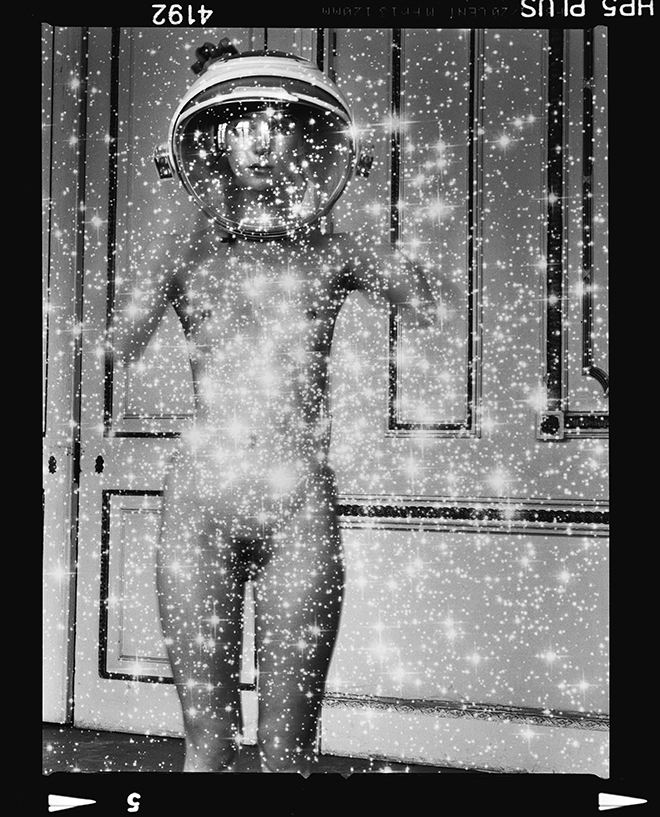
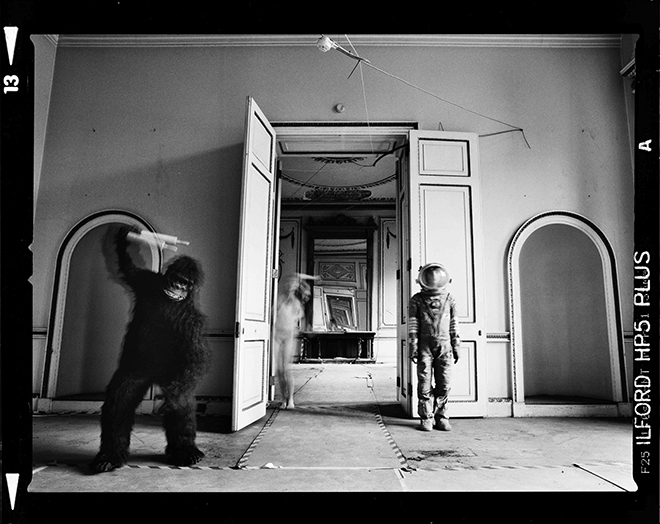
For the Kubrick show I wanted to recreate an odyssey but rather than sending the lone figure of the astronaut into space, I decided to send her to explore our past. The images were shot in the former site of the infamous In and Out Club on Piccadilly. I was interested in the juxtaposition between the astronaut, symbol of the future, symbol of Man’s power to surpass, and this totally decayed building of faded grandeur. The Astronaut, an iconic reference to exploration, the overcoming of nature, the constant attempt to push back the boundaries of our condition, here wanders, tiny and humbled by history and time, through the large, gilded and abandoned rooms. Both the building and the astronaut seem united in their solitude. However grand the quest, however beautiful the endeavor, we can’t escape time and the limits of our own humanity – loneliness, despair, short-sightedness, the need to be loved, sores, our temporality, itchiness, our physicality, our ailments, diseases etc.
Your work has a beautiful ability to be both introspective and yet outward looking at the same time – from ‘A Day At Home’ to the endless expanse of the universe – do you identify with one trait more than the other?
As we haven’t yet developed a way to experience that isn’t human or at least from a human perspective, it feels the world as we perceive it is only ever a mirror to our interiority. They seem to exist in and within each other. When I took the space images, I double exposed them with images of the galaxy and images of cells from our bodies. And it was amazing how similar looking they were. The macro and micro like mirrors. Both containing infinity.
Derelict, empty buildings have featured in your work on more than one occasion, what is it that they say to you? Are your surroundings important to you on a daily basis?
I love derelict buildings. The sense of adventure and discovery at finding them. The putting together of all the pieces and clues to build up a mental image or story of what happened in the space. Derelict buildings are like the architecture to a story. They contain past lives, dreams, loves, hurts all washed away by time. They are like memento moris.
Is there anything in particular reaction that you want people to have to your work?
It depends on the piece – if it’s a film a photograph, a script. But hopefully some kind of feeling. Of solitude, eeriness, a little window into a different world.
How do you feel about the future? Does it scare or inspire you? What are you working on next?
The future scares and inspires me. I’ve got a wee show coming up, ‘Ordinary Madness’ at Gazelli Art House, playing with the idea of our relationship to digitalisation, and am working on a new series of photography on the theme evolution and a feature film, which I am writing, and will be directing.
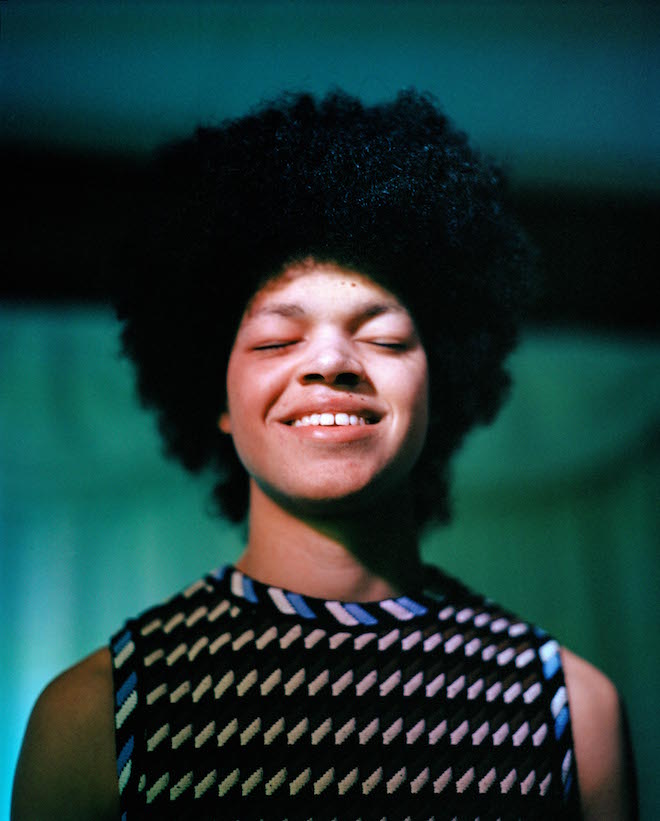
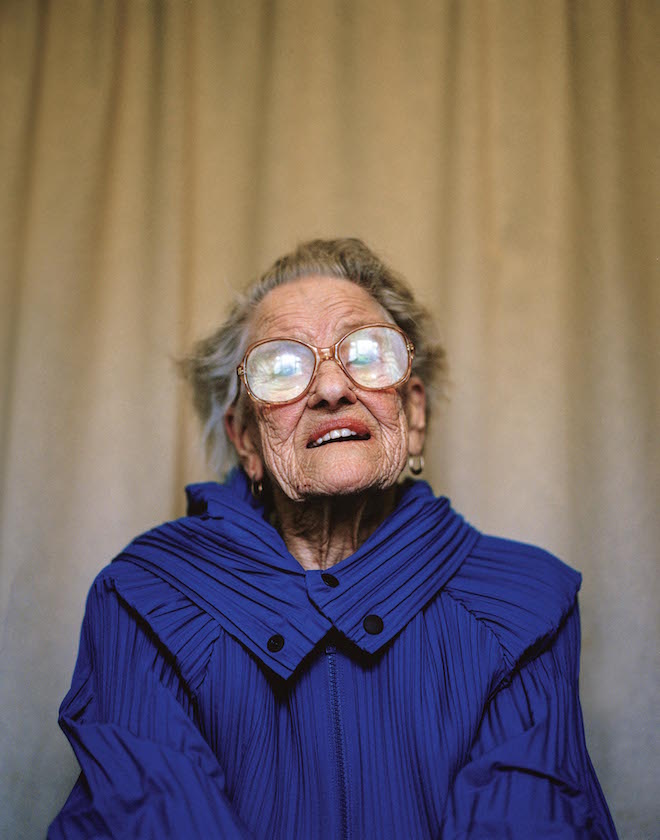
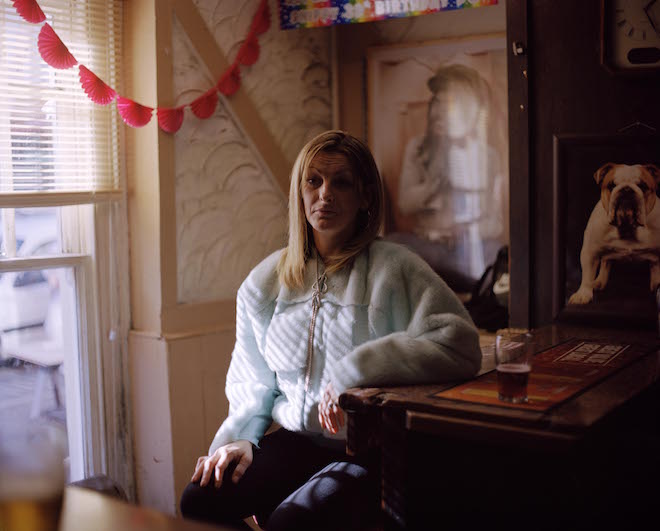
Tired of the small town he grew up in, Tom Johnson purchased a battered motorhome, picked up his camera, and travelled across the UK with a singular aim: to find and capture an off-kilter beauty in the downright banal.
His latest project, Merthyr Rising, took the London-based photographer to the ex-mining town in south Wales—a place that was once at the very forefront of the industrial revolution. Today tells a somewhat different story. The coal mines have been closed and a deep-rooted sense of heritage stripped away as the proudly working class town felt the fog of Tory austerity descend. As the hangover of Merthyr Tydfil’s past lingers Tom Johnson believes that it’s identity is immovable.
Part fashion shoot, part social study, the series thoughtfully brings together the two sides of Tom’s work which have increasingly begun to align with each other. Shot in collaboration with stylist Charlotte James, Johnson marries Merthyr’s industrial backdrop and working class heritage with high fashion. The series is a study of contrasts, that work together to debunk stereotypes associated with small towns. We find out more.
Tell us a bit about yourself and where you grew up?
I’m a photographer, my work sits somewhere between documentary, portraiture and fashion. I just love to photograph people. I grew up in the countryside outside of Oxford, in a village that no-one has heard of.
At what point did you become interested in photography?
When I was younger I realised I was really, really rubbish at drawing, painting and especially writing! However, I desperately wanted to find a way that I could visually express myself, so I bought a little digital camera and would photograph everything. I fell in love with the process and the immediacy, of being able to create something new almost instantaneously.
What’s the story behind Merthyr Rising?
Charlotte James, friend and fashion stylist, came to me with the idea of challenging the misconceptions of her hometown, Merthyr Tydfil. It’s a small town in South-West Wales which became subject to great economic struggles when the mining industry closed in the ’80s. We’d travel to Merthyr every week and stay at her grandparents house. Many of the people we photographed are Charlottes family and friends, others are people we cast in and around the town.
How would you describe Merthyr Tydfil?
It’s a really beautiful place in many ways. The people are really friendly, kind and generous. Often neighbours would come out of their house and offer us pots of tea or a sandwich. I hope my photographs convey this warmth, because I certainly felt it.
This project marries a working class community and high fashion, what were you trying say?
The message was less about creating a dramatic contrast between the community and fashion, it was more about us both connecting with the subjects in our chosen medium. I want the different genres I work with to blur into one, so the viewer has to question what it is they are looking at.
Out of the twenty portraits, is there an image that stands out for you?
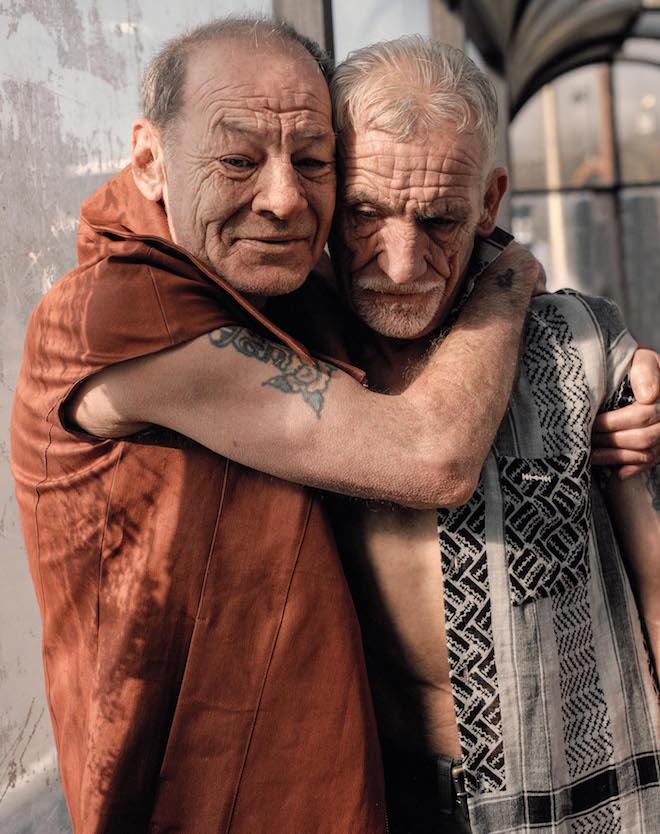
Yes. We were waiting around in the bus station and brothers Terry (an ex-miner) and Lee (a construction worker) had just got off a bus, we approached them and talked to them about the project. They were very keen to be involved and just whipped their tops off. Charlotte styled them in the middle of the station, as they started to show me their tattoos (whilst flexing their muscles). I loved the moment – I think this shot really captures a second of calm and intimacy.
Who are your inspirations?
I find a lot of inspiration from painters, cinema AND other photographers. I love Alec Soth’s approach and sensitivity to his subjects. I’m also big fan of British realist cinema.
Are you working on any projects currently?
I’m currently working on some of my own documentary projects, so I’m all over the place – this coming weekend I’m going to North Yorkshire. I’m also working constantly with Charlotte on projects in and around Wales.

![JWA_17-1_AD_PRESENTATION_161212[2]-4](https://www.twinfactory.co.uk/wp-content/uploads/2016/12/JWA_17-1_AD_PRESENTATION_1612122-4-e1482060524620.jpg)
![JWA_17-1_AD_PRESENTATION_161212[2]-3[2]](https://www.twinfactory.co.uk/wp-content/uploads/2016/12/JWA_17-1_AD_PRESENTATION_1612122-32-e1482060510536.jpg)
![JWA_17-1_AD_PRESENTATION_161212[2]-5](https://www.twinfactory.co.uk/wp-content/uploads/2016/12/JWA_17-1_AD_PRESENTATION_1612122-5-e1482060536515.jpg)








 PREVIOUS

 Twitter
 Tumblr
 YouTube
 Facebook
 Instagram
