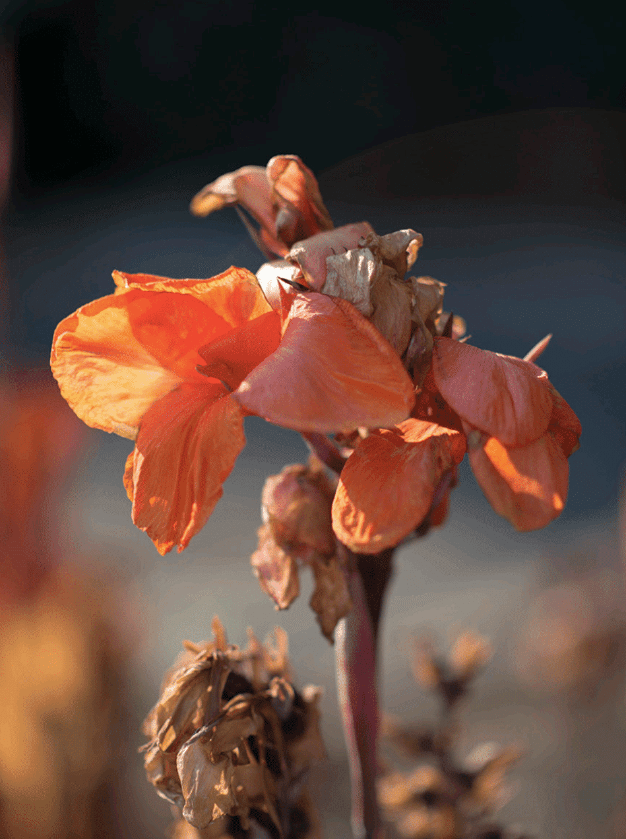
Three Cities, an exhibition of new photographs by Niall O’Brien
The Sid Motion Gallery in London celebrates the work of Irish photographer Niall O’Brien in a new exhibition that opens this week.
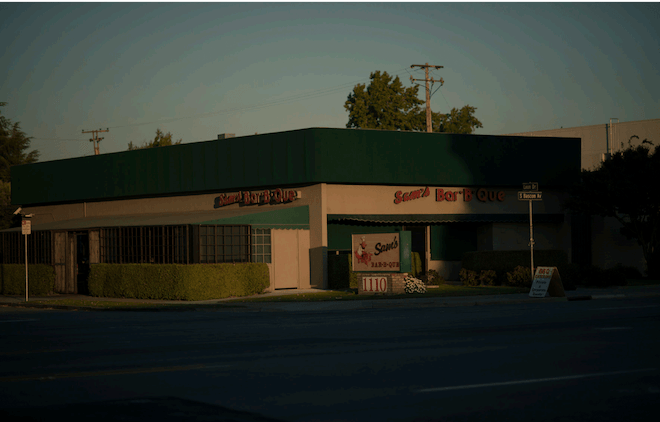
O’Brien spent six months documenting the area around Silicon Valley, observing the contradictions and contrasts within the landscape and social structure.
“This was one of the most expensive places to live in the US, and it was kind of bland.” Says O’Brien. “It was full of the most cutting edge technology, yet the aesthetic had been forgotten. Cars and highways were all you could hear. There was nothing beautiful about the place – except the mountains that surrounded it, and the nature that persevered to appear in the least expected places.”
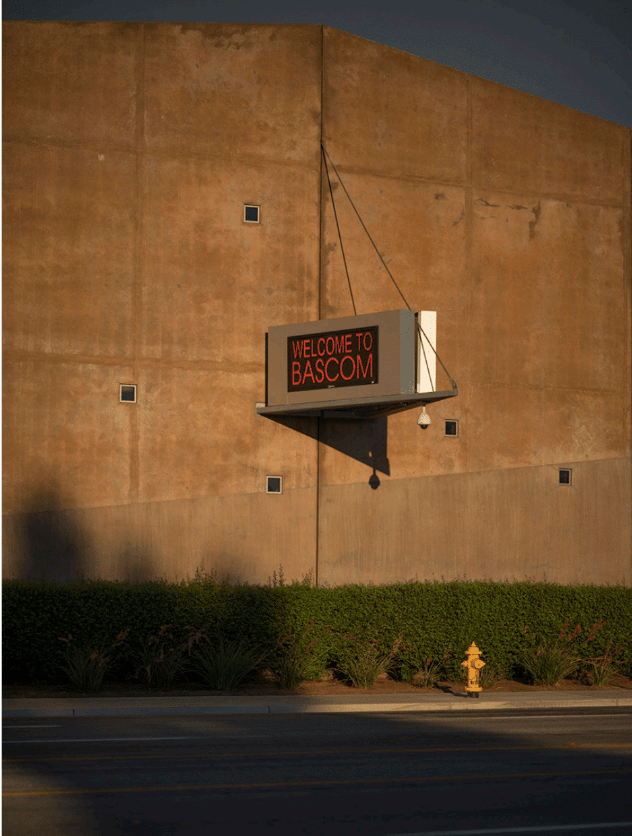
Niall O’Brien photograph from ‘Three Cities’ exhibition at Sid Motion Gallery
The photographer documented area around the seven-mile long Bascom Avenue every day, at the same time. The result is a atmospheric collection. The inequalities of wealth underscore the absurdity of the area, where these disparities exist side by side. Meanwhile the natural world offers another contrast. Niall O’Brien’s photographs ensure that perspective is given and that the hyper-intense tech world is rendered against the wider, ephemeral environment.
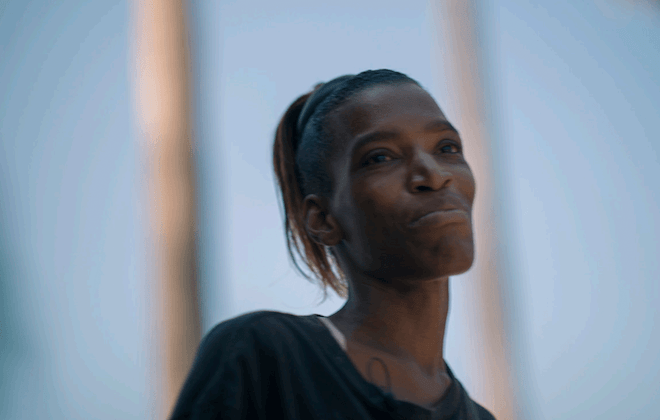
Niall O’Brien photograph from ‘Three Cities’ exhibition at Sid Motion Gallery
During his time in Bascom Avenue O’Brien bonded with two individuals, Blake and Dana. The exhibition portrays their daily lives, capturing their routines and rituals. The images are candid and intimate, conveying the friendship and trust between O’Brien and his subjects.
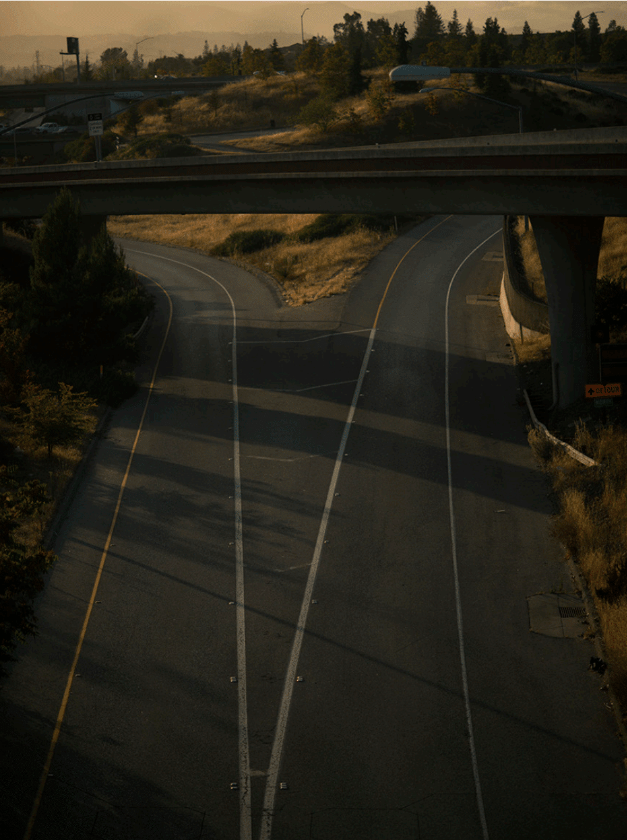
Niall O’Brien photograph from ‘Three Cities’ exhibition at Sid Motion Gallery
Together the portraits of people and the natural environment that they live vividly conjure the microcosms of this world. Don’t miss.
Niall O’Brien photograph from ‘Three Cities’ exhibition at Sid Motion Gallery
‘Three Cities’ An exhibition of new photographs by Niall O’Brien at Sid Motion Gallery in London April 26th – May 26th, 2018.
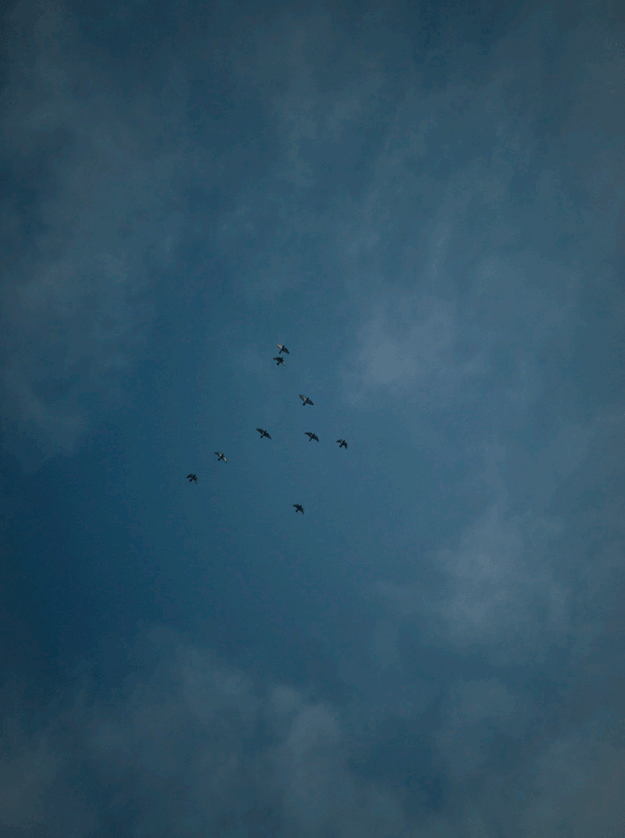
Niall O’Brien photograph from ‘Three Cities’ exhibition at Sid Motion Gallery
Tags: niall o'brien, photography Exhibition London
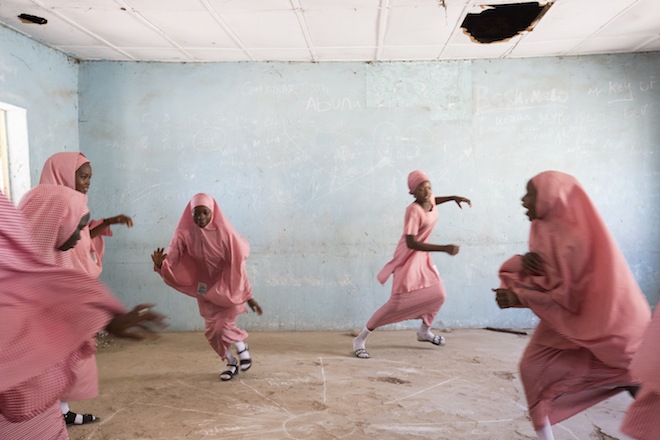
New African Photography III
Following the success of previous collaborations between Nataal and Red Hook Labs, Nataal curates an exhibition of some of most exciting image-makers documenting modern Africa in a new exhibition. New African Photography III opens at the Brooklyn space in May.
The new exhibition will showcase the work of six female artists: Fatoumata Diabaté (Mali), Rahima Gambo (Nigeria), Keyezua (Angola), Alice Mann (South Africa), Ronan McKenzie (UK) and Ruth Ossai (UK/Nigeria).
Together these works celebrate female identity and diversity, offering an empowered and positive vision. A sense of energy is conveyed through the celebration of movement and the use of powerful juxtapositions – both in terms of colour and of form.
The event also coincides with the launch of Nataal’s first print issue. The website and magazine work as a platform to champion creativity and culture in Africa. You can find out more here.
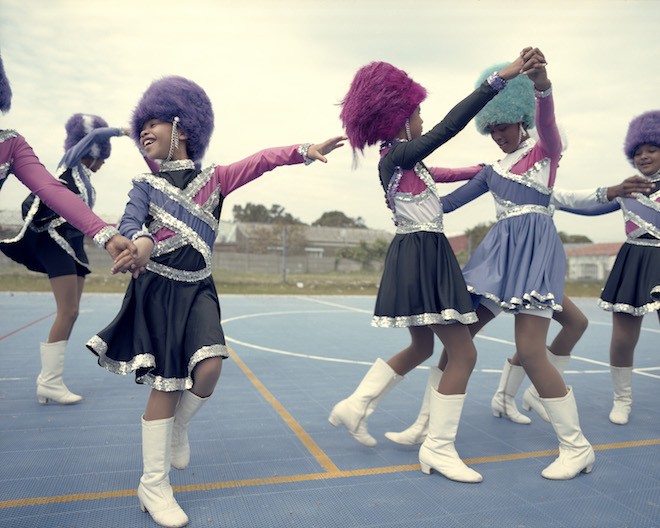
Alice Mann, Dr Van Der Ross Drummies, Delft, South Africa, 2017, from the series Drummies
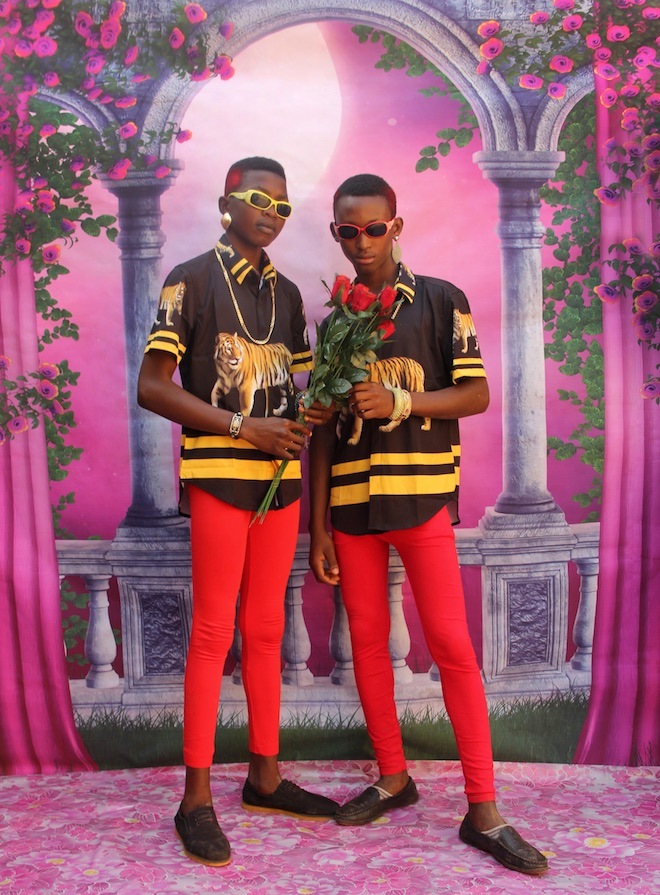
Ruth Ossai X Mowalao

Fatoumata Diabaté, Kara et ses oreilles, 2012, from the series L_homme en Animal
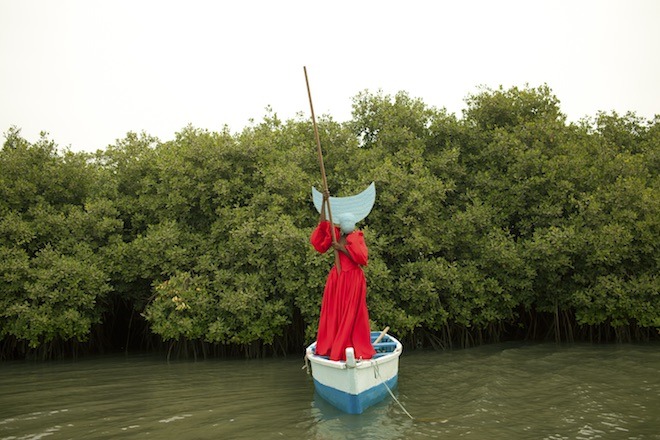
Sailing Back to Africa as a Dutch Woman, 2017, from the series Fortia
Nataal: New African Photography III, 4th – 13th May, Red Hook Labs, 133 Imlay St, Brooklyn, New York. Opening times: 10am-6pm daily.
Tags: Art, culture, diversity, Feminism, New African Photography III, photography, twin, Twin magazine
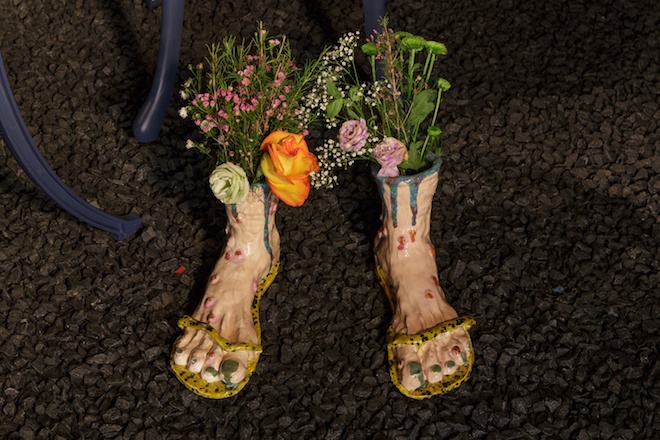
Lindsey Mendick, Perfectly Ripe
In her new exhibition artist Lindsey Mendick brings audiences a rich and atmospheric memory of a summer holiday that she took when she was 13 years old. Immersing audiences in a world that is at first exciting and new, though later threatening and dangerous, Mendick uses ceramics, sculpture, painting and audio recordings to conjure the rich experience of her holiday.
Even at the peak of her sunny and nostalgic narrative, a sense of unease and discomfort pervades the piece. This is emphasised by the dark background within the exhibition. Below, Lindsey Mendick shares an extract from the audio recording which plays throughout the exhibition.
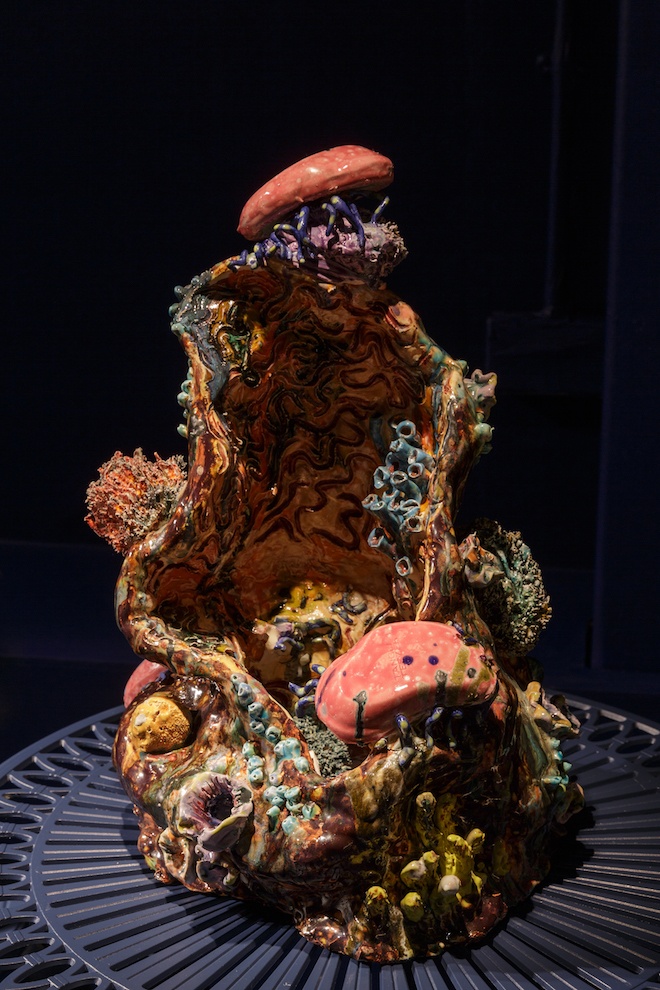
Lindsey Mendick, Tease Me Until I Lose Control (detail), 2018. Ceramic. Installation view of Perfectly Ripe, Zabludowicz Collection London. Courtesy the artist and Zabludowicz Collection. Photo: Tim Bowditch
I’d only ever been to France before. But this wasn’t France. We flew on a plane. And the man behind me was smoking cigarettes the whole way there. He was very fat and had two seats all for himself. The ashtray was in the armrest. You flip down one side of the metal and the dank smell of old fags rushes out. The ashy residue of successful flights. Your throat burns and your clothes stink. But no one complained.
It’s a proper hotel. It has three pools, a buffet and it has a discotheque. It has a discotheque.
Francoise has gone missing.
It was hot. So hot. I fall asleep on my Lilo on the beach. I wake up with salty lips and one hot cheek, a pool of saliva slipping across the PVC. There is shouting.
Francoise has been found and Joce and Viv are really cross. She had been flirting with a group of Local men. Vivian said she once saw Jesus behind the dustbins, so you can’t always trust what Vivian says. But Francoise had been looking at boys. And Francoise had been stealing your fags.
Your dad and sister tease you when you pull yourself up out the pool. They sing ‘Nutbush City Limits’, because no one told you at 13 that there was such a thing as too much pubic hair. This was evidently too much. Shamefully, you steal your dad’s razor that evening and shave it all off. For the rest of the holiday you itch insatiably.
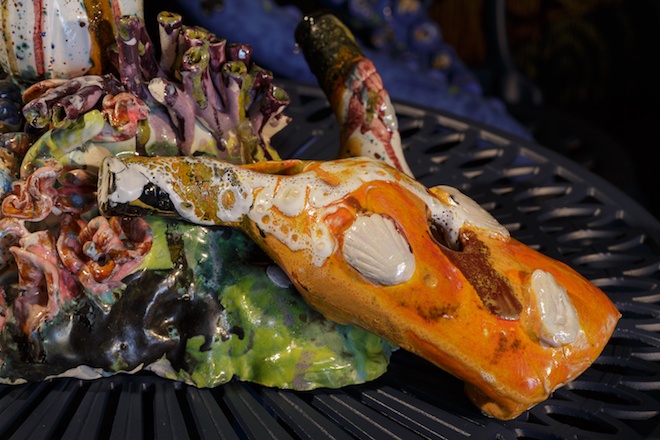
Lindsey Mendick, Touch Me In The Morning, And Last Thing At Night (detail), 2018. Ceramic. Installation view of Perfectly Ripe, Zabludowicz Collection London. Courtesy the artist and Zabludowicz Collection. Photo: Tim Bowditch.
Francoise comes down to dinner with Joce and Viv. She has no glasses on and her mum is telling her what all the foods at the buffet are because she can’t see. ‘Francoise did you lose your glasses’ ‘no she didn’t, we took them away so she couldn’t look at boys’ you watch Francoise tentatively slip foods into her mouth. Fish mixed with chicken mixed with an unknown dish that nobody at the table likes. It’s buffet roulette. You feel lucky your parents let you do what you want.
I’m allowed Malibu and diet cokes. They’re so delicious and I drink them with Fran and Nick as mozzies attack my legs. I never knew alcohol could taste this exotic. They smell like Hawaiian tropic and in the mornings I am never sure if I can smell the aftermath of the night before or the residue of sun cream on my skin.
I wear my Jane Norman boob tube dress because I now have big enough boobs to fill the tube. I had always hated my body. But here men like my body so I like my body. And my body gets me into the discotheque because no one realises I am 14 in two months. But I’m mature for my age. Everyone says it.
Zabludowicz Collection Invites: Lindsey Mendick, Perfectly Ripe, Zabludowicz Collection, London, 12 April – 3 June 2018
(Feature image credit:Lindsey Mendick, An Itch That Needs To Be Scratched, 2018. Ceramic and flowers. Installation view of Perfectly Ripe, Zabludowicz Collection London. Courtesy the artist and Zabludowicz Collection. Photo: Tim Bowditch).
Tags: Art, Feminism and art, Feminsim
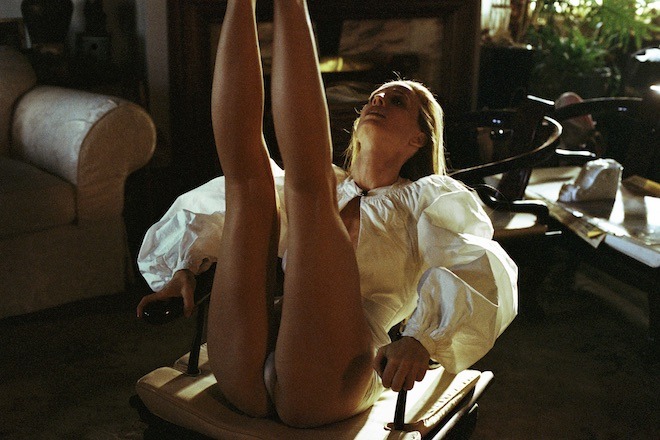
Posturing
Following the wildly successful exhibition last year, Holly Hay and Shonagh Marshall are releasing Posturing as a book this month.
The beautiful tome brings together 21 iconic image makers in contemporary fashion. These photographers explore, respond to and propose new ways of using the body as a tool in the way clothing is depicted. Viewers are invited to look beyond the clothes though, at the entire art of composition and structure of each photograph. The careful curation of images allows viewers to examine fashion photography in new ways. The book portrays the spectrum of the fashion canon, from hyper-sexualised to the hyper-abstracted body. It is a celebration of the new era of strangeness in fashion, and the photographers central to leading the way.
Read our interview with Shonagh Marshall about co-curating the exhibition with Twin contributor Holly Hay here.
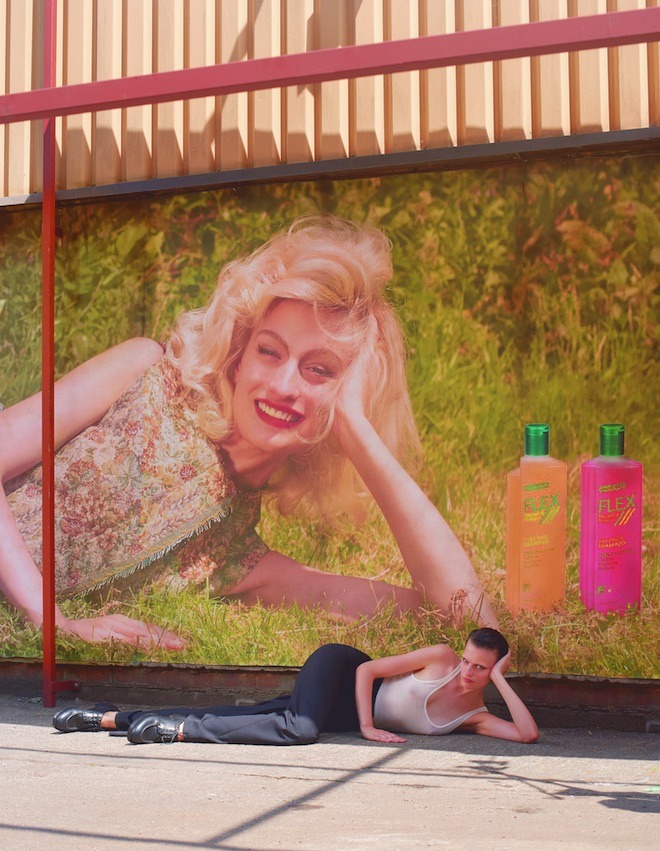
Johnny Dufort for AnOther Magazine, ‘Go Fish’ Autumn:Winter 2017
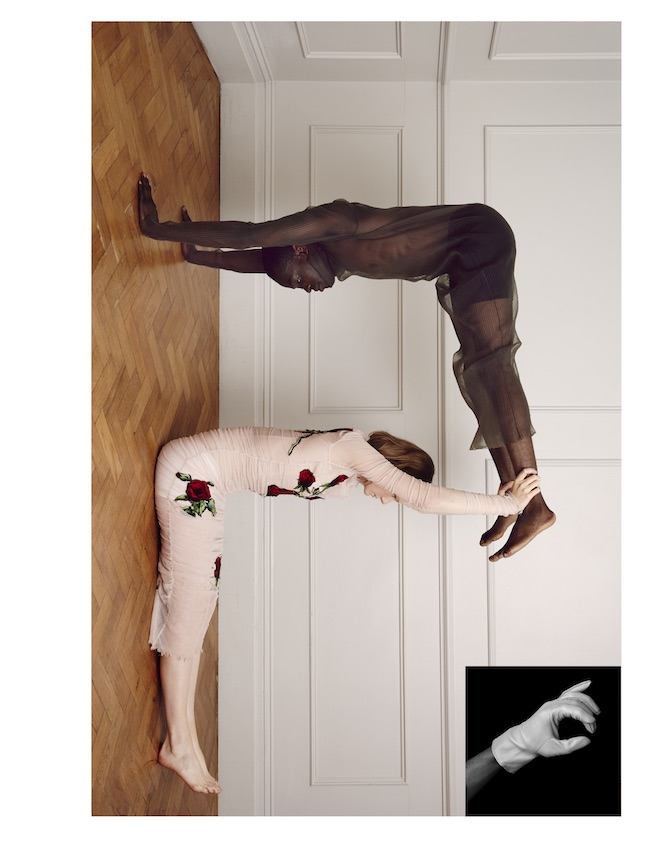
Charlie Engman for AnOther Magazine, ‘A Nod And A Glance A Gesture For One Word’ Autumn:Winter 2015
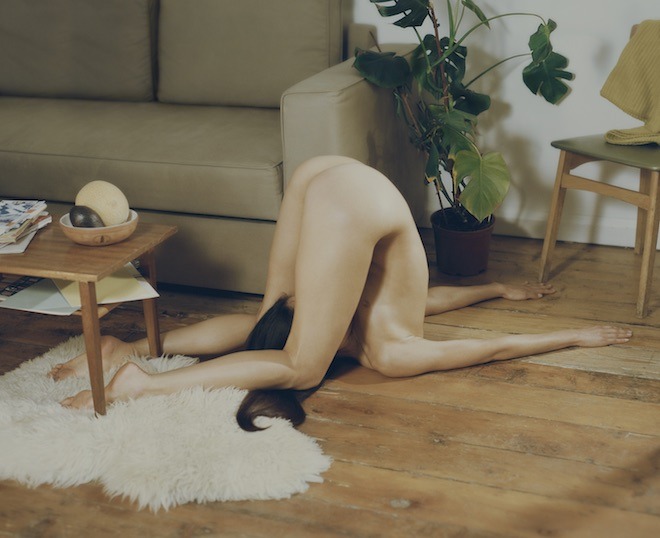
Lena C Emery for The Gentlewoman, ‘Practise’ Spring:Summer 2014
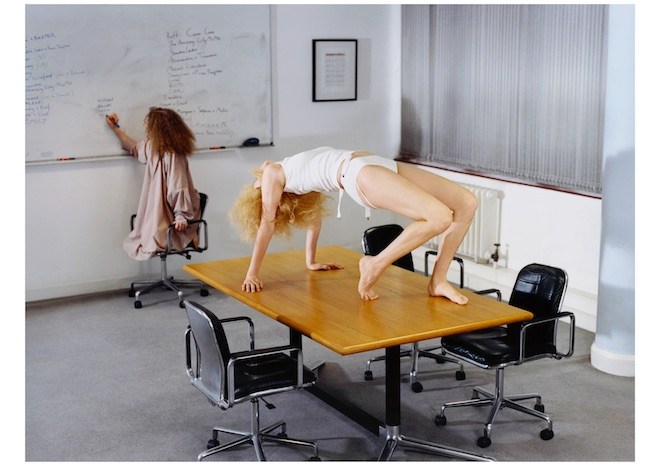
Pascal Gambarte for Marfa Journal, ‘Being Michael Rothstein’ March 2017
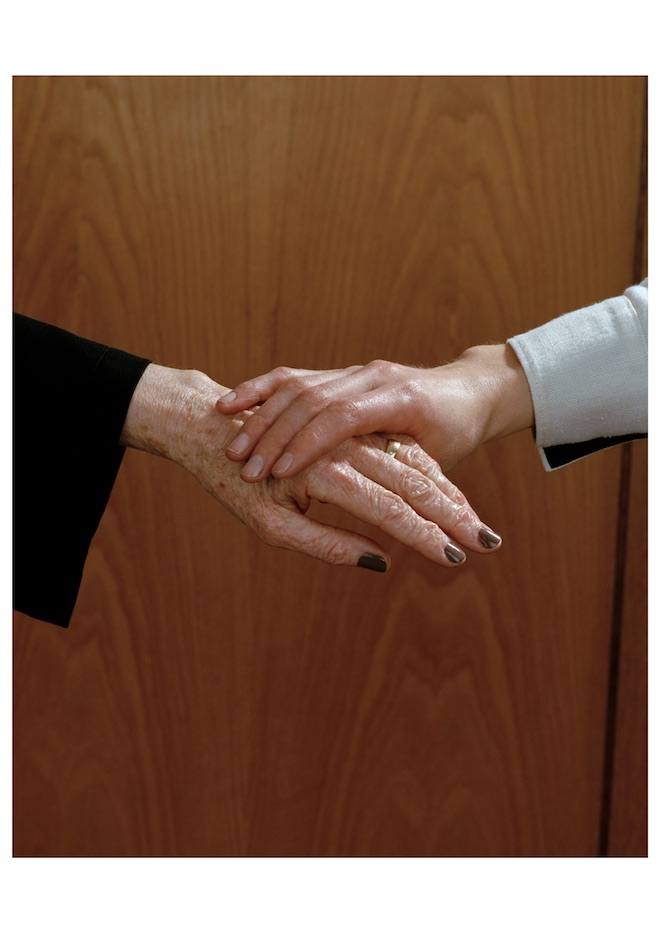
Reto Schmid for Under the Influence Magazine, ‘Relative Transparency’ Spring:Summer 2016
‘Posturing’ is available to buy via SPBH Editions from April 23rd 2018.
Tags: Fashion, fashion and feminism, Feminism, Holly Hay, photography, Shonagh Marshall, Twin magazine
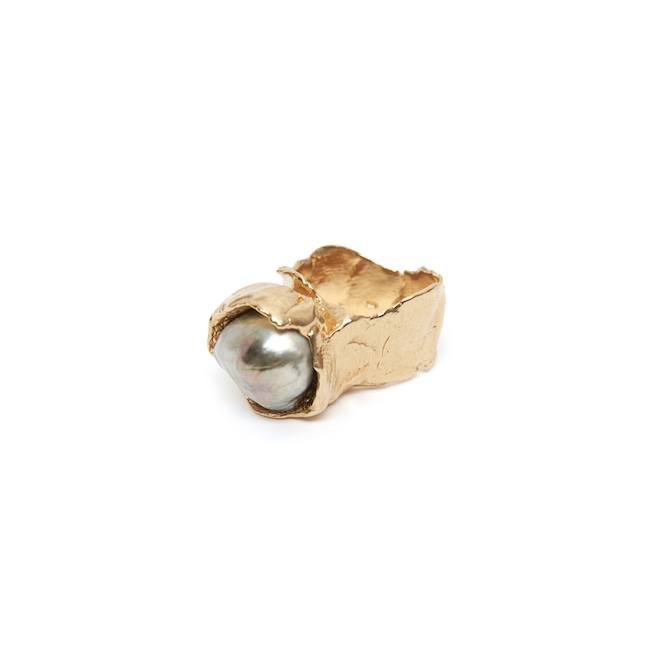
An interpretation of the real: Twin meets Alice Waese
New York-based designer Alice Waese offers textured, evocative design across jewellery, clothes and illustration. Her work is sensual and imaginative, imbuing those who wear or otherwise engage with her work with a sense of heightened or unexpected reality. Twin caught up with Alice to talk about her work and her creative process.
You work across a range of mediums. Where did you start?
I began with drawing as a kid, chalk, paint then pencil, then pen, then watercolour.
In terms of jewellery, what are the most challenging materials you’ve worked with?
Casting fine leaves, snake skin, leather with lots of undercuts, a round pinecone.
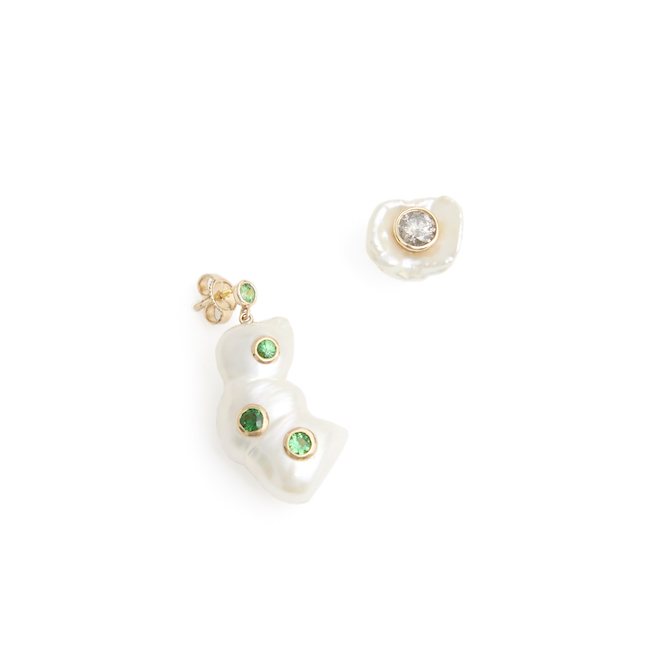
Which materials and / or stones do you find most interesting, why?
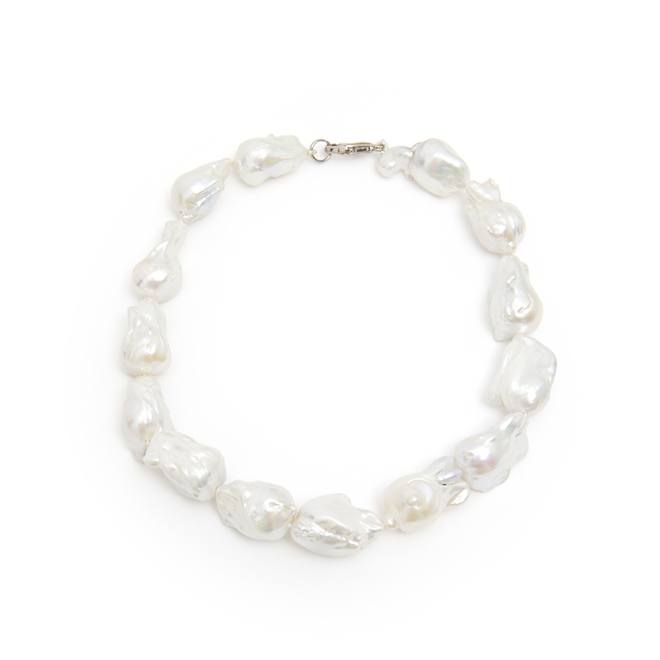
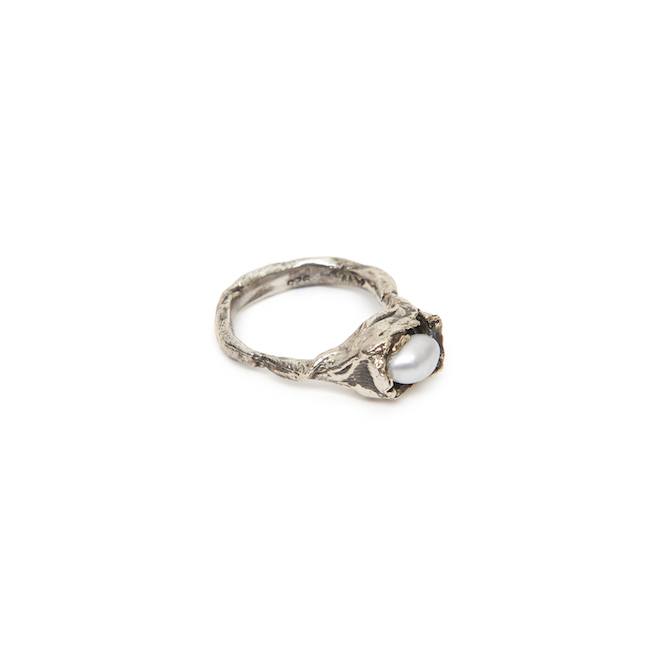
This season I am really interested in pearls because of how they form, The crustaceans coat an intrusion, something foreign, something parasitic enters the body and in an effort to protect themselves they coat it, creating something beautiful.
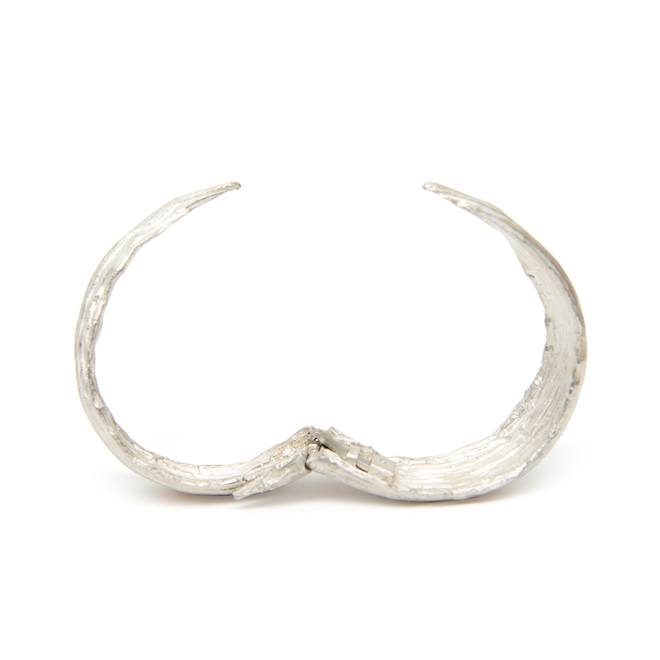
You often include small figures or body parts in your jewellery designs. Why did you decide to use these?
The figures and body parts relate to a series of drawings where I was really studying the body in relation to the non material world. the severed limbs related to a series of paintings where body parts were energetically connected to other parts with a thin red line of paint. I then sculpted them in wax and stung them on chain, it came naturally, tells a story and relates to the themes I was working with in my drawings at the time.
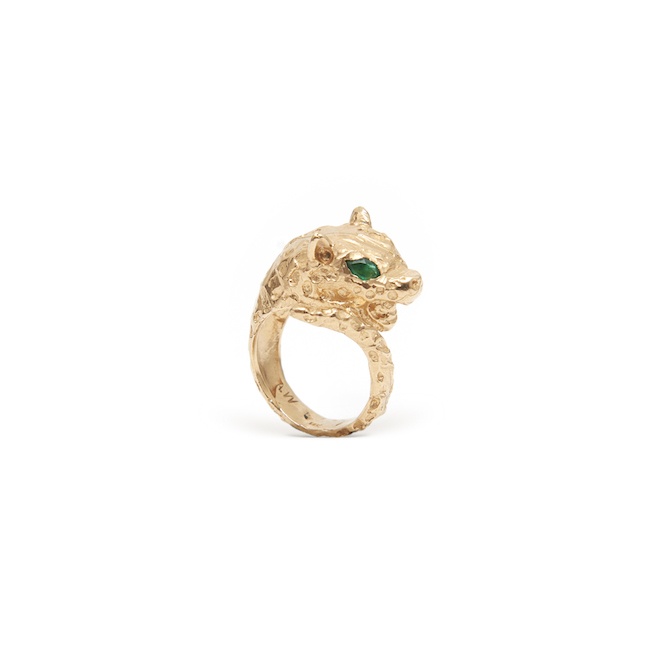
Why was it important to have a sense of texture and materiality in your work?
I think the textural component comes from a reflection of what I find visually interesting the world, it is less an importance or a decision, and more following an intuition and staying true to it. I think texture and imperfection translated into a precious metal that is usually smoothed to perfection creates an interesting juxtaposition.
How does your design approach differ between jewellery and clothes?
Its actually a very similar approach. Never a mood board or a singular inspiration, more an internal concept, a series of paintings, a texture, or a new process I am experimenting with, often the outcome of a mistake.
Did you find that it was easy to translate your aesthetic throughout the range of works?
I don’t find it difficult to speak through different mediums, being honest with my process and limitations and creativity makes it easy for the same voice to pass through.
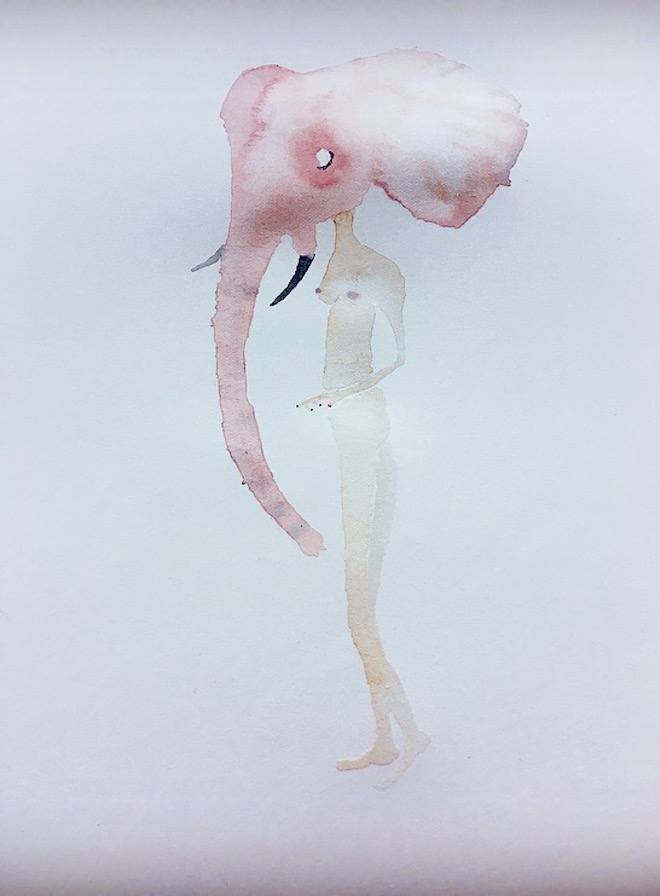
Watercolours have quite a different quality to the materials you use for clothes and jewellery. Why did you decide to work with watercolours for your illustrations?
I like the fluidity of watercolours, it allows me to make up the rules as I go along. The process is similar to how I work in jewellery and clothing.
When starting a project, how does your creative process begin?
Its not a set regime, always different, but usually a clear need to make something.
What would you say are the most powerful informants of your work?
Whatever mistake I just corrected or embraced usually informs the next piece of work.
Tags: Feminism, Twin interview, Twin meets Alice Waese
SUPERSTRUCTURES: The new architecture 1960-1990
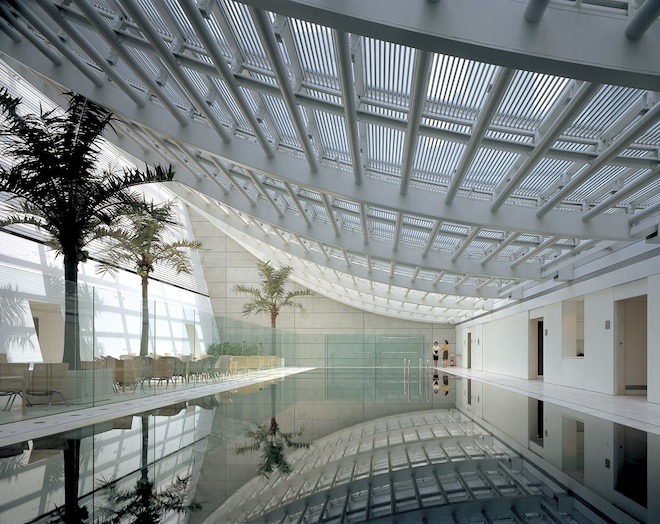
The phrase ‘high-tech’ makes most of us think about phones, computers or intelligent dishwashers. But it’s one that makes some architects gasp with indignation. This year the Sainsbury Centre celebrates its 40th anniversary with “Superstructures: The new architecture 1960–90”. An exhibition that picks apart the architectural movement behind the centre itself and examines the controversial label of ‘high-tech’ against the wider architectural canon.
‘High-tech’ architecture was championed by legendary British architects Norman Foster (the designer behind the Sainsbury Centre) and Richard Rogers (Centre Pompidou), amongst others. This group of architects found ideas of adaptable, expandable and mobile buildings exciting. They were interested in pragmatic solutions, and inspired by earlier architectural ideas and innovations like Buckminster Fuller’s geodesic domes and Jéan Proves demountable house.
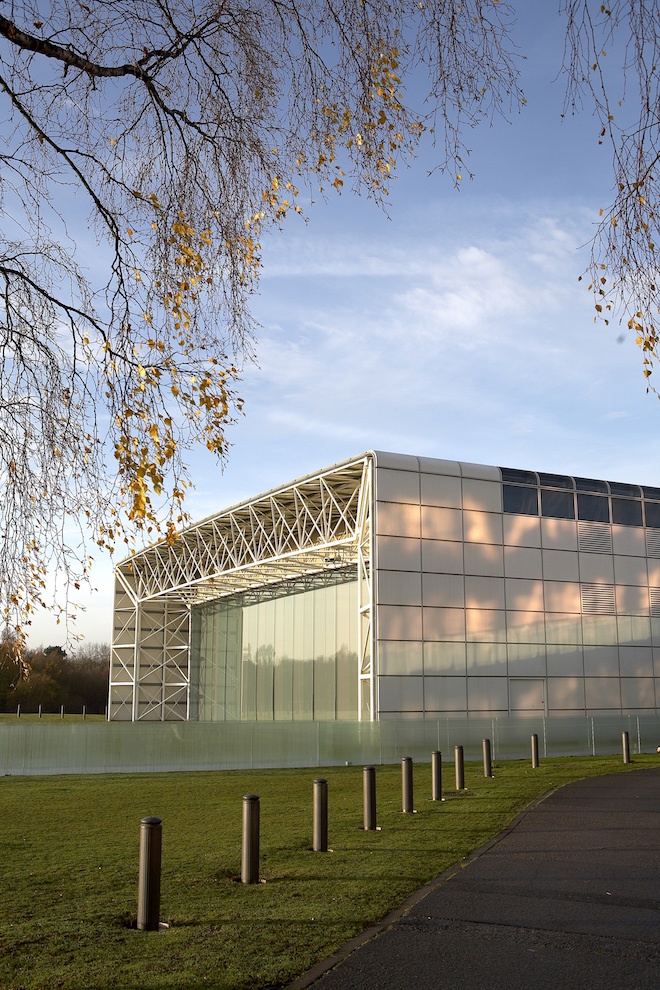
Current day Sainsbury Centre 2009 | Photo:© Sainsbury Centre, Pete Huggins
The high-tech style managed to blend post-war 60s utopian ideas with 19th, and early 20th century ideas about adapted architecture – a mixture that resulted in expressive and very characteristic buildings. It was a technologically focused – one might even say obsessed – development from modernism.
Talking via a malfunctioning, ironically un-high-tech Skype connection, Twin chatted with curators of the exhibition Jane Pavitt and Abraham Thomas. An era of optimistic architecture that looked to engineering and technology for new possibilities certainly seems resonant in 2018.
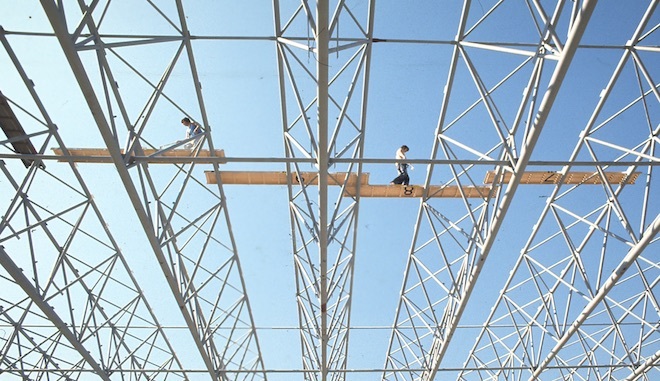
Sainsbury Centre construction 1975 – 1978 | Photo: © Foster + Partners, Alan Howard
Could you begin by telling me a little bit about the exhibition?
Jane Pavitt: The exhibition is about this crux in late modernism, the term often used in association with it is high-tech. We have taken a rather interesting positioning I suppose… In the exhibition we show the long history of association between technology, engineering and architecture. It starts with the the Sainsbury Centre, a superstructure that is, in a sense, an enormous shed. It’s complex, beautiful, precisely engineered, but still kind of like a shed.
We used this building to explain the high-tech approach to architecture. Then we look at ground structures like the Crystal Palace, and through to the modern experiments by Prouvé and Buckminster Fuller. Finally we look at the generation of architects that we are focused on. The first part of the exhibition tell the pre-history, then we get to high-tech it self.
Abraham Thomas: Should I go back to high-tech?
Jane: Yes, I see that she’s dying to hear about it.
Abraham: One of the things that we wrestled with as curators is using the phrase high-tech without actually using the phrase high-tech. The term is very divisive, a bit like postmodernism. Many of the practitioners of postmodernism hate that label. Jane curated the big postmodernism exhibition at the Victoria & Albert Museum so she has been through this.
Jane: [laughs] The toxic term.
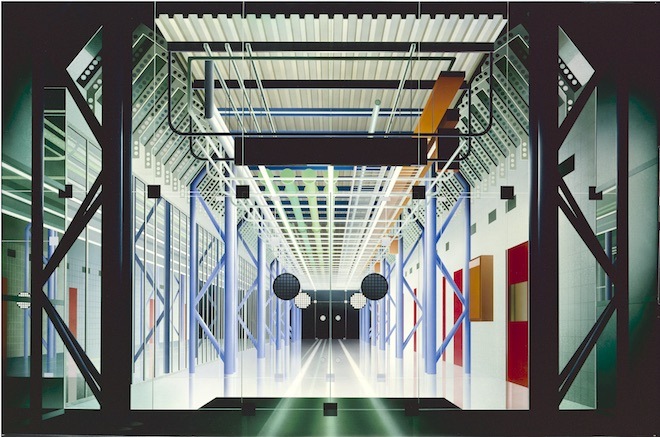
Ben Johnson, Inmos Central Spine, 1985Acrylic on canvas | © Ben Johnson
Abraham: We had to be conscious to the fact that many of these leading architects absolutely reject the term high-tech. It is reasonable to an extent, they reject it simply being a style. What we are trying to say is that it was more than a style. It was a sort of ethos, a movement. But it is a convenient term, it refers to the idea of influence of technology. In a way it is valid. But we also sort of pick it apart, don’t we?
Jane: We wanted to make it very clear that it’s certainly not a style label, although it’s often used like that. These buildings are stylistically very different. The architects reached different types of solutions, but they all share a set of principles. The Sainsbury Centre and the Pompidou Centre are totally different solutions to the same set of ideas and concerns. They respond to their sites, position and purpose in different ways. On the other hand, we felt as curators, and historians, that if there is a term that has some currency historically – it is a frequently used label in architectural history – then this is the right time to kind of, as Abraham says, pick it apart and attempt a much more nuanced understanding.
Do you think there is another term that could work better?
Jane: Architecture of advanced engineering is a good description. That’s what they are concerned with, testing the limits of certain kind of building methods. If you think of high-tech as a process, rather than a style, that’s quite a useful way of approaching it. I would say that it’s a type of technological modernism.
But people like labels, don’t they? Like art deco. Everybody has contested the meaning of art deco, but it is still a very powerful term. Postmodernism is a term that makes people angry [laughs] but it persists. Rather than abandon the label all together, we wanted to unpack and position it. These buildings share certain things about advanced engineering and precision engineering, but they can also be simple solutions.
To take an example: we have reconstructed a section of Michael and Patty Hopkins house in the exhibition. It is not high-tech in that sense. It is appropriate technology. They liked the idea of using pre-fabricated components and cost effective materials that could be assembled simply, cheaply, effectively with a powerful aesthetic.
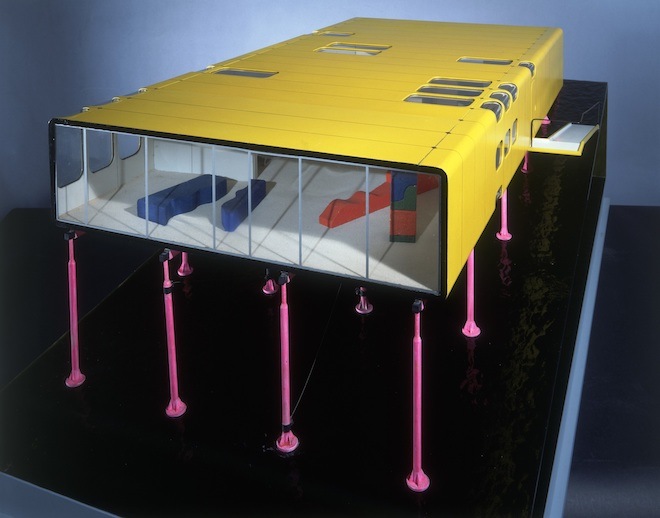
ZipUp HouseDetail colour presentation competition model, scale 1:20 | Photo: © Rogers Stirk Harbour + Partners, Eamonn O’Mahony
Abraham: There are a number of examples of high-tech buildings with ideas from other explicitly progressive technological contexts. For example, here at the Sainsbury Centre, Foster created a double skinned wall which allows a lot of the servicing and utilities to be packed away, resulting in this sleek exterior surface and an uninterrupted interior space well suited for an exhibition layout. That idea came from Foster’s observations of a passenger aircraft, were you have a sort of false elevated floor where all the services can be packed underneath.
Jane: There is this section in the exhibition where we have some of the original cladding from the Sainsbury Centre next to a part from a [Citroën] 2CV van. Those ribbed aluminium panels that slot into a car are remarkably like the panels that clad this building. The term high-tech is a bit forbidding, but these buildings have almost the childhood appeal of assembling models.
Abraham: Jane’s point immediately makes me think of this amazing object in the exhibition, a project called Tomigaya. It is a mixed use, residential and cultural space in Tokyo, and the model is made from Meccano. It’s a slightly lighthearted moment in the exhibition. The model of Tomigaya encapsulates a rare notion of simplicity, an understanding of how buildings are put together. It makes it very accessible.
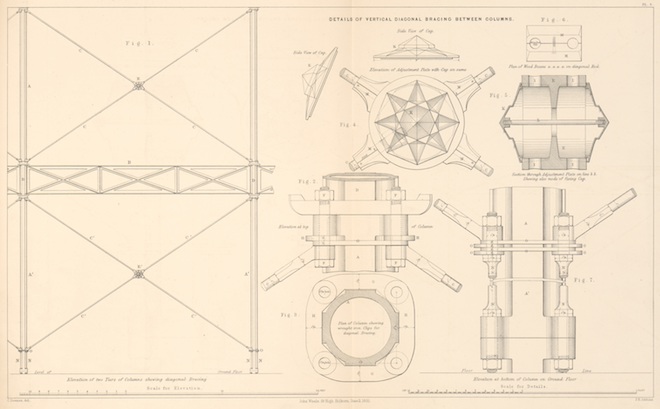
Crystal Palace details of bracing between columns | Photo: © Royal Commission for the Exhibition of 1851
What drew you to this project at first?
Jane: The Sainsbury is one of Britain’s best postwar buildings and it is extraordinarily powerful. It attracted a huge amount of controversy, admiration and criticism at the time it opened. It’s been fascinating to re-examine that. This group of architects are among the most prominent in the world and produce buildings in all typologies: office buildings, factory buildings, buildings for culture, domestic projects, airports, stations. In London, especially in transit, we all move through these buildings. You probably could encounter a Foster, Rogers, a Grimshaw building within any square mile of central London.
Abraham: I went through Heathrow today and the Rogers’ Terminal 5 has a lot of expressive engineering.
What would you say was most challenging with this exhibition? There are so many different aspects to it.
Abraham: I think it’s always tricky when you’re a temporary guardian of someone’s legacy. These are all very successful architects now, huge international names.

Jean Prouvé House, France | Photo: © Galerie Patrick Seguin and Rogers Stirk Harbour + Partners
And still alive!
Abraham: Yes they are all still alive! You’ve got to be really careful with how you present that legacy. That is always the case when you’re working with any contemporary artist or architect, but I think that is particularly the case here.
One of the hardest things was to ensure that we were sensitive to their legacies, but also created a new narrative. Since the mid 80s there have been shows on these key British architects – Jane and I didn’t want to do another “Best of British Architects” exhibition.
Jane: It’s not a biography show. Architecture exhibitions are difficult. A lot of visitors may not be familiar with reading architectural plans and some of the buildings will be unfamiliar to them. We wanted to explain how buildings worked and how they were made. We’ve just come back from installing two giant wooden carved prototypes of the steel joints from Waterloo International Station. They are about a meter or so high, but fantastic objects. Like pieces of sculpture.The process of construction is fascinating for people of all ages, we are just trying to emphasise that.
SUPERSTRUCTURES: The New Architecture 1960 – 1990 is on at The Sainsbury Centre for Visual Arts 24 March – 2 September 2018
Feature image credit: Century Tower, Japan | Photo: © Foster + Partners, Saturo Mishima
Tags: architecture, Design, interview, twin
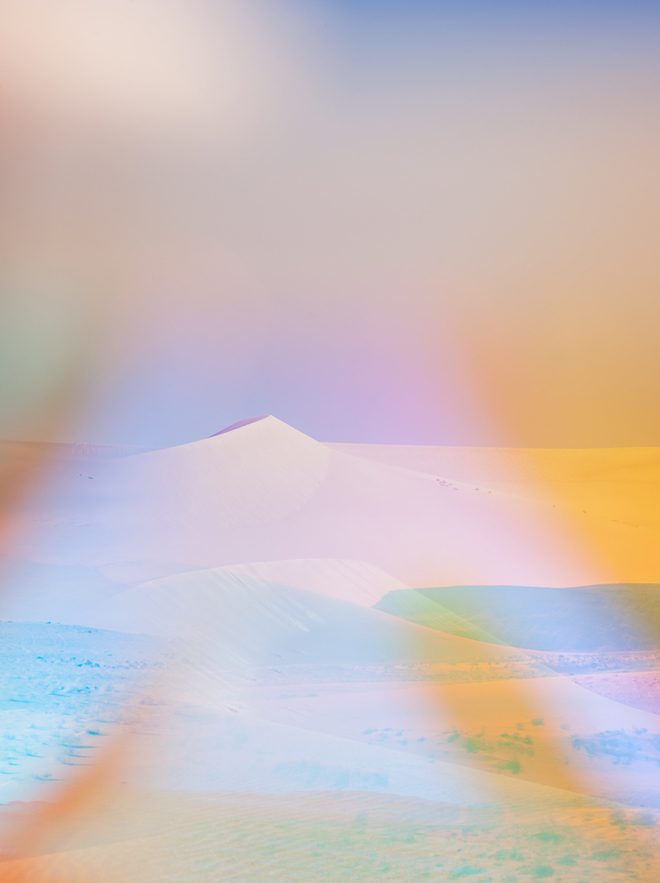
“Like I’m working with them, alongside them, in tandem.”: Twin meets Terri Loewenthal
Her vivid, evocative ‘in-camera collages’ of the Californian landscape will have you captive for hours. Twin meets photographer Terri Loewenthal to talk about immersing oneself in the environment, the power of nature and startling “little old ladies in women’s restrooms.”
How did the idea of California manifest itself in your consciousness when you were growing up?
Everything I knew about California I learned from Top Gun and Beverly Hills 90210. I spent my childhood in South Florida, on the other side of the continent. As a kid, I didn’t think California was that much different than where I grew up. We had beaches, sun, pastels and fancy cars too. I played a lot of volleyball. Same thing, different coast, right? I was a jock, competing at a national level. What seemed to matter most at the time was that the volleyball players coming out of California were better than the ones coming from anywhere else. And of course, the continual juvenile version of an east vs. west debate: which is better, Disney World or Disneyland?
I ended up in California not because of a childhood vision, but because of a rebirth later in life. Right after I graduated from college in Texas, my rental house burned down. I took the nominal insurance settlement, borrowed my mom’s manual 35mm camera, and hit the road. I traveled for over a year exploring, camping alone, aligning my schedule with the sun’s, and teaching myself to take pictures. That was when I fell in love with photography and California’s backcountry.
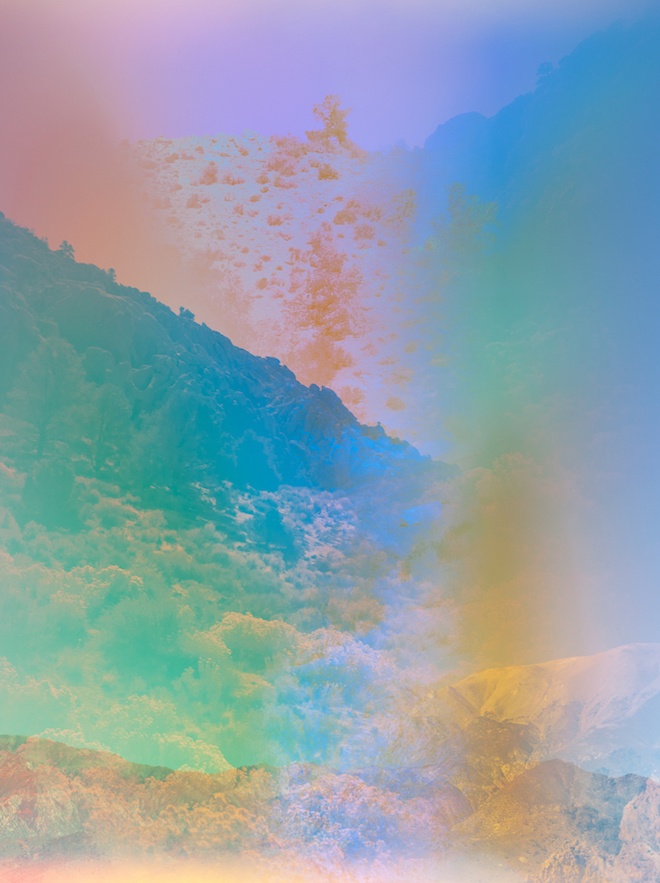
Terri Loewenthal, Psychscape 48 (Lookout Mountain, CA) 2017.
What about the landscape makes it compelling to photograph?
I chose to work with the eastern Sierra for this body of work. It’s not the California most people have in mind – it’s nothing like El Capitan in Yosemite, the ring of mountain peaks around Lake Tahoe, or the beaches in San Diego riddled with surfers. There’s something otherworldly about it. You see Mono Lake from above as you drive towards it, and it doesn’t even make sense. There are no rivers or streams flowing from it; being in the desert, it just evaporates. It’s away from everything, the end of the line.
When I’m thinking about where to shoot, it’s very much about using the shapes of the land as a paint brush — for example, how the curve of a dune when juxtaposed with another dune overlapping it creates a sloping line, a single gesture formed by the contours of the land. The eastern Sierra expanse is ripe with geometry, all these granite building blocks, which I use in my work. With a lack of iconic shapes like pines and sequoias, I’m able to freely use the landscape as raw material instead of subject.
Also, photographing remote landscapes means camping. I have a deep need to sleep on the land, to skip some showers. I love to lose the safety of manicured city life.
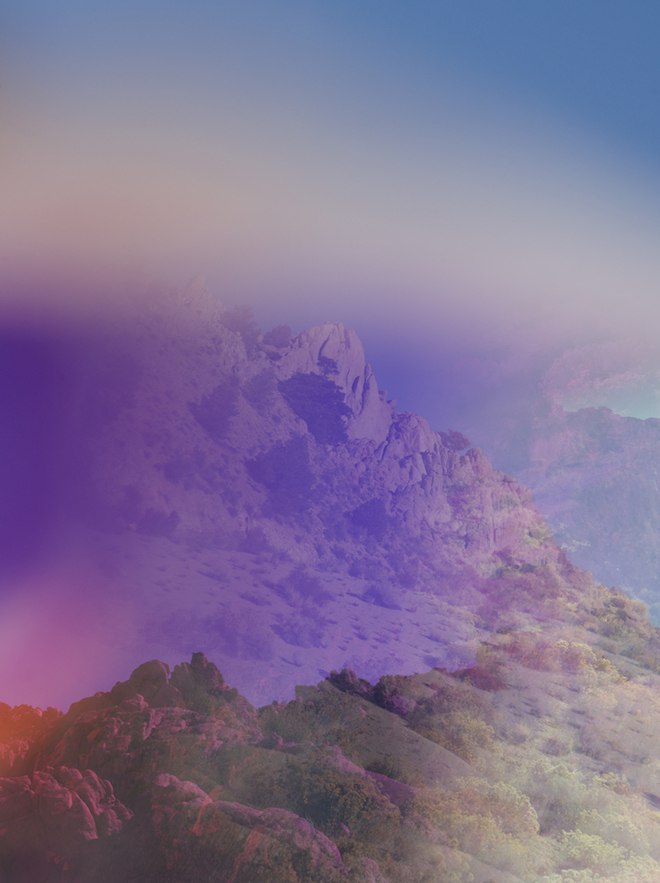
Terri Loewenthal, Psychscape 73 (Downs, Mount, CA) 2017
How much did you choose to engage with the predominantly male canon of Californian photography when conceiving this project?
When I had the idea for these images, it was purely aesthetically driven, at least in my conscious mind. I’m extending an invitation to step inside of these imaginary places, to have a subjective experience. Our perception of the natural world isn’t gendered. I don’t think of the conceptual framework of Psychscapes as relating to gender, however there are a number of gender norms I don’t buy into, and that offers a certain freedom necessary for creating this work. I love camping. I love being dirty. I love uncontrolled adventure. I might be less afraid to venture solo into un-manicured territory because I’m taller than most men – I can’t tell you how many times I’ve startled little old ladies in women’s restrooms!
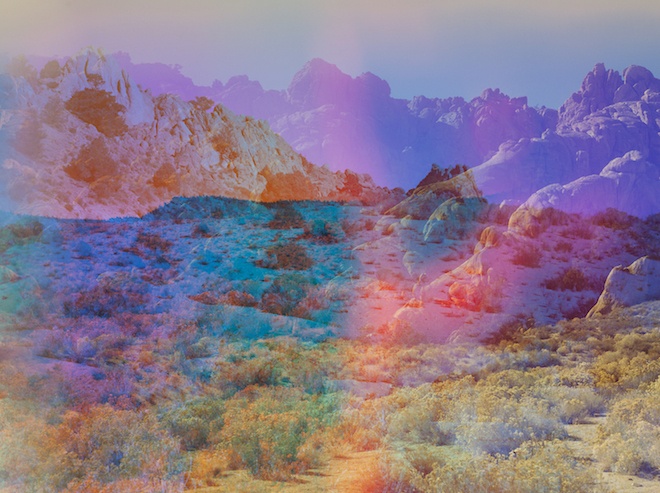
Terri Loewenthal, Psychscape 18 (Banner Ridge, CA) 2017
Do you feel a tension between the wild as a free space and the idea of capturing it through photography?
I’m currently reading a book called The Ohlone Way about the indigenous people of the Bay Area. It’s a fantastic account of the abundant wilderness and wildlife here before white people “headed west.” The sky was so filled with birds that, looking up, you were more likely to see one than not. I often wonder if my life were as deeply enmeshed with the natural world, if I’d be drawn to make landscape images. My desire is to commune with my subject. Looking through the lens, I slow down and consider subtle nuances. Sometimes it’s shape, or correlation of shapes, sometimes it’s color, sometimes it’s a character trait that I didn’t notice before the camera was in my hand. Mine is a sensitive approach to photography. It’s always been an attempt to process my surroundings more deeply. What I mean to do is appreciate. If I were living off the land, I wouldn’t need to venture away from the distractions of city life in order to touch the dirt. I wouldn’t seek out the grounding feeling that immersion in nature offers. But here I am, surrounded by pavement and electronics, and I do need to visit those spaces for refuge. I am driven to make something out of the feeling of re-finding myself when I’m there.
Was there anything about the landscape that surprised you when you were working in it?
In America, when you drive through the mountains, there are often signs urging you to pull over in the most picturesque places, signs that say “Overlook” or “Scenic View.” To my surprise, these vistas don’t work. Everything is at infinite focal distance, and it feels flat. I am able to create more when I’m nestled in a dynamic environment. If I’m on a trail, say, along the side of a canyon, I’m able to utilize the huge mountain face that is reachable with one hand, and the majestic mountain ranges in the distance. Another surprise is that the horizon line, something I’ve loved photographing all of my life, proves to be a challenge with these compositions. What isn’t surprising in the least is that I’m happy to be limited to the 360 degrees surrounding me as I’m making the collage. Limitations are built into my process, and that’s a relief.
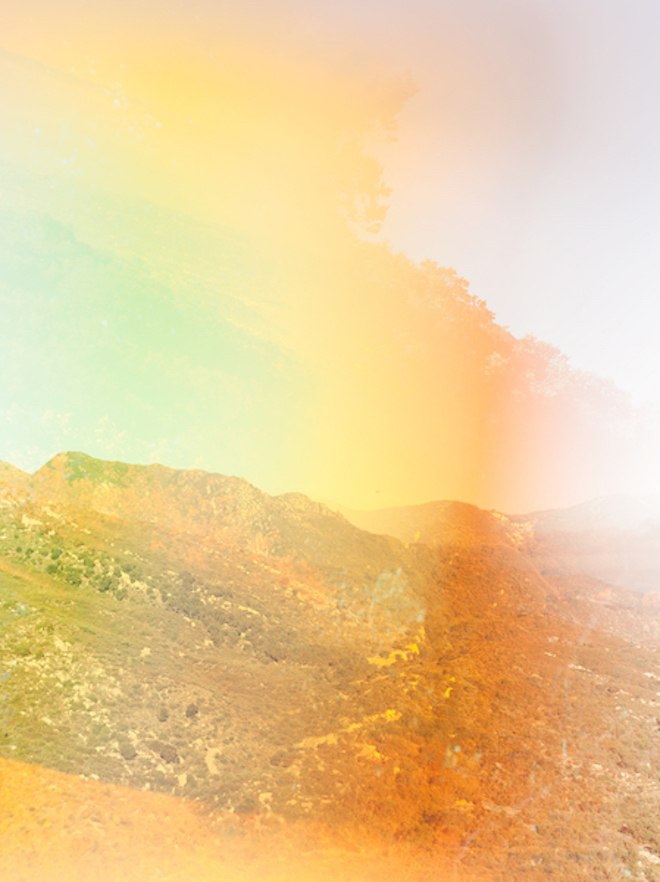
Terri Loewenthal Psychscape 26 (Rock Garden, CA) 2017
Can you talk about your compositional approach and process?
Each image is a single exposure. All of the layering and colour shifting happens in-camera. I like to think of these images as in-camera collages. There are a number of aspects I tweak as I’m compositing: the position, saturation and palette of each layer, along with all the traditional photographic controls like focus and shutter speed. I can make an environment feel soft or hard, depending on how muted or bright it is. Placing different colour washes next to each other, then saturating them just so, is often the final piece that makes an image sing – like sprinkling flake salt on top of your meal. I just experiment until I strike something that sparks the rush. Anyone who’s ever made anything knows about the rush. It doesn’t always happen, but when it does, I no longer question what I’m doing, or why I’m doing it – it’s just absolutely meant to be.
Did you feel that your relationship with the landscape changed as you were creating the images?
Absolutely. Since I’m working to distort reality, and it’s all happening in real-time. I don’t feel like I’m looking at the mountains as-they-are anyway. They immediately morph into something new and I feel like I’m working with them, alongside them, in tandem. Not only have Psychscapes changed my relationship to the landscape I’m actively working with, they’ve changed my relationship to every wild place I’ve yet to see. I can barely take a hike now without trying to envision it in the context of a Psychscape, even if I don’t have a camera in my hand.
Shooting these images involves contortions, octopus arms, propping things up with my knees. I dive deep into the unknown. It’s a reverie where I feel like I’m falling through times and places. I experiment until I stop questioning my experiments, until I find a composition that feels like another landscape altogether – a place I want to be. When I resurface, I find myself twisted into the least comfortable position attainable, a crick in my neck and knotted-up shoulders. My yoga teacher would be horrified. There’s always a “come to” moment where I finally open both eyes and think briefly, “whoa, where am I?”
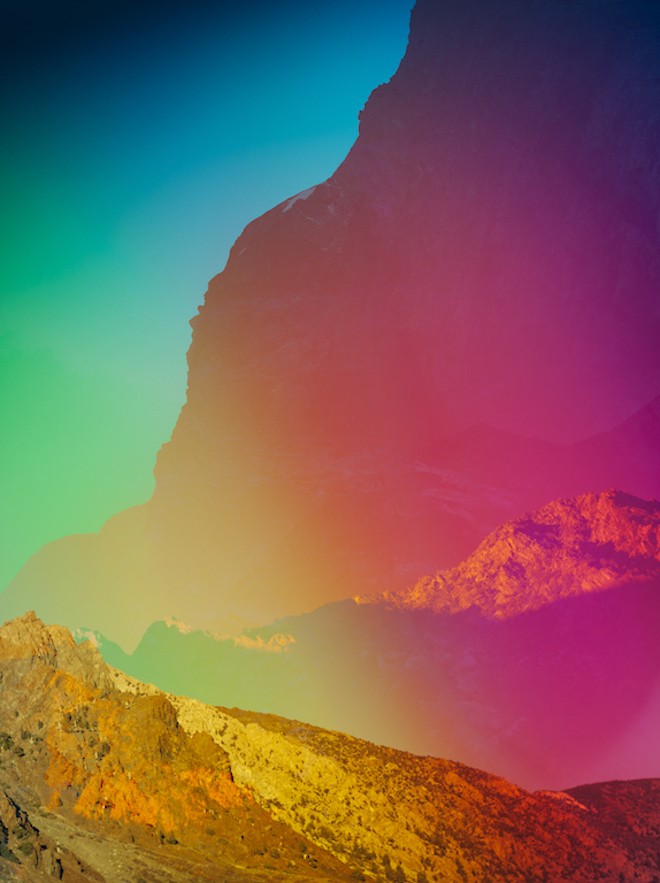
Terri Loewenthal Psychscape 41 (Lundy Canyon, CA) 2017
Aside from the natural surroundings, did you seek inspiration anywhere else when preparing for the project?
Color plays a huge role in my drive to create these images, and paintings are where I find the most unexpected palettes. I’m surrounded by fantastic painters in my immediate community. My dear friends Joe Ferriso and Alexander Kori Girard come to mind. They both have a knack for using odd colors that when used solo, might not work; but they add other colors, and then there’s a relationship between the colors that challenges what I thought of the colors in the first place. I have an incredible painting of Joe’s in my living room where he started with rejected house paint from the hardware store, and built from there. It’s my reminder that nothing exists in a vacuum, that the correlation between two things makes a third thing. I was a touring musician for the first ten or so years of my photographic career and I draw a lot from that experience too. Attention to rhythm, composing layers of color/sound washes, and seeking collaboration with my surroundings are all instincts honed by performing pop music. Inspiration, as it goes, tends to be an ongoing concoction of every single moment of your life.
Are there other landscapes that you’re interested in approaching in the same way?
I had the idea for these images years ago, but I’ve only recently figured out how to pull them off. California is a natural starting place. Not only is this the place where I fell in love with photography, it’s the place where I’ve found my people – people who care more about creativity, social justice, and community building than paying homage to the crumbling paradigms of what we “should” do with our lives. In California, I feel encouraged to explore ideas that don’t spring from what I’ve been taught or shown, to trust my inner rebel. Hopefully my discovery will open the door to all sorts of adventures. At the moment, I’m curious about working in a tropical place, mainly because an expanse is harder to come by. Jungles are tangled, the shapes less obvious due to the uniformity of color and the dense layers of plants growing on top of one another. I wonder if Psychscapes would work in that context. I wonder if I’d be able to make images that would offer a similar sense of otherworldliness. Maybe jungle Psychscapes would feel like you’re nested inside the pot of gold at the end of the rainbow. And maybe that’s not so bad.
TERRI LOEWENTHAL: Psychscapes is on at CULT in San Francisco until April 21st.
Tags: Feminism, feminism photography, interview, twin

Home Strike: resisting the feminisation of domesticity
Alexandra Kokoli and Basia Sliwinska guest curate the new exhibition Home Strike. In the new show the pair bring together the work of four women artists — CANAN, Paula Chambers, Malgorzata Markiewicz, Su Richardson — to explore domesticity through an activist lens. The artists probe and refute the idea that domesticity and femininity are intertwined.
Each artist radically reimagines the domestic space as a battleground. It is territory to be taken and looked at afresh. Paula Chambers repurposes everyday kitchen furniture into a fort or barricade, rejecting the wholesome connotations of stools and ironing boards, laying bare the repression and violence which they can also represent.
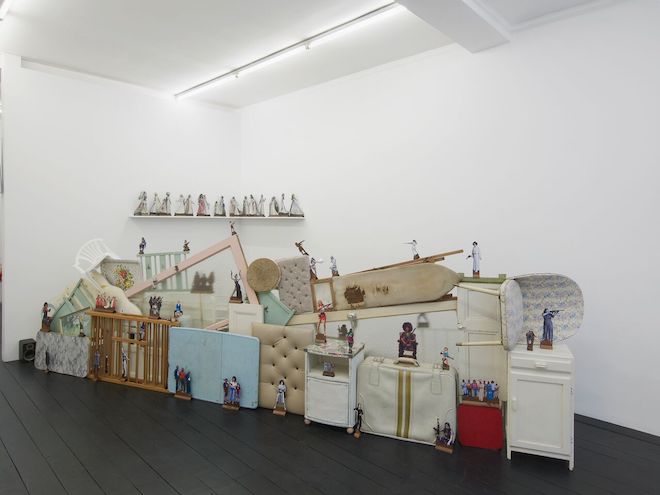
Installation view, Paula Chambers. Photo: Andy Keate, courtesy L’etrangere
Małgorzata Markiewicz work addresses the family home. She interrogates the idea of women within the domestic sphere, examining motherhood and the idea of entertaining in the home.
Su Richardson contemplates themes of domesticity and motherhood through knitted and crocheted pieces of family scenes. In pieces such as Burnt Breakfast the idea of tarnished or ruined food is contrasted with intricate, delicate technique. Richardson also presents a new series of work made especially for the Home Strike exhibition. Here, knitted breasts are both sexualised and reduced to emblems of motherhood.
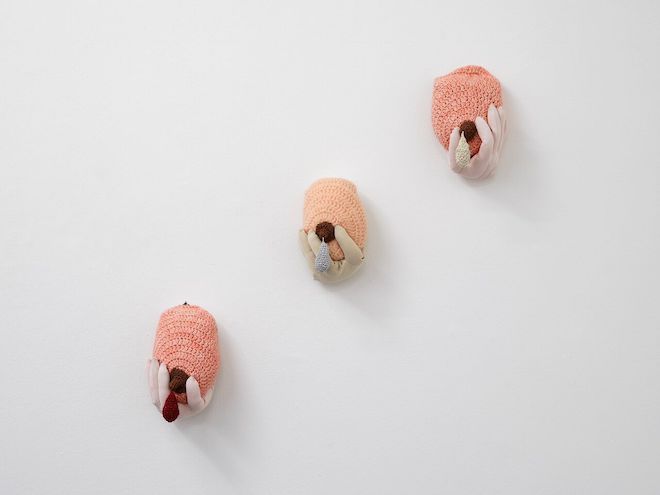
Installation view, Su Richardson. Photo: Andy Keate, courtesy L’etrangere
In her video Fountain (2000), Istanbul-based artist and activist CANAN records the sounds of her lactating breasts. The film challenges audiences to radically reevaluate the way in which a women’s body is perceived. To forgo sexualised connotations that have been promoted in art and the wider cultural and political sphere, and to value their functionality and normality.
In all then, Home Strike offers a powerful and invigorating call to action: to engage with, and to challenge, existing notions of domesticity and femininity.
Home Strike is at L’étrangere in London until April 21st 2018.
Featured image: CANAN, Çeşme / Fountain (video still), 2000 © CANAN, courtesy the artist
Tags: Feminism, Feminist art, feminist exhibition london
Artistic collaborations from London’s next generation of creatives
Fashion and Fine Art are as intertwined as any two mediums can be, and so on the surface a project that brings together five artist and five designers doesn’t seem so radical. But not every designer is Raf Simons, able to access and afford the works of Sterling Ruby for his Dior collections, or Gianni Versace, making Warhol’s iconic work part of Versace’s iconic image without fear of being sued. A titan of one industry working with a powerhouse of another often produces incredible results, but it rarely exposes anyone to anything new.
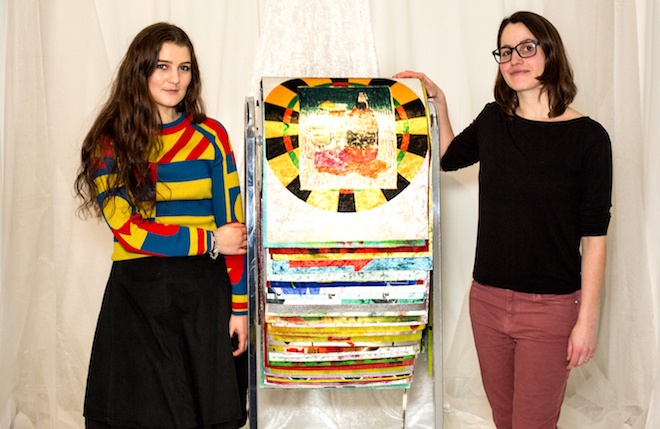
The reality is that producing a collection or a piece of work takes time and money, and most emerging designers and artists are short on both. Encountering the work of someone new and having the infrastructure to collaborate is a privilege, and it is a privilege that the BFC Fashion Arts Foundations aim to extend to more makers. Now in its second year, the FAF’s Fashion arts Commissions scheme sees the British Fashion Council and the Royal Academy Schools pair NEWGEN designers with recent graduates of the RA Schools. Each pair is given a budget and mentoring, and a year to produce work to be exhibited and sold at Christie’s.
As you might imagine some pairs clicked immediately, finding a symbiosis between their practice that made them easy and natural collaborators – Liam Hodges and Nicky Carvell got on so well that they used part of their funding to take a research trip to LA together. For others the clash of influence, interest and expectation might have made the creative process a little more torturous, but this kind of friction is sometimes needed to provoke new ideas and ways of working. Eliza Bonham Carter, Head of the Royal Academy Schools, puts it best: ‘The value of this process lies not only in these bold, surprising and intriguing works of art, but also in the process by which they are achieved, which will inform the practice of each participant long into the future’.
In an era where arts funding is on its knees, and the government continues to cull art from school curriculums, it’s heartening to see organisations like the Fashion Arts Foundation are still around. All proceeds from the sale at Christie’s will go back in to the Foundation, to continue funding future cycles of collaboration. Unsurprisingly the final works are as strong and diverse as the participants. Encountering each other’s different mediums, approaches and frames of reference has produced a show that is a testament to the aims of the project – there is something new here. Across the hall from the more stiff traditional pieces that are the bread and butter of a house like Christie’s, the viewer suddenly encounters is a looming metal parasol, ominously askew and slick with fabric; distorted metal sculptures that feel like collages in motion; a carpet swatch rolodex of endlessly pleasing textures printed over with sinister undertones; a room of balance and tension shadowed by projection, and a series of playful, Zeuss-like structures that are as elegant as they are unusual.
Hear about each pair’s pleasingly divergent inspiration below:
LIAM HODGES & NICKY CARVELL
The ideas behind our work – industrialism, decay and rejuvenation sparked instantly on our first meeting. A shared search / destroy / rebuild attitude meant the work had to be uncompromisingly tough yet hopeful. A road trip to Los Angeles and to salvaged sites ‘Slab City’ and ‘Salvation Mountain’ were essential to instigate our shared visions. Process wise, Liam immediately wanted to set everything on fire. The nearest we came to this was welding scrap metal with sheet steel. The end results are robust sculptures made with the American ‘can do’ attitude brought to life in an East End warehouse.
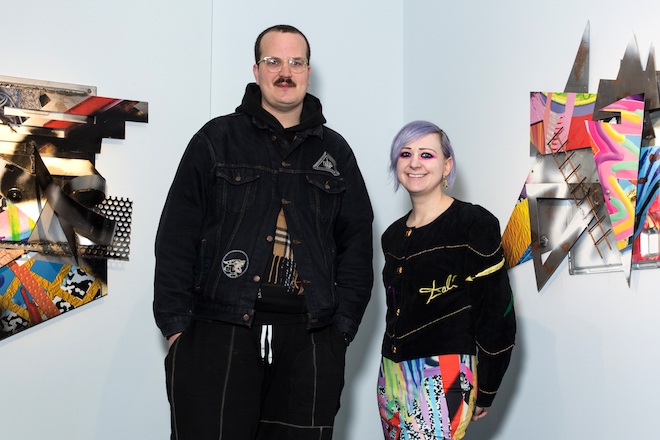
PAULA KNORR & APPAU JNR BOAKYE-YIADOM
We wanted to create a work that could exist in different iterations. Using materials that illustrated this, from the fabric that takes on different characteristics when hung, looking through, gathered on the floor or folded over. The parasol frame both electric and manually operated changing its size and orientation depending on the space in which its shown. The video illustrating a ball falling from the top of the frame to the bottom, looped in transit, accompanied with dubbed audio of a drum in an echo chamber of sound. Focusing on different forms of sculptural movement from both culture, fashion, video and sound.
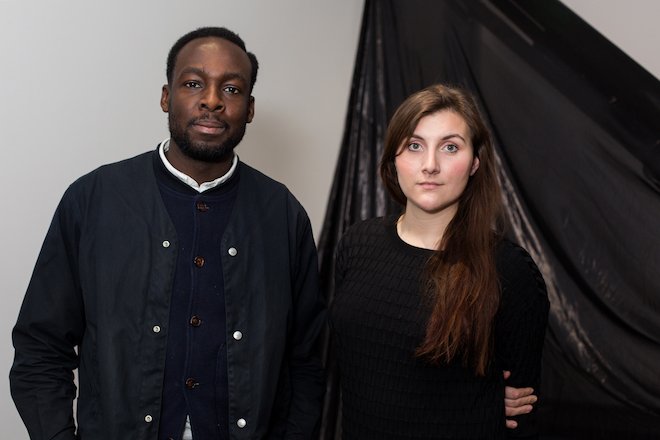
RICHARD MALONE & MARCO PALMIERI
A garment, as a term, is ambiguous; it can serve a limited but clear purpose, or on other occasions can shed its functional vestiges and slip into the realms of surrealism, play and sensuality. Our bodies share an intimate relationship with these fabrics and textiles, from the clothes we wear, to the furnishings that decorate our houses. At the same time this relationship is fragile and fleeting; fashion dictates a constant change in taste. Our hope with this collaboration was to create something tactile and ephemeral, like the clothes we inhabit for the recital of our daily routines – delicate skins we shed with seasonal regularity. From gentle poses of the hand that are sketched out on sheets of paper and lines of laser-cut aluminium, to oversized figures/mannequins robed in intricately patterned fabric, the pieces present themselves in a theatrical, surrealist spirit.
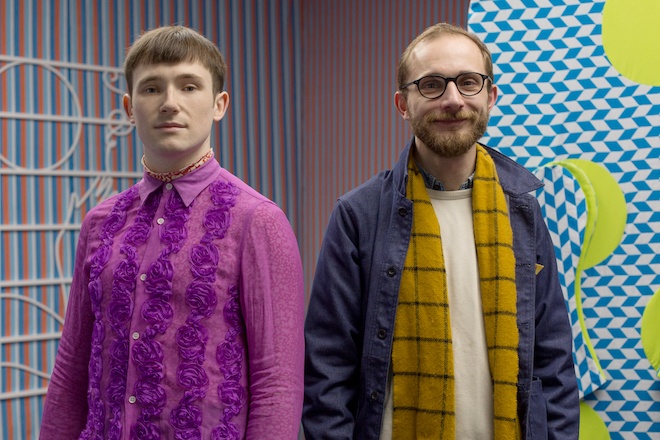
SADIE WILLIAMS & CARLA BUSUTTIL
In highlighting the politics of algorithmic era information commodification, we use Google Adwords as material for exploring consumer hierarchies. Our “Google Adword Library” contains some of the most expensive words on auction: Mesothelioma. Lawyer. Blackjack. Cord Blood. Spread Betting. We re-channelled these words through the search engine, collaging image results on textiles through painting, bonding and printing. The installation includes a ‘tombola’ showroom display. The metallic structure stands as a confident, analogue representation of an abstract digital marketplace for words. The tombola also references ‘old school’ methods of enticing consumers – contrasted here with modern visual and digital methods of production.
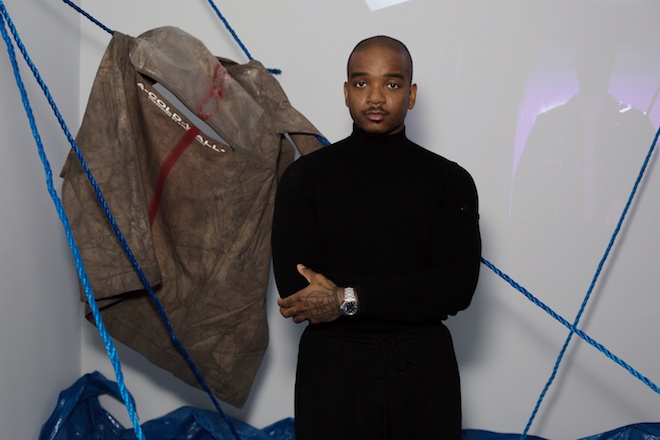
SAMUEL ROSS OF A-COLD-WALL* & JULIE BORN SCHWARTZ
The starting point of the project was an exploration into the different layers that appear in Samuel’s designs. Working with the film media we wanted to play with the possibilities of light and transparency, like a collage of the different layers and structures of the clothes itself. The process was an ongoing back and forth inspiration: the musical score was made after some of the editing of the film, and the last film edit was made from the music’s compositions.
For sales enquiries contact the British Fashion Council.
Walter Van Beirendonck limited edition at Dover Street Market
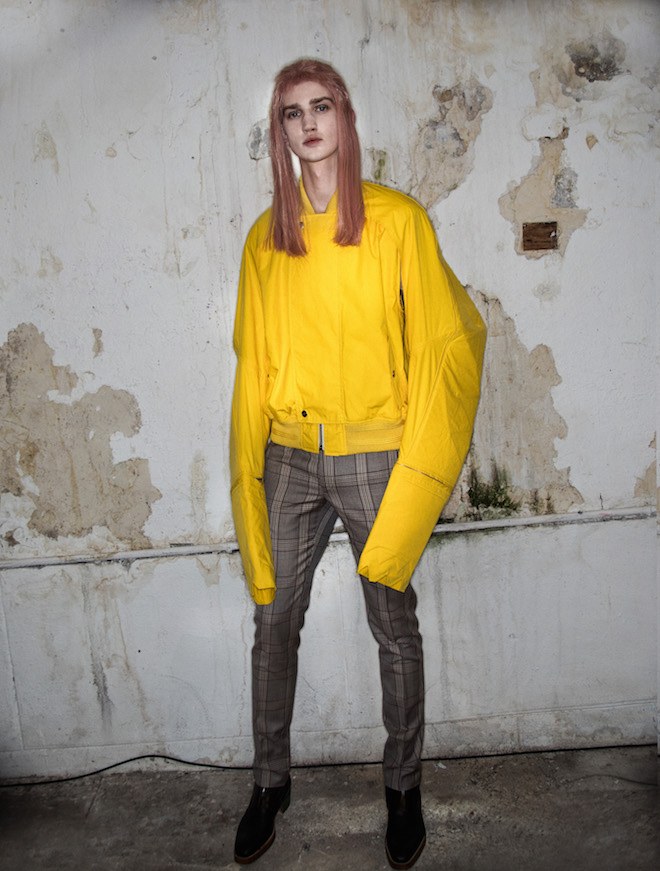
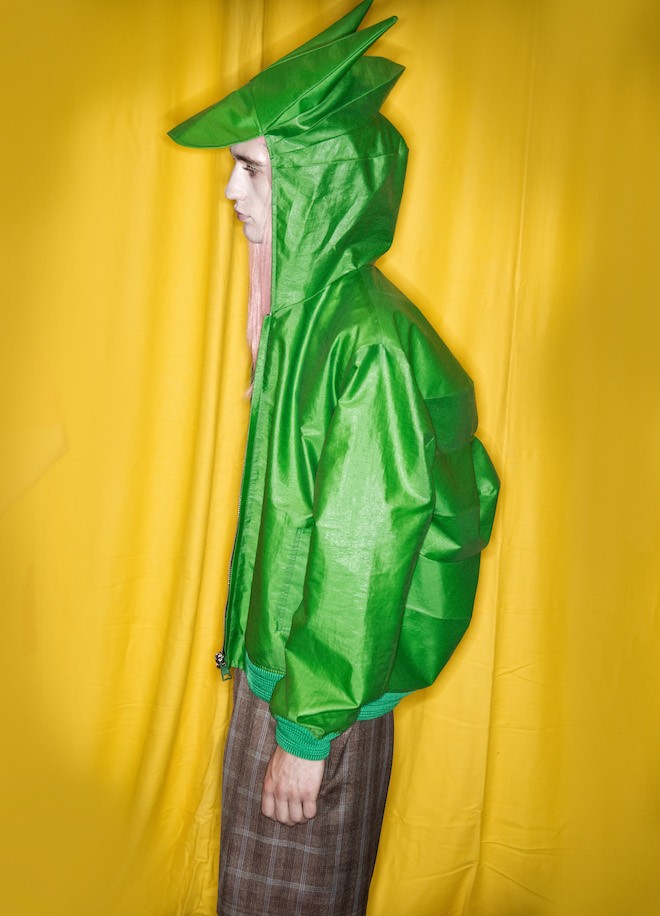
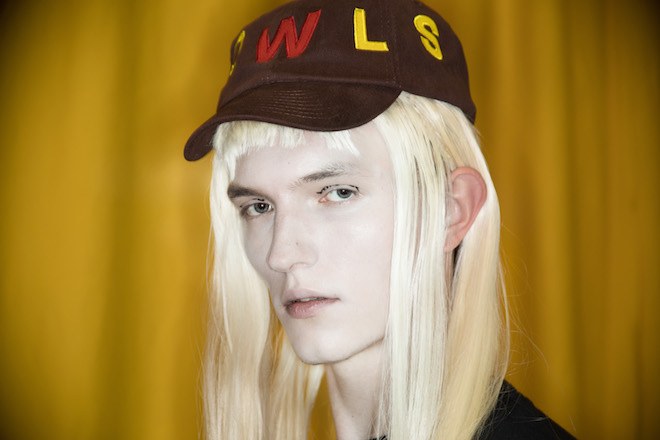
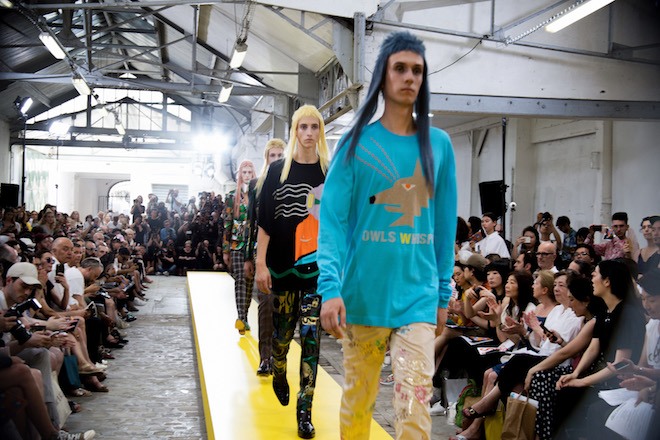
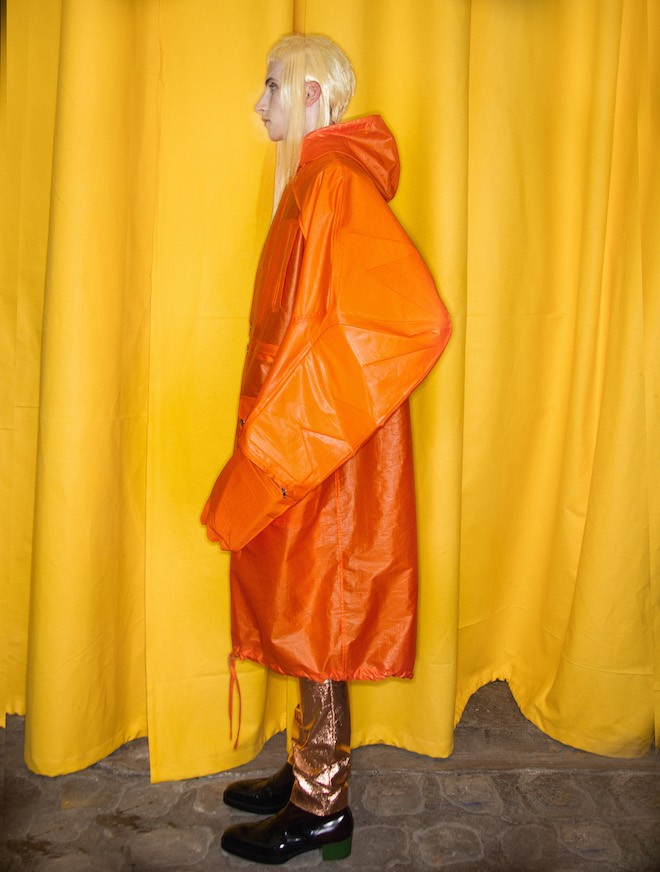
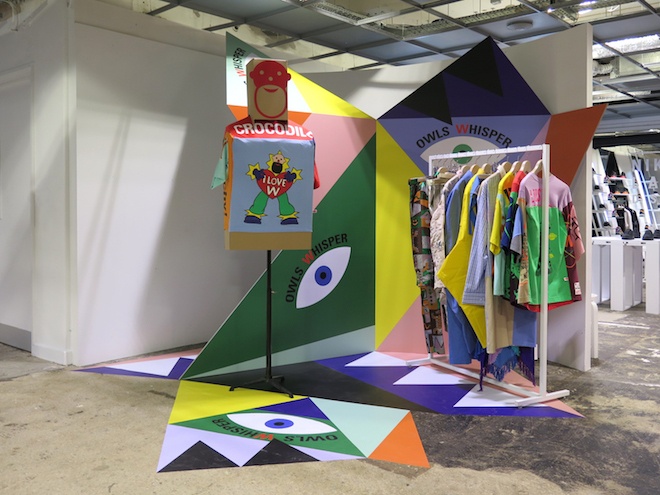
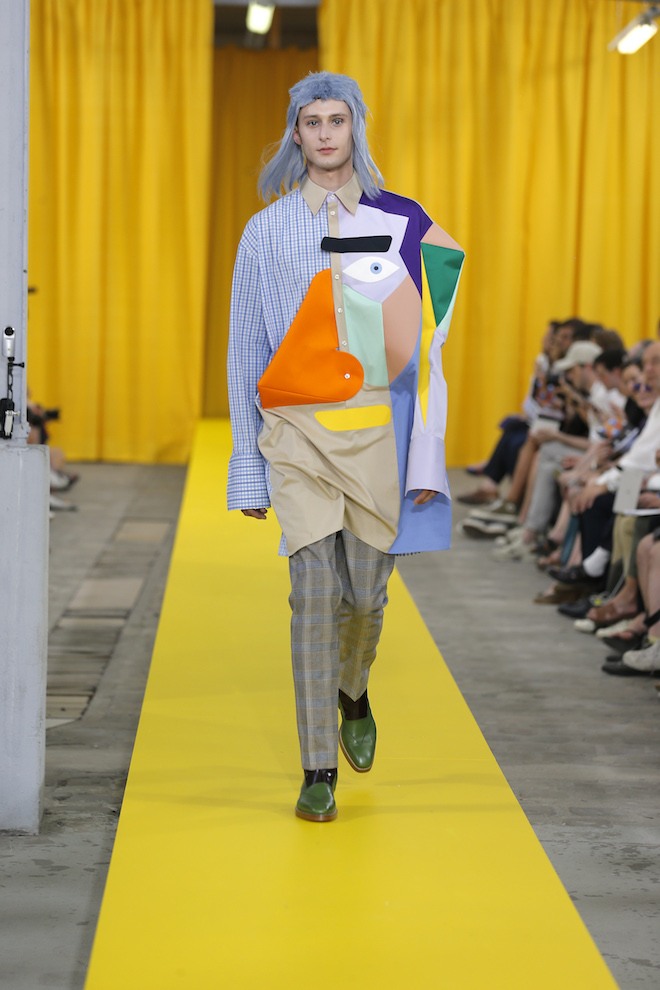
This weekend sees the arrival of a bright, quirky new Walter Van Beirendonck installation at Dover Street Market, mirroring his electric and imaginative SS18 collection.
Designed by Alex Wolfe, the ‘Owl’s Whisper’ display reflects the geometric shapes, loud colours and sense of play at the heart of the collection. The new installation also coincides of the launch of new Walter Van Beirendonck items in store at Dover Street Market, with 40 limited edition, handmade t-shirts that combine parts of clothes from old collections. Get them while you can.
Walter Van Beirendonck
Walter Van Beirendonck
Walter Van Beirendonck
Walter Van Beirendonck
Walter Van Beirendonck at Dover Street Market
Walter Van Beirendonck

‘The fragility of plans that appear solid’: Tamar Guimarães and Kasper Akhøj at the De La Warr Pavilion
Until the 3rd of June, the De La Warr Pavilion in Bexhill-on-Sea, East Sussex, will be transformed by immersive designs created by Copenhagen-based artists Tamar Guimarães and Kasper Akhøj, in collaboration with the designer Frederico Fazenda. This will be the very first public exhibition from Guimarães and Akhøj in the UK, who have previously shown work at LACMA and the Venice Biennale.
The exhibition presents moving image and photographic works that have been selected in response to the modernist architecture of the De La Warr Pavilion, and the curious social history of Bexhill-on-Sea. Together and separately, Guimarães and Akhøj explore the residual histories of art, design and architecture, drawing unexpected connections between states of rapture and modernity. The works on display include Studies for A Minor History of Trembling Matter (2017) and Captain Gervasio’s Family (2014), which both respond to research undertaken in the small Brazilian town of Palmelo, where many the inhabitants are Spiritist mediums. These films appear alongside Guimarães’ Canoas (2010), set in the home that architect Oscar Neimeyer built for himself outside Rio de Janeiro, and Akhøj’s Welcome (to the Teknival), 2009-17, a response to the restoration of Eileen Gray’s modernist villa e.1027. We spoke to Guimarães and Akhøj about the exhibition and its complex and varied works.
Where did the name I blew on Mr. Greenhill’s joints with a very ‘hot’ breath come from?
The phrase appears on the memoirs of Arthur Spray, who lived in Bexhill-on-Sea throughout the 1930s and had a cobbler shop on Station Road, a few streets away from the Pavilion. There, on the upper floor, Spray practised healing, through hypnosis, touch, and blowing on body parts with ‘hot’ and ‘cold’ breath. He understood the universe as composed of thought vibrations, and God, within it, as a wireless broadcasting station. The title invokes a healing impulse that runs, as a theme, throughout the exhibition, like the curtain that unfolds through the space.

Tamar Guimarães, Canoas (film still), 2010 © Tamar Guimarães, Courtesy of the artist and Fortes D’Aloia & Gabriel, São Paulo
How do the works respond to the space they are occupying?
We discussed the space with Rosie Cooper, the Pavilion’s curator, and we all agreed that the window to the sea should stay as open as possible to allow people inside to look out and people outside to look in. But that is counter-intuitive when you are installing works that need darkness and silence, so we devised a large curtain that unfolds throughout the space, appearing and disappearing, so to say. The curtains were designed in collaboration with Frederico Fazenda and we had in mind the sea, the shore, the propagation of sound, the curves found in the work of Oscar Niemeyer and his collaborator Roberto Burle Marx.
There is an interesting connection with the original plans for the pavilion, which included a sculpture by Frank Dobson, who chose to depict Persephone, goddess of vegetation and Queen of the underworld. She was to stand on the Pavilion’s lawn, looking out to sea as if guarding her realm. The curtains function as dividers in the exhibition space but we also want to imagine that it might also stand between the earth and the spirit world, the domain of Persephone.
Take for example, Welcome (to the Teknival). This is a series of photographs of Villa E.1027, and you find many parallels with the pavilion. Known as Maison en Bord de Mer, Villa E.1027 is a modernist icon designed and built between 1926 and 1929 by Eileen Gray, in the Côte d’Azur. Taken from 2008 to 2017, the photographs that make up Welcome (to the Teknival) follow the process of renovation of Villa E.1027, now recognised as patrimony by the French state.

amar Guimarães, Canoas (film still), 2010 © Tamar Guimarães, Courtesy of the artist and Fortes D’Aloia & Gabriel, São Paulo
How do the selected works reflect the last ten years of your careers?
The exhibition is not exactly a summary of our last ten years of work – we both have worked on significant projects that are not on display at the De La Warr Pavilion. But the works were selected in relation to the pavilion, which was designed by Erich Mendelsohn and Serge Chermayeff, and would be known as the People’s Palace – a centre for health and leisure, of health through leisure, that brought the language of modern architecture to the British seaside.
To what extent is Spiritism a theme throughout the exhibition?
Spiritism is not the main theme throughout the exhibition. The exhibition themes are time, illness and recovery, yet two of the works engage with a Spiritist community in Palmelo, a very small town in the Brazilian planes. The town emerged in the 1930s around a Spiritist study group and a sanatorium. Half of the city’s inhabitants are psychic mediums who hold day jobs as teachers and civil servants, and partake in daily rituals of psychic healing. For this community, spirits intervene, teach and transform the material world.

Tamar Guimarães, Canoas (film still), 2010 © Tamar Guimarães, Courtesy of the artist and Fortes D’Aloia & Gabriel, São Paulo
Why did you decide to focus on this particular moment in modernism in your film Canoas?
Casa das Canoas was designed by Oscar Niemeyer and was his home from 1951 to 1957, when he moved to the central plains of Brazil to work on the construction of the new capital, Brasília – a monumental project commissioned by president Juscelino Kubitschek as part of his ‘fifty years of prosperity in five’. During the 1950s, Canoas was the location of many gatherings of political and cultural figures, and its sensuous modernism contributed to the image of Brazil as an emerging modern paradise.
When the film was shot in 2010, there was a similar optimism reigning in Brazil. Yet the film overlaps the times: you have a sense of the past lingering into the present, showing that prosperity is a state of mind, and always only part of the story. And thus, Brazil’s progressive modernism and its often-celebrated ‘racial democracy’ return, as ghosts, promising a future that was not to be.
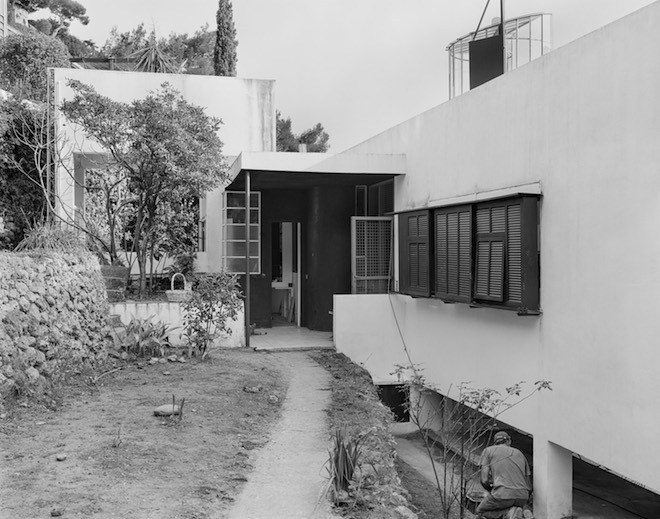
Kasper Akhoj, Welcome (To The Teknival), 2008-17 © Kasper Akhøj, Courtesy of the artist and Ellen De Bruijne Projects, Amsterdam
What do you think viewers will take away from the exhibition?
That is hard to tell. They might leave thinking of the contrast between the clean lines of modern architecture and the subtle substances that emanate from them; or perhaps of the fragility of plans that appear solid but which must be built on conditions that are permanently revised; they might think of electricity, of thought conduits, of hearing voices, of fits of slumber and of communication that begins with words, but eventually give way to tremors, cries, hums and beats.
Tamar Guimarães and Kasper Akhøj at the De La Warr Pavilion, open until 3rd June 2018.
Tags: Art, Feminism, twin, Twin magazine
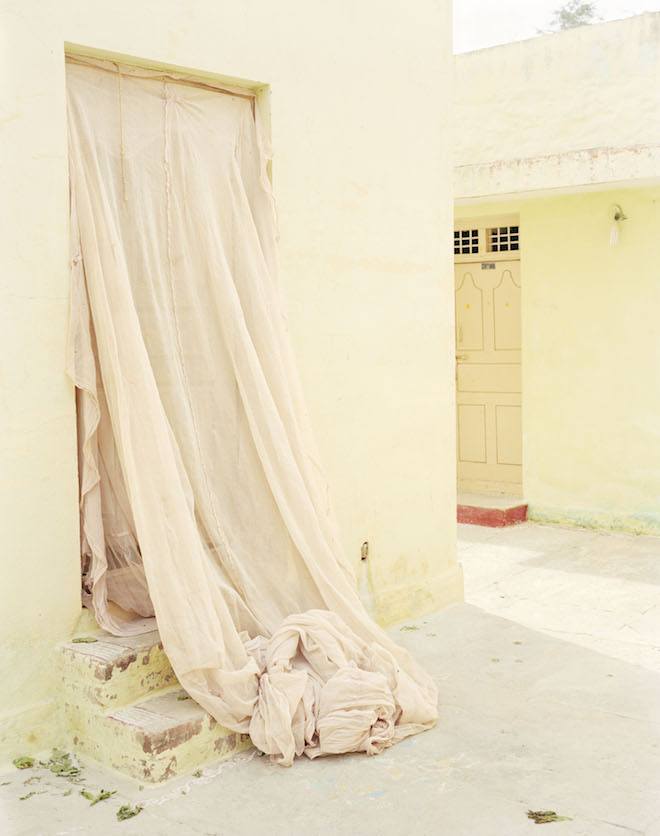
Foam new talent exhibition
Foam magazine opens their new talent exhibition later this month, a celebration of 20 emerging photographers from across the globe. An annual event which seeks to give a platform to the best of new names coming through, Foam’s support has helped to launch the careers of many young photographers.
This year sees an exciting spectrum of work. Photographs by Hari Srikhao from Thailand comment on the role of the monarchy in society, while Vasantha Yogananthan captures the journey of the Hindu deity Rama in India. There are photo sculptures by American Mark Dorf, and intense examinations of the body by Alix Marie.
See highlights from emerging photography talents below.
Visit Foam New Talent exhibition in Amsterdam, London, New York and Frankfurt, from March 22nd 2018. Dates will vary.
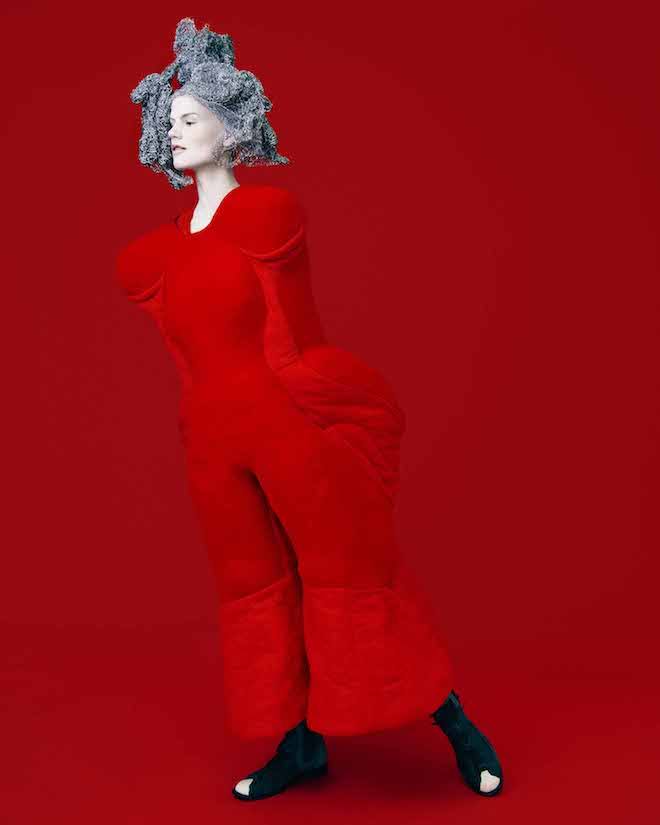
From the series Kawakubo Interpreter of Dreams, 2017 | © Erik Madigan Heck
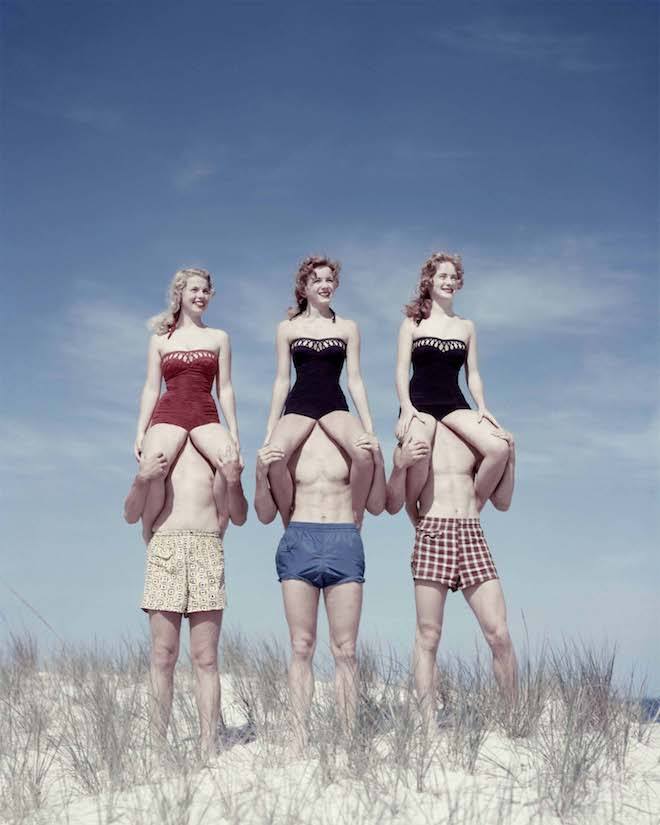
Untitled 1, 2015, from the series Traces, 2015 | © Weronika Gesicka, 2017
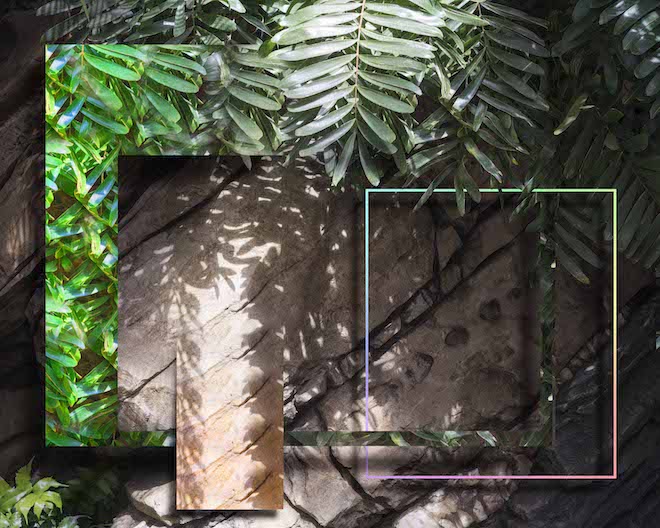
Landscape 16, from the series Transposition, 2017 | © Mark-Dorf
Featured image credit: Secret Door 2016, from the series A Myth of Two Souls 2013, ongoing | © Vasantha Yogananthan
Shoot the Women First: Twin meets artist Navine G. Khan-Dossos
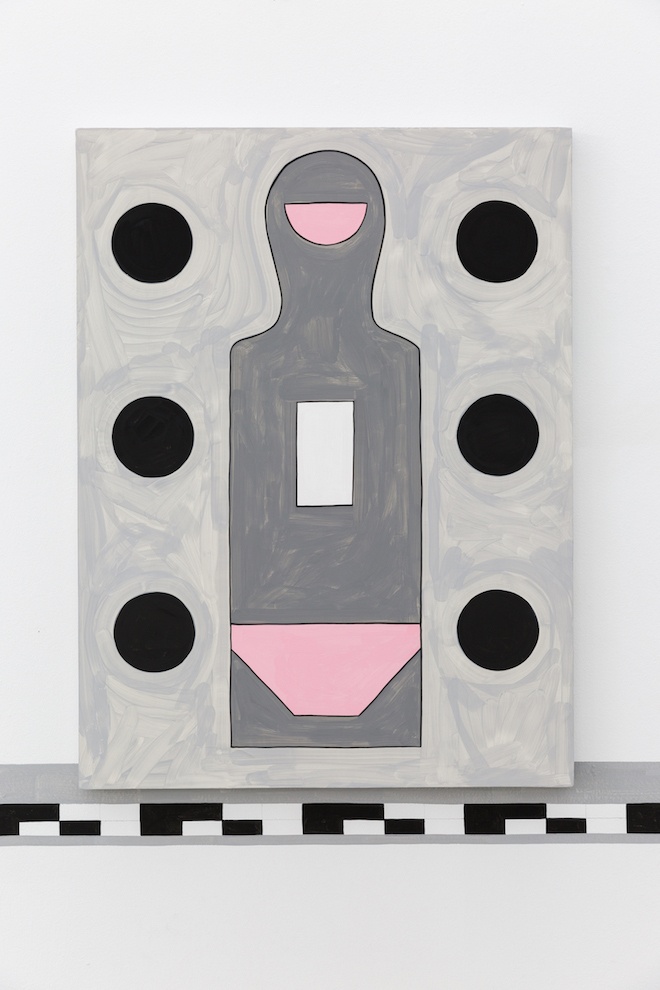
Navine G. Khan-Dossos’ latest exhibition at The Breeder in Athens considers the theme of targets. Entitled Shoot The Women First, it draws on a command reported to be issued in the 1980s to members of West Germany’s elite GSG-9 anti-terrorist squad. The order forms the title of a book by Eileen McDonald, one of the many influences that worked to inform Dossos’ complex and multi-layered exhibition.
The opening of the exhibition on the first floor recreates a shooting range. The paintings begin with targets that use abstract shapes, and build until their depictions of humans are wholly recognisable. This movement to clarity is uneasy: at the moment you recognise the object, you also process a human will be shot. All the paintings are taken from actual targets. The tension is there again, with the paintings operating both as art and as a direct reflection of institutionalised killing. Curated as a shooting range, the audience is complicit in this complex relationship too – both a gallery visitor and a watchful bystander.
Downstairs in the gallery symbols on paintings refer to Discretionary Command training. Trainee shooters receive a chain of commands which require them to shoot at shapes and colours in a certain order. These objects represent an abstraction of human from human, and also of State from the individual. Especially of those considered to threaten existing structures.
Pink in Athens doesn’t have the millennial fashion connotations that it does in other European cities. Instead it evokes the colours of walls outside the brothels in the Metaxourgeio area, also the location of The Breeder gallery. The downstairs series was also informed by recent historical events around the area, specifically a case against a group of female drug-users in 2012, who were forced to take HIV tests. The women were publicly persecuted by the media and accused of grievous bodily harm for transmitting the virus through sex work. The use of the colour in her paintings then opens up new interpretations; pink is no longer beautiful, but violent. A shadow of war-mongering red. As is typical throughout the exhibition, Khan-Dossos offers a new way of seeing. The viewer is taken by surprise.
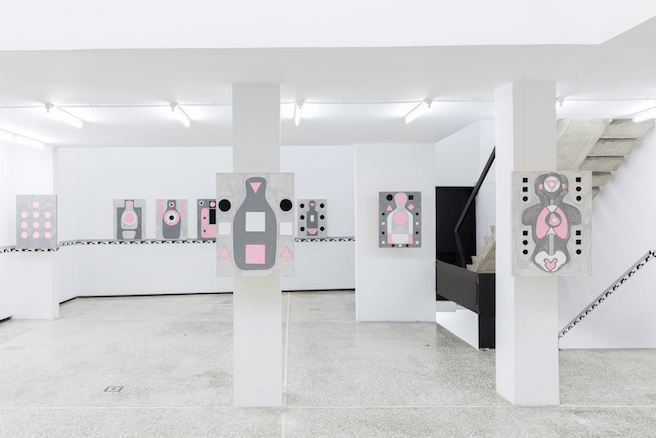
Navine G.Khan-Dossos, Grey Discretionary Command Series I-VIII, 2017 | Photos courtesy of The Breeder / © Alexandra Masmanidi
A graduate of Art at Cambridge University, Arabic at Kuwait University, Islamic Art at the Prince’s School of Traditional Art in London, and with an MA in Fine Art from Chelsea College of Art & Design, Navine G. Khan-Dossos brings a rigorous and intellectual approach to understanding the world around us. Her abstract paintings allow for an ontological study of shapes and symbols; historical references from both East and West, alongside contemporary digital contexts, examine and reflect on themes such as the depiction of European converts to radical Islam (‘Echo Chamber’, 2017), to the use of symbols and codes in the creation of crossrail at the House of St Barnabas in London (A Year Without Movement, 2017).
Her works are often site specific, and multi-dimensional. The opening of Shoot the Women First was accompanied with a performance by – enacting the shifting relationship between the collective and the other. Twin caught up with Navine to discuss the performance of identities and the idea of the other.
When did you first encounter Eileen McDonald’s text? What was the immediate impact it had on you?
Shoot The Women First by Eileen MacDonald was given to me for Christmas by my partner a couple of years ago. It raised a few eyebrows around the Christmas tree, that’s for sure. But my partner knows me pretty well, and given my long-term interest in female terrorists, it was a perfect gift for me. I read it immediately and have read it again many times since. But I also have shared it with those I’m working with on this project, in order for us all to begin the conversation from the same page.
The book is (as far as I know) the first attempt by a journalist to tackle the subject of female terrorists, and given when it was written in 1991, the interviews she conducts are with women whose memories and experiences of conflict and action are very recent and you can really feel that in the fabric of the book.
There are problems with it, such as an over-arching narrative that supposes that the violent political cause is somehow a child replacement for female terrorists; a cause into which they can put their maternal drive. This reduces women to a biological imperative of motherhood rather than seeing them as having genuine political will of their own, unconnected to their ovaries. This line of conclusion certainly dates the book, but I think as an archive of a specific time in history and the role of women within that turbulence, it’s a very valuable document and an inspiring one to begin something new to continue this dialogue in our own times.
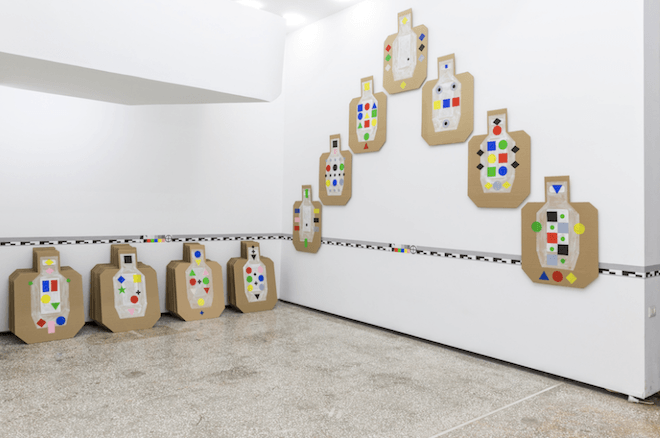
Navine G.Khan-Dossos, Bulk Target 1-100, 2018 | courtesy of The Breeder / © Alexandra Masmanidi
In the accompanying essay to the exhibition Lisa Downing surmises that ‘ A “target,” then, by necessity, moves.’ What about this dynamic interested you?
Beyond this essay for the show, Lisa Downing thinks and writes more broadly about the role of the individual woman, the difficult woman, or the woman who finds herself unable to be part of a collective ‘we’ and I think this is the issue that underpins the target too. How does a woman stand apart but also identify with the group? The question of the target, for me, is tied up in this question of the individual and the multitude, being able to be alone but without being isolated or singled out for attack. And I think this is a pertinent question we must take forward with us into a future where we don’t have to be vulnerable or further this ‘otherness’ by individuating oneself.
Through the curation and the targets you open a discussion around complicity – where do you hope the viewer will place themselves in this dialogue?
I really don’t have any expectation of where the viewer should place themself within the work. It isn’t so didactic as to suggest one position. The intention is to keep things open, to reflect on the many roles that can be played out in the scenario of the shooting gallery: the target, the target designer, the shooter, the bystander, the amateur weekend gun enthusiast, the professional killer.
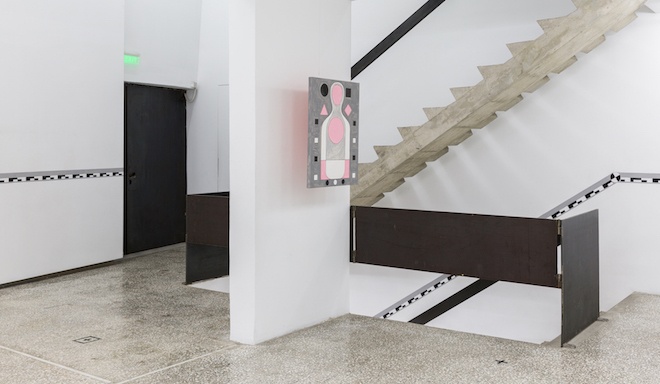
Navine G.Khan-Dossos, Shoot the Women First, Grey Discretionary Command Series I-VIII, 2017 |courtesy of The Breeder / © Alexandra Masmanidi
Why was it important to you to have a performance element of the exhibition? How did the collaboration come about?
This is the first time I have collaborated with a choreographer (Yasmina Reggad) and a group of dancers. Over a coffee in my studio when I was making he cardboard targets, Yamsina noticed how much the drying works resembled costumes, or certainly had the possibility of being worn. With her experience and her eyes, she saw not just the abstracted figure within the target, but how it could be embodied, given movement, and activated as part of the work’s scope beyond painting.
It was a very natural collaboration and Yasmina and I have been thinking and practicing together over the past weeks and months to think how we can work in parallel and share this common ground of interest.
The dancers will perform a mixture of martial arts-based movements choreographed within patterns used by riot police in crowd control situations. They will move those attending the opening of the show, pushing them out of the gallery, and controlling them through these delicate but powerful gestures.
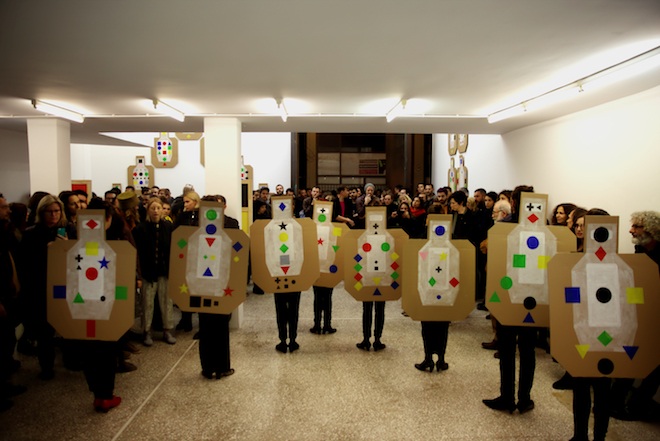
Shoot the Women First performance, choreographed by Yasmina Reggad for Navine G. Khan-Dossos exhibition opening | photo courtesy of the artist / © Alexandra Masmanidi
I’m become quite fascinated by what a female army might look like in the future. The Kurdish female fighters of the YPJ (Kurdish Protection Units) continue to be a strong presence in my thoughts everyday, but I wonder also what ways of fighting and controlling crowds might be possible through other forms of intervention, which is why the inclusion of the martial arts is an interesting mode to explore. In a show that is dominated by the act of shooting and guns, this attempt to circumnavigate the use of this kind of instrument of violence is a way of imagining different possibilities for the future.
In the show text you reference specific examples of the 2012 arrests of suspected sex workers in Athens, as well as other major moments of terrorism throughout contemporary history. Can you talk a little about your research process, and why the story of the Greek women spoke to you in particular?
From the moment I found out about this story I was gripped by it, but also by the way it effected the Greek people I asked about it, and how they recalled that moment in time. I wasn’t yet living in Athens myself in 2012, so it was very much about exploring collective memory as well as more in-depth research. This case in some ways is very simple – an action made in the weeks leading up to a general election to make it look like the city was being cleaned up. But the complexity of the intermeshing subjects of HIV, of sex work, of the sanctity of family unit in Greece, also coalesce into something of great tragedy for the women at the heart of the events.
One of the first and most important influences on this research was the film Ruins by Zoe Mavroudi. She presented the story and the politics of what happened to these women in 2012 with a great dignity and power. Zoe and I discussed the making of the film and the issues surrounding it, but also the present situations of these women, and how not to lose sight of this case, but without re-presenting the women at the centre of the arrests, furthering the exploitation of their image.
Zoe introduced me to Apostolis Kalogiannis who was able to deepen my understanding of the current situation of sex work in Athens and how it has changed (or not) since 2012. This was an important way of grounding myself in the present rather than just looking back onto a concluded past event. There are important groups supporting vulnerable sex workers in Athens and there are ways for us to support their work through art, and by keeping the subject alive and visible.
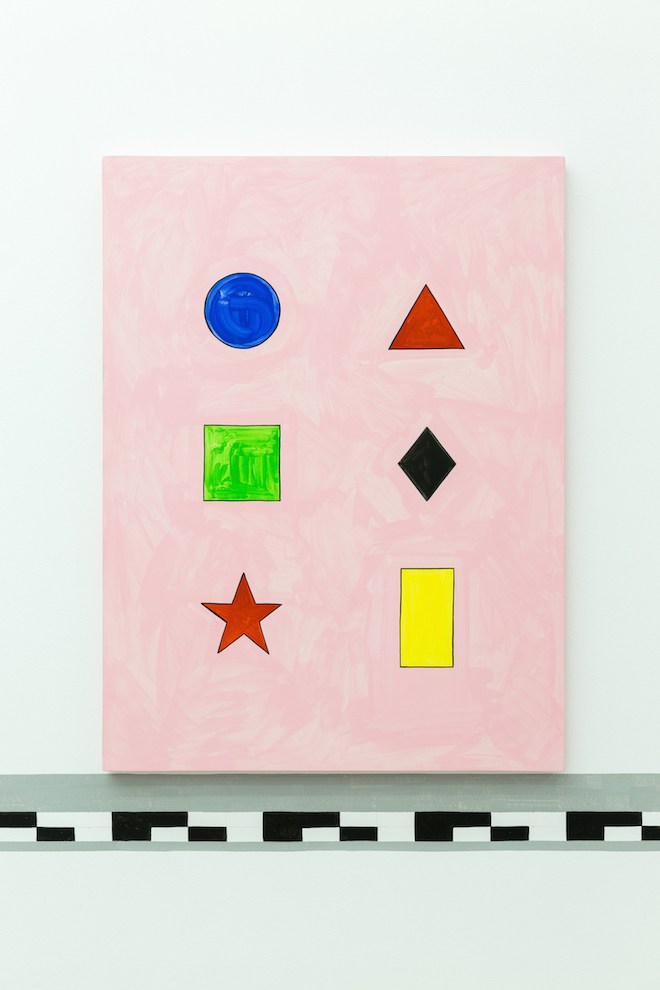
Νavine G.Khan-Dossos, Pink Discretionary Command Series V-XII, 2017 | courtesy of The Breeder / © Alexandra Masmanidi
We spoke about the desire to focus on this story without re-enacting the violence that the women experienced in 2012. Could you elaborate on your approach to this?
The works are not and should never be considered a re-enactment of the situation in 2012. Those events are part of a much wider series of influences that went into making the works. But one important aspect that did derive directly from the issues raised by that case was how to represent women without returning to the low-grade viral images that swept through the Internet and the Greek media when the story broke.
I do not believe we need to re-present or indeed rely on these damaging images. Instead there must be a way to use a functional, diagrammatical, symbolic language that tells a wider story about the abstraction of the human body as a necessary device to distance oneself from the subject/target.
It is possible to make work about violence that in itself is not violent. It can be a contemplative or meditative space instead of a shocking one – a space where the viewer can consider the subject matter and recall what they already know inside themselves, including their own experiences, rather than forcing my narrative upon them.
I have been working on this approach to portraying difficult subject matter for a few years now, and it always changes depending on the subject matter. But I feel strongly that in this time of mass consumption of digital images of violence, there might be other ways to talk about it that don’t rely on the images themselves and getting caught up in that loop of the poor or degraded image (as Hito Steyerl might say).
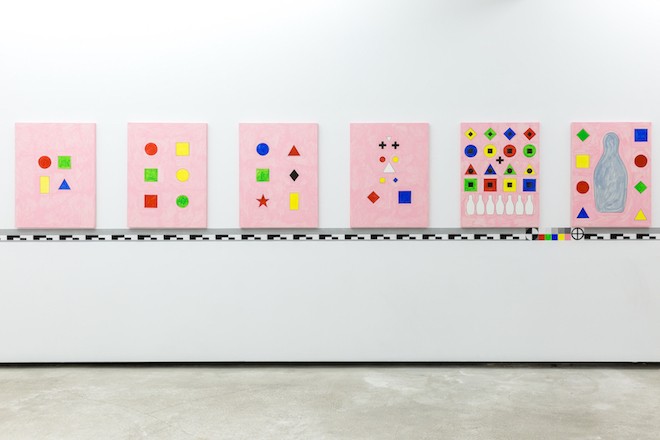
Νavine G.Khan-Dossos, Pink Discretionary Command Series V-XII, 2017 | courtesy of The Breeder / © Alexandra Masmanidi
Do particular shapes and colours present themselves instinctively or do you always approach shapes and symbols to use in your work based on their pre-existing references and meanings?
All of my material comes from things that exist in the real world as functional objects or images. In this case all the paintings are based on Discretionary Command targets – a form of shooting practice target that relies on listening to commands and shooting the coloured shapes in the order given. So the shapes and colours have an inherent meaning within this context and a relationship to the human body in terms of organs (shoot to kill) and limbs (shoot to maim).
I have also included pink triangles as an additional shape to the pre-existing forms of the command targets, as a way of including the history and politics of the gay rights movement, which also has an important place in this work about the targeting of marginalised groups.
Shoot The Women First is on at The Breeder Gallery, Athens, until March 10th.
Tags: Art, Feminism, Women
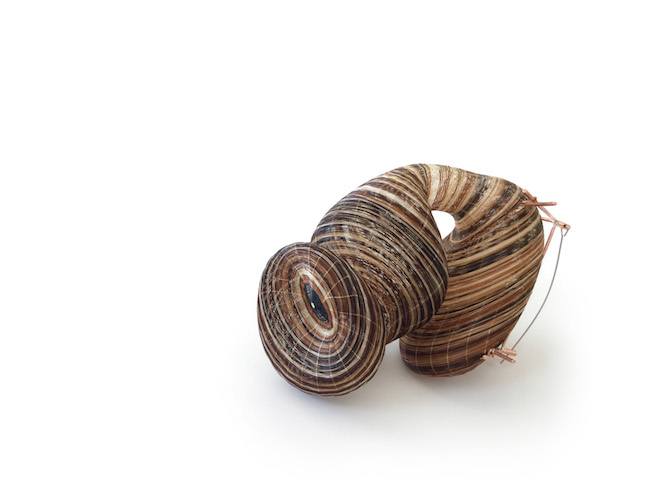
Meet the finalists of LOEWE Craft Prize 2018
The Loewe Craft Prize will take place in May of this year, and already there’s a buzz around the finalists. Comprising of 30 artists from 17 countries around the world, the shortlist celebrates creativity and innovation in craft. A reflection of the diverse talents working at the moment.
Creative director of LOEWE Jonathan Anderson conceived the award to champion creativity. A part of an ongoing commitment to locate LOEWE within a wider cultural context. Speaking ahead of the second year of the awards, the designer commented: ‘Craft is the essence of LOEWE. As a house, we are about craft in the purest sense of the word. That is where our modernity lies, and it will always be relevant.’
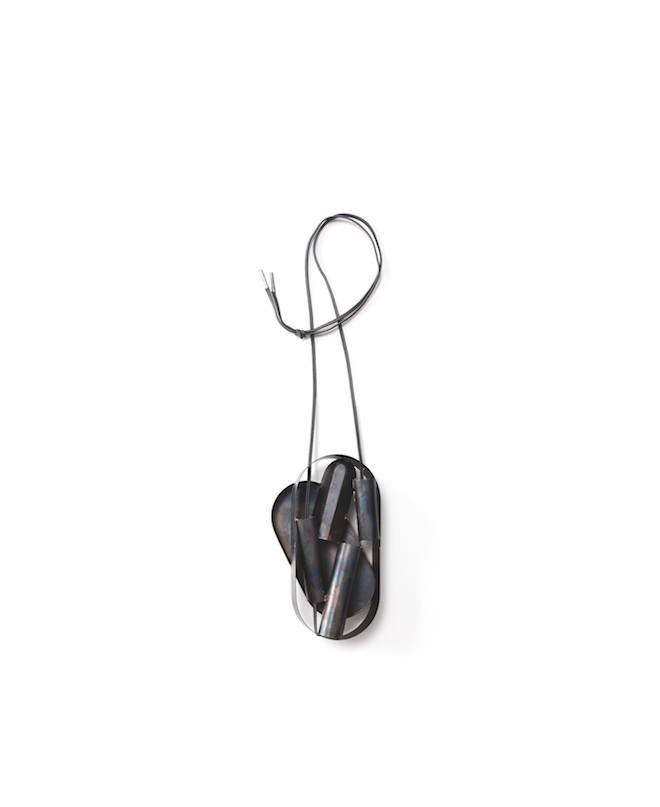
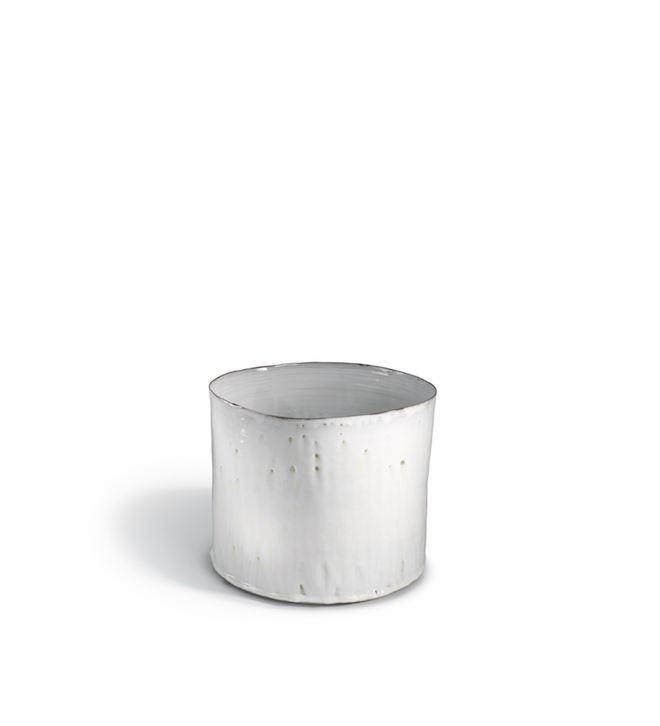
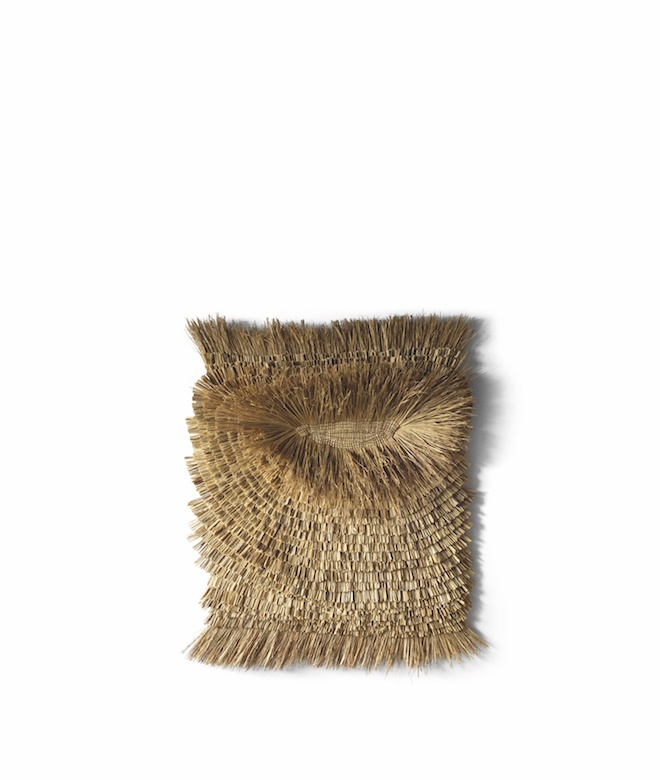
The full list of nominees, along with examples of their work, are below.
Paul Adie (United Kingdom)
Paul Adie searching for solid ground III
Gunilla Maria Åkesson (Sweden)
Gunilla Maria Aakesson
ARKO (Japan)
Arko Asako Sato
Yeonsoon Chang (Republic of Korea)
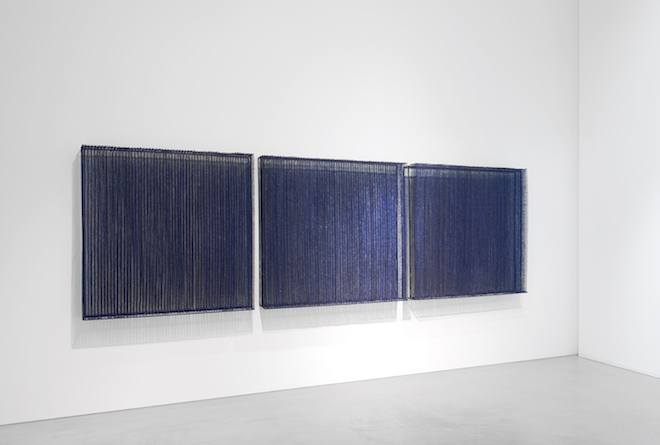
Chang Yeonsoon, MatrixIII Time, Space, Human.
Min Chen (China)
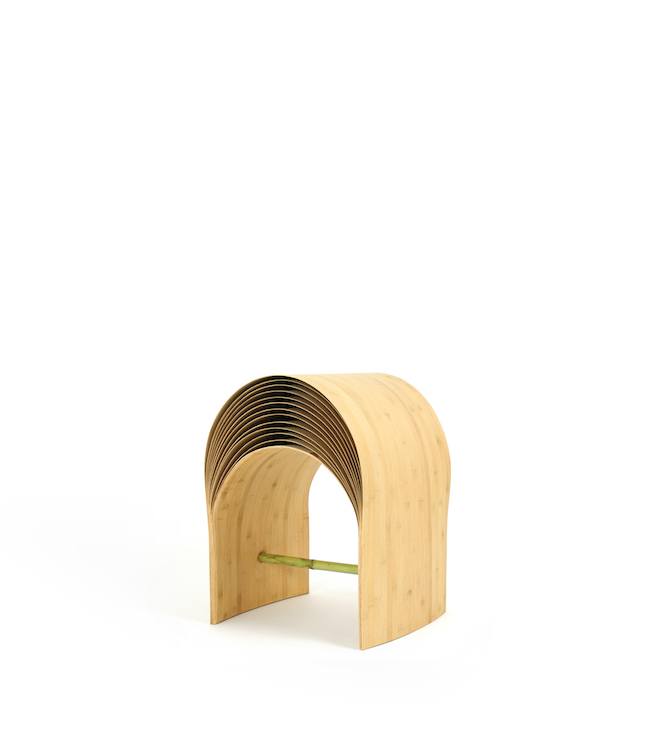
Chen Min
Hae Cho Chung (Republic of Korea)

Hae Cho Chung
Steffen Dam (Denmark)
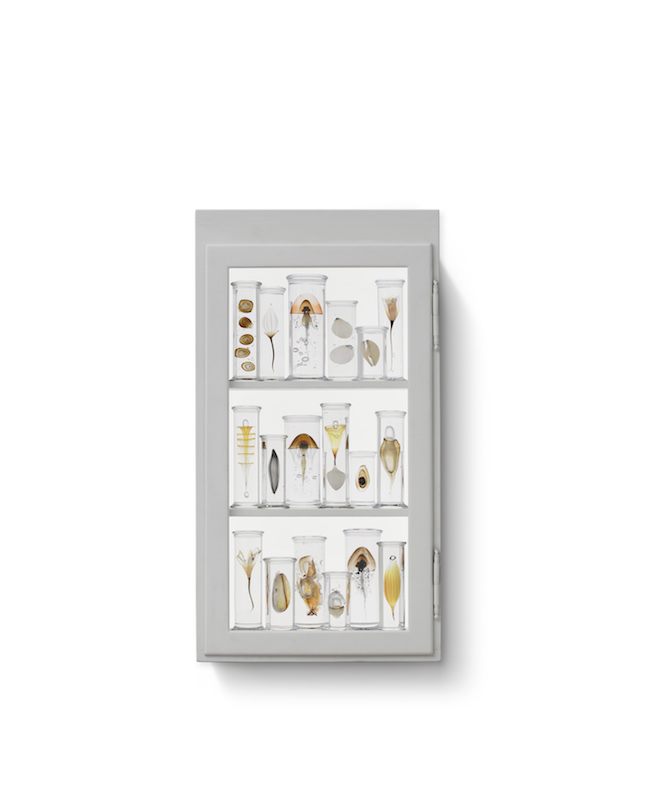
Stefan Dam
Sam Tho Duong (Germany)
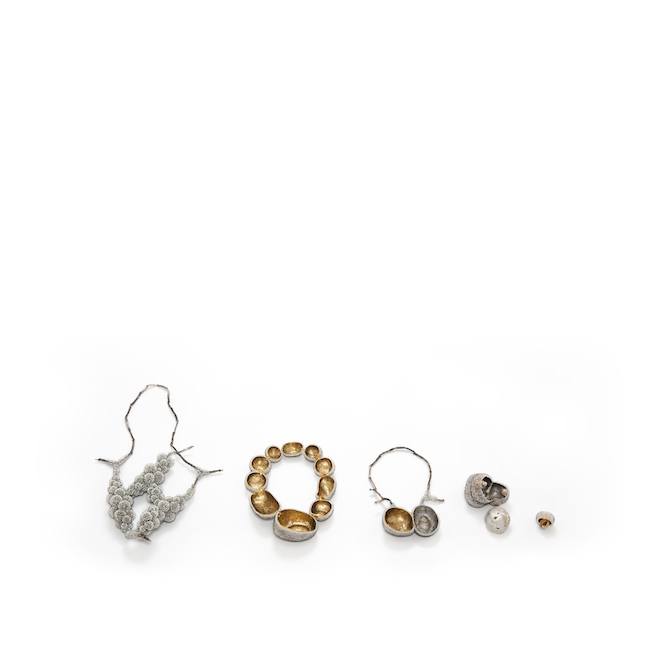
Sam Tho Duong
Sara Gackowska (Poland)
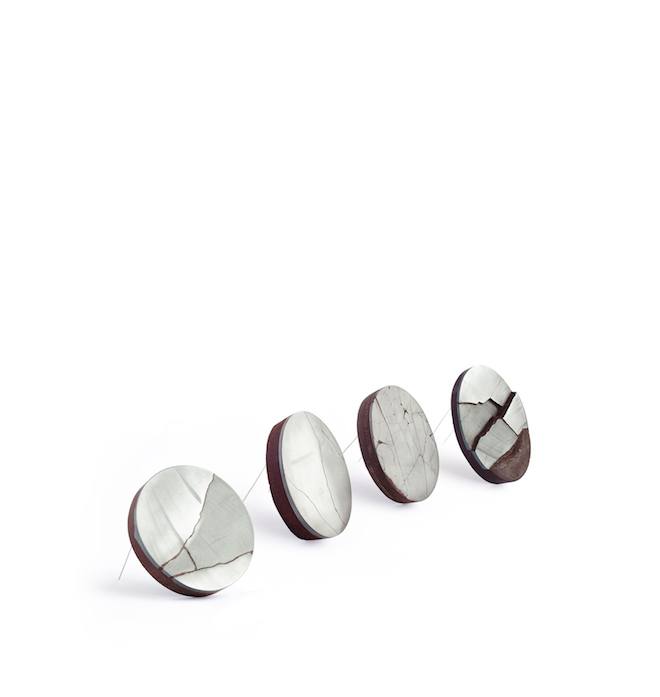
Sara Gackowska
Ann van Hoey (Belgium)
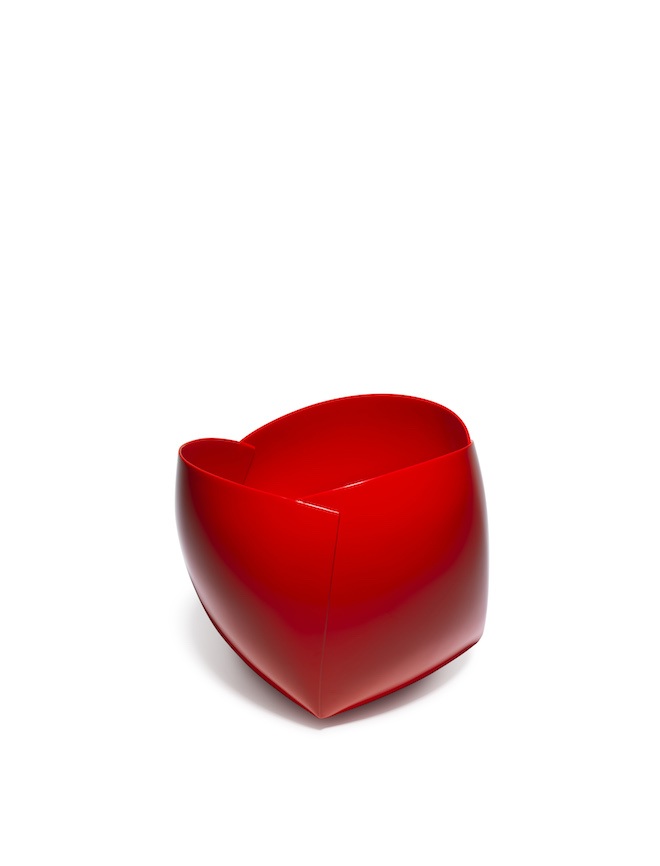
Ann Van Hoey: 2017. The Earthenware Ferrari
Joe Hogan (Ireland)
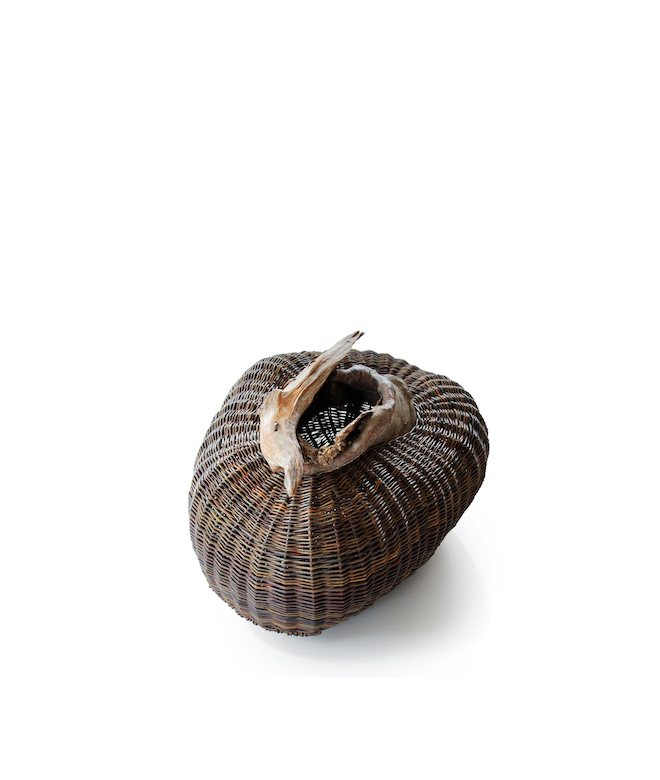
Joe Hogan
Marie Janssen (Austria)
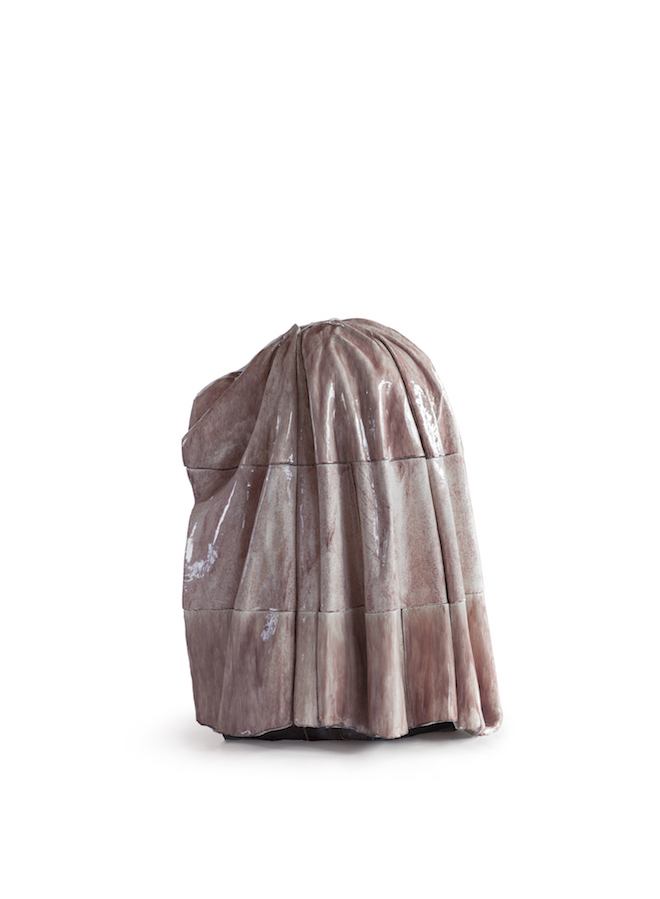
Marie Janssen
Joonyong Kim (Republic of Korea)
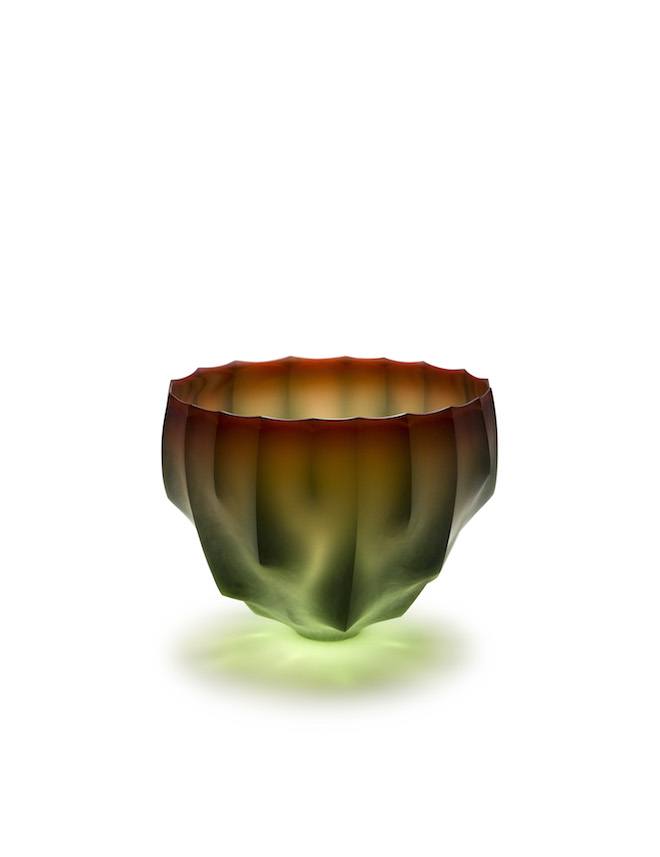
Joonyong Kim
Christopher Kurtz (United States)
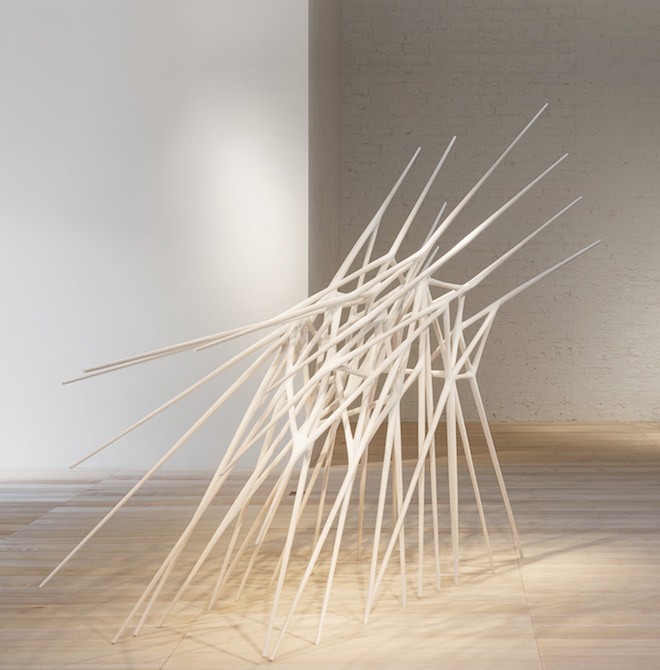
Christopher Kurtz
Takuro Kuwata (Japan)
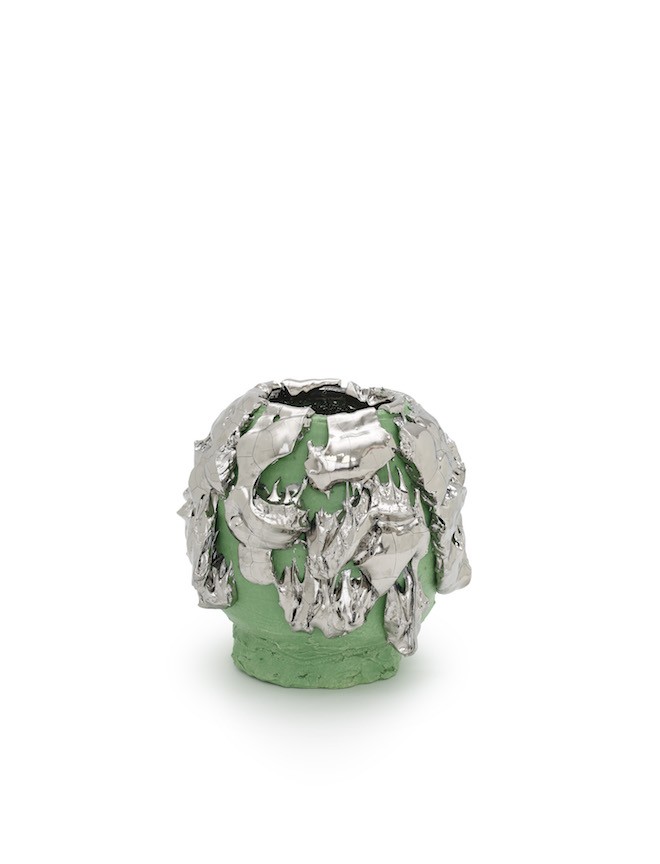
Takuro Kuwata
Jennifer Lee (United Kingdom)
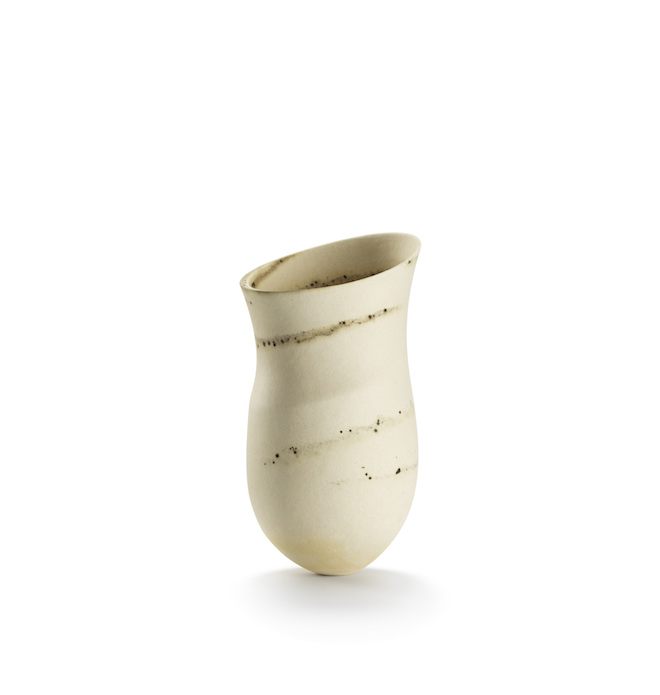
Jennifer Lee
Deirdre McLoughlin (Ireland)
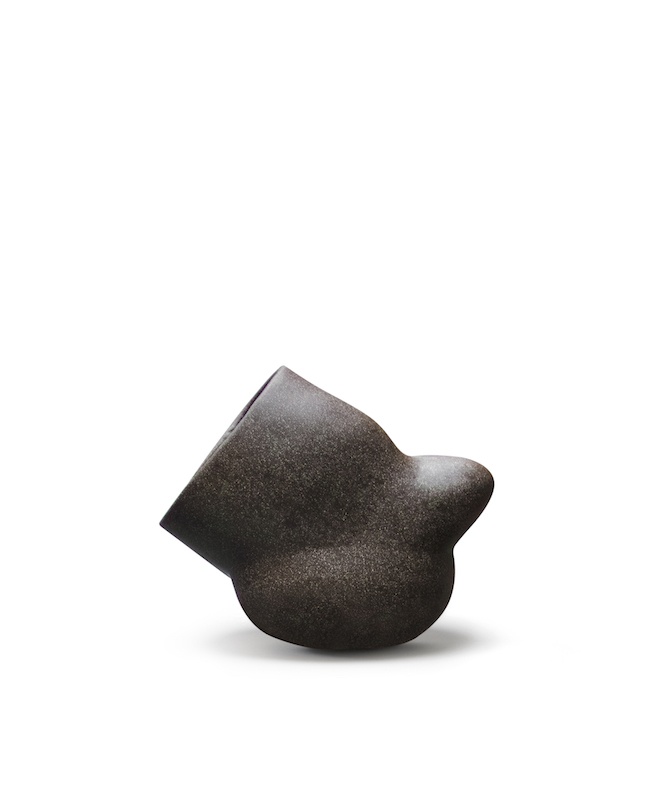
Deirdre McLoughlin
Richard McVetis (United Kingdom)
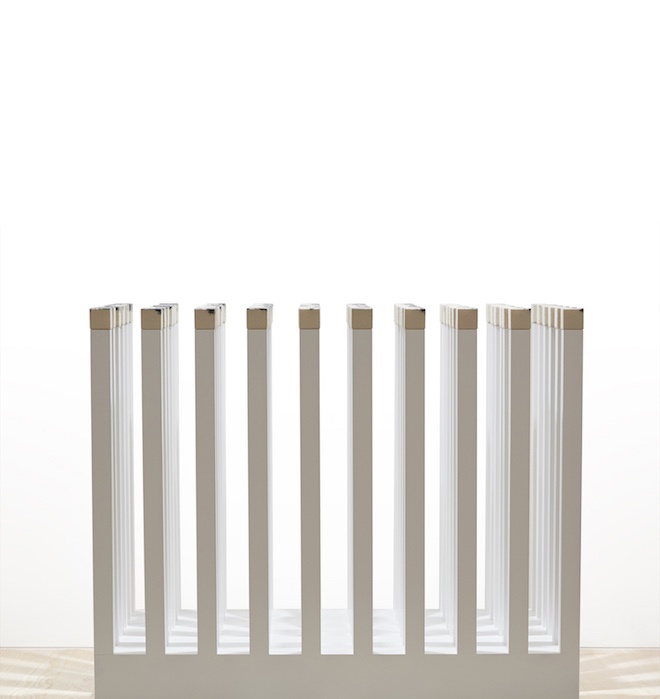
Richard McVetis
Simone Pheulpin (France)
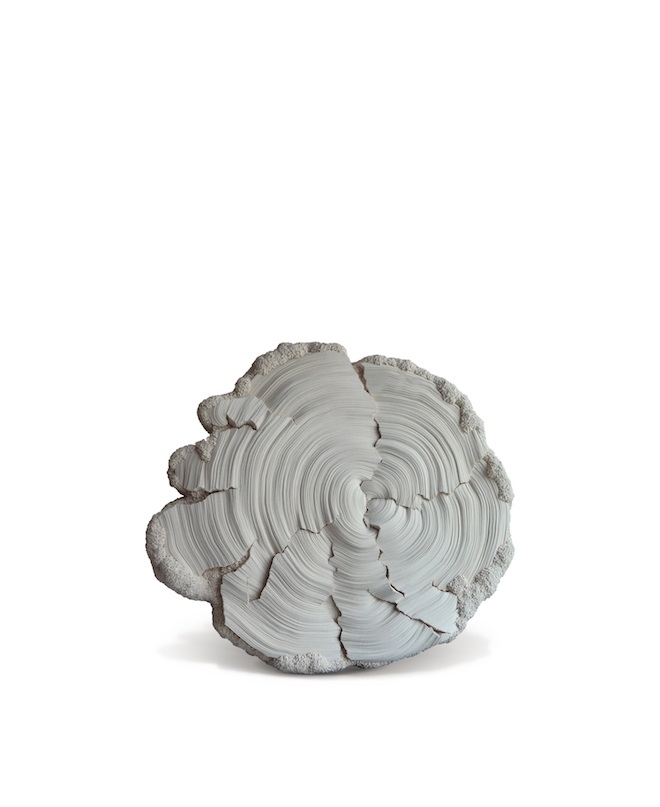
Simone Pheulpin
Irina Razumovskaya (Russian Federation)
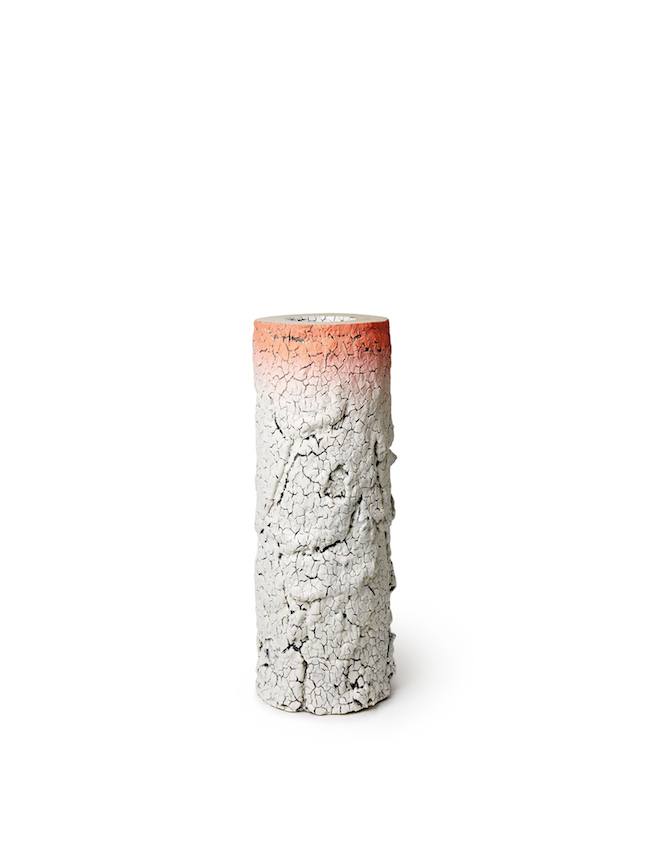
Irina Rezumovskaya
Aneta Regel (United Kingdom)
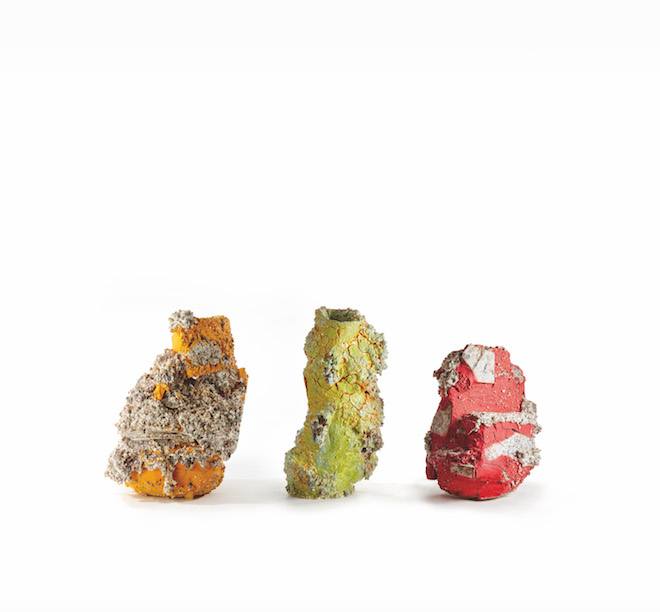
Aneta Regel
Ryuhei Sako (Japan)
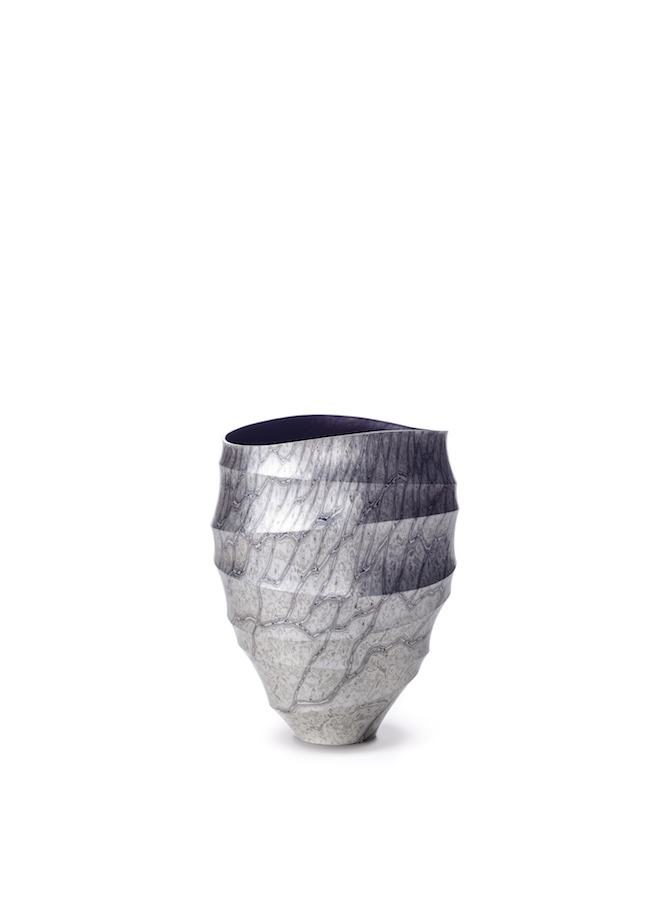
Ryuhei Sako
Rita Soto (Chile)
Rita Soto
Laurenz Stockner (Italy)
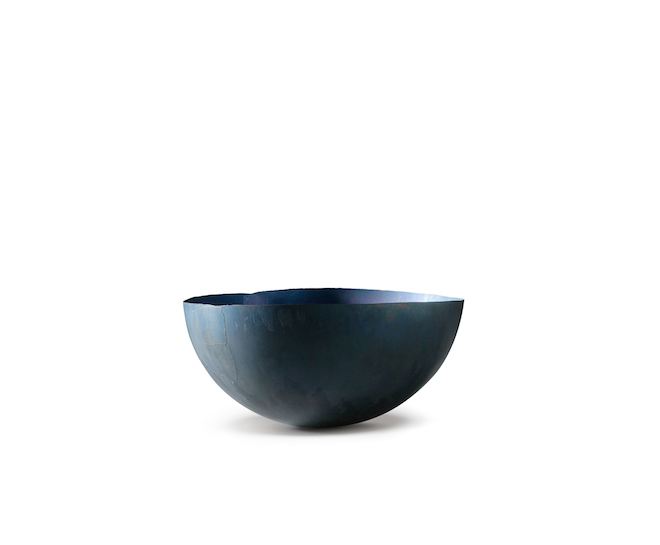
Laurenz Stockner
Wycliffe Stutchbury (United Kingdom)
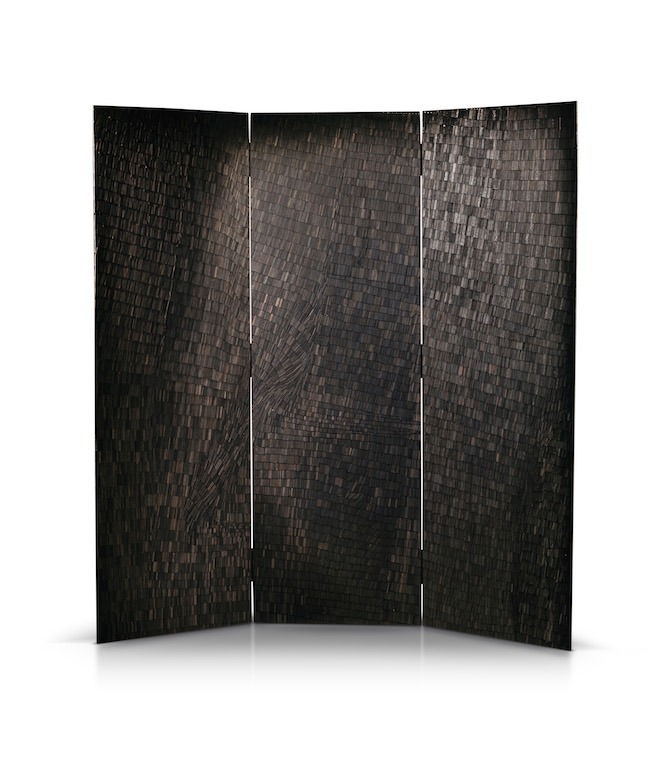
Wycliffe Stutchbury
Mercedes Vicente (Spain)
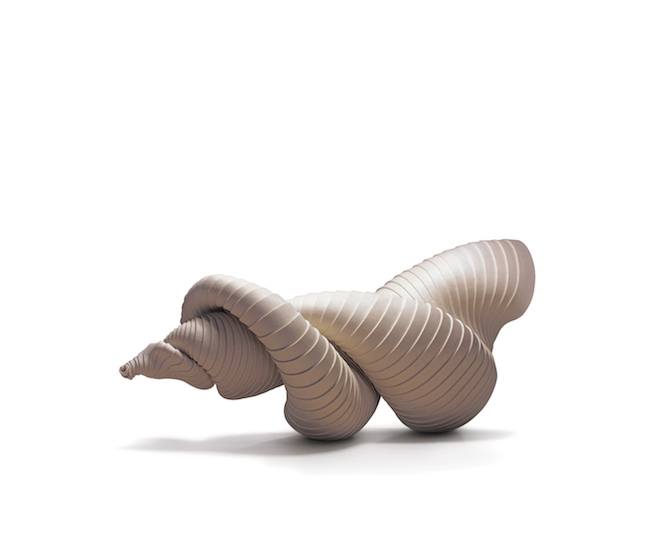
Mercedes Vicente
Julian Watts (United States)
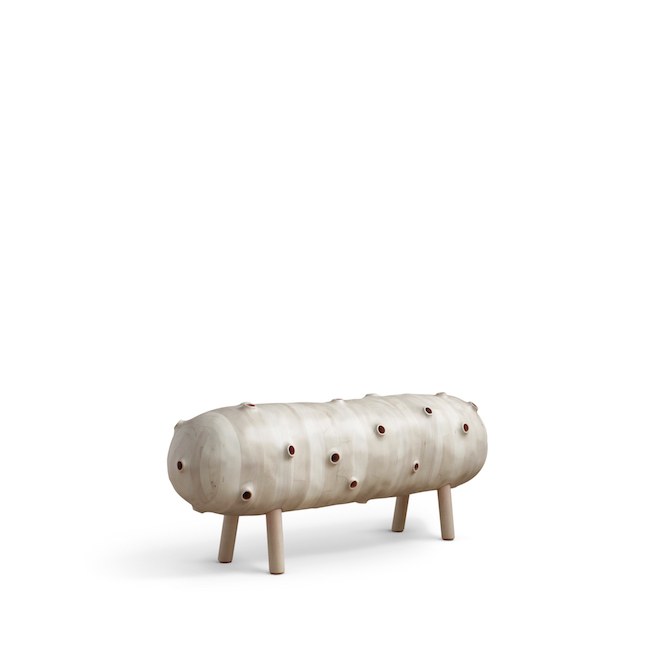
Julian Watts
Takeshi Yasuda (United Kingdom)
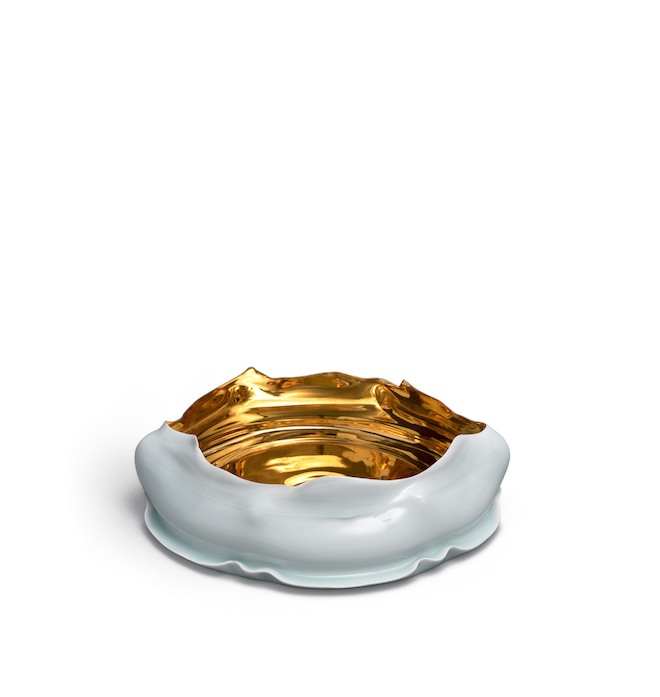
Takeshi Yasuda
Ashley YK Yeo (Singapore)
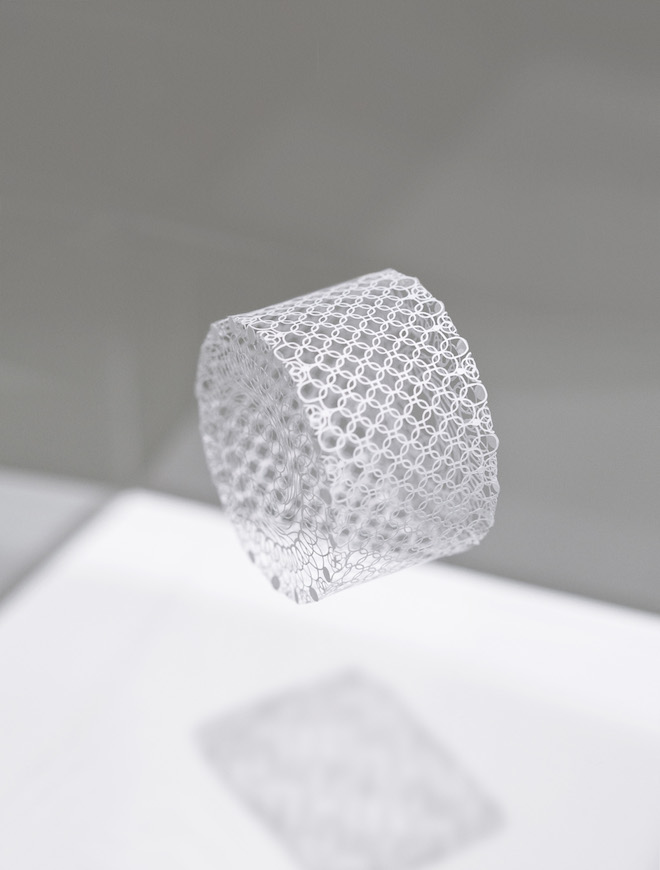
Ashley YK Yeo
Shohei Yokoyama (Japan)
Shohei Yokoyama
Tags: Design, Loewe, Loewe craft prize
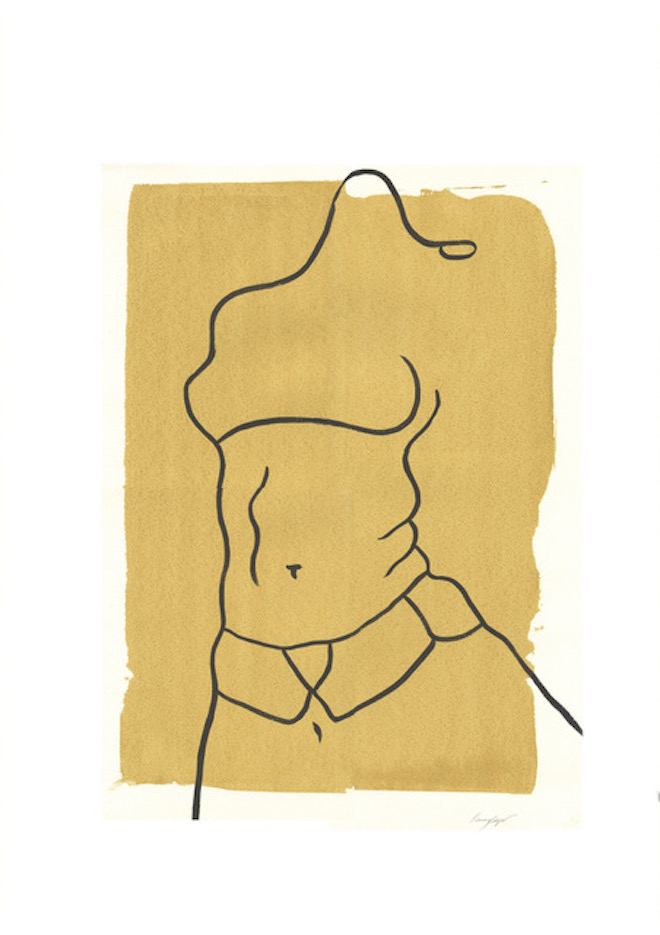
The politics of the Body: Twin meets Ranny Cooper
Artist Ranny Cooper examines and explores the female form as a way of addressing issues around self identity and discovery. She shifts our usual associations away from sex and provocation and asks us instead to focus on the ways in which the body is bound in objectification and intrusion, yet also in admiration and desire. Cooper uses her own body as her muse as it has been a positive way for her to address the issues she faces with her own body politics. Inspired by Jenny Saville and her portrayal of the body and all of its fluid forms, Cooper enjoys celebrating this idea of the grotesquely beautiful. In her series ‘Unbound’, the minimal, fluid lines and colours of Cooper’s mix media drawings offer a thoughtful and sensitive representation of the female form. Her use of leatherwear highlights the friction between submission and empowerment as she depicts the action, restrictions and effects of harnesses as a means of representing the duality of lust and scrutiny that women’s bodies are subjected to.
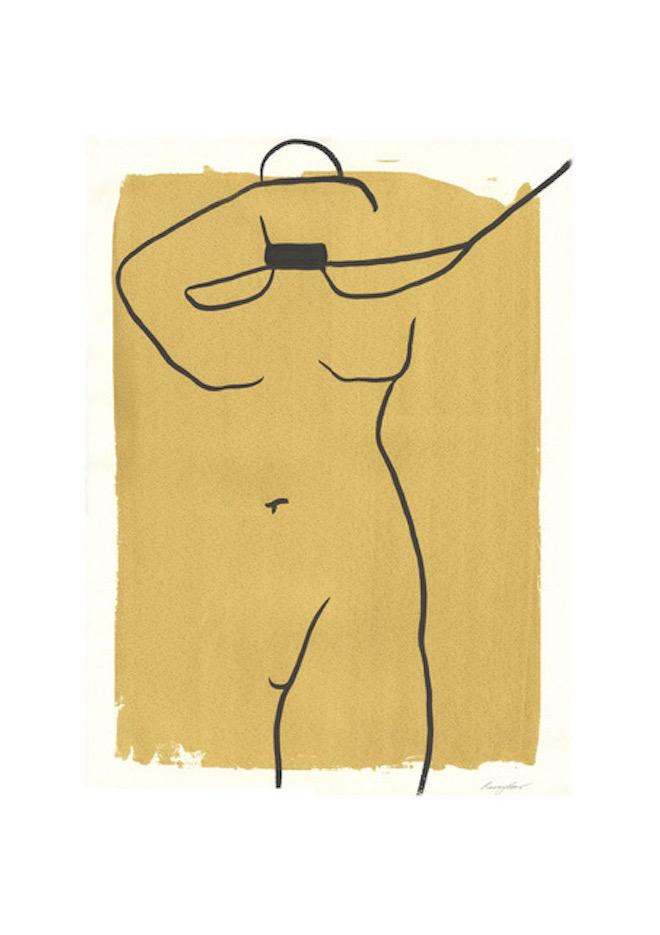
Ranny Cooper, Unbound
Originally from Brighton, Cooper has been based in East London’s Hackney for the last five years, where she spent the first three at London College of Fashion studying Fashion Illustration. The product of a rather bohemian and idyllic childhood, Cooper thinks this may be where her openness towards nudity came from and why she doesn’t feel that her sexuality defines her. I don’t know if I am defined by my sexuality, but know that I address it very boldly. I have always been very sexually open with my body. I grew up in an extremely naked household – it is a good way for me to express how I am feeling as a women. A lot of people see my work and think of it in very black and white terms, as simply sexual, open and in your face. But when you understand the meaning behind it, it is actually very personal. So, it is about sexuality but the point is there is also much more behind the surface.
Cooper acknowledges that the personal element to her work is varied depending on the series she is focusing on. While she always uses the body as her canvas and main subject, the motives behind her use of it are diverse.With my body print series I was expressing different emotions that I felt when I was life modelling. When you are exposed to a crowd of people and you are nude it encourages a range of emotions and I would find so many different thoughts running through my head. It really does boil down to each individual pose having a unique emotion that comes with it. Then when it came to my series ‘Unbound’, I was addressing the misconceptions people often have around sexuality, especially when it comes to the use of leather and harnesses. I involved the harness as a means of highlighting the importance of control for women when it comes to their bodies, which can be both a positive and negative in todays society.
Over the last few weeks, Cooper has started working on a new project, ‘Dismemberment’. In this series she fragments the body. The project merges different parts of the anatomy to explore the cross section between where the human form goes from the sight of desire to the sight of grotesque. Cooper explains how she is taking a new direction with her use of the body as a canvas and her growing obsession with how different angles can make the figure look almost distorted. This project is a little less sexual in a way as it focuses on dismembered and deconstructed figures. I have always been interested in the body looking distorted and out of worldly in a way, which transpired into this idea of how the body can go from a site of desire to a site of grotesque. With this project I still use the naked body but by dismembering it I wish to express the chaos we are often faced with when we let our thoughts run away with us, highlighting the confusion and madness that the mind often provokes.
As Cooper readdresses her practice through the altered perception she now places on the body, she discusses how she defines beauty:
I believe that it is completely in the eye of the beholder. I don’t think there is a typical ideal of beauty. For me, beauty comes from weakness and imperfection. Like art, it is totally subjective and I really don’t think it can be defined any more. Obviously you have ideals that the media represents to people of how we should look, which is a big issue. When I started doing such figurative drawings, initially I focused on slender beautiful women but gradually this made me feel more and more uncomfortable so I started using myself as my own reference – that really made me target issues I had with myself and helped me come to terms with them. I don’t think beauty is a definition I think it is a perception.
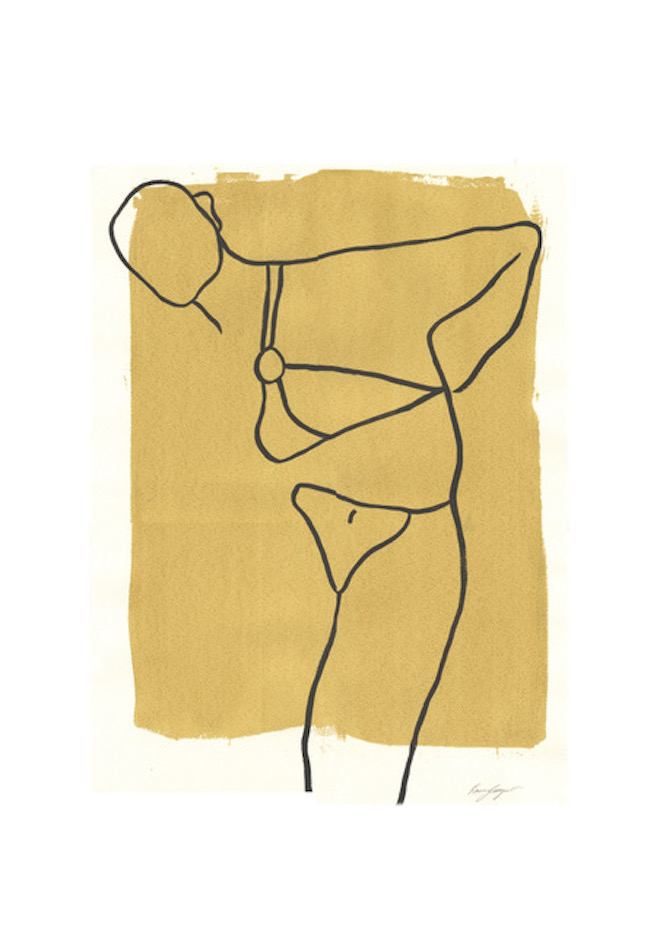
Ranny Cooper, Unbound
With this idea of beauty as perception rooted in subjectivity, Ranny explains how Hans Bellmer, Louise Bourgeois and Jean Cocteau have been lifelong inspirations for her. Likewise, the minimalist linear drawings by Austrian artist Egon Schiele and Mapplethorpe’s fetishistic yet sensual images have been important artistic sources. More recently, she credits the work of photographer Maisie Cousins, whose zoomed images of the female body taken from the series ‘grass, peonies, bum’ are some of her favourites. While Ranny is keen to explore the possibility of living somewhere like Berlin, given it’s notably liberal attitudes within youth culture, she has decided to dedicate the next two years to nurturing her practice here in London. Ranny Cooper will be showing her new series ‘Dismemberment’ at Cafe 119 throughout April. In the meantime, you can follow her practice and intense obsession with poached eggs via her Instagram @rannycooper.
Tags: Art, Ranny Cooper
There is a lot more fun to be had: Twin Meets Alexander Coggin
Absurd and a little bit off, but always funny. Alexander Coggin excels in the art of tender parody. This February he shows a broad range of photographs in his largest exhibition yet.
Whether it’s spending 48 hours with Gigi Hadid, snapping pictures of the supermodel being hand fed b12 drops by her mother, taking photos of Frieze art fair visitors’ clavicles, or documenting the colourful country club lives of his midwestern inlaws; Alexander Coggin always finds the absurdity in every situation. With warmth and curiosity he unveils the soft underbelly of any desirable lifestyle.“That image of Gigi with the drops is more telling than anything that you’re going to get from a staged photograph,” Coggin explains, “it says a lot about the relationship between her and her mom, Yolanda. It’s beautiful and funny and bizarre and tender in a way.”
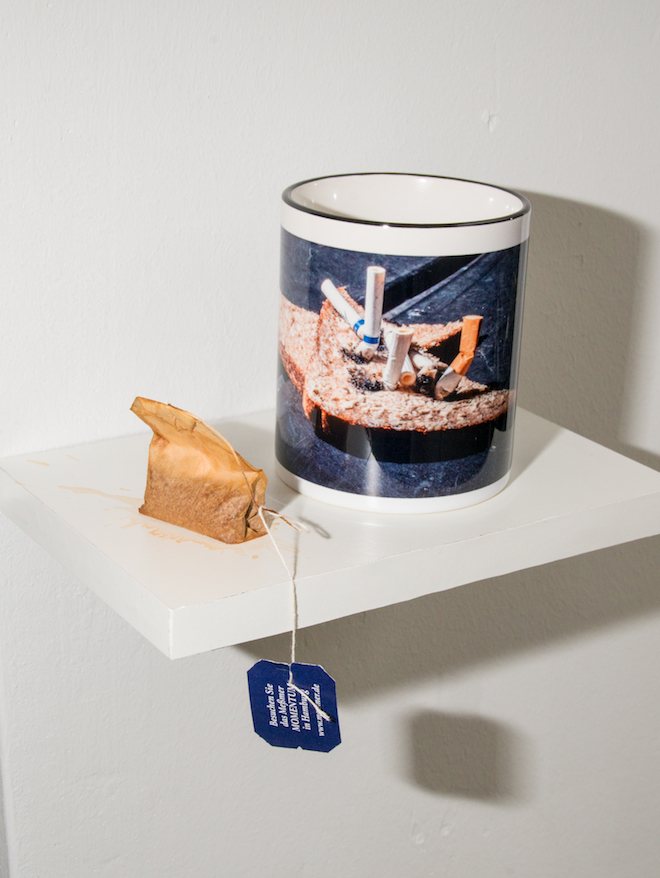
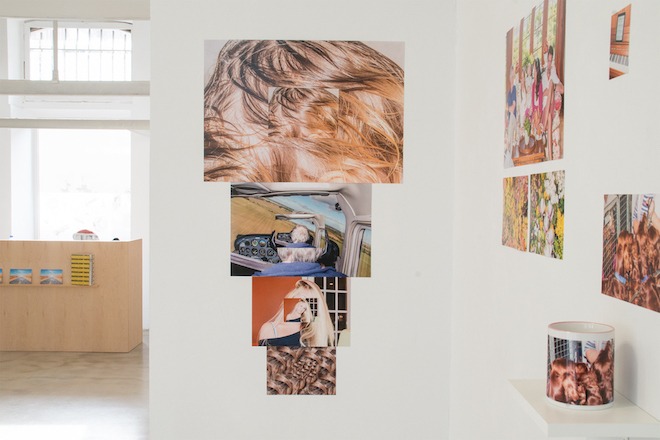
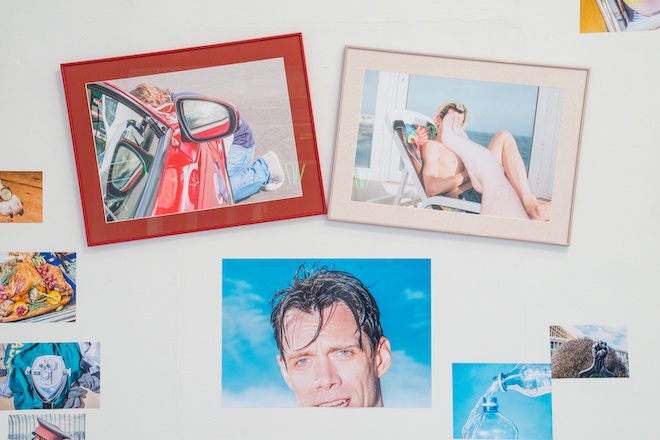
The current exhibition, “Yeah, Magic” at Ninasagt Galerie in Düsseldorf is vast, over a 100 photographs framed and unframed in all shapes and sizes. There are images printed on mugs, clocks, sweatshirts – and on a delightfully ridiculous pair of flip flops.
Over the years Coggin has become known for his personal mix between street and still life photography, a colourful aesthetic and his unique sense of humour. His pictures capture the moments in-between perfection, and they almost exaggerate the flaws and quirks of each subject. But instead of being exploitative or down right mean – a not uncommon thing in the world of street photography – the pictures are loving and relatable. And a great way to ward off any incipient social media depression.
There is something very liberating with an old lady arm purposefully hovering over a large plate of shrimp or the low key eroticism of a gear shift. Most of all it is fun. “I think my most successful images incorporate the full human-ness that live art and theatre give you. It takes the character, the specificity of the situation, the personas we see and don’t see about ourselves and filters all of that into a single still image. At best, my work is very much alive.”
Yeah Magic © Alexander Coggin
Every article ever written (this might not be entirely true) about Alexander Coggin mentions theatre in some way – you have to. It it his one main influence and his educational background. It is also, in an unexpected way, the reason he found and fell in love with photography. Coggin and his husband moved to Berlin in 2011 to take part of the then booming theatre and performance scene. But the complexity of making and acting in theatre became overwhelming.
– After leaving the structure of school I realised that making theatre is such a collaborative process. You need to find a production, a director, a piece of work, a house that can mount the production. My creativity became stagnant. I got into photography as a way to release this pent up creativity in a solo way, beholden to none other. I really started to enjoy Photography when I realised that I could bring the things I love about theatre into the work. It was an antidote, a therapeutic transformation.
Do you think you’re going to go back to the theatre at some point?
– I think so. I still enjoy the binary of live arts vs. still imagery – it’s either one or the other. I think that ultimately, they’ll both come together in filmmaking. That’s the natural progression, but I don’t want to rush this because I want to do it in a way that feels authentic to my eye and my interests.
Your images are often quite raw and people show sides of themselves that you usually don’t see. How do you make the subject feel so comfortable?
– There are a couple of ways to get these authentically voyeuristic shots. The work I’ve done with my husband’s family [Brothers and Others], for instance: Because they are my family, I’m comfortable around them and they don’t change their behaviour when I shoot. It took years to get to that point. When I spend a couple of weeks with them I take thousands and thousands of images, that’s all edited into a finite body of work. I get lucky in terms of numbers. And time.
And when you do a project like the one with Gigi, when you only had a certain amount of time?
– If I have a commissioned piece like that I find that the most effective way is to be a fly on the wall. Which I’m not good at. A flash is very telling. If I wasn’t shooting with flash I could be more voyeuristic, but since I like to mediate images with flash – I stick out. I have to be a little bit more sneaky about it. It’s not a natural place for me to be at all. I like to be engaged, part of the conversation and making people feel at ease with me. But when I don’t have the luxury of time, I have to be a bit more sneaky, a bit more pushy. Again, not at all a natural state for me.
Yeah Magic © Alexander Coggin
Let’s talk a little more about your husbands family, how do they react to your images?
– Well, it shifted with them. I was always very nervous, kind of looking at the images and feeling like I was taking advantage of them. Especially the British Journal of Photography story that ran. They used the word privileged so many times. I was fine with it, and I know it was a necessary and an honest framing, but I felt nervous about how my husband’s family was going to perceive that frame. I called all of them, and surprisingly, no one cared. I think partly that’s because I have conversations with them when I’m shooting. We talk about how we can amplify their character, or how to take the character into something that is beyond them. Just to kind of satirise themselves, letting them explore what they represent too.
They’re part of the project?
– Definitely. If something lovely happens that is authentic, but I didn’t quite get it right in the camera, I’ll just ask them to do it again and they’ll do it. It’s great. They are part of the image making process, it gives them ownership.
Interesting. Because it can be a tricky relationship, that with your in laws.
– We have had long theoretical conversations about some great quotes by Garry Winogrand. He talks about how when you put four corners on an image you change the truth of it and create a ‘new fact’. The way they are represented is not as they are, but it is as they appear in that moment. And that moment could change from shot to shot; this isn’t the reality of who they are. I think they are comfortable with that persona play. I got lucky with them. We have the safety of our relationship, but I have had a hard time translating that element to commissioned work. Then it’s more difficult, I just don’t have the time, so, as I said, I have to be sneaky.
Have they ever vetoed anything that you’ve done?
– I’ve given them the option to veto anything. Sometimes I don’t feel comfortable shooting stuff, but they’re like “Oh get that!”.
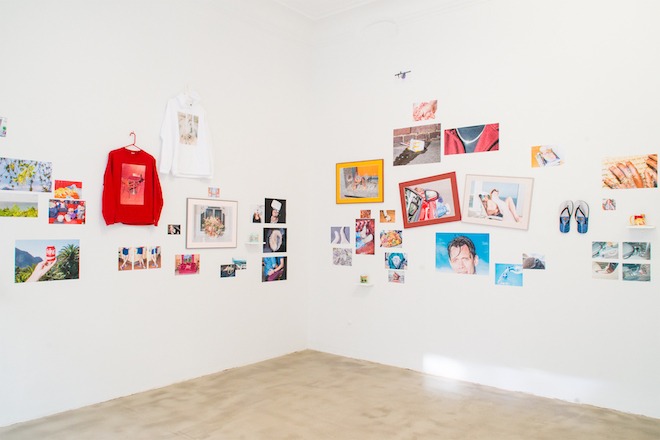
Yeah Magic © Alexander Coggin
Are you ever afraid of going to far, of being “mean”?
– If I shot ‘mean’, if I shot in a way that was disrespectful, inconsiderate, or in a way that the subject wasn’t okay with; I wouldn’t even be able to look at that image. I would not want that in my repertoire of imagery, it would make me feel shitty. So I feel like I have pretty good internal awareness of how the subject is feeling when I shoot. As I’m interested in candid moments and character it can be a little bit dangerous. There is one shot that I still feel conflicted about. It’s my friend Susan, and she said it was fine, but she doesn’t look great at all. Still it’s very telling, my favourite part of the picture is the alcohol and the caffein. You can see her displacement. There is something discontented about her, but it’s not a flattering picture.
I feel like art made by millenials often has humour. Do you think there is some reason for that?
– It could just be as easy as a response to the hard times we live in. As a millennial, as an American millennial, I’ve just been handed a shit plate for my entire adult life. But if you look hard enough there is a lot more fun to be had, a lot more life around you. I feel like I have a little more control if I can find humour in it. It’s just how I see the world.
You can see “Yeah, Magic” at Ninasagt Galerie in Düsseldorf from February 16th until March 18th.
Tags: Alexander Coggin, photography
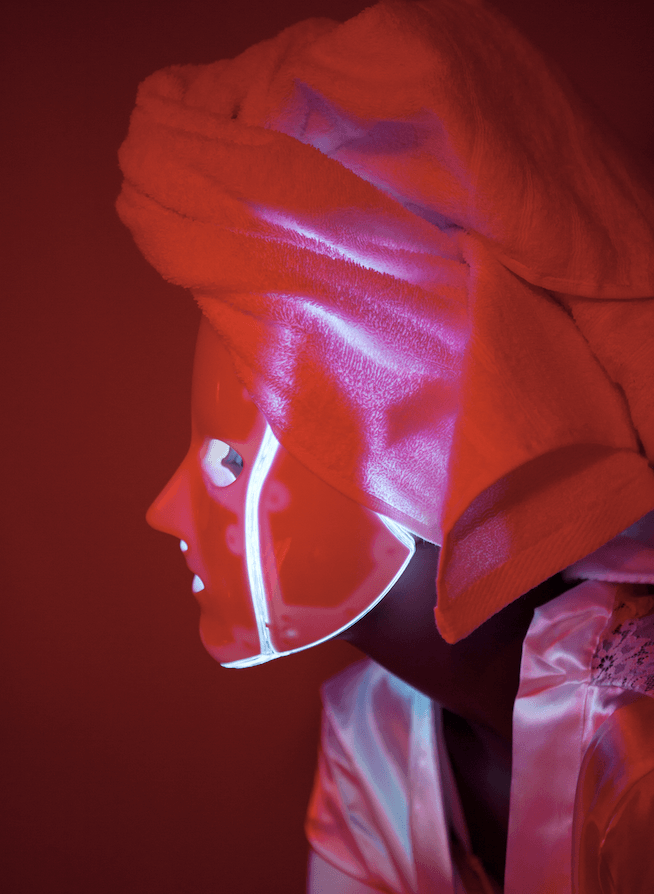
Juno Calypso opens ‘The Salon’ in London
Offering a dystopian and uneasy version of a salon the day after Valentines perfectly communicates the vision at the heart of Juno Calypso’s work. The new multi-sensory installation in Melissa Galeria space in Covent Garden is full of stark red light and casts of mannequins, offering a space that feels weird and uncomfortable. The subversion and play are recurring themes in Calypso’s work, who often works with mask, costume and theatrical stagings to explore ideas of femininity and sexuality.
Open from today, the installation will run until April, offering ample time to wholly immersive yourself in Calypso’s unsettling and compelling world.
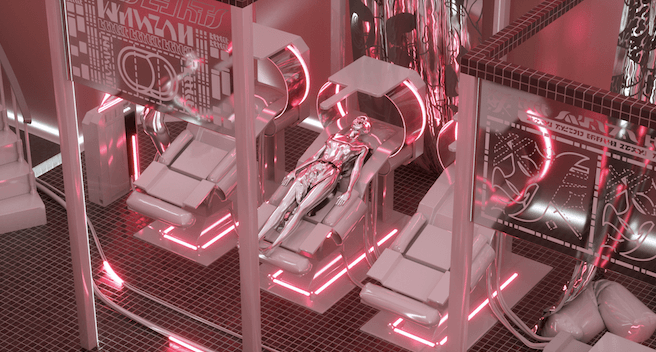
Animation by Geriko | Juno Calypso exhibition in London
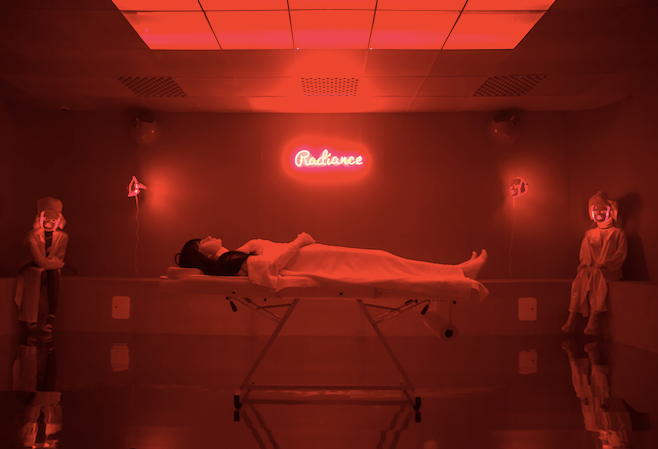
Tags: Feminism and art, feminism photography
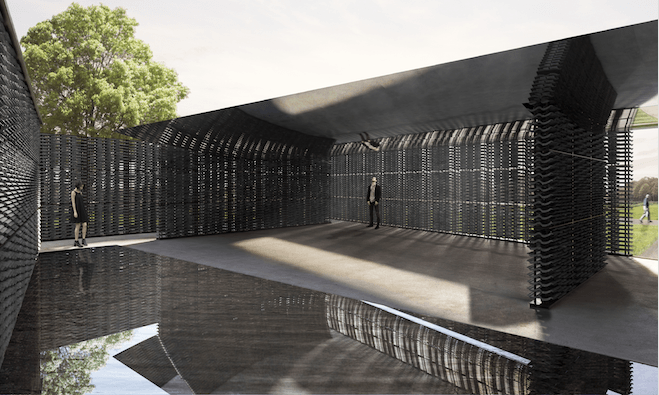
Frida Escobedo to design Serpentine Pavilion 2018
The Serpentine Pavilion 2018 will be designed by the Mexican artist, Frida Escobedo – the youngest architect in the project’s 18-year history to accept the invitation. Born in 1979, the architect, who set up her Mexico City-based practice in 2006, is the first solo woman to have been awarded the commission since the project’s founding, which begin in 2000 with Zaha Hadid.
Escobedo’s Pavilion will take the form of an internal courtyard, a common characteristic of domestic Mexican architecture. A lattice of dark cement roof tiles, designed to mimic a celosia – a traditional feature in Mexican architecture that allows a breeze to flow through a building – will form the walls that enclose the courtyard and diffuse the view out into the park. The structure will equally comprise two pivoted blocks set at an angle to reference the Prime Meridian Line at London’s Royal Observatory in Greenwich.
“My design for the Serpentine Pavilion 2018 is a meeting of material and historical inspirations inseparable from the city of London itself and an idea which has been central to our practice from the beginning: the expression of time in architecture through inventive use of everyday materials and simple forms”, said Frida Escobedo.
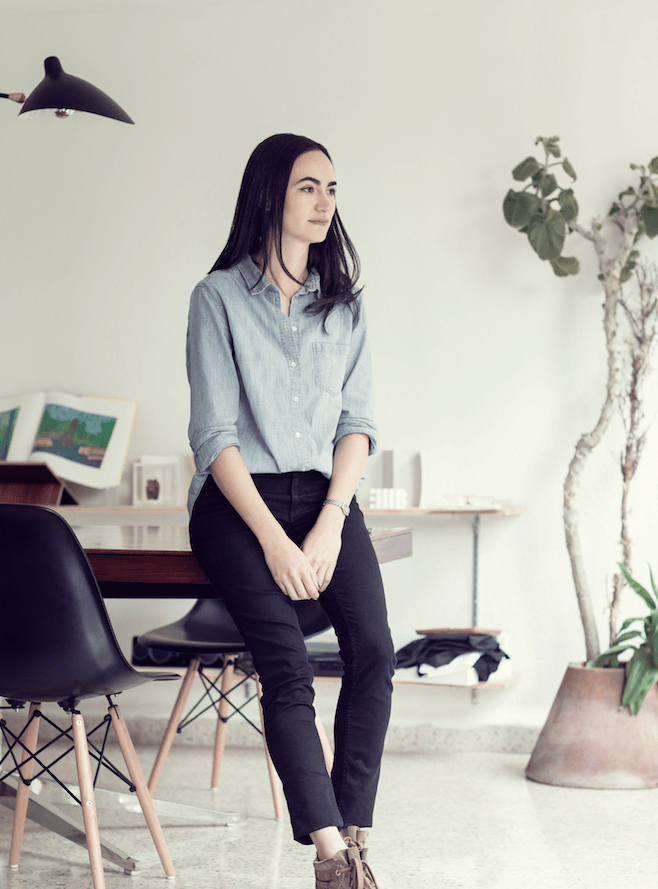
Frida Escobedo | Photography: Ana Hop
“For the Serpentine Pavilion, we have added the materials of light and shadow, reflection and refraction, turning the building into a timepiece that charts the passage of the day.”
The combination of these materials will work in tandem to provide visitors with a heightened awareness of time spent in play, whilst conveying how the very concept of time is central to Escobedo’s design.
The pavilion will be open to the public from 15 June until 7 October and “promises to be a place of both deep reflection and dynamic encounter. With this bold interior, Frida draws history into the present and redefines the meaning of public space. We hope visitors of all ages will create their own experiences in the Pavilion this summer as we continue in our aim of bringing the urgency of art and architecture to the widest audiences” notes Serpentine Galleries Artistic Director, Hans Ulrich Obrist and CEO, Yana Peel.
Tags: Serpentine Gallery
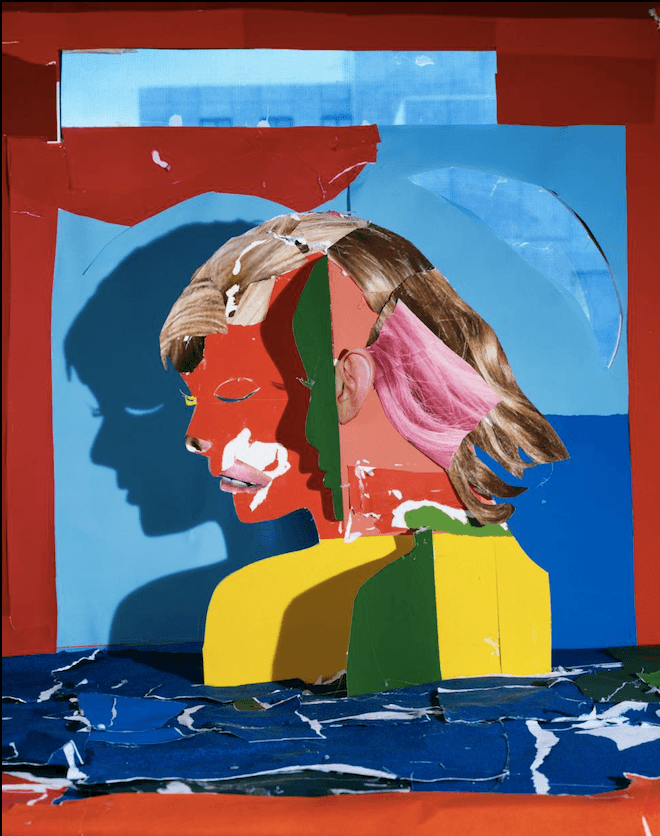
Getty Museum Presents Cut! Paper Play in Contemporary Photography
From Friday 27th February, until the 27th May, the J. Paul Getty Museum at LA’s Getty Centre will play host to works by six contemporary artists, who have each expanded the role of paper in photography.
For some, a photograph is simply an image on a piece of paper, but for other photographers, paper is not merely the end result of developing a photograph – it is a material that can be animated in a number of ways. Timothy Potts, director of the J. Paul Getty Museum, describes how “a number of works blur the line between photography and other mediums”; manipulating the printed photograph by cutting, shaping and combining images takes photography in radically new directions.
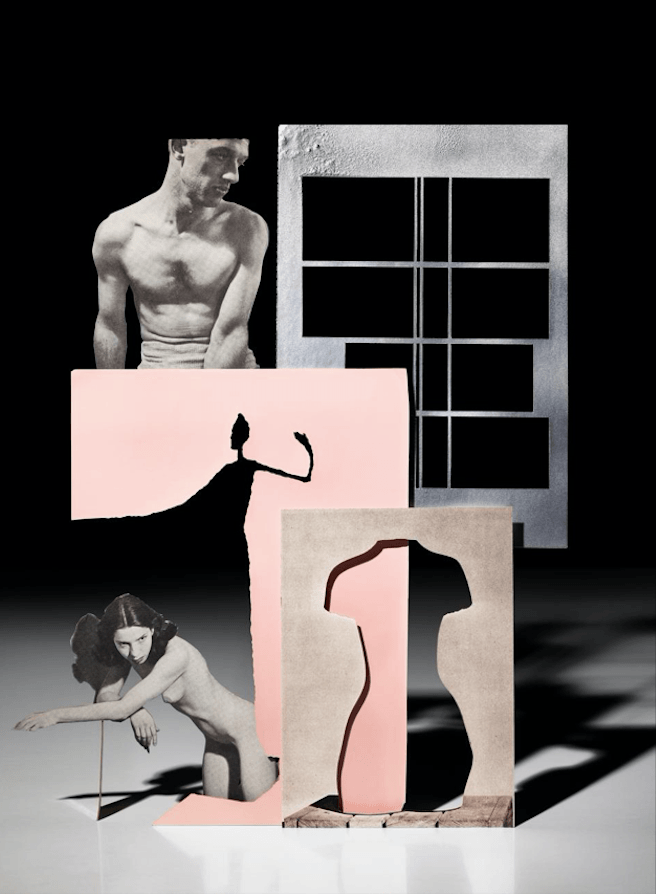
Models, 2016 |Promised Gift of Sharyn and Bruce Charnas © Matt Lipps / Getty
Many pieces have been borrowed from Los Angeles-based collectors, institutions, or galleries, and others have been taken from the Getty Museum’s permanent collection. The exhibition provides a context and historical perspective on the experimentation of many contemporary photographers today.
Works spanning the years 1926 to 1967, by Manual Alvarez Bravo, Alexander Rodchenko, and Ei-Q, all feature cut-paper abstractions and figures modeled from paper that have been photographed. These pieces have provided a basis for more daring contemporary experimentation; artists Daniel Gordon, Matt Lipps, and Thomas Demand create paper models and images taken from current events, the internet, or books and magazines. Others, such as Soo Kim, cut and layer photographs, introducing three-dimensional elements into what is traditionally a two-dimensional art form.
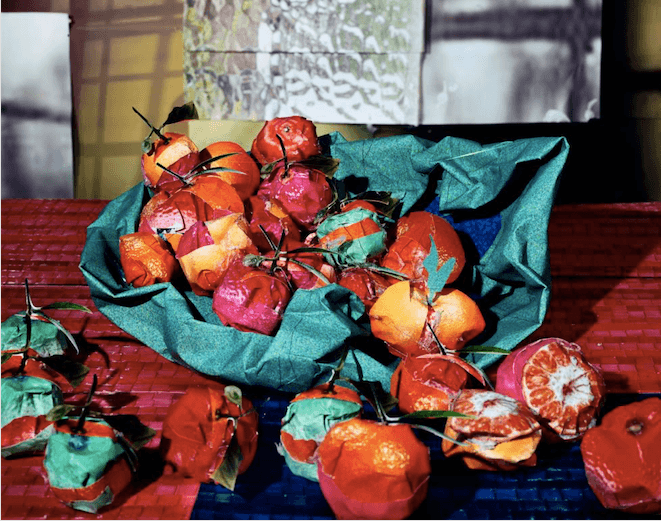
Clementines, 2011 | © Daniel Gordon / Courtesy Daniel Gordon and M+B Gallery, Los Angeles
The exhibition has been curated by Virginia Heckert, head of the Getty Museum’s Department of Photographs, and the works can be viewed from the end of February.
Tags: Contemporary Photography
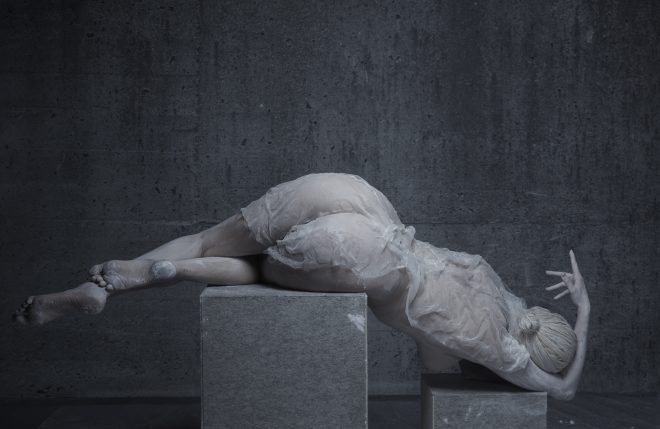
Absolution: new exhibition addresses mental health and childbirth
A new solo exhibition from artist Camille Sanson addresses the experience of becoming a mother through her own experience. Personal and emotive, her series of photographs chronicles her body before, during and after pregnancy, at the same time evoking the state of her mental health through sculptural and transformative poses.
“I would love this exhibition to inspire women with mental health issues to seek their own healing through addressing their subconscious fears and finding a deeper connection within themselves and their shadows.” Commented Camille on the new show, adding that “It is not easy to undertake these journeys but ultimately so important if we are to strive to have a happier life, especially when bringing new souls into this world, so we can avoid transferring our own issues to our children and continuing unconscious patterns within them.”
Each image offers an unedited depiction of the body, but Camille works with paint and clay to emphasise the internal turbulence and tensions that women go through. As such, the images address the process of becoming a mother in its entirety, bringing the nuances of experience sharply into focus and offering a powerful call for communion and openness. In an age where women are increasingly breaking narratives about how they should feel and look during various events in their life, Camille Sanson’s contribution is timely, relevant and necessary.
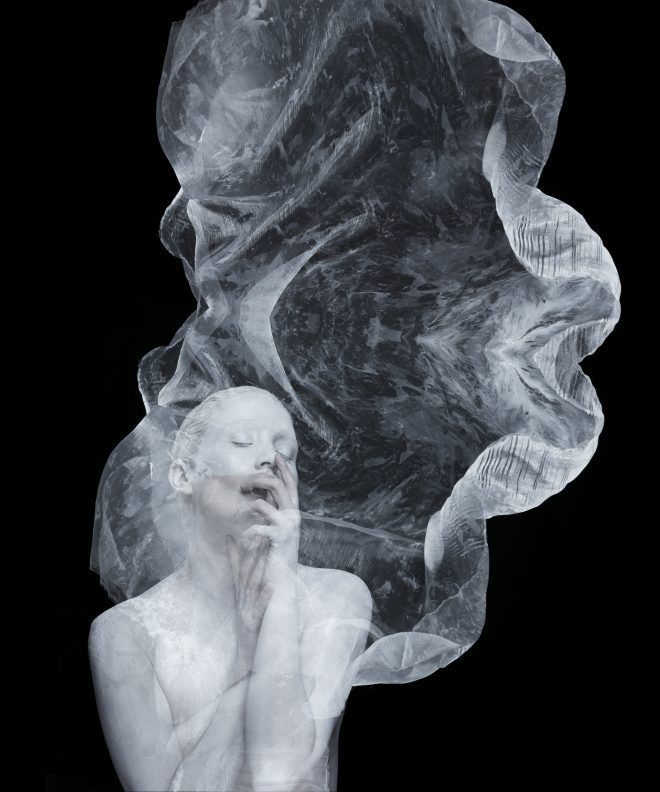
The Veil, Camille Sanson

Gaia, Camille Sanson
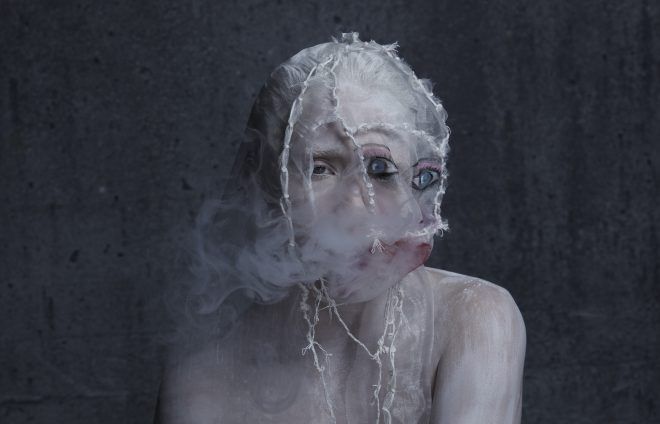
The Mask, Camille Sanson
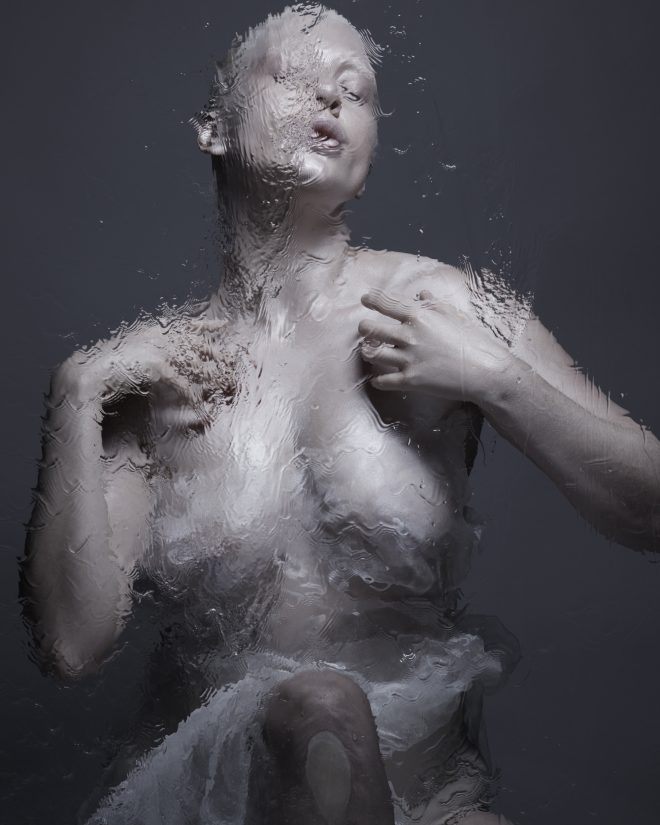
From the Waters, Camille Sanson
‘Absolution’ by Camille Sanson is at Herrick Gallery, 93 Piccadilly, Mayfair, London W1J 7NQ until February 3rd 2018.
Tags: Feminism, Feminism and art

 PREVIOUS

 Twitter
 Tumblr
 YouTube
 Facebook
 Instagram
