Dying like Eva Hesse: Twin meets filmmaker Marcie Begleiter
It’s easy to see artist Eva Hesse’s life as a huge Hollywood epic, filled with love, passion, tragedy and early death. She was not only surrounded by some of the most influential artists of her time, she was one of them. But Marcie Begleiter’s documentary about the artist takes another route, focusing on remarkable artworks and a personality that resonates through time.
It was in graduate school that filmmaker Marcie Begleiter first discovered the artist Eva Hesse. She was looking for something else than the ironic, sometimes distanced work that was lauded in art magazines in the late 1980’s. “I wanted a deeper connection,” Begleiter reflects. “When I saw Hesse’s work in reproduction I was very moved. It was smart and logical, but it also pushed against that with droopy materials. It had a great shifting to it. Eva didn’t simply find something that worked and stayed there, she shifted and changed.”
It’s hard, almost impossible, to describe Eva Hesse’s work in words. During her active years the expression and method was in constant development, and her journey from painter to sculptor shifted with an almost forceful passion. She would within her short life become one of the most important and influential artists of her time. Showing her work together with contemporaries like Carl Andre, Dan Graham, Mel Bochner and Sol LeWitt – almost always as the only woman in the group.
Her early work is mainly abstract paintings that during a residency in Germany started taking a more physical form – somewhere in between a sculpture and a painting.The later sculptures, made in her final years before losing the battle with brain cancer at the early age of 34, are big evocative constructions made with latex, fiberglass, rope and a mixture of mechanical trinkets. But still with a soft, almost sexual appearance.
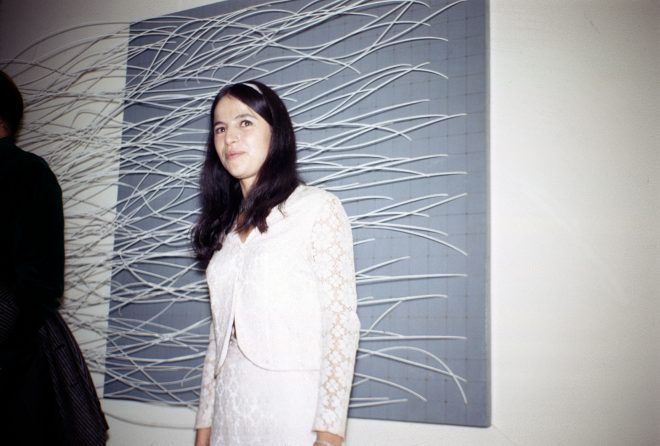
Eva Hesse in 1968. Photo by Herman Landshoff. Eva Hesse. A film by Marcie Begleiter. A Zeitgeist Films release.
Eva Hesse lived a life that kept shifting and changing as much as her art. A life that would have been impossible to do justice without the participation of the artist herself: the documentary is built around Hesse’s journals and letters, kept in the collection of Allen Memorial Art Museum in Oberlin, Ohio. With this extensive collection of writings (1 200 pages), Marcie Begleiter created a film where the artist’s voice rings clear. Through Eva’s own words (read in the film by actress Selma Blair) we are told an extraordinary story of a rather unusual life.
Eva’s life has the stuff of a true drama: Born to a German Jewish family in 1936 she was at age 3 put on the Kindertransport and sent to Holland together with her older sister Helen (only 5 years old at the time). Their parents managed to get out of Nazi Germany and collected their daughters at the Catholic children’s home where they were staying before they all fled to New York. The rest of their relatives were killed in concentration camps, a tragedy that deeply affected Hesse’s mother.
But the hardships didn’t end after the emigration. When Hesse was 10, her mother, in the wakes of a mental breakdown, committed suicide by jumping from the roof of a building. Later in life Hesse’s marriage with artist Tom Doyle would end in a bitter separation, and her beloved father would die suddenly and unexpectedly, leaving Hesse anxious and with a deep sense of abandonment. Still, Marcie Begleiter’s documentary isn’t tragic: It’s full of passion, art, humour and most of all of life. Until the very last breath.
– Ten different filmmakers would have made ten different films. I’m interested in artistic process and materials. There are aspects of Eva’s life that could be made sensationalistic. You have to allude to some of these things, because they are a part of the story, but what’s interesting is this person who faced enormous challenges in her life. Personal challenges and challenges in terms of the world around her, and still she found the persistence and the intelligence to create extraordinary drawings, paintings and sculptures. Even during the last year of her life, when she was greatly ill, she never stopped working. Not even from her hospital bed. And she had a great attitude about it: life doesn’t last, art doesn’t last. We still live our lives in the face of that fact.
The narrative is largely based on Evas letters and notes, could you tell me a little bit more about how you encountered and approached them?
– I had read Lucy Lippard’s book, and she quoted Hesse’s journals. A friend of mine, an arts librarian, told me that the original texts were in a tiny library in Ohio at Oberlin College. I can’t even tell you what compelled me to do it, but I wrote a grant proposal and I got funding to spend a couple of weeks reading through the material. The people at the library would bring me boxes and boxes and I sat there with white cotton gloves on and went through Eva’s personal papers. In the journals there were drawings, postcards from friends, announcements for shows. Her friends, once they knew that there was a library that kept her papers, sent in what they had. It’s all sorts of ephemera. It blew my mind. Here was this authentic, smart, insecure but absolutely self confident – kind of flipping back and forth between the pages – woman. I felt such a deep connection with the person that I encountered.
And after that you became interested in her as a subject for a documentary?
– Coming out of that first reading of the diaries I wrote a theatrical piece. A producer and friend of mine, Karen Shapiro, saw it and wanted to move it to a bigger venue. I felt that we had to get someone from the estate onboard if we wanted to do something bigger. My desire in meeting the people who knew Hesse was to begin a conversation about doing that project. But once I met Lucy [Lippard], Helen [Hesse–Charash] and Tom [Doyle], I felt it needed to be a film. I called Karen and told her that I met some interesting people in New York and that I had another idea. And she said “Oh you want to make a documentary, don’t you? ” and I answered “Yes, how do you know?” she said “I saw it in my meditation this morning. If you want to do that, I’ll produce it.” So I called Helen, to make sure that no one had done it before. She was extremely encouraging and very supportive in terms of giving us access to all materials they had.
Which part of Hesse’s life do you find most defining for her as an artist?
– I find it fascinating that she went back to Germany. This is 1964, less than 20 years after the end of the war. I went there in the 1980s and I had a hard time with it. But she went back to work in ’64, after everything that had happened to her family. She took the advantage to see Europe as an adult, to live without having extra jobs and just work. It was in Germany, partly under the pressure of being there, that she put aside traditional painting and started making three dimensional objects. That marked a real change for her. She started coming off the canvas. In the film it’s really the inciting incident of her life, that’s the change. She came back and she shot off like a rocket.
Did working with the film effect how you see and relate to Eva’s work today?
– I have come to the point where you can show me a drawing and I can pretty much nail the date of creation, within a year or two. There is a familiarity with the work that has deepened. What surprised me, is that after these years of working with her writing and her art, it has stayed fresh. I still find things that she wrote to be interesting, eye opening, inspiring and so thoughtful. It doesn’t get old.
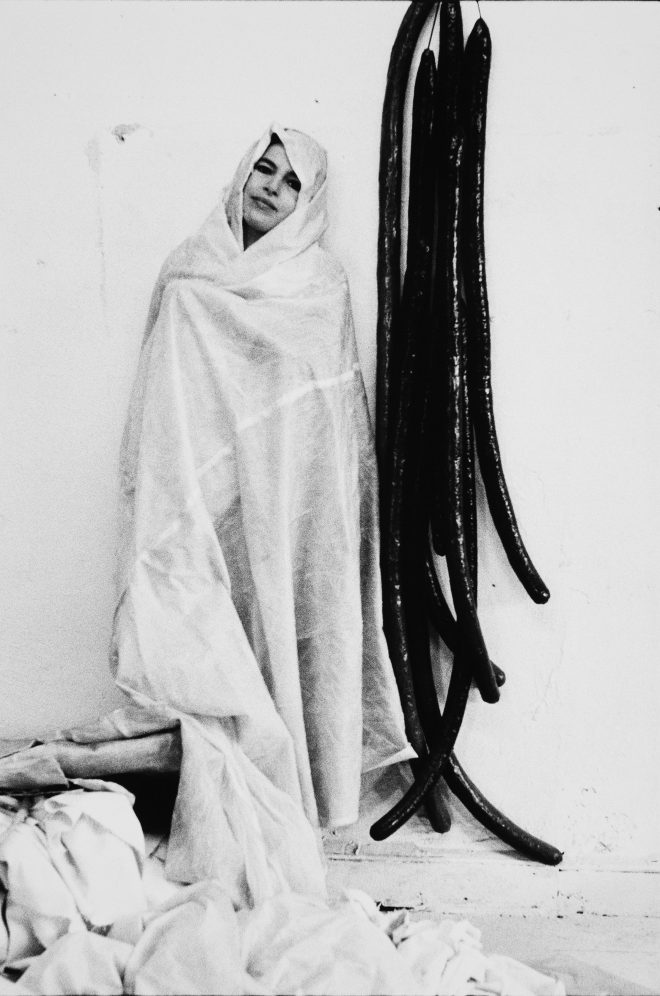
Eva Hesse in 1966. Photo by Gretchen Lambert. Eva Hesse. A film by Marcie Begleiter. A Zeitgeist Films release.
I found the quote “Excellence has no sex” very inspiring. Do you think it’s relevant to mention feminism when you talk about Eva an artist?
– You can’t talk about feminism as if she was part of a movement, because she didn’t participate politically in that conversation. But she was defined by who she was, and not by what other people thought of her. In her lifetime she refused to be categorized as a female artist and she wasn’t in shows with only women. She wanted to be, aimed to be, and was, a part of the general conversation. That’s certainly a feminist stance even though she wouldn’t have used that language. Looking back, female artists of the 70s and 80s certainly saw Hesse as a touchstone, as someone who was being recognised as a peer with male contemporary artists. She was just doing what she needed to do and saying “I’m one of the best”.
From seeing the film it seems to me that whenever Hesse faced hardship, she grew. That it adds to her creativity.
– Everyone has tragedies in their life, maybe she had more than others, but it’s what she did with the tragedy that makes it interesting. That compels us to want to know more and gives us, the people looking, a connection to her bravery. Her tenaciousness and humour. I was talking to Rosie [Goldman] who’s in the film, she told me that she’d never seen anyone face death the way Eva did. There was no regret there. No regret. She was living every moment to the end. I really wanted to put that in the film. In our culture death is sort of a taboo issue, in America death is seen as a failure. A failure of modern science, a failure of medicine, a personal failure. We live a good life. We need to have a good death. And that’s something Eva did; she died a good death.
Emma Tillman’s photographs chronicle the unseen moments in life, those, to steal from Virginia Woolf, islands of meaning which shore up against the ferocious momentum of time. It’s fitting that her book Disco Ball Soul, was named such: thoughtful, investigative and lingering, her portraits of friendships, romance and the natural world offer an energising and playful mosaic of her experience of the world. Here, she tells Twin about the images which have most impacted and shaped her life and work.
Alberto García-Alix
Alberto García-Alix is a Spanish photographer from León whose work was part of a movement that shaped modern documentary photography, but to me he is so much more. And that is where I will begin with this list. I would say in a word, he is shameless. And it is this shamelessness that draws circles around the core of ugliness and strangeness, illuminating it until it is light, despite all its rugged detail.
Taryn Simon is an American artist from New York City. Although I had come in contact with her widely regarded and well collected photography a handful of times in my adult life, I had not been touched by its power until one lonely afternoon at the Tate Modern in London. I wandered into a room full of her work from “An American Index of the Hidden and Unfamiliar” and finally understood.
That rainy day I explored the gap she so eloquently elaborated on. Between the brilliant precision of her semiotic examination of secrets and the divine poetry with which she captures them. Simon raises very potent questions, with elegance and beauty.
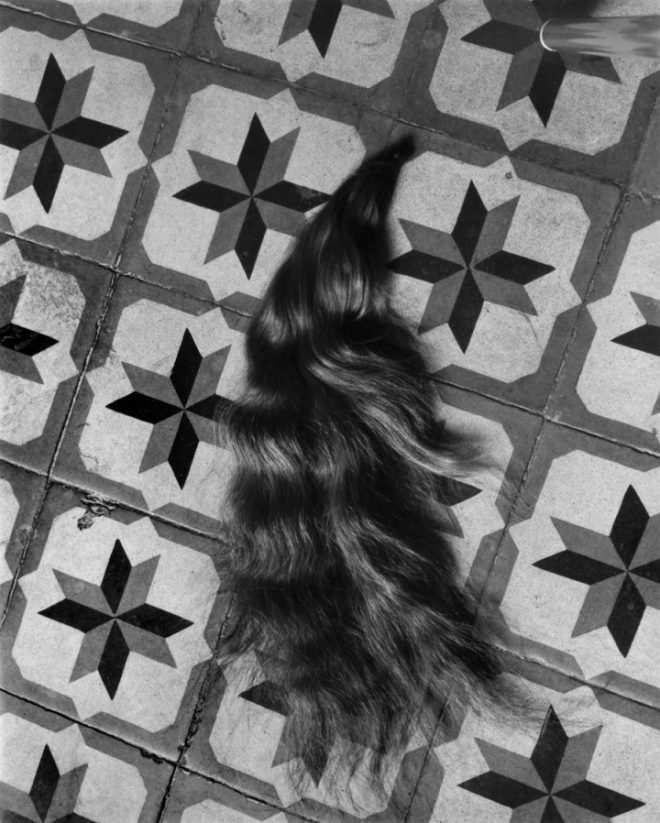
Manuel Álvarez Bravo was a Mexican photographer from Mexico City and is considered one of the preeminent art photographers in Mexican history. His interest in elevating the quotidian at a time when photography, especially in his home country was staged and highly formal, attracted me from an early age.
In addition to his pioneering reach in exploring the everyday, Bravo sees texture as something deep and mysterious, almost sacred. These observations have haunted me from the time I was a little girl, looking through one of his books in the vast living room of a family friend.
Graciela Iturbine
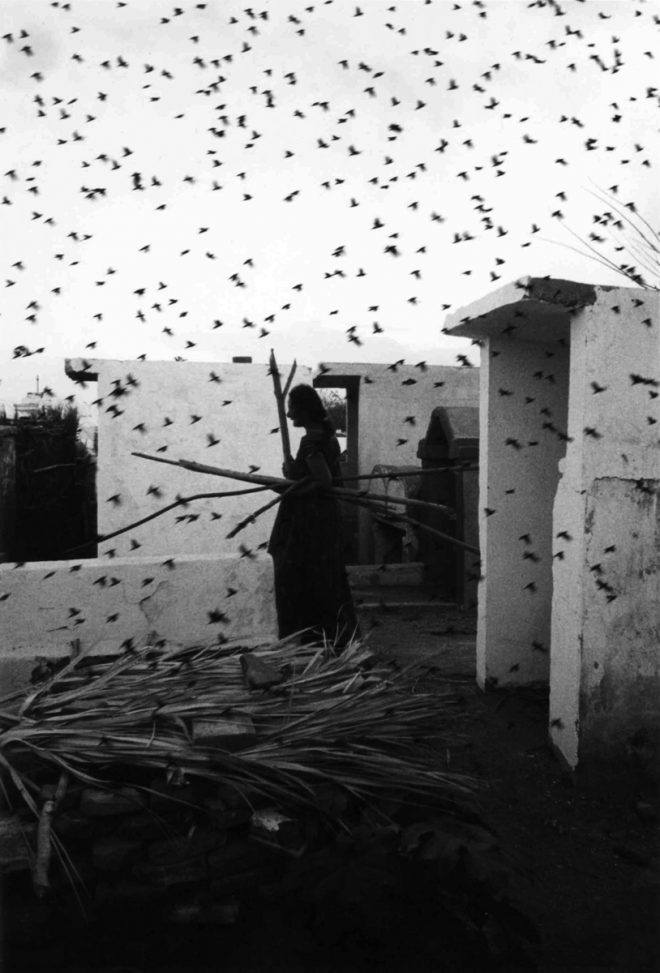
Graciela Iturbine is a Mexican photographer from Mexico City, and protogée of another photographer mentioned here among my favourites, Manuel Álvarez Bravo. She turned to photography after the death of her six year old daughter and when I look at her images, they all seem to have the lingering sadness and mystery of death, even when the works are capturing subjects which are vividly alive. Otherworldly would be a better word, but overused, don’t you think?
Graciela Iturbine, Cemetery Juchita 1988
Ruth Orkin
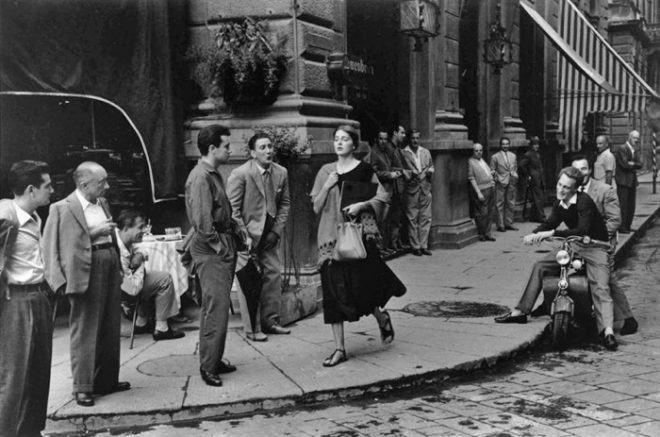
Ruth Orkin was an American photographer from Los Angeles who was largely self-taught. She had a ground-breaking career as a freelance photojournalist during a time when the field was, of course largely dominated by men. But it was my contact with her famous photograph, “An American Girl in Italy” (1951) which includes her in this list. When I was twelve or thirteen, I was given a postcard which featured the photograph on the front.
I became obsessed with the story it told. There was an incredible amount of complex information contained inside. Historically, the photograph is somewhat controversial, and seems to be a Rorschach test for personal ideas about feminism. I for one, knew exactly what it meant; independence, freedom and self-determination. For that reason, I can’t say the photographer directly influenced my work as much as my way of life.
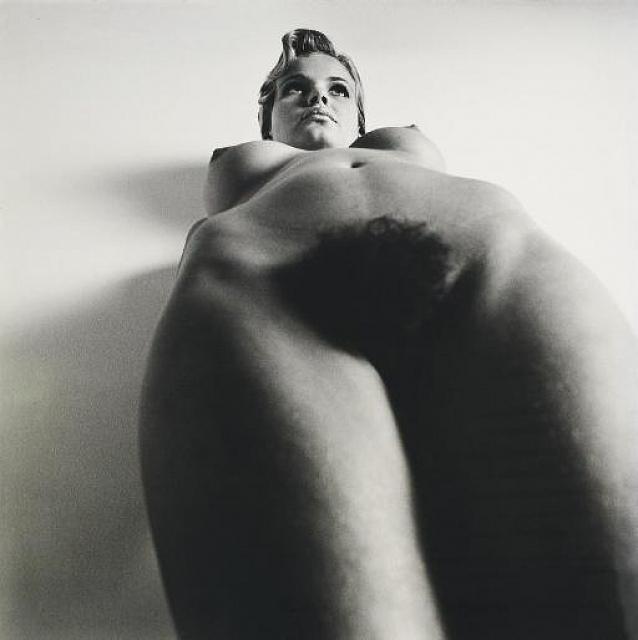
One night, many years ago now, I was at the Chateau Marmont waiting for someone who never came. The bartender, feeling bad for me, very graciously stayed past last call and regaled me with ghost stories from the hotel. One of them was the story of Helmut Newton’s death; a car crash in which he drove headlong into the formidable white wall guarding the hotel’s entrance. Until then, I had always heard his name but never quite put the pieces together, you might say. But his tragic demise piqued my interest and when I discovered his world, I was enchanted. Everything he photographed had a perverse sexiness. It was dark, physical, and expressed a glamorous power that I saw mirrored in my own interests.
I think about him now every time I pass that white wall, and say a little prayer for all who flirt with the dark side.
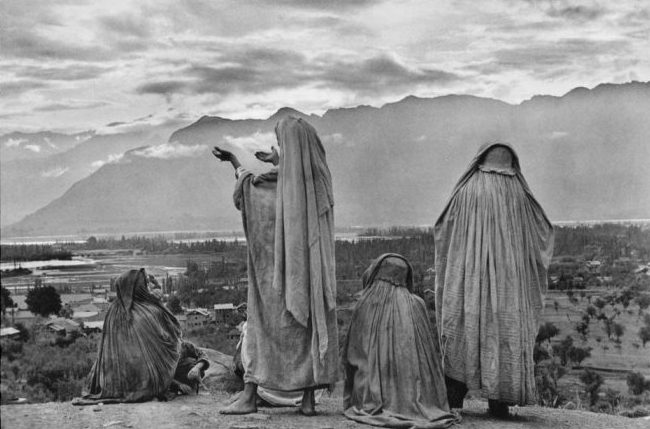
Henri Cartier-Bresson was a French photographer from Paris. The king of composition! The king of the candid! And man, what a life well lived. In 1952 he published his book, “The Decisive Moment” about his philosophical approach to photography (with cover illustrations by Henri Matisse, I might add). In it, he contends “To me, photography is the simultaneous recognition, in a fraction of a second, of the significance of an event as well as of a precise organisation of forms which give that event its proper expression.” And I couldn’t agree more.
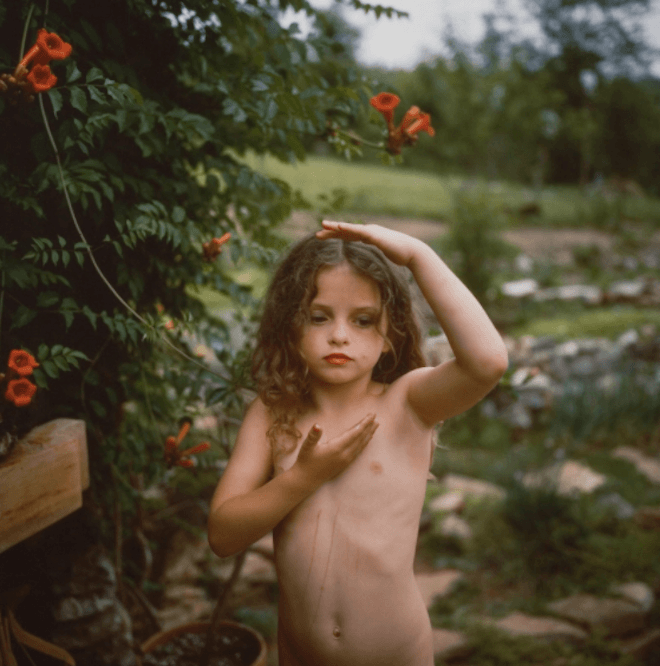
Sally Mann is an American photographer from Lexington, Virginia who stirred incredible controversy in the 1990s for photographs of her children, mostly in the nude on the Virginia farm where Mann still lives with her family. I think the images are incredibly beautiful, touching, and unflinching. I love a little controversy if the source is worthy, and to me, these photographs have most definitely been an inspiring and worthy source for years.
From the 18th January until the 25th February 2018, the Zabludowicz Collection will host Siobhan Coen’s Unknown Knowns, an installation featuring the voice of former US Secretary of Defense Donald Rumsfeld, alongside LED pulsating light that saturates a large print of brightly coloured pixels, creating a hallucinogenic work that is both seductive and destabilising.
Siobhan Coen focuses her work on the function of the human mind. Her research into scientific theories of consciousness and perception is brought into dialogue with social realities, and her examination of neurological, technological and political information-filtering makes her work particularly relevant. We spoke to Siobhan about Unknown Knowns, the inclusion of political figures in her work, and her artistic methods.
Can you tell us about your piece Unknown Knowns?
It’s an evidence-based fiction. I have re-edited the voice of Republican Donald Rumsfeld from his audiobooks, extracting abstract statements until they suggest a narrative. Rumsfeld emerged as an aesthetic philosopher-type character intent on changing the way we see. The audio is combined with pulses of programmed RGB lights that animate a panoramic pixelated print, creating an illusion of movement.
How has the work of artist Brion Gysin informed your practice?
I had always felt a bit short-changed by how little of the information we receive through our senses actually makes it into our consciousness. I read a study by Professor David Nutt, which found that taking hallucinogenic drugs reduced this unconscious brain filtering. Subsequently, I was drawn to Gysin’s Dreamachine – a device for inducing hallucinations from flickering light effects – as a way of accessing all that missing data, and also to explore the possible psychedelic effects of reduced information filtering in society. I have also been influenced by his cut-up technique, a method of rearranging text in order to find truth.
How does your work examine visual perception and unconscious control?
I rework the component parts of digital communication – RGB light, pixels that make up images, and the words of those with the loudest voices – to examine how their qualities rather than subject matter, might affect us beyond our conscious awareness. Questions of how human perception can be manipulated and altered are pretty timeless, and I hope my project is open enough to relate to different cultural and technological moments. In fact, I’m drawn to how these things can be cyclical. For example, Steve Jobs believed that the feeling of connectedness from taking LSD in the 1960s allowed the internet to be imagined. And the internet now seems to be producing a slightly hallucinogenic effect by reducing information filtering. There’s a looping of cause and effect.
What methods do you use to create tension between form and content?
I try to edit the voice so that it sounds believable, in order to highlight how form rather than content can determine what we perceive to be true. But also, the process of maintaining speech rhythms prevents me from imposing my thinking. I find that both the narrative and visual elements become largely dictated by the form rather than the content of the writing. Rumsfeld’s books were full of proclamations and advice, they had a quality of persuasion or seduction that suggested projection to an outer world in order to change it.
How do you put the audio and visuals together to create the final piece?
I create the audio and visual elements in parallel so that they feedback into each other. I find it a way of exploring my interests through a system of embodied cognition, rather than doing so purely intellectually.
How do you choose which political figures you want to incorporate into your work?
I first used the voice of Tony Blair from his audiobook A Journey (2011) – he just struck me as someone who had seen things that weren’t there, so he was a good figure to talk about my interests. In my research I became interested in the political rhetoric of that era, the turn of the millennium, as potentially the beginning of the post-truth phenomena that surrounds us today. Rumsfeld’s abstract language stood out as something very particular however, in the way he deployed it to defocus attention.
What do you hope viewers will take away from the installation?
I hope the piece offers a refocusing of attention, and a shifted view of material that might feel at first familiar. I think of the project as being about truths hiding in plain sight. And at the very least, visitors get to take away a printed transcript if they wish.
Zabludowicz Collection Invites: Siobhan Coen, 18 January – 25 February 2018, Zabludowicz Collection, London, www.zabludowiczcollection.com
A new exhibition at the Fahey/Klein Gallery in Los Angeles brings the evolution of the female gaze to the forefront of the narrative. Aligning an international rostra of women artists, the exhibition celebrates a new era of photography in which the body is examined rather than objectified; observed rather than owned.
Exhibitors include Amanda Charchian, Remy Holwick, creative duo Honey Long & Prue Stent, and Magdalena Wosinska, who together offer an exciting harbinger of the future feminine narrative in photography.
Images span the mystic and mythic to snapshots of the mundane, with Charchian drawing inspiration from psychologist J.A. Lee’s interpretation of Greek philosophy, Prue Stent and Honey Long focussing on powerful juxtapositions of material and colour and Wosinska offering raw, intimate portraits.
The future looks bright, the future is female.
Future Feminine is at Fahey / Klein Gallery from January 18 – February 24, 2018.
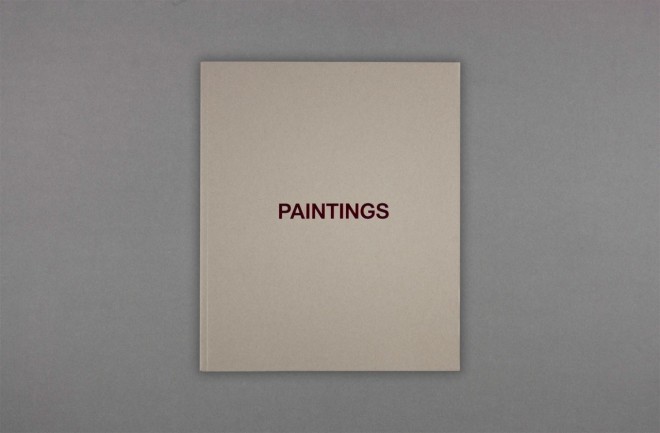
Celebrate the festive period at this Friday, 15th December with a Harley Weir book signing at Claire de Rouen.
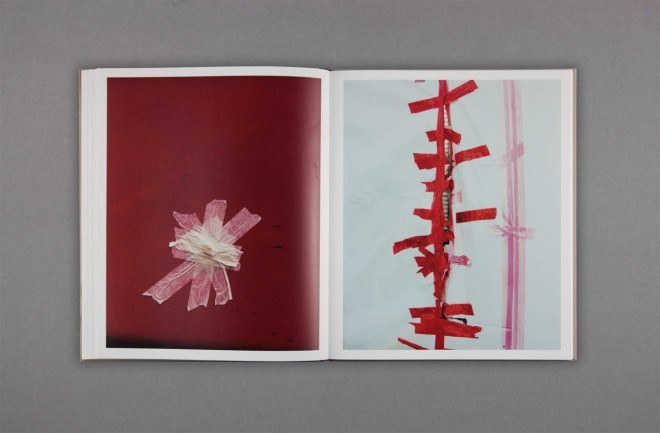
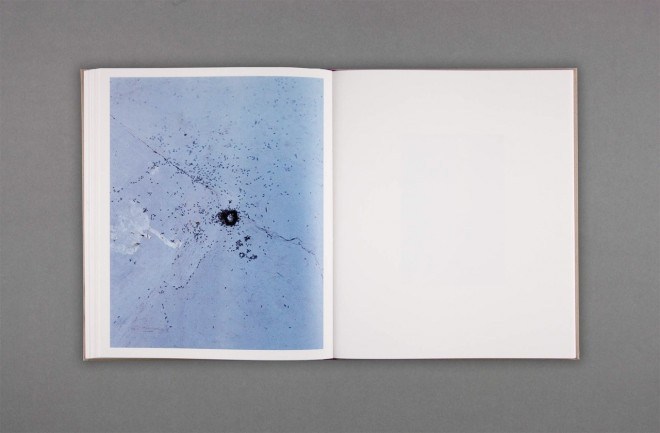
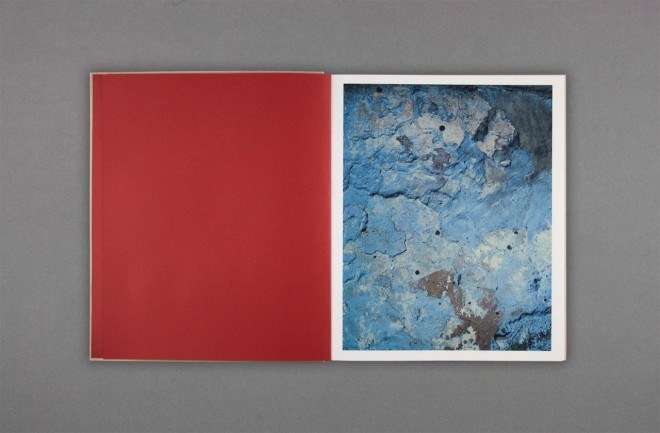
Harley Weir’s new book, Paintings offers a different focus for one of fashion’s most iconic contemporary photographers, shifting the subject matter from humans to paint and texture. The images contain the same energy and precision as her portraits, playing with rhythms and juxtapositions within a more confined space.
Stop by the hallowed book shop this week to pick up your own copy – and browse the rest of their beautiful stock (including, of course, Twin).
The sun has well and truly set over the “art world’s” hedonistic winter break: Miami Art week. Now we have returned to our respective corners of the world, (almost) shaken off the jet lag and managed to gather our thoughts, here, below, are five highlights from last week’s events in the Magic city.
Tanya Layton, Art Basel Miami 2017 – Nova, Booth N17
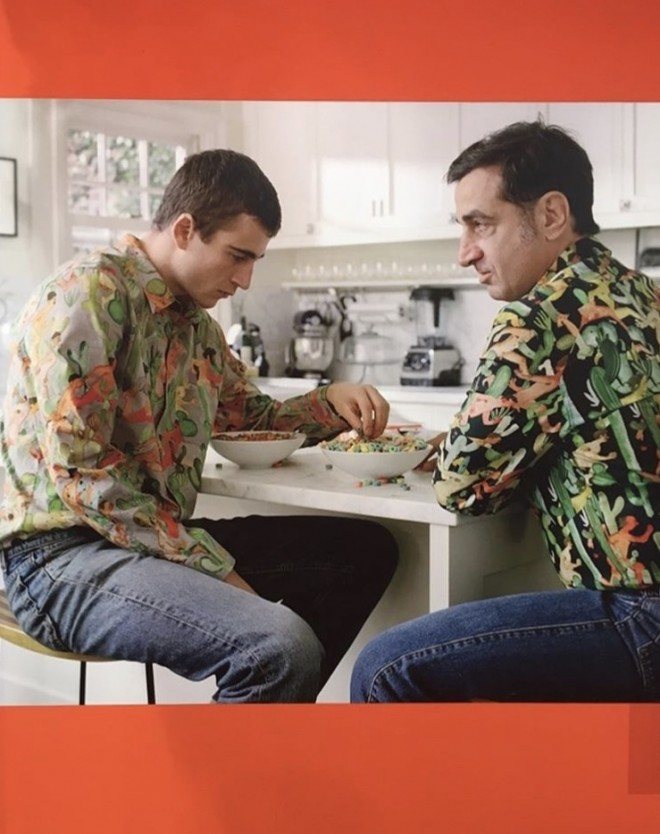
The seemingly unusual set up of Tanya Layton’s booth was particularly intriguing this year. Blurring the line between fashion boutique and art fair booth, the Berlin-based gallery featured the new menswear collection created collaboratively by artist Sanya Kantarovsky and designer George McCracken. Comprising of three limited-edition shirts, the collection is patterned with imagery from Kantarovsky’s watercolour compositions that depict uncomfortably chaotic scenes; one shows nude men attempting to sprint through a field of cacti, the other shows a network of old white men dressed in patriotic colours strangling each other in their attempt to get to the top. While the Hawaiian-like prints are complementary to the surrounding Miami Beach, it goes without saying that the collaborative “campaign” reaches beyond the irony, commenting on male ambition, self-interest and competitiveness in today’s society.
Tanya Leighton
ROOM 2022, Es Devlin, Edition Hotel, Miami Beach
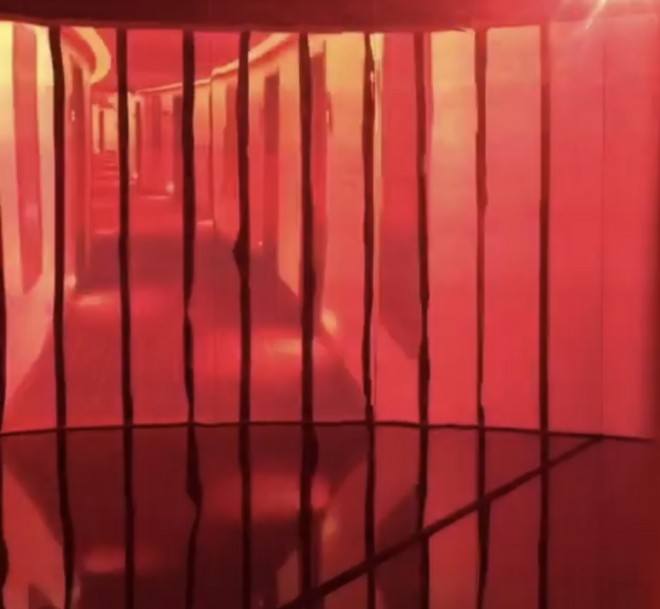
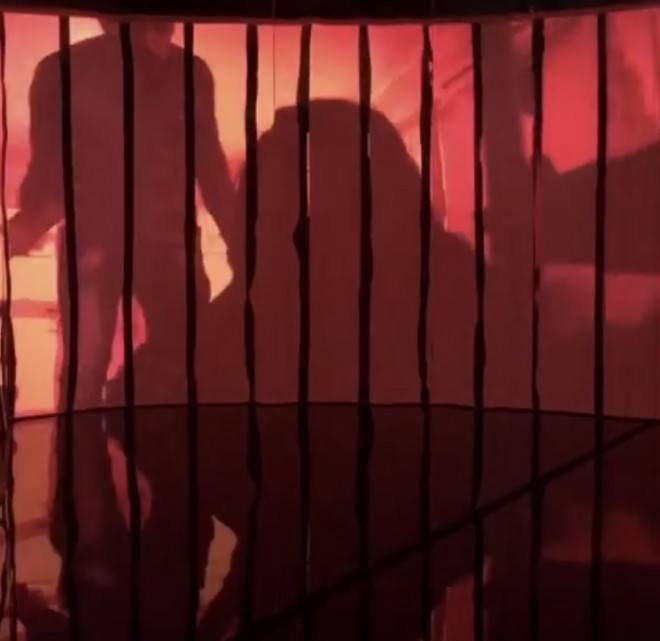
Located at the Miami Beach Edition hotel, artist and award-winning stage designer, Es Devlin, presented ROOM 2022; a large-scale immersive installation that takes visitors on a journey from reality to illusion. Devlin’s first site-specific art installation in Miami and first in a hotel setting, begins in a re-imagined hotel room and ends in a vaulted elliptical mirror maze. Spanning over 7,000 square feet, ROOM 2022 invited guests “to participate in a collective exploration and reimagine a new version of the familiar hotel ecosystem.”
Es Devlin
Franchise Freedom, Studio Drift, Faena, BMW and PACE
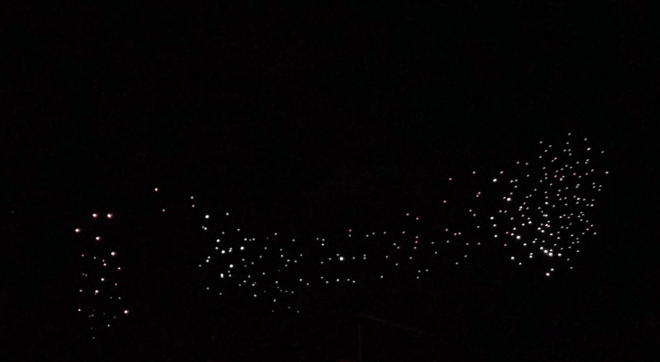
Marking the opening of Art Basel Miami Beach and debuting their most recent innovation, Lonneke Gordijn and Ralph Nauta of Amsterdam-based Studio drift, presented their spectacular sculpture, Franchise Freedom: a flying sculpture comprising of 300 autonomously flying illuminated drones that together imitate the natural flight patterns of starlings. Inspired by this phenomenon, the artists translated these patterns into software specifically embedded into drones to create a powerful display that asks us to question the very principles of freewill, self-organisation and programmed behaviour.
The Rubell Collection – Still Human
If looking to escape the crowds of the fairs in South Beach, a trip across to the mainland is all the more welcomed during this time of year. The Rubell Collection, housed in a formed DEA warehouse, is nothing short of being an anchor for the now very hip Wynwood Design District. Its current exhibition, Still Human, addresses the complex nature and consequences of the digital revolution and recent technological developments as they redefine the human condition. Presenting works from twenty-five artists, including Jon Rafman, Ed Atkins and Cécile B. Evans, the exhibition seeks to address increasing concerns around topics related to artificial intelligence, surveillance, social justice and virtual existence.
Josh Kline, Thank you for your years of service (Joann_Lawyer) (2016)
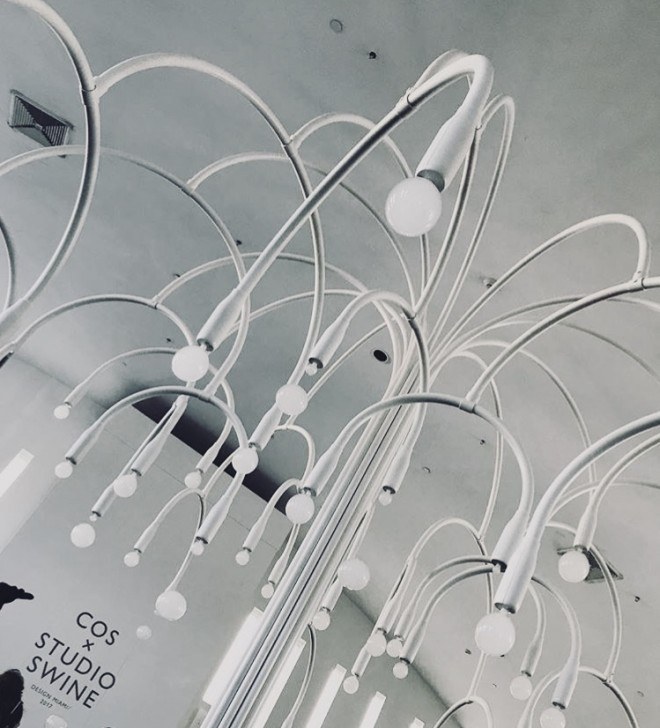
COS Collaboration with Studio Swine (Alexander Groves + Azusa Murakami)
Oversaturation and the need to escape the chaos of the fairs is by no means uncommon. Thankfully, the surrounding area is (overly) populated with parallel happenings waiting to be discovered. The graceful bubble tree at The Temple House in Miami Beach was the perfect antidote to the traditionally stress-filled bustle of Art Basel. The multi-sensory installation, New Spring, commissioned by king of minimalism COS in collaboration with London-based duo Studio Swine, comprised of a central sculpture ejecting scented bubbles, only to evaporate into ashy smoke upon contact with contemplative visitors below. Inspired by the unique shape of the Japanese Cherry Blossom tree, the British artist Alexander Groves and the Japanese architect, behind Studio Swine, Azusa Murakami, sought to create an environmentally-friendly sculpture drawing awareness to the impermanence of matter.
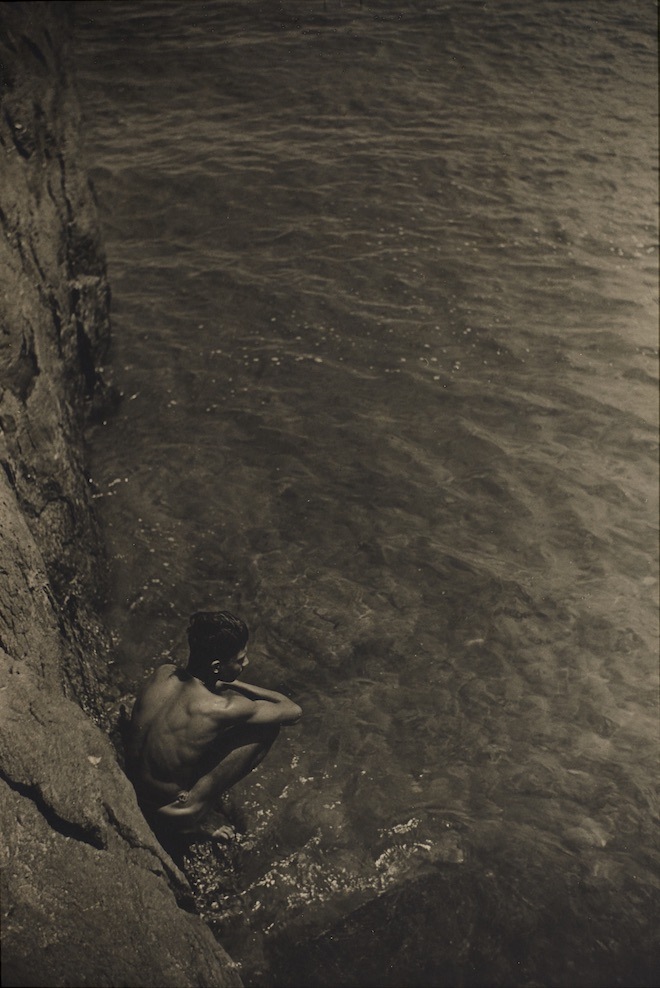
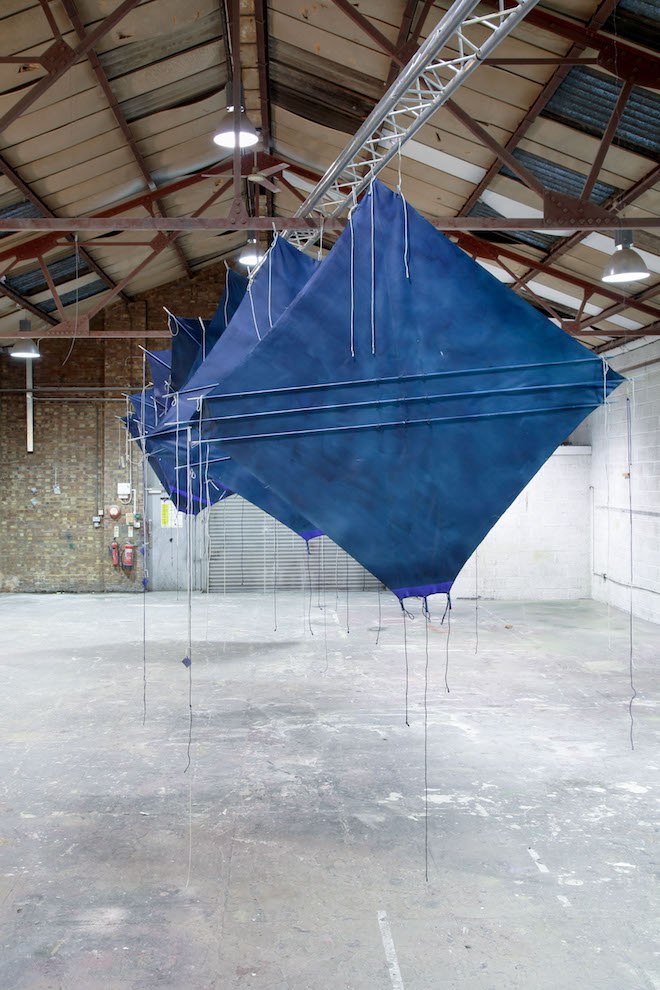
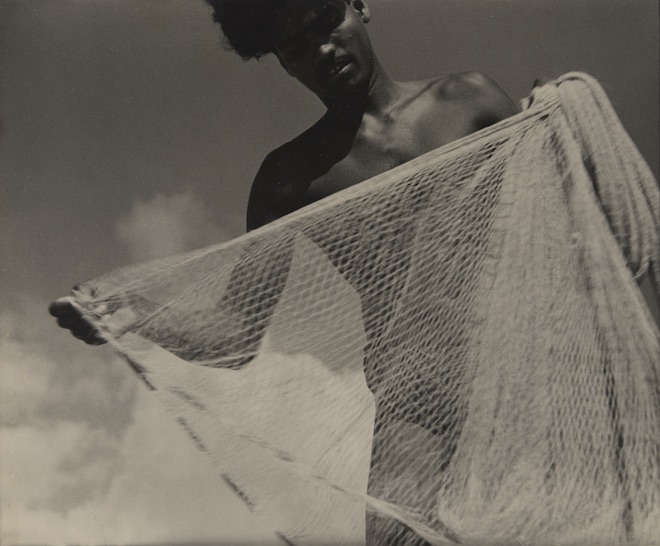
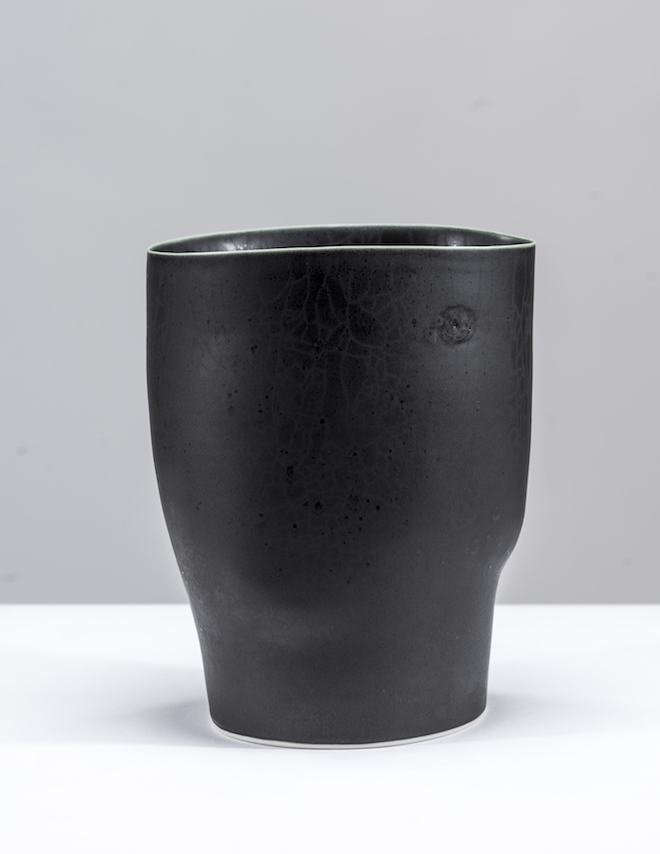
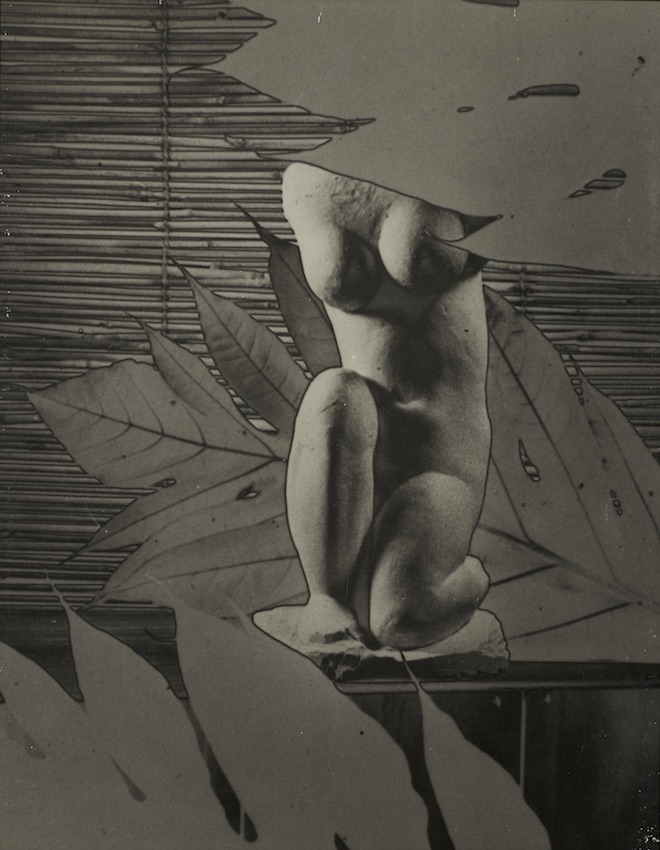
Opening during Miami Art Week, the LOEWE Foundation‘s ‘Chance Encounters III’ (the third in its series) brings together work by captivating artists– Sara Flynn, Richard Smith and Lionel Wendt – who together offer a rich fabric of work from across continents and time.
Continuing the brand’s commitment to craftsmanship and creative culture, the launch of the new exhibition symbolised an evolution of the connection between the house and artists; using the themes of shadow and the relationships between forms as the main aesthetic tenants, the works span fabrics, ceramics and photography.
“Art and craft are always at the centre of my creative process and these exhibitions are an exciting way of exploring artists that are important to me.” Said Jonathan Anderson at the opening of the exhibition. “I love the unexpected things that happen when people from completely different worlds are brought together, the antagonism can create something completely new.”
Open until February 2018, this exhibition offers a compelling display within the beautiful surroundings of the LOEWE Miami Design District store. If you’re in Miami, visit.
Remember me when I’m gone
Alex Franco’s exhibition, “Remember me when I’m gone” debuted on Friday 1st December at Crea Center Polivalent in Barcelona, with a second showing at Unit 10 Gallery on Tuesday the 5th of December.
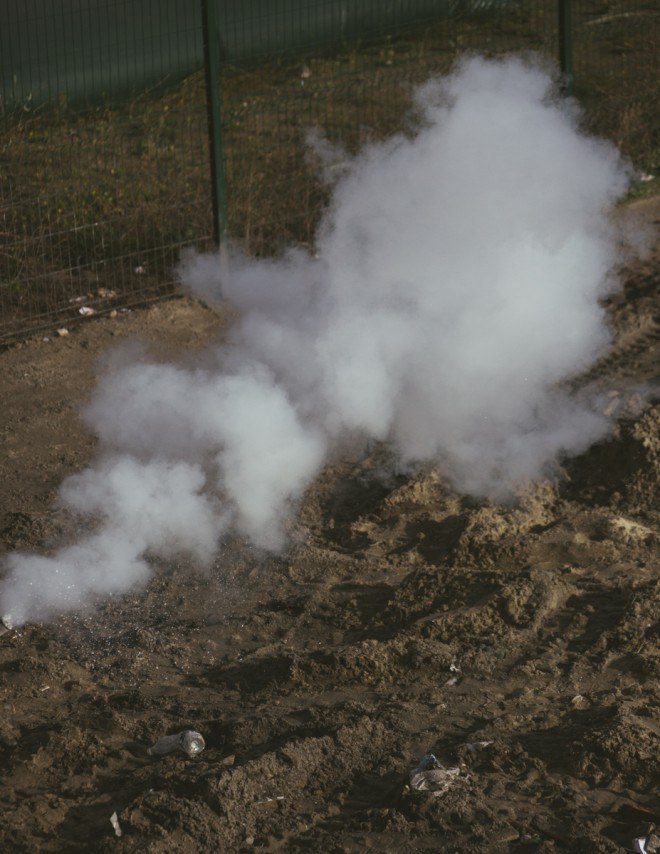
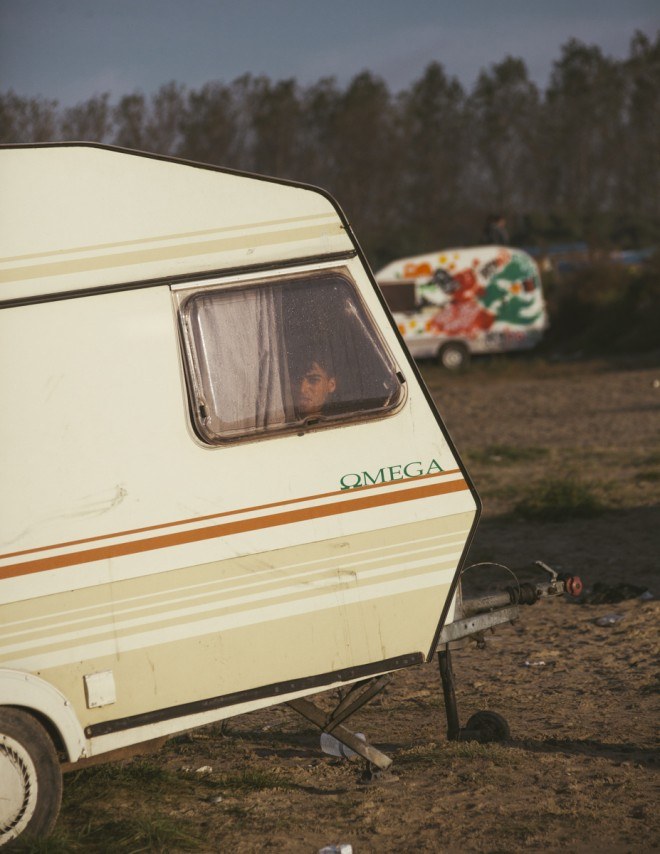
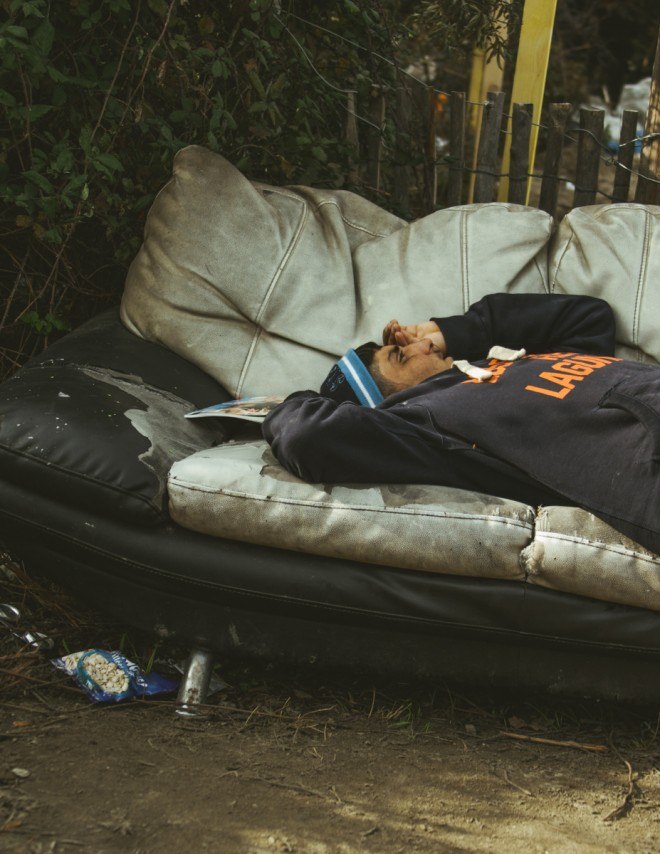
The works are a response to the refugee crisis, and were taken at The Jungle in Calais across several trips over a period of eighteen months. The images explore the context of displacement, while striving to shine a light on a problem that remains unresolved.
You may have seen pictures from The Jungle in the news. The shabby, temporary constructions became a place of refuge for those who had fled their homes, arriving in Calais only to be displaced again, and shoved to the margins of our system. After The Jungle expanded to house almost 10,000 inhabitants in a period of eighteen months, the French government destroyed it and expelled the refugees, forcing them to leave, separate and relocate. The interest in this problem has dwindled, given less and less media attention, as onlookers delude themselves that the problem no longer exists as the structure has been dismantled. But despite its changing physicality, The Jungle continues to exist just as it did before its demise, only in a different, dispersed form. Through his photos, Alex Franco encourages his audience to consider where all these refugees are now, and whether they have been given the chance at a new home and life that they deserve.
All work is for sale and proceeds will be donated to Help Refugees.
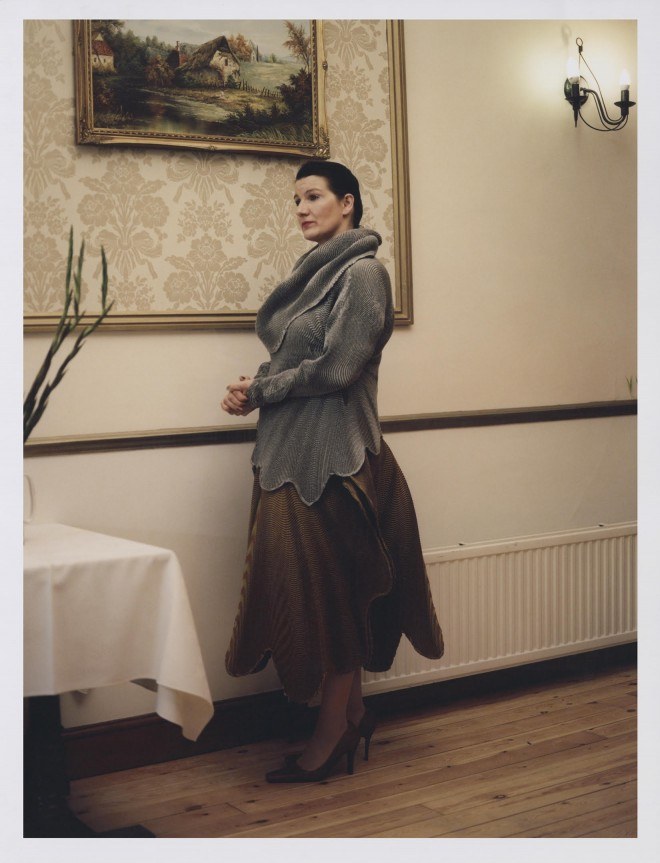
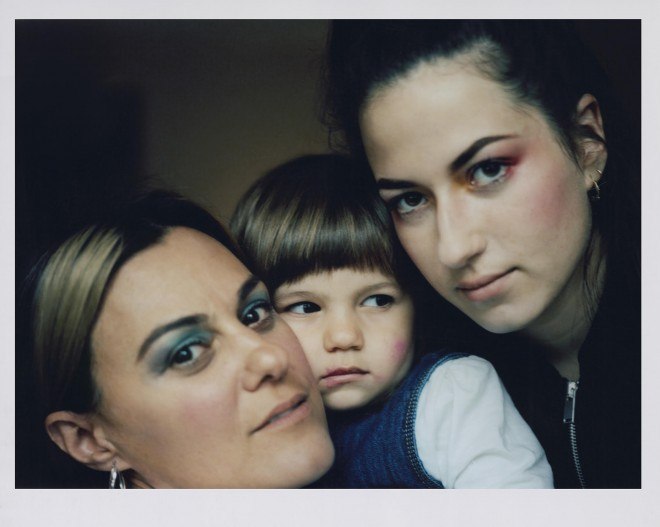
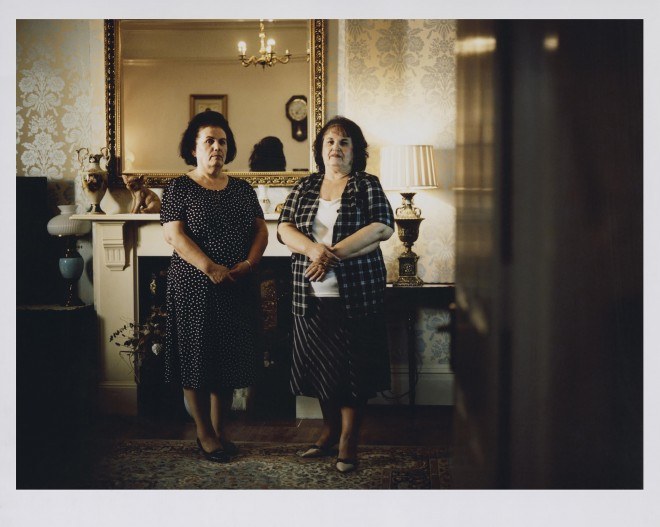
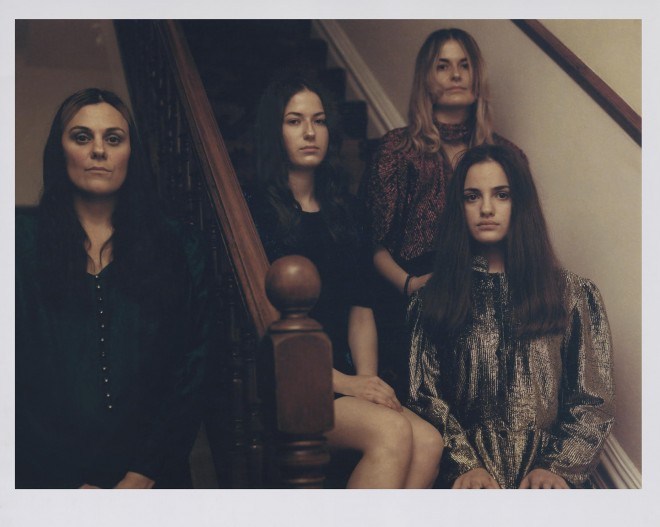
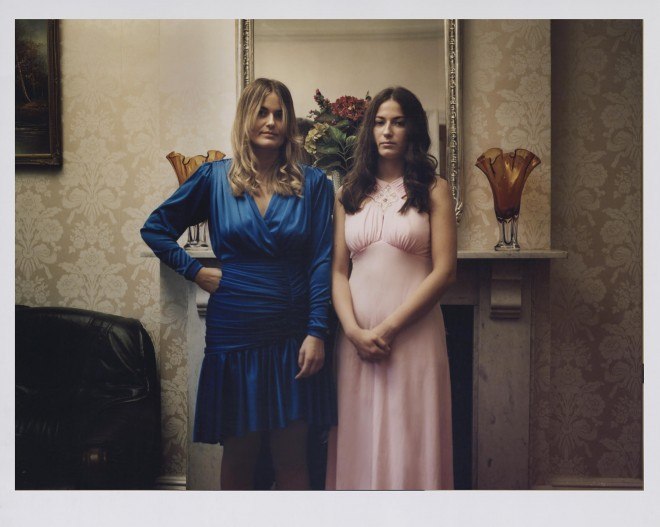
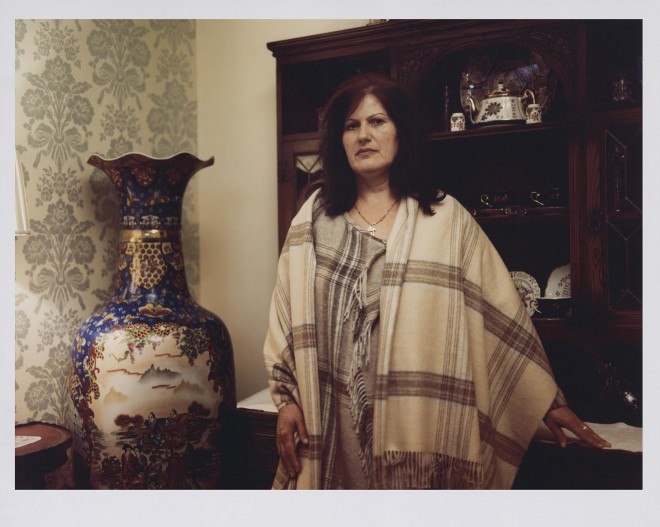
“I always felt that members of my family were eccentric characters that could have starred in their own movie” says Bobana Parojcic. The Serbian make-up artist paired up with photographer Sarah Louise Stedeford, along with stylist Lee Trigg and Tom Wright, to celebrate her family’s rich history within the settings of their home in Oxford, The Palace Hotel.
Nostalgic and vivid, the photographs pay homage to the transitions and journeys at the heart of the family story. “The women in my family were always powerful, strong role models that held the family and glued everything together” adds Bobana as she recounts her family left behind communist Yugoslavia to make a new life in England in the early 1970s.
Having settled at The Palace Hotel, the space has come to represent not only where Bobana’s family built their home, but also a haven of conversations, memories, events and romance.
A graduate from Royal College of Art in 2016, artist Nadine Shaban works across fashion, sound and performance to create idiosyncratic works. Having recently teamed up with Axel Arigato for a new exhibition in the brand’s Soho space, Twin caught up with Nadine to talk about approaching space, working in flux and externalising emotion.
Your new exhibition is entitled ‘Let Me Breathe’ – what inspired this title, and what were you responding to?
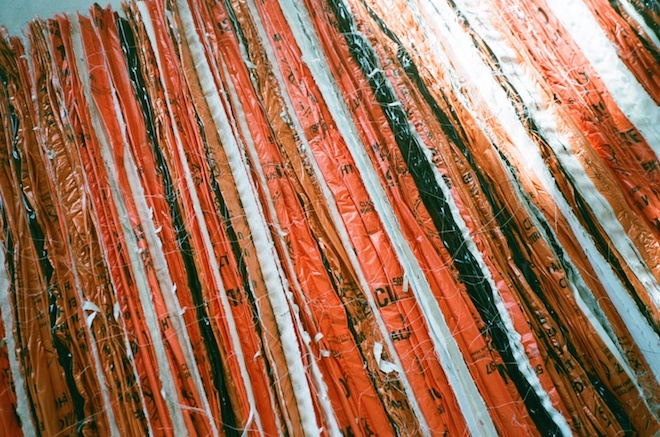
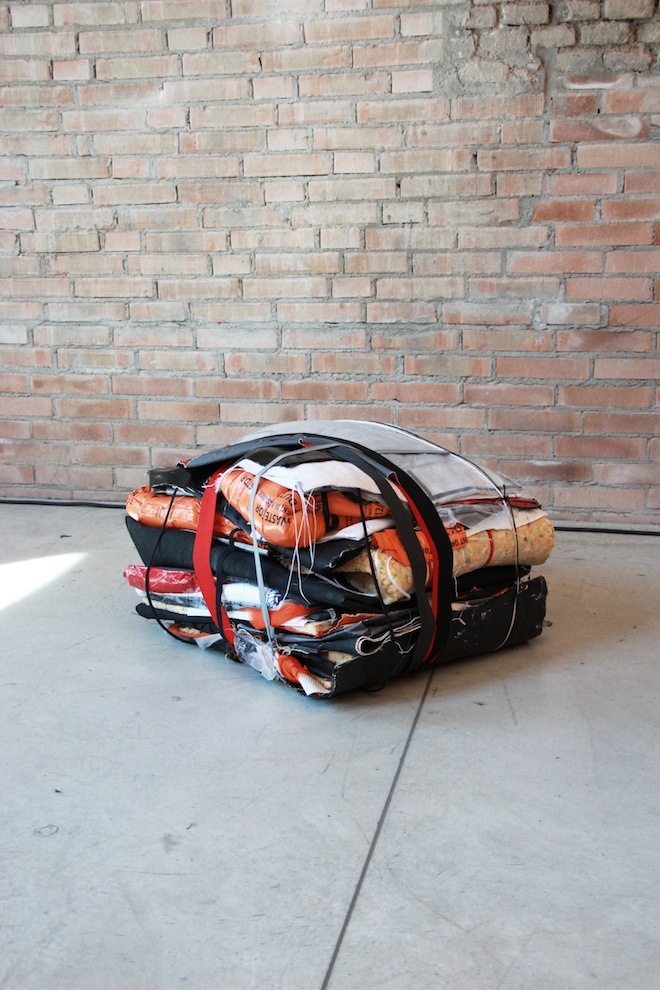
A feeling of being trapped. By situations, pressures and expectations. Wanting to run away from it all. As well as this my work has always been very material based and by the end of my last project I felt very frustrated by the mass of plastic and fabric I had built up around me. I wasn’t enjoying the project and it was beginning to feel like a lot of unnecessary stuff that was just adding to the accumulation of things we have in our lives which we don’t need. I sometimes dreamed about burning it all once the show was done. I’m going through a love hate relationship with my practice it at the moment. This exhibition does involve a lot of material, but I’ve used it to communicate a feeling of suffocation.
Your interest is in creating work that is in flux or transition– what about movement and change interests you? How do you approach a static object to begin to move it towards something else?
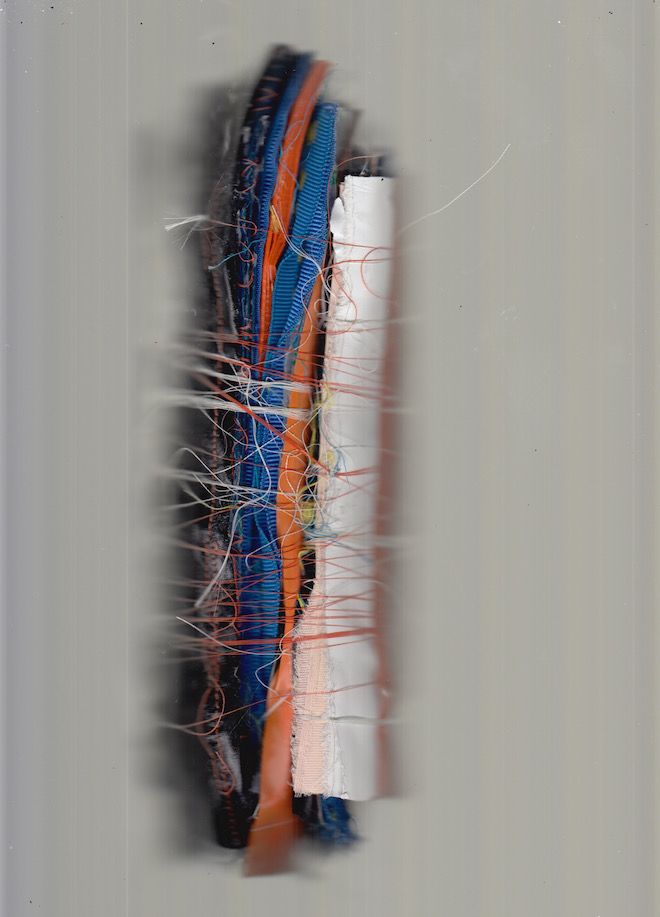
My work is a reaction to my experiences and how I see things and that is something that is always changing. It is the physical actions involved in making work that is an important part of the process for me. Tearing, stitching, mixing and thats about movement. I transform a static object by taking it apart or manipulating it into a different shape. Or more recently working with performers to make the pieces move.
What are the most instinctive materials to work with?
I find I’m very drawn to synthetic materials and materials related to construction. The synthetic aspect is very distant from where the work begins; inner feelings. This contrast allows my work to act as a mask and gives a concrete way to externalise and express what is inside. I often use materials found on building sites because of their relation to transformation and incomplete states and holding things together.
How have you found your practice evolving since you graduated?
I’m open to collaborating. I used to find it very difficult to work with people and would avoid it. My work was something I needed to have complete control over. I find now that collaborating makes projects more fun and allows for further development. And I don’t worry so much about the outcomes of my work, I’m better at trusting my instinct. I guess I’m less precious about it.
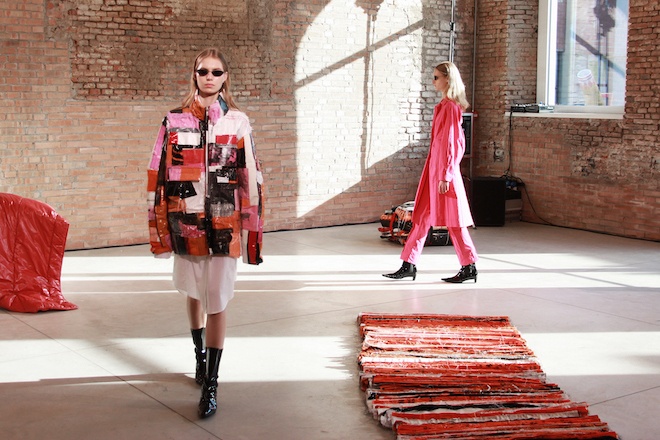
You have collaborated with a range of designers, what about your practice aligns well with clothes and the body?
My work is very textural and sculptural so it lends itself to clothing. The contrast created between the heavy and synthetic materials against the natural body creates a mask. I get consumed by my work so I like the idea that a body gets consumed by it. Combining my work with the body also helps to communicate some of the emotions it is related to.
Tommy Zhong SS18
How did the collaboration with Axel Arigato come about? What about the brand aligned with your aesthetic?
The Lobby London approached me to see if I’d be interested in collaborating with Axel Arigato. Their brand has a very minimal and fresh aesthetic, which compliments the mixed media aspect of my practice. The store is very spacious and white with some industrial textures, which makes it an ideal place to present my slightly chaotic work.
You talk about art being a hiding place – how do you approach empty space when you’re thinking about your next work?
My interaction with materials is a bit like having a conversation; it is how I translate what is inside of me. This initial process only really happens when I’m on my own in my own space. But from it comes lots of experiments in the form of small objects. Once I’ve found what is effective I can use this as a starting point to look at how it can be developed on a larger scale.
What keeps you interested in larger scale installations?
A desire to create a space that people can become immersed in, be overcome by and take them away from their everyday life. I want to find a way to translate the energy and world that I get lost in when I am making work to people viewing it.
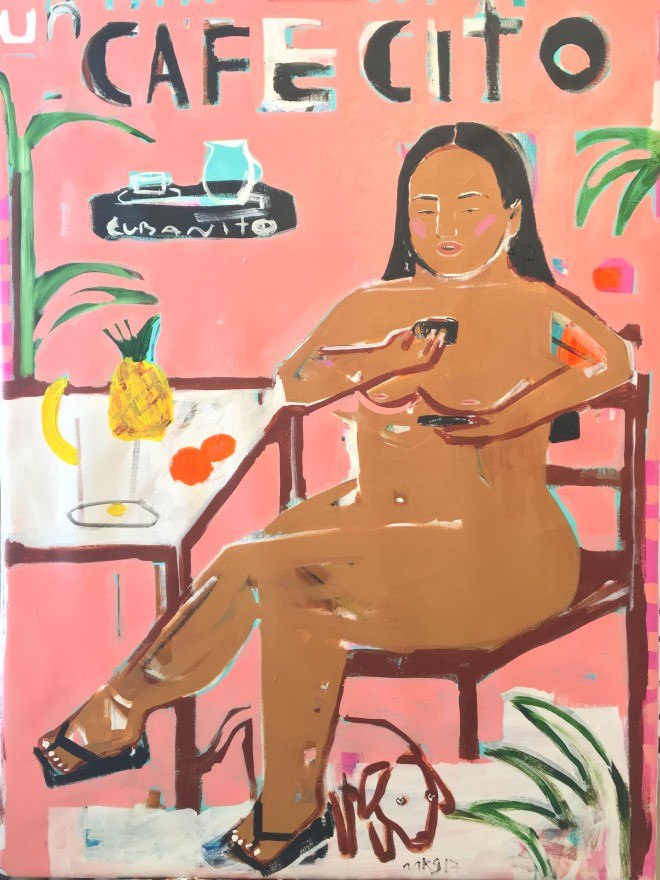
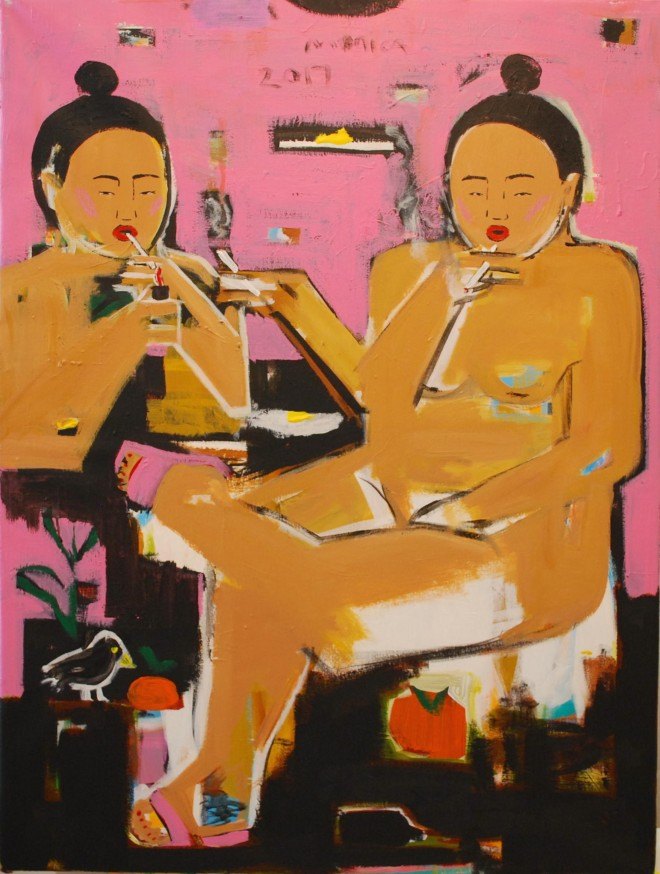
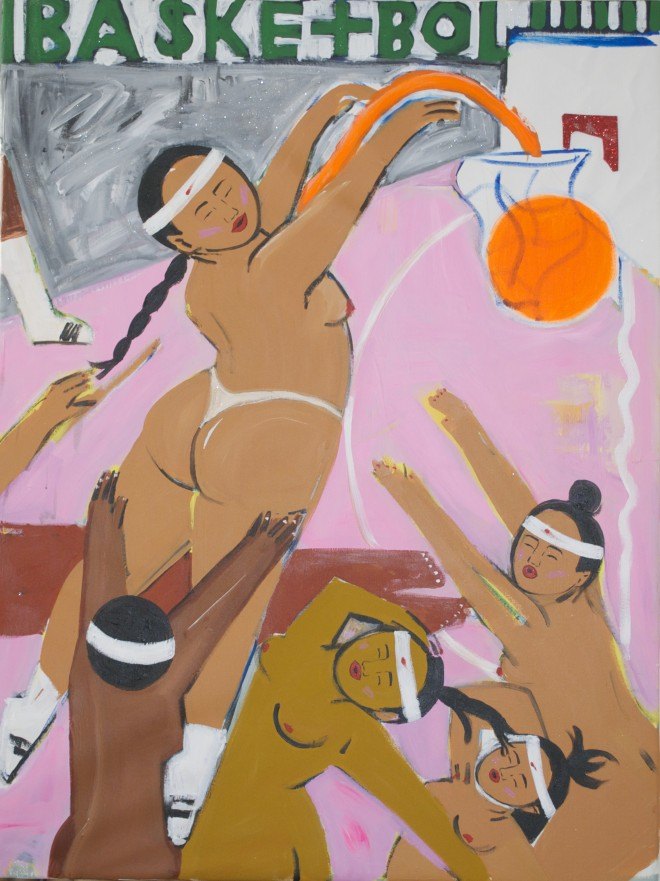
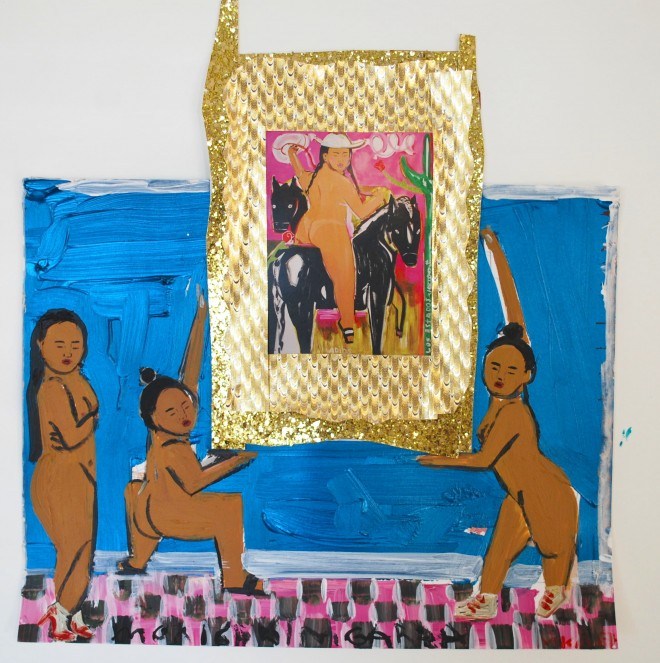
Monica Kim Garza’s paintings have the feel of lazy untouchable bliss. In her colourful world indulgent, semi nude or stark-naked women go about their business without a care – chronicling the everyday life of the artist herself. The scenes include drinking tea at home, playing basketball and having sex. Her voluptuous ladies are not self-portraits though, nor are they from any specific place or culture; they are more like an embodiment of Monica’s Mexican-Korean-Vagabond-aura. Throughout the years she’s moved around a lot. Her years of traveling to faraway places like Korea, Thailand and Peru have left traces in her work. It wasn’t much more than a year ago that she decided to move back home to the small town just south of Atlanta, Georgia to be close to her a family and to finally focus solely on her hibernating desire to paint.
Twin caught up with Monica to talk chicken wings, sensuality and balancing abstraction.
At the time I was living in New York and I was working a regular job. I felt kind of, I don’t know, kind of suffocated. It was too much concrete.
I started to make some artwork and I thought to myself “oh this is my dream. I should try to pursue it.” But New York is so expensive, and I couldn’t paint and work at the same time – so I just decided to move in order to afford to be more creative. I moved in with my parents and I worked part time at a chicken wing restaurant. It was really sad.
I can totally imagine a painting with one of your girls eating chicken wings.
Your work is very sexy regardless of the situation depicted, a girl on an exercise bike is just as hot as one of a couple having sex. Do you consider your work sensual?
In think there is sensuality in the sense that the characters in my paintings are free. There is a kind of confidence when you feel free and I think that it’s sexy. You have this sensuality when you’re not burdened by anything and maybe that’s the feeling I’m putting there.
What do you think is so captivating with naked women lounging about in everyday situations?
Maybe the fact that there is not that much fashion, it is so free. I think even men can relate to it, it’s just like a human connection. Maybe people can relate or feel because they can relate to who I am as a person. In a way many of us have experienced the same situations, or can see something similar to it in the paintings.
The reason I like the female form is because of the shape. I’ve always really been interested in geometric shapes, and for me the female form is perfect. You can move it in so many ways. If you really looked at a woman you could create a box within some portion of the body, or a circle for the breast, or even a rectangle under them. Whereas the man’s body is a little bit harder. More straight lined. You don’t get all these great geometric shapes.
Is that why you keep coming back to the same motif?
To be honest I just come back to it because it is so easy, it’s something obvious to me. My main focus as an artist is much more on colour, contrast, medium and composition. The motif is just so clear to me that I’m free to explore other artistic aspects of painting, I’m trying to find this balance of being abstract and not abstract. I’m always trying to see how far I can push it.
You mentioned that you keep five to ten paintings on rotation, constantly jumping from one painting to the next. How does this way of working inform your paintings?
Normally when I finished one painting the next one that I go to will have some kind of inspiration from the one before, some kind of element or colour. The reason that it takes so long for me to paint anything is because I change the colours too many times. I just can’t decide.
Your women are happy, confident, curvy and of colour, that speaks to a lot of people. But if I’m right you’re not consciously trying to give a more nuanced view of women?
I definitely get a lot of questions about body shape and skin colour, but for me it’s never been done consciously. My main focus is to create these beautiful paintings with geometric shapes and colours I like. But I’m happy to hear any positive feedback on anything.
Have you become more conscious after hearing these comments?
Actually a little bit. I do think about what people say sometimes, and it encourages me to go forward with my love for colour, abstraction and shapes. It’s almost allowing me to do more, because I’m telling myself not to be scared and to do anything in my work. But I don’t necessarily want to be a spokes person. I just really, more than anything, want to be a great painter. Almost desperately.
Monica Kim Garza will show her latest work December 6th at Untitled Art fair in Miami.
Twin meets winner of the Film London Jarman Award, Oreet Ashery, and nominees Adham Faramway and Marianna Simnett
Now in its tenth year, the winner of The Jarman Award was announced at Whitechapel Gallery on the 20th November. This year saw Oreet Ashery take home the prize, receiving £10,000 to develop her projects which consider gender and society with the support from Channel 4.
The award recognises artists working with moving image, celebrating and supporting experimental, imaginative and innovative UK-based work. The Jarman Award is named after legendary experimental director and cinematographer Derek Jarman.
Twin spoke to winner Oreet Ashery along with Adham Faramway and Marianna Simnett – both shortlisted for the award.
Adham Faramway’s work draws on the language of advertising and combines it with the transgressive aesthetics of ‘body horror’, Oreet Ashery is an interdisciplinary artist who confronts ideological, social and gender constructions, while Marianna Simnett surgically lowered her own voice with botox during her short film The Needle and the Larynx, which screened on Sunday. Together they represent some of the most exciting filmmakers on the scene today.
Twin meets Oreet Ashery
Why did you choose the web series format for your film Revisiting Genesis?
My work always reaches beyond the structure of the contemporary art institution, but this is my first major work created specifically for the internet so that it can be freely accessible to as wide an audience as possible. I was inspired by the independent filmmaking of web series’ such as F to 7, and wanted to develop my own approach to the genre as a visual artist. Revisiting Genesis aims to conceptually expand the entertaining and narrative driven elements of the format. One of the central questions explored in the work is around what happens to your online digital content (websites, social media profiles, photographs etc) after you die, and as such the internet provides an appropriate platform for the work.
How does Revisiting Genesis force viewers to consider their own mortality and their online legacies?
Hopefully it makes them think and contemplate whether they want to put anything in place in preparation for death (expected and unexpected) and if so what and how.
How does the film expand on some of the key ideas you have been exploring in your practice?
The film expands on the notion of a potential community, in the real sense that most of the people in the work know each other from the art and performance world. The fictional narrative speaks about a community of friends, outside normative family structures, that come together to help Genesis. I think a lot about how we can structure our busy lives so we can have space to help a friend if needed. The other issue that comes up in the film is the loss of social structures, such as the community college Charles Keene in Leicester, it was the first place I felt a sense of belonging as a young immigrant to the UK in the late 80s. the College has been demolished in 2010 and has been amalgamated to a multi campus university, as is the faith of most community colleges. After the films I received great emails from people who were outsiders and use to go there and achieved so much in their lives since. The emails mentioned what an important role this college played in their development. The other aspect, and there are many, is the idea of one’s identity or the narration of one’s life, in this film I’ve expanded this notion to the afterlife.
What do you hope viewers will take away from Revisiting Genesis?
I have no expectations as such. What I always hope people well take away from my work is something that lingers, that is not easy and that makes them think.
Twin meets Adham Faramawy
Where does the title of your film, Janus Collapse, come from?
The time that I was working on the video that’s shortlisted for the Jarman award was both personally and politically pretty unstable. I was recovering from a minor a road accident and
TV and social media were (and still are!) saturated with adverts and disaster politics. I was kind of trapped at home, looking at this stuff, reading sci-fi and feeling introspective. I had to think through some things while researching for the show at Bluecoat in Liverpool. Where the piece would first
be seen. I wanted to think through this instability, to think as an image-maker about how images are used to introduce and reinforce certain ideas. I wanted to examine the ways that images are disseminated and to consider what effect that has on me personally and whether it affected how I was thinking about my body.
The Janus is the two faced Roman god of doorways and transition. I decided to use his image as something to hang this examination of instability on, while casting the idea of a collapse as something generative, the possibility of the collapse of an image.
How does the film subvert tropes that are used in advertising?
In a way I consider almost all my output as a kind of contamination of aesthetic categories. I feel uncomfortable with hierarchies and I just don’t like being told who I am or what to do, so my interest in advertising is in a sense symptomatic of that sense of always wanting to investigate
and push back. The way that I’ve been investigating commercial images is to try to inhabit them, mimic them, intensify and distort certain aspects until they no longer possess a commercial potential.
When did you start incorporating the ‘body horror’ genre into your work?
Writer Jamie Sutcliffe pointed it out to me in an interview! He said, “We see a pair of hands moisturizing with a digitally enhanced, absurd and all-consuming slime. It’s a quick slip from Evian commercial to a kind of Cronenbergian symbiosis.”At that point I started looking for body horror in adverts and realized that images of melting teenagers were being used to sell pizza and escaped tongues were being used to sell beer.
It was Octavia Butler’s Xenogenesis Trilogy that introduced me to the idea of body horror as one facet of a potentially holistic, tender, nurturing, non-binary sexual experience.
What do you hope viewers will take away from the film?
I hope that viewers take away a feeling complicated and queasy enough to highlight the operative mechanisms of the image they’ve just ingested.
Twin meets Marianna Simnett
The Needle and the Larynx was screened on Sunday – what was the inspiration behind that film?
A sudden, terrible urge to lower my voice, a fascination with toxins and hypodermic needles, and a desire to warp my experience into a fable.
Why is it important for you to put yourself into your work, and to test the limits of your own body?
I can take risks with my own body I wouldn’t take with others. It’s my go-to tool for telling stories, and helps me to live out my ideas and not just think about them. At best, my work might prompt someone to cup their genitals or necks, as if to check they are materially, unmistakably present. That liminal space between being a thing or a someone, and then morphing or falling apart – I’m hooked on those moments.
You have often explored the gendered implications of voice and masochism, what draws you to these themes?
I’m interested in appropriating and spoiling archetypes, especially when it comes to the final binary constraints of heteronormativity. Pitch, tone, timbre and accent have implications on social bodies and their right to exist in one place and not another. Voices (often disembodied) in my work battle patriarchy and madness. Masochism is a submission to fantasy.
North: Identity, Photography, Fashion
SHOWStudio’s Lou Stoppard and academic Adam Murray have joined together to co-curate a new exhibition, North: Identity, Photography, Fashion, which opens this week at Somerset House, having transferred from the Open Eye Gallery in Liverpool.
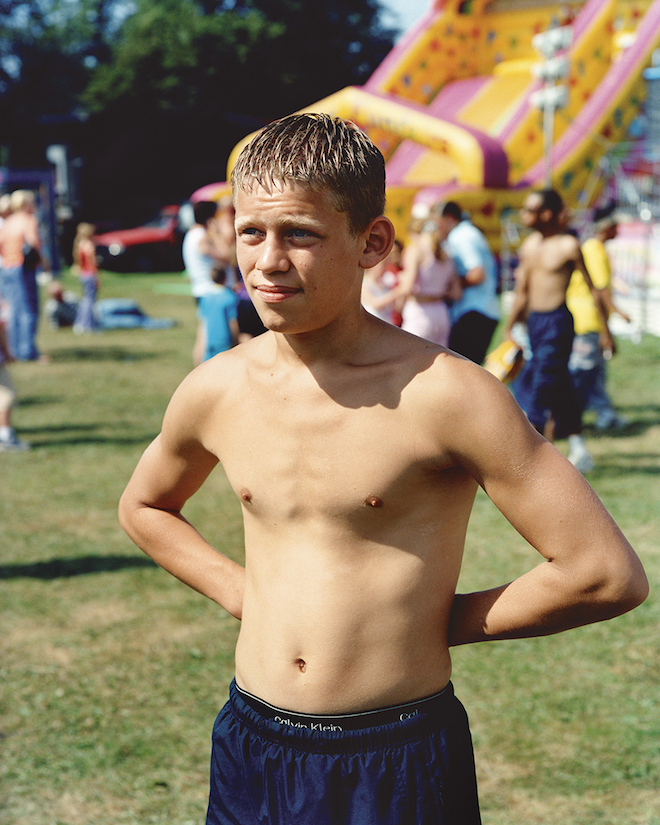
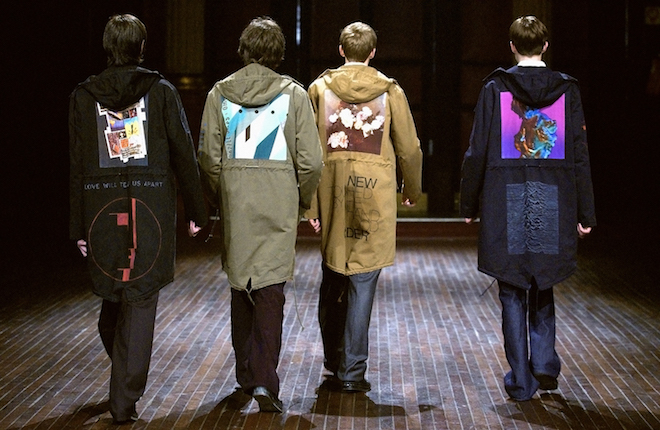
The exhibition brings together designers, fashion photographers and artists, with contributors that include Raf Simons, Jamie Hawkesworth, Glen Luchford and Turner-prize winning artist Mark Leckey. At the crux of the exhibition is a desire to explore the mythology around the North and its culture, decodifying the traditional narrative around the region and instead investigating how it has really influenced contemporary style.
In a post-Brexit era, the exhibition is both timely and surprisingly overdue. As Adam Murray notes in his essay ‘The Constructed North‘, since Agyness Deyn’s rise to stardom in 2008, ideas of the North have long inspired and informed the zeitgeist. However the personal, more visceral experience of the area and its influence has yet to have been investigated – until now.
North: Identity, Photography, Fashion is at Somerset House until 4th February 2018.
‘But in actuality, as we all know, things as they are and as they have been, in the arts as in a hundred other areas, are stultifying, oppressive, and discouraging to all those, women among them, who did not have the good fortune to be born white, preferably middle class and, above all, male,” Linda Nochlin wrote in her seminal essay Why Have There Been No Great Women Artists? published in 1971. The essay highlights the ways in which institutional barriers have suppressed the voices of female artists throughout western history, acting as a foundational text for feminist art theory. It only takes a scroll through Katy Hessel’s Instagram account @thegreatwomenartists for one to be reminded of all the voices that were silenced; all the brave, provocative and breathtakingly intelligent female artists – from 18th century portrait painter Maria Verelst to sculptor Andrea Zittle to contemporary photographer Nydia Blas.
It is Instagram that has become the common denominator in the curation of Hessel’s first exhibition The Great Women Artists: Women on Instagram – an exhibition which will feature fifteen UK-based female artists who have used Instagram as a mechanism to showcase their work. Speaking to a following of over 600,000 Instagram users globally, these artists have a very powerful voice indeed. The show questions what it means to be a female artist in an era dominated by notifications, and asks whether this has facilitated a greater emancipation from the instruments of oppression for the women of this generation?
The theme of the exhibition is interesting as it seeks to display the works by these artists in a way that has been rarely seen: face to face. We are encouraged to take our eyes off the cracked screen of one’s iPhone and flock to Mother, London this Thursday to engage with the work in a more tangible manner. One featured artist is Dolly Brown, or @londonlivingdoll, a visual and performing arts photographer based in London. When asked what viewers will find most surprising about her work when they see it in real life she remarked: ‘I think that after people become accustomed to seeing your images on a very small scale on their phone, it must be a pleasant surprise to see them printed large(r). The first time that I showed work “in real life” I printed as large as I possibly could, I think simply because I was so excited about the prospect of the images having a life outside of the phone. The hang that we are going for in this show is a grid so it replicates the way that the images are presented in Instagram, but I think this is also an indication of how the “gallery” on Instagram has encouraged me to shoot in series and to think about how all the pictures will look together when they are eventually posted.”
There is a broad range of participating artists, including Juno Calypso (@junocalypso), whose self portraits have won her prestigious awards including the Series Award at the 2016 British Journal of Photography International Award; Kate Dunn (@bellissi.mama), whose earthly toned oil paintings revive the traditional medium; and Unskilled Worker (@Unskilledworker), who has been commissioned by fashion’s great including photographer Nick Knight and brands such as Gucci. The artists conquer a wide array of themes including feminism, womanhood, politics, diversity, mental health, colour and form.
‘Whatever else Instagram is, it has given me the opportunity to work with artists and performers that I never would have been able work with, had it not been for the app, ‘Brown praises the medium for its ability to connect female artists globally – to share common issues, grievances and ideas. Whatever you do this Thursday, it might be worth getting off Instagram and coming down to see the exciting collision of female creativity in real life.
The exhibition is at Mother London, E2, from November 13-17th, by appointment only.
Kate Neave curates: Poem of the Pillow, Frameless Gallery in Clerkenwell Green
Open from the 25th October to the 4th November, Poem of the Pillow is an exhibition that readdresses a patriarchal past from a female perspective, by incorporating elements of art history.
Helmed by artists Beatrice Lettice Boyle and Jessie Makinson, the collection of works also brings forth tropes of Shunga, the historic Japanese art of erotic prints. Shunga depicts explicit erotic illustrations on woodblock prints, which are frequently tender and humorous, and historically intended for both men and women of all classes to enjoy. In this egalitarian art form, women are not passive spectators or permission givers, but are active participants in the sexual encounters.
As is the way in Shunga, Boyle and Makinson give women agency in their work. Their figures hold sexual power and disrupt societal standards and expectations. Using feminine references unapologetically, their artworks embody confident contemporary feminist practices.
Beauty, rawness and awkwardness: Twin meets Clare Shilland
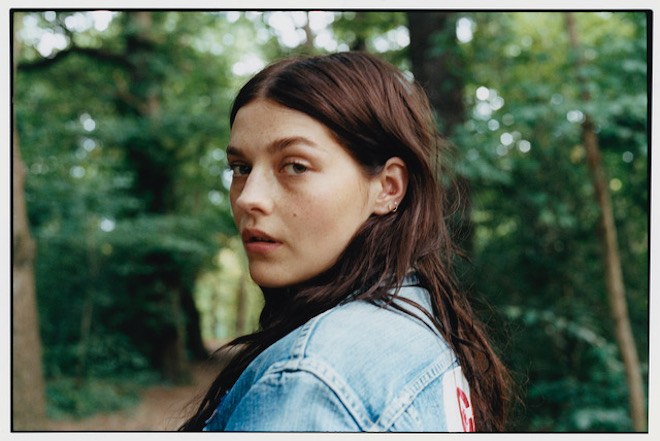
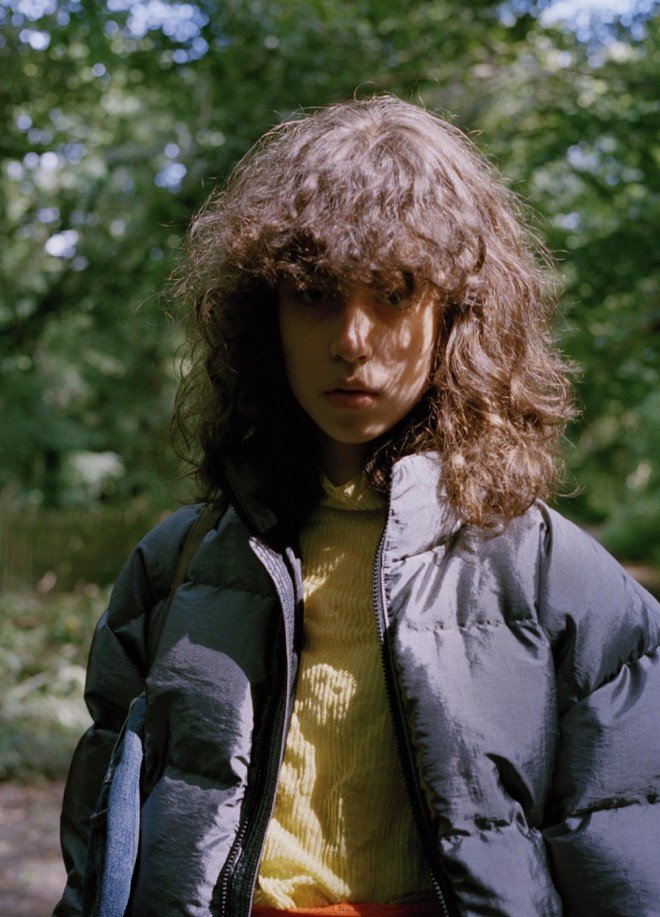
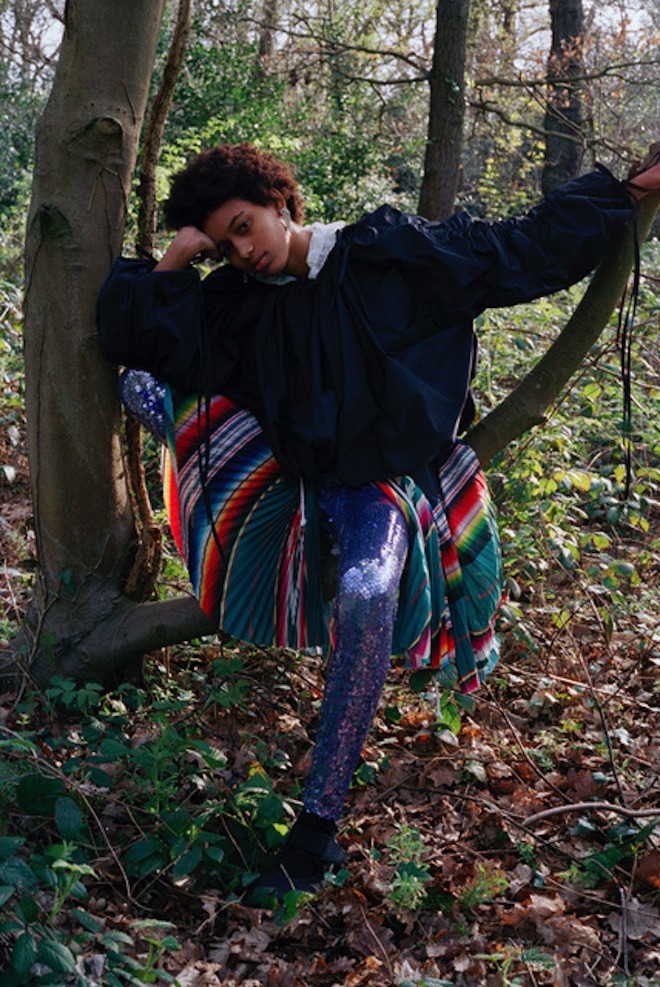
Having contributed to Twin issue IV with a series that captured young women who are fighting for their educational rights, Clare Shilland is back for issue XVII. Over the course of a sunny Saturday afternoon in Notting Hill, Clare shot sisters Lotte and Nancy Andersen, beautifully depicting the love and affection the pair feel for each other, as well as their distinct personalities. As Twin XVII hits the stands, we caught up with Clare to talk fashion, inspiration and capturing something you can’t use words to describe.
Do you consciously try to better the female gaze in fashion photography through your work?
I feel like I have always photographed women and girls in a very natural and strong way, showing them as truthfully as possible. So, I suppose I have.
In creating lookbooks for fashion houses, such as Marni and Aries, do you think of the clothes first?
Yes, it is about the clothes, but also about a particular girl (or boy) who reflects the brand. The casting is super important.Sofia at Aries and I have a similar taste in girls – usually ones who look like boys :). The casting is always the most important thing!
Your series have a filmic quality, and seem to build narrative around a character. Have you been working with film recently?
I was always very influenced by movies- so that’s probably why. I’ve been doing a few films recently – I love the one we did for Aries x Vans.
I love the picture of your sister outside McDonalds in Bromley. Do you think of those photographs differently to your commercial work?
Shooting my sister outside McDonalds in Bromley is my favourite photo ever. I hope to bring that beauty to my commercial work, but sometimes it’s hard when you have to please clients.
I met my husband on a shoot so that’s pretty memorable.
The beauty and rawness and awkwardness and the fact that you never realise quite how beautiful you are when you’re young. Those years make you what you are and I find it fascinating.
Your work appears in several magazines and books. Do you still find it exciting to see your work in print? What do you think the digital shift in publishing means for photography?
Yes, it’s always nice to see in print, especially when it’s something that is really considered and well designed. But the only thing anyone looks at these days is social media… so it’s going to become more and more specialist. Hopefully it will mean less waste and a few really interesting magazines out there.
The best fashion & art collaborations for womenswear SS18
Fashion month and Frieze fall within days of each other, highlighting the deeply interconnected nature of these two creative mediums – a relationship that has always been investigated by both artists and designers, spurning glorious collaborations throughout contemporary history. For SS18 designers drew strongly on artists to render new, unexpected collections. Twin looks at some of the best designers working with artists for womenswear this season.
Christopher Kane / John Kacere
Kane’s collection this season took inspiration from Cynthia Payne, the eighties party girl and brothel keeper who was a tabloid favourite in the seventies and eighties. A reference that balanced the clean with the dirty, the pretty with the ugly underbelly of society, Kane’s use of John Kacere imagery continued this harmonious interplay. Kacere’s photo-realistic paintings of women in underwear have littered Tumblr for years but Kane’s repositioning of the silk and satin clad derrieres onto chiffon-bordered t-shirts have finally brought the idea of wearing a woman’s butt on my flank into reality.
A partnership exploring the possibilities of presentation, West London artist of the moment, Faye Wei Wei created a series of three broad, bold boards to stand behind the Shrimps S/S 18 presentation. Working directly with designer Hannah Weiland, Wei Wei’s mythology-inspired canvases clashed against the Shrek-greens and fun furs on show. An illustrator herself, Weiland first saw Wei Wei’s work at a show at the Cob Gallery and loved it. This collection featured fewer of Weiland’s signature doodles, allowing Wei Wei’s canvases to provide a large dose of the whimsy and wonder we associate with Shrimps.
In a move that has swiftly become synonymous with the Gareth Pugh brand, for S/S 18, Pugh rejected the catwalk in favour of a fashion film created by SHOWstudio and Nick Knight. Collaborating with artist Olivier de Sagazan, the film sees de Sagazan and Pugh mould their faces together with clay, tear each other, viscerally, physically apart, and explore the allegories present in Pugh’s clothing; creation, destruction and reproduction.
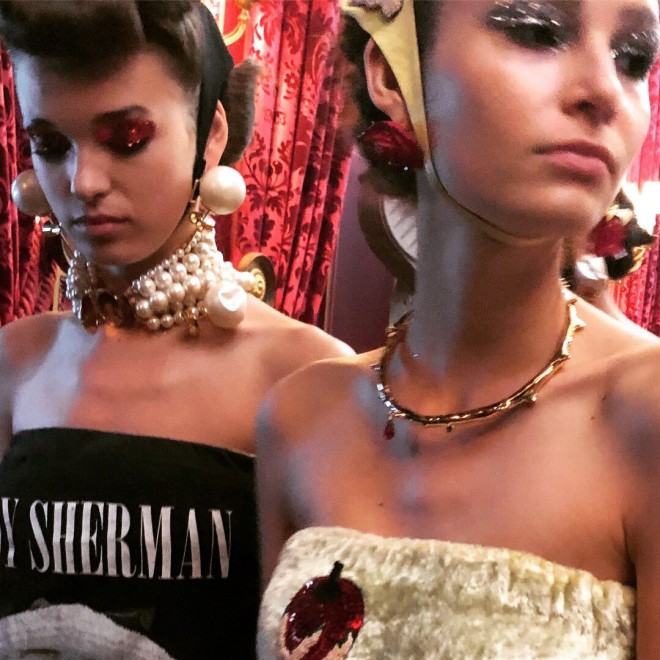
Undercover / Cindy Sherman
This year, artist Cindy Sherman released her private Instagram to the public and renewed her global capital. As one who consistently taps into smart, zeitgeisty movements, Joon Takahashi of Undercover took this opportunity to whack Sherman’s face on a series of dresses. Drawing inspiration from twins, ‘Shining’-style, these dresses played on the concept of duality, dual natures – reality and Instagram, as explored in Sherman’s oeuvre.
Ambush design / Twitter
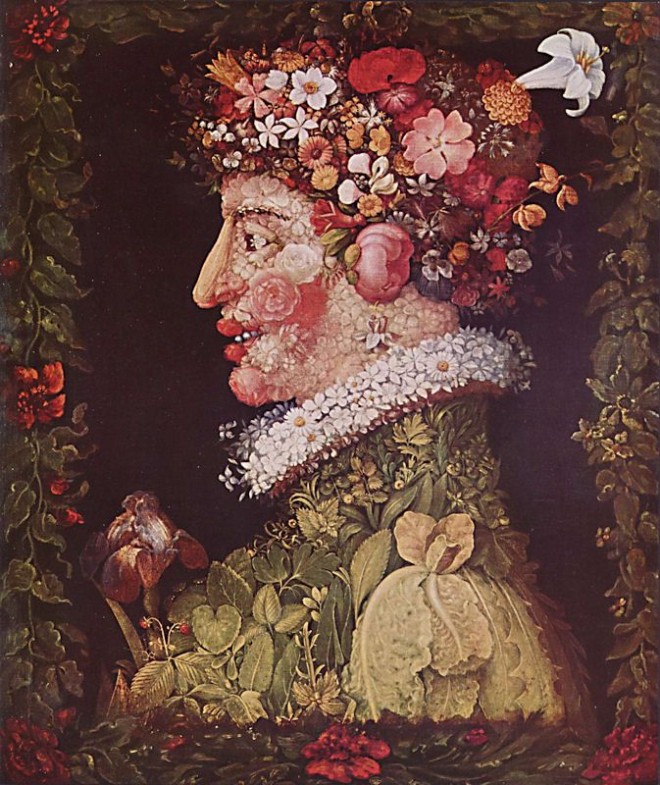
Comme des Garçons / Giuseppe Arcimboldo
Giuseppe Arcimboldo was an Italian painter best known for creating imaginative portrait heads made entirely of objects such as fruits, vegetables, flowers, fish, and books. Rei Kawakubo’s S/S18 collection presented imaginative portrait dresses with items including hairbrushes, dollies, trinkets and Hello Kitty ephemera. Dresses plastered with Arcimboldo’s paintings contradicted the scatter of Harajuku and pink and looked as modern on the catwalk as the animé designs that preceded them.
Like splitting a milkshake: Twin meets Stevie and Mada
There are so many reasons why a sane person might avoid working with our other halves at all costs; mixing the ego of creativity with the power dynamics of a relationship seems like a recipe for disaster. And yet some of the most celebrated creative pairings in fashion and beyond have been couples. From Andreas and Vivienne to Inez and Vinoodh, there’s no shortage of partnerships emotionally evolved enough to sustain making beautiful things with the person they share a bed with. Shame on all of us for not making a go of it, perhaps?
Twin contributors Stevie Verroca and Mada Refujio are another enlightened example. Crediting themselves as Stevie Mada, the couple have been working together since meeting in California in 2010. They take photographs that are full of colour and buckets of the sun-drenched outdoors, tempered by the cooler airs of their current home in NYC. Their subjects are lovingly rendered and playfully directed, with winding poses that remind us that it’s actual human beings who wear the clothes in editorials. The body’s physicality is often at the forefront of their work, and the combined adoration of an evenly balanced female and male lens unlocks something pleasingly sensual for their viewer.
There is lots of beautiful work by Stevie Mada to be found out there – for the likes of V Magazine, Interview and Teen Vogue to name a few – but very little about them as people. Before their feature in the new issue of Twin hits shelves, we caught up with the pair to get to know them better.
What kind of work were you each making before you met?
Mada: Some light book keeping .. haha. I was playing around with some paints and mixed media before photography found me.
Stevie: He’s modest, he’s a painter. I’ve always taken photos.
You used to be based on the west coast. What prompted the move from LA to New York?
M: A more creative energy was drawing us to NYC.
S: We craved a change in culture and style. Very much miss the weather and ease of CA, but it’ll always be there. It felt like the right time for a change.
Did that move have an impact on your work?
M: Extremely.
S: Night and day.
We tend to think if the photographer as a single eye, how do you align your perspectives to create cohesive work?
S+M: Thanks for saying our work is cohesive 🙂
M: I think it’s like splitting a milk shake. You decide on the flavour before you decide to share.
S: We’re becoming firmer in our individual likes through experience and we happen to be fortunate that our shared likes outweigh the dislikes. Plus, whatever I say, goes. ha!
You seem to work a lot in exterior locations – do you prefer them to the studio?
M: I love to work outdoors – partially the reason I don’t paint anymore. Following the sun and the earth’s textures really makes me feel connected. Although a studio shoot does have its appeal from time to time.
S: Yes! Light, colour, space. I never get tired of it.
Twin curates: the best things to see at Frieze 2017
Frieze is here this week and even those with the most tentative interest in art will be blown away by the onslaught of visual experience coming to the city. Twin rounds up the ten best things to catch at Frieze 2017.
1:54 African Art Fair
This satellite fair in Somerset House, focused on galleries and artists from Africa, has grown every year and shows some of the most interesting and less known work you’ll see in the week. You are guaranteed to discover new artists – keep an eye out for Ouattara Watts, Marlene Steyn and Admire Kamudzengerere. If you cant make it in person the website has a good visual compendium of featured artists.
Ouattara Watts, After rain, 2017, Mixed media on canvas, 182 x 160 cm. Courtesy Primo Marella Gallery
Seth Price at the ICA
This retrospective brings together 20 years of one aspect of Price’s work – his videos. They are amazing, influential and worth every minute you watch them.
Jeremy Shaw, Arthur Jafa and Everything at Once by Lisson Gallery at 180 The Strand
180 The Strand is putting on three killer shows for the next few months. Past Twin interviewee Jeremy Shaw has a solo show on the ground floor, Arthur Jafa is showing a film on the roof in a tent and Lisson gallery has filled the former office block with massive installations. All free. All exceptionally good.
Jeremy Shaw’s sci-fi pseudo-documentary Liminals to be exhibited at Store Studios this autumn, presented by The Vinyl Factory and König Galerie.
Georgina Starr at Frieze Art Fair Projects
Starr is getting some well deserved attention with a narrative performance project at Frieze, showcasing her mysterious and marvellous take on brains, bubbles, disembodied voices and strong female characters.
Haroon Mirza at Zabludowicz Collection
Psychedelic film installations, a sensory deprivation chamber and mix and match take on collaboration. This brilliant show which is evolving over three months is also the show for a performance by dancer Wayne Macgregor on Thursday (book now).
Nathalie Du Pasquier Other Rooms at Camden Arts Centre
Natalie du Pasquier at Camden Arts Centre
Du Pasquier was one of the members of iconic 80s design collective Memphis, who are having a serious moment. This exhibition brings together paintings and art objects she has created since in a fine art context but still have a touch of individualistic colour and architectural shapes from her earlier work.
Dream Art Fair
You can visit one of the most interesting emerging art fairs from your own bedroom – Dream. This five day online fair is a great project, with a well curated selection of galleries. Experimental while still being accessible.
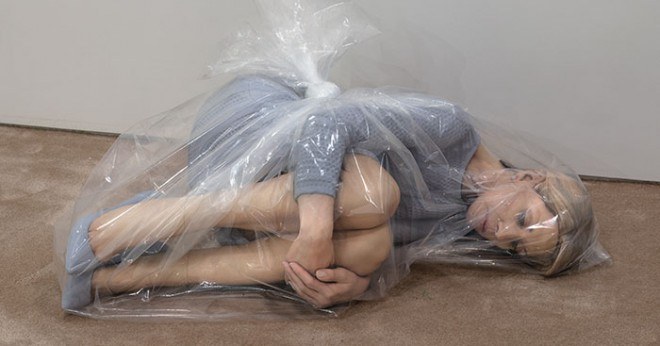
Renate Bertlmann, Eva im sack (‘Eva in bag’, 2010) (detail). Digital print, 80 x 80 cm. Courtesy: the artist and Richard Saltoun, London
Sex Work curated by Alison Gingeras at Frieze
Twin profiled Black Sheep Feminism curated by Alison Gingeras in Texas, showing female artists from the 60s and 70s who were ostracised for their sexual imagery. The curator brings her research to London in a new form. Expect from beautiful and brilliant takes on genitalia.
Bob Parks Open Air Gospel Choir at Gallery of Everything
If you want something extra crazy, performance artist Bob Parks is your guy. To activate his show at the Gallery of Everything this Tuesday between 3 and 5pm he’ll be bringing a gospel choice to Chiltern Sreet. Expect it to have a large dose of wildness added on.
10 Sunday Art Fair
This long running fair down Marylebone Rd from Frieze focuses on smaller and often more interesting galleries. Always worth going to see new work and have real conversations with exciting international spaces.
Honourable mentions, because then things is not enough: Douglas Gordon at Gagosian, Tobjorn Rodland at Serpentine, Dorothea Tanning at Alison Jacques, Superflex at Tate Modern.
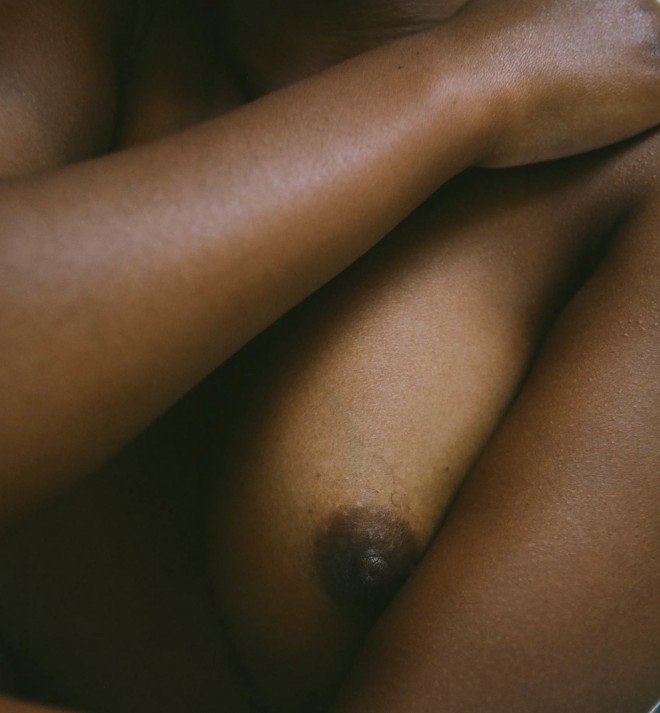
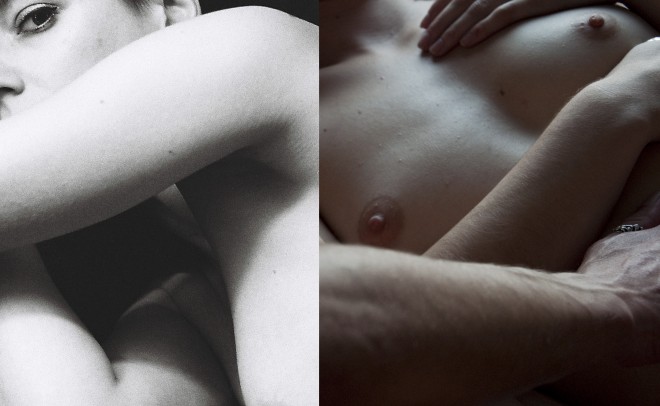
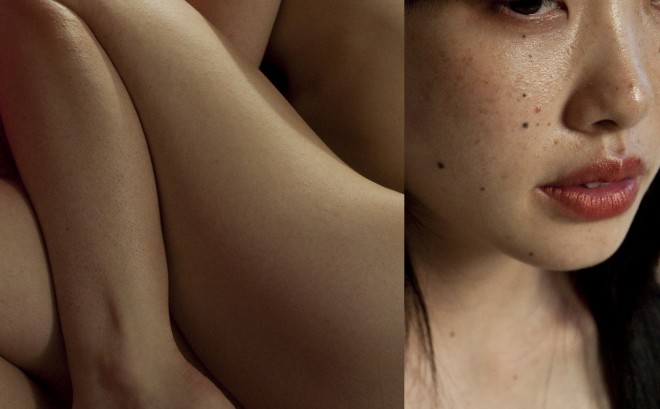
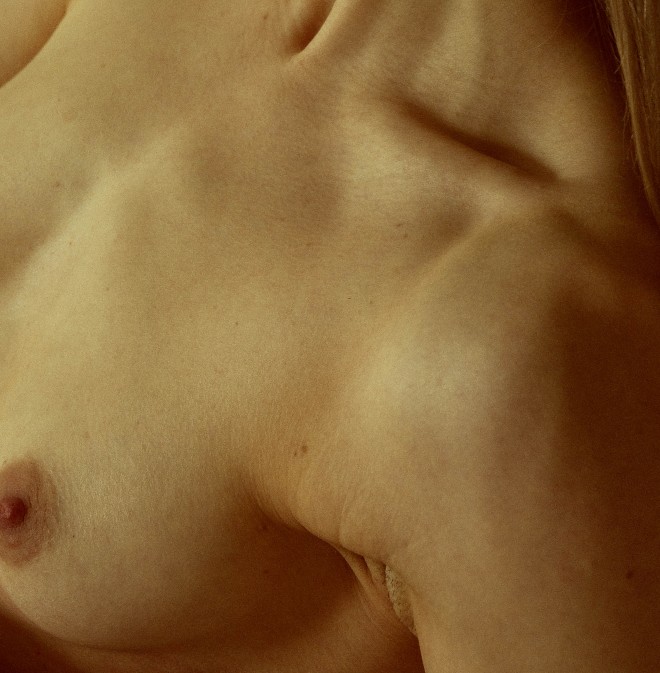
Photographer Sophie Davis talks to Twin about her series of work, ‘The Unresolved’.
I began this series nearly two years ago, having been constantly exposed to images of beauty ideals from a young age through media and popular culture. Starting this series felt like a necessary step for me to try and understand my fascination with beauty and the female form.
‘The Unresolved’ is a growing body of work and the girls I photograph start out as strangers to me. I ‘collect’ my subjects around London, they are just normal women who I feel instantly drawn to because of their physical appearance. I ask them to sit for me if they are interested. These sittings are mostly done nude.
Surprisingly, through the many girls I have photographed I have only ever had one no, which I think speaks volumes about how we as women are curious about seeing ourselves laid bare. It could be seen as searching for validation, wanting to feel beautiful in a world that makes us constantly insecure.
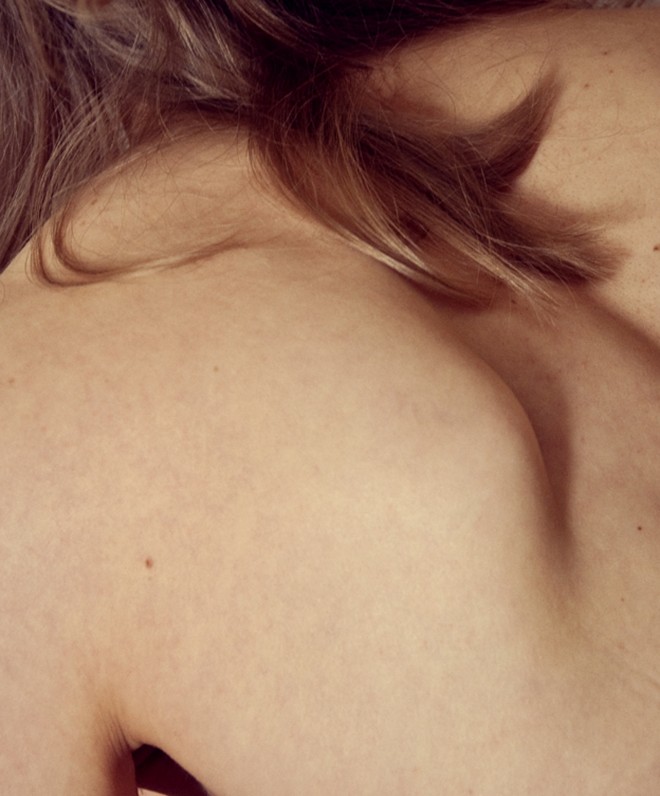
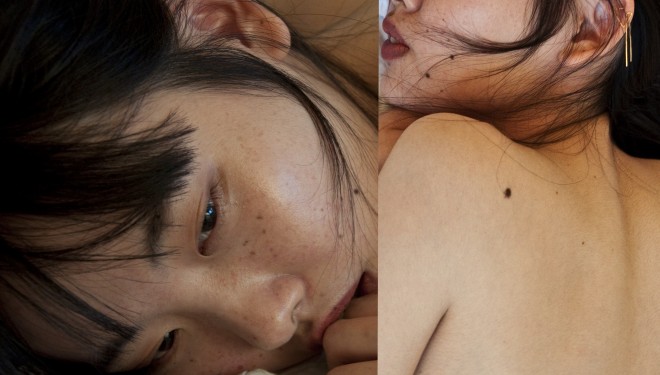
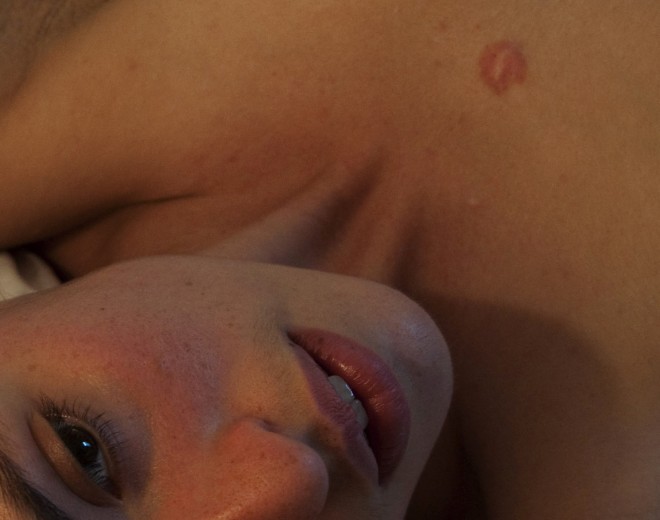
The images have become part of a growing archive, a collection of female flesh, both a celebration of the magnetising allure of the woman but also an exploration into the limits of objectification.
The method of my work has been described as predatory in nature, more ‘male gaze’ than ‘female’ (which I can’t help but see as reductive, as women have the ability to desire just as much as men). But alongside the seemingly callous ‘pick ups’ there is a tenderness to the photographs that remove them from an objectifying, colder viewpoint – it is down to the close ups. The details in the folds of skin and stray hairs, the remnants of another human being. There is the intimacy and closeness you would assume exist between lovers. I am always amazed at the level of trust each girl puts in me, and the friendships that come out of some encounters.
‘The Unresolved ‘is an exploration of the limits of the female gaze and the ‘trap of beauty’ and our constant hunt for it. In exploring with such issues with this body of work, it has given me further insight into our conditioning, and the confusion that surrounds the self in relation to images of the ‘ideal’. There is a hunger in the images, both from myself as photographer and from the subjects themselves, it’s a desire to be seen, to be looked at to be the one do the looking.





 PREVIOUS

 Twitter
 Tumblr
 YouTube
 Facebook
 Instagram