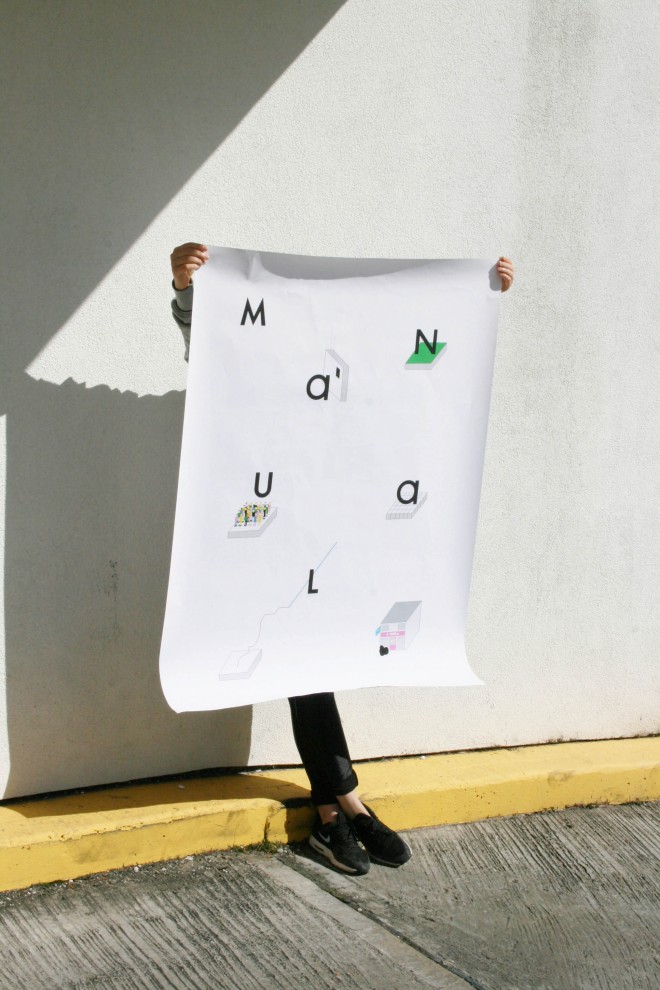
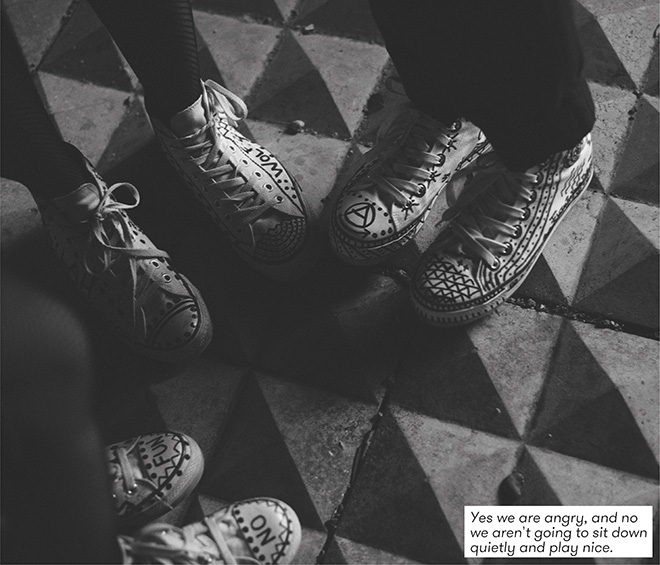
Navigating the minefield of the creative industry at a time when housing costs have reach crisis point, funding for the arts is being monumentally slashed, and any kind of government support is a joke – is nigh on impossible. Luckily, there’s a force for active change in our midst. It comes in the shape of 26-year-old artist, feminist and curator Sophie Giblin, who is a founder of the award-winning Kollektiv art community, and determined to satiate the need for real, practical ‘how to’ knowledge for creatives just starting out. Sophie has put together, along with designer Sarah Todd and developer Luke Phillips, a free online manual that cleverly, and plainly, details how to do various things such as run collaborative projects, use alternative funding methods like crowdfunding and open galleries in derelict spaces.
“Life as a creative can be tough. Funding is being cut, rent is high, inspiring opportunities are scarce. It all seems really miserable, but we can and must stay creative. The new youth led DIY collectives shouldn’t be deterred by the difficulties. They deserve a helping hand and that’s why we’ve made everything we’ve learnt over the past two years completely open source. We like to choose collaboration over competition.” – Sophie Giblin
Everything you could want to know – from how to handle a problematic landlord to prepping a space for an exhibition – is beautifully categorised and easy to navigate, via the website’s no fuss (but still aesthetically pleasing) scrolling design.
Readers and fellow creatives are also encouraged to engage with the project by tweeting any thoughts and additional questions with the hashtag #KollektivSchool – further ensuing there is no dead end to the invaluable information being provided.
Kollectiv has been running as a Kickstarter funded organisation for over two years now, and its overall message is this: “make ideas into realities, don’t settle for unfair treatment and learn by taking the lead. Make your own way and regret nothing. Show the #haters what you’re made of and don’t let the realities of post education stifle your creativity.” We’re down with that.
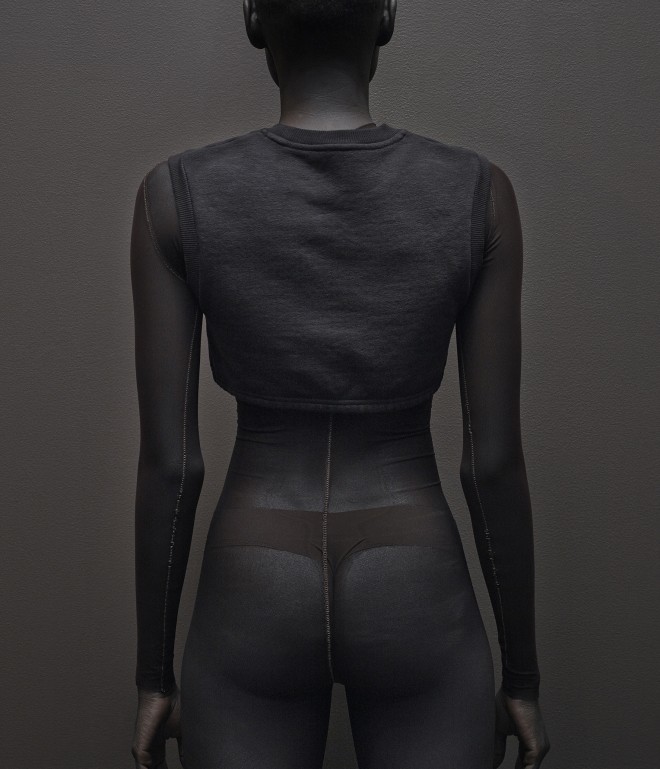
“This is a challenge to where fashion is currently—a new feminine ideal,” says Kanye West, as his first adidas Originals collection – Yeezy Season 1 – launches around the world on 29th October.
Comprised of both voluminous and second-skin like proportions – the former generally on top, and the latter below – West reiterates the practicality he had in mind with these pieces, describing the easily interchangeable capsule collection as “solutions-based” and akin to Lego. Ultimately, he has, quite literally, aimed to create a series of uniform building blocks, from which his customers can construct a daily identity. “I don’t want the clothes to be the life,” he stresses. “I want the clothes to help the life.”
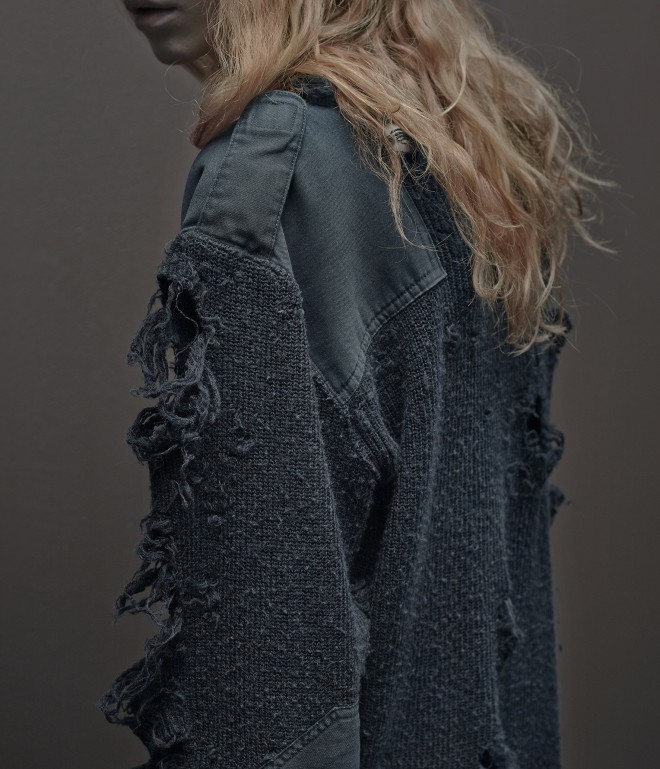
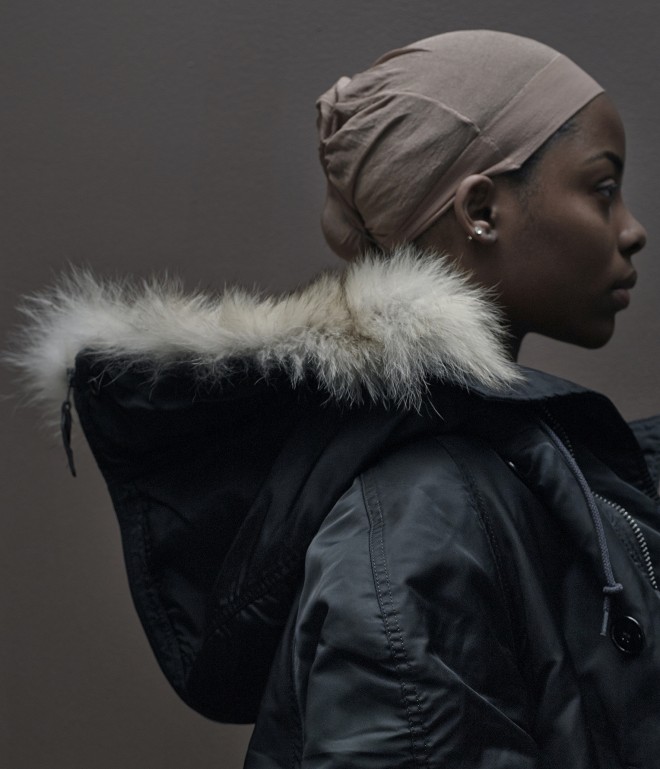
So what of the garments themselves? They are undoubtedly useful, bar perhaps the aforementioned body-suits, which although editorially striking, may be a little more tricksy to work into any typical circumstance that initially springs to mind. The inky, generously hooded shearling parkas are instantly desirable, as are the gnarled army surplus knits and cotton tanks in that perfect shade of smokey anthracite. But it’s the unisex, outsized sweaters, beautifully constructed yet rough around the edges, that you could really see yourself wearing forever.
West has been clever. He has put just enough of himself into this collaboration – hero pieces such as the camo separates and drop shouldered bomber jackets smack of recognition with “West: the brand” – to make it aspirational, yet left the collection canvas-like in it’s quality, so that customers can see themselves in it too, without having to try too hard.
The decision to have a mass release of the collaboration, as opposed to a staggered global drop seems an obvious one, especially when you consider the transient purposes West had in mind when designing. “I wanted something that felt like New York or Paris or Tokyo or Santa Barbara or Chicago—a worldliness and an ease.”
Rounding off the collection are a number of new footwear releases, the highly anticipated Yeezy Boosts 750 and 350 as well as the Yeezy 950 boots for men and platform snow boots for women. Roll on winter.
adidas Originals by Kanye West – Yeezy Season 1 is in stores now. Prices start from $130.
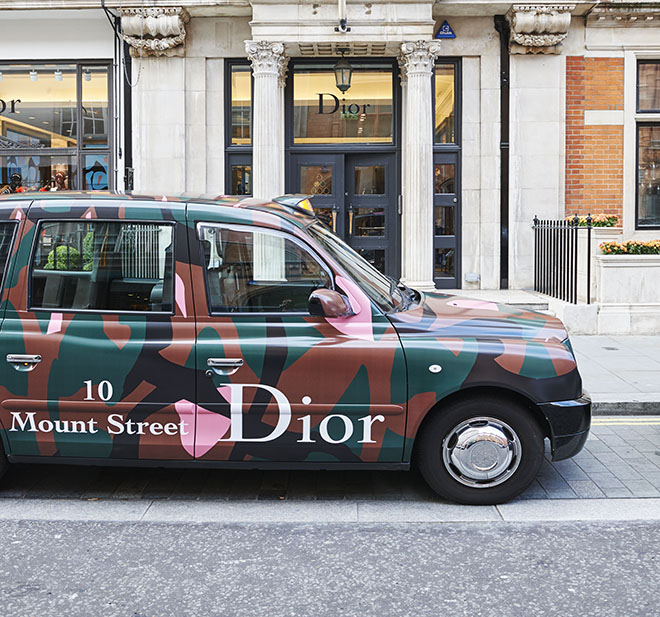
If the draw of Roksanda and Celine wasn’t already pulling you by the coat hem towards London’s Mount Street, then perhaps the irresistible lure of fleeting fancy might do the trick. Last week, Christian Dior opened a rather permanent-looking pop-up on the well-heeled avenue, to satisfy and intrigue both regular and window shoppers alike, while work is completed on their Bond Street London flagship.
As one would expect, Raf Simons riffed on the lineage of the great fashion house for the aesthetic of the premises. While nodding to their historic 30 Avenue Montaigne with the shop’s clean, grand Victorian exterior, inside he thrusts customers into a forward thinking, contemporary space of mirrors (by Hubert Le Gall), floor to ceiling digital screens and eye wateringly cool furniture, such as the Nuage table by Guy De Rougemont and a beautiful sofa by Vladimir Kagan.
On said digital screens, is a recurring loop of Simons’ a/w 2015 twisting and distorting animal print – more abstract camouflage than straight-up cheetah. Again, it is a fitting tribute to the past – Dior is said to have ‘invented’ animal print in 1947 – with the smart touch of the brand’s new, new look.
With autumn/winter’s ready-to-wear, accessories, footwear and leather goods linings shelves and hanging deliciously from racks, eager to be slipped on in the pink (of course) changing rooms at the centre of the store – this is a temporary treasure trove worth pillaging. And despite the abundance of camo, when strolling through Mayfair you’ve little chance of overlooking this momentary gem. Please ensure sure that you don’t.
With monickers such as ‘The Pope of Trash’ and ‘The Prince of Puke,’ John Waters hasn’t always been welcomed into the greater film community, but his first UK retrospective at the British Film Institute, running until 6 October, will finally recognise him as one of the industry’s great counter cultural figures. Titled ‘It Isn’t Very Pretty…The Complete Films of John Waters [Every God Damn One of Them]”, the BFI’s month long series will screen not only his entire filmography, but his formative, early short films shown in the UK for the first time. As the ‘godfather of bad taste’, Waters’ films provide a cynical and celebratory take on American popular culture.
Though creative validation has never been a barometer for which Waters has measured himself by, the BFI tribute is nevertheless a fitting celebration of an artist who worked hard to foster an enduring and definitive style in an industry that doesn’t always allow such individuality. The cult director’s influence on art and fashion go far and wide, as seen recently in Jeremy Scott’s Spring/Summer 2016 show in New York which took beauty inspiration his films. Flip through runway shots and you’ll get to see the likes of Bella Hadid and Hollie May Saker as modern day replicas of Waters’ leading ladies – Debbie Harry, Traci Lords, and Waters’ best collaborator, the late drag performer, Divine (pictured above in Female Trouble).
The BFI series features his entire body of work, including cult classics like Pink Flamingo (1972) and his most commercial offering, Hairspray (1988). May we suggest, however, you take the time to watch Female Trouble (1974), starring Divine as a scorned teenage girl who goes on a crime spree after her parents fail to give her a pair of much coveted ‘cha cha’ heels. Another one to catch is Cry-Baby (1990), a musical romantic comedy set in 1950’s Baltimore that also stars Johnny Depp in his youthful prime.
The Anonymous Sex Journal – that pleasurable, pocket-sized zine – is back and the new issue is all about solo sexual adventures, or the “ménage à mois”. For those not familiar, the cheeky zine consists of anonymously submitted stories that range from awkward and sordid, to hilarious and endearing – adjectives which often describe the broad range of human sexual experiences. Created by London-based editor, Alex Tieghi-Walker, its success lies in the name: anonymity, where contributors are freed of having their names attached to revealing and compelling sexual exposés.
In a similar way that iconic gay zine, Butt, did over a decade ago, The Anonymous Sex Journal represents a new wave of sex-themed magazines with strong artistic sensibilities that are changing the way we look at sex. Other examples are Irene in Paris, Treats from Los Angeles, and Adult in New York, all of which are shifting the atmosphere of sexual discourse towards a more honest and diverse one.
With a vested focus on art direction, they sell at a premium with the aim of, as described by the New York Times, “moving sex periodicals from under the mattress up onto the coffee table.” One of the best aspects of The Anonymous Sex Journal is its focus on celebrating the creativity of one illustrator per issue – for this fourth issue, Laura Callaghan (her work is featured above) – making them as beautiful as they are fun, and increasing the publication’s good humour.
The new issue of The Anonymous Sex Journal: The Solo Issue has been restocked at Ditto Press and submissions for the next issue, “The Hotel Issue of Dirty Weekenders,”are already being taken.
There’s no doubt that transgendered issues have been brought into the greater cultural conversation over the past year. While fashion has long toyed with gender fluidity and featured androgynous and trans models like Andreija Pejic in campaign imagery, no major brand has seemingly addressed gender non-conformity as much as H&M’s little sister, & Other Stories. Their new campaign not only stars trans models, Hari Nef and Valentijn De Hingh, but was produced by a predominantly trans crew, celebrating their artistry in front and behind the camera.
Representation and increased visibility is undoubtedly a good thing – it broadens perspectives and offers more opportunities for minorities to be included in a wider narrative. But there are only so much a few magazine covers and documentary specials can do, and in an industry that’s obsessed with newness – both falsely inviting and cruelly fickle – how do we make sure this isn’t another seasonal trend that disappears in six months. And in a time when the trans community still struggles with unemployment, discrimination and lack of opportunity, how much are we doing if the same creative teams get rehired to produce campaigns.
By hiring an all transgendered below-the-line talent including photographer Amos Mac (founder of Original Plumbing), stylist Love Bailey and makeup artist Nina Poon, & Other Stories empowers everyone involved to control the means of their own representation. The behind the scenes video is quick to highlight how the team bonded on set, which comes across in the campaign itself, showing the power of shared experiences. When talking to Dazed, Nef noted that prior collaborations in fashion hadn’t always entailed empathy and understanding but, “With a trans team however, it’s all there.” The campaign also raises an important question about ‘the gaze’, long associated with fashion imagery, & Other Stories asks whether, in this case, the cisgender gaze could change if a trans team produced the imagery.
Fashion dictates who does and does not get to participate in the world of luxury and beauty, but as Nef notes in the video, campaigns like this – and on a greater level, the Internet – have expanded and diversified fashion’s audience, who demand to be both represented and included. In the past year alone, Selfridges experimented with the Agender Project while a new online, unisex-only fashion platform, You Do You, launched this month promoting designers like Eckhaus Latta, Vejas and Timo Weiland, all of whom produce collections not tied to a gender binary. In the US, Target has promised to remove gender-based labels on toys, which hopefully signifies the industry is finally noticing the importance of empowering a diverse set of consumers – let’s just hope it doesn’t disappear in six months time.
When it comes to column inches and tabloid notoriety the Kardashians have got nothing on the Mitford sisters. These charismatic socialites dominated the headlines of the ’20s and ’30s with their exploits, and perhaps the most controversial and complex of the siblings was Diana, hailed, incredibly, as both the most beautiful and the most hated woman of her day. After a spectacular launch into society as the teenage debutante who bagged the dashing and fabulously wealthy Bryan Guinness, she scandalised her set by becoming the mistress of Oswald Mosley, the leader of the British Union of Fascists. It’s a story that has been told countless times from every possible angle, including in Diana’s own memoir, The Pursuit of Laughter, but the story can stand another retelling because the woman at the heart of it remains an enigma, her actions impossible to fathom.
In Mrs Guinness: The Rise and Fall of Diana Mitford, the Thirties Socialite(The History Press, £17.99), Lyndsy Spence paints a compelling portrait of a woman with the capacity for passionate love and loyalty, but who was equally capable of closing her mind to the nastier implications of such deep devotion. Through unpublished letters and diaries she goes back through Diana’s childhood, teenage years and first marriage in an effort to understand how she became the woman she did. The composite portrait that she has pieced together may be as close as we will ever get to understanding the mystery that is Diana Mitford.
Smoke Gets in Your Eyes – And Other Lessons from the Crematorium (Canongate, £12.99) is a highly unusual memoir by mortician Caitlin Doughty who’s passionate about demystifying death. She is a twentysomething woman with an impeccable fringe who has got funeral ash under her nails and doesn’t mind explaining how it got there. Smoke is her manifesto for how to live – and die – better, a memoir of her own coming-to-terms-with mortality and a deconstruction of the mostly quite appalling death industry. Caitlin, with her no-nonsense style and absolute single-mindedness plus a healthy dose of goth sensibility, bravely shows that death is nothing to be afraid of.
The Green Road (Jonathan Cape, £16.99) is a return to form for 2007 Booker winner Anne Enright who was named Ireland’s first fiction laureate in January. Set in pre-recession Ireland where there’s abundant optimism and bundles of euros, Enright is free to explore the idea of family without having to negotiate the country’s current economic doldrums.
Rosaleen Madigan wants to sell up her homestead and split the money between her grown-up children: two sons, two daughters. The road of the title leads the characters back home for Christmas to hear about their mother’s plans. It’s also a reference to how they have each escaped, whether to Toronto, or Timbuktu, or just up the road to Dublin. This is a familiar Irish narrative where siblings have fled the homeland for better lives and opportunities, but each of their homecomings will chime with readers. Familial disappointments, anxieties, failures, rivalries and questions around belonging are all delicately handled and Enright’s writing has an easy poetry, ‘Beauty, in glimpses and flashes, that is what the soul required. That was the drop of water on the tongue.’
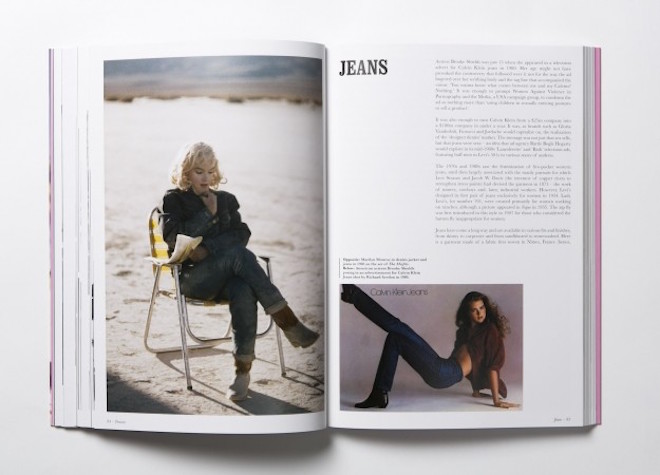
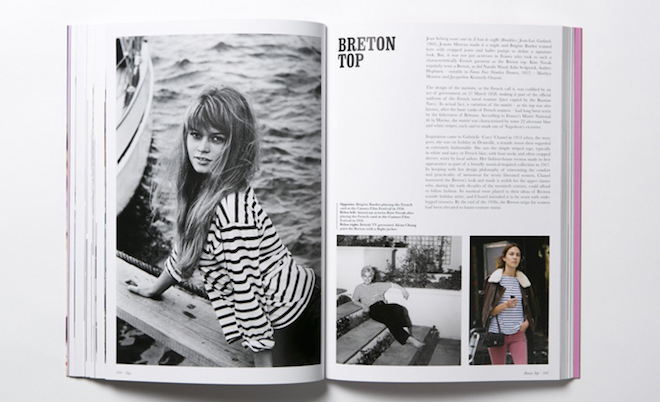
Glossy book of the month: In Icons of Women’s Style(Laurence King, £19.95),Josh Sims introduces the essential pieces that make up the clothing canon. An essay accompanied by some fine fashion photography explains why each those perennial classics – including capri pants, A-line dresses, Breton tops – are always in style.
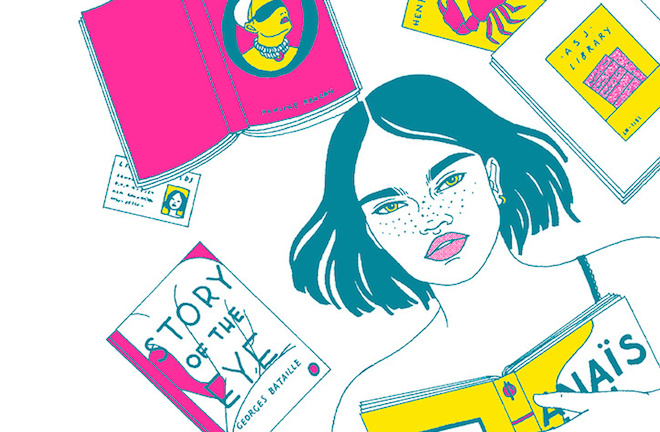
Anna-Marie Fitzgerald and Phoebe Frangoul are the co-editors and co-founders of the London grrrl-zine and literary salon Pamflet. Follow them on Twitter and Instagram @Pamflet.
It’s time for a bed-in: barely-there slips in gingham, star and bouquet prints call for a lackadaisical style stance that’s best shown off in bed. Photographer Nick Dorey’s shoot featuring Vanessa Axente, filmed by Natalie Spitzer.
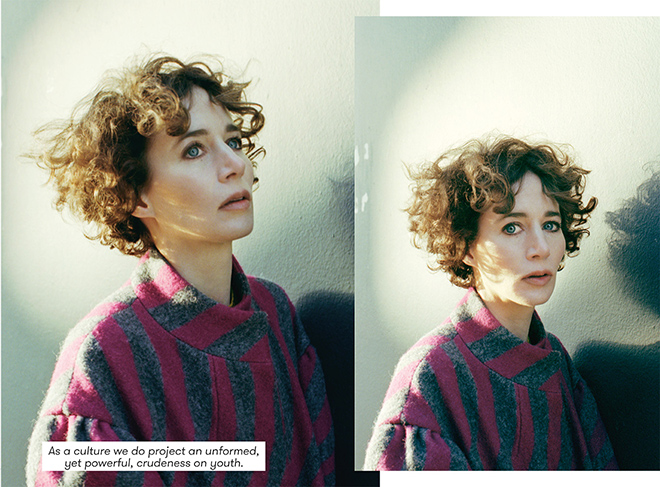
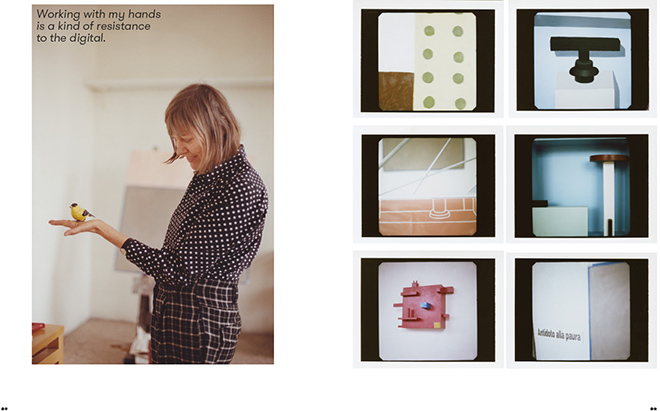
Twin’s 12th edition is all about attitude. Edie Campbell talks to fellow model Saskia de Brauw about finding friendship and surviving the fashion game. Photographer Liz Collins explores the new rules of beauty (the good news is, there are none). Skinny Girl Diet, the London band with big ideas and a brilliantly bad attitude, let out a rebel yell. We get up close with talented multi-hyphenate Miranda July as she shares her singular views on middle age and motherhood. Then step inside the Milan studio of Nathalie du Pasquier, the French-born painter of Memphis fame, who extols the freedom of later life. Then another inspirational image-maker, Roberta Bayley, recalls Manhattan’s Seventies punk scene—the perfect accompaniment to 74 pages of scintillating summer fashion.
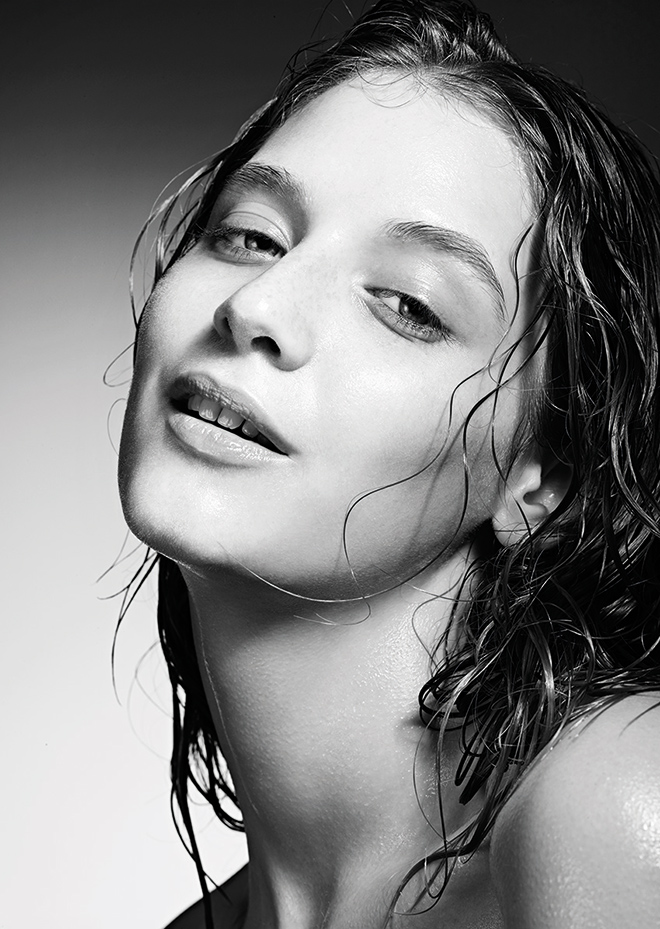
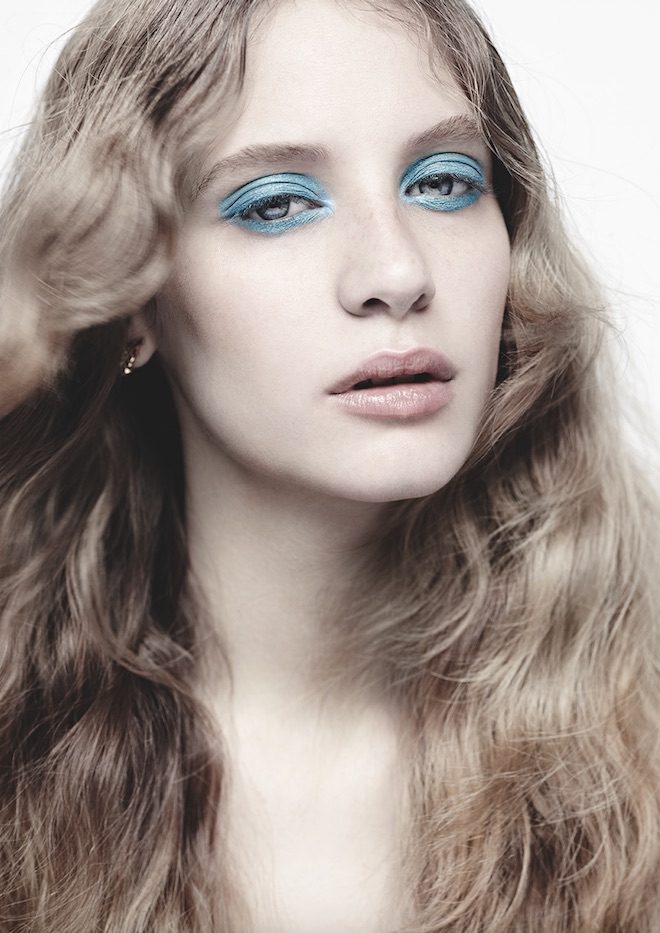
Twin’s latest edition explores beauty’s new easy, breezy mood. So Fresh, So Clean sees photographer Liz Collins capture a whirlwind series of aesthetic incarnations, created together with make-up artist Niamh Quinn, exclusively using CHANEL. The message here is clear: One look no longer fits all. Whether you play with bold colour, bravely go bare faced or opt for an all-over glow, nothing says modern beauty like being true to yourself. Take a look, here.
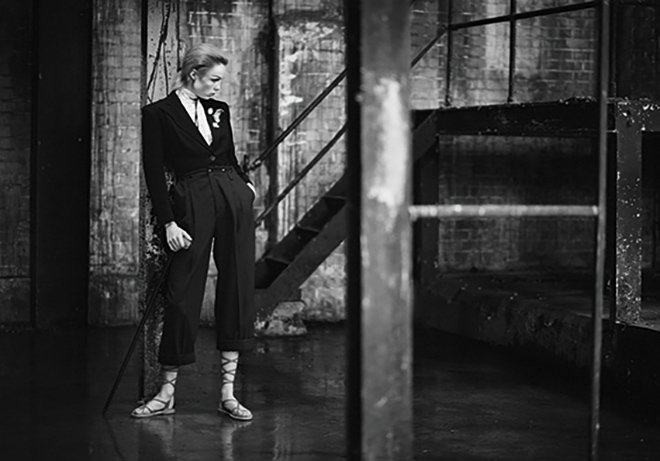
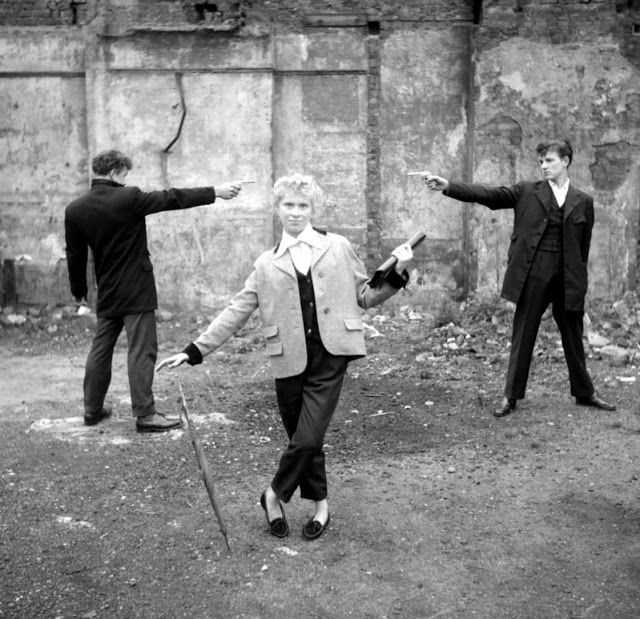
Much has been said about the Teddy Boy subculture that emerged in 1950s Britain, defined by their unlikely sartorial combination of Edwardian dandy and American rock and roll. However, their female counterpart—the Teddy Girl—was all but forgotten until the recent discovery of a box of negatives from late filmmaker Ken Russell. His striking photo series, Last of the Teddy Girls, offers a rare glimpse into the lives, style and attitude of this retro girl gang—one of the first known female subcultures. Preceding feminism’s second wave, the Teddy Girl was a product of post-war Britain when young working class women took up more positions in the workforce, giving them a greater amount of disposable income than ever before. What money they earned went into their iconic looks—tailored jackets, rolled-up jeans, and flat shoes playfully paired with boater hats, brooches and clutch bags. Rejecting the social expectations for women of that era, Teddy Girls roamed in gangs; attending concerts and dances with boys in tow, and collecting rock and roll records and magazines.
Inspired by their rebellious spirit, photographer Boo George, stylist Caroline Newell and model Edie Campbell teamed up to create ‘Fine and Dandy’ for Twin issue 12—an ode to the swagger and style of original Teddy Girls.
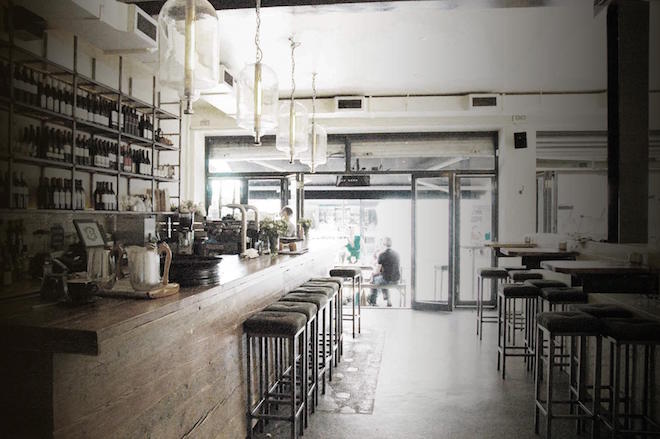
Caravan Restaurant, Exmouth Market is set to host a Nepalese Feast evening to raise money for victims of the Nepal earthquake, on Sunday 17th May. This one-off evening will feature a three-course Nepalese feast, plus welcome drink, prepared by Caravan’s Chef/Director Miles Kirby alongside the restaurant’s long-standing Nepalese chefs and front of house team.
Seasonal produce will be used to create Nepalese-inspired dishes, the team have created a menu that will start with ‘Momos served with tomato chutney, Nepalese potato salad, daikon pickle, beaten rice & roti’, a main course of ‘Welsh Mutton Curry with cucumber pickle’ and sides of ‘Creamy coconut lentils & green beans’ and ‘Cashew & paneer salad’. The dinner will finish with a dessert of ‘Gulab jamun,’ a sweet Nepalese take on the humble doughnut served with ‘Passion fruit sorbet & Kaffir lime syrup’.
All proceeds from the evening will be donated to the Disasters Emergency Committee, a charity running an appeal following the devastating Nepal earthquake last month. Caravan Exmouth Market staff will volunteer their time for the evening and the meat, vegetables and alcohol are all being donated by the restaurant’s suppliers; including Camden Town and Beavertown breweries, Liberty Wines, Kamm & Sons, First Choice Produce, FMV, Les Cave de Pyrenees and Daphne’s Original Welsh Lamb.
The Nepalese Feast charity evening at Caravan Exmouth Market is priced at £40 per person and includes the three-course set menu and a welcome drink.
Caravan Exmouth Market, 11-13 Exmouth Market, London EC1R 4QD
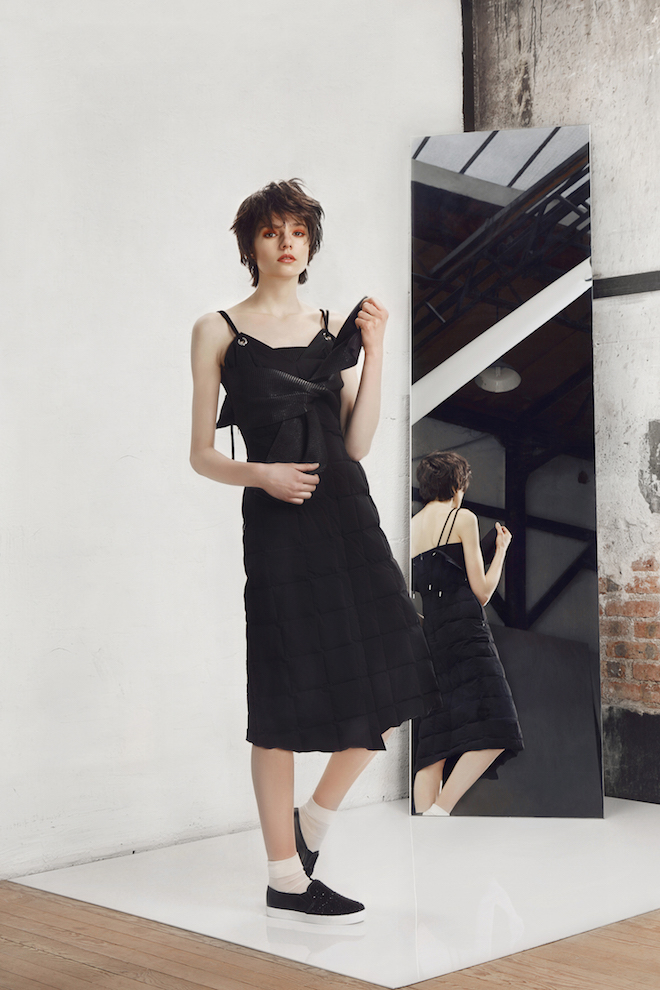
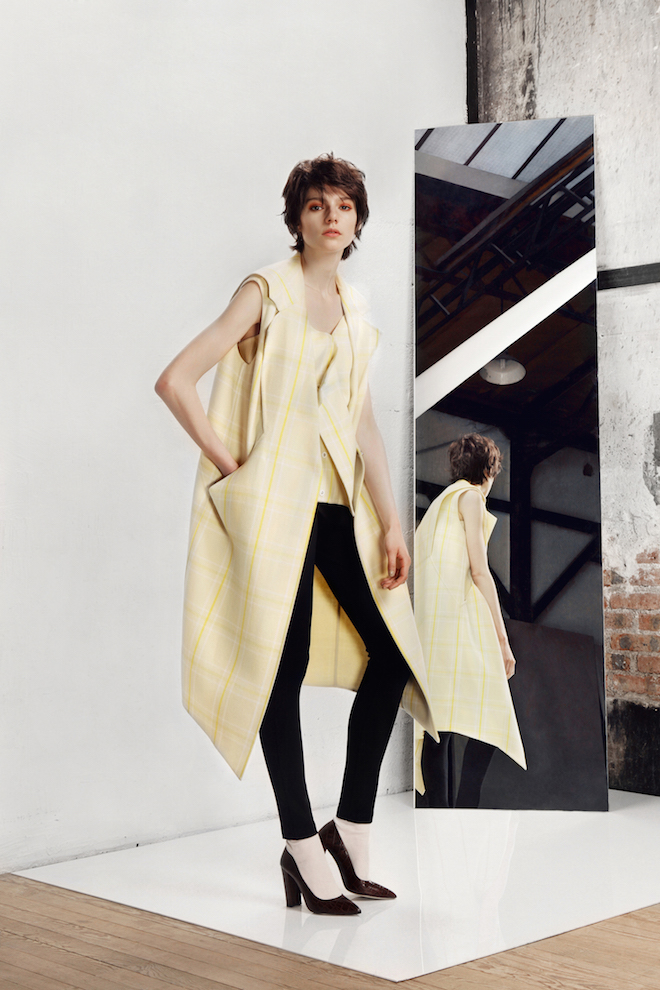
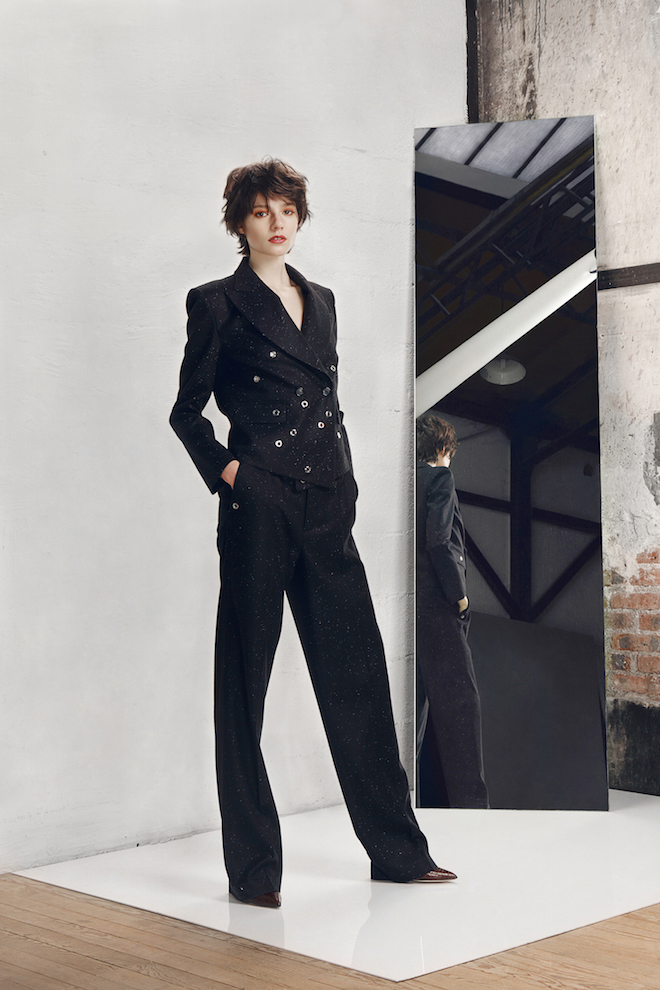
Brought up in North China, LUCIEN WANG moved to Paris and studied at the prestigious Studio Berçot, following in the footsteps of Isabel Marant and Roland Mouret. Juggling editorial styling and designing a graduate collection, Wang then went on to work at fashion houses including Veronique Leroy to hone in on his skills, which can be seen via the tailoring in his AW15 collection.
Who is the LUCIEN WANG woman?
The LUCIEN WANG woman is elegant, attractive, reserved and fashionable. I hope that every LUCIEN WANG woman could let people around her feel easy going, I have never thought about putting a certain person as the icon for LUCIEN WANG, just wish the one who gets chance to wear LUCIEN WANG could feel herself.
You moved from China to Paris, how has that had an impact on your and your work?
I am a very thoughtful person, since my childhood, I love to observe everything that I haven’t touched before, including art, humanity, geography, climate, politics etc., even the language. The experience of getting along with a French family has made myself get the opportunity to study the reason that how a nation gains such a great success in the fashion. The long time working habits could let me change my mind among different countries, different cultures, I often change my thinking, and add a bit of humour into my collection.
You have previously worked at Veronique Leroy, what did you learn most while working there?
I was very lucky to get the chance to work with designer like Veronique Leroy, she has brought me a lot of different visions, especially how to work with fabrics, and the experience makes me understand and know deeper about the procedure and working method of fashion industrialisation.
How do you begin the design process?
At the beginning and during the process of making every collection, I will think about the comfort level and wearability again and again, and then to create, to create constantly, to build the expectation.
Do you have a favourite look from the AW15 collection?
I like looks featuring the overcoats, because they make the winter look not so dull, of course, all of them are my children, so I love them all.
Which are your favourite Paris hangouts?
My favourite places in Paris are the department stores, I tried to get to know what could attract me permanently, not just for once or twice, so the stores help me for my creation. Of course, galleries are the must-go place for me every week.
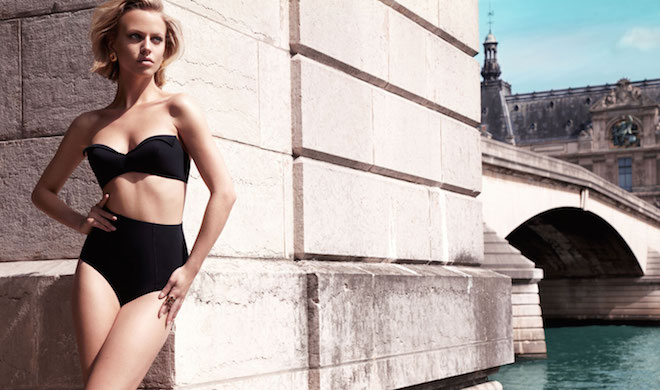
Timeless, chic and minimal is the philosophy behind this luxury swimwear brand, Thapelo Paris. Established by Sydney born, Wil Ariyamethe, as the name suggests Thapelo Paris is both designed and produced in France, highlighting the brand as not only swimwear but also fashion pieces. Known for their pleated, draped and clean lines, Thapelo Paris plays on the contemporary, with a retro glamour. Twin caught up with the brand to find out more.
Tell us about Thapelo Paris… I’ve always had the idea to start a business. A large part of my work experience was developing swim lines and I enjoyed it, so it felt instinctual to start a swim based fashion brand. Thapelo is a French company and was set up after my husband and I relocated to Paris. The first collection was a small capsule in 2011.
What is the secret to the perfect swimwear? You wouldn’t guess how much work goes into finding the right balance between sex appeal and elegance. It’s all in the cut and details to flatter the different parts of a woman’s body. I love to accentuate the fold of a woman’s back and of course the right amount of cleavage. We design pieces that can appeal to a mix of women and not a cliched view of certain age groups. There are so many different components into making a great swimsuit, a high quality quick dry stretch fabric and to mix fashion details (accessories) for the different collections.
What makes Thapelo Paris different? It’s a combination of elements that make us different. We work closely with our manufacturers and admire the French savoir-faire, so we are 100% made in France. As we’re in Paris it’s such a great base and inspiration for fashion. We aim to make swimwear that is considered to be fashion pieces.
Do you have an all time favourite piece? Like the little black dress I love the MIMI, our version of a classic black one piece swimsuit. But I’m excited about our upcoming Resort and SS16 collections. I’ve been wearing our new collection tunics over pants as they translate well into city daywear.
Where is your favourite holiday destinations? Thailand and Australia.
What are your top 5 suitcase essentials? -Sandals, lots of sandals.
-Lightweight bags, I hate carrying a heavy bag or suitcase. I travel as light as possible.
-Jersey dresses that can go day and night.
-A natural face and body scrub so I get a nice tan, something that smells tropical too so I really feel like I’m on holidays!
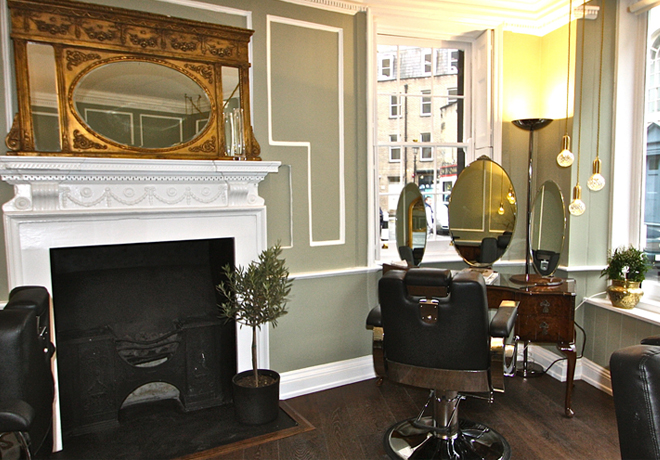
Set in a beautiful Georgian townhouse, The Drawing Room is the latest hair salon in the heart of East London, established by renowned hair stylist Oskar Pera and James Ollerenshaw. Charming, with a comforting and luxurious atmosphere, The Drawing Rooms prides itself on the ultimate personal approach. Twin caught up with Co-Founder Ollerenshaw to talk about his latest venture.
Tell us about The Drawing Room and how it started… The Drawing Room has been open for a year, but the gestation of the concept probably began when Oskar Pera gained his first experience managing a hair salon in Palma de Mallorca approximately ten years ago. This deepened his ambition to open his own salon, but he wanted to develop his career both commercially and creatively before taking that step.
He moved to London in 2006, styling in leading Shoreditch salons, before leaving to work independently as a session stylist for fashion labels, magazines, models and artists, and private clients. Fashion brands Oskar has styled for include Dior, Vivienne Westwood, Kenzo, Chloé, Erdem, Fred Perry, Lacoste, JW Andersen, and Peter Pilotto. He has delivered creative editorial work for magazines such as Vogue, GQ, Ponystep, Volt and Dansk. Models and artists served include Florence Welch, Cara Delevigne, George Michael, Sharleen Spiteri, The Alpines, Trudie Styler, and Kate Nash.
The Drawing Room prides itself on exclusivity and the personal approach, tell us a little about that… When creating his own salon, Oskar wanted a space and experience that would offer the glamour and exclusivity inspired by his session work, but his years of experience on the salon floor taught him that clients most value an approach that responds to their individual needs and preferences. He has trained the team at The Drawing Room to always to be professional and pay close attention to detail, and never to be less than warm and genuine, putting clients at their ease and making them the centre of attention. Every appointment begins with a consultation so there is an opportunity to listen carefully to clients’ wishes and to talk with them about their lifestyle and personal style. This conversation build rapport and allows each stylist to build a picture of their client’s character and daily life, helping them to create a manageable style that is uniquely theirs.
What’s in the name? The name of the salon reflects this ethos of personality and the style of the building we occupy. The Drawing Room has been created within a 1750s town house and we wanted to maintain the sense that you are entering a beautiful, almost domestic space. There’s none of the feel of a busy chain salon. Clients sit in capacious styling chairs facing antique or bespoke dressing tables. We shake their choice of cocktail or offer artisan coffee or fresh tea. There are hot towels to refresh and, on most days, Poquito the salon dog provides additional entertainment!
Which hairstyles are particularly on trend for this summer? Following on from fashion week events in London and Paris, Oskar notes that natural-looking, lightly wavy, air-dried styles are very popular at present. They look effortless, but to work really well you’ll need an exceptional cut and skilful colour. If this natural look suits your taste and hair type, here’s how you can achieve it.
For medium length hair, after washing and conditioning, towel dry taking care to ensure moisture is removed from the ends. If your hair is frizzy, apply a rich leave-in conditioner. If you have smooth hair, use a salt spray to create texture. Part the hair and, holding the hair dryer above you head, blow downwards using a medium temp. Adjust the amount of waviness by using your fingers like a wide-toothed brush, smoothing out the hair to reduce waves, or scrunching to increase them.
For long hair, follow the same steps as above, but when your hair is 95% dry divide it into four quarters across your head and then loosely plait each section. You can leave to dry naturally for around half an hour, or if you’re pressed for time apply some heat by using a hair dryer with a diffuser attachment. Once the hair is fully dry, undo the plaits and shake out your hair to a natural finish.
The Drawing Room, 41 Artillery Lane, London, E1 7LP
Strangely moving and beautifully composed, Savage Beauty is the most fitting homecoming for fashion’s rare bird.
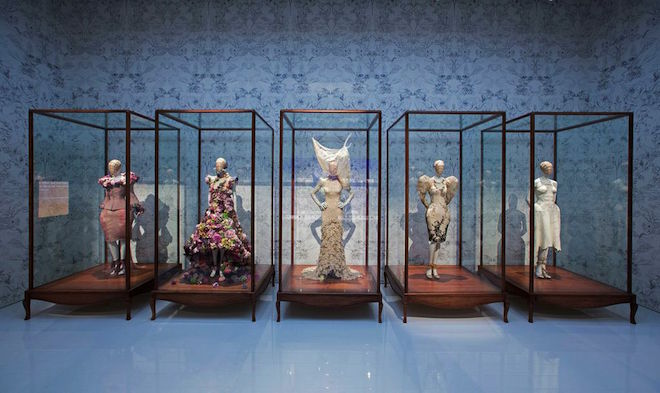
Just as complex as the man himself and just as deeply layered, the V&A’s retrospective of the late great Lee Alexander McQueen is as powerful as it is poignant. At the time of writing 70,000 advance tickets had already sold for Savage Beauty. So far, that’s 3,000 more than the V&A had sold during the same period for David Bowie Is… It says something when a fashion designer can outsell a rock icon.
This amplified version of the original exhibition staged at The Met in 2011 has been fittingly expanded to begin at the beginning, with McQueen’s hometown and the raw, scratchy, seedy energy of London. You can trace a line through McQueen’s growth as a designer from his Central St Martins MA collection, inspired by backstreet debauchery, through to the exquisite aristocratic and ornithological references that chime with his complex relationship with Isabella Blow. Brutally beautiful rather than conventionally so, McQueen effectively reprogrammed femininity.
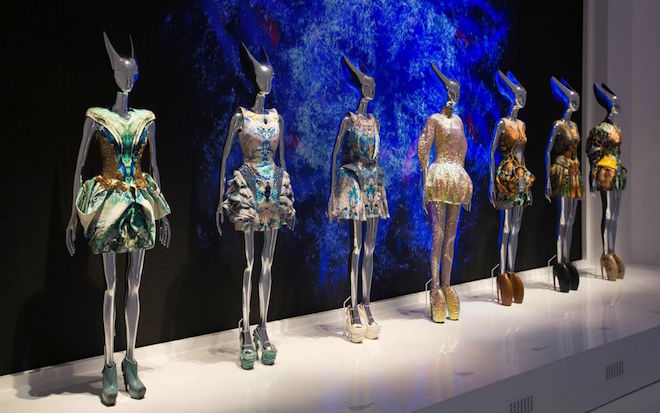
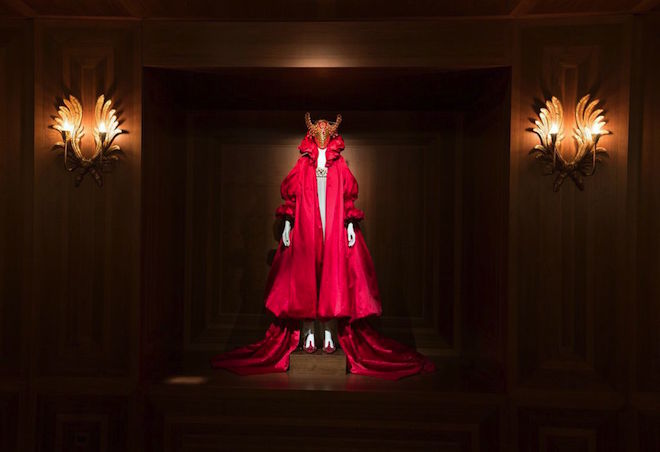
Almost twenty years of transformative and transgressive design are here and the iconic garments come thick and fast, from the goose feather coat dipped in gold to the bumster trousers and the crocodile head epaulettes. Animalistic and erotic, the pieces feel real and three-dimensional in ways that many fashion garments fall short in this kind of setting. Layered thick with references, implied and explicit, they transcend ready to wear. There are over 240 garments showcased over the ten rooms, including 70 additional pieces that particularly resonate with the London homecoming. Exhibition designers Sam Gainsbury and Joseph Bennett have taken a thematic route through McQueen’s archive, creating theatrical spaces that are powerfully evocative of his most recognisable influences.
A Cabinet of Curiosities exposes many of McQueen’s most memorable garments, including some he created for Givenchy. At the heart is the rotating dress from his Spring/ Summer 1999 No. 13 collection, in which Shalom Harlow was famously sprayed by robots. Soaring up to the ceiling are 120 other pieces, but emphasis is placed on highlighting the sculptural jewellery and headwear accessories created by long-time collaborators Philip Treacy and Stephen Webster. The association with McQueen seems to even elevate these two master craftsmen, standing on the shoulders of a giant. The exhibition ends with McQueen’s final collection, Plato’s Atlantis (Spring/Summer 2010), which in retrospect feels like the pinnacle of his fascination with anthropomorphic metamorphosis. And those armadillo shoes will define him – and the label – long, long after his death.
The poignancy of his brief genius resonates through a re-staging of the Kate Moss hologram that closed the Widows of Culloden Autumn/Winter 2006 show; an ethereal wisp of cheekbones and organza floating mid-air finally drifts off into the distance and disappears into the black solar system. It’s a fitting metaphor for a designer whose star shone brighter than most, but who was ultimately consumed by his own personal tragedy.
Savage Beauty is at the V & A Museum until 2nd August 2015.
China is a rising economic force in the world, but little is known about the social and emotional lives of its young people. In Little Emperors and Material Girls (I.B. Tauris, £14.99) Jemimah Steinfeld gives a fascinating insight into a generation that has grown up in a post-Communist society and is the product of the one child policy. Attitudes towards love, sex, careers, family, money and politics are revealed through a series of amazingly candid conversations with Steinfeld – a journalist who lived and worked in China – and backed up by powerful statistics. This is a country with a population of 1.4 billion, with 300 million under the age of 30. In clubs, coffee houses and restaurants she meets ‘leftovers’ (unmarried women over 26), ‘bare branches’ (men without children) and China’s cash-flashing rich kids, known as fu’erdai. They talk about internet dating, parental pressure (especially on gay kids whose parents expect them to marry and continue the family line), financial struggles (turns out it’s as hard to pay the rent in Beijing as in London), sexism and punk rock. They describe feelings of loneliness and alienation, frustration and anger, but also hope and ambition. If you want to know what the future of China looks like, read this book.
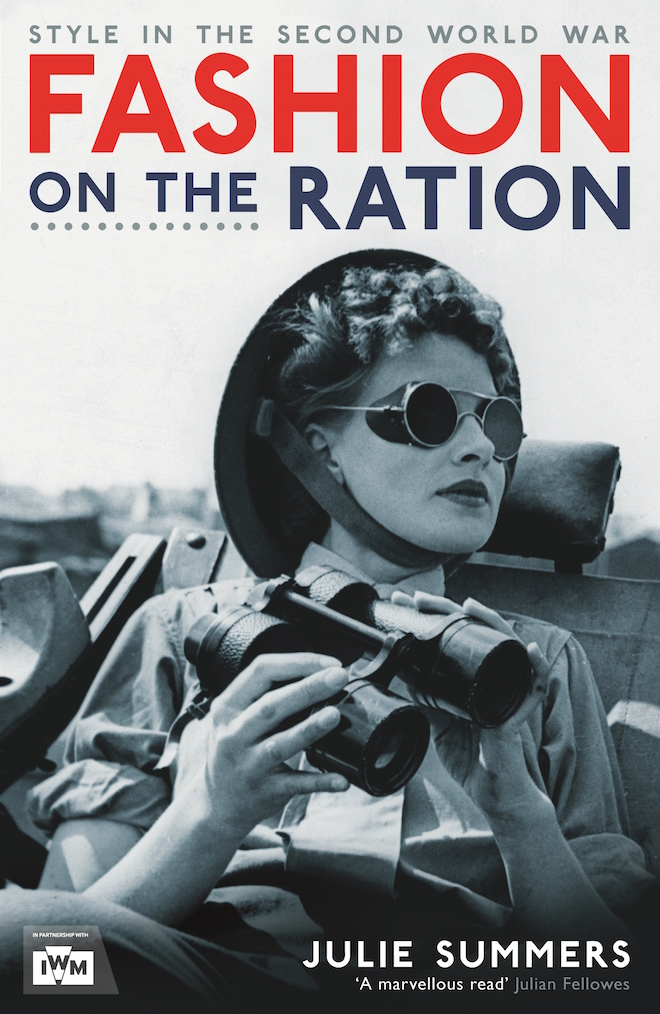
Fashion + women + social history: Julie Summers’ Fashion on the Ration (Profile Books, £16.99) ticks ALL our boxes. A detailed account of the crucial role fashion played during WW2, this book brings rationing, clothing coupons and that familiar phrase, ‘make do and mend’ to life through personal testimonies, photographs and Summers’ evocative prose. The tenacity of the men and women on the home front is revealed through anecdotes; Vogue’s staff finishing an issue in the basement after their offices were bombed in the Blitz, Barbara Cartland buying wedding dresses for women in the services to borrow from a ‘wedding dress pool’. Fashion mags acted as tools for disseminating important information from the government, but also as morale-boosters – urging women to make the best of their restricted wardrobes and promoting the idea of ‘beauty as duty’, for their own sakes and for the pride of the nation. Summers analyses the roles of the top designers including Hardy Amies and Norman Hartnell in designing utility clothing (essentially the first designer/high street collaborations). Perhaps inevitably alongside this, the female silhouette changed and fussy frills were out, clean lines and simplicity were in. In a fascinating fact from social history, Summers reveals that for many poor people, the quality of their wardrobes improved thanks to the introduction of coupons and utility clothing which raised the standards of production and distribution. The influence of these seismic changes to the fashion industry, both in terms of aesthetics and manufacturing, can still be felt today.
Our glossy book of the month is Improbable Libraries by Alex Johnson (Thames and Hudson, £14.95 hardback). As public libraries all over the world are shutting down or shrinking, Improbable Libraries is a timely celebration of book-shrines in all their guises. Library-lover (and proud son of two librarians) Alex Johnson is not remotely nostalgic in this collection and instead shows what book recommending, lending and displaying can mean today. He mixes up images and essays on everything library, surveying mobile units, tiny bibliothèques and grand academic institutions. He uncovers some surprising book depositories in repurposed spaces (old phone boxes for example) and somewhat less surprising literature exchanges tucked away in corners of pubs and cafes. Whether personal or public, what a library is or can be is changing and it’s all optimistically documented here. These valuable community spaces, private sanctuaries, luxurious garden book dens and educational lifelines (like the incredible travelling camel library in the Gobi Desert) aren’t going anywhere. Browsing through these dreamy book-nooks made me think that the rather conventional alcove shelving project I’m currently working on could probably benefit from a little bit of these Improbable Librarians’ imaginations.
Anna-Marie Fitzgerald and Phoebe Frangoul are the co-editors and co-founders of the London grrrl-zine and literary salon Pamflet. Follow them on Twitter and Instagram @Pamflet.
It sometimes feels as if London lags a little behind other great cities like New York and Paris when it comes to the way it’s depicted in pop culture – somehow the gritty glamour of our beloved capital doesn’t necessarily translate well to page or screen. But Jason Brooks’ beautiful London Sketchbook(Laurence King, £19.95) is a fitting tribute, something to treasure and leaf through on bleak January afternoons. You will recognise Brooks’ distinctive fashion illustrations from posters and the pages of Vogue and Elle, but with London as his muse he has really let his imagination and talent run riot, creating thoughtful, elegant drawings that truly capture the spirit of the city.
The book is divided into themed chapters such as ‘the street’, ‘London by night’ and ‘fashion’ so you can flip straight to your subject of choice. Brooks mixes collage, speedy, sparse pen and ink sketches, crisp, precise architectural drawings, quotations from the likes of Virginia Woolf and Disraeli and facts and anecdotes to evoke a very personal vision of his city which is by turns moving, witty and educational. If you’re tired of London, this ravishing visual feast will inspire you to put up your brolly and hit the rainy pavements to fall in love with the city all over again.
Josa Young’s second novel, Sail Upon the Land (Keyes Ink, £8.99) is a moving, richly told story about motherhood in all its forms and how this role can encompass earth-shattering love and terrifying ambivalence. Spanning several generations and jumping between the English countryside, London and India, the narrative is complex but satisfying, weaving together different strands from a cast of well-observed characters.
The life of a deb in swinging ‘60s London is vividly brought to life with humour and a sharp eye for detail, but it’s the descriptions of mothers – both biological and otherwise – that are almost painful in their realism. The complicated relationship between daughter and mother is depicted with brutal honesty and from multiple perspectives, as each woman moves from one role to the next. The heroine, Damson, is a sympathetic, complex character who you will find yourself thinking about long after finishing this thoughtful, thought-provoking novel.
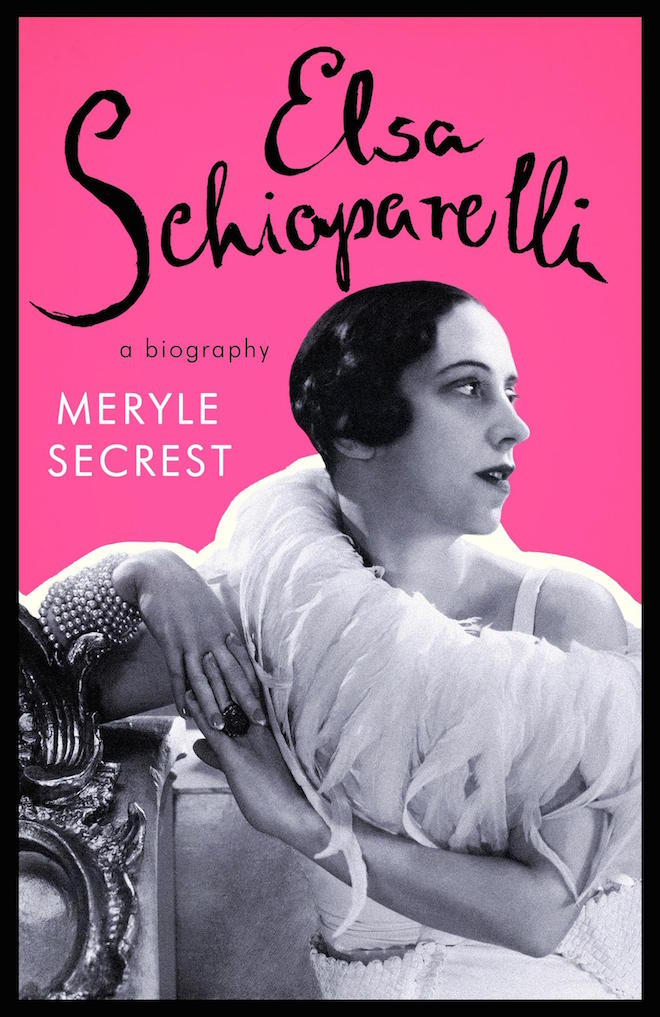
Elsa Schiaparelli: A Biography by Meryle Secrest (Fig Tree, £25) this new biography tells the story of one of fashion’s true originals whose costumes now hang in galleries rather than wardrobes. In her 1920s and 1930s haute couture heyday, Italian-born French designer Schiap (1890-1973) dressed film stars and socialites and enjoyed a personal life that was almost as dramatic as her impact on the fashions of the time.
Secrest’s biography is wonderfully gossipy and the best sections are where she explains how and why Schiap’s style was so unique and the genius behind her approach to fashion business as well as design. She excelled at creating and perpetuating her own myths, living in gloriously eccentric apartments, appearing at all the most-talked-about parties and surrounding herself with a talented team. She conjured up a kind of magic around her creations and her persona and built up this mystique with the help of a series of dazzling collaborators, including (most famously) Dalí. But although she took her work very seriously, she didn’t mind that her clothes were enthusiastically copied by dressmakers at home – she liked being popular.
And who could resist her madcap style (she even sold a hat called the Mad Cap)? This personal myth-making means that many facts that a biographer might need to tell the full story have been obscured by Schiap’s own efforts over the years, but what is clear is her timeless style legacy. The ‘nonchalant chic’ of her early years – technically impressive sporty garments, wrap dresses, bloomers – inspired by the leisure habits of her fabulous and wealthy milieu continues to influence designers today.
Anna-Marie Fitzgerald and Phoebe Frangoul are the co-editors and co-founders of the London grrrl-zine and literary salon Pamflet. Follow them on Twitter and Instagram @Pamflet.
Allen Jones knows how to sell sex. Since he first exhibited his fibreglass women in the late 1960s – the prototype fembot, down on all fours, arse practically over head, strapped into bondage gear – he’s owned it. They were – are – the literal representation of sex-on-legs. And who’d have thought that the place to get a little artistic perversion in London these days would be at the Royal Academy?
It’s clear that Jones’ coterie of fetishised furniture sculptures represents a very specific sort of fantasy. It’s everyman erotica; pert tits, big lips, hard-bodied, submissive, available. Serving you cocktails, ready to take your hat. They’re expensive whores on all fours. Yet, even as a feminist, you have to relish in how aggressively politically uncorrect it all is. Jones makes incredibly, obviously, seductive art. And you might feel a bit grubby about it afterwards, but then we’ve all been there, right?
Jones’ paintings provide a little counter balance to the implied misogyny of his sculptures. In these colourfully kitsch scenes he paints about power-play with cross-dressing inferences, of the dominate female, the submissive male, of the animalistic rituals of mating and the delicate interplay of coupling represented in the form of dance. It’s the paintings and later sculptures that suggest a much more complex side to Jones than the ones his critics would have you believe. To reduce Jones to a fetish artist, means you ignore a lot of the richness and ambiguity in his work. And it’s this that makes you want to go back and take a second look at the sculptures – maybe it’s not all about oppression and submission, maybe there’s something deeper at play? Maybe it’s not a male-female thing after all. Maybe she’s in control. Hell, maybe she’s even enjoying herself. Imagine that.
Allen Jones RA is at the Royal Academy, London until 25th January 2015











 PREVIOUS

 Twitter
 Tumblr
 YouTube
 Facebook
 Instagram
