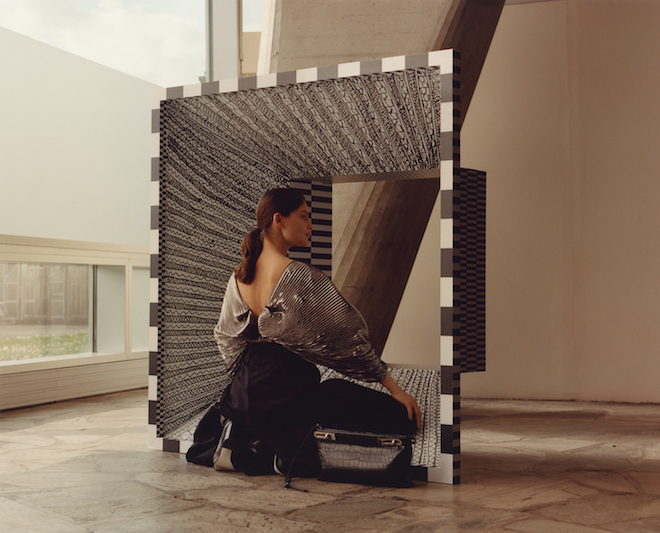
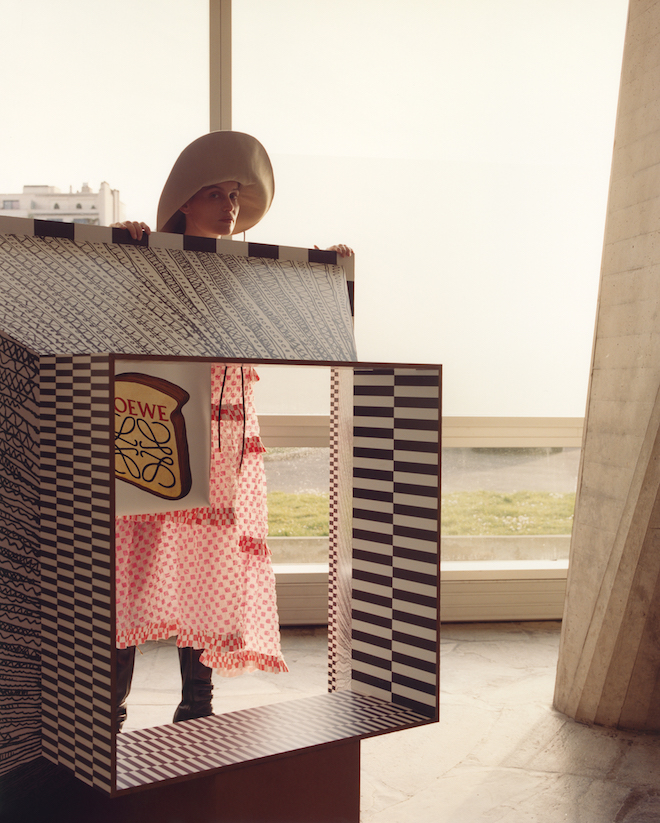
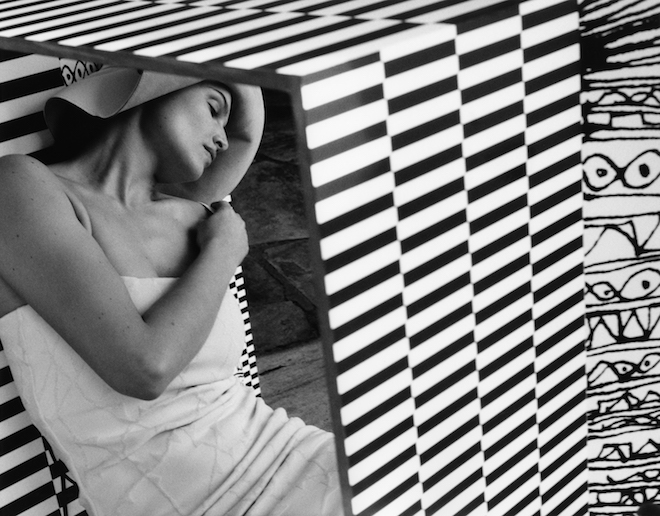
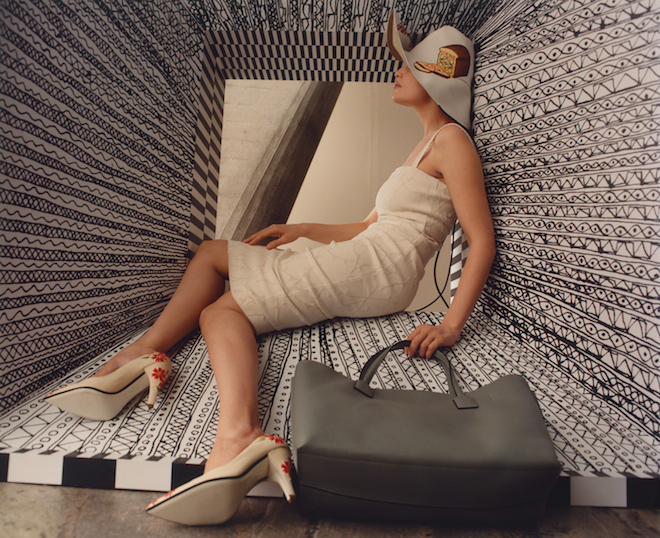
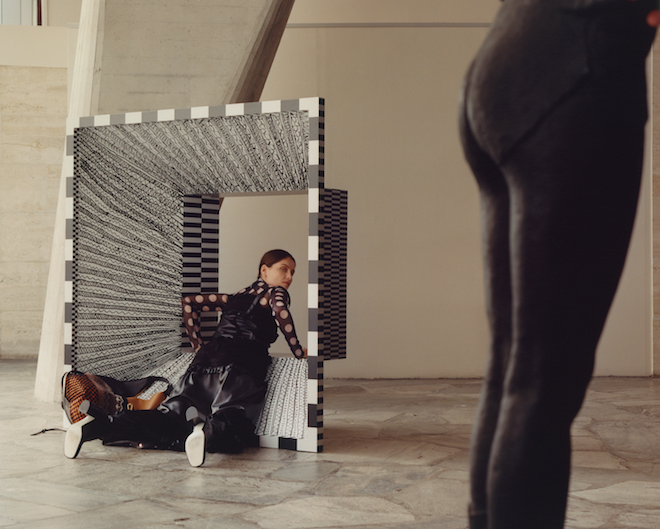
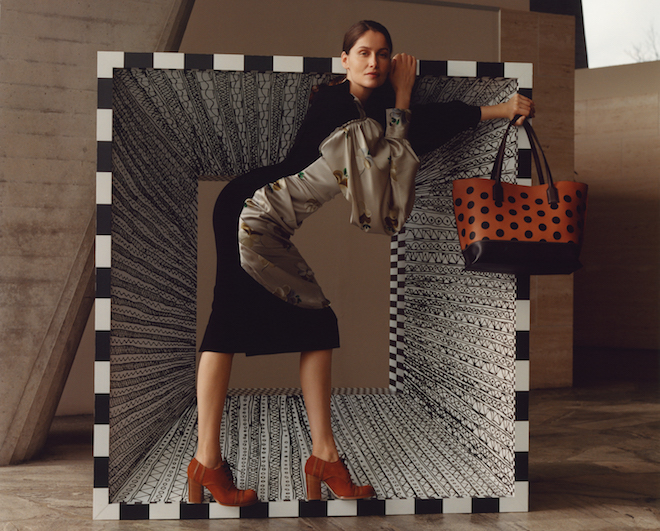
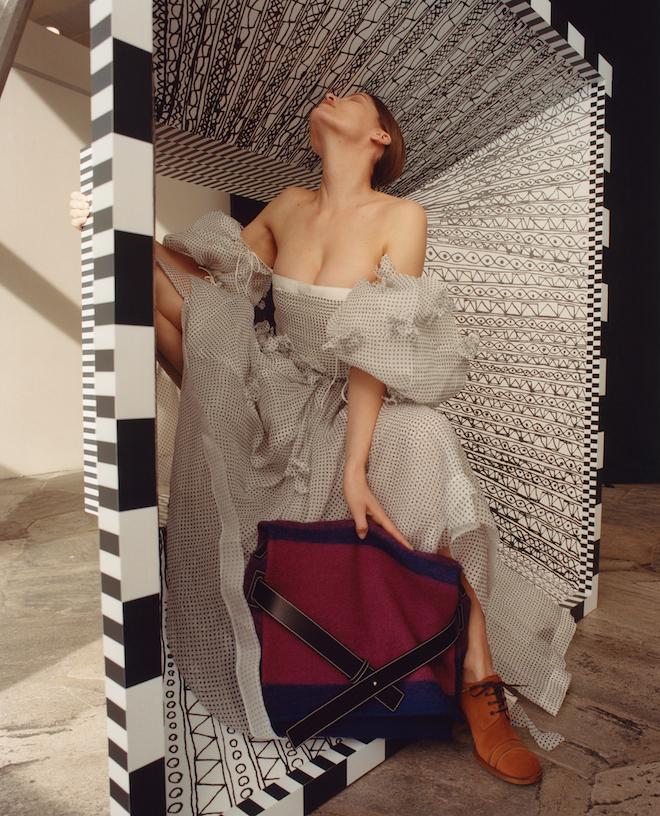
We’ve got that Friday feeling courtesy of LOEWE‘s hardcover Fall Winter 2017 – 2018 publication. Shot by Jamie Hawkesworth in a set designed by M/M (Paris), the publication features French model and actress Laetitia Casta. Playing with contrasting forms, the images juxtapose sharp angular structures with the female form.
LOEWE publication Fall Winter 2017-2018. Photography by Jamie Hawkesworth
LOEWE publication Fall Winter 2017-2018. Photography by Jamie Hawkesworth
LOEWE publication Fall Winter 2017-2018. Photography by Jamie Hawkesworth
LOEWE publication Fall Winter 2017-2018. Photography by Jamie Hawkesworth
LOEWE publication Fall Winter 2017-2018. Photography by Jamie Hawkesworth
The run of 1,200 hand-numbered copies will be available at select LOEWE stores.
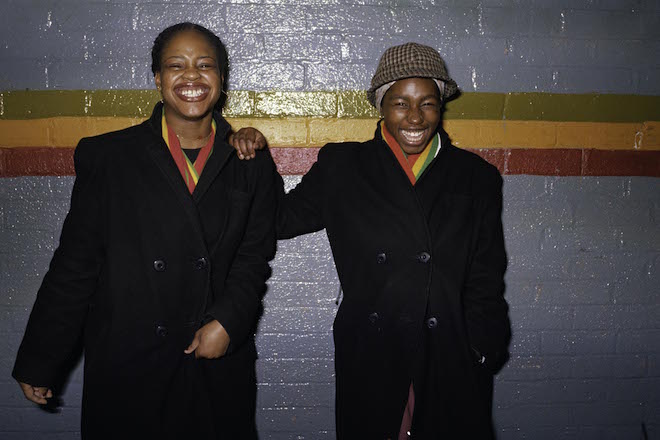
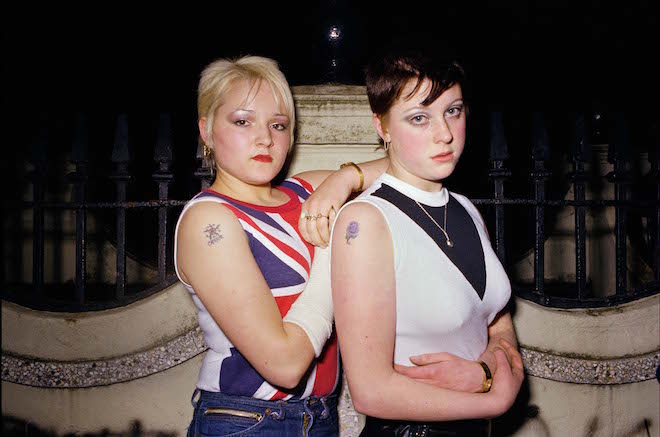
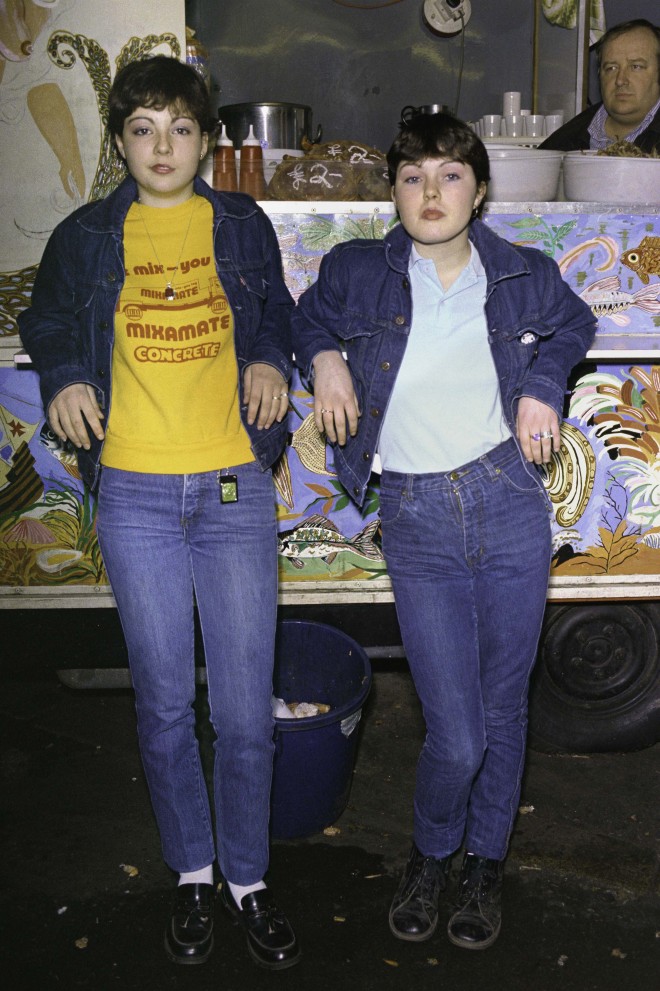
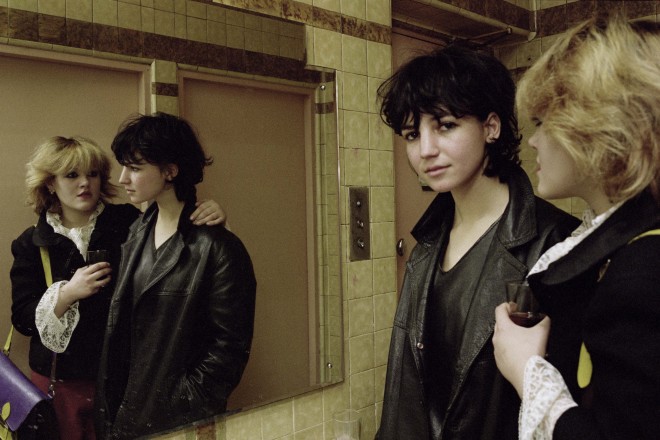
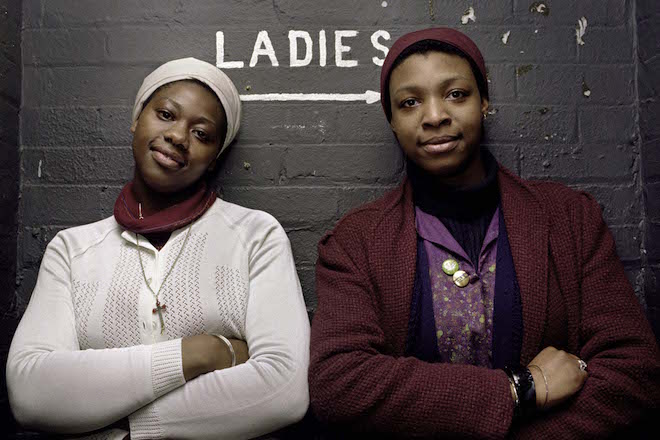
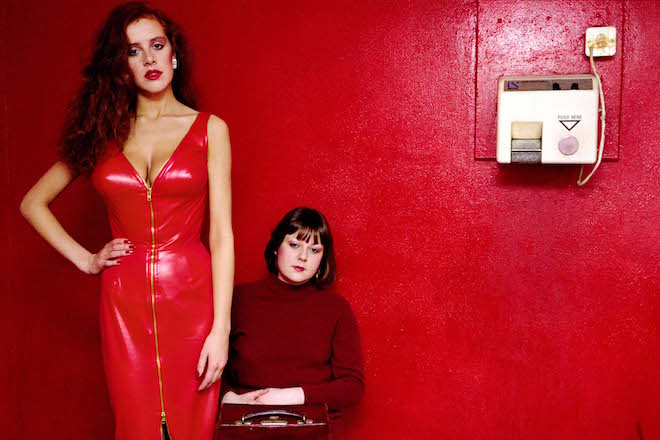
In the early 1980’s 22 year old photographer Anita Corbin captured the lives of women from different subcultures in the UK. Photographed mainly in London, the project documented the power of female friendship and individuality, offering candid portraits of their everyday lives. From mods to new romantics, rockabillies to punks, Corbin (who was just starting her career at the time) told the story of these women in their natural habitats, whether that was at friends house’s or social centres.
The project was called ‘Visible Girls‘ and Corbin’s 28 images toured the UK throughout the 1980’s and 1990’s, garnering acclaim both for her subject matter and for her photography style, which saw her shoot in slow film and with a portable flash.
21.tif
36 years later, Anita decided to find the women and offer a new series that centred on who the women have become. Having tracked down over 70% of those she photographed, Visible Girls:Revisited is a radical and vital examination of age and identity; an exhibition which allows individual spirit to transcend time.
The original portraits will be showcased alongside the new series, and audiences can also listen to original tape recordings from interviews in 1981.
“This exhibition is not only about the powerful bond between women united by subculture, belief and friendship, but about the potential of women coming together across generations.” Says Anita, reflecting on the forthcoming exhibition. “Visible Girls: Revisited, allows the ‘visibility’ of youth to shine a light on the often-disregarded wisdom of the older woman, revealing a unique, cross-generational tribe with the power to provoke and inspire.”
Launching in Hull, the exhibition will tour Norwich, Exeter and Bristol, with other spots to be announced soon. In an age where so much emphasis is placed on the power of a fleeting selfie, this tribute to female friendship, culture and style across decades is, kind of ironically giving the time lapse, offers a fresh approach to how women are depicted today.
“This is an exhibition where mothers and daughters will find mutually provocative ground through which to forge a rare solidarity” adds Anita. “At this point in our history we need [that] more than ever.”
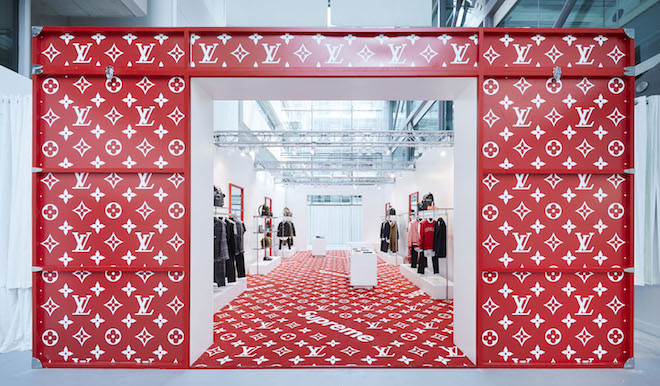
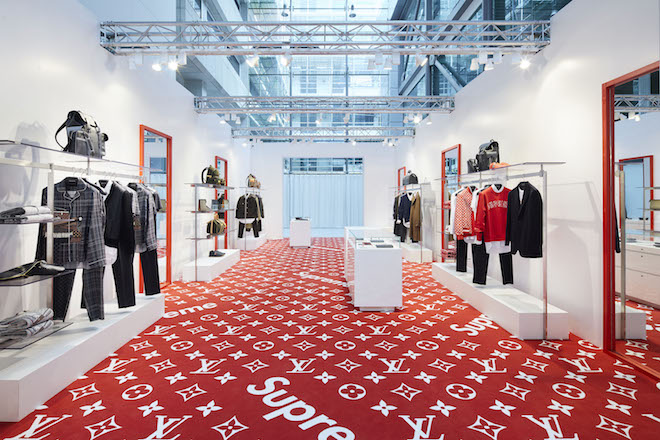
180 The Strand is playing host to some of London’s most fashionable events this summer. Launching the day before the Gurl’s Talk event at the same venue, Louis Vuitton have set up shop to give the city a preview of their Supreme collaboration, and it’s as good as we expected.
Bringing together influences from 70’s, 80’s and 90’s New York, the collaboration pairs the confident street aesthetic of Supreme with the high fashion design of Louis Vuitton, seamlessly fusing the two strands into one, highly covetable whole.
Visit to explore their RTW collections, as well as leather goods, accessories and exclusives specially made for the pop-up. We’ll see you there.
Louis Vuitton x Supreme pop-up store at 180 The Strand, June 30th – 21st July, 2017
Escape the worst of London and embrace what it does best with a stay at the new Nobu Hotel in Shoreditch. Following on from openings in Miami, Manilla and Las Vegas, Nobu’s new opening in London is a welcome addition to the cultural scene.
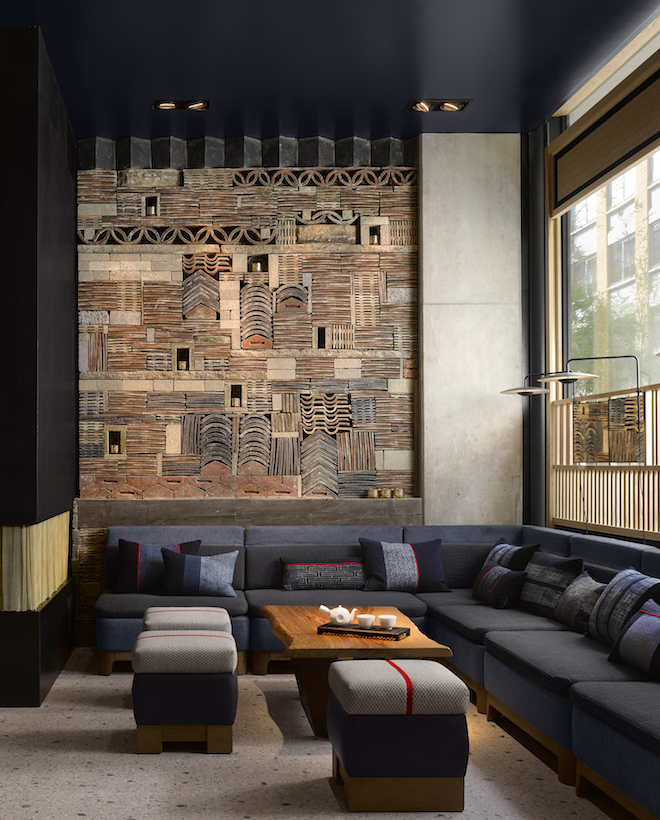
With modernist exteriors and minimal interiors, the design reflects the creative prowess of East London; the hotel’s facade offers an interplay of colour, reflection and light, while inside Japanese influences take the fore.
Nobu Hotel Shoreditch | photos by Will Pryce
Offering 150 bedrooms and the latest Nobu restaurant, Nobu Hotel Shoreditch marries a casual atmosphere with captivating aesthetics, making it a wholly Instagrammable and über trendy place to head to this summer. Alongside dreamy rooms and suits, there’ll also be events throughout the year. It’s time to check it out, and check yourself in.
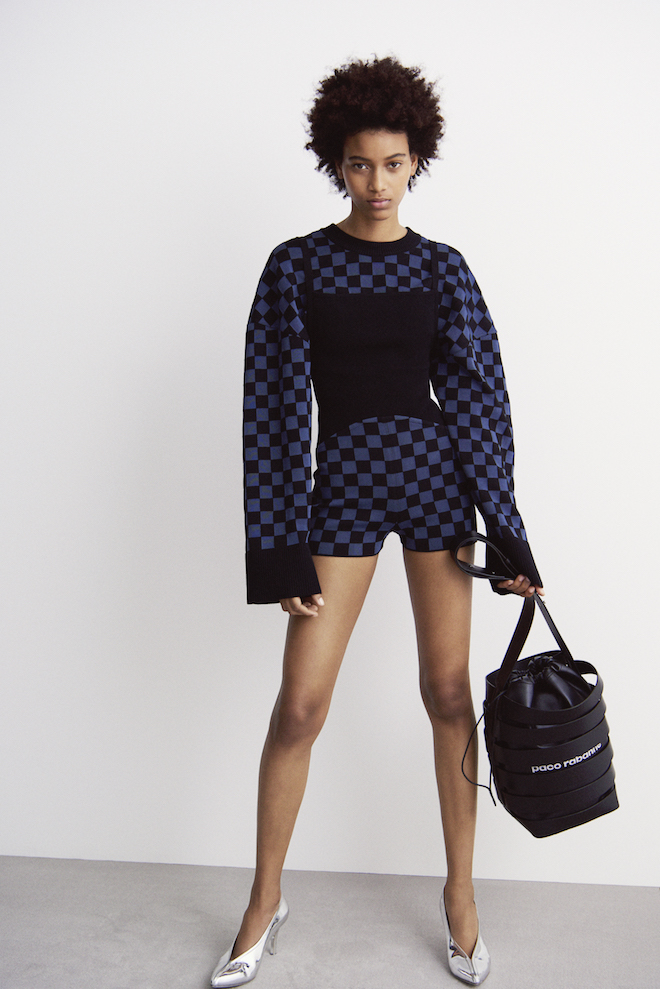
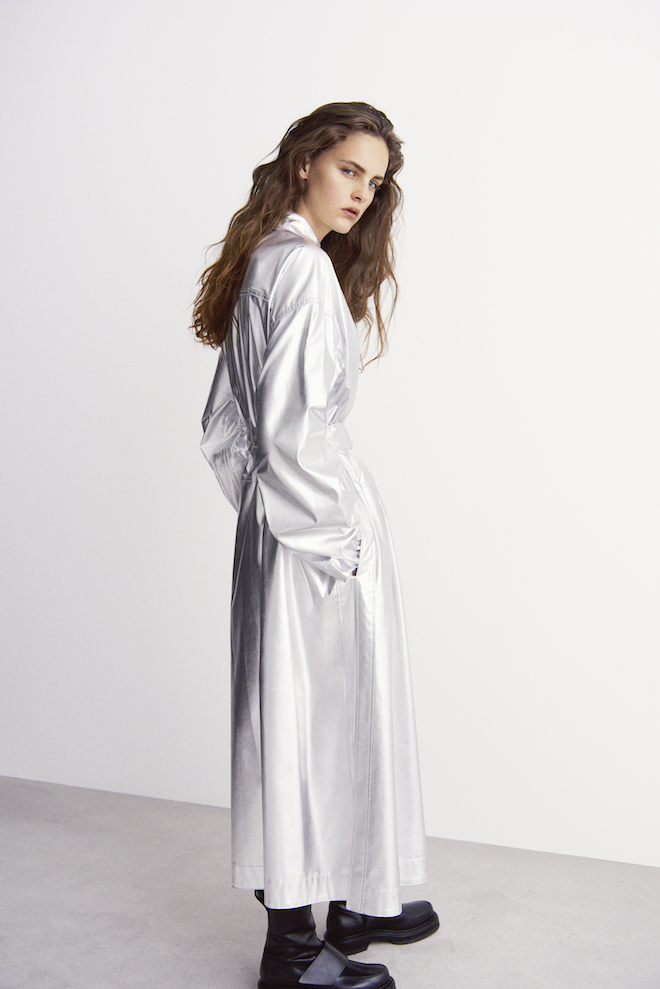
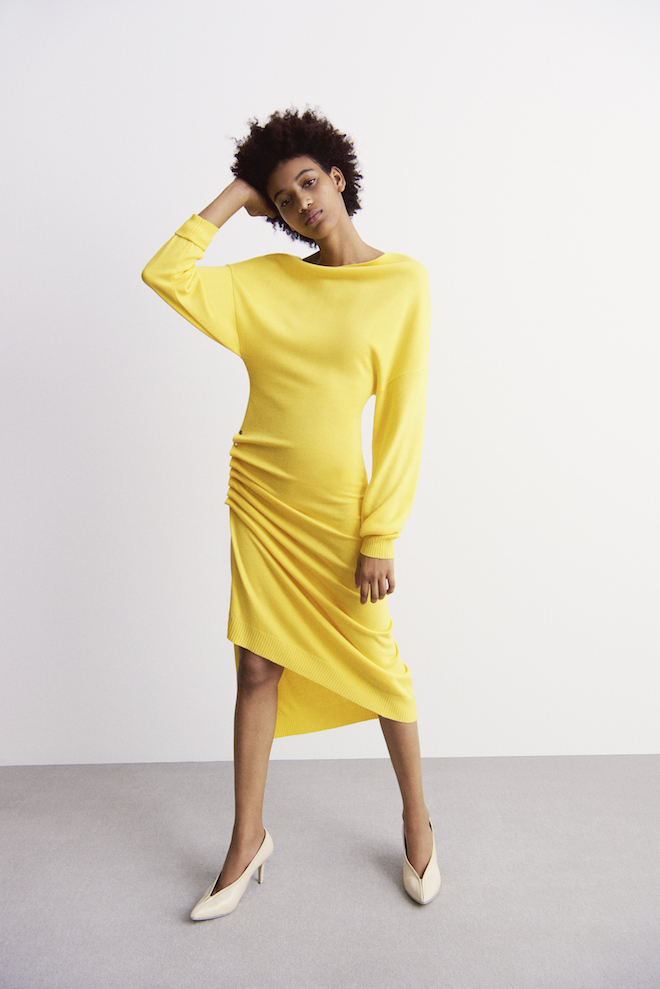
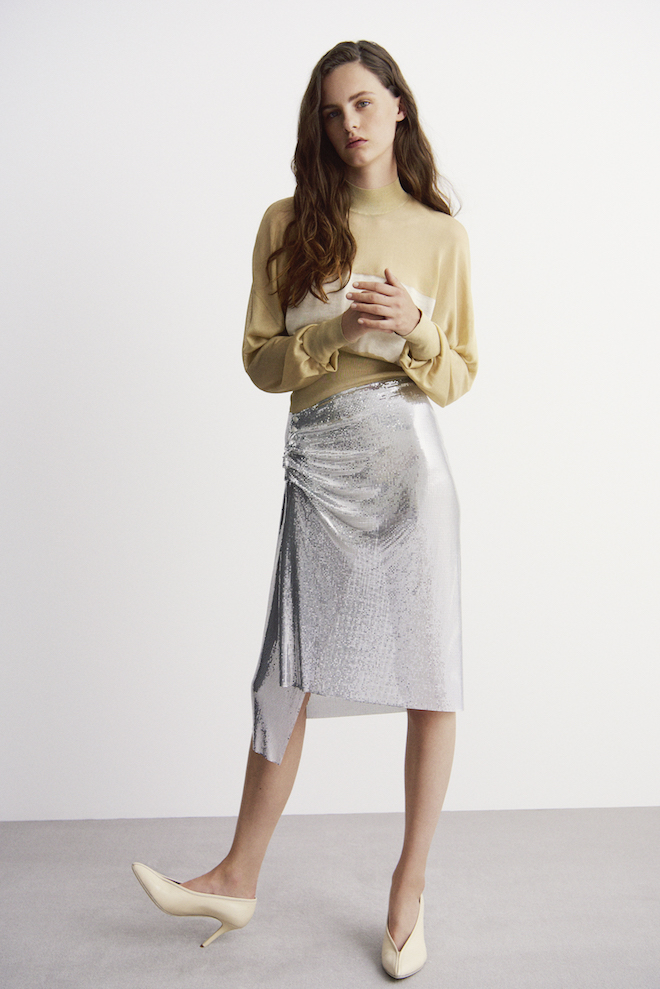
Feminine silhouettes meet boyish looks for Paco Rabanne RS18. Think fitted waists and cutaway tank tops, draped knitwear and slinky shirts; bright colours play against neutral hues while checkerboard patterns add fresh texture to familiar shades. Embrace for a full summer refresh.
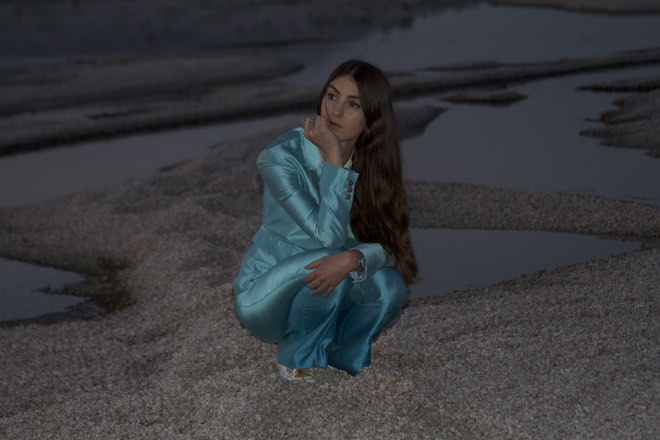
‘Y…O….L….O’ sings Natalie Mering in her wistful, luscious composition, ‘Generation Why’. The letters come so elliptically that you almost don’t piece the word together, especially as the sarcasm is delivered in angelic tones, packaged with fleeting guitars. Elsewhere on ‘Seven Words’ the same emotive voice offers a more morose, melancholic narrative. These two songs offer a survey of range of Natalie Mering’s (aka Weyes Blood) canon, and it’s no surprise that she’s considered to be one of America’s most exciting female artists. Whether she’s contributing to other records or delivering her own kind of ephemeral gospel, the music is rich, immersive and often sardonic – the fact that she’s supporting Father John Misty on tour (and is regularly photographed by his wife, and Twin favourite Emma Tillman) seems a perfect fit.
Her third album, Front Row Seat To Earth is filled with West Coast meandering melodies which encompass personal stories and wider musings on the world. Sloppy listeners will find themselves caught off guard in the same way that attentive ones wait with anticipation to see where the lyrics will bend next. Either way, you’ll find yourself surprised and likely with a grin on your face. In the midst of touring, Twin caught up with the Californian singer to chat about the state of music, collaborating with Perfume Genius and the duality of performance.
In the last two years, there’s been a lot of talk about the rise of the 70’s singer-songwriter. Do you consider yourself to be part of this movement?
In some ways, but not entirely – I love music from all decades, all time periods. The 70’s thing is convenient because its definitely a convergence of a lot of different influences, it was a vibrant time that set the pace for the time we still live in now. I can associate with that aspect of it, but I don’t think of myself as 70s.
What does a 70’s sound mean to you? What was magical about that era of recording?
Music started to expand into different micro genres, things were becoming less homogenised. That’s pretty magical. Also most people were recording to tape and collaborating with a lot of different, smart, creative people. Producers, players, arrangers. It was the hey day of money being thrown into interesting projects because mainstream music hadn’t been totally strangulated yet— big record labels were still taking risks and culturally we were discovering the future as we know it now.
How did you go about shaping the sound for your record? What specifically were you influenced by, and what were you listening to?
I was listening to a lot of Soft Machine and classical music — I wanted to make something epic but also personal… Chris Cohen had a really good ear for this concept, we used a very limited amount of microphones while recording and did a lot of things live to capture that feeling, make it all feel like it was recorded in the same sphere. I was also was listening to a lot of Weather Report which is a pretty strange non-sequitur – I have a tendency to listen to things that are very different from my own music while I’m creating.
There’s a strong visual element that runs through your cover and videos, do you think in ‘the digital age’ image has taken on a heightened significance for music?
Not necessarily — we’ve always been a civilisation driven by imagery. Things probably changed the most in the 80s when music videos become synonymous with artists – suddenly people had to look really good, seem young. I think now more than ever we’re less interested in innovative music, which makes the imagery seem more important. It’s like the music is an afterthought. Music has been congealed into a very specific “industry standard” that’s numbed peoples tastes a bit, made it a more narrow experience for the masses as a whole.
In the album the emotional nuances are very powerful – do you have to access and inhabit the original emotions that you had when writing the songs when you’re performing them, or can you do it with a certain level of detachment?
I’ve learned to replace it with other emotions if I don’t want to conjure the old ghosts – I try to avoid detachment in an apathetic sense, but sometimes I do let go and stop thinking and just feel whats happening. That’s like detachment in the zen sense.
Your fashion sense is impeccable. Do you see your style as part of the Weyes Blood persona, or is it an expression as Natalie?
It’s a part of Weyes Blood— if I, as in Natalie, had my way with clothes I would be mostly naked or wearing huge swaths of fabric. I do like a good suit, its like a huge swath of monochrome fabric but organized a bit more. If it fits super well you can climb a mountain in a suit, live in a suit. Classic hobo.
And thinking more broadly about that potential duality – why did you want to work under a different name when putting out your own music?
I wanted it to be a different world. I’m not that much of a realist with my art – there’s a lot of fantasy and imagination involved, occupying an archetypal space, my lyrics are the most Natalie Mering thing about it all and I think that stands out just enough. It’s still not too late to release under my own name someday, but I’d rather just make films or do stand up comedy under my name. Those are more Natalie Mering things.
You have worked and toured with Perfume Genus. Tell us more what that collaboration means to you?
Mike is an incredible soul — he carries very powerful and moving musical ideas that I feel a kindred spirit with. Singing with him is always an elating experience. I think we have the same knack for a certain kind of musical drama and vulnerability. He’s definitely been an inspiration to me.
Generally you’ve worked with a lot of exciting artists, who would you like to work with in the future?
I’d love to work with somebody who’s very different from me, see what that’s like. I’m first and foremost a really big fan of music, so there’s lots of people I can imagine working with. It’d be fun to dip into a top 40’s world or make a Nashville country record. Sky’s the limit.
What are your plans for the rest of the year, and what are you looking forward to?
I’m going to be touring with Father John Misty in the states, UK and Europe this fall – right now I’m writing my next record and cultivating a new sphere to take back into the studio with me for the next one. I am most looking forward to getting back in the studio and recording!
Conversation-changing platform Gurls Talk and Coach have partnered up for powerful new festival, coming to London at the beginning of July. Throughout the day, the event will celebrate women in all their many and majestic facets, with the likes of Hari Nef, New Statesman columnist and fierce activist Laurie Penny and US Vogue contributor and relationship expert Karley Sciortino all joining to fuel debate and discussion around gender.
The event kicks off with a speech from Gurls Talk founder Adowa Aboah, who started the platform as a means of encouraging girls to speak more openly around issues of mental health and identity. Her ongoing commitment to activism has seen Gurls Talk grow into a formidable and vital organisation, offering a much needed space for young women to receive support and mentoring.
There will also be choreography classes from Wayne McGregor and a library by Claire de Rouen – and best of all, it’s free.
Gurls Talk x Coach Festival will take place 1st July, 12 – 6 pm at 180 The Strand, London
Until early July, IBASHO Gallery in Antwerp will host the works of twelve young female photographers from Japan. IBASHO means ‘a place where you can be yourself’ in Japanese, and the gallery consistently displays stunning Japanese photography in its many forms.
The title of this show is ‘Female Force from Japan’, and it includes photographs from an array of young female artists, with images ranging from the raw and unpolished, to the minimalist and still.
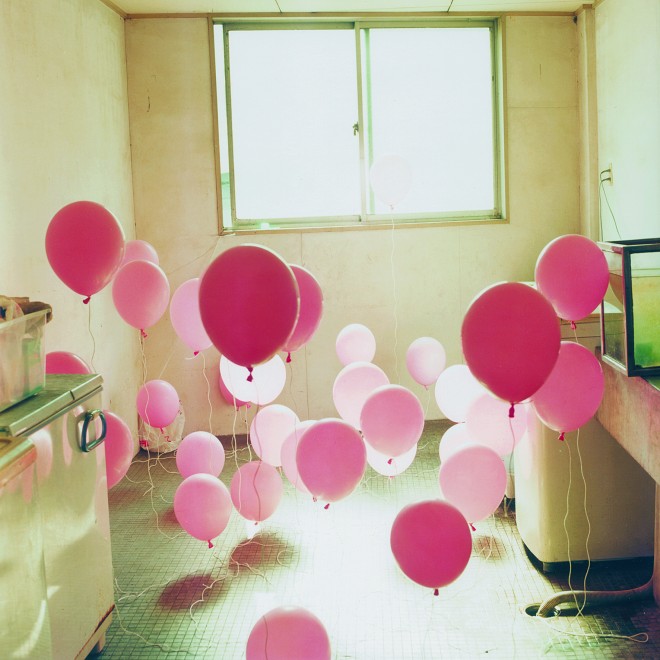
Kumi Oguro, ‘Drift’ 2015
The exhibition will display selected images from artist Yukari Chikura’s series ‘Fluorite Fantasia’, a very personal body of work that deals with the death of her father. Photographer Mikoko Hara presents a selection of her square-formatted photographs, all taken without using a viewfinder, and London-based photographer Akiko Takizawa exhibits images that use the 150-year-old Collotype printing process, which originated in France. Other artists included in the exhibition are Haromi Kakimoto, whose crisp images falter between our everyday lives and our dream worlds, and Mika Nitadori, whose artistic focus is on human interaction.
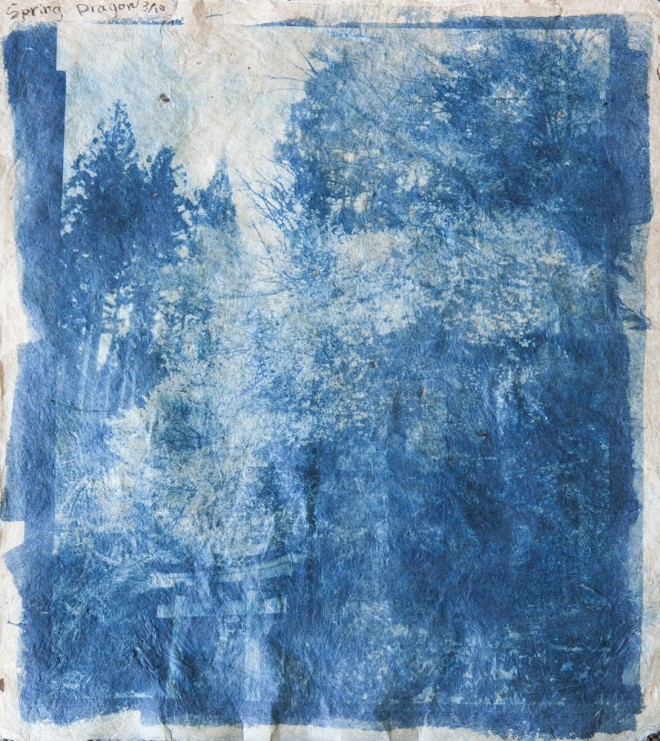
Mika Horie, ‘Spring Dragon’ 2016
The varied and compelling nature of the works are tied together by both the artists’ gender and national identity. And with works by Western photographers who have been inspired by Japan also on display, this exhibition at IBASHO ensures a complete survey of the exciting work coming out of the country, and its wider ramifications for contemporary culture on the international stage.
Reiko Imoto, ‘Parallelism’ 2000
‘Female Force from Japan’ will show at IBASHO Gallery in Antwerp until 2nd July
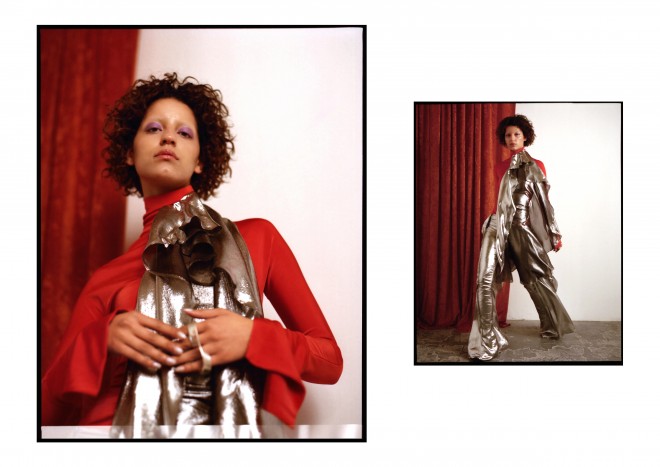
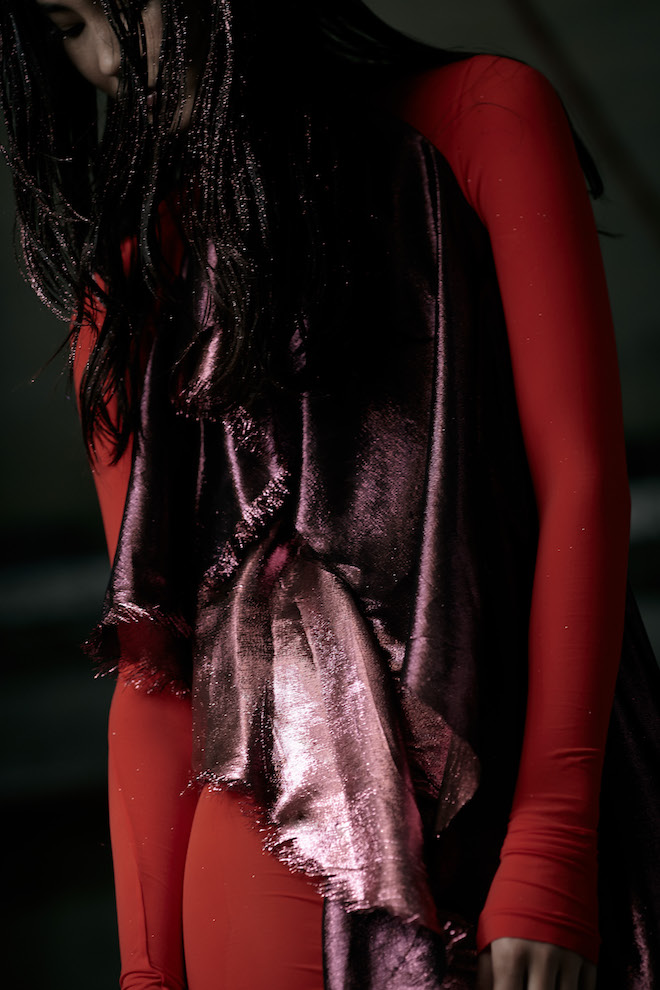
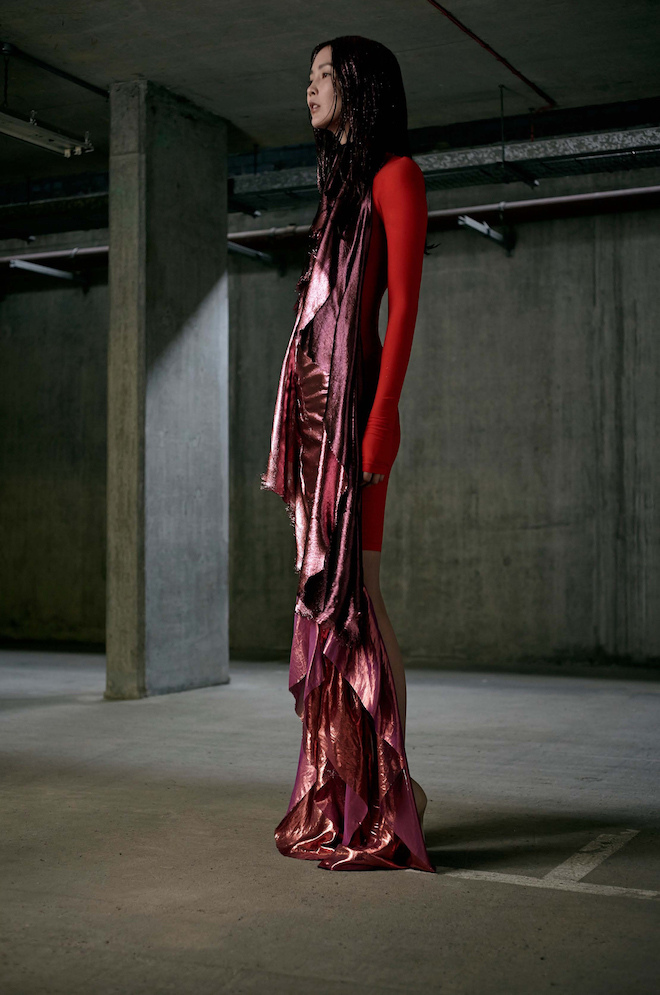
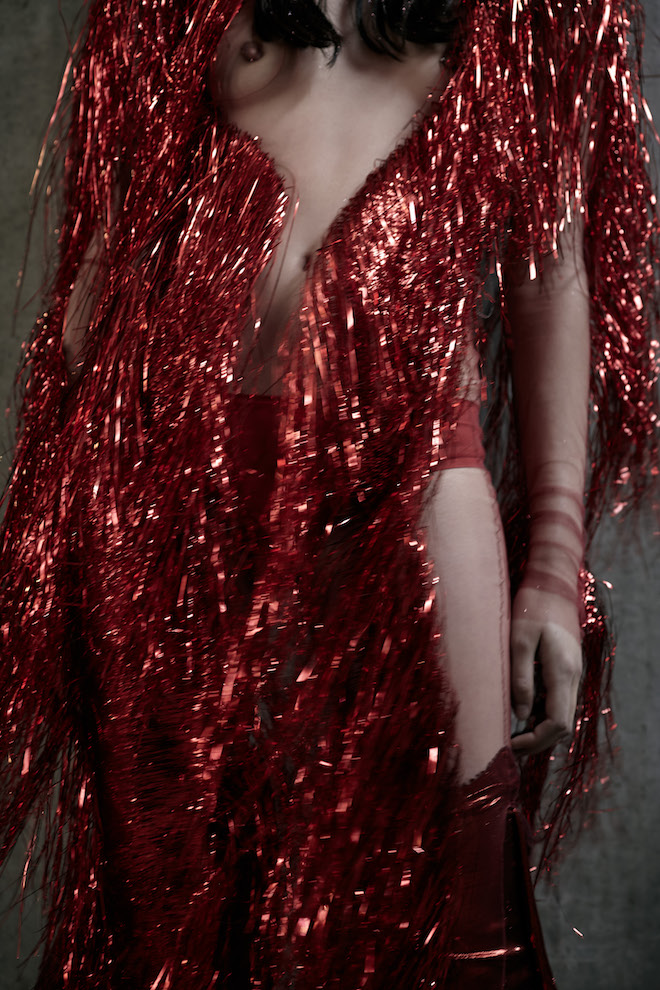
In fashion it’s increasingly rare for creative individuals to collaborate without a clear (usually financial) purpose. But to celebrate their Fall 1 collection, Sies Marjan‘s creative director Sander Lak paired up with photographer Roe Etheridge stylist Marie Chaix to create a new series which embraces art for art’s sake.
The idea was simply to celebrate the texture and silhouette of the designs, focussing on the heady combination of materials – Chukka loafers in nubuck leather, satin sweatshirts, metallic and tinsel details – and the way in which they interact.
Sander Lak commented: “I always like the idea of not having an agenda or goal and just come together with talented people and create stuff. Sometimes all the projects and shoots and lookbooks and presentations that are scheduled for various goals are a creative killer. We work on them just to get them done in time… This project was very much about rejecting that idea. Not having a clear final purpose really freed us up creatively and ended up being so helpful with putting the show together a few months after this shoot.”
Twin was given an exclusive teaser of the new editorial, check out some of the images below.
Paula Knorr paints power. Through molten textures and engulfing energy, striking clashes and forthright form. The brush she paints with is of a modern sensibility, dappled by her emotive translations through evocative fabric and stylistic fluidity.
The womenswear designer, currently supported by the British Fashion Council’s support scheme NEWGEN, initiated her interest in design with a naturalised association of fashion as an art form: as her artistic explorations developed, so did her desire to place the female at the foreground of her inspiration, with the presentation of femininity and strength colouring her collections each season.
From her emphasis on movement and sway in the shapes she cuts, there is something quite mesmerising about a Paula Knorr piece in motion. For Paula, clothes create a synergy between the wearer and themselves – seen in how her garments appear to mould around the body’s lines and horizons. Through her methodology – draping first on the figure before sketching out her ideas – the woman is the leading instigator in her inspirations. Her February 2017 showcase at London Fashion Week, Collages of Herself, took shape from excerpts of conversations Paula conducted with inspiring women, the figure and the female psyche informing the results. Her premier collection, ‘Her Wet Skin’, injected the power of contrasts between fabric choice to react and cause an emotional response to the collection. Discussing the challenges and responsibilities of design and the role of reality, the emerging designer is creating more than collections, she is aiming to capture expressions.
Paula Knorr AW17
As a young woman of the 21st Century, what influenced your decision to study fashion?
I knew that I wanted to create clothes from a really young age on. I was always sketching and sewing outfits for my little sister. Growing up in a very artistic household – my parents are both artists and illustrators – I naturally saw fashion as an art form and for a long time not the commercial side of it.
How did your design process and inspirations change from when you began your studies?
When I started to study it was hard for me to source inspiration in personal subjects. Especially during your studies you have to talk about concept and inspiration on a daily basis in front of various people – I was too self-conscious to really work through my inner heartstrings. It was during my MA in London at the RCA that I realised there is no time to hide behind fashionable subjects – that it’s more worth your time when you work on something that truly defines you.
Paula Knorr AW17
What is your design process now?
My main intention in my design is to put the woman in the foreground, not the cloth. It´s all about her body, her movement and her personal beauty. This interaction and balance between the body and the garments is essential . Details, prints, etc. come second: that´s why I never start by drawing my ideas. I have to drape and preferably create them directly on a real body to explore how they interact.
How does the female voice shape your seasonal collections?
To support and illustrate female identity is the core of my designs. In fashion you sometimes get the feeling that the superficial vision of a girl and her clothes on the runway is getting more attention than the real woman that wears the garment later on. Every season, I try to define a method to reverse that and remind of the actual purpose of fashion.
What does being a designer mean to you? Are you a translator of femininity and power?
As a womenswear designer it is absolutely necessary to challenge yourself and what femininity means to you. Your sole field of work is to dress women, so you have the responsibility to be progressive, powerful and a fighter for their wishes. In your small area of reach you have the chance to contribute and absolutely change something for women.
You describe your most recent collection as a complex collage of attributes – what are they and what lends to their complexities?
I wanted to showcase the diversity and complexity of the female psyche and appearance. Like in a collage all those emotions and characteristics don´t belong or fit together, they come from all sorts of places. Fashion tends to showcase this one dimensional, fictive girl as a muse. This makes the collection easy to understand, but also not relevant as an inspiration to reality.
How do you unite abstract emotion with material expression?
I wanted to transfer the interaction of sometimes conflicting emotions directly into garments by choosing fabrics which are not easy to understand and trigger your haptic impression. For example the AW17 silk and foil mix chiffon, which can look like glossy transparent latex in pictures, but moves like super thin chiffon, which creates a beautiful antithetic effect.
Your mission statement discusses creating an identity that allows a balance of strength and vulnerability – how do they feed into each other?
In reality a personality is never one dimensional. You can feel strong and vulnerable at the same time and tons of things more. To influence my design with reality, with a realistic female identity, is important in my process. What does femininity mean to you? My own picture of femininity is not the most unconventional one per se, but I have no problem with this. I think the main goal of feminism nowadays is to create room and acceptance for all concepts of feminine identity equally.
In an age of social anxiety, pressure and responsibility, where does your brand sit amidst the uncertainties surrounding women of our generation?
I want to connect to women of our generation which feel lost between gender neutral and over-sexual. I want to show that to be a feminine woman is equally important and needs the same attention than to be anything else. I was never the coolest kid and I always loved to feel really feminine. My main goal is to create a wardrobe for those women, which are not afraid to be strong and powerful but equally feminine.
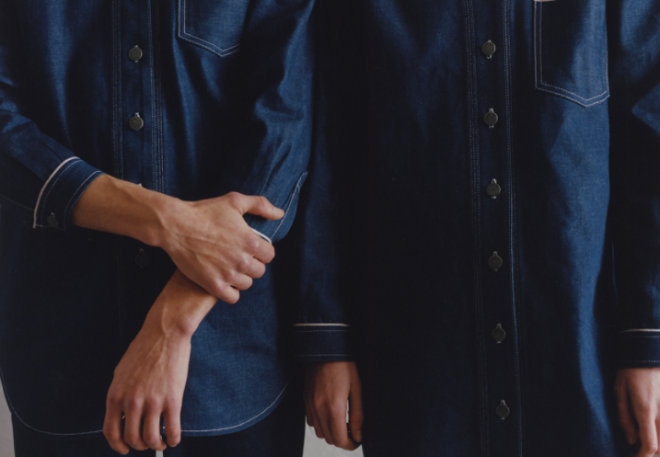
Sustainable fashion brand NEOSS will house the inNeoss pop-up shop in Hackney Road this June, bringing together designs and publications from a number of emerging brands. Participants include sustainable clothing line ELLISS, Edie Campbell’s label Itchy Scratchy Patchy, the bold and fearless Clio Peppiatt, denim brand I AND ME, and season-less, unisex clothes from Bonnie Fechter, as well as many others.
I AND ME
The pop-up is a non-profit project for NEOSS, and all money made will go back into the store, which will then be taken around the country, cropping up in carefully selected cities throughout the UK. The initiative is intended to bring attention and profit to these young designers within a conventional store setting.
Keep your eyes peeled for special in-store events every Thursday of the month, this is a fashionable pop-up you don’t want to miss.
inNEOSS will be open from the 3rd to the 30th June between 10am and 7pm June at205 Hackney Road.
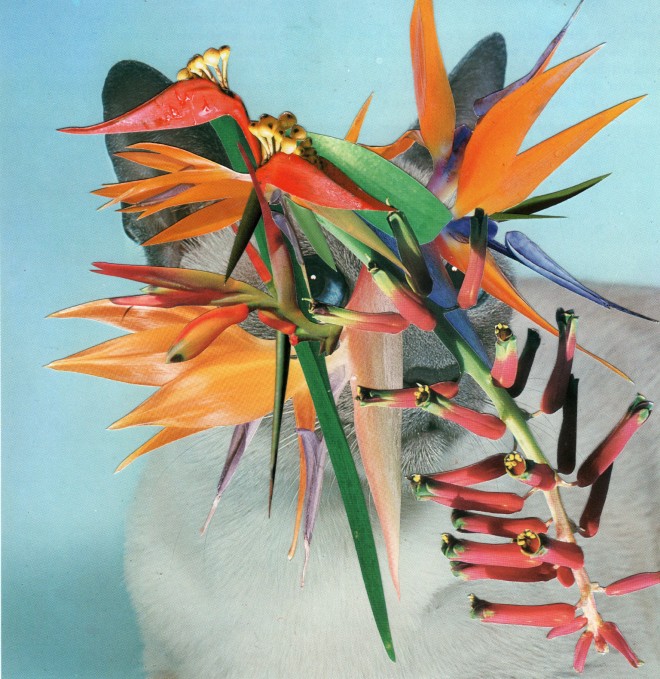
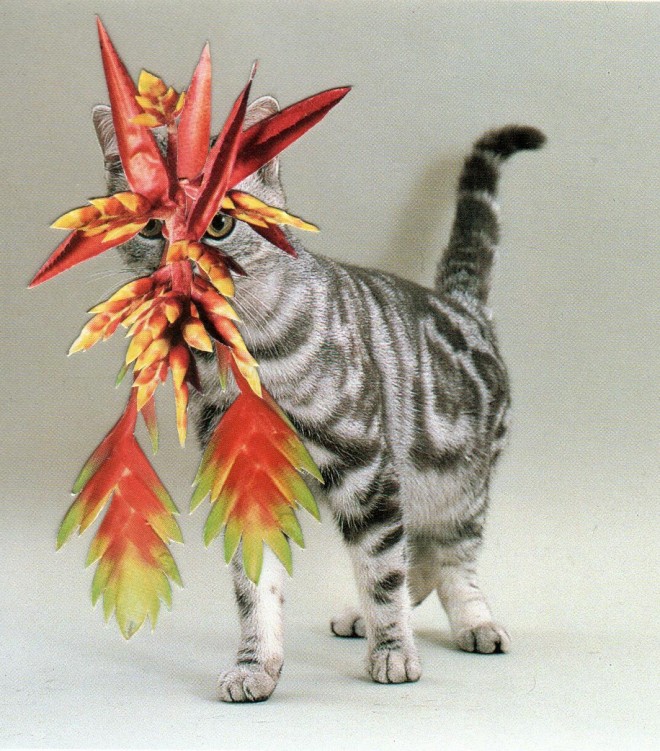
As simple as the title suggests, this new book from independent publishing house Zioxla is all of the internet clichés repackaged into something new, fun and fresh.
Featuring the work of Chicago-based artist Stephen Eichhorn, the book is a playful ode to one of the most familiar images in contemporary culture. There’s always something interesting about bringing Internet trends offline, and Eichhorn’s work offers a meta-read of what cats have come to stand for, taking what’s familiar and transforming it into something surprising.
While plants have been a constant recurrence in Eichhorn’s work, when he began working on this latest series of collages he decided to pursue images and references from niche publications only. This led to discovering and using images from publications such as Japanese cactus guide books and abstracted parts of Orchids.
Having started the project back in 2009, the 200-page tome is the culmination of years of work, with the honed, stylised graphic quality that has defined other work reflected here too. Cats eyes jump out of shells, blend with cacti and peek from behind coniferous leaves. Its’s funny, light-hearted and smart; we predict ‘Cats & Plants‘ will be your new obsession this summer.
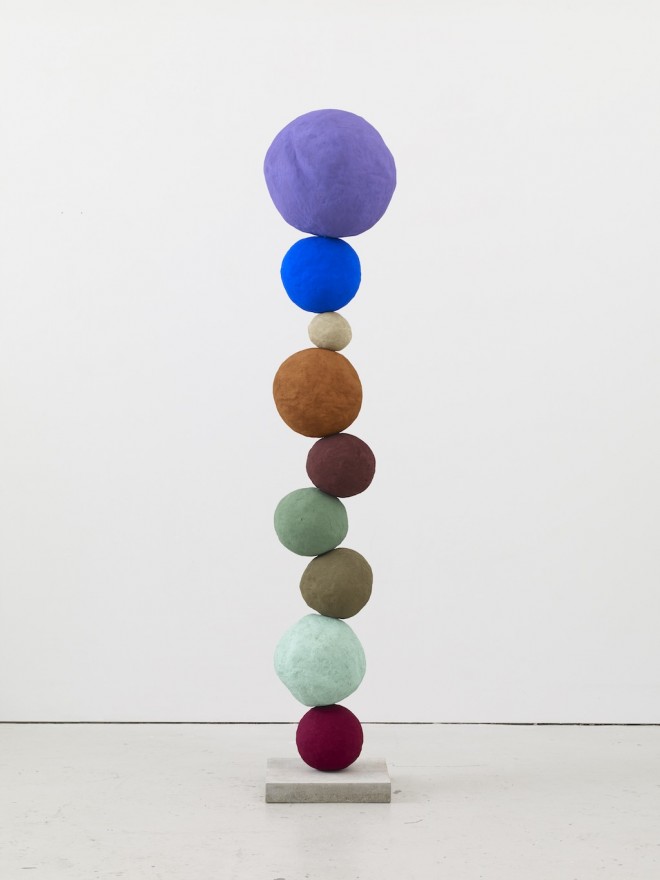
What happens when you take simple objects and turn them into art?Annie Morris’ practice grew out of drawing. Her love of line develop into sculpture, painting and free-hand sewn works that exude joy. She uses everyday objects such as biro pens and clothes pegs to make pieces that brim with a personal visual language full of narrative pleasure.
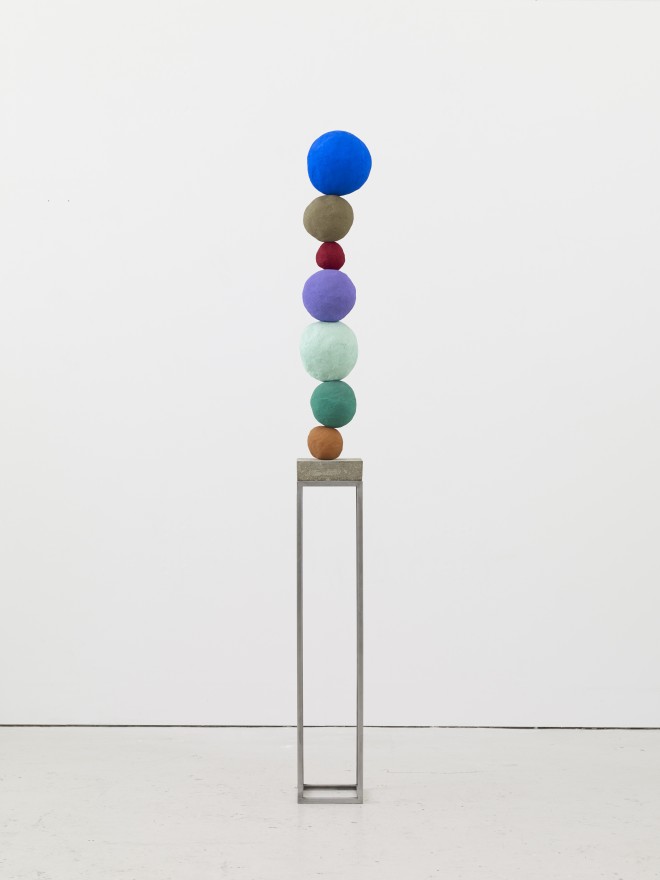
The staking sculptures she has on show in Form and Volume at CF Hill in Stockholm sit firmly between the abstract and figurative. They are often human scale, or larger than life, but seem to echo the vertical stance of the human body. She reduces her forms to shapes that are circular but inanimate. She plays with gravity, creating balls of pigment and colour that seem to defy the laws of nature.
The formal nature of her stacks veer towards the language of painting. She studied with Giuseppe Penone at the Ecole des Beaux Arts in Paris and Phyllida Barlow at the Slade in London – and reflects their sense of solemnity and play, free space and steadiness.
She uses coloured pigment, chalk and watercolour on the surface of her balls, which are intentionally hand made and uneven. Their imperfections give them a feeling joy, lightness and humour. The balls should fall apart, but Morris’ has enabled them to reach upward seemingly through hope and intention as much as anything else.
Each of Morris’ colourful combinations are unique. There is a sense of repetition and exploration in combinations that brings to mind Joseph Albers. She obsessively deconstructs and reconfigures fragments on order to create something harmonious. The stacking series slowly emerged in the wake of her experience of giving birth to a stillborn child, the resulting trauma and the relationship with her desire to have children (she now has two). These are works about hope and harmony in the face of hardship.
Morris has now begun to explore making stack works in metal – experimenting in both bronze and steel. Most recently she has been working with technicians who fabricated work for the iconic British modernist sculptor, Barbara Hepworth. A feminist aesthetic heritage runs throughout Morris’ work, yet her work is not limited by references to gender – her use of line echoes both Jean Cocteau and Louise Bourgeois. This is an artist whose ever-expanding approach is both personal and refreshingly accessible and universal.
Annie Morris is on show in Form and Volume at CF Hill, Stockholm until June 30
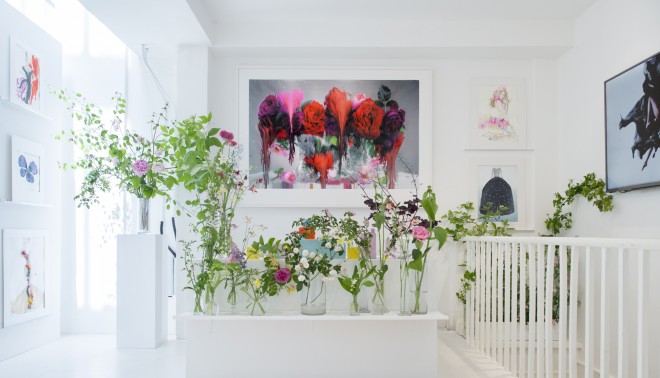
In their latest exhibition, SHOWstudio offers a botanical paradise in which fashion illustrators and flowers combine for a refreshing presentation.
The exhibition brings together an array of works by renowned names including Alexander McQueen, Dries Van Noten and John Galliano. Curated by Flora Starkey, the best seasonal British flowers combine with these works, and films from SHOWstudio’s 17-year archive, to create a summery, fresh space in which audiences can explore the long-standing relationship between fashion and flowers.
“Flowers have always been a huge influence and inspiration in the art of fashion design as well as a recurring theme throughout my own work.” Commented Nick Knight. “It is with great pleasure that I can announce the latest exhibition at the SHOWstudio Fashion Illustration gallery, ‘Fashion Flora’. The exhibition presents an explorative look at the use of flowers as a motif in fashion throughout the decades, as seen by 40 of the world’s preeminent contemporary fashion illustrators. Curated by Flora Starkey, who is one of the most exciting floral designers working today, the exhibition will also feature Flora’s beautiful flower arrangements.”
In 1943, art collector Peggy Guggenheim hosted the ground-breaking ’31 Women’ exhibition at her New York Gallery, lending a platform to female artists who hailed from the contemporary worlds of surrealism and abstract expressionism. From the 2nd June, Breese Little Gallery will present a sequel to this pioneering exhibition, tracing this group of female artists from the 1940s up to the present day, and including works by successive generations of female surrealists and abstract expressionists.
We spoke to Director Josephine Breese, to find out about the relevance of this exhibition today, and the themes that are highlighted by these dual genres.
What drew you to Peggy Guggenheim’s 1943 exhibition and why did you decide to bring it into the present day?
Our exhibition channels the celebratory spirit of the original concept, at an appropriate moment to revisit the relevance of Guggenheim’s all female show. While the format of 31 women artists was unusual for its time in 1943, the exhibition was presented without extra fanfare, in step with the courage of many of Guggenheim’s avant-garde decisions. This provided a prominent platform for Guggenheim’s circle, incorporating artists such as Dorothea Tanning, Louise Nevelson, Frida Kahlo, Leonora Carrington and Meret Oppenheim.
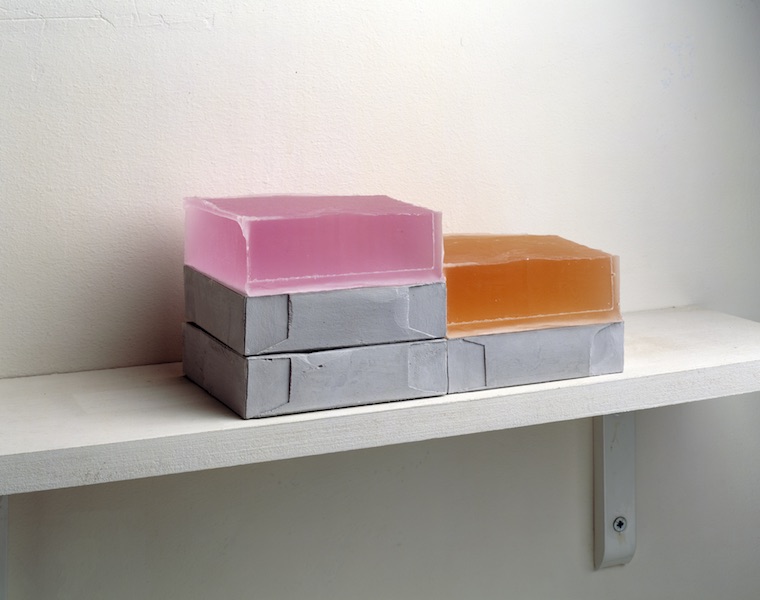
RACHEL WHITEREAD. STEP 2007 | Photo credit: Mike Bruce
How does 31 Women at Breese Little differ from the exhibition at Peggy Guggenheim’s Gallery in 1943?
We adopted a starting point of the dual strands of abstraction and surrealism, in the ascendance of 1940s New York, alongside the additional framework of the British connection that is shared by the participating artists. These themes are developed through subsequent generations, represented by contributions from the 1940s to the present day, from early British modernists to iconic female artists of the 60s and 70s.
What techniques do the artists use to convey these themes?
An advantage of having 31 participating artists is the breadth of different materials used! A brief overview includes ripped canvas, bark, steel, latex, resin, jesmonite, and a handwritten letter by Tracey Emin.
Why did you feel that it was important to put on an exhibition using only female artists?
The benefit of an exclusively female context is that it can be considered from multiple perspectives, and we are particularly drawn to its capacity as an open forum for discussion between the work on show as well as its timing. The exhibition concept met with enthusiasm from artists and galleries involved from its early planning stages, indicating the confidence and place for shows of its kind at this moment.
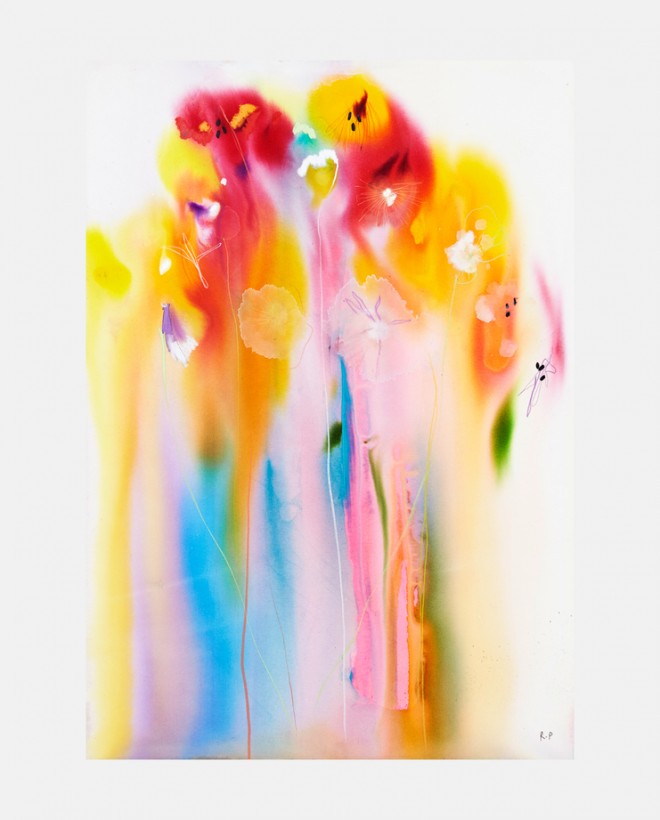
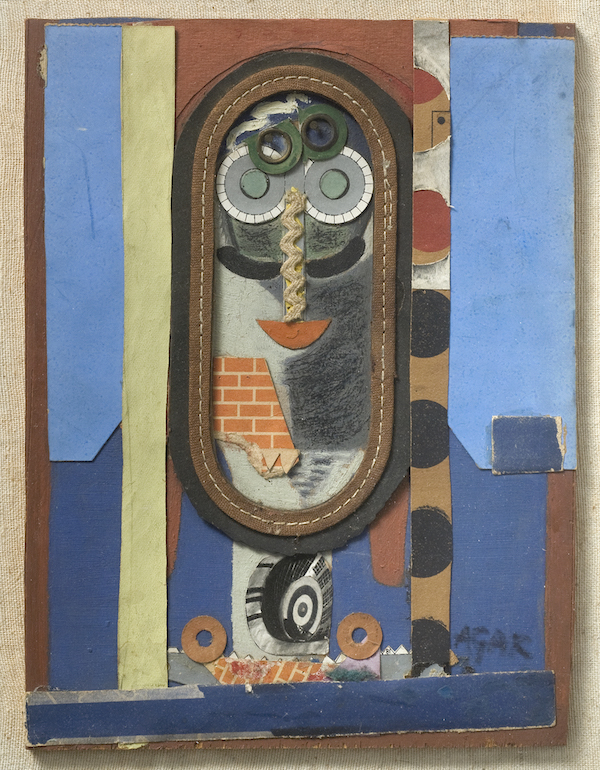
Eileen Agar, Fighter Pilot, 1940
Are there any works in the collection that particularly stand out to you?
31 Women is composed of a wonderful and wide spectrum of contributions, which chart a loose introduction to the timespan and production from the 1930s – 2017. Claude in Gillian’s Shadow (2017) is Gillian Wearing’s testament to this legacy. The small silver gelatin print was made shortly before her exhibition with Claude Cahun at The National Portrait gallery, and revisits a 1938 self-portrait by Cahun. Likewise, Katie Schwab recognises the history of modernist making processes that are often traditionally ascribed to female practitioners. Schwab’s compact ceramic composite from the recent Leftovers series, anticipates the research she is currently undertaking on the Wilhelmina Barns-Graham Residency at Porthmeor Studios in St Ives.
’31 Women’ will be on display at Breese Little Gallery from June 2nd until 31st July 2017.
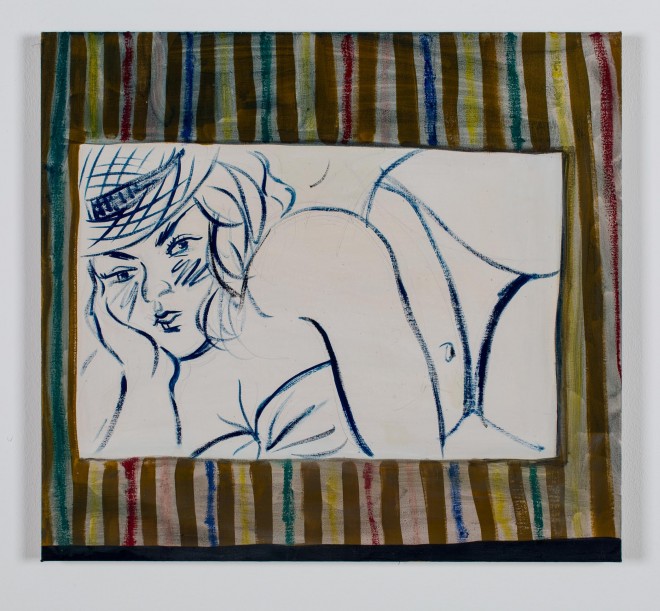
Featured image credit: Ella Kruglyanskaya, Drawing of Lounging Woman in Straw Hat, 2015, Oil on linen, 53.3 x 58.4 cm, Courtesy the artist and Thomas Dane Gallery, London
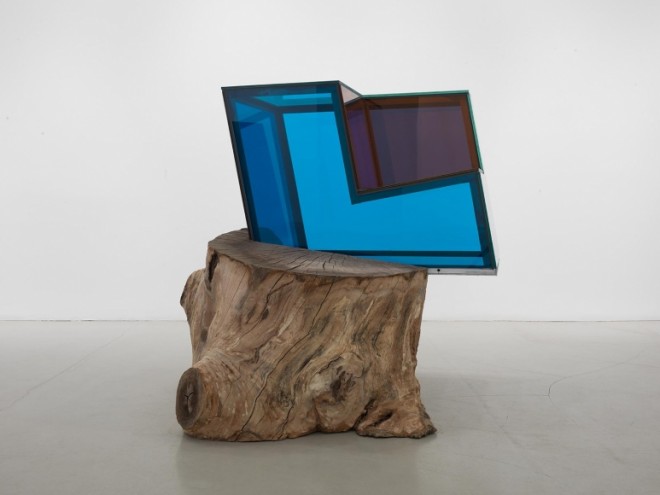
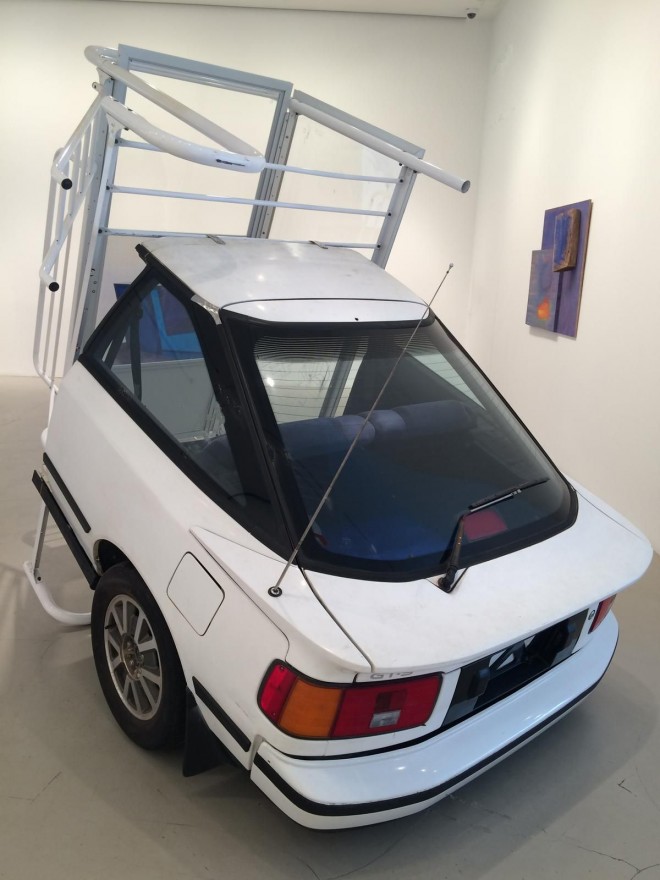
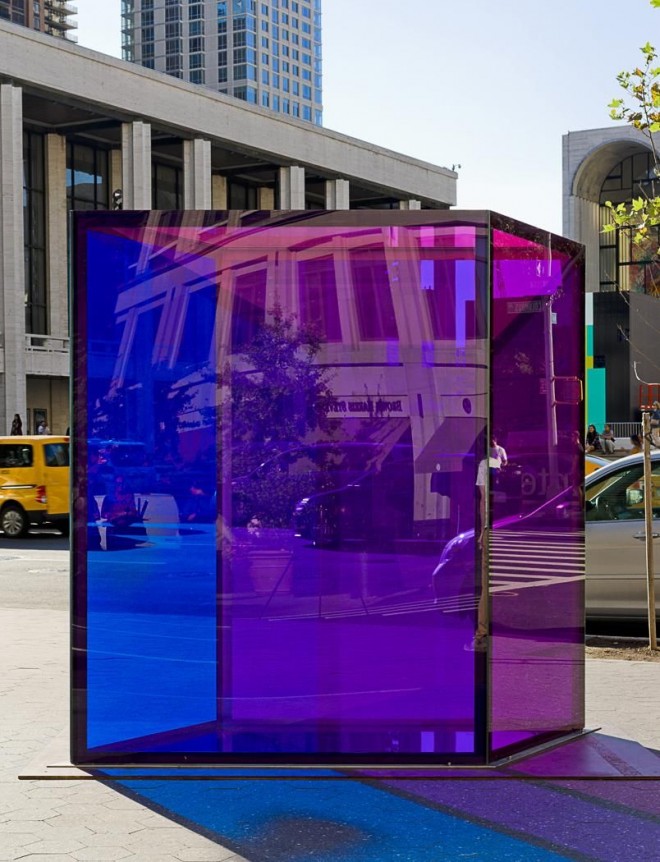
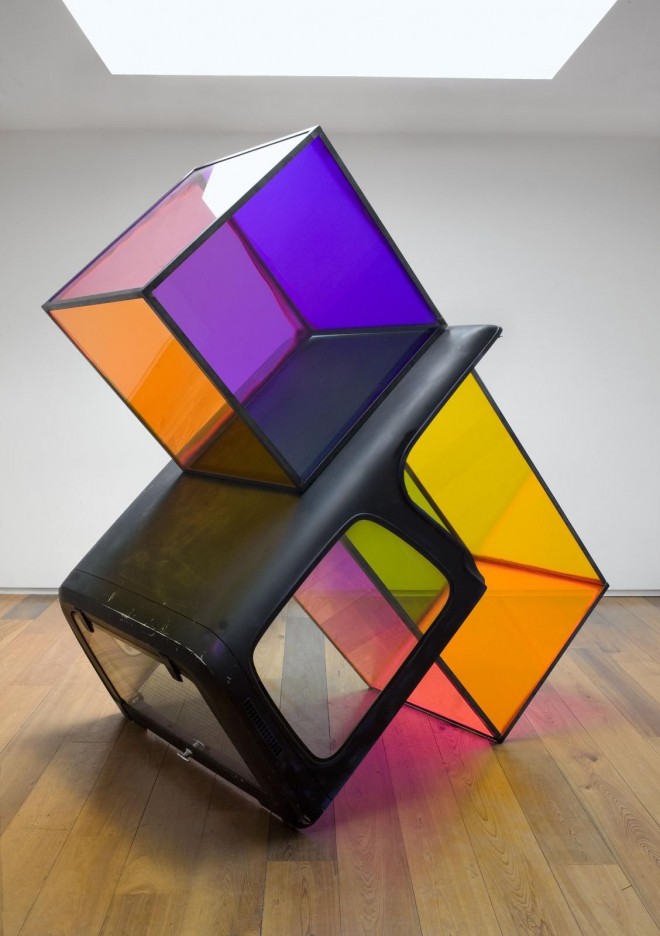
Sarah Braman focusses on large-scale sculptures which interact with their surrounding environments. Born in New York, Braman has cultivated a distinct aesthetic which sees a melange of vibrant colours rendered in various materials – from perspex to scrap metal pieces. The resulting works offer captivating interplays between the private and the public, wherein exhibits invite an engagement with their surrounding space, as well as engendering emotional response. As her first solo show in London comes to a close this week, Twin spoke with Braman about creative spaces and finding the perfect object.
Your work is often large scale, and often involves familiar objects that you render unfamiliar through new juxtapositions – how do you decide what to work with?
I tend to work with what is around me, things I find at home or in the yard or on the road.I am a regular at the town dump and Salvation Army in my town.Sometimes I get a slow burn desire for a specific object and then I open my scanning to a larger periphery to try to find that thing.
Do you feel an instinctive pull towards certain types of materials?
Yes I have always had a love for transparency.I guess light feels like such a gift and always changing and transparent glass or fabric allows that to do its magic.I also love everything about wood. I love its density, it’s colour.I love that when I paint on wood there is already a subject in it’s grain.It is also true that in carving wood every piece is so different from every other. Even out of the same tree the different chunks have such a variety of qualities.And I like furniture and junk form day to day life.I like automotive parts because when they are taken in parts they work as much as pieces of architecture as the do pieces of cars or trucks.
What has most surprised you when working? Do you often pair materials and see them in a wholly new light?
When I use a material or object and it transforms to something I don’t expect that is the best feeling. It doesn’t happen all the time but its part of why I keep making art, trying to get to those moments.
What stories and themes do you most enjoying telling or exploring in your work?
That is a really hard question.I feel like I work best when I am detaching from thoughts about what the work is or should be.But to this same point my friend Pascal said to me recently this is an important time to take ownership of our choices.This also seems true.The truth is that I really don’t know what I am making, but that said; I do have desires and feeling of what I hope the work can be.I really want the sculptures to operate as objects that exist on their own, not as metaphors or symbols or stand-ins for anything else.I hope that the sculptures can lead the viewer into an experience that is truly abstract, that is, one that cant be described by words.I hope that the viewer could some how be ungrounded in this experience and that while they may have feelings or thoughts looking at the piece that they are at the same time unable to tie all this together in a way that they can understand.I guess this is all to say that I hope the work can open people up to the unknown, and more specifically, the unknown that exists in every moment of our lives.
Who have you been most inspired by, for this exhibition and more generally throughout your career?
My mother built our house when I was about five years old.I think the experience of watching her take down an old tabbacco barn and slowly build a house out of it has been one of the most inspirational experience in my life and in my art.For sure being a mother and the inherent imperfection of the day to day of raising children paired with the absolute perfection of the love shared has been a guide for me in the studio.This also is true for my relationship with Phil. With him I think the deepest value is having someone that I feel completely safe with.I think when I can have a place of comfort and faith to go to, it allows me to follow the work to the edge of what I understand, and get to a place that is maybe all wrong and fucked up.After that I would say my involvement with CANADA and the artist that form that extended family.Of course there are many artists from art history and contemporary art that influence and inspire me, but the proximity I have to the artists makes the effect and inspiration that much more intense. I could list a whole lot of artists and works of art if you think that would be helpful and interesting let me know and I will write back with that.
I’m interested in how you reconcile the more rigid space of a gallery with large-scale works. Do you feel that it inhibits the viewer’s ability to interact with them, or is it the reverse?
I hope that it draws people into an experience that is complex.Some people have said that they are intimidated at first by the presence of some of the larger works, but that as they start to walk around the pieces they get comforted by the humanity in the details and start to let down their guard and engage.
What is it about volume and scale that you enjoy? Do you begin each work with a smaller visualisation?
I almost never do small studies or small maquetts.When making large work I usually start directly with the materials/objects or use large sheets of cardboard or plywood if I am trying to work out the planes.I think I am drawn to large scale because of the direct body experience when you are standing next to the sculpture.I like having the opportunity to surrender to the sculpture and I think the large scale helps move me towards that.
You also established your own gallery. Given that you work so much with space and sculpture, did you seek to invest a kind of higher sense of art in the gallery itself, where each exhibitor played into a relationship with the existing space, or do want artists to exhibit independently within the space?
The gallery was really my husband Phil Grauer’s idea.He invited a rag tag group of artists to join him in his vision. I was lucky enough to be in the vicinity at that time so I got swept up into it. It has been one of the great gifts of my life to be able to participate in his vision over the last almost 20 years.Getting back to the question you are asking, we really try to let the artists steer the handling of the space in whatever way that they need/desire.I think if there is a larger creative desire underlying the gallery it has to do with creating a space for a web of artists to be in conversation with each other and who provide support and context for each other.
What are your future projects?
I just finished a large sculpture for a show at The Brant Foundation curated by my colleague, fantastic painter and friend Sadie Laska. It’s a small shack type structure that was made for a group of friends to play music in.It’s also filled with books I have collected from the town dump.
I am just starting to work on a few outdoor sculptures.One is for an exhibition organised by artist Matthew Day Jackson and is taking place in Jackson Hole Wyoming in time for the solar eclipse happening at the end of Aug.Matthew has generously offered to fabricate the piece out there.It is basically a glazed shipping container that is stuck in the ground at a slight angle.It will also be a vehicle for music performance and makeshift reading room.The other outdoor piece is for an exhibition of public sculpture at UMASS Amherst which is especially exciting for me because my son is in his final year of college there studying computer science.And lastly I am working on a solo show for the fall for a wonderful dealer Linn Lehn in Dusseldorf Germany.
Sarah Braman is at Marlborough Contemporary, 27 Apr 2017 – 27 May 2017
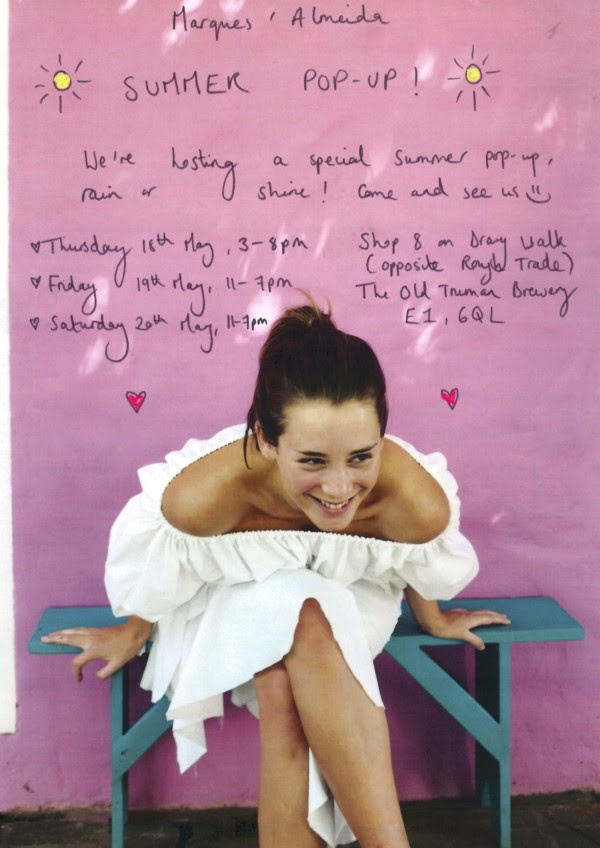
The M’A pop up shop is back! Just in time for summer the Portuguese duo will be bringing the best of their SS17 collections, as well as archival pieces, to the Old Truman Brewery.
Alongside the chance to snag staple summer pieces, attendees can also switch up their hair style courtesy of Keash Braids. There’s also the opportunity to dress up in M’A classics and be a part of the ‘#howdoyouwearyourMA’ series.
The Marques’Almeida pop-up shop is open Thursday 18th May from 3-8pm, and Friday and Saturday too, from 11-7pm.
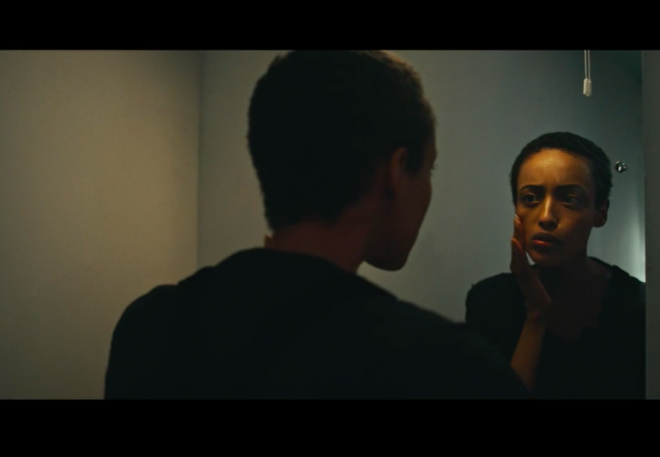
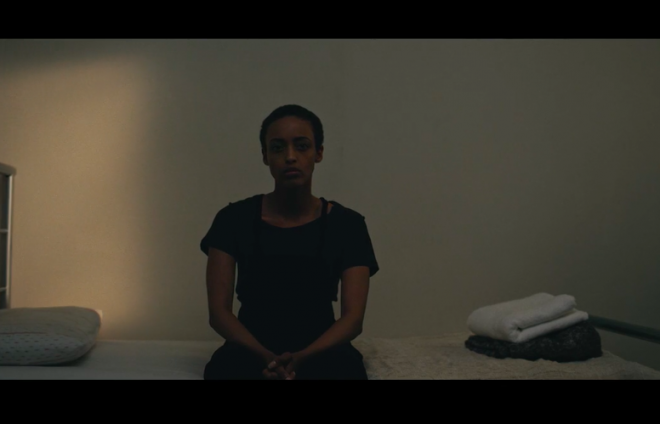
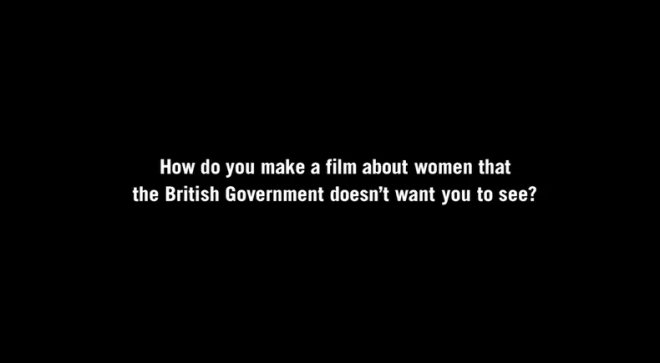
Female filmmaker Jade Jackman and I speak over Skype, from her apartment in Madrid – a city which she has just moved to as a result of what she refers to as “the monumental cost of living in London” and of course, Brexit. She’s recently returned from Afghanistan where she was teaching film to Afghan women reporters so they could tell their own stories and also released a short creative documentary on Yarl’s Wood – a women’s detention centre in the UK – earlier this year. Not only this but Jackman is also spearheading a project named ‘Eye Want Change’, teaching young people how to make documentaries about issues that matter to them using just their smartphones. Needless to say she is one smart, endlessly creative and inspiring woman who Twin have been eager to speak with for some time now. Jade and I Skype-d for over an hour, from East London to Madrid about protests, politics, fashion, feminism and everything in-between.
As a woman, why do you feel like it’s important to support other women in the creative industries?
It’s incredibly important — someone doing well doesn’t mean you are going to do badly. I think there needs to be more of a conscious effort for women to support other women. It is starting to happen slowly… I think it’s about getting different voices out there. One thing that’s been amazing about the digital age / internet is that women have been able to get their voices out there talking about what is important to them. It’s about making sure our voices and the way we’re presenting ourselves is seen as legitimate. I think it’s a really exciting time because we’ve got more ways to put our opinion across than ever… I guess we’ve got to wait and see with this kind of movement whether millennials (or whatever people like to call us) will pierce the glass ceiling.
Hopefully!
I think so, I think it’s unstoppable!
How have you found being a female filmmaker? How has it impacted your journey?
I’d say for me personally it has informed what I want to talk about more than having had a negative impact career wise. I think it’s taught me or shown me the things I’m interested in. In some ways as well being a woman isn’t always negative — like I wouldn’t have been able to make the film about Yarl’s Wood in the way that I made it if I was a man, and I wouldn’t have got so close to women in Afghanistan if I had been a man. There are lots of positives I think to being a woman, it’s just making sure your ideas don’t get sidelined or focus with a soft or feminine angle all the time. But then sometimes that’s what I’m interested in; I am interested in working with women and with some of the topics I do cover it is to give a different perspective, like a gender perspective because I think it’s necessary.
I remember when I first heard about Yarl’s Wood and what happened there I was horrified and felt powerless. How did this film come about?
I studied law at LSE at university and wanted to be a lawyer originally. It was around the time of the legal aid cuts and I wanted to use my law experience to help in some way. So during that I was planning a dossier of sexual abuse cases that were happening in Yarl’s Wood – women reporting cases of sexual assault from the guards. At the time I was quite young, I was nineteen, I hadn’t really thought about being a filmmaker then I wasn’t quite sure how to put that into film. Then I started to think about it more and more. In one of the interviews a woman calls them the invisible women and I guess I had an urge to put some visibility on them and make these women really visible as women — that’s how it started. As you can imagine trying to make a film somewhere you can’t film where video recording is illegal is almost impossible. I got a grant from Sheffield Documentary Festival in 2015 and that then I cut down on all these four hour phone conversations I’d had with women detained there and that’s how I started thinking about it. I was aware that I wanted it to look quite different visually to most documentaries. I think its because for the past two years I’ve been seeing a lot in lots of newspapers where I’ve felt really bombarded with the imagery of what refugees drowning look like and all these images of people in Calais and refugee camps are really important and valuable in some way but for me it didn’t feel real: it was like showing people in their lowest state ever and I felt like those images were almost so bad that we couldn’t associate with them. In my background I’m really influenced by music videos and fashion films and art films and I think today we are so used to seeing high quality video content and I think people are fed up of getting information from conventional news sources… it’s important to speak to people in a visually different way. If you think of Trump and Brexit the old ways of telling people information are not working, they’re failing to engage people…
I think that gives more scope for finding something in the work to connect to, which makes resonate more and have more value. Let’s talk a bit about Great Women Artists the Instagram account that champions female artists on the social media platform, how did you get involved with them?
I’m always looking to work with women who are doing something they are passionate about. I think it makes for interesting projects and collaborations. I got in contact with them and they were saying they were doing a collaboration for International Women’s Day and I was like okay cool let’s do a video for that and explain why what you are doing is connected. Talking about this mass produced culture and imagery of women that isn’t by or for women. We couldn’t actually say we didn’t see images of women — we do, women are used to sell pretty much everything but in the same way that there’s lots of clothes and lots of brands being sold to us all the time, but those things aren’t the same, they want to collaborate with female artists because they are creating something unique by hand, more genuine imagery of something that is made by a female. That’s what got my interest. I think that I liked that they chose Frida Kahlo and Louise Bougeois who were open about being crazy and not being these ‘respectable’ women. I really admired that because there’s a certain image of a woman we have to aspire to or look to be like…That’s why I was keen to get involved with them. I really like they are planning to work with other young female artists to come. It’s out of a conventional gallery setting it’s really clever.
Definitely, and if you consider that Instagram is a platform where a lot more art is shared and consumed now, you’re more likely to see work on Instagram even if it is in galleries. You go to a lot of protests, what’s your opinion on protesting?
I am interested in politics as I’m a documentary filmmaker and I want my work to talk about things that I care about — that’s the most important thing to me. For example the next thing I want to make a documentary about is gender based violence and sexual assault. Even if I am taking a more creative approach to them I really want to talk about these issues. So, I guess protests if it is something that you’re interested in are something visual and political protests are a natural thing to end up covering because they’re energetic and visual and they also need to be documented — especially now in the digital age. A lot of what goes on online is shared through social media — a lot of the imagery we see is coming through social media of being at the protest. The kind of people you are protesting against probably aren’t going to be at the protest so someone needs to be documenting it… I guess that’s something I enjoy. Also it’s a great way for people to get together from all sorts of different places and feel connected to each other and to causes they care about.
I think too it’s important to feel heard, to have a belief that you have rights and that bleeds into the rest of your life and how you approach that what’s happening in the world.
I think what I find most important is the protests they do outside Yarl’s Wood. What’s great about a protest is the power people make. You can’t really hide from it because here are people there.
You studied Law, how did you then move from Law into documentary and filmmaking….
I studied anthropology with it and I think I always wanted to be a documentary maker but I didn’t know how because I didn’t want to make TV documentaries… so, I wasn’t sure if what I wanted to make existed I knew I didn’t want to do just fashion but I like to make things that look like fashion films so I was kind of confused when I was younger what I was interested in. For example I interned for a couple of fashion magazines whilst I was at university and I was always really interested in Pam Hogg not because I wanted to talk about the fashion or the craftsmanship but I wanted to talk about the politics — I think I’ve always understood images more than I understand anything else. I always am seeing something.
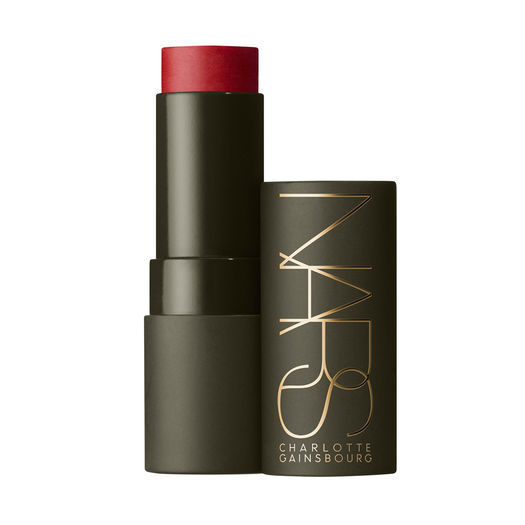
As celebrity collaborations go, this makeup collection from NARS designed by Charlotte Gainsbourg is a doozie. Capitalising on our collective fascination with the French, François Nars has chosen the ultimate Gallic poster girl in Gainsbourg, whose artful effortlessness is a thing of real beauty. Paradoxically the French actress is known more for her understated approach to makeup, so the stronger shades might come as a surprise; however, each piece is a reflection on a certain aspect of Gainsbourg’s life, including the streets she grew up on, her famous mother Jane Birkin’s beauty habits and of course her own unconventional approach to what she finds beautiful. She has said that: ‘I learned early on what suits me’, preferring little touches that enhance, rather than alter her unique look, and this is the way in which the sheer and wearable collection has been designed: to look lived-in, low key and very authentic. Featuring glow-enhancing cheek tints and off-kilter kohls, the collection is a little piece of French Girl Beauty we can all get behind.
NARS x Charlotte Gainsbourg: ‘Portrait of the Artist’ is available to buy now.
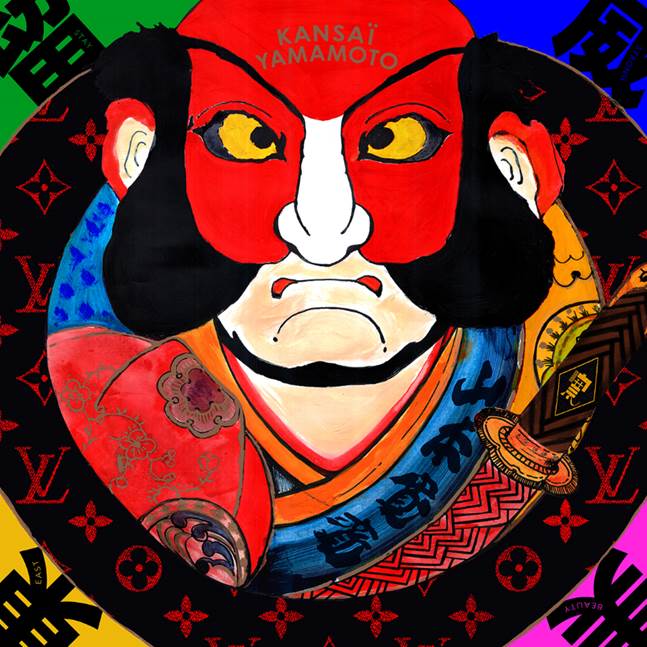
Having previously taken Louis Vuitton to the desert in Palm Springs and the ocean in Rio, this year from Louis Vuitton’s Cruise 2018 show,Nicholas Ghesquiere will take audiences to the verdant surroundings of the Miho Museum in Kyoto.
Watch the Louis Vuitton Cruise 2018 show live through the player below.








 PREVIOUS

 Twitter
 Tumblr
 YouTube
 Facebook
 Instagram
