Christmas shopping. Two words that strike fear into the hearts of even the most hardened of consumers. But turn that frown, upside down, as Nat Breitenstein’s Grand Magasin Deux (a continuation of 2013’s successful Grand Magasin) is back at Bethnal Green’s French Riviera for a festive take on the “experimental examination” of a shopping experience.
For just five days (from 16-20 December) customers can peruse a plethora of unexpected delights from various artists at this unique pop-up shop, in which every single thing on display is for sale as part of a “playful exploration of labour, value, art and commerce”.
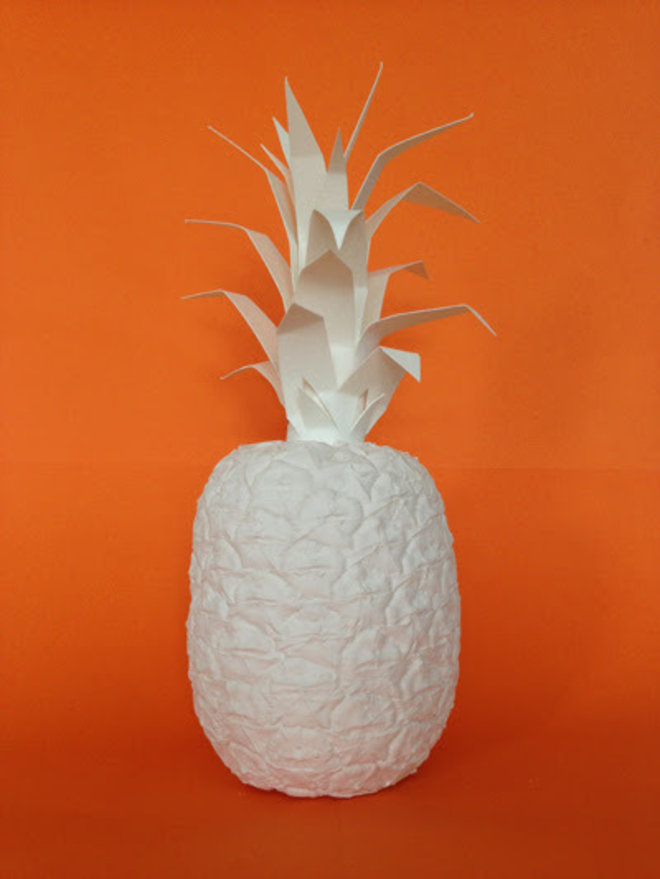
From ceramic pots and painted plaster pineapples and pomegranates, to turned timber and pom-pom vases, cast glass receptacles, furniture, drawings, prints, houseplants, Victorian Stereoscopes and lingerie – there is no shortage of things promising to capture both the eye and the imagination.
With no defined limits, the creatives involved have imagined a series of collectibles with the loose theme of a “shopping show” – the only condition? That the pieces created are affordable.
Artists taking part this time around include: Daisy Addison, Fay Ballard, Nat Breitestein, Owen Bullett, Harry Burden, Stuart Carey, Pippa Choy, Dan Coopey, Will Cruickshank, Denise de Cordova, Marie D’Elbee, Thomas Dozol, Tom Ellis, Kris Emmerson, Jessie Flood-Paddock, Seana Gavin, Ludovica Gioscia, Lynn Hatzius, Holly Hayward, Joey Holder, Siân Hislop, Samuel Levack and Jennifer Lewandowski, Bryan Mills, Nicholas Pankhurst, Berry Patten, Sonya Patel Ellis, Lyle Perkins, Marianne Spurr, Nicola Tassie, Jennifer Taylor, Cicely Travers, Bea Turner, Jeremy Willett and Lucy Woodhouse.
Grand Magasin Deux takes place from 16-20 December, 2015. Open daily, 12–7pm and by appointment.
You can find French Riviera at 309 Bethnal Green Road, London, E2 6AH.
How many times have you looked at a photograph and wanted to know what was happening in the exact moment that it was taken? How the air felt? If the people behind and in front of the lens even knew each other?
This is exactly what we tried to remedy with New York-based photographer, Stef Mitchell. Her absorbing work – which has appeared in places such as i-D and Urban Outfitters – is particularly portrait strong, so we asked her to share a few of her favourite shots, and tell us the story behind them. For Stef – who originally hails from Sydney, Australia – it’s the little things that count: “I just want to make nice pictures that make people react or feel something, even if it’s small.”
Here are a few of her characters.
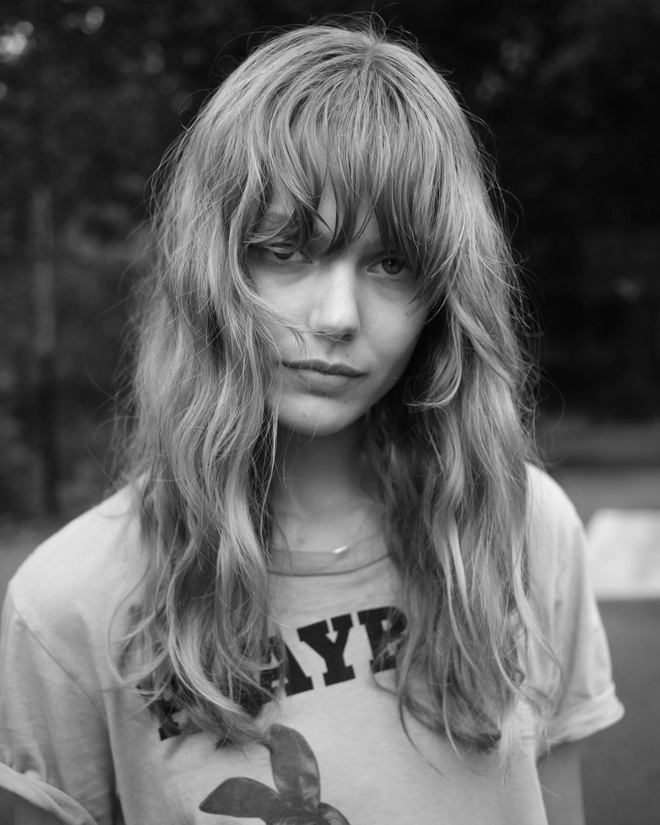
Frida (main)
“The subject’s name is Frida Gustavsson, she’s in her early twenties and she’s from Sweden. This was taken in Tompkins Square Park right in the middle of the basketball court off ave A and 10th street. I remember it was the longest day of summer and it was hot and started raining as soon as Frida and I met up. I probably ate some M&Ms. I love Frida! We’d met on a few jobs while I was assisting. She’d just had a palm tree that I drew tattooed on her arm and sent me a picture, so we met up and took some pictures. I think afterwards we watched the World Cup and had a beer. I think Frida had just gotten engaged – we chatted about her spending time in LA, midsummer and a short film she was working on. Frida was so easy to shoot because she’s awesome and was totally comfortable for me to shoot while we chatted; it’s my favorite thing to do and it’s kind of rare for someone to be totally OK with letting me do it. I wasn’t really sure what ‘the shot’ was at the time but I think it was the first spot we took pictures in in the park. I love this picture because it’s so simple but people always respond to it. Frida is an amazing model and human and I think that comes through even with no hair, make-up or styling.”
Boy
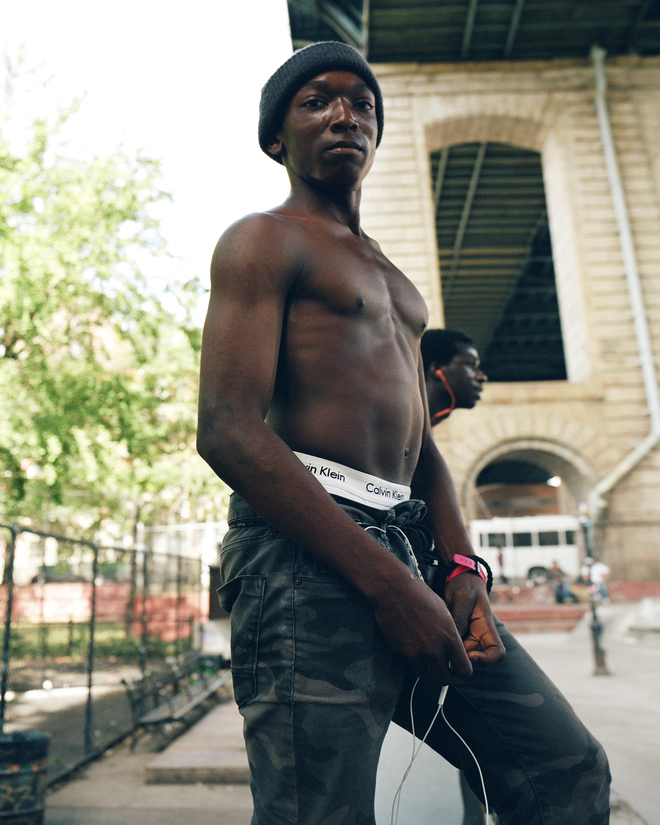
Boy
“This was taken in the skate park under the Manhattan Bridge. The weather was pretty perfect that day, mild and sunny. I was on a job and had eaten everything in sight. I was scouting the area in between shots and just looked up and saw this guy. I’d never met him before but had just been chatting to his friend. I asked if I could take a picture, he said ‘OK’ but he didn’t really like doing it. I got two frames in before he skated off. I don’t know anything else about him. I love this picture because even though he was nervous, he just looked dead at me and didn’t try to do anything crazy.”
Charlotte
Charlotte
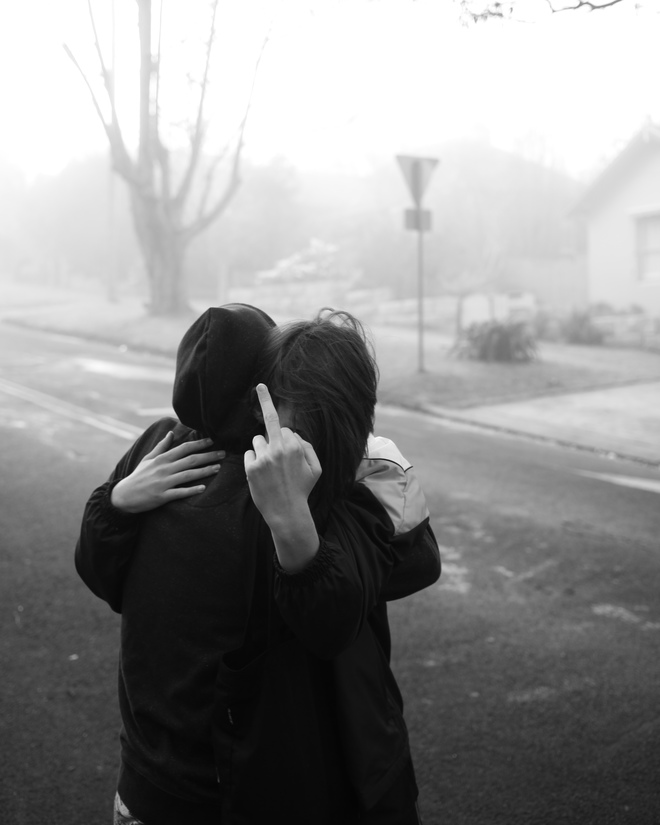
“This was taken outside my mums place in a suburb called Lane Cove in Sydney, Australia. It was about 7am and a big fog covered the street. My 14-year-old sister Charlotte was getting ready for hockey practice, and I dragged her outside for a photo. This is what she gave me. I’d maybe had some vegemite toast. When I made Charlotte come outside I thought she was very grumpy and turned out to be correct. Charlotte was probably 13 in this picture, and at the time her unique trait was to try and pull a face or flip someone off every time they took her photo. I think we were outside for about five minutes. I love this picture because every time I go home I try and shoot Charlotte on this street. She’s always been one of my favorite subjects and even though I miss so much time with her I like to think I’ll have a good series of pictures of her growing up for when she’s older.”
Julia
Julia
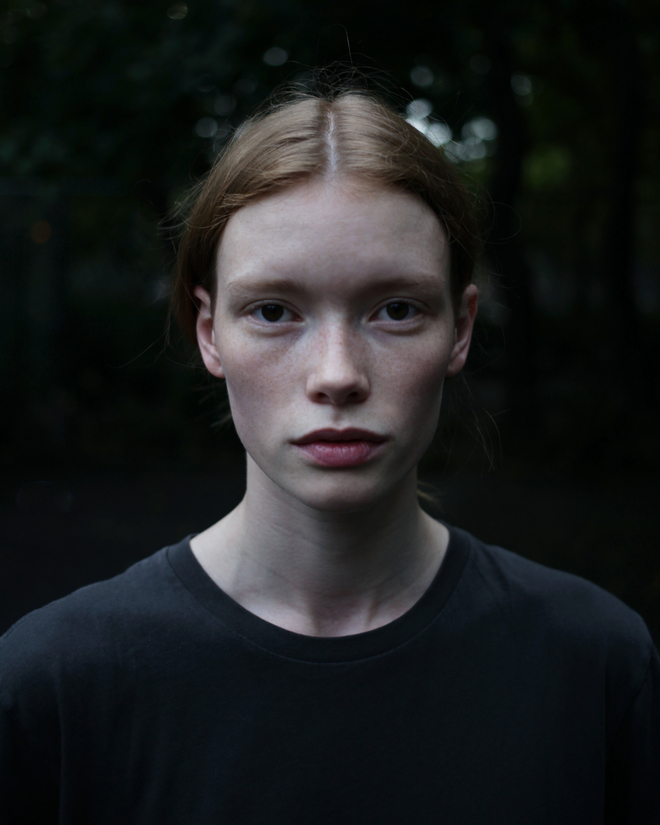
“This is Julia Hafstrom, she’s in her early twenties, and from Sweden. This was taken under a tree in Tompkins Square Park near the corner of Ave B. The weather was overcast and I definitely ate M&Ms this time. I thought Julia was a bad ass. We’d met before on a few shoots in LA. I think we talked about weird photographers, books and mums. Unique traits: being totally easy, fun and of course incredibly beautiful with the skin of 15th century cherub. I think we shot for half an hour, but again this was the first spot we were in and it ended up being my favourite. I love this picture because without doing anything Julia gave something real to the picture, and that’s my favourite.”
Ever since Roksanda burst onto the scene in 1999, the CSM graduate has been making a name for herself with bold, sleek and playful designs. This season she received particular attention for her effervescent jumpsuits and perfect cropped flares and we’re counting down the days until we can start sporting her SS16 collection. But to stop the gap until next summer the Serbian born designer has launched her debut jewellery collection, out today.
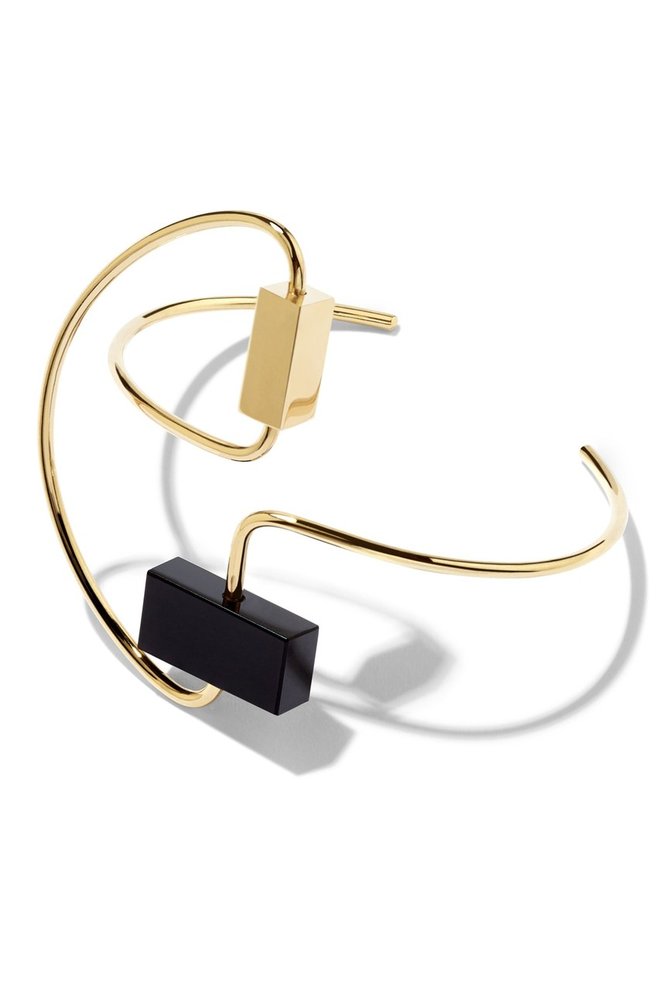
A covetable piece from Roksanda’s debut jewellery line
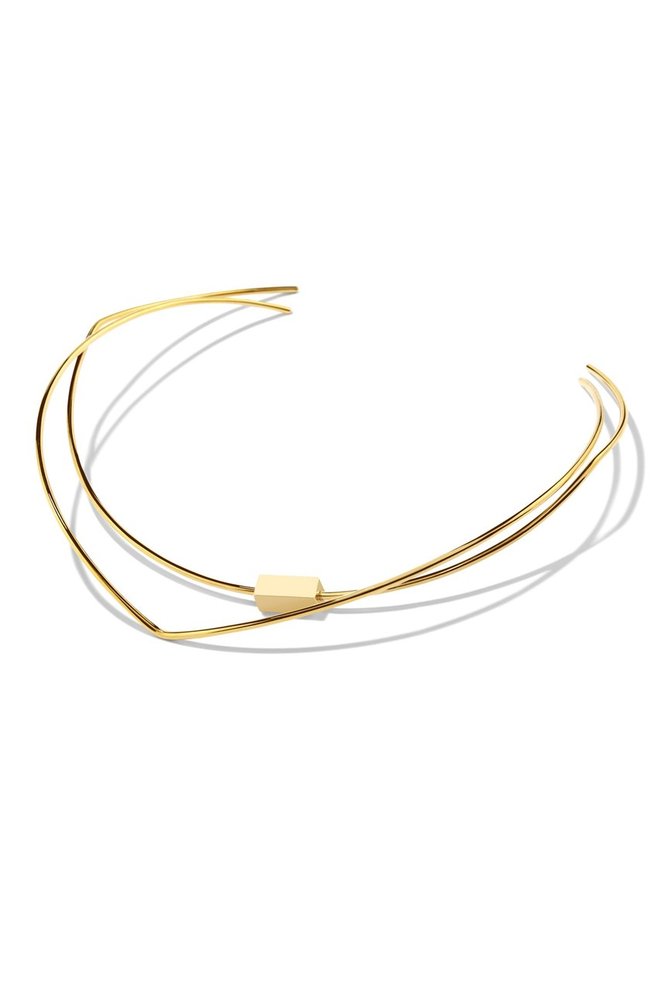
This is the latest in a range of RTW offshoots which includes blossom, her children’s line and a swimwear range. The collection is classically Roksanda, with surprising and thoughtful pairings of geometric and organic forms that clearly pay homage to her architectural training.
Available exclusively in her Mount Street store, the collection consists of earrings, brooches, necklaces and bracelets, all of which are gold plated. Dropping just in time for Christmas, we’re adding them to our dream wish list.
Prices start from £510. Roksanda, 9 Mount St, London W1K 3NG.
British photographer Tom Sloan is making pictures the old fashioned way – by letting the journey dictate the result.
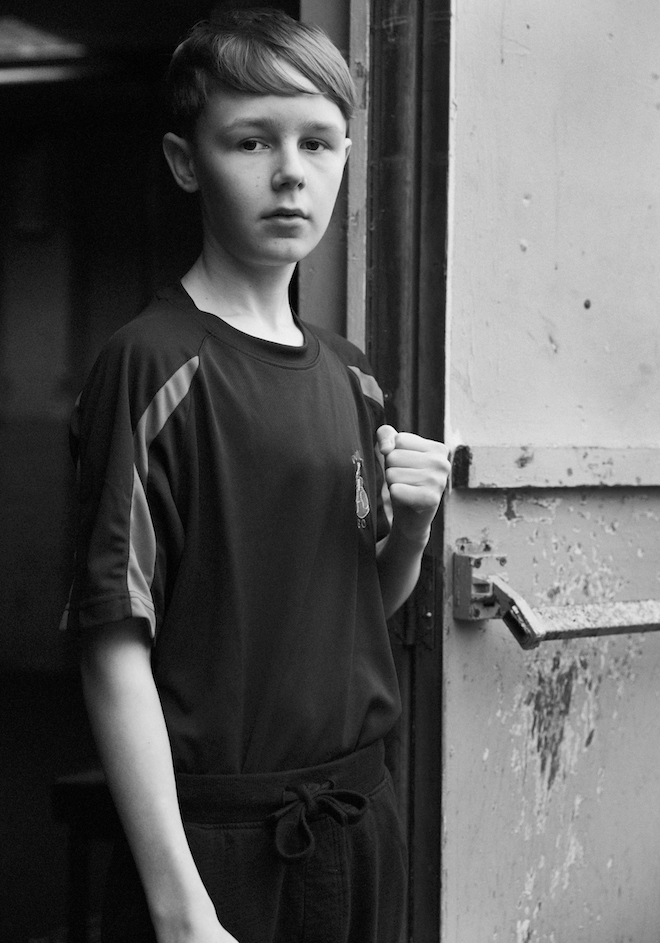
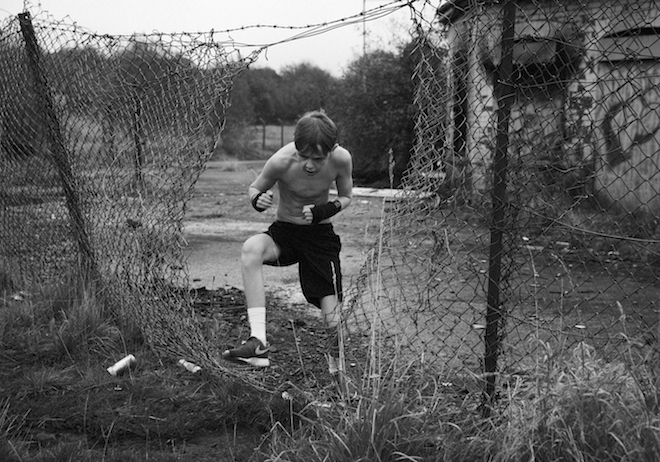
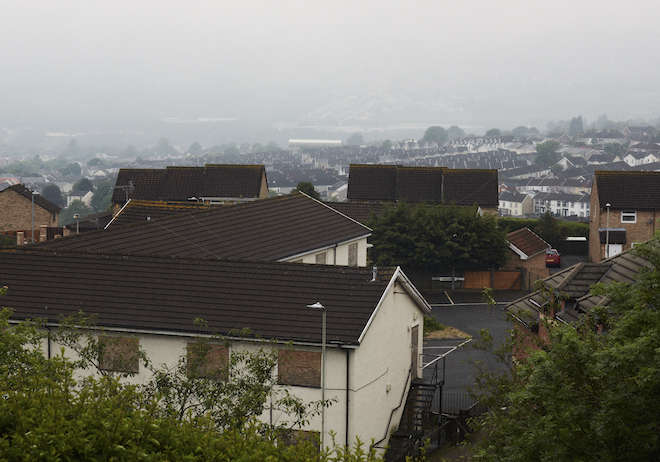
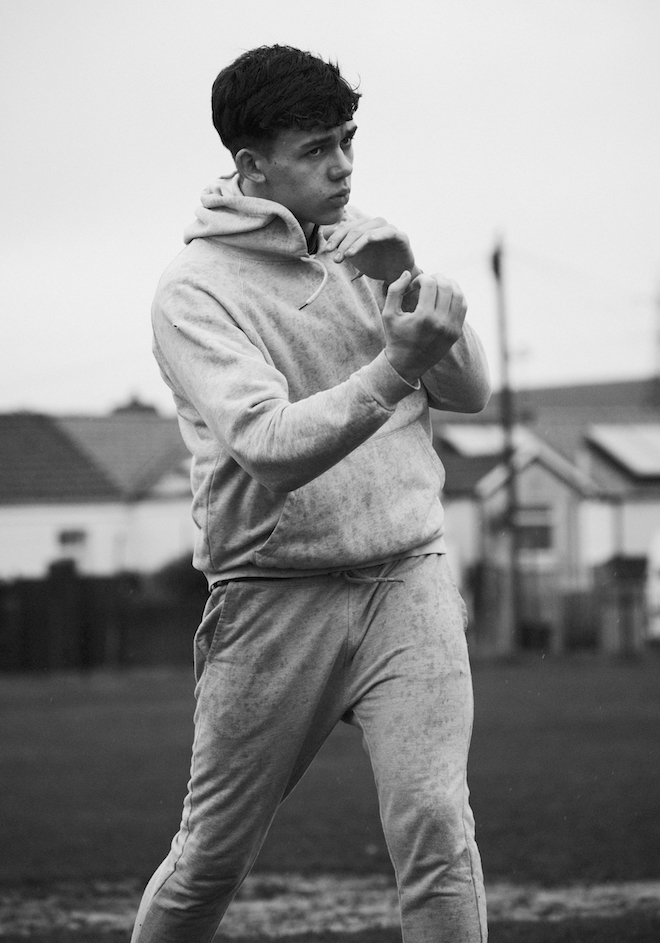
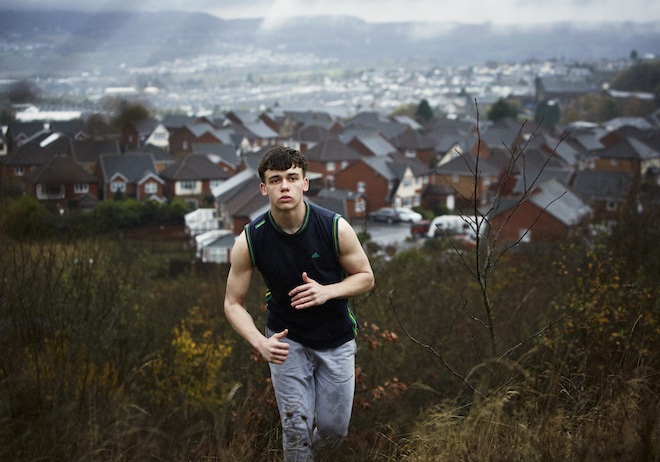
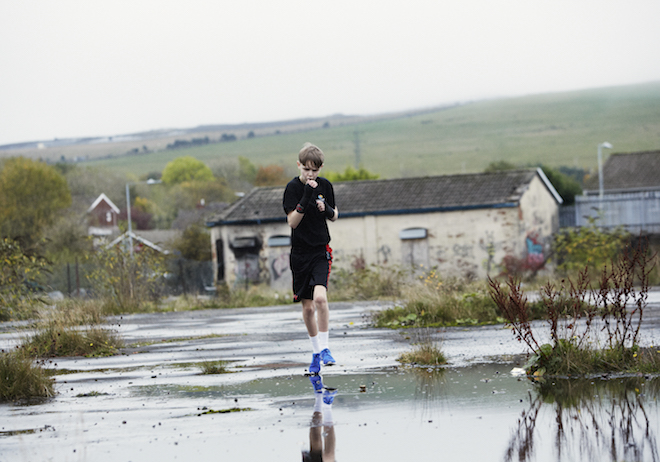
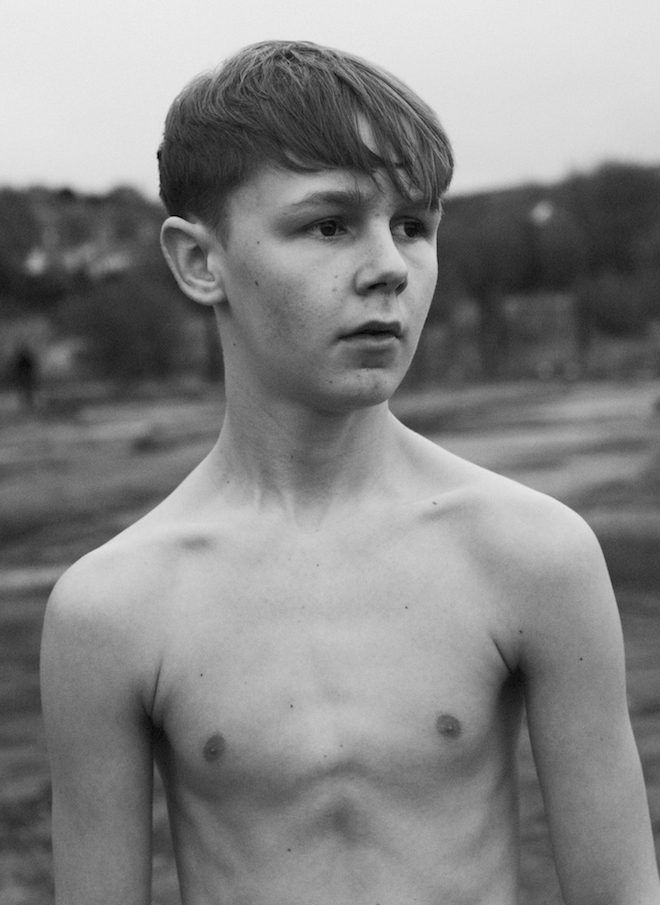
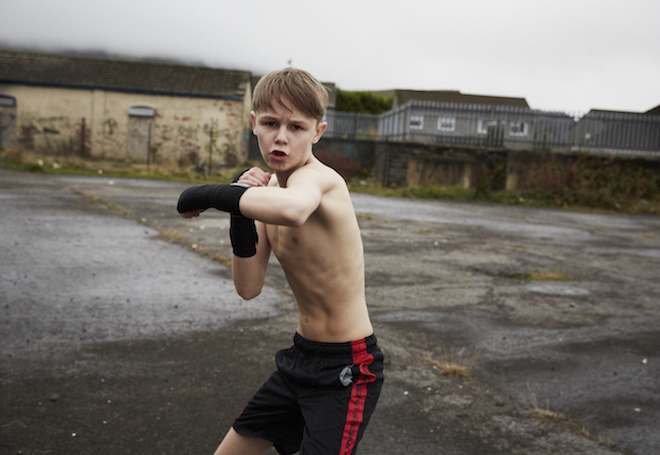
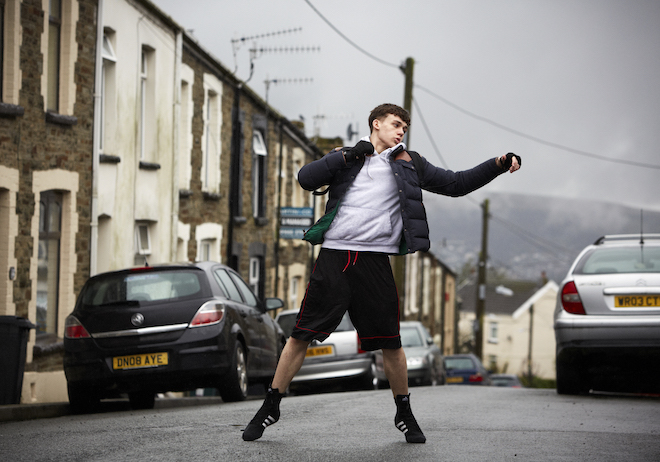
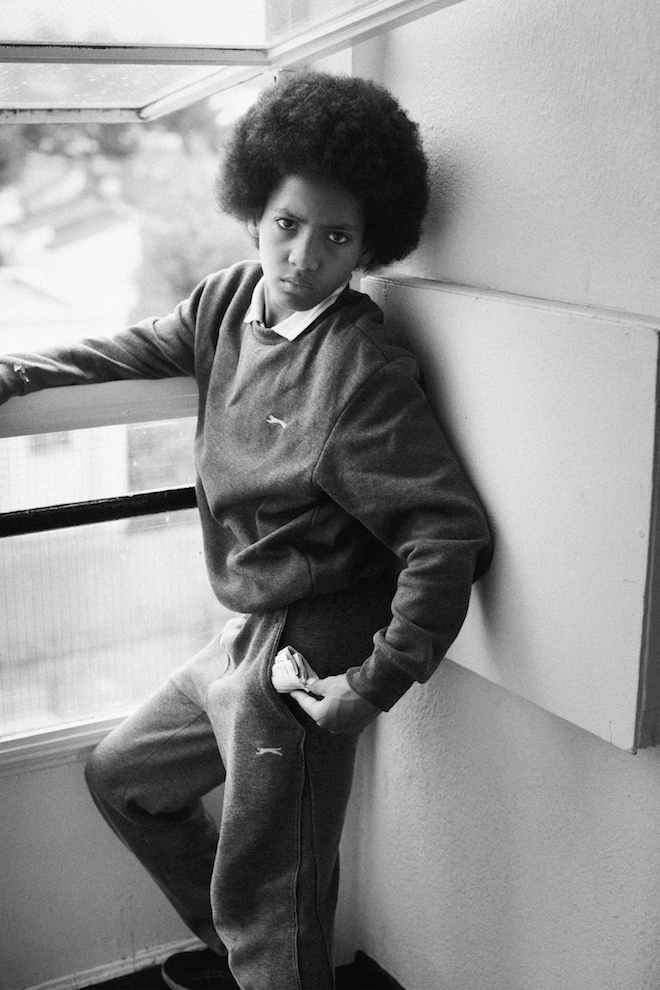
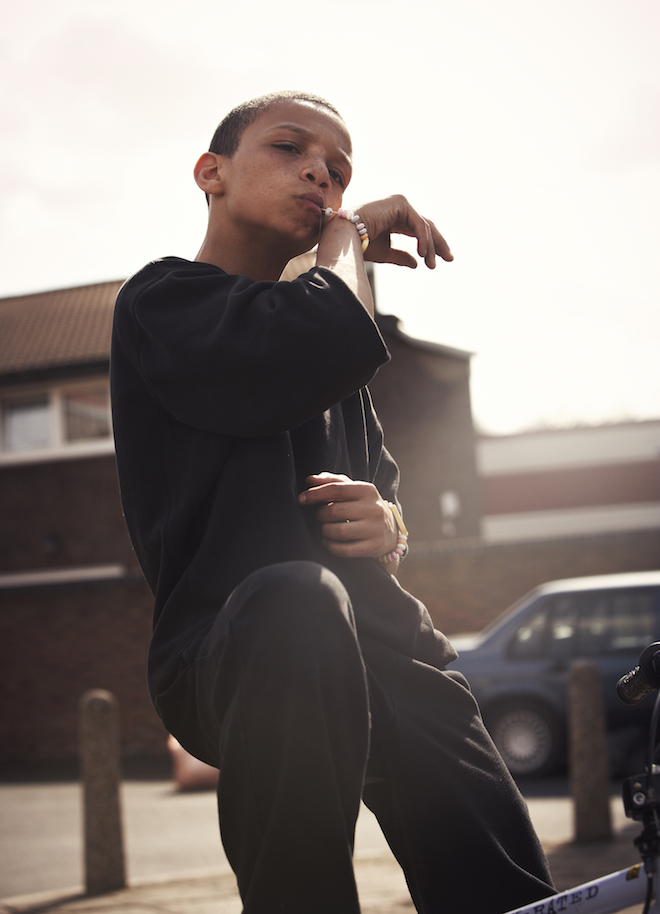
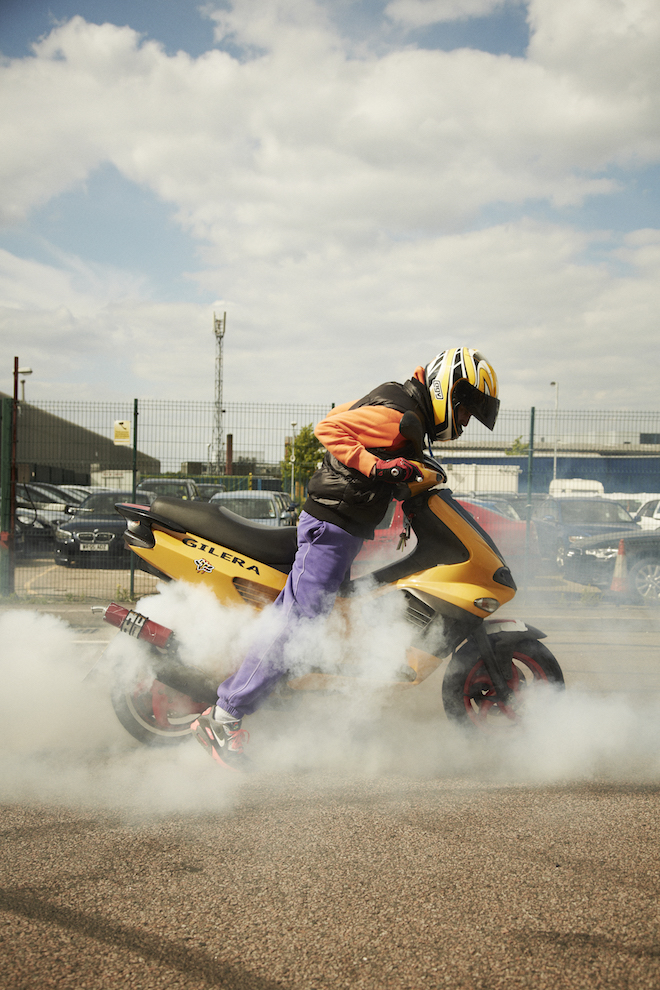
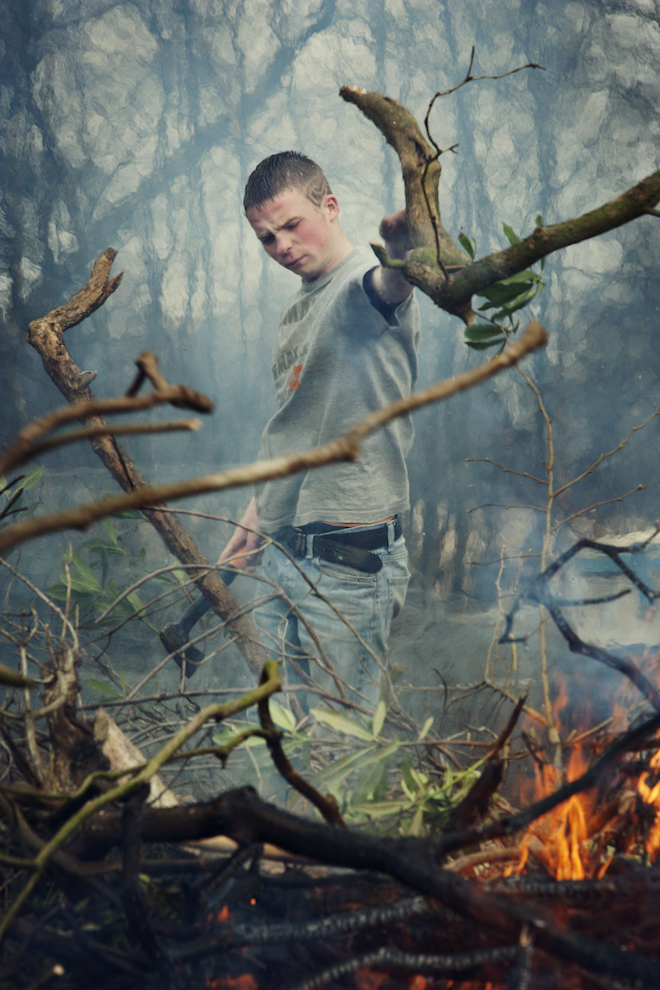
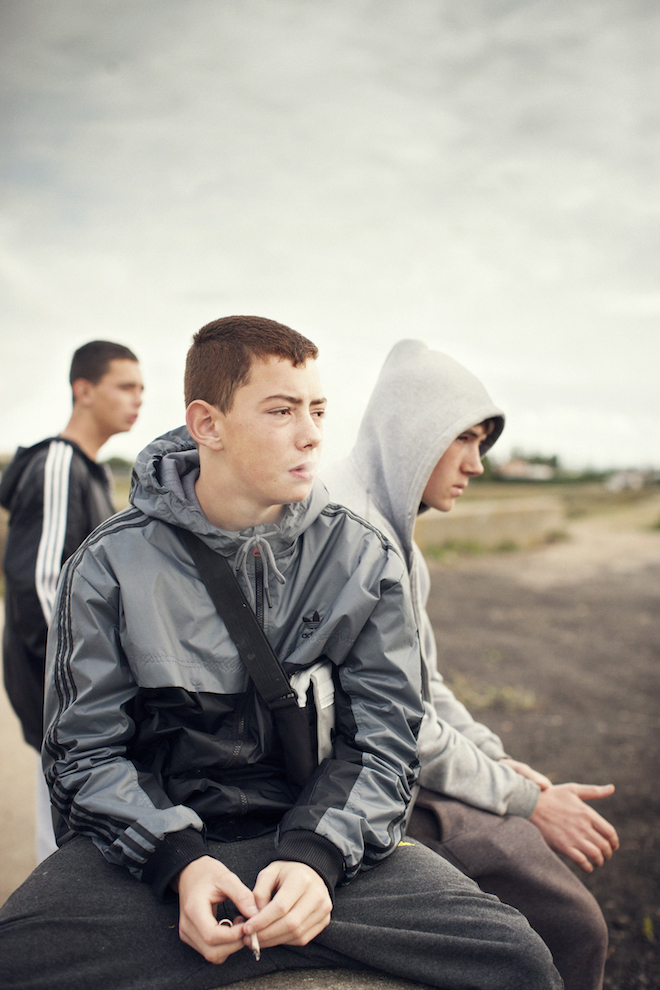
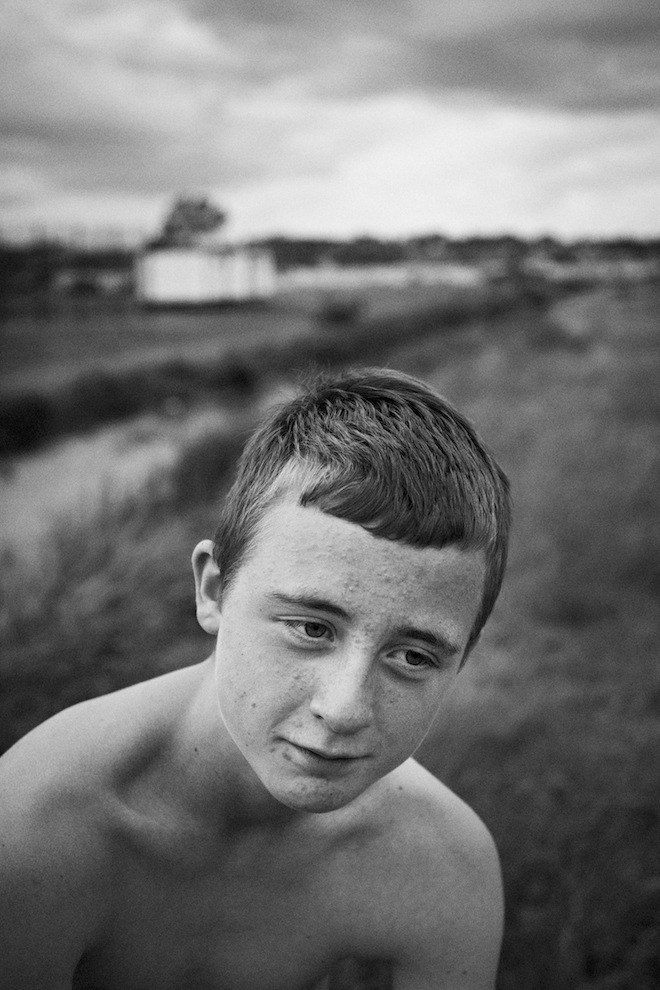
What initially pulled us towards Tom’s work was a recent trip he took to Wales – Merthyr Tydfil to be more specific – which produced a stunning series of photographs documenting the kids in and around the town. When we asked him what prompted the project, his response was so unselfconsciously thoughtful, that we knew we had to know – and see – more.
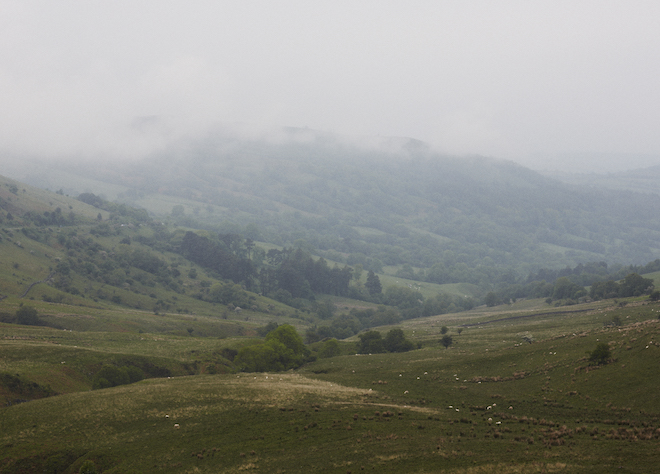
“I had been in the Forest of Dean area making pictures and came across two lads night fishing who were from Merthyr,” he told us. “They described the place to me and talked about what it was like growing up there. It sounded tough but at the same time quite romantic. They were honest about its problems with unemployment, benefit culture ect but they also described it as having a close knit community and it being a true Welsh industrial town. One of the lads was a keen boxer but had injured himself badly in a motorbike accident, he talked about training daily in and around the town as a youngster. One of the things I remembered them saying was that because of its geographical location in the Merthyr Valleys it was always shrouded with a thick foggy mist from the surrounding mountains, all of this got me interested.”
It got us interested, too. Here, along with a brief interview, we present you with a curated edit of some of Tom’s work. We think you’ll enjoy it.
What first drew you to making pictures?
I made short films as youngster, when I was 10 – 12 years old. They were very action-based as you can imagine. I used my Dad’s video camera. It was obviously all analogue, but I’d take it seriously and spend a lot of time editing, acting in them and making my brothers get involved. I was actually quite clever then, I worked out how to use a dodgy old editing machine my uncle bought from a car boot! But that was the start of me framing the world through a lens.
Can you remember the first photograph you saw that made a strong impact on you?
There have been many photographs that have made an impact on me, it’s a tricky question… Chris Killip’s ‘Seacoal’ pictures fascinated me. I would say it wasn’t just the individual pictures, although each one is incredible with such impact, it was the body of work as a whole and the world it showed me. It woke me up to telling a story with pictures. I was introduced to him when I started studying photography at university, aged 21.
Cameron, Merthyr
When did you first pick up a camera? What did you take pictures of?
I took up photography when I was 16. I was told I had to fill my schedule up at college by an extra four hours per week, I was doing retakes of my GCSEs! I’d spent a lot of time enjoying myself at school… perhaps too much! I came across GCSE photography and thought it sounded interesting, a good mix of the creative and the technical. In my first lesson I was shown a variety of photography books, one was a Don McCullin book. I loved his early pictures of his friends in Finsbury Park and the work he made up north in Bradford. I began trying to shoot gritty black and white in Southampton. I had the docks, some dodgy friends and rough areas to explore.
When did you realise that you wanted to make photography your career?
It was a simple decision weirdly. I remember I’d been to stay at my dad’s for the weekend when I was about 17, we were heading back to Southampton in the car, he was asking about jobs and careers etc and I just came out with it, and it felt right. I’ve been indecisive in other areas in my life, but deciding to be become a photographer felt right.
What are the realities of being a photographer these days? Is it as romantic as it sounds?
This question moves nicely from the last… Yes and no! It’s very tough, confusing, exciting and unpredictable! But interesting in so many ways. You have to stick to your true self and your gut instinct, which is difficult at times. I think the point I want to make is, for me, photography as an art form meant I’d have to go out into the world and find people and places and go on adventures. That’s what would interest me when I looked at photographers work, I loved the mystery of how they got the pictures, the process. It almost doesn’t become just about the individual picture, the work becomes about the photographer and the journey. Going back to the question though, for me the most romantic aspect of being a photographer is the freedom the days can hold.
Merthyr
If you had to choose one of your pictures to best act as an example of your style, what would it be and why?
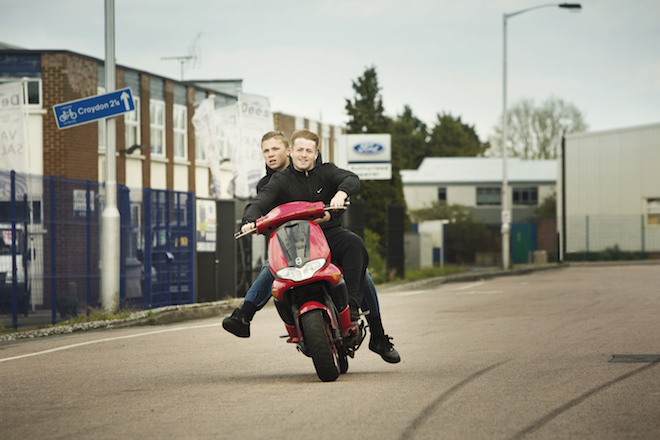
Umm tricky again… I like the picture I took of these two lads in Croydon, riding on the back of a moped. It’s certainly not my best picture but it sums up what I’m interested in when it comes to photographing these types of lads. There’s a sense of living the way they want to live, slightly wild I guess. I want a hint of excitement, I think this picture holds that.
Is there anyone that has influenced your work over the years?
Loads of people have influenced me, from photographers I’ve worked for to people I’ve looked at over the years. Strangely, although I don’t look at his work so much nowadays and it’s quiet different from my own work, I was a huge Wolfgang Tillmans fan. When I first saw how he displayed his work it blew my head off! His exhibition ‘If One Thing Matters, Everything Matters’ was a real influence on me. He curated and edited his work to have such an amazing rhythm. Others include: Paul Graham, Martin Parr, Juergen Teller and Glen Luchford.
Much of your work depicts youth, and young people – is there a particular reason for that?
Without trying to sound cliche, I guess they give you something honest? I like the excitement of being young as well, you can get up to a lot. I used hang out with huge groups of kids when I was growing up and we had so much fun, it was wild. Weirdly, you don’t see that so much now. I think teenagers spend more time online than hanging out at the local rec.
Sam, Merthyr
What was your childhood like? Where did you grow up?
My childhood was pretty normal. I grew up with my two brothers in Southampton until I was 10, when my Parents divorced. My dad moved to a tiny cottage in the countryside, we stayed in Southampton. My mum remarried a few years later and the family grew, I gained two step brothers and a step sister. I had a pretty eventful teenage period, hung out with the type of kids I photograph, took drugs, went to parties, roamed the streets, usual stuff. Do you have a dream project that you’d like to make reality one day?
Well it would be in the UK to start, I love making work here, I understand it! I think it’s a special, hugely diverse place. It would be shot on the outskirts of the city where the countryside and the city meets – my favourite territory! It would be a space where the teenagers own the land… To be honest I’m sort of shooting this bit by bit as I go along… I think… What’s inspiring you right now?
Road trips, I’m enjoying making work outside London at the moment, I get really inspired by the countryside. What would be the highest compliment someone could ever pay your work?
That I’m considered authentic. That means I’m on the right track. tomsloan.co.uk
Everyone likes winning things. Even those who give off the most authentic air of indifference to life, love winning things. It is with that in mind, then, that we sound the drum-roll and let you know about the brilliant Banner Repeater Fundraiser, which is happening as we speak.
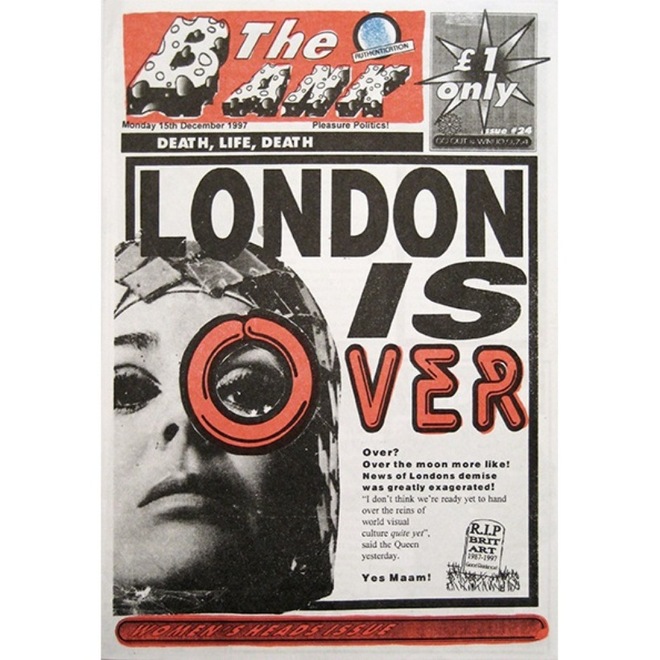
For just £5, you will be entered into a lottery to win some amazing prints, publications and multiples from the enviable Banner Repeater portfolio. These include, but are not limited to: Turner Prize winners, British Art Show 2015 artists, and more, such as Hannah Sawtell, Laure Prouvost, Jesse Darling, Benedict Drew, John Russell, Erica Scourti, Emma Hart, Elizabeth Price, Critical Hand Gestures, and there are also some highly collectible BANK tabloids, too.
The BANK. Issue 24. Published 15th December 1997
So what’s this all in aid of, then? Well, creativity. And the space to exhibit it. As we’ve previously mentioned – and we all know far too well – continued budget cuts to arts funding mean that the visibility of challenging work in public spaces is under threat, and places like Banner Repeater are having to do things like this, in order to survive. Let’s all help them, shall we?
All you have to do is take a simple cyber jaunt over to their website, here, and click to buy yourself a ticket. The lottery will then be pulled on 4 December at a fabulous party, with a DJ set by Paul Purgas. This will all take place at L’Entrepot, 230 Dalston Lane, London, E8 1LA (next door to Hackney Downs train station).
So what are you waiting for? Enter now, go to a party, have fun, maybe win something really fucking cool and support art. It’s a no brainer.
Meet Frances: heiress to the vocal powerhouse throne
She’s got a voice and she knows how to use it.
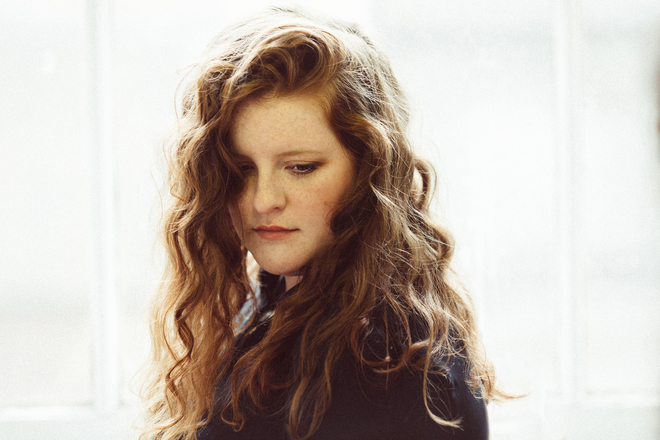
That’s 21-year-old newcomer Frances, the British vocal-powerhouse who could sing you out of the room in karaoke (watch out Adele), and who could also give Florence Welch a run for her money in the wonderfully wild red mane stakes.
Hailing from Newbury, she’s got a set of lungs that sound like they’ve been soaked in 90% proof emotion, serving up a high intensity of feelings to comfort you, before hitting you round the head with a massive chorus that stirs you. She’s already supported Sam Smith live, performed for Radio 1’s Live Lounge and sold out her first three UK London tour dates.
The new soulstress on the block you should know about, we caught up with Frances to talk love and fears, nostalgic moments and the best woah-oh-oh ever.
What’s your earliest memory of music?
Dancing around the house with my mum to ‘Poetry In Motion’ by Jonny Tillotson.
And when did you start performing? I had my first performance when I was three, but I’m not sure if that counts. I’ve always performed in some way since I was a toddler – it just felt so natural.
I first heard of you when I came across the track ‘Fire May Save You’ (the Cesare Remix), and I remember sharing it on my Twitter account as I loved it, and you messaged me back to thank me. Are you officially the nicest person in pop?
Haha! I appreciate so much any support for my music, so I think it’s so important and only polite to say thank you!
But what about when you become too famous to even peel your own banana, what will your tour rider consist of? Haha! Everyone should peel their own bananas, its part of the experience! Hmmm. Sparkling water, cereal bars for a quick energy boost in case I’m lagging, and some speakers for the tour tunes. That would do me fine.
Well as you’re so nice, I really want you to record a mellow stripped back piano version of Whitney’s ‘I Wanna Dance With Somebody’ and totally belt it out – can you do that especially for me on the next EP please? That’s an amazing idea… I’m going to say YES!
Awesome, I’ll wait for it! And talking of vocal belters, you supported Sam Smith this past Summer for a live show – that must have been a pretty intense experience? It was an amazing experience – he’s such a star and the nicest guy on the planet. I loved every minute.
Were you and Sam trying to outdo each other back stage with who could sing the highest note? I’m pretty sure he’d win if we did!
What about other performers you admire…you might spontaneously combust if you found out you were sharing a stage with who? Carole King. That would just be insane.
Wow, what a duo, you two would be musical ear porn! How would you describe your own sound? Well it’s all about the song for me. So I want to sing songs that people can relate to and share with their loved ones. And in doing that I hope that my voice sings those songs in a way that people endear to, and feel they want to carry on listening.
And how have you evolved and grown with each release? I think I’ve grown as a producer. So I’m finding new ways of delivering my songs and how I can use some different sounds on top of the piano and my voice to enforce meaning in the songs, lyrically and musically. But I’m also maintaining that actually keeping things simple is still a great approach for me for some songs, as nothing gets in the way then.
What’s been the hardest lesson you’ve learnt so far on your musical journey? I’ve had to learn that other people do really care about my music and career. It can be hard to believe at first but once you work with the right people you learn that people have got your back!
You’re among the Next Gen of female singer / songwriters to make their mark on the industry – what other female performers keep you on your toes, for a bit of healthy competition and sisterly respect? I’ve got so much respect for so many female performers. A few that stand out though are Aurora, I think she’s incredible, so haunting and beautiful. Rukhsana Merrise is amazing too, I love her song ‘So They Say’. And then there’s of course Alessia Cara, Adele, Florence, Maria Mena and more.. I could go on forever!
What about if we looked through your record collection, would we find any embarrassing moments? I still have my Vengaboys CDs.. loved them. And I’ve probably still got my Aqua – Barbie Girl CD too, haha!
Ha! Well my Bucks Fizz Greatest Hits beats your Barbie Girl. What else makes you nostalgic? My childhood. It was so fun, I had (and still have) a wild imagination and just lived in a world of my own most of the time.
Is that why you’re quite emotively explorative in your lyrics, you’re very deep and reflective for someone so young? I’m very sensitive to emotion, both my own and others. I tend to over-think and analyse everything so that means I think about things at quite a deep level.. which can be good and bad I think!
Do you think it’s easier to love or be loved? I always say you have to love yourself before you can love another.. but I also think you need to know that you’re loveable.. so that’s a tricky one! I guess they both become easier if you have value for and love yourself.
Good answer. And are you fatalistic? In some ways I am.. but then I also believe you can create your own luck and opportunities. But ultimately we’re all destined to do something, whatever that may be. We all have our own piece of the puzzle.
What’s your greatest fear? Disappointing someone I love.
But you’re not ashamed to admit that you love…? I don’t think we should be ashamed to love anything, but I guess my love for Christmas films is quite intense.
And where is your happy place? Snuggled up with my dogs watching a great film. That’s just the best!
And when not snuggled up indoors, what’s your go-to feel good song before a night out? ‘September’ by Earth, Wind and Fire.
What about the best woah-oh-oh you’ve ever heard in a song? It’s got to be ‘Single Ladies’ by Beyonce! Or for a more emotional ballad-y one, it would have to be the ‘Oh’ section in ‘Viva La Vida’ by Coldplay.
Ok, so you’re off to karaoke – which three singers would you take with you and what’s the song you’re going to sing? I’d bring Sam Smith, George Ezra and JoJo and we’d sing ‘Lose My Breath’ by Destiny’s Child.
Ooh nice! So what’s coming next for you and what can we expect from your debut album? I can’t wait to do my album. It’ll be here next year sometime. It will be in a similar vein to my EPs, but a bit more accomplished I hope, I want to show I’ve grown and developed as a songwriter and for people to really connect and relate to the music.
So taking inspiration from the title of your latest release ‘Let It Out’ – how can we all really let it out today Frances?
Dance in a shop. If a great song comes on it deserves to be danced to. You’ll brighten up your own day and someone else’s!
The ‘Let It Out’ EP is out now and you can see Frances live on her UK tour which kicks off in 2016. For more information head to francesmusic.com
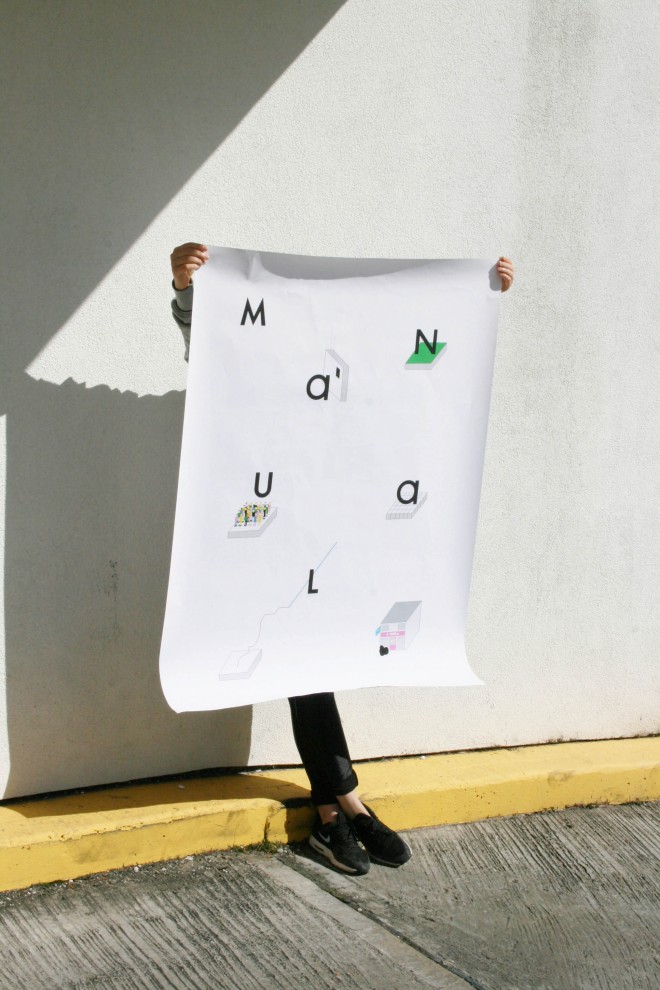
Navigating the minefield of the creative industry at a time when housing costs have reach crisis point, funding for the arts is being monumentally slashed, and any kind of government support is a joke – is nigh on impossible. Luckily, there’s a force for active change in our midst. It comes in the shape of 26-year-old artist, feminist and curator Sophie Giblin, who is a founder of the award-winning Kollektiv art community, and determined to satiate the need for real, practical ‘how to’ knowledge for creatives just starting out. Sophie has put together, along with designer Sarah Todd and developer Luke Phillips, a free online manual that cleverly, and plainly, details how to do various things such as run collaborative projects, use alternative funding methods like crowdfunding and open galleries in derelict spaces.
“Life as a creative can be tough. Funding is being cut, rent is high, inspiring opportunities are scarce. It all seems really miserable, but we can and must stay creative. The new youth led DIY collectives shouldn’t be deterred by the difficulties. They deserve a helping hand and that’s why we’ve made everything we’ve learnt over the past two years completely open source. We like to choose collaboration over competition.” – Sophie Giblin
Everything you could want to know – from how to handle a problematic landlord to prepping a space for an exhibition – is beautifully categorised and easy to navigate, via the website’s no fuss (but still aesthetically pleasing) scrolling design.
Readers and fellow creatives are also encouraged to engage with the project by tweeting any thoughts and additional questions with the hashtag #KollektivSchool – further ensuing there is no dead end to the invaluable information being provided.
Kollectiv has been running as a Kickstarter funded organisation for over two years now, and its overall message is this: “make ideas into realities, don’t settle for unfair treatment and learn by taking the lead. Make your own way and regret nothing. Show the #haters what you’re made of and don’t let the realities of post education stifle your creativity.” We’re down with that.
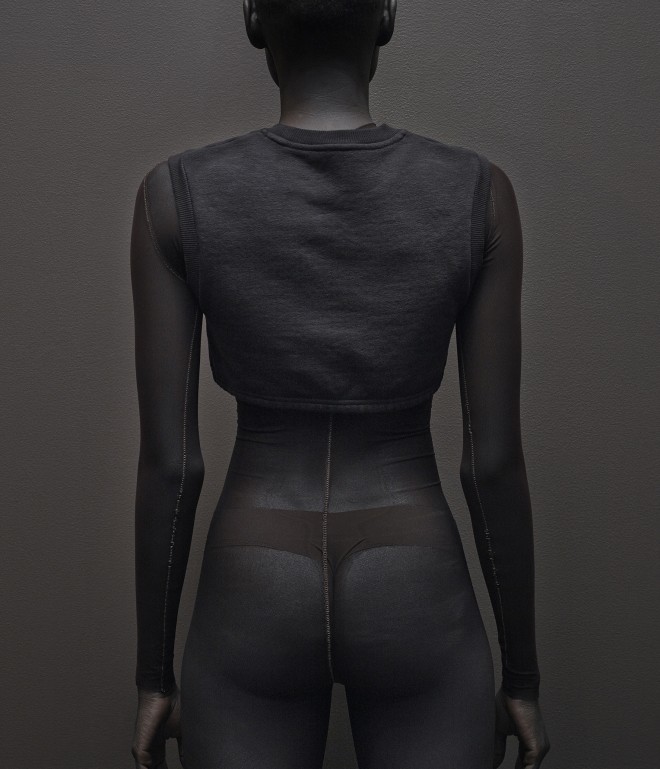
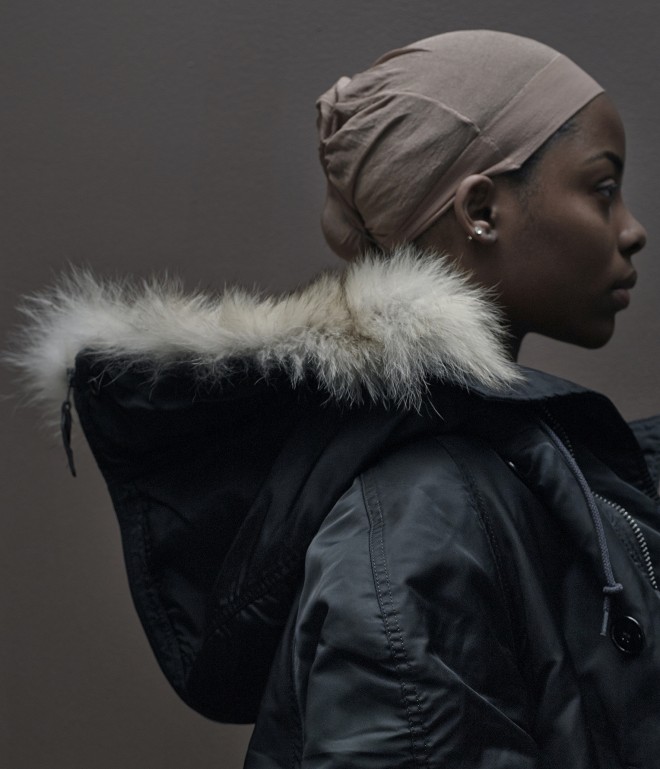
“This is a challenge to where fashion is currently—a new feminine ideal,” says Kanye West, as his first adidas Originals collection – Yeezy Season 1 – launches around the world on 29th October.
Comprised of both voluminous and second-skin like proportions – the former generally on top, and the latter below – West reiterates the practicality he had in mind with these pieces, describing the easily interchangeable capsule collection as “solutions-based” and akin to Lego. Ultimately, he has, quite literally, aimed to create a series of uniform building blocks, from which his customers can construct a daily identity. “I don’t want the clothes to be the life,” he stresses. “I want the clothes to help the life.”
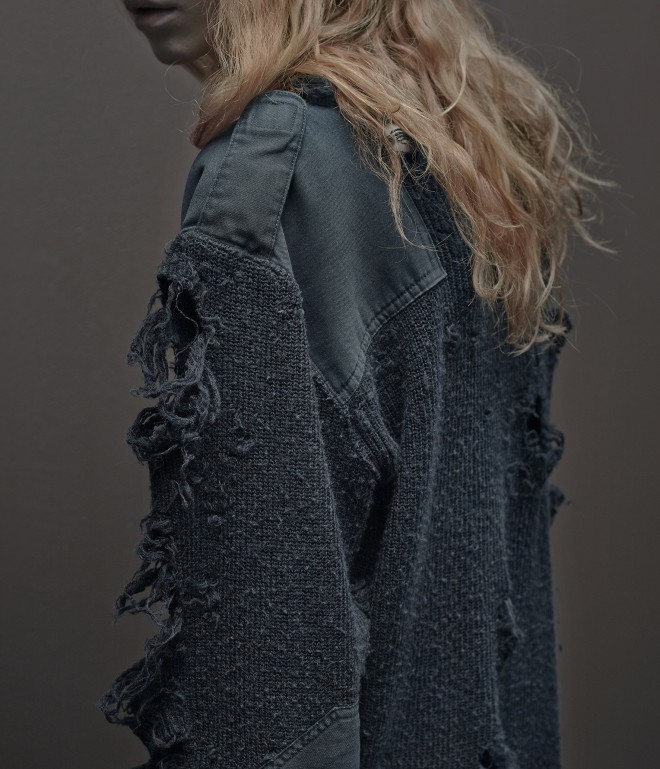
So what of the garments themselves? They are undoubtedly useful, bar perhaps the aforementioned body-suits, which although editorially striking, may be a little more tricksy to work into any typical circumstance that initially springs to mind. The inky, generously hooded shearling parkas are instantly desirable, as are the gnarled army surplus knits and cotton tanks in that perfect shade of smokey anthracite. But it’s the unisex, outsized sweaters, beautifully constructed yet rough around the edges, that you could really see yourself wearing forever.
West has been clever. He has put just enough of himself into this collaboration – hero pieces such as the camo separates and drop shouldered bomber jackets smack of recognition with “West: the brand” – to make it aspirational, yet left the collection canvas-like in it’s quality, so that customers can see themselves in it too, without having to try too hard.
The decision to have a mass release of the collaboration, as opposed to a staggered global drop seems an obvious one, especially when you consider the transient purposes West had in mind when designing. “I wanted something that felt like New York or Paris or Tokyo or Santa Barbara or Chicago—a worldliness and an ease.”
Rounding off the collection are a number of new footwear releases, the highly anticipated Yeezy Boosts 750 and 350 as well as the Yeezy 950 boots for men and platform snow boots for women. Roll on winter.
adidas Originals by Kanye West – Yeezy Season 1 is in stores now. Prices start from $130.
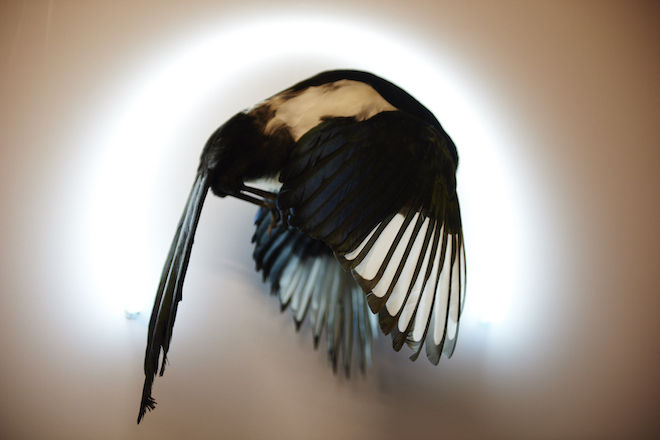
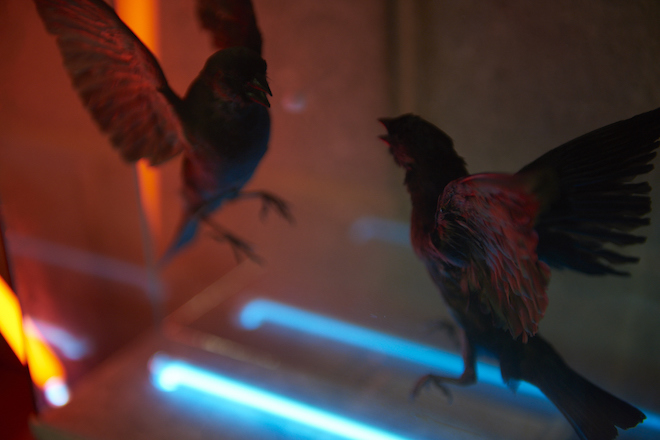
I feel as if I’m in a sylvan dream world, with animals slumbering peacefully around me – except I’m actually in dark cubbyhole in a printers’ office in Aldgate East. This is Harriet Horton’s studio and what I’m looking at are her works: she’s a taxidermist, and an unusual one at that. Her ethically-sourced pieces – brightly coloured and lent a surreal quality with the addition of neon lighting – are far from traditional.
“I can’t remember what made me want to do the neon, but I’ve always loved it, so for me merging it with taxidermy seemed quite obvious,” she explains. “I like it because it’s quite trashy. My godmother lives in Blackpool, and my family used to visit to see the illuminations, and it was kind of trippy.”
Horton’s path to her trade wasn’t straightforward. After studying philosophy at the University of Manchester, she went to train with George Jamieson in Edinburgh. She did taxidermy work in her spare time, on and off, for six years, and in the last year decided that she wanted people to see her pieces.
And that’s what I’m here to discuss, because Horton’s first solo exhibition, Sleep Subjects, opens on 13th November, and she’s just joined a gallery, Contemporary Collective.
“I became really obsessed with animals and their dreaming abilities and I thought it would really fun. I wanted to use lighting and other mediums to explore the visual representation of their potential REM. I wanted to make something that was about the animals rather than about the human version of dreaming.”
Photography by Joe Quigg
She prides herself on maintaining a playful narrative: “Once you’ve taken an animal out of it’s natural habitat, where it looks beautiful, and you put it in a gallery, it looks at bit out of place. I tamper with what I can but I try to do it with utmost respect because I think you have a level of care as a taxidermist. I hate all that macabre gothic taxidermy.”
Harriet’s work is quite unlike anyone else’s, which she says, is because, “One of the most embarrassing things for me would be to accidentally do something that’s quite similar to someone else’s. I followed a lot of artists and then realised that if I wanted to do it myself, I didn’t want any conscious influences, so I stopped researching people. I’ve been starting to look again recently.”
The exhibition looks set to be equally unusual, a multisensory experience with music and lighting in a crypt. The music producer is Rob Shields, a friend of Horton’s. “It’s really special that he’s doing it. It’s going to be a new thing for me, because I can only visualise what I’ve got here, so…his element will kind of change things. I think I’ll change the layout and that’s what I’m quite excited about,” she says.
Horton’s young, fresh approach is turning taxidermy on its head – and we think it’s dead cool.
Harriet Horton will be exhibiting on 13 November at The Crypt Gallery. For more info, go to harriethorton.com
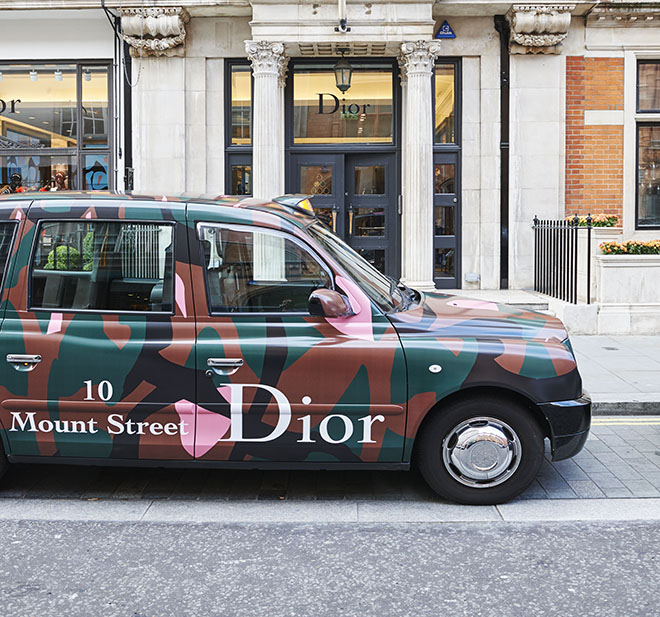
If the draw of Roksanda and Celine wasn’t already pulling you by the coat hem towards London’s Mount Street, then perhaps the irresistible lure of fleeting fancy might do the trick. Last week, Christian Dior opened a rather permanent-looking pop-up on the well-heeled avenue, to satisfy and intrigue both regular and window shoppers alike, while work is completed on their Bond Street London flagship.
As one would expect, Raf Simons riffed on the lineage of the great fashion house for the aesthetic of the premises. While nodding to their historic 30 Avenue Montaigne with the shop’s clean, grand Victorian exterior, inside he thrusts customers into a forward thinking, contemporary space of mirrors (by Hubert Le Gall), floor to ceiling digital screens and eye wateringly cool furniture, such as the Nuage table by Guy De Rougemont and a beautiful sofa by Vladimir Kagan.
On said digital screens, is a recurring loop of Simons’ a/w 2015 twisting and distorting animal print – more abstract camouflage than straight-up cheetah. Again, it is a fitting tribute to the past – Dior is said to have ‘invented’ animal print in 1947 – with the smart touch of the brand’s new, new look.
With autumn/winter’s ready-to-wear, accessories, footwear and leather goods linings shelves and hanging deliciously from racks, eager to be slipped on in the pink (of course) changing rooms at the centre of the store – this is a temporary treasure trove worth pillaging. And despite the abundance of camo, when strolling through Mayfair you’ve little chance of overlooking this momentary gem. Please ensure sure that you don’t.
The UK’s first and only festival of feminist theatre is returning for a third year, with a line up including porn industry refuseniks, a celebrated 15th century cross-dresser, a Bruce Springsteen loving male alter ego, a mother and baby performance duo and teenage activists.
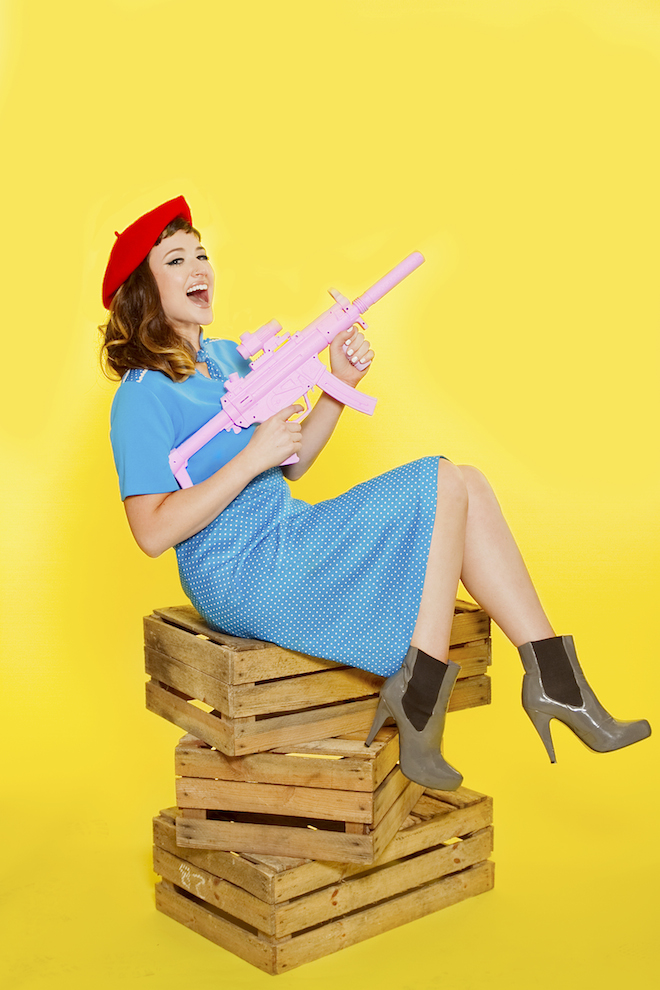
The star showing will be the London premiere (until Saturday 3 October) of Louise Orwin’s latest work, A Girl and A Gun (pictured above). It aims to explore the use of images of girls with guns on film as a means of attracting interest, referencing Jean-Luc Goddard’s well-known assertion that “all you need to make a movie is a girl and a gun.”
Elsewhere, Hula House (Dates and times tbc) from Permanently Visible is inspired by true accounts and stories obtained from interviews with sex workers and women at The English Collective of Prostitutes. The show is an immersive, interactive performance featuring dark comedy, physical theatre and audience participation.
Themes of gender identity, drag and transgender will be particularly prevalent; Break Yourself (Thursday 1 October at 8pm), will see Ira Brand experimenting with what constructing a male alter ego allows her to say and do, while Joan (8-10 October at 7.30pm) will feature Drag Idol UK Champion 2014 Louis Cyfer in a one-woman show inspired by the story of Joan of Arc.
With a plethora of events until mid-October, the Calm Down Dear festival continues to create a space to discuss feminism in the dramatic sphere.
With monickers such as ‘The Pope of Trash’ and ‘The Prince of Puke,’ John Waters hasn’t always been welcomed into the greater film community, but his first UK retrospective at the British Film Institute, running until 6 October, will finally recognise him as one of the industry’s great counter cultural figures. Titled ‘It Isn’t Very Pretty…The Complete Films of John Waters [Every God Damn One of Them]”, the BFI’s month long series will screen not only his entire filmography, but his formative, early short films shown in the UK for the first time. As the ‘godfather of bad taste’, Waters’ films provide a cynical and celebratory take on American popular culture.
Though creative validation has never been a barometer for which Waters has measured himself by, the BFI tribute is nevertheless a fitting celebration of an artist who worked hard to foster an enduring and definitive style in an industry that doesn’t always allow such individuality. The cult director’s influence on art and fashion go far and wide, as seen recently in Jeremy Scott’s Spring/Summer 2016 show in New York which took beauty inspiration his films. Flip through runway shots and you’ll get to see the likes of Bella Hadid and Hollie May Saker as modern day replicas of Waters’ leading ladies – Debbie Harry, Traci Lords, and Waters’ best collaborator, the late drag performer, Divine (pictured above in Female Trouble).
The BFI series features his entire body of work, including cult classics like Pink Flamingo (1972) and his most commercial offering, Hairspray (1988). May we suggest, however, you take the time to watch Female Trouble (1974), starring Divine as a scorned teenage girl who goes on a crime spree after her parents fail to give her a pair of much coveted ‘cha cha’ heels. Another one to catch is Cry-Baby (1990), a musical romantic comedy set in 1950’s Baltimore that also stars Johnny Depp in his youthful prime.
20-year-old, London-based photographer Ash Kingston recently went on his first trip to New York, returning with a bounty of photographs that have seen him likened to Juergen Teller and David Bailey. Juxtaposing dynamic pictures of up-and-coming models with snapshots of his time with them, the resulting work speaks of youth, energy and, above all, fun.
Citing Hedi Slimane, Robert Mapplethorp and Twin’s own Matteo Montanari as his main influences, Kingston is entirely self-taught. When his dreams to become a chef didn’t work out, he started shooting using his mother’s camera, photographing friends whose aesthetics appealed to him. Having spent the summer behind the camera, he ended up dropping out of Sixth Form to pursue his new-found passion.
‘I choose subjects because of their personality, particularly if I can have a laugh with them. I try to shoot people I’ve already met. It’s boring but I’d love to shoot Kate Moss – I’d have to meet her first though in case I couldn’t stand her,’ Kingston says.
Working with digital – it’s much more efficient – Kingston prides himself on treating it the same way as the film, taking only a few shots for each look. The perfectionist approach will soon be translated into a book featuring photos from his travels. In the meantime, look out for more images from Ash here on the Twin blog and Instagram.
The Female Frontier: Hats On with Tasya van Ree and Stetson
The late Louise Wilson (course director of Central Saint Martin’s Fashion MA) once said in relation to her students, “They should be bringing me a book or something that I haven’t seen, not like some obscure chant book by Dominican monks, but an image of the way they see the world.”
For LA based artist and photographer Tasya van Ree, the way in which she sees the world is something every young dreamer could draw inspiration from – with a vision which explores the inner workings of the human spirit, the human form, landscapes, nature and animals – her work is a visual and emotional journey translating deeper connections with the intelligence and beauty that exists all around us.
With such an engaging creative sensibility, it’s no surprise she’s been propelled into the public eye as everyone’s latest art crush, resulting in solo exhibitions in LA, New York, and Paris – Girl power yet again challenging the exclusionary structures which frame the industry for female artists.
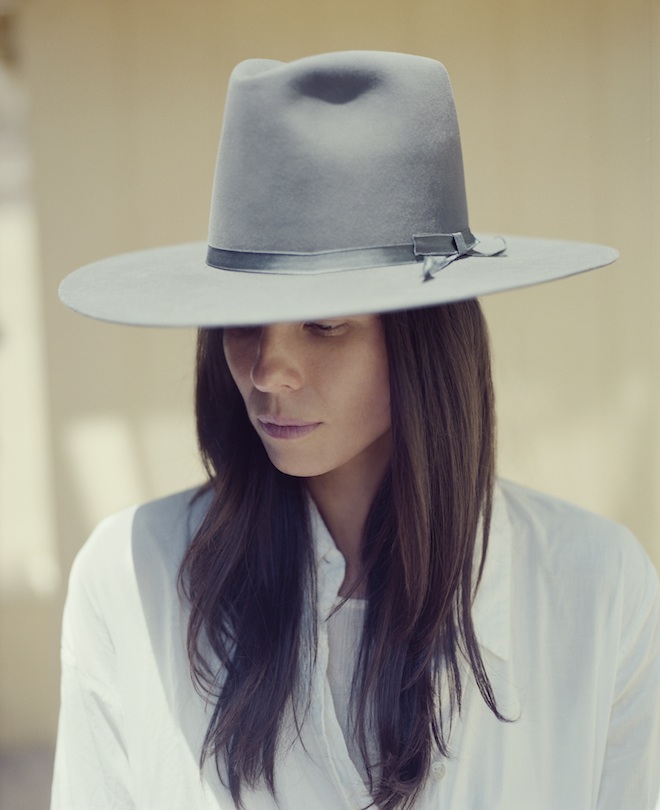
With her unique and often sartorial style, her affinity for hats has also not gone unnoticed, which is why iconic US brand Stetson invited her to collaborate with them for their 150th-anniversary.
“Tasya van Ree is an ideal collaborator for Stetson”, says Izumi Kajimoto, the brand’s Chief Executive Officer. “She looks strong, empowered, and captivating in her hats, which is something that also comes across in her extensive body of work. Stetson has always been a part of contemporary culture and we’re excited to continue to work with artists whose visions relate to our brand.”
Taking one of Stetson’s vintage felted styles as a blank canvas, van Ree called upon her artistic flair to create a unique design for the brand – dubbed “The Signature”, the hat is an effortlessly stylish and structured piece of modern minimalism – in itself, a work of art.
We caught up with van Ree to find out more about the collaboration with one of fashion’s most enduring brands, and her plans for the future.
So tell me how you got involved with Stetson for this project?
I’ve worn a vintage Stetson for years and have been photographed in it quite a few times in the social media realm. Through that exposure we began a dialogue and soon after, the collaboration was born.
And what was the inspiration behind your hat design?
Horses. I wanted to design a piece of art that reflected their intelligence and also that captured the beauty of their philosophical language of power, their sensuous lines and their majestic sense of spirituality and danger.
What was the creative process like for you?
Combining the world of fashion and the natural world was quite seamless. They both operate on the same level. It was just a matter of finding the moment through sketches where the influence of an emotional state of mind connected to an image of artistic appeal. It was a process, and after a good amount of time “The Signature” hat was drawn out and created.
So does it feel like you’re officially an ambassador for hats now?
“Ambassador” sounds really formal, I just really like wearing hats!
Hats are an extension of ones self, the minute you put one on, it becomes a living part of you – what is the quality that makes the hat come to life for you?
There is a harmony between my physical appearance and my internal existence. My hat is the conductor that creates this relationship.
So would you ever go all out and do an ‘Isabella Blow’ then, and wear something outlandish, just to move away from your signature comfort zone?
I’ll do anything once!
The English have an inbuilt understanding of the peculiarities of life and that’s often expressed through fashion – living in LA, how would you describe the dress codes there?
Objective.
What about defining your own style?
Half Japanese / half Dutch.
Yes, I can see how you’ve shifted towards a more conceptual approach in your style vocabulary. So do you think you’ll move on to other fashion collaborations in the future? Absolutely. I’ve fallen in love with the collaboration process. I’m open and would love to join forces with other creative minds in all forms, whether it’s in fashion, art, music, etc.
Let’s talk more about art and photography – I read recently that over 50 new galleries have opened in the last two years in LA. It’s always been a cultural mecca for creativity, but it must be cool to see the city now really embracing and shaping art?
Art is elemental in the progression of a culture’s evolution. I’m really interested to see what profound changes LA will make as the art world becomes more and more pronounced here.
And has there also been a shift towards those galleries supporting and exhibiting work by more female artists?
I feel as if they have. I’ve been going to more openings and shows that are exhibiting female artists. Much more than in the past.
Are you planning any new exhibitions of your own work?
Yes, I have a photo exhibition with The Curator LA next month and also in Paris at the beginning of November. And later in the year / early next year, an artist residency show in Mexico.
So talking of exhibitions, Annie Leibovitz is returning to her project ‘Women’ and is now going to tour a show documenting portraits of 21st century females, to present how women’s roles are changing in a new feminist society.
Who would you personally like to see in that roll call?
Every woman in the world should be photographed for this project. Every one of them has a voice that is changing the world in which we live in on a daily basis.
“The Signature” by Tasya van Ree for Stetson style will be available from October 2015 at stetson.com. Photo credit: Anais & Dax anaisdax.com
The Anonymous Sex Journal – that pleasurable, pocket-sized zine – is back and the new issue is all about solo sexual adventures, or the “ménage à mois”. For those not familiar, the cheeky zine consists of anonymously submitted stories that range from awkward and sordid, to hilarious and endearing – adjectives which often describe the broad range of human sexual experiences. Created by London-based editor, Alex Tieghi-Walker, its success lies in the name: anonymity, where contributors are freed of having their names attached to revealing and compelling sexual exposés.
In a similar way that iconic gay zine, Butt, did over a decade ago, The Anonymous Sex Journal represents a new wave of sex-themed magazines with strong artistic sensibilities that are changing the way we look at sex. Other examples are Irene in Paris, Treats from Los Angeles, and Adult in New York, all of which are shifting the atmosphere of sexual discourse towards a more honest and diverse one.
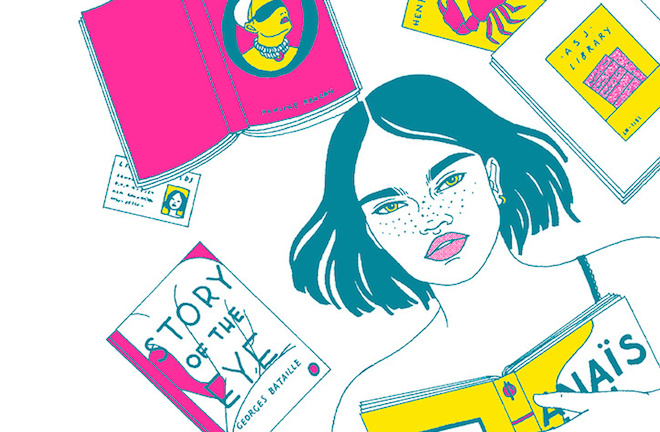
With a vested focus on art direction, they sell at a premium with the aim of, as described by the New York Times, “moving sex periodicals from under the mattress up onto the coffee table.” One of the best aspects of The Anonymous Sex Journal is its focus on celebrating the creativity of one illustrator per issue – for this fourth issue, Laura Callaghan (her work is featured above) – making them as beautiful as they are fun, and increasing the publication’s good humour.
The new issue of The Anonymous Sex Journal: The Solo Issue has been restocked at Ditto Press and submissions for the next issue, “The Hotel Issue of Dirty Weekenders,”are already being taken.
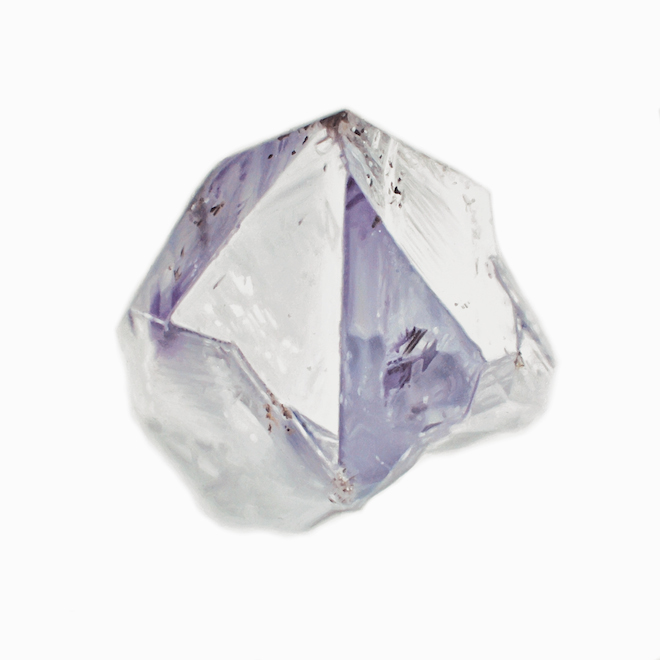
Geology has never been considered the most feminine science but the oeuvres in a new showcase from creative science agency super/collider are anything but masculine. Witness Carly Waito’s stunningly realistic oil paintings of gemstones (main picture) and Jessica Herrington’s crystal and rock inspired sculptural works, while Sophie Rose Asquith’s Sylacauga 1954, Thixenhale 2013 (pictured below) leverages black-and-white photography to eerily represent extraterrestrial geology.
The mixed media show is designed to represent the resurgence in female fascination with geology, minerals and meteorites, with beguiling results. Many of these artists are fascinated by how these jewels develop through immense pressure and time – parallels with everyday life, perhaps?
super-collider.com; 25 September – 30 October, Print House Gallery, 18 Ashwin Street, London E8 3DL
“Women are a drastically under-utilised resource for the UK film industry.” That’s the conclusion drawn by Calling the Shots: Women and contemporary film culture in the UK, 2000-2015, an ongoing Arts & Humanities Research Council funded project, which investigates women as creative practitioners in contemporary UK cinema.
The Institute of Contemporary will celebrate this with Onwards and Outwards, a programme of films made by British women filmmakers over the last 50 years, focusing on those who have excelled in making works of independence and originality. The nationwide programme of screenings, talks and events aims to establish a dialogue around the conditions of production that women face when using the moving image as a means of expression.
Screenings will be accompanied by introductions and Q&As from relevant industry professionals and cultural practitioners such as Joanna Hogg, Laura Mulvey, Carol Morley and Campbell X.
Finishing with a round-up discussion, Onwards and Outwards will raise the profile of key issues and encourage public debate. The programme has been made possible by support from the BFI, awarding funs from the National Lottery.
Onwards and Outwards will run until 10 September at the ICA and until end of December at nationwide venues.
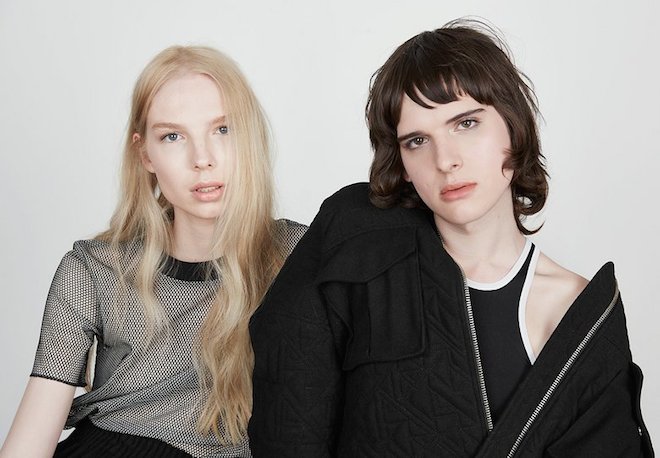
There’s no doubt that transgendered issues have been brought into the greater cultural conversation over the past year. While fashion has long toyed with gender fluidity and featured androgynous and trans models like Andreija Pejic in campaign imagery, no major brand has seemingly addressed gender non-conformity as much as H&M’s little sister, & Other Stories. Their new campaign not only stars trans models, Hari Nef and Valentijn De Hingh, but was produced by a predominantly trans crew, celebrating their artistry in front and behind the camera.
Representation and increased visibility is undoubtedly a good thing – it broadens perspectives and offers more opportunities for minorities to be included in a wider narrative. But there are only so much a few magazine covers and documentary specials can do, and in an industry that’s obsessed with newness – both falsely inviting and cruelly fickle – how do we make sure this isn’t another seasonal trend that disappears in six months. And in a time when the trans community still struggles with unemployment, discrimination and lack of opportunity, how much are we doing if the same creative teams get rehired to produce campaigns.
By hiring an all transgendered below-the-line talent including photographer Amos Mac (founder of Original Plumbing), stylist Love Bailey and makeup artist Nina Poon, & Other Stories empowers everyone involved to control the means of their own representation. The behind the scenes video is quick to highlight how the team bonded on set, which comes across in the campaign itself, showing the power of shared experiences. When talking to Dazed, Nef noted that prior collaborations in fashion hadn’t always entailed empathy and understanding but, “With a trans team however, it’s all there.” The campaign also raises an important question about ‘the gaze’, long associated with fashion imagery, & Other Stories asks whether, in this case, the cisgender gaze could change if a trans team produced the imagery.
Fashion dictates who does and does not get to participate in the world of luxury and beauty, but as Nef notes in the video, campaigns like this – and on a greater level, the Internet – have expanded and diversified fashion’s audience, who demand to be both represented and included. In the past year alone, Selfridges experimented with the Agender Project while a new online, unisex-only fashion platform, You Do You, launched this month promoting designers like Eckhaus Latta, Vejas and Timo Weiland, all of whom produce collections not tied to a gender binary. In the US, Target has promised to remove gender-based labels on toys, which hopefully signifies the industry is finally noticing the importance of empowering a diverse set of consumers – let’s just hope it doesn’t disappear in six months time.
Mum/Mamma/Maman: the word signifying ‘mother’ is almost a universal term – and with good reason. The authority of Mamma is particularly synonymous with Italy, so its seems only fitting that what the Trussardi Foundation’s latest contemporary art exhibition at Palazzo Reale in Milan will explore the mother figure as a subject of admiration, myth, historical significance and artistic inspiration. Curated by director Massimiliano Gioni (the artistic director of the Venice Bienale 2013), the show will run from August 25 to November 15.
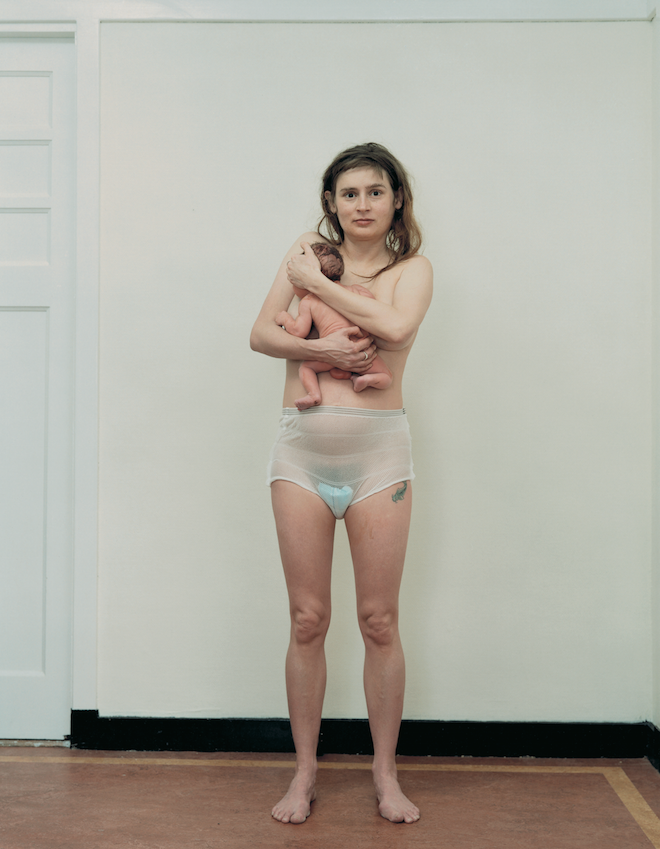
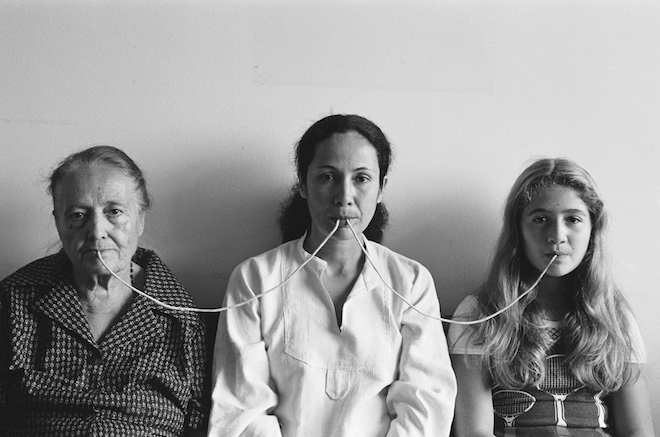
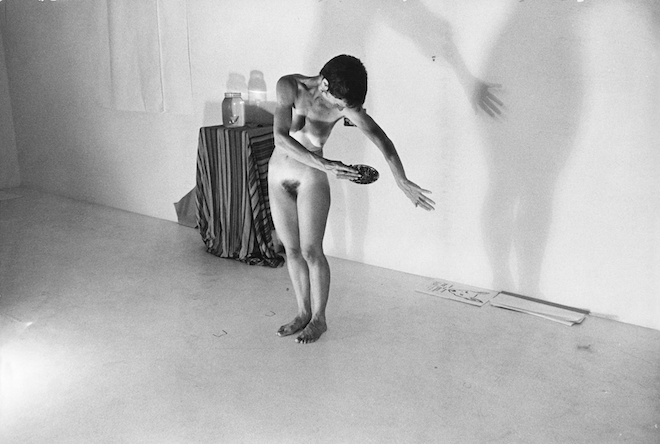
127 international artists will be exhibited over 20,000 square feet, analysing the iconography of motherhood in the 20th and 21st centuries. Highlights include work from Julie Den Hagg (pictured above, courtesy of Rineke Dijkstra and Marion Goodman Gallery), Anna Maria Maiolino (below, first picture, courtesy of Galleria Raffaella Cortese) and and Joan Jonas (below, second picture, photograph by Roberta Neiman). The Great Mother aims to celebrate women’s power, not only as a life-giving, creative force, but also the story of female empowerment over the course of the past 100 years. No subject will be overlooked, from gender struggles to sexual politics, and one of the exhibition’s goals is to encourage women to be active participants in the representation, rather than just its subject.
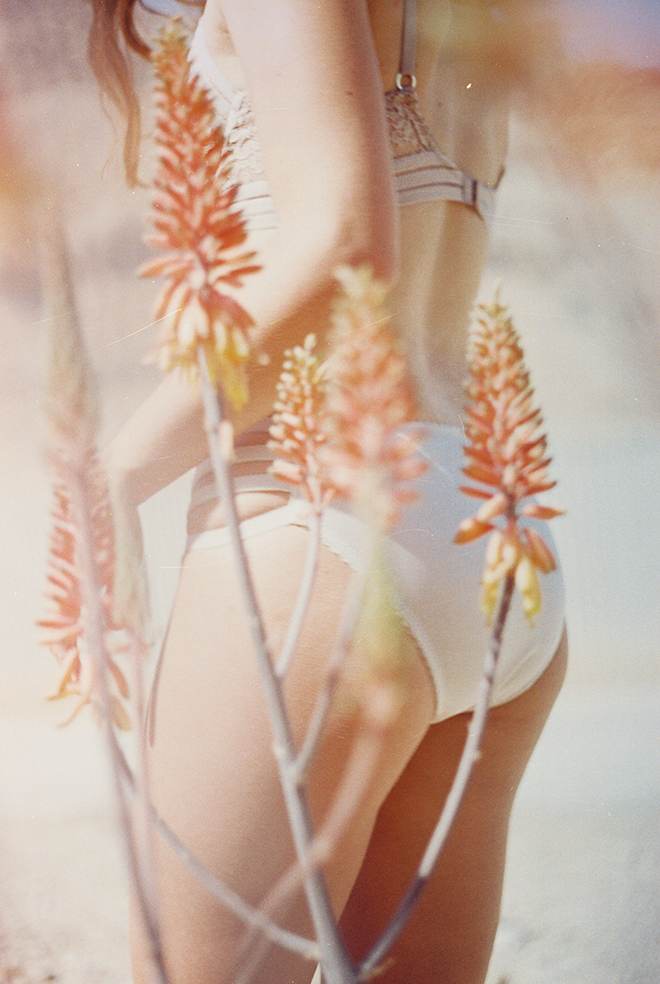
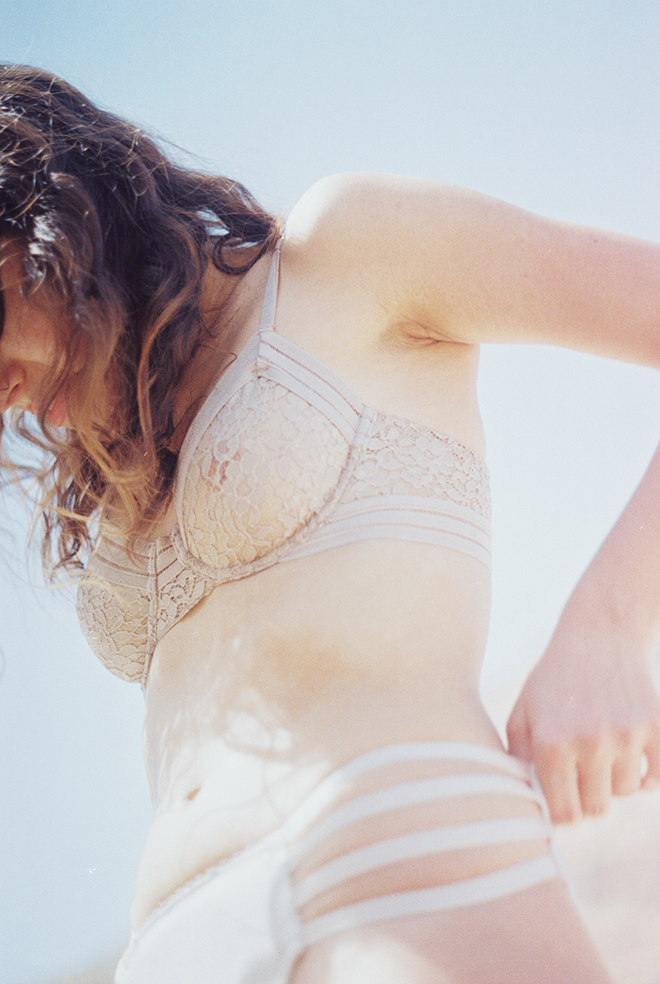
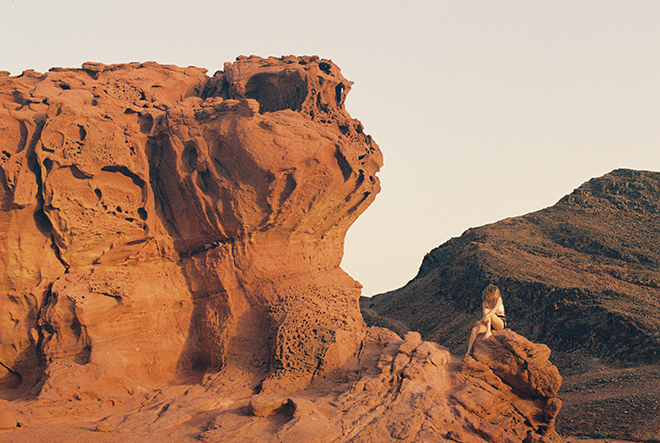
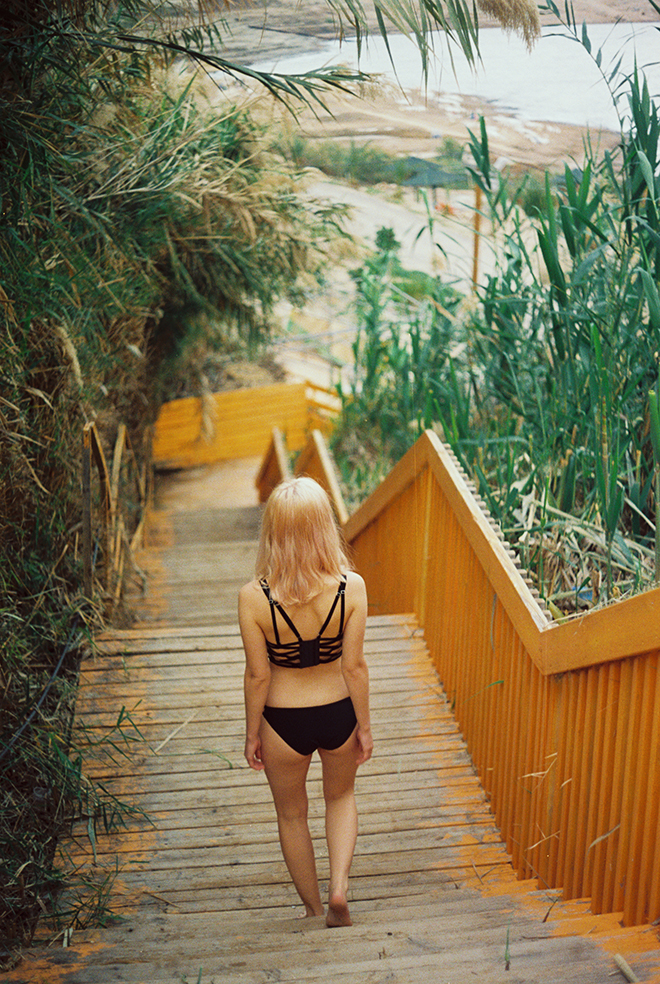
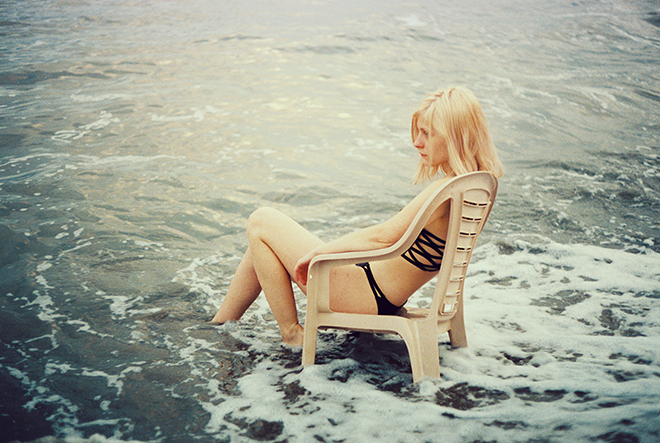
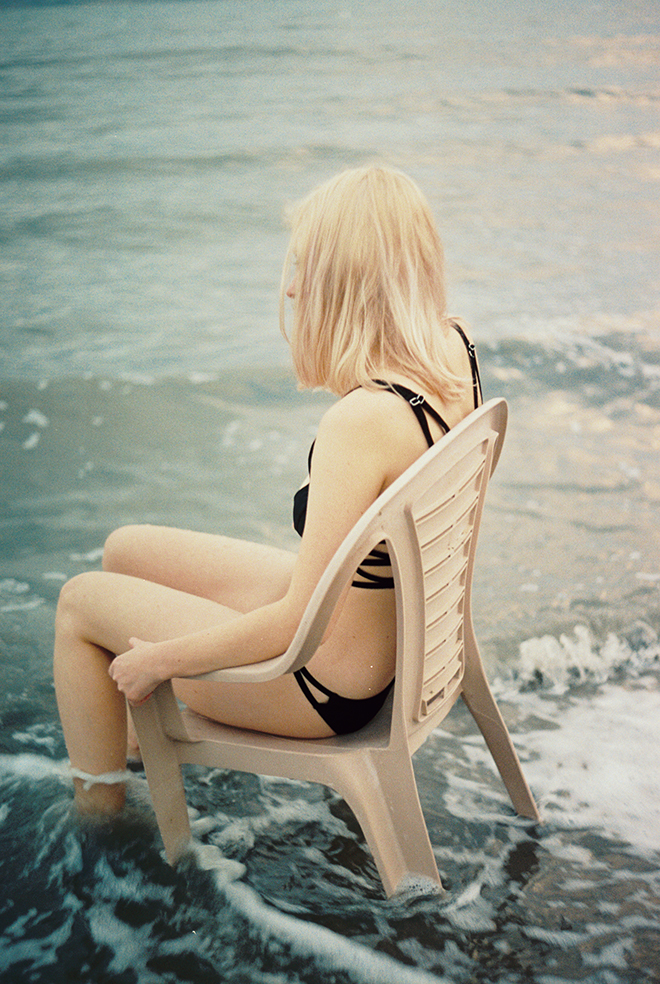
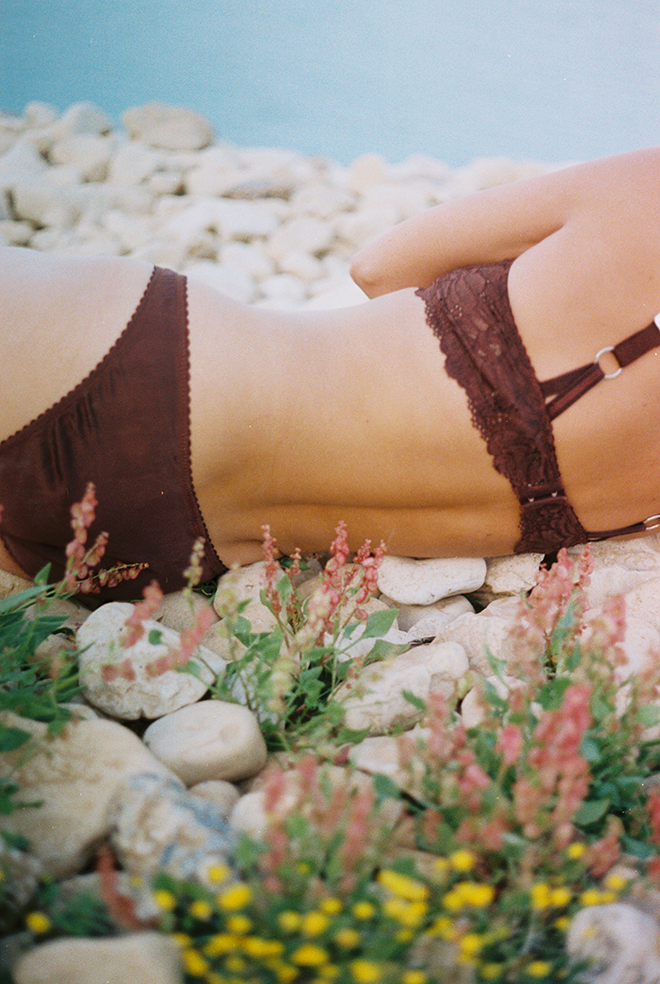
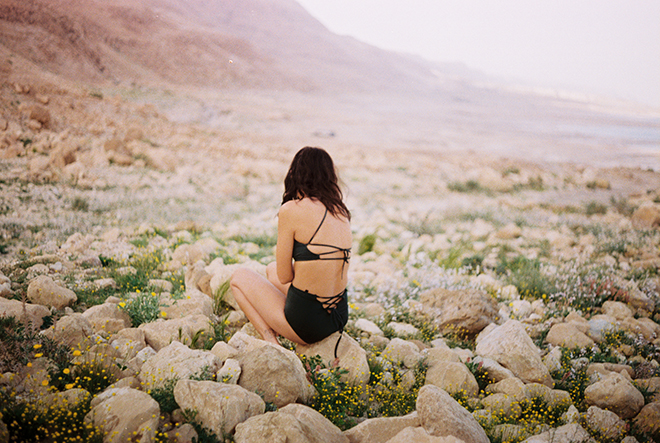
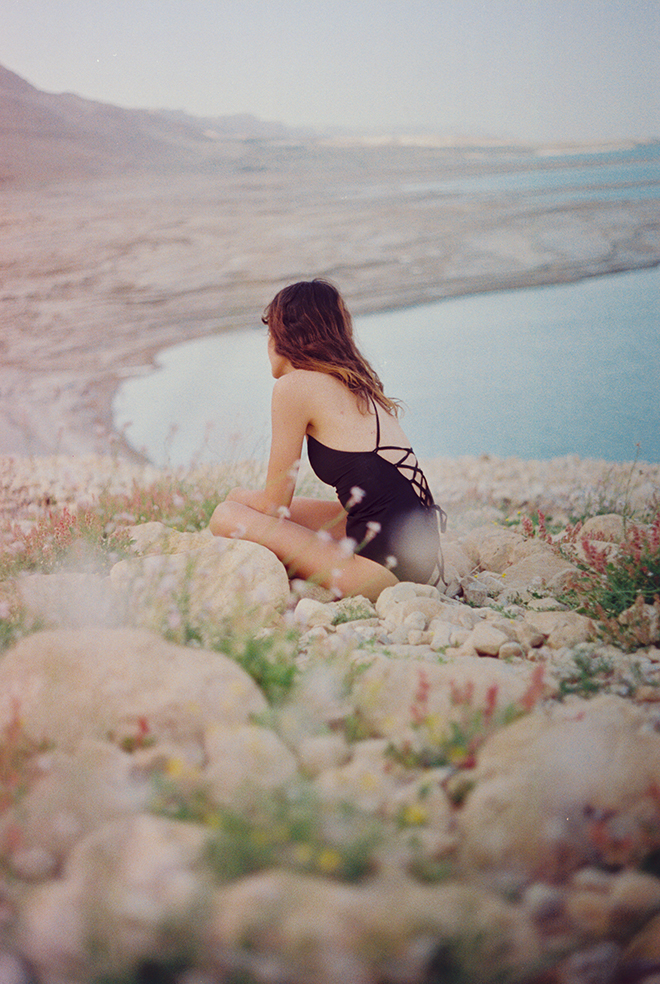
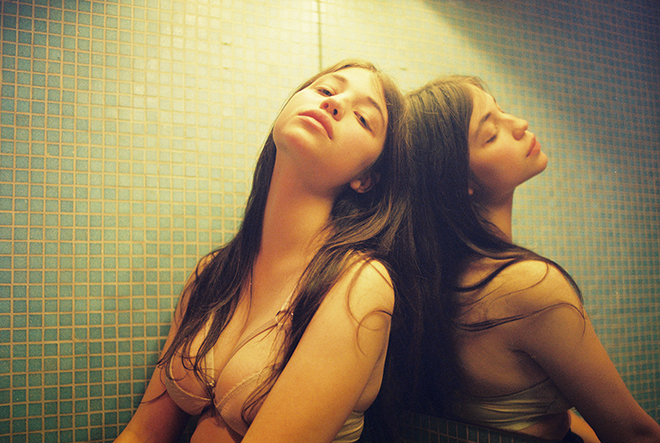
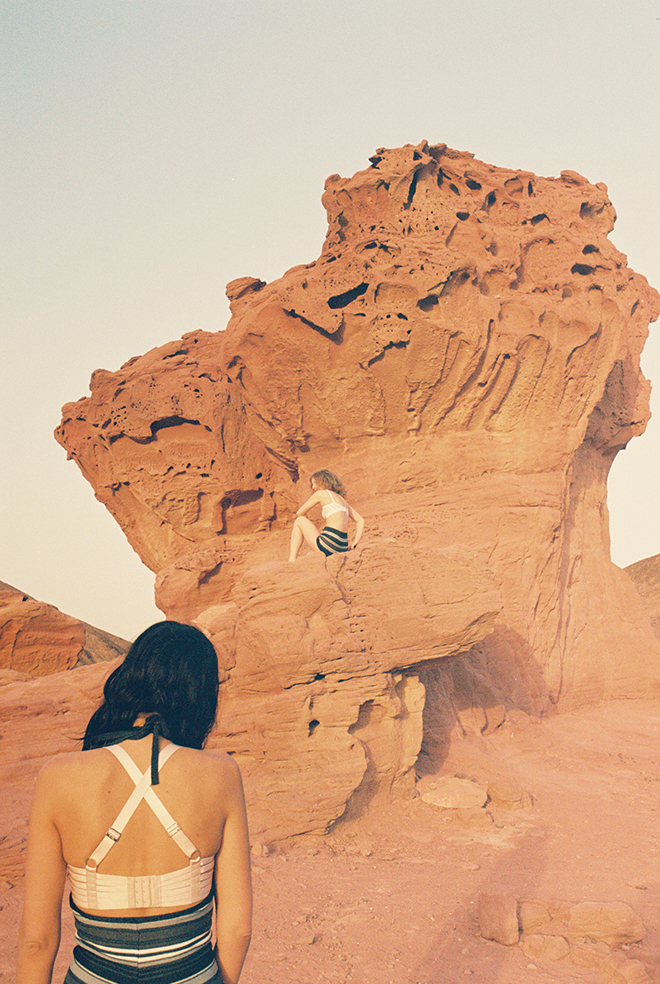
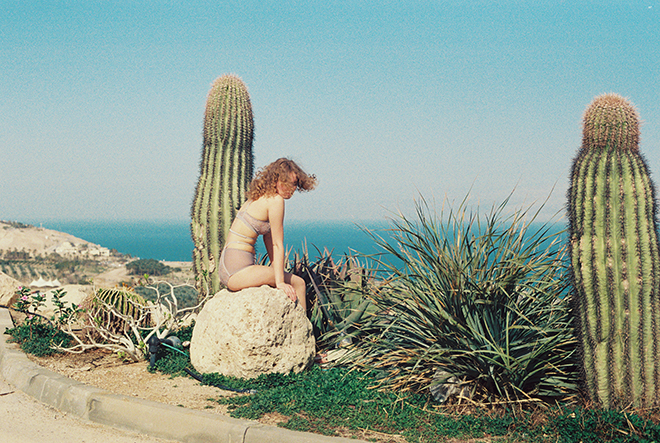
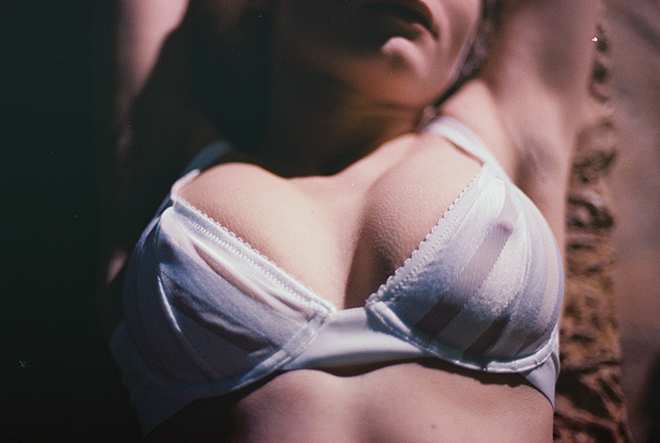
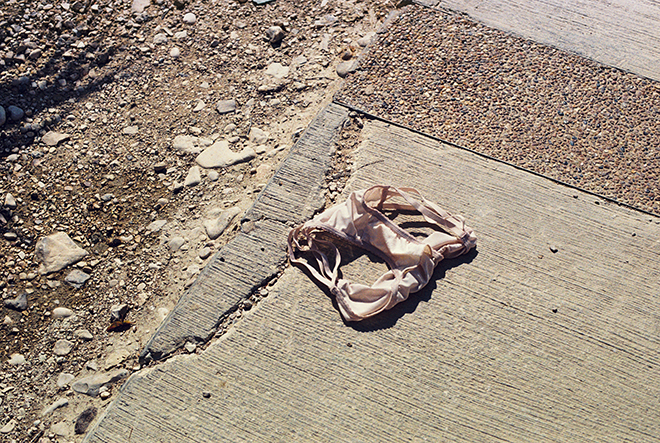
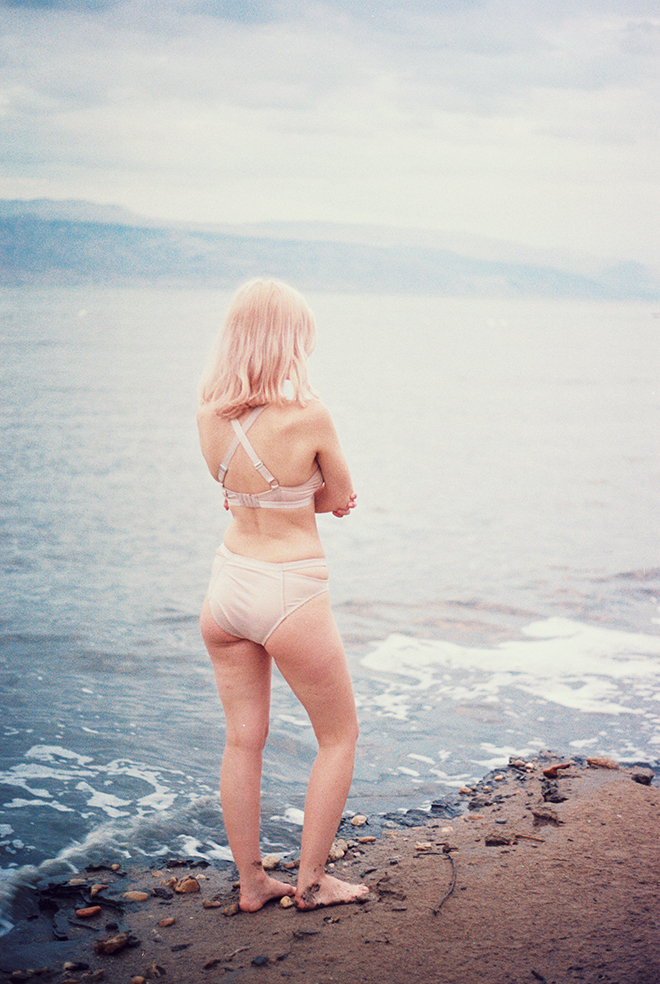
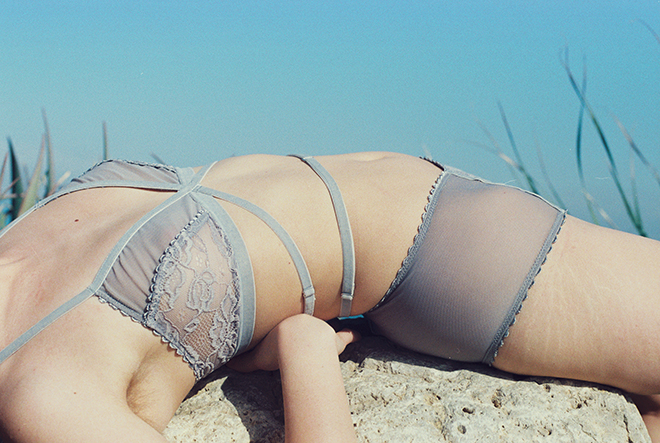
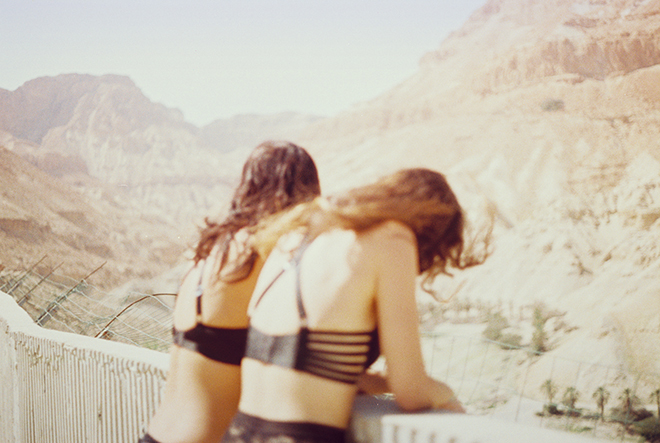
No retouching: Petra Collins, Zara Mirkin and Mayan Toledano celebrate the female form
The trio shot beautiful imagery for the latest Lonely campaign, and we got to ask them a few questions about it.
How did you chose who to shoot?
Petra Collins: We shot ourselves, each other and our friends. It was a liberating experience to be shot and shoot each other in lingerie, because our imperfections were on full display, which was awesome.
Was there a particular concept behind the shoot?
Petra: I guess we just wanted to make it super intimate, to explore our relationships to our own bodies, to each others bodies and to the environment.
You guys are all friends, how do you think that changes the dynamic of a shoot?
Petra: It’s the only way I shoot. I like to surround myself with my friends and peers and I think that’s what always gets the best results.
What did you shoot on?
Petra: A Yashica FX-3000
Is lingerie important to you?
Mayan Toledano: I have more underwear than any other item of clothing—I own maybe 200 pairs. Sometimes I’ll embroider them, sometimes I’ll print or draw on them and some have faded period stains that never washed off. They’re like a diary, I keep memories through them. I still own a pair of purple undies that I had on the night I first stayed with my first boyfriend. Lingerie is the closest thing to our bodies and that’s what makes it so personal.
Tell us about the girls you shot, why are they special to you?
Mayan: We picked girls who we met along the way and who inspire us. We shot an actress, an artist, a designer and a journalist—each one was different and special in her own way. It was cool to meet new people and hear their personal stories, and since we shot in their homes the feeling was super intimate right away. We got to see what the girls are really like, what they do, what they feel comfortable wearing and how they look at themselves in the mirror. When we wear lingerie at home we wear it primarily for ourselves, so it felt really special when the girls invited us into that world.
You didn’t shoot models. Why is it important to you to feature different female bodies?
Mayan: Representation is so important to all of us, and seeing diversity of body types is so rare, especially in lingerie imagery. Lonely gave us the freedom to cast girls and shoot each other without having to worry about the extreme beauty standards out there. Beauty is everywhere, but it is definitely not just what’s being fed to us by the media. We’re all beautiful with our stretchmarks, freckles, cellulite and all the other bits we are taught to hate about ourselves. The only reason we see these as flaws is because we somehow believe the images we see every day, the ones that show models who have been Photoshopped to such a degree that nothing is real anymore. When we start loving ourselves with our “flaws”, we can stop judging others for having them. I think self love is the first step in acceptance and support. It’s something we dealt with a lot on this project because we were both modeling and shooting. We all have our bad days where we feel more self-conscious, but the greatest thing about working with Zara and Petra is that we’re all so close, we feel comfortable and relaxed with each other, there’s no judgment whatsoever. They are both so beautiful to me because I value who they are.
What is the dynamic like when you’re working with your best friends?
Mayan: We get really hyper. We each get excited over different things and follow each other’s instincts, which is amazing. I feel so safe and creative with my best friends, the whole shoot never once felt like work. It was just us doing what we do—chilling, taking photos, laughing and screaming at each other.
Lonely is a brand that supports a healthy, natural body image, how did you aim to communicate that, aside from not using models?
Mayan: When we take photos of other girls or each other we approach it in a way that is super soft and stress free. The atmosphere on set is very similar to the photos; it’s personal and close and I think the photos communicate that feeling. I’d rather see a girl feeling comfortable and loving herself, wearing what she herself picked, rather than dictating how everything is going to look. The Lonely Girls Project is so important because it features different genders, ethnicities and body types. It is personal and real and I think more women can relate to it. We still have a long way to go before we all feel represented, but Lonely is one of the only brands currently taking a leap towards change.
Where do you shop for lingerie?
Mayan: My mom still buys underwear for me. I never go into lingerie stores because I personally don’t feel like they’re designed for me. From campaign to product it’s made to appeal to men more than it is about female empowerment. but the products are only for women—it’s kinda crazy. If I wear a bra I prefer ones from Lonely because they aren’t padded. What are padded bras about? We all have different shapes and sizes and those to me are like wearing a shield.
What was the idea behind the Lonely campaign?
Zara Mirkin: In my mind it was an extension of the Lonely Girls Project we started a few years ago. It was about initiating a change from lingerie imagery being made for the male gaze, to finally being for females—with real woman wearing underwear in their natural habitats—showing all their so-called imperfections.
Tell us about your personal relationship to lingerie.
Zara: I never thought about it much until I started working for Lonely five years ago. Until then I only ever wore basic cotton underwear that I’d hold onto for years—no matter how stained or ripped they got, or how weird the memories they conjured. I remember when I was 18 my boyfriend made a pattern from a pair of knickers I had left at his house, he made me cotton undies that he wrote his name on with a pen after watching The Virgin Suicides and seeing the character Lux Lisbon write Trip’s name on hers.
Starting the Lonely Girls Project changed how I looked at lingerie, because it gave me the experience of learning about the women I was shooting and their relationships with their bodies. Lingerie can be really powerful. It can tell stories and can reflect, or alter, what mood you’re in.
Tell us about the girls in the shoot…
Zara: They are all clever, kind, strong, hard working, beautiful and humble. It is always so important to me that I can have an interesting conversation and walk away having been inspired when shooting someone. Because we have the power to decide who we shoot I feel like the responsibility is on us to feature those who other woman can relate to and be inspired by. I know what we are doing is small in comparison to all the photos out there of fake, Photoshopped, unrealistic female bodies, but we can still make a difference.
What is like working with Mayan and Petra:
I feel so lucky and grateful that I get to work with my best friends all the time, mostly because it never feels like work. We do our best work together, because we push and inspire each other, while having so much fun and making each other laugh—or maybe laughing at each other…
Why has Lonely made such an impact?
I think a huge part of Lonely’s success has come from the Lonely Girls Project. Finally a lingerie label was photographing woman of all ages, sizes, ethnicities and careers, and from different parts of the world. With no make up and no Photoshop . Women want to look at woman they can relate to, those who look like them. These images were shot by women, for women—showing stretchmarks, hair, cellulite dimples and veins.
How do you chose lingerie?
Most of my underwear is still the same old, faded, stretched and stained cotton pieces… but now I own tons of Lonely because they make stuff that is beautiful and feels nice to wear.



 PREVIOUS
 Twitter
 Tumblr
 YouTube
 Facebook
 Instagram
