
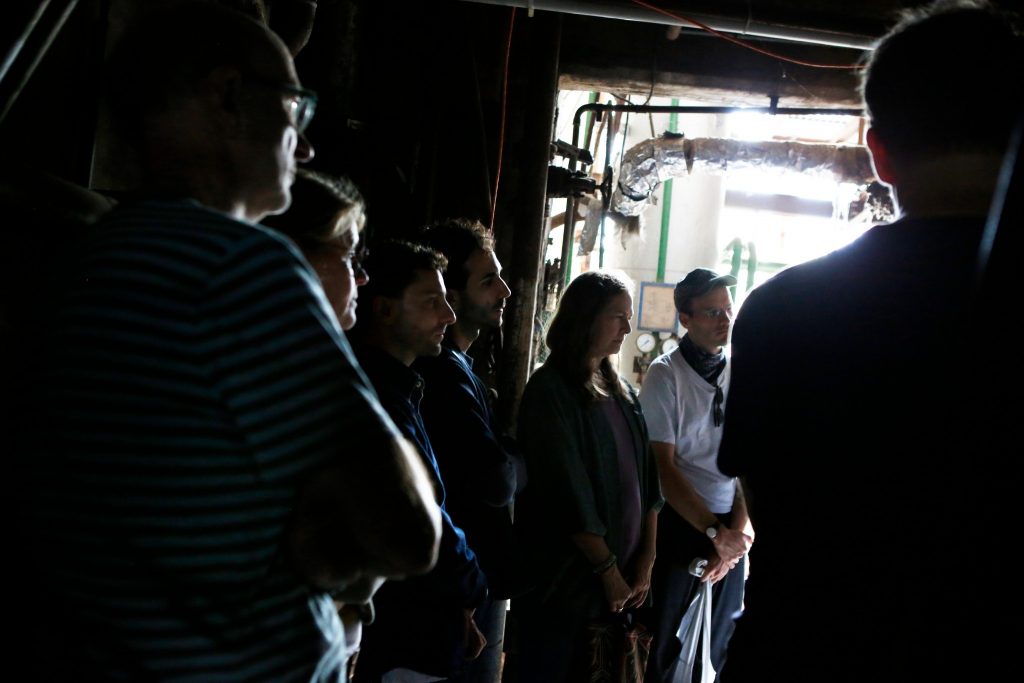
Electricity was one of David Lynch’s great obsessions. “I just love electricity. I like smoke and fire and electricity, these things are mesmerising,” he told The Guardian in 2007. From the flickering lights and supernatural transmissions of Twin Peaks to the fractured identities of Lost Highway, electricity in Lynch’s universe is a conduit between the visible and invisible, more than a technological phenomenon, it binds the familiar and the uncanny. On 16 October, E-WERK Luckenwalde, the regenerative power station and contemporary art centre in Brandenburg, presented Smoke, Fire and Electricity, a nine-hour marathon of film, music and performance exploring this enduring fascination. Taking place at the Bauhaus Stadttheater in Luckenwalde, the event ran alongside Electricity, a major new exhibition conceived by artist Asad Raza, whose previous collaborations with Lynch inform the programme’s exploration of the electric sublime.
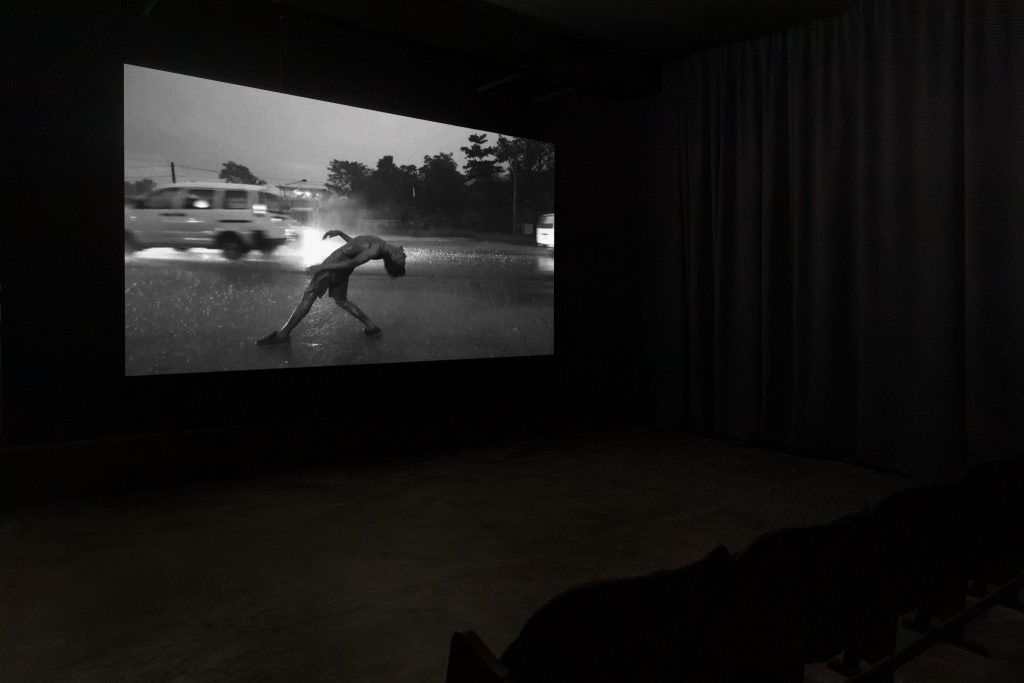
The programme brought together two of Lynch’s most psychologically charged films, Twin Peaks: Fire Walk With Me (1992) and Lost Highway (1997), alongside rarely screened shorts Lumiere (1995), Out Yonder Neighbour Boy (2001) and Industrial Landscape (2008). In Fire Walk With Me, electrical currents, television static and flickering lights signal supernatural forces and the passage between worlds, while Lost Highway uses electrical disturbances to punctuate transformations of identity and reality. The screenings were interspersed with experimental musical performances that extended these ideas beyond the screen by Berlin-based artist Olga Hohmann and pianist Yannick Wittman who presented Solo Sunny and the Invisible Force, deconstructing a song from Konrad Wolf’s 1980 East German film Solo Sunny through ideas of longing, emancipation and magnetic attraction. Drawing on Hohmann’s great-grandfather’s collection of electrical magic tricks and his work as a nuclear physicist, the performance explored the relationship between illusion and invisible energy. Austrian artist and philosopher Franziska Aigner, performing as FRANKIE, brought her distinctive combination of cello and voice, while Tuvan-Austrian singer Sainkho Namtchylak joined Ukrainian-born musician German Popov for an encounter between throat singing, free improvisation, electronics and traditional instruments.
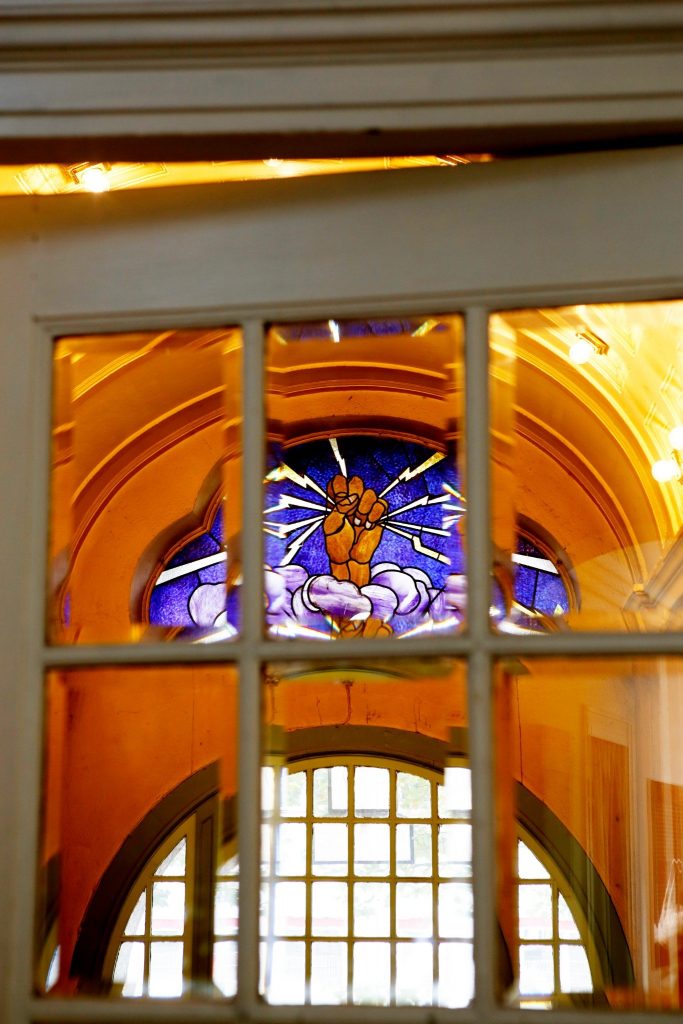
Built between 1927 and 1930 as part of the Friedrich-Ebert-Schule, Luckenwalde’s Stadttheater is a striking example of New Architecture, its geometric forms, vivid colours and expressive interiors providing an appropriately surreal backdrop. E-WERK is also a functioning power station repurposed by the founding artist and curator duo and connected to the grid as an independent power source.
The event is part of the wider Electricity exhibition at E-WERK Luckenwalde, conceived by Asad Raza and running until 25 April 2027. Installed across the former coal power station’s 10,000-square-metre site, reactivated by artist Pablo Wendel to generate renewable Kunststrom energy, and curated by Artistic Director Helen Turner, the exhibition considers electricity as an earthly, bodily and material force rather than an invisible utility. Visitors are guided by human ‘conductors’ through encounters involving electrostatic machines, moving image, sound, vibration, saltwater, amber, charcoal, ash, timber and plants, alongside contributions from Tino Sehgal and Sung Tieu.
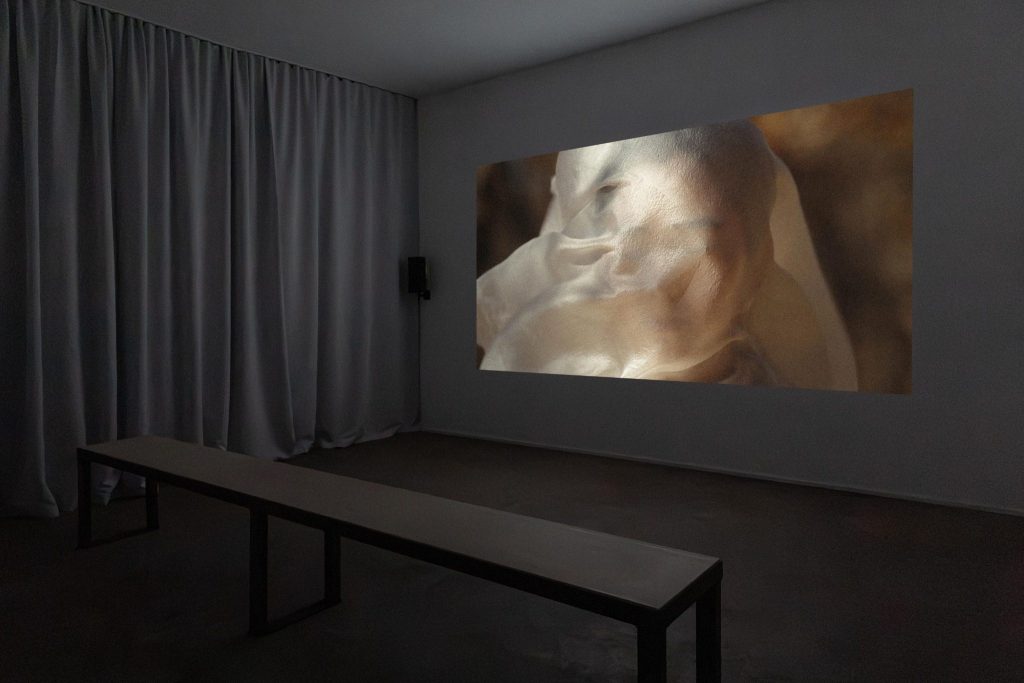
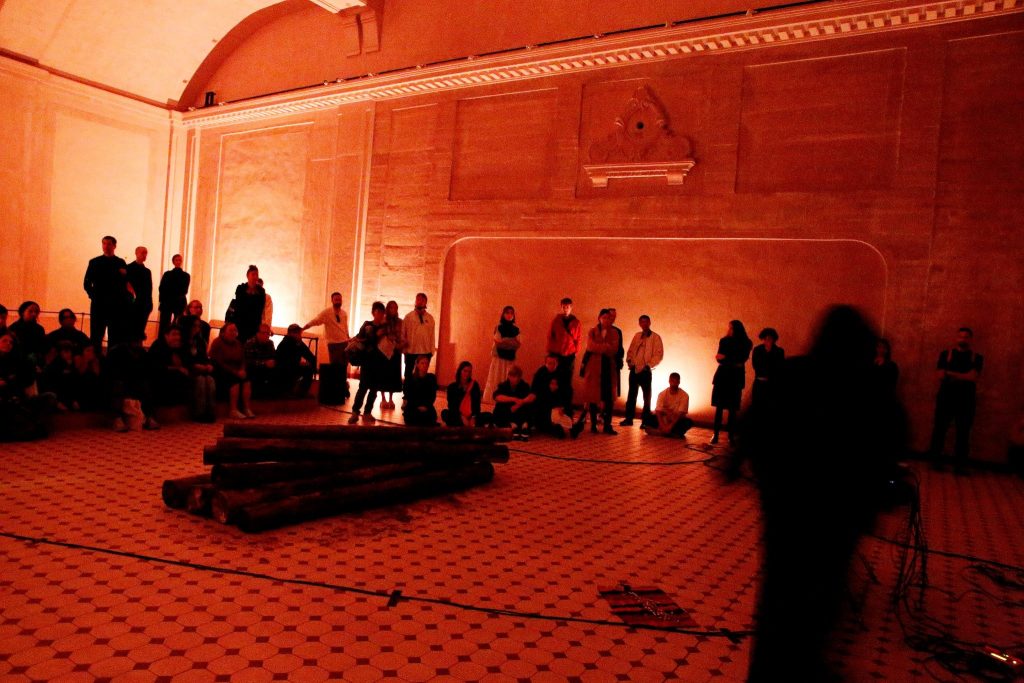
Asad Raza, 12 September 2026 – April 2027, E-WERK Luckenwalde, Brandenburg, Germany
The exhibition is open Saturday and Sundays between 1pm – 6pm and is only possible to attend via a conductor led tour. Tickets can be purchased here.
Electricity is also accompanied by a seven-month public programme featuring a rotating film exhibition comprising three chapters, “Electric Sublime,” “Electric Power,” and “Electric Earth” featuring work by Ana Mendieta, Cecilia Bengolea, David Lynch, Doug Aitken, Harun Farocki, P. Staff, Rachel Rose, Raven Chacon, Saodat Ismailova. (September 12 2026 – April 25 2027) and a symposium with performances by Raven Chacon, Abbas Zahedi, and a key note by historian of science Simon Schaffer (April 24 2027).
 PREVIOUS
 Twitter
 Tumblr
 YouTube
 Facebook
 Instagram
